What we call “The 17 Protocols of Upadaria” is a roadmap you can use to individually and in concert with others build freedom and prosperity in your life and family on a strong foundation of faith in Yeshua, our King, and in service of advancing His Kingdom among ourselves and the world around us.
A protocol in diplomatic terms is something agreed to as in the terms of a treaty. Individuals who pledge to God alone to work toward the fulfillment of these Protocols, inasmuch as God provides the means and guidance, are Peers of our spiritual nation.
These are aspirational goals we agree, before God who also provides for and leads us in this effort, to seek to fulfill. By agreeing to these Protocols you are not saying you will follow them like rules, you are saying you desire to see them fulfilled and, as God leads and provides, you will do what you can to use them in your life, to help others use them, and to use them in anything you agree to do with other people. When groups of people come together on the basis of our shared spiritual nationhood they utilize these Protocols as a sort of guide and roadmap for how they will conduct themselves and what things they will do.
These “Protocols” are well-researched and Biblically sound ideas and methods, they explain good standards and noble goals which can improve your ability to thrive and prosper no matter what is happening in the greater society around you, but without losing your presence, witness, and influence within that society.
When you look at a protocol, consider that, whatever its ultimate proposed goals, it begins with things that start in your own thinking and decisions. As you internalize its deeper foundation of truth and yet also envision what it would be like if it was fulfilled for your life and community, you begin a process of liberation and renwal from within your own heart and relationships.
All these truths are in the Bible, what we are doing is making them plain, organizing them, and showing a concrete and modern application of them which you can put to work in your own life.
The aim is never to be legalistic, these are aspirational aims after all, not rules or standards for being “right with God” as such.
But they are important and, generally, there is an expectation that people who pledge their freewill participation to be part of our nation are devoted to the utilization of these protocols in pursuit of their own fulfillment of God’s best for their lives and our spiritual nation as a whole, but through the power of Christ and the Holy Spirit and the blessings and favor of God, not by human might.
You will notice that we start with the big picture at the global and universal scale and then drill down to the individual from there. It is important to understand that we need the big picture vision to always be before us, calling us and unifying us, even though the organic emergence of that vision is an inner conviction shared and followed from individual to individual and group to group: no two people or groups of people will follow a cookie-cutter mold in how they will use these protocols.
While we are convinced the basic blueprint as laid out here will remain unchanged, we are also convinced that the ultimate realization of this vision and its corresponding structures will have many surprises and innovations that we could not see.
Indeed, not everyone, everywhere, who pursues and actualizes this vision together with other people will follow the exact same pattern or methodology, but all will have the same spiritual blueprint or DNA. In fact, if anyone who follows these protocols encounters a community of people anywhere based on them, then those people will easily fit in and feel at home.
The way the 17 Protocols work in practice and they way they are understood is different,
To understand them, we start at the highest level on the largest scale, covering the universal and global, and then we narrow the focus down to the individual simply learning and fulfilling their individual scroll of destiny and purpose for their own individual life.
To practice them begins with an overall understanding, which includes all aspects at every level and scale, but once this is obtained, it starts with our inner self, at the level of understanding the seeking to carry out our scroll of destiny and purpose.
Basically, we understand the 17 Protocols from the highest to the smallest scale but we pursue them from the lowest to the highest scale. We present them in the order in which they must be understood, but the order in which they must be practices begins at the end and works backwards.
What is more, this is like layers upon layers, each time we go deeper in understanding it begins with the broadest scale of understanding that leads to going back to the lowest scale of practice and on to the highest scale, and over and over as we develop and grow “from glory to glory.”
This concept applies more broadly than the 17 Protocols, and even the concept of intentionally spelling out the protocols of your life and your shared existence with others should follow this pattern of understanding from the larger to the smaller and practicing from the smaller to the larger.
- Kingdom Nationhood
WE ARE REGENTS OF YESHUA, THE CHRIST AND CITIZENS OF HIS KINGDOM
Fulfilling our Regency as Kings, Priests, and joint-Heirs with Yeshua in His Kingdom is something we seek daily through practicing fellowship with all Believers where we live, work, and worship. We exercise our spiritual sovereignty and fulfill God’s best for our lives with excellence.
“Kingdom thinking” affects how we relate and connect to fellow Believers and as we are deliberate about being in relationship with them, through our faith in Yeshua, true unity organically emerges.
From this a sense of community among believers in any given location emerges and so then does the power of ecclesia, the whole community of all Believers acting as one, like a spiritual city-state of the elect, thus fulfilling the promise that the very gates of hell cannot prevail against the ecclesia!
- The New Civilization
A NEW CIVILIZATION OF BELIEVERS EMERGES AS OLD CIVILIZATIONS FALTER
Understanding times and seasons and cycles and patterns allows us to see that we are living in a time of visitation. The existing paradigms have resulted in a centralized corpostate that politicizes all aspects of society, such as a church system and culture that is limited by religion and Western practices. These will be lawfully and peacefully transcended over time as the new civilization emerges.
As individuals we begin to understand what is happening around is and how it fits within the patterns and cycles of human civilization. This knowledge equips is to make sound decisions and to foresee probable future outcomes and events.
As groups of people connect with this deeper understanding guiding them, they can navigate possibilities, probabilities, dangers, and outcomes more successfully than all the people around them.
- The Spiritual Nation
WE ARE A SPIRITUAL NATION OF PEOPLE WHOSE GOD IS THE LORD
God ordains the nations and calls them into being. His Word establishes the boundaries of their habitation and time of their existence. We believe God has called and ordained us to be Peers of a new spiritual nation, defined by spiritual sovereignty, whose God is the Lord.
As individuals we see how we are not alone, we are connected to the spiritual nation of ALL fellow Believers and we can CHOOSE our own spiritual nationhood with others.
Realizing you are part of something larger, something God has ordained from the beginning to guide humanity into a form of connectedness that isn’t hateful or divisive, gives you both purpose and a feeling of mutual support without separating you from others in a way that God did not intend.
- Living Nationhood
NATIONHOOD IS A PATH TO FULFILL GOD’S RIGHTEOUS STANDARDS THROUGH IDEALS, PRINCIPLES, PRACTICES, AND MANDATES
As kingdom essentials are honored and practiced personally, relationally, and professionally, righteousness will exalt our nation.
Spiritual nationhood isn’t race or political citizenship, it is a form of shared identity and purpose that provides a level or organic cohesiveness whereby you can easily connect to other people you don’t personally know but that you are safe to trust.
Living out nationhood begins as you personally apply the shared ideals, principles, practices, and mandates that define your nationhood to your own decisions and to the way you interact with and relate to other people. It begins within you but extends into relationships, associations, and trust communities with others, all founded upon freewill participation, and never manipulation or coercion.
- Living Regency
WE EXERCISE OUR INDIVIDUAL AND CORPORATE REGENCY TO PROVIDE A REFUGE TO OURSELVES AND OTHERS
As Believers, by practicing individual and corporate Regency through the framework of our spiritual nation, we serve as Kings and Priests who sovereignly steward all God has entrusted through a network of trust communities called Shires.
If you begin to truly SEE and FEEL yourself to be a “regent” of Christ, your relationships and your life will change. You didn’t earn this, it is through grace, but you get to use this to define yourself in God’s terms, not being defined or limited by others.
When people connect and collaborate who all feel and see themselves as regents of Christ, they will tend toward mutual self-reliance that is always beneficial to all and that balances individual autonomy with the common good, and all without some uber-hierarchy dictating to them.
- A Trust Community
WE PRACTICE THE WAYS OF A TRUST COMMUNITY CENTERED ON YESHUA, THE CHRIST
Through building intentional community, Believers can connect with others for mutual profit, support, empowerment, liberation, and fulfillment of individual and shared purpose.
Within ourselves we use this protocol to purposefully decide who is within our circle of trust and on what terms, we learn and use boundaries in a Biblical manner to both keep our own freedom intact and to nurture freedom in others.
As trust communities emerge, especially based on faith and then a form of organic cohesiveness like nationhood, you begin to be surrounded and protected by a sort or maternal enclosure and “getting you” requires going through your protective community that surrounds you.
- The Shirehold
WE INTENTIONALLY PRACTICE EXTENDED KINSHIP
People are not made to be isolated and separated. Life in the Kingdom is not just about what we do individually, but how we live with others. Our lifestyle is an expression of agape love in family, community, and collaboration. A Shirehold is an intentional multifamily extended household community in close geographical proximity.
Shirehold is both what we call a very local chapter community and a concept and way of life where we, as individuals, decide to be intentional about how we treat our own biological families and how we determine who we will be in close proximity with in terms of mutual support. We can both love and support our biological families, as much as possible, and build intentional familial connections with people whose beliefs, values, and conviction more closely approximate our own.
The practicing of Shirehold almost requires either blood kinship or deeply held and shared beliefs, values, and convictions, usually, and Biblically, expressed in the form of a share spiritual nationality that isn’t just based on common ancestry.
This is organic cohesiveness and without it any effort to create and practice Shirehold, restoring the ancient extended kinship group in modern times, could become a top-down, controlling affair that inhibits your individual spiritual sovereignty. But if Shirehold is practices using organic cohesiveness it will nurture and enhance your individual spiritual sovereignty,
- The Kinship Mandate
WE IMPART THE PRACTICES AND VIRTUE OF KINSHIP
We form small, extended familial groups and practice mutual care and support with our relatives, fellow Upadarians, and fellow Believers according to a Biblical blueprint. We refer to these as Kinship Groups wherein we view the success and well-being of those we are connected to as equally important as our own.
Kinship is something we share as individuals with blood kin, with fellow Believers, with people in our country (fellow citizens), and with people who share or form or forms of nationhood, whether they be our ancestral nationhood or intentional nationhood, like Upadaria.
Kinship is a form of mutual support and shared identity that all participants choose and that comes with mutual obligations, commitments, and standards and norms which all agree to adhere to faithfully. While some will recoil at the kinship mandate thinking they are solo grandees in need of nobody else, as human none of us would survive for long in our earliest years without the embrace of some form of kinship: otherwise, others would not have even fed us!
When kinship is understood and intentionally practiced by groups of people it becomes a powerful means for navigating the uncertainties and dangers of life and a special way to build our own futures so that we can fulfill God’s best for our lives with excellence.
- The Missionary Mandate
WE PURSUE MISSIONAL LIVES AND SUPPORT WORLD MISSIONS
We embrace a holistic approach as witnesses in word, deed, and influence. We seek to live as examples of the gospel, support those carrying the gospel, and distribute the benefits of the gospel to the oppressed.
As individuals, we become ever more aware of the lost and needy around us and through the guidance and power of the Holy Spirit we actively seek to be a witness and influence for Yeshua. Having a heart for the lost and needy is what Yeshua was all about and part of the transfiguration of the Holy Spirit is to give us the same heart, which, if we do not sense it now, we seek with diligence and prayer.
Every group of people who connects on some basis of extending the witness and influence of the Kingdom should be intentional about how it serves the lost and needy in order to give glory to God and draw people to Him.
- The Refuge Mandate
WE PROVIDE REFUGE FOR OURSELVES AND OTHERS
We provide refuge in emergency and crisis situations by offering security, safety, and medical supplies and services for ourselves and those we grant refuge to, especially fellow Christians. Everyone who flies our flag is committed to providing refuge to people in need and aiding refugees by connecting them with local resources.
As individuals, we intentionally seek to ensure we have our needs supplied through our own hard work and our emergency needs supplied through preparedness and frugality. We must learn to be a refuge to ourselves and then to others, because a dry well cannot provide water to others.
Beyond our own refuge, which we can also pursue in cooperation with others by means of freewill participation, we desire to help people in crisis, in particular Christian and other refugees, who need sanctuary. We do this mostly to serve but also knowing the very safe havens, as in actual facilities and communities, we build to help others may serve us as well.
- Heavenly Blueprints
WE BUILD STRUCTURES AND PHYSICIAL SPACES THAT REFLECT HEAVEN’S BLUEPRINTS
The very design of our spaces and structures where we live, work, or gather facilitate healthy, living, and prosperous relationships and associations which occur within them.
Changing the very STRUCTURES, as in the physical space around ourselves, to match our convictions and goals is something few give conscious thought to. As individuals, we may live in a “traditional” house, per our culture, but we can often rearrange the space in ways that match our needs and convictions.
Beyond individuals changing their physical space to reflect and nurture their convictions, groups of people can work together to build alternative spaces and domiciles that nurture the kinds of things they wish to pursue. Our desire to is to be quite deliberate and intentional about our space, including appearance, functionality, arrangement, design, and architecture.
- Fulfilling The Revolution Within
WE GROW IN WISDOM TO FULFILL GOD’S BEST FOR OUR LIVES
The Revolution Within is inspired by a commitment to learn “line upon line” and “precept upon precept.” Maturation involves moving beyond milk to meat to actualize our purposes and bolster the Kingdom.
As individuals, we understand that any ideology or “revolution” that cannot offer benefits on the basis of individual practice alone is perfectly useless, perhaps even dangerous. God has much more for us than what the world or even we ourselves offer. We take personal responsibility for our lives and purpose, to find and fulfill God’s best for our lives with excellence, we make this a higher ethical standard.
As groups of people pursue this together, through Round Table Groups, using participatory and immersive learning, even role-playing and imagination, the horizon of opportunities and possibilities for each person grows massively.
- The Marriage Covenant
WE ARE DEVOTED TO BOTH THE UNIVERSAL MARRIAGE TO YESHUA, THE CHRIST AND OUR MARRIAGES
We believe that the purpose of marriage is to reflect the relationship of Yeshua, the Christ to His Beloved and to be the means by which a man and woman reflect the divine model of love in covenant.
We are each married to Christ, both as individuals and as members of the Body of Christ, and this relationship is essential to understanding the relationship between a man and a woman, who alone embody this fractal of the larger marriage between Christ and the Body of Christ.
Aside from those few who were meant to be celibate as unto the Lord, we are all made more whole and achieve our potential through the marriage covenant, and we know of no other save one man and one woman who are not close blood kin and who remain together for life. Nurturing our marriages is essential to developing our potential as human beings.
- Family Honor
WE ARE COMMITTED AND CONNECTED TO OUR NUCLEAR FAMILY, RELATIVES, INTENTIONAL KIN, AND FELLOW BELIEVERS
The people in our circle of closest relationships, from relatives to those we choose to adopt into our family, should be honored and cared for as God gives us the means and opportunity to. This honor begins with our nuclear family and continues to our close relatives and others in our inner circle of relationships.
The nuclear family and our immediate circle of familial relations, including dear friends and fellow Believers, is the building block of society. To intentionally honor our familial relations, however we define them, is a necessary part of our own individual development and growth,
Without family we are atomized individuals, easy prey to everything and everyone that might threaten our individual spiritual sovereignty, and we cannot experience life as God intends it. Family is part of God’s blueprint for humanity and is a necessity.
- The Duty To Progeny
WE NURTURE OUR PROGENY AND BUILD FOR THEIR FUTURE
We have a sacred duty to build up and nurture our spiritual and physical descendants and leave them a birthright of value and worth. We impart our beliefs, values, and convictions so they may find God if they seek him. We build structures that will benefit future generations for centuries to come.
The ideal of an advanced human civilization predicated on God’s standards of righteousness and justice, is for children to be raised by their own biological parents in a loving home or for orphaned or abandoned children to be adopted into such a home.
Raising your progeny in a loving home with your spouse and giving them a patrimony, as much as you are able, while imparting your faith and values as well as good life skills, is an essential element of your individual scroll of destiny and purpose. Building supportive associations and networks, including clustered housing communities if need be, that support people in this is also essential to the advancement of human civilization.
- Our Gideon’s Call
WE PROCLAIM OUR VISION FOR A SPIRITUAL NATION TO THOSE WHO WOULD ANSWER THE CALL
In the Book of Judges, Gideon called and over 30,000 answered. God chose only 300 to take the first step toward liberating Israel from the Midianites before the rest of the nation rejoined them. Likewise, we broadcast the call and offer the resources needed to be a Peer of our spiritual nation. The call to Peerage is between God and the individual alone.
As individuals we can and should share our call to nationhood, albeit always without any form of “selling” or “recruiting” and with the intent of letting God sort the called from the not called. We should never feel pressured, nor give pressure to others, to adopt the Upadarian nationality or even our faith in Christ, from other human beings.
As people hear our call and respond and as groups emerge the nature of this call must always be an un-pressured opportunity to engage in freewill participation as led and empowered by God.
- Fulfilling Our Scroll
WE STRIVE TO FULFILL GOD’S BEST FOR OUR LIVES WITH EXCELLENCE
The scroll of our life is a gift from God reflecting our unique identities in Yeshua, the Christ. Each scroll was written non-linearly before natural birth. It is the guiding “wyrd” we are invited to daily align our willful intents with. In accordance with our scroll, we aim to empower ourselves and others through intimacy with God.
We understand that our individual scrolls of destiny and purpose, our wyrd, also include shared scrolls with people God connects us to, whether for a season or for life (as with your spouse). Too often destiny is mystified and individualized in ways that render the concept too ephemeral and impractical.
As groups of people emerge who are determined to fulfill their wyrd, and who may have a shared wyrd, the nature of their relationship, associations, standards, and norms must be such that each person is freed to fulfill their own destiny and doesn’t have to subordinate that destiny to “the group”, even if aspects of that destiny are shared with others.
Protocol One: Kingdom Nationhood
WE ARE REGENTS OF YESHUA, THE CHRIST AND CITIZENS OF HIS KINGDOM
Fulfilling our Regency as Kings, Priests, and joint-Heirs with Yeshua in His Kingdom is something we seek daily through practicing fellowship with all Believers where we live, work, and worship. We exercise our spiritual sovereignty and fulfill God’s best for our lives with excellence.
Yeshua is sovereign. We say, “Amra Yshua ta Pisches es Hundura-Rikith”, The Lord of Light and Love, Yeshua the Messiah, is all-powerfully sovereign.”
We are Rege’, our sovereignty is derived it is as a regent awaiting a king, but to their peers they are as the king. (Our word for human kings or queens is “Reyki.”)
This is what we walk in. And so we proclaim and live this: The “Kingdom Age of the Elect” among Believers has come. It is not the kuriakos era of “churchianity.” The universal commonwealth of the Elect is no longer just a mostly religious society, nor was it ever meant to be.
The Kingdom of God is the spiritual commonwealth of the Elect and transcends church structures as we know them. Among us, citizens of the Kingdom, governance comes through the Ecclesia as the governing assembly for a spiritual city-state of the Elect.
This is our regency, our spiritual sovereignty. It begins with us as individuals and extends to our freewill covenant association and our consensual communities.
When truly adhered to, Ecclesia as a practice, not merely a structure, takes on a holistic form and mission much like a local spiritual city-state of the Elect and a globally dispersed “eternal nation.” We affirm that spiritual Israel is our universal nation, our Holy Commonwealth.
Our spiritual nation which is called “Upadaria” is a part of that Commonwealth of the whole Elect.
There is one eternal Nation of People manifesting the Kingdom of God among us, as citizens together of that Kingdom, a Kingdom in which we are all “kings and priests unto the Lord”, of which our unique and distinct spiritual nation is a part.
We are committed to living up to those most noble roles, to be regents of the King.
Protocol Two: The New Civilization
A NEW CIVILIZATION OF BELIEVERS EMERGES AS OLD CIVILIZATIONS FALTER
Understanding times and seasons and cycles and patterns allows us to see that we are living in a time of visitation. The existing paradigms have resulted in a centralized corpostate that politicizes all aspects of society, such as a church system and culture that is limited by religion and Western practices. These will be lawfully and peacefully transcended over time as the new civilization emerges.
We proclaim the emergence of a new civilization based on the four core ideals which include a Biblical understanding and a balanced application of Unity in diversity, Popular sovereignty, Democratic equality, and Rule of law. We apply a Biblical understanding of these ideals in balance with one another as the basis of our nation and of a Christian civilization.
We will be a people-centered nation of people, not a political state where politics rules all and only a few rule politics (politocracy). This new civilization based on such nations as follow these ideals will emerge as old civilizations which have run their course die in a convulsion of Caesarism and godless hubris (the politocracy).
These will suffer under the laws of causality for their decadence even as God protects nations of people whose God is the Lord. This nation will be the vanguard of the new civilization, should the Lord tarry, as many nations of people make the Lord their God in fulfillment of the promise that Abraham would be the father of MANY nations
Protocol Three: The Spiritual Nation
WE ARE A SPIRITUAL NATION OF PEOPLE WHOSE GOD IS THE LORD
We proclaim ourselves to be a spiritual nation of people whose God is the Lord. We proclaim that this nation is born as we bear its seed from God. We come together solely through freewill participation as we beleive God has called and led us.
As God has ordained nations, described in Acts 17:26-27, so we believe God has ordained our nation for to dwell upon this earth, establishing the time of our existence and the boundaries of our habitation, so that people may find God is haply they seek Him.
We proclaim that it has been named by God as “Upadaria” (you-pah-daria) through a series of prophetic encounters which revealed the form, structural blueprint, and mandates of this nation. These mandates are Kinship, Missions, and Refuge.
We affirm that this nation is among the vanguard nations which we foresee will promote the Kingdom Age of The Elect and the New Civilization.
We further proclaim our intention to be a globally dispersed nation served by an international missionary and Christian refugee society consisting of many local community chapters (consensual Christian missionary and refugee communities) that will provide shelter and sanctuary for Believers during times of crisis.
We declare and ordain, as from the hand of God, and by His provision and favor, that our nation and its people will respect and adhere to the idea that ours is a nation wherein the People rule by the wisdom of God for the prosperity of all and the Glory of the Name of God.
Protocol Four: Living Nationhood
NATIONHOOD IS A PATH TO FULFILL GOD’S RIGHTEOUS STANDARDS THROUGH IDEALS, PRINCIPLES, PRACTICES, AND MANDATES
As sacred Kingdom essentials are honored and practiced personally, relationally, and professionally, righteousness will exalt our nation.
We will individually follow and use the Ideals, Principles, and Practices of Upadaria in our ceaseless and daily pursuit of God’s best for our life, which we will pursue together with excellence.
The Ideals are a BIBLICAL and balanced application of Unity in diversity, Popular sovereignty, Democratic equality, and Rule of law and these guide our common standards for relationships, associations, partnerships, governance, and government in general.
Our principles includes our social vision (cooperation, sustainability, consensus), social ethic (well-being, justice, autonomy), freedom vision (virtue, liberty, and independence), and Prosperity Vision (investment, land, ownership, protection).
The Practices include the practices of Ecclesia as a spiritual city-state both with the whole Body of Christ and among our Peers in our own Regencies, Ethne as a form of spiritual nationhood in Christ, Oikos as a form of extended multi-family households of faith, and Koinonia as a form of freewill covenant association for consensual community based on God’s righteous standards.
We will work to practice a way of life that would lend itself to covenant-based and intentional missionary and refuge communities within a globally distributed nation that transcends bigotry, racism, elitism, intolerance, hatred, and anti-Christian bias. We will do this through the means of a fraternal Christian society.
Even if we are alone, we will behave in a manner that reflect our commitment to the ideals, principles, and practices of our spiritual nation, to the best of ability and means and by the Grace of God, not through the strength of our own flesh.
By this new and intentional nationality, we believe that millions of people will escape their old racial and tribal hatreds, their denominational differences, and anti-Christian persecution as they choose to adopt this new nationality of their own free-will.
They will do this by following this Protocol and learning the new nation’s ideals, principle, and practices, They will eventually lean the nation’s language (as it is developed), thus becoming a new nation of people whose God is the Lord based solely on freewill covenant-based relationships in which Jesus Christ is the head.
These local freewill covenant associations of individuals within extended multi-family household groups will pursue all possible forms of self-reliance, self-determination, and local sustainability as well technological autonomy but for the Glory of God and the Praise of His Name.
Protocol Five: Living Regency
WE EXERCISE OUR INDIVIDUAL AND CORPORATE REGENCY TO PROVIDE A REFUGE TO OURSELVES AND OTHERS
As Believers, by practicing individual and corporate Regency through the framework of our spiritual nation, we serve as Kings and Priests who sovereignly steward all God has entrusted through a network of trust communities called Shires.
Working online and in person, we will strive to see the emergence, wherever possible, of regional distributed intentional covenant communities that support smaller communities (freewill covenant-based missionary and refugee communities).
These will empower and equip members to be self-reliant and self-sustaining for basic needs. They will model and be based upon the Biblical concept of Ecclesia as the governing assembly of the Elect over a spiritual city-state within the villages, towns, and neighborhoods served in that region.
They will assume territorial responsibility to serve the mandates of Kinship, Mission, and Refuge for members, the Body of Christ, and their physical community, which have a sacred pomerium of Divine Protection for all their members, and which are led through consensual decision-making by a Nobility of Merit.
Where we cannot formally gather and organize the systems and structures of these Regencies we will use whatever means we have to deliberately connect not only virtually and locally but regionally with fellow Peers wherever we find them.
As and when we can, each Regency will be served by a regional missionary and refugee support hub and various Embassies and Missions distributed throughout the region. In areas where there is no established Regency, new Shireholds will assume the role of a Pioneer Shirehold to deliberately stake out the whole area of territorial responsibility for the Regency and to build a spiritual government of Confirmed Peers who will plant new groups through a Gideon’s Call to establish Shireholds throughout the region.
The purpose and concept of our regency is to promote and facilitate kinship bonds among Peers of Upadaria and fellow Christians in general, to promote and facilitate missional living and missions work in the region, and to aid and support Christians refugees and Christians in crisis.
Protocol Six: A Trust Community
WE PRACTICE THE WAYS OF A TRUST COMMUNITY CENTERED ON YESHUA, THE CHRIST Through building intentional community, Believers can connect with others for mutual profit, support, empowerment, liberation, and purpose fulfillment.
We will work locally to establish distributed self-reliant and self-governing communities based on freewill participation called “Shires” or “Distributed Private Cities.”
A Shire is a an intentional, distributed private city based on freewill participation alone that will promote and aid in the development of the spiritual sovereignty of each Peer, fellow Christians, and freedom seekers, equipping them to be spiritually, mentally, and materially independent of negative external influences and control that aren’t in their own best interests.
This “shire” word hearkens to the original meaning of a Shire as a relatively self-contained community of freeholders who are capable of self-government and self-reliance but which is connected in an interdependent way with other communities within a single dominion.
These will be like a distributed autonomous (technologically speaking) city of people distributed here and there WITHIN AND AMONG the various communities and locales of the area or territorial responsibility.
Through their material and technologically autonomous self-sustainability these distributed consensual communities will be an effective missionary presence, also empowering their participants to live missionaly, and they will be able to support and minister to Christians in need or crisis as internal or external refugees.
They will be self-governed by a consensual decision-making process of their stakeholders, peers of our nation in that area who back their area chapter community, and led in day to day affairs by acclaimed and affirmed leaders who earn “noble standing by merit” (Shires will generally be subdivided into multiple Bergs with multiple Manors, each with 3-5 Microshires and a special Manor called a Demesne, although different terms may be used.)
Protocol Seven: The Shirehold
WE INTENTIONALLY PRACTICE EXTENDED KINSHIP
People are not made to be isolated and separated. Life in the Kingdom is not just about what we do individually, but how we live with others. Our lifestyle is an expression of agape love in family, community, and collaboration. A Shirehold is an intentional multifamily extended household community in close geographical proximity.
We aim to restore a modern adaptation of the ancient multi-family household community through shared responsibilities and the practice of intentional kinship rooted in our shared faith and in the Biblical model of nationhood. For our model, we rely on the ancient extended household of multiple families, or “oikos” in Greek, However our version is adapted to this era and our technology.
Toward this end, we will seek to establish among ourselves, to the best of our ability, neighborhood missional, fraternal, and refugee fellowships and intentional distributed extended households called “Shireholds.” Groupings of Shireholds will form a larger distributed community called a Manor.
Each Shirehold will behave, as much as is possible, as if they are an extended family and each Manor will behave as a sort of distributed intentional community and extended kindred group within our globally distributed spiritual nation.
The Shireholds will be self-governing with day-to-day administration provided by their Patrons who serve the members and coordinate efforts for the common good and to achieve their shared fraternal, missionary, and refugee purpose.
The threefold purpose of a Shirehold is:
-to promote and nurture fatherhood and motherhood within a lifelong marital bond in order to ensure that our children are raised in a loving home by their own biological or adopted parents
-to support and nurture individuals in such a manner that they have assurance of help in crisis or time of need and can become fully empowered to find and fulfill God’s for their life with excellence, to make their calling their career, and to be an effective and powerful witness and influence for Jesus
-to serve our shared kinship, missionary, and Christian refugee supporting mandates as a salt and light witness and influence for Jesus
While Shireholds are based on the number of Peers and are restricted in size to no more than 30 or so Peers and their families (5-10 nuclear families and attached single adults, like unto an extended multi-family household or Oikos of the 1st century), Manors are to be arranged on the basis of a territory which they are responsible for in terms of our three mandates and being a salt and light witness and influence for Jesus.
A Microshire is a grouping of 5 or so Shireholds within a Manor which operates as a larger extended kinship group while the Manor consists of ALL Peers within its area of territorial responsibility and is a consensual community.
As with other forms of community among us, Manors, Microshires, and Shireholds are all given unique names, as opposed to be called the Upadarian Manor of such and such town.
The purpose of this is to demonstrate that our community is part of the greater Christian community and secular community but that our communities are autonomous spiritually, socially, and culturally as well as economically from the secular community. We wish to live IN this world and be actively engaged without being OF this world by coming under its influence or control through dependence.
Protocol Eight: The Kinship Mandate
WE IMPART THE PRACTICES AND VIRTUE OF KINSHIP
We form small, extended familial groups and practice mutual care and support with our relatives, fellow Upadarians, and fellow Believers according to a Biblical blueprint. We refer to these as Kinship Groups wherein we view the success and well-being of those we are connected to as equally important as our own.
We will always strive together as one body to provide mutual assurance, mutual self-reliance, and mutual independence and cooperation
By this means we can individually, and as a whole, become self-sustaining for our individual and shared sacred, social, civic, and economic needs in order to be equipped to serve as witnesses and salt and light for Jesus to the nations.
In this manner we can fulfill God’s best for our lives with excellence, make our callings our career, and be effective and powerful witnesses for Jesus Christ to the nations. Our spiritual kinship results in a form of mutual care that extends first to our families and to one another and then the whole Body of Christ and also our local community.
Kinship is mutual and may be by blood or intentional, through freewill covenant association. Each participant in any kindred relationship agrees to mutuality in terms of accountability, support, shared purpose, assurance of help in time of need, advocacy for one another, and every means of aid and comfort necessary.
The ancient oikos of daily kinship bonds with the koinonia of mutual support must be intentionally restored among us, albeit in a modern adaptation suited to local needs and circumstances. Our basic kinship is this: each person pledges to each other mutually of aid and comfort and to see that the welfare and success of their Peers is equal in value to their own welfare and success.
We will seek kinship with our blood kin, as much as possible, and introduce them to our convictions of kinship toward the end they might even become part of our nation, if first they make Jesus their Lord.
We will seek intentional kinship with fellow Christians solely on the basis of our shared faith and with people we know to also be Peers of Upadaria who we may encounter.
We believe that such kinship is ordained by God, that no Christ follower is meant to live this life alone and without comfort and support, and that through such kinship we might extend the presence and domain of the Kingdom of God among us.
Protocol Nine: The Missionary Mandate
WE PURSUE MISSIONAL LIVES AND SUPPORT WORLD MISSIONS
We embrace a holistic approach as witnesses in word, deed, and influence. We seek to live as examples of the gospel, support those carrying the gospel, and distribute the benefits of the gospel to the oppressed.
We will always seek to live out our shared commitment to be an evangelistic nation within and among the nations as a witness to the nations.
We will do this in order to make disciples (after the lost are converted) from the individual to the corporate level through direct proclamation of the Gospel, benevolence, and exampleship in word, deed, and power (going “first to the worst” at the point of need).
All of our work and effort as well as our message must continually point to and preach Christ, and Him crucified and risen, as well as the Cross and the eventual Return of Christ in Glory. We proclaim foremost the Kingdom of God has come and is among us now.
To live a missional life is to be deliberate about our witness and example.
Protocol Ten: The Refuge Mandate
WE PROVIDE REFUGE FOR OURSELVES AND OTHERS
We provide refuge in emergency and crisis situations by offering security, safety, and medical supplies and services for ourselves and those we grant refuge to, especially fellow Christians. Everyone who flies our flag is committed to providing refuge to people in need and aiding refugees by connecting them with local resources.
We will always seek, as individuals and through our local chapter communities, to provide sanctuary, shelter, support, aid, comfort, and assistance to internal and external refugees, to Christians first but also to others on the basis of Christian love.
This will include services to support integration into the general community as well as, if they choose, our Society. We will establish Refugee Communities at points of need around the world and distributed hosting of refugees among local Society chapters.
All who come in aid and who are properly vetted will be aided to the best of our ability and according to our means, including Christians in recovery from life-controlling addictions or Christians in crisis who have lost their home or income and Christians fleeing terrible circumstances such as wars, famine, corrupt governments, persecution, and the such.
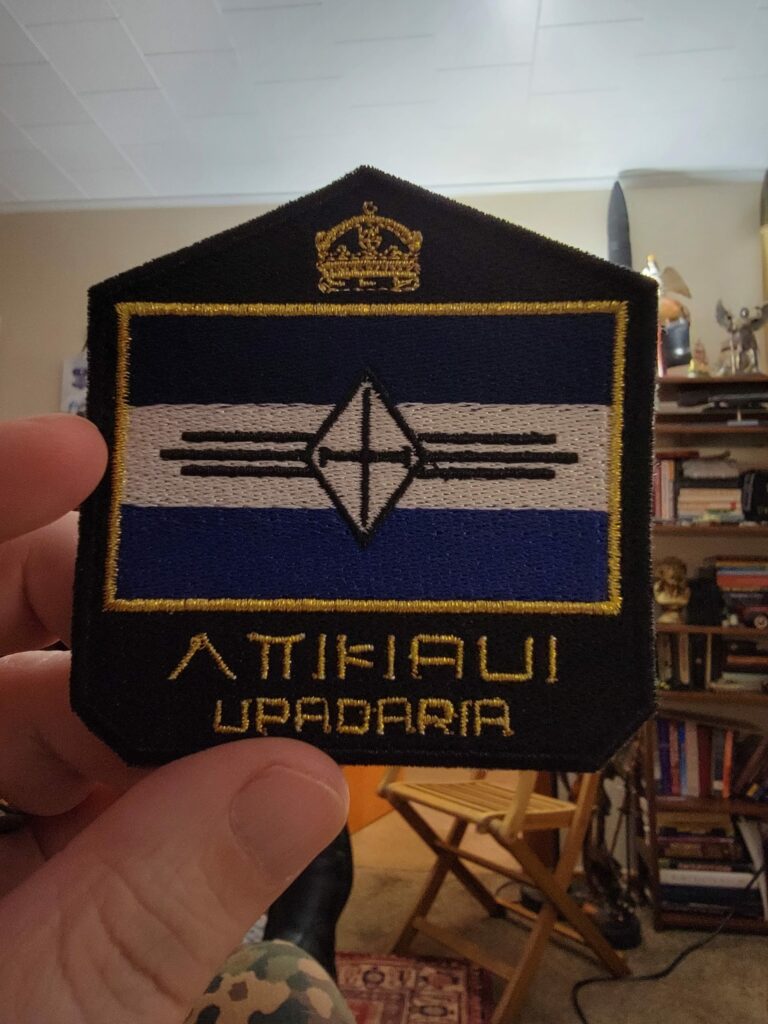
We will not discriminate or show favor on the basis of age, race, sex, ancestry, citizenship, or church affiliation. One way we will show our Refuge Mandate commitment is by preparing ourselves to help others and learning local resources to help the poor and needy and flying the Upadarian Flag to show that anyone seeking refuge can come to this place and seek help, even if that help is referring them to agencies or ministries in the area.
Protocol Eleven: Heavenly Blueprints
WE BUILD STRUCTURES AND PHYSICIAL SPACES THAT REFLECT HEAVEN’S BLUEPRINTS
The very design of our spaces and structures where we live, work, or gather facilitate healthy, living, and prosperous relationships and associations which occur within them.
We will develop both an online and a physical architecture and infrastructure to support our Christian way life of life and empower us to use our ideals, principles, and practices in pursuit of our Mandates as a nation.
Whatever we can do to organize our virtual or physical space we will do and, if we have the means and knowledge, we will assist others in doing.
This includes a web 3.0 cryptonation platform but for the individual it includes being a witness, influence, and example online to their best of our ability in a manner that gives glory to God and is a credit to your fellow Peers.
We will work on the development of various local facilities and structures to support members as well as our kinship, missionary, and refuge mandates.
In the physical this may include Chapter Houses, Common Houses, Mission Houses, Villas, Grand Villas, Community Chapels, Regal Villas, Palaces, Castles, Royal Castles, Villa Estates, Farmsteads, Homestead Estates, Refugee Communities, Regional and Global Missionary and Refugee Support Hubs, and Autonomous Village.
As individuals we may rearrange our own homes, as God provides the means, to act as a host Chapter House or Common House or to simply help people who may comes seeking aid and comfort when they see our Standard flying.
This is also meant to provide affordable housing for members who desire or need it, refugee housing, housing for staff, shared common use facilities, ministry and missionary facilities, market space, and even housing for the general public.
Our new architecture will focus on sustainability and using local, renewable resources, alternative building that is more cost-effective, and, as much as possible, volunteer work by members. Our aim is total technological autonomy.
Our structures will incorporate our ideals, principles, and practices through consensual decision-making process and a nobility of merit.
New spaces meant to facilitate a multi-family household or “householding” lifestyle will also benefit the general public who might wish to copy these designs.
As God provides, we will build among ourselves Villas, Estates, Farmsteads, or Homestead Estates for freewill participatory community and extended multi-family households as well as Common Houses and other common facilities that make daily Oikos possible and practicable among us.
But while the new architecture will be modern in its methods, it will also be rooted in the styles and traditions of historical societies and cultures from around the world and be made attractive and memorable to the public at large.
Protocol Twelve: Revolution Within
WE GROW IN WISDOM TO FULFILL GOD’S BEST FOR OUR LIVES
The Revolution Within is inspired by a commitment to learn “line upon line” and “precept upon precept.” Maturation involves moving beyond milk to meat to actualize our purposes and bolster the Kingdom.
We will pursue our own “revolution within” following the pathway of “Believe, Think, Act, Feel, Relate, Communicate, Cooperate, Build, and Fulfill” in order to find and follow God’s Best for our lives with excellence as a witness and salt and light influence for Jesus to the nations.
We will do this all for the Glory of God and the Praise of His Name by practicing Biblical literacy, walking in the Spirit, being mutually accountable, and remaining a living sacrifice with a heart for the lost.
As we proceed we will look at our life and relationships from the perspective of the Gospel, the Bible, and then these Mandates seeking ever to align and harmonize with the ways of Christ and the way of our Christian nation.
We will look at our beliefs, thoughts and etc. starting from within our lives and immediate relationships and we will seek to connect and align with others on the basis of following the same path in every increasing reach and scale.
As these Protocols are Biblical, we can and should use them as a litmus test for how we are proceeding and advancing ever closer toward fulfillment.
Our purpose in doing this is to make our calling our career, to find and fulfill God’s best for our lives and relationships with excellence, to spread and proclaim freedom for all.
We endeavor to provide aid and comfort to Christians in crisis by being equipped and knowledgeable in ways to direct people who come to us to the help they need.
We aim foremost to be a salt and light witness and influence for Jesus to the nations of people around us and around the world.
Protocol Thirteen: The Marriage Covenant
WE ARE DEVOTED TO BOTH THE UNIVERSAL MARRIAGE TO YESHUA, THE CHRIST AND OUR MARRIAGES
We believe that the purpose of marriage is to reflect the relationship of Yeshua, the Christ to His Beloved and to be the means by which a man and woman reflect the divine model of love in covenant.
We will strive to live up to our affirmation of the sacredness of fatherhood and motherhood and the monogamous marriage between a man and a woman.
Our sacred ideal in the home is to preserve fatherhood and motherhood within the bonds of a lifelong marital union as the highest social aim in order to ensure that most children most of the time are raised in a loving home by their own biological parents.
We will pursue with gusto our shared mission of building strong marriages intentionally as living examples of Christ’s relationship to the Bride, the Body of Christ, or the Church.
We will make and fulfill a public commitment before fellow members to lifelong fidelity from this point on whatever the past might have been. We will commit to uphold one another and to encourage those who are single and unmarried to choose celibacy or marriage as led by God in a positive and affirming manner without being judgmental or intolerant toward others whose faith and convictions differ from our own.
We are positively FOR our chosen way of life rooted in preserving fatherhood and motherhood within a lifelong marital bond. But as to the larger secular society we embrace mutual respect and tolerance of all people and cultures based on common freedom standards and we accept all fellow human beings as equals in value and worth regardless of their own chosen or accepted preferences and lifestyles.
We expect and rightfully are owed the same level of respect, tolerance, and acceptance as we ourselves give to others. Our nation is a nation of people whose God is the Lord and our marital form and ethics are our tradition and way of life which God has ordained for each of us who joins themselves to this spiritual nation.
Protocol Fourteen: Family Honor
WE ARE COMMITTED AND CONNECTED TO OUR NUCLEAR FAMILY, RELATIVES, INTENTIONAL KIN, AND FELLOW BELIEVERS
The people in our circle of closest relationships, from relatives to those we choose to adopt into our family, should be honored and cared for as God gives us the means and opportunity to. This honor begins with our nuclear family and continues to our close relatives and others in our inner circle of relationships.
We will make conscious commitments to serve our natural or blood family accepting that God destined us to be born into that family, our immediate family which we must care for within our God-given roles (mother, father, children, brothers, and sisters), and the covenant family we may choose if our blood kin do not also embrace our chosen way of life.
We will seek to commit ourselves as individuals to mutual aide and comfort toward others with a willingness to form such familial bonds both among Society members and with fellow Christians whom God places in our lives.
This will begin with our own blood kin and immediate families. We will do all of this in a manner which gives Glory to God and which seeks to place Jesus at the center of every relationship.
We will treat all of our kinships, whether by blood or intentional, with honor, dignity, and mutual respect. This does not mean we owe it to anyone, in the name of any kinship, to violate our persons or degrade us or treat us in a manner that is undignified or to demand we compromise our way of life to satisfy them. Kinship is mutual and can and must be conditioned on ongoing mutuality of respect and honor for the dignity of each person.
We endeavor to instill in ourselves and urge all with whom we have kinship to utilize our core ideals and such standards of mutuality and respect for our mutual dignity to govern our kinship and make it fruitful and beneficial to all.
Protocol Fifteen: The Duty To Progeny
WE NURTURE OUR PROGENY AND BUILD FOR THEIR FUTURE
We have a sacred duty to build up and nurture our spiritual and physical descendants and leave them a birthright of value and worth. We impart our beliefs, values, and convictions so they may find God if they seek him. We build structures that will benefit future generations for centuries to come.
We are committed to the process of raising children into adulthood, including our own version of the rumspringa concept (which parents shall set according to their conviction), rites of initiation, and a formal “covenant making” which includes our membership in the Body of Christ as citizens of the Kingdom of God, and our membership in our “nation within the nations.”
As part of acceptance into our nation as Peers, all persons who come of age must make this formal covenant with God in the sight of their fellow Peers in the same manner. Our aim and intention in raising children who, first and foremost, follow Jesus and who then may also choose to join themselves with us through covenant with God, is to raise up men and women of faith, integrity, and nobility.
Our obligation to our progeny, both of the blood and of the spirit, is to see to it they have their needs meet in a holistic manner, to provide wisdom and counsel that dignifies them and edifies them for their good and not our own, and that instructs them first in the ways of Christ and then in our ways, that it may profit them body and soul for all their days.
We are dedicated to, first, preserving a Christian witness for generations to come and, secondarily, to ensuring the future existence and prosperity of our nation by raising up new generations of noble character and integrity.
Protocol Sixteen: Our Gideon’s Call
WE PROCLAIM OUR VISION FOR A SPIRITUAL NATION TO THOSE WHO WOULD ANSWER THE CALL
In the Book of Judges, Gideon called and over 30,000 answered. God chose only 300 to take the first step toward liberating Israel from the Midianites before the rest of the nation rejoined them. Likewise, we broadcast the call and offer the resources needed to be a Peer of our spiritual nation. The call to Peerage is between God and the individual alone.
We are each committed to using whatever means we have to broadcast a Gideon’s call to see who God is calling to our Standard, but we are not recruiting people.
Finding and affirming new Peers of Upadaria involves a “Gideon’s Call” which requires that these people be called by God and be qualified by their character. We do not recruit people or SELL our vision.
Each Peer of Upadaria commits to sharing our vision in a manner that is unobtrusive and that is merely meant to draw in those whom God draws. Our aim is to discover those whom God has called, not to “recruit as many people as possible.” (We do aim to broadcast our vision and message to as many people as possible.)
For this reason we have flags, banners, badges, pins, and the such which you can use as conversation starters.
We do not recruit: we believe God must call people to this nation. This nation, as a tribe unto the Lord, will do great works for the Glory of God and for the positive benefit of the whole Body of Christ and for the cause of freedom in this world.
Men and women of faith who are drawn to this nation need only commit to memory these 17 Protocols and make covenant with God to utilize them not as rules but as a blueprint and as a promise: for God will make a way to begin fulfilling these things in your life and He will enable you to connect with others for mutuality of assurance and support toward these ends. This is what we believe.
We will also Confirm Peers who feel led to become participants in the various structures which will emerge that proclaim our nation and work to fulfill its mandates and vision as well as to serve its people. Toward this end a Society will exist among us as an international agency that will certify and confirm such structures to protect the integrity of our name and symbols and to ensure against misuse and abuse.
While being confirmed as a Peer is necessary for the purpose of engaging in one or more structures affiliated with our nation, all who sincerely and before God pursue these protocols for the Glory of God and by His blessing and provision are Peers of our nation.
The pursuit of these Protocols is not a requirement or set of rules, these Protocols represent God’s promises and ordained will for our nation. To pursue them in a spirit of legalism would be wrong and miss the spirit and intent behind them.
Every Peer pursues these Protocols as a blueprint for their way of life to the best of their knowledge, ability, and means and solely through the grace, power, provision, and favor of God who shall change us and bless us toward the end of their fulfillment. This is not for our enrichment to consume upon ourselves but for the Glory of God to fulfill all these things as a witness for Jesus to others, that they might be saved.
If a Peer cannot do but so much, as much as they can do will be blessed and as they step forward, God will make a new way that they may experience more and live more, day by day. For we are a nation whose God is the Lord and God is our means by which we do all He has given our nation to be and do. All who are Peers of our nation will be blessed by God in that manner by which He blesses nations whose God is the Lord.
Our Gideon’s Call is for men and women of faith to align and join themselves to a Christian nation whose sovereignty is spiritual and which they join solely through a freewill covenant association between themselves and God to pursue these Protocols as God leads, enables, and provides for the Glory of God and the Praise of His Name.
We recognize that in God’s eternal blueprint there are many nations of people whose God is the Lord, ours is not the sole way to be part of such a nation and in no way is being part of such a nation a condition of salvation or eternal life. Those who hear our Gideon’s Call and are ordained to heed it should do so solely because this is written into the scroll of their life.
Those who follow Jesus but for whom this call does not apply are justified in not answering the call, because it is not for them.
Each Peer will do their part, guided by God, to issue this call and to aid and instruct new Peers as God provides. But let no Peer place the urgency of our missionary mandate to proclaim the Gospel behind this commitment to issue the Gideon’s call to become a Peer of our nation.
First and foremost and always proclaim the Gospel and look for ways and opportunities to issue the Gideon’s call that do not distract from or diminish the Gospel message.
Protocol Seventeen: Fulfilling Our Scroll
WE STRIVE TO FULFILL GOD’S BEST FOR OUR LIVES WITH EXCELLENCE
The scroll of our life is a gift from God reflecting our unique identities in Yeshua, the Christ. Each scroll was written non-linearly before natural birth. It is the guiding “wyrd” we are invited to daily align our willful intents with. In accordance with our scroll, we aim to empower ourselves and others through intimacy with God.
We believe in fulfilling our relationship and commitment to and our responsibility to behave as an integral part of the Christian Community as the governing assembly of a spiritual city-state of the Elect whose head is Christ.
Our highest ethic among ourselves is to find and fulfill God’s best for our lives with excellence. We seek this for ourselves and together so that we might be a witness and influence for our Lord to the nations. For to be a witness and influence for Yeshua is our highest good toward our fellow man. While to love and worship God is our highest good toward God.
We embrace our role as a witness and salt and light influence within the physical community based on our territorial responsibility. We consider our own nation to be a corporate witness for Jesus to the nations, this is essential to our identity and purpose as a People.
We seek to make our calling our career, inasmuch as is possible, or to make our career a witness and influence for the Lord our God to our fellow man.
We embrace our current citizenship and will seek to overall good and welfare of the country where we live and/or where we hold our citizenship as a salt and light witness and influence for Jesus and in the most patriotic manner possible.
Our nation is a spiritual sovereignty, it is a fractal and shadow of the Kingdom of God among us, it is not a political or territorial state or sovereignty.
Our goal is to broadcast the Gospel, to be an example of the Gospel in word and deed, to demonstrate the power of the Gospel, and to distribute the benefits of the Gospel both as individuals and as a spiritual nation distributed globally among the nations and peoples of this world.
To accomplish this we rely on the protection of God within our own internal Pomerium. This is a sacred border protected by God and His Hosts which surrounds every peer, ever property and all land owned of held by Peers, and all lands and property held by the various structures and entities which are affiliated with our spiritual nation.
All Peers of Upadaria are within our pomerium and God’s Host protects you. This is part of the blessings of being part of a nation whose God is the Lord.
To represent this and to declare our witness we urge every Peer and structure of Upadaria, unless doing so is life-endangering, to fly our flag in representation of our presence, of our witness, and of our availability to help all who come and seek aid: for it shall be that those who see this flag shall know this is a place where the refugee and the person in crisis can seek aid and comfort.
We recognize and are committed to human dignity and freedom rooted in virtue, liberty, and independence for all based on the original spirit and intent of the US Bill of Rights. To declare and promote freedom is essential to who we are, for therein may we freely declare the Gospel and be a witness for Christ.
For our growth together we will advance along the Course of Honor, also known as the Karygma A’ Regita, and adhere to the Kha Yasa, which is based on these 17 Protocols of our Nation of People Whose God is the Lord.
In doing these things we ensure that both as individuals and as a nation we live out and fulfill our vision to be a witness and influence for Jesus to the nations of people around us and throughout the world. A Nation Whose God Is The Lord-
BECOMING A UPADARIAN-
The Pledge
In order to count yourself a Upadarian, you make a pledge before God. What is important about this pledge is that it is not irrevocable and that to fulfill this pledge you rely on the Holy Spirit empowering you as well as the provision, favor, and blessings of God.
The entire focus is on fulfilling this pledge to the best of your ability, according to your actual means, and in light of your present circumstances.
The GOAL of this pledge is to become a more effective and powerful witness for Jesus, to fulfill God’s best for your life with excellence, and to both live missionally and aid your fellow Christians in their need as God provides for you.
I (give your CHOSEN Upadarian Name), do pledge before God, this commitment to and affirmation of my identity within the spiritual nation of fellow Peers to abide by the UPDR Ideals in my relationships and treatment toward others.
I pledge to make the pursuit of God’s best for my life and being a witness for Jesus to the nations my chief aim.
I pledge to utilize, seek to fulfill, and adipt the 17 Protocols of Upadaria in an aspirational but not legalistic manner, for the Glory of God and the praise of His Name, through the power of the Holy Spirit, and according to the blessings, provisions, and favor which God may bestow upon me. I call myself a Yeshuan as a follower of Yeshua, a Christian as part of the Body of a Christ, and a Upadarian as my spiritual nationality.
I will abide by this pledge by all the means God provides, SO HELP ME GOD, AMEN.
And so after seeking God I bid my fellow Upadarians to use my name, which is this (state the name).
The assembled will then repeat the name and the highest Peer will declare: on this day of the Lord in His year (say the year) we declare (say the person’s new name) is among us and has declared for us as a fellow and equal Peer.
Then you will say, I bid you keep my given name in confidence and to call me by my Upadarian name henceforth among us.
And for my cognomen I declare myself to be (use a name that describes your calling or profession).
Having made such a pledge before God you are therefore considered by God to be a member of a nation whose God is the Lord and you can and should expect the blessings reserved for such nations to flow from God to you and, through you, in witness to others.