May 9, 2026

Technology

The Little Missile That Could – A Tools of the Trade Joint


In this series, we have looked at many weapons that refused to die, weapons that conquered the world through simplicity, and weapons that failed their operators despite genuine technological ambition. This week, we look at something rarer: a weapon whose single most important moment in combat history changed the entire Western understanding of armored warfare overnight – and whose descendants are still being sold on the world market today. The Soviet 9M14 Malyutka – “Little One” in Russian, designated “AT-3 Sagger” by NATO – is not a weapon many casual readers will recognize by name. But its fingerprints are on nearly every anti-armor doctrine written since 1973, every advanced armor development, and every ATGM guidance improvement that followed its debut on the banks of the Suez Canal in October 1973.


The Weapon

Development of the Malyutka began in July 1961, when the Soviet government assigned competing design teams at the Tula and Kolomna arsenals to produce the USSR’s first man-portable anti-tank guided missile. The design brief drew on Western systems of the 1950s – the French Entac and Swiss/West German Cobra – but the Soviets pushed for a smaller, more portable package optimized for infantry carry. The result entered service in 1963: an eleven kilogram missile that fits into a fiberglass suitcase that functions as a base for the missile’s launch rail, guided by a joystick an wire control system, using Manual Command to Line of Sight (MCLOS) guidance.

The periscopic sight and joystick control unit for the Soviet Sagger AT-3 anti-tank guided weapon (ATGW) system. 1984 image from US National Archives. Public Domain.


AT-3 Sagger/9K11 Malyutka ATGM in its fiberglass carrying case. US Army photo. Public Domain.

MCLOS guidance is exactly what it sounds like. The operator acquires the target, launches the missile, and then manually steers it to impact by watching a flare on the missile’s tail and manipulating a joystick that sends correction signals down a wire unspooling behind the missile in flight. It demands genuine skill, steady nerves, and an operator who can remain stationary and focused while a tank crew actively attempts to kill him. Soviet production peaked at 25,000 missiles per year during the 1960s and 1970s, making it almost certainly the most widely produced anti-tank guided missile in history. Exports went to over 45 nations, from Afghanistan and Algeria to Vietnam and Zimbabwe.

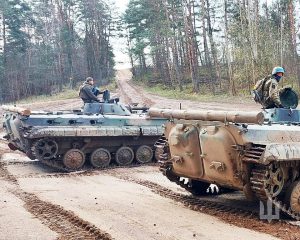
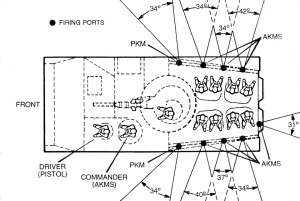
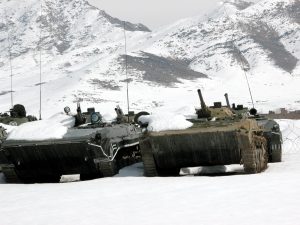
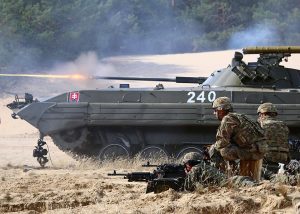
The weapon could be carried by a single infantryman, fired from the ground using a simple suitcase-style launcher, or mounted on vehicles including the BRDM reconnaissance vehicle and the BMP infantry fighting vehicle. Maximum effective range was 3,000 meters – considerably beyond the effective range of any unguided rocket reviewed so far in this series. The basic warhead penetrated more than 400mm of rolled homogeneous armor. On paper, for its time, it was a genuine tank killer.

9M14 Malyutka anti-tank missile on BMP-1 APC, at the Army History Museum and Park in Kecel, Hungary. 2005 photo by WikiUser: VargaA. CCA/4.0 Int’l.


October 1973: The Sagger Panic

On October 6, 1973Yom Kippur, the holiest day of the Jewish calendar – Egyptian forces crossed the Suez Canal in a coordinated assault that caught the Israeli Defense Forces badly off-balance. What followed in the first 48 to 72 hours was one of the most shocking reverses in Israeli military history, and the Malyutka was at the center of it.

Egyptian infantry crossed with Malyutka teams carrying three times the normal missile load. They deployed in static firing positions along the eastern bank and waited for Israeli armor – specifically the tank-heavy Israeli counterattack doctrine that had worked so devastatingly in the Six Day War of 1967. The Israeli tank crews – victims of “Victory Disease” – helpfully obliged, charging forward without infantry support in the manner that had defeated Arab armies six years earlier.

The Malyutka teams were ready.

The results were catastrophic. In the first days of the war, Egyptian Sagger teams knocked out Israeli armor at a rate that generated genuine panic in Israeli command structures. In total, Sagger’s knocked out more than 800 Israeli tanks and other combat vehicles during the war. A period known simply as the “Sagger Panic” set in, during which the future of the main battle tank as a concept was openly questioned – by NATO planners as much as by the Israelis themselves. If Egyptian infantry with Soviet missiles could kill Israeli Centurions and M60 Patton tanks at will, what would Soviet infantry equipped with the same missiles do to NATO armor in Central Europe?

Israeli M-60 main battle tank, destroyed during fighting in the Sinai Peninsula, 1973. Photo from””Military Battles on the Egyptian Front” by Gammal Hammad. Public Domain.

The answer the Israelis eventually developed was both tactical and improvised. Artillery concentration on suspected Sagger operator positions – suppressing the men rather than intercepting the missiles – proved effective. Tank crews learned to advance aggressively toward launch signatures rather than halt and present stationary targets. Firing rounds in front of the tank to generate dust clouds disrupted operator visibility. Moving laterally while the missile was in flight, exploiting the MCLOS system’s requirement for continuous operator correction, helped to cause misses. These Israeli adaptations were subsequently adopted wholesale by NATO as standard ATGM countermeasure doctrine. The “Little One” had, in six days of combat, restructured how the Western alliance thought about tanks, infantry, and the relationship between them.

An Israeli soldier with a Sagger anti-tank rocket. 1974 photo by Israel Press and Photo Agency (I.P.P.A.) photographer. CCA/4.0 Int’l.


The Weapon’s Limitations – And Its Evolution

The same combat record that demonstrated the Malyutka’s shock effect also revealed its constraints. MCLOS guidance demanded a level of operator training and composure that mass-fielded infantry forces could not reliably produce. Combat hit probabilities for MCLOS variants have been documented at approximately 25% under real conditions – effective enough in the hands of well-trained Egyptian teams in prepared positions, but far less reliable in dynamic, fast-moving and violent combat. The minimum engagement range of 500-800 meters forced operators into exposed forward positions. And the slow missile speed – averaging a mere 120 meters per second – gave alert tank crews meaningful reaction time if they spotted the launch.

Soviet designers addressed these limitations progressively. The 9M14M Malyutka-M, entering service in 1973, improved the motor to reduce flight time. The 9M14-2 Malyutka-2, entering service in 1992, replaced MCLOS with SACLOS – Semi-Automatic Command to Line of Sight – guidance, the same improvement that distinguished the Dragon II from its predecessor, dramatically reducing operator skill and workload management requirements. The 9M14-2M added a tandem HEAT warhead for use against reactive armor. Serbian engineers at VTI developed the Malyutka-2T with a 1,000mm penetration tandem warhead and a radio-guided variant with a range of 5 kilometers and a speed of 200 meters per second – a very different weapon from the 1963 original in almost every parameter except the basic airframe.

China produced its own unlicensed derivative, the HJ-73 Red Arrow, in multiple improved variants. Iran produces the RAAD-T – itself a reverse-engineered copy, supplied to Hezbollah and various militia forces and documented in conflicts across the Middle East and Yemen.


Still In The Field

The Malyutka family has appeared in virtually every significant ground conflict since 1973: the Iran-Iraq War, Grenada, the Gulf War, both Chechen Wars, Libya, Syria, Iraq, and Ukraine, on both sides. Free Libyan Army rebels were filmed using Saggers in 2011. Syrian opposition forces uploaded Sagger firing videos from 2012 onward. Current confirmed operators include Morocco, Saudi Arabia, Thailand, Syria, Iran, and a range of non-state actors who have acquired the weapon through the vast quantities exported during the Cold War.

Map with 9M14 operators in blue and former operators in red. 2015 image by WikiUser: Jurryaany. CCA/4.0 Int’l.

The weapon that crossed the Suez Canal in a suitcase in 1973 is still on the world’s battlefields in 2025 – modernized, copied, improved, and proliferated to an extent that makes any meaningful accounting of current stocks essentially impossible. That is the definition of a weapon that solved a real problem, in a way that the world found impossible to stop buying.

The Dragon was America’s answer to the same requirement at roughly the same time. The Malyutka was the Soviet answer. One of them changed the world. The other is remembered primarily for its 20% hit rate and the relief that the Javelin finally arrived.


The Freedomist — Keeping Watch, So You Don’t Have To


freedomist banner


The Dragon They Loved To Hate – A Tools of the Trade Joint


Every series has its cautionary tale. The M72 LAW refused to die because it kept solving real problems. The RPG-7 conquered the world through its sheer brutal simplicity. The Carl Gustaf earned its longevity through continuous intelligent evolution. The SMAW survived on institutional momentum and genuine urban assault utility. This week, we going to look at the weapon that rounds out this series on a different note entirely – the one that didn’t work very well, that the troops genuinely disliked, that the Army was trying to replace almost from the moment it was fielded, and that still managed to serve for 26 years before the Javelin finally put it out of its misery.

Meet the M47 Dragon.

US Marine carrying the M47 Dragon Anti-Armor Missile System, May, 1997. USMC Photo by LCPL E.J. Young. Public Domain.

The Dragon holds a legitimate historical distinction: it was the first man-portable, shoulder-fired, wire-guided anti-tank missile to reach production. That is genuinely significant. Every weapon system we have covered in this series has been an unguided rocket or recoilless round – point it, pull the trigger, hope for the best. The Dragon was something categorically different: a wire-guided missile that the operator steered to the target using a tracker that read infrared emissions from a pyrotechnic source on the missile’s tail, automatically transmitting correction signals through a wire that unspooled behind the missile in flight. In theory, a trained operator could guide a Dragon onto a tank at 1,000 meters with precision that no unguided rocket could match. In theory.


The Pit of Origin

The Army’s requirement for what it called a Medium Antitank Weapon dated to 1959 – the same Cold War imperative that drove the entire weapons landscape we have been exploring in this series. The Soviets were fielding T-55s and T-62s in massive numbers, and NATO needed infantry-portable anti-armor capability at every level of the force structure. The heavy end was covered by the BGM-71 TOW, a crew-served wire-guided missile that remains in service today. The Dragon was supposed to cover the medium range – something one man could carry and fire, that could kill a tank at ranges beyond what any unguided rocket could reliably reach.

McDonnell Douglas won the development contract in 1966. The weapon was designated FGM-77, nicknamed ‘Dragon’ in 1967, and first fielded to U.S. Army units in Europe in January 1975. The Army assigned one Dragon per rifle squad, with a dedicated anti-armor specialist as the operator. Approximately 7,000 launchers and 33,000 missiles were eventually produced, with export sales to Israel, Jordan, Morocco, Saudi Arabia, Thailand, the Netherlands, Spain, Switzerland, and pre-revolutionary Iran.

Map of M47 Dragon operators in blue with former operators in red. 2015 map by Wikimedia Commons User Jurryaany. CCA/4.0 Int’l.

On paper, the specifications were reasonable for the era: effective range of 65 to 1,000 meters, maximum range of 1,500 meters, a HEAT warhead capable of penetrating 330mm of rolled homogeneous armor on the base model. The guidance system required no assembly before firing – the operator simply removed the shock absorbers, attached the tracker unit, sat down, and fired. Lighter than most contemporary guided anti-tank systems in Western Europe, it gave American infantry a tank-killing capability at the squad level that was genuinely novel.

In practice, the Dragon was a mess.


The Problems Begin

The guidance system demanded that the operator track the target continuously from the moment of firing until impact – in the open, stationary, for up to eleven seconds on a base-model Dragon shot at maximum range. Eleven seconds is a very long time to sit still while a tank crew, now aware they are being engaged, attempts to shoot back. The Dragon’s distinctive “popping” sound as its side-mounted thruster rockets fired corrections downrange announced the shot to anyone within earshot. U.S. Army planning documents from the Cold War period acknowledged bluntly that Dragon crews were expected to take heavy casualties in any actual European land battle.

Soldier of the 25th Infantry Division firing an M47 Dragon anti-tank missile during Exercise COBRA GOLD ’87, Korat Royal Thai Air Force Base, Thailand, 1987. US Army photo by SSGT Valentino M. Gempis. Public Domain.

The hit probability numbers were damning. A U.S. Army study of Dragon firings under combat conditions found a hit rate of approximately 20%. For a weapon whose entire value proposition rested on guidance precision, this was a serious indictment. The causes were multiple: the sudden loss of the missile’s 30-pound weight from the shooter’s shoulder caused many operators to flinch badly enough to break target track at the moment of launch. The wire could break. Bodies of saltwater – a notable concern for a weapon issued to Marines – could interfere with the missile’s circuits. Crosswinds degraded accuracy. Over-correction by the operator caused the missile to ground itself. And the base warhead was quickly rendered inadequate by Soviet advances in explosive reactive armor.

The Marine Corps, to their credit, did not simply accept the situation. In 1986 they initiated a product improvement program that produced the Dragon II – an 85% increase in armor penetration, entering USMC service in 1988. A further upgrade, the Dragon III, added a tandem warhead precursor charge. The Army, already focused on finding a replacement, largely declined to participate in the improvement program. The two services were, characteristically, heading in different directions with the same weapon.


Combat Record and Exit

The Dragon saw combat in Grenada in 1983, and during Desert Storm in 1991, where 150 launchers and 5,000 rockets were deployed. Its performance in the Gulf War was, at best, unremarkable – the conflict’s short duration and the Iraqi Army’s swift collapse limited meaningful data collection. What the Gulf War did confirm was that the Dragon’s export customers had occasionally lost weapons to advancing Iraqi forces, making Iraq an inadvertent operator of American anti-tank technology – a recurring theme in Middle Eastern arms flows.

Soldiers of the 82nd Airborne Division scan for targets with an M47 Dragon anti-tank weapon in the firing position during Operation URGENT FURY, October, 1983. The soldier in the foreground is carrying two M72 light anti-tank weapons over his shoulder. US Army photo by SPC 5 Edward Nevala. Public Domain.

The weapon the Army had been waiting for arrived in the form of the FGM-148 Javelin, a fire-and-forget infrared-guided missile that allowed the operator to acquire the target, lock on, fire, and immediately take cover – no eleven-second tracking requirement, no sitting in the open while the missile flew. The Javelin entered service in 1996, and the Dragon was officially retired from U.S. service in 2001. The US Army destroyed its last remaining missile stocks at the Anniston Defense Munitions Center in Alabama on September 8, 2009. It was not a moment of particular mourning.

The Dragon’s afterlife has been appropriately ironic. Iran reverse-engineered it as the Saeghe, which has been supplied to Hezbollah and various militia forces across the Middle East. Morocco, Saudi Arabia, and Thailand continue to operate versions of the system. The weapon that American infantry quietly despised for a generation has found a second career in the hands of non-state actors and smaller militaries that cannot afford the Javelin – which, at roughly $175,000 per missile, represents a rather different procurement universe.


Conclusion

The Dragon is the necessary counterpoint to everything else in this series. The M72, the RPG-7, the Gustaf, and the SMAW all demonstrate that simple, well-matched solutions to genuine problems tend to outlast their predicted obsolescence. The Dragon demonstrates the corollary: that technological ambition without adequate attention to the human factors of combat – the flinch, the exposure time, the noise signature, the weather vulnerability – produces weapons that technically work, while practically failing the people who carry them.

The Javelin learned those lessons. The Dragon paid for the education.


The Freedomist — Keeping Watch, So You Don’t Have To


freedomist banner


The SMAW – A Tools of the Trade Joint


The Bunker Buster

For the last few weeks, we have walked through the M72 LAW, the RPG-7, and the Carl Gustaf – three weapons that between them define the spectrum of man-portable anti-armor and assault systems that have shaped infantry combat since the 1960s. Each represented a coherent, and unique, design philosophy: the M72 disposable and simple; the RPG-7 cheap and reloadable; the Gustaf precise and multi-role. Today we look at the outlier – the weapon that does not fit neatly into any of those categories, was adopted by exactly one branch of the U.S. military, and spent its entire service life being replaced by systems that never quite replaced it: the Mk 153 Shoulder-Launched Multipurpose Assault Weapon, universally known as the SMAW.

Marines with 1st Battalion, 5th Marine Regiment, fire Shoulder-Launched Multipurpose Assault Weapons during Exercise Koolendong at Bradshaw Training Area, Aug 23, 2014. USMC photo by Sgt. James Gulliver. Public Domain.

The SMAW is a Marine Corps weapon, through and through. It was fielded in 1984 as a Marine Corps-unique system; the Army borrowed 150 launchers and 5,000 rockets for Desert Storm, then gave them back (as the FGM-148 Javelin was coming online in the mid-90’s, along with the increasing intent to adopt the Carl Gustaf to replace both the M67 Recoilless Rifle, and the positively awful M47 Dragon), and for four decades it has been the Corps’ primary tool for the mission the name describes: assaulting fortified positions. Not primarily killing tanks – though it can, to a point – but destroying bunkers, breaching walls, collapsing buildings, and suppressing crew-served weapons dug into hardened positions. That is a different set of mission requirements than any of the weapons we have previously covered in this series, and it produced a different weapon.


Where It Came From

The SMAW’s lineage runs through Israel, which is fitting – the Israelis have spent decades solving exactly the kind of close-quarters urban assault problems the SMAW was designed for. In the late 1970s, Israel Military Industries developed the B-300, an 83mm reloadable rocket launcher optimized for infantry assault operations. The Marine Corps, looking for a replacement capability after the collapse of the FGR-17 Viper program – the same procurement disaster that sent the Army to the AT4 – found the B-300 and adapted it for American service.

Marines test SMAW at Camp Lejuene, 1982. USMC/Infantry Magazine. Public Domain.

The American version added one distinctive and genuinely unusual feature: a spotting rifle. Mounted on the right side of the launch tube, this 9mm device fires ballistically matched tracer rounds at the target before the main rocket is launched. The idea was sound – use cheap tracer rounds to confirm the firing solution before committing an expensive rocket to the shot. In practice, it added weight, complexity, and required the operator to expose himself repeatedly to enemy observation while working through the spotting process. It was a British design concept grafted onto an Israeli launcher for American Marines, which gives you some sense of the SMAW’s somewhat eclectic ancestry.

The result weighed 16 pounds unloaded, fired 83mm rockets loaded from the rear, and entered service with the Marines in 1984 – the same year the Army was fielding the AT4 and the same period the M72 was being theoretically retired. In practice, all three ended up in service simultaneously, which tells you something about the difficulty of replacing any weapon system that actually works.


Combat Record

The SMAW’s combat record is built primarily around the Iraq War the began in 2003, and specifically around the Battle of Fallujah. In the street-by-street fighting of both the first and second offensives in 2004, the weapon found its calling. The SMAW-NE – “Novel Explosive,” which is the military’s characteristically understated designation for a thermobaric warhead – proved devastatingly effective against the fortified rooms, tunnels, and hardened positions that Iraqi insurgents had constructed throughout the city. A thermobaric warhead works by dispersing a fuel cloud and then igniting it, producing an overpressure wave capable of collapsing lightly constructed buildings and lethal to personnel in enclosed spaces. It is not a subtle tool.

A US Marine Corps (USMC) troop with the 1st Battalion, 8th Marines, fires an MK-153 SMAW round at an insurgent stronghold during Operation Al Fajr, Fallujah, Iraq. Marine Corps photo by LCPL J.A. Chaverri, USMC, November, 2004. Public Domain.

When the SMAW-NE lacked the penetrating power to breach certain reinforced walls directly, Marines developed a two-shot technique: first fire a High-Explosive Dual-Mode round to punch a hole through the wall, then send the thermobaric round through the opening into the room behind it. Tactically effective, if somewhat baroque. The broader point is that the weapon was being adapted in real time to meet a combat environment no one had fully anticipated – which is, as we have noted throughout this series, what separates useful weapons from expensive museum pieces.

In Afghanistan and Iraq more broadly, the SMAW gave Marine infantry squads a direct-fire breaching and suppression capability that neither the M72 nor the AT4 provided. The Army, which had returned its borrowed SMAWs after Desert Storm, later developed its own derivative – the SMAW-D, designated the M141 Bunker Defeat Munition – a disposable single-shot version using the same warhead. Even the Army eventually admitted the mission was real.


The Spotting Rifle Problem & Mod 2

The original SMAW’s spotting rifle was its perpetual liability. It was over 30 years old by the 2000s, experiencing increasing failure rates, and the process of firing multiple tracer rounds to range a target was slow and exposed the operator. In 2013, Marines at Quantico tested a modified SMAW with thermal and laser range-finding technology that replaced the spotting rifle. The results validated the concept, and in 2015 the Marine Corps contracted for the SMAW Mod 2 – a complete overhaul that replaced the spotting rifle with a Modular Ballistic Sight, incorporating a laser rangefinder, ballistic computer, and thermal capability. Weight dropped from 16 pounds to 13 pounds. Fielding to the Fleet Marine Force began in November 2017.

The Mod 2 was, by all accounts, a significant improvement. It was also, almost immediately, announced as the weapon’s final iteration before replacement.


The Gustaf Takes Over

The Marine Corps has been transitioning to the Carl Gustaf M4 as its primary infantry shoulder-fired system – and in doing so, has eliminated the 0351 occupational specialty, the Infantry Assault Marines who were trained specifically in SMAW employment. The Gustaf’s broader ammunition family, lighter weight in its M4 configuration, and compatibility with laser-guided rounds made the case for consolidation straightforward. Why maintain two separate systems, two separate MOS pipelines, and two separate logistics chains when one weapon covers the mission set of both?

The answer, for forty years, was institutional inertia, procurement complexity, and the SMAW’s genuine effectiveness in the one role it was specifically designed for. Those are not trivial reasons. But the Gustaf’s evolution has finally rendered them insufficient.

The SMAW is not gone yet – it remains in inventory and, as of 2023, Ukrainian forces of the 68th Jager Brigade were documented using it in operations against Russian forces. Old weapons, as we have noted repeatedly [https://freedomist.com/are-you-sure-you-want-to-throw-that-away/] in this series, have a way of finding new wars to fight. But its role as the Marine Corps’ primary assault weapon is drawing to a close, replaced by the Swede that finally convinced everyone it could do the job better.

This forms a fitting end to this series on man-portable anti-tank weapons. From the M72 to the RPG-7 to the Gustaf to the SMAW – four weapons, four design philosophies, and one consistent lesson: the weapon that solves a real problem, solved well, outlasts every prediction of its obsolescence.

Next time, we’ll look into a weapon that didn’t work so well – the M47 Dragon.


The Freedomist — Keeping Watch, So You Don’t Have To


freedomist banner


The Goose Is Loose – A Tools of the Trade Joint


Previously, we have looked at the M72 LAW and the RPG-7 – two weapons born from the same fundamental problem, that solved the issue by two very different design philosophies: One is disposable, one is reloadable. One is American, one is Soviet. Both are still on the world’s battlefields today. This week, we look at the weapon that split the difference between them, outlasted both as a frontline system in the world’s most capable militaries, and is currently destroying Russian tanks in Ukraine: the Carl Gustaf 84mm recoilless rifle.

U.S. troops call it “the Goose,” or just “the Gustaf.” The British call it “Charlie G.” The Swedes, who invented it, call it the Granatgevär m/48 – “Grenade Rifle, Model 1948.” Whatever you call it, the weapon has been in continuous production and frontline service since 1948, is now operated by more than 40 countries, and in 2022 a Ukrainian crew used one to destroy a T-90M – Russia’s most advanced operational main battle tank. Not bad for a design that was old when the Korean War started.


What A Recoilless Rifle Even Is

Before going further, it is worth taking a moment to explain what a “recoilless rifle” is – because the term confuses people who are used to thinking about weapons in terms of either conventional rifles, artillery or rocket launchers.

When a conventional firearm – or cannon – fires, the propellant gases accelerate the projectile forward, and by Newton’s third law, an equal and opposite force pushes back against the shooter. That is “recoil“. In a pistol or rifle, the weapon’s mass and the shooter’s body absorb it. In a large-caliber weapon, like an artillery piece, uncontrolled recoil would be catastrophically injurious to the shooter and structurally ruinous to even a stout tube.

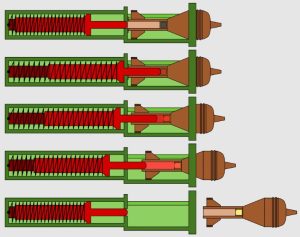
Cumulative shell (H.E.A.T) diagram. 2005 image by Robert Blazek. Public Domain.

The recoilless design solves this by venting a precisely calculated portion of the propellant gases out of the rear of the weapon through a cone-shaped Venturi nozzle at the moment of firing. The rearward thrust of those escaping gases almost exactly cancels out the forward thrust driving the projectile. The net result on the shooter is dramatically reduced recoil – not zero, but manageable even from the shoulder. The tradeoff is that the rearward ejecting blast of gases is substantial, creating a “danger zone” behind the weapon and generating a dramatic visible signature. But for a weapon that can deliver an 84mm shaped-charge round accurately at 500 meters, that is a tradeoff most militaries have been willing to make for over seven decades.

A coalition force member fires a Carl Gustav recoilless rifle system during weapons practice on a range in Helmand province, Afghanistan; Feb, 2013. U.S. Army photo by Sgt. Benjamin Tuck. Public Domain.

The Gustaf fires its rounds at 290 meters per second – nearly three times the muzzle velocity of a World War II bazooka. The result is superior accuracy at range, and a rifled barrel that spins its projectiles for further stability. This is not a “point and pray” weapon – with proper training, it is a precision tool.


The Weapon & Its History

The Carl Gustaf’s origins trace to the Swedish Army’s experience in watching World War II unfold from the sidelines and drawing many correct conclusions. Sweden’s first attempt at a shoulder-fired recoilless weapon – the 20mm Pansarvärnsgevär m/42 – was already obsolete when it entered production in 1942, capable of penetrating only about 40mm of armor at a time when German and Soviet tanks were fielding considerably more. Designers Hugo Abramson and Harald Jentzen at the state-run Carl Gustafs Stads Gevärsfaktori scrapped the small-bore approach entirely, scaled their design up to 84mm in diameter, and paired the recoilless principle with a shaped-charge warhead. The resulting weapon entered Swedish service in 1948.

It first saw combat with Swedish UN peacekeepers during the Congo Crisis of the early 1960s, where it proved rugged and versatile under operational conditions. Export orders soon followed. The M2 variant, introduced in 1964, spread the weapon across NATO and allied militaries. U.S. Army Special Forces, the Rangers, and the British SAS adopted the M3 variant in the 1990’s for bunker-busting and anti-vehicle work. By 2014, the U.S. Army was ordering the Gustaf for conventional infantry units deploying to Afghanistan, specifically because enemy forces could reach American troops with RPG-7s at ranges where U.S. squads had no equivalent direct-fire response.

Swedish rocket launcher in action at a roadblock in Katanga, during_Operation_Unokat, December, 1961. Unknown author. Public Domain

The current production model, the M4 “MAAWS” (Multi-Role Anti-Armor Anti-Personnel Weapon System), weighs under seven kilograms – about 15 pounds – and measures less than one meter in length. It accepts a digital fire control device that communicates ballistic data directly to programmable ammunition. It can fire laser-guided rounds developed jointly by Saab and Raytheon, accurate to 2,500 meters. It can also fire the same basic HEAT rounds it was firing in 1948. That backward compatibility with legacy ammunition means nations can modernize their launchers without replacing their ammunition stockpiles – a procurement detail that matters enormously for smaller militaries.


The Ammunition Story

The Gustaf’s real competitive advantage over both the M72 and the RPG-7 is its ammunition flexibility, and this is where the “multi-tool” description earns its keep. The current round family includes:


A Depiction of Ammunition Variants for the MAAWS. Undated US Army graphic. Public Domain.

No other man-portable shoulder-fired system offers this range of capability from a single re-loadable launcher. This is why, despite weighing more than the M72 and costing considerably more per launcher than an RPG-7, the Gustaf has not only survived but expanded its user base across seven decades of continuous warfare.

Poland ordered the Carl Gustaf M4 system in a deal worth over $1.2 billion in March 2024. Japan ordered 300 units in 2023. Australia, the Baltic states, and NATO as a whole have placed ongoing orders. The weapon’s procurement momentum is accelerating, not declining.


The Bottom Line

The M72, the RPG-7, and the Carl Gustaf represent three answers to the same question: how do you give infantry the ability to destroy armor, breach fortifications, and suppress defended positions without becoming dependent on vehicle-delivered fire support that may not be available? The American answer was disposable simplicity. The Soviet answer was cheap reloadability. The Swedish answer was precision versatility – and it cost more and weighed more, but it has proven more capable in more operational contexts than either alternative.

U.S. Marine fires an M3A1 Multi-role Anti-Armor Anti-Personnel Weapon System during unknown distance engagement training, Aug. 14, 2023. USMC photo by Cpl. Aidan Hekker. Public Domain.

In a budget environment that increasingly rewards lowest unit cost procurement, the Gustaf’s continued and expanding success is a useful reminder that the cheapest weapon per unit is not always the most economical weapon per mission accomplished.

The Goose is still flying. And judging by the order books, it will be for some time to come.


The Freedomist — Keeping Watch, So You Don’t Have To


freedomist banner


The RPG-7: The Titan of the Man-Portable Anti-Tank World – Tools of the Trade


Last week, we looked at the M72 LAW – a 1963 American design that refused to die, and recently earned a genuine second act through Norwegian engineering ingenuity. This week, we look at the weapon on the other side of that Cold War equation: the RPG-7. Where the M72 is the more elegant solution – lighter, more sophisticated, but ultimately more expensive to produce – the RPG-7 is the Soviet answer to the same problem, while coming from a fundamentally different philosophy about what this sort of weapon system is supposed to be.

The weapon’s full designation is Ruchnoy Protivotankovy Granatomyot-7 – “Hand-held Anti-tank Grenade Launcher, Model 7” – though the English backronymRocket-Propelled Grenade” has stuck hard enough that most people have forgotten it was ever anything else. Development began in 1958, to replace its predecessor, the RPG-2 the weapon was formally adopted by the Soviet Army in 1961, and it has not stopped being produced or used since. Over nine million units have been manufactured. It has seen combat in more than 80 countries. It is, without serious competition, the most widely distributed anti-armor weapon in the history of warfare.


Design Philosophy

The RPG-7’s design lineage is still the same as the M72 – the US bazooka, and the German Panzerfaust, both attempting to solve the fundamental problem of giving infantry a fighting chance against armor at range – but the Soviet solution diverged sharply at the design level. Where the M72 is disposable and self-contained, like the Panzerfaust, the RPG-7 is reusable like the bazooka. The launcher tube – a 40mm steel tube, wood-wrapped for heat protection, weighing about 15 pounds – is a permanent asset. The rocket-propelled grenades are loaded separately at the muzzle, with the oversized warhead protruding forward of the tube in the weapon’s distinctive silhouette.

A Romanian soldier aiming a AG-7 (licensed RPG-7 copy) during a military exercise of the romanian 191st Infantry Battalion. Photo by Dragoş Anghelache. CCA/3.0

This reusability carries real tactical implications. A squad equipped with RPG-7s can carry multiple warhead types for the same launcher – anti-armor, anti-structure, thermobaric, fragmentation – and select the appropriate round for the target. The M72 gives you one round per tube. The RPG-7 gives you one launcher and as many rounds as your ammunition bearers can carry (typically three spare rounds per carrier). For conventional Soviet infantry doctrine, which envisioned massive combined-arms engagements against NATO armor in Central Europe, this made sense. One RPG-7 per motorized rifle squad (https://www.globalsecurity.org/military/library/report/1998/infantry-rpg.htm) was the standard Soviet assignment – a number that irregular forces consistently exceeded in practice, if at all possible.

Some RPG-7 Ammunition types. Image by LivePi3.14, 2005. CCA/4.0 International 


The weapon does, however, present real limitations that deserve honest acknowledgment. A 1976 U.S. Army evaluation found that in an 11 km/h crosswind, a gunner firing at a stationary, tank-sized target could not expect a first-round hit more than 50% of the time at 180 meters. The backblast, while less dangerous than many Western counterparts in confined spaces – Soviet doctrine allowed firing from inside rooms with only two meters of standoff – is still substantial and signature-generating. And the weapon’s effective anti-armor range tops out around 300 meters against a moving target, limiting its utility as armor protection has advanced.

But its strengths are formidable, and they are the strengths that matter most in the environments where most of the world’s actual fighting gets done.
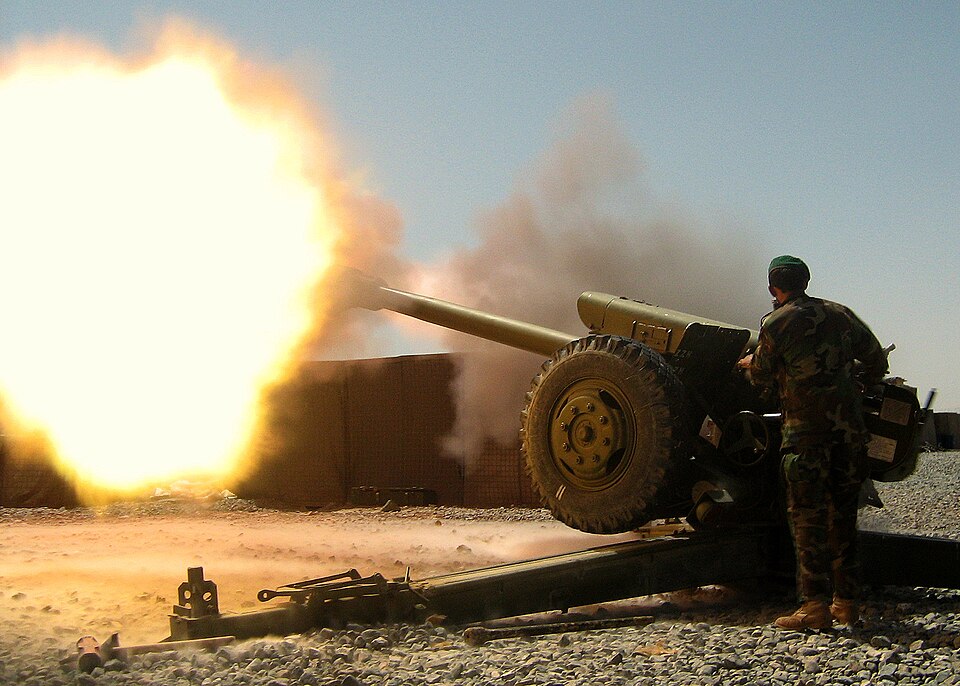
A Polish and US soldier load an RPG-7 during combined live-fire training at Drawsko Pomorskie Training Area in Drawsko Pomorskie, Poland, Oct. 29, 2016. U.S. Army photo by Sgt. Lauren Harrah. Public Domain.


Combat Record

The RPG-7’s first confirmed combat use was during the Six-Day War in 1967, and it has barely paused since. In Vietnam, it became the primary tool of North Vietnamese and Viet Cong forces against American armor and, critically, helicopters – a use case the weapon was never designed for, but adapted to with lethal effectiveness. In Afghanistan during the Soviet occupation, the Mujahideen employed it as their weapon of choice against Soviet armor, APCs, trucks, and helicopters, averaging one RPG for every ten to twelve fighters in the field…or, roughly one RPG-7 per squad.

The Battle of Mogadishu in 1993 produced the RPG-7’s most famous moment in American military consciousness: Somali militiamen used the weapon to shoot down two U.S. Army MH-60 Black Hawk helicopters, triggering the events immortalized in the 1999 book and 2001 movie “Black Hawk Down“. The irony runs deep – the CIA had taught Afghan Mujahideen how to use the RPG-7 against Soviet helicopters during the 1980s, and the technique came back to haunt the US military.

In Chechnya, the weapon demonstrated what disciplined urban employment looked like. Chechen hunter-killer teams of three to four fighters – an RPG gunner, a machine gunner, and a sniper – simultaneously engaged single Russian armored vehicles from multiple elevations, including ground level, second and third stories, and basements, while the sniper and machine gunner suppressed supporting infantry. Russian armored columns in Grozny during the first Chechen war may have lost 100 tanks and 250 armored fighting vehicles. This is the tactical template that every urban army has had to study since.

In Ukraine today, the weapon is in simultaneous use by both sides – Ukrainians firing Soviet-designed RPG-7s against Soviet-designed tanks, while Russian forces do the same. Texas-based AirTronic USA has supplied a modernized American variant, the PSRL-1, to Ukrainian forces – a US-built RPG-7 derivative, fighting Russian armor. The symmetry is almost poetic.

PSRL-1 (modified American copy of the Soviet/Russian RPG-7) in use during training by soldiers of the National Guard of Ukraine. Photo by ngu.gov.ua. CCA/4.0 Int’l.
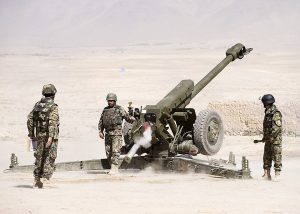


The Broader Point

The RPG-7 costs somewhere under $500 per launcher. Warheads run roughly $100 to $500 per round depending on type. A single M1 Abrams main battle tank costs approximately $10 million. The math here is not complicated, and it is precisely that math that drives procurement decisions in most of the world’s militaries – not the ones planning to fight peer adversaries across the Fulda Gap, but the ones planning to fight the wars that actually happen: insurgencies, urban battles, and asymmetric confrontations where the side with the RPG-7 does not need to win every engagement, only enough of them, among other modes of warfare.

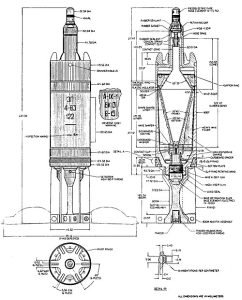
The M72 and the RPG-7 are mirror images of the same Cold War problem, solved by two different industrial philosophies. One is elegant, lightweight, and disposable. The other is crude, heavy, reloadable, and has outlasted every attempt to declare it obsolete. Both are still operating on the world’s battlefields today.

Next time: the Carl-Gustaf — the recoilless rifle that splits the difference.


The Freedomist — Keeping Watch, So You Don’t Have To


freedomist banner


The Old Dog Learns A New Trick – Tools of the Trade


There is a recurring pattern in defense procurement that the Pentagon’s acquisition bureaucracy never quite manages to learn: the weapon system everyone writes off as obsolete has a habit of refusing to die, because the problem it solves refuses to go away. The M60 tank is one example. The M72 Light Anti-armor Weapon – the LAW – is another, a contemporary of the M60 and in some ways a more interesting one, because its “second act” required not just political will but genuine engineering ingenuity.

The M72 entered US Army and Marine Corps service in 1963, replacing the aging M20 Super Bazooka as the individual infantryman’s answer to armored threats. The concept was elegantly simple: a 66mm rocket, pre-loaded in a telescoping aluminum-and-fiberglass tube, weighing under five pounds, that one man could carry, deploy, fire, and discard. No maintenance, no crew requirement, no logistics tail beyond the round itself. The design lineage ran straight back through the American bazooka and the German Panzerfaust of World War Two – the perennial infantry problem of “how do you kill a tank without becoming a tank yourself” – solved with the tools of 1963.

Disposable Light Anti-Tank Weapon (LAW M72). Also shown is a cross-section of the launch tube with its accompanying payload, a 66mm rocket with a shaped charge warhead. Photo dated 1985-1990 from Audiovisuele Dienst Koninklijke Landmacht (AVDKL). CCA/4.0 Int’l

It saw its first extensive combat in Vietnam, where it earned a mixed reputation. The weapon was effective against light armor, bunkers, and fortified positions, but early production runs suffered from warhead detonation failures in flight, requiring a full recall and safety redesign. A large part of the early reports of failures of the M72 were shaped by the disaster of the Lang Vei Special Forces camp, which was overrun by Communist forces using PT-76 light tanks, vehicles which the M72 should have handled with ease.

A Polish PT-76 amphibious light tank coming out of the water during an amphibious exercise. 1971 photo from “Czołg pływający PT-76. TBiU 12 WMON, Warszawa 1971.” Public Domain.

A number of quality control and design issues surfaced immediately, which contributed to the base being overrun. The US defense establishment responded quickly. The corrected versions returned to service and remained there – through the wars of Desert Storm, Afghanistan, and Iraq – long after the system had nominally been “replaced” by the Swedish-designed AT4 in the mid-1980s.

In contrast, the Soviet bloc had the RPG-7, a near-direct copy of the WW2 Panzerfaust. While effective, it had all of the problems of the WW2 bazooka…but that’s for another article.

The lighter weight and lower cost of the LAW made it ideal for the kind of urban and mountain combat that dominated the post-Cold War operational environment. A soldier could carry two LAWs where one AT4 fit. That arithmetic matters.


The Huge Problem That Looked Unsolvable

By the time the wars in Iraq and Afghanistan began generating serious after-action data, a specific and deadly – but not unknown – problem had crystallized around shoulder-fired rocket systems: the backblast.

Traditional rocket launchers – the M72 included – generate a massive cone of super-heated gas behind the shooter at the moment of firing. In open terrain, this is a manageable hazard. In urban combat, it is frequently a killing problem. A Marine firing from inside a room, a doorway, or from behind a wall faced an ugly choice: expose himself fully to take the shot from a position where the backblast had clearance, or fire from cover and risk serious injury or death from the blast redirecting off interior surfaces.

Packing crates being used to demonstrate the danger of the M72’s back blast. Ft. Lewis, WA. 1969 photo by L. Johnson, Photo Facility Branch, Audio-Visuals Department, US Army, Ft Lewis, WA. Public Domain.

According to Defense News [https://www.defensenews.com/digital-show-dailies/eurosatory/2018/06/11/nammos-new-m72-launcher-causes-no-damage-when-fired-from-inside-a-room/], several Marines died as a direct result of having to expose themselves to take shots that could not safely be taken from covered positions. The requirement was real, documented in blood, and the Marine Corps knew it.

A US Army soldier fires an AT4, Ft Lewis, WA, 2007. Note the dramatic backblast from the AT-4. US Army photo. Public Domain.


The Solution: Liquid Physics & Norwegian Engineering

The answer came from Nammo, the Norwegian-American defense manufacturer that had been producing M72 variants under license since 1966. Their engineers developed a patented system using an inert organic high-density liquid chamber at the rear of the launcher. When the rocket fires forward, the liquid is expelled rearward, absorbing and dispersing the energy that would otherwise produce the lethal backblast. The result is a fire signature at the muzzle roughly equivalent to a 9mm pistol at night – and a backblast so reduced that, in a demonstration firing inside a 12-by-15-foot shed in the Arizona desert, the only evidence of the shot was a spray of liquid on the rear wall and floor.

Cut-away diagram of an M72 LAW rocket, from US Army Technical Manual TM 9-1300-200 General Ammunition. US Army image. Public Domain.

The system, designated M72 Fire From Enclosure (FFE), qualified for US service and entered a five-year Indefinite Delivery Indefinite Quantity contract with a maximum value of $498 million. The Marine Corps Systems Command announced in May 2024 that current M72 variants would be succeeded by two FFE configurations: the M72A8, optimized for anti-armor work against light vehicles, concrete walls, and APCs; and the M72A10, a multi-purpose anti-structure munition with a dual-mode fuze capable of defeating brick, adobe, earthen fortifications, and light vehicles. Initial deliveries of 1,930 M72A10s and 800 M72A8s were scheduled for calendar year 2024, with production at Nammo’s Mesa, Arizona facility ramping to maximum capacity by mid-2025.

The tactical implications are significant. A squad that previously had to maneuver into exposed firing positions to employ rocket systems can now maintain concealment throughout the engagement. The reduced visual and acoustic signature – equivalent to the flash of a 9mm handgun – means the shooter’s position is not immediately compromised by the shot. And at 13 pounds, the M72 FFE is light enough that a squad can carry three to six systems rather than the single, heavier launcher a squad might previously field.


The Broader Lesson

The M72 FFE fits squarely into the pattern visible across modern procurement: the weapons that survive are not always the most sophisticated, but the ones whose core function remains essential, and whose designers remain willing to solve new problems rather than declare the mission accomplished. Urban warfare is not a temporary phase of the operational environment. From Fallujah to Mosul to Mariupol, the defining tactical challenge of the past two decades has been combat in built-up areas, where engagement distances collapse, cover is everywhere, and the cost of exposure is measured in seconds.

A weapon system that began its life in 1963 solving the problem of Soviet tank columns crossing the Fulda Gap has been re-engineered to solve the problem of a soldier taking a shot from inside a building in a city the Pentagon did not anticipate fighting in. That is not obsolescence. That is adaptability – and in a budget environment where new platforms cost billions and take decades, adaptability is increasingly the only procurement strategy that works.

Next time, we’ll look at the RPG-7.


The Freedomist — Keeping Watch, So You Don’t Have To


freedomist banner


The URZ: Czechoslovakia’s Forgotten Universal Weapon


In the annals of firearms development, some of the most intriguing stories aren’t about successful designs that changed military history — they’re about the promising concepts that vanished into bureaucratic obscurity. Weapons like the Polish wz.38 M and the Belgian FN-49 failed commercially through no fault in their respective designs – they simply arrived on the military rifle scene to late to sell effectively.

The Czechoslovak URZ (Univerzální Ruční Zbraň, or “universal hand weapon”) represents one of Cold War arms development’s most fascinating might-have-beens: a modular weapons system built around a unique roller-delayed action that solved real problems, demonstrated genuine innovation, and then simply…disappeared.

Between 1962 and 1970, designer Jirí Čermák — the same engineer who created Czechoslovakia’s successful Vz. 58 rifle — developed a weapons platform intended to replace everything from individual rifles through vehicle-mounted machine guns with a single standardized system. The concept wasn’t entirely new; Germany had pursued similar universality with the MG34 and MG42, and the United States would later attempt it with the Cadillac-Gage Stoner 63 fully modular weapon system. But the URZ’s technical approach was genuinely novel, featuring a roller-delayed blowback system mechanically distinct from anything before or since.

The project emerged from an interesting bureaucratic workaround. The Czechoslovak military had no interest in replacing the recently-adopted Vz. 58, so Cermák pitched the URZ to the sort-of Communist Ministry of Foreign Trade as an export weapon. This explains one of the program’s most peculiar aspects: a Warsaw Pact nation developing a rifle chambered in 7.62x51mm NATO. The intent was clearly to compete with West German G3 rifles and Belgian FALs in the non-aligned nations market — countries like India, Indonesia, and various African states seeking NATO-compatible weapons without colonial political strings attached.

Photo from US Patent US3456553A, 1968. Public Domain.

What made the URZ technically significant were two things: first, its roller-delay mechanism. While it operated on the same basic principles as the Heckler & Koch roller-delayed system, derived from German WWII development, the Czech path of implementation was entirely different. Instead of HK’s signature angled wedge pushing rollers outward into locking recesses, the URZ used rotating curved surfaces machined into the receiver’s front trunnion. As the bolt closed, locking rollers rotated downward approximately 60 degrees into engagement with these precision-curved tracks.

When fired, chamber pressure pushed directly against the bolt head, but the rollers had to climb up their curved ramps — working at mechanical disadvantage against the bolt carrier’s mass and a substantial recoil spring — before the action could open. This created the delay necessary for safe operation with full-power rifle cartridges. The geometry differed fundamentally from HK’s approach, but achieved identical results through elegantly different means. Those curved locking surfaces were hand-polished to exacting tolerances; even minor variations in curvature could mean the difference between reliable function and catastrophic failure.

The result, the URZ – like the HK – required no gas system to run a full-power rifle cartridge, as well as allowing the seamless use of rifle grenades.

URZ rifle fitted with rifle grenade. Undated photo by Grunty89. CCA-SA 3.0

The URZ’s other distinctive feature was its belt-feed system, standard even on the infantry rifle variant. The weapon used a mechanically-actuated drum magazine holding Czech-designed push-through metallic link belts — similar in concept to the Soviet-designed RPD machine gun, but with feed pawls driven directly by cam tracks on the bolt carrier rather than via gas operation. Fifty-round belts were carried in the drum-box as standard…more interestingly, exposed belts could feed from the side for sustained fire in the machine gun role. It was a unique and ingenious solution to the modularity problem: one feed system serving across all configurations larger than a submachine gun.

This is not an insignificant element of design – and may, in fact, be the URZ’s most important feature. Loaded belts of ammunition require no real or significant spring tension to hold the rounds in place. This means that the belts can be stored for years, even decades, in properly maintained armories. Because the URZ used a 50-round belt pre-loaded into a drum (similar in concept to the German MG-34’s “Gurttrommel” belt drum), this means that a “one-size-fits-all” combat rig could be stored – ready to issue in an emergency – that includes a rifle and three to five drums. Where the normal process of issue for field equipment, ammunition and weapons would take up to three or four hours, minimum, this hypothetical URZ system would need under fifteen minutes…Compare this to what happened in Ukraine, in 2022.

URZ rifle in tripod-mounted machine gun mode. Undated photo by Grunty89. CCA-SA 3.0.

For all of its potential, unfortunately only nine URZ weapons were ever manufactured across all variants — infantry rifles, light and heavy machine guns, and a solenoid-fired version for vehicle-mounting. The initial prototypes were chambered in the Russian/Soviet 7.62x39mm, but most were built in 7.62 NATO. One open-bolt rifle suffered an out-of-battery detonation (a common “teething” problem in all firearms designs) in late 1967, although the receiver was salvaged and rebuilt. By 1970, the entire program and all documentation was transferred to the Ministry of Foreign Trade, where the trail goes cold.

No known records explain why development ceased. The URZ never reached production, never found interest with export customers, and generated no further development after 1970. All eight surviving receivers now reside in the Czech Military History Institute’s collection in Prague, testament to a “path not taken”.

The missed opportunity is significant. The URZ solved real modularity challenges with proven technology. Its unique roller-delay system demonstrated that innovative approaches to established principles could yield functional alternatives to dominant designs. Had Czechoslovakia committed to production and aggressive marketing, the non-aligned arms market of the 1970’s might have looked quite different. Instead, those markets went to G3s, FALs, and later Galil’s, while one of the Cold War’s most interesting weapons systems became a footnote known primarily only to firearms historians and collectors of military curiosities.

Sometimes the most important innovations are the ones that never escaped the prototype stage — not because they failed, but because circumstance, politics, or simple bureaucratic inertia left them stranded between concept and reality.


The Freedomist — Keeping Watch, So You Don’t Have To


freedomist banner


When Availability Beats Capability


From the days of the very first aircraft carriers, like the USS Langely (CV-1), until the 2009 retirement of the USS Kitty Hawk (CV-63), virtually all of the aircraft carriers in the United States Navy ran on some flavor of marine diesel fuel. Beginning in 1961, however, with the advent of the USS Enterprise (CVN-65), the Navy began transitioning all of its new aircraft carriers to nuclear power. The benefits appeared to be clear, as the nuclear powered aircraft carrier could cruise without refueling its nuclear power plant for up to 25 years.

But, just how clear was that advantage, over the conventionally engined carriers of the past? And – much more important – what were the downsides of completely shifting to nuclear power? These question came into needle-sharp focus on January 1st, 2026.

The United States Navy began 2026 with a problem that should alarm anyone paying attention to the global security of the United States: of the current fleet of eleven aircraft carriers, exactly two were deployable – the USS Gerald Ford (CVN-78), which was the center-point of the operation against Venzuelan dictator Nicolas Maduro, and the USS Abraham Lincoln (CVN-72), which was patrolling the South China Sea.

By early February, facing simultaneous crises from the sudden Iranian revolution, to the increasing instability in Communist China, the Navy emergency-scrambled two more carriers (the USS Theodore Roosevelt (CVN-71) and the USS George H. W. Bush (CVN-77)) to operational status — completing their Composite Training Unit Exercises COMPTUEX while already underway to their deployment zones.

Of the remaining carriers, only the USS Eisenhower (CVN-69) is undergoing “workups”, beginning the three or four month process to return to deployment. Every other nuclear carrier is either undergoing decommissioning (USS Nimitz (CVN-68)), or undergoing repair/overhaul/refueling. It is unclear exactly when a carrier other than the Eisenhower will be available for operations.

This isn’t a sign of extraordinary capability – it’s a symptom of a fleet in crisis.

The ten nuclear-powered Nimitz-class and the one Ford-class carriers represent remarkable engineering achievements. They can steam virtually forever without refueling. The USS Stennis, however, has been undergoing its mid-life nuclear refueling and overhaul since 2021 — a process now entering its fifth year. The USS Truman remains sidelined following collision damage, unable to deploy before its own – now-delayed, because there is only one refueling dock for nuclear carriers – refueling cycle. When you need carriers now, theoretical capabilities matter less than actual availability.

This brings up the uncomfortable question: what are we actually buying with nuclear propulsion for aircraft carriers?

The standard answer is “unlimited range” — carriers that never need to refuel their main engines. But carrier strike groups don’t operate in isolation. Their aircraft require JP-5 jet fuel continuously. Their escorts need bunker fuel. Even the carriers run backup diesel generators and require regular underway replenishment for aviation ordnance, food, and supplies. The nuclear reactor means the ship’s hull doesn’t need to refuel, but the mission absolutely does. The need for UNREP operations remain constant regardless of propulsion type.

Underway Replenishment (UNREP) operations in the Arabian Sea support of Operation IRAQI FREEDOM and Operation ENDURING FREEDOM. Pictured foreground-to-background are the USN Nimitz Class Aircraft Carrier USS RONALD REAGAN (CVN 76); the USN Military Sealift Command (MSC), Supply Class Fast Combat Support Ship USNS RAINIER (T-AOE 7) and the USN Arleigh Burke Class (Flight II) Guided Missile Destroyer (Aegis), USS McCAMPBELL (DDG 85). Undated US Navy phot by PH3 Aaron Burden, USN. Public Domain.

What nuclear propulsion does require is specialized infrastructure. Refueling and Complex Overhaul (RCOH) cycles take two to three years, normally, and demand nuclear-qualified facilities and workforce. The Navy has only one, single facility that can refuel nuclear aircraft carriers – which is why the USS Truman is currently riding at anchor, waiting for the Stennis to clear the dock, as the carrier fleet cannot use the same refueling docks as nuclear-powered submarines, due to size and configuration.

Budget cuts have also compounded the maintenance delays — the Obama administration’s sequestration-era budget reductions followed by COVID-related disruptions have created a cascading refueling backlog across the fleet. When institutional maintenance capacity is disrupted, nuclear carriers don’t degrade gracefully; they become tied to pier-side for years.

An aerial view of the nuclear-powered aircraft carrier USS DWIGHT D. EISENHOWER (CVN 69), right, being assisted into port at Pier No. 12 by large harbor tugs. The aircraft carrier USS AMERICA (CV 66) is tied up at the right. 1985 US Navy photo. Public Domain.

Diesel-powered carriers offered a different trade-off. Yes, they need refueling — something which is already done constantly for the rest of the carrier’s accompanying strike group. But they also eliminate multi-year RCOH cycles. Conventional powerplants can be serviced at standard shipyards around the world without nuclear certification requirements. Battle damage to diesel systems can be more easily repaired or replaced; damage to nuclear propulsion systems requires specialized facilities and extended timelines, if they are actually repairable at all – unlike World War Two, where rapid repair of severe combat damage was routinely accomplished in a few months, at most…But, as no nuclear powered carrier had yet to be seriously damaged in combat, we really have no idea if repair of a combat-damaged nuclear carrier is even possible. Construction timelines also shrink dramatically when you remove the nuclear certification requirements from the process.

The question isn’t whether nuclear carriers are impressive pieces of engineering. They are. The question is whether that impressive engineering serves strategic needs. Consider the Essex-class carriers of World War II and beyond — diesel-powered, mass-produced, and maintained in sufficient numbers to ensure availability. Twenty-four hulls provided persistent presence through Korea and Vietnam. Our current eleven-carrier nuclear fleet just demonstrated it can field four during a global crisis.

The Reagan administration’s 600-ship Navy called for fifteen carrier battle groups — emphasizing numerical presence across global theaters. President Trump has recently advocated for returning battleships to service, arguing their firepower and durability offer capabilities modern vessels lack.

Both proposals address real problems but miss the core issue: availability. Fifteen carrier groups – or eleven – mean nothing if chronic maintenance backlogs sideline half the fleet simultaneously. The proposed battleships — essentially huge missile platforms with armor — require crews of 1,500+ versus modern a destroyer’s c.300, while offering marginal advantages over “distributed lethality” concepts using existing hulls.

The actual requirement isn’t more carriers or bigger guns — it’s operational carriers and maintainable systems. Fifteen diesel-powered carriers with conventional maintenance cycles would provide far more deployable presence than fifteen nuclear carriers cycling through extended overhauls. Similarly, additional Arleigh Burke-class destroyers deliver sustained missile capacity without the proposed battleships’ manpower and maintenance burdens.

Strategic presence requires operational availability — not just impressive-looking platforms.

Ships of the U.S. Navy Pacific fleet anchored at Ulithi Atoll, Caroline Islands, February 1945.. The aircraft carrier USS Saratoga (CV-3) is in the right middle distance. There are at least eight Essex-class carriers present. 1945 US Navy photo. Public Domain.

Form should follow function. If the function is “project American power globally during crisis,” then presence matters more than theoretical endurance. A diesel carrier that’s actually there outweighs a nuclear carrier in year five of refueling. This isn’t about going backward technologically — it’s about being operational strategically.

The Navy faces a choice: continue investing in exquisite platforms that spend years unavailable for specialized maintenance, or diversify toward simpler systems that prioritize fleet availability. The Iranian crisis and Western Pacific tensions aren’t waiting for the Stennis to complete its overhaul. Neither will the next emergency. We need carriers that can steam now, not carriers that can theoretically steam forever.

Strategic availability isn’t a compromise…And in February 2026, it’s the actual requirement.


The Freedomist — Keeping Watch, So You Don’t Have To


freedomist banner


The M60 Tank’s Surprising Second Act


The war in Ukraine, once again, has revived the tired old saw about the armored combat tank being “obsolete” in warfare, because – drones…and, like every other time someone said something this silly, it has been proven categorically false. Not least, in the fact that older tanks – not simply older designs, but physical vehicles that are older than their crews…and sometimes, older than the entire crew, combined.

Both Russian and Ukrainian tank crews are driving the full panoply of ex-Soviet designs long considered not simply obsolescent, but absolutely obsolete. From T-54/55‘s, T-62‘s, T-72‘s and T-80‘s, these old warhorses still grind around the modern battlefields of Ukraine in large numbers, a function of the truly massive numbers of the vehicles produced during the Cold War.

But these vehicles also still fight in battles all over the world, as most of them were exported in large numbers to anyone aligning with Soviet ideology – honest or not – or, later, any state with very modest cash reserves.

In this, the 1990-1991 Gulf War – “Operation Desert Storm” – created some fundamental misunderstandings about old armor, “brain bugs” that have metastasized over the decades, creating truly insane levels of incompetence (but we’ll talk about “Force Design 2030” in a later article). Among those were the general idea that Soviet vehicles were grossly inferior to western designs, when the reality was abysmally poor training, logistics and leadership on the Iraqi side.

The M60A3 main battle tank was considered “old” during Desert Storm; only the US Marine Corps fielded them in that conflict, when the Marine Corps still had tank units (“Force Design 2030” Delenda Est). Even with hasty add-on “reactive armor“, the -60’s were viewed as being dangerously under-armored, going hand-in-hand with its 105mm main gun, which had been replaced in its successor, the 120mm cannon of the M1 Abrams.

Magach 6, an Israeli-upgraded M60A1 Patton with Blazer ERA in Yad la-Shiryon Museum, Israel. 2005 photo by Bukvoed. CCA/3.0

And yet – the United States still maintains M60A3’s in “deep storage”, in places like the Sierra and Anniston Army Depots, despite parking older-model M1’s in the same storage lots.

But – why?

When the United States retired its last M60 Patton tanks from front-line service in the 1990’s, conventional wisdom suggested this Cold War workhorse would fade into history alongside other relics of the Soviet-American standoff. Instead, something curious happened: nations around the world began investing serious money into modernizing their M60 fleets rather than replacing them with newer designs. From the deserts of the Middle East to the mountains of Taiwan, the M60 has been experiencing a quiet renaissance that tells us something important about practical defense economics.

The M60 entered American service in 1960 as a counter to Soviet tank development, eventually seeing production of over 15,000 units, in various models. It fought in multiple Middle Eastern conflicts, performed credibly in Desert Storm, and became one of the most widely exported tanks in history. By most measures, it should be obsolete — after all, its basic design is now 65 years old. The M1 Abrams replaced it in U.S. service decades ago, and even the Abrams is facing questions about its age in modern warfare.

Yet in 2023, Taiwan awarded a contract worth hundreds of millions to upgrade 460 M60A3 tanks with new fire control systems, improved armor packages, and 120mm main guns. Turkey has upgraded hundreds of M60s with indigenous modifications, creating the M60T “Sabra” variant, which have seen extensive combat in Syria. Egypt operates over 1,700 M60’s with ongoing modernization programs. Israel, which originally developed many of the upgrade packages now used worldwide, continues operating upgraded M60s alongside newer Merkava tanks. Even smaller nations like Bahrain, Jordan, and Morocco maintain modernized M60 fleets.

Magach 7, an Israeli-upgraded M60A1 Patton with the “Sabra” package, in Yad la-Shiryon Museum, Israel. 2005 photo by Bukvoed. CCA/3.0


The economics tell the story. A new main battle tank costs anywhere from $6-9 million per unit — and that’s for Russian or Chinese models. Western tanks like the M1A2 Abrams, Leopard 2A7, or British Challenger 3 run $8-15 million each. Comprehensive M60 modernization packages, by contrast, typically cost $2-4 million per tank. For a nation maintaining a battalion of 58 tanks, that’s the difference between a $120 million upgrade program and a $400-600 million replacement program, not including the necessary retraining and new logistics chains. When you’re not facing adversaries equipped with the latest Russian or Chinese armor, that cost differential becomes compelling.

But the financial argument only explains part of the M60’s longevity. The platform offers practical advantages that newer designs sometimes sacrifice. At roughly 52 tons combat weight, the M60 can cross bridges and operate on terrain that won’t support the 70-ton M1 Abrams. Its fuel consumption, while substantial, doesn’t approach the gas-turbine Abrams’ notorious thirst. The mechanical simplicity of its diesel engine means maintenance doesn’t require the specialized expertise that more sophisticated platforms demand — a critical factor for smaller militaries with limited technical infrastructure.

Modern upgrade packages address the M60’s original shortcomings remarkably effectively. New fire control systems with thermal imaging, laser rangefinders, and digital ballistic computers bring targeting capabilities close to contemporary standards – in an environment where “close” still counts. Explosive reactive armor tiles, cage armor, and composite armor packages significantly improve survivability against modern anti-tank weapons. Some variants mount 120mm smoothbore guns — the same main armament found on current M1A2 Abrams tanks. Engine upgrades improve power-to-weight ratios. The result is a platform that, while not matching the latest MBT’s in every parameter, provides legitimate armored combat capability at a fraction of the cost.

The strategic calculus matters too. Many nations employing M60s face threats from irregular forces, not peer militaries with modern tank armies. In counterinsurgency, urban warfare, or defensive operations, an upgraded M60 provides mobile protected firepower that is perfectly adequate to the mission. Turkey’s experience in Syria against Kurdish forces demonstrated that properly supported and employed, modernized M60s remain effective in contemporary combat environments — though they also verified the main battle tank’s well-known vulnerabilities when employed without adequate infantry support or air cover.

There’s a broader lesson here about defense procurement. The endless pursuit of cutting-edge capability often produces systems too expensive to acquire in meaningful numbers, too complex to maintain, and too precious to risk in actual combat. The M60’s ongoing renaissance suggests an alternative approach: proven platforms, continuously modernized, maintained in sufficient numbers to matter operationally. It’s not glamorous, and it doesn’t win promotions for procurement officers, but it might represent more actual combat power per defense dollar than many more modern and “sexier”, alternatives.

As so-called “hybrid warfare“, drone technology, and precision fires force reconsiderations of armored combat tactics, questions about the main battle tank’s future persist. But for nations prioritizing practical capability over theoretical performance, the upgraded M60 offers a pragmatic answer: sometimes the best tank for your situation isn’t the newest one — it’s the one you can afford to field in useful numbers, while still paying your soldiers, that will continue to get the job done.


The Freedomist — Keeping Watch, So You Don’t Have To


freedomist banner


The Battleship Question


Everyone thinks battleships are cool, right? Certain movies not withstanding…

When President Trump floated the idea of bringing battleships back into service, the response from the defense establishment was immediate and predictable: eye-rolling dismissal, lectures about “modern warfare,” and knowing smirks about nostalgia trumping strategy. The think tanks and defense journals lined up to explain why this was obviously impossible, impractical, and frankly embarrassing.

There’s just one problem: The more you examine the actual arguments, the less absurd it looks.

Starting with what Trump actually said, stripped of the mockery:

  • Modern aluminum-hulled ships are vulnerable
  • Guns deliver cost-effective firepower compared to missiles
  • Battleships demonstrated effectiveness in the Gulf War
  • China’s naval expansion requires a response that doesn’t bankrupt us


The “experts” immediately attacked the metallurgy comment. Aluminum doesn’t just “melt,” they said. Trump doesn’t understand materials science. Except…the U.S. Navy already agrees with him. That’s why the Arleigh Burke-class destroyers went back to steel construction in the 1980’s. The Falklands War demonstrated aluminum’s vulnerability to fire and battle damage. The 1975 USS Belknap fire drove the lesson home. The Navy’s own design decisions validate exactly what Trump said—they just said it in engineering reports instead of campaign speeches.


USS Belknap (CG 26) after her collision with USS John F. Kennedy on 22 November 1975. US Navy photo. Public Domain.

Now consider the actual strategic problem Western – and American – navies face: magazine depth. The Red Sea operations against Houthi drones and missiles – consuming an estimated 30 years of firing in 15 months – exposed a critical vulnerability. Modern warships carry perhaps 90-100 missiles in their Vertical Launch Systems. Once those are expended, you’re done. You’ve got a $2 billion ship that has to withdraw from the fight and spend weeks getting rearmed for anything beyond self-defense. Each Standard missile costs between $2 and 4 million. Each Tomahawk missile runs $1 and 2 million. Between October 2023 and January 2025, Navy ships fired more defensive missiles than they used in the three decades following Desert Storm. You can burn through a quarter-billion dollars in magazine capacity in a single extended engagement.

A Tactical Tomahawk Cruise Missile launches from the forward missile deck aboard the guided-missile destroyer USS Farragut (DDG 99) during a 2009 training exercise. US Navy photo by Mass Communication Specialist 1st Class L. Stiles. Public Domain.

Compare that to a 16-inch gun. Modern rocket-assisted projectiles could reach 100+ miles. Each round costs perhaps $25,000-50,000 in current dollars — less if produced at scale. An Iowa-class battleship could fire continuously for days, delivering devastating effects on shore targets, surface vessels, and even providing anti-air support with proximity-fused rounds. The math isn’t even close: sustained and accurate fires at a fraction of the cost.

But what about vulnerability to modern anti-ship missiles? This is where the analysis gets interesting. An Iowa’s belt armor is 12 inches of hardened steel, backed by layers of structural protection. Modern anti-ship missiles — whether subsonic Harpoons or supersonic weapons — typically carry 500-1,000 pound warheads designed to penetrate thin aluminum hulls and detonate inside the ship. Against 12 inches of armor backed by compartmentalized protection? The penetration physics are completely different. Modern warheads might crater the armor, but achieving a “mission kill” (rendering a vehicle or craft unable to continue fighting, without destroying it) becomes vastly more difficult.


Survivability

Three cases are instructive in the vulnerability argument:

  • When HMS Sheffield was sunk during the Falklands War in 1982, the warhead of the French EXOCET missile that struck it failed to detonate, or at least did not detonate properly. Instead, the Sheffield was irreparably damaged by fires started by the missile’s still-running engine
  • In 1987, the USS Stark was attacked and struck by a pair of Iraqi-fired EXOCET missles. Prompt damage control prevented the ship sinking. After extensive repairs, the Stark returned to service, before being decommissioned in 1999, and scrapped in 2006.
  • Later, in early 1988, the USS Samuel B. Roberts struck an Iranian naval mine while escorting a civilian oil tanker. The severely damaged ship required around a full year off repairs, before being returned to service.
  • In 2000, the USS Cole was mined in the harbor of Aden, Yemen (although framed as a “bombing”, the actual attack counts as a ‘mining’ in naval terminology) by Al Qaeda terrorists using a massive IED. Following extensive repairs, the Cole remains in naval service.
  •  In contrast, there is the USS Nevada (BB-36), the only battleship on the list. Severely damaged by relentless air attack at Pearl Harbor, the Nevada was repaired and returned to service, serving throughout World War 2. At that war’s end, however, the ship was worn out, and thoroughly outdated, as it had originally been laid down in 1914…So, it was decided to use the old battleship as a nuclear target during Operation Crossroads, the first atomic tests at Bikini Atoll. The Nevada survived not one, but two, close range detonations, to such an extent that she had to be scuttled in 1948 by naval gunfire from the USS Iowa. That, however, was still insufficient to sink her, so she was finished off by an aerial torpedo.

Battleships, it would seem, are remarkably resilient.


Battleship USS Nevada (BB-36) painted in orange as target ship for the Operation Crossroads Able Nuclear weapons test. 1946 photo by US Navy. Public Domain.


Drones

The drone threat is real, but consider the defensive advantage: modern close-in weapon systems, electronic warfare, and updated radar married to a platform that can absorb damage and keep fighting. A kamikaze drone that could cripple an aluminum-hulled destroyer might barely scratch an Iowa’s main deck.

And, as operations in the Red Sea have shown, against actual warships – properly manned with trained crews – drones simply don’t present the threat that many believe to be real.


Manning – The Real Problem

The manning argument deserves serious consideration. Yes, the original crew was 1,500-1,800 sailors. But that was 1940’s technology with manual systems throughout. Selective modernization — updated damage control, automated fire control, modern propulsion plant controls — could potentially reduce crew requirements by 30-40 percent while maintaining the core advantages of proven mechanical systems over fragile digital networks.

Currently, while all services saw an increase in recruiting in the aftermath of Trump’s 2024 election victory, it remains to be seen if this increase will continue. The fact that the only real restriction on a “big-gun” battleship revival is whether the Navy can recruit enough personnel, is telling.


Conclusion

The real question isn’t whether battleships make technical sense. The real question is why the defense establishment is so hostile to the idea. And here’s where it gets interesting: battleships represent everything the current procurement system hates. Simple, proven technology. Conventional construction. Multiple potential suppliers. Long service life. Low-margin, high-volume ammunition. No proprietary software requiring endless updates. No justification for $100 million unit costs or trillion-dollar development programs.

Trump’s idea threatens a very lucrative business model. That’s why it sounds “crazy” to people with consulting contracts and board positions. To people actually concerned with sustainable naval power?

It starts looking remarkably sane.


The Freedomist — Keeping Watch, So You Don’t Have To


freedomist banner


Main

Back FREEDOM for only $4.95/month and help the Freedomist to fight the ongoing war on liberty and defeat the establishment's SHILL press!!

Are you enjoying our content? Help support our mission to reach every American with a message of freedom through virtue, liberty, and independence! Support our team of dedicated freedom builders for as little as $4.95/month! Back the Freedomist now! Click here