Unless a person has paid essentially no attention to any news for the last twenty years, strident complaints and warnings about the abysmal state of basic infrastructure in the United States is nearly impossible to avoid.
Highways, local roads, bridges, railroads – the arteries that carry both commerce and the work force, both inter- and intrastate – are in terrible condition. The situation has become critical enough, that it has noticeably slowed the velocity of the supply chain, compounding the impacts of both the COVID-19 pandemic, as well as the grounding of the MV Ever Given container ship in 2021.
Critically, failures in the railroad network caused by favoring profiteering over operational efficiency – one of the few examples of actual failure in deregulation policies – are leading to staff cuts of up to twenty-nine percent, while the mileage of operating rail track has steadily decreased, even though per-mile profits rise.
An eastbound freight train at West Drive overpass in Brampton, Ontario. CCA/4.0
This is a toxic situation, as the imbalance between railroads and over-the-road (OTR) trucking continues to grow. Even given the inefficiencies inherent in OTR vs Rail (as freight trains commonly haul between 200 and 300 intermodal containers, or dedicated freight cars, allowing a crew of three or four to do the work of 200 or more people), slowdowns caused by poor infrastructure increasingly impact the economy…
All of this has been known for decades, although it is little remarked about in the mainstream press, unless there is some major newsworthy nugget to titillate the audience…That said – what does this have to do with a critical strategic threat to the United States? What does this have to do with security and defense, aside from the obvious logistics advantages?
A recent YouTube video by the channel “Real Life Lore” (YouTube link) pointed out that the Continental United States, i.e., the “Lower 48”, is uniquely blessed with a unique terrain that practically guarantees global economic dominance to anyone who can control this territory. This has, in fact, been the reason for the meteoric rise of the United States over the course of the last one hundred and thirty-odd years.
A map of the Mississippi River Basin, made using USGS data. CCA/4.0
The driving engine behind this geological and geographical system lays in the facts that, first, no major agricultural or manufacturing center in the Lower 48 is further than 150 miles (240km) from a navigable waterway. East of the Rocky Mountains, the majority of navigable waterways feed into the Mississippi River system (which is itself navigable all the way to Minneapolis-St. Paul, Minnesota), which then flows south, to the port of New Orleans.
From there, the Intracoastal Waterway chain of barrier islands provides a near contiguous navigable seaway, for almost the entire length of the US coast, from Brownsville, Texas, to Virginia, and from there, to the Hudson River, which connects to the Great Lakes, all with little exposure to open sea conditions. No other continent has this precise mix of features. And, as water transport is anywhere from ten to thirty times more efficient than any other type of transport, the titanic economic advantages are obvious.
However – there is a catch: Vidalia, Louisiana.
Most readers will have never heard of Vidalia. This is not surprising, as it is a tiny town of barely 4,300 people, even though it is the seat of Concordia Parish. Vidalia, however, is home to perhaps the single-most critical point of physical security in the world:
Completed by the US Army Corps of Engineers in 1963, the Old River Control Structure was built to prevent the Mississippi River from diverting its course into the Atchafalaya River. The Mississippi River’s tends to wander over time. For the entire existence of the United States as a nation, the Mississippi followed (more or less) its current course. As a result, the city of New Orleans – and its seaport – was built and expanded into the critical complex that it is today. Indeed, it was a pivotal point in the War of 1812, in a battle that launched the career of a future President, and later formed a cornerstone of Federal strategy in the Civil War.
The delta of the Atchafalaya River on the Gulf of Mexico. View is upriver to the northwest. 1999. U.S. Army Corps of Engineers.
In 1953, however, the Corps of Engineers concluded that the Mississippi was beginning to shift its course again, and that if left unchecked, it would divert into the Atchafalaya Basin by 1990. Thus, they launched the Old River Control Structure project at their predicted point of divergence at Vidalia, as the result of such a diversion would be catastrophic, as the Mississippi river would quickly and violently carve a new channel and river delta complex, emptying into the Gulf of Mexico some sixty miles to the west of New Orleans, an even that would leave both New Orleans and the Louisiana state capital of Baton Rouge not simply ‘high and dry’, but would leave both major cities without a source of fresh water.
Aside from the catastrophic environmental impact on the United States and major cities along the river’s route –as well as the significant impact on the strategic military system of the US in the Lower 48 – the impact on the economy of the United States would almost certainly lead to another “Great Depression”, virtually overnight, an economic contagion that would almost certainly crash the world’s economy, as the United States’ economic system is not designed to flow “upriver”.
The Corps of Engineers did a fantastic job on the control project; the only significant natural threat to the structure was the Mississippi flood of 1973, with damaged the structure to a degree.
Mississippi River inundating Morgan City, Louisiana, May, 1973. Environmental Protection Agency. Public Domain.
But now, we live in the world of the early 21st Century, and “lateral thinking” about security has to be taken into account…Specifically, the “Poor Man’s Nuclear Weapon”.
On April 16, 1947, an explosion in the port of Texas City, Texas mostly vaporized the SS Grandcamp, formerly, the SS Benjamin R. Curtis, a Liberty Ship built during World War 2 and later gifted to France to help rebuild that country’s merchant marine. The ship had been loaded with approximately 2,300 tons of ammonium nitrate – used in fertilizer or explosives – as well as small mounts of other cargo. The explosion leveled nearly 1,000 buildings within 2,000 feet of the explosion, killing at least 560 people (including all but one of the town’s 28-man volunteer fire department) and injuring more than 5,000 people, almost 1,800 of whom were admitted to area hospitals. Some 63 people were unidentifiable, and were buried in a memorial cemetery; an additional 113 people were declared “missing”, because no identifiable parts could be found. The Grandcamp’s 2-ton anchor was hurled over 1.5 miles, digging itself into a 10-ft deep crater, while one of her propellers was thrown 2 miles inland. More than 1,100 vehicles, 360 rail freight cars and 500 homes were damaged; 10 miles away, in the city of Galveston, half the windows in town were shattered. All told, damages totaled between $1,000,000,000 and $4,500,000,000, in 2019 dollars.
Texas City disaster. Parking lot 1/4 of a mile away from the explosion, 1947. University of Houston Digital Library.
Then, on August 4, 2020, an estimated 2,750 tons of ammonium nitrate fertilizer – confiscated from an impounded ship nearly a decade before – detonated in a gargantuan explosion. The blast – estimated as equal to 1.1 kilotons of TNT – killed at least 218 people, injured over 7,000, and left nearly 300,000 people homeless.
Port of Beirut, Lebanon. Before (Left, 7/30/2020) and after (R) comparison showing blast damage from the August 4,2020 explosion (circled area). Google Earth Pro and Maxar Technologies.
Such a blast would critically damage the Old River Control Structure; two or three, should they happen simultaneously, would certainly destroy it outright. Neither ships, nor ammonium nitrate, are hard to come by. And they are not, comparatively, all that expensive. Both are within easy reach of many “extra-national hostile groups”. And the MV Rhosus, the ship at the center of the Beirut blast story, would have been capable of transiting for most of the Mississippi’s length…
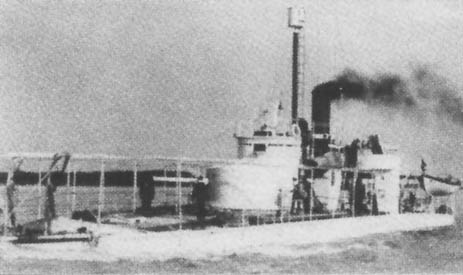
…And yet, there are no real security measures in Vidalia that would prevent an American version of the St. Nazaire Raid.
Someone should really look into this.
Really.
The Freedomist — Keeping Watch, So You Don’t Have To
For nearly seventy-five years, the military forces of the world have been saddled with “assault rifles”, weapons that use an “intermediate cartridge” – smaller than a “full-power” rifle cartridge, but considerably more powerful than a handgun cartridge.
There is a never-ending controversy in the “gun vs. anti-gun” debate over the term “assault rifle”. While the “pro” side is technically precise in its language, the “anti” side verges on the neurotic in insisting on ignoring anything but the screaming propaganda fed to them.
The “assault rifle”, as such, comes from three distinct and separate strains of “institutional DNA”. The impact of the fusion of those strains on military affairs is our subject, here.
The German Strain
Prior to World War 2, a “rifle” was, well…a rifle. After the introduction of smokeless powder by France in 1884, the world’s militaries settled on rifles with calibers between 6- and 8mm, with bullet weights in the vicinity of 140 to 160 grains. This seemed to be the proverbial “sweet spot”, giving long ranges (as far as c.2200 yards/2000 meters), with acceptable terminal performance at the limit that troops could shoot.
An Indian rifleman with a SMLE (Short Magazine Lee-Enfield) No. 1 Mk III, Egypt, 1940. Public Domain.
And then – 1914 happened.
The First World War brought on (as could be expected) more military innovation in four years than in the previous four decades, radically altering the perception of warfare in all the participating states (whether those states could act to maximize those perceptions is another matter, entirely).
April, 1918 During the German Spring Offensive in Artois two German A7V tanks (Hagen 528) and (Schnuck 504/544) roll towards the Western Front. Public Domain.
The victors of WW1 were content to make a few improvements to their military structures here and there, but the collective sigh of relief at the war’s “conclusion” (because fighting continued for nearly five full years, at least, past 1918) imparted a dangerous wave of “Victory Disease” in those states, whose armed forces, while doing research and making a few alterations to their doctrines, either largely failed to learn the right lessons from the war, or failed to convince their political leadership to fund improvements promptly. This would come back to haunt them twenty years later. What most nations could agree upon, though, was the need for a semi-automatic rifle to replace the universally deployed bolt-action rifles, in models unique to every major nation.
Two of the major combatants in WW1, however, took the exact opposite approach.
While “Imperial Russia” was destroyed and replaced by the Soviet Union, “Russia”, as such, had suffered such a crushing defeat in the war, that the new Communist government immediately launched a long-range plan to create the most advanced armed forces in the world…and largely succeeded, at least on paper. This impressive force would be gutted by Stalin’s Great Purge, and would thus nearly collapse in the early days of its new war with Germany, in 1941…but that is another story.
Soviet tanks on Khalkhyn Gol, 1939. Public Domain.
In contrast, Germany – the leader of the losing faction of World War 1, the “Central Powers” – had the Treaty of Versailles inflicted on it, losing large swathes of territory, being forced into paying crushing war reparations (including the physical seizure of actual industrial plant equipment and machinery) to the victors, and being forced to officially reduce its military forces to a pale shadow of their former size.
While the minutiae of the Treaty are not the subject of this article, it did conclusively show that Germany had been defeated. This caused the remnant of the German military to immediately begin a careful assessment of what it had gotten right – and more importantly, wrong – during the war. This actually began before the war ended, in early 1918, when a certain Hauptmann (Captain) Piderit, part of the Gewehrprüfungskommission (“Small Arms Examination Committee”) of the German General Staff pointed out that infantry rarely fired at enemies further than 870y/800m distant, and that a physically smaller, intermediate cartridge would save on materials and allow for a smaller and lighter Maschinenpistole (submachine gun), while allowing the troops to carry more ammunition (the contradictory irony of his conclusions apparently escaped Hauptmann Piderit).
While these points did have some validity, specifically in regards to the American M1895 Lee-Navy rifle (YouTube link), it contained two fundamental flaws: first, that the General Staff was perfectly satisfied with its MP18 SMG, and second, that Hauptmann Piderit apparently concentrated his study on actions on the Western Front, which is the stereotypical vision of WW1, where most of the war was fought in the hell of the trenches, and largely ignored the much more mobile warfare of the Eastern Front, as well as the mountain warfare on the Italian front. Hauptmann Piderit’s assessment stands as a sterling example of the dangers of relying strictly on sterilized statistics.
A Maschinenpistole 18 (MP 18) in service in Berlin, Germany, 1919. Public Domain.
In any case, Germany – like most nations in the postwar period – recognized the need to adopt a semi-automatic rifle. Unfortunately – or fortunately, depending on one’s view – the Reichswehr (the post-Versailles German army) seemed to have taken Piderit’s study to heart, laying out requirements for a new rifle for the military that would ultimately lead to the StG 44 rifle, developed, manufactured and deployed during 1944, at the height of World War 2. This weapon, formally termed the “Sturmgewehr 44” – or, literally, “Assault Rifle 44” – is the origin of the term “assault rifle” itself.
The German Sturmgewehr 44, found in Iraq by US troops, c.2004. DoD Photo.
Using a cartridge very similar to the later Soviet M43 cartridge, the StG 44 proved a nasty surprise to Allied troops…when it worked. Postwar assessments were not kind to the design, which was made as the German economy and resource base were collapsing under Allied assaults, and which assessments thus overcompensated in dismissing the German “wunderwaffe”.
This flawed development process would continue to lie quietly, fascinating and exciting the minds of leaders and middle managers more enticed with monetary and resource savings than tactical utility.
The Soviet Strain
The Soviet Union’s Red Army, in contrast, was very practical in its approach to the problem of updating its infantry weapons.
Beginning World War Two with the perfectly awful Mosin-Nagant rifle, the Soviets quickly discovered that high-firepower weapons (mainly submachine guns) were the decisive winners in close assaults and urban warfare. Independently (probably), they hit on the idea of an intermediate cartridge for general issue. The first weapon to use this new M43 cartridge was adopted as the SKS (Samozaryadny Karabin sistemy Simonova) rifle, designed by Sergei Simonov. However, the Soviets freely acknowledged that the SKS was a carbine-class weapon…and, shortly after the SKS’s adoption, former tank commander and budding weapons designer Mikhail Kalashnikov perfected the first model of the AK-47, which would go on to become one of, if not the, premier, infantry weapon of the last seventy-five years.
Comparison of AKM and SKS 45. Swedish Army Museum. CCA/4.0
The AK-47 was adopted en masse as soon as it was made easier to manufacture. It seemed to be the very best “middle ground”: the M43 cartridge was suitably powerful; the rifle was accurate to 300-400m; it was lightweight and handy; it could fire in either semi– or full-automatic; it used a detachable 30-round magazine versus the SKS’s fixed, 10-round magazine; and was comparatively compact, even without a folding stock. Additionally, it was both rugged and easy to learn, making it the weapon of choice throughout a “developing world” with terrible levels of education, almost from the time of its creation.
The American Strain
In complete contrast, the United States of America backed into the assault rifle more or less by accident, aided by incompetence, parochialism, destructive pettiness that bordered on the criminal and a failed war.
The United States entered World War Two with what was arguably the best rifle of the conflict, the famed M1 Garand. Although an Army board had recommended the adoption of a lighter cartridge in 1928, the realities of shrunken postwar budgets precluded any real attempt at a fundamental change in caliber. However, development continued, as the Army searched for a combat-capable semi-automatic rifle. Adopted in 1936, the semi-automatic M1 was big and beefy, weighing 9.5lbs/4.31kg, and being almost 44in/1100mm in length. It fired the full-power .30-06 Springfield cartridge, fully capable of shooting out past 2,000 yards with ease.
M1 Garand rifle and M1 carbine. Public Domain.
As good as the M1 was, however, the US military realized that it needed to stay ahead of the development curve, and began experimenting with a detachable-magazine variant of the rifle as early as 1944, to counter the limitations of the M1’s 8-round “en bloc” clip…
…But we’re getting ahead of ourselves.
The US Army saw the need, as early as 1938, for a ‘light rifle’ to issue to its support troops (clerks, drivers, radio operators, etc), who needed something more powerful than a handgun, but lighter than an M1 Rifle or a Thompson SMG. The result was the somewhat confusingly named M1 .30 Carbine.
The M1 Carbine was about 40% lighter than the rifle (a little over 5lbs/2kg), and its “.30 Carbine” round, although significantly lighter in projectile weight and range, was much easier to handle for its light recoil. The much shorter range of the Carbine (300y/270m) was not seen as a problem, as it was seen as what we would now refer to as a “personal defense weapon”. The M1 Carbine would go on to evolve through several variants, including fully automatic versions, and would continue to serve around the world well into the 1980’s.
None of the Carbine’s development, however, would really have a meaningful impact on postwar rifle development.
After the creation of NATO, and that body’s adoption of the 7.62x51mm cartridge, the US Army would hold a competition in the mid-1950’s that would result in the adoption of the M14 rifle.
U.S. Army Sgt. 1st Class Richard Wiley demonstrates shooting an M-14 rifle in Iraq, 2006. US Army Photo.
While the long list of shenanigans – rising, bluntly, to the levels of criminal incompetence, corruption or both – surrounding that trial series are better left to another discussion, the end result was the adoption of a weapon that was intended to do “everything”: the M14 was supposed to replace the M1 Rifle, the M1918A2 B.A.R., the M3A1 ‘Grease Gun’ SMG and the M1 Carbine…In the end, the M14 only replaced the M1 Rifle, and then for a paltry five years, from 1959 to 1964, although it continued to serve in Vietnam until 1967, and in other limited roles until 1970.
Although the M14 would mature over time, and eventually become an exceptionally good firearm (and was used as a sniper rifle, the M21), the program was initially so plagued with severe development, production and cost-overrun issues that it finally drew the official attention of then-Secretary of Defense Robert McNamara, who overrode the protests of the parochial Army officers who had backed it, and ordered the program to be canceled in 1968…
…To be replaced with the M16…Back to the Fifties…
The original trials, which resulted in the M14, had three participants: the prototype M14, designated the “T44”; a version of the Belgian-designed FN FAL, designated as the “T48”; and the AR-10, from the ArmaLite division of the Fairchild aircraft company, which was a late addition to the trials, and did not receive a “T” designator.
AR10 rifle, with bayonet attached, 2017. CCA/4.0
The AR10 was an incredibly light and compact design for the powerful 7.62x51mm cartridge (which was essentially a scaled-down .30-06), weighing just 6.85lbs/3.11kg empty. Designed by the legendary Eugene Stoner, the AR10 was a huge leap forward in rifle design. Although the disappointingly gory details of the trials are best explained in “The Black Rifle”, by Edward C. Ezell, in the end, the trials guaranteed that the M14 prototype would be the winner.
Disappointed by the trial results, Stoner tried to shop the AR10 to foreign markets, and managed to get a few sales, with the rifles built by the Dutch company “Artillerie Inrichtingen”. Although the rifles received glowing reports from users fielding the rifles in combat, the AR10 never saw the kind of sales that it should have gotten.
Fairchild then decided to try and rework the rifle for the American market, and L. James Sullivan – working with Stoner’s notes, as Stoner had left Fairchild by that time – reduced the AR10 in size and caliber, resulting in the AR15.
From top to bottom: M16A1, M16A2, M4, M16A4. CCA/3.0
After the end of US involvement in Vietnam, in what President Jimmy Carter would call “a national malaise”, there was little incentive in Congress to fund yet another round of service rifle trials, despite there being a completely different,battle-proven weapon system designed by Eugene Stoner, that both the US Army and Marine Corps were seriously interested in. Instead, both services decided that the M16-series was good enough, and focused on acquiring the new “Big Ticket” vehicles and aircraft it wanted for its burgeoning “Active Defense Doctrine” (which would later be replaced by the “AirLand Battle Doctrine” that was the basis of US and Coalition strategy and operation in the 1990-1991 Gulf War) in the desperate attempt to erase the memory of the loss in Vietnam.
Now, some 60-odd years after it was first presented to the US military, the AR15/M16 series of rifles are still the primary infantry rifles for all of the country’s armed services, only now being replaced…
So…what are we to make of all of this wandering down three different avenues, to get to the intersection of today?
As pointed out in Increasing Small Arms Lethality in Afghanistan: Taking Back the Infantry Half-Kilometer, by then-Major Thomas P. Ehrhart, US Army (pdf link), around 50% of infantry engagements in Afghanistan occurred at ranges beyond 500 meters…and the 5.56x45mm ammunition of the M16 and M4 rifles of the US infantry were completely inadequate to meet those challenges. Major Ehrhart’s data, stating the obvious, is one of the drivers that resulted in the Army’s adoption of the XM5 in 6.8x51mm caliber – a caliber of usable size and power, comparable to the 7.62x51mm, but looking “shiny, new and improved”, because they can’t be see to be reverting to “old stuff” by a civilian leadership wholly unqualified to assess the military’s needs.
As the world is moving into more urban-focused combat (YouTube link), rifles firing lightweight projectiles are at an increasing disadvantage. India recognized this, when they opted for a stopgap purchase of almost 140,000 SIG Sauer 716 rifles in 7.62x51mm for its army, when they finally accepted that their native-designed INSAS rifle program had failed.
Indian army soldier armed with a Sig 716i, 2021. GODL-India
Modern infantry combat happens at a variety of ranges, and always has. Whether it is point-blank, on the other side of a door, or takes place at distances where telescopic sights are necessary for accuracy, the infantry battle area is wide – and the infantry needs a weapon that can reach all of those points within a rational distance.
The assault rifle concept was based on a flawed statistical study, a bloodthirsty and unimaginative style of combat operations, and sheer, petty – and possibly criminal – incompetence…and troops of many nations have been paying the price of those flawed policies for nearly eight decades.
It is no admission of incompetence to recognize that an idea has failed, and needs to be corrected.
If India can do it, the rest of the world can, as well.
The Freedomist — Keeping Watch, So You Don’t Have To
In the firearms world, there is a wide array of classifications for various types of weapons. These varying classes and “families” of weapons change over time, as buzzwords come and go; one of the current buzz terms, and one that generates a great deal of controversy, is the “PCC”, or the “Pistol-Caliber Carbine”.
A PCC is best defined as a firearm intended to be used like a rifle, but which fires a projectile and cartridge caliber commonly associated with a handgun. This is not really a “new thing” – the majority of the 19th Century Winchester family (YouTube) of level-action rifles all came in pistol cartridges, at first.
The first true “PCC’s” of the modern era, though, were the German submachine guns of the First World War, closely followed by the Thompson SMG, the famous “Tommy Gun” (a term that comes from WW2). These weapons – while not exactly “carbines”, as they were not “shortened rifles”, as such – showed armies that there was room in their doctrines for a lightweight and compact (comparatively speaking) type of “long-ish” weapon, that was cheaper and easier to produce than more conventional rifles and carbines.
In the United States this would eventually result, in 1942, with the introduction of the M1 Carbine. While using a cartridge considerably more powerful than most handgun cartridges, the .30 Carbine cartridge was far less powerful than a “full-power” cartridge, like the .30-06 used by the M1 Garand Rifle. The M1 Carbine was significantly lighter and handier than the larger and heavier M1 Rifle, and was only really usable out to about 150 yards/138 meters, but that was deemed to be perfectly sufficient for its intended use: giving troops who did not really need a “full-power” M1 Rifle something to defend themselves with that was more accurate and longer-ranged than a handgun.
M1 Garand rifle and M1 carbine. Public Domain.
The “carbine” field became somewhat muddied with the widespread adoption of the “intermediate” cartridge class after World War 2, but eventually settled back to the original idea of a “carbine”, that being a shortened version of a service rifle. One of the side effects of this adoption trend, meanwhile, led to fewer and fewer true “pistol-caliber” SMG’s being developed, as post-war battlefield developments made SMG’s largely redundant. Submachine guns were slowly pushed to the fringes, eventually used only by police or elite and highly specialized military units, primarily for hostage rescue and use in very crowded areas like airport concourses and large entertainment venues, where rifle cartridges – even coming from a shortened barrel – were not satisfactory, due to over-penetration at close-quarters’ range.
However, in areas that were friendly to private firearms ownership, the first PCC’s began to appear in the 1970’s. At first, these were weapons that mimicked the “look and feel” of SMG’s, but that fired only on semi-automatic. Soon, however, companies began to move away from the “military look”, as hysteria in certain quarters arose, and took on a more “civilian-friendly” look.
M105 Calico .22 carbine (Photo by Oleg Volk)
As the 21st Century dawned, companies in the United States began – after the 2004 sunset of the 1994 “Assault Weapons Ban” – to release PCC’s onto the civilian market. While little regard was given to these weapons at first, closer looks ensued as more an more people bought various types of PCC’s, for everything from recreational shooting to home defense. Inevitably, perhaps, highly raucous debate began as some quarters began to discuss the “tactical” uses of PCC’s…
…And, as in most debates about modern firearms, much hysterical screeching ensued.
The essential point of contention are that PCC’s are more or less useless against modern body armor – which is true…although the numbers of criminals staging “home invasions” at 2AM, while wearing high-grade body armor, is very low. As a result, the PCC is a good choice for home defense instead of a “full power” rifle or carbine, as its projectiles are less likely to leave your home and land a block or two away, in someone else’s home. As well, although there is a net savings on ammunition for practice, “training” (two different things) and recreational shooting, the savings are not that large, overall. One thing PCC’s are demonstrably good at, is acting as introductory weapon to ease new shooters into long-arm use.
Just Right Carbines (JC Carbine) 9mm. CCA/4.0
Do PCC’s have a “military” use? For an established national armies or police forces, the answer is “not really”. Although some arguments could be made that police forces would do better with a PCC than an actual “patrol rifle” (usually a military carbine), any real need for a pistol-caliber long-arm is usually better filled by a submachine gun.
Unlike more high-powered firearms, PCC’s are well suited to “guerrilla factories”, especially using “additive manufacturing” infrastructures, as the tolerances required are considerably less than those required for fully-automatic weapons. Likewise, additive manufacture requires few, if any, of the tools, equipment and supplies needed – and thus more-easily tracked – for more conventional weapons.
Anti-junta rebels in Myanmar, armed with FCG-9 carbines. 2021-2022. Author unknown.
In sum, then, if you are living in a “gun-friendly” location, a PCC is a good tool for both recreation and home defense, while also being a good choice for introducing new shooters to long-arms…and, if things really go sideways, they are a good choice for arming an insurgency or resistance movement, with the intention – as in Myanmar – of using them to capture more powerful enemy weapons.
The only “obsolete” weapon is the weapon that can no longer harm you. You have to work with what you have at hand. Thinking in advance is one of the keys to personal safety and survival.
The Freedomist — Keeping Watch, So You Don’t Have To
There are very few machines in the world, today, that can claim to have been designed over a hundred years ago. There are some railroad engines, for example, that are still run as “living museums”, ferrying the curious around closed rail circuits, allowing modern riders to experience some of the feels and smells of bygone eras. In other places, there are hydroelectric dams that have changed little in the near-century since they were built; Hoover Dam comes to mind, as it nears its own century mark, with only minimal updates to its internal design.
Series of massive electrical generators beneath the Hoover Dam. CCA/4.0
This is equally true of firearms. The Browning Machine Gun, in both .30 and .50 calibers, and the Colt 1911 (also designed by John Moses Browning) all date from over a century ago, yet remain in both first- or second-line service around the world. The Mosin-Nagant rifle, and its 7.62x54mmR cartridge, in contrast, date all the way back to 1891, and while the Mosin rifle may no longer be in common service (aside from a few WW2-era examples turning up in Ukraine), the 7.62x54mmR remains the cartridge of choice for the PKMGPMG, one of the most widely deployed machine guns of the early 21st Century.
7.62 mm PKM machine gun used by Finnish military. 2012. Public Domain.
But one weapon stands apart from all of these: the Maxim Machine Gun.
Swiss Maxim Machine gun Model 1911, cal 7.5 mm. CCA/3.0
First invented in 1884 by an American inventory, Hiram Stevens Maxim, and first offered for sale in 1886, the Maxim Gun has been used in every part of the world, in virtually every conflict of note since that time. The Maxim was the first true “machine gun”, in the mechanical sense that we understand the term today. Unlike most machine guns of today, the Maxim is recoil-operated, meaning that it only uses the recoil impulse of the cartridge firing, to retract, extract, and eject spent cartridges, then chamber and fire a new cartridge. In contrast, most modern automatic weapons use some form of gas-operated piston – very similar to the piston in a car engine – to operate their cycle.
An Australian soldier manning a Vickers machine gun during the Korean War. Date Unknown. Public Domain.
Similarly, the Maxim typically use a large, cylindrical water jacket to cool and protect the barrel from the heat of firing, unlike modern weapons which rely on the flow of air and “quick-change” barrels to accomplish the same task. While very good at cooling barrels, the water jackets were very cumbersome, and prone to damage, both in and out of combat, which could cause catastrophic damage to the weapon if no immediately repaired.
With a cyclic rate of about 600 rounds per minute, the Maxim is – by modern standards – heavy, clunky, and awkward. As well, it is certainly nowhere near to modern standards of reliability in the field…and yet, the gun refuses to quietly disappear into a museum, because it continues to soldier on in the 21st Century.
Twin-mounted Maxim Guns with a modern optical sight. Ukraine. Author Unknown.
The Maxim was tweaked and fiddled with by every state operator who bought copies. But Maxim wasn’t done with his design: in the early 1890’s, he released a much larger version of his machine gun (YouTube link) that fired 37mm explosive shells, at a rate of c.300 rounds per minute, to about 4,500 yards. Versions of this “pom-pom gun” (so-called, because the sound it made while firing) would be used as secondary and tertiary armament on ships, as well as early anti-aircraft weapons, until the end of WW1.
U.S.S. Vixen, Maxim machine gun and gunner Smith. The gun appears to be a Maxim-Nordenfelt 37-mm 1-pounder autocannon, known to the British as a “pom-pom”. Public Domain.
British QF 1 pounder Mk II 37 mm “pom-pom” gun, World War I era, on display at the Imperial War Museum, London. CCA/2.0
The Maxim would be used as a frontline weapon through the war in Korea. By then, though, it was showing its age, as better materials and designs produced lighter, more reliable and more portable weapons. The surviving weapons, around the world, were mostly placed in storage…but the Maxim’s legacy continued: the PKM and its successor, the Pecheneg GPMG, both use ammunition belts that are backwards-compatible with the PM1910, the Imperial Russian version of Maxim’s design, dating from before WW1.
Photo of a 1910 Maxim Machine gun. CCA/4.0
But again – Maxim’s design refuses to gently go into that good night.
As the world exploded in the aftermath of the so-called “Arab Spring”, many citizen rebels and resistance fighters overran government armories, and found Maxim’s old guns in storage crates. Those guns were broken out and cleaned, training and maintenance manuals were sourced from online repositories, and the century-old weapons went back into action. They may no longer be the best guns available, but old and creaky guns are better that harsh words and rocks.
Captured German Maxim machine gun. Malard Wood, 9 August 1918. Imperial War Museums. Public Domain
Firearms – of all categories – are very recent additions to Mankind’s arsenal, as they have been effective combat tools for considerably less than 1,000 years. They are one of the most – if not themost – decisive “force multiplers” in human history. Learning about firearms makes no one “evil”, nor is it “glorifying” weapons – it makes them well informed and productive members of the societies…who should REALLY be wondering just whose side they are really on.
Don’t go gently into the night – because it may not be as gentle of a night as you think it to be.
3D PRINTED BATTERIES COULD DOUBLE CURRENT MAX CAPACITIES – The 3D printing battery company Sakuú has developed a new method of printing solid state batteries that could either double the capacity of current batteries or make them half the size and 40 percent lighter. The electric vehicle industry, especially perhaps the electric aircraft industry, could see expanded opportunities should this promising new technology produce what the company says it will.
….Sakuú is taking a completely different approach. It has created a 10-meter-long multi-material printer that can work with both ceramics and metals. The machine first lays down patterns of powdered material before depositing a jet of polymer binder that sticks the particles together. It then deposits conductive metal on top. These layers are stacked on top of each other to produce cells.
The company told The Verge that the approach allows it to stack more layers into a given space than conventional approaches. On its website, Sakuú claims this is because its manufacturing process allows for thinner structural layers and a novel stacked structure. This means it can either provide 100 percent greater capacity than current lithium-ion cells, or make batteries 50 percent smaller and 40 percent lighter.
Previously, we have talked about ersatz combat vehicles at length. While 300 angry people, armed with 200 machetes, 100 rifles and 50 rounds of ammunition made a respectable revolution as late as the mid-1990’s, the proliferation cheap, reliable and effect modern combat rifles around the world have shifted insurgent capabilities and tactics, there has been little movement in the other realms of physical combat, outside of the land environment.
Where any group armed with modern automatic weapons can turn themselves into “motorized cavalry” by seizing a used car and truck dealership and a tanker truck of fuel, there have been few examples of groups organizing actual combat ships on water, using what are essentially armed civilian pleasure craft – it happens, but infrequently.
Likewise, the use of equally ersatz militarized drones has been on the rise, for surveillance, assassination and combat. This theater of use has been accelerated in recent years, as many drones with significant capabilities, from a military perspective, are available “off the shelf” for well under US$200, with many retailing at under US$100. Expanding the capabilities of such devices requires little investment for a group able to recruit young and tech-savvy teens and early-20’s with an interest in gaming and computer mods.
Far more rare, are instances of “guerrilla air forces.” Appearing in significant numbers only twice since WW2, civilian aircraft being used as “armed combatant craft” usually appear in one’s and two’s, used by small states and groups who can only afford (or receive through donations) the kind of small, single-engine aircraft that are normally used for leisure flying or primary flight instruction for trainee pilots.
The question at hand, then, is this: Can an insurgent force create their own air force? That is what we will examine in this article.
The first questions to answer are, Where is the insurgent force getting its aircraft?, and What kind of aircraft can they easily acquire?
The first thing to understand, is that our hypothetical guerrilla force is not (probably) going to be buying craft like the AT-6B Wolverine, A-29 Super Tucano, AT-802L Longsword. These aircraft are being developed by defense contractors for established governments; for an insurgent group to obtain dedicated craft like this would require major-nation support. What we are discussing here, is the insurgent force acquiring specifically civilian craft, and using them as an “air force.”
An Afghan Air Force A-29 Super Tucano soars over Kabul, Afghanistan, Aug. 14, 2015. USAF Photo. Public Domain.
The insurgent force will be limited, first, by its financial levels – aircraft, even small craft like a Piper or an immortal Cessna 172 (go ahead – reflect on the irony…Moving on…) or 208 Caravan are expensive, for a small group, with a Cessna 172 coming in at around US$40-50,000 for a used model, each. Obviously, this is a major impediment, unless a group is very well funded.
On the other hand, these small aircraft can be effectively armed; can land on almost any flat patch of ground or blacktop road long enough; require no overly complicated tools or equipment to maintain, and have cheap and readily available spare parts and maintenance manuals available on the open market. These aircraft can – and are – be hidden in rural barns and warehouses very effectively, only requiring a door large enough for their wings.
Given the above, then, the next question is, Where can the prospective insurgent air force get its pilot?
The one major downside to an insurgent force using aircraft is the need for competent training. While learning to fly a basic aircraft such as a Piper or a Cessna is not actually difficult for most people with a decent high school education to learn, teaching one to fly requires a pilot with at least 250 flight hours to begin training for such a rating as an Instructor Pilot (IP). However, there are plenty of IP’s out there who could be recruited to train pilots for an insurgent force.
Ground maintenance on these common civilian airframes, as previously stated, is not difficult, and spares are common enough to not present major issues. That brings us to weapons: what can you arm these airplanes with?
Simply placing one or two people armed with rifles in the back seats of these kinds of aircraft, and having them shoot at enemies on the ground is not complicated. Likewise, hanging machine guns out of a side door is also relatively uncomplicated to set up.
Afghan Air Force Sgt. Razeg, a Gunner, fires an M-240 weapon from an Mi-17 Helicopter during a mission from Kabul, Afghanistan, Nov., 2012. USAF Photo. Public Domain.
Salvage and theft of opposition government aircraft – as well as weapons bought on the black market – is another important source of ground-to-air capability. In like manner to recovered helicopter rocket pods being used as ground-to-ground multiple rocket launchers since the civil wars in Libya, the same pods could be mounted to civilian airframes.
This is especially true for smaller pods, such as the venerable Hydra-70 rocket pods. In fact, the prevalence of mounting the ex-Soviet SA-5 rocket system, fired by UB-16 and UB-32 launchers to “technical vehicles” in both Libya and Syria have begun to inspire Western firms to begin cashing on the market, with such “drop-in kits” as the new V.A.M.P.I.R.E. system, which is a drop-in kit for a conventional civilian pickup truck, giving it the ability to fire four Hydra-70 rockets at a time in the ground-to-ground role.
Hydra 70 rockets in two M261 launch pods, mounted to an AH-1 Cobra attack helicopter, unknown date. US Army Photo. Public Domain.
As well, should the guerrilla force come into possession of anti-aircraft weapons such as the Stinger missile, that force could conceivably mount such weapons to a civilian airframe, which would be a very nasty surprise to any opposing aircraft that did not know about them.
Note that the foregoing applies to helicopters, as well, although rotary-wing craft are generally more expensive than their comparable brethren.
So…Is it possible for a guerrilla/insurgent force to create and operate an actual “air force” on the cheap? The answer, clearly, is a solid Yes, albeit with caveats concerning the perennial problem of money. Such a force would clearly be no match against a First World air force, but it likely won’t need to, at least initially.
Never become complacent inside your box…because someone is always outside, thinking about how to get in.
The Freedomist — Keeping Watch, So You Don’t Have To
A NEW PLASTIC IS CREATED USING THE INEDIBLE PARTS OF WHEAT AND CORN – University of British Columbia Researcher/Student Amanda Johnson has created a durable plastic called Grasstic. It is a plastic that is created from the stalks of plants like wheat and corn, meaning it can be created from the agricultural waste of food plants. This opens the door for dual-use agriculture, as well as contributing to our capacity to grow raw materials for durable products as opposed to relying on non-renewable resources.
Grasstic, which was developed by UBC PhD student Amanda Johnson, is made from the stalks of grass crops such as wheat or corn and can be used for dry goods packaging. Since it’s made from agricultural waste, she is not using a food source.
No matter how you consume your news, whether from the “mainstream” or from more “alternative” sources, recent months have been all abuzz about the “mighty HIMARS“; and the HIMARS is, indeed, a very capable system…for those who either have friends, or who can afford it. But — what about us? What about the “poor’s“? Every weapon has a development cycle, and HIMARS is no exception. In this article, we will take a (very) brief look at the history of rocket artillery, and a singular weapon that is everything the HIMARS is not: cheap, simple, flexible, and readily available for anyone or any group with even a modest mount of cash.
Rocket artillery is far from ‘new.’ In fact, rockets were arguably the first practical use for gunpowder when it was invented in China, in the 9th Century AD. As gunpowder migrated westward, however, the idea of rocketry largely disappeared, until the late 18th-early 19th century, when rocketry began to reappear, most famously in the form of the Congreve Rocket. These early attempts were wildly unreliable, including having a nasty habit of exploding on their own, or returning to their owners in the most unpleasant of manners. Thus, it should not be surprising that rockets mostly disappeared from European-style warfare after about 1850 or so.
Fireships firing rockets and details of storage and launch. Colonel Congreve, 1814. Public Domain.
As a result, it would take until World War 2 to resurrect rocket artillery in a meaningful way, with the German introduction of the “Nebelwerfer” (or, ‘smoke mortar’) multiple rocket launcher (MRL) system. The system fired a variety of rockets, normally 5 – 7 at a time, depending on their exact size and weight. While initially intended to deliver chemical weapons, the distaste – and fear – from all sides outside of Asia about using such weapons caused the Germans to quickly develop high-explosive rounds for the various calibers. These were used to devastating effect by the Germans, initially…not so much for their raw destructive power, but for their terrifying psychological effects on troops who had never imagined the sound the rockets produced.
Nebelwerfer crew in action, Soviet Union, 1944. German Federal Archives.
All of the major Allies quickly copied the concept, and by the end of the war, were deploying far larger and more capable designs. However, the love affair with short-range multiple rocket systems wouldn’t last. By the mid-1950’s, most “First World” nations had largely begun to abandon the battlefield MRL; the notable exception was the Soviet Army and it’s subject armies, who maintained the devastating BM-21 ‘Grad’ into the present day. The reason for this abandonment of MRL’s was that, despite the MRL’s decided advantages (they were cheap and lightweight, compared conventional artillery, and were capable of firing truly impressive amounts of rounds in a time far shorter than regular artillery when grouped into batteries), they had significant disadvantages: their range tended to be shorter; they took far longer to reload; they were nearly impossible to use in “direct fire”, a feature of conventional artillery; and their rockets’ velocity was far too low to actually penetrate dug-in shelters or tank armor.
Nebelwerfer crew moving into action, France, 1944. German Federal Archives.
The reason the Soviet Bloc hung on the BM-21, was that while it had all of the disadvantages cited above, it had a very powerful warhead, a long range, was simple and easy to maintain, and was far cheaper and easier to build than conventional artillery. The Soviets accepted the downsides of the MRL idea, and found a way to incorporate it into their artillery fighting doctrine.
BM-21 Grad on display at the Karen Demirchyan Complex, Armenia. CCA/4.0
The Chinese Communists, following their disastrous – if effective – intervention in the Korean War (1950-1953), had a terribly disorganized arsenal. As China had spent the previous fifty years alternating between civil wars and hellish foreign invasions (WW2 actually begins in 1937, in China, instead of Poland in 1939), the PLA was stuck with a hodge-podge of weapons from at least six or more sources, they were badly in need of a complete rearmament strategy, literally from the top, down.
The immediate problems for the CCP was that their manufacturing base had to be completely rebuilt – which, being fair, was a problem for most of the active participants of the war, although Mao Tse Tung’s “Great Leap Forward” almost destroyed the country wholesale – but, more cripplingly, they had very little money to buy foreign equipment. Unable to pay even the Soviet Union for enough field artillery, the PLA went looking for an alternative.
And, in 1963, they created one of the most important, but least-known, pieces of artillery in modern history: the 107mm Type-63 MRL.
Type-63 107mm MRL. 2016. CCA/4.0
A 12-shot launcher mounted on a 2-wheeled trailer, the system weighed in at about 1,300lbs/602kg, and only needed a crew of five. It was capable of firing a wide variety of ammunition (albeit limited to HE-types, as well as incendiary and smoke rounds) to (initially) c.5mi/8km; ranges were quickly improved. Some models could be broken into 2-tube loads for transport through rough terrain, by either people or mules. Eventually, a variety of single-tube launchers were developed for the rocket ammunition. The PLA realized that they had a good thing, and eventually equipped each infantry division with 18 units.
It was also quickly realized that the unit’s light weight made it easy to mount on small vehicles, giving the launcher the ability to quickly fire its rockets, and quickly relocate to avoid counter-battery fires.
IRGC Ground Force Commandos loading a Type-63 type MRL. 2017. CCA/4.0
As word got around, and the units began to be used by Communist guerrillas and regular armies, the system became a source of hard currency through exports and licensing; at least seven countries would eventually obtain legal production licenses for both the launchers and their ammunition.
Naturally, the advantages of the Type-63 became apparent to every rebel, guerrilla and terrorist group in the world, and those entities quickly began competing with small armies to buy, steal or beg units on both the legal and black markets.
The Type-63 has proved itself to be a significant game-changer in “low intensity conflicts” because it allows small forces operating on a shoe-string budget to seriously threaten adversaries who cannot afford the advanced systems, like battlefield radars or C-RAM (which are fantastic to have, if you can afford or get them, somehow), to counter the fast-moving artillery. As a result, lightweight, highly mobile “technical” units can add a significant punch to their operations.
While susceptible to well (and expensively) equipped Western armies, the Type-63 remains a significant threat to anyone without powerful “friends” willing to commit to their aid.
The Type-63 has been reshaping battles for nearly 65 years, at this writing. There seems to be no end in sight for this venerable weapon…not least, because it is now being deployed on high-speed inshore craft…Newer may often be better, but old weapons will still harm you.
OPINION by Bill Collier- A recent article on CNBC about Facebook/Meta losing over 2/3rds of its stock value in a year has analysis and investors wondering if the tech giant will even survive. Whereas in 2021 at around this time, Facebook was valued at around a trillion dollars, this year, it is $377 billion in total value.
Not surprisingly for a globalist corpostate press organ, the CNBC article totally misses the elephant in the room, which is that Facebook’s core problems revolve around poor community governance (things like moderation and “fact checking”) and a fundamental misunderstanding of and lack of appreciation for their users, many of whom do not feel they and their creeds are treated fairly.
I like Facebook and Mark Zuckerberg, the core business model is for FB to become more of a platform for all than a private community with a more globalist corpostate ideological bent.
Allowing people to connect to family, friends, interests, and causes in a dynamic manner and with civility and common decency that is governed with fairness, common sense, and consistency, without bias or editorial (disguised as “fact checking” bit which is really opinion policing), would work.
This would be a great path forward, as opposed to reacting to activist (usually on the left) “demands” coming from audience groups (young wokatarians) who don’t use the product is, in my estaimation, a massive distraction from the core business. It is costing users, reputation, and now revenue.
Facebook serves an older demographic and, frankly, the older set will remain a core constituency well into the next 30 plus years. Providing other platforms for the younger set would be good, but it would be a mistake to simply roll out another iteration of a more popular platform.
Facebook has long suffered poor governance issues, not least because of the perceived editorializing-as-standards and the clear globalist corpostate bias of its “fact checking”, which creates distrust and which opens the platform up to constant criticism from right and left. All these fires keep distracting key decision-makers whose talents are essentially a wasted resource.
People don’t want a “free speech platform” that is “anything goes”, but if the user base is diverse in its religious, political, and philosophical perspectives, tending to favor one part of the user base over others, as it is perceived is the case, will necessarily decrease the engagement and participation of the “offended” group. It doesn’t matter if this is factually true or if it is the intent.
This is a perception at least partially caused by the inconsistent, often illogical, implementation of governance and, frankly, the oddball way “fact checking” is applied which makes the platform both seem biased and illogical.
For instance, to refute the statement “there are only two genders”, Facebook’s “fact checkers” cited the extremely rare case where people are BORN with a mix of gender traits as “proof” there are more than two genders.
The exception does not disprove the rule. but this illogical, upside-down, and absurd, use of an extremely rare exception as “proof” that the claimed rule, “there are only two genders”, is wholly false did nothing good for Facebook’s reputation or bottom line.
This kind of thing, as well as many instances of inconsistent application of standards which are perceived as putting the thumb on the scales against half their user base’s creeds, is anathema to being perceived as an honest broker and neutral arbiter. It is bad governance.
To be clear, while the rank and file bias of most of Facebook’s staff are likely leaning toward corpostate globalism or leftism in general, it may in fact be unfair to say Mark Zuckerberg wants to push a “leftist agenda.”
The fact most moderators and community governance staff may tend toward a bias, and perhaps it shows, is less a reflection of ownership bias and more a function of a poor governance architecture.
Instead of investing in new tech that is not taking hold, the whole metaverse, Faecbook should reexamine its entire governance system and the structure of the platform to provide a safe and friendly environment that is welcoming to all, regardless of creed and etcetera, but that insists users must, foremost, decide the content and entities they wish to be exposed to without being able to demand the platform cancel others who are otherwise well behaved.
Facebook/Meta isn’t focusing on keeping and growing a user base to whom advertisers can pitch themselves and their messages. What is really happening is that Facebook is trying to claim to be such a platform while its governance and “fact checking”, and how it spends its political dollars, all tend to lean in direction that half or more of their user base do not fancy.
Facebook is seen as a booster for the Democrats that tries to also pretend it is a platform for all, even if this may be an unfair characterization. The reputation hit among those on the right cannot be good and is not substantively addressed while kowtowing to the media-induced and leftist-activist supported frenzy of the hour hasn’t earned the support of the Democrats or the coveted younger demographic who, one suspects, Mark Zuckerberg thinks are represented by the very loud but tiny woke minority.
It may be true, though I am not prepared to claim it is true, that most Facebook users represent a more “conservative demographic” than a leftist demographic and that if Mark MUST use ideological sympathy to gain more users who are more engaged he may want to radically change course and lean right.
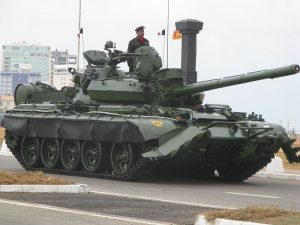
Chieftain. M1 Abrams. Leopard 2. Leclerc. Challenger. To anyone with a passing familiarity in the world of modern armored warfare, these names are well known, and rightly feared, should one come up in opposition to them. These vehicles all occupy the top tier of main battle tanks in the world of 2022.
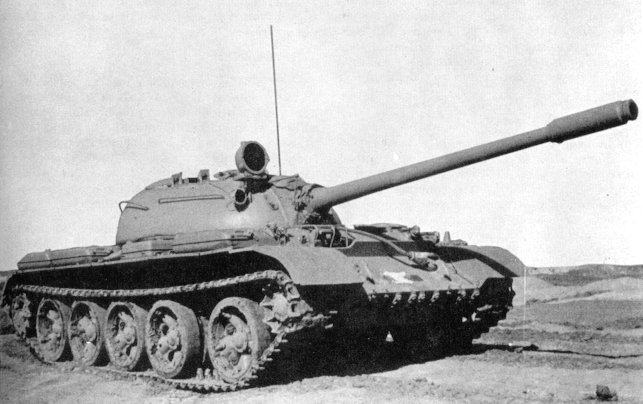
However, even given the impressive combat record of all the vehicles listed above, none of them – combined – match the battle history, breadth of deployment nor numbers produced of the most numerous battle tank in history: the near-immortal T54/55.
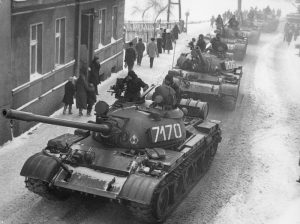
Polish T-55A’s on the streets during Martial law in Poland, December, 1981. Public Domain.
As of this writing (September, 2022), an estimated 100,000 units – or more – are in current service, around the world, counting variants made in China.
The first prototype rolled out of the assembly bays at Nizhny Tagil, in the Sverdlovsk Oblast, near the end of 1945. Design work had begun in 1943, at the Morozov Design Bureau, in the desperate days of the Soviet Union’s battle against the juggernaut of Nazi Germany. With the end of the war, immediate pressure to crank out a new tank lessened, and the Soviets took their time to get the vehicle right.
The result was a vehicle that rivaled the legendary T-34 tank, as it had almost the same cross country performance as its predecessor, but had far better armor, running gear and much more powerful D10-T 100mm main gun. Going into production in 1948, a small initial batch of just under 1,500 vehicles were built, and – as usual with new designs – issues began to show up. Over time, enough of these corrections and redirections (including a focus on surviving nearby nuclear detonations) accumulated to give birth to the T55.
A T-55, one of several Somali National Army tanks (ca. 1981). US Army photo.
By then, the T54 had seen some of its first real combat actions, in both the Soviet Union’s invasion of Hungary in 1956, and in some of the very early stages of the Second Indochina War. But that was only the beginning.
As the production lines ramped up, and more units rolled off the lines, users around the world suddenly discovered that they had a relatively cheap, yet very effective, battle tank. While the T54/55 was quickly surpassed by newer and more advanced designs, in both its home country and in the West, it continued in production. The reason was simple: while the T54/55’s replacements (such as the T-62 and T-72, among others) might have been technically more capable and effective, the T54/55 was more effective than all of them, when it was the only tank on the field, and its enemies had either inferior tanks (or no tanks at all) to face it.
As it was simple to service in the field, and comparatively cheap (at c.US$200,000 in 1972), it became a favorite of Third World armies, in many cases, being the first battle tank of any sort that those countries had ever deployed. The D10-T main gun turned the tank – with certain limitations – into an effective mobile artillery piece. The platform also quickly proved highly adaptable, with multiple variants quickly appearing on the horizon, variants that further expanded the tank parks of many small countries. For many nations, the T54/55 became a pillar of their armed forces. Many firms around the world offer various types of upgrade packages for the design, as of this writing.
T-55AM2 Main Battle Tank of the Sri Lankan Army, 2012
Of course, as with all poorly handled equipment, if an operator just bought tanks for show, and then tried to use them for real, the results were…less than spectacular. Although suffering repeated drubbings at the hands of top-tier armies like the IsraeliIDF and the US military (and, embarrassingly, the Chadians), many other armies – like India, Vietnam, Tanzania and Sri Lanka – showed that when properly handled, the tank designed at the end of World War 2, was a highly dangerous combatant on the battlefield.
This remains the case. Around the world of 2022, this guttural steel monster continues to fight. There are better tanks, now, but that doesn’t matter, unless those tanks show up to oppose the ancient beast…and even then, it might surprise its younger cousin’s, depending on who is crewing it.
Tank driver, Lance Corporal Mudondo Zabina of the Uganda Peoples Defence Forces, manoeuvres her tank under the watch of her commanding tank officer, Lieutenant colonel Fred Kakaire. Zabina was a tank driver in Gulu befoe she was deployed to Somalia. AU/UN IST PHOTO / David Mutua
Back FREEDOM for only $4.95/month and help the Freedomist to fight the ongoing war on liberty and defeat the establishment's SHILL press!!
Are you enjoying our content? Help support our mission to reach every American with a message of freedom through virtue, liberty, and independence! Support our team of dedicated freedom builders for as little as $4.95/month! Back the Freedomist now! Click here