
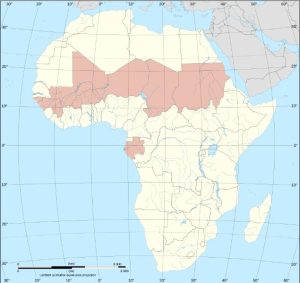
The headline writes itself and is almost entirely misleading: three countries in West Africa’s Sahel have been seized by military coups, expelled French and American forces, turned to Russia for security partnerships, and formed a new political confederation outside the framework of the region’s established institutions. Read that sentence in isolation and the conclusion seems obvious — failed states, Russian proxies, chaos compounding chaos.
France staged a masterful rapid intervention to rescue the nation of Mali in 2013…but seven years later, the honeymoon ended in a very nasty – and very public – divorce.
The analytical picture on the ground is considerably more complicated, and understanding it matters, because the Alliance of Sahel States — the AES, comprising Mali, Burkina Faso, and Niger — is not what most Western coverage has made it out to be.
The Coups in Context
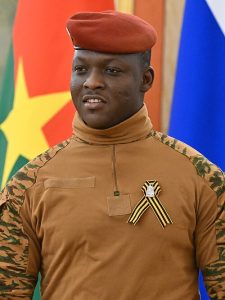
The wave of military takeovers that produced the AES did not emerge from a vacuum. Mali experienced coups in August 2020 and again in May 2021. Burkina Faso experienced two in 2022 alone, with Army Captain Ibrahim Traoré consolidating power in September of that year. Niger’s military removed President Mohamed Bazoum in July 2023. In each case, the military’s public justification was the same: the civilian government had failed to contain the jihadist insurgencies consuming the country’s territory, and French forces — present under Operation Barkhane and its predecessor missions since 2013 — had failed alongside them.
That justification deserves scrutiny rather than dismissal. Despite the success of Operation Serval, French counterinsurgency strategy in the Sahel had produced a decade of inconclusive results despite significant resources, considerable French casualties, and the deployment of sophisticated ISR and strike assets that no Sahelian government could replicate independently. Operation Barkhane at its peak deployed approximately 5,100 French troops across five countries; JNIM and the Islamic State Sahel Province continued to expand their territorial control, increase their attack tempo, and grow their recruitment base throughout the same period. The populations of Mali, Burkina Faso, and Niger drew conclusions from that evidence. The coup leaders articulated those conclusions in the language of sovereignty rather than counterinsurgency doctrine, but the underlying assessment was not irrational.
What the departing French and American presence also represented, in a less discussed dimension, was a set of political constraints on how the AES governments could fight. Western counterinsurgency doctrine emphasizes civilian protection, human rights compliance, and governance reform alongside kinetic operations. Those emphases were not merely theoretical for the civilian governments that preceded the juntas — they were tied to aid flows, political recognition, and the terms on which French forces operated. The juntas removed those constraints. Whether what replaced them is better or worse for the populations of the Sahel is a genuinely open question; that the constraints existed and shaped operations is not.
The Economic Factor
The AES governments’ accusations that France colluded with or tacitly enabled jihadist groups in the Sahel have been widely dismissed in Western media as Russian-amplified disinformation. A French court ruling handed down on April 13, 2026 however, makes that dismissal considerably harder to sustain.
On that date, the Paris Criminal Court found Lafarge — the French cement giant now part of Swiss conglomerate Holcim — and four former executives guilty of financing terrorism. The conviction rested on documented payments totaling approximately €5.5 million made between 2013 and 2014 through Lafarge’s Syrian subsidiary to armed groups including the Islamic State and the al-Nusra Front, in order to keep the company’s Syrian cement plant operational during the civil war. Lafarge had already pleaded guilty in the United States in 2022, paying $778 million in fines and forfeitures to the US Justice Department for conspiring to provide material support to designated terrorist organizations. The Paris court imposed the maximum available corporate fine and sentenced the former executives to prison terms ranging from three to six years. A separate charge of complicity in crimes against humanity remains under investigation.
The Lafarge case does not prove that the French government directed or approved payments to jihadist groups. What it establishes is that a major French corporate entity — operating in a conflict zone where French military and intelligence assets were also present — paid jihadist organizations to protect its commercial operations, and that French institutional and legal processes took the better part of a decade to bring the company to account. The AES governments have not made the careful distinction between corporate and state culpability. Neither, in many cases, have their populations.
The economic dimension of France’s Sahelian presence is not peripheral to this story — it is, by any honest accounting, central to it. France generates approximately 70% of its electricity from nuclear power, and Niger was, until recently, its second-largest supplier of uranium, providing roughly 20% of French uranium imports over the past decade. That uranium came primarily from the Somair mine operated by Orano — a company majority-owned by the French state. Following Niger’s 2023 coup and the expulsion of French forces, the junta in Niamey revoked Orano’s license for the Imouraren deposit — estimated to hold 200,000 tons of uranium reserves — and by December 2024 had taken operational control of Somair itself, effectively nationalizing France’s primary nuclear fuel source in West Africa.
Mali has been equally direct about the economic reordering. The Malian government placed Barrick Gold‘s Loulo-Gounkoto gold complex under state administration in a tax dispute and detained the CEO of Australia’s Resolute Mining until the company agreed to a $160 million settlement. Mali’s military government states that its renegotiated mining contracts and royalty enforcement have generated over 700 billion CFA francs — approximately $1.2 billion — in additional state revenue. Gold mining accounts for roughly a quarter of Mali’s budget; the previous arrangements, negotiated under civilian governments with French backing, returned a substantially smaller share to the Malian state.

The picture that emerges from these facts, taken together, is not one of ideologically pure anti-jihadist governance. It is one of sovereign governments — however imperfect their democratic credentials — reasserting control over natural resources that had been structured, over decades of post-independence arrangements, to benefit external corporate and state interests more than the populations sitting on top of them. Whether the AES juntas will deploy that recovered revenue effectively against the jihadist threat is a separate and still-open question. That the revenue was being extracted at terms unfavorable to the host nations, and that French military presence served as a guarantor of those terms regardless of its stated counterinsurgency mission, is now a matter of documented record rather than junta propaganda.

The AES – An Emerging Security Architecture
The Alliance of Sahel States was formally constituted through the Liptako-Gourma Charter in September 2023, initially as a mutual defense pact — an explicit response to ECOWAS threats of military intervention to restore civilian governance in Niger. The three states withdrew from ECOWAS formally in January 2025, and signed a Confederation Treaty in July 2024 that deepened the alliance’s institutional structure. On December 20, 2025, at a ceremony at an air base in Bamako, the AES inaugurated its Unified Force — the FU-AES — an initial force of approximately 5,000 troops drawn from all three armies, placed under the command of Burkinabe General Daouda Traoré and headquartered in Niamey. The April 2026 summit expanded the planned force to 15,000.
This is the third attempt to build a joint security mechanism for the central Sahel. The Multinational Joint Task Force announced in January 2017 never effectively materialized. The G5 Sahel Joint Force, established in July 2017 with French support and including Mauritania and Chad alongside the three AES states, collapsed when Mali withdrew in 2022 and the others followed. The AES Unified Force differs from both predecessors in one critical respect: it is explicitly designed to operate without Western donor funding, without French logistical support, and without the political conditionalities that accompanied both. Whether it can be sustained at scale on that basis is the central unresolved question.
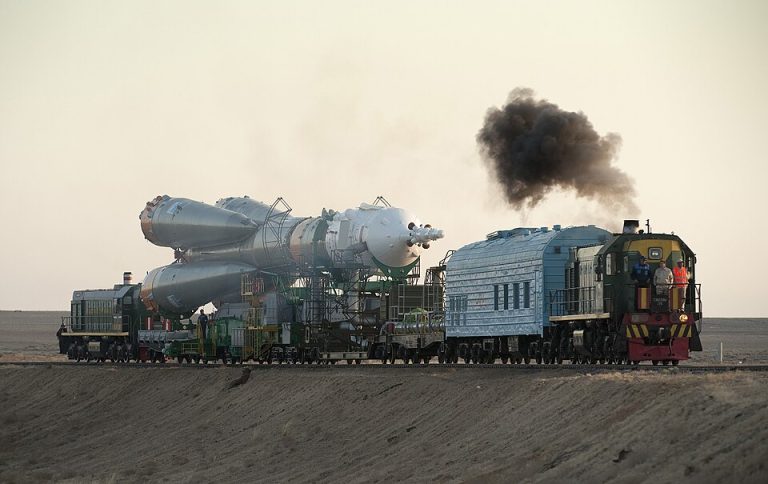
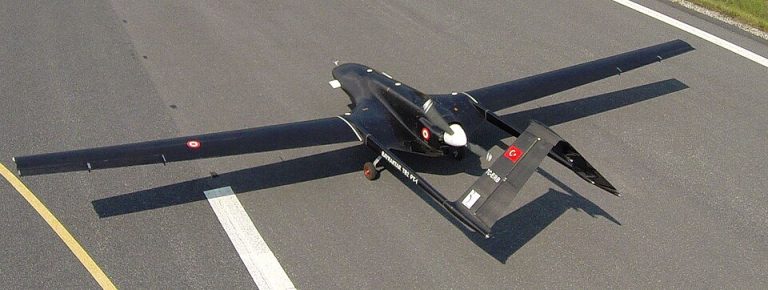
Russian engagement has partly filled the gap. Africa Corps — the restructured successor to Wagner Group following Yevgeny Prigozhin’s death in August 2023 — has deployed personnel to Mali, Burkina Faso, and Niger, providing presidential guard services, counterinsurgency support, training, and hardware including helicopters, drones, and armored vehicles. Mali and Niger have also signed agreements with Roscosmos for telecommunications and surveillance satellites. The AES-Russia relationship is not an alliance of equals — Russia brings assets the AES cannot generate domestically, and the AES provides basing, political cover, and African legitimacy for Russian influence projection — but it is a functioning working arrangement, a meaningful difference from France’s openly neo-colonialist operations.
The Honest Accounting
Western analytical assessments of the AES have tended toward pessimism, and not without foundation. The ISS Africa analysis published in March 2026 noted plainly that by mid-2026, the core justification for the coups — that the juntas could succeed where civilian governments had failed — has not been settled. Jihadist territorial control in Burkina Faso is estimated at approximately 60% of the country’s land area; this should not, however, be assumed to equal the country’s population under jihadist control, given the nation’s population density of 90 per square kilometer (233 per square mile). JNIM’s attack lethality has increased year-on-year throughout the junta period. The April 25, 2026 assault on Kidal and the simultaneous car bombing at Kati that killed Mali’s Defense Minister represented a significant jihadist operational success against the AES and its Russian partners, occurring after the FU-AES had been formally activated.
The counterargument — and it is a real one — is that the comparison baseline matters enormously. The AES governments inherited security situations that French-backed civilian governments had failed to stabilize over a decade, with deteriorating trajectories already established before the coups occurred. The relevant question is not whether the AES is winning, but whether it is performing better or worse than its predecessors given the same underlying conditions. That counterfactual is difficult to construct cleanly, and Western analysis has been slow to attempt it seriously, in part because the political incentives run toward emphasizing junta failure.
What is observable rather than inferential is this: the AES has demonstrated genuine political cohesion that neither the G5 Sahel nor any previous regional framework managed. When JNIM and the FLA struck on April 25, all three AES governments responded within hours with joint airstrikes in Malian territory — the Niger government explicitly welcoming “the prompt and vigorous response of the units of the unified force.” The FU-AES commander is Burkinabe, the headquarters is in Niger, and the force draws from all three armies. The institutional solidarity, at least, is functioning. The April summit expansion of the planned force from 5,000 to 15,000 signals that the member governments regard the Unified Force as viable enough to scale.
The AES is not winning its war, at least not quickly, and certainly not “cleanly”. But it is also not the simple story of junta incompetence and Russian exploitation implied by much of Western media coverage. It is three countries with legitimate sovereignty, genuine security problems that preceded their current governments, and a functional if fragile regional architecture, all trying to develop indigenous solutions to a problem that externally-backed approaches failed to solve. The complexity of that situation is not a reason to withhold analytical judgment. It is a reason to ground that judgment in the actual record rather than the preferred narrative.