Since the Russian invasion of Ukraine on February 24th of 2022, the Ukrainian military has struggled to hold on against enormous pressure. While there have been successes against the surprisingly anemic Russian juggernaut, the fact is that the conflict has seen the return of massed artillery fires, at a scale and intensity not seen since at least the 1990-1991 Gulf War.
Derelict Tank in badly shelled mud area, Europe, 1917.
Artillery, in its many forms, has been a major component of armies since at least the 15th Century. Artillery can cause heavy damage to both attacking forces in an open field, but can also hammer fortifications into a moonscape, if allowed to.
French Caesar self-propelled howitzer fires into the Middle Euphrates River Valley.

Like many armies, Ukraine had allowed its artillery establishment to atrophy – despite armies depending on massed artillery for centuries – and it now finds itself desperately scrambling to replace damaged and lost artillery pieces, and scrape together more ammunition. This has seen the first mass deployments for systems such as the French ‘CAESAR‘ 155mm self-propelled howitzer, the M777155mm towed howitzer and the M142 HIMARS Multiple-Launch Rocket System, among others, all supplied by NATO states trying to shore up Ukraine’s defenses.
But none of these weapons – nor their ammunition – are arriving in the quantities Ukraine needs. There may be at least a partial solution to Ukraine’s problem, however:
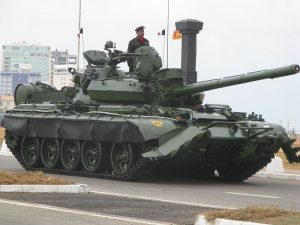
The EVO-105, now designated the K105HT.
Improved K105HT during firing drill. Undated photo.
The EVO-105/K105HT uses an assembly of long-proven systems to make a lightweight, self-propelled artillery piece. While originally produced as a cost-saving idea to get the maximum utilization out of old artillery, the basic design could easily be adapted to artillery similar to the M101-series, such as the L118, or the M119. Although having a significantly shorter range than larger-caliber weapons (a maximum of 17.5km (10.9 mi), or 19.5km (12.1 mi) with RAP (Rocket-Assisted Projectiles)), the K105HT is much faster to “shoot-n-scoot“, firing one or two rounds, then rapidly moving to a new firing location, and can do this faster than most other similar systems.
Hindsight is always 20/20, but other states and other forces can take the artillery issue as a lesson from Ukraine’s failure to maintain a well-rounded defense establishment.
Artillery matters. Victory also matters – and artillery wins more wars than gory pictures do.
The goal of this column is to present news from around the world that is not often – if ever – covered by more mainstream entities, using local sources wherever possible, but occasionally using news aggregators not used, again, by the mainstream media. Also, please note that we do use links to Wikipedia; while Wikipedia is well-known as a largely-useless site for any kind of serious research, it does serve as a launch-pad for further inquiry, in addition to being generally free of malicious ads. As with anything from Wikipedia, always verify their sources before making any conclusions based on their pages.
This column will cover the preceding week of news.
To make it easier for readers to follow story source links: anytime you see a bracketed number marked in green – [1] – those are the source links relating to that story.
North America, Central America & the Caribbean
United States
The “Strategy of Tension” continued in the United States this week, with what can only be described as a “swarm attack“, hoax bomb threats were called in to dozens of locations around the country, again primarily to college campuses (including as far out as Hawaii, and another in Canada), but also to businesses and public buildings, repeatedly overloading emergency services in the impacted areas. The focus of the ‘swarming’ this week was the State of Florida – although smaller swarms occurred in Ohio, New Jersey and Virginia – as opposed to the states of Texas and Louisiana, last week. And, also as with last week’s reporting, although there are 21 news links, these represent as many as a dozen additional hoax threats, as some stories report on multiple threats. [1]-[21]
Additionally, an increasing number of actual explosive devices are being disarmed and recovered by police and military bomb-disposal teams, throughout the nation, including three actual explosive devices found in Calaveras County, CA this week, alone. [1]-[3]
In Haiti, reports from the global medical charity Médecins Sans Frontières (MSF) (“Doctor’s Without Borders”) are coming out that thousands of residents in the capital of Port-au-Prince’s notorious Cité Soleil slum have been cut off from food, water and medical aid, as rival gangs – some reportedly allied to various factions within the police and military – battle each other in what is rapidly spiraling into a war-zone/collapse scenario. The protests had begun in May of 2022, over a lack of fuel for generators, as Haiti’s electrical grid has never recovered, following a series of massive earthquakes over the last twelve years, due to endemic instability and corruption in the tropical nation, that included the assassination of the country’s President, Jovenel Moïse in July of 2021.
In Mexico, the long-running drug war continues, as police recovered remains – many beheaded – of drug cartel victims across the country. [1][2] This, as police in Mexico City rescued two kidnap victims being held for ransom, in a furious shootout with cartel members armed with automatic weapons, including a belt-fed machine gun, that freed the victims and resulted 14 arrests, although four officers were wounded in the shootout. [3]
Meanwhile, in the state of Sinaloa, on the country’s Pacific coast, police and military forces conducted a joint operation that resulted in the arrest of Rafael Caro Quintero, co-founder the Guadalajara cartel. Although the 69-year old was found hiding in the bushes by a tracker dog named “Max“, tragically, a Blackhawk helicopter of the Mexican Navy crashed during the operations, killing 14 of the 15 occupants, leaving the survivor in serious condition. Quintero remains on the FBI’s Most Wanted List for the 1985 kidnapping, torture and killing of US Drug Enforcement Administration (DEA) agent Enrique “Kiki” Camarena, after he escaped custody following a botched court hearing in 2013 that attempted to free him after 28 years in prison on a technicality, but which was dismissed by Mexico’s high court…but not before Quintero was spirited away. [4][5]
In Brazil, authorities responded to a suspicious package discovered following a threatening call to the Russian Embassy in the capitol of Brasilia on the 14th. Authorities isolated the package, then removed it to a secure location and detonated it safely. Examinations of contents and the investigation into the incident continue at press time.
In England, the passport office in Newport, Wales was evacuated after a suspicious package was received that contained a white powder. The building was sealed off, and staff were medically examined. The powder was determined to be non-toxic, and the facility reopened later in the day. [1]
In Leeuwarden, in the Netherlands, several town council members and administrative staff were evacuated following what police termed a “credible bomb threat“. A police investigation discovered no devices, nor suspicious persons, despite an earlier report of a man with a bomb. Investigations continue. [2]
Finally, in Moldavia, the Chisinau International Airport – Moldova’s main international air transit facility – was temporarily closed following an emailed bomb threat against the airport. operations resumed after some three hours, while security checked the airport buildings, but no devices were found. Chisinau International has been the target of several hoax bomb attacks in the previous weeks.[3]
Once more, fighting in Nigeria dominates the African news scene, as repeated violence continues around the country. Gunmen, variously reported as either “bandits” or as “terrorists“, have continued a vicious campaign of bombings, kidnappings, assassinations of state-level politicians and random murders, design to incite fear among the population, even as police try to increase security for targets deemed most at risk, specifically schools and churches. [1]-[12]
In somewhat better news, relatively speaking, Nigerian troops in the northern state of Borno, reacted swiftly to reports of Boko Haram terrorists blocking roads in the state, and kidnapping people. The troops reacted, and drove the terrorists off, reportedly killing at least ten. [13]
Across the border, in Cameroon, Boko Haram reportedly killed two civilians in an attack on a village in the country’s far north, as the government sought to tighten internal security after a bomb blast rocked a crowded market in the nation’s capital. Although no injuries were reported, this is the second such attack in as many weeks.
In Benoni, South Africa, police arrested a “Mozambican man” on charges of possessing explosives on the 13th, as attacks by Islamist insurgents continue to increase in number and violence, even as the Mozambican government insists that it is winning its war with Muslim insurgents that has been raging since 2017. [1]-[4] This is in stark contrast to the assessment of veteran defense journalist John Stupart, Director, African Defense Review, who points out that the current situation is, if anything, worse than it was a year ago. [5]
The ever-shaky ceasefire in Yemen may be about to collapse completely, as a sudden burst of attacks this week threaten to renew fighting on a large scale. Yemen has been trapped in the throes of a civil war since 2014, part of the wider Iran-Saudi Arabia Proxy War.
In Syria and Iraq, scattered skirmishing and assassinations continued this week, as the US State Department warned that the situation in the region would worsen, even including a possible Islamic State “resurgence”, if non-Syrian/non-Iraqi foreign fighters for IS were not returned to their home nations. [1]-[6]
In Afghanistan, Taliban forces clashed with Iranian border guards, as scattered fighting destroyed infrastructure and killed dozens, including religious scholar Sheikh Sardar Wali Saqib. Elsewhere, the increasingly unstable Taliban are beginning to fight amongst themselves, as internal skirmishing killed several, and the Taliban began arresting their own officers because of “internal disputes”. [1]-[6]
In Pakistan, Balochi militants of the Balochistan Liberation Army (BLA) murdered kidnapped Army officerLieutenant-ColonelLaeeq Baig Mirza, as a rescue team closed on the insurgent’s position. The team managed to kill two of the terrorists, but the remainder escaped. LtCol Mirza was kidnapped on the 12th by the militant group. Balochis have been fighting for their independence from Pakistan and Iran off and on since 1948. [1][2]
Elsewhere, Pakistani forces killed a reported dozen terrorists in various operations, with one soldier being killed. [3][4]
Wall relief at Medinet Habu depicting Ramses III defeating the Sea Peoples in the Battle of the (Nile) Delta, c.1200-1150BC
Warfare at sea has been recorded for at least three thousand years, but fighting on the ocean almost certainly occurred long before Ramses fought his desperate battle. As on land, there are a dizzying array of reasons why a nation may fight on the water. However, the challenges of fighting at sea are vastly more complex and expensive than fighting on land, or even in the air. Only the concept of space-based warfare is more expensive.
The crew of the merchant vessel MV Faina stand on the deck after a U.S. Navy request to check on their health and welfare, 9 November 2008. Some of their Somali pirate captors stand above them. US Navy photo.
Like land warfare, naval warfare has tenets and goals. Those are, however, vastly different from those of land warfare. Central to that concept, is the definition of a “warship“. While people usually have some idea of what a “warship” is, that definition is usually shaped by modern entertainment media. A warship, at its core, has two defining characteristics: it is simultaneously, any water vessel that is armed – whether that ship is a bass boat or a nuclear-powered aircraft carrier – and conveys the perception of being under the control of a crew that adheres to both military discipline and a “legal” higher authority. This last, is what separates “pirate ships” from “naval vessels”.
Broadly speaking, there are three basic kinds of naval forces. Sometimes, there may be aircraft of various type associated to each force; there may be marines/’naval infantry’ (ground troops attached to the naval force) and there may be some form of “special operations forces” as well. The three basic types of forces we will briefly examine here are categorized as “blue water“, “green water“, and “brown water“.
First, however, we need to address the two basic schools of thought, regarding naval warfare.
Mahan’s central theory argued that control of the sea was vital to a nation’s greatness, and that a navy’s main focus should be on controlling the seas by destroying an enemy nation’s main fleet at the earliest stage of war possible, instead of worrying about a more nuanced approach.
German Imperial High Seas Fleet at sea as at the Battle of Jutland on 31st May 1916.
The naval aspect of World War 1 was inconclusive as to whether Mahan’s theory was correct or not, as there were few fleet actions, and those few were inconclusive draws. However, Mahan formed the basis of both Imperial Japan’s, and the United States’ naval doctrine in World War 2. For the Japanese, Mahan formed the core of their doctrine against Imperial Russia in the Russo-Japanese War, resulting in the decisive fleet action at the Battle of Tsushima in 1905.
Admiral Tōgō Heihachirō on the bridge of the Battleship Mikasa during the Battle of Tsushima, 27–28 May 1905.
Murderer’s Row: U.S. Third Fleet aircraft carriers at anchor in Ulithi Atoll, 8 December 1944. US Navy photo.
However, Mahan’s theories were not foolproof. In fact, they masked serious problems.
Sir Julian Corbett came to naval strategy as a civilian, in mid-life. Already a well-regarded historian, Corbett made friends in the Royal Navy with his more limited and nuanced approach to naval strategy, which offered a more realistic application of naval power projection that suited Britain’s needs as an Imperial power, even in its waning days. While agreeing with Mahan about the importance of sea power to a nation, Corbett took a completely opposite view of how to maintain this, arguing that control of the sea did not necessarily have to depend on smashing the main enemy fleet. He went further, arguing that “control of the seas” could be maintained if the fleet could ensure the security of the nation’s maritime commerce while inhibiting, if not outright halting, that of the enemy. German Grand Admiral and Secretary of State of the German Imperial Naval OfficeAlfred von Tirpitz, dismissed any sort of “commerce raiding” naval strategy (Corbett’s main view, in its most basic form) during World War 1, opting to do his best to use Mahan’s theories against Britain.
By 1945, it was clear that Corbett was the more correct of the two theorists.
Very briefly, a nation’s “fleet” is the total number of warships it has in current service, along with such vessels it might have “in reserve“, which can be quickly brought into service. For some time, during the late-19th Century, there was an idea that a nation’s “fleet” consisted of all of its major ships, operating en masse, in accordance with Mahanian principles.
The United Kingdom largely attempted to adopt this strategy, keeping the bulk of its main battle fleet massed in British home waters, while dispersing a mush smaller portion of its fleet to stations around the world. The United States, however, faced the harsh reality that due to its geography, it would be forced to split its fleet in any major conflict involving a war in both the Atlantic and Pacific oceans. This was proven true in 1941, as the USN was forced to fight in both oceans, simultaneously.
Physical map of the World, from CIA The World Factbook in 2021.
What everyone generally thinks of when hearing the word “navy”, blue water forces focus on three basic missions: projecting national power well beyond the shores of the home nation, defeating enemy fleets, and “maintaining the SLOC.”
Two US cargo ships docked at Bombay Harbor, 1948
The ‘SLOC‘, or ‘Sea Lines Of Communication‘, are the maritime conduits through which food,
World War II U-boats of Nazi Germany’s Kriegsmarine following their surrender at Lisahally, near Londonderry, Northern Ireland, UK in May 1945. Public Domain
fuel, raw materials and finished goods flow. Very few countries are truly self-sufficient, and a nation under attack has a desperate and immediate need to keep the sea open to merchant vessels funneling supplies to them. It was for this reason that winning the Battle of the Atlantic was so vital to the Allied war effort, because losing it would have forced Britain to surrender; world history would have been fundamentally different had that occurred.
The Battle of Trafalgar (21 October 1805), by Clarkson Frederick Stanfield, 1936
Russian Black sea Fleet conducting an amphibious landing exercise, near Crimea, Ukraine, 2012
While there have been very few naval battles, as such, in the modern era (and haven’t been since the end of the Napoleonic Period), projecting power is still necessary, as was recently demonstrated by the international anti-piracy patrol off the Horn of Africa, and most famously, by the frequent deployments of the US Navy throughout the world — parking a carrier battle group – containing more fighting power on its own, than the total combat power of most national armed forces…before adding the potential of several thousand US Marines to the mix – off the coast of a restive country is a serious statement, sufficient to give all but the most delusional leader and their supporters serious pause.
While the USN is the only navy currently capable of doing this on any large scale, other countries such as Britain, France and India can deploy smaller but still very powerful forces to trouble spots, actual and potential. The Chinese “People’s Liberation Army Navy“, while large, is not well-practiced in “expeditionary operations“, as yet, and – despite certain breathless reporting – has yet to demonstrate more than a rudimentary capability.
Amphibious assault vehicles from the forward-deployed amphibious dock landing ship USS Tortuga (LSD 46) land on the beach during Exercise Cobra Gold 2012.
However, while some seventy percent of the Earth’s surface is covered by water, the remaining thirty percent is land. This may seem like a throwaway statement, but according to the United Nations, an estimated 60% of the Earth’s population live within 100km (62 miles) of an ocean coastline…it is for this very reason, that the United States maintains the largest “naval infantry” force in the world. While marine units are certainly capable (or should be) of seizing a section of hostile shore or a port area, their primary function is to hold that space just long enough for reinforcments to be landed, or some other limited mission completed. This is because – in a similar manner to airborne forces – most naval landing forces (short of a massive assault landing, such as D-Day or Okinawa) are very light in combat power, relying far more on confusion, fear and intimidation…which only works for a short time.
Green Water operations – taking their name from the shift in color from the deep blue of the open ocean to the “sea green” of coastal regions – primarily involve either getting troops ashore (“over the beach“), or finding and suppressing coastal anti-ship defenses, whether troops are going to be landed or not. It is here, that most naval mines are laid, to restrict access to vital coastal regions. This is also where most “coast guards” operate, whether under wartime missions, or during peacetime, conducting customs and safety inspections, police functions, and the occasional search and rescue operation.
In general, green water fleets are small in total hull numbers, as well as overall tonnage, but their functions are, comparatively, much more complex than those of blue water fleets. However, because the ships are orders of magnitude less expensive – at least, for the strictly defensive functions – this is what most navies in the world are composed of.
Humankind’s first water forces were riverine – they operated on those rivers deep enough to take hulls carrying significant numbers of occupants. In a word, those ships were able to carry enough people to both operate the boat, and fight from it.
Special Warfare Combatant Crewmen (SWCC) demonstrate the new Special Operations Craft-Riverine (SOC-R) while training at the Stennis Space Center. U.S. Navy photo
Riverine warfare involves the control of waterways away from the ocean shore. Any waterway – natural or man-made – that can be used as a highway to transport people and goods, is a vital conduit for a nation. Good examples are major rivers, such as the Mississippi, the Rhine, the Amazon, the Nile and the Mekong; the list can continue, running into several pages.
Members of U.S. Navy Seal Team One move down the Bassac River in a Seal Team Assault Boat (STAB) during operations along the river south of Saigon, November 1967.
Ships operating in rivers and delta’s are almost always significantly different in design from their sea-going cousins, but are no less deadly. It is here, where many countries first “dip their toes“, so to speak, in nautical operations. Speeds in rivers and estuaries are generally slower, as is the draft the ships must deal with.
A U.S. riverboat (Zippo monitor) deploying napalm during the Vietnam War
The vessels used in riverine operations can range from shallow-draft, high-speed boats – including small high-speed craft, with a machine gun mount bolted on – to large-scale, heavily-armed, river monitors. These ships are capable of both direct fire as well as indirect fire support missions, forcing enemies ashore to consider their distance to waterways, as well as roads.
Naval Special Forces
Russian commando frogman of the Caspian Flotilla during exercises
Above, we briefly touched on marines/naval infantry. Here, even more briefly, we will touch on naval special operations forces.
The idea of non-marine special operations forces, while not new, has never before reached a level comparable to that of today. This is largely driven by technology, but parochialism also plays a role.
US Navy Seals securing the beach. (Promotional image)
SEAL team member moves through deep mud in South Vietnam, May 1970. US Navy photo.
Like all special operations forces, however, these forces are difficult to employ to their full potential. Their training – of necessity, long and arduous…and expensive – means that they are extremely susceptible to poorly-thought out missions. The numbers of politicians capable of understanding how and when special forces in generally – and naval special forces in particular – should be deployed, is thin indeed.
Conclusion
Naval forces are generally the most expensive sector of a nation’s armed forces. Purpose-built warships represent a very significant investment for any nation, even (perhaps especially) the United States. It is also easy to forget, amid a slew of video games where real people do not die, that even the smallest modern destroyer carries a crew of well over one hundred people…and potentially a crew of thousands.
Anyone talking about naval policy needs to keep that foremost in their minds.
The goal of this column is to present news from around the world that is not often – if ever – covered by more mainstream entities, using local sources wherever possible, but occasionally using news aggregators not used, again, by the mainstream media. Also, please note that we do use links to Wikipedia; while Wikipedia is well-known as a largely-useless site for any kind of serious research, it does serve as a launch-pad for further inquiry, in addition to being generally free of malicious ads. As with anything from Wikipedia, always verify their sources before making any conclusions based on their pages.
This column will cover the preceding week of news.
To make it easier for readers to follow story source links: anytime you see a bracketed number marked in green – [1] – those are the source links relating to that story.
This assassination, however, overshadowed by a staggering wave of hoax bomb threats made to college campuses around the nation, in what The Freedomist is now terming a “Strategy of Tension,” given it’s stark resemblance to similar events in the past. The only question, at this juncture, is who, exactly is behind this strategy, which began at least as far back as early 2016. In one instance, however,, one person was located and arrested after calling in a hoax threat. [1]-[25]
In a possibly related incident, police in Altus, OK recovered an IED that was discovered by a citizen taking trash to a dumpster. [26] In New York state, meanwhile, two persons were observed setting a live incendiary device against the crescent monument outside a mosque in Ronkonkoma, which caused minor damage to the monument. [27]
In war-torn Burkina Faso, suspected Islamist militants have killed at least 22 civilians and wounded numerous others in an attack on a farming commune in Kossi province on the night of July 3-4, according to the provincial governor. [1][2]
In neighboring Niger, a group of Boko Haram terrorists launched the second attack in three days on a Niger Army outpost near the country’s border with Chad. Niger Army forces beat back the attack, killing at least 17 terrorists, while suffering a reported 14 dead and 6 more wounded. [3]
Turning to Nigeria, the nation’s President – Muhammadu Buhari – survived an attack on his motorcade while en route to his home region of Katsina due to the swift reactions of his bodyguards. Officials are describing the attackers as “bandits“, rather than one of the various Islamist terror groups plaguing the country. Banditry in Nigeria has taken a dramatic upswing in recent years, as the nation’s security forces focus on combating the Islamic terror groups striking throughout the country. [1]
Elsewhere in the country, attacks on police and civilians continue, including the kidnapping of another Chinese ex-patriot worker and an officer of the Nigerian Navy visiting his home, as well as arson attacks around the country. Additionally, sometime-allies Boko Haram and ISWAP stormed a prison on the outskirts of the nation’s capital, Abuja, freeing over 400 hardened prisoners, along with many Islamist terrorists captured by the military and security forces. After some 27 were re-arrested, Boko Haram and ISWAP issued death threats against the families of the officers who had led the operations to capture the terrorists, as well as the officers responsible for recapturing the escapees. [2]-[10]
On the other hand, in a curious turn, the Somali terror group Al-Shabaab has reportedly denied that it funds Islamist terror groups in Mozambique and Nigeria. The Freedomist is investigating these claims at press time. [2][3]
Scattered violence in Afghanistan continues, with Taliban forces clashing internally, while also launching a campaign to forcibly displace families in the Panjshir Valley, the center of NRF resistance to their control of the country. [1]-[7]
Finally, turning to Myanmar, guerrilla’s resisting the nation’s military junta staged three simultaneous attacks in Mandalay City, the country’s second-largest urban center. The attacks may mark a dangerous shift in the philosophy of the resistance groups towards a more terror-focused approach, risking their credibility and legitimacy if the descend to the junta’s level, by attacking civilian targets.
Planning to fight a war is universally seen as aggressive. After all, “planning” to fight a war means that the planner intends to do serious violence to the people their war plan defines as “the enemy”, right? And violence is bad — therefore, war planning must be a bad thing…right?
Well – no.
Countries fight wars. If the reader learns nothing else from History class, it should be that. Now, wars are fought for many reasons; sometimes, those wars are fought for all the wrong reasons, for mistakes and errors of judgement, sometimes for loot or religion, and sometimes, just for the “doing” of conquest.
German troops crossing the Soviet border during Operation Barbarossa, 1941
But, what about “just” wars? Suppose that Country X has “stuff”. Country X is willing to share…but their neighbor, Country Y, doesn’t want to simply share – they want all the stuff. Country X has two options: they can blare a prerecorded message saying “We Surrender!” over loudspeakers scattered throughout the country, as Country Y’s forces march in (this was actually proposed by Leftist politicians in the Scandinavian country of Denmark in the 1980’s; the Danes – being Danes – declined), or Country X can resist.
Insert four and a half thousand years of recorded battle, army creation, training and support history here.
Ramses II at the Battle of Kadesh (relief at Abu Simbel)
Over the millennia, those who study war have been able to agree that certain aspects of warfare are universal. While this is not the venue to discuss all of those common aspects, one of the central tenets is that having a plan – almost any plan – when sharp, pointy objects start flying, is infinitely better than having no plan at all…as the US Army has rediscovered, as it frantically tried to reorient from twenty years of counterinsurgency operations back towards a more “traditional” scope of warfare, especially as the Russo-Ukrainian War grinds onward.
Now, it’s important to define what we’re talking about, here: we are talking about national-level plans. We are nottalking about what the British Army calls “Small Tactics“, the methods of maneuvering small groups of troops in direct combat with an enemy. Neither is it the maneuvering of larger units, such as regiments and brigades, or even divisions and corps‘.
What we are talking about here, is the planning at the national level. Let’s look at the best-documented modern example: the development of the so-called “Rainbow Plans” of the United States of America, in the first half of the 20th Century.
For countless generations after the collapse of the Roman Empire in Western Europe, common thinking on the mechanisms of warfare was usually limited to a very narrow spectrum of people, in any given place and time. It was only improvements in communications and the wider movements of people between states and cultures that opened the door to that interchange, beginning in earnest in the 15th Century: the walls of Constantinople – capital of the Eastern Roman Empire (often called the ‘Byzantine Empire‘) – had stood, impregnable, for over a thousand years before falling to Ottoman cannon fire…and those cannons were largely designed by a Christian Hungarian military engineer.
Foreign Officers and Correspondents after the Battle of Shaho, Manchuria, 1904.
By the 19th Century, it was entirely possible to find many foreign officers serving their respective states as observers in wars their state was not involved in: Prussian officers observed Federal forces during the American Civil War, while their counterparts from England observed the Confederate forces. These officers neither advised, nor took part in the fighting; they merely observed operations. The information and experiences they brought home, frequently helped shape their own armies’ future policies.
Still, however, war planning was generally a very nebulous exercise; it was usually done “on the fly“. Information was usually scarce, and commanders in the field largely had to guess at the situation they were walking into…And, if this sounds like a disaster waiting to happen, it frequently was. This was taken as a “cost of doing business” by commanders, because no one saw an alternative.
Detail from Charge of the 24th and 25th Colored Infantry, July 2nd 1898.
Then-US Secretary of State John Hay might have called it a “splendid little war“, but in point of fact, the performance of the forces of the United States was abysmally bad. It is in no way a stretch to say that the United States won the war more because Spanish forces were even more incompetent than those of the USA were. Once the stirring sounds of marching bands and the cheers of the crowds faded in the war’s aftermath, the US Army and Navy faced the cold, hard fact that their respective on-scene commanders both pursued separate and uncoordinated theater strategies, and neither had either the information or support – intelligence or logistical – to properly execute the separate and mutually exclusive campaigns they had been assigned to pursue. Where the United States had been able to project military power beyond its shores fifty years before, and to effectively coordinate continent-spanning joint operations forty years prior, something had gone badly wrong.
The result, in 1903, was the formation of a Joint Army and Navy Board.
HMS Argus, 1918. US Navy photo
The Board’s mission was to plan for potential wars that the United States may need to wage. Since the 1870’s, the United States – like many European powers before it – had become increasingly tied to foreign trade; instability in a foreign land had the potential to cause significant damage to the US economy, if not start an actual shooting war. US military power at that time was nowhere near what it is today – the prospect of a hostile navy conducting a devastating shelling of US coastal cities was a very real concern.
Red guard unit of the Vulkan factory in Petrograd, October 1917
Much has been made, over time, about the Joint Board and its supposedly isolated and insular nature, operating outside the reality of geopolitics. In fact, the Joint Board began by only acting on information fed to it from the civilian State Department. In the aftermath of the Russian Revolution of 1917, pre-planning major-war operations assumed new urgency. Like Iran some sixty years later, an ally quite literally changed from a friend to a potential enemy overnight.
As well, the context of the times must be understood. The United States had treated the Atlantic and Pacific Oceans as very large “moats” for most of the preceding 125 years…Yet, in the space of barely 17 years – from 1891 to 1904 – the United States has seen not only technological advances that saw massive vessels crossing the Atlantic in barely a week, but had also seen a near-war with Chile that would have required sending naval reinforcements all the way around South America with no guarantee of bases and possible hostile state’s navies in the way, as the strategic shortcut of the Panama Canal had not yet been built; the aforementioned Spanish-American War; the Second Boer War, where great Britain had deployed nearly half a million troops from around its world-spanning empire to a theater that defined the term “remote”, and introduced the term “concentration camp” to the modern English language lexicon; the Boxer Rebellion and the joint-international Peking Relief Expedition; the Philippine Insurrection; and the Russo-Japanese War, best thought of as the beta-test for World War 1, as it was only missing the poison gas and airplanes. The United States was now facing a serious threat of possible invasion from non-Western Hemisphere industrial powers, who were capable of matching US military power.
The Joint Board thus began examining as many potential conflicts as it could realistically foresee, as evidenced by the list of plans they produced at some level, between 1904 and 1945:
Some of these plans are well known, such as ORANGE (the war plan to defeat the Empire of Japan), and RED (the war plan to fight Great Britain, the subject of a somewhat breathless documentary by Britain’s Channel 5, in 2011). But the rest of the plans reflected the reality of the United States’ strategic situation in the first four decades of the 20th Century.
One aspect of these plans were the so-called “Rainbow Plans“, begun in the 1930’s, that postulated potential wars against alliances of multiple states on the list.
So — what goes into a war plan at this level?
The primary purpose of a nation’s strategic war plan against a potential enemy, is to present a realistic assessment of that potential opponent’s capabilities. Assessing the strategic intent of an enemy is not usually a concern for the war planner, because – as in the case of both Russia and Iran – those intentions can change with surprising speed. A war plan focuses on the actions of the “friendly country” once war has been declared, or (as was the case after the Japanese attack on the US naval base at Pearl Harbor, Hawaii) once combat operations have commenced.
A war plan is a theoretical blueprint. It seeks to present “best options”, based on the best available assessments of the potential enemy in question:
What resources does the enemy possess? What are the points of entry into their country?
What targets and systems need to be attacked, in what order?
What forces and facilities of the enemy need to be attacked immediately, and which can be bypassed, and dealt with later?
What are the enemy’s capabilities to strike your country and its forces?
These are not questions that can be addressed on the fly. The information takes time to assemble, and planners are only human – the cycle of information intake, assessment and employment cannot be accelerated at short notice. A war plan, then, uses the most accurate information available to make general plans. Those general plans are far easier to alter based on current information flowing in, than starting from scratch. Broad operational orders can be disseminated to commands beforehand, to get the right forces moving, in the right order, in the shortest possible time.
But…Why is this important?
German women doing their washing at a water hydrant in a Berlin street.
No one profits from long wars. The faster the decision cycle, the faster that decisive, war-winning dominance can be gained by one side or the other, the faster the war ends, and the fewer people die…And therein lays the secret that anti-military people hate to acknowledge: the best militaries always seek to win as quickly as possible, with the fewest number of deaths to the “friendly” side — and, more likely than not, fewer deaths on the “enemy” side. That requires states to quite literally spend money on guns, instead of butter: to plan, prepare, stockpile equipment, train troops, maintain ready forces and update all of those things as necessary, against the day when they may be needed.
The core of the war plan, then, is a clear understanding of what the planning force is to accomplish, in the shortest possible time, with the most effective expenditure of people and resources.
Failure to plan effectively, inevitably leads to complete failures of strategy, and long, bloody wars, that can last interminably, wrecking the economy of the country and killing entire generations of youth.
Would, that leaders of the first part of the 21st Century had listened to the leaders of the first part of the 20th.
The goal of this column is to present news from around the world that is not often – if ever – covered by more mainstream entities, using local sources wherever possible, but occasionally using news aggregators not used, again, by the mainstream media. Also, please note that we do use links to Wikipedia; while Wikipedia is well-known as a largely-useless site for any kind of serious research, it does serve as a launch-pad for further inquiry, in addition to being generally free of malicious ads. As with anything from Wikipedia, always verify their sources before making any conclusions based on their pages.
This column will cover the preceding week of news.
To make it easier for readers to follow story source links: anytime you see a bracketed number marked in green – [1] – those are the source links relating to that story.
North America
The security news in North America was dominated this week by a huge wave of telephoned-in bomb threats, mostly against college campuses, being made across the nation [1]-[8], with a wave of threats across the breadth of North Carolina. [9]-[13] Elsewhere, similar threats were received by an abortion clinic in Victorville, CA [14], and by the Public Defender’s office in Miami-Dade County, FL. [15] In Rochester, MN, a woman picked up a device she believed to be an possible explosive device she had found in a park, and transported to the local police station, a highly dangerous and irresponsible action which we commented on in last week’s World Situation Report. [16] In Germantown, TN, meanwhile, police safely recovered the second of two IED’s, after responding to one of the devices detonating, although no damage was reported. [17]
By comparison to North America, Africa this week was comparatively quiet, given the pace of violent activities in recent weeks. Thankfully, the rest of the world – the Russo-Ukrainian War being the obvious exception – also remained largely quiet this week, to the point that we will be ending this Report on that continent.
Beginning in Burkina Faso, terror attacks killed a dozen people – all believed to be civilians – in two attacks in the central part of the country. [1][2] Meanwhile, Islamist insurgents severely damaged a critical bridge linking the towns of Kaya(just to the northwest of the nation’s capital of Ouagadougou) and Dori, approximately 120miles/193km to the northwest. [3][4] This appears to be a fresh offensive by jihadists to isolate the capital from the northern part of the country, as there are reports of jihadi’s effectively blockading towns along the contested roadway. The central government currently controls only an estimated 60 percent of the country. Burkina Faso, one of the poorest nations in the world, has been battling a festering Islamist insurgency since 2015, primarily against movements linked to the Al-Qaeda and the Islamic State groups. More than 2,000 people have been killed and 1.8 million displaced.
In Nigeria, Islamist jihadi’s reportedly kidnapped a number of medical personnel while murdering numerous civilians in the neighboring states of Kaduna (which also saw the reported kidnapping of a police officer) and Zamfara, in the country’s northwest, while some 13 people were reported killed by terrorists on a mining site in Niger State (not to be confused with the nation of the same name), and reportedly kidnapped two Chinese nationals working on the site. The kidnapping of medical personnel is significant, indicating that repeated operations by Nigerian police, military and civilian militia’s are exacting a heavy toll on the terrorist groups. [1]-[4]
In the southeast, attacks killed at least three people, and resulted in several homes being burned down. [5] In the country’s northwest, meanwhile, Islamic terror groups have begun attacking the national power distribution infrastructure, resulting in increasing strain on the country’s power grid. [6]
Across the continent, Ethiopian officials are blaming the deaths of some 338 people – mostly ethnic Amhara’s – in the Oromia Region on the Oromo Liberation Army (OLA) rebel group. The group has denied any involvement in the killings. The Oromo conflict has been waxing and waning in intensity since 1973, which has been aggravated by the ongoing Tigray War in the northern part of the country.
Begun in July of 2005, the program that produced the IAR (Infantry Automatic Rifle) met or exceeded all of the United States Marine Corps’ design requirements for a “lightweight automatic rifle“, with a Heckler & Koch variant of the HK416 being selected as the winner in 2009, receiving the type classification of “M27“, underlining a desired return to a magazine-fed automatic rifle.
The only problem is that the concept was badly flawed from the beginning.
An American soldier displaying a M1918 Browning automatic rifle at the Ordnance Department at Chaumont, 9 November 1918.
The IAR attempts to hearken back to the heady, halcyon days of the Browning Automatic Rifle (BAR). Weighing in at 19lbs/8.61kg, the .30-06 BAR – fielded in 1918 – earned a reputation for reliability on the battlefields of World War 2 and Korea, lasting in combat around the world well into the 1960’s. But, with its heavy weight and small ammunition capacity (feeding only from a 20-round magazine), it was recognized that something else was needed.
M14E2 Rifle, US Government photo
In 1963, the M14E2/A1 was selected to replace the BAR, in complement to the newly-adopted (in 1957) M14 rifle. However, serious problems still existed, as the new weapon still relied on a twenty-round magazine, and was much harder to control in fully automatic fire, due to its lighter weight.
A camouflaged infantryman armed with an M60 machine gun. US Dept. of Defense
As a stopgap, the M60 machine gun was introduced to progressively lower unit levels, both during and after the Vietnam War. A belt-fed weapon firing from an open bolt, the M60 was a dedicated machine gun, rather than a simple automatic rifle. In addition, while it weighed more than twice what an M14 weighed, it still weighed a bit less than the BAR; at the same time, it could be very temperamental in the field, but was capable of delivering a large volume of accurate automatic fire, assisted by a quick-change barrel, both being crucial features which the BAR and the M14 lacked.
A US Marine fires his M-249 Squad Automatic Weapon during Exercise Forest Light 2007. USMC photo.
This “stopgap” solution persisted into the early 1980’s, when first the US Army, shortly followed by the US Marine Corps, adopted the ‘Minimi‘ light machine gun, designed by the Belgian firm Fabrique Nationale (which had built legendary weapon designer John Browning’s last handgun design, the HP-35 ‘Hi Power’) as the “M249 SAW” (Squad Automatic Weapon).
Firing the same 5.56x45mm cartridge as the M16-series rifles, the belt-fed, quick-change barrel, open-bolt SAW was not the lightest of ‘light’ machine guns, weighing in at 22lbs/10.5kg when loaded with a 200-round assault pack, and it had its share of teething troubles in its early days, but the worst of these issues were solved fairly quickly. A notable feature of the SAW was its ability to use 30-round M16 magazines (loaded from the lower-left side of the receiver) in the event of the gunner firing all of his belted ammunition in combat (although this was a problematic feature).
Ultimately, the troops accepted the weight as a necessary trade-off for the ability to sustain an effective rate of fire of 100 rounds per minute (rpm) for extended periods, or 200 rpm for short periods. Still, the desire was for the lightest weight possible. While a laudable goal, all weapons involve trade-offs in design; no weapon can be “all things to all men”. In 1999, with an aging population of M249’s, the Marine Corps began to develop the requirements and criteria for the SAW’s replacement.
It is at this point, that something went drastically wrong.
American Hotchkiss Gun in action. Western Front, World War 1. US War Dept.
In effect, the HK416/M27 IAR is an attempt to deploy a “5.56mm BAR” at the fire team level. Where the M249 gunner would carry three 200-round assault packs into combat, the IAR gunner has to carry at least twenty-two 30-round M16 magazines to provide the same the same level of fire onto a target — however, this obscures the facts that a) only 30 rounds at a time can be fired; b) that the effective sustained rate of fire is 30-06 rpm, vs. 100-200 for the SAW; and, c) that the barrel of the M27 is fixed to the weapon and is impossible to change outside of an armorer’s shop. Even using H&K’s proprietary gas piston system instead of the direct gas impingement operating system of the conventional M16-series, the heat of extended firing will quickly be a critical issue in use, directly impacting squad fire and maneuver.
The IAR’s one saving grace – after its lighter weight of eight pounds – is its supposed accuracy. This concept completely misses the point of a fully automatic squad weapon: “accuracy” in automatic weapons is measured by how tight the cone-of-fire and the beaten-zone areas are. Automatic weapons are inherently inaccurate; they are “area of effect” weapons, intended to fire large amounts of ammunition into relatively small areas much faster than conventional rifles. Even the Marine Corps’ own Combat Developments and Integration office understood the loss of suppression fire that this represents.
An M16A1, belonging to Indonesia’s Brigade Mobil.
More prosaically, the IAR is essentially a “product-improved” M16A1 rifle, shoehorned into a role it cannot perform.
Although reports from Afghanistan indicate positive reception from Marines in the field, the reports of its positive reception read like forced advertising brochures. As well, despite the Marine Corps announcing in December of 2017 that it planned to equip all infantry Marines at the squad level with the M27, by as early as 2018, the Marine Corps had already tacitly recognized the deficiencies of a 30-round magazine weapon in the suppression role. On top of this, lays the problem of the M27’s inability to use the widely-sold “PMAG 30 GEN M2“, made by Magpul. This is a serious concern, given the need to reduce the overall logistical footprint (especially in high-intensity operations), not being able to use a widely distributed and low-cost magazine is a real handicap.
IMI Negev machinegun, in use by the Israel Defense Forces
If the M27 IAR is as accurate and as much of a quantum shift as it is portrayed to be, then the real question is begged: ‘Why is the US Army not making any attempt, whatsoever, to adopt this weapon?’ This is not an idle question. The US Army has always received the lion’s share of the military budget for land warfare systems, going back to the founding of the United States. While there are certainly valid complaints to be leveled at the M249 (and this author is right there with the criticisms, having carried and used one frequently), the argument was never to ditch the belt-fed weapon, to field a better belt-fed weapon.
While observations have been made that accuracy must be the paramount concern in a counter-insurgency environment, the fact is that the world is changing rapidly, and the possibility of full-on, “main-force” combat with a major power – such as the People’s Republic of China and especially given the results of the ongoing Russian invasion of the Ukraine – is becoming much more likely than it was even ten years ago. One of the foundational precepts of the post-Vietnam era was that the United States could not afford to be caught at the outset of a war with a military geared to fight the wrong war.
Unfortunately, this is a very expensive proposition in dollars, it is far more expensive in dead troops, lost battles, and wounded and/or disabled veterans. The problems with the M27 IAR, however, go much deeper, as it is not a question of cost: the replacement cost to the US Army of a single M249 is currently (FY2011) $4,512, while the cost of a single M27 is (FY2012) $2,896 — the savings simply are simply not significant enough to warrant the loss of mass-target suppression fire at the squad level.
The real problem is a perfect storm of a flawed design concept, and a civilian leadership bereft of functional knowledge of warfare at the ‘muddy boot’ level.
Heckler & Koch cannot be blamed for this – they produced precisely the design that was requested, and did it well. There is no doubt that the M27 IAR, like the HK416 that it derives from, is a fine weapon.
But it is not a a replacement for a belt-fed machine gun.
Foreign legions have existed for centuries, but in their generally-accepted form, have only really existed since roughly the end of the 1700’s. Unlike condottieri of RenaissanceItaly, “foreign legions” are not, strictly speaking, “mercenaries“, in that they are not usually specialists hired for one-time contract work, who remain separate from a nation’s actual armed fores, but are organized, uniformed and disciplined units of non-citizen foreigners, organized into separate units by the recruiting nation.
French Foreign Legionnaire firing machine gun
Most famously used by France, one of the harsh truths of foreign legions is that a nation usually finds them necessary only when their own populations are unwilling or unable to serve their nation effectively in the military. There is growing evidence that the United States of America may have reached a point where a foreign legion is a necessity.
Baron Steuben drilling American troops at Valley Forge in 1778.
The United States has always had foreign volunteers in the ranks of its military forces: whether as mercenaries or starry-eyed volunteers in the American War of Independence, through the German immigrants who fought for the Union in the American Civil War, to individuals from nations suffering under the rule of hostile foreign powers (this author served with several such volunteers in the 1980’s), non-citizen foreigners are no oddity in US military service. However, times are changing, and it may become necessary to rethink how the US military operates.
Draft-age Americans being counseled by Mark Satin (far left) at the Anti-Draft Programme office on Spadina Avenue in Toronto, August 1967.
Since the end of the Draft in 1973, the United States has had an “all-volunteer force” (or, “AVF”). Better-educated, on average, than the mass of draftees that it replaced, the AVF is also smaller in total numbers, even as the relative budget for the military in general has grown exponentially. The reasons for this are many, but boil down primarily to a desire for more remotely-operated weapons to keep US troops out of harms way as far as possible — as the military learned the hard way in Vietnam, dead American troops coming back in flag-draped coffins tend to cause a media frenzy, that paints even successful military actions in a poor light. One result of this, has been an increasingly smaller number of American citizens willing to volunteer to serve, because competition from the private sector is intense.
Quietly, in the background, a slowly worsening situation is developing, a situation that severely threatens US national security.
As recent articles have pointed out, American youth – now, as many as 70% – are unfit for military service. The situation is bad enough, that the military is seriously considering bringing in civilian specialists for direct commissioning (now termed “lateral entry”), because they cannot find enough suitable recruits. The reasons are many, but boil down to five core problems, either singly or in combination.
US Army Sgt. Ryan Moldovan throws a practice hand grenade at Fort Jackson, S.C., Sept. 7, 2016.
First, there is a noticeable epidemic of obesity in the United States. The US is not alone in this, as the problem does exist is several other developed countries, but the cold facts are that too many young people who would otherwise be excellent prospects for recruiters are simply too physically unfit to pass even the most basic physical fitness course. Recruiters try very hard to get these prospects into shape, but the results often end in failure. This situation has grown to the point where the US Army has actually dropped its requirement to – of all things – demonstrate proficiency in throwing hand grenades to 25 meters, one of the most basic duties of the infantry.
USMC Sgt. Jennifer Wilbur, Sgt. Jennifer Wilbur, poses for a photo at Camp Lejeune, North Carolina, May 1, 2020.
Second, reductions in military budgets, mated to extreme costs for high-dollar, high-tech weapons programs have forced reductions in overall troops numbers, to a point not seen since the early 1940’s. This has led to arbitrary, petty, toxic and damaging practices that directly impact both troop morale and reenlistment figures; critically, this is also hemorrhaging combat-seasoned talent from the various services.
Third, is the widening percentage of US youths who cannot pass even highly “flexible” criminal background checks. Debates about various civil/criminal policies aside, a critical factor in not finding suitable recruits is the fact that many youths get into real trouble before they can be enlisted.
Fourth, is a problem that has existed since the end of the Draft: civilian sector competition. Bluntly, without a Draft providing a steady stream of troops, the various armed services have to compete with civilian companies for talent…and with the aforementioned budget reductions, the military services find it extremely difficult to compete with civilian companies, given the requirements of military service: most introductory-level civilian jobs do not involve you getting shot at. Additionally, since 2002, the military has had to compete in earnest with the rise of “private military contractor” (PMC) companies — where this was rarely a factor affecting both enlistment and reenlistment in previous decades, the surge in use of PMC’s – including in high-threat combat areas – has sparked investment in those companies that aggressively recruit talent from the military, talent (usually either special operations troops, or aircraft technicians) that has been expensively trained, and that the military desperately wants to keep, but cannot, for parsimony.
Last, is a crushing sense of ennui – bordering on existential nihilism – in a disturbingly high percentage of US youth. This serious emotional crisis breeds a distrust, if not outright disgust, with anything concerning governments, militaries and higher ideals in general. And again, there are numerous reasons for this, none of which can be resolved by military establishments.
You can only work with what you are given.
Yet, “spear carrying” troops are still needed. As military professionals are all too painfully aware, no matter how high-tech your military machine, you still need some kid with a rifle and a bayonet to stand on a patch of dirt, and dare anyone to come and kick them off. The recent casualty rates, coupled to the abject failure of Russia’s “BTG” (Battalion Tactical Group) in the Russo-Ukrainian War have highlighted the fact that mass mobilization and mass armies are definitely not relics of a bygone era – when you need them, and do not possess the structure to generate the numbers, you are in serious trouble.
Despite all its political, societal and economic woes, the United States still has immigrants flocking to its colors every year, so many, that artificial limits to legal immigration remain in force. These immigrants leave their homes, precisely because they still believe in what used to be called the “American Dream“…and many are more than willing to fight for that dream. Those artificial limits, however, only encourage emigres with “desirable” skills, and a desire to “fix bayonets and charge” is not usually on that list.
So — shouldthe United States begin an active program to recruit a “Foreign Legion”? Not as individual recruits, as is done today, but as separately organized units, officered by Americans, but whose ‘other ranks’ are universally non-citizen, in the same manner as the French Foreign Legion?
On the plus side, such units are not staffed with too many “American Boys and Girls“, and consequently will not produce as visceral a negative reaction in either the press or the electorate when they soak casualties on the battlefield.
On the down side, forming a Foreign Legion is essentially an admission of defeat. To paraphrase the words of author Robert A. Heinlein, if a citizenry will not volunteer to fight for its country, does that country deserve to continue to exist?
More darkly, on the third hand, if the country does deserve to continue, is it time to rethink exactly what “citizenship” means for the United States in the 21st Century?
The United States of America is an ongoing “noble experiment“, an experiment that many still believe in, that many believe is still worth fighting and dying for. There is a decisive break-point in this argument, however, and that break-point of decision is rapidly approaching.
Chinese press has released a statement that “Xi Jinping, chairman of the Central Military Commission, has signed an order to promulgate a set of trial outlines on military operations other than war.” The 59 Articles take effect June 15th, 2022. The details of the articles were not released.
The goal of this column is to present news from around the world that is not often – if ever – covered by more mainstream entities, using local sources wherever possible, but occasionally using news aggregators not used, again, by the mainstream media. Also, please note that we do use links to Wikipedia; while Wikipedia is well-known as a largely-useless site for any kind of serious research, it does serve as a launch-pad for further inquiry, in addition to being generally free of malicious ads. As with anything from Wikipedia, always verify their sources before making any conclusions based on their pages.
This column will cover the preceding week of news.
To make it easier for readers to follow story source links: anytime you see a bracketed number marked in green – [1] – those are the source links relating to that story.
North America
Beginning in North America and the Caribbean, this week saw a return of bomb threats against schools and Jewish centers, after near-silence for two weeks. The anonymous threats were concentrated in California, and in the Northeast, in Upstate New York and neighboring Canada. [1]-[4]
In an incident somewhat similar to the recent series of threats made against the town of Kiel, Wisconsin, a series of bomb threats were made against a host of offices of the Alabama state Department of Transportation, as well as various officials of the agency. According to the threat letter received, the person making the threats was opposing the eminent domain case the Alabama DOT is pursuing against a local family, attempting to seize a portion of their property – including four homes – for a highway project. The family in question is reportedly “disturbed” by the threats made against the local government. [5]
Finally for the United States, 42-year old Allison Fluke-Ekren plead guilty in federal court on the 7th, on charges of conspiring to provide material support or resources to a foreign terrorist organization. Fluke-Ekren, a purported leader within the Islamic State terror group, was accused of leading the “Khatiba Nusaybah”, a reported all-female unit of IS fighters that planned terror attacks inside the United States. Fluke-Ekren faces up to 20 years in prison. [6][7]
Turning briefly to the Caribbean, unknown “gangs” reportedly kidnapped some 38 people riding in ‘mini-buses’, as they left Port-au-Prince, the capital of the impoverished nation of Haiti. No further details were available at press time. Haiti has been on an increasingly downward spiral, in the aftermath of devastating earthquakes in 2010 and 2021, the assassination of the nation’s President in 2021 and an array of problems associated with the Covid pandemic. [8]
Turning to Europe, officials reported that a number of Belgrade schools received another round of bomb threats this week, disrupting classes as police responded to investigate and clear the schools. Some analysts have begun trying to link the relentless waves of threats to Serbia‘s continued refusal to impose sanctions on Russia, over its ongoing invasion of Ukraine. [1]
In Germany, one person was killed and 30 more were injured when a man rammed his car into a crowd of shoppers in central Berlin, near the Breitscheidplatz, site of the 2016 Berlin truck attack, that killed 12 and wounded 56, an attack for which the Islamic State of the day took responsibility. There was no word at press time of the identity of the assailant, who was detained at the scene by shoppers until the police arrived, or his motivation. [2]
In Nigeria, while the pace of arson, assassination and kidnapping attacks continue throughout the nation, the number of attacks was noticeably lower this week, in comparison to previous weeks. The ongoing investigation into last week’s bloody massacre of Catholic worshipers in Ondo, saw police on the scene recover at least three IED‘s from the scene. [1]-[6]
The ISWAP terror group, reeling from last week’s losses to the Nigerian Army and civilian militias, staged an attack on the town of Lawan, near Maiduguri in the state of Borno, in the eastern part of the country, reportedly kidnapping a number of civilians. This shaped into a major fight, with the ISWAP fighters attempting to block the main road in the area, and having to be dislodged by army troops, with air strikes from the Nigerian Air Force. The terrorists were ultimately driven off, with three “technicals” captured and another destroyed. This is in the same area as last year’s deadly assault (which reportedly included a captured Scorpion Light Tank) on an army camp near the town of Mainok, which resulted in the death of some 33 soldiers, and the destruction of several heavy vehicles, including a T-55 tank, a BTRIFV‘s and several MRAP‘s. [7][8]
Desultory violence continued throughout the region, this week, as two Egyptian soldiers and three civilians were killed in the town of Rafah, in the Sinai Peninsula, by Islamic State militants. The Egyptian state and people have been battling IS since 2011, in a protracted war of terror against Egypt. [1]
Turning to Syria, Turkey’s intervention ground on through its eleventh year, with artillery and drone strikes in its occupation zone in Syria’s Kurdish-majority north, where Turkey is trying to destroy Kurdish infrastructure, in order to limit support from getting to its own restive Kurdish minority. [2]-[4]
This week saw a sudden uptick of violence across Afghanistan, where a wave of bombings has killed at least two dozen people, and wounded dozens more, as the Taliban struggle to maintain order in the wake of their seizure of the government and capital of Kabul in September of 2021. This is not simply a case of resistance by the Northern Alliance (which has been clinging to life in the Panjshir Valley) since the Taliban takeover, but the reality of Islamic terror: no one is ever “ideologically pure” enough…which is why most of the world’s victims of Islamist terror are Muslims.
In Pakistan, scattered terrorist incidents killed over a dozen in scattered shootings and bombings across the country, including four terrorists from various groups and one soldier.
Turning to India, finally, Indian police captured a drone delivering supplies to Islamic insurgents in Jammu & Kashmir, as continuous operations killed or captured a dozen terror suspects, and netted weapons and explosives. [1]-[7]
Elsewhere in the country, fallout continues over the comments made in May by two of India’s ruling BJP (“Bharatiya Janata Party”) party officials (who were dismissed over the religiously offensive comments), which many Muslims saw as profaning Muhammad, the Prophet of the Islamic faith. At least three protestor’s have been killed by police in riots in Ranchi, the capital of Jharkhand State, in protests demanding the arrest of Nupur Sharma, one of the female party members who made the offensive comments. In the northern state of Uttar Pradesh (site of the Taj Mahal), police have arrested over 300 people in in connection with the violent protests, and officials have begun a highly controversial policy of bulldozing the homes and businesses of some of the rioters. Additionally, the “Al-Qaeda in the Indian Subcontinent” terror group chimed in, vowing suicide attacks in retribution. [8]-[4]
Back FREEDOM for only $4.95/month and help the Freedomist to fight the ongoing war on liberty and defeat the establishment's SHILL press!!
Are you enjoying our content? Help support our mission to reach every American with a message of freedom through virtue, liberty, and independence! Support our team of dedicated freedom builders for as little as $4.95/month! Back the Freedomist now! Click here