April 1, 2026

Global Outlook

Disintegration – How The Taliban’s Drug Trade Could Bring On World War 3


Prelude

With the US Presidential election over, and Donald Trump about to be sworn in for the second time, many of the wars in the Middle East, as well as the war in Ukraine, seem to have paused for a moment, waiting to see what Trump will do. With the collapse of the Assad regime in Syria, and the resulting complete re-shape of the power dynamics in the region, the world seems to be waiting to see if peace will break out.

With a possible ceasefire in Gaza, this may seem likely. However, there is another theater to the Middle East, and that conflict may very well be the next explosion from the region…and, while it may sound like hyperbole, this burgeoning conflict could potentially result in a real nuclear nightmare.

That place is a familiar spot on the map: Afghanistan.

With the disastrous collapse of the United States presence in the country in the summer of 2021, the Taliban returned to power in the country, and quickly tried to assume the mantle of a legitimate government. Of course, being the Taliban, that was not in the cards, as the Taliban continue with their deranged policies in governance, and are increasingly being undermined by “ISIS-K“, who quickly entrenched in the post-US Afghanistan after their initial teething troubles in the region, and now use their territories as a base to launch international attacks on nations it considers itself to be at war with.

Aside from the Taliban’s shift in income – destroying opium poppy fields, while moving heaven and earth to step up the production of methamphetamines and fentanyl (which both require less processing than opium-into-heroin, and is cheaper to make per kilo) – they are starting to try and play the “Galtieri Card” to increase their support by dredging up Afghanistan’s long-standing ax to grind: the Durand Line.

Old Wounds

The Durand Line, which established the current Afghanistan-Pakistan border in 1893, through an agreement between British India and Afghan Amir Abdur Rahman Khan, has remained a source of tension and conflict in the region for over a century. This arbitrary border, drawn by British diplomat Sir Mortimer Durand – in an era when the opiate Laudanum use was rampant among European elites – cut through traditional Pashtun tribal territories, effectively dividing the Pashtun people between what would become Afghanistan and Pakistan. This status makes the Durand Line the local equivalent to the hated Sykes-Picot Agreement that created the 20th Century borders farther west, carving up the corpse of the Ottoman Empire.

Durand Line Border Between Afghanistan and Pakistan. CIA Image, 2007. Public Domain.

From its inception, the legitimacy of the Durand Line has been contested. Successive Afghan governments have historically argued that the agreement was signed under duress and was meant to be temporary, lasting only 100 years. The Pashtun tribes, who had historically moved freely across these territories, never accepted the border’s legitimacy, viewing it as an artificial division of their ancestral lands.

Following the partition of India in 1947, Afghanistan became the only country to vote against Pakistan’s admission to the United Nations, citing the Durand Line dispute. Afghanistan’s position has consistently been that the agreement was with British India, not its successor state, Pakistan, and thus was voided after partition. This led to several border clashes in the 1950s and 1960s.

The rise of the Taliban, which is predominantly Pashtun in composition, added new complexity to the dispute. During their first period of rule (1996-2001), the Taliban, while focused on internal control, never officially recognized the Durand Line. Their perspective was influenced by both Pashtun nationalism and their vision of an Islamic emirate that transcended colonial-era borders.

The porous nature of the border has had significant strategic implications. During the Soviet-Afghan War (1979-1989), the border’s ambiguity allowed mujahideen fighters to move between Afghanistan and safe havens in Pakistan. This pattern repeated during the U.S.-led intervention (2001-2021), with Taliban fighters utilizing the same cross-border mobility.

After returning to power in 2021, the Taliban maintained their historical opposition to the Durand Line. Tensions escalated when Pakistan attempted to fence parts of the border, leading to several armed confrontations between Taliban and Pakistani forces. The Taliban’s position reflects both Pashtun nationalist sentiments and practical considerations – the border’s porosity benefits their strategic interests and traditional trading routes.

The dispute has broader implications for regional stability. The unresolved border issue complicates counter-terrorism efforts, enables cross-border militant movements, and affects economic development in the border regions. For the Pashtun communities living along both sides of the line, the border remains largely theoretical, with daily life involving regular cross-border movement for trade, family connections, and seasonal migration.

Recent years have seen periodic skirmishes along the border, with both Taliban forces and Pakistani military engaging in limited conflicts over fencing attempts and border control measures. These tensions are growing, and if left unchecked, threaten the safety of the globe itself.

Unstable Nukes

Pakistan, however, is an animal of a completely different stripe. While a Sunni-Islamic state like Taliban-controlled Afghanistan, Pakistan remains unique, as the only Muslim nation in the world with a nuclear arsenal, including the capability to launch that arsenal. What has been worrying every nation in the world with any ounce of sense, is that Pakistan has spent most of the last fifteen years on the razor’s edge of civil war.

The Taliban’s territorial claims in dispute of the Durand Line would carve out a significant chunk of Pakistan, and it is open to question how loyal much of the Pakistani Army might remain to Islamabad, given their reportedly Assad-Syria levels of morale (at the 4 minute mark).

Clearly then, this is a worry, as a collapse of the government of Pakistan throws open the question of the nation’s nuclear arsenal…but then, another player is at this particular table:

India

Thinking About The Unthinkable

When British India was partitioned, what is now modern India came into being, along with Pakistan. As a majority-Hindu state, religiously speaking, with an estimated 80% of the population being of the Hindu faith. And – as Hindus and Muslims have a long history of violent clashes, so too have India and Pakistan in the modern day.

While that may seem to be a simple historical note, the situation is complicated by the fact that India, too, is a nuclear power, equally capable of launching nuclear weapons, and – given its post-partition conflicts with its Muslim neighbor to the north – is not about to stand by and watch Pakistan’s nuclear force fall into the hands of a group like the Taliban – or ISIS-K – which views nuclear weapons as essentially VERY large hand grenades…

If that sounds like me saying that India has a plan to secure that foreign arsenal, that’s because that is exactly what I am saying: after Pakistani intelligence’s almost-certain collusion in the 2008 terror attack on the Indian city of Mumbai, India would be absolute fools to have not created and staged a plan to secure Pakistani nuclear weapons…and that, post-2008 India certainly is not.

Conclusion

In this context, it should not be too difficult to see the potential disaster looming. While Trump may, indeed, have plans in place to solve the Gaza and Ukraine wars on Day 1, Afghanistan and Pakistani unrest is another matter, entirely. In addition to our reporting on the potential of a war between Morocco and Algeria of the Western Sahara (a subscriber exclusive), Afghanistan trying desperately to “war” their way out of failed-state status could well lead to a nuclear disaster of the first order…and the repercussions of that, no one can legitimately predict with any accuracy.

Look to your personal safety and security.


The Freedomist — Keeping Watch, So You Don’t Have To


World Situation Report for 2024 – The Year In Review


As we close out the year of 2024, it has certainly been a monumental year. Movements have waxed and waned, politicians have been both humiliated and nearly assassinated, business leaders have actually been removed from the field, nations have fallen, wars continue, and security flaws have been exposed. This article will close out the year; the next article will be in the first week of January.

Pretty standard stuff, really…except that many of these events this year have been truly significant.

The United States

Starting with the proverbial elephant in the room, Donald J. Trump – the 45th President of the United States – was reelected to the Presidency by a very comfortable margin over his primary challenger, the thoroughly un-electable Vice President Kamala Harris. Trump’s re-election was secured following his survival of an assassination attempt on July 13th, in Butler, Pennsylvania, where the former President missed death on live television by literally millimeters; innocent bystanders were not so lucky. The image of a blood-spattered Trump being hustled away from the target zone by Secret Service agents while shouting “Fight, fight, fight!” has joined the Zapruder film in the minds of a new generation of Americans of what political violence actually looks like.

But it was not the attempt itself that secured Trump’s victory: it was the response from the Biden White House to the assassination attempt – especially in its agencies frankly unbelievable responses to the events, including washing down the crime scene within hours of the attempt, and cremating the shooters remains before any proper autopsy or toxicology screen could be done on the remains. The other issue was the gleeful responses from a wide swath of the political Left in the United States, alternately cheering the attempt and whining over the assassin missing his mark (although he didn’t).

A wounded President Trump at the Republican National Convention’s final night. Photo credit by Tim Kennedy. CCA/2.0


Reasonable and rational Americans were shocked and disgusted by the extreme Left’s responses, and began moving away from the Biden camp in earnest…which quickly led to shocking replacement of Biden on the Democrat Party ticket by Kamala Harris within days of the failed attempt. Harris was confirmed as the Democrat candidate without a voting process allowing other candidates to present themselves to party members as options…the end result was an election that flipped the leadership of the US again, by a comfortable margin.

The reason for concentrating on the US election so much, is that it represents a sea-change in US politics, not simply concerning domestic policies, but in international policies. This is both a blessing and a curse for the incoming administration, as the world is tired of the United State’s 50% chance of a 180° swing in its policies every four years.

On top of all of this, is the widespread outpouring of frankly disgusting sexual angst from the Left over the alleged assassin of United Healthcare CEO Brian Thompson. Once again, we were “treated” to deranged lunatics fawning over a potential killer, and the mainstream media promotes this view, in a desperate attempt to ignore the real reasons why sympathy for a murdered healthcare CEO is nearly impossible to find.

And finally, no end-of-2024 recap for the United States would be complete without talking about the waves of drones that have been plaguing the East Coast since November, which we covered last week. Short answers:

  1. Aliens don’t use FAA-approved navigation light patterns, and
  2. If a nuclear weapon, nuclear waste, or chemical anything had been lost in New Jersey, drones would be in the sky 24/7, and every flavor of law enforcement and the military would be out in the streets, armed to the teeth, and being highly hostile to anyone who looked at them sideways, until they found the missing cargo. Instead, we have seen the US Government, Inc. display a level of incompetence at such a staggering level, it boggles the imagination, as – 23 years after 9/11 – “mystery drones” are operating with impunity inside US airspace, at low altitude, and no one in the government has any idea who is responsible for making a decision on what to do about it, and no one is willing to take responsibility for acting in good faith.


Gnaw on that, for a while.


Europe

Europe continues to descend into failed-state status, as continual squabbling and inefficiencies in the structure of the European Union are crushing the economy of Europe as a whole, while “Great” Britain is desperately trying to outdo its continental neighbors in becoming a drug-addled, comic-opera version of Charlie Chaplains “The Great Dictator“, and France’s Emmanuel Macron is desperate to prove that he is not a literal “Momma’s Boy” by alternately trying to either start World War 3 by sending French and NATO forces into direct combat against Russia, while trying to revive its flagging influence on a continent that is past-done with France trying to be the colonial overlord with a nice face.

Of course, this includes the war in Ukraine, where Russia’s Vladimir Putin is hanging on long enough for Trump to step in and kill support to the absolute donkeys leading the lions of the Ukrainian forces. The Ukraine has only held as long as it has, because the general character of the “spear-carriers” in the literal trenches is as good as it is – it all fails, though, when you get above the level of the battlefield that is in range of Russian artillery.

The Middle East

The big news in the Middle East as the year closes is obviously the collapse of the Assad regime in Syria. After ruling the country since 1971, Bashar Assad was forced to flee into exile in Russia after “Hay’at Tahrir al-Sham” (HTS) a revived Al Nusra Front/Al Qaeda/Islamc State zombie rolled out of its Turkish bases and overran the country in under two weeks.

The reasons for the swift collapse are not hard to understand, if you understand the region. Assad’s remaining forces were exhausted draftees no longer interested in dying for his regime; his Iranian allies – including their Hezbollah proxies – were causing him more trouble than they were worth; Putin is too wrapped up in Ukraine to offer more than token support; and his country has been effectively partitioned since 2011.

Assad saw what was coming in November, and sent his family to Russia “on a vacation”. He, himself, stayed behind long enough to try and fight is out – you never know, in warfare – but when it was obvious that it was over, he escaped, demonstrating that he was at least smarter than Muammar Gaddafi.

As a result, the region is now in chaos, and is on the verge of becoming a “Libya, 2.0” on the borders of Turkey, Lebanon, Israel, Jordan and Iraq. Effectively, this has guaranteed at least another decade – or more – of warfare in the region. Turkey Recep Tayyip Erdogan may have though this was a good idea, but he is about to discover the truth of opening Pandora’s Box.


Africa

Africa remains a basket case, with wars, rumors of wars, and coups d’état all over the continent; there is another major war brewing, but that article is coming in January 2025. Although Russian influence was clearly on the rise in 2023 and 2024, the war in Ukraine has severely curtailed Russian operations on the continent, at least for the moment.

Yemen – which should technically be a part of the Middle East section, but is included here, because of its impacts on eastern Africa, saw the Houthis dealt a heavy blow to their confidence when neither Russia nor Iran were able to prevent Assad’s Syrian collapse, causing their co-religionist Hezbollah allies to atomize, in order to get out of the vice of Israel and a revived Islamic State…Whether or not this will cause them to back off their war against the world’s commercial shipping in the Red Sea remains to be seen.

Asia

Asia remains relatively quiet, compared to the rest of the world, with the only current major conflict of note being the “Tatmadaw” of Burma continuing to hang on by their fingernails, as the union of rebel movements sputters without effective outside support, while the military junta keeps trying to break bread with Communist China.

Of note, however, is that North Korea began trading human troops to Russia for ballistic missile technology, which is threatens a direct impact on the balance of power on the Korean Peninsula.

Meanwhile, VISA – the credit card giant – has decided to embrace DEI fully, by violating the Logan Act in trying to force Japan to conform to the company’s morals. While the Japanese government has not yet reacted, the utterly tone-deaf head of VISA is very likely about to find out why that is a terrible idea.

Conclusion

The only relatively quiet spot in the world remains South America, where – despite a host of issues – large-scale violence remains almost unknown, compared to the rest of the planet.

It has been a tiring year, but – cautiously – things might be looking up.

Let’s hope no wingnut screws it up.


The Freedomist — Keeping Watch, So You Don’t Have To


Why Yemen Is Destroying The West


Wars cannot end, until the enemy is defeated, and there is no stomach in the West for the necessary operations…

With the reelection of Donald J. Trump to the Presidency of the United States, even as Progressive, Left-wing pundits around the world launched into publicly televised hysterical meltdowns (that were subdued, compared to those of the many programmed victims of their psychological manipulations of the last few decades), heads of state around the world – the sane ones, at least – broadcast their congratulations to Trump.

In the Middle East, this was also true, for the most part. However, in both Iran and Yemen, reactions were mixed. Neither state is particularly happy about Trump’s victory, as both know that Trump is a diehard supporter of Israel, far more so than the ineffectual and vacillating Democrat administration of Joe Biden has been. This bodes ill for Trump’s immediate foreign policy options.

Since October 19, 2023, the Shi’a Muslim Houthi faction in Yemen has “done a yeoman’s work” in supporting the Hamas terrorist group that attacked and slaughtered defenseless civilians – including pregnant women – in their October 7th invasion of southern Israel that year.

While Yemen is physically separated from Israel and Gaza by a very considerable distance, one could be forgiven for assuming that the Houthis would only be able to offer kind words to Hamas. However, this is the 21st Century, and the Houthis are being supported by the Shi’a Muslim mullahs ruling Iran, to the north…and who have supplied the Houthis with not only Iran-designed derivatives of the ancient Soviet SCUD missiles, but with anti-ship missiles as well.

And it is that last group of weapons that is going to present Donald Trump with his most serious challenge, the first of a series of messes left for him to clean up, much as he found in 2017, when he had to pick up the pieces of Barack Obama’s eight-year long “bombing-fest”.

This time, though, Trump will have a far harder time. Trump’s first administration, as hard as Liberal news organs try to deny it, was marked as being the first Presidency in living memory to have not resulted in the United States becoming embroiled in any new military conflicts – every military action during the “Trump Years” of 2017-2021 were part of conflicts he inherited from Barack Obama.

The US and Western militaries in general, have been critically weakened as a result of the staggering incompetence of the last four years of mismanagement from Washington and NATO capitals. The aloof and disconnected-from-reality “ivory tower” political elites in the West have floundered as their intricate “house of cards” strategies for global dominance have collapsed, as those people they discounted as backwards, uneducated “camel jockeys”, simply declined to play by the script those elites had written for them.

Their first stumble was pushing Vladimir Putin’s Russia into invading Ukraine – the Western elites never imagined that Putin would actually invade – they assumed that he would either meekly acquiesce, or that he would launch a new Cold War, one that would boost the elites’ defense industry stock portfolios into orbit (literally)…The notion that Putin would actually commit to massive, “main force” combat on a scale not seen since 1990-1991 was never on their “bingo cards”.

Next came Africa, as local state armies – usually led by Western-trained officers (sparking delightfully daft conspiracy ravings from Left-wing talking heads) – in the “Coup Belt” of the Sahel Region decided that tossing out Western – primarily French – influence for good, via military action, was worth the risk. The elites were left slack-jawed to discover that what they had considered their racial and cultural inferiors had had enough of their paternalistic ravings, and told them to get out. So “uppity” has Africa gotten, that the Ugandan government publicly and messily refused to bend the knee to the United States over imposing visa restrictions on its officials over the country’s anti-LGBTQ policies – and had to watch as most African countries lined up behind the Central African state. Then, the Sahel nation of Niger – one of the most recent “Coup Belt” states – non-too politely told the US State and Defense departments to ‘pound sand’ over what they described as threats to the country if they did not immediately restore the corrupt government installed by French corporations – then told them that the DoD to remove the $100 million drone operations base at Agadez…To paraphrase a certain comic book-cum-movie character: “…Not a good plan, America…

And then, there is Ukraine. It does not matter in the slightest, whether you support Ukraine, or Russia, or neither. That is literally irrelevant. All that matters, are three things:

  1. Despite obscene amounts of Western monetary and material support, Ukraine is losing the war. Deal with it.
  2. The nuclear saber rattling from both sides has brought the world closer to and intentional nuclear exchange than at any time in history.
  3. The United States and NATO defense establishments have demonstrated their categorical inability to supply even basic war materials – this is not Star Trek, and there are no replicators here


To this context, we must add the fact that North Korea – which was at least willing to listen to Trump, at some level – smelled weakness in Washington, and moved swiftly to capitalize on that weakness. (NB: The Freedomist covered this on its monthly subscription side, as well.)

…Which brings us back to Yemen.

Yemeni civil war map. Houthi areas are in green. February, 2024. Map credit: Ali Zifan. CCA/4.0 International.


Yemen is a truly ancient nation, with its recorded history stretching back at least 7,000 years, with much of that history revolving around the sea. Like most of the states and people’s in the region, Yemenis of all tribes and religious sects understand one of the core truisms of warfare: “A ship’s a fool to fight a fort.” (Attributed to Admiral Horatio Nelson.)

While some modern naval pundits have tried to dismiss this wisdom in the modern day – much as their recent ancestors though that “capabilities based planning” was a better idea than traditional strategic thinking – the current effort by Yemen’s Houthis has proven how true it really is, if one has the ability to think about warfare on multiple levels.

The Houthis have no defined “fort” to fight – the operate their missiles as a kind of “shell game”, shuttling them around the countryside, much as the original US strategy for the Minuteman Missile system of the 1980’s. That idea works, as sea-launched land-attack missiles have trouble finding those targets.

As a result, Houthi missiles fired into the Bab al Mandeb Strait have seriously damaged both world commerce, as well as local economies, with traffic through the Suez Canal dropping by c.65% overall, and with port calls to Red Sea ports falling by a staggering 85%. Naval missile attacks have done little to even slow the rates of attack in the region, much less stop them…because they can’t.


Added to this, has been the recent escalation in the Israel-Hamas war, first with the Iran-backed terror group Hezbollah launching multiple attacks into northern Israel, with the Israeli’s hitting back just as hard, if not harder.

Iran responded to these events by attacking Israel, several times. Now, as of November 15, 2024, Israel has attacked another Iranian nuclear facility.

But…What does this have to do with Yemen?

In fact, very little, at least at first glance. The problem is that Yemen is a fantastic foil for Iran against the United States and its allies: it forces Israel and those Western powers hostile to Iran to split their forces between theaters, while limiting their ability to shift naval forces. At the same time, the Houthis – and thus, Iran – have been able to critically damage the commercial system that the West depends on, and all without Iran becoming directly involved.

This situation has no solution, other than a very messy, and very bloody “boots on the ground” invasion of the Houthi-controlled areas of Yemen…by Trump…With all that implies, given the last twenty-five years of war.

This is because neither the Houthis, nor the Iranians, are willing to actually negotiate any sort of peace agreement, unless Israel agrees to undue everything it has done in reply to Hamas and Hezbollah…Which is simply not going to happen.

Because of the failures of the Biden administration, small but hostile powers states have launched wars because they saw the weaknesses of the United States and the West, and sought to capitalize on that weakness…and they know that Trump will not be able to fix those problems before the 2026 mid-term elections in the US.

If one were a conspiracy theorist, one could almost think that this was a deliberate ploy to undermine a Trump victory.

But that’s just crazy-talk.

Right?


The Freedomist — Keeping Watch, So You Don’t Have To


Defense Industry Supply Chain Vulnerabilities: Trump’s Achilles’ Heel


Introduction

This article is going to press on November 8th of 2024. Donald J. Trump as been confirmed to have won the US Presidential election be a decisive margin. While much is being made in some quarters about how “Daddy Trump” is going to fix everything overnight, the reality is that Trump will face a myriad of major diplomatic challenges on Day One of his new administration. While we could write multiple articles on every one of the many wars Trump will have to deal with – and we will discuss one of them next week – this week, we will talk about the most important issue.

The ongoing conflict in Ukraine has exposed critical weaknesses in Western defense industrial capacity, while recent infrastructure incidents highlight the fragility of military logistics chains. These vulnerabilities raise serious questions about NATO’s ability to sustain high-intensity conflicts and maintain global military readiness, because they are not being addressed.

Peace Through Strength” is a resounding cry, but it requires “strength” to make it work.


The Artillery Crisis

NATO’s inability to meet Ukraine’s artillery shell requirements has revealed a stark reality: Western defense industries are no longer configured for industrial-scale warfare. The conflict has consumed ammunition at rates not seen since World War II, with Ukraine firing approximately 6,000-8,000 artillery rounds per day, while Russia expends an estimated 15,000-20,000 rounds daily.

European and American ammunition plants, optimized for peacetime efficiency rather than wartime surge capacity, have struggled to increase production. Most Western facilities operate on a single-shift basis with aging equipment, lacking the workforce and infrastructure for rapid expansion. The situation is exacerbated by shortages of raw materials and specialized components, many of which come from a limited number of suppliers.

In contrast, Russia – which had correctly forecasted the coming decade’s events – quietly began classifying increasing amounts of its economic (and possibly population) data, beginning in 2014. Further, while the Western powers had deliriously wrapped up and eventually converted or bulldozed much of its war production capacity, the newly non-Soviet Russia did not: they mothballed their facilities. And, as tensions with the West began rising after the Donbas War began, they began to quietly bring those mothballed plants back online.

The reason for focusing so much on artillery production is that, far more than the production of drones, tanks or airplanes, artillery is the most important determiner of modern warfare capabilities, after Logistics infrastructure and the combat abilities of one’s infantry forces.


Infrastructure Vulnerabilities

The recent collapse of the Francis Scott Key Bridge in Baltimore, Maryland after being struck by the container ship MV Dali highlights another critical vulnerability in military logistics. Major ports and waterways are essential for moving military equipment and supplies, yet many rely on aging infrastructure. The Baltimore incident demonstrates how a single point of failure can disrupt both civilian and military shipping patterns across an entire region.

The Military Sealift Command (MSC) fast combat support ship USNS Supply (T-AOE 6) sails through the Atlantic Ocean, 2006. U.S. Navy photo by Photographer’s Mate 3rd Class Joshua Kinter. Public Domain.

Similar vulnerabilities exist across NATO’s logistics infrastructure:

  • Aging rail networks crucial for moving heavy military equipment
  • Limited redundancy in key shipping channels and ports
  • Concentrated dependence on specific facilities for military operations
  • Vulnerability of critical bridges and tunnels to both accidents and potential sabotage
  • Limited upgrades to handle increased loads


Supply Chain Complexity

Modern defense systems rely on intricate supply chains involving thousands of contractors and subcontractors. This complexity creates multiple potential points of failure:


Raw Materials

  • Critical mineral dependencies
  • Limited processing facilities
  • Potential supply disruptions from geopolitical tensions

Component Manufacturing

  • Specialized electronics producers
  • Precision machining capabilities
  • Quality control requirements

Assembly and Integration

  • Skilled workforce shortages
  • Facility capacity constraints
  • Security clearance requirements


The China Factor

Many of these vulnerabilities trace back to China’s quiet dominance in global supply chains. Critical raw materials, electronic components, and industrial chemicals often originate from Chinese sources. This dependency creates strategic risks, particularly in scenarios where China might decide to restrict exports or support adversaries.

While this has yet to significantly impact the war in Ukraine, it remains a distinct possibility…especially should a Trump diplomatic effort fail or stall – or expand.


Impact on Military Readiness

These supply chain vulnerabilities affect military readiness in several ways:


Reduced Training

  • Limited ammunition for training exercises
  • Delayed maintenance due to parts shortages
  • Restricted live-fire drills

Strategic Reserve Depletion

  • Ammunition stocks below minimum requirements
  • Extended replacement timelines
  • Reduced crisis response capability

Force Projection

  • Logistics bottlenecks limiting deployment options
  • Increased vulnerability to interdiction
  • Reduced sustained operation capability


Misplaced Priorities

Another serious consideration is the toxic culture of the long-ballyhooed “military-industrial complex“. That term is a tired trope that has been overused to the point of reducing it to a joke…However, it is very real, and is one of the major axes that is causing the downstream bottleneck that is choking the combat power of Western forces.

For generations, defense contractors have made squeezing as much taxpayer money as possible in technical “peacetime” as high a priority as possible, whether their products worked or not – the Sgt York and Dragon ATGM come immediately to mind. Making products like “dumb” (i.e., “unguided”) artillery ammunition and aircraft bombs is not considered as cost-effective, from a business perspective, as more technically complex – and thus, highly expensive – weapons systems.

The fact that these weapons cannot be produced anywhere near as quickly as modern combat demands – as demonstrated in Ukraine – is not part of the cost-benefit calculations of the commercial military-industrial complex.


Addressing the Challenges

Military planners are attempting to address these vulnerabilities through several initiatives:


Industrial Base

  • Investing in modernized production facilities
  • Developing workforce training programs
  • Creating redundant supply sources

Infrastructure

  • Identifying critical chokepoints
  • Developing alternative routing options
  • Improving facility protection

Stockpile Management

  • Reassessing minimum stock levels
  • Implementing more robust tracking systems
  • Developing new storage facilities


At the same time, those same military planners face the harsh reality that too many civilian leaders in Congress – both outgoing and incoming – received a large amount of cash that put them into a very cushy position, and that getting those same politicians to act against what defense contractors see as their own best interests is going to be an uphill battle, all the way. This will be even harder for Donald Trump, who has dared to speak the unspeakable, that peace needs to break out again.


The Near Term Outlook

The combination of industrial capacity limitations and infrastructure vulnerabilities presents a serious challenge to Western military capabilities, and especially to the incoming 47th President. Addressing these issues requires sustained investment and policy attention, potentially including:

  • Defense Industrial Base revitalization
  • Infrastructure hardening and redundancy
  • Supply chain diversification
  • Stockpile expansion
  • International cooperation on critical materials
  • And finally, reining in the military-industrial complex, whether they like it or not


The lessons from Ukraine and incidents like the Baltimore bridge collapse underscore the urgent need for comprehensive supply chain resilience in defense planning…They also show the dangers of thinking that business and war are analogous – misapplying the principle of Sun Tzu is actually far more dangerous than dismissing them.


ADDITIONAL RESOURCES

  1. Julian Thompson (1994), Lifeblood of War: Logistics in Armed Conflict
  2. Thomas Ricks (2012), The Generals
  3. James F. Dunnigan (2003), How To Make War, 4th Edition
  4. James F. Dunnigan (1991), Shooting Blanks


The Freedomist — Keeping Watch, So You Don’t Have To
Britain’s “Lost Decade” Economic Disaster & Its Impact On Global Security


The United Kingdom’s descent from its position as a leading global financial center into economic turmoil represents one of the most dramatic shifts in modern economic history. While the roots of this decline can be traced to the 2008 global financial crisis, the combined shocks of Brexit, the COVID-19 pandemic, and Britain’s steadfast support of Ukraine has accelerated what many analysts now term Britain’s “Lost Decade.”

The Foundation Cracks: 2008-2016

The 2008 financial crisis hit London particularly hard, given its out sized role in global banking and finance. While other nations gradually recovered, Britain’s recovery was notably sluggish. The Conservative-Liberal Democrat coalition government’s austerity measures, implemented under Prime Minister David Cameron, may have prevented a sovereign debt crisis (while some 70 potential defaults currently exist), but came at the cost of reduced public services and infrastructure investment.

During this period, Britain’s armed forces faced significant budget cuts. The 2010 Strategic Defence and Security Review disastrously led to significant reductions in personnel, the early retirement of the aircraft carrier HMS Ark Royal, and the scrapping of the Harrier jump-jet fleet. These decisions would later impact Britain’s ability to project power globally.


Brexit: The Self-Inflicted – With Help – Wound

The 2016 Brexit referendum marked a crucial turning point. The vote to leave the European Union triggered immediate economic consequences: the pound sterling plummeted, investment decisions were frozen, and London’s position as Europe’s financial capital began to erode. Major financial institutions started relocating operations to Dublin, Frankfurt, and Paris.

The protracted Brexit negotiations created years of uncertainty, depressing business investment and complicating trade relationships. The eventual Trade and Cooperation Agreement, while avoiding a “no-deal” scenario, still resulted in significant new barriers to trade with Britain’s largest market.

The reality was that Britain’s trade was significantly undermined by the European Union’s bitter and petty actions, as that body did not was to lose the major tax revenues that Britain was contributing, at a time when the EU was a whole was still reeling from the 2008 crisis. The “better option”, from the EU’s perspective, was to make it as hard for Britain as possible to “go it alone”.

What made these effects far worse, were a series of bungling failures by successive governments in London, from both sides of the political aisle. These poorly-considered actions have functionally flat-lined the British economy…and things are not improving.


Pandemic Paralysis

COVID-19 struck Britain particularly hard, both in human and economic terms. The UK experienced one of Europe’s highest death rates and deepest economic contractions. The government’s pandemic response, while unprecedented in scale, added substantially to national debt. The furlough scheme, while preventing mass unemployment, cost hundreds of billions of pounds.

The pandemic exposed and exacerbated existing economic weaknesses. Supply chain disruptions, combined with Brexit-related complications, led to shortages and inflation. The National Health Service, already strained by years of austerity, faced enormous pressure.

And, despite the government trying to “cook the books” by “revising” economic numbers, the British economy has still not recovered.

Ukraine Support and Energy Crisis

Britain’s robust support for Ukraine, while strategically important, has come at a significant economic cost. Military aid, combined with sanctions against Russia, contributed to spiraling energy costs and inflation. The situation has forced difficult choices between domestic spending and international commitments.

The energy crisis has highlighted Britain’s vulnerability to global supply shocks. Despite North Sea oil and gas resources, years of under-investment in energy infrastructure and storage capacity left the country exposed to price volatility.

Successive governments in London have learned the US government’s model of “borrow ’til you crash”, piling on mountains of debt to support Kiev’s flagging hopes of survival, as ‘victory’ is very much a malleable terms.

Impact on Global Security

Britain’s economic challenges have resulted in drastic and cascading effects on global security:

  1. Reduced Military Capability: Budget constraints have limited Britain’s ability to modernize its armed forces and maintain its traditional role in global security operations, something even the new Left-wing government of PM Keir Starmer could not ignore.
  2. NATO Implications: While Britain continues to meet NATO’s 2% GDP defense spending target, the declining value of the pound means this represents less actual military capability.
  3. Diplomatic Influence: Economic weakness has diminished Britain’s ‘soft power‘ and ability to influence global events through economic leverages.
  4. Intelligence Capabilities: Budget pressures have affected Britain’s renowned intelligence services, potentially impacting the “Five Eyes Alliance“.

Recruitment Crisis and Cultural Shift

The British military’s recruitment challenges reflect deeper societal changes. Traditional sources of military recruitment – working-class communities with strong patriotic traditions – have been eroded by demographic shifts, changing cultural attitudes and recently, the stunningly draconian response of the Starmer government to a sudden spate of riots initially linked – albeit wrongly – to racial violence. The Armed Forces’ 2022-23 recruitment targets were missed by approximately 40%, marking the worst recruitment crisis since the end of conscription in 1960, although recruiting numbers in the United Kingdom have been dropping steadily since at least 2010.

This recruitment crisis stems from multiple factors. Economic uncertainty has paradoxically reduced rather than increased military recruitment, as potential recruits seek more stable civilian careers. More significantly, surveys indicate a growing disconnect between younger Britons and traditional concepts of national service. The proportion of young people expressing “pride in being British” has declined significantly, particularly in urban areas, leading to even Left-leaning pundits to suggest that the British Left needs to “re-embrace patriotism”.


The military has attempted to address this through modernized recruitment campaigns, often focusing on personal development and technical skills rather than patriotic duty. However, these efforts have met with mixed success, as they compete against private sector opportunities and what military leaders describe as an “individualistic zeitgeist” among younger generations.

This staffing crisis has forced difficult choices about force structure and capabilities, significantly limiting Britain’s ability to maintain its global military commitments.

Economic Indicators

The scale of Britain’s economic challenges is reflected in key indicators:

  • Persistent low productivity growth
  • Declining real wages
  • Rising income inequality
  • Chronic trade deficits
  • High government debt-to-GDP ratio
  • Weakening pound sterling
  • Reduced foreign direct investment

Looking Forward

Britain’s path to economic recovery remains uncertain. The country retains significant advantages: a highly skilled workforce, world-class universities, and leadership in sectors like fintech and renewable energy. However, structural challenges persist:

  • Aging infrastructure
  • Regional economic disparities
  • Skills shortages in key sectors
  • Housing market instability
  • Trade relationship uncertainties
  • Energy security concerns


The implications of these issues for global security will depend largely on Britain’s ability to navigate these challenges while maintaining its international commitments and modernizing its military capabilities.

The real problem for British security, however, remains the same as in the United States Armed Forces: an increasing percentage of the primary recruiting demographic – the “under-30” age group – simply do not see the point in volunteering to serve their country in the military, if at all, as it seemingly offers no opportunities over the civilian world, and has demonstrated (as in the United States and Canada) a staggeringly callous attitude towards treating the long-term impacts of combat on the country’s veterans…And, also as in the United States, if this trend is not reversed, the alternatives are not things any government wants to consider.


The Freedomist — Keeping Watch, So You Don’t Have To
The Militarization of Social Media


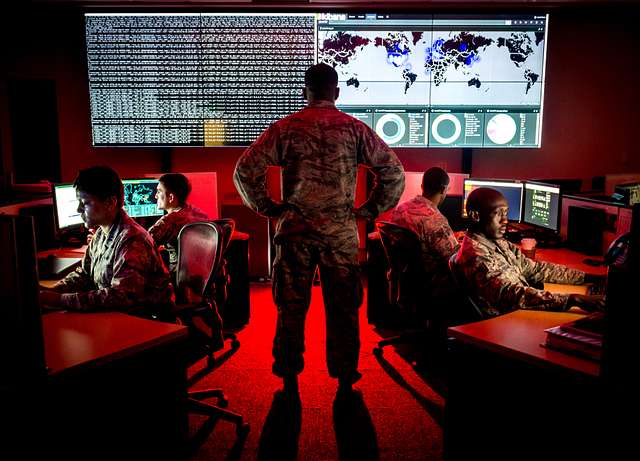
In the age of likes, shares, and viral content, social media platforms have evolved far beyond their original purpose of connecting friends and family. Today, these digital spaces have become sophisticated battlegrounds where information warfare is waged with increasing intensity and sophistication. From election interference to political and social radicalization, the militarization of social media is reshaping the landscape of global conflict and challenging our understanding of national security.
The New Face of Warfare

Traditional warfare conjures images of tanks, aircraft, ships and troops moving bravely into battle, perhaps modified by images of personal-sized drones either surveilling the battlefield, if not directly attacking the enemy. However, in the 21st century, some of the most pivotal battles are being fought with keyboards and algorithms. Social media platforms, with their global reach and ability to rapidly disseminate information, have become powerful weapons in the arsenal of state and non-state actors alike.

This shift represents a fundamental change in how conflicts are waged. Information operations, once a supporting element of military strategy, have now taken center stage. The goal is no longer just to control physical territory, but to dominate the narrative, shape public opinion, and influence decision-making processes at the highest levels.

At its heart, “information warfare” is propaganda, directly targeting individuals – of friendly, neutral and enemy populations – to altrenately confuse, distract and misinform them, the better to shape their views to the attacker’s benefit. As an example, targeted social media manipulation can be used as a rallying cry to inflame public opinion – this is what happened in Tunisia in 2011 via Facebook, when a targeted campaign of social media manipulation aggravated the tragic suicide of an emotionally distressed young man, resulting in his self-immolation; this was the trigger event that started the so-called “Arab Spring” revolts, whose violent effects the world is still dealing with, over a decade later.

While many campaigns of militarized social media attack strategies are most often deployed by operators infiltrating existing sites and deploying multiple operators, assisted by increasingly sophisticated bots to artificially magnify and elevate the traffic of posts, spreading them much farther than they would spread organically, the most effective strategies come when the social media company itself consciously works with intelligence agencies to promote content. This is, in fact, at the core of the NSA using social media to promote the “selfie” craze to train facial recognition algorithms to better understand how human appearance can change.

Tactics and Techniques

The militarization of social media employs a wide range of tactics:

  1. Disinformation Campaigns: The spread of false or misleading information to sow confusion and discord.
  2. Astroturfing: Creating the illusion of widespread grassroots support for a particular viewpoint.
  3. Computational Propaganda: Using bots and algorithms to amplify certain messages and suppress others.
  4. Microtargeting: Leveraging user data to deliver highly personalized and persuasive content.
  5. Coordinated Inauthentic Behavior: Networks of fake accounts working together to manipulate public discourse.
  6. Memetic Warfare“: The creation of catchy, pithy images and sayings in a coherent and targeted campaign to begin shifting perceptions in a target population.

These tactics are often used in combination, creating complex information operations that can be difficult to detect and counter.

Memetic Warfare, as a doctrine, (as an outgrowth of Richard Dawkin’s theory of meme’s) is the latest iteration of the old practice of “psyops pamphlets“, printed flyers tossed from helicopters and airplanes – and sometimes, artillery shells – that attempted to alter the perceptions of opposing military personnel and civilians.

Modern internet memes can perform the exact same function as a propaganda leaflet, if a) constructed properly, and b) deployed to social media as part of a focused and structured campaign.

Real-World Impact

The consequences of this digital warfare are far-reaching and increasingly visible in global events:

  • Election Interference: The 2016 U.S. presidential election saw Russian-linked actors use Facebook, Twitter, and other platforms to spread divisive content and manipulate public opinion. The impact of these operations on the election outcome, however, remains a hotly debated topic.
  • COVID-19 Misinformation: During the COVID-19 pandemic, social media was used to attempt to brow-beat the public into dismissing concerns about the virus and vaccines as “conspiracy theories” or as “false information”, despite continuous evidence of widespread negative impacts of untested drugs. Social media was heavily used to justify all manner of draconian measures by various levels of government around the world, many of which – especially in various armed forces – have now (as of 2024) been retracted in full, or have cravenly begged those troops summarily dismissed to rejoin, actions that have failed miserably, as the command authorities’ actions have fundamentally broken the trust of their troops in their leadership abilities and morale authority.
  • Ethnic Violence: In Myanmar, Facebook was used to spread hate speech and incite violence against the Rohingya minority, demonstrating how social media can exacerbate real-world conflicts.
  • Recruitment for Extremist Groups: ISIL and other terrorist organizations have leveraged social media platforms for recruitment and radicalization, reaching potential members across the globe. ISIL, as of 2018, is estimated to have used social media to recruit and estimated 30,000-40,000 recruits, globally.

These examples illustrate how the militarization of social media can have tangible, often devastating, consequences in the physical world.

The Challenge for Free Societies

Free societies face particular challenges in this new weaponized landscape. The open nature of free societies, coupled with principles of free speech, can make them especially vulnerable to information warfare tactics, when those nation’s governments either do not promote detailed education of their own populations on the threat, and/or have lost the trust and faith of the populations, due to an over-abundance of security restrictions, that leave their populations scared of shadows, unable to understand the threat their governments warn them of, but only in vague and general terms.

Moreover, the line between legitimate political discourse and malicious information operations is often blurry. This creates a dilemma for both government agencies and social media companies: How to counter genuine threats without infringing on civil liberties or stifling free speech? As shown in the “knee-jerk” and draconian reactions to public concerns over those government’s response to the COVID pandemic, governmental overreaction and over-reach without coherent information being offered, damages or destroys public confidence in their governments; this creates a breeding ground for hostile actors to deploy information-warfare techniques and products to further weaken a public body’s loyalty to their government, which is exponentially aggravated by further government overreaction, as has recently occurred in the United Kingdom.

The Role of Social Media Companies

As the primary battlegrounds for this new form of warfare, social media platforms find themselves in a difficult position. They must balance user privacy, freedom of expression, and business interests with the need to protect their platforms from exploitation. Another factor is star-up capitol, as many very large social media companies got their start with grant money from intelligence agencies.

In response to growing pressure, companies like Facebook, Twitter, and YouTube have implemented various measures:

  • Content moderation policies to remove harmful content
  • Fact-checking partnerships to combat misinformation
  • Transparency reports on coordinated inauthentic behavior
  • Improved detection of bot accounts and inauthentic activity

However, critics argue that these efforts are often reactive and insufficient given the scale of the problem. In particular, “fact checking” has been badly handled by most social media companies, reducing the term to the level of a bad joke, and frequently generating the precisely opposite effect of its intent: if something is “fact checked” in a particular direction, it is widely assumed that the polar opposite is the actual truth.

Government and Military Response

Governments and military organizations are increasingly recognizing social media as a critical domain of modern warfare. Many countries have established dedicated units for information operations and cybersecurity:

These developments blur the lines between military operations, intelligence gathering, and public relations, raising complex ethical and legal questions. This democratization is intrinsically tied into free training in intelligence techniques available via everything from free-access archives of declassified military manuals to YouTube videos. Individuals who care enough, are training themselves to recognize the various techniques when they are deployed, and as a result, are able to bend this weaponization to their own use.

Looking Ahead: The Future of Digital Warfare

As technology continues to evolve, so too will the tactics of information warfare on social media. Several trends are likely to shape the future of this digital battlespace:

  1. Artificial Intelligence: AI will play an increasingly significant role, both in creating more convincing deep fakes and in detecting malicious content…Conversely, AI can be leveraged to radically speed up the action cycle.
  2. Augmented and Virtual Reality: As these technologies become more prevalent, they may open new fronts in information warfare, allowing individuals to “meet” and collaborate in ways only hinted at with previous tools, such as ZOOM, Teams or Discord, among others.
  3. Quantum Computing: This could revolutionize encryption and cybersecurity, with profound implications for online information operations.
  4. Regulation and Governance: There will likely be increased efforts to regulate social media platforms and establish international norms for behavior in the digital space. The reaction to this, however, may well encourage people to trust governments even less, to their direct detriment.

Conclusion

The militarization of social media represents a paradigm shift in how conflicts are waged in the 21st century. As digital platforms become ever more central to our lives, the battles fought on them will have increasingly significant real-world consequences.

Addressing this challenge will require a multifaceted approach involving governments, tech companies, civil society, and individual users. Education in digital literacy, robust democratic institutions, and innovative technological solutions will all play crucial roles in navigating this new landscape. At the same time, these responses have to be tempered by companies and governments, lest they either create or magnify the very problems they are attempting to defend their states from.

As the world moves forward, one thing is clear: the front lines of global conflict now extend to the palms of our hands, making every smartphone a potential battleground in the age of information warfare.


The Freedomist — Keeping Watch, So You Don’t Have To
Cryptocurrency and Conflict Financing – Reshaping the Economics of Modern Warfare


In the shadowy world of conflict financing, a new player has emerged: cryptocurrency. As digital currencies like Bitcoin – once derided by many as useless money pits – increasingly gain mainstream acceptance, they are also becoming a tool for those operating outside the law, including insurgent groups, terrorist organizations, and sanctioned states. This technological shift is reshaping the economics of modern warfare and challenging traditional methods of tracking and interdicting illicit funds. Money makes serious violent conflicts and wars possible, and cryptocurrencies are increasingly the preferred go-to for all non-state actors in conflicts…and major nations are not far behind.

The Rise of Crypto in Conflict Zones

Cryptocurrency’s key features – decentralization, anonymity, and borderless transactions – make it an attractive option for groups operating in conflict zones. Unlike traditional banking systems, which can be easily monitored and controlled by governments, cryptocurrencies offer a degree of financial autonomy that’s unprecedented in the digital age. It also holds the potential to radically expand the democratization of warfare, a subject we touched on last week.

In recent years, there have been several high-profile cases of cryptocurrency being used in conflict zones. In 2019, Hamas – the militant group controlling Gaza, responsible for the October 7, 2023 assault into Israel – turned to Bitcoin to solicit donations, bypassing international restrictions on its financing. Similarly, in the ongoing conflict in Ukraine, both sides have leveraged cryptocurrencies: volunteers supporting Ukrainian forces have raised over $200 million in crypto donations, while some Russian-backed separatist groups have also turned to digital currencies to evade sanctions.

Terrorism Financing Goes Digital

The shift from traditional financing methods to cryptocurrency is particularly evident in terrorism financing. Al-Qaeda, ISIS, and other terrorist groups have increasingly turned to Bitcoin and other cryptocurrencies to fund their operations. These groups often use social media platforms to solicit donations, providing Bitcoin addresses where supporters can send funds anonymously.

The ease of creating online fundraising campaigns with cryptocurrency has led to a new phenomenon: the crowdfunding of terror. In 2019, a website linked to Al-Qaeda-affiliated groups in Syria raised Bitcoin donations for weapons and training. The campaign, which ran on the dark web, promised donors anonymity and the ability to support jihad from anywhere in the world.

This has extended into Asia, as well, as extensive NFT networks have been employed to both raise and transfer cryptocurrencies into fungible cash. Part of this fallout comes in the form of Afghanistan coming to the fore as a clearinghouse for crypto transfers to terror groups, as the lax controls of the ruling Taliban – who returned to power after the bungled and disastrous withdrawal of United States forces from the country in 2021 by the Biden-Harris administration – effectively closing off surveillance and enforcement efforts within the pariah state.

Challenges for Law Enforcement

This new landscape of crypto-enabled conflict financing poses significant challenges for law enforcement and intelligence agencies. Tracking and intercepting cryptocurrency transactions is a complex task, requiring specialized skills and technologies that many agencies are still developing. A major part of this is the reality of the “dark web“, and its associated “darknet markets“. Outside of cryptocurrency transfers, these markets allow all manner of criminal activity, including human trafficking and child pornography, as well as illicit drug trades, all of which terror groups have no issue leveraging such tools.

The catch for law enforcement and intelligence agencies in tracking terrorists and other criminals through the “dark web” lays in the fact that although the core operating principle of the ‘dark web’ – so-called “onion routing” – was developed and patented by the US Navy in 1998, the very nature of the system developed to secure US military and government communications networks means that forcing access remotely is virtually impossible. In fact, the arrest by the FBI of the founder and main operator of the notorious “Silk Road” darknet market in 2013 (which led to his life sentence in 2015) did not involve traditional methods of hacking, but involved an agent infiltrating the “Silk Road” site as an administrator, and using “social engineering” techniques to narrow down Ulbricht’s location, and using his personal security mistakes to finally locate him…”Hacking” really had nothing to do with the takedown of the “Silk Road“, because it cannot be taken down by conventional methods of “hack-attack“.

The pseudonymous nature of most blockchain transactions using the “non-fungible token” protocol that makes cryptocurrencies viable, provides a veneer of anonymity, though it’s not impenetrable. Agencies like the FBI have had some success in tracing Bitcoin transactions related to ransomware attacks and other cybercrimes. However, newer “privacy coins” like Monero offer even greater anonymity, making them increasingly popular among those seeking to avoid detection.

Legal and jurisdictional issues further complicate matters. As cryptocurrency transactions usually cross international borders, questions are raised concerning which agencies have authority to investigate and prosecute any “criminal activity” based on a computer physically located in their countries, not least because a specific instance of criminal activity in one country is not necessarily such in another country, as was demonstrated in 2012, when Hungarian scam artists attempted to run an insurance fraud scheme in the wake of the Costa Concordia disaster. The lack of consistent regulations across countries creates loopholes that bad actors can exploit.

The Humanitarian Dilemma

Interestingly, the same features that make cryptocurrencies attractive for illicit financing also make them valuable for delivering humanitarian aid to conflict zones. In areas where traditional banking systems have broken down, or where governments restrict the flow of funds, cryptocurrencies can provide a lifeline for aid organizations.

For example, during Venezuela’s economic crisis, some aid groups turned to cryptocurrency to deliver assistance, bypassing the country’s dysfunctional financial system and strict currency controls. Similarly, in Afghanistan, some NGOs have explored using cryptocurrencies to continue operations after the Taliban takeover restricted traditional financial channels.

However, this humanitarian use of cryptocurrencies presents its own risks. The same channels used to deliver aid could potentially be exploited by militant groups to divert funds. This creates a complex balancing act for aid organizations and regulators alike, not least as crypto-financing is increasingly being seen as a negative, since it is a “hidden” method of finance.

Looking to the Future

As cryptocurrencies continue to evolve, so too will their impact on conflict financing. The development of central bank digital currencies (CBDCs) and the increasing sophistication of decentralized finance (DeFi) platforms will likely create new opportunities and challenges in this space.

Regulators and international bodies are scrambling to keep up. The Financial Action Task Force (FATF), a global money laundering and terrorist financing watchdog, has issued guidelines for regulating virtual assets. However, the effectiveness of these measures remains to be seen, especially given the rapid pace of technological change in the crypto world.

The impact of cryptocurrencies on global power dynamics is also worth considering. As digital currencies potentially weaken the effectiveness of economic sanctions, traditional forms of financial warfare may become less potent. This could lead to a shift in how nations project power and influence on the global stage.

Conclusion

The rise of cryptocurrency in conflict financing represents a significant shift in the landscape of modern warfare. While it offers new opportunities for bad actors to fund their activities, it also presents potential benefits in terms of delivering aid and fostering financial inclusion in unstable regions.

As we move forward, the challenge will be to develop adaptive policies and technologies that can mitigate the risks of crypto-enabled conflict financing while preserving the innovative potential of blockchain technology. This will require unprecedented cooperation between governments, financial institutions, and the tech sector.

The genie of cryptocurrency is out of the bottle, and its impact on conflict financing is here to stay. The responses to this challenge will shape the future of global security in the digital age.


The Freedomist — Keeping Watch, So You Don’t Have To
The New Face of Warfare: Democratized Military Capabilities


Disclaimer: Although The Freedomist is dedicated to the notion of a free and open press, there are realities that we must negotiate in our coverage. This article is one of those cases. Herein, we will be discussing very controversial subjects – more so than in our regular articles – and we must acknowledge here, that we are deliberately leaving out some information for, frankly, legal concerns. While we are steadfastly in favor of our Readers being fully prepared for any instance or circumstance, we cannot help in that if we face crushing legal action. That is the reality of the world of 2024. “YOU are your own ‘first responder’.”


In the dense jungles of Myanmar, formerly known as Burma, a revolution is unfolding. But this isn’t just a political uprising – it’s a testament to a global shift in the nature of warfare itself. The conflict in Myanmar exemplifies a broader trend: the democratization of military-grade capabilities. This phenomenon is reshaping conflicts worldwide, from the streets of Syria to the arid landscapes of North Africa.


The 3D-Printed Revolution

Factions of the Myanmar resistance movements have embraced technology in ways that would have been unimaginable just a decade ago. Anti-government rebels are using 3D printers to manufacture both components for weapons and drones, as well as complete firearms. This isn’t unique to Myanmar; across the globe, additive manufacturing is putting military-grade capabilities into the hands of non-state actors.

While the first 3D printed firearm, the “Liberator” developed by Defense Distributed of Austin, TX, in 2013 – was a crude, single-shot weapon created more as a protest against government overreach than as a practical weapons, that has now changed drastically. Internet based, open-source, online collaboration in real time allowed people around the world to rapidly develop and prototype ideas and leverage existing technologies…resulting in usable weapons that can be produced in a person’s garage, which requires minimal skill to complete.

The release of the FGC-9  in 2018-2019 radically reshaped the field, allowing the creation of a combat-capable weapon. The FGC-9, designed by Jacob Duygu, a Kurdish German gun designer (known on the internet as “JStark1809“, who died under questionable circumstances following a raid on his home by German police in 2021), is technically a “pistol caliber carbine” (or, “PCC”) that is one hundred percent 3D printed, down to the barrel and the bolt. The FGC-9 is now “combat proven” in Myanmar, with the weapons mostly being built in “guerrilla factories” across the border in Thailand, and smuggled into the fighting areas.


A photo of FGC-9 firearm unassembled components, 2020. Photo credit: JStark1809/Deterrence Dispensed. CCA/4.0


The fundamental difference between the FGC-9 and other “garage guns“, such as the WW2 STEN Gun or the weapons designs of Philip Luty in the 1990’s is that a person trying to build these weapons still needs at least minimal machine tooling and metal stock. In contrast, the FGC-9 needs plastic and powder-metal media, and a 3D printer capable of both running the required programs and curing the injected or sintered material, making it drastically harder to identify and control the flow of raw materials to guerrilla factories.

Likewise, if one looks around the internet hard enough, plans for heavier support weapons – everything from mortars and rocket-propelled grenades (RPGs), up to surface-to-air missiles – can be found. We will not list those particular sources here, for two reasons: first, because of legal liability, and second, because that information should be available to those needing it – such as the rebels battling a brutal dictatorship in Myanmar – because the balance of the potential good outweighs the potential for evil: “bad actors” will find a way to commit violent acts no matter what impotent, even if well-intentioned, laws prohibiting the ownership of inanimate objects are passed.

And it is not just the weapons themselves that are being printed. The manufacture of ammunition via a 3D printing application of laser sintering technology is now capable of producing not simply projectiles (i.e., bullets), but producing propellant. While still in the early stages of development, this eliminates two of the four components required to manufacture conventional ammunition, leaving only the case and ignition primer needing manufacture.

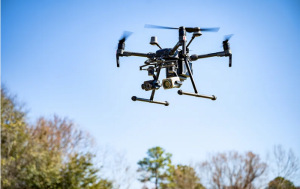
And then, we come to drones. While drone warfare is definitely not the overwhelming and decisive factor that it has been made out to be over the last decade, it does offer some significant benefits to non-governmental forces. Drones selling for less than US$100 on Amazon are capable of conducting missions ranging from aerial reconnaissance to combat target servicing, whether by dropping explosives onto a target, or by crashing into a target such as a battle tank, like a latter-day Japanese kamikaze plane. Likewise, drone parts kits are available to build much larger drones, capable of carrying much heavier payloads.


Greenville, NC Police department’s DJI Matrice drone. 2022. Photo by Greenville Police Department. CC0/1.0 Public Domain.


The implications heralded by the combat deployment and use of the FGC-9, on top of the repurposing of civilian drone copters for combat, are profound. State monopolies on military hardware are eroding, and with them, long-held assumptions about the balance of power in conflicts.


From Homebrewed Tanks & Artillery To Navies & Air Forces

The democratization of military capabilities isn’t limited to high-tech solutions. Since the 1980’s, pickup trucks converted into mobile fighting platforms—often dubbed “technicals”—have become ubiquitous in small-scale conflicts. These improvised fighting vehicles represent a low-tech but highly effective form of military innovation.

In Syria, this concept has been taken to new extremes. Civilian defense groups of all factions have constructed homemade armored vehicles, resembling mini-tanks, using salvaged materials and ingenious engineering. These vehicles, while not a match for modern main battle tanks (even when armed with ATGM’s), have proven surprisingly effective in urban combat scenarios. Of course, the use of these “technicals“, even if only otherwise standard pickup trucks fitted with machine guns in their beds, provides a low-tech group with a fast-moving force that can swiftly achieve spectacular results, given the right conditions.

But combat vehicles are not limited to armed pickup trucks. Returning to Syria, various forces in the mid-2010’s began building so-called “Hell Cannons“. These improvised artillery pieces fired homemade projectiles made from large propane canisters, capable of packing an impressive payload of explosives. While slow to load and not particularly accurate, these weapons are capable of inflicting significant damage on any area where their shells land. And, if fired as a battery, they can somewhat mitigate their slow reloading speed, as these weapons are almost always mounted on trailers, allowing them to be swiftly displaced and re-positioned.


“Hell Cannon” in Syria, 2014. CC0/1.0 Public Domain.


Similarly, there has been a maturing of “improvised navies“. Beginning, in the modern era, with the “Tamil Tigers” extensive use of smallcraft, as well as leveraging civilian freighters as mobile sea bases, many navies – notably that of Iran – have embraced the widespread use of small, high-speed boats to both attack larger civilian vessels, but also to execute the normal range of of uses for such vessels, such as inshore patrol and policing (in small, poor nations), guerrilla supply along inshore and riverine areas, and the insertion of small teams of combat troops – much like large-state special forces – into remote areas to avoid interception. This has occasionally escalated to actual, theater-level amphibious campaigns.

In the America’s, “narco submarines” have been a continual headache for police and naval forces in several countries. While these vessels (most are not really ‘submarines‘…but some are) are not known to be used for covert insertions, they certainly can be. For the moment, however, the United States seems to still be blessed with the rule from before the 9/11 Attacks, that most of the terrorist and guerrilla groups in the world refrained from attacking targets inside the United States, as most of their funding came from ex-patriot donations from their communities of immigrants and refugees living here.


Crew of the Coast Guard cutter Stratton interdicting semi-submersible vessel on July 18 2015. USCG photo bu PO2 LaNola Stone. Public Domain.


But there is also a little talked about element: “DIY Air Forces“. Increasingly, in addition to drones, well-funded insurgent groups are leveraging lightweight civilian aircraft, including autogyros. While the legions of internet flag officers around the world laughed at the Communist Chinese idea of deploying autogyros for lightweight air assault…but, after the Hamas offensive that began on October 7th of 2023, only the truly stupid still laugh, as Hamas deployed airborne raiders (against, being fair, a group of unarmed teens and 20-somethings at a rave) via paragliders, which are essentially a parachute driven by a large fan worn by the user.

Technology is advancing, and the once-fanciful shticks used as stunts in movies from the 1960’s to the 1990’s, are no longer fantasy, but hard, capable combat systems that are affordable – and acquirable – by virtually anyone.


Training, Command, and Combat Control in the Digital Age

Perhaps one of the most striking examples of democratized military capabilities comes from recent conflicts, where non-state actors have rapidly established sophisticated command and control systems using off-the-shelf technology.

In the terrorist assault on the Indian city of Mumbai in 2008, the Lashkar-e-Taiba attacker’s command group repurposed a commercial office as an improvised command center, and did so at short notice. Equipped with consumer-grade computers, open-source mapping software, and encrypted messaging apps, they coordinated dispersed, complex operations, including verifying assassination targets in real time, using Google to match pictures of victims to their names and titles via facial recognition technologies, with an efficiency that rivaled traditional military and police command structures.

More and more, new desktop software and smartphone-based apps are offering armed non-governmental actors the ability to use many of the same tools as far better funded national armed forces. These tools run the gamut, from translation apps to 3D mapping and planning tools that, hwiler perhaps not exactly ‘military spec’, are certainly ‘good enough’; in some cases, regular national forces use many of these same programs and apps, because the civilian developers simply build better tools.

But there is a deeper question: How are “rag-tag guerrillas” acquiring the training necessary to conduct these operations?

In the ‘old days’, this was mostly done via trial and error or via some group of experienced advisors, either from the national military, or from a ‘friendly’ foreign power; occasionally, desperate but well-funded groups would hire foreign mercenaries to train and lead their “popular liberation forces” in the field…But today, those blocked or otherwise unable to attend formal military training courses have an alternate: finding military training manuals online.

There are literally dozens of archival repositories scattered throughout the internet, loaded with declassified or never-classified military manuals from dozens of nations. These are frequently the current editions of manuals on a given subject. It is important to note that this is no substitute for a measured, supervised course of instruction. Leaders – especially military leaders – are not created overnight. However…in an environment where military leadership is suddenly needed, those individuals who see themselves as filling that role, can now tweeze out at least a reasonable series of academic learning.

But what about actual “field training“?

In previous decades of the late-20th Century, civilians attempting to provide themselves with military training usually resorted, to be frank, to the old children’s game pf “Army”, shouting “BANG!” at each other with rifles; in this, they were not too different from pre-World War 2 training, at least in the United States. The US military, obviously, radically reformed its training regimen after that war, to make its troops far better prepared for the next go-round.

Today, however, the increasing popularity of “combat games” such as AirSoft (or the older paintball) offer a facsimile of military training – neither as good, nor as consistent as a regular force – that is still sufficient to offer much more than a “first step”.


The Global Implications of Military-Sphere Democratization

The democratization of military capabilities is redrawing the maps of global power and conflict. Small nations and non-state actors now have access to capabilities once reserved solely to major powers and their proxies. This shift is forcing a reevaluation of traditional military doctrines and international relations:


  1. Asymmetric Warfare Evolved: The line between state and non-state military capabilities is blurring, making conflicts more unpredictable and potentially more protracted.
  2. Proliferation Challenges: Traditional arms control measures are struggling to adapt to a world where military capabilities can be ‘printed’ or improvised.
  3. Ethics and Legality: The ease of accessing military capabilities raises complex ethical and legal questions about the conduct of war and the definition of combatants.
  4. Innovation Acceleration: The decentralized nature of these developments is driving rapid innovation, often outpacing traditional military R&D cycles.
  5. Global Security Landscape: As capabilities proliferate, the potential for conflict may increase, but so too might the barriers to large-scale war.


A Look Ahead

In this new landscape, the international community faces tough questions. How does the world manage the proliferation of military capabilities in an age of digital sharing and additive manufacture? Can international laws and norms adapt quickly enough to address these changes?

The democratization of military capabilities is not just changing how wars are fought; it’s changing who can fight them effectively and why they’re fought in the first place. As technology continues to evolve, so too will the face of warfare. The challenge for the global community is to navigate this new reality, seeking ways to harness its potential for defense and deterrence while mitigating its risks. The reality, however, is that the result of both the widespread dissemination of information, matched to blockchain technology, virtual private networks (VPNs), and additive manufacture, make controlling the flow of information virtually impossible.

In the jungles of Myanmar, the deserts of Syria, and countless other corners of the globe, the future of conflict is being written not just by states and their armies, but by individuals armed with ingenuity, determination, and increasingly, the tools to challenge traditional power structures. The world must take notice and adapt, for the genie of democratized military capability cannot be put back in the bottle.

At the same time, these tools are just that – tools. Tools are inanimate objects, and because of this, they have no independent intent. Tools are used for both good and evil actions, and those with the intent determine the direction and tone of the use of those tools – no matter where those tools are directed.


The Freedomist — Keeping Watch, So You Don’t Have To
The Final Frontier of Combat Operations: The Escalating Militarization of Space


Beginnings

As humanity’s presence in space grows, so too does the potential for conflict. The militarization of space – “space war”, if one prefers – was once the realm of science fiction, but is rapidly becoming a reality that promises to reshape global security dynamics in the 21st century.

The concept of space as a military domain is not new. Since the launch of Sputnik in 1957, nations have recognized the strategic importance of space. Early military applications focused on reconnaissance and communication satellites, which have played crucial roles during the Cold War, and the wars of the 21st century. However, recent years have seen a dramatic acceleration in the development and deployment of military space capabilities.


Confrontation In Space

As far back as 1981, author G. Harry Stine, one of the founders of model rocketry in the United States, and a notable author of hard science and technology writings, as well as science fiction, laid down the basics of warfare in space in his book “Confrontation In Space“, defining the basic shape and dimensions of the battlespace, the most likely weapons that will be used, and outlining the early concepts of how combat in space would be waged.

There is no science fiction in this book, and no technobabble, just the hard realities of applying warfare “in the Black”, to reference a certain TV show, to the real world. Given the general nature of some of the space-war musings of the time that have since been declassified by official sources, Stine is a refreshingly sane and soberingly realistic voice.

The extent to which Stine’s work has influenced modern space battle planning is open to question; it should be a fundamental text, but given the current mission statement of the United States Space Force (USSF), that seems unlikely.

Today, the major players in space militarization are the United States, China, and Russia, with other nations like India and Japan also expanding their capabilities. These countries are investing heavily in a wide range of space-based military technologies. The United States, however, long one of the main innovators of space exploration, only established the USSF in 2019 as a separate branch of its armed forces, signaling the growing importance of space in military doctrine.

Current military space capabilities go far beyond simple reconnaissance. They include the creation and servicing of advanced communication networks (which underpins the basic operation of the internet), precision navigation systems like GPS and early warning systems to detect ballistic missile launches. However, in recent years, China, Russia, and the United States have all demonstrated anti-satellite (ASAT) weapons capabilities, raising fears about the vulnerability of critical space infrastructure, demonstrating the ability of national actors to destroy satellites at will.


An artist’s illustration of the Soviet-era Istrebitel Sputnikov ASAT system, c.1986. US Government image. Public Domain.


Technological advancements are driving this new space race. The miniaturization of satellites has made it easier and cheaper to launch large constellations of small satellites, enhancing resilience and coverage, as well as opening the potential for true “surge capacity”, to rapidly launch replacement satellites to replace combat losses. In addition to rapid reconstitution of a damaged communications network, the need to replace combat-lost GPS satellites is a key function of satellite surge capacity, because most military vehicle and targeting systems rely on GPS for navigation in addition to combat. Reusable launch vehicles, pioneered by companies like Elon Musk’s SpaceX, have dramatically reduced the cost of accessing space, which has lowered the barrier to entry for military space programs.


Throwing Rocks

Fundamental to actual warfare in space is the development of dedicated weapons for use in the theater. While actual weapons have been fired in space, these weapons go far beyond lasers, high-powered microwave systems, or even the darling of recent science fiction shows, the “particle accelerator“. In fact, the most lethal weapons in space will likely be rocks: “mass drivers“, essentially an electromagnetic catapult, can accelerate iron-rich space rocks (as small as pebbles) to very high velocities, far faster than conventional bullets or cannon rounds. A hit from a very high-speed projectile of any nature could be a catastrophic damage source to any spacecraft, as current launch systems severely limit the weight of spacecraft, which in turn limits the amount of armor a vessel can carry, assuming that current armor would even be effective. While still largely theoretical, such weapons could revolutionize space warfare, and require careful thought and planning to employ.

In response to these emerging threats, nations are working to develop countermeasures and defensive strategies; most of these, it much be noted, are ‘passive’ in nature, as active countermeasures are currently ill defined. The strategies currently in development include hardening satellites against attacks, improving space situational awareness to detect threats, and developing rapid launch capabilities to quickly replace damaged or destroyed satellites.


Bright Light Boom

There is also the possibility – perhaps “likelihood” – that someone will eventually detonate a nuclear weapon as part of an actual battle in space. The main considerations in using these weapons in space begin with exactly where they are detonated. If a large enough warhead were detonated at a suitable altitude above the surface, it could – in theory – generate an electromagnetic pulse (EMP) sufficient to overload and shutdown, if not outright destroy, any large-scale power grid. This phenomenon was first recognized in 1962 during the Starfish Prime test, when an unexpected EMP wave from the detonation knocked out power to parts of the city of Honolulu, Hawaii.


Photo of the Starfish Prime detonation in the skies over Honolulu, Hawaii, 1962. US Government photo. Public Domain.


Aside from the well-known, at least in a broad sense, radiation effects (which would likely be magnified in space, without an atmosphere to absorb them) and EMP concerns, the main damage-causing mechanism of a nuclear blast on Earth – blast effect, caused by the compression of the atmosphere by the detonation wave – would not be present, as there is no atmosphere in space that can be compressed into a destructive force.

For all that, however, work on “bomb-pumped lasers” and other exotic warhead designs such as Project Casaba-Howitzer (which used a nuclear weapon to create a shaped charge from material vaporized into plasma by the blast), largely came an end – at least publicly – at the end of the 1980’s, as it was clear that the Soviet Union was dying, and that the prospect of all-out nuclear war had rapidly begun to fade.


Pulse propulsion unit of project Orion vehicle, used as the basis for the Casaba-Howitzer warhead concept, 1964. NASA image. Public Domain.


As the possibility of actual open warfare in space continues to rear its head, it is a near-certainty that many of these old programs are being reexamined, using fresh data and better computer modeling…The possible side effects, however, remain.


Combat Logistics in Space Warfare

One of the most challenging aspects of space militarization is the issue of combat logistics. Unlike terrestrial warfare, where supply lines can be established and maintained relatively easily, space presents unique challenges for sustaining military operations.

The primary hurdle is the enormous energy requirement to launch materials into orbit. Every kilogram of supplies, whether fuel, ammunition, or replacement parts, comes with a very high price tag (over $2,000 per kilogram) and significant challenges to logistical load planning, in both loading and unloading at point of delivery. This makes traditional resupply methods impractical for sustained operations in-theater, as we understand the idea.

To address these issue, military planners are exploring several approaches. One concept is the development of in-orbit refueling capabilities. This would involve specialized “tanker” satellites capable of transferring fuel to other spacecraft, extending their operational lifespan and maneuverability.
 

A contour plot (not drawn to scale) of the effective potential of a two-body system, showing the 5 Lagrange points. NASA image. Public Domain.


Another area of focus is in-space manufacturing. Advanced 3D printing technologies – currently capable of making conventional ammunition-using select-fire weapons a factor in infantry combat – could allow for the production of spare parts or even small satellites directly in orbit, reducing the need for launches from Earth. Different avenues of research are exploring the possibility of mining asteroids or the Moon for resources, which could provide a sustainable source of materials and fuel for space-based operations.

Robotic servicing missions represent another potential tool in the box. These would involve unmanned spacecraft under direct, if remote, control, or completely autonomous systems guided by artificial intelligence, which would be capable of repairing, refueling, or upgrading other satellites or spacecraft, potentially extending their useful life and reducing the need for replacement of complete craft.

The concept of staging pre-positioned orbital depots is also being considered. These would be stockpiles of fuel, spare parts, and other critical supplies placed in strategic orbits, such as the Lagrangian points, ready to support military space operations as needed. In form, these might take the form of the old Skylab design, as – being the size of a 3-bedroom house – the design could hold a significant amount of material.


Artist’s concept illustration of the Skylab with the Command/Service Module docked to the Multiple Docking Adapter. 1972. NASA photo.


These logistical challenges and their potential solutions will play a crucial role in shaping the nature of future space warfare. The side that can most effectively sustain its space-based capabilities may gain a significant strategic advantage in any potential conflict extending into the space domain.


The Future


The future of space militarization remains uncertain, but several scenarios seem plausible. One possibility is the outbreak of a limited conflict in space, perhaps involving the destruction of key military or civilian satellites. This could have cascading effects on terrestrial military operations and civilian infrastructure.

Another scenario envisions the deployment of space-based weapons capable of striking targets on Earth. While technically challenging and currently prohibited by international treaty, such systems could offer significant strategic advantages.

A third possibility is the integration of space-based capabilities with terrestrial, air, and naval forces to create a seamless, multi-domain military force. This could enhance military effectiveness but also increase reliance on potentially vulnerable space assets.

As we look to the future, it’s clear that space will play an increasingly important role in military affairs. The challenge for the international community will be to balance the legitimate use of space for national security with the need to prevent a destabilizing arms race in orbit. Failure to do so could turn the final frontier into the next battlefield.


ADDITIONAL RESOURCES

  1. G. Harry Stine (1981), Confrontation in Space
  2. Julian Thompson (1994), Lifeblood of War: Logistics in Armed Conflict
  3. Thomas Ricks (2012), The Generals
  4. James F. Dunnigan (2003), How To Make War, 4th Edition
  5. James F. Dunnigan (1991), Shooting Blanks


The Freedomist — Keeping Watch, So You Don’t Have To
Israel, Hamas, Hezbollah, and Iran: Fiddling In The Fire


The period from 2020 onward has seen a significant escalation in tensions between Israel and its regional adversaries, primarily Iran and its proxy forces, Hezbollah and Hamas, as well as the more distant Houthi’s of Yemen. This complex web of conflicts and alliances has continued to shape the geopolitical landscape of the Middle East, and has significantly escalated tensions, to the point of a realistic chance for a much-expanded war.

The long-standing animosity between Israel and Islamic revolutionary Iran began to intensify in the early 2020’s. Iran’s nuclear program remained a central point of contention, with Israel consistently opposing any deal that would allow Iran to continue its nuclear development; this attempt at preventing nuclear proliferation, however integral to Israel’s security as it may be, is also highly unrealistic; the assassination of top Iranian nuclear scientist Mohsen Fakhrizadeh in November 2020, widely attributed to Israel, marked a significant escalation, as this differed from the Israeli Mossad’s previous assassination of Mahmoud Al-Mabhouh in Dubai, as the killing of Fakhrizadeh happened within Iran itself.

In this context, Israel is now accused of the assassination of Ismail Haniyeh, Hamas’ political head, who was killed in his hotel room on July 31st, in an apparent drone attack. This, too, occurred in Iran, but in the capital of Tehran itself. While Israel is unarguably at war, following the Hamas offensive of Oct. 7, 2023, an assassination such as this – known as a “decapitation strike” in military parlance – happening in a technically-neutral country (even given the events of April of 2024), is doing Israel no favors internationally.


The Biden administration has proven itself ineffectual with its diplomatic efforts, demonstrating both weakness and incoherence, to the point of encouraging the ambition of the Iranian ruling mullahs.

The election of hardliner Ebrahim Raisi (who was killed on May 19th, 2024 in a helicopter crash while returning from neighboring Azerbaijian) as Iran’s president in 2021 further complicated diplomatic efforts. Raisi’s administration took a more confrontational stance towards both Israel and the West, leading to increased concerns about regional stability.

Meanwhile, Hezbollah – the Iran-backed militant group that has controlled Lebanon’s southeastern Bekaa Valley since the mid-1980’s, remained a significant threat to Israel’s northern border. In 2020 and 2021, there were several minor skirmishes along the Israel-Lebanon border, though both sides managed to avoid a full-scale conflict.

Israel continued to conduct airstrikes in Syria, targeting what it claimed were Iranian weapons shipments to Hezbollah. These operations aimed to prevent the group from obtaining advanced missile systems that could threaten Israeli cities.

In 2022, tensions further escalated when Israel and Lebanon engaged in U.S.-mediated negotiations over their maritime border, which involved disputed gas fields. Hezbollah threatened to attack Israeli gas installations if an agreement wasn’t reached, leading to a tense standoff that was eventually resolved through diplomacy. Now, following a rocket attack on the Israeli Druze community of Majdal Shams on 27 July that killed a number of Druze children, Israel is at the point of invading southern Lebanon to try and attrit Hezbollah’s ability to strike into Israel, much as it attempted in 2006. In this, the ineffectual Lebanese government can offer no resistance against an invasion, or even an “incursion”, and calling on Muslim countries for aid could easily trigger a new civil war in the unstable and bankrupt nation.


In the south, the situation in Gaza remained volatile, with periodic flare-ups of violence between Israel and Hamas, which has retained power in Gaza since 2006, when Hamas won Gaza’s first election – then made sure that no other elections occurred to challenge its grip on power. In May 2021, a significant escalation occurred when Hamas and other militant groups in Gaza fired thousands of rockets at Israel. Israel responded with extensive airstrikes on Gaza, resulting in a 11-day conflict that caused substantial casualties and damage. The aftermath of this short conflict saw increased international pressure for a long-term solution to the Gaza situation. However, progress remained elusive, with Hamas maintaining its control over Gaza and continuing to clash with Israeli forces, which would escalate dramatically on October 7th of 2023.

In 2022 and 2023, there were several smaller-scale exchanges of fire between Gaza militants and Israel. These incidents, while not escalating to the level of the 2021 conflict, served to maintain a state of tension and uncertainty in the region.

The ongoing civil war in Syria that began in 2011, and the unstable situation in Lebanon have provided fertile ground for proxy conflicts involving Israel, Iran, and their respective allies. Israel continued its policy of preventing Iranian entrenchment in Syria through targeted airstrikes, while Iran sought to maintain and expand its influence in the region.

The Abraham Accords, negotiated by US President Donald Trump and signed in 2020, which normalized relations between Israel and several Arab states, altered the regional dynamics. This realignment put additional pressure on Iran and its allies, as Israel’s diplomatic and strategic position in the Middle East was greatly strengthened.

The conflict between these actors is increasingly playing out in the cyber domain. Both Israel and Iran have engaged in sophisticated cyber attacks against each other’s infrastructure, including attempts to disrupt nuclear facilities, water supplies, and electrical grids. For its own part, rumors persist that Israel was at least partly behind the deployment of the highly destructive STUXNET virus in 2010.


Covert operations, including assassinations and sabotage, have become more frequent – as with the assassination of Ismail Haniyeh noted above – as the conflict has evolved. These actions, carried out with only the thinnest veneer of “plausible deniability“, have served to maintain tension without triggering open warfare; that situation, however, may be coming to an end.

The United States remains heavily involved in the region – building on its rocky, 20 years “War on Terror” – by supporting Israel while also attempting to prevent a widening conflict. The Biden administration’s efforts to re-engage with Iran on the nuclear issue met with – being charitable – mixed success, complicated by regional tensions and domestic politics in both the U.S. and Iran, as well as its own failings in the disastrous end to United States adventurism in Afghanistan. The Biden-Harris administration has consistently demonstrated that it cannot make any sort of definitive decision, one way or another, on the diplomatic front.

Russia and China also play significant roles in the Levantine conflict, with Russia maintaining its presence in Syria and with China increasing its economic and diplomatic engagement with Iran. In both cases, Moscow and Beijing figuratively smell blood in the water, as they sense the weakness in NATO [https://en.wikipedia.org/wiki/NATO] as a whole, but also in the United States in particular, as the Biden-Harris team continues to flounder internationally.


The ongoing conflicts and tensions have had severe humanitarian consequences, particularly in Gaza and parts of Lebanon. International organizations repeatedly called for increased access to provide aid and for all parties to respect international humanitarian law. The ongoing war in Gaza following the October 7 massacre, as well as the Houthi strikes against Red Sea shipping, has only made the situation far worse, with Israel now resolved to end the Gaza question once and for all, leading to worsening violence and rhetoric directed against them in the West, with criticism coming from all sides, driving the Israeli mindset further into an “Us Alone Against The World” outlook.

As of early 2024, the situation remained tense and unpredictable. While full-scale war has been avoided so far, the risk of escalation into a much wider war – a war with the potential to draw in larger powers is increasingly possible. The interplay between Israel, Iran, Hezbollah, and Hamas continues to be a major driving factor in regional instability, with implications extending far beyond the Middle East. The international community is attempting to remain engaged, seeking ways to reduce tensions and prevent a larger conflict, but face significant challenges due to systemic internal problems facing Western nations, crushing demographic issues with Communist China, and Russia’s seemingly interminable war in Ukraine.


The Freedomist — Keeping Watch, So You Don’t Have To
Main

Back FREEDOM for only $4.95/month and help the Freedomist to fight the ongoing war on liberty and defeat the establishment's SHILL press!!

Are you enjoying our content? Help support our mission to reach every American with a message of freedom through virtue, liberty, and independence! Support our team of dedicated freedom builders for as little as $4.95/month! Back the Freedomist now! Click here