In the name of saving the planet from the number one enemy of the Democratic Party, the human race, the mass mailer President committee of Joe Biden is “proposing” allowing a foreign environmental group called Science Based Targets Initiatives (SBTI) out of the UK to veto military contracts with companies that fail to meet international carbon emission reduction targets.
Senior fellow for the Heritage Foundation Travis Fisher warned, “I think Americans will be upset when they realize the Biden administration is trying to put a bunch of unelected bureaucrats and a climate activist group—headquartered in London—in charge of long-term planning for our national defense contractors.”
The “proposal” would target 671 contractors for foreign agent adjudication to determine if they are towing the climate ideology party line, never mind if they can provide the best services and equipment our military needs to be an effective fighting force, something that has always been of little importance to the Democratic Party for as long as this writer (now in his 50s) remembers.
SBTI came from a far-left association of dark money organizations called “We Mean Business Coalition” in 2015. The groups are closely aligned with the global fascist organization World Economic Forum. The connections to Marxist ideologues and organizations is thick and heavy and further serves to give the American people evidence of the truly seditious nature of the DNC-CCP, which has values that are aligned with Chairman Xi, not Thomas Jefferson.
Mercenaries have been around for a very long time; so long, in fact, that working as a “sell sword” is regarded as a prime candidate for the title, “The Second Oldest Profession”; the Freedomisteven covered this previously. During the Italian Renaissance, the sometimes substantial forces of various condottieri mercenary captains had a noted and significant impart on Western History. In the modern day, from 2003 onwards, this has been exemplified by the rise of the “Private Military Company” (PMC).
While some people may think that mercenaries are a relatively recent phenomena, having been largely eliminated after the Napoleonic Wars, the truth is that the profession has continued on up to the present day, albeit on a more individual level, more than massed units like the hired Hessian troops of the American War of Independence.
(An important note is that those to whom the 19th Century term “filibusters”, as related to military activity, applied were not ‘mercenaries’ in the traditional sense, as military filibustering was rarely done at the behest of any internal faction in a country. Military filibusters were essentially well-armed bandits with political aspirations.)
Many military figures of world history were mercenaries at one time or another, figures like the Athenian general and historian Xenophon, author of The Anabasis, which chronicles the withdrawal of some ten thousand mostly-Greek mercenaries from the Achemenid Empire, to Baron Friedrich Wilhelm von Steuben, the Prussian professional soldier who joined George Washington’s army, and had such an impact on it, that he is regarded as one of the ‘founding fathers’ of the United States Army.
Baron Frederick William von Steuben, c.1780. Painted by artist Charles Willson Peale (1741–1827). Public Domain.
In the aftermath of the overthrow and ultimate execution of French king Louis XVI, France instituted what we would now refer to as “national mobilization”, the vast size of the armies the revolutionary government was able to field proved so attractive to nations everywhere, notions of unique national character were deliberately reinforced. As a result, it came to be considered odd – if not more than a little dirty – to serve in the armed forces of another state.
And yet such service, primarily for money, continued. The French Foreign Legion, established in 1831, was created to place foreigners who had previously served as mercenaries in French royal service, into the French Army for service outside of France. Smaller such units appeared from time to time, but after about 1820 or so, the “Soldier of Fortune” phase began in earnest, first with the Filibusters, but soon incorporating many individuals, mostly former soldiers but also a few pure amateurs, who were what we would now call “adrenaline junkies”, following reports of wars breaking out in various places around the world, where formal military education and technical abilities were scarce. The advanced education and experience of many of these individuals often proved invaluable to their employers. As just one example, British Royal Navy Captain (later Rear-Admiral) Thomas Cochrane, 10th Earl of Dundonald, was instrumental in creating the revolutionary navies of Brazil, Chile and Peru, in the 1820’s and 30’s.
Admiral Lord Cochrane, portrait of James Ramsay, c.1830. Public Domain
By the 1890’s, “freebooters” and soldiers of fortune were seemingly everywhere, fighting for almost all sides in world conflict zones. With the advent of weapons such as practical machine guns and quick-firing artillery, coupled to a highly permissive “cash-n-carry” environment for buying weapons, meant that those individual’s technical skills were often absolutely decisive in conflicts in remote areas.
Following World War’s 1 & 2, however, the world saw the return of mass national mobilization, and a reinforcement of the perceived uniqueness of national character. As a result, aside from long-established units like the French Foreign Legion, “mercenary work” mostly vanished completely, for about fifteen years. As the tensions of the Cold War increased, however, the decolonization of Africa initiated a series of “proxy wars”, which would define much of the following thirty years. In 1961, mercenaries returned to the world’s consciousness in force – both literally and figuratively.
In 1961, Thomas Michael Hoare (who would come to be known as “Mad Mike”), a former officer in the British Army and veteran of the Burma Campaign in the Second World War, was hired by Moïse Tshombe, the leader of the nascent breakaway province of Katanga, to form the core of an army to secure the state’s independence.
Although that effort was ultimately unsuccessful, Tshombe – in the absolutely wild world of Congolese politics (YouTubelink; language warning) – was recalled to become the country’s fifth Prime Minister in mid-1964, to deal with the so-called “Simba Uprising”, a massive and extremely bloody rebellion in the vast state’s northeastern regions. Tshombe, in turn, recalled Hoare to recruit a force of mercenaries to act as a spearhead to the wavering Congolese Army. Hoare promptly recruited mercenaries through newspaper advertisements in South Africa and Rhodesia (now Zimbabwe), and formed his unit as “5 Commando, ANC”.
Troops of the mercenary-led 5 Commando, ANC, during Operation ‘Dragon Rouge’, 1964. US Army Photo. Public Domain.
Although the force got off to a rocky start, it was quickly whipped into shape (mostly by enforcing a regimen of discipline that western armies had long ago abandoned.) Hoare quickly began rolling up the Simba’s, in a series of operations that resulted in the liberation of Stanleyville (now Kisangani). In traditional mercenary fashion, Hoare’s c.300 mercenary troops and their Congolese allies happily sacked the city in the aftermath, blasting open bank vaults and looting anything not nailed down. Atrocities – although nowhere near the levels committed by the Simba’s – were rampant. Hoare’s unit would ultimately be disbanded in 1967, after some six years of mostly-successful operations. A few other pseudo-units of (mostly White) mercenaries came and went in the Congo during the 1960’s, contributing to actions that would leave the Congo devastated into the modern day.
Mercenary activity simmered for another twenty years, with Western mercenaries – usually, but not always, former soldiers – taking part in many, possibly a majority, of the conflicts of the 1970’s and 80’s. In the aftermath of the rise and fall of “Executive Outcomes” (defunct in 1998, but recently reestablished), the prototype for the modern PMC, the United Nations passed a frankly idiotic and laughably unenforceable prohibition against mercenaries, “formally” outlawing the practice and denying them status as prisoners of war under the increasingly irrelevant Geneva Conventions…which were rarely, if ever, extended to captured mercenaries, in any case.
The September 11th, 2001 attacks are what ultimately rode to the rescue of the mercenary profession. The reason was painfully simple: With the end of the Cold War in 1991, most of the nations of the world severely trimmed their massive military establishments, leaving their capability to deploy military force critically short. As there were no national mobilizations after the attacks, and the dawning of the “Global War on Terror” mostly took the form of actions by small units of superbly (and expensively) trained special forces units, backed up by comparatively small numbers of conventional troops, the military landscape seemed to have changed.
A Special Forces company commander meets with village elders and members of the 1st Kandak, 209th Afghan National Army Corps April 10, 2007. Photo Credit: Specialist Daniel Love, U.S. Army. Public Domain.
However, this change was actually a mirage, an image warped by a declining lack of military knowledge among the general population. In fact, the cuts in manpower during the 1990’s had been so deep, across the globe, that military forces – including those of the United States – were left completely incapable of operating for any length of time in a war zone. With the various wars and military actions abroad becoming increasingly unpopular “back home”, there was no interest in trying to expand the manpower numbers of western military forces (which is an entirely different story on its own), a solution had to be found, and quickly.
This is what led to the rise of the 21st Century PMC.
Private Military Companies are a polite legal fiction, designed to hide their status as mercenaries (thus avoiding legalistic maneuvers by nations of the UN) by usually referring to them as “security contractors”, who insist that they take no active role in military actions, merely defending themselves. It’s a paper-thin dodge, and one no one with any concept of self-decency ever really believed.
As of the beginning of 2022, however, the world’s military calculus has begun to shift once again. With military actions such as the Tigray War and the Russian invasion of Ukraine in early 2022, the return of mass warfare (long thought vanished as a realistic possibility) has returned, with a vengeance.
Massed wars – “main force conflicts”, if one prefers – like these in the modern era are inimical to most flavors of PMCs. Fighting insurgents armed with individual small arms and a few light weapons is one thing – contesting a battlefield against a first-tier military state is another matter, entirely. To borrow the words of author Thomas Ricks, few “contractors” within any PMC has a dog in any fight like that.
While PMC’s will continue to be employed in the short term, it is a virtual certainty that the non-state supported, independent PMC will vanish within ten years.
…Assuming, of course, that Western States can fix their broken military forces.
Let that sink in.
The Freedomist — Keeping Watch, So You Don’t Have To
We would like to express our thanks to naval OSINT analyst H I Sutton, of Covert Shores, for his kind assistance with this article.
Illness is an odd thing. One rarely pays close attention to outside events unless those events have a direct and immediate impact on the ill person. In the case of your humble author, 2022 was a rough year. As a result, I completely missed this article when it came out, and didn’t think clearly about the implications of using larger vessels in a DIY Navy when that article was written.
Mea culpa, mea culpa, mea maxima culpa…Consider this to be Part 2.
For small national navies, as well as “guerrilla” navies, Part 1 is still absolutely true: limited funds and resources limit options when building a naval force of any kind. However, for the nation-state that is in the “middle sea” [sic], so to speak, those have more options.
As described in a previous article, a nation desiring to construct a navy needs to first decide on exactly what kind of navy they need – not want, but need. To briefly recap, there are three basic choices: Blue, Green & Brown:
A “blue” navy is basically the kind of navy used by the United States, Great Britain, and France, the kind of navy that Communist China aspires to: a naval force to maintain the “Sea Lanes of Communications” (the SLOC). This is the hardest kind of fleet to build, and far and away the most expensive.
A “green” navy is mostly a coastal force, whose main job is to facilitate amphibious operations, i.e., landing troops ashore. Still expensive, but the better choice for nations like the Republic of the Philippines.
A “brown” navy operates almost solely along rivers and close in to coastlines. These naval forces are comparatively cheap, but are very limited in range and capabilities, compared to the other two types of fleet.
Obviously, there is a good deal of overlap between the various types: brown and green navies complement each other well, where their environments meet. Likewise, green and blue navies can have a very great deal of overlap when projecting state power at a long distance. While there is little overlap between blue and brown fleets, blue water units can benefit from the lightweight/high-speed boats of the brown squadrons.
Iran, however, has taken the path of outside-the-box thinking to a different level.
Beginning in 2021, the Iranian Revolutionary Guard Corps commissioned the building of at least two “drone carriers,” former “Panamax” [https://en.wikipedia.org/wiki/Panamax] box-carriers [https://en.wikipedia.org/wiki/Container_ship] refitted to operate combat and surveillance drone aircraft, “Shahid Mahdavi” and “Shahid Bagheri”. In form, the two ships initially looked like their recent sister ship, the “forward base ship” “Makran”.
Unlike Makran, however, Mahdavi and Bagheri are apparently focused solely on drone craft operations. The Bagheri is being fitted with an overhanging deck extension on their port (left) side. While visually similar to US Navy carriers of the last c.65 years, this seems to have been designed in order to launch and recover heavier drone craft on an angle, from port to starboard, due to the container ships’ superstructure at the aft (rear) end, which cannot be easily modified. This seems to be confirmed, as Iranian state news is showing pictures of a “ski jump” being installed on the Bagheri. The “ski jump” flight deck has been used to aid in flight operations since at least the 1970’s, when the UK’s Royal Navy used them for their “Harrier carriers”, HMS Hermes and HMS Invincible, during the Falkland Islands War of 1982.
IRGC ship “Bagheri” under construction in shipyard near Bandar Abbas, 2022, showing angled flight deck. Diagonal arrows show the non-standard flight deck. Photo credit: H. I. Sutton, Covert Shores
IRGC ship “Bagheri” under construction in shipyard near Bandar Abbas, c.early-2023, showing the ‘ski jump’ nearing completion on the flight deck. Photo credit: H. I. Sutton, Covert Shores
Harrier Jump Jet, Farnborough Air Show 2014 by Christine Matthews. CCA/2.0
This modification opens the possibility of launching much heavier drone craft, capable of carrying much heavier ordnance than other drones. While certainly incapable of handling heavier, manned craft, this bodes ill for anyone Iran chooses to focus on.
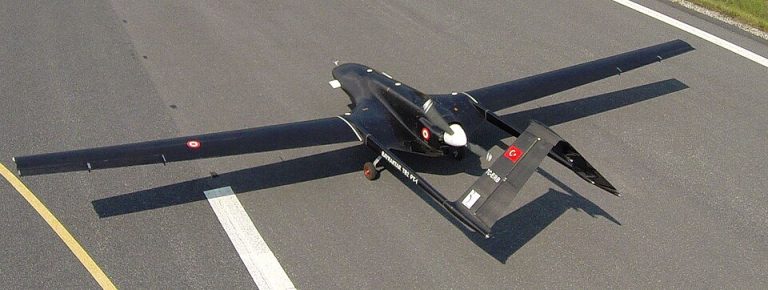
Bayraktar TB2 on the runway. Credit: Bayhaluk, 2014. CCA/4.0/Int’l.
There has not been a direct, “force on force”, aircraft carrier battle since WW2; the aforementioned Falklands campaign nearly resulted in one, but that turned out to be a false start. While there have been thousands – if not tens of thousands – of carrier-launched fighters and bombers attacking land targets and land-based aircraft, these were not “carrier” battles, in the naval sense. The concern, here, the nightmare of rational naval planners since the 1970’s, has been the “improvised aircraft carrier.” The naval dimension of the Falklands War, once again, informs on the problem.
SS Atlantic Conveyor, approaching the Falklands. About 19 May 1982. Photo: DM Gerard. CCA/2.5
A combination roll-on/roll-offcontainer ship, Atlantic Conveyor was used primarily to ferry aircraft for the British invasion force. When the vessel arrived in the combat area, the Harrier ‘jump jets’ she carried were launched from her, and flown off to the aircraft carries. On May 25th 1983, during the ferocious air attacks by Argentine air forces during the Battle of San Carlos, Atlantic Conveyor was struck by two Exocet anti-ship missiles, killing twelve of her crew, including her captain; gutted by fires, the ship sank three days later, while under tow, joining several other vessels in becoming the first Royal Navy vessels lost in action since World War 2. The loss of all of the remaining aircraft aboard (all of them helicopters) would severely hamper British operations ashore for the remainder of the campaign.
But note the first part of that story: Atlantic Conveyor was able to at least launch manned fighter jets while underway. What the Royal Navy – long starved for funding for ships and manpower (HMS Hermes was scheduled for decommissioning – without a replacement – when the invasion happened) had built a “jack carrier”, effectively equivalent to a WW2 “escort carrier”, at very short notice, with the potential – had she not been destroyed – of being able to conduct combat operations at some level.
This capability had been recognized with helicopters for many years, but this was the first time it had been proven valid for manned combat jet aircraft. Although conjectural, this is likely the real reason why the US and UK defense establishments buried the Harrier’s proposed follow-on aircraft, the supersonic version of the Hawker Siddeley P.1154, cancelled in 1965. No serious attempt was made to perfect a supersonic-capable VTOL until the introduction of the F-35B by the United States in 2015. As there are few carriers in the world capable of operating conventional jet aircraft, this ensured the naval dominance of those states that possessed these massive and expensive weapons.
F-35B Lightning taking off from a ski-jump, from HMS Queen Elizabeth, 2020. Photo: LPhot Luke/MOD. UK/OGL v1.0
Now, however, we find ourselves in the 21st Century, and technology has significantly progressed, across the board. Long-range drone craft, capable of carrying heavy ordnance, and armed – presumably – with anti-ship missiles and capable air- and anti-ship missile defenses, have now changed the structure of naval “battle calculus.” This is because the world’s second- and third-line military forces have relearned the fundamental truth of national military strength: it doesn’t matter how strong a nation’s military is overall, but how much of that force can be brought to bear against a particular target.
Iran’s naval deployment of ersatz carriers may seem laughable to many in first-line forces, but no one in second- or third-line navies are laughing. Iran has demonstrated that they are perfectly capable of worldwide naval cruises and deployments, and while their carriers and other vessels almost certainly stand no chance against a US or UK task force, they are more than a match for most of the other navies in the world. This is especially true for their “forward base ship” concepts, which are capable of deploying commando units via helicopter and speedboat, in a manner similar to first-line navies.
The deployment of these three vessels, the Makrun, Mahdavi and Bagheri, marks the first time since 1976 (in the days of the Imperial Navy of Iran) that Iran has had a truly capable naval arm for its military forces. Given the country’s friendly relations with Russia and Communist China, the possibility of joint fleet operations with at least China, if not Russia, along with their recent truce – brokered by the PRC – with Saudi Arabia, means than Iran can easily conduct far more complicated and wide-ranging power projection operations than they were able to in the past.
Much more worryingly, these ship commissioning’s are being done in public, and there are plenty of nations in the world at Iran’s tier who can take inspiration to boost their own naval capabilities.
The foundations of the world economy are set on the concept of the “freedom of the seas”, a concept enforced since World War 2 by the United States, Great Britain and France…but all three states are in financial trouble, and their navies are down to razor-thin numbers, in both ships and sailors. It will take careful, resolute and competent leadership to navigate through this.
The question is: is that leadership in place? Or even on the horizon?
Karen Gibson, Sergeant At Arms of the United States Senate. Official photograph. Source: US Senate. Public Domain.
Odd…So – Not all Senators were offered the phones initially? Why? It’s not like the Houses of Congress have ever been shy with budgetary items for themselves.
Moving on.
While the public reason for issuing Senators with these devices is to “enhance security” in the wake of threats to members of Congress – citing the January 6, 2021 protests and the recent attack on the husband of former house Speaker Nancy Pelosi – the deeper picture is not so straightforward.
“Continuity of Government Operations” (or “COGOPS”) are operations, protective measures and security procedures designed to maintain government functions in the face of some catastrophic event. An artifact of the Cold War, the idea behind ‘continuity of government’ came from the very real threat that a Soviet surprise nuclear strike could destroy the entirety of the United States’ elected leadership in a single, Pearl Harbor-like strike. Numerous measures and programs were instituted (the Congressional bunker at the Greenbrier resort in West Virginia among them), and one of the many was a monitoring system that can and does track the locations of all members of Congress.
The problem with a cell phone-based tracking system is that, in the event of major damage being done to the cell tower network in a region (by whatever mechanism), your personal cell phone will not be able to connect to the network. While the cell phone identification numbers of the members of the “National Command Authority” (the President, Vice President and the President’s Cabinet), the Supreme Court and both Houses of Congress all have priority access to the nation’s cellular telephone network in case of a “disruptive event,” that priority access is worthless if there is no network to connect to.
In contrast, a satellite phone network works by connecting a phone directly to the satellite communications network. This network is largely immune – at least in theory – from being significantly damaged by most conceivable “disruptive events.” It also allows a much cleaner and clearer signal when trying to locate a particular person.
The notion that members of Congress require satellite phones for their personal and family security is, to be blunt, laughable to the point of being offensive.
There are very few things could potentially impact the cell grid to the point of requiring satellite phones as a substitute emergency communications device. We’ll briefly look at a few of those possibilities below.
The preeminent threat of this type, as of mid-2023, is a large scale nuclear attack on the United States, an idea that would have been unheard of barely ten years ago. This would obviously have a vast and destructive impact on the nation as a whole, but would particularly impact the telephone system. The primary vectors of a nuclear-induced incident would include electromagnetic pulses (EMP) critically damaging unprotected and unhardened points within the network across a wide area.
But there are other possibilities, many of which may seem to approach a level of hysterical hyperbole.
The notion of a “supervolcano” such as Yellowstone, erupting is a certainly extremely remote as a possibility…but not an impossible one. Similarly, a smaller volcanic eruption at – for example – the Cumbre Vieja volcano on the island of La Palma in the Canary Islands, has the potential (YouTube link) to generate a tsunami that would make the tsunamis in the Indian Ocean in 2004 (YouTube link) or the 2011 event at Fukushima, Japan (YouTube link) look tiny in comparison.
An even more remote – but still very real – potential avenue of disruption would be a cometary or meteoric impact. The Earth is being continually bombarded by meteors; they can be seen as “shooting stars” in the night sky. The vast majority of these objects never actually reach the Earth’s surface, burning away to vapor long before coming close to the surface…some, like the 1908 Tunguska Event, are another matter entirely.
However, an event such as the Burckle Impact Event – which occurred, in geological and astronomical terms, only yesterday – or a smaller-scale version of the 1994 impact of Comet Shoemaker–Levy 9 into Jupiter (just on a smaller, Earth-sized scale) would obviously damage the systems of the world to the extent that the survivors may well be reduced to barbarism…but that is not an option that any government – and especially that of the United States – is willing to entertain. And mitigating that fall – no matter how remote a possibility the causative event may be – requires some level of a functioning government, which as always, is rooted in those placed in authority.
Meteor impact; artist concept. Credit: Don Davis, 1991, NASA.
It is perfectly acceptable to detest those in government – especially when they deserve it – but it also must be acknowledged that any civilization above the most basic level requires some form of leadership in order to function. What you, the Reader, should be doing, is figuring out your own strategy to get through what may well be coming.
…Because governments rarely update their COGOPS in public.
The Freedomist — Keeping Watch, So You Don’t Have To
Previously here, we have reported on various aspects of warfare, both ancient and modern. The tools change all the time. Sometimes, the specific techniques to employ that technology changes, the better to employ the new sets of hardware that come out of inventor’s workshops and laboratories. But the basic rules, as the saying goes, do not change over time.
The proverbial “rag-tag band of rebels” – or revolutionaries, or guerrillas, as the reader prefers – have been a feature of warfare from the very beginning. In fact, a strong argument could be made that such groups were the very first “fighting forces” to appear on the battlefield; “organization” is the basic requirement for “organized warfare,” and that organization had to start somewhere.
But that is lost in the mists of eons.
Organized warfare, as such, waxes and wanes. The Mediterranean Basin and the European continent – south of the Danube, west of the Rhine, and north of Africa’s Mediterranean coast, and even extending into the Black Sea – was dominated by Rome and its army. This was, for the time, the best organized, regularly supplied and funded army in recorded history; the only real comparisons known are the armies of Sargon the Great and Alexander of Macedon…and yet, Rome “collapsed” (at least in Western Europe) in the 5th Century; the final destruction of Rome in the east – what is now better known as “Byzantium” – would take another thousand years.
That Rome collapsed (both times) was not the fault of either form of its armies (that’s a long discussion). There were numerous factors involved in both series’ of collapses; in both cases, the ultimate failures of the Roman armies were merely the final acts. Indeed, it is no stretch of the imagination to say that the highly professional, disciplined and minutely organized Roman and Byzantine armies are what kept their respective states alive as long as they did.
Infantry wins wars, and the more professional your infantry, the faster and more decisively you win, all other things being equal. But, continuing with this historical digression, the battle of Adrianople in 378AD ushered in a perception of the superiority of mounted horse cavalry over professional infantry; whatever the actual historical truth of the battle (the arguments of Oman and Burns aside), the perception held true, and those ideas would lead directly to the rise of the mounted knight as the main military component of the medieval period. Horse-using elites were certainly not new, but they were never truly decisive, no matter how diverse the mercantile and military (YouTube link) trade networks were.
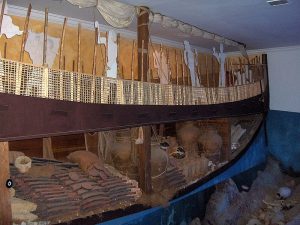
Full-size replica of the Uluburun shipwreck, St. Peter’s castle, Bodrum, Turkey, 2004. Photo credit: Georges Jansoone. CCA/3.0
In the aftermath of those Roman collapses, warfare reverted to a more localized and tribal form of organization. Even in the Levant, where the First Caliphate and the later Ottoman Sultanate largely ruled from the 7th Century onwards, government regulation and control were not what they had been under either Roman or Persian rule. Warfare was largely thrown back at least a thousand years, each time.
Technology played a large part in this seesaw. Spears, swords, bows and arrows, and metal armor are all relatively easy for a blacksmith to turn out. As long as armies were small, and some form of “hard tack” (to use the modern term) was set back in a castle of some sort, small armies could maneuver cross-country without too much trouble. Bands of what we would now call “guerrillas” could also maneuver easily, as they generally operated in their native areas, and knew where watering holes and useful resources were located.
The advent of gunpowder changed all of this, however. While developed in Song Dynasty China in the 9th Century AD (on the European calendar), the first use of the formula as a weapon dates to the early 10th Century, in use against Mongol tribes. Once gunpowder became dominant as an infantry weapon in Europe, in the late 15th to the early 16th centuries, the scales that had been tipping slowly back towards infantry dominance slammed down decisively on the infantry’s side: now, as gunpowder weaponry rapidly progressed from the matchlock through to the flintlock, it became comparatively cheap and easy to recruit and train infantry en masse to a level sufficient to return cavalry to their nominal roles of scouting and decisive shock action.
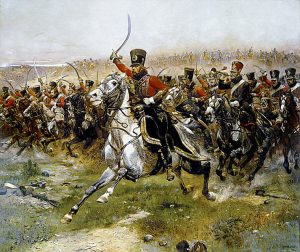
Vive l’Empereur!, 1891. Édouard Detaille (1848–1912). Charge of the 4th Hussars at the battle of Friedland, 14 June 1807. Public Domain
But, that tipping of the scales had consequences, as gunmaking was a very specialized skill, as its requirements were very different from making simple metal objects like blades or horseshoes.
Likewise, the advent of motor vehicles changed the factors of “battle calculus” yet again, by replacing the horse with the motor engine. While the automobile has a host of limitations, those drawbacks are minimal in comparison to those of horse cavalry…
Which brings us, at last, to our core topic: “Ersatz Armies.”
As noted above, “irregular” forces – rebels, guerrillas, etc – have frequently struggled to compete with better-organized and supported “regular” armies. Such groups have to improvise methods of supplying not simply weapons, but food, medicines and other basic needs of a military force. In the past, these services and products were generally stolen from an enemy government, or were supplied directly by a foreign government, supporting the guerrillas. More infrequently than is generally assumed, a guerrilla force might purchase arms from “black market” arms dealers; in those cases, the guerrilla forces were teetering dangerously on the edge of being a criminal gang, more than a “heroic band of fighters for the people.”
But, with the sudden and rapid anarchy taking place in Sudan, another factor has once again reared its head: a deliberately created ersatz army.
In 2003, the Sudanese government in Khartoum recruited a group of tribal militias that coalesced into what is now known as the “Janjaweed”. This grouping of tribal militias went on to commit a host of terrible crimes, encompassing all the worst categories of criminal activities. So bad were these events, both the Sudanese dictator of the time, as well as one identifiable leader of the group, have been formally indicted for war crimes.
In the aftermath of the worst parts of the Darfur Conflict, the Janjaweed was not paid off and stood down by the government of Omar al Bashir – instead, it was expanded, given better training and weapons, had its name changed to the “Rapid Support Force” (RSF) (YouTube link) and was then used a force of “shock troops” to fight in regional wars, such as Libya and Yemen, where they proved willing to do the dirty jobs no self-respecting and –disciplined military would touch.
In effect, al Bashir created his own version of Adolf Hitler’s SA or SS – a powerful armed force, separate from the regular military, willing to do whatever was asked of them. Unlike Hitler, however, al Bashir lost control of his non-Army force; this resulted in the RSF collaborating with the regular Sudanese military to remove him from power. And, as these things almost always do, this resulted in a falling out among thieves, leading to the current disaster in the country.
What makes the RSF different from similar groups in the past, however, is its size and equipment. The RSF is estimated to number around 100,000 men (YouTube link), and have been equipped comparatively cheaply, with the most basic of infantry weapons and gear, as well as the ubiquitous “technical” vehicles. A hundred thousand troops, even if poorly trained, is nothing to scoff at, even if you intend to engage them directly.
Sudan is not unique: while other states may not have armed groups to the extent of the RSF, it is a far cheaper thing to do, than most people think…But these types of forces – with little or no control, nor moral training, but with effective weapons and training – are growing in number.
In human cultures, worlds and eras have a habit of disappearing. Sometimes, they disappear in a gentle fade-out; sometimes, they evolve, and sometimes, they die in fire. As one example, in mid-1914, Western society had reached a peak of culture, in literature, thought and technology that is hard to understand, some one hundred years later.
Of course, this culture was certainly not all roses: aside from “wealth disparity” and “social inequality,” both recent, and artificially moral, phrases of questionable utility, did have significant impacts on class relations, in the form of simmering anger among the urban poor and lower middle class, that frequently led to riots. Likewise, racism was rampant, despite some surprisingly modern views in many quarters; indeed, no sane person in the early 21st Century would attempt to defend the actions of Imperial Germany in Southwest Africa, of those of the Belgians in the Congo…or of the United States in its own West, against its Native American population.
A Rake’s Progress, Plate 4. William Hogarth, 1735. Public Domain.
But for all that, early 1914 in Europe was still the world of Renoir…And six years later, it was gone, never to return. The places still existed – mostly – and most of the people were still alive, but six years of all-out industrial warfare, revolutions, and a crushing pandemic had left the survivors numbed. The result was a long period of despair, economic depression, social and political strife, that resulted in a tawdry cynicism.
Of course, this was certainly not the first time: Two hundred and thirty-four years ago – and some 131 years before 1920 – a similar event happened, an event that would destroy the Europe of the day, leaving it a pale shadow of its former self.
While the “gory details” (and they were gory) of the French Revolution are not really the point of this article, the earth-shaking similarities between that event and the aftermath of World War 1 are important to understand, because they help inform our modern reality.
Nine émigrés are executed by guillotine, 1793. Unknown author. Public Domain.
Taking inspiration from the recent end of the American Colonies’ successful rebellion against Great Britain, the French population rose up against King Louis XVI and the Ancien Régime in 1789, and hammered France into a Frankenstein version of a republic. Surrounding European monarchies, rightly fearing for their own existence, and attempting to return the Ancien Régime to power, wasted little time in launching invasions of France on multiple fronts. These wars would last for some twenty-three years, only ending in with Napoleon Bonaparte’s defeat in 1815 on the battlefield of Waterloo, in what is now Belgium.
But, even before Napoleon’s ultimate defeat, the ‘great powers’ of Europe had already gathered in Vienna, Austria, in what became the “Congress of Vienna”, to establish a new European system – the system, in fact, that would be destroyed less than a century later…But that is the “60,000 Foot View.”
More practically, the Congress of Vienna solidified the previous Treaty of Westphalia, which we touched on briefly last year. The impact of the Congress, however, failed to deal with the impact of one of the little understood results of Revolutionary France’s effort to deal with the invasions that began in 1792:
Before the French Revolution, military conscription in Europe was rather rare. Although used by some navies during this period, most nations found it highly distasteful, not to mention dangerous, as it greatly increased the chances of peasant uprisings, and in the middle of a war, that was last thing a nation needed (as the United States would discover in 1863).
While European states certainly preferred to recruit their regular soldiers from within their own nations after the Treaty of Westphalia, hiring professional officers that had been released by their native states (for any of a number of reasons) was considered perfectly normal and common. Although the word “mercenary” has developed a very negative connotation since the end of World War 2, in the 1790’s, it was considered a completely normal practice.
And the United States was certainly not immune – the Marquis de Lafayette(George Washington’s long-time aide), Baron von Steuben (who rebuilt the Continental Army at Valley Forge), the engineer Tadeusz Kościuszko and friends Casimir Pulaski (who would die at the Battle of Savannah) and Michael Kovats de Fabriczy (who would die defending Charleston, South Carolina) (together, known as the “Fathers of American Cavalry”), were quite common in the Continental Army. While many, like Lafayette and Fabriczy were certainly volunteers motivated by the American cause, most of the foreign officers certainly were not, following centuries-old common practice.
Kazimierz Pulaski. Jan Styka, c.1920-1925. Public Domain.
But, after the French Revolution, Nationalism began to take hold. Nationalism is the idea that the characteristics of “nation” and “state” are intertwined and inseparable. For example, in the United States, there are various “tribal nations” (such as the Navajo or Cherokee), or any of a number of ethnic “national people” groups from outside of North America, but those ethnic and cultural “nations” are a part of the “state”, in the form of the United States government.
This is not an insignificant point: After Revolutionary France instituted the levée en masse, serving in the military of a foreign state was often seen as something approaching treason. This view would eventually evolve into equating “foreignness” to “evil,” frequently resulting in little or no quarter being offered or given. Aside from some notable exceptions, it has only been in the first quarter of the 21st Century, in which “mercenaries” (now euphemistically termed “security contractors” or “private military contractors) are seen as an acceptable alternative to “regular” military forces, despite their unreliability.
Employees of PMC “FDG” in Al-Faluja, Anbar province (Iraq), 2007. CCA/3.0
Over time, nationalism began to take on its own negative connotations – for obvious reasons – and was replaced, very briefly, with “globalism,” and its associate term, “globalization”, doctrines that are now beginning to collapse after a bare thirty years of experimentation, despite attempts to couch the terminology.
This brings us to 2023.
With technological acceleration and the rise of the online job market, skilled workers can frequently work from home, managing offices and even factories on the other side of the planet via online conferencing. Meanwhile, industrial production has evolved to the point where only moderate levels of skill are required to perform maintenance and repair on plant equipment.
These points, along with other factors deriving from the acceleration of technological development, are causing people to increasingly question the utility of “nationalism,” as well their own, personal, “national identity.”
The issue? “Evil,” despite attempts to dismiss or consign the term to the passé in recent years, still exists. And “Evil” does not negotiate. The response to this is, and always has been, direct military confrontation; while myriad examples of individual failures – and successes – in “anti-Evil” warfare can be cited, those are not the point.
Massed military force is needed to fight Evil when it stops being metaphorical, and enters the physical realm, lest it get out of hand.
Bombed out streets of Mosul. Northern Iraq, Western Asia. 18 November, 2016. Photo: Mstyslav Chernov. CCA/4.0
But, militaries around the world (and especially in the West) are finding it increasingly difficult to fill their ranks without resorting to conscription, and in many countries – including the United States – even instituting conscription, while certainly legal, is politically impossible, and could easily lead to widespread revolts, possibly rising to the level of revolution.
U.S. Air Force Col. Becky Beers, administers the Oath of Enlistment to U.S. Air and Space Force recruits, Nov. 17, 2020. U.S. Space Force photo by Van Ha. Public Domain.
But – Evil is still out there, waiting, training and planning. And it still needs to be dealt with.
The reasons for this situation are not well understood: Is it a failure of nationalism? A failure of globalization? “Wokeness”? No studies seem to be taking a look at this phenomenon…But it is something that needs to be addressed urgently, because – as Thomas Sowell, PhD (Economics, U. of Chicago, 1968) says in his 1980 book “Knowledge and Decisions”
According to Taiwan’s Defense Minister, the Taiwan Strait was illegally occupied at the beginning of the month of January. The Taiwanese reported more than 20 military aircraft and ships entered the Taiwan Strait. The People’s Liberation Army’s Eastern Theater Command said the exercises were “joint combat readiness patrols and actual combat drills…[to]…resolutely counter the provocative actions of external forces and Taiwan independence separatist forces.”
The Biden administration has expressed little concern with the exercise, with White House National Security Advisor Jake Sullivan adding, “There is a risk of conflict with respect to Taiwan, but I believe that with responsible stewardship, we can ensure that this contingency never comes to pass. And that is our responsibility.”
The likelihood of an invasion of Taiwan by China is not particularly high right now, given the unrest going on in China today. However, the unrest that might hinder China acting might also trigger it to act should Xi become too unsure he can continue to hold on to power. A war with Taiwan brings much risk, but if Xi sees the writing on the wall that his reign is coming to an end, he might feel he has nothing to lose by risking it. Short-term, the prevalence of nationalism in China (fueled by Chairman Xi’s agit prop efforts) would secure Xi’s reign.
In previous articles, we have touched on the ideas for building “DIY” ground- and air-combat forces. Today, we will take a look at the naval aspect of this idea.
Water-based travel is not new. In fact, for the majority of human history, travel further than 100 miles in any direction was usually faster, cheaper and safer than overland travel, even if wide detours were necessary. Without getting into the physics of fluid dynamics, movement is a lot easier when nature is helping you along, especially when friction resistance is determined more by shape than by weight. It was not until the advent of railroads in the early 19th Century that land travel became faster and comparatively safer than travel by water.
River Landscape with Man in Rowing Boat and Tree-Lined Shore. Johannes Hermanus Koekkoek (1778–1851). 1800-1850. Public Domain.
However, when looking at the military dimensions of water travel, while there were early examples of purpose-built warships, such as the Greek and Roman “triremes”, the vast majority of ships were perfectly suitable for both military and commercial use. Mostly, this consisted for transporting troops, animals, equipment and other supplies. Because of the ships’ designs of these eras, most vessels were also capable of going fairly far upriver; this was the main tactic of Viking raiders, from the 8th-11th Centuries, whose “Karvis”, “Snekkjas” and “Drakkars” drew as little as 30in/762mm in draft.
Gokstad Ship, late 9th Century, Viking Ship Museum, Oslo. CCA/2.0 Generic.
As previously noted, however, after about 1860, a dramatic divergence began to open between purely military and purely civilian merchant vessels. Without restating those points here, by the end of World War 2, it seemed that the divide was complete and unbridgeable: “Warships” fought in wars, and civilian vessels supported the warships, while remaining mostly unarmed.
But, there lurked an exception: the PT Boat.
Patrol Torpedo Boat (PT) 658 transits past U.S. Navy ships at the Portland Rose Festival. US Navy photo. Public Domain.
Developed just as WW2 was starting, the “Patrol Torpedo Boat” quickly became famous as the heavily armed war vessel of WW2, on a weapon-to-tonnage basis. Not much larger than most commercial yachts, the PT’s were fully capable of sinking full-size warships – as long as their torpedoes worked. If there weren’t enough enemy warships around to sink, the PT’s could easily remove their torpedoes, and bolt on heavier cannons to destroy lightly armored barges and lighters, as well as extra machine guns, turning them into floating anti-aircraft batteries.
While the US Navy seemed to have forgotten the lessons of PT Boat warfare after the end of the war, that turned out to not be the case. While light-armed craft more or less vanished from the Navy’s inventory after WW2, that was due to the savage budget cuts and vicious organizational fights of the post-war years, more than because the Navy didn’t want the boats. Indeed, the Navy had to burn significant political clout just to help prevent the Marine Corps from being disbanded by an Army and Air Force that were battling for scarce funding.
As soon as the Vietnam War began to heat up, it was discovered that North Vietnam was supplying the Viet Cong and its own troops in the South by smuggling arms and supplies down the coast in civilian sampans. The solution to this were the “Swift Boats” – small, high-speed, aluminum-hulled boats, heavily armed with machine guns. With very shallow drafts, these fast craft were able to chase down almost any watercraft, and usually outgunned whatever they could catch. As well, they could land small parties of US and Vietnamese Marines or SEALs deep in enemy territory, doing great damage to areas the enemy had thought to be relatively safe.
Fast Patrol Craft (PCF, Swift boat) during riverine operation in Vietnam. US Navy photo. Public Domian.
After the war in Vietnam ended, the US Navy once again had to struggle for funding, and small combat craft went onto the back burner. But not completely. As funding improved in the 1980’s small combat craft came back to prominence, leading to the expansion of the Special Warfare Combatant-craft Crewmen (SWCC) career field in the Navy, and the development of the SOC-R. NATO partners took note, at least to some extent.
Like naval warfare and transport in general, small craft-based warfare is not new. In the modern era, say from 1800 to today, military raids against pirates operating from swampland bases with open canoes and boats was far more common than fighting large ships, à la Hollywood pirate films. Indeed, in World War 1, the “Battle for Lake Tanganyika” was fought and decided by a handful of small boats that barely qualified as life rafts; the largest vessel, the SMS Graf von Goetzen, was barely 235ft long; that’s short for a warship.
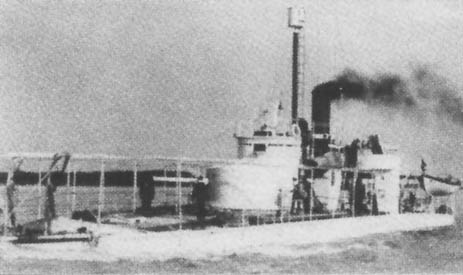
German steamship Goetzen before its warship conversion in 1915. Public Domain.
Likewise, Filipino guerrillas fighting the Japanese in their archipelago after Japan’s conquest of the island group in early-1942 made good use of small-boat smuggling tactics to make amphibious raids throughout the islands for three years, until the war ended. The Philippine government continued this successful strategy in the Huk Rebellion that followed the war, and both government and anti-government forces continue to use boats for the same purposes to this day.
Starting from essentially scratch in 1976, the LTTE quickly showed – much as the Islamic State would do, decades later – that all that was required for an insurgency to grow exponentially, was intelligent, cunning and quick-witted leadership…Even if they end up using straight-out terror tactics.
In its 25-year history, the LTTE’s “Sea Tigers”, with no more than 3,000 personnel at any given time, not only fought the Sri Lankan Navy to a standstill, sinking nearly 30 vessels, while also conducting amphibious raids, it conducted widespread “strategic support operations”, until the Sri Lankan military got serious, got its collective act together, and ground the LTTE down by mid-2009.
Slovenian fast patrol boat HPL-21 Ankaran (Super Dvora MK II class), 2009, of a type used by the Sri Lankan Navy. CCA-3.0
But – what about other groups?
While the LTTE managed to create a ferociously effective “commando navy,” the “Navy of the Islamic Revolutionary Guard Corps”, has taken the direction of using masses of small “Boghammer”-type speedboats. Based on a design from the Swedish company Boghammar Marin AB developed in the 1980’s, the modern “Boghammer” has taken on the moniker to describe any improvised naval fighting vessel.
A speed boat (used in a terror attack attempt on 5 May 1990) in the Clandestine Immigration and Naval Museum, Haifa, Israel. CCA/3.0
As used by the IRGC-N, the Boghammer is armed with a variety of weapons, including RPG-7 type rocket launchers, as many as three 12.7mm heavy machine guns, recoilless rifles and 107mm multiple rocket launchers based on the Type 63 MRL. And these craft do pose a threat to major-nation warships, when used in swarms. After nearly ten years of study, it remains a problem that major-state navies – including those of the United States and Great Britain – don’t talk about in public.
That’s all well and good…but, what about “modern guerrillas”? The above examples, including the LTTE, were all either formally organized navies, or were at least funded on a regular basis. What about a small guerrilla force? What can they do on the water?
Quite a bit, actually.
While large, ocean going vessels are going to be mostly out of a small group’s reach, at least initially, acquiring civilian pleasure craft (through theft or “under the table” deals) that can be modified to carry weapons is not at all difficult. While craft as large as Boghammers are uncommon, they are not so unusual that they would be noticed.
There is, however, another class of vessel normally associated with major states that most people would not associated with guerrilla warfare: long-range submersibles – i.e., submarines…Specifically, drug-running “narco-subs”.
Narco-submarine captured by the Peruvian Navy in December 2019. Ministerio de Defensa del Perú. CCA/2.0.
While “combat submersibles” in the modern era begin with David Bushnell’s Turtle in 1775-1776, submarines have only played a pivotal role in naval warfare since WW1, and the first “Battle of the Atlantic”. Submarines have always been complicated and dangerous craft – there is always a solid chance that something will go catastrophically wrong while submerged. Survival rates when things like that happen at sea are never good.
Submarines are also expensive, in the extreme. As a result, few people imagine a threadbare guerrilla army being able to operate something as technically complex and ridiculously expensive as a submarine. Sure, there are “vanity” submarines out there, used to excursions by cash-rich vacationers, but surely no one is actually building submarines intended for combat.
Established navies, however, beg to differ – which is why they are spending significant amounts of money designing advanced harbor-protection systems…specifically to counter small combat submarines.
But, for our purposes, narco-subs are not that. Narco-subs are generally thought of as “semi-submersible”, in that they cannot “deep dive,” like a conventional submarine. Instead, they are designed to run at or just below the surface. And these craft are not small – narco-subs with cargo capacities of up to 17,000lbs have been captured. That’s a significant capacity for a “guerrilla shipyard”.
And, as hard as the militaries of North and South America try, they cannot catch them all; at best, one in ten are estimated to be intercepted. Worse, the drug subs are being much more sophisticated, diving deeper, becoming less detectable, carrying more, and extending their range, with some now being able to cross the Atlantic, to bring drugs into the waters of Spain and Portugal.
This is a serious concern, and not from the narcotics angle. While infiltrating “operators” into a nation (even the United States) is relatively easy, importing weapons and explosives is not. And 10-17,000lbs of weapons, ammunition and explosives at a time provides significant capacity for an attacker.
Indeed, since 2000, abandoned narco-subs – true deep-diving models – have been discovered in South America that have cargo capacities in the range of 20,000lbs or more, and with ranges of c.3,700km, more than enough to reach New Orleans from most of the South American Caribbean coast.
A fully-operational submarine built for the primary purpose of transporting multi-ton quantities of cocaine located near a tributary close to the Ecuador/Colombia border that was seized by the Ecuador Anti-Narcotics Police Forces and Ecuador Military authorities with the assistance of the DEA in 2010. Public Domain.
Making matters much worse, these craft are very difficult to detect at sea, because their hulls are made mostly of fiberglass and Kevlar; are painted sea-blue; and vent their engine exhaust along the bottom of their hulls before releasing it to the atmosphere, cooling it to the point of being indistinguishable from the surrounding water. Coupled to them running just below – or well under – the surface, this makes them virtually invisible to radar and sonar. In fact, the vast majority of the narco-subs captured were spotted by aircraft, running on the surface.
So – why is this important? It’s “just” drugs, right?
Well, “cargo” covers a very broad scope. Narco-subs don’t have to carry drugs, after all. Coupled to this, is the fact the fact that the South American and Mexican cartels operate these subs in alliance with guerrilla groups such as the FARC, among others. It requires no great leap of imagination to picture a scenario of a group like Revolutionary Iran or the I.S. infiltrating two- to four-hundred trigger-pullers into the US, hidden among the masses of illegal immigrants being allowed into the country by a criminally – if not deliberately – incompetent political establishment so arrogant, that they believe that the Rules of War do not apply to them.
Why is the author so vehement about this?
In 1974, R&D Associates – a think tank in Santa Monica, California – working under contract for the Department of Defense, produced a document titled A Soviet Paramilitary Attack on U.S. Nuclear Forces – A Concept (PDF link). The paper sketched out a threat concept to US strategic nuclear forces, wherein Soviet Spetznatz special forces could potentially infiltrate sabotage teams into the US to attack ICBM, bomber and nuclear submarine bases, simply by walking in over the borders from Mexico and/or Canada. It goes into detail of then-current estimated numbers of illegal aliens crossing the US border, who were not intercepted by the Border Patrol, and pointed out that enough four- to six-man teams could be infiltrated and housed by ‘illegal’ KGB agents just long enough to sabotage US nuclear forces in preparation for a Soviet first strike.
Very James Bond, yes?
This paper remained classified until 1995.
ISIS fighters execute Taliban fighter In the city of Jalalabad, December 2021. CCA/4.0
A threat – a clear and present one – exists against the United States, and its citizens. While some would argue that this author is “letting the cat out of the bag” by speculating on this in public, none of the information in this article is classified; there is no “whistle-blower” information here. If this author can find it, anyone can. You, the Reader, simply aren’t being told any of this. I will let you speculate as to why that is the case. The author, here alone, is unable to take corrective measures against this threat – it is the job of the Reader to do so.
All I can do, is warn you.
The Freedomist — Keeping Watch, So You Don’t Have To
To give our non-military readers a very basic overview, the better to understand the problem, let’s take a brief look at the framework of supply in the military sphere.
Warfare destroys and wastes whatever it touches – both people and equipment. People can be recovered (where that can be possible) through medical treatment and counseling.
But what about equipment?
Kansas Army National Guard Soldiers work to package and stage personal protective equipment. (U.S. Army Photo by Sgt. Ian Safford, 105th Mobile Public Affairs Detachment)
Everything a military force needs – the “beans, bullets and band-aides,” if you like – can be categorized, ordered, received, inventoried, issued and turned back in at will. The trouble is getting all of those actions to work in sync, on time, and (hopefully) in something close to the right amounts. For the most part, your humble author is happy to stick with the US Armed Forces system, not simply because it is what I am used to, but because it is more precise than comparable systems, while also not being overly cluttered.
Oshkosh M-978 fuel servicing trucks line a holding area during Joint Logistics Over the Shore (JLOTS) training, part of exercise Ocean Venture ’92. An M-901 TOW vehicle is parked to the left. US Navy photo.
Class I– Rations – Subsistence (food and drinking water), gratuitous (free) health and comfort items
Class II– Clothing And Equipment – individual equipment, tentage, some aerial delivery equipment, organizational tool sets and kits, hand tools, unclassified maps, administrative and housekeeping supplies and equipment
Class III – POL – Petroleum, Oil and Lubricants (POL) (package and bulk): Petroleum, fuels, lubricants, hydraulic and insulating oils, preservatives, liquids and gases, bulk chemical products, coolants, deicer and antifreeze compounds, components, and additives of petroleum and chemical products, and coal
Class IV – Construction materials, including installed equipment and all fortification and barrier materials
Class V – Ammunition of all types, bombs, explosives, mines, fuses, detonators, pyrotechnics, missiles, rockets, propellants, and associated items
Class VI – Personal demand items (such as health and hygiene products, soaps and toothpaste, writing material, snack food, beverages, cigarettes, batteries, alcohol, and cameras—nonmilitary sales items)
Class VII – Major end items such as missile and rocket launchers, tanks, mobile machine shops, some parachute systems and vehicles
Class VIII – Medical material (equipment and consumables) including repair parts particular to medical equipment
**Class VIIIa – Medical consumable supplies not including blood & blood products
**Class VIIIb – Blood & blood components (whole blood, platelets, plasma, packed red cells, etc.
Class IX – Repair parts and components to include kits, assemblies, and sub-assemblies (repairable or non-repairable) required for maintenance support of all equipment
Class X – Material to support nonmilitary programs such as agriculture and economic development (not included in Classes I through IX)
Miscellaneous – Water, salvage, and captured material
Saraktash scrap-heap. By “Imankulov”, under CCA/3.0 Unported.
My only real complaint about this list is the last item, because the only true “miscellaneous” items are truly ‘scrap‘ materials. Thus, I use the following, in addition:
Class XI – Non-potable Water
Class XII – Captured/Recovered Material
Of these, “Class XI” (Non-potable water), is the simplest: Non-potable (i.e., non-drinkable) water is fine for washing equipment, fire-fighting and for flushing out waste.
An Iraqi AML-90 light armored car captured during Operation Desert Storm. A captured ZPU-23-4 anti-aircraft machine gun is at right. USMC photo.
Class XII(Captured/Recovered Material) are the various detritus that can be scraped up from a battlefield, including enemy material. The process for handling this class of gear (whether from a friendly, liberated, requisitioned or enemy source) is as follows:
a. The materiel is brought into a receiving yard, where it is identified, categorized and assessed for serviceability. Anything of direct and immediate interest to Intelligence goes straight to them. For everything else, we move on to…
b. Type Classification and Field Stock Number Registry: Materiel recovered and brought in should have a tag applied to them, then be classified with a temporary Stock Number, first, using the Supply Classifications as listed above to categorize the item. Then, after applying a two-digit number for the supply class, add one of the following qualifiers after the class to the item tag:
(x) – Material recovered from allied/friendly military sources
(y) – Captured/Liberated enemy material
(z) – “DIY”, improvised, ad hoc or requisitioned from civilian sources
Then, add the appropriate qualifier from the following list:
(A) – Ready To Issue; the item can be issued immediately, with minimal servicing and/or repainting. It should be tagged, and placed into an appropriate storage slot
(B) – PM Required; minor maintenance/clean-up required prior to reissue. This should be forwarded to the appropriate maintenance queue
(C) – Major Repairs Required; the item is repairable, but is dead-lined until it can be repaired. This should also be forwarded to the appropriate maintenance queue
(D) – Sub-Assembly Salvageable; the complete item is too damaged to reissue as a complete unit, but can be broken down into its constituent sub-assemblies (i.e., brake drums, alternators, engines, various major components, etc.) to issue in order to repair other items. This process should be commenced immediately, using either unit specialists, or civilians hired on contract.
(E) – Scrap; the item is damaged to the point where it can no longer be used. This material should be towed or set out of the way, and should either be returned to a manufacturing area for re-smelting/recovery, or sold off. Depending on the material, it may be able to be repurposed into engineering barrier or shelter material.
The Roman Republic fell when 1/3 of the revenues were being paid into the welfare state. The Roman Republic collapsed from within, not due to external forces. You can only rob Peter to pay Paul for so long without fresh tax-payer revenue coming in to keep the system afloat.
Let’s consider the reality of the United States by looking at the Federal Budget. If Rome fell when 33% of revenues were going into the welfare system, and the whole economy collapsed under that weight, it would be fair to say that America is less than that as we have not collapsed. Look at the numbers, and we will see:
In fiscal year 2020, look at the mandatory programs:
• Social Security: $1.092T • Medicare: $694B • Medicaid: $447B • Other Mandatory Programs: $743B
Official Federal Budget
Those total $2.975 trillion. The receipts category (total revenue) equals $3.706 trillion. That’s 80.3% of all Federal tax revenue that goes out towards entitlements like Medicare, Medicaid, food stamps, WIC, and other programs.
Social Security technically is not an entitlement, as we pay into it our entire life in exchange for a retirement years income stream, but it cannot be taken away easily. Therefore, like all other entitlements, they become sticky.
The Roman Empire collapsed under 33% of revenue going towards entitlement programs. In 2020/21 the United States was at 80.3%. This is unsustainable.
Add to this the net interest on the national debt, which at around 2.0% interest on a 30-year bond is a whopping $376 Billion. At the lowest interest rates in the history of America, the net interest plus entitlement payments equal 90.4% of all US federal tax revenue. The eerie implications of the massive amount of unsustainable debt are devastating in impact on small interest rate moves.
Consider what the Net interest on $27 trillion of federal debt will be when interest rates are the following:
When interest rates reach 3%, then net interest plus entitlements equal 100% of the entire federal tax revenue. Interest rates are cyclical and throughout history move from high to low or low to high around every 28 years. Interest rates in 1983 were 18% of a 30 year bond.
U.S. Interest Rates 171 Years
The interest rate cycle is at the end of its downward trend and can only go up from here. Sadly, state pension funds are not the only things facing insolvency. So is America. Consider the official Federal Budget that shows the massive number of expenditures as a percentage of revenue that entitlements and mandatory payments occupy.
Unfortunately, America is poised for default or is setting the state for a hyper-inflationary phase in the economy that will erode the wealth, standard-of-living, and livelihood of all Americans.
Back FREEDOM for only $4.95/month and help the Freedomist to fight the ongoing war on liberty and defeat the establishment's SHILL press!!
Are you enjoying our content? Help support our mission to reach every American with a message of freedom through virtue, liberty, and independence! Support our team of dedicated freedom builders for as little as $4.95/month! Back the Freedomist now! Click here