
In the past, we have frequently discussed the “democratization” of military-everything, from equipment acquisition through “higher-level” things, like “DIY” navies and air forces, but we have never really covered the actual methodology of “training” on an effectively zero-budget.
This is a sphere that I have been studiously avoiding treading into, mostly because I felt a moral responsibility to avoid adding fuel to the global fire in a “granular” way. However, that view has evolved over time: There is plenty of military talent out there at various levels – from “Tier One” military forces, to a couple of people in a Toyota Hilux with Grampa’s shotguns. In effect, no – I am not doing anything “out of bounds”.
For full disclosure, when I joined the United States Marine Corps in 1984, the very first job I had “in the Fleet”, was as a Publications Clerk”…I’m not sure if that job even exists anymore, in any way that I would recognize. As a result, my natural inclination as a bibliophile raged in full force. And, after the domination of the PDF format, I have assembled a…let’s say “overly large” collection of military manuals.
As a result, over time, I started thinking about what a personal “emergency military library” would look like: What books and manuals would I put in there? How small could I make it? And so on…
In thinking on this for several years, I came to the conclusion that such a library would be useful not only for someone actually carrying a rifle or leading troops, but to the average civilian – not someone thinking about the end of the world, but who watches the news, sees LOTS of stories about current conflicts, but has no foundation to “fact check” the media…and that is a far more dangerous situation, than publishing a list of very basic works to try and teach you the absolute basics.
The current conflict in Iran brought this into sharp focus: I cannot list the number of news reports and “expert analysis” that I have seen on the revolution in Iran that started on December 28th, that get nearly every single point wrong, at some level. It’s so bad, it’s actively dangerous to viewers, who are left with a highly skewed view of how things actually work out on “the sharp end“. It is dangerous, because otherwise well-meaning people get hysterically angry over things that anyone who has been in a Tier One military longer than a year knows – or at least, should know…and, as the US military understood almost ten years ago, the military is preparing – quietly – for extended combat operations in urban, and highly public, environments.
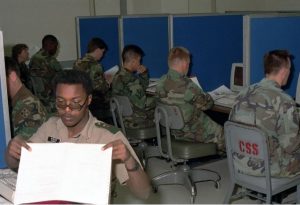
As a start to try and remedy this situation, I have curated two lists: a short (14 videos) playlist of videos at YouTube, and a list of basic books and manuals, outlined below. There are much larger lists in each category, but the purpose here, is to at least get you, the Reader, started. Even if you have been in the military for any length of time, I think you’ll find these useful.
The thing with learning “things military” is that it takes time – this is not The Matrix, and no one is going to download a karate program into your head for you to instantly “know karate“. The YouTube link above is 14 videos…for the Short List. The full playlist is over 80 videos long. Likewise, the fourteen books below are only the “initial reading list” – and even the longer list (well over 60 individual titles) is painfully short…But, these two lists will give you the basics of how militaries work.
A pair of notes on the titles below: Many of these are older titles, some dating from the 1950’s. This was deliberate. I have found that after about 1998, many – if not most – modern military manuals are written in modern “corpo-speak”, and are nearly useless in conveying information meaningfully…That, or I’m a dinosaur. Likely the latter…OTOH – “old” does not mean “wrong” or “useless”. Take note.
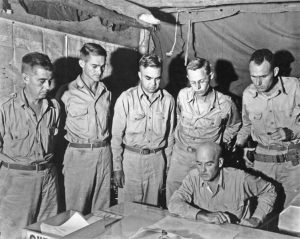
Second, the titles below are available either as online PDF’s (marked with an ” * “) or as paper copy editions (marked with a ” + “); some are available in both formats.
Below each entry, I will provide my own review of the title, and why you need it.
+* OPNAV P 34-03 – Landing Party Manual, 1960 USN — Chapters 2-3, 5 and 12-13
This might seem like a strange manual to start with, but if I were writing this article in 1980, this manual would have eliminated about five of the other manuals here. Starting in 1920, the United States Navy began generating “Landing Party Manuals” for naval officers to study while at sea, in case they were tasked to command such parties ashore – Lieutenant Jones might be a heck of a good Engineer, but do they know how to mount a formal Interior Guard? The chapter selections are deliberate; the chosen chapters cover basics like Close Order Drill, Ceremonies, Interior Guard, physical training with rifles, and basic marksmanship – these functions change very little over time. The other chapters are interesting from a strictly historical perspective, but – this manual dates from 1960, and things like infantry tactics and first aid have radically changed since then.
+Small Unit Leadership: A Commonsense Approach; Dandridge M. Malone
A lot gets written about “leadership”, but the actual “how” has rarely been focused on in the understandable detail applied here by Malone. Note that this dates from 1983, so if you insist on being offended by your own shadow, you might want to skip this one.
*FM 16-100 – Character Guidance Manual (1961)
Sometimes, military forces are forced to settle on bringing in recruits from the literal “wrong side of the tracks”. Military forces hold dominant powers that many civilians simply do not recognize until far too late. The US Army recognized this in the 1950’s, and wrote this manual as a guide to help officers try to keep their troops from falling into criminal behaviors, in order to prevent court-martialing half of their unit for bad behaviors that unnecessarily got out of hand. Note that this manual is no longer used. Food for thought.
+Combat Leader’s Field Guide, 14th Ed.; Jeff Kirkham
Because the Landing Party Manual is so badly out of date on tactics in 2026, Kirkham’s work at least partly remedies that. While thin on the use of drones – which is constantly evolving and changing, as both Ukraine and Iran, among other conflicts, show – Kirkham sticks to the rock-bottom basics of small-unit infantry combat, the most fundamental combat task on the modern battlefield.
+*Military Operations on Urbanized Terrain (MOUT); Direct link to USMC PDF link; Amazon link
The US Marine Corps developed a winning method for fighting in urban environments (when allowed to actually employ their tactics as developed). Those tactics are laid out here. When combat in built-up areas looks confusing, chaotic, and dirty, this manual can help clarify what’s going on, far more than the commentary from CNN talking-heads.
+*MCTP 3-01E Formerly MCWP 3-15.3 Sniping; Archive PDF; Amazon link
“Snipers”, in the literal sense, get a poor rap, especially from certain “subject matter experts”, who should know better, and from “influencers” more interested in making political and/or moral zingers. Snipers are actually one of the most powerful and decisive units in infantry combat. Understanding how they function, and their impact on the battlefield is critical for grasping the shape of modern combat.
+Combat Service Support Guide, 4th Ed.; John E. Edwards
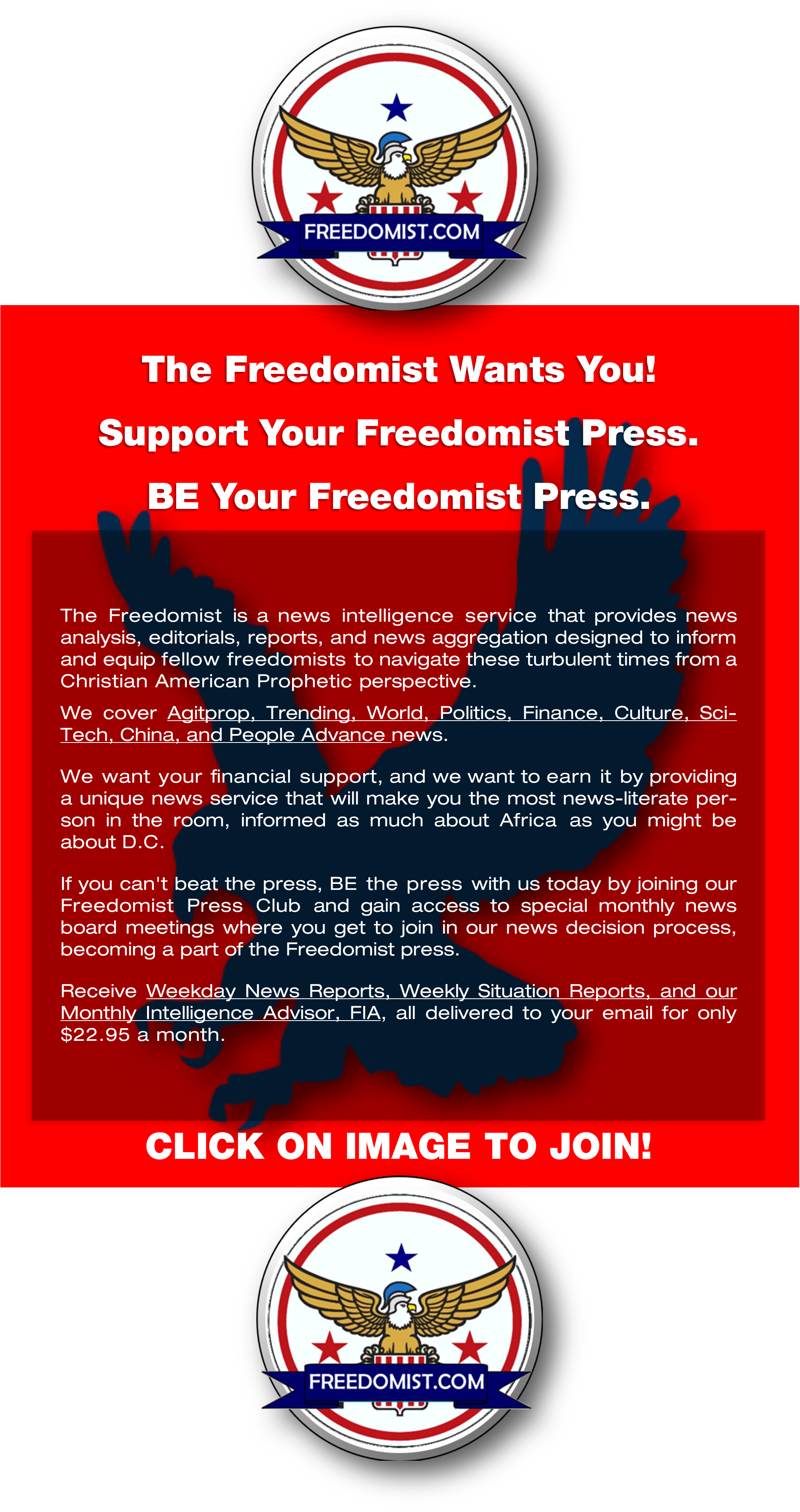
Troops need a LOT of “stuff” in action. In the military, that is now termed “Combat Service Support“. It’s dull, unglamorous, hard and back-breaking work…but if someone gets it wrong, the troops do not move, do not eat and do not shoot weapons – they are, quite literally, reduced to rocks and harsh language. While there are entire bookcases devoted to the subject, this volume offers the best single-volume summary out there.
+Guide to Military Operations Other Than War; Keith Bonn and Anthony Baker
This term – “Military Operations Other Than War“, or “MOOTWA” – started out as a highly-mocked term, taken as an example of the military’s descent into morbidity. Over time, however, this sphere of operations – using military forces for non-warfighting operations like humanitarian aid and disaster relief, among others – has demonstrated how important it really is. This overview is something that cannot be ignored, if you want to understand the full scope of what well-run militaries are capable of.
*A basic framework for constructing an SOI document
Not a book or formal manual, but a website dedicated to an absolutely vital concept: how to get units to talk to each other, and talk internally, in a secure way, so that the “bad guys” don’t understand what you are doing…You need more than CB radios, and this page offers you a place to start. This is linked here, in order to show how complex even small unit communications can be.
*Map Reading and Land Navigation, FM 3-25.26 (2005)
You, the Reader, would likely be amazed at how few people know how to navigate with a map, let alone in the dark and rain, with a compass. If you read nothing else here, read this, because you can get stuck in the middle of nowhere easily and unexpectedly….Also — Browse the FAS “MAN” site, and support FAS, if you can. Their information is aging in places, but the entire “MAN” site is well worth your time.
*Field Fortifications – FM 5-15 (1968)
What combat footage from Ukraine, and you can be forgiven for thinking that you are watching colorized footage from the trenches of France in the First World War. This 1968 US Army manual explains the basics of building hasty fortifications in the dirt. If it looks dumb, but keeps you alive – it’s not dumb. Side Note: Check out BITS.de — it’s a vast archive, that I frequently use…Just watch out for their frames – highly annoying, but their only real problem.
*Military Gov’t Manual – FM 27-5 (1947)
When armies overrun – “conquer”, if you prefer – enemy territory, they then need to administer it, until some sort of civilian authority can be established. I selected this specific edition, because it was written in the immediate aftermath of World War 2, when territories all over the world had to be administered by military officers with little knowledge or training…and the farther we got from WW2, the less effective the new manuals got – “newer” is not necessarily “better”.
+*US Army First Aid Manual FM 4-25.11; 2002 online edition; 2018 print edition (my recommendation – how much is your life worth, again?)
Exactly what it says. People get hurt, sometimes seriously, and transport to a real medical facility might not arrive for a dangerously long time. A lot of times…it will come down to you.
*+Nuclear War Survival Skills; Cresson Kearney – HTML & PDF: Amazon (2022 ed.)
This might seem like an odd inclusion, but Kearney’s skill-sets apply almost 1:1 to military forces as they do to civilians. There are absolutely military-specific manuals for this sort of thing, but most of those are too military-specific for most civilians to digest. This is maintained and constantly updated, so I recommend checking the OISM site, first, before buying the hardcopy.
The fourteen titles above will not make you a general, or even a corporal. What they =will= do is give you enough foundation to watch the news coverage of any conflict — Iran, Ukraine, or whatever comes next — and understand, in basic terms, what is actually happening on the ground, rather than relying on what a studio commentator with no field experience – or a former officer who hasn’t carried a rifle in more years than you have been alive – tells you is happening. In a media environment more interested in advertising dollars than accurate reporting, where military illiteracy is the norm rather than the exception, that foundation is worth more than it might appear.
In Part 2, I will lay out the short YouTube playlist.