One of the justiciations of the vaccine mandate is the high rate of hospitalization and mortality, especially among vulnerable populations. But as scientists and doctors have experimented, often on the job, with the best way to treat people who get infected, more and more drugs and therapies are coming online that are daily reducing the threat of COVID-19 to the general public.

At some point, perhaps a point we already passed, people might ask themselves when we no longer face a danger that justifies the draconian measures that are still being undertaken in America today. On top of that list of measures that must go in light of this new reality are the vaccine mandates themselves.
From doctorsandscientistsdeclaration.org – Early COVID Treatment Works
This study points to a more effective therapeutic treatment using a combination of Ivermectin and Doxycycline. In the study, the therpy was able to produce effective results for both the use of Ivermectin-Doxycycline and Hydroxychloroquine-Azithromycin, with the former combination outperforming the latter (the former being from Group B).
A Comparative Study on Ivermectin-Doxycycline and Hydroxychloroquine-Azithromycin Therapy on COVID-19 Patients, Abu Taiub Mohammed Mohiuddin Chowdhury, Mohammad Shahbaz, Md Rezaul Karim, Jahirul Islam, Guo Dan, Shuixiang He
Results: All subjects in Group A reached a negative PCR, at a mean of 8.93 days, and reached symptomatic recovery, at a
mean of 5.93 days, with 55.10% symptom-free by the fifth day. In group B, 96.36% reached a negative PCR at a mean of
9.33 days and were symptoms-free at 6.99 days. In group A 31.67% of patients expressed symptoms caused by medication, this was 46.43% in group B.
Conclusion: The combination therapy of Ivermectin-Doxycycline showed a trend towards superiority to the combination of Hydroxychloroquine-Azithromycin for mild to moderate COVID19 disease.
For patients that end up having to be admitted, a therpeutic is emerging called a prophylactic anticoagulation, which is reducing the mortiality rate of those admitted to hospital by more than 50% from 27% to 13%. The findings also found no health risks associated with the treatment itself.
Early initiation of prophylactic anticoagulation for prevention of coronavirus disease 2019 mortality in patients admitted to hospital in the United States: cohort study, Matthew S Freiberg, et al
Results Of 4297 patients admitted to hospital with covid-19, 3627 (84.4%) received prophylactic anticoagulation within 24 hours of admission. More than 99% (n=3600) of treated patients received subcutaneous heparin or enoxaparin. 622 deaths occurred within 30 days of hospital admission, 513 among those who received prophylactic anticoagulation. Most deaths (510/622, 82%) occurred during hospital stay. Using inverse probability of treatment weighted analyses, the cumulative incidence of mortality at 30 days was 14.3% (95% confidence interval 13.1% to 15.5%) among those who received prophylactic anticoagulation and 18.7% (15.1% to 22.9%) among those who did not. Compared with patients who did not receive prophylactic anticoagulation, those who did had a 27% decreased risk for 30 day mortality (hazard ratio 0.73, 95% confidence interval 0.66 to 0.81). Similar associations were found for inpatient mortality and initiation of therapeutic anticoagulation. Receipt of prophylactic anticoagulation was not associated with increased risk of bleeding that required transfusion (hazard ratio 0.87, 0.71 to 1.05). Quantitative bias analysis showed that results were robust to unmeasured confounding (e-value lower 95% confidence interval 1.77 for 30 day mortality). Results persisted in several sensitivity analyses.
Conclusions Early initiation of prophylactic anticoagulation compared with no anticoagulation among patients admitted to hospital with covid-19 was associated with a decreased risk of 30 day mortality and no increased risk of serious bleeding events. These findings provide strong real world evidence to support guidelines recommending the use of prophylactic anticoagulation as initial treatment for patients with covid-19 on hospital admission.
Melatonin is proving to be an effective therapeutic in the treatment of patients hospitalized with COVID-19. The study tracked 24 patients in an intervention group (the ones that got the treatment) and 20 patients in a control group. None of these patients were in critical condition. The patients in the Melatonin group recovereved much more quickly than those in the control group did, suggesting melatonin can be an effective treatment for patients hospitalized, but not in critical condition.

Efficacy of a Low Dose of Melatonin… in Hospitalized Patients with COVID-19, GholamHossein Alishiri
A total of 24 patients in the intervention group and 20 patients in the control group completed the treatment. Compared with the control group, the clinical symptoms such as cough, dyspnea, and fatigue, as well as the level of CRP and the pulmonary involvement in the intervention group had significantly improved (p <0.05). The mean time of hospital discharge of patients and return to baseline health was significantly shorter in the intervention group compared to the control group (p <0.05). No deaths and adverse events were observed in both groups.
Conclusions
Adjuvant use of melatonin has a potential to improve clinical symptoms of COVID-19 patients and contribute to a faster return of patients to baseline health.
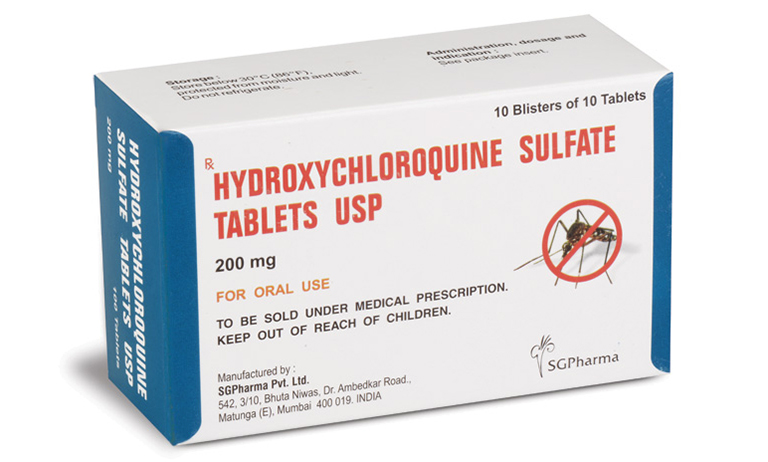
In an analysis of multiple studies, a case is being made for Hydroxychloroquine being made widely available for the treatment of hospitalized COVID-19 patients and for the FDA warning label to be removed from the drug. The mortality rate reduction for those treated with the drug is shown to be 75%, and for those who use the drug therapeutically at the start, it reduces their chances of hospitalization by 44%.
Hydroxychloroquine in Early Treatment of High-Risk COVID-19 Outpatients: Efficacy and Safety Evidence, Risch, Harvey.
It is readily apparent that every one of the studies of high-risk outpatient HCQ use has shown
risk reduction for hospitalization or mortality, averaging 44% for the former and 75% for the
latter, and that the numerous systematic case-series studies have shown exceedingly good
treatment benefit vs mortality. The “natural experiment” studies of population responses
provide compelling evidence of temporal relations between medication use and mortality. The
RCT studies proclaimed as definitively showing no benefit of HCQ use in outpatients have all
involved almost entirely low-risk subjects with virtually no information about risks of
hospitalization and mortality and are irrelevant for bearing upon HCQ use in high-risk
outpatients. The totality of fatal cardiac arrhythmia events among more than 8,000 patients
treated with HCQ and HCQ+azithromycin is zero. The large database study of more than
320,000 older patients taking HCQ+azithromycin shows no excess all-cause mortality (Risch
2020b) and minuscule excess fatal arrhythmia frequency, 9/100,000 patients, compared to the
large number of patients whose lives will be saved by outpatient use of these medications. I
have not discussed all of the other even lesser-frequent adverse events than the arrhythmias,
but these are equally minuscule, and the FDA did not invoke them for its warning about
outpatient use in the title statement of the warning. The FDA has stated publicly that it relied
upon adverse event data from hospital inpatients to make policy applying to outpatient use.
There are no systematic adverse event arrhythmia data of US outpatients from the beginning
of 2020 through the present. The FDA website also publicly cautions that only (i.e., “due to”)
arrhythmia data are relevant to its warning, by omitting from the title any assertions that other
potential adverse events were important or frequent enough to be determinative. The FDA’s
extrapolation from adverse events in hospitalized patients to supposed risks in outpatients is
flagrantly unwarranted. Outpatient viral replication is an entirely different disease than
inpatient florid cytokine-driven pneumonia (Park et al., 2020) and the treatments are different.
The need for outpatient use of HCQ is crucial for saving the lives of high-risk COVID-19
patients. The most recent published recommendations for early treatment of COVID-19
outpatients (McCullough et al., 2020) consider HCQ use and related medications of critical
importance and is authored by some 50 clinicians providing this treatment. There is no
comparison between the number of lives to be saved with early outpatient treatment and the
minuscule numbers addressed in the analyses of adverse events, even what would be
postulated to occur with widespread outpatient use. All of these data have been available to
the FDA for some time. The improper warning on the FDA website must be removed
immediately, and widespread early outpatient treatment must start immediately.