Scientists from labs in Cambridge University and the California Institute of Technology in Pasadena claim to have successfully grown mice brains and hearts from embryo stem cells. “This has been the dream of our community for years and [a] major focus of our work for a decade, and finally, we’ve done it,” said senior study author Magdalena Zernicka-Goetz.
Scientists coaxed mouse stem cells to grow into synthetic embryos that began developing hearts and brains, just like the real thing.
The lab-made embryos, crafted without any eggs or sperm and incubated in a device that resembles a fast-spinning Ferris wheel full of tiny glass vials, survived for 8.5 days. That’s nearly half the length of a typical mouse pregnancy. In that time, a yolk sac developed around the embryos to supply nutrition, and the embryos themselves developed digestive tracts; neural tubes, or the beginnings of the central nervous system; beating hearts; and brains with well-defined subsections, including the forebrain and midbrain, the scientists reported in a study published Thursday (Aug. 25) in the journal Nature (opens in new tab).
Research Professor Derek Lovley of UMass Amherst explained, “We’ve simplified the process of generating electricity by radically cutting back on the amount of processing needed. We sustainably grow the cells in a biofilm, and then use that agglomeration of cells. This cuts the energy inputs… and widens the potential applications.”
Megacities, Musketry, Physics and Why the Intermediate Cartridge Needs to Disappear
“Megacity” is not a term in the general lexicon of most people. It is typically defined as any metropolitan area with a population of 10million or more. It is often that eyes simply glaze over when reading dry figures, though, so some perspective is useful, for the purposes of scale.
Tokyocurrently has a population in excess of 37,000,000 – or, approximately the same population as the state of California
Delhiis currently in excess of 29,000,000, roughly equal to the entire population of the state of Texas
Shanghaicomes in third, with over 26,000,000 people
Those three cities easily fall within the category of the “First World” – comparatively wealthy and reasonably peaceful. However, there are other megacities that do not fall into this category:
This second group of megacities are in extremely unstable environments. Indeed, the issue of civil crime control in Rio is an ongoing nightmare, frequently compared to low-intensity military conflict. As a result, the US Military’s Special Operations community is justifiably concerned that it will find itself operating in such an environment in very near future.
It also knows that it is not ready to do so:
Megacities Urban Future, the Emerging Complexity, Pentagon Video
Unlike certain shrill commentaries, one of the fundamental facts of military operations in the Twenty-First Century is that winning the population is far more important than winning arbitrary physical space. As of this writing, fully half the world’s populations can be considered to live in urban environments. That figure is expected to increase to c.65% by 2050 – less than thirty years away – with an estimated 90% of that growth being concentrated in Africa and Asia…and fully half of those populations will be of “fighting age” (not in the conventional, legal terminology, but in terms of reality), between 14 and 30.
Operations in large urban areas are complicated by the very infrastructure that make those cities possible: the US military had serious issues operating against insurgents in Baghdad (with a comparatively small population of c.8million) because the city was so large, it was nearly impossible to control vehicular movements to protect civilians, much less impede guerrilla’s. Likewise, even fighting in a moderately large city, such as Grozny, reveals the dangers of engaging in high-intensity operations, even when civilians are treated as an afterthought.
This is not simply a “4th Gen” problem. There are many reasons short of active, intentional conflict that could cause a military force to deploy into a megacity. From naturaldisasters, to criminal activity, to pan-national, extra-national and post-national activity, military forces around the world cannot avoid megacities, nor the concerns that accompany them.
Simply put, armies are going to have to fight in megacities. This is an absolute: whether the battle begins tomorrow, or five years from now, it will happen. Some group or groups will force a real infantry battle inside a megacity.
And the militaries of the 2020’s and beyond are neither equipped nor trained to deal with it – the US military is right to be concerned. However, in trying to identify concerns, in order to address them, the US military has a serious blind spot that they do not want to address, a proverbial “Emperor with no clothes“…That problem, seemingly easy to fix, is a fundamental question of small arms.
Captured rifles in Iraq, 2004
Since the end of the 1960’s, the US military has been fixated on the intermediate caliber class of rifle. For completely different – and frankly, rather shabby – reasons than the Soviet Union‘s adoption of an intermediatecaliber, the US military has used the 5.56x45mm round for both its primary infantry combat weapon, as well as its Squad Automatic Weapon (SAW) since the early-to-mid 1960’s. Pundits who should know better, take the fact that the 5.56×45 cartridge has been deployed in combat by the US for around fifty years as a sign that it must be superior.
Based in part on data from the URBAN WARRIOR exercise series – conducted prior to 9-11 – the US Marine Corps’ Warfighting Laboratoryconstructed an outdoor laboratory to test the effects of various cartridges against commonly-encountered structural environments. The results are telling:
Urban environments are…well, “urban”: they are constructed of a variety of materials of changing density, offering considerable opportunities for concealment (i.e., materials that a person can hide behind, to avoid observation), but a wide array of material densities make for rapidly changing levels of “cover” (a barrier that offers some level of protection against various kinds of projectiles). Many of these materials are proof against lighter projectiles.
US Paratrooper in Fallujah, Iraq, c.2004, armed with an M4 CarbineM249 Squad Automatic Weapon (SAW)
The modern M16/M4 rifle and M249 SAW projectiles are 62 grains in weight. Even the most aggressive load commonly issued, the SS109, tops out at 3,100 feet per second (fps) in velocity. This delievers about 1,300 foot-lbs of energy onto a target.
M240 Machine Gun
In contrast, the 7.62x51mm M80 round used by the standard medium machine gun, the M240, weighs in at 147 grains, and comes out of the barrel at about 2,700fps, while delivering almost twice the energy in foot-lbs (c.2,400). Obviously, not every soldier can run around with a comparatively heavy machine gun…however, the 7.62x51mm round was – and is – used by rifles.
M21/M14 Sniper Rifle
Although now used almost exclusively by dedicated snipers, the round was used not only by the M14, with the M16-series replaced, but was the standard rifle cartridge of NATO forces for nearly thirty years. While these rifles were and are demonstrably heavier and longer than their smaller rivals, the need to batter through effective cover is a consideration that becomes increasingly important in an urban environment.
This is not a case of technical nitpicking — using lighter projectiles in an urban environment means that more rounds need to be fired to overcome barricades. And, when the only firearms that can effectively batter through such materials are fired by weapons that used to be considered a form of light artillery, it should be obvious that this is not conducive to a positive image before the ever-present, all-seeing eyes of news cameras and the ubiquitous camera-phone.
While it would be understandable if this were a simple case of “Oops! We got it wrong!“, this is not the case, as instructors at West Point, the primary officer academy of the US Army, were teaching this in the early 1980’s:
Nor is this a question of engagement ranges. The original work that created the intermediate cartridge, begun in the spring of 1918 with a report from Hauptmann (Captain) Piderit, part of the “Gewehrprüfungskommission (Small Arms Proofing Committee)” of the German General Staff in Berlin, was based on the flawed logic that since infantry combat ranges were usually well under 800m, a smaller, lighter projectile would save on materials and costs, as well as allowing for significant improvements to rifles.
While this might have been true on its face, it ignored the consideration of cover. The result has been rifles that perform well enough on rifle ranges and in open environments (although some would disagree), but are far less effective in built-up areas…which is precisely where they are about to find themselves, to say nothing of longerranges.
The US Army “solution” to the problem was announced on April 19, 2022 – the Army’s (and thus, the US military’s) new weapon would be….the SIG SauerXM5 Rifle, a derivative of the company’s “MCX SPEAR“, and its associated light machine gun, the XM250. (Certainly a feather for SIG’s plume, considering the US military already having bought their handguns.)
Technical Review Sig Sauer Next Generation Squad Weapon NGSW-R XM5 rifle NGSW-AR XM250 machine gun
Rifle cartridges – L to R: .50 BMG, 300 Win Mag, .308 Winchester, 7.62x39mm, 5.56 NATO, .22 LR
While the XM250 is, indeed, lighter than what it replacing – the M249 SAW – the XM5 is heavier than the M4 carbine it replaces. The discrepancy in rifle weights is odd, until it is realized that the 6.8x51mm “SIG FURY” round has a chamber pressure – in normal loads – of c.80,000psi, a staggering figure fully 25% higher than that of the venerable 7.62x51mm M80 cartridge, and a minimum 35% higher than the original 5.56x45mm M198 used by the M-16; it is even more than 30% higher than that generated by a .50BMGSaboted Light Armor Penetrator round. This is not “fun with numbers“: when you start dealing with this level of pressures, the measures to contain them are critical…and heavy, in the extreme. One seriously wonders if the US Army is planning on fighting flying saucers.
While “newer” is often seen as “better”, this is far more than necessary. While poorly-made barrels will certainly burst, increasing the pressure by c.30%, minimum, is dangerous enough to be irresponsible. Weaponsusing the older 7.62x51mm M80, while no lightweights, were more than sufficient for a broad range of combat tasks. Lighter weapons, firing lighter cartridges, simply had less range, poorer performance, and less utility…and, speaking from experience, the rifles weren’t all that light.
Physics do not lie, and the lighter rifles were not that much lighter.
Rather than requiring real-world direct, voluminous data sets for Machines to learn the tasks they are designed to perform, a new type of data set promises to lower the cost and production time of machine learning, in addition to providing privacy protections, by creating ‘seed data,’ core principles, that the machines can extrapolate more detailed instruction from.
A machine-learning model for image classification that’s trained using synthetic data can rival one trained on the real thing, a study shows.
Huge amounts of data are needed to train machine-learning models to perform image classification tasks, such as identifying damage in satellite photos following a natural disaster. However, these data are not always easy to come by. Datasets may cost millions of dollars to generate, if usable data exist in the first place, and even the best datasets often contain biases that negatively impact a model’s performance.
To circumvent some of the problems presented by datasets, MIT researchers developed a method for training a machine learning model that, rather than using a dataset, uses a special type of machine-learning model to generate extremely realistic synthetic data that can train another model for downstream vision tasks.
Their results show that a contrastive representation learning model trained using only these synthetic data is able to learn visual representations that rival or even outperform those learned from real data.
Researchers from the University of Oregon have taken rodent retinal neurons and gorwn them on an electrode that is fractal-patterened. The result of the experiment, according to the researchers, brings them closer the dream of being able to produce a bio-inspired bionic eye. One day, the blind might see thanks to grown bionic eyes, or maybe sighted people will exchange their old eyes for new better eyes. The future’s so bright, I gotta wear shades over my new bionic rodent eyes.
Researchers have grown rodent retinal neurons on a fractal-patterned electrode, one that mimics the repeating branching pattern in which neurons naturally grow.
It’s a step closer to making a bio-inspired bionic eye, a longstanding goal for University of Oregon physicist Richard Taylor.
Taylor hopes the tiny electrodes could someday be implanted into the eye to restore sight in people with macular degeneration or other vision disorders.
The new work provides experimental evidence supporting a hunch his team has been pursuing for years, that neurons, which themselves are fractals, will connect better to a fractal-patterned electrode than they do to more traditionally shaped electrodes, allowing better signal transmission between the implant and the brain.
Researchers from Lithuania and Japan are partnering up to figure out how Cold Fusion seems to be able to speed up plant growth and make fertilizer both more effective and more environmentally friendly. Studies have already shown that cold fusion has these effects, but no one knows why. If researchers can learn why cold fusion benefits farming in the way that it does, they can then develop more efficient methods of applying cold fusion in the first place.
Plasma is a fascinating medium. It’s considered the fourth state of matter—alongside solid, liquid and gas—and it’s everywhere. In fact, more than 99.9 percent of all matter in the universe is assumed to be in plasma form.
You may be most familiar with plasma as the material inside those glowing novelty lamps found in museum gift shops, but it’s naturally found in the sun, lightning, and the northern lights. Research into plasma and how it intersects with various industries has been increasing, especially in the area of agriculture.
Cold plasma specifically is being tested as a way to speed up plant growth and make fertilizer that’s better for the environment. And it works: Lots of research has shown that exposure to cold plasma makes seeds germinate faster. While this sounds like a sci-fi concept, farmers have seen for decades that plants grown on the site of lightning strikes grow faster.
The strangest part? Scientists don’t know why this works, only that it…
Over-expressing a fly gene called clueless (clu) can lessen mitochondrial defects in fruit fly models of Parkinson’s disease, a new study reveals.
The results also showed that CLUH, the human equivalent of the fly clueless gene, has a similar function, which may pave the way toward new treatment approaches for Parkinson’s.
“When we modified [clu] in flies, symptoms analogous to Parkinson’s disease improved substantially,” Ming Guo, MD, PhD, a professor at UCLA and co-author of the study, said in a press release.
There is a movement growing among scientists that was only accelerated by the poorly made DNC agit prop film “Don’t Look Up,” a film that equated people not willing to simply look up and see a meteor heading to earth with failing to believe the scientists that the end of the world is nigh given the actual fact that the scientists have a history of inaccurate prediction modeling.
The scientists are considering stopping doing the work of making the world a better place through science power and magic until we the people acknowledge their wisdom and certainty and JUST FOLLOW THE SCIENCE.
Anthony the Doctor Fauci might be rumored to be the spokesperson of this elitist movement but those rumors are completely unfounded, even if the poetry of such a reality would make the dystopia at least a bit tolerable.
Scientists Consider Walk-Out Over Climate Change Indifference
Stop us if you’ve heard this one before: Scientists say that climate change is destroying the world, and we need to do something about it.
If you’re sick of hearing about the destruction humans have caused on the Earth, imagine how tired researchers are of telling everyone about it. That’s why a group of climate scientists are considering alternative options for sounding the alarm — including a mass walkout.
“We’ve had 26 Conference of the Parties meetings, for heaven’s sake,” Bruce C. Glavovic, a researcher at the University of New Zealand, told The New York Times in reference to the United Nations’ global warming summits. “I mean, seriously, what difference is that going to make?”
That’s why Glavovic and two colleagues published a paper in the journal Climate and Development last year calling on climate scientists to halt their research until the world’s nations take serious action against climate change. They say a strike might help the world renegotiate “the broken science-society contract.”
A new analysis of human remains buried in African archaeological sites has produced the earliest DNA from the continent, research finds.
The findings tell a fascinating tale about how early humans lived, traveled, and even found their significant others.
The research team outlines its work in the journal Nature, including findings from ancient DNA from six individuals buried in Malawi, Tanzania, and Zambia who lived between 18,000 and 5,000 years ago.
“This more than doubles the antiquity of reported ancient DNA data from sub-Saharan Africa,” says David Reich, a professor at Harvard University and investigator at the Howard Hughes…
Researchers at Goethe University Frankfurt have made a breakthrough discovery identifying a rare earth material that could be an ideal candidate to become a spinning electron information processing center. The processor of the future could be powered by a rare earth material whose spinning electrons would process data at exponentially faster times than conventional CPU’s can accomplish.
The technology is relatively new in development, still mostly in the theory rather than application stage of development, but these latest results break down some key barriers, making this technology much more potentially applicable within a few years.
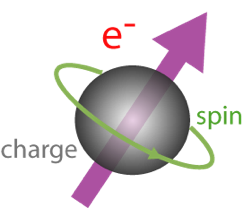
While modern computers are already very fast, they also consume vast amounts of electricity. For some years now a new technology has been much talked about, which although it is still in its infancy could one day revolutionise computer technology — spintronics. The word is a portmanteau meaning “spin” and “electronics,” because with these components electrons no longer flow through computer chips, but the spin of the electrons serves as the information carrier. A team of researchers with staff from Goethe University Frankfurt has now identified materials that have surprisingly fast properties for spintronics. The results have been published in the specialist magazine “Nature Materials.”
….The problem in the development of spintronic materials is that perfectly designed crystals are required for such components as the smallest discrepancies immediately have a negative impact on the overall magnetic order in the material. This is where the expertise in Frankfurt came into play. “The rare earths melt at about 1000 degrees Celsius, but the rhodium that is also needed for the crystal does not melt until about 2000 degrees Celsius,” says Krellner. “This is why customary crystallisation methods do not function here.”
Instead the scientists used hot indium as a solvent. The rare earths, as well as the rhodium and silicon that are required, dissolve in this at about 1500 degrees Celsius. The graphite crucible was kept at this temperature for about a week and then gently cooled. As a result the desired crystals grew in the form of thin disks with an edge length of two to three millimetres. These were then studied by the team with the aid of X-rays produced on the Berlin synchrotron BESSY II and on the Swiss Light Source of the Paul Scherrer Institute in Switzerland.
“The most important finding is that in the crystals which we have grown the rare-earth atoms react magnetically with one another very quickly and that the strength of these reactions can be specifically adjusted through the choice of atoms,” says Krellner. This opens up the path for further optimisation — ultimately spintronics is still purely fundamental research and years away from the production of commercial components.
Back FREEDOM for only $4.95/month and help the Freedomist to fight the ongoing war on liberty and defeat the establishment's SHILL press!!
Are you enjoying our content? Help support our mission to reach every American with a message of freedom through virtue, liberty, and independence! Support our team of dedicated freedom builders for as little as $4.95/month! Back the Freedomist now! Click here