Researchers at Goethe University Frankfurt have made a breakthrough discovery identifying a rare earth material that could be an ideal candidate to become a spinning electron information processing center. The processor of the future could be powered by a rare earth material whose spinning electrons would process data at exponentially faster times than conventional CPU’s can accomplish.

The technology is relatively new in development, still mostly in the theory rather than application stage of development, but these latest results break down some key barriers, making this technology much more potentially applicable within a few years.
Innovative crystals for future computer electronics — ScienceDaily
From www.sciencedaily.com
2022-02-28 18:12:06
Excerpt:
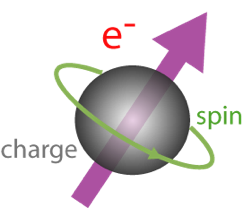
While modern computers are already very fast, they also consume vast amounts of electricity. For some years now a new technology has been much talked about, which although it is still in its infancy could one day revolutionise computer technology — spintronics. The word is a portmanteau meaning “spin” and “electronics,” because with these components electrons no longer flow through computer chips, but the spin of the electrons serves as the information carrier. A team of researchers with staff from Goethe University Frankfurt has now identified materials that have surprisingly fast properties for spintronics. The results have been published in the specialist magazine “Nature Materials.”
….The problem in the development of spintronic materials is that perfectly designed crystals are required for such components as the smallest discrepancies immediately have a negative impact on the overall magnetic order in the material. This is where the expertise in Frankfurt came into play. “The rare earths melt at about 1000 degrees Celsius, but the rhodium that is also needed for the crystal does not melt until about 2000 degrees Celsius,” says Krellner. “This is why customary crystallisation methods do not function here.”

Instead the scientists used hot indium as a solvent. The rare earths, as well as the rhodium and silicon that are required, dissolve in this at about 1500 degrees Celsius. The graphite crucible was kept at this temperature for about a week and then gently cooled. As a result the desired crystals grew in the form of thin disks with an edge length of two to three millimetres. These were then studied by the team with the aid of X-rays produced on the Berlin synchrotron BESSY II and on the Swiss Light Source of the Paul Scherrer Institute in Switzerland.
“The most important finding is that in the crystals which we have grown the rare-earth atoms react magnetically with one another very quickly and that the strength of these reactions can be specifically adjusted through the choice of atoms,” says Krellner. This opens up the path for further optimisation — ultimately spintronics is still purely fundamental research and years away from the production of commercial components.