JUDGEFARE ESCALATES WITH THREATS OF CRIMINAL CHARGES FROM ROGUE DNC JUDGE – The anti-Americanist activist judge, District Judge Brian Murphy, who unconstitutionally ordered President Trump to return convicted illegal alien child offenders before being deported to Sudan, is now tacitly threatening criminal action against the administration. He accused the administration of openly defying his child-rapist-enabling order, a criminal action if true.
The FTC is requesting records from Media Matters from any communications they may have made with other media “watchdogs.” The focus on the investigation is around what appears to be a Media-Matters led initiative to intimidate potential X advertisers to drop X by knowingly spreading misinformation in coordination with other media “watchdog” groups. The potential charges include criminal ones.
LATE-LIFE ABORTION, EUTHANASIA, NOW LEGAL IN DELAWARE – Last month the Delaware legislature passed a bill legalizing euthanasia, or physician-assisted suicide. This month, the Governor of Delaware, Democrat Matt Meyer, signed the late-life abortion bill into law. He claimed, “This signing today is about relieving suffering and giving families the comfort of knowing that their loved one was able to pass on their own terms without unnecessary pain and surrounded by the people they love the most.”
Live Action’s Bridget Sielicki offered this caveat referring to patience in “palliative care,” specifically paralytics, “because a paralytic is involved, a person can look peaceful, while they actually drown to death in their own bodily secretions. Experimental assisted suicide drugs have led to the ‘burning of patients’ mouths and throats, causing some to scream in pain.’ Furthermore, a study in the medical journal Anaesthesia found that a third of patients took up to 30 hours to die after ingesting assisted-suicide drugs, while four percent took seven days to die.”
HEADLINES
IVF SUICIDE BOMBER IS FRUIT OF THE ABORTION CULTURE HE WAS WILLING TO KILL FOR– On May 17, 2025, a suicide bomber named Edward Bartkus, 25, blew up an In vitro Fertilization Clinic (IVF Clinic) as a protest against what he called the clinic’s “pro-life ideology.” Bartkus leaves behind a legacy of writing promoting anti-natalism, an ideology that claims life cannot consent to come into being so bringing in new life is morally evil. Fortunately, the only person he killed was himself.
The ideology is the fruit of abortion culture itself, which debases human life by allowing, even forcing, human beings to express ideas about other human beings that would normally seem evil to all but a few of the most psychotic among us. One assumption is that human beings are not humans until they are “useful” or “viable.” Another assumption is the unborn can be terminated if they are found to have a “birth defect” like Down Syndrome.
ISRAELI EMBASSY STAFF ASSASSIN’S FATHER WAS DNC GUEST OF HONOR AT SOTU SPEECH – The father of Elias Rodriguez, the Democrat activist that assassinated two Israeli Embassy staffers to “Free Palestine,” was the guest of honor for anti-American U.S. Representative Jesus Garcia (D-IL) at the recent State of the Union Speech. At the time, Garcia hailed Elias’ father, Eric Rodriguez, as an “outspoken advocate against attacks on veterans’ services and the rights of unionized federal employees.”
ACTBLUE CONTINUES TO EVADE CONGRESSIONAL REVIEW, TRIGGERING SUBPOENA THREAT – ActBlue is facing potential subpoenas from numerous U.S. House committees after allegedly stonewalling investigations by congress into their alleged illegal funneling of foreign dollars into DNC campaign coffers. The GOP-led congress has had enough and appears prepared to issue subpoenas to force ActBlue officials to face public accountability for their alleged crimes.
House Judiciary Chairman Jim Jordan (R-OH), House Oversight Chairman James Comer (R-KY), and House Administration Chairman Bryan Steil (R-WI), wrote a letter to ActBlue that stated, “As we have explained, the Committees are examining allegations that ActBlue, a leading political fundraising organization, allowed bad actors, including foreign actors, to exploit the company’s online platform to make fraudulent political donations… Fraudulent political donations corrupt American elections could amount to interstate criminal conduct.”
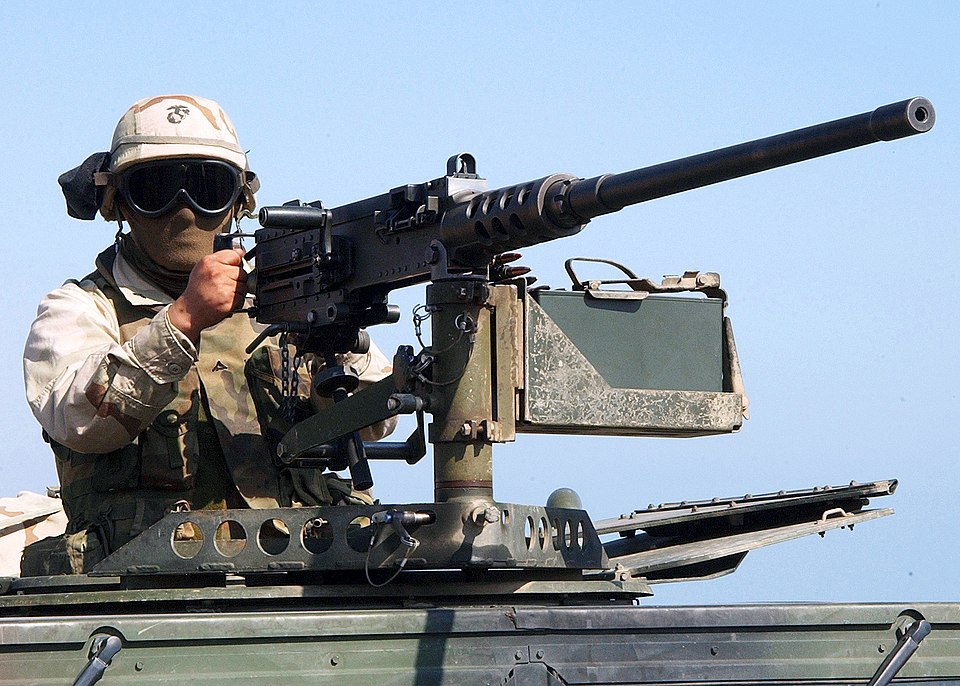
As we have written elsewhere, “heavy” machine guns are essential tools for militaries around the world. While the US-made M2HB was originally intended as an anti-tank weapon, it evolved over time into a kind of highly lethal “Swiss Army Knife“, capable of engaging infantry, light vehicles (and some not-so-light), helicopters and other types of aircraft, while also being able to be fired from those same platforms…But the M2HB, as definitive as it is, is by no means alone on the battlefield.
Around the world, combat forces use a weapon just as capable, and nearly as venerable, and have done so since the end of World War 2, a weapon that has become iconic as the antithesis of the M2…And that is our subject this week.
Origin and Development
The DShK 12.7mm heavy machine gun stands as one of the Soviet Union’s most enduring weapons, remaining in active service more than eight decades after its introduction. Development began in 1929, when the Red Army identified the need for a heavy machine gun comparable to the American M2 Browning. The initial design was finalized by Vasily Degtyaryov in 1931, utilizing the same gas operation system found in his earlier infantry machine guns.
This first iteration, designated the DK (Degtyaryov Krupnokaliberny or “Degtyaryov Large Caliber“), had significant limitations. It relied on a cumbersome 30-round drum magazine and suffered from a disappointingly low rate of fire. Production began in 1933, but only small quantities were manufactured through 1935.
The breakthrough came when designer Georgy Shpagin significantly improved the weapon by replacing the drum feed with a belt-fed system using a rotary-feed cylinder. This redesigned weapon entered production in 1938 as the DShK 1938, with its name deriving from both designers (Degtyaryov-Shpagin Krupnokaliberny). Soviet troops affectionately nicknamed it “Dushka” [https://en.wikipedia.org/wiki/DShK], meaning “dear one” or “sweetie” in Russian.
Georgy Semyonovich Shpagin. February 1945 photo by unknown photographer for Izvestiya. Public Domain.
Technical Specifications and Capabilities
The DShK fires the powerful 12.7×108mm cartridge, a round slightly larger than its American counterpart, the .50 BMG. Operating at a rate of fire of approximately 600 rounds per minute, the weapon boasts an effective range of 2.4 kilometers (1.5 miles) against ground targets. Perhaps more impressively, it can penetrate up to 20mm of armor at ranges up to 500 meters, making it effective against lightly armored vehicles.
The weapon features distinctive “spider web” ring sights designed specifically for anti-aircraft use, highlighting its dual-purpose role as both an anti-vehicle and anti-aircraft weapon. The original DShK weighed approximately 34 kg (75 pounds) for the gun alone, but when mounted on its wheeled carriage with armor shield, the complete system weighed a substantial 157 kg (346 pounds).
DShK 1938 version in Vietnam, in the anti-aircraft role, with the “spider web” sight. Date and photographer unknown. Image from the Vietnam War Archives. CCA/4.0 Int’l.
During World War II, the Soviets made a critical improvement to the DShK by introducing a simpler, more cost-effective muzzle brake in 1944, patterned after the Polish Wz. 35 anti-tank rifle. This replaced the more complex original design and improved both production efficiency and reliability.
The DShK-M: Post-War Evolution
Following World War II, Soviet engineers further refined the design. In 1946, they introduced the DShK 38/46, more commonly known as the DShKM. This modernized version featured a redesigned feed mechanism that allowed belts to be loaded from either side, a simplified production process using more stamped sheet metal components, and a new disintegrating belt that broke apart in 10-round increments.
These improvements made the weapon more reliable and easier to manufacture at scale. Production of the DShKM continued until 1980, with more than one million units manufactured. The weapon was also produced under license in numerous countries including China and Pakistan (as the Type 54), Pakistan, Iran, Yugoslavia, Romania, Poland, and Czechoslovakia.
Military Applications and Deployment
Throughout its service life, the DShK has been employed in multiple roles. During World War II, the Red Army primarily used it as an anti-aircraft weapon, mounting it on GAZ-AA trucks, IS-2 tanks, ISU-152 self-propelled artillery, and the T-40 amphibious tank. When deployed as an infantry support weapon, it was typically mounted on a two-wheeled trolley with an armor shield.
After the war, the DShK became a standard fixture on Soviet armor. Almost all Soviet-designed tanks prior to the T-64 featured the distinctive DShK mounted on the commander’s cupola, creating an iconic silhouette of Soviet military might.
Members of the Croatian Defense Council (HVO) Army fire the 12.7mm DShK machine gun from the top of a Soviet-designed T-55 main battle tank, January 1998. US Army photo by SSG K. Price. Public Domain.
In the 1970’s, the Soviet military began replacing the DShK with the newer NSV “Utyos” heavy machine gun, which was significantly lighter and more accurate. However, the transition was never complete, and the DShK remained in widespread service.
Contemporary Combat Use
Despite being in current, limited, production only in China, Pakistan and Iran, the DShK continues to see active service in conflicts worldwide. During the Soviet-Afghan War (1979-1989), the weapon played a critical role for both sides. Soviet tanks deployed it as an anti-aircraft weapon, while Mujahideen fighters used captured DShKs and Chinese Type 54 copies to devastating effect against Soviet helicopters from mountainous positions.
Kunar, Afghanistan October 1987: Jamiat-e Islami group shelter and “Dashaka” (DShK) .50 cal. machine gun position in the Shultan Valley. 1987 photo by Erwin Franzen. CCA/3.0
The weapon featured prominently in the Vietnam War, where it was smuggled through Laos, Vietnam, and Cambodia for use by Communist forces. Military historians estimate that a significant portion of the 7,500 American helicopters and fixed-wing aircraft lost during the conflict were brought down by DShK fire.
In more recent conflicts, the DShK has become a fixture of what military analysts call “technicals” — pickup trucks with heavy weapons mounted in the bed. These mobile weapons platforms have featured prominently in civil wars in Somalia, Libya, Syria, and other conflicts across Africa and the Middle East.
In the ongoing Russia-Ukraine conflict, Ukrainian forces have found innovative new uses for the DShK. Notably, Ukrainian troops have successfully employed DShKs fitted with searchlights to shoot down Iranian-made Shahed-136 drones. This approach has proven both cost-effective and reliable compared to using expensive MANPADS (Man-Portable Air Defense Systems).
Ukrainian forces have also modified the DShK for infantry use by adding features like bipods, a shoulder stock, a pistol grip, and Picatinny rails for mounting modern optics. The resulting hybrid weapon functions as a heavy anti-materiel rifle with good accuracy out to 800 meters.
Legacy
The DShK holds the distinction of being, alongside the American M2 Browning, one of only two .50 caliber machine guns designed before World War II that remain in active service today. This remarkable longevity speaks to the fundamental soundness of its design and its versatility across different combat roles.
While newer weapons like the NSV and Kord have been developed to replace it, the massive quantities of DShKs produced and distributed worldwide ensure that this Soviet heavyweight will continue to appear on battlefields for decades to come — a testament to its reliability, effectiveness, and adaptability to evolving warfare requirements.
Like many weapons we discuss here, “obsolescent” does not necessarily equal “obsolete” – sometimes, “good enough” soundly trumps “newest”, something important to keep in mind.
The Freedomist — Keeping Watch, So You Don’t Have To
Beginning on May 6, India launched what it calls “Operation Sindoor“, striking multiple targets in Pakistan that it claims are “terrorist infrastructure”, in retaliation for the April 22 attack on the Pahalgam resort are in Indian-controlled Kashmir. Radical Islamist jihadists massacred 26 men – 24 Hindus, one Christian, and one Muslim who tried to stop them – in front of their families. This has terrified the nations of the world, as both India and Pakistan have nuclear arsenals of ~180 warheads, each…and the potential for a nuclear exchange is very high.
The disputed Kashmir region, showing the sub-regions administered by India, Pakistan, and China. 2003 map by US Central Intelligence Agency (CIA). Public Domain.
As we reported in January, the “weakest link” in this equation remains Pakistan: Unable to maintain control of it’s creations – the Taliban in both Afghanistan and in Pakistan itself – as well as Lakshar-e-Taiba and its clone, The Resistance Front (TRF) (the group responsible for the Pahalgam attack), Pakistan is also losing control of its Balochistan province to regional separatists, as it struggles to contain multiple threats, mostly of its own making, while others – like the TRF – have now provoked India into military-scale violence.
The dispute over Jammu and Kashmir represents one of the most enduring territorial conflicts in modern history, entangling India and Pakistan in a complex web of historical, religious, and geopolitical tensions since their independence from British rule in 1947. Alongside this territorial conflict, the countries faced another critical challenge: sharing the waters of the Indus River system, ultimately resolved through the landmark Indus Waters Treaty of 1960.
Origins of the Kashmir Dispute
Colonial Roots and Partition (1846-1947)
The foundations of the conflict trace back to 1846 when the British East India Company, following their victory in the First Anglo-Sikh War, sold Kashmir to Gulab Singh, the Dogra ruler of Jammu, through the Treaty of Amritsar. This established the princely state of Jammu and Kashmir under Dogra rule, despite its Muslim-majority population.
View of the Pahalgam Valley, 2011. Photo by KennyOMG. CCA/3.0
When British India was partitioned in August 1947, the fate of its princely states, including Jammu and Kashmir, was left to their respective rulers. Despite having a Muslim-majority population, Jammu and Kashmir was ruled by Maharaja Hari Singh, a Hindu. Caught between accession to India or Pakistan, Singh initially sought independence. However, when tribal raiders from Pakistan’s Northwest Frontier Province invaded Kashmir in October 1947, the Maharaja signed the Instrument of Accession with India in exchange for military assistance.
This pivotal decision ignited the First Indo-Pakistani War (1947-48). The conflict ended with a UN-brokered ceasefire in January 1949, leaving Kashmir divided along what became known as the Line of Control (LoC). India controlled approximately two-thirds of the territory, including the Kashmir Valley, Jammu, and Ladakh, while Pakistan administered the remaining third, known as Azad (Free) Kashmir and the Northern Areas (now Gilgit-Baltistan).
The UN resolutions calling for a plebiscite to determine Kashmir’s final status were never implemented due to disagreements over the conditions for such a vote. India maintained that Pakistan must first withdraw its forces, while Pakistan insisted that India should reduce its military presence before any referendum.
Subsequent Conflicts and Changing Dynamics
The unresolved Kashmir issue led to further wars between India and Pakistan in 1965 and 1971, though the latter focused primarily on the independence of East Pakistan’s (now Bangladesh). The 1972 Simla Agreement established the LoC as the de facto border and committed both nations to resolve their differences peacefully.
The dispute took a darker turn in the late 1980’s with the emergence of an armed insurgency in Indian-administered Kashmir. Pakistan provided moral and material support to the separatist movement, while India deployed substantial military forces to counter it. The conflict became increasingly militarized, with accusations of human rights abuses on both sides.
The 1999 Kargil War, a limited conflict sparked by Pakistani infiltration across the LoC, further strained relations. The post-2001 era saw sporadic peace initiatives alternating with periods of heightened tensions, particularly following terrorist attacks in India allegedly linked to Pakistan-based groups.
Soldiers of the Indian Army depicted after capturing a hill from Pakistani forces during the Kargil War, 1999. Indian Army photo. GODL.
And then…there is Article 370.
Article 370: An Unnecessary Knife-Twist
Article 370 was a special provision in the Indian Constitution that granted Jammu and Kashmir significant autonomy within the Indian Union. Enacted in 1949 as a “temporary provision,” it allowed the state to have its own constitution, flag, and considerable independence in all matters except foreign affairs, defense, and communications.
The provision emerged from the unique circumstances of Kashmir’s accession to India. When Maharaja Hari Singh signed the Instrument of Accession in 1947, it was with the understanding that Kashmir would retain substantial autonomy. Article 370 formalized this arrangement, restricting the Indian Parliament’s legislative powers over the state and requiring consultation with the state government for extending constitutional provisions beyond the agreed domains.
Over time, Article 370’s implementation evolved. Through presidential orders, particularly in 1954, many provisions of the Indian Constitution were gradually extended to Jammu and Kashmir. Article 35A, introduced through this mechanism, allowed the state legislature to define “permanent residents” and grant them special privileges regarding property rights and government employment.
For seven decades, Article 370 remained a politically charged issue. Supporters viewed it as honoring India’s commitment to Kashmir’s distinct identity, while critics saw it as an obstacle to full integration and development.
On August 5, 2019, the Indian government, led by Prime Minister Narendra Modi, effectively nullified Article 370 through presidential orders and parliamentary legislation. The state was simultaneously reorganized into two union territories: Jammu and Kashmir (with a legislature) and Ladakh (without one). This dramatic constitutional restructuring fundamentally altered Kashmir’s relationship with the central government and remains deeply contested both domestically and internationally.
The Indus Waters Treaty: A Rare Success in Water Diplomacy…With Implications
Against this backdrop of territorial conflict, both countries faced another pressing challenge: sharing the waters of the Indus River system, which originates in Tibet and flows through both countries. The Indus and its tributaries are vital for agriculture, energy production, and water supply in both nations.
Facilitated by the World Bank, the Indus Waters Treaty was signed on September 19, 1960, by Indian Prime Minister Jawaharlal Nehru and Pakistani President Ayub Khan. The treaty allocated the eastern rivers (Ravi, Beas, and Sutlej) to India and the western rivers (Indus, Jhelum, and Chenab) to Pakistan, though India retained limited rights to use the western rivers for non-consumptive purposes, irrigation, and hydroelectric power.
The treaty established the Permanent Indus Commission to address disputes and facilitate communication on water-related issues. It also included provisions for the construction of replacement works to compensate Pakistan for the loss of water from the eastern rivers.
Remarkably, the Indus Waters Treaty has survived three wars and numerous crises in Indo-Pakistani relations until now. It stands as a testament to the potential for cooperation even amid broader conflicts, though it has faced increasing strain in recent decades due to growing water scarcity, climate change, and dam construction projects.
Legacy and Contemporary Challenges
The Kashmir dispute remains unresolved, with both countries maintaining their respective claims to the entire territory. The region’s strategic importance has only increased with China’s growing influence in parts of Kashmir controlled by Pakistan, creating a complex trilateral dimension to the conflict.
Meanwhile, the Indus Waters Treaty, despite its durability, faces mounting pressures. India’s construction of dams on the western rivers, though technically permissible under the treaty, has raised concerns in Pakistan about reduced water flow. Climate change threatens the Himalayan glaciers that feed the Indus system, potentially exacerbating water scarcity and heightening tensions over the existing allocation framework.
The intertwined histories of the Kashmir dispute and the Indus Waters Treaty illustrate both the challenges and possibilities of Indo-Pakistani relations—a narrative of persistent conflict alongside pragmatic cooperation necessitated by shared geographical realities.
Pakistan’s Political Instability: A Dangerous Variable
Pakistan is experiencing significant political instability, with 2024 being one of the most violent years in over a decade. The February elections failed to restore order and were marred by allegations of military manipulation to keep former Prime Minister Imran Khan and his party out of power. This contentious domestic political situation creates opportunities for militants to exploit local anger and makes it more difficult for the government to mount a unified challenge against these groups.
The Pakistan Democratic Movement (PDM) government faces multiple internal challenges, including skyrocketing commodity prices and difficulties finalizing deals with the International Monetary Fund to stop the devaluation of the rupee. This economic pressure has eroded public confidence in the current government.
In the security sphere, multiple groups are eroding Pakistan’s internal stability, with the “Pakistani Taliban” and ISIS-K, as well as a number of Balochi groups, are all vying to either carve out their own sections of Pakistan, or to seize outright control of the entire nation – and its nuclear arsenal. And all the while, the mainline Taliban are also sharpening their knives, looking to dismember the entire Pakistani state. In this, those groups have been greatly aided by the failures of the Biden administration in 2021, which left behind vast amounts of advanced military equipment for the taking.
Looking into 2025, Pakistan continues to grapple with a volatile political and economic environment characterized by political paralysis, fragmented coalitions, and increasing military influence that hinders effective governance. This combination of political fragmentation, economic crisis, and rising security challenges combined to create a volatile mix of factors with significant regional implications.
The Nuclear Dimension: Stakes at Their Highest
Both India and Pakistan have built up nuclear arsenals primarily designed to prevent wars, not start them. India maintains a “no first use” policy, meaning it will only use nuclear weapons in retaliation for a nuclear attack on Indian forces or territories. Pakistan, however, has a “full spectrum deterrence” policy aimed at using tactical nuclear weapons to counter both nuclear threats and conventional military attacks from India.
The BADGER explosion on April 18, 1953. Photo by of National Nuclear Security Administration / Nevada Site Office. Public Domain.
The nuclear stakes are enormously high – even a small nuclear exchange between India and Pakistan could kill 20 million people in a week. If such an exchange triggered even a minor “nuclear winter”, nearly 2 billion people in the developing world would be at risk of death by starvation.
The introduction of nuclear weapons in 1974 fundamentally changed the dynamic of the India-Pakistan conflict, raising the stakes of any confrontation. India’s first nuclear test that year triggered an arms race that eventually saw Pakistan develop its own nuclear capabilities two decades later.
Pakistan’s Defense Minister Khawaja Muhammad Asif recently stated that Pakistan would only use its nuclear weapons if “there is a direct threat to our existence.” However, he has also warned that Pakistan’s military has been reinforced because an Indian military incursion is “imminent” following the recent attack in Kashmir.
The Water Crisis: An Exitential Dimension to Conflict
The April 22, 2025 terrorist attack in the popular tourist destination of Pahalgam in Indian-administered Kashmir, killed 26 vacationing tourists. The attack was claimed by a group called The Resistance Front (TRF), which Indian authorities claim is closely linked to the Pakistan-based militant group Lashkar-e-Taiba.
Baisaran Valley near Pahalgam, site of the April 22 attack. 2017 photo by Srinu maripi. CCA/4.0
The Indus Waters Treaty suspension by India follows the recent terrorist attack in Pahalgam, Kashmir. Pakistan has deemed this suspension illegal, with significant implications for its agriculture and economy. About 80% of Pakistan’s cultivated land relies on the Indus river system.
In response to the attack, India announced the immediate suspension of the Indus Waters Treaty, something not done in the more than 60 years of the treaty’s existence. The Indian government stated the treaty will remain suspended “until Pakistan credibly and irrevocably abjures its support for cross-border terrorism.” India has closed its main land border with Pakistan at Attari and ordered Pakistani nationals in India to leave the country within 48 hours. India is also reducing diplomatic staff at both missions from 55 to 30 personnel and has expelled military advisors from Pakistan’s embassy in New Delhi…In effect, India has had enough of Pakistan supporting anti-Indian insurgents.
Pakistan has responded to India’s moves with its own countermeasures:
Pakistan has closed its airspace to all Indian airlines, and suspended all trade with India, including through third countries, and halted special South Asian visas issued to Indian nationals. Pakistan has also rejected India’s suspension of the Indus Waters Treaty, with officials stating that any attempt to stop or divert water belonging to Pakistan would be considered “an act of war”.
The Indus Waters Treaty suspension is particularly significant because the treaty gave Pakistan unrestricted access to the waters of the three western rivers—Indus, Jhelum, and Chenab—which account for nearly 70% of the total water flow in the Indus river system. Around 80% of Pakistan’s cultivated land, approximately 16 million hectares, depends on water from this vast river network.
Military Modernization: Raising the Stakes
Both India and Pakistan have acquired new military hardware since their last major clash in 2019, opening up new conventional strike options. India has inducted 36 French-made Rafale fighter jets with advanced capabilities, while Pakistan has acquired J-10 fighters from China. Both sides have also upgraded their air defense systems.
Donald Trump’s United States now faces the challenge of balancing its support for India with calls for restraint from Pakistan. With both nations holding nuclear weapons, the risk of escalation is high, and Washington will likely push for diplomatic solutions to de-escalate the crisis.
The current crisis represents the biggest breakdown in India-Pakistan relations since 2019, when a suicide bombing killed 40 Indian soldiers in Kashmir. The current situation follows a pattern where flare-ups between the countries have seen targeted attacks and reprisals, escalating slowly while giving each side the option to step back and defuse. However, the current nature of the strategic moves are of a severity not seen since 1971.
Conclusion
While both sides are desperate to moderate the fighting, the better to avoid the nuclear threshold, Pakistan’s internal instability implies the possibility that external forces in Afghanistan could take this moment to strike Pakistan from the opposite border. The potential impact is hard to model, but should a major land conflict arise, it is possible that Pakistan’s government could collapse, bringing control of its nuclear arsenal into question.
BREAKING Update: Operation Sindoor
On May 6, India launched “Operation Sindoor,” conducting missile strikes in Pakistan and Pakistan-administered Kashmir. Reports indicate there were at least 24 strikes across nine target locations, with explosions heard across Kashmir. These strikes were in direct retaliation for the April 22nd attack on a resort in Pahalgam, a picturesque town in the Himalayas of Indian-controlled Kashmir, which killed some 26 tourists, infront of their families.
The operation targeted six locations in Pakistani-administered Kashmir (Muzaffarabad and Kotli) and Pakistan’s Punjab province (Bahawalpur), crossing both the Line of Control and the international border. India describes the strikes as “focused, measured, and non-escalatory.”
The casualties and damage reported, to 5.7.2025:
Pakistan claims at least 26 civilians were killed and 46 injured by India’s strikes, including teenagers and children, with the youngest victim being three years old. Twelve civilians in Indian-administered Kashmir were also reportedly killed by Pakistani shelling from across the border.
The strikes hit what India calls “terrorist infrastructure” sites, some allegedly linked to the attack that killed 25 Hindu tourists and one local in Indian Kashmir last month. The name “Sindoor” is significant – it refers to the red powder Hindu women apply to their foreheads when married.
Pakistan’s response:
Pakistan has called India’s strikes an “act of war” and stated it would respond. Pakistani forces have already exchanged gunfire with Indian forces along the Line of Control.
As both countries’ leaders held crisis meetings, the UN Secretary-General has expressed “deep concern” over the strikes, and several nations including the US, UAE, China, and Japan have called for de-escalation.
This represents the worst fighting in more than two decades between these nuclear-armed neighbors. The situation is still developing rapidly, with Pakistan promising to retaliate “at a time, place and manner of its choosing.” Major airlines are now avoiding Pakistani airspace as tensions remain high.
The Freedomist is continuing to monitor events as they evolve.
Previously, we’ve talked about two infantry rifles from the 19th Century which were very much the AK-47‘s of their time, the Remington Rolling Block and the Mauser 98. Both rifles were simple, reliable, accurate, and comparatively cheap. In many cases, examples of both are still shooting to this day.
But there is another rifle that meets similar criteria, but one that is more akin to the AR-15 and M-16:
The Enfield rifles.
The Lee-Enfield rifle series represents one of the most successful and longest-serving military firearms in history. From the dusty plains of the Boer War to the dense jungles of Malaya [https://en.wikipedia.org/wiki/Malayan_Emergency], these bolt-action rifles served the British Empire and Commonwealth [https://en.wikipedia.org/wiki/Commonwealth_of_Nations] with distinction for over half a century. In many places throughout the world – including Afghanistan – the Lee-Enfield rifle continues to serve on the battlefield, as it outranges both AK- and AR-type rifles handily.
The Lee-Metford: Precursor to Greatness
The Lee-Metford rifle, adopted by British forces in 1888, represented a revolutionary step in military firearms. Combining James Paris Lee‘s rear-locking bolt action and detachable box magazine with William Ellis Metford’s shallow-groove rifling, the design offered unprecedented firepower. Chambered in “.303 British“, it featured an eight-round magazine and cock-on-closing action that enabled rapid fire. However, the Metford rifling wore quickly when used with the new cordite propellant introduced in the 1890s. This limitation led directly to the development of the Lee-Enfield in 1895, which maintained Lee’s action while incorporating deeper, more durable Enfield rifling.
Rifle Lee-Metford Mk II. Caliber .303 British. From the collections of Armémuseum (Swedish Army Museum), Stockholm, Sweden. Public Domain.
The No.1 Mk.III: The Great War Workhorse
The Lee-Enfield No.1 Mk.III (universally known and loved as the “Smelly” from its formal designation of “SMLE”, for ‘Short Magazine Lee-Enfield‘) introduced in 1907, represented a refinement of earlier Lee-Metford and Lee-Enfield designs. Building upon the revolutionary Lee bolt action with its rear locking lugs and cock-on-closing operation, the Mk.III incorporated lessons learned during the Second Boer War.
The rifle featured a distinctive ten-round detachable magazine — double the capacity of its contemporaries like the German Gewehr 98 or American Springfield M1903. This magazine, combined with the smooth action of the bolt, allowed trained soldiers to achieve the “mad minute” — 15 aimed shots in 60 seconds — a rate of fire that German forces at the Battle of Mons in 1914 initially mistook for machine gun fire.
An Indian rifleman with a SMLE (Short Magazine Lee-Enfield) Mk III in the prone firing position, Egypt, 16 May 1940. Photo by the British Army’s No 1 Army Film & Photographic Unit . Public Domain.
Chambered for the rimmed .303 British cartridge, the No.1 Mk.III measured 44.5 inches overall with a 25-inch barrel. During World War I, production necessities led to the simplified No.1 Mk.III*, which eliminated volley sights and other complex features. Over 2 million were produced in Britain, with additional manufacturing in Canada, Australia, and India.
The rifle’s baptism of fire came during World War 1, where it proved reliable in the mud of Flanders and the dust of Mesopotamia. Its accuracy, reliability, and rate of fire made it a formidable infantry weapon, though its overall length proved cumbersome in trench warfare.
The No.4 Mk.1: WWII Modernization
The interwar period saw continued development of the Lee-Enfield, culminating in the No.4 Mk.1, which entered service in 1941. This redesign maintained the proven action while incorporating several improvements. The barrel was heavier and stronger, with a new squared-off receiver and a simpler aperture rear sight that proved faster to use in combat conditions.
Lee-Enfield No.4 Mk 2 (1954) with a flipped up rear aperture sight and a 5-round .303 British clipper strip. Photo by ‘Quarzexe’. CCA/3.0
The No.4 featured a socket-style bayonet fitting rather than the sword bayonet of earlier models. The wooden forestock was shortened, exposing more of the barrel for better cooling and reducing weight slightly. The trigger pull was improved, and the rifle’s overall robustness increased.
Production ramped up rapidly during World War II, with factories in Britain, Canada (as the No.4 Mk.1*), and the United States (under Lend-Lease) producing over 4 million rifles. The No.4 Mk.1(T) variant, equipped with telescopic sights, became the standard British sniper rifle of the war, renowned for its accuracy at ranges exceeding 600 yards.
The No.5 Mk.1: The “Jungle Carbine”
The final major development in the Lee-Enfield family came with the No.5 Mk.1, commonly known as the “Jungle Carbine.” Designed for the close-quarters combat of the Pacific and Southeast Asian theaters, this compact variant appeared in 1944.
The No.5 featured a dramatically shortened barrel (20.5 inches) and cut-down woodwork, reducing overall length to 39.5 inches and weight to about 7 pounds. A distinctive conical flash hider compensated for the increased muzzle flash of the shortened barrel, while a rubber buttpad tried to help manage the increased recoil.
Lee-Enfield No 5 rifle on display at the Parachute Regiment and Airborne Forces Museum. Photo by Rama. CCA/2.0 France.
Despite its innovations, the Jungle Carbine suffered from accuracy issues, with many examples exhibiting “wandering zero”—an inability to maintain consistent accuracy under field conditions. This flaw, usually the result of the wooden stock pushing unevenly on the barrel, combined with the harsh recoil and the approach of new select-fire weapons like the FN FAL, led to its relatively short service life, with production ending in 1947 after approximately 250,000 were made.
Legacy and Continued Service
The Lee-Enfield rifles continued in service well beyond World War II. The No.4 remained the standard British Army rifle until replacement by the L1A1 SLR in the 1950s. In Commonwealth countries, particularly India and Pakistan, local production continued for decades, with the rifles serving into the 1980s and beyond with police and reserve forces.
Mujahideen in Kunar, Afghanistan, 1985, holding a No.4Mk1 Lee-Enfield rifle. Photo by Erwin Franzen. CCA/3.0
As we have remarked on frequently, ‘old’ does not necessarily equate to ‘obsolete’. The .303 British cartridge is still perfectly capable as both a hunting and combat cartridge. While there are certainly newer weapons that perform better on paper, at the proverbial “point of impact”, the c.150 grain bullet of the .303 does just as much damage as most modern large-caliber cartridges, even to those wearing modern body armor.
Today, the Lee-Enfield series is prized by collectors, military history enthusiasts, and competitive shooters in vintage rifle matches. Their robust construction means many examples remain serviceable after a century of use, testament to the enduring quality of their design and manufacture.
The Lee-Enfield family represents a remarkable chapter in military firearms development — a successful marriage of innovative design, practical battlefield utility, and industrial manufacturing capability that armed an empire through two world wars and countless colonial conflicts.
The Freedomist — Keeping Watch, So You Don’t Have To
Gas warfare – the deliberate use of chemicals as weapons in wartime – has long been recognized as one of the most terrifying tools of conflict, right next to nuclear weapons…Yet, both situations have been exceedingly rare – thankfully. What is not rare, is the dangers posed by the accidental (usually) cases where industrial chemicals and nuclear accidents have caused widespread devastation.
The peaceful applications of chemical and nuclear technologies have brought tremendous benefits to society, but their mishandling has occasionally led to disasters as devastating as military applications. From industrial accidents to amateur experimenters, these incidents highlight the fine line between technological advancement and catastrophe.
You, the Reader, likely do not think in these terms, unless you work in those industries. However, you are almost certainly living in a danger zone, and do not realize it.
By way of explanation, open your favorite mapping program, and locate your home. Go out five miles, and draw a circle: Is there an operating freight railroad, ‘hazardous cargo’ freeway, chemical plant or oil refinery within that circle? If so, you need to have a military-rated CBRN (Chemical, Biological, Radiological, Nuclear) “gas mask” for every person living in your home, especially children. This is because when accidents happen, local emergency responders begin evacuating people within a 0.25-mile radius of the accident – but that radius can quickly extend out to a 5 mile radius, depending on the chemicals involved, the wind direction and strength, and the specific details of the accident. What happens if you cannot evacuate? Or, worse, if you try to evacuate, and are stalled on the road, whether by breakdown or traffic jams? The chemical cloud is still coming.
You need a plan…But, why aren’t you being told this elsewhere? Simply put, news agencies do not want to be seen as “Chicken Little” – These accidents do happen, but they happen infrequently enough that both news agencies do not want to air advisories on preparing for them, and most municipal and county governments to not want to agitate their citizens about the dangers of the companies that provide a large percentage of local government revenues.
And yet – the danger is there. Every day.
The 2023 East Palestine, Ohio train derailment represents one of America’s most significant recent chemical disasters, highlighting the vulnerabilities in our hazardous materials transportation system. On February 3, 2023, a Norfolk Southern freight train carrying hazardous materials derailed, causing a massive fire and prompting authorities to conduct a controlled burn of vinyl chloride to prevent a potential explosion. This decision, while preventing an immediate catastrophic explosion, released phosgene and hydrogen chloride into the atmosphere – both highly toxic gases historically used as chemical weapons.
The incident forced the evacuation of approximately 2,000 residents and contaminated local waterways, with chemicals reaching the Ohio River watershed. Despite official claims of safety, residents reported persistent health issues including rashes, headaches, respiratory problems, and nausea months after returning home. The accident revealed critical gaps in railway safety protocols, emergency response planning, and environmental monitoring capabilities. The combination of toxic chemicals involved — including not just vinyl chloride but also butyl acrylate, ethylhexyl acrylate, and ethylene glycol monobutyl ether — created complex contamination scenarios that standard emergency protocols were ill-equipped to address, demonstrating how even in developed nations with extensive regulations, chemical disasters can affect communities with little warning.
Drone footage of the freight train derailment in East Palestine, Ohio, February 6, 2023. Photo by NTSB. Public Domain.
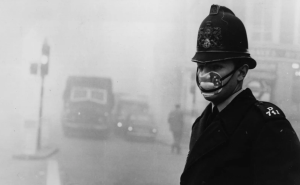
The modern era of chemical disasters began with the Great Smog of London in 1952. Though not an industrial accident in the traditional sense, this convergence of coal pollution and unusual weather killed an estimated 12,000 people and injured 100,000 more, demonstrating the lethal potential of chemical pollutants. This disaster eventually prompted the UK’s Clean Air Act of 1956, establishing a pattern that would repeat throughout history: catastrophe followed by regulatory reform.
London police officer during the Great Smog of 1952. Author unknown.
Industrial chemical accidents reached their nadir with the Bhopal disaster of December 3, 1984. A leak of methyl isocyanate gas from a Union Carbide pesticide plant in Bhopal, India immediately killed at least 3,787 people, with total related fatalities estimated between 15,000 and 20,000. The disaster, stemming from poor maintenance and safety procedures, continues to affect generations through birth defects and chronic illnesses. Bhopal fundamentally transformed chemical industry regulations worldwide and remains the worst industrial accident in history.
Less known but similarly devastating was Italy’s 1976 Seveso disaster, where a chemical plant released a dioxin cloud contaminating an area inhabited by 37,000 people. Though immediate fatalities were few, the long-term effects included elevated cancer rates and birth defects. The incident led to the European Union’s “Seveso Directive”, establishing classification systems for hazardous facilities that continue to govern chemical safety throughout Europe.
The field of radiological accidents presents different challenges but equally sobering lessons. The 1957 Kyshtym disaster at the Mayak nuclear facility in the Soviet Union contaminated an area inhabited by 270,000 people when a nuclear waste storage tank exploded. Long concealed by Soviet authorities, the accident released twice the radioactivity of the Chernobyl disaster and remains the third-worst nuclear accident in history.
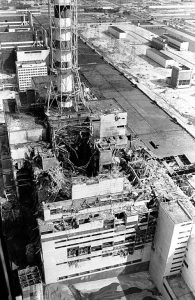
While Chernobyl (1986) and Fukushima (2011) typically dominate discussions of nuclear accidents, smaller incidents reveal the persistent dangers of radiation mishandling. The 1987 Goiânia accident in Brazil occurred when scavengers dismantled an abandoned radiotherapy unit, finding a glowing blue substance (cesium-137) they distributed to friends and family. Four people died within weeks, and 249 were contaminated. The incident demonstrated how even orphaned medical equipment could create widespread contamination when handled by untrained individuals.
The destroyed Chernobyl reactor, one of four units operating at the site in Ukraine in 1986. No units operate today. (Chernobyl, Ukraine, 1986). Photo copyright IAEA Imagebank. CCA/2.0 Generic.
Perhaps the most remarkable case of amateur radiation exposure involves David Hahn, dubbed the “Radioactive Boy Scout“. In 1994, the 17-year-old attempted to build a breeder reactor in his mother’s shed in Michigan using materials extracted from smoke detectors (americium-241), camping lantern mantles (thorium), and clock dials (radium). His homemade neutron gun and crude reactor components significantly contaminated the property, eventually requiring intervention by the EPA and a hazardous materials cleanup. Though Hahn received only a modest radiation dose, his shed registered radiation levels 1,000 times above normal background.
Hahn’s case, while extreme, is not unique. In 2007, Richard Handl of Sweden attempted to split atoms in his apartment kitchen using materials purchased online. He only realized the potential illegality of his experiment when he contacted Sweden’s Radiation Safety Authority to ask if his activities were permitted. Unlike Hahn, Handl was arrested but later released when authorities determined his setup hadn’t reached truly dangerous levels.
The democratization of scientific knowledge and equipment access has made DIY nuclear experimentation increasingly accessible. Online forums devoted to amateur nuclear science host discussions on building Farnsworth fusors and other nuclear devices, though most participants emphasize safety and legality. The Nuclear Regulatory Commission and Department of Energy now actively monitor purchases of certain materials and equipment that could enable amateur experimentation.
These incidents, while varying in scale and circumstance, share common themes: the misunderstanding of invisible dangers, inadequate safety protocols, and the cascading consequences that extend far beyond immediate events. They demonstrate that the line between beneficial technology and catastrophe often depends not on the materials themselves, but on human systems of management, regulation, and education surrounding them.
So…Given the foregoing, what can you do to protect yourself?
Aside from the military-rated CBRN gas masks mentioned, the answer, unfortunately, is “not much“. However, gas masks are the best place to start, and do provide a huge degree of protection. While pricey, modern masks are far better than what was available 40 years ago. Gas masks should come with one or two filters, that are now universal-fit, fitting 40mm sockets in the mask that have been standardized since 2000. The key thing to look for in a mask, though, is whether it has a drinking attachment for a “NBC Canteen”; this is a vital concern when choosing a mask, as these masks get very hot, very fast, and with the stress of the situation, your water needs will vastly increase. “Package deals”, selling the mask, a filter or two, and one or two canteens with mask attachments, is what you want to look for.
For radiological accidents, in addition to the mask an canteen, the available option is potassium-iodide tablets. These protect the thyroid, which is the most vulnerable part of the body to nuclear contamination. Potassium-Iodide is commercially available, from all the common online retailers.
The last recommendation I will give you is to get a copy of Cresson H. Kearney’s standard work, “Nuclear War Survival Skills“. While a bit dated in places, this remains the best practical reference for civilians. The link here is to a PDF copy, but do try to find a print copy, if you can.
If the foregoing scared you – good. These threats are very real, no matter where in the world you live. The government (all governments), as East Palestine demonstrated, is not going to provide a lot of help in the short term, if at all.
You are on your own. Plan accordingly.
The Freedomist — Keeping Watch, So You Don’t Have To
Armed forces have always used a wide array of weapons. From the first days of fighting over water holes and hinting grounds, human fighters have simultaneously carried and used clubs and sticks, as well as rocks, slings and bows and arrows. As the eons wore past, those tools changed with technology, organization and experience, but the case remained that humans going out to fight always carried a variety of killing implements with them.
Late in the 19th Century, a new class of weapons appeared – the machine gun. As we covered back in 2022, these weapons were originally classified as “light artillery”, as they were large and heavy enough to require horse-drawn carriages to haul them around, and had to be “laid” like a light cannon. With the advent of the Maxim Gun, however, that quickly began to change.
Russian WWI tachanka captured by Germans troops, on display in Berlin, c.1918. Public Domain.
Machine guns became the dominant weapon of the infantry in World War 1. But, as that conflict developed, weapons with longer ranges and heavier projectiles were needed. In America, the task fell to the legendary gun designer John Moses Browning…and the result was, indeed, legendary.
This week, we are going to talk about the Browning M2HB machine gun, in the first of a two-part series, which will be followed up with a look at the M2’s competitor, the Soviet/Russian DShK.
Few weapons have maintained operational relevance for as long as the Browning M2 Heavy Barrel machine gun. Designed in the final months of World War I and still in front-line service today, the “Ma Deuce” represents a remarkable century-long saga of American military engineering, being the second-oldest continuously-deployed weapon in US military service, after the M1911A1 .45ACP handgun, which is also a Browning design.
The M2’s origins trace back to General John J. Pershing’s request for a heavy machine gun with greater range and penetration than existing infantry weapons. The legendary firearms designer John Moses Browning answered this call, initially adapting his successful M1917 .30 caliber machine gun to fire a much larger cartridge. Working alongside Winchester Repeating Arms, Browning developed the powerful .50 BMG (Browning Machine Gun) cartridge with a 12.7mm projectile that could penetrate the armor of early tanks and aircraft.
Although the original weapon came too late for World War I, the early 1920s saw continuous refinement as the Army sought to maximize such a versatile weapon system. The breakthrough came with the M2 Heavy Barrel (M2HB) variant adopted in 1933. This air-cooled, belt-fed, recoil-operated machine gun featured a quick-change barrel system and could be mounted on vehicles, aircraft, ships, or ground tripods. Its 850-1000 round-per-minute cyclic rate and effective range exceeding 2,000 meters made it extraordinarily versatile.
M16 MGMC half-track, armed with 4 M2 Machine Guns. Location unknown, c.1945. Coast Artillery Journal, 1945, US Army Signal Corps. Public Domain.
World War II saw the M2 achieve legendary status across all theaters. American bombers like the B-17 Flying Fortress carried multiple M2s for defense, while infantry units used them against light armor, aircraft, and personnel. The naval variant became critical in defending against Japanese aircraft, with battleships and destroyers bristling with M2 mounts. Some of the war’s most famous aces, including Francis Gabreski, scored their first aerial victories using M2s mounted on P-47 Thunderbolts, as well as being used as the main battery of early ground attack planes, like the B-25H.
B-25H “Barbie III” with nose canopy open, showing the four .50 cal Browning feeds, and 75mm M5 gun. Stuart airshow 2011. Photo by Ssaco. CCA/3.0
Unlike many weapons that faded into obsolescence after World War II, however, the M2 thrived during the Cold War era. During the Korean War, M2s mounted on vehicles proved essential against human wave attacks. In Vietnam, the weapon was mounted on everything from river patrol boats to helicopter gunships. Army gun trucks in Vietnam typically carried multiple M2s, providing convoy security against ambushes.
The M2’s durability and simplicity contributed to its longevity. With proper maintenance, an M2 can fire hundreds of thousands of rounds before requiring major component replacement. The basic operation — pulling back the charging handles, adjusting headspace and timing, and engaging the bolt latch — remains largely unchanged since the 1930s, allowing generational knowledge transfer among military personnel.
Modern conflicts have only reinforced the M2’s value. During Operation Desert Storm, M2s mounted on Humvees and Bradley Fighting Vehicles proved devastatingly effective against Iraqi positions. The weapon’s long range proved particularly valuable in Afghanistan’s mountainous terrain, where Taliban fighters often found themselves under accurate fire from distances beyond the reach of their own weapons.
Today’s M2A1 variant, introduced in 2010, represents the most significant upgrade in the weapon’s history, featuring a fixed headspace and timing system that eliminates the dangerous and time-consuming manual adjustments previously required. This modification has substantially reduced training requirements while improving safety and reliability.
The M2’s use on light vehicles in modern “low-intensity conflicts” offers both regular and irregular forces with a real force-multiplication weapon: even if the M2 may no longer perform well against modern helicopters and attack aircraft, there are few unarmored vehicles that can withstand its powerful rounds, and few structures offer even minimal protection. This is doubly true at sea, where even modern warships have to be wary of light, high-speed boats mounting weapons like the M2.
US Navy Fire Controlman aboard the guided missile cruiser USS Normandy (CG 60), fires twin-mounted M2 .50 caliber machine guns during a Pre-Action Calibration Fire (PACFIRE) exercise in the Gulf of Aden. 14 May 2005. US Navy photo. Public Domain.U.S. Navy photo by Photographer’s Mate First Class Robert R. McRill
After more than a century since its development, the M2 remains standard equipment across all branches of the U.S. military and in at least 90 countries worldwide. Military historians frequently cite it as the most successful heavy machine gun ever designed, a testament to John Browning’s engineering genius and the fundamental soundness of its design.
Just because a weapon may be older than your grandparents, which does not necessarily mean that it is no longer useful…especially when no one has come up with a better system.
The Freedomist — Keeping Watch, So You Don’t Have To
As the ongoing war in Ukraine has demonstrated, low-cost drone warfare has arrived on the battlefield. While the modern use of armed drones began in 2000/early-2001, with the arming of an RQ-1 Predator drone with an AGM-114 ‘Hellfire’ missile, It was not until after the September 11 Attacks of that year that the armed Predators went into action.
Aside from large modern armies however, drone combat, as such, did not emerge until the rise of the Islamic State after 2014. In 2016, as the war began to turn against the IS, Iraqi forces started being struck by 40mm grenades dropped by modified civilian drones. Tiny, and very quiet, these drone were able to hover – or ‘loiter‘, to use the military term – over an area, and drop explosives on top of targets on command. This immediately raised alarms, as most armored vehiles, such as tanks, are very thinly armored on their top surfaces.
A Naval Forces of Ukraine Bayraktar TB2 from the Turkish company Baykar Defense; CCA/4.0 Int’l
While the use of civilian drones in combat had been noted previously, those instances only seemed to be in the realm of tactical surveillance and reconnaissance. After the IS ramped up its “micro-drone” campaign, though, “proliferation” began in earnest: expanding outside the Middle East, where Russian forces thwarted an attack on one of their bases in Syria in 2018, drug cartels in Mexico began deploying attack drones in earnest.
In Ukraine, drones for reconnaissance and attack have advanced to the point that the Ukrainians are deploying “bomber” drones carrying up to a 44lbs payload of explosives, while also scoring the first acknowledged air-to-air kill of an advanced fighter, in this case a Mig-29, by a kamikaze drone, via sympathetic detonation.
But the use of small drones has been overshadowed by the use of much larger platforms which, while still “drones”, are not really “tactical” weapons. Much has been made of large drones, such as those used by Azerbaijan in the 2020 Nagorno-Karabakh War, as well as uses by Houthi rebels attacking civilian cargo ships in the Red Sea. The problem with these types of attacks is that they more resemble the use of drones and missiles by major powers…What about the infantry-level use of this class of weapons?
Soldiers of Alpha Company, 1st Battalion, 4th Infantry), fire a M120 mortar during a combat operation in the Da’udzay Valley in the Zabol province of Afghanistan Oct. 23, 2007. US Army Photo. Public Domain.
The modern battlefield has seen remarkable technological advancement in the last 120 years, yet one of warfare’s oldest weapons — the mortar — continues to play a crucial role alongside cutting-edge unmanned aerial systems. Both provide indirect fire capabilities, but with significantly different characteristics, advantages, and limitations.
Mortars represent possibly the oldest form of artillery still in active military service, with designs dating back to the 14th century. These simple, high-angle weapons offer several enduring advantages. They’re relatively inexpensive, with basic systems costing under $20,000 and individual rounds priced at $50-$300 depending on sophistication. Modern infantry mortars like the U.S. 60mm M224 can be transported and operated by just two soldiers, providing immediate fire support without complex logistics chains.
The mortar’s high arc trajectory allows engagement of targets behind cover and in defilade positions—a capability that maintains its relevance in urban environments where direct fire weapons face significant limitations. Modern mortars can typically engage targets between 100-8,000 meters depending on caliber, with rounds impacting within 1-2 minutes of fire mission commencement.
In contrast, military drones represent a relatively recent development that has rapidly transformed battlefield dynamics. Systems like the Turkish TB2 Bayraktaror loitering munitions such as the Switchblade provide persistent surveillance capabilities combined with precision strike options. These platforms offer unmatched target observation capabilities, with operators able to positively identify targets before engagement and conduct battle damage assessment immediately after strikes.
Drones typically deliver smaller payloads than artillery systems but with significantly higher precision. Where a mortar might achieve a Circular Error Probable (CEP) of 30-100 meters depending on range and conditions, drones can often deliver munitions with accuracy measured in single-digit meters.
However, the comparative cost structure presents significant disparities. Even relatively inexpensive military drones cost hundreds of thousands to millions of dollars per platform, with sophisticated munitions adding tens of thousands per engagement. This cost difference becomes particularly relevant in sustained operations or against adversaries employing low-cost countermeasures.
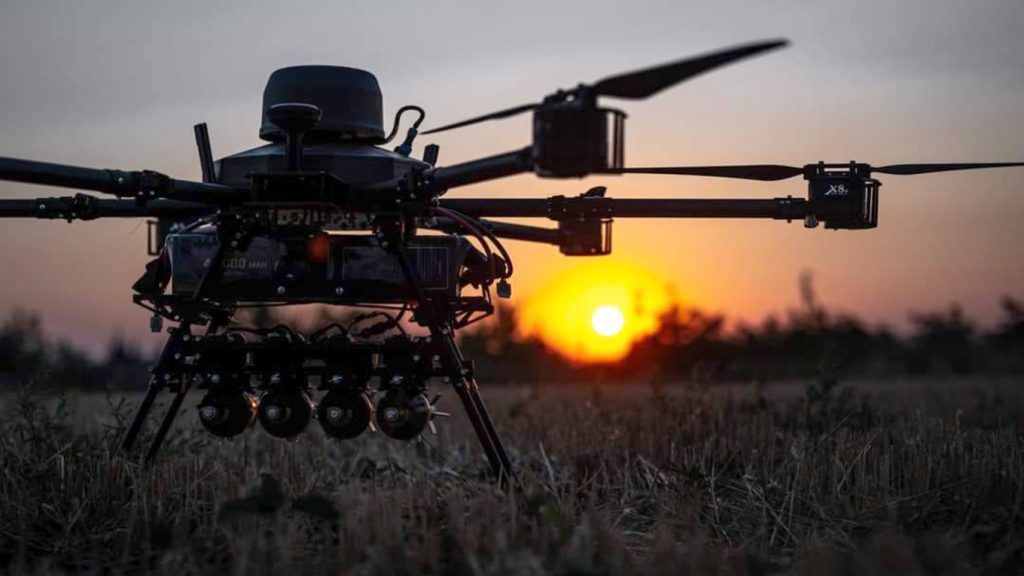
The evolution of consumer drones into improvised weapons platforms has dramatically accelerated during the Ukraine conflict, with both sides developing increasingly sophisticated swarm tactics using modified commercial quadcopters and purpose-built FPV (First Person View) drones. These systems typically carry 40mm grenades, modified mortar rounds, or small thermobaric charges, creating an entirely new tactical capability at remarkably low cost.
Soldier with commercial Unmanned aerial vehicle, 2017. Photo by Scott Stewart. CCA/4.0 International.
The basic approach involves forward reconnaissance elements identifying enemy positions, followed by the deployment of drone teams equipped with 5 – 20 small, unmanned systems. These teams position themselves just beyond the range of enemy small arms (typically 1-2km from the target) and then launch multiple drones in rapid succession. Each operator controls a single drone, but their actions are coordinated through a tactical commander who prioritizes targets and sequences attacks.
What makes these swarms particularly effective is their combination of saturation and persistence. Unlike a traditional mortar barrage that might last 2-3 minutes, drone swarms can maintain pressure on a position for 30+ minutes as operators rotate through their inventory of systems. This creates both physical and psychological pressure that conventional indirect fire struggles to match.
The economics are particularly compelling. A basic FPV drone capable of delivering a grenade costs approximately $400 – $1,000, while the grenade itself might cost $50-200. Even accounting for losses, this means an engagement involving 10 drones and 20 munitions might cost less than $20,000 total – comparable to just a few mortar rounds from advanced Western systems.
From a tactical perspective, these drone swarms force defenders to make difficult choices. Activating electronic countermeasures reveals defensive positions and quickly depletes battery systems. Taking cover from aerial threats often exposes personnel to horizontal fire. Moving to alternate positions makes units visible to surveillance drones operating at higher altitudes.
The integration of these swarms with conventional forces represents a notable innovation. Infantry units can now advance with drone teams directly embedded in their formations, allowing for immediate fire support without the coordination delays associated with traditional artillery. When resistance is encountered, the formation pauses while the drone swarm engages, creating a dynamic reminiscent of ancient warfare where archers would soften positions before infantry assault – but with far greater precision and real-time assessment capability.
The Freedomist — Keeping Watch, So You Don’t Have To
The attempted assassination of Donald Trump on top of the brutal illegal lawfare waged against him and the uneven playing field set by every major institution captured and weaponized by Democrats against Republicans, is causing many to question whether this was a lone wolf or something more sinister.
Do I think this assassination was a setup? Possibly, though my working theory at the moment is that some official on the Secret Service detail to Trump hates him and allowed the holes, as opposed to it coming from some cabal of the White House. Accusing the sitting President of such a thing is a very high bar to climb over and I don’t think there is anything approaching evidence to support that.
Nonetheless, the language of hatred, divorce language as my brother Paul calls it, being used by every major corporation, government agency, and the entire infotainment and education industry from top to bottom, against the right has been such one needs no conspiracy to kill, one merely waits for the effects of such language to set off some lone wolf weirdo looking for fame.
At least 30% of the country so hates the right and thinks that they are all Nazis that they would endorse violence against them, in my estimation based on various polls on political attitudes. The people who call the shots in every major institution, in the Democratic Party, in the infotainment and education industry, and even the courts and law enforcement, are all guilty as charged in terms of fomenting this kind of thing. This unofficial, unorganized, cabal of ruling class establishment types who despise any opposition to their plans for a global corpostate regimen of some kind are happy to see their opponents harmed in political violence which they foment but can deny having a hand in.
President Biden, for instance, repeated the claim Trump said if he doesn’t win there will be a bloodbath, as if he is threatening violence, when it’s clear he used a common term and was talking about the bloodbath in the auto industry if the Chinese remain unchecked to flood our market with their cheap cars. By stating this lie, Biden continues to stoke the flames and one cannot escape the conclusion this has an intended aim: to moment more political violence while denying their responsibility for it through a claim their fingerprints aren’t on it.
A typical argument people use when one side resorts to cancel culture, lawfare, and inciting violence is to say they can’t stand on their record or their ideas, so they try to win be default, through creating an unfair playing field in which their political opponents have all the disadvantages built in before any election campaign begins, let alone the elections themselves. While it would be wrong to say the Democratic Party gad a monopoly on such things, it remains a fact that this strategy of invalidating and unlawfully disqualifying or otherwise suppressing their opponents and their supporters is the go-to strategy for the Democratic Party. In fact, lawfare and inciting violence are at present the main thrust of the Democratic Party’s war on freedom and drove to absolute power.
Biden’s ongoing repetition of lies meant to paint Trump and Republicans as Hitler and thus incite violence against them with this hyperbolic exaggeration of policy disagreements belies any claim the Democratic Party and this Administration bear no guilt here. They didn’t, we think, literally plan this but when gapes in coverage were apparent they did nothing and when this young man decided he wanted to seek fame and prove what a good shot he is, he chose a “hated” person who, morally, according to the false caricature presented by Biden et al, deserved this.
After a review of the videos from the scene, it is clear someone in charge wasn’t interested in stopping this assassination attempt before it got started. Nobody in authority got on the mic to call for removing Trump due to the threat, and we have video of the would-be assassin crawling into position. He probably was rushed, but he is free to take him as they film him and try to get the attention of law enforcement.
It is impossible at this time to conclude this gap of coverage and the non response to a threat, the killer was seen on site for 26 minutes before the shooting and the team meant to provide overwatch was inside the building he was on, was not intentional by someone. We need to know who had the ball, as they say in aircraft carriers, to call the shots in response to this threat: that person deserves to be investigated for possibly intentionally letting the former President remain unnecessarily in danger.
This is not a conspiracy theory. There is AMPLE and overwhelming evidence this threat was known, seen, reported, and even video taped on phones prior to the act and during the act. We literally have video of people yelling and of law enforcement not responding at all, not one bit!
Some will protest against impugning the “men and women in law enforcement”, but the truth is the truth and the truth is we cannot afford to not ask such a question and to run a thorough investigation to prove or disprove that theory, unless of course we want to see more of this happening in the future.
We also cannot discount and must point out the way the Biden administration has been promoting conspiracy theories on par with the blood libel used against the Jews, who a sizeable plurality of the Democratic Party’s base absolutely hate, and their divorce language is indeed beyond the pale and part of the blame for what happened.
Thus Biden et al foment hatred with lies and over the top exaggerations, all while impugning motive and intent grossly, and Biden staffers on the Secret Service detail who likely hate Trump and believe he is Hitler think it is their patriotic duty to let this all unfold.
Is this true?
We don’t know and all who might fall under suspicion here are innocent until proven guilty. We do know what we can see.
We can see the lies and exaggerations and how the Democrats daily vilify Republicans and try to incite violence against them. We can see that all the institutions captured by the left do the same, every day, even to the point we have indoctrinated political hacks infiltrating schools and colleges not to teach but to corrupt and ultimately abuse their charges and turn them into wokesters, cancel culture extremists, and antichristian freedom haters.
We can see how this shooter was spotted and reported, indeed a local cop climbs up the ladder and retreats without calling this in and saying, “move the President now!” We can see how this was not covered, how the overwatch team was relegated to inside the building and how evidently they couldn’t hear the crowd outside telling there is an armed man on the roof!
It is not disputed that these videos are real. What they show is that no level of incompetence can answer the question, “why was Trump’s security cordon so seriously compromised and why did law enforcement ignore the people pointing out a clearly visible bad guy with a gun crawling on the roof and not warn the President to duck for cover?”
We cannot afford to give the benefit of the doubt to investigating this crime and to consider the very real probability that this was the result not just of a lone wolf but a systemic bigotry and blood libel heaped on Republicans and that this led some official on charge to compromise the security cordon and ignore the threat the same way we now believe the Nazis did with the insane Dutch communist who wanted to burn down the Reichstag.
This by no means should be read as saying the people in charge of either that whole detail or just that location within the security cordon are guilty of knowingly trying to support an assassination attempt by getting out of the way. It should be read as we must take this as a real possibility and seriously investigate it from that line of thought. Additionally, it should be read as a rebuke to Biden and his persistent divorce language, based on lies and exaggerations.
We must expunge the rot in this country where an ideology of violence and despotism has captured a major political party and every major institution. This rot of authoritarianism and depravity must be addressed with courage and determination, while not allowing ourselves to do that which we oppose, namely divorce talk, fomenting political violence, lawfare, corruption, and the such.
The assassination attempt was the primary responsibility of the attacker, who is now in hell forever as he deserves to be. Guilt mostly lies with him. Second, we have every reason to believe we must investigate a very real possibility that an official allowed this to unfold deliberately because they hate Donald Trump and have had that irrational hatred and fear of “Trumphitler” drilled into them by Biden, the entire Democratic Party machine, and every major institution captured by a godless, hateful, totalitarian ideology that has also captured most of the Democratic Party leadership.
Biden is responsible broadly for the climate of violence and fear, the irrational hatred, and the continued use of lies and exaggerations to delegitimize anyone who isn’t a neo-communist woke alt-gendered antichristian anti-white bigot willing live an atomized life as an a-gendered, isolated, non-differentiated cog in the corpostate machinery as a slave. Biden elevates the worse in us, including child molestation under the trans banner, to destroy the fabric of our civilization and transform us into a totalitarian corpostate that is a province within a global empire run by a few dozen shot callers at the top.
To be clear, I am speaking of the elemental, innermost, core essentials which underlie the Democratic Party platform, although I doubt Biden et al seriously think they will get or even want a dictatorship. They are shallow and following the agit-prop surface virtue-signals of a deeper agenda of which they may have little real awareness. In this case, I am describing the probable outcomes of the Democratic Party platform if everything they want was made law and policy and was enforced strictly.
When you come from a place of arrogance, despotism, depravity (especially sexual in this culture), and bigotry against whole demographic groups in your own country, the fruits are always bad even of your followers are merely supporting your surface things, wanting to have your utopian promises, or seeking to avoid the boogeyman fears you have inspired in them.
Elements of all these things can always be found in every movement, avoiding them and trying to purge them has been a major problem for every movement forever. But, while we can point to some Republicans being the same way, by the by most Republicans in office now, as opposed to before 2010, are not willing to tolerate such “otherfication”, not even of Biden et al! Trump calls Biden incompetent for his actions and foolish in his policies, he doesn’t call him Hitler or a “threat to democracy”, code for dictatorship and Nazism.
The fact we are a Union of free and constitutional republics wherein most people are relatively autonomous in their free associations and communities and not a unitary democracy as a dictatorship of the majority of votes counted has not been lost on the left: they are in rebellion in trying to transform America into an authoritarian faux democracy akin to the USSR, albeit not exactly as Democrats are not actively Marxist.
The so-called ‘stakeholder capitalism’ of the WEF is a weird corporate-state partnership of the topmost shot-callers in government and business/finance who desire quite literally to rule the world and every institution in every country according to their vision of a single worldwide regimen, not necessarily a one-world government but essentially that in de facto power. This is just feudalism for the 21st century, nothing more, dressed up in terms like equity, inclusion, climate change, and the such to lull the masses into uncritical acceptance. It is neo-communist because it does ultimately involve a more planned economy than we have now, under the guise of climate change fears, because it is anti-capitalist*, and because its imposition is ultimately by force.
(*Most people do not understand what capitalism is and think it is profit over people, it is not, it is an economic system using capital as a means of assigning ownership to engage in a free market that ultimately has as its aim the elimination of poverty.
Neocommunism is not the same as classical communism, it uses the corporate world and extols fat cats as heroes of their movement, it is a partnership between corporate behemoths run by the few, the topmost bureaucracy in the administrative state who think they should run the show as unelected technocrats, and elected politicians who want that cozy sinecure with all its benefits and who will sell their vote to the corpostate machinery for a pittance.
Democrats are neo-communist foot soldiers for the corpostate establishment, and some Republicans are as well, and all these groups within the whole corpostate umbrella, left and right, wanted Trump gone in the worse possible way simply because a win by him slows or even stops them. They fear what he will do if he wins and are willing to risk a conflagration that destroys the world rather than allow him a fair chance on an even playing field. Their rhetoric and lies, their ongoing lawfare to be able to say Trump is a felon after that illegal kangaroo trial, all show they wanted this and continue to want this, so why when a chump with a gun shows up on a weird mission to prove he is a real marksman would they stop it I’d they alone were in the way?
It may be too soon to accuse a specific person of standing aside and thereby being complicit through intentional negligence, but it is something we must investigate using that ad our operating theory, which must be proven or disproven to the general satisfaction of the honest world. It is definitely not near a point of accusing Biden or the Democrats of planning this, but it is obviously clear and well-known they are invoking divorce language and are culpable in terms of fomenting the violence we are seeing carried out. No serious person thinks Biden doesn’t want to end Trump, his illegal lawfare against him makes that obvious, and his Party’s inability to use reason, rational thinking, or truth on a level playing field with his opponents in a civil manner proves they have little choice but to engage in “undemocratic” and illegal actions to throttle the opposition and cheat to win.
Democrats aren’t Hitler or Stalin and most sincerely do not want or believe their policies would result in a dictatorship. They are convinced by their own propaganda so hard that they think their extraordinary illegal actions and fomenting violence then standing aside to let some lone wolf try to kill a Republican is justified because Republicans are so evil.
Call it arrogance, hubris, or stupidity, but the Biden administration, the Democratic Party, and almost every major corporation and public institution, the entire infotainment and education industry, are captured by World Economic Forum types and their wacko global neo-communist feudalism, this depraved authoritarian ideology based on a fever dream of world dominion by a few dozen shot-callers at the top.
Elimination of one’s political opponents by smearing them into being hated, lawfare aimed at hobbling them, control of the discourse through official and corporate controls over the means of communication and networking, control over the press rooms through antichristian and anti-Republican bigotry, and, yes, fomenting political violence are all signs the Democratic Party is not an American political party but a globalist neo-communist party run by and for the topmost shot-callers on the planet, many of whom are not Americans.
Did Biden order the hit on Trump?
No.
He didn’t have to. All he has to do is appoint people who hate Republicans as much as he does on their protection details and continue to demonize the Republicans until some unhinged idiot seeking fame ceases an opening and opens fire. Thus, the ultimate blame for this, and for the murder of an innocent man and the serious harm done to two other people, cannot but be laid on the corpostate establishment, of which Biden is their puppet and the Democrats their minions.
Where fear reigns, love dies. Where love dies, tyrants bloom. This, my friends, is where we are in America, and even the world. But why is terror the new rule of law in the land? Is it because we picked bad leaders?
Is it because of viruses or racists or sexual deviants? Whatever reason you might believe fear reigns and tyranny blooms, I am here to suggest to you perhaps the reason is this, where the Word of God is not in the hearts of the people, the false accuser prevails to entice man to want to define Good and Evil for himself.
The less we know God’s justice, found in the full text of the Word of God, not just the choice precepts, the more we invent our own justice, like “social” justice, where the white race becomes Jesus and the devil in one race, one part feigning laying down their power for the good of the inferior People of Color (the POC) while they offer up as a sacrifice the other part, the devil, for crimes their fathers may or may not have committed.
That’s just the perverse version of the gospel that has emerged in America (and other parts of the world as well, especially Canada and Britian). The white race is Abraxas, the God of Good and Evil, and the POC is still the pawn in the white race’s battle with itself, an anti-Christ gospel.
The gospel is in all of us, for He has made everything beautiful in its time, also, he has placed eternity into man’s heart yet so that he cannot find out what God has done from the beginning to the end (Ecclesiastes 3:11).
When we daily meditate on the Word, that gospel image that emerges within us, to be manifest in the spirit we move through as we interact with the world, the place between heaven and earth, will be closer and closer to the true gospel of the Kingdom of God.
When we don’t daily meditate on the Word, or worse, meditate on false Christs, the image that emerges within us, to be manifest in the spirit we move through as we interact with the world, will be closer and closer to anti-Christ until it eventually becomes an outright enemy of the true ecumenical church (like the social justice church has become, calling evil good and good evil).
I believe that the lack of biblical literacy is the barometer of a nation. Where the true gospel prevails, fear of death and suffering fade, for Christ has conquered death, and suffering is our opportunity to testify to the glory of God, to praise him in the storm.
That true gospel is first and foremost the living out of the good news that Christ, who walked the earth as both God and man, died on a cross, a sin offering burned outside the camp, as atonement for our sins, and three days later he rose, the tomb was empty, for Christ had conquered death.
That gospel is in every nook and cranny of the Word of God, from Genesis to Revelation. The structuring of the Word itself trains the mind to think more like God and less like man. The daily meditating on scripture is urged throughout scripture, with Psalm 119 being the capstone of that calling, an invitation to walk in the Word more completely by meditating on it daily.
Christ testified for himself (Luke 24) after he rose from the dead, when he walked with the men to Emmaus, using the Law and the Prophets and the whole of scripture to witness the Messiah’s coming, which He fulfilled. It is the whole of scripture where false prophets become poison to the ear, not honey to an ear hungry to turn God into themselves.
In Isaiah 28 we see what precept upon precept brings, a haughty people who imagine themselves wiser than God, but who fall, stumbling over their own haughtiness.
“And the word of the Lord will be to them precept upon precept, precept upon precept, line upon line, line upon line, here a little, there a little, that they may go, and fall backward, and be broken, and snared, and taken. “ – Isaiah 28:13
The living out of the Word, the most important part, where we fulfill the Great Commandment and the Great Commission, begins with the daily meditating on the Word, to walk through the Word regularly to take in the full structure of the gospel, which is the whole of scripture.
A biblically literate people would most likely feel compelled to go through the whole of scripture at least 3 times a year just to keep that script in their bones, but not for self-righteous reasons, not to be holy, but because one realizes how powerful it is, through the Holy Sprit, to have in your mind the wisdom of the mind of God, even in shadow, for the unfolding of the Word gives light, it gives understanding to the simple (Psalm 119:130).
From that wisdom, disciples will make disciples and fulfill the Great Commandment, to love one another as Christ loves us and as we love ourselves; and the Great Commission, to Make Disciples of All Nations and to preach the gospel to ALL of creation, including the people, the mountains, the rivers, and the living things of the land.
A biblically literate people have a whole Kingdom civilization in their head that allows them to effectively be instant fellow citizens in the shared nation wherever two or more are gathered. Whole institutions can instantly flow from the fellowship of such a people, institutions fortified with Kingdom DNA. Our governance models are in our heads, ready to be mutually shared to equip our fellowship work we do together.
With translation apps, biblically literate, God-fearing Christians who speak Han Chinese can instantly fellowship and build Kingdom structures with biblically literate, God-fearing Christians who speak Ugandan more effectively than most fellow Americans can do with one another today.
Whatever your cultural influence where you live, biblical culture will flow within you, making you a dual citizen, one to the nation you were most likely born in, an earthly citizenship with spiritual ramifications, and the second to the Christian nation you were reborn into, a spiritual citizenship with material ramifications.
As a matter off fact, I would wager the deepest fellowship connection that can be made will be between two or more biblically literate God-fearing people. If two siblings, even twins, grew up together and inherited the same earthly culture, but one of them chose to meditate on the Word in the fear and love of the Lord and the other didn’t, the biblically literate sibling would have far more in common with the biblically literate stranger from a radically different earthly culture than they would with their non-biblically literate twin.
Where the true gospel is allowed to be meditated on daily, and IS meditated on daily (consensually, not compulsively), peace will prevail and the poor, the elderly, the widows, the orphans, the prisoners, the animals, the land, will be served by righteous hands.
I don’t believe a truly biblically literate nation of any major scale has ever existed. Rather, at best, we had people who were “CliffsNotes literate” biblically, but coercively. Yet even that had powerful peace-making, flourishing effects.
I believe part of the unfolding of the gospel is the increased understanding the body gains through our disunity (with each part demonstrating righteousness and unrighteousness in the patterns their beliefs create) in how to better fellowship to make “better” disciples able and willing to fulfill the Great Commandment and the Great Commission.
Cross-pollination of ideas (without attempts at syncretism) are sure to make each major branch stronger, and each grow closer to the diverse expression of the true church, especially were biblical literacy in all the major branches prevails.
I believe the missing element of the whole of the Christian nation, ecumenically, across all major divisions, is the lack of thorough biblical literacy among the laity, a biblical literacy that emerges consensually, not one that is imposed by the state.
I believe a people raised in the Word, who can visualize its structure from Genesis to Revelation, will possess a spirit through which the rise of the fear of the Lord will accompany the fading of the fear of death and suffering. Within such space, tyrants will find less and less fuel to throw onto small fires (for there will always be the poor among us, and vanity will not cease to have her children).
There will come a nation, then nations, in the decades, centuries to come, that will demonstrate the fruit of a nation dominated by biblically literate, God-fearing peoples, still filled with diverse explorations of the Word of God through the major Christian divisions and subdivisions that mostly exist today.
Where the true gospel reigns, fear of death and suffering fade. Where fear of death and suffering fade, fear itself fades. Where fear fades, love prevails, the kind of love that Christ demonstrated to us when he walked the earth as both the son of Adam and the son of God.
Where the love of God reigns in the heart of the people, false accusers, from which tyrants bloom, have little audience to hear their false accusations built on some scintilla of truth.
The heart of DNC-CCP power is the media, the culture.
If Trump were to win, I’ll know if he’s serious about ridding the world of the leftist menace if he attacks the heart of their power, the media, the press, the means of cultural production.
If you kill its head, the rest of its power will fall as well, including its power in the schools, which would now face a hyper critical American press no longer protecting their poor performance from American audiences. Their values would no longer be echoed in the newspapers and MSM news shows like they are today.
They have been running illegal campaign ads for the Democrats for decades now, but never so obviously as they’be been in the last 5 years, an obviousness that should be easy to prosecute.
In addition to campaign finance violations, there are instances that could rise to the level of treason, certainly insurrection, terrorism, election interference, a whole host of felony crimes, some of which might even be considered capital offenses (such as treason).
Perhaps, if you want peace, you give the cultural means of production a chance to stand down and purge itself of the leftist rot within and replace the perverts, the cowards, the weak, the covetous, with stewarded individuals willing and able to face a competitive world on equal terms with their competitors.
This would still require a few high profile examples to at least send the message that the days of allowing your press to become illegal campaign content marketers for your party are over. The days of willfully inciting violence by deliberate manipulation of plain facts, or outright fabrication of facts, are over.
Should they not take the hint, then prosecute their top leaders, fine their businesses out of existence, seize their assets and sell their cultural means of production to Americans.
This would change the culture of America overnight.
The violent psychological terrorism inflicted on us especially these last 8 years must end, and those behind this assault must be brought to bear, for the good of the whole, the American whole.
Back FREEDOM for only $4.95/month and help the Freedomist to fight the ongoing war on liberty and defeat the establishment's SHILL press!!
Are you enjoying our content? Help support our mission to reach every American with a message of freedom through virtue, liberty, and independence! Support our team of dedicated freedom builders for as little as $4.95/month! Back the Freedomist now! Click here