April 2, 2026

Front

Is Hostile Out-Group Click-Bait Leading To Social Disintegration?

It isn’t really unexpected news to hear that a recent study by the National Academy of Sciences of The United States of America exposed the simple fact that going hostile and negative gets more engagement.

The study reveals:

…. posts about the political out-group were shared or retweeted about twice as often as posts about the in-group. Each individual term referring to the political out-group increased the odds of a social media post being shared by 67%. Out-group language consistently emerged as the strongest predictor of shares and retweets: the average effect size of out-group language was about 4.8 times as strong as that of negative affect language and about 6.7 times as strong as that of moral-emotional language—both established predictors of social media engagement. 

Click-bait that is negative about the out-group gets more clicks, therefore, to get more clicks, people use hostile out-group click-bait, and in doing so perpetuate the disintegration of society. We don’t just disagree, we condemn. We revile. Or so the theory runs.

But is this a chicken or the egg scenario? Does the penchant of the masses for more engagement about the out-group, a tendency for angry reactions to get more engagement, reflect sentiment or is the phenomenon of online flame wars actually the source of the division?

Considering the source of the study, one wonders if the conclusion being sought isn’t a new call to somehow further tighten the reins on speech while focusing only on the “angry out-group language” of the “right” while pretending it doesn’t come from the left.

However, to credit this study, conducted in November of 2020 and released in late January 2021, this phenomenon was documented across the board for left and right. Both groups tended to give more engagement, and therefor more clicks, to out-group hostility than to saying good things about their in-group.

Click-bait, which is content that is sensationalized to get clicks even though the truth is far from that sensational, tends toward out-group hostility. And, moreover, hostile out-group click-bait tends to get more engagement when the source is a leading political figure than if it is a news site.

But what if the “other side” really are being awful? What if the myth “it takes two to tangle” isn’t true, what of one group is in fact pushing all the wrong buttons and doing all the wrong things? If, for instance, our condemnation of woke neocomm totalitarianism, with outright demands to censor and cancel the right and sic the entire “anti-terrorism” apparatus on them, contributing to the division or is it actually just honest reporting?

We are certainly not guilty of only zinging the left for bad behavior, our true north is pro-freedom and anti-authoritarianism. When we see “the right” being authoritarian we are just as ready to decry that. For instance, the “war on terror”, the “Patriot Act”, and NSA spying, all favorites of the right in their inception, were always viewed by us as totalitarian responses.

But because our audience, and generally our content, tends to overlap more to the right than the left, albeit not entirely, content about authorian offenses by those considered on the right gets less engagement and fewer views.

The tendency of both sides to resort to ham-fisted reactionary and authoritarian policies in response to their political opponents is becoming worrying. Decrying this may get more clicks, but if the substance is truth, then the problem is with the trend toward authoritarianism.

On the other hand, many of the more outrageous content peddled by left and right to get clicks isn’t substantively true and only serves to falsely demonize the out-group.

The bottom line is that, while actual trends toward authoritarian reactions to things one’s political opponents do is growing, the use of hostile out-group click-bait is exasperating the problem and actually leading to more and more authoritarianism.

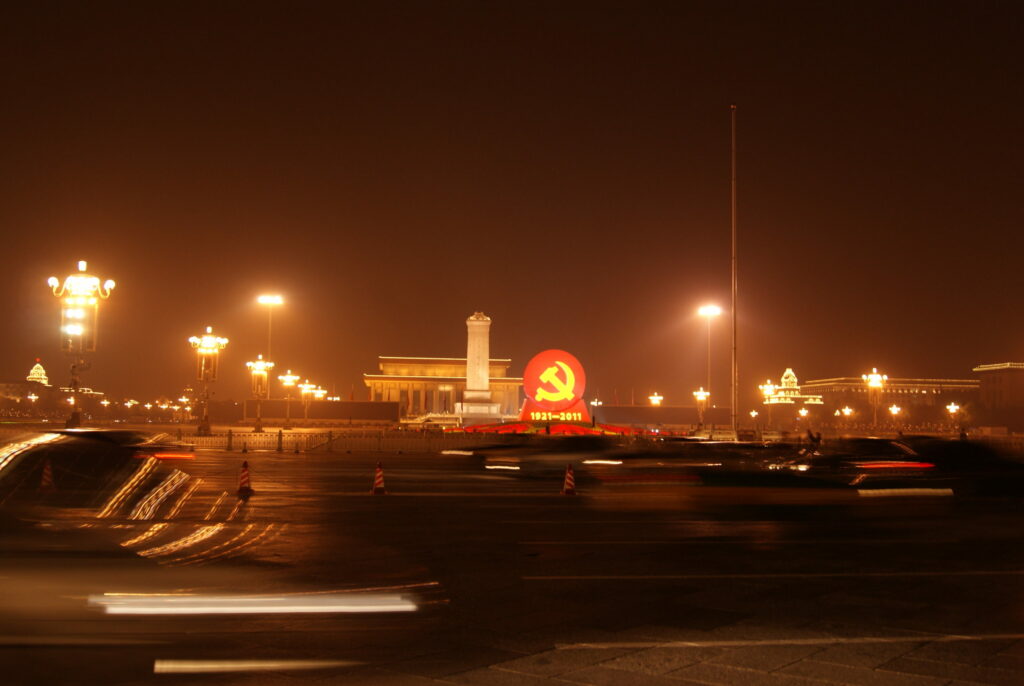
Xi Speech: China Returns To Brutal Totalitarianism and Seeks World Dominion

Chinese President Xi Jinping made a 100th anniversary speech on July 1 that set a new, more strident tone at home and abroad. Xi demanded loyalty, called for more militarism, threatened to return to a more Marxist economic system, threatened China’s neighbors, and called for the advancement of China’s totalitarian system around the world.

In essence, China is becoming as much an existential threat as the USSR, perhaps moreso because our country is so entangled with them economically and because our ruling class essentially want to be China, albeit with the corporate monopolies using the state and not the other way around.

Lest we forget, China’s Marxism is brutality at home and imperialism abroad, the aim being a global communist empire.

Missing from the festivities, as if celebrating totalitarian wokeness ala Mao Zedong is even possible, was the military parade. This may be a sign of growing disconent in the military ranks as, while being missing, the PLA was urged to show loyalty and devotion, which many mean this is a problem.

At home, Xi has been burnishing his image as a successor to Mao and has begun rolling back China’s liberalization of the economy and of any semblance of freedom. Arrests and a social credit system that suppresses dissent are all part of the Chinese system or absolute control. Many Americans of the woke communist variety can only envy Xi.

By this speech, Xi, in his effort to gain the support of the 95 million Party members who lord it over the rest of society, is signaling a fresh and open aggressiveness against internal and foreign foes on par with the worse days of the USSR.

Stocks in China and Hong Kong tumbled as news of the extreme language of the speech got out. Xi warned that anyone who tries to bully China “will face broken heads and bloodshed.”

It is often forgotten that China’s system is totalitarian Marxism. His own words confirm this view:

We must continue to adapt Marxism to the Chinese context. Marxism is the fundamental guiding ideology upon which our Party and country are founded; it is the very soul of our Party and the banner under which it strives. The Communist Party of China upholds the basic tenets of Marxism and the principle of seeking truth from facts. Based on China’s realities, we have developed keen insights into the trends of the day, seized the initiative in history, and made painstaking explorations.

We have thus been able to keep adapting Marxism to the Chinese context and the needs of our times, and to guide the Chinese people in advancing our great social revolution. At the fundamental level, the capability of our Party and the strengths of socialism with Chinese characteristics are attributable to the fact that Marxism works.

Of course there is nothing factual about Marxism and Marxism doesn’t work. China’s success is almost entirely to the credit of Western sycophants who traded short-term material gain for economic arrangements that benefited China at the expense of the American people. The “new model” for Marxism is not to just use the state but to proactively control and use the corporation.

China’s totalitarian vision with the triple threat of woke authoritarian platforms and their social credit system, the corporate and financial sector monopolism that serves the Party, and a ruthless state that labels dissent “domestic terrorism”, is envied by America’s ruling class.

But China is also announcing by this speech a drive for global empire, an international neocomm order controlled by Beijing, although puppets in “allied states” may be given autonomy. China seeks world domination, of that there cannot be any mistake.

China is returning to a more brutal totalitarianism and is moving outward toward a new communist imperialism aimed straight at the United States of America.


Have The Ruling Class Set The World On Fire?

The McAlvany Intelligence Advisor, which our publisher has a joint venture agreement with, published the top 10 “crises” being used to increase total control over our lives by the ruling class.

The crises include things like immigration, the pandemic, and other “crises” that threaten a world on fire from destroying all life, or something that dire. From bogeymen to scapegoats, each crises is a way to turn the screws and increase pressure and confusion.

Some of these crises may be wholly real but exploited, partially real but somewhat manufactured, or completely manufactured. All seem overwhelming and cry out for some sort of massive, centralized response at the national to global scale.

The McAlvany Intelligence Advisor details each and explains their use. (You will need to subscribe to the free starter kit to see the details.) Other items in this issue are equally informative and will fortify you with a more predictive analysis of future and emerging trends.

From a Freedomist perspective, in general, when we start hearing the drums beat in harmony from all sources about a “crisis”, we tend to become very wary and suspicious of what is happening. Even if the crisis is real, the proposed solutions are always meant to transfer more wealth and power from those who create it through work to those who do nothing but lord it over society.

If it always seems the world is on fire, this doesn’t mean it is. It may also just mean the ruling class have found a new way to scare and bully people into surrendering more of their agency and spiritual sovereignty as people made in God’s image to human rulers.

Prescriptions for overcoming these crises and finding gaps for freedom are the focus of much of our content. The way these crises are manufactured or hyped through massive indoctrination is a real cause of concern as, manufactured or not, each crisis tends to hurt real and innocent people.

Preparedness for the things the McAlvany Intelligence Advisor predicts, and they have a good track record of accuracy for over 45 years, is about more than stockpiles of supplies. Having good connections and relationships to people who have each other’s back and pursuing a path of independency through mutual self-reliance and personal financial and material sustainability, outside systems of influence and control, is vital.

The top 10 crises whereby the ruling class seek to control us need not become crises that harm ourselves and our families.

Disinformation Is Counter-Revolutionary, Version 2.0

The Soviet state was all about “protecting” people from “misinformation” because it was counter-revolutionary. The revolution was all good and everything not of the revolution was all bad and needed to be punished or banished, or exterminated. People who weren’t OK with all this were reactionaries, extremists, and traitors and all had to be canceled, as it were, from any place of good standing, sent to re-education camps, or eliminated.

What is disinformation? It’s whatever the rulers deem it to be. If they say a theory about the origins of a certain ailment plaguing society is misinformation, then you get canceled or banished for saying it. If later that misinformation proves to be accurate, they memory hole their first reaction and move on to the next things they deem misinformation.

Folks, welcome to Misinformation Is Counter-Revolutionary 2.0, where the Soviet state’s role is now played by the government and mega corporate monopolies, all working hand-in-hand to protect us poor slobs from anything that doesn’t support the ruling class.

If you are on social media platforms you have likely encountered this or you know someone who has. The effort to shun, shame, and bully people into towing the party line, or to banish those who won’t, is real. Unless you are slavishly devoted to the Party, a novel form of authoritarianism we can best desribe as corporate “woke communism”, you find the screws are turning against you.

The digital space is mostly governed by and for the benefit and advancement of the woke communists, by whatever name they call themselves. The end goal seems clear enough-suppress or remove any voices that conflict with their corporate aims, which also happen to be quite compatible with the woke communists.

But it’s not the digital space alone that is being impacted by this new breed of authoritarianism. The latest new US strategic vision for counterterrorism is to focus on the white supremacy bogeyman, and of course the definition for this domestic terrorism is essentially anyone who isn’t a woke communist or one of its corporate backers. Vague commitments to respect free speech are laughable. The ruling class desire more control and the woke communist ideology, ill defined and not at all identical to historic state-communism, is a convenient path to power. This new strategic vision for counterterrorism appear to hinge on terrorizing the dissenters.

The necessity of finding gaps for freedom, which are legal and technology-based solutions that make you more independent financially and materially, is becoming stronger. If you maintain dependency on the predominant structures, like social media or big finance, the corporate farm, and the such, it is likely your opportunity to be a free and spiritually sovereign person will shrink.

Fortunately, so far, the woke communists of our day aren’t yet taking to literally rounding people up on a mass scale and tossing them all into gulags. They are attempting to slow walk their revolution, every day showing new and more insidious, but not necessarily government imposed, restrictions aimed at “misinformation.”

It is true, there is a misinformation problem, and some of it isn’t the government and the corporate behemoths themselves. But most of it is coming from the very entities that spend the most time trying to find new ways to banish those they accuse of spreading this counter-revolutionary misinformation! The platforms acting as gatekeepers at the behest of the Democratic Party and the government really may fancy themselves as guardians against the hobgoblin of misinformation, but they are really just new Soviets and don’t even know it.

We must continue to work toward the emergence of new ways to connect and share information outside the control of the woke communist corporate backers. It is clear, their desire to control absolutely everything in the service of their authoritarianism is becoming greater. The woke communists, many of whom do not consider their view of the world to fit that description, have increasingly little tolerance for anyone who dares to spread what they call misinformation but what is really just opinions or facts that don’t support the Party Line.

Our response in part is this digital publication, The Freedomist, and our future platform, The Virtual Commonwealth of Upadaria, among other projects. We will build the digital gaps for freedom and we will use the existing platforms and digital space as best we can to draw an audience and present a path of freedom and prosperity.

We recognize that the woke communists are not all-powerful, many don’t even realize what spirit they are of, and that there remains many untapped gaps for freedom we can use to create and invent our way around their influence and control.

Support our efforts and become a subscriber! JOIN US NOW! CLICK HERE

Unique Perspectives Focused On Freedom and Prosperity For All

Predictable. That is what most other content providers are giving you. The ones to the right and the ones to the left all sound similar, most use the AP stylebook, which literally dictates what kind of words apply to different scenarios or rules about headlines.

(*As a brief aside, yes, we continue to use the Oxford Comma. Not using it makes no sense.)

If you have a true north pointed at freedom and prosperity for all, to some degree your content should be predictable, based in principle. But the predictability of most content today is more tribal: the right will rally around and defend anything they think is in their tribe, and so will the left. Likewise, everything associated with the other tribe is always bad. That’s not principled, that’s a shallow tribalism that shouldn’t inform a respectable digital publication.

Like his 1940 Ford restomod, Publisher Bill Collier combines old-fashioned and cutting edge in a unique way, all for your edification.

The Freedomist aspires to many things, which we hope to get better and better at. But when someone recently asked me what the value proposition of the Freedomist was right now, I said, “originality” and, at the same time, “consistency.”

The engaged audience for the Freedomist will find content that is true and inspiring that doesn’t even sound like everyone else’s content. We have a different style, in some ways more old-fashioned and in many others very future-looking. We tend to believe in the art of wordsmithing and the science of accurate reporting.

This content should show you new perspectives, and yet remain consistent with our core focus on freedom and prosperity for all, it should be original and unique, it should be inspirational and entertaining, and it should also give you concrete ideas you can use to become more free and prosperous yourself.

Our perspective is that individuals, marriages, families, extended families, communities of trust, and local communities are all the prime mover of human civilization. Mega corporations and the state are not, or, should not, be so powerful as to drown out these human scale structures which nurture us within warm and accepting relationships.

Above, screenshot showing Publisher Bill Collier’s interview with Mike Pence, back in the Dontgo Movement, which was the precursor to the Tea Party.

If we come off as conservative or to the right, it may be the tribalism of the left, which pigeonholes everything not of them, and not state-centered, as “to the right.” But in truth, the Freedomist, like you perhaps, doesn’t neatly fit into any of these molds. Our concern for issues of actual bigotry, intolerance, and injustice may not so easily fit the “right wing” epithet the left-authoritarians like to toss around so carelessly.

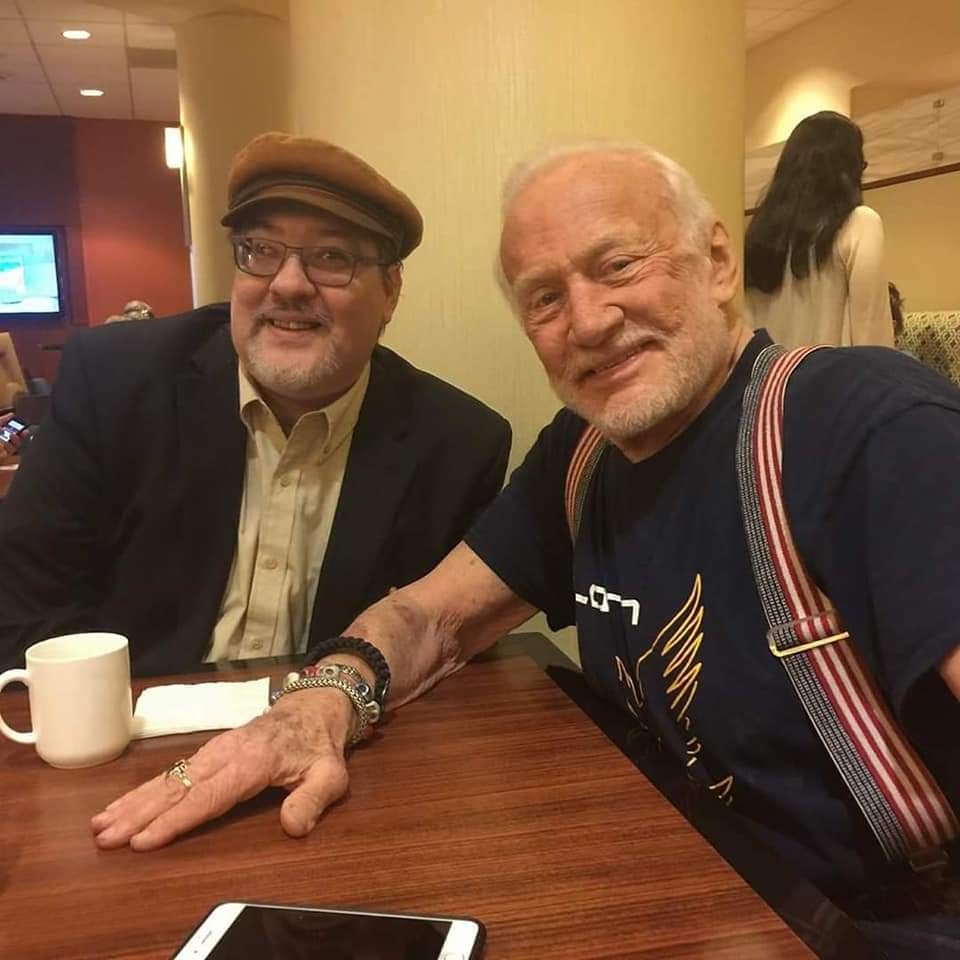
Publisher Bill Collier, having breakfast with Buzz Aldrin, a real American and global hero!

Who am I as the Publisher of The Freedomist and owner of both Regal Blue Media and Freedomist LLC’s? The short answer is I have been an intelligence analyst, newsmaker, newspaper publisher, marketing and PR professional and provider, activist organizer, minister, and author, among other roles. My unique perspective and experience, spanning 30 years, has given me an immersive and intimate knowledge and understanding of how things really are and my deep Christian faith and philosophical foundations has given direction to that experience.

Pictured Publisher Bill Collier on MSNBC

I have moved millions to vote this way or that, broke major news and exposed corrupt leaders, and sat with some of the most influential people in modern history. My vision for the future is one based on a firm desire and commitment to extend freedom and prosperity to all people. Whether this is by influencing policy or through just showing people better ways to increase wealth or make themselves more free, the idea is to do all I can, where I can, when I can.

Below: what others said about me and the coauthor of “The Capitalist Manifesto.”

Our model is subscription based. Our aim in this is to cut out any need to resort to mega corporate backing or to seek major donors or backers in exchange for loss of control. But beyond this, we hope, through such subscriber-based crowfunding to build a nationwide digital network of Freedomists who will work to find ways to advocate for and build freedom and prosperity in their own lives.

I have personally, and my brother Paul has also, been laboring to improve and develop the Freedomist product and brand since 2007. We remain essentially the same but more mature and wise, we hope you will agree. In all our interations and evolutions, we have always come back to the center, which is to advocate for and promote freedom and prosperity for all.

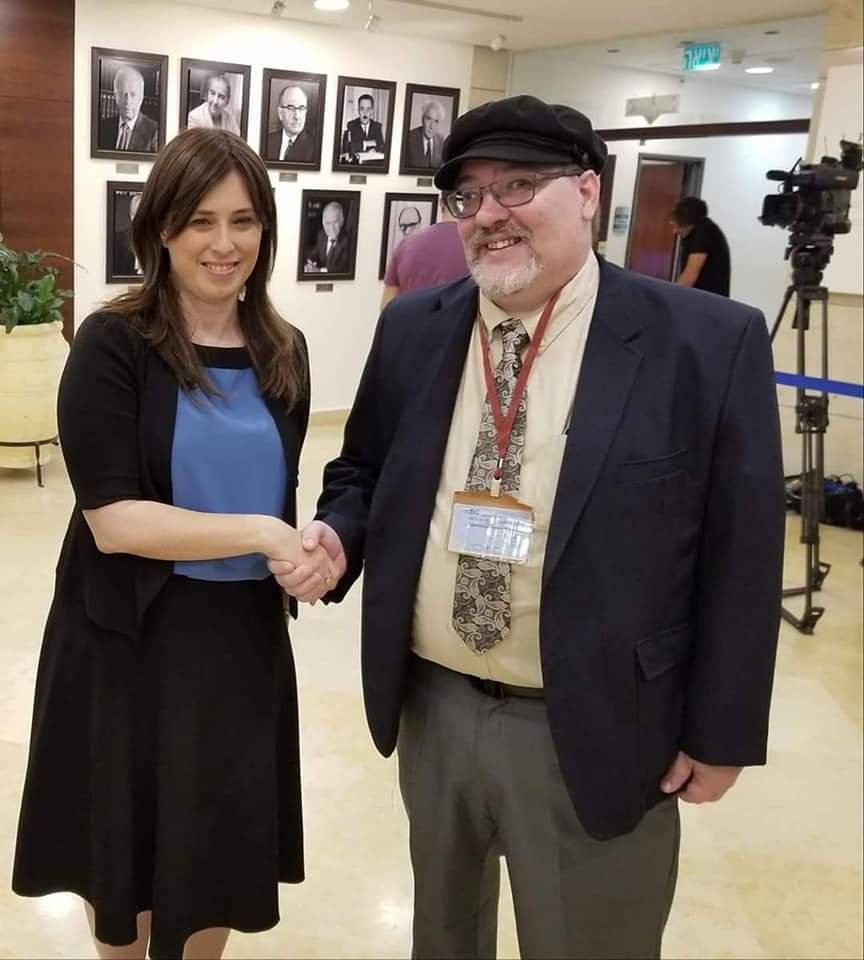
Publisher Bill Collier meeting in the Knesset with then Deputy Foreign Minister of Israel, Tzipi Hotovely, representing The Samaritan Medal Foundation.

For most of this time, the Freedomist has been self-funded through other business endeavors. But it is my desire to make it financially self-sustaining so we can focus more on content development and features development.

In the end YOU DECIDE if this content is worth at least $5.99/month or not. We think it is and we hope it is, but only you can say it is and decide to back our broader freedom-building efforts while getting interesting, original content that motivates, educates, and inspires.

JOIN US NOW

Starlink (Satellite Internet) Goes Live In Weeks

Elon Musk’s SpaceX is set to go live with a massive global network of small satellites providing internet to people in less developed regions in rural zones where internet service is lacking. The service will reach a level wherein they can confidently say they are reaching the entire planet, except for the polar regions, by August.

The network, with only 69,000 subscribers, is predicted to potentially gain 5% of the world’s population as its user base within a few years. Musk’s great hope is that the company doesn’t go bankrupt first, as this project will cost $5 billion to $10 billion before it reaches projected positive cash flow.

The service costs $99/month in the US and uses a network of 1500 satellites (and growing as new launches are ongoing) with a planned total of 42,000 by the end of 2021. To get a sense of scale, there are around 7400 total satellites in space, with a little over half being active and the rest being inactive.

A key innovation of the service is that, while current satellite internet providers have satellites at 22,200 MILES from the earth’s surface, Musk’s are only 342 miles. This means that the signal has less time to travel, decreasing latency.

Latency is the time it takes for your internet signal to travel from your computer to your ISP, to the website server, and then back to you. Longer latency can cause delays in live communications. While other satellite internet providers have a latency of around 500 to 600 microseconds, about half a second, Starlink has a latency of around 39.

Latency is a major hurdle satellite internet providers face.

The other is price. For instance, the price for Starlink in South Africa is 1,450 rand, around $99. So it’s not any cheaper in South Africa, which means for more rural Africans, it may be quite out of reach. The cost is the same in Nigeria, at 40,000 nara, which is $99.

Musk’s Starlink may or may not change the world, as it is claimed, and it won’t bring cheap internet to the poorer communities. But it will dramatically change our immediate space, adding over 35,000 new satellites, all in low earth orbit. Time will tell if this will become a major cause of space pollution and if the benefits or low latency, broadband satellite internet for the more well off in rural locations will be worth that price.

Political Prosecutions To The Right, Coverups To The Left

The myriad of federal and state laws and regulations individuals, let alone major corporate entities, have to follow mean it is impossible to follow them all unless you are a perfect human being. Basically this means we are all counted as suspects and if some prosecutor decides they want to take us down, they need only spend a few years and million of dollars to manufacture charges against us.

Based on the chicken-scratch “crimes” of not counting benefits properly and therefore not paying taxes on them, a New York political hack prosecutor has ginned up indictments against Trump Organization members and the corporate entity itself. The goal is to roast the victims until they offer something juicy to eventually put Trump in chains.

This is blatant abuse and this exposes how the massive, inarticulate, and confusing tax code, plus all the other codes, are not used to protect us but to hamstring us and make it easy to take us down when some hack gets a hankering for our hides.

To the right, as in to anyone on the right who becomes a vocal critic of the left, it’s all political prosecutions based on the smallest violations of laws and regulations none of us can possibly follow. But, to the left, even when laws are blatantly violated, as in Hilary Clinton’s illegal private server, the cover-up is in force, officials and prosecutors seek only to make it all no big deal.

One wonders how all this will play out, whether the intended victims, anyone to the right of Marx it seems, will take this lying down. If indeed a former President and billionaire can be taken down on some petty and inconsequential charges, when the likelihood every lefty billionaire is doing MUCH WORSE every day, then who is safe?

The need to destroy Trump is really a desire to put the rest of us in our place.

But will we go quietly into the night?

The Next Digital Revolution

The decentralization of digtial platforms into an interconnected network of diverse niche communities with deep immersive experiences is web 3.0 and it is coming, whether the technocracy likes it or not.

This is not about the fears of tech censorship or tech bias, this is about the emergence of smarter, more robust technologies and the natural human desire to cluster around and with people who they easily identify with. The natural tendency for people is to want to cluster with people who share something of deep value, be it a belief system, values, lifestyle, interests, skills, or really anything that touches you at the level of identify.

What does this mean, “touches you at the level of identity?” Basically, it’s something so special to you, it is felt and often expressed as if it is part of your identity. I may say, “I am a military collector”, which is different than saying, “I have some military items in a collection.”

In web 2.0 we saw the emergence of meta platforms predicated on the cocnept of an open internet and free speech. While some clustering occurred, basically, they were wide open spaces where almost anything was allowed. Then came web 2.5, almost in some ways a seeming devolution, but in reality a precursor to web 3.0.

In web 2.5 the people paying the bills, the big money people of the corporate world, started worrying about brand friendliness. Also, policy-makers worried about content that was hateful or false and some worried more about decency. Users were overwhelmed with things they didn’t necessarily like or want to even see at all.

What were essentially wild west platforms that focused on attracting everyone of every interest on a more shallow relational basis now found themselves having to engage in much tighter governance. You see, the more you try to control or limit content, the more standards and fact-checking you create, the more difficult and expensive it is to run these platforms.

Good governance requires more than spitting out standards and fact-checking norms. It requires human-powered governance, as in actual people providing governance. But the response to bottom-line conscious platforms is to use algorithms and robots to replace humans, and of any group of people gang-report content, even of that content isn’t what they say it is, a seeming arbitrary suspension or ban takes place.

Governance is way beyond “moderation”, it is guidance and support to participants, treating them like adults and with dignity, and giving them support, not just deciding whether to ban them! Web 3.0 governance will be much more transparent and participatory than anything we have seen before.

We propose that people don’t want to be enmeshed into a virtual community or platform that has content or characters they find disagreeable. The public demand for free speech platforms may not be what some think it is. Nobody has done a study to see what exactly people like, but what we can see is that free speech platforms, while they have an audience, are not capturing any major market share.

This doesn’t mean free speech platforms aren’t desired by enough people to potentially make them viable. They can be viable, but they cannot be the predominant virtual community.

We don’t have a market research study showing exactly what kind of online environment people will tend most to favor. But we all know the human tendency to form cliques and to cluster with people of some like identity and affection. People tend to look more for affirmation than for things that challenge their beliefs, for instance.

The problems with both the meta platforms that started as one thing and are trying to become another and with the free speech alternatives may come down to the issues of governance, it being expensive, brand safety, because as free platforms they need mega sponsors, and this tendency humans to essentially seek affirmation and support from people they identify with.

On one hand, people want to cluster with people they identify with. On the other hand, they want to connect with people more broadly and to express themselves to the world at large. That being said, many just want to be entertained and to have affirmation in the process, they don’t really want or need broader connections online.

Web 3.0 has to both provide these more niche communities people can participate in, and, we predict, they will desire a more immersive experience with participants engaged in all aspects of the community, from content curation to governance. The wall between administration, governance, and participants (as opposed to “users”) will become more blurred: participants will become stakeholders.

While these niche communities will be necessary, it will also be necessary for tomorrow’s netizens to have a way to gather content and data from multiple places in one dashboard and to be able to push content through that dashboard to multiple niche communities or to free speech communities.

Common standards for connecting these communities through API hooks or many other means will emerge and various providers may supply dashboards for people to connect to all these niche communities.

We also foresee that the era of mostly free platforms paid for mostly by mega corporate sponsors will give way to a mostly paid subscription model as participants, again, instead of just users, take control of their data and advertisers focus more on placing their content in PLACES likely visited by their demographic than through serving content across all the virtual spaces to specifically targeted individuals.

The issue of advertising online in the future is a bit off subject, but is somewhat related. Advertising isn’t going away, but the halcyon days where anyone without real advertising smarts could use intimate user data to easily send their content to exactly the right person may be over. The old tried and true methods of scientific advertising targeted to places where your demographic are likely to be found will rule again. The lazy marketer who only knows how to use computer-assisted audience selection will struggle.

Who knows if this sudden stripping of access to that kind of user data will continue. The pressure by the corporate advertisers may be immense, unless they find the new environment actually makes it harder for smaller advertising and would-be competitors to engage.

We envision web 3.0 will be dominated by a decentralized web of mostly niche communities but a few major providers of something like a dashboard that allows people to connect to multiple spaces more conveniently. We foresee these communities will be more immersive and participatory and the line between administrators, governance staff, and participants will be more blurred.

Demand A Right to Self-Preservation, Not Just “The Second Amendment”

The Second Amendment debate is wrapped around the axles a reinterpretative legalism and history revisionism, with both sides claiming absolutely that the framers of the Bill of Rights meant precisely what they mean. Getting lost in this word salad thicket of contradiction and wishful thinking sidesteps the deeper truth, a truth which is more sublime than the Second Amendment and which questions the entire basis of the Westphalian order of the nation-state as the prime mover in human civilization.

Let us assume we must craft a legal standard akin to the Bill of Rights which is considered so inviolate that even attempting to pass a law or policy against its standard of justice is considered at least a misdemeanor worthy of permanent disqualification from holding public office or even holding the voting franchise.

To what authority or standards of reason, logic, or justice do we appeal? Ultimately, we are forced to make a priori assumptions amenable to most everyone. As even the Declaration of Independence says, “we hold these truths to be self-evident that all men (*they meant all HUMANS) are created equal” and that they are endowed by their Creator (whether you calls that Creator God or natural evolution) with certain “inalienable rights”, among which “life, liberty, and the pursuit of happiness.”

This is all a priori assumption. Our 21st century declaration of independence might begin thus:

“We hold these truths to be self-evident that in advancing the cause of a free and pluralistic society, which is our natural human state as ordered by the Universe, all human beings are created and deemed by law and custom to be equal in value, worth, dignity, and right and that they are inherently endowed with inalienable rights including life, liberty, self-determination, self-preservation, self-expression, and freewill participation through mutual agreement along with the inherent sovereign power to protect their sacred rights, persons, and property from hazards and harms, official or unofficial, foreign or domestic.”

We would further add that each individual elector owns a right to freely participate in the powers of petition, election, initiative, redress, and recall and to have and form their own families, extended families, free associations, communities of trust within a fraternal bond, and national communities as autompmous sociocultural and socioeconomic core constituent entities within our diverse and pluralistic commonwealth.

Again, these are a priori assumptions one either believes or does not believe. But the problem here is that if one believes these assumptions are true then believing thus does no harm to those who disagree, unless the freedom of others grieves them, while those who disagree and wish to deny such freedom must necessarily coerce the Freedomist into compliance.

The Freedomist imagines a world of diverse sociocultural and socioeconomic structures and communities, expressing nationhood in diverse ways but within a common standard of a sort of meta-nationhood based on a Freedomist standard of justice and peace. The anti-freedomist sees a world of much more narrow restrictions because they don’t really trust the freewill choices of others. They can easily disregard these so-called rights, except perhaps in a most narrow, restrictive interpretation.

President Biden’s assault on the Second Amendment, while also factually wrong in its claims gun control and restrictions on weapons were present “from the beginning”, is a radical anti-freedomist. His interpretation and understanding of the Second Amendment makes a hash of the basic right to self-preservation.

The Bidens of this world have a normative view of society: they imagine something in theory and assume they can use the law and public policy to make it so. Freedomists tend toward a more descriptive view of society based on nature, human nature, and the laws of cause and effect and then seek policies that contribute the most to the individual and common good and that reflect this framework of reality.

The right to self-preservation is an a priori assumption. You either think each person and then their primary communities of trust is the prime mover of human civilization therefore owns a right to self-preservation or you do not.

But were we to assume that this right exists and were we not using the legalism of the Second Amendment debate to frame it, but only our a priori assumption, what would our concept of an inherent right to self-preservation look like?

We will make the assumption, which seems logical and fits with human nature as it is, that as self-preservation cannot solely be achieved as a lone individual against any save a few other people, it stands to reason this right is, uniquely among any others, a corporate/collective right that is shared among a body of people. Again, it no more matters to us the ideological or legalistic intent of the framers of the Bill of Rights than it mattered to them how the framers of the English Constitution intended their (unwritten) provisions.

We often say we defend liberty as defined by the original spirit and intent of the US Bill of Rights, and as to the Second Amendment, the spirit and intent is deeper than the legalistic interpretation according to the Courts.

We claim that the right to self-preservation is in fact an inherent right owned by the electors in any given commomwealth and this right applies to the individual, their primary community of trust, and the other constituent entities of the commonwealth. Moreover, we claim, regardless of the legal reading and interpretation, that this understanding is far more consistent with the original spirit and intent of than the way Biden interprets it.

The practice of this right can occur at the individual level, but, we propose, as it is also a shared right, its implementation necessarily differs based on the scale of its practice. Basically this means how one practices this right, even what weapons one may access or prerequisite for their use, might differ. Those who argue whether this is alone an individual right or a alone a collective right, miss the spirit and intent of the right to self-preservation, which is all of these things at once.

The inherent right to self-preservation also runs up against a novel of the Westphalian nation-state concept. This novelty is predicated on the notions that the state is the prime mover in human civilization, that nationhood is best expressed and preserved in the form of a national state, and, therefore, that this state is the primary bearer of arms and owns a monopoly of force beyond the limited individual right to self-preservation.

The Peace of Westphalia of 1648 set this course and never has the idealistic promise of an international order of such nation-states been achieved. To be sure, if all national peoples who were large enough to be able to sustain themselves, and if different smaller nations of people formed confederal unions for mutual support, we might have a world of over 1000 nation-states or national comfederal unions, and that might be ideal.

But in the 21st century we have multiple ways to express sovereignty and to form sociocultural and socioeconomic bonds with people from around the world. The very scope of nationhood and sovereignty goes well beyond the old limits of geography, ancestry, distance we can travel, and ease with which larger associations can be formed.

We often call ourselves “nationists” instead of “nationalists”, because our concept and practices of nationhood transcend this 17th century civilizational paradigm, the Westphalian nation-state. A nationist believes every national people have a right to self-preservation and includes within the scope of alternative forms of sovereignty, such an enhanced NGO, fraternal benefit societies, domestic fraternal nations, and tribal entities, among other structures.

The idea that the “state” has a “monopoly of force” is inconsistent with either an individual or a shared right to self-preservation. While it is understandable that the scope of the means of self-preservation may vary between individuals, local communities, free associations, and the state and its subdivisions, in general, we hold that the right to self-preservation is inviolate.

We will not delve too far into our conception of this distributed magisterial and imperial mandate, which basically means that the state cannot ever be considered to hold a monopoly in such matters, beyond saying, for instance, a “tribal” structure like a society would not have nuclear missiles, but it (along with community constabulary companies) would likely have anything equivalent to a light infantry regiment, and an individual may have more limitations still, especially if they are not part of a local constabulary company.

Again, setting aside the argument as to the legal definition and meaning of the Second Amendment, which we see as an individual AND a shared right, we see the right to self-preservation as something that includes a responsibility. In essence, access to certain means of self-preservation may require some form of participation in local or other forms of mutual self-preservation, e.g. a local constabulary company (like the militia of colonial America but not like the private militia groups of our day).

We then move on to a ticklish issue: who has a right to keep and bear arms? In general, again, setting aside the present legal structures and laws, we tend to see a separation between mere citizenship and electorship. Electors are stakeholders who earn their status through merit alone, everyone is free to become an elector regardless of race or gender, so long as they adhere to and uphold the country’s charter and something like the Bill of Rights.

The ability to determine who meets this requirement is critical to the preservation of a country and its constituent nations of people. The abuse of this concept, for the purpose of preventing blacks in the south to vote, is morally repugnant. But this racism is most definitely NOT part of this idea: electorship should be earned, not assumed by birth or residency, and it should both be open to all and access to the means of gaining qualifications for electorship should be freely available to all without cost.

The concept of electorship is not part of the present American system and nor will that ever likely change. But the concept of electorship informs our view of self-preservation. The state does not own a monopoly on force, we strongly oppose that archaic notion! But the body of people, in the form of their diverse national societies (societies based on a nationality) and local communities, as well as the state and its constituent entities, as stakeholders, do own a monopoly on force.

In practical terms this means that while citizens own a right to self-preservation at a basic level, they do not have the same level of access to the means of self-preservation as the electors and their corporate bodies or the state.

Again, we are talking theory here, not prescribing policies or laws for America. What we are saying is that the right to self-preservation transcends the Bill of Rights and is both individual and corporate and includes, we think, the right for local communities in an egalitarian constabulary and of private societies based on shared nationhood, to share the monopoly of force with the state.

The workarounds for this may be forming local community policing initiatives which transform the hired police into a mostly voluntary constabulary force, the use of private security cooperatives, efforts to lobbh states to create local state-funded civil defense groups, and a robust defense of the Second Amendment.

As to this concept of electorship, it seems a good idea this country will never adopt, but it does explain our stance on self-preservation as an individual and shared right that comes with responsibilities.

As with most Freedomist ideas, our approach here is mostly on things we can do within existing frameworks to actualize our ideas and convictions. Private efforts like outdoors, hunting, and fishing clubs and security cooperatives coupled with promoting Freedom Sanctuaries and reforming local policing (community policing through a citizen’s constabulary) do not require a change in federal laws or the Constitution can fulfill in spirit this concept of self-preservation.

Heirs Of The Puritans- A Planned Christian Fraternal Benefit and Missionary Society

The Puritans get a bad rap partly through myth and partly through genuine mistakes, but we believe the spirit and intent and the arc of their history show forth a path to progress toward a truly Christian society ruled by the great governing principles of the Kingdom.

The Puritans sought as pure and true a manifestation of a Christian lifestyle as possible, supported by a close network of religious, social, cultural, and economic as well as civic, civil, and magisterial structures. The individual within a nuclear family was to be supported by an extended family, the local town or township, and the whole “plantation” (colony) of neighboring towns and villages.

The Puritans, a product of their time to be sure, did not differentiate between those who chose to “make covenant” with them and those who merely lived among them but who might not share their views and convictions. This aspect of the Puritans actually led to their decline and disappearance: by making their entire program a product itself of the state, when the state turned away from its Puritan roots, the Puritan program ended.

But the desire to build a Christian society with its own material support structure is still a viable dream even in this day and age. The means of obtaining that have broadened and no longer require, or justify, the use of a state and its coercive agency to implement. Legal structures such as a faternal benefit society, a land trust, mutual benefit corporations, mutual assurance funds, cooperatives, credit unions, and clubs are all based solely on freewill participatory and involve no coercion and no intolerance toward others.

The vision of the Upadarian Society of America (a planned Christian fraternal benefit and missionary society) is in part inspired by and is the in the direct spiritual lineage and continuation of the Puritan dream, which was to create a materially self-sustaining Christian society. Unlike the Puritans, the plan and design of the Upadarian Society of America is to do all of this through freewill participation and within a larger decentralized framework of governance, including a plurality of leadership, egalitarian structures, and autonomous local chapter communities.

Abandoned are the legalistic traits, but not abandoned is the desire for purity in faith and virtues that nurture life and happiness.

The Upadarian Society of America will more or less, in its design, themes, and structure, resemble in spirit something akin to an indigenous tribe, with Upadarians being patriotic Americans who adopt a shared, intentional nationality based on a way of living and common purpose embraced freely by its Peers. In some ways, Upadarians represent a continuation and modern evolution of the Puritan Tribe, as it were. (Though we cannot forget our strong roots in William Penn’s vision.)

(Note- the Upadarian nationality is intentional and global, Christians of any race or ancestry and of any denomination can adopt this nationality without joining any Upadarian Society.)

This idea represents a scaled-up version of a distributed intentional community of people, connected in freewill participatory association for mutual benefit and to achieve shared goals, namely to promote and practice Christian kinship for obtaining real financial and material independence, to practice missional living and support a holistic world missions effort, and to both provide refuge for ourselves and to fellow Christians and others in crisis.

In practical terms, participation in this Society will provide a more extensive nationwide support structure for Christians pursuing material independency within a decentralized and egalitarian structure that supports, as opposed to lording it over, the individual. But more than that, it continues the Puritan dream, learning from their successes and failures, for a truly Christian society that not only glorifies God but is a witness and influence to the nations.

As a Christian fraternal benefit society, with a focus on kinship, missions, and refuge, the Upadarian Society of America will enable and equip Christians of every race and denomination to be part of a Christian society, to practice independency, and to be an effective witness and influence for Jesus to other people.

In no way would this Society seek anything more than to be free to pursue its shared vision and way of life in peace through freewill participation by its Peers in a decentralized structure of mutual benefit and support.

This is a vision for a nationwide structure that will engender maximum local, autonomous developments and distributed communities that serve Peers of the Society, fellow Christians, and fellow Americans. Patriotic as Americans, sincere as Christians, the Upadarian “nation” of people will foremost seek to serve and glorify Jesus Christ and then our country, America.

Main

Back FREEDOM for only $4.95/month and help the Freedomist to fight the ongoing war on liberty and defeat the establishment's SHILL press!!

Are you enjoying our content? Help support our mission to reach every American with a message of freedom through virtue, liberty, and independence! Support our team of dedicated freedom builders for as little as $4.95/month! Back the Freedomist now! Click here