Long a staple of science fiction, Directed-Energy Weapons (DEWs) are rapidly becoming a reality in modern warfare. These advanced weapons emit focused energy in the form of lasers, microwaves, or particle beams, promising to revolutionize military operations. While experiments with directed energy began as early as the 1930s, the term “LASER” (Light Amplification by Stimulated Emission of Radiation) only emerged in 1960 with the invention of the first laser by American engineer and physicist Theodore Maiman.
Theodore Maiman, on the 25th anniversary of the invention of the laser, 1985. Los Angeles Reader Photo. CCA/4.0 International.
Since Maiman’s groundbreaking work, laser technology has revolutionized numerous fields. In our daily lives, lasers are ubiquitous, found in CD/DVD players, barcode scanners, fiber-optic communications, and various medical treatments. From precision measurements to advanced manufacturing processes, the impact of laser technology on modern society is difficult to overstate.
Military applications of laser technology have been equally transformative. As early as 1962, the U.S. military began developing laser-guided targeting systems. By 1967, Texas Instruments had developed the world’s first laser-guided, “smart” bomb, the BOLT-117. This innovation marked a significant shift in air warfare, moving from mass bombing raids with high casualty rates to precise, targeted strikes that minimize collateral damage. The ability to guide munitions with pinpoint accuracy has not only increased military effectiveness but also reduced civilian casualties and collateral damage in combat zones.
BOLT-117 aircraft bomb in the Hill Air Force Base Museum. Photo by Wikimedia User Wilson44691. CCA/1.0 Universal.
In the realm of surveillance and reconnaissance, LIDAR (LIght Detection And Ranging) technology, first developed in the 1960s, has proven invaluable. LIDAR can create highly detailed 3D maps, even penetrating dense vegetation to reveal hidden structures. This capability has profound implications for both military operations and civilian applications. In warfare, LIDAR allows for precise terrain mapping and the detection of camouflaged targets. In the civilian sector, it’s crucial for autonomous vehicle navigation, urban planning, and environmental monitoring.
Despite these advancements, the development of combat-ready DEWs has faced significant challenges. The U.S. Navy’s AN/SEQ-3 Laser Weapon System, installed on the USS Ponce (LPD-15) in 2014, was the first publicly deployed DEW. Designed to counter small UAVs, missiles, and boats, it represented a milestone in DEW development. However, issues with recharge times and beam coherence led to its replacement in favor of the Lockheed-MartinHELIOS (High Energy Laser with Integrated Optical-dazzler and Surveillance) system – currently fitted to the destroyer USS Arleigh Burke (DDG-51).
The U.S. Navy’s AN/SEQ-3 Laser Weapon System (LaWS) aboard USS Ponce (LPD-15) Laser while deployed to the Arabian Gulf in 2014. U.S. Navy photo by John F. Williams. Public Domain.
The HELIOS system represents a significant leap forward in DEW technology. With double the power output of its predecessor, it promises improved performance against a wider range of threats. The system’s integration with the Aegis Combat System on the Arleigh Burke-class destroyers demonstrates the Navy’s commitment to incorporating DEWs into its existing defense architecture.
U.S. Navy fire control team aboard operate the AN/SEQ-3 Laser Weapon System (LaWS) aboard USS Ponce (LPD-15) during an operational demonstration in the Arabian Gulf in 2014. U.S. Navy photo by John F. Williams. Public Domain.
The primary obstacles in DEW development are bulk and power requirements. While progress has been made in reducing system size, power technology lags behind. The slow recharge times of capacitors remain a significant hurdle, though ongoing research promises future improvements. Scientists and engineers are exploring various solutions, including advanced battery technologies, super-capacitors, and even compact nuclear power sources for future DEW systems.
Another challenge facing DEW development is atmospheric interference. Lasers, in particular, can be affected by moisture, dust, and other particulates in the air, potentially reducing their effectiveness over long distances. Adaptive optics and beam control technologies are being developed to mitigate these issues, allowing for more consistent performance in varied environmental conditions.
Despite these challenges, the potential benefits of DEWs are substantial. In conventional warfare, ammunition can occupy up to 50% of an army’s logistical capacity. DEWs could significantly reduce this burden, revolutionizing military logistics. With theoretically unlimited “ammunition” as long as power is available, DEWs could dramatically extend the operational capabilities of military units in the field.
Moreover, as space becomes an increasingly important military domain, the low mass-to-effect ratio of DEWs makes them particularly attractive for orbital and anti-satellite operations. Traditional kinetic weapons are less suitable for space warfare due to the risk of creating debris fields that could endanger friendly assets. DEWs offer the potential for “clean” space combat, disabling enemy satellites without creating hazardous space debris.
The strategic implications of DEWs extend beyond their direct combat applications. Their potential to alter the balance of power has sparked a global race in DEW development. Nations worldwide are investing heavily in this technology, recognizing its transformative potential in future conflicts. This has led to concerns about a new arms race, with countries striving to gain a technological edge in directed energy systems.
As DEW technology matures, it raises important questions about the nature of future warfare. Will the advent of these weapons make conflicts more or less likely? How will they affect military strategies and international relations? The potential for DEWs to serve as both offensive and defensive systems complicates traditional notions of deterrence and military balance.
Furthermore, the development of DEWs has implications for international law and arms control agreements. Current treaties may need to be revised to account for these new weapons, which don’t fit neatly into existing categories of conventional or non-conventional arms. The potential for DEWs to cause temporary or permanent blindness in humans has already led to restrictions on certain types of laser weapons under the Protocol on Blinding Laser Weapons.
The ethical considerations surrounding DEWs are also significant. While they have the potential to reduce collateral damage compared to conventional explosives, concerns remain about their long-term effects on human targets and the environment. The possibility of DEWs being used for crowd control or as non-lethal weapons such as the Active Denial System (ADS) also raises questions about potential abuse and human rights implications.
In addition to combat applications, DEWs have potential uses in other areas of defense. For example, high-powered microwaves could be used to disable electronic systems, providing a non-kinetic option for neutralizing enemy capabilities. This could be particularly useful in urban environments or situations where minimizing physical damage is crucial.
Research into DEWs is also driving advancements in related fields. The development of high-energy lasers, for instance, has led to improvements in materials science, optics, and power systems that have applications beyond the military sphere. These technological spillovers could have significant impacts on civilian industries and scientific research.
In conclusion, while the path to operational DEWs has been long and costly, the potential payoff appears to justify the investment. As technology continues to advance, we can expect to see more DEW systems deployed in various military contexts. Their development represents not just a new class of weapons, but potentially a paradigm shift in how wars are fought and deterred.
As we stand on the brink of this new era in military technology, the implications for global security and warfare are profound and far-reaching. The successful integration of DEWs into military arsenals could reshape battlefield dynamics, alter strategic calculations, and influence geopolitical relationships. However, realizing the full potential of these weapons will require overcoming significant technical hurdles and addressing complex ethical and legal questions.
War is space is coming. That it has not yet happened is more due to luck than anything else; international pronouncements to the contrary, functional anti-satellite weapons have been long-deployed, although they have not been used in an active conflict to date. In space warfare, mass-to-fuel ratios will be the dominant factors: anything that reduces mass is well worth the developmental expenses. Destructive laser weapons systems, while not yet “ready for primetime“, are almost to the point of active deployment to the battlefield.
The story of directed-energy weapons is still being written, and the coming decades will likely see rapid advancements in this field. As with any transformative military technology, the ultimate impact of DEWs will depend not only on their technical capabilities but also on how they are employed and regulated in the complex landscape of international relations and conflict. The age of energy weapons is upon us, and its effects will resonate far beyond the battlefield.
It is not “war cheerleading” to promote the development of new weapons systems – like it or not, for all of the research on these weapons in the West, there are plenty of other nations which are working just as hard on the same systems, for the same reason.
The Freedomist — Keeping Watch, So You Don’t Have To
NOTE: As we take this article to press – on Friday, July, 19, 2024 – a major cyber event is developing, affecting Windows OS machines running the CrowdStrike antivirus software. At press time, it remains unclear as to whether this is a simple software glitch, or if it is a deliberate attack.
One of the most popular terms in the military sphere of late is “information warfare” (IW)…but, what is that, really? Simply out, information warfare is the use of information and communication technologies to gain competitive advantages over opponents. In short, it is the use of broad categories of inforamtion gain advantages.
For propaganda centuries, competing states have used various forms of propaganda (well before the term was invented in the 1920’s), it was not until World War One that Edward Bernays developed the first rudimentary principles of what would become the modern fields of psychological operations (psyops), propaganda, and what I term “directed deep-fake operations“.
With the rise to dominance of increased connectivity and a vastly enlarged reliance on digital systems, for everything from simple communications to to critical financial transaction systems, information warfare is now a critical, and growing component of national security. Finding ways to “attrit” such systems, whether via a more stealthy, long-term approach of systems infiltration or through a sudden, all-out assault, is now a major focus of top-tier national armed forces.
Like all of the many areas of warfare, modern information warfare has its unique shapes, spaces and requirements. Information warfare is now far more than creative fake newspapers, propaganda posters and leaflets:
A. Cyberattacks and hacking target critical government and military systems.
B. Disinformation and propaganda are used to spread false or misleading information, specifically targeted to influence public opinion.
C. Social media manipulation uses platforms from Facebook and Instagram, to TikTok and Minds to amplify directed messages of misinformation and fake news in order to create “echo chambers“, which pigeonhole unwary readers into believing a wholly fictional version of reality.
D. Critical to these operations are the use of “deep-fakes” and AI-generated content to create convincing fake videos and audio to mislead or discredit. These videos originally began by digitally grafting the faces of various celebrities onto pornographic videos – because Rule 34 is real – and moved on to spoofing major media and political figures…these tools have only improved in recent years.
There are, of course, many actors involved in making this type of warfare viable. Variously, there are three basic groups actively engaging in these operations: state-sponsored groups deployed by governments to run campaigns designed to influence foreign populations by reshaping their views via mainstream and social media spaces; these also frequently serve to destabilize adversary powers. This is one of the many responsibilities of the Central Intelligence Agency’s “meme division”.
Non-state actors (terrorist groups, “hacktivists”, and other organizations, best lumped together as “anarchists”) use the same information warfare tactics as the state-sponsored groups, but use them for strictly criminal, money-making scams, or as mercenary groups to supplement the state groups in their operations, as has happened in recent years, specifically with Iran’s response to the STUXNET attack of 2010, that seriously damaged Iran’s nuclear material enrichment facility in the city of Natanz.
The main tools being used to facilitate the various operational avenues of attack in information warfare are “bots” and “troll farms”. These vectors employ automated accounts and organized groups spreading content and engaging in online discussions, that are increasingly being driven by ever-improving Artificial Intelligence (AI) algorithms.
Aside from the social media manipulaton sphere, which is best defined as a “soft attack strategy”, the primary attack modes use viruses and “hostile” AI to target critical infrastructure systems to attempt to disrupt power grids, financial systems, hospital operations, local police and fire response systems, water distribution and treatment systems, and other vital services. This is, in fact, the door that was opened by the STUXNET attacks, because that virus – rather than directly attacking the core programming, specifically targets the programmable logic controllers (PLCs), which allow the automation of electromechanical processes such as those used to directly control machinery and various industrial processes, including gas centrifuges for separating nuclear material, as happened in Iran in 2010.
Globally, various hostile vector systems are used to influence national elections, by attempting to sway voter opinions unnaturally and to undermine electoral processes, although this requires a targetable infrastructure in the target country that allows for manipulation of votes and vote counting through electronic means. Economically, consequences include manipulation of both local and global markets, theft of crucial intellectual property, and significant disruption of business operations, both at the street level, but also the operations of major, “blue chip” companies.
Socially, a dedicated “soft strike” IW campaign can exacerbate even long-dormant divisions within a country and its societies. the exacerbation of existing tensions and/or the creation of new conflicts within populations can have horrifying consequences; Rwanda and the breakup of Yugoslavia, while not directly the result of IW campaigns, come immediately to mind. Information Warfare campaigns often result – intentionally, or not – a serious erosion of trust through declining confidence in media, government institutions, and information sources.
Counter-measures and defensive strategies, to date, are haphazard, with their effects being difficult to measure accurately. Government initiatives, such as the creation of cybersecurity agencies and information warfare units, are themselves frequently seen as suspiciious by those government’s own populations, as are various “media literacy” programs, that seek to educate the public in how to identify and resist disinformation. In this, of course, the governmental responses are fighting against frequently subtle and hard-to-argue points, limiting their effectiveness.
In the private sector, responses such as the development of AI-powered detection tools and enhanced security measures are ongoing. However, these tools and their value remain murky, as the companies deploying them are loathe to talk about them in public, as their very existence depends on those tools remaining secret.
International cooperation through the sharing of intelligence and joint operations to combat threats is also hard to measure, for the simple fact that those measures are also hazy in their effects, at least for the general public, as intelligence agencies and armed forces – for reasons similar to the private sector – are loathe to reveal their operations publicly.
As Information Warfare continues to adapt to new technologies and societal changes, the paramount importance of highly responsive adaptability means that defensive strategies must constantly evolve to meet new threats, in real-time. Global cooperation is needed for nations and corporations to establish norms and combat information warfare effectively. In this, these groups will need to find methods to share their defense strategies…which is a very difficult thing to do for thee groups, even on a good day.
All too frequently, people resort to pithy and catchy buzzwords and phrases to disguise the fact that they really have no idea what to say, but have to say something. We’ve all heard examples: “streamline virtual portals”, “strategize cross-media interfacing“, “maximize enterprise users“, etcetera, etcetera, ad nausea. Sadly – we’re way past ‘alarming’ – militaries, especially in the West, are no different.
For military forces in most parts of the world, sounding trendy is necessary to keep money flowing from their civilian leadership. Thus, at budget time, military leaders tend to appear in front of civilian bureaucrats – most of whom know absolutely nothing practical about anything ‘military’ – with new and scarily indefinable concepts to keep the money spigot turned on. In this, while the military generals and colonels are technically lying, they are doing so because whatever threats their nation may be facing, those threats are not changing very much or very quickly (mostly), but politicians live to be “ahead of the game”, and tossing out buzzwords on the Sunday morning talk show circuit to show how up-to-date they are. And don’t be fooled: the politicians the generals hate the most are not civilians, but those military veterans who go into politics, because they are far less susceptible to Buzzword Bingo.
But, I digress.
Of late, one of the major buzz-terms has been “Hybrid Warfare”. Sounds concerning, right? But what is “hybrid warfare”, exactly? The official NATO definition is, itself, loaded with buzz terms. Simply out, “hybrid warfare” is the combination of “conventional warfare” (i.e., the current war in Ukraine) with all the other stuff: guerrilla warfare, psychological operations and propaganda, “information warfare” (itself, a buzzword), low-level drone warfare, and on and on…essentially, the combination of all the means of waging war, if deployed all at once or even in pieces, is “hybrid warfare”. If this sounds familiar, that’s because it is: this term perfectly describes everything from World War Two to the US and French wars with Vietnam, to Desert Shield/Desert Storm and the recent “GWOT” (Global War On Terror).
USAF aircraft of the 4th Fighter Wing (F-16, F-15C and F-15E) fly over Kuwaiti oil fires, set by the retreating Iraqi army during Operation Desert Storm in 1991. US Air Force photo. Public Domain.
The reason this is particular buzzword is relevant, however, is because – as was pointed out in 1940 – effective combat technology has migrated down to the level of the common citizen. Knowledge is like that: if you know how to do a thing, getting the tools and materials is not overly difficult…as Western forces have discovered to their regret over the last quarter-century or so: if you’re wondering why the recent series of wars have been inconclusive, this is one of the main reasons.
Key Components of Hybrid Warfare
The basic components of hybrid warfare can be defined by the following:
Conventional military operations
Traditional military force deployments, and/or shows of military strength have formed the basis of recorded warfare throughout history. When the average person thinks of “war“, this is what they think of: serried ranks of troops in uniform, gobs of artillery and armored vehicles, big, fast-moving jets, and all the other “stuff”.
Warfare. Collage – various sources, public domain.
Irregular warfare and insurgency
The use of proxies and non-state actors on a regular basis is a relatively new phenomenon, at least when done with any degree of reasoned planning and execution. Arming rebels, insurgents and guerrillas – or jihadist’s – has been done forever and a day, but today, in the glare of news cameras hungry for bloody story meat, the practice is frequently regularized, and given a sheen of legitimacy…whether it is competently done or not.
Another buzzword feature associated with this idea is that of “asymmetric warfare“. This is a “weasel term“, as it essentially means anything the enemy does that seems irrational, but that works in a combat environment. This can be anything from tunneling under perimeter of a “forward operating base” (FOB), to adding peanut oil to conventional engines, something the British SOE and the American OSS did in Europe during WW2.
Military establishments and their (mostly) civilian masters have come to depend absolutely on computer technologies, including the internet. As a result, cyber attacks and information warfare are now serious problems.
In like manner, “disinformation” campaigns and social media manipulation, once laughed at by many people, have proven to be an important component on the new battlefield. The ‘edgy’ memes shared over social media, however, are the equivalent to the paper pamphlets of past decades, the crucial difference being that this kind of media can reach a far wider audience, and do so far faster than conventional radio or television spots. For all that, however, the main impact of disinformation campaigns has actually been to undermine the public perception of government in general, as governing bodies around the world – peopled by many who lack any real understanding of technology – desperately try to restrict both free speech as well as social media access, to the extent of developing “caged” social media platforms which they then restrict their citizens to using exclusively, on penalty of arrest. The end result is a rapidly growing distrust of all forms of government.
Economic pressure and sanctions
Likewise, the old standbys of economic pressure and trade sanctions are beginning to fail, because there is too much money to be made getting around the sanctions. Even targeted economic measures against key sectors within a hostile state can be overcome, if that state either has friendly economic partners willing to either openly ignore the sanctions, or at least are willing to turn a blind eye to the smuggling.
Cases in point, both Russia and Iran, while both suffering economic hardships initially, have both rebounded quickly, to the point that Rosoboronexport – Russia’s state arms dealer – is working three shifts to produce mountains of military vehicles, equipment and ammunition to supply not only the war in Ukraine, but to fulfill export orders to multiple countries (unlike the West), leaving the failures of the West’s total lack of strategic vision laid bare. The brutal government of Iran, too – like Saddam Hussein’s Iraq – is doing perfectly well for itself; the welfare of their citizenry is irrelevant, as long as they can limit access to news, and can keep the populace at work.
Communist China, with an economy on life support and teetering on the brink of collapse, has been desperately trying to build an international infrastructure based on their “Belt & Road Initiative” to gain enough clout to create exploitable economic dependencies…which, if the collapse of French dominance in the Sahel region of Africa is indication, is a whole different kind of losing strategy.
Conclusion
The challenges for National Defense in responding to “total warfare“, or “unrestricted warfare” are vast. Far aside from the legal and ethical considerations, are the strains placed on both traditional military and governmental structures, and – most critically – the increasingly negative perception of those institutions, as they flail helplessly, deploying tools and strategies that they do not understand.
And of course, lurking in the background lay the twin threats of A.I. and biotech. As the capabilities of AI increase rapidly, deploying a hostile AI against an “enemy” populace, while likely to be very effective, can easily backfire, sparking a whole host of “science fiction”-like scenarios none of them good.
Far more worrying, is the possibility of very high-tech biological warfare. Conspiracy theories about the recent coronavirus pandemic aside, the potential certainly exists for the truly deranged to deploy a “slate-wiper” virus that they believe will kill just enough people to let them achieve their goals…the problem being, of course, that viruses have a nasty habit of rapidly mutating, rendering vaccines and inoculations against them completely ineffective.
This is not a case of “give peace a chance” – throughout history, there are plenty of madmen, and equally mad states – who take “soft” attitudes as an opportunity to strike.
We can’t tell you what is going to happen. All we can do is try to warn you.
In the shadows of Silicon Valley, artificial intelligence is quickly reshaping the battlefield, providing a glimpse of a future where wars may be won or lost in milliseconds by algorithms we can barely comprehend. As AI seeps into military strategy, we face the prospect of a new era in warfare — one where the line between human intuition and machine calculation blurs, and a single line of code could spark the next global conflict.
As we witness the disaster that is the is the “Gaza Pier“, driven by the ongoing “Corporate BS Bingo” that replaced decades of actual training and planning, it’s easy to miss new developments, especially with contentious elections at hone, and ground-shaking political shifts overseas.
“Artificial Intelligence” (AI) systems are revolutionizing the military decision-making processes through their ability to rapidly process, analyze, and collate vast amounts of data, far faster than even teams of trained and experienced humans can do. These developing capabilities have several key implications for military strategy, and thus, national security strategies.
The first factor is enhanced situational awareness: AI can integrate data from multiple sources (satellites, drones, ground sensors, etc.) in real-time, at speeds faster than conventional processes. It also provides commanders with a more comprehensive and up-to-date battlefield picture, helping to identify patterns and anomalies that human analysts might miss.
AI can cycle through predictive analysis at high speed, to better forecast enemy movements, and possible intentions, based on historical data and current intelligence information as it comes in. Clearly, this aids in proactive strategy development rather than reactive responses, helping to predict potential geopolitical events and conflicts before they escalate, at levels down to the division level of command, or even lower.
Artificial Intelligence is able to quickly analyze multiple scenarios to determine optimal resource allocation, improving resource optimization, aiding efficiency in troop deployment, equipment distribution, and supply chain management. These points are not insignificant, as they form the critical underpinnings of military operations.
In addition, faster decision cycles, despite the increased potential for errors, allow AI-assisted analysis to significantly reduce the time needed to make strategic decisions. This potential increase in accuracy and speed would prove crucial in fast moving, rapidly developing conflict situations.
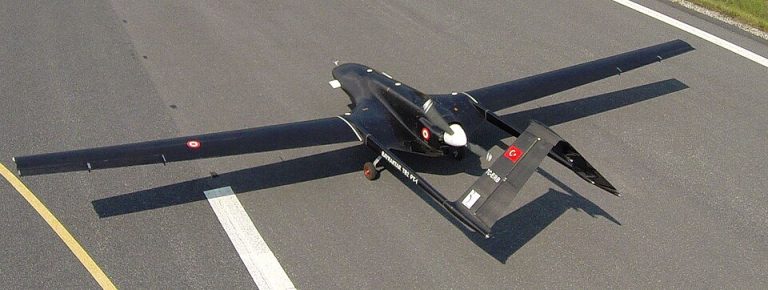
These advantages are not without risks, however. The risk of over-reliance on AI recommendations, without human oversight, is a serious ethical issue. This is best demonstrated by the deployment of the STM Kargu, a completely autonomous drone that uses facial recognition technology to identify specific individuals for targeted assassination, without input from a human operator. These drones, according to the United Nations, Turkey executed exactly this type of attack in 2020.
There is a distinct need for some sort of protocol to explain to AI how to understand the reasoning behind strategic suggestions. As well, “friendly” AI needs to be trained to recognize deception tactics, especially those that may come from “adversarial AI”, attempting to manipulate a friendly AI’s decision-making systems and processes.
In that regard, the integration of AI in cyber security and information warfare is transforming both offensive and defensive capabilities, first through enhanced cyber defenses. As in the wider civilian sphere, AI systems can monitor networks in real-time, detecting and respond to threats faster than human operators. Machine learning algorithms can identify new types of cyber attacks by recognizing potential attack patterns. Automated, independent patch management and vulnerability assessment tools, also powered by AI, can enable these systems to aid in their own defense.
Also in that regard, AI-powered cyber attacks are another aspect of this developing realm. The development of more sophisticated and adaptive malware, intended for deployment by AI, can discover and exploit vulnerabilities in target networks more efficiently than manual searching. This holds the potential for AI to coordinate large-scale, multi-vector attacks on hostile cyber networks.
In the realm of information warfare and disinformation, AI has already developed tools for creating and disseminating very convincing fake news and propaganda. Such psychological operations formerly required a massive investment in conventional printing and radio technology, with results that were frequently uneven in performance. The use of natural language processing to analyze and target specific population demographics with tailored disinformation can reshape both civilian and troop viewpoints in near-real time.
AI-generated realistic video and audio, as a result, will soon prove crucial for military deception operations, through challenges in verifying the authenticity of intelligence gathered from open sources, as well as via recovered intelligence report. Development of AI tools to detect deepfakes and other manipulated media is a major aspect of ongoing AI combat developments.
The reason for this kind of focus, as indicated above, lies in the realm of social media manipulation. AI bots capable of influencing public opinion and sowing discord in target populations can potentially undermine a hostile nation’s national strategy – and potentially its active combat operations – by using AI to identify key social influencers and vulnerable groups for targeted messaging, deep fake video and audio, presenting a distorted perspective to a hostile nation or support group’s population.
But, AI systems can also be used to detect and counter enemy disinformation campaigns, including those conducted by hostile AI’s. The key feature in these types of operations lies in the speed of detection, and in effective countermeasures, as soon as those types of subtle attacks are detected.
In more conventional situations, quantum computing and cryptography hold the potential for quantum-capable AI systems to rapidly break current encryption methods. This is a serious problem, one of extreme concern, as AI holds the potential to crack the “holy grail” of cryptography, by possibly finding a shortcut to breaking the “one-time pad” (OTP) encryption protocol which, despite its faults, is still the most secure system for securing classified transmissions.
An example of a one-time pad. Image credit: Mysid, 2007. Public Domain.
Related to this, is the development of AI management for quantum-resistant cryptography, to protect sensitive military communications. In signals intelligence (SIGINT), advanced AI systems for intercepting and decrypting enemy communications can use natural language processing for real-time translation and analysis of intercepted messages.
This list, quite literally, can go on for miles.
The expansion of artificial intelligence into the military sphere is not something to be hand-waved off as a passing fad. Like all developments in military technology, there are both design and deployment cycles, but also countermeasures that can be discovered and implemented.
The Chinese have a saying: “May you live in interesting times.”
That is not a positive…not least, because we do, in fact, live in interesting times.
This morning, June 14th, the Supreme Court of the United States overturned the Trump-era ban on “bump stocks” for semi-automatic rifles.
Justifiably, the “Pro-2A Sphere” is rejoicing; predictably, their “anti” opponents are screaming hysterically, crying that there will be “blood in the streets” over letting what amounts to a toy that has never been used in a crime (that’s for an entirely different article). But the real question is: Is this really a victory?
Trump’s decision to push the bump-stock ban was an abject failure of leadership. It was also treasonous, as are every single blanket gun control law, proposed law or regulation, at every level of government and law enforcement in the United States.
Let me explain.
Gun control in the United States has a comparatively short history. Prior to 1934, there were no specific restrictions on firearms at the Federal level. At all. That included owning cannons and other types of artillery, as well as arming private warships, which someone should remind the current occupant of 1600 Pennsylvania Ave about. The few mentions of firearms ownership at the Federal level of law enforcement either specified what weapons every citizen was required to maintain, but also specified – twice – that restrictions on civilian firearms ownership were not simply specifically forbidden, but that firearms ownership in the United States has a specifically military character. Naturally, anti-gun sentiment wants desperately to dismiss or ignore this sentiment. Increasingly – thankfully – these childish views are being dismissed, not only by the Supreme Court, but by lower courts as well, albeit in uneven language.
One recent tack anti-gun promoters have tried to employ is the “well regulated” clause in the 2nd Amendment, weaving the tortuous logic that “well regulated” somehow equates to the Federal Government having the ability to remove firearms from private hands at will. Clearly, these are silly arguments. A far better argument is to point out that “the Militia”, as such, has no ability to either muster or train…and that is absolutely correct. The Presser v. Illinois case cited above specified that the “several states” held the sole authority of managing military affairs within their state boundaries, except when it came to Federal military forces. The caveat to that was that states quickly took that as an excuse to functionally eliminate any requirement within their borders for militia to muster or train. And, at the Federal level, Congress also failed in its enumerated duties, because the 2nd Amendment is not the only place in the Constitution where the word “militia” appears.
In the aftermath of the Spanish-American War of 1898, the United States quickly found itself at war with its erstwhile guerrilla allies in the formerly Spanish-held Philippine Islands. That conflict lasted over three years, and presented a huge issue for the United States in terms of manpower – many of the soldiers enlisted for the war with Spain had enlisted for just that: the duration of war with Spain…no one had said anything about fighting Filipino locals, who had already been fighting the Spanish. Most of those volunteers came close to mutiny if they were not returned to the United States, or enlisted – at exorbitant cash bounties – directly into the Army.
To get around this problem, Congress created the Militia Act of 1903, popularly known as the “Dick Act”. This act created the modern National Guard, as we understand the term. The National Guard is described as forming the “Organized Militia”; in effect, it forms a reserve force for the US Army, which body regulates, arms and trains it, but which the states pay for during peacetime, and which they can use at the discretion of the state government unless the Federal government requires those troops for Federal use.
But back when the Dick Act was passed, there was a provision for “everybody else”: since the “Militia of the United States” defines the “Militia” as all ‘able-bodied males’ between 17 and 45 (unless you’re a veteran of Federal military service – see the link above), the Congress in 1903 lumped “everyone else” into the “Reserve Militia”, which was given a detailed organizational framework. In 1956, however, the “Reserve Militia” disappeared, replaced in the United States Code with the term “Unorganized Militia”…and, by definition, an “unorganized” group can neither muster nor train as a unit – something certain members of Congress are now attempting to formalize in law.
Don’t worry – we’re getting to the treason part, I promise.
The first specific example of Federal-level restrictions on firearms ownership came in 1934, with the “National Firearms Act”, known as NFA’34. This act is why you have to pay an additional $200 tax to buy any kind of automatic weapon (the real ones, not what the mainstream media thinks are ‘machine guns’), explosive device or noise suppressor for a firearm…assuming, of course, that one is willing to go through the byzantine paperwork to become one of a privileged class, who can be arrested at any time, for the slightest infraction.
But, I digress.
The 1934 NFA was, publicly, instituted to make it harder for criminals to obtain automatic weapons – despite those criminals usually stealing them from National Guard armories. In reality, the restrictions were aimed at organized labor, which had been growing increasingly restive during the 1920’s and 30’s, leading inevitably to the 1934 General Strike. The government was desperate to limit the access of unionists to military-grade weapons, and used the phantom of organized crime as an excuse. The National Firearms Act was so incoherent, the Supreme Court of the day actually used language that found against the NFA, while incoherently ruling that the act was, in fact, legal.
Aside from the scare to the federal government caused by the 1946 “Battle of Athens”, there were no real Federal attacks on private firearms ownership until the “Gun Control Act of 1968” (GCA’68) was passed. Prior to GCA’68, a person could order many types of firearms out of most gun and sporting magazines of the time, especially surplus weapons. Any person – including African Americans…more or less anonymously.
While certain parties had been pushing the core of GCA’68 since the assassination of President John F. Kennedy, those parties managed to push it through following the twin assassinations of Martin Luther King and Senator Robert F. Kennedy, D-NY (JFK’s brother), in April and June of 1968, respectively. What GCA’68 did was eliminate the ability of citizens to purchase any weapon directly through the mail, from any source. This is why you, the Reader, have to fill out a government form to legally buy a firearm from a store or a licensed dealer. And – in contravention of the anti-gunners hysterical screams about the supposed ‘power’ of the National Rifle Association (NRA) – that organization, to its eternal shame, happily backed GCA’68 to the hilt.
The excuse given for GCA’68 was, aside from restricting mail order the access to firearms like those used in those assassinations, was to keep weapons out of the hands of dangerous criminals and drug addicts (including modern users of “medical marijuana”)…which is rather odd, considering that without any kind of “instant check system”, no one with a valid identification could be refused a sale, a system which has demonstrated that any database is only as good as its inputs.
Again, this major bill failed to stop any crime – so, why was it passed? Easy: the Black Panthers.
The Black Panther Party (BPP) was formed in 1966, in response to increasing violence by police against black communities around the country…and, despite the pleas of leaders like Dr. King and Malcolm X, the BPP was determined to take a more confrontational approach, with its armed members “monitoring” police stops in black neighborhoods. In response to this, in California, the Mulford Act was proposed, criminalizing the open carry of firearms without a permit. In response to the proposed act, the BPP staged an armed protest on the step of the California State House in Sacramento. Whether this was simply a “publicity stunt” or not, the measure passed decisively, backed by both Republicans and Democrats, again with the full support of the NRA, and was signed into law by then-governor Ronald Reagan (who was no friend of gun owners, despite the misguided beliefs of many).
So. Given the history lesson above, where do I come off, claiming that restrictive gun control is “treasonous”?
The important part, here, is the “adheres to their enemies, giving them aid and comfort within the United States or elsewhere” part. “Giving aid and comfort” can take many forms, but, in light of the fact that blanket restrictions on firearms ownership pointedly weaken, if not eliminate, the ability of the average citizen to not simply protect themselves, but to defend the nation in times of distress. And, given the increasing number of unidentified and unregistered “military-age males” flooding into the United States currently, there is a decidedly high chance that the United States may soon face a wave of Mumbai-scale terrorist attacks, in many cities around the nation.
Should such a wave of attacks ensue, it will be completely and totally the fault of the Democrat Part in general, and the Biden regime, in particular.
The scale of the actions against citizen firearms ownership across the nation, coupled to the flood of illegal aliens, is too extensive to be a simple series of accidents – it is pointedly intentional in nature. It is a direct and immediate threat to the People of the United States, and it needs to be dealt with.
Donald Trump may not be the best candidate for President, and he clearly made serious errors in judgment while in office…but the alternative is a nest of active traitors to the nation.
Some things, people don’t really think too much about. Even when people see pictures of it, they don’t really think about, much, unless it is specifically referenced. This week, we’re going to look at one of those things.
Soldiers carry stuff; sometimes, a lot of stuff. That is fairly well understood by most people, but for most, the idea of carrying this around centers on a backpack, purse or some other type of satchel. Armies around the world have had to deal with this problem for millennia. For the most part, armies before roughly the 1890’s had variations of a single solution: the baldric.
A baldric is simply a wide and heavy leather strap that goes over one shoulder, and holds something over the opposite hip, much like a lady’s purse, or a modern “messenger bag”. From the 17th to the 19th centuries, most European armies used a pair of baldrics to carry a cartridge box on one side, and a bayonet on the other; occasionally, some type of “haversack” was slung next to the bayonet. Anything heavier typically went into either a rather primitive (by modern standards) backpack, or onto wagons or pack animals. As long as soldiers used simple muzzleloading muskets, this was sufficient for most campaigns.
Watercolor depicting the uniform of the Continental Army’s 2nd Canadian Regiment. Painting by Charles M. Lefferts, 1926. Public Domain.
However, as small arms technology dramatically advanced in the late 19th century, new methods of carrying weapons were needed.
The problem was not simply new “bits-n-bobs”, but increasing weight. Weight is the bane of any soldier’s existence. Carrying heavy loads – frequently exceeding 120lbs/54kg – beats down any person quickly, and in a time where motorized transport was not an option, this could halt an army faster than any destroyed bridge.
American soldiers arriving at Schiphol Airport, North Holland, during the NATO exercise “Reforger”, 1978. Photo Credit: Rob Croes. Dutch National Archives. CC0/1.0
The solution, at first, was to connect a belt to suspenders. This distributed the weight between the waist and shoulders, and proved to be a great help in load carrying. This lasted into the 21st century, best known as “ALICE Gear” (All-purpose Lightweight Individual Carrying Equipment).
Basic ALICE rig. United States Army, FM 21-16, Care and Use of Individual Clothing and Equipment, 1972. US Army. Public Domain.
The ALICE system, and its foreign copies, was an excellent and highly customizable way to carry equipment, opening up the ability to carry more tools into combat (because there is no rest of the weary). But then, something new began to appear in combat zones.
Degar/Montagnard troops with U.S. Army soldiers during the Vietnam War. US Army Photo. Public Domain.
In the mid-1950’s, Communist China decided that it needed a load-carrying system for its troops, adapted to their adoption of the Russian SKS rifle. Since the SKS uses fixed, 10-round strip-clips, the Chinese created a bandolier that could hold some 200 rounds, along with a small bottle of cleaning oil.
Vietcong Exhibit, Fort Lewis Military Museum, Fort Lewis, Washington, USA, 2009. SKS bandolier is on the mannequin, on the right. Photo by Joe Mabel. CCA/3.0
While this was fine for the SKS, the Chinese quickly adopted their homegrown variant of the Russian AK-47 right after adopting the SKS. Since AK-type weapons all use a very prominent curved magazine, this required a completely new type of carrying equipment.
The result was the Type 56 Carrier (the first “Chest Rig”).
Chinese Type 56 Chest Rig (circled in red). Unknown Author.
Like the SKS bandoleer before it, the Type 56 Carrier fit over the front part of the body, but was completely off the waist, using its shoulder straps to carry all the weight. Will not at all modular (as that was not really a concern for any military forces at the time), it was a simple, easy to produce design that got the job done.
The Type 56 Carrier design swiftly began to spread around the world. It’s simplicity and ease of manufacture allowed it to be copied in small “guerrilla” manufacturing shops, giving small armies, as well as insurgent/guerrilla forces a huge advantage, bring them into the same equipment capability range as regular armies. In the United States, at least, new chest rigs developed from the Type 56 can be bought for as little as $36. As well, the chest rig design is highly adaptable, allowing for the carrying of hand grenades, radios and all sorts of other gear.
Chicom Chest Rigs of the Soviet Afghan War, c.1989. CCA/3.0
But there are added benefits to the design that other load-carrying systems cannot match: vehicles.
More conventional, ALICE-type harnesses can be problematic when the wearer tries to enter a vehicle, as the various pouches on the harnesses belt do not fit well with most vehicle seats. In fact, fully loaded pouches can be downright painful when sitting in most car seats.
In contrast, the chest rig allows the wearer a much more comfortable rid. An additional distinct benefit for the chest rig in a vehicle is the ability to reload a weapon easily; more conventional rigs to not lend themselves to this ability.
Chest rigs are certainly not without the issues: “hitting the deck” (i.e., getting as flat onto the ground as possible) is much harder in a chest rig than in a more conventional harness. At the troop level, however, troops find ways to compensate – training is, after all, more important than the tools themselves: you learn to train with what you have, not with what you might want.
So.
Why an article on something most people don’t give much thought to? Simply put, weapons are very, very good things to have. But, to make the best use of those weapons, a person needs to learn to use other tools to utilize those weapons to their fullest potential – when you look at pictures of troops, don’t “just” look at their weapons, look at what they are wearing, to carry all the other gear that they need.
It is said that you “fight as your train”. That is driven not just by the weapons you carry but by the gear you need to make those weapons work to their potential.
You never know when that might become necessary knowledge.
Forewarned is forearmed.
The Freedomist — Keeping Watch, So You Don’t Have To
Note: The following article is a very gently edited excerpt/extract of an article that appeared in our April monthly edition, available by subscription only. The original article is much more extensive, touching on a variety of issues. This extraction was made, because of an encounter an acquaintance of the author had recently, in North Texas. The subject of this article was touched upon as part of a previous story. Sharp-eyed readers will recall the author’s comments on social media regarding certain Freedom Of Information Act (FOIA) requests made concerning this article. This is the full story.
Snoopin’ n Poopin’
Two of the first tasks in planning any sort of military operation are the gathering of relevant intelligence, and the testing of various methods of execution: What are you attempting to accomplish? How can you conduct “actions on target” when your forces are limited in the equipment that they can bring with them?
While it has long been understood around the world that the United States is a very “permissive” society – especially when it comes to the civilian populace acquiring firearms – for a foreign intelligence service, this is something that must be tested. While it may seem, at first, that foreign intelligence services would be doing this kind of thing all the time, in fact, this is usually a very rare event, because the potential fallout from the discovery of a blown operation would be incalculable, very likely leading directly and immediately to an all-out war. This is why Libyan dictator Muammar Gaddafi never actually supplied weapons to gangs in Chicago (unlike Obama in Mexico).
While having “agents in place” stage “test attacks”, such as shooting up step transformers, staging catastrophic train derailments, and potentially committing widespread arson attacks targeting forest lands, among other types of actions, are comparatively low-risk, actually organizing armed paramilitary units is simply not something that could be successfully done against a nation like the United States.
Deng – who had emigrated from Communist China, claiming religious persecution as a Christian – had never served in any branch of the United States armed forces. However, that did not prevent him, just as it does not prevent any person in the United States, from walking into an “Army-Navy” store and buying a couple of then-current US Army uniforms, in his case an “ACU-pattern” combat uniform, and a then-current “Dress Green” officer’s uniform. Deng also purchased appropriate patches and ribbons that identified him as a Colonel in the Special Forces…to anyone who didn’t look too closely.
Suitably attired, Deng then “acquired” (the details were never clarified in the news reports of the day) a large commercial building in Temple City, and had it outfitted to appear as a US Army recruiting center. Deng then went on an impressively successful one-man recruiting spree, which – had it been legitimate – would have been the envy of every military recruiter in the country.
Deng’s recruiting targets were Chinese immigrants newly arrived in the United States. His “recruits” were low-level workers, with little or no technical expertise. They worked in service industries, such as restaurant wait-staff, at dry cleaners, and the like. Deng presented his “unit” – the “United States Army/Military Special Forces Special Reserve” (which likely sounds very impressive in Mandarin), of which he was the “Supreme Commander”.
The “sales pitch” Deng used was uniquely tailored to his recruiting base: he presented the United States Army as a “tong”, which in Chinese society is a term for a “social club” – a tong can be anything from the equivalent of the Rotary Club to the Mafia; it all depends on what the tong is organized for.
The key relevant aspect, here, is that a tong charges an “entry fee”, plus “yearly dues”, as well as additional fees to advance in rank within the organization. Deng’s “recruits” paid an entry fee of $400 dollars, and yearly dues of $120; varying amounts of money also got the hapless recruits promotions, at least up to a point. Added to this, Deng pushed the normal advantages outlined by real recruiters, such as college assistance after c.4 years of “service”, and preferential consideration when applying for citizenship.
While this might seem laughably unworkable as a recruiting strategy, it must be remembered that Deng’s target pool were recent Chinese immigrants with little knowledge of the United States and its institutions – obviously, no legitimate recruiter will ever ask potential recruits for money. For all of its problems, however, Deng’s strategy netted him at least 200 victims; according to some reports, he may have recruited as many as 800.
Deng “sold the image” to his victims, though, by taking their initial pay-in, jotting down their information and vital statistics, having them sign a “recruitment form” (which they of course could not read), and telling them to return in a week – at which time, Deng produced an official-looking identification card, a set of ACU’s, a pair of combat boots and a standard-issue army beret, in the recruit’s size. The recruits were then advised when to return to Deng’s center for “training” on a given schedule. (Some news sources at the time suggested that Deng was “training” his troops with “BB guns”; given the general lack of knowledge about weapons training in general among various news reporters, it is highly likely that any “training” done used AirSoft weapons, which are close enough visually to be indistinguishable for most people unfamiliar with firearms.)
In reviewing pictures of Deng’s “recruiting center”, it is easy to see why it would fool most people who had never been in a military service. This author is a former Active-Duty US Marine, and I would have been fooled, at least for a few minutes, by Deng’s set-up. Having shown pictures to both former and current US Army personnel, these contacts were in unanimous agreement that the center would have passed muster for them, as well, again at least for a few minutes.
But Deng went further: he managed to get his “army” into photo-ops with politicians of Asian descent – some of whom were prior US military personnel – and got them an official tour of the aircraft carrier museum ship USS Midway, moored in San Diego, California.
But…what was the point? As presented, Deng’s purpose was a simple fraud scam: lure in hapless recruits, siphon off money from them (that they could ill-afford), and presumably vanish at some point. Deng’s scam was blown when some of his recruits tried to pay their “yearly dues” at actual Army recruiting offices, immediately prompting calls to the FBI which up-ended the entire scheme, leading to Deng’s arrest, trial, conviction and sentencing in 2011…at surprisingly high speed for the state of California, even on a good day.
The problem with this whole idea was money: Even by padding the numbers of Deng’s recruits up to one thousand, there simply wasn’t enough money coming in from the scam to maintain it. Leaving aside the cost of simple utilities like water, sewage, trash pick-up, electricity and phones – in the Los Angeles of 2008-2011, recall – all of which require significant money up-front to city services, there was the problem of uniforms. Deng supplied his recruits with a set of ACU’s (complete with custom name-tapes) along with standard issue combat boots and a black uniform beret. While ACU-pattern uniforms and equipment are laughably cheap in 2024, the polar opposite was true in 2008-2011: a set of secondhand ACU’s (jacket and trousers) cost between $80 and $100, total. A pair of combat boots ran about the same price, back then. Thus, half of the initial buy-in for one of Deng’s “recruits” was immediately spent. Even by liberally massaging the numbers, Deng could not have brought in more than $1 million dollars, gross, over the course of his scam’s life…before accounting for his overhead costs.
Given that the charges against Deng were limited to simple fraud at the state level – which is certainly strange, given his multiple violations of Federal laws concerning counterfeiting a government seal via him forging military ID’s for his recruits – even the most casual of observers is left wondering what was actually going on.
A realistic answer is required to the following question: What benefit would there be in having a fake US Army unit in Los Angeles in the late-2000’s?
Even given real weapons, which Deng never seemed to have possessed, such a haphazardly trained group would never be able to stand up to an actual military unit, especially a battle-seasoned unit of US Marines, who could be deployed against them from nearby Camp Pendleton (in a matter of an hour or two), for more than a few minutes, if that. Conversely, local police would have been severely handicapped to deal with such a group, if they were acting in any kind of real concert; the North Hollywood Shootout aptly demonstrated this, and those conditions persist to this writing.
However, the Greater Los Angeles Basin has always been a very volatile place; the Rodney King Riots had happened barely fifteen years prior, and there had been smaller riots since then. Given a suitable trigger for a riot, helicopter news cameras would have been handed the spectacle of what appeared to be a unit of the US Army charging rioters, firing into the crowd – recalling that Deng’s “troops” had no real training – the impression flashed around the world would be US troops mowing down American civilians, in an American city; even if the full story came out later, it wouldn’t matter – all that mattered would have been the visuals.
Despite the foregoing, no evidence has come to light that definitively connects Yupeng Deng to a foreign intelligence service; Freedom Of Information Act requests to the FBI have been met with pointed rebuttals and denials of any substantive investigation records from that agency as of this writing, despite news articles of the day pointedly relating that the FBI was, in fact, conducting such investigations. On the other hand, nothing has come to light, which says that he is unconnected to any such group. Additionally, it is entirely possible that Deng could have been set up as an unwitting patsy by a foreign intelligence service, and could have been supplied with money to cover his expenses for the scam operation.
The bottom line here, is that a person – years after the 9/11 attacks, and during active combat operations in Iraq and Afghanistan – was able to recruit a fake US Army unit of realistic operational strength (company-size units run anywhere from 100 to 250 personnel) in one of the nation’s major metropolitan areas, and supposedly went undetected – even while meeting with local political leaders, marching in local parades as a unit, and touring actual military bases – for some three years. Yupeng Deng could not afford to run his scam with the cash he was taking in from his victims – this means that either he had a large reserve of cash to operate his scam, was drawing from an alternate income (all to no known purpose)…or, Deng was being supplied with money by “parties unknown”…and faced no Federal prosecution for his crimes.
That, by itself, was terrifying for 2011…in the world of 2024, the potential is far worse.
The paper outlines the possibility of the Soviet Union deploying special forces-like commando teams into the Continental United States in preparation for a “first strike” nuclear attack on the country. The teams would, in theory, infiltrate into the United States in advance of the attack, and move to sabotage both nuclear missile bases, nuclear-capable bomber bases of the USAF Strategic Air Command(deactivated at the end of the Cold War), and those ports that were home to the US Navy’s ballistic missile submarine fleet.
The commando units would – again, in theory – attack targets with the intent of leaving them incapable of launching their nuclear weapons; actual destruction was not necessary, simply making it impossible to operate at their full potential for some amount of time, while the Soviet first strike went in.
In particular, Section 6 of the report (beginning on page 16 of the .pdf file linked above) offers a detailed breakdown of the methods of infiltration available to a hostile commando force. The numbers of illegal border crossings and illegal aliens resident in the country, both date from late 1974…in contrast to modern numbers, those figures appear laughably small.
However, as the North Hollywood Shootout referenced above, the 9/11/2001 attacks and the terror attack on the Indian city of Mumbai in 2008demonstrate, the numbers required to paralyze not simply a major metropolitan area, but to terrorize the entire country, are almost vanishingly small. This is coupled to the shocking ease with which civilian vehicles can be converted into armored fighting platforms over the course of a single day, something that severely restricts the ability of civilian police departments to respond to determined threats effectively despite decades of increasing efforts at police militarization, as Freedomist/MIA pointed out recently.
Given the comparative ease of obtaining weapons and training for “light infantry” and “commando” type warfare (especially within the United States), which – as Freedomist/MIA has written about at length in the past – the notion of any number of terrorist groups, independent or state-sponsored, staging attacks inside the United States around the 2024 election is not hyperbole that is to be casually dismissed.
Even discounting the idea of “guerrilla bio-war labs”, the actions of the Democrat Party over the preceding fifteen years or so, to say nothing of the direct and deliberate actions of the Biden administration over the last three years, have left the United States completely open to a dedicated wave of crippling (even if “low tech”) attacks, despite the frantic efforts of the Biden administration and the mainstream media to “memory hole” the idea of hostile state action against highly vulnerable targets such as the power transmission grid within the United States, insisting that the recent surge in attacks is limited solely to “far right groups”.
Communist China has certainly maintained plans for decades to disrupt and destabilize the United States, both overseas and at home. A kaleidoscope of other factors and players on the field are contributing to Chinese wargame ideas and plans. China is certainly involved in some of these factors and players; however, even they understand that they have little to no control of such a situation, whether it happens spontaneously or not.
The Democrat Party and the festering pool of functionaries around Joe Biden have created an environment where the United States can be blown wide open at any time. Both the military and local police forces are ill equipped to deal with even the smallest of the potential threats outlined about, not least because they are largely prevented from doing so by the very laws that are supposed to guarantee the freedom of the American populace. This is aggravated by the legal impossibility of effective organization of the literal “last ditch” of defense for the United States, namely that of the Militia, as citizens have been legally barred from organizing and training in any meaningful manner without the direct approval of their state governments since 1886, not least because doing so will immediately place them at risk of arrest by any number of government “law enforcement” [sic] agencies in search of “good optics” for the mainstream media.
The next few months are going to be…“interesting” is a word. Every American citizen will need to decide on what actions they believe are necessary for themselves and their families.
Because the Federal Government is certainly not going to be of any help.
Addendum
On February 12, 2024, Freedomist/MIA submitted a Freedom Of Information Act request concerning information on Yupeng/David Deng and his 2008-2011 operations in the Greater Los Angeles Area. This request was broken into four sections, to address separate, but specific, details relating to the “ask”. Note that this is normal practice with FOIA requests…What is not normal practice, were the results, especially considering that the FBI is on public record as commenting to local reporters about the case:
Requests #’s 1618937-000/“US Army Volunteers Reserves” and 1619566-000/“Chinese Military Clubs”, were closed on February 20 and 22, respectively, stating that the FBI’s FOIA department was unable to locate any information on FBI investigations on those subjects for the period from 2008 to 2011, despite public articles indicating the contrary.
Request # 1619223-000/“DENG, YUPENG” was closed on February 20 because, quote: “…The mere acknowledgement of the existence of FBI records on third party individuals could reasonably be expected to constitute an unwarranted invasion of privacy. This is our standard response to such requests, and should not be taken to mean that records do, or do not, exist. As a result, your request has been closed…” And, again, this is concerning a publicly available case where the perpetrator was arrested, arraigned, charged, tried, convicted, sentenced, and served a little over one year in a California state prison. (On a side note, the State of California responded promptly to a request for a summary of Deng’s prison records.)
Request # 1619316-000/“US Army Military Special Forces Special Reserve” was closed on March 14, advising that correspondence concerning the request had been snail-mailed to this author; as of May 31st of 2024, no correspondence concerning that request has been received, despite previous mailings of closed cases taking less than one working week to arrive, and repeated inquiries into why have gone unanswered.
Make of that what you will.
These responses blatantly contradict FBI statements in 2011, made to both local news agencies in Southern California, but also to Los Angeles County law enforcement officials. Additionally, Deng was never charged with a Federal crime, despite multiple violations of either or both United States Code, Title 18, Section 1017, and/or Title 18, Section 1028, as he manufactured fake identification documents purporting to be United States military identification documents on multiple occasions.
The takeaway from this can only be seen in one of three lenses: either Deng was given a light sentence on the pretext of becoming an informant for the FBI; or, that Deng was already working for the FBI and was inadvertently exposed, blowing some bizarre FBI operation; or, finally, that Deng was in the employ of a foreign entity, and for reasons known only to the FBI, he was given a featherweight sentence, likely in trade for some sort of follow-on work for various US government entities that are not the FBI.
Whatever the reality might be, you the American citizen reading this, have been lied to – not on some valid or insignificant matter, but on something far worse than what resulted in the incarceration without trial of over 125,000 American citizen some 85 years ago.
The President of Iran, Ebrahim Raisi, as well as Iran’s Foreign Minister, Hossein Amirabdollahian, was killed in a very “sketchy” sounding helicopter crash in the far northwest of the country, in mountainous terrain near Iran’s border with Azerbaijan, in bad weather on May 19th.
The death of Raisi, a dedicated revolutionary hard-line cleric – responsible for the 1988 massacre of Iranian political prisoners, resulting in his nickname of “The Butcher of Tehran” – potentially opens the way for the Islamic Revolutionary Guard Corps (IRGC) to gain dominant power within the country, as they wield significant influence in choosing Raisi’s successor. The reason for this opening is that under the Iranian Constitution, a committee whose appointments are largely approved by the IRGC is responsible for confirming the eligibility of candidates for the Presidency, but is also responsible for selecting the country’s next “Supreme Leader” – the position originally taken by the Ayatollah Ruhollah Musavi Khomeini in the late 1970’s – which is now a critical juncture, as the current Supreme Leader, Seyyed Ali Hosseini Khamenei, is known to be in ill health, and could either die or retire at any time.
Needless to say, the IRGC is also the driving force behind arming the Houthis in Yemen with advanced weapons, which that group has been using to both attack Israel, as well as sink, damage or pirate commercial shipping in the Red Sea, resulting in widespread disruption of the world’s vital shipping traffic, actions that directly impact you, the Reader.
Opening Round 2 – The DRC
Next up – Africa…but not the part of Africa you’re thinking.
Also arrested in the coup’s aftermath were Malanga’s son, Marcel, and his friend, Benjamin Reuben Zalman-Polun, described as a “business associate”.
While this would-be comic opera revolution – which it would have been, had no one been killed or seriously injured – bears a striking resemblance to the attempted coup/kidnap “operation” Venezuela in 2020. More importantly, this marks an escalation in the ongoing instability in the DRC. The reason that this is important?
The computers and electronic devices you rely on in your daily life depend on a variety of “rare earth minerals”, many of which are only (barely) “commercially recoverable” in the DRC’s eastern regions. These metals, along with diamonds (both for industrial use, as well as in jewelry) are the source of both the continent’s wealth, but also one of the major drivers of war throughout Sub-Saharan Africa, which is also one of the driving factors of the region’s many recent coups d’état.
As a result, Western “developed” nations are as bound to the internal economics and politics of the region as the locals are, and neither has any reasonable option to counter the problems that have plagued Africa for over one hundred and fifty years.
Opening Round Three – West Taiwan Goes Full Patagonia
Rounding off the week – as of Friday the 24th – Communist China (a.k.a., “West Taiwan”) has upped its ante in saber rattling against the actual legitimate government of the ancient country, by staging a massive series of “punishment drills” around the island. In doing so, the Communist regime in Beijing has revealed both its “intentional arrogance” in dealing with the United States, but has also revealed its desperation.
Chinese Communist Party strongman Xi Jingpin – a person who makes Vladimir Putin look positively saintly in comparison – is increasingly becoming desperate. His regime is deeply unpopular in general, but especially because of the communists state’s flagging economy, seemingly unsolvable demographic crisis, and the fact that the world is quietly laughing at their comic-opera military. This is a dangerous combination.
In 1982, Leopoldo Galtieri, then the leader of the military junta ruling Argentina, was in a very similar position as Xi is now, and for many of the same reasons. With his nation’s economy falling apart – because military officers are not usually economic geniuses – Galtieri was desperate for an event that could distract his increasingly angry populace, and hopefully swing popular opinion in his junta’s favor…and what better way to do that, than to start a war that should be popular at home?
Right?
The result was the Falkland’s War, a war well worthy of study for every person reading this article, in which the armed forces of Great Britain showed that the British Lion still had some real fight left in it, smashed and humiliated the Argentinean military on a scale equivalent to what the US-led coalition would do to the Iraqi armed forces of Saddam Hussein some eight years later.
Now? It appears increasingly possible that Xi may be channeling Galtieri’s ghost, as the “battle calculus” in his head may be leading him to a decision that attacking – or at least trying to force a showdown with the “recalcitrant” province – Taiwan might be a good way to “kill multiple birds” with one stone.
As Freedomist/MIA has pointed out before, this would be tantamount to slaying the world’s economic goose, taking the Communist state with it.
What Is Happening?
There are many reasons behind why these scenarios are playing out the way they are at this moment in time, but the core reason is the same in all cases: the crippling weakness, on open display, of the United States under the regime around Joe Biden.
Now, I know that we tend to harp on this subject a lot, but it is absolutely true: nations and peoples around the world do not have to like us, but it is vital to the survival of the United States as a nation for those states to respect, if not fear us…and for more than thirty years, with the single four-year interregnum of Donald Trump’s administration, the world’s view of the United States as a powerful, even dominant, leading force in the world has steadily eroded. The reasons for this erosion are many, of course, but can be summed up as an increasingly incompetent and unreliable – if not incoherent – series of poor policy decisions has left the international reputation, image and impression of the United States in the gutter, far moreso than at any point between 1946 and 1990.
Xi feels free to threaten Taiwan at will, because of the induced weakness of the United States armed forces, who are so critically undermanned, it is becoming difficult to effectively crew sufficient warships (the ones that work, anyway), where the US Army had to admit defeat and reduce its official strength by some 24,000 troops, because it was consistently failing to meet its recruiting targets. Likewise, in both the Middle East and Africa, state actors increasingly recognize the United States as a non-consequential factor.
That is something you should very much be worried about, come November.
The Freedomist — Keeping Watch, So You Don’t Have To
The rot inside Washington, D.C. has turned truly gangrenous.
Leaving aside the immediately abysmal series of disastrous decisions that have invalidated the Biden “administrations” actions that began with the June 2021 cancellation of the Keystone XL oil pipeline, costing the United States some 59,000 jobs and over $9 billion over a largely-finished system that would have sent an estimated 830,000 barrels of oil every day from the Canadian shale oil fields, to their handling of the COVID-19 crisis in releasing untested drugs on a desperate and unsuspecting public, to their limp-wristed “warnings” to Vladimir Putin’s Russia over invading Ukraine, displaying such a level of inability and incompetence, that not only has it confirmed the critical weaknesses in Western military structures that many suspected, it has also given Russia – and thus, Communist China – critical experience in learning how to deal with “cutting edge” western military technology, to the extent that Russia is now able to tweak the nose of the West, by staging a static display of captured western equipment in Moscow.
Doubling down on “Vice President” Kamala Harris’ “stunning and brave” – and utterly tone-deaf – finger wagging at as many African states as she could over a continent-wide rejection of pro-LGBTQ+ policies, the Biden “Teletubby” group in the District of Columbia struck Uganda from the African Growth and Opportunity Act (AGOA), which allows African countries to export selected products to the USA duty-free.
In doing so, the Biden group attempted to use open and naked “strong-arm” tactics to impose what amounts to colonial rule over African states that “behave all naughty-like”, believing that those states are too stupid, backward and crippled to do anything about it, and would thus be forced to “kowtow” to their demands.
Here’s the problem.
If you want to impose colonialist rule on a place, you have to be willing and able to impose it by military force. The reason for this simple dictum is that there are plenty of other countries in the world who have lots of money to invest in the countries you are trying to impose your will on…and the Biden group has failed so miserably at such a basic function of ‘realpolitik’, that even their nominal supporters are now referring to the elder abuse victim at 1600 Pennsylvania Ave. as “Genocide Joe”.
On July 26, 2023, Nigerien General of the Presidential Guard Abdourahamane Tchiani deposed the government of his chief executive, President Mohamed Bazoum, in a coup d’état. The reasons behind the coup are lost in the nitpicking common to most coups. The point here, however, is the foreign response.
France, the former colonial power that ruled what would become Niger from 1900 to 1958, was immediately humiliated, as it openly threatened a direct military invasion of the country – the junta installed by the coup’s response?
As a result, French influence on the continent is in full retreat.
Apparently seeking to emulate the French, the United States also charged at the Nigerien junta like a blind picador on a three-legged horse with heart trouble. Sending in what apparently passes for their “best and brightest”, in the person of Molly Phee, the State Department’s top official for African affairs, Foggy Bottom’s Finest “laid down the law according to Biden”, managing to threaten and insult the junta’s appointed Prime Minister, Ali Mahaman Lamine Zeine, a formally-trained economist, by dictating from on high that Niger was to refrain from engaging with Iran and Russia in ways objectionable to Washington if Niger wanted to continue its security relationship with the United States. Zeine also said Phee had further threatened sanctions if Niger pursued a deal to sell uranium to Iran.
And other states in Africa’s “Coup Belt” are watching closely.
African countries that have had coups between 2020 and 2023. By WikiMedia User Discombobulates. CCA/4.0
The few sane people left in “Sodom on the Potomac” are desperately trying to patch the holes in the sinking diplomatic boat that the Biden group keeps shooting holes in with Grandpa Joe’s double-barreled shotgun, but it is unclear if they can hold the line until the 2024 election, and much-hoped for return of Donald Trump to the White House.
Meanwhile, as should be expected, Russia is the proverbial “Johnny on the Spot”, moving in to replace the United States and France with its own “Africa Corps” (really, the jokes, while bitter, write themselves), to the extent of occupying parts of the drone base known as “Niger Air Base 201” near the Nigerien city of Agadez, a base which was first occupied by the US in 2016, and which began operating in 2019. Once US troops are fully out of the base, the Russians will have unfettered access to one of the most strategically vital military installations on the African continent…courtesy, of course, of a c.$100 million “investment” by US taxpayers (that would be you, the Reader)…
Ultimately, what does all this mean, in the “grand scheme of things”?
Essentially, the Democrat Party knows that it is about to go down in an epic, flaming defeat in November of 2024, a defeat that they cannot undo with any amount of “trumped up” (pun intended) court cases, nor ballot-stuffing.
The only logical conclusion to be reached in observing the insanity of the Biden group’s operations since 2021, is that they intend to burn down as many bridges as the possibly can before their defeat, which would force a second Trump Presidency to spend all of its time trying to get the country back to at least the same level it was at in 2017.
Think about that carefully in six months.
The Freedomist — Keeping Watch, So You Don’t Have To
Mercenaries have existed for most of human history, likely dating from before the first established settlements, and we have certainly covered them here, in the past. While many find the practice unsavory – and it certainly can be – the fact is that it is rarely an overly dangerous occupation; if mercenaries get slammed, it is almost always because they badly failed to understand the situation they were walking into.
However, since the bizarre incident in August of 2023, where Yevgeny Prigozhin, the leader of the Russian Private Military Company (PMC) then known as the “Wagner Group”, apparently tried to stage a coup d’état against the government of Russian strongman Vladimir Putin, the popular news media has seemingly gone “radio silent” on any talk of PMC’s that are not Russian in origin.
Beginning in the early 1990’s, with the rise of the South African company Executive Outcomes, the traditional model of mercenary endeavors, characterized by word of mouth recruiting in “ex-soldier bars” and paid for with briefcases of cash in shady deals in meeting rooms entered via the building’s back door, began to give way to a much more regularized and businesslike system, complete with formal and legally-drawn contracts, much like the old “condottieri” practices of Renaissance Italy.
Moument to the Condottiero Bartolomeo Colleoni, Venice, Italy, c.1870’s. Photo by Carlo Naya (1816–1882). Public Domain.
Executive Outcomes conducted full-scale military operations, deploying combat troops, armored vehicles, aircraft and ships against various hostile groups throughout Africa. Unfortunately for the company, they were too efficient and effective, regularly making a mockery of United Nation’s “peacekeeping” operations. Political and economic pressure against South Africa brought an end to that phase of the company – much to the cost of the people of Sierra Leone.
But Executive Outcomes was not alone, by any means. Many “pseudo” mercenary companies rose during the 1990’s, amid the fallout from the collapse of the Soviet Union and the Warsaw Pact. Military Professional Resources, Inc. (MPRI) supplied teams of instructors to various non-Serbian states that arose from the breakup of Yugoslavia, and helped train the Croatian Army for the decisive “Operation Storm” in August if 1995, later moving on to providing higher-level staff and command training to the armies of many small nations around the world.
At this point, it should be pointed out that MPRI was founded in 1987, and was headed almost exclusively by retired United States senior officers, including Carl Vuono, a former Chief of Staff of the US Army. In effect, MPRI was a “deniable cutout” for the US government…
…In much the same way as Blackwater – now Constellis, following its corporate merger with the Triple Canopy PMC in 2014 – was essentially a deniable extension of the US government.
While most of the 90’s-era PMC’s restricted themselves to training and providing support functions to militaries around the world, such as DynCorp, which focused mainly on aviation and vehicle maintenance, and Vinnell, which focused on creating logistics and supply systems (things many world armies have only a very sketchy knowledge of), many companies – most operating out of Great Britain – offer a much wider array of services. Companies like KBR provide everything from base construction to food services support.
However, all of these companies engage in both training and providing actual “shooter teams” to their clients. In fact, Vinnell supervised at least part of the training of the Saudi Arabian National Guard during the 1970’s, and was initially given the contract to rebuild the Iraqi Army in the aftermath of the 2003 invasion of that country…although the US government was apparently highly displeased with their efforts.
But to return to the present day, there are far more PMC’s operating openly throughout the world than the “popular press” seems to be aware of, such as the tiny Dyck Advisory Group from South Africa, that fought in support of the nation of Mozambique’s military forces in the Battle of Palma in 2021.
While the Wagner Group has apparently rebranded itself (in the face of competition) into the “Africa Corps” (really, the jokes write themselves, at this point), the rebranding – inspired, undoubtedly, by Wagner veterans’ very recent experiences in savage, all-out urban warfare in Ukraine – has resulted in a mature organization, offering (the support from the Russian government, obviously) a wide range of services to the nations of Africa’s “coup belt” , perhaps permanently breaking the back of France’s ancien regime in Africa once and for all. The reason for this is very simple: African’s in the former French colonies of the continent are so sick of French interference in their nations’ affairs, which has been happening since the 1950’s. The Russians may not be the “nice guys”, but they get the job done, and don’t moralize about ‘civilizing’ their “Little Brown Brothers”.
African countries that have had coups between 2020 and 2023. By WikiMedia User Discombobulates. CCA/4.0
But recently, a new play has “entered the chat”: The People’s Republic of China.
Communist China, as part of its world-spanning “Belt & Road Initiative”, has been quietly creating a wide group of companies focused in both the private military, as well as the private security (PSC) spheres. This allows Beijing all the normal advantages of deniability internationally, but also offers a little-referenced advantage domestically.
Generally speaking, national populations tend to be very touchy about the use of their military forces – staffed, usually, by their own literal sons and daughters – in both domestic security, as well as in “foreign adventures”. At the same time, few if any, of the same populations care over-much if “mercenaries” (even mercenaries from their own nation) end up as casualties in some foreign land, because – unlike the regular armed forces – mercenaries are placing themselves in harm’s way for mere money, not the immediate defense of the nation.
Beijing saw these advantages as it remodeled its economy in the 1990s, then carefully watched both the Western and Russian experiences. As a result, it has been quietly moving PMC’s and PSC’s into countries throughout the world, giving it a pseudo-military presence in all of these nations. It remains unclear how many of those states realize the implications of Chinese PMC’s and PSC’s.
As we move into the middle part of 2024, PMC’s from around the world are very much alive, and doing very well, albeit more or less out of the view of the popular press.
Back FREEDOM for only $4.95/month and help the Freedomist to fight the ongoing war on liberty and defeat the establishment's SHILL press!!
Are you enjoying our content? Help support our mission to reach every American with a message of freedom through virtue, liberty, and independence! Support our team of dedicated freedom builders for as little as $4.95/month! Back the Freedomist now! Click here