May 9, 2026

Michael Cessna

Michael Cessna is a former Active Duty United States Marine, a long-time personal protection specialist, security and defense analyst, military subjects instructor, general information researcher and amateur historian. He has been contributing security and defense writing since 2015.
From Narco Subs to Military Tech


In the murky world of drug trafficking, narco submarines have long been a thorn in the side of law enforcement. These stealthy vessels, often homemade and barely submerged, have smuggled tons of illicit cargo past watchful eyes. Now, in an ironic twist, the U.S. Navy and Marine Corps are taking cues from these ingenious, if nefarious, designs to develop a new generation of military craft: low-profile submersibles for resupply and covert operations. The implications do not bode well.


Learning from the Underworld

Narco submarines, or “narco subs,” are semi-submersible vessels designed to evade detection while transporting large quantities of drugs. They are typically long, slender craft that cruise just below the water’s surface, with only a small conning tower visible above the waves. This design makes them incredibly difficult to spot visually or on radar. The other aspect is that narco subs do not “sound” like military vessels, or true submarines; this is due to them primarily using non-military marine diesel engines common to many civilian pleasure craft.


Two Narco subs (LPVs) interdicted by USCG personnel aboard USS Preble (5 June 2020) and USS Pinckney (15 May 2020). Sources: HI Sutton, US Navy, US Coast Guard, Small Wars Journal.


The military has taken note of these vessels’ effectiveness in evading detection. While the goals are vastly different, the need for stealth and the ability to operate in shallow coastal waters are shared requirements that make the design of narco sub an intriguing proposition for military applications.


The Military’s New Toy

The U.S. Navy and Marine Corps are now developing their own versions of these low-profile vessels. Unlike their illegal counterparts, these military craft are being designed with cutting-edge technology, robust construction, and specific military objectives in mind…Meaning, if the US Army’s Infantry Squad Vehicle (ISV) is any indication, will not work the way they think it will.

The primary focus is on using these submersibles for discrete resupply missions. In scenarios where traditional supply lines might be compromised or under threat, these stealthy craft could slip in undetected to deliver crucial supplies to troops in remote, isolated locations. This is patches a critical hole in the US Marine Corps’ “Force Design 2030“, by allowing covert resupply to widely dispersed monitoring and anti-ship and -air missile units on atolls, islands and continental regions with long coastlines or navigable river systems.

Obviously, there are implications of this for use in intelligence operations, to supply covert operatives in coastal areas. For the same reasons that drug cartels use semi-submersibles to smuggle illicit drugs into the United States by the ton-weight, these low-profile vessels are able to ferry in weapons and munitions without the need to dangerously expose aircraft crews to drop the supplies by parachute. Moreover, these craft can be remotely piloted, making for a truly “deniable” operation.

But resupply is just the beginning. The potential applications for these vessels in low-intensity conflicts are vast and varied.


Game-Changers in Low-Intensity Conflicts

Low-intensity conflicts, characterized by guerrilla warfare, counterinsurgency, and special operations, could all see a significant shift in tactics with the introduction of these submersibles. The low profile of these vessels makes them particularly suited for operations in contested waters, where larger, more visible craft might provoke unwanted attention or escalation. A brief look at these enhancements include:

  1. Covert Insertion: Special operations teams could be deployed silently and swiftly into hostile territory, with minimal risk of detection.
  2. Intelligence Gathering: Equipped with advanced sensors, these vessels could patrol coastlines, gathering crucial intelligence without alerting the enemy.
  3. Humanitarian Aid: In disaster zones where ports are damaged or inaccessible, these craft could deliver vital supplies to coastal communities.
  4. Counter-Narcotics Operations: Ironically, these military vessels, inspired by narco subs, could be used to combat drug trafficking, using the smugglers’ own tactics against them, via covertly inserting teams to raid drug-producing factories.
  5. Mine Warfare: Low-profile submersibles could be ideal for deploying or detecting underwater mines in shallow waters.


Marines with 3rd Reconnaissance Battalion, 3rd Marine Division, III Marine Expeditionary Force, prepare diver propulsion devices for training, Okinawa, Japan, 2011. Source: DVIDS. Public Domain.


Obviously, any group that can build and deploy such craft – including terror groups, can use them to conduct these sorts of operations. The Lashkar-e-Taiba (LeT) team that attacked Mumbai in 2008 had to capture a fishing trawler, force its captain to sail to a point off Mumbai (a coastal port city), then infiltrated the team at night using Zodiac-style rubber boats. Several of the steps the LeT required could have been eliminated with semi-submersible craft.


Technical Challenges and Innovations

Developing these submersibles isn’t without its challenges. The military versions need to be far more sophisticated than their narco counterparts. Engineers are grappling with issues like:

  •  Propulsion systems that are both powerful and quiet
  •  Advanced navigation systems for precise underwater maneuvering
  •  Life support systems for extended underwater operations
  •  Modular designs to support various mission profiles
  •  Materials that can withstand the pressures of submersion while maintaining a low profile


These challenges are driving innovations in naval engineering, with potential spin-off benefits for civilian maritime technology.


The Future of Naval Warfare?

As these low-profile submersibles move from concept to reality, they have the potential to reshape naval strategy, particularly in littoral and coastal operations. They represent a shift towards more agile, adaptable naval forces capable of operating in the gray zones of modern conflict. But the true game-changer may lie in their potential as stealthy missile platforms.


The Game-Changing Potential of Missile-Armed Submersibles

Recent developments have shown that these vessels could be more than just transport and reconnaissance platforms. The U.S. Navy has been exploring the possibility of arming these low-profile submersibles with anti-ship missiles, specifically the Naval Strike Missile (NSM).


Naval Strike Missile (NSM). Hemus Exhibition , 2010, International Fair in Plovdiv, Bulgaria. Photo by Peterdx. Public Domain.


The NSM is a sea-skimming, high-subsonic speed missile with a range of over 100 nautical miles. It’s designed to evade enemy defenses and can strike both land and sea targets. Now, this potent weapon system could be mounted on a vessel that is nearly invisible to radar, confusing to sonar (if using non-military engines) and difficult to detect visually.

This combination creates a formidable and unpredictable threat. A group pf small, stealthy vessels lurking just offshore, capable of launching precision strikes against much larger ships or land targets, could fundamentally alter the balance of power in coastal areas.


Tactical Advantages

The tactical advantages of this setup are numerous:

  1. Surprise Factor: These submersibles could approach high-value targets undetected, launching missiles from unexpected locations.
  2. Cost-Effective Sea Denial: A relatively inexpensive platform could threaten or neutralize much larger, more expensive naval assets…not least, because of the potential for the platform’s use as a remotely piloted vessel.
  3. Distributed Lethality: By spreading offensive capabilities across numerous small platforms, naval forces become more resilient and harder to neutralize.
  4. Rapid Response: These vessels could quickly deploy to hot-spots, providing a swift and stealthy strike capability where needed.


Strategic Implications

The strategic implications of missile-armed low-profile submersibles are profound:

  1. Asymmetric Warfare: Smaller nations or non-state actors could potentially leverage this technology to challenge larger naval powers, which – despite their strength on paper – cannot have ships deployed everywhere, continuously.
  2. Area Denial: The mere threat of these vessels could deter enemy forces from operating in certain areas, effectively expanding a nation’s defensive perimeter.
  3. Escalation Management: Their small size and low profile could make them less provocative than deploying larger warships, allowing for a measured response in tense situations.
  4. Changed Calculus: Naval planners would need to reconsider strategies for littoral operations, knowing that potent threats could be hiding in plain sight.


Challenges and Considerations

However, arming these vessels with missiles isn’t without challenges:

  1. Stability: Ensuring accurate missile launches from a small, semi-submerged platform presents engineering challenges.
  2. Limited Payload: The size of these vessels restricts the number of missiles they can carry.
  3. Ethical Concerns: The covert nature of these platforms could raise questions about transparency in military operations.
  4. Proliferation Risks: As with any advanced military technology, there’s a risk of these capabilities spreading to potential adversaries.


A New Era of Naval Warfare?

The combination of low-profile submersibles and advanced anti-ship missiles like the NSM could herald a new era in naval warfare. It blends the stealth of submarines with the striking power of surface combatants in a compact, versatile package.

As these technologies mature and potentially enter service, they may well rewrite the rules of engagement in coastal waters. The ability to strike from hidden positions with precision and power could make these small vessels a cornerstone of future naval strategy.

However, like any military technology, their true impact will only be understood once they’re deployed in real-world scenarios. Will they prove to be the game-changers some predict, or will unforeseen limitations curb their effectiveness?

One thing is certain: as these stealthy, missile-armed craft prepare to slip beneath the waves and into military service, they may well be ushering in a new era of naval operations—one where the lines between submersible and surface vessel, between defensive and offensive capabilities, become increasingly blurred. The future of naval warfare may very well belong to those who master the art of hiding in plain sight while packing a powerful punch.

As these low-profile submersibles move from concept to reality, they have the potential to reshape naval strategy, particularly in littoral and coastal operations. They represent a shift towards more agile, adaptable naval forces capable of operating in the gray zones of modern conflict…However, like any military technology, their true impact will only be understood once they’re deployed in real-world scenarios. Will they prove to be the game-changers some predict, or will unforeseen limitations curb their effectiveness?

One thing is certain: the development of these vessels showcases the military’s ability to innovate and adapt, even drawing inspiration from unexpected sources. From the shadowy world of drug smuggling to the cutting edge of naval warfare, the journey of the low-profile submersible is a testament to the old adage that necessity — whether in crime or in war — is indeed the mother of invention.

At the same time, serious thought needs to given to ask the uncomfortable question: Are state military design bureau’s around the world so bereft of ideas, that they have to adapt the ad hoc tactics and tools of criminals and terrorists to “big war” theory? After all, the US Army’s ISV program exists for the sole reason to emulate the widespread use of “technicals” in combat around the world – and does so poorly. Will the US Navy and Marine Corps’ semi-submersible program make the same mistakes?

As these stealthy craft prepare to slip beneath the waves and into military service, they may well be ushering in a new era of naval operations—one where the ability to remain unseen is just as important as the power to strike.


ADDITIONAL RESOURCES

  1. Wayne P Hughes Jr. USN (Ret.), Robert P. Girrier (2018), Fleet Tactics and Naval Operations, Third Edition
  2. Julian Thompson (1994), Lifeblood of War: Logistics in Armed Conflict
  3. Thomas Ricks (2012), The Generals
  4. James F. Dunnigan (2003), How To Make War, 4th Edition
  5. James F. Dunnigan (1991), Shooting Blanks


The Freedomist — Keeping Watch, So You Don’t Have To
The Rise of Civilian Satellite Intelligence


Not too long ago, access to satellite imagery was firmly relegated to the realm of spy movies and top-secret government agencies. Times have certainly changed. Today, anyone with an internet connection can access detailed satellite images of almost anywhere on Earth. This democratization of satellite intelligence is reshaping how we understand global events, conduct business, and even wage war.


From Military Secrets to Public Domain

Before roughly 2000, good- to high-quality satellite imagery was the exclusive domain of superpowers. The United States and the Soviet Union spent billions during the Cold War to launch spy satellites, gaining a bird’s-eye view of each other’s military activities. This open access to the ultimate “high ground” forced every national government that wanted to try and keep their secrets out of public view to become highly creative in hiding facilities. As advanced sensors developed, so too did methods of concealment. Fast-forward to the 21st Century, and companies like Planet Labs and Maxar Technologies are providing high-resolution satellite imagery to paying customers – be they governments, corporations, or even individuals. Not only that, but many of these high-quality are now finding their way into free-access platforms, such as Google and Bing Maps, but even such unlikely sites as NatureFocused – offer very high-quality maps featuring regular, street-type maps, but also very recent satellite imagery and highly detailed terrain maps.

This shift has profound implications. Suddenly, small countries, NGOs, citizen journalists – even terrorists – now have access to intelligence that was once the privilege of only the most powerful nations. It’s like giving everyone a seat at the geopolitical poker table and letting them peek at each other’s cards.


Changing the Game in Global Politics

So, how exactly is this changing the political landscape? For starters, it’s making it a lot harder for governments to hide their activities. Take the recent conflicts in Ukraine and the Middle East. Civilian satellites routinely capture troop movements, missile launches, and the aftermath of strikes, often before official sources confirm them. This frequently happens in real-time, with independent verification changing (and often confusing) how we understand and respond to global crises.

But it’s not just about conflict zones. Environmental groups are using satellite imagery to track deforestation, oil spills, and illegal fishing. Human rights organizations can now monitor refugee movements and verify claims of atrocities. While it may seem like having a “global watchdog” that never sleeps, there are issues of misinterpretation – both accidental and deliberate – that can and do muddy the waters, giving false impressions through outdated images, failures of interpretation, or any number of other issues, technical or human.


The Double-Edged Sword of Warfare

In the realm of warfare, easy and (mostly) free access to recent, high-grade satellite intelligence is a “game-changer”. Military strategists now have to assume that their movements are being watched not just by enemy governments, but also potentially by anyone with an internet connection. This transparency can act as a deterrent to aggression, but it also means that the element of surprise in military operations is becoming a thing of the past.

In the hoary old days of 1983, the Reagan administration launched “Operation Urgent Fury“, to invade the Caribbean island nation of Grenada, which had collapsed into chaos as different factions of the ruling party wrestled for control. This placed the safety of some 400-odd American medical students in question, and the Reagan administration – which had come to power at least partly as a result of the previous administration’s failure in dealing with the Iranian Hostage crisis – was not about to risk a repeat performance on its doorstep.

While there was never any doubt that the United States military would win a conflict in Grenada, it was discovered – much to the consternation of all planners – that there were no detailed maps of Grenada inside the US cartographic system. US Army planners were forced to purchase tourist maps of Grenada just outside the gates of their bases, hand-draw grid reference lines and the estimated locations of targets on those rudimentary maps, then photocopy those maps and hand those out to troop leaders.

The issue was that there were very few “recon birds” – the colloquial term for reconnaissance satellites – in orbit at the time, and those satellites were not easy to “re-task”. Grenada was so “off-the-radar” in the United States, some intelligence officers wondered why they were being ordered to plan an invasion of the city of “Granada” in Spain.

Humor aside, this was clearly a serious problem…and one that would not be replicated today, in any army in the world worthy of the name. Today, anyone with an internet connection can utilize free tools (often coming as “stock” programs with many computers) that the battle planners of “Urgent Fury” – or, for that matter, “Desert Storm” – could have dreamed of.

Unfortunately, that also includes terrorists.


The 2008 attack on Mumbai, India, by the terror group “Lashkar-e-Taiba“, were planned and directed in real-time using stock personal computers, an internet connection and tools like Google, to verify targets, observe news reports on the fighting in real-time, and to generate maps that were used for plotting the progress of their operations on target.

Likewise, there are now commercially available tools, like “ATAK“, that approach military and national intelligence agency tool-sets in quality. These free, or at least low-cost, programs are well within the reach of private individuals, to say nothing of terror groups and small governments and their military forces.

These realities have proven the wisdom of the United States Marine Corps’ “Small Wars Manual“, published in 1940, which warned that what the West now calls “Third World” forces were improving their abilities and acquiring more modern weapons and equipment, and that the result would be that “First World” forces would have to be willing and able to adapt and evolve faster than those forces could.


The Road Ahead

As we look to the future, it’s clear that easy access to satellite intelligence will continue to play an increasingly important role in shaping our world. We’re likely to see even more detailed imagery, combined with AI and machine learning to provide real-time analysis of global events.

This technology has the potential to increase transparency, hold powerful actors accountable, and provide crucial information in times of crisis. But it also risks further eroding both personal and start privacy, and potentially destabilizing delicate geopolitical situations in unforeseen ways.

One thing is certain: the “view from above” is here to stay, and it’s changing how we see our world, literally. As this technology continues to evolve, it will be up to all of us – governments, businesses, and citizens alike – to figure out how to use it responsibly and effectively.

In a world where everyone can be a satellite superpower, the challenge will be learning how to use this newfound vision wisely.


The Freedomist — Keeping Watch, So You Don’t Have To
Blind-Sided – Why the F-35 Will Unhinge Strategy


In the vast chess game of global politics, naval power has long been a deciding factor for centuries. In the modern day, the aircraft carrier has reigned supreme since World War 2 as the ultimate symbol of maritime dominance; we discussed this back in August of this year. But…what if the rules of the game are changing? What if smaller nations, or even non-state actors, could suddenly challenge the naval superpowers – the United States, Britain, France, India and China – with their own fleets of makeshift aircraft carriers?

While this might sound like the plot of a bad conspiracy movie, it isn’t. The future of naval warfare might be closer to a DIY project than you’d think.

Historically, the concept of aircraft carriers revolutionized naval warfare. In World War II, after the twin strikes on the Italian fleet at Taranto, and the attack on Pearl Harbor (which used Taranto as its base model). The strike on Pearl Harbor left the US Navy without the force it had planned to use to fight Japan, leaving only its aircraft carriers to hold the line until the nation could fully mobilize. These floating airfields – now holding up to 70 attack aircraft – has allowed nations to project significant combat power far beyond their shores, changing the very nature of maritime strategy. Fast forward some eighty years, to the early 21st Century, and carrier battle groups are still the backbone of naval power for the United States, and those states trying to join in.


Aerial view of the Mar Piccolo anchorage of Taranto, Italy, showing Italian cruisers preparing to get under way, 12 November 1940 following the attack. Photo from the collection of C. Oliver, via the Australian War Memorial. Public Domain.


But – there’s a catch: traditional aircraft carriers are expensive. Really expensive. Multiple billions of dollars expensive. This high cost, along with serious and complex technical issues, has kept carrier capabilities out of reach for most nations.

Until now.

The emergency conditions of World War 2 sparked a need to both transport aircraft to a distant theater of war without having to actually fight until they got there, and/or escort convoys of slow-moving, mostly defenseless, civilian merchant ships. The answer to this problem was the concept of the “escort” carrier – a comparatively small ship, capable of transporting fewer than 30 aircraft. These types of vessels filled the gap, allowing the US and British Royal Navies to both escort convoys, protecting the ships from enemy submarines, and delivering combat aircraft ti the battle area…and sometimes, actively engaging the enemy, even though not equipped to do so, as happened in the three-day Battle of Leyte Gulf, in 1944.

Following World War 2, the United States maintained carriers as its primary fleet element. And the carriers became the linchpin of a new method of power projection. No one has seriously contended with US naval dominance in the 80-odd years since World War 2 ended. To be sure, the tensions of the Cold War saw the Soviet Union present a serious threat to US naval power with its huge and very capable submarine force, but no country ever attempted to match the US Navy’s carrier fleet.

But, as time advanced onward, so did technology. In 1969, Britain aircraft designer Hawker Siddeley came up with something new: the Harrier. Unlike conventional jets, the Harrier was designed to take off and land vertically, a system known as V/STOL. As a subsonic aircraft, the Harrier could not seriously contend with the high speed, supersonic interceptors of its time, but it carried a useful weapons payload, and did not require the complicated launch and recover system, known as “CATOBAR“, that conventional fighters needed to launch from a rolling and pitching deck.


F/A-18C Hornets assigned to the “Stingers” of Strike Fighter Squadron (VFA) 113 launch from the Nimitz-class aircraft carrier USS Ronald Reagan (CVN 76), November of 2008. U.S. Navy photo by MC2 Joseph M. Buliavac. Public Domain.


However, the Harrier was an outgrowth of an abandoned Hawker Siddeley project: the P.1154. Designed for a NATO requirement for a supersonic V/STOL fighter-bomber, the P.1154 fell victim – publicly, at least – to “mission creep” and bureaucratic infighting…Maybe. We’ll come back to that.

During the Cold War, with NATO’s desperate need to guard the GIUK Gap against it being closed by the Soviet Union during the critical opening phases of World War 3, in a manner similar to Nazi Germany’s U-Boat strategy of World War 2, one of the ideas to maximize the use of old, mothballed carrier hulls came in the form of the “helicopter carrier“. As the name suggests, this type of vessel was intended to only carry helicopters. In response to NATO needs, the idea was to pack the ship full of helicopters carrying air launched anti-submarine weapons and detection systems, which would allow the ship to protect convoys carrying war material to defend Europe against a Warsaw Pact invasion, from attack the very real threat of Soviet submarine forces. Clearly, a supersonic V/STOL would have been a great asset to ships like this in carrying out their mission.

But, the helicopter carrier concept was ultimately seen as wasteful, and it was eventually ended. The US Navy was happy with its upcoming LHA and LHD classes of amphibious warfare ships, which could operate Harrier’s for protection, and that was deemed sufficient.

But then, History intervened. During the Falklands War of 1982, the British suddenly found that the Royal Navy – after near-lethal budget cuts had left them with only two helicopter-type carriers – was forced to convert civilian cargo ships impressed for the war into makeshift aircraft carriers by the simple expedient of welding a solid landing platform on top of a base of shipping containers, and lashing Harriers and CH-47 helicopters to the deck. Ultimately the ship, the SS Atlantic Conveyor, would embark some five CH-47’s and six Westland Wessex helicopters, and then embarked fourteen Harriers as well, during the reorganization of the fleet at Ascension Island. Her sister ship, the SS Atlantic Causeway, would be fitted out to carry twenty-eight helicopters. (The Atlantic Conveyor was sunk by Argentinean Exocet anti-ship missiles on May 25th, 1982, taking most of her helicopter cargo down with her…the Harriers, however, had been flown off beforehand, significantly aiding the British war effort.)

It wasn’t pretty, but it worked.


SS Atlantic Conveyor approaching the Falklands, c.19 May 1982. A Westland Wessek Helicopter is seen near the bow. Photo credit: D.M. Gerard. CCA/2.5


Clearly, the notion of V/STOL fighters taking off from converted cargo was well grounded in realism. In fact, it was reinforced a year later in 1983, in the “Alraigo Incident“, when Royal Navy Sub-Lieutenant Ian Watson – unable to locate his carrier after a flight systems failure, made an emergency landing on the Spanish container ship “Alraigo” in mid-Atlantic before crashing from running out of fuel.

Enter the world of the 21st Century.

The “People’s Republic of China”, desperate to strengthen its flagging position in the world, is attempting to claim essentially all of the South China Sea, international arbitration be damned. However, the cold fact remains, that China has nothing to counter the firepower of even one US Navy carrier battlegroup…or, does it?

Aside from accelerating development of anti-ship ballistic missiles, the so-called “carrier killers”, the PRC has been trying to float their own aircraft carriers, without much success. The main problem comes down to CATOBAR systems and training. The launch and recovery system for fixed-wing aircraft is highly specialized, and requires extensive training and years of crew experience to work effectively. The US Navy has had over 70 years to perfect its own CATOBAR operations, and it shows in the low accident rates and relatively smooth operational pace on all US carriers.

With the deployment of the F-35B & C models – the “naval” variant – is being heralded as the solution to turn amphibious assault ships into “mini-carriers”; whether that is true or not remains to be seen. However, the US, along with Australia and Norway, are developing air-launched anti-ship missiles for the F-35B.


A British Lockheed Martin F-35B Lightning II (registration ZM148) of No. 617 Squadron RAF lands aboard the Royal Navy aircraft carrier HMS Queen Elizabeth (R08) in the Atlantic Ocean on 17 October 2019. U.S. Navy photo by MC3 Class Nathan T. Beard. Public Domain.


These weapons are designed to take out large, expensive supercarriers, especially if fired in swarms, to overcome a carrier’s anti-missile defenses. Ultimately, though, if enough missiles are fired at once, at least a few are bound to get through. The loss of a “supercarrier” like the USS Theodore Roosevelt or the new USS Gerald R. Ford would be a catastrophic blow to US confidence and foreign policy…But what about a smaller carrier? That’s a much harder target to hit, and a much less catastrophic loss if one is sunk.

More to the point, what if a country operating V/STOL fighter-bombers capable of launching anti-ship missiles suddenly converts a number of seized container ships and/or oil tankers into improvised aircraft carriers? Let’s take a hypothetical (and admittedly unlikely) scenario involving Australia or Indonesia.

Australia, with its vast coastline and strategic position, could theoretically convert some of its large merchant ships into makeshift carriers. Equipped with STOVL aircraft armed with anti-ship missiles, these DIY carriers could dramatically alter the balance of power in the South Pacific and Indian Ocean.

Or consider Indonesia, an archipelagic nation with a growing economy and increasing regional influence. If Indonesia were to suddenly develop a fleet of converted carriers, it could potentially control key maritime choke points and challenge established naval powers in the region.


Map of Southwest Pacific region. Image courtesy of Open Street Maps. ODbL.


Neither of these scenarios are likely to happen tomorrow, if ever. Both Australia and Indonesia are stable countries with good relations with major powers, including the United States. But in our rapidly changing world, what might happen in a decade or two? Recall that Iran went from a close U.S. ally to a sworn enemy practically overnight.

The point is, the potential for rapid, fundamental shifts in naval power is now here, and it’s something that traditional naval powers need to consider. In fact, this author has a suspicion that this very circumstance was the real reason for killing the Hawker Siddeley P.1154: the admirals of the late-1960’s and early-1970’s were all well-versed in carrier operations against other carrier forces in active combat as many, if not most, had been in combat against enemy carriers in World War 2 as junior officers, and would have wanted to limit the spread of functional carrier forces to small – and highly unstable – nations. Now, however, those veterans are gone, and navies have spent so long without a major naval war, the “institutional memory” of combat in this realm has been lost.

The only bright light in this darkness is the fact that there are very few V/STOL fighters out there, and none that can match the theoretical performance of the F-35B. The closest aircraft is the ancient YAK-38 of the Soviet era, an airplane that was plagued with problems from the start. In the modern day, the PRC has been trying to get its own V/STOL aircraft, the “J-18”, off the drawing boards for years. So far, they have failed to get it to work.


Yak-38 fighter landing aboard the aircraft-carrying cruiser Novorossiysk, part of the Red Banner Pacific Fleet, September, 1984. Phot credit: Vladimir Rodionov. CCA/3.0


But what if that changes? What if the Communist designers make a breakthrough, and create a missile-carrying V/STOL fighter-bomber that can at least operate at sea? Without a need for CATOBAR systems, such an event could seriously alter the nature of naval operations, especially if coupled to more exotic – but proven – projects.

So – what does this mean for the future of naval warfare? For one, it could lead to a more distributed form of naval air power. Instead of a few large carrier battle groups, we might see more numerous, smaller carrier groups. This could make naval forces more flexible and resilient, but also potentially more unpredictable.

It could also change the calculus of naval combat. Anti-ship missiles launched from converted tankers lurking among civilian shipping could pose a serious threat to traditional naval forces. The line between civilian and military vessels could become blurred, complicating rules of engagement. Moreover, this trend could democratize naval air power. Countries that could never afford traditional carriers might suddenly find themselves able to project power far beyond their shores. This could lead to increased regional conflicts, but it could also create new deterrents against aggression by larger powers.


SS Atlantic Conveyor loaded with Harrier V/STOL fighters and a Chinook helicopter in the lower-right corner. Shipping containers act as a wind break for flight and maintenance crews. Photo Credit: U.S. Naval Institute Photo Archive. Public Domain.


For major naval powers like the United States, this trend presents both challenges and opportunities. On one hand, it could erode the dominance of traditional carrier battle groups. On the other, it could open up new avenues for cooperation with allies and partners who adopt these capabilities.

While the reign of the supercarrier is far from over, the future of naval warfare might be more diverse and unpredictable than we now imagine. The potential for DIY carriers and distributed naval air power could reshape maritime strategy in the coming decades.

One thing is clear: the nations and leaders who can adapt to these changes will be the ones who shape the future of naval power. The game is changing, and it’s time for everyone to rethink their strategies.


The Freedomist — Keeping Watch, So You Don’t Have To
The Militarization of Social Media


In the age of likes, shares, and viral content, social media platforms have evolved far beyond their original purpose of connecting friends and family. Today, these digital spaces have become sophisticated battlegrounds where information warfare is waged with increasing intensity and sophistication. From election interference to political and social radicalization, the militarization of social media is reshaping the landscape of global conflict and challenging our understanding of national security.

The New Face of Warfare

Traditional warfare conjures images of tanks, aircraft, ships and troops moving bravely into battle, perhaps modified by images of personal-sized drones either surveilling the battlefield, if not directly attacking the enemy. However, in the 21st century, some of the most pivotal battles are being fought with keyboards and algorithms. Social media platforms, with their global reach and ability to rapidly disseminate information, have become powerful weapons in the arsenal of state and non-state actors alike.

This shift represents a fundamental change in how conflicts are waged. Information operations, once a supporting element of military strategy, have now taken center stage. The goal is no longer just to control physical territory, but to dominate the narrative, shape public opinion, and influence decision-making processes at the highest levels.

At its heart, “information warfare” is propaganda, directly targeting individuals – of friendly, neutral and enemy populations – to altrenately confuse, distract and misinform them, the better to shape their views to the attacker’s benefit. As an example, targeted social media manipulation can be used as a rallying cry to inflame public opinion – this is what happened in Tunisia in 2011 via Facebook, when a targeted campaign of social media manipulation aggravated the tragic suicide of an emotionally distressed young man, resulting in his self-immolation; this was the trigger event that started the so-called “Arab Spring” revolts, whose violent effects the world is still dealing with, over a decade later.

While many campaigns of militarized social media attack strategies are most often deployed by operators infiltrating existing sites and deploying multiple operators, assisted by increasingly sophisticated bots to artificially magnify and elevate the traffic of posts, spreading them much farther than they would spread organically, the most effective strategies come when the social media company itself consciously works with intelligence agencies to promote content. This is, in fact, at the core of the NSA using social media to promote the “selfie” craze to train facial recognition algorithms to better understand how human appearance can change.

Tactics and Techniques

The militarization of social media employs a wide range of tactics:

  1. Disinformation Campaigns: The spread of false or misleading information to sow confusion and discord.
  2. Astroturfing: Creating the illusion of widespread grassroots support for a particular viewpoint.
  3. Computational Propaganda: Using bots and algorithms to amplify certain messages and suppress others.
  4. Microtargeting: Leveraging user data to deliver highly personalized and persuasive content.
  5. Coordinated Inauthentic Behavior: Networks of fake accounts working together to manipulate public discourse.
  6. Memetic Warfare“: The creation of catchy, pithy images and sayings in a coherent and targeted campaign to begin shifting perceptions in a target population.

These tactics are often used in combination, creating complex information operations that can be difficult to detect and counter.

Memetic Warfare, as a doctrine, (as an outgrowth of Richard Dawkin’s theory of meme’s) is the latest iteration of the old practice of “psyops pamphlets“, printed flyers tossed from helicopters and airplanes – and sometimes, artillery shells – that attempted to alter the perceptions of opposing military personnel and civilians.

Modern internet memes can perform the exact same function as a propaganda leaflet, if a) constructed properly, and b) deployed to social media as part of a focused and structured campaign.

Real-World Impact

The consequences of this digital warfare are far-reaching and increasingly visible in global events:

  • Election Interference: The 2016 U.S. presidential election saw Russian-linked actors use Facebook, Twitter, and other platforms to spread divisive content and manipulate public opinion. The impact of these operations on the election outcome, however, remains a hotly debated topic.
  • COVID-19 Misinformation: During the COVID-19 pandemic, social media was used to attempt to brow-beat the public into dismissing concerns about the virus and vaccines as “conspiracy theories” or as “false information”, despite continuous evidence of widespread negative impacts of untested drugs. Social media was heavily used to justify all manner of draconian measures by various levels of government around the world, many of which – especially in various armed forces – have now (as of 2024) been retracted in full, or have cravenly begged those troops summarily dismissed to rejoin, actions that have failed miserably, as the command authorities’ actions have fundamentally broken the trust of their troops in their leadership abilities and morale authority.
  • Ethnic Violence: In Myanmar, Facebook was used to spread hate speech and incite violence against the Rohingya minority, demonstrating how social media can exacerbate real-world conflicts.
  • Recruitment for Extremist Groups: ISIL and other terrorist organizations have leveraged social media platforms for recruitment and radicalization, reaching potential members across the globe. ISIL, as of 2018, is estimated to have used social media to recruit and estimated 30,000-40,000 recruits, globally.

These examples illustrate how the militarization of social media can have tangible, often devastating, consequences in the physical world.

The Challenge for Free Societies

Free societies face particular challenges in this new weaponized landscape. The open nature of free societies, coupled with principles of free speech, can make them especially vulnerable to information warfare tactics, when those nation’s governments either do not promote detailed education of their own populations on the threat, and/or have lost the trust and faith of the populations, due to an over-abundance of security restrictions, that leave their populations scared of shadows, unable to understand the threat their governments warn them of, but only in vague and general terms.

Moreover, the line between legitimate political discourse and malicious information operations is often blurry. This creates a dilemma for both government agencies and social media companies: How to counter genuine threats without infringing on civil liberties or stifling free speech? As shown in the “knee-jerk” and draconian reactions to public concerns over those government’s response to the COVID pandemic, governmental overreaction and over-reach without coherent information being offered, damages or destroys public confidence in their governments; this creates a breeding ground for hostile actors to deploy information-warfare techniques and products to further weaken a public body’s loyalty to their government, which is exponentially aggravated by further government overreaction, as has recently occurred in the United Kingdom.

The Role of Social Media Companies

As the primary battlegrounds for this new form of warfare, social media platforms find themselves in a difficult position. They must balance user privacy, freedom of expression, and business interests with the need to protect their platforms from exploitation. Another factor is star-up capitol, as many very large social media companies got their start with grant money from intelligence agencies.

In response to growing pressure, companies like Facebook, Twitter, and YouTube have implemented various measures:

  • Content moderation policies to remove harmful content
  • Fact-checking partnerships to combat misinformation
  • Transparency reports on coordinated inauthentic behavior
  • Improved detection of bot accounts and inauthentic activity

However, critics argue that these efforts are often reactive and insufficient given the scale of the problem. In particular, “fact checking” has been badly handled by most social media companies, reducing the term to the level of a bad joke, and frequently generating the precisely opposite effect of its intent: if something is “fact checked” in a particular direction, it is widely assumed that the polar opposite is the actual truth.

Government and Military Response

Governments and military organizations are increasingly recognizing social media as a critical domain of modern warfare. Many countries have established dedicated units for information operations and cybersecurity:

These developments blur the lines between military operations, intelligence gathering, and public relations, raising complex ethical and legal questions. This democratization is intrinsically tied into free training in intelligence techniques available via everything from free-access archives of declassified military manuals to YouTube videos. Individuals who care enough, are training themselves to recognize the various techniques when they are deployed, and as a result, are able to bend this weaponization to their own use.

Looking Ahead: The Future of Digital Warfare

As technology continues to evolve, so too will the tactics of information warfare on social media. Several trends are likely to shape the future of this digital battlespace:

  1. Artificial Intelligence: AI will play an increasingly significant role, both in creating more convincing deep fakes and in detecting malicious content…Conversely, AI can be leveraged to radically speed up the action cycle.
  2. Augmented and Virtual Reality: As these technologies become more prevalent, they may open new fronts in information warfare, allowing individuals to “meet” and collaborate in ways only hinted at with previous tools, such as ZOOM, Teams or Discord, among others.
  3. Quantum Computing: This could revolutionize encryption and cybersecurity, with profound implications for online information operations.
  4. Regulation and Governance: There will likely be increased efforts to regulate social media platforms and establish international norms for behavior in the digital space. The reaction to this, however, may well encourage people to trust governments even less, to their direct detriment.

Conclusion

The militarization of social media represents a paradigm shift in how conflicts are waged in the 21st century. As digital platforms become ever more central to our lives, the battles fought on them will have increasingly significant real-world consequences.

Addressing this challenge will require a multifaceted approach involving governments, tech companies, civil society, and individual users. Education in digital literacy, robust democratic institutions, and innovative technological solutions will all play crucial roles in navigating this new landscape. At the same time, these responses have to be tempered by companies and governments, lest they either create or magnify the very problems they are attempting to defend their states from.

As the world moves forward, one thing is clear: the front lines of global conflict now extend to the palms of our hands, making every smartphone a potential battleground in the age of information warfare.


The Freedomist — Keeping Watch, So You Don’t Have To
Cryptocurrency and Conflict Financing – Reshaping the Economics of Modern Warfare


In the shadowy world of conflict financing, a new player has emerged: cryptocurrency. As digital currencies like Bitcoin – once derided by many as useless money pits – increasingly gain mainstream acceptance, they are also becoming a tool for those operating outside the law, including insurgent groups, terrorist organizations, and sanctioned states. This technological shift is reshaping the economics of modern warfare and challenging traditional methods of tracking and interdicting illicit funds. Money makes serious violent conflicts and wars possible, and cryptocurrencies are increasingly the preferred go-to for all non-state actors in conflicts…and major nations are not far behind.

The Rise of Crypto in Conflict Zones

Cryptocurrency’s key features – decentralization, anonymity, and borderless transactions – make it an attractive option for groups operating in conflict zones. Unlike traditional banking systems, which can be easily monitored and controlled by governments, cryptocurrencies offer a degree of financial autonomy that’s unprecedented in the digital age. It also holds the potential to radically expand the democratization of warfare, a subject we touched on last week.

In recent years, there have been several high-profile cases of cryptocurrency being used in conflict zones. In 2019, Hamas – the militant group controlling Gaza, responsible for the October 7, 2023 assault into Israel – turned to Bitcoin to solicit donations, bypassing international restrictions on its financing. Similarly, in the ongoing conflict in Ukraine, both sides have leveraged cryptocurrencies: volunteers supporting Ukrainian forces have raised over $200 million in crypto donations, while some Russian-backed separatist groups have also turned to digital currencies to evade sanctions.

Terrorism Financing Goes Digital

The shift from traditional financing methods to cryptocurrency is particularly evident in terrorism financing. Al-Qaeda, ISIS, and other terrorist groups have increasingly turned to Bitcoin and other cryptocurrencies to fund their operations. These groups often use social media platforms to solicit donations, providing Bitcoin addresses where supporters can send funds anonymously.

The ease of creating online fundraising campaigns with cryptocurrency has led to a new phenomenon: the crowdfunding of terror. In 2019, a website linked to Al-Qaeda-affiliated groups in Syria raised Bitcoin donations for weapons and training. The campaign, which ran on the dark web, promised donors anonymity and the ability to support jihad from anywhere in the world.

This has extended into Asia, as well, as extensive NFT networks have been employed to both raise and transfer cryptocurrencies into fungible cash. Part of this fallout comes in the form of Afghanistan coming to the fore as a clearinghouse for crypto transfers to terror groups, as the lax controls of the ruling Taliban – who returned to power after the bungled and disastrous withdrawal of United States forces from the country in 2021 by the Biden-Harris administration – effectively closing off surveillance and enforcement efforts within the pariah state.

Challenges for Law Enforcement

This new landscape of crypto-enabled conflict financing poses significant challenges for law enforcement and intelligence agencies. Tracking and intercepting cryptocurrency transactions is a complex task, requiring specialized skills and technologies that many agencies are still developing. A major part of this is the reality of the “dark web“, and its associated “darknet markets“. Outside of cryptocurrency transfers, these markets allow all manner of criminal activity, including human trafficking and child pornography, as well as illicit drug trades, all of which terror groups have no issue leveraging such tools.

The catch for law enforcement and intelligence agencies in tracking terrorists and other criminals through the “dark web” lays in the fact that although the core operating principle of the ‘dark web’ – so-called “onion routing” – was developed and patented by the US Navy in 1998, the very nature of the system developed to secure US military and government communications networks means that forcing access remotely is virtually impossible. In fact, the arrest by the FBI of the founder and main operator of the notorious “Silk Road” darknet market in 2013 (which led to his life sentence in 2015) did not involve traditional methods of hacking, but involved an agent infiltrating the “Silk Road” site as an administrator, and using “social engineering” techniques to narrow down Ulbricht’s location, and using his personal security mistakes to finally locate him…”Hacking” really had nothing to do with the takedown of the “Silk Road“, because it cannot be taken down by conventional methods of “hack-attack“.

The pseudonymous nature of most blockchain transactions using the “non-fungible token” protocol that makes cryptocurrencies viable, provides a veneer of anonymity, though it’s not impenetrable. Agencies like the FBI have had some success in tracing Bitcoin transactions related to ransomware attacks and other cybercrimes. However, newer “privacy coins” like Monero offer even greater anonymity, making them increasingly popular among those seeking to avoid detection.

Legal and jurisdictional issues further complicate matters. As cryptocurrency transactions usually cross international borders, questions are raised concerning which agencies have authority to investigate and prosecute any “criminal activity” based on a computer physically located in their countries, not least because a specific instance of criminal activity in one country is not necessarily such in another country, as was demonstrated in 2012, when Hungarian scam artists attempted to run an insurance fraud scheme in the wake of the Costa Concordia disaster. The lack of consistent regulations across countries creates loopholes that bad actors can exploit.

The Humanitarian Dilemma

Interestingly, the same features that make cryptocurrencies attractive for illicit financing also make them valuable for delivering humanitarian aid to conflict zones. In areas where traditional banking systems have broken down, or where governments restrict the flow of funds, cryptocurrencies can provide a lifeline for aid organizations.

For example, during Venezuela’s economic crisis, some aid groups turned to cryptocurrency to deliver assistance, bypassing the country’s dysfunctional financial system and strict currency controls. Similarly, in Afghanistan, some NGOs have explored using cryptocurrencies to continue operations after the Taliban takeover restricted traditional financial channels.

However, this humanitarian use of cryptocurrencies presents its own risks. The same channels used to deliver aid could potentially be exploited by militant groups to divert funds. This creates a complex balancing act for aid organizations and regulators alike, not least as crypto-financing is increasingly being seen as a negative, since it is a “hidden” method of finance.

Looking to the Future

As cryptocurrencies continue to evolve, so too will their impact on conflict financing. The development of central bank digital currencies (CBDCs) and the increasing sophistication of decentralized finance (DeFi) platforms will likely create new opportunities and challenges in this space.

Regulators and international bodies are scrambling to keep up. The Financial Action Task Force (FATF), a global money laundering and terrorist financing watchdog, has issued guidelines for regulating virtual assets. However, the effectiveness of these measures remains to be seen, especially given the rapid pace of technological change in the crypto world.

The impact of cryptocurrencies on global power dynamics is also worth considering. As digital currencies potentially weaken the effectiveness of economic sanctions, traditional forms of financial warfare may become less potent. This could lead to a shift in how nations project power and influence on the global stage.

Conclusion

The rise of cryptocurrency in conflict financing represents a significant shift in the landscape of modern warfare. While it offers new opportunities for bad actors to fund their activities, it also presents potential benefits in terms of delivering aid and fostering financial inclusion in unstable regions.

As we move forward, the challenge will be to develop adaptive policies and technologies that can mitigate the risks of crypto-enabled conflict financing while preserving the innovative potential of blockchain technology. This will require unprecedented cooperation between governments, financial institutions, and the tech sector.

The genie of cryptocurrency is out of the bottle, and its impact on conflict financing is here to stay. The responses to this challenge will shape the future of global security in the digital age.


The Freedomist — Keeping Watch, So You Don’t Have To
The New Face of Warfare: Democratized Military Capabilities


Disclaimer: Although The Freedomist is dedicated to the notion of a free and open press, there are realities that we must negotiate in our coverage. This article is one of those cases. Herein, we will be discussing very controversial subjects – more so than in our regular articles – and we must acknowledge here, that we are deliberately leaving out some information for, frankly, legal concerns. While we are steadfastly in favor of our Readers being fully prepared for any instance or circumstance, we cannot help in that if we face crushing legal action. That is the reality of the world of 2024. “YOU are your own ‘first responder’.”


In the dense jungles of Myanmar, formerly known as Burma, a revolution is unfolding. But this isn’t just a political uprising – it’s a testament to a global shift in the nature of warfare itself. The conflict in Myanmar exemplifies a broader trend: the democratization of military-grade capabilities. This phenomenon is reshaping conflicts worldwide, from the streets of Syria to the arid landscapes of North Africa.


The 3D-Printed Revolution

Factions of the Myanmar resistance movements have embraced technology in ways that would have been unimaginable just a decade ago. Anti-government rebels are using 3D printers to manufacture both components for weapons and drones, as well as complete firearms. This isn’t unique to Myanmar; across the globe, additive manufacturing is putting military-grade capabilities into the hands of non-state actors.

While the first 3D printed firearm, the “Liberator” developed by Defense Distributed of Austin, TX, in 2013 – was a crude, single-shot weapon created more as a protest against government overreach than as a practical weapons, that has now changed drastically. Internet based, open-source, online collaboration in real time allowed people around the world to rapidly develop and prototype ideas and leverage existing technologies…resulting in usable weapons that can be produced in a person’s garage, which requires minimal skill to complete.

The release of the FGC-9  in 2018-2019 radically reshaped the field, allowing the creation of a combat-capable weapon. The FGC-9, designed by Jacob Duygu, a Kurdish German gun designer (known on the internet as “JStark1809“, who died under questionable circumstances following a raid on his home by German police in 2021), is technically a “pistol caliber carbine” (or, “PCC”) that is one hundred percent 3D printed, down to the barrel and the bolt. The FGC-9 is now “combat proven” in Myanmar, with the weapons mostly being built in “guerrilla factories” across the border in Thailand, and smuggled into the fighting areas.


A photo of FGC-9 firearm unassembled components, 2020. Photo credit: JStark1809/Deterrence Dispensed. CCA/4.0


The fundamental difference between the FGC-9 and other “garage guns“, such as the WW2 STEN Gun or the weapons designs of Philip Luty in the 1990’s is that a person trying to build these weapons still needs at least minimal machine tooling and metal stock. In contrast, the FGC-9 needs plastic and powder-metal media, and a 3D printer capable of both running the required programs and curing the injected or sintered material, making it drastically harder to identify and control the flow of raw materials to guerrilla factories.

Likewise, if one looks around the internet hard enough, plans for heavier support weapons – everything from mortars and rocket-propelled grenades (RPGs), up to surface-to-air missiles – can be found. We will not list those particular sources here, for two reasons: first, because of legal liability, and second, because that information should be available to those needing it – such as the rebels battling a brutal dictatorship in Myanmar – because the balance of the potential good outweighs the potential for evil: “bad actors” will find a way to commit violent acts no matter what impotent, even if well-intentioned, laws prohibiting the ownership of inanimate objects are passed.

And it is not just the weapons themselves that are being printed. The manufacture of ammunition via a 3D printing application of laser sintering technology is now capable of producing not simply projectiles (i.e., bullets), but producing propellant. While still in the early stages of development, this eliminates two of the four components required to manufacture conventional ammunition, leaving only the case and ignition primer needing manufacture.

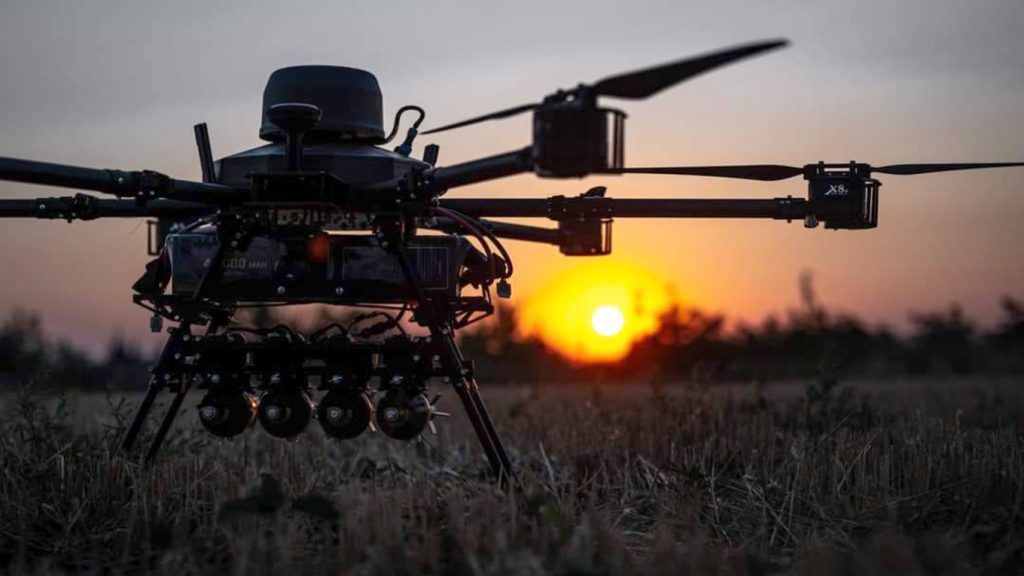
And then, we come to drones. While drone warfare is definitely not the overwhelming and decisive factor that it has been made out to be over the last decade, it does offer some significant benefits to non-governmental forces. Drones selling for less than US$100 on Amazon are capable of conducting missions ranging from aerial reconnaissance to combat target servicing, whether by dropping explosives onto a target, or by crashing into a target such as a battle tank, like a latter-day Japanese kamikaze plane. Likewise, drone parts kits are available to build much larger drones, capable of carrying much heavier payloads.


Greenville, NC Police department’s DJI Matrice drone. 2022. Photo by Greenville Police Department. CC0/1.0 Public Domain.


The implications heralded by the combat deployment and use of the FGC-9, on top of the repurposing of civilian drone copters for combat, are profound. State monopolies on military hardware are eroding, and with them, long-held assumptions about the balance of power in conflicts.


From Homebrewed Tanks & Artillery To Navies & Air Forces

The democratization of military capabilities isn’t limited to high-tech solutions. Since the 1980’s, pickup trucks converted into mobile fighting platforms—often dubbed “technicals”—have become ubiquitous in small-scale conflicts. These improvised fighting vehicles represent a low-tech but highly effective form of military innovation.

In Syria, this concept has been taken to new extremes. Civilian defense groups of all factions have constructed homemade armored vehicles, resembling mini-tanks, using salvaged materials and ingenious engineering. These vehicles, while not a match for modern main battle tanks (even when armed with ATGM’s), have proven surprisingly effective in urban combat scenarios. Of course, the use of these “technicals“, even if only otherwise standard pickup trucks fitted with machine guns in their beds, provides a low-tech group with a fast-moving force that can swiftly achieve spectacular results, given the right conditions.

But combat vehicles are not limited to armed pickup trucks. Returning to Syria, various forces in the mid-2010’s began building so-called “Hell Cannons“. These improvised artillery pieces fired homemade projectiles made from large propane canisters, capable of packing an impressive payload of explosives. While slow to load and not particularly accurate, these weapons are capable of inflicting significant damage on any area where their shells land. And, if fired as a battery, they can somewhat mitigate their slow reloading speed, as these weapons are almost always mounted on trailers, allowing them to be swiftly displaced and re-positioned.


“Hell Cannon” in Syria, 2014. CC0/1.0 Public Domain.


Similarly, there has been a maturing of “improvised navies“. Beginning, in the modern era, with the “Tamil Tigers” extensive use of smallcraft, as well as leveraging civilian freighters as mobile sea bases, many navies – notably that of Iran – have embraced the widespread use of small, high-speed boats to both attack larger civilian vessels, but also to execute the normal range of of uses for such vessels, such as inshore patrol and policing (in small, poor nations), guerrilla supply along inshore and riverine areas, and the insertion of small teams of combat troops – much like large-state special forces – into remote areas to avoid interception. This has occasionally escalated to actual, theater-level amphibious campaigns.

In the America’s, “narco submarines” have been a continual headache for police and naval forces in several countries. While these vessels (most are not really ‘submarines‘…but some are) are not known to be used for covert insertions, they certainly can be. For the moment, however, the United States seems to still be blessed with the rule from before the 9/11 Attacks, that most of the terrorist and guerrilla groups in the world refrained from attacking targets inside the United States, as most of their funding came from ex-patriot donations from their communities of immigrants and refugees living here.


Crew of the Coast Guard cutter Stratton interdicting semi-submersible vessel on July 18 2015. USCG photo bu PO2 LaNola Stone. Public Domain.


But there is also a little talked about element: “DIY Air Forces“. Increasingly, in addition to drones, well-funded insurgent groups are leveraging lightweight civilian aircraft, including autogyros. While the legions of internet flag officers around the world laughed at the Communist Chinese idea of deploying autogyros for lightweight air assault…but, after the Hamas offensive that began on October 7th of 2023, only the truly stupid still laugh, as Hamas deployed airborne raiders (against, being fair, a group of unarmed teens and 20-somethings at a rave) via paragliders, which are essentially a parachute driven by a large fan worn by the user.

Technology is advancing, and the once-fanciful shticks used as stunts in movies from the 1960’s to the 1990’s, are no longer fantasy, but hard, capable combat systems that are affordable – and acquirable – by virtually anyone.


Training, Command, and Combat Control in the Digital Age

Perhaps one of the most striking examples of democratized military capabilities comes from recent conflicts, where non-state actors have rapidly established sophisticated command and control systems using off-the-shelf technology.

In the terrorist assault on the Indian city of Mumbai in 2008, the Lashkar-e-Taiba attacker’s command group repurposed a commercial office as an improvised command center, and did so at short notice. Equipped with consumer-grade computers, open-source mapping software, and encrypted messaging apps, they coordinated dispersed, complex operations, including verifying assassination targets in real time, using Google to match pictures of victims to their names and titles via facial recognition technologies, with an efficiency that rivaled traditional military and police command structures.

More and more, new desktop software and smartphone-based apps are offering armed non-governmental actors the ability to use many of the same tools as far better funded national armed forces. These tools run the gamut, from translation apps to 3D mapping and planning tools that, hwiler perhaps not exactly ‘military spec’, are certainly ‘good enough’; in some cases, regular national forces use many of these same programs and apps, because the civilian developers simply build better tools.

But there is a deeper question: How are “rag-tag guerrillas” acquiring the training necessary to conduct these operations?

In the ‘old days’, this was mostly done via trial and error or via some group of experienced advisors, either from the national military, or from a ‘friendly’ foreign power; occasionally, desperate but well-funded groups would hire foreign mercenaries to train and lead their “popular liberation forces” in the field…But today, those blocked or otherwise unable to attend formal military training courses have an alternate: finding military training manuals online.

There are literally dozens of archival repositories scattered throughout the internet, loaded with declassified or never-classified military manuals from dozens of nations. These are frequently the current editions of manuals on a given subject. It is important to note that this is no substitute for a measured, supervised course of instruction. Leaders – especially military leaders – are not created overnight. However…in an environment where military leadership is suddenly needed, those individuals who see themselves as filling that role, can now tweeze out at least a reasonable series of academic learning.

But what about actual “field training“?

In previous decades of the late-20th Century, civilians attempting to provide themselves with military training usually resorted, to be frank, to the old children’s game pf “Army”, shouting “BANG!” at each other with rifles; in this, they were not too different from pre-World War 2 training, at least in the United States. The US military, obviously, radically reformed its training regimen after that war, to make its troops far better prepared for the next go-round.

Today, however, the increasing popularity of “combat games” such as AirSoft (or the older paintball) offer a facsimile of military training – neither as good, nor as consistent as a regular force – that is still sufficient to offer much more than a “first step”.


The Global Implications of Military-Sphere Democratization

The democratization of military capabilities is redrawing the maps of global power and conflict. Small nations and non-state actors now have access to capabilities once reserved solely to major powers and their proxies. This shift is forcing a reevaluation of traditional military doctrines and international relations:


  1. Asymmetric Warfare Evolved: The line between state and non-state military capabilities is blurring, making conflicts more unpredictable and potentially more protracted.
  2. Proliferation Challenges: Traditional arms control measures are struggling to adapt to a world where military capabilities can be ‘printed’ or improvised.
  3. Ethics and Legality: The ease of accessing military capabilities raises complex ethical and legal questions about the conduct of war and the definition of combatants.
  4. Innovation Acceleration: The decentralized nature of these developments is driving rapid innovation, often outpacing traditional military R&D cycles.
  5. Global Security Landscape: As capabilities proliferate, the potential for conflict may increase, but so too might the barriers to large-scale war.


A Look Ahead

In this new landscape, the international community faces tough questions. How does the world manage the proliferation of military capabilities in an age of digital sharing and additive manufacture? Can international laws and norms adapt quickly enough to address these changes?

The democratization of military capabilities is not just changing how wars are fought; it’s changing who can fight them effectively and why they’re fought in the first place. As technology continues to evolve, so too will the face of warfare. The challenge for the global community is to navigate this new reality, seeking ways to harness its potential for defense and deterrence while mitigating its risks. The reality, however, is that the result of both the widespread dissemination of information, matched to blockchain technology, virtual private networks (VPNs), and additive manufacture, make controlling the flow of information virtually impossible.

In the jungles of Myanmar, the deserts of Syria, and countless other corners of the globe, the future of conflict is being written not just by states and their armies, but by individuals armed with ingenuity, determination, and increasingly, the tools to challenge traditional power structures. The world must take notice and adapt, for the genie of democratized military capability cannot be put back in the bottle.

At the same time, these tools are just that – tools. Tools are inanimate objects, and because of this, they have no independent intent. Tools are used for both good and evil actions, and those with the intent determine the direction and tone of the use of those tools – no matter where those tools are directed.


The Freedomist — Keeping Watch, So You Don’t Have To
The Final Frontier of Combat Operations: The Escalating Militarization of Space


Beginnings

As humanity’s presence in space grows, so too does the potential for conflict. The militarization of space – “space war”, if one prefers – was once the realm of science fiction, but is rapidly becoming a reality that promises to reshape global security dynamics in the 21st century.

The concept of space as a military domain is not new. Since the launch of Sputnik in 1957, nations have recognized the strategic importance of space. Early military applications focused on reconnaissance and communication satellites, which have played crucial roles during the Cold War, and the wars of the 21st century. However, recent years have seen a dramatic acceleration in the development and deployment of military space capabilities.


Confrontation In Space

As far back as 1981, author G. Harry Stine, one of the founders of model rocketry in the United States, and a notable author of hard science and technology writings, as well as science fiction, laid down the basics of warfare in space in his book “Confrontation In Space“, defining the basic shape and dimensions of the battlespace, the most likely weapons that will be used, and outlining the early concepts of how combat in space would be waged.

There is no science fiction in this book, and no technobabble, just the hard realities of applying warfare “in the Black”, to reference a certain TV show, to the real world. Given the general nature of some of the space-war musings of the time that have since been declassified by official sources, Stine is a refreshingly sane and soberingly realistic voice.

The extent to which Stine’s work has influenced modern space battle planning is open to question; it should be a fundamental text, but given the current mission statement of the United States Space Force (USSF), that seems unlikely.

Today, the major players in space militarization are the United States, China, and Russia, with other nations like India and Japan also expanding their capabilities. These countries are investing heavily in a wide range of space-based military technologies. The United States, however, long one of the main innovators of space exploration, only established the USSF in 2019 as a separate branch of its armed forces, signaling the growing importance of space in military doctrine.

Current military space capabilities go far beyond simple reconnaissance. They include the creation and servicing of advanced communication networks (which underpins the basic operation of the internet), precision navigation systems like GPS and early warning systems to detect ballistic missile launches. However, in recent years, China, Russia, and the United States have all demonstrated anti-satellite (ASAT) weapons capabilities, raising fears about the vulnerability of critical space infrastructure, demonstrating the ability of national actors to destroy satellites at will.


An artist’s illustration of the Soviet-era Istrebitel Sputnikov ASAT system, c.1986. US Government image. Public Domain.


Technological advancements are driving this new space race. The miniaturization of satellites has made it easier and cheaper to launch large constellations of small satellites, enhancing resilience and coverage, as well as opening the potential for true “surge capacity”, to rapidly launch replacement satellites to replace combat losses. In addition to rapid reconstitution of a damaged communications network, the need to replace combat-lost GPS satellites is a key function of satellite surge capacity, because most military vehicle and targeting systems rely on GPS for navigation in addition to combat. Reusable launch vehicles, pioneered by companies like Elon Musk’s SpaceX, have dramatically reduced the cost of accessing space, which has lowered the barrier to entry for military space programs.


Throwing Rocks

Fundamental to actual warfare in space is the development of dedicated weapons for use in the theater. While actual weapons have been fired in space, these weapons go far beyond lasers, high-powered microwave systems, or even the darling of recent science fiction shows, the “particle accelerator“. In fact, the most lethal weapons in space will likely be rocks: “mass drivers“, essentially an electromagnetic catapult, can accelerate iron-rich space rocks (as small as pebbles) to very high velocities, far faster than conventional bullets or cannon rounds. A hit from a very high-speed projectile of any nature could be a catastrophic damage source to any spacecraft, as current launch systems severely limit the weight of spacecraft, which in turn limits the amount of armor a vessel can carry, assuming that current armor would even be effective. While still largely theoretical, such weapons could revolutionize space warfare, and require careful thought and planning to employ.

In response to these emerging threats, nations are working to develop countermeasures and defensive strategies; most of these, it much be noted, are ‘passive’ in nature, as active countermeasures are currently ill defined. The strategies currently in development include hardening satellites against attacks, improving space situational awareness to detect threats, and developing rapid launch capabilities to quickly replace damaged or destroyed satellites.


Bright Light Boom

There is also the possibility – perhaps “likelihood” – that someone will eventually detonate a nuclear weapon as part of an actual battle in space. The main considerations in using these weapons in space begin with exactly where they are detonated. If a large enough warhead were detonated at a suitable altitude above the surface, it could – in theory – generate an electromagnetic pulse (EMP) sufficient to overload and shutdown, if not outright destroy, any large-scale power grid. This phenomenon was first recognized in 1962 during the Starfish Prime test, when an unexpected EMP wave from the detonation knocked out power to parts of the city of Honolulu, Hawaii.


Photo of the Starfish Prime detonation in the skies over Honolulu, Hawaii, 1962. US Government photo. Public Domain.


Aside from the well-known, at least in a broad sense, radiation effects (which would likely be magnified in space, without an atmosphere to absorb them) and EMP concerns, the main damage-causing mechanism of a nuclear blast on Earth – blast effect, caused by the compression of the atmosphere by the detonation wave – would not be present, as there is no atmosphere in space that can be compressed into a destructive force.

For all that, however, work on “bomb-pumped lasers” and other exotic warhead designs such as Project Casaba-Howitzer (which used a nuclear weapon to create a shaped charge from material vaporized into plasma by the blast), largely came an end – at least publicly – at the end of the 1980’s, as it was clear that the Soviet Union was dying, and that the prospect of all-out nuclear war had rapidly begun to fade.


Pulse propulsion unit of project Orion vehicle, used as the basis for the Casaba-Howitzer warhead concept, 1964. NASA image. Public Domain.


As the possibility of actual open warfare in space continues to rear its head, it is a near-certainty that many of these old programs are being reexamined, using fresh data and better computer modeling…The possible side effects, however, remain.


Combat Logistics in Space Warfare

One of the most challenging aspects of space militarization is the issue of combat logistics. Unlike terrestrial warfare, where supply lines can be established and maintained relatively easily, space presents unique challenges for sustaining military operations.

The primary hurdle is the enormous energy requirement to launch materials into orbit. Every kilogram of supplies, whether fuel, ammunition, or replacement parts, comes with a very high price tag (over $2,000 per kilogram) and significant challenges to logistical load planning, in both loading and unloading at point of delivery. This makes traditional resupply methods impractical for sustained operations in-theater, as we understand the idea.

To address these issue, military planners are exploring several approaches. One concept is the development of in-orbit refueling capabilities. This would involve specialized “tanker” satellites capable of transferring fuel to other spacecraft, extending their operational lifespan and maneuverability.
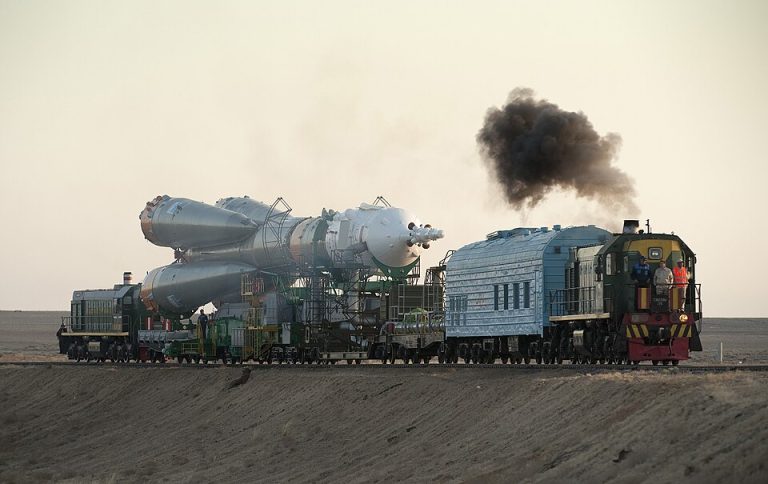
 

A contour plot (not drawn to scale) of the effective potential of a two-body system, showing the 5 Lagrange points. NASA image. Public Domain.


Another area of focus is in-space manufacturing. Advanced 3D printing technologies – currently capable of making conventional ammunition-using select-fire weapons a factor in infantry combat – could allow for the production of spare parts or even small satellites directly in orbit, reducing the need for launches from Earth. Different avenues of research are exploring the possibility of mining asteroids or the Moon for resources, which could provide a sustainable source of materials and fuel for space-based operations.

Robotic servicing missions represent another potential tool in the box. These would involve unmanned spacecraft under direct, if remote, control, or completely autonomous systems guided by artificial intelligence, which would be capable of repairing, refueling, or upgrading other satellites or spacecraft, potentially extending their useful life and reducing the need for replacement of complete craft.

The concept of staging pre-positioned orbital depots is also being considered. These would be stockpiles of fuel, spare parts, and other critical supplies placed in strategic orbits, such as the Lagrangian points, ready to support military space operations as needed. In form, these might take the form of the old Skylab design, as – being the size of a 3-bedroom house – the design could hold a significant amount of material.


Artist’s concept illustration of the Skylab with the Command/Service Module docked to the Multiple Docking Adapter. 1972. NASA photo.


These logistical challenges and their potential solutions will play a crucial role in shaping the nature of future space warfare. The side that can most effectively sustain its space-based capabilities may gain a significant strategic advantage in any potential conflict extending into the space domain.


The Future


The future of space militarization remains uncertain, but several scenarios seem plausible. One possibility is the outbreak of a limited conflict in space, perhaps involving the destruction of key military or civilian satellites. This could have cascading effects on terrestrial military operations and civilian infrastructure.

Another scenario envisions the deployment of space-based weapons capable of striking targets on Earth. While technically challenging and currently prohibited by international treaty, such systems could offer significant strategic advantages.

A third possibility is the integration of space-based capabilities with terrestrial, air, and naval forces to create a seamless, multi-domain military force. This could enhance military effectiveness but also increase reliance on potentially vulnerable space assets.

As we look to the future, it’s clear that space will play an increasingly important role in military affairs. The challenge for the international community will be to balance the legitimate use of space for national security with the need to prevent a destabilizing arms race in orbit. Failure to do so could turn the final frontier into the next battlefield.


ADDITIONAL RESOURCES

  1. G. Harry Stine (1981), Confrontation in Space
  2. Julian Thompson (1994), Lifeblood of War: Logistics in Armed Conflict
  3. Thomas Ricks (2012), The Generals
  4. James F. Dunnigan (2003), How To Make War, 4th Edition
  5. James F. Dunnigan (1991), Shooting Blanks


The Freedomist — Keeping Watch, So You Don’t Have To
The Carrier Battle Group: America’s “Big Stick” Of Power Projection


Introduction

Earlier this week, the United States accelerated the deployment of the USS Abraham Lincoln (CVN-72) and its carrier battle group to the Middle East – an operation which was already in progress to relieve the USS Theodore Roosevelt (CVN-71) and its own battle group of escorting warships, who have been on station in the region for months – in response to signs that the increasingly unstable regime in Iran may attempt to significantly widen its proxy war against the state of Israel which began on October 7 of last year.


The Good Ol’ Days

The origin of the aircraft carrier battle group takes its origins from the world-spanning naval warfare of World War II, primarily from its operations in the Pacific Ocean. The devastating Japanese attack on Pearl Harbor, on December 7th, 1941, demonstrated the power of carrier-based aviation and the vulnerability of battleships, marking a fundamental shift in naval strategy, as the Imperial Japanese Navy destroyed the United States Navy’s main battle force in the attack. The United States Navy – stripped of its battleship fleet by the sneak attack on its Hawaiian base, and whose Asiatic Fleet was functionally neutralized in the opening stages of the war by staggeringly unbelievable levels of incompetence and mismanagement – was forced to continue the fight with only three aircraft carriers, something it had never seriously considered as a possibility.

 

Photograph taken from a Japanese plane during the torpedo attack on ships moored on both sides of Ford Island shortly after the beginning of the Pearl Harbor attack. IJN photo, via the US Navy. Public Domain.


As the war raged on, the U.S. Navy quickly adapted, forming diverse, multi-ship task forces centered on its massive aircraft carriers. The battles of the Coral Sea and Midway in 1942 proved the effectiveness of this approach, with American carriers dealing a decisive blow to the Japanese fleet, while remaining largely protected by much smaller destroyers and destroyer-escorts, which both shot down attacking Japanese aircraft, and sometimes absorbed bombs and torpedoes meant for the carriers. As the war progressed, these carrier task forces became increasingly sophisticated, with hard-learned doctrine and techniques using destroyers primarily for anti-submarine warfare and cruisers studded with heavy automatic cannons for air defense, even at close range.


Bofors 40 mm anti-aircraft guns on a Mk 12 quadruple mount firing on board USS Hornet (CV-12), circa February 1945, probably during gunnery practice. Photo credit: Lt. Cmdr. Charles Kerlee, USN. Public Domain.


Into the Cold

In the post-war era, the advent of jet aircraft and guided missiles led to further refinements to both aircraft carriers themselves, but also in their organization and tactics. The introduction of the angled flight deck and steam catapults (these are now being replaced with electromagnetic catapults on the new Gerald R. Ford-class carriers) in the 1950s enhanced carrier operations, while the development of guided missile destroyers and cruisers improved the group’s air defense capabilities, at least in theory. Modern navies, however, would get a severe reality check in 1982, as the very modern British Royal Navy was badly hammered by the second-tier air force of Argentina in the savage (especially allowing for its relatively small size) Battle of San Carlos, causing a sobering reassessment by all navies of their own capabilities and tactics. (On a historical side note, the Falklands War also saw the destruction of the ARA General Belgrano, the former USS Phoenix (CL-46), a Brooklyn-class cruiser from World War 2, which had survived the Pearl Harbor attack, to be sunk by a British attack submarine some forty years later.)


A Standard Missile-3 is launched from the Japanese Aegis Destroyer JS Kongo (DDG 173), 2007. US Navy photo. Public Domain.


The Cold War saw the carrier battle group evolve into one of – if not the primary – key instruments of power projection. The nuclear-powered USS Enterprise (CVN-65), commissioned in 1961, heralded a new era of endurance for carrier operations. However, this would be tempered with the realization that while the range of the carrier itself was now measured in decades, instead of miles, it was still restricted by the ranges of its gas-turbine engined escort vessels, and the constant need for resupply of everything from food to bombs, spare parts and fuel for its aircraft wing. The development of the Aegis combat system in the 1980s (and its associated ballistic missile defense component) would significantly enhance the group’s air defense capabilities, while continuous development of anti-submarine and anti-mine technologies further protected the carrier and its escorts. These capabilities did not come without cost, however: hard lessons were learned from the attacks on the USS Stark, the USS Samuel B. Roberts, and the bombing of the USS Cole. These lessons continue to be learned, but the takeaway is that naval warfare – like all warfare – is not a video game, despite breathlessly giddy news stories to the contrary.

In the realm of anti-submarine warfare, the US Navy pioneered the modern use of armed combat drones in warfare, when it deployed the QH-50 DASH (Drone Anti-Submarine Helicopter), built by Gyrodyne, in 1959.


In the Persian Gulf, a port quarter view of the guided missile frigate USS STARK (FFG-31) listing to port after being hit by two Iraqi Exocet missiles, 18 May 1987. Public Domain.


The Dawn of the Millennium and the GWOT

The post-Cold War period has seen carrier battle groups involved in numerous conflicts, from the 1990-91 Gulf War to operations in Afghanistan and Iraq. The groups have also played crucial roles in humanitarian assistance and disaster relief missions. Today’s carrier battle groups, while retaining their core structure developed over some fifty years, continue to evolve to meet new challenges. The integration of stealth aircraft, more advanced unmanned systems, and advanced, internet-based networking and cyberwar capabilities ensures that the carrier battle group will remain a fundamental cornerstone of naval power projection for the rest of the 21st Century.

Laying at the heart of the United States Navy’s global power projection capabilities, the carrier battle group (CVBG), also known as a carrier strike group (CSG) is a formidable assembly of warships and aircraft, centered around a nuclear-powered aircraft carrier, representing one of the most potent concentrations of military might ever to sail the world’s oceans. Usually comprising an aircraft carrier, a single guided missile cruiser for air defense, at least two LAMPS-capable warships (focusing on anti-submarine and surface warfare), and one or two anti-submarine destroyers or frigates, such battle groups frequently deploy more combat power than that possessed by most individual nations in the world.

The cornerstone of any carrier battle group is the aircraft carrier itself. As of 2024, the US Navy operates eleven nuclear-powered carriers, primarily of the Nimitz class, with the newer Gerald R. Ford class gradually being introduced into service. These floating airfields, crewed by between 4,000 and 5,000 sailors, displace approximately 100,000 tons and can carry an air wing of 60-75 aircraft.

The air wing of a 21st Century US aircraft carrier typically consists of:

  1. F/A-18 E/F Super Hornets: Multirole fighters capable of air superiority and strike missions.
  2. EA-18G Growlers: Electronic warfare aircraft for jamming enemy radar and communications.
  3. E-2D Hawkeyes: Airborne early warning and control aircraft.
  4. MH-60R/S Seahawk helicopters: For anti-submarine warfare, search and rescue, and utility missions.
  5. F-35C Lightning II: The Navy’s newest stealth multirole fighter, gradually being integrated into carrier air wings.


E-2D Advanced Hawkeye aircraft conduct a test flight near St. Augustine, FL, 2009. US Navy photo. Public Domain.


Surrounding the carrier are several Aegis-equipped guided missile cruisers and destroyers. These ships form a protective screen around the carrier and provide a wide range of capabilities:

  1. Ticonderoga class cruisers: Usually one or two per battle group, these ships specialize in air defense but are also capable of land attack and anti-ship warfare.
  2. Arleigh Burke class destroyers: Typically three to four per group, these versatile warships can perform anti-air, anti-surface, and anti-submarine warfare missions.


Both classes of ships are equipped with the Aegis combat system, which integrates powerful radars with various close-in and long-range weapon systems, allowing for sophisticated air and missile defense capabilities.

Although not always visible, one or two nuclear-powered attack submarines often operate in conjunction with a carrier battle group. These could be Los Angeles-, Virginia-, or Seawolf-class nuclear-powered submarines. Their primary roles include:

  1. Gathering intelligence
  2. Providing an unseen protective screen against enemy submarines
  3. Potential land-attack capabilities with Tomahawk cruise missiles


A carrier battle group also includes several support ships crucial for sustained operations:

  1. Supply ships: Usually one or two fast combat support ships (T-AOE) or a combination of fleet oilers (T-AO) and dry cargo ships (T-AKE) to replenish fuel, ammunition, and supplies.
  2. Hospital ships: While not typically part of the regular battle group, these can be attached for humanitarian missions or in anticipation of major combat operations.


Royal Australian Navy ship HMAS Sirius (OR-266) and amphibious transport dock USS Juneau (LPD-10) conducts a replenishment at sea (RAS), 2007. US Navy photo. Public Domain.


An entire battle group, such as that outlined above, is under the command of a Rear Admiral (lower half), who typically serves as the Commander, Carrier Strike Group (CCSG). The CCSG and their staff coordinate the activities of all ships and aircraft in the group, ensuring they work together as a cohesive fighting unit.

A fully equipped US carrier battle group is ideally positioned to:

  1. Project power far from American shores, with the ability to strike targets hundreds of miles inland.
  2. Establish air superiority over a wide area.
  3. Conduct sustained air operations, launching over 100 sorties per day.
  4. Provide a visible deterrent to potential adversaries.
  5. Respond rapidly to crises anywhere in the world.
  6. Conduct humanitarian assistance and disaster relief operations.


The versatility of the carrier battle group allows it to transition quickly from peacetime presence to crisis response to full-scale war fighting. This is no more true than in its mission of supporting assault landings by combat units (MAGTF’s) of the United States Marine Corps, which remains a part of the Department of the Navy. The US Navy’s ten Amphibious Ready Groups are able to quickly insert up to 6,000 US Marines quickly, at multiple points along a hostile shoreline, ranging well inland, if necessary…as long as the naval squadron can get to the area quickly enough – hence, the acceleration of the USS Abraham Lincoln and her CVBG to the Levant.

As of 2024, the US Navy continues to adapt its carrier battle groups to meet evolving threats:

  1. Anti-ship ballistic missiles: The development of these weapons, particularly by China, has led to increased emphasis on integrated air and missile defense capabilities.
  2. Unmanned systems: The Navy continues to explore the integration of unmanned aerial, surface, and undersea vehicles to extend the reach and capabilities of the battle group.
  3. Cyber warfare: Increased focus on protecting the battle group’s networks and exploiting adversary vulnerabilities in the digital domain.
  4. Distributed lethality: Spreading offensive capabilities across more platforms in the battle group to complicate enemy targeting.


Conclusion

The Navy is continuously evolving the concept of the carrier battle group. Some areas of focus include:

  1. The integration of directed energy weapons for close-in defense.
  2. Development of long-range anti-ship missiles to counter peer competitors.
  3. Exploration of smaller, more numerous carriers to distribute capabilities.
  4. Enhanced networking capabilities to better integrate with joint and allied forces.


The US carrier battle group remains a cornerstone of American military power projection, and will continue to do so well into the 21st Century, and likely beyond. Its ability to bring a flexible, sustained, and potent military presence to any region of the world makes it a unique and invaluable strategic asset. As geopolitical tensions and technological advancements continue to shape the global security landscape, and as unrest continues to disrupt the trade vital to the modern world, the carrier battle group will continue to evolve, maintaining its role as a key instrument of US national security policy, as well as protecting the civilized world at large.


ADDITIONAL RESOURCES

  1. Estate of Wayne P Hughes Jr. USN (Ret.) & Robert P. Girrier (2018), Fleet Tactics and Naval Operations, 3rd Ed
  2. Patrick Degan (2003), Flattop Fighting in World War II
  3. Paul S. Dull (2007), A Battle History of the Imperial Japanese Navy, 1941-1945
  4. Thomas Ricks (2012), The Generals
  5. James F. Dunnigan (2003), How To Make War, 4th Edition
  6. James F. Dunnigan (1991), Shooting Blanks


The Freedomist — Keeping Watch, So You Don’t Have To
Israel, Hamas, Hezbollah, and Iran: Fiddling In The Fire


The period from 2020 onward has seen a significant escalation in tensions between Israel and its regional adversaries, primarily Iran and its proxy forces, Hezbollah and Hamas, as well as the more distant Houthi’s of Yemen. This complex web of conflicts and alliances has continued to shape the geopolitical landscape of the Middle East, and has significantly escalated tensions, to the point of a realistic chance for a much-expanded war.

The long-standing animosity between Israel and Islamic revolutionary Iran began to intensify in the early 2020’s. Iran’s nuclear program remained a central point of contention, with Israel consistently opposing any deal that would allow Iran to continue its nuclear development; this attempt at preventing nuclear proliferation, however integral to Israel’s security as it may be, is also highly unrealistic; the assassination of top Iranian nuclear scientist Mohsen Fakhrizadeh in November 2020, widely attributed to Israel, marked a significant escalation, as this differed from the Israeli Mossad’s previous assassination of Mahmoud Al-Mabhouh in Dubai, as the killing of Fakhrizadeh happened within Iran itself.

In this context, Israel is now accused of the assassination of Ismail Haniyeh, Hamas’ political head, who was killed in his hotel room on July 31st, in an apparent drone attack. This, too, occurred in Iran, but in the capital of Tehran itself. While Israel is unarguably at war, following the Hamas offensive of Oct. 7, 2023, an assassination such as this – known as a “decapitation strike” in military parlance – happening in a technically-neutral country (even given the events of April of 2024), is doing Israel no favors internationally.


The Biden administration has proven itself ineffectual with its diplomatic efforts, demonstrating both weakness and incoherence, to the point of encouraging the ambition of the Iranian ruling mullahs.

The election of hardliner Ebrahim Raisi (who was killed on May 19th, 2024 in a helicopter crash while returning from neighboring Azerbaijian) as Iran’s president in 2021 further complicated diplomatic efforts. Raisi’s administration took a more confrontational stance towards both Israel and the West, leading to increased concerns about regional stability.

Meanwhile, Hezbollah – the Iran-backed militant group that has controlled Lebanon’s southeastern Bekaa Valley since the mid-1980’s, remained a significant threat to Israel’s northern border. In 2020 and 2021, there were several minor skirmishes along the Israel-Lebanon border, though both sides managed to avoid a full-scale conflict.

Israel continued to conduct airstrikes in Syria, targeting what it claimed were Iranian weapons shipments to Hezbollah. These operations aimed to prevent the group from obtaining advanced missile systems that could threaten Israeli cities.

In 2022, tensions further escalated when Israel and Lebanon engaged in U.S.-mediated negotiations over their maritime border, which involved disputed gas fields. Hezbollah threatened to attack Israeli gas installations if an agreement wasn’t reached, leading to a tense standoff that was eventually resolved through diplomacy. Now, following a rocket attack on the Israeli Druze community of Majdal Shams on 27 July that killed a number of Druze children, Israel is at the point of invading southern Lebanon to try and attrit Hezbollah’s ability to strike into Israel, much as it attempted in 2006. In this, the ineffectual Lebanese government can offer no resistance against an invasion, or even an “incursion”, and calling on Muslim countries for aid could easily trigger a new civil war in the unstable and bankrupt nation.

In the south, the situation in Gaza remained volatile, with periodic flare-ups of violence between Israel and Hamas, which has retained power in Gaza since 2006, when Hamas won Gaza’s first election – then made sure that no other elections occurred to challenge its grip on power. In May 2021, a significant escalation occurred when Hamas and other militant groups in Gaza fired thousands of rockets at Israel. Israel responded with extensive airstrikes on Gaza, resulting in a 11-day conflict that caused substantial casualties and damage. The aftermath of this short conflict saw increased international pressure for a long-term solution to the Gaza situation. However, progress remained elusive, with Hamas maintaining its control over Gaza and continuing to clash with Israeli forces, which would escalate dramatically on October 7th of 2023.

In 2022 and 2023, there were several smaller-scale exchanges of fire between Gaza militants and Israel. These incidents, while not escalating to the level of the 2021 conflict, served to maintain a state of tension and uncertainty in the region.

The ongoing civil war in Syria that began in 2011, and the unstable situation in Lebanon have provided fertile ground for proxy conflicts involving Israel, Iran, and their respective allies. Israel continued its policy of preventing Iranian entrenchment in Syria through targeted airstrikes, while Iran sought to maintain and expand its influence in the region.

The Abraham Accords, negotiated by US President Donald Trump and signed in 2020, which normalized relations between Israel and several Arab states, altered the regional dynamics. This realignment put additional pressure on Iran and its allies, as Israel’s diplomatic and strategic position in the Middle East was greatly strengthened.

The conflict between these actors is increasingly playing out in the cyber domain. Both Israel and Iran have engaged in sophisticated cyber attacks against each other’s infrastructure, including attempts to disrupt nuclear facilities, water supplies, and electrical grids. For its own part, rumors persist that Israel was at least partly behind the deployment of the highly destructive STUXNET virus in 2010.


Covert operations, including assassinations and sabotage, have become more frequent – as with the assassination of Ismail Haniyeh noted above – as the conflict has evolved. These actions, carried out with only the thinnest veneer of “plausible deniability“, have served to maintain tension without triggering open warfare; that situation, however, may be coming to an end.

The United States remains heavily involved in the region – building on its rocky, 20 years “War on Terror” – by supporting Israel while also attempting to prevent a widening conflict. The Biden administration’s efforts to re-engage with Iran on the nuclear issue met with – being charitable – mixed success, complicated by regional tensions and domestic politics in both the U.S. and Iran, as well as its own failings in the disastrous end to United States adventurism in Afghanistan. The Biden-Harris administration has consistently demonstrated that it cannot make any sort of definitive decision, one way or another, on the diplomatic front.

Russia and China also play significant roles in the Levantine conflict, with Russia maintaining its presence in Syria and with China increasing its economic and diplomatic engagement with Iran. In both cases, Moscow and Beijing figuratively smell blood in the water, as they sense the weakness in NATO [https://en.wikipedia.org/wiki/NATO] as a whole, but also in the United States in particular, as the Biden-Harris team continues to flounder internationally.


The ongoing conflicts and tensions have had severe humanitarian consequences, particularly in Gaza and parts of Lebanon. International organizations repeatedly called for increased access to provide aid and for all parties to respect international humanitarian law. The ongoing war in Gaza following the October 7 massacre, as well as the Houthi strikes against Red Sea shipping, has only made the situation far worse, with Israel now resolved to end the Gaza question once and for all, leading to worsening violence and rhetoric directed against them in the West, with criticism coming from all sides, driving the Israeli mindset further into an “Us Alone Against The World” outlook.

As of early 2024, the situation remained tense and unpredictable. While full-scale war has been avoided so far, the risk of escalation into a much wider war – a war with the potential to draw in larger powers is increasingly possible. The interplay between Israel, Iran, Hezbollah, and Hamas continues to be a major driving factor in regional instability, with implications extending far beyond the Middle East. The international community is attempting to remain engaged, seeking ways to reduce tensions and prevent a larger conflict, but face significant challenges due to systemic internal problems facing Western nations, crushing demographic issues with Communist China, and Russia’s seemingly interminable war in Ukraine.


The Freedomist — Keeping Watch, So You Don’t Have To
The Militarization of the Poles: Future Warfare On The Frozen Frontier


Amid the ongoing chaos of in the world of 2024, other areas of military research and development continue apace. Despite nearly thirty years of warfare in the arid climates of the Middle east, as climate change reshapes the Arctic and Antarctic landscapes, these once-forbidding regions are being strenuously studied as new arenas for potential conflict. Polar warfare, long considered a niche aspect of military strategy, is now gaining prominence as nations vie for resources and strategic advantages in these harsh environments.

Arctic region (orthographic projection) with national borders and land highlighted. 2023. Credit: Heraldry, Isochrone. CCA/3.0.

The Arctic, in particular, has become a focal point of international interest. With an estimated 13% of the world’s undiscovered oil reserves and 30% of its undiscovered natural gas, the region is attracting attention from both Arctic and non-Arctic nations. As ice coverage over the poles recedes, new shipping routes are opening up, promising shorter transit times between Europe and Asia. These developments have spurred a renewed focus on developing and improving military capabilities suited to polar conditions.

The Antarctic Continent, 1928 map. Credit: New York Times. Public Domain.

The challenges of warfare in polar regions are numerous and unique. Extreme cold, unpredictable weather, and long periods of darkness or constant daylight create a hostile environment for both personnel and equipment. Standard military gear often fails in these conditions, necessitating specialized cold-weather equipment and extensive training for troops.

One of the primary concerns in polar warfare is cold-weather logistics. The vast, often empty expanses of the Arctic and Antarctic make supply lines long and vulnerable. Fuel consumption increases dramatically in cold weather, and equipment requires constant maintenance to prevent freezing and malfunction. These factors make theater sustainment a critical aspect of polar military operations.

Naval operations in polar regions present their own set of challenges. Ice-covered waters require specially designed ships with reinforced hulls. Icebreaker ships become crucial assets, not just for clearing paths but also for projecting power and maintaining presence in these regions. Submarines, long seen as the ideal platform for under-ice operations, are gaining renewed importance in polar strategy.

The USCG Healy (WAGB-20) breaks ice around the Russian-flagged tanker Renda 250 miles south of Nome, Alaska, Jan. 6, 2012. DoD photo by Petty Officer 1st Class Sara Francis, U.S. Coast Guard. Public Domain.

Air power in polar regions is complicated by the lack of established airfields and the effects of cold on aircraft systems. However, long-range patrol aircraft and drones are becoming increasingly important for surveillance and maintaining situational awareness over vast Arctic expanses. While the US Navy has only recently resumed carrier operations north of the Actic Circle after a near-thirty year absence, there has a been a steady, if quiet, push to improve operational capabilities for ship-based aviation going on for the last decade or so.

Ground operations in polar environments also require specialized training and equipment. Troops require specialized – and thus, very expensive – training in cold-weather survival techniques and must be able to operate vehicles and weapons in the extreme environments they will encounter. White-out conditions, crevasses, and unstable ice make movement treacherous, requiring expert navigation skills and fast reactions. These aspects of arctic warfare were brought into sharp focus during the Falklands/Malvinas War of 1982, when an attempt to insert a Special Air Service (SAS) team onto Fortuna Glacier on the island of South Georgia, went disastrously wrong, although fortunately without fatalities.

The role of technology in polar warfare cannot be overstated. Satellite communications, crucial for modern military operations, can be unreliable at extreme latitudes. GPS systems also face challenges, necessitating the development of alternative navigation methods. Advanced sensors capable of operating in harsh conditions are becoming increasingly important for detection and targeting in the polar environment.

Several nations are actively developing their polar warfare capabilities. Russia, with the world’s longest Arctic coastline, has been particularly active in militarizing its northern regions. The country has reopened Soviet-era Arctic bases and is developing new icebreakers, including nuclear-powered vessels, as well as hypersonic missiles adapted to the Arctic environment. The United States, Canada, and Nordic countries are also enhancing their Arctic capabilities, conducting regular exercises in the region.

In the Antarctic, while the Antarctic Treaty System prohibits military activity, nations maintain a presence through scientific research stations. However, the potential for future conflict cannot be ignored, particularly as the treaty comes up for potential revision in 2048. The Islamic Republic of Iran, however, is attempting to establish its own presence on the continent, claiming both “property rights” on the continent, as well as stating that the terms of the 1959 treaty system do not apply to them, as they were never signatories to that treaty. It remains to be seen what, if anything, may come of this apparent (hopefully) chest-thumping.

Remaining in the forefront of the Treaty System’s signatories is “Operation Highjump“, now remembered in popular media mostly for various conspiracy theories. In fact, the United States sent a massive force, Task Force 68, totaling some seventy ships, including the aircraft carrier USS Philippine Sea (CV-47), acting as the flagship. Whatever the actual reasons for the expedition, the ability of the United States to operate in the extremes of the Antarctic was one of the factors that ultimately lead to the establishment of the Treaty System a decade later.

A U.S. Navy personnel use a bulldozer to clear a path to facilitate transport of supplies from ships during Operation Highjump in Antarctica. Note the supply ships USS Yancey (AKA-93), right, and USS Merrick (AKA-97) in the background. US Navy photo, c.1947. Public Domain.

The geopolitical implications of increased military activity in polar regions are significant. There are concerns that the Arctic could become a new theater of great power competition, potentially destabilizing the current international order. The Arctic Council, an intergovernmental forum for Arctic nations, has so far managed to maintain cooperation on issues like search and rescue and environmental protection. However, military matters are explicitly excluded from its mandate.

Environmental concerns add another layer of complexity to polar warfare. The fragile ecosystems of the Arctic and Antarctic are particularly vulnerable to pollution and disturbance. Military activities, from exercises to potential conflicts, could have severe and long-lasting impacts on these environments.

As nations develop their polar warfare capabilities, there is a growing need for international dialogue and agreements to prevent militarization from spiraling into conflict. Transparency in military activities, joint exercises focused on common challenges like search and rescue, and agreements on resource exploitation could help maintain stability in these regions. These needs for dialog and agreement, however, will only be effective if strengthened by realistic enforcement protocols, something that has been studiously avoided since 1959.

The future of polar warfare will certainly be shaped by technological advancements: autonomous systems capable of operating in extreme conditions to reduce the risks to human personnel; advanced materials science to provide better cold-weather gear and more resilient equipment; improved satellite and communication technologies could enhance command and control capabilities in these remote regions. These form only the tip of research that can be applied to the issue at hand.

Climate change – from whatever source – will continue to play a crucial role in shaping the polar battlespace. As ice coverage decreases, new areas will become accessible for military operations. However, this also means that the environment will be in constant flux, requiring adaptable strategies and equipment.

As the polar regions become more accessible and strategically important, military planners worldwide are grappling with the unique challenges of potential conflicts in these extreme environments. The combination of harsh conditions, valuable resources, and geopolitical tensions makes the Arctic and Antarctic potential flash-points for future conflicts. As technology advances and climate change reshapes these landscapes, the nature of polar warfare will continue to evolve, presenting both challenges and opportunities for nations with interests in these regions.

War happens everywhere. You either prepare for war in any environment, or you cede that environment to whoever gets there first.


ADDITIONAL RESOURCES

  1. Kathleen H. Hicks (2016), Undersea Warfare in Northern Europe
  2. Klaus Dodds and Mark Nuttall (2015), The Scramble for the Poles: The Geopolitics of the Arctic and Antarctic
  3. James Kraska, Editor (2013), Arctic Security in an Age of Climate Change
  4. Shelagh D. Grant (2010), Polar Imperative: A History of Arctic Sovereignty in North America
  5. Brian Garfield (1995), Thousand-Mile War: World War II in Alaska and the Aleutians


The Freedomist — Keeping Watch, So You Don’t Have To


Main

Back FREEDOM for only $4.95/month and help the Freedomist to fight the ongoing war on liberty and defeat the establishment's SHILL press!!

Are you enjoying our content? Help support our mission to reach every American with a message of freedom through virtue, liberty, and independence! Support our team of dedicated freedom builders for as little as $4.95/month! Back the Freedomist now! Click here