
Looks, as they say, can be deceiving.
There is no published curriculum. No training manual has been captured and released. No defector has provided a detailed account of what happens inside a JNIM formation camp in the Sahel’s interior. What exists instead is a body of observable output — attacks of increasing precision, lethality, and tactical sophistication — from which the training architecture can be inferred with reasonable confidence. Military forensics works this way: you read the wound to understand the weapon. You read the tactics to understand the school that produced them. In the case of JNIM, what that school is producing in 2026 is considerably more dangerous than what it was producing five years ago, and the rate of improvement is itself analytically significant.
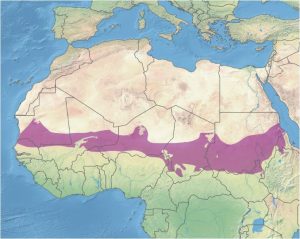
JNIM was formally constituted in March 2017 as a coalition of four Mali-based extremist groups — Ansar al-Din, al-Murabitoun, the Macina Liberation Front, and the “Sahara Emirate” subgroup of al-Qaeda in the Islamic Maghreb (AQIM). Its leader, Iyad ag Ghali, pledged allegiance to al-Qaeda’s leadership and to the Taliban, establishing the ideological lineage and the external mentorship relationships that have shaped the group’s development. The Institute for Economics and Peace’s 2025 Global Terrorism Index identified JNIM as the world’s second deadliest terrorist organization, responsible for more than 1,200 deaths across four countries in 2025 alone, following its 1,454 deaths and 46% year-on-year lethality increase in 2024. An average of ten deaths per attack is not the product of enthusiasm. It is the product of training.
The Recruitment Pipeline as a Training System
Before asking how JNIM trains its fighters, it is worth asking how it selects them — because the selection process is itself a form of pre-training that shapes what formal instruction needs to accomplish. The June 2026 Strategic Threat Outlook on JNIM, one of the most current analytical assessments available, is direct on this point: recruitment is less a function of large-scale ideological adherence than of the ability to convert local grievance systems into mechanisms of compliance, protection, and mobilization. Where the state is absent, predatory, or inconsistent, JNIM offers order, dispute resolution, and livelihood — and the fighters it recruits from that population arrive already embedded in the group’s social logic, already owing it something, already understanding what it is protecting them from.
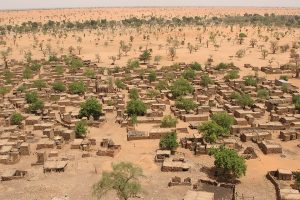
This matters for training because it means JNIM is not starting from zero with its recruits in the way a conventional military does. A Fulani community member who joins JNIM after his village was burned by a government-backed militia arrives with motivation, local knowledge, and an understanding of the terrain that no classroom can replicate. The formal training layer is built on top of a foundation of grievance, familiarity, and social obligation that state armies spend years trying to manufacture through basic training and unit cohesion exercises. JNIM gets it for free from the conditions its adversaries have created.
The US State Department’s National Counterterrorism Center notes that JNIM explicitly trains militants to fight against the group’s enemies while simultaneously appeasing local communities through material resources — a dual-track approach that mirrors the classic Maoist model of winning the population while fighting the state. The fighting and the governance are not separate activities. They are taught together, because the group understands that a fighter who cannot govern cannot hold ground, and ground is what JNIM is increasingly interested in holding.
What the Attack Record Reveals
The tactical sophistication visible in JNIM’s recent operations implies a training system with several distinct components, none of which require a fixed training establishment to deliver.
The first is small-unit fire and movement. JNIM’s standard assault package — documented across multiple engagements — involves rapid concentration of motorbike-mounted fighters, multi-directional assault in early morning hours, and equally rapid dispersal before air assets can respond. That is not improvised. The dispersal discipline in particular — fifty motorbikes scattering in fifty directions on a pre-planned schedule — requires rehearsal, communications discipline, and an understanding of the enemy’s response timeline that comes from deliberate instruction and repeated practice. The JNIM fighters who executed the April 2026 assault on Kidal had practiced what they did.
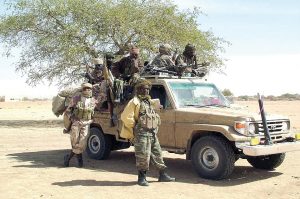
The second is HUMINT collection and target development. The April 25 car bomb at Kati that killed Mali’s Defense Minister required precise knowledge of checkpoint locations, shift patterns, internal base layout, and the physical location of a senior government figure within a secured compound. That intelligence was not collected remotely. Someone with access collected it, which means JNIM trains — or at minimum briefs — its operatives on the systematic collection of human intelligence from inside adversary institutions. The tradecraft is real, if informal by Western standards.
Probably.

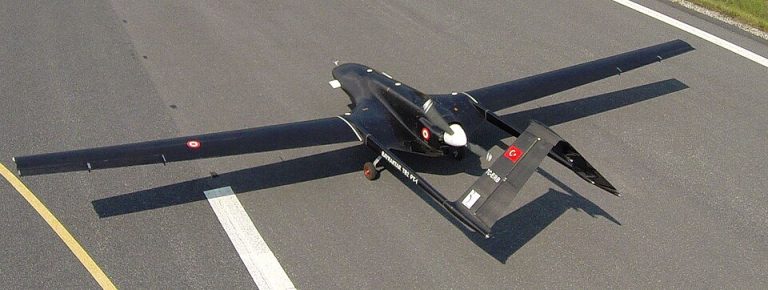
The third and most analytically significant component is drone integration. JNIM’s first documented drone activity occurred in September 2023. By mid-2025, the Policy Center for the New South documented over two dozen confirmed drone incidents, with 82% occurring since March 2025. By 2026, the group’s drone operations had expanded across three countries — Mali, Burkina Faso, and Togo — and the Policy Center’s analysis describes the shift explicitly: JNIM has moved from experimentation to operational doctrine. That transition happened in under thirty months.
Sit with that for a minute.
The speed of that transition implies a train-the-trainer structure. When Colonel Hussein Ghulam, previously with the Tuareg-Azawad FLA rebel alliance, joined JNIM in mid-2024, his name subsequently appeared in connection with drone operations including the Dioura strike of May 2025. The pattern — an expert joins, capability accelerates, geographic scope expands — suggests that JNIM absorbs technical expertise through personnel transfers and then systematically replicates it through internal instruction. The group is not re-inventing the wheel with each new drone operator. It is teaching the wheel.
The Technology Floor Has Collapsed
The practical significance of JNIM’s drone training pipeline extends well beyond the Sahel, because the technology it is training on is available to anyone with a retail account and a few hundred dollars. Commercial drones paired with offline artificial intelligence tools — used to bypass geofencing, optimize payload delivery, and plan flight paths without emitting trackable signals — represent a technical capability that requires weeks of instruction to master, not years. The March 2025 CTC Sentinel documented the expanding transmission ranges and payload capacities of commercially available platforms; the 2026 Eurasian Review analysis described the resulting economic inversion in stark terms: a $500 drone can destroy a vehicle worth hundreds of thousands of dollars and force a state military to respond with multimillion-dollar intercept systems.
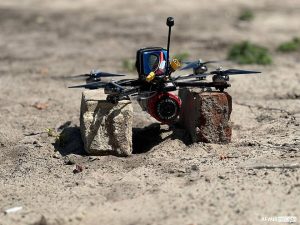
What this means in training terms is that the barrier to producing a competent drone operator has collapsed to the point where a motivated group with basic organizational discipline can build that capability in a matter of months. JNIM demonstrated this. The implication for other non-state actors — in the Sahel, in coastal West Africa where JNIM’s operational reach is visibly expanding, and beyond — is that the playbook is now open-source. The tactics, the technology, and the organizational logic are all observable from public reporting. The only remaining variable is the will and the organizational coherence to implement them.
The foregoing is fairly straightforward, but – as the example of Ghulam shows – the door is wide open to major-state interference being a factor. Russia, Communist China, and even France (still smarting from its ejection from most of the Sahel region), are all possible sources for supplying training officers to JNIM. To be clear, there is no hard evidence of this as of writing, although the French cement company LaFarge is facing financing allegations. But – more direct foreign support to JNIM remains a potential factor.
JNIM currently controls or contests territory across Mali and Burkina Faso, with early indicators of an operational presence extending toward coastal West Africa — Ghana, Togo, Benin, Côte d’Ivoire. In each new operational area, the pattern repeats: grievance exploitation, governance provision, recruitment, instruction, attack. The school follows the army, because the school is the army. Understanding what it teaches is not an academic exercise. It is the precondition for countering it.
World War 3 isn’t being fought with nuclear weapons. It is being fought with simple tools, in regions of the world few people actually care about…unless they live there.