SCOTUS is reviewing a Maine law that impedes the ability of parents to get vouchers for faith-based schools. The law affects rural districts with no high schools, the only communities that can use school vouchers in the state. The ruling could affect limitations on faith-based government funding across the country.
Rights Watch
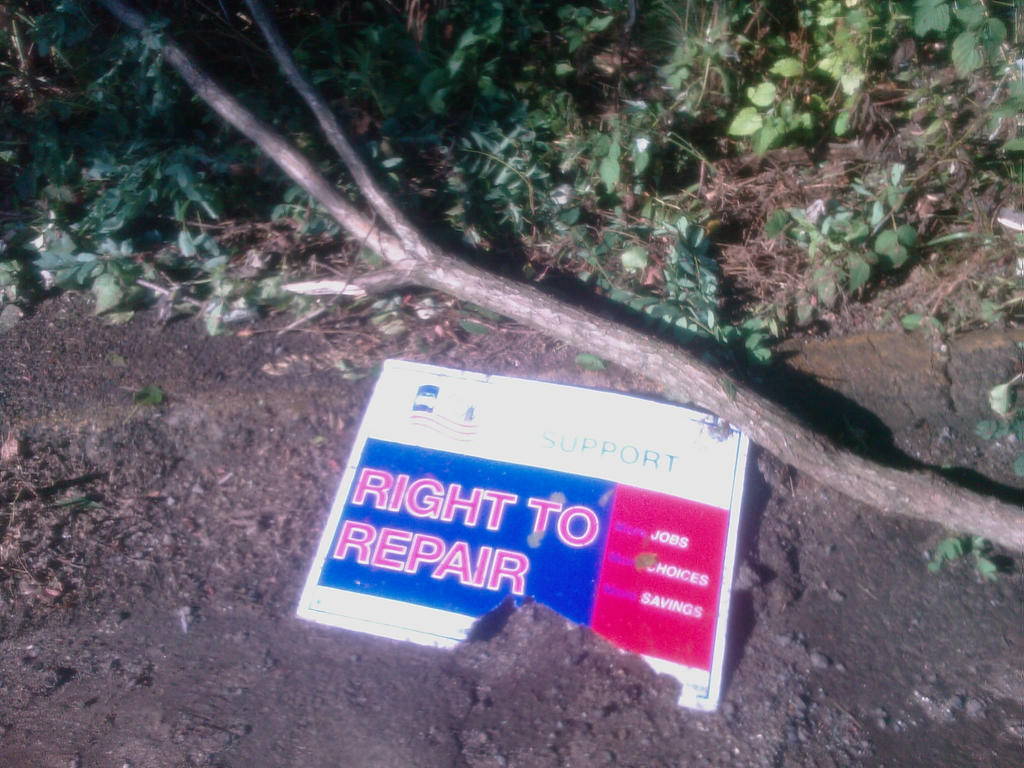
NY State is the first state in the country to pass a “Right to Repair” Law, a law preventing manufacturers from not allowing their customers to repair their own purchased product. The bill also compels manufacturers to provide information on how to repair their products to customers and repair shops.
—
With the passage of the Right to Repair bill by a Democrat-controlled state, it lays down a challenge to Republican states to match NY State and deliver to more and more Americans the right to repair their own products, and to receive the information needed to be able to repair their products from the manufacturer.
The victory undermines the move towards a subscription-based society where property dies and a de facto serfdom takes its place. It gives hope to farmers in rural states that their legislatures might move to free them from the tyranny that is John Deere, second only to Apple in working aggressively to prevent customers from repairing their own products.
John Deere is facing more and more lawsuits, with nine cases recently being consolidated into one suit now being considered by the US District Court for the Northern District of Illinois. Perhaps the NY Right to Repair Law will now hasten legislative release for farmers that can happen long before the judicial process runs its course.

A Missouri Farmer named Jared Wilson had to get the FTC to force the only authorized John Deere dealer in 80 miles to fix his tractor. There is a group of farmers seeking to pass right to repair laws for farmers, the heart of the real problem in this story.
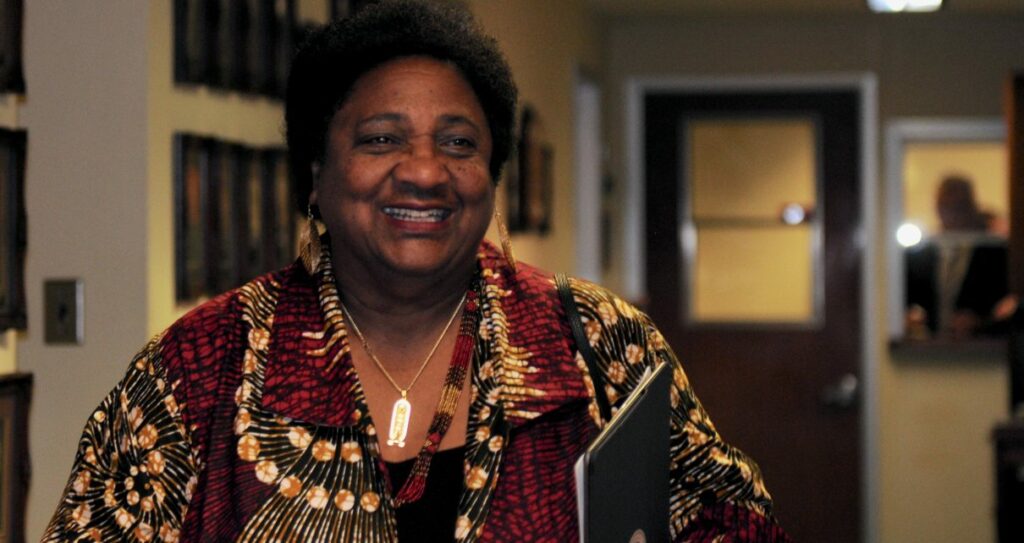
A California taskforce is determining the amount of reparations the black community should receive and who should pay.
The bill’s sponsor, Assemblywoman Shirley Weber stated, “California has come to terms with many of its issues, but it has yet to come to terms with its role in slavery,”

The goal of this column is to present news from around the world that is not often – if ever – covered by more mainstream entities, using local sources wherever possible, but occasionally using news aggregators not used, again, by the mainstream media. Also, please note that we do use links to Wikipedia; while Wikipedia is well-known as a largely-useless site for any kind of serious research, it does serve as a launch-pad for further inquiry, in addition to being generally free of malicious ads. As with anything from Wikipedia, always verify their sources before making any conclusions based on their pages.
This column will cover the preceding week of news.
To make it easier for readers to follow story source links: anytime you see a bracketed number marked in green – [1] – those are the source links relating to that story.
North America
The United States remained largely quiet during the week, despite a sudden spate of shootings that are possible “copy cat” crimes, seeking to emulate the school shooting in Uvalde, TX on May 24th, even as emerging details of the police response to that incident have left the governor of the state, Greg Abbott, “livid” at being given untrue information. [1]-[4]
Elsewhere, only two handwritten-note bomb threats were received at schools in the country this week, although several threats to both schools and businesses resulted in swift arrests. [5]-[9]
The last incident of note for North America this week comes from Kiel, Wisconsin. The city police received a threat from an as yet unnamed person or persons, threatening multiple targets in the city if a Title IX investigation by the school district against several students is not dropped “immediately.” Additional threats have been received, including one that came after the school district closed its investigation. The incident in question – as reported by the NYPost, on May 14 – involved three 8th grade students being investigated for sexual harassment on the grounds of refusing to refer to another student by their chosen pronouns. A “Title IX investigation” is a legal requirement for schools that requires school districts to immediately investigate any formal claim that sexual harassment of any kind has occurred. [10]-[12]
[Source 1] – [Source 2] – [Source 3] – [Source 4] – [Source 5] – [Source 6] – [Source 7] – [Source 8] – [Source 9] – [Source 10] – [Source 11] – [Source 12]
Europe
Turning to Europe, the email bomb threat wave struck again, with police and various other government agencies in the Bosnian cities of Banja Luka and Sarajevo received “hundreds” of emailed threats against targets ranging from police stations and hospitals to elementary schools. The emails targeted both Serb and non-Serb entities within the country. No “live” incidents were reported, and no arrests have been made.
Africa
In central Mali, two Egyptian soldiers, part of the UN’s now 13,000 strong MINUSMA peacekeeping mission in the war-torn country, were killed by an IED that was detonated as their vehicle was near the town of Douentza, on the road to Timbuktu. This comes after an attack on a UN convoy on Wednesday, that resulted in the death of a Jordanian peacekeeper, near the town of Kidal, in northern Mali, which wounded three other soldiers. This brings the number of UN peacekeepers killed in action since MINUSMA’s initial deployment in July of 2013, to 174. [1]
As we go to press, reports are coming in from southwestern Nigeria that as many as 50 worshipers have been killed in an attack on the St Francis Catholic Church in the town of Owo, in Onda State. No word on the number of wounded, but if the numbers of dead being reported are accurate, the number of wounded is likely very high. As information is still sketchy, the identity and motives of the attackers remain [2]-[4]
Elsewhere in the country, violence – some terror attacks, some simple banditry and kidnapping – continued through the week, with multiple kidnapping and arson attacks. [5]-[8]
In better news, the group responsible for the kidnapping of dozens of victims from a train in March, rescinded their threat to begin killing their hostages if the local government did not free their under-10 year old children, who they claim were being held illegally. State authorities stated that they had located the children, and that negotiations with the kidnappers were continuing. [9]
As well, civilian militias in the northern state of Borno, reportedly killed a Boko Haram local commander and his deputy in a running gun battle on May 31st. Three days later, on June 2nd, the Nigerian Army, working directly with local militias, launched a surprise raid on Boko Haram and ISWAP camps that killed at least 14 terrorists, resulted in the arrest of 15 more, and freed “scores” of prisoners. Additionally, a solid haul of weapons, vehicles and equipment were also recovered. [10][11]
In neighboring Cameroon, meanwhile, Boko Haram terrorists killed three soldiers and four civilians in an attack on the remote village of Hitaoua, in the far north of the country, on May 31st. [12]
[Source 1] – [Source 2] – [Source 3] – [Source 4] – [Source 5] – [Source 6] – [Source 7] – [Source 8] – [Source 9] – [Source 10] – [Source 11] – [Source 12]
Middle East
Sporadic and desultory fighting continued this week throughout Syria and Iraq, as Turkey continues its interventions in both countries, as it continues its war against the Kurdish peoples of the region, in fighting that now threatens US positions in the area.
[Source 1] – [Source 2] – [Source 3] – [Source 4] – [Source 5]
Out of Afghanistan, long-time Al Qaeda leader Ayman al-Zawahiri released a video of him swearing allegiance to Taliban leader Hebatullah Akhundzadah, in a renewal of the two groups’ long-standing alliance. Al Qaeda – then under it’s founder, Osama bin Laden – was given a safe haven in the ravaged country by the Taliban in the 1990’s, and became Al Qaeda’s main base of operations, until the US invasion of the country in 2001, after the September 11, 2001 Attacks in the United Sates. [1]
In Pakistan this week, scattered terror attacks continued, with roadside IEDs and hand grenade attacks killing or wounding approximately a dozen troops and civilians. Also this week, in an apparent case of “No kidding,” that the “Tehrik-e-Taliban Pakistan (TTP)” group, based in Afghanistan, poses a significant danger to Pakistan…which, considering the frequency of terror attacks by the group in the country, should surprise no one. [1]-[5]
[Source 1] – [Source 2] – [Source 3] – [Source 4] – [Source 5]
Finally, turning to India, scattered violence continued in the northern Jammu & Kashmir region this week, that killed four (including two terrorists), as police issued an alert over terrorists using drones (reportedly supplied by North Korea) to drop explosives during attacks, something that has been happening with increasing frequency in the ongoing war between drug cartels. [6]-[11]
[Source 6] – [Source 7] – [Source 8] – [Source 9] – [Source 10] – [Source 11]


Two Chicago High Schools are in the process of changing the way they grade and discipline children. The schools intend on giving special rights and privileges to non-black students. The school released a statement that suggests the teachers are already discriminating against white students on their own.

The “Best” Service Rifle
A common argument, one of the fundamental arguments at a certain low level within military – and “wannabe” circles – is, “What is the best rifle for the battlefield?” We have resolutely avoided this dreaded question until now, because of the most important truism at the heart of the argument: place ten military professionals in a room and ask them this question, and you are guaranteed to get fifteen answers, every one of them passionately and adroitly argued with verifiable facts, figures and real-life examples.
There are many factors that go into this argument, not least, that it is a vital question at a basic level, because not answering it hamstrings any military at its inception, because service rifle selection impacts training, tactics and logistics simultaneously.

What are the features that a “service rifle” must have? There are a lot of considerations that need to be balanced in answering that question.
First, the weapon must be reliable. An unreliable rifle, prone to malfunction, is not capable of performing any other mission, and is both a waste of money, a guarantee of mission failure and a killer of your own troops, whatever its other benefits might be.
Second, the rifle needs to be “ergonomically sound“. This is a modern term, that essentially means that the rifle “handles well”, and is logically designed so that troops can use it when they are tired, dirty, cold, wet and slathered in mud — which they are guaranteed to be, when it counts the most.
Third, a service rifle must fire a projectile that can actually harm an opponent, preferably with lethal effect. There has been a great deal of controversy in the last few decades over this requirement, as more brutally-minded pundits have argued in favor of a rifle that is more prone to wounding opponents than killing them, as a wounded soldier is a severe drain on resources, requiring extensive medical care and rehabilitation, and is also a continuing negative reinforcement to morale. conversely, meanwhile, the dead soldier is simply…dead – his comrades will mourn him, but will usually be able to quickly recoup, and continue their mission.
The notion that wounding a soldier on the battlefield, versus killing him, is – very real psychological degradation aside – a very dangerous strategy for any nation actively seeking to deploy such a rifle, for the very simple reason that history is replete with examples of wounded soldiers – and sometimes horrifically wounded ones (video link) – continuing to man positions and fight on, long after they should have been felled (video link). A wounded enemy is, if anything, frequently much more dangerous than even a live enemy, much less a dead one.
Fourth, the rifle should be semi-automatic. This might seem like a misnomer in the Twenty-First Century, but it is a basic fact that most troops with fully-automatic rifles, who have not been trained as actual machine gunners, tend to waste vast quantities of ammunition to little effect. Forces who spend time on training, as well as experienced fighters without formal training, quickly learn that they get far more effect out of steady, aimed semi-automatic fire. Firing a full magazine of rounds blindly from a rifle is not “suppressive fire“.

Fifth, the rifle should be as light in weight as possible. Combat troops have always carried far more weight than is advisable…unfortunately, this has usually been a necessity. However, while every ounce saved is appreciated by the infantry, shaving too much weight from the rifle makes it prone to malfunction, overheating and inaccurate in rapid fire, to say nothing of fully automatic fire.
Sixth, the service rifle should have at least a twenty round magazine. The current world standard is thirty, given the current military touchstone of the intermediate cartridge.
Seventh, the service rifle should be affordable for the nation’s military. This is another touchy subject, as the lives of a country’s troops is usually seen as a matter of vital importance. However, most countries simply do not have the money to equip all of their troops with the absolute best weapons available (Switzerland‘s reliable, but incredibly expensive Stgw 57 comes immediately to mind), and compromises must be made. Some nations do a better job than others at this.

Eighth, and last, is the requirement for a functional bayonet. This is also a controversial view, as bayonets have historically inflicted few casualties in actual combat, and whose actual use in combat has steadily declined, despite the occasional instance of an actual bayonet charge in the last thirty-five or so years. However, the bayonet will never die as a military weapon, because it is as much a psychological weapon as a physical one; it is as much a statement of determination as desperation, both to the enemy as well as your own troops.
So – how have these eight requirements been applied over the years?
Reviewing a simple list of service rifles reveals a dizzying array of weapons, so many that it is tempting to ignore the list entirely. But…look at that list a different way: you should note that virtually every service rifle adopted in the last sixty years has been in one of three calibers: 5.56x45mm, 7.62x39mm, 7.62x54mmR or 7.62x51mm.
What’s more, throughout conflict zones around the world, were you suddenly transported from reading this to one of those places, you have approximately a 95% chance of picking up one of four rifles: an AR-15/M-16/M4, an AK-type rifle, an FN FAL or a CETME/G3-type, as we have covered in previous installments of this series:
There are two basic reasons for this phenomenon.
First, are the brutal economics of the Cold War: as small, poor nations sided with one bloc or the other, the powerful nations at the core of those blocs were happy to provide their rifle of choice at little to no charge, in trade for influence and control. This encouraged small countries to only buy either that rifle, or a rifle that used that ammunition.

Second, the laws of Supply and Demand and Mass Production meant that three or four basic ammunition types would standardize, eventually. Together with 9x19mm ‘Parabellum’ (in military handguns and most submachine guns) and ’12gauge’ (for shotguns), the standardization of weapons and ammunition around the world were virtually guaranteed. Additionally, there are enough of the above four rifles out there, that their respective characteristics are well known, including their strengths and flaws.
But — what does all this mean for the budding army builder? Knowing all these factors, what service rifle should you choose?
The answer is simply this:
The best service rifle is the one that you can lay hands on in the largest quantity, in the shortest amount of time, that you can train the largest number of people quickly to use, that is at least reasonably reliable…in that order.
That’s it. Really.
The “Big Four” rifles – the AR, the AK, the FAL and the G3 – are: universally cheap (for various reasons); are all battle-proven designs; have had all of their major faults identified and (mostly) fixed; and all have vast quantities of both weapons and accoutrements readily available, virtually everywhere in the world.
You can spend the money on a “shootout” between the various weapons, or read through the exhaustive literature on all of the weapons to decide…of course, there is always the chance that you may need to use whatever is at hand. In that case:
The best service rifle in the world, is the one that will fire when you expect it to.

The goal of this column is to present news from around the world that is not often – if ever – covered by more mainstream entities, using local sources wherever possible, but occasionally using news aggregators not used, again, by the mainstream media. Also, please note that we do use links to Wikipedia; while Wikipedia is well-known as a largely-useless site for any kind of serious research, it does serve as a launch-pad for further inquiry, in addition to being generally free of malicious ads. As with anything from Wikipedia, always verify their sources before making any conclusions based on their pages.
This column will cover the preceding week of news.
To make it easier for readers to follow story source links: anytime you see a bracketed number marked in green – [1] – those are the source links relating to that story.
South America
Leading off, this week, a “tear gas grenade” was thrown into a student body election meeting at the Tomas Frías Autonomous University in the city of Potosí, Bolivia on the 9th. In the resulting panic-induced stampede, four young women were killed, and over 80 students were injured. Bolivian police have arrested four suspects: Manfred Flores, 25, Mauricio Quintanilla, 25, Milton Fuentes, 35 and Ariel Quispe, 40, on suspicion (currently) of homicide and possession of a gas grenade.
Bolivian authorities have not speculated on the reason for the attack, and are attempting to discover how the men obtained the grenade, which is normally very difficult to obtain in Bolivia.
[Source 1] – [Source 2] – [Source 3]
North America
The odd nature of the on-going wave of bomb threats against schools continued to develop in the United States this week, with four incidents of note: two handwritten notes making threats were found, resulting in one arrest [1] and police seeking a “person of interest” [4]; another, in which an 8th Grader apparently called in a threat [2], and another threat made via Instagram [3]. As usual, there were many other similar incidents, but those stories had too little information to reference. While these threats are widely dispersed, they do cluster, and this new tack in the course of the wave remains an object of interest, deviating from the previously reported robocall format.
[Source 1] – [Source 2] – [Source 3] – [Source 4]
Europe
French authorities are investigating an IED attack on the Turkish Consulate General on Friday, which caused minor damage to the building.
[Source]
Africa
In Mali, four soldiers were killed and one was wounded, when their patrol vehicle struck an IED near Djenné in the central part of the country. Two children were killed and four other people were wounded in Diondiori, also in central Mali, by what officials describe as “shellfire” from “Armed Terrorist Groups“, as authorities frequently do not know which of the many groups that have been fighting inside the beleaguered nation since 2012 are responsible. [1]
In neighboring Burkina Faso, meanwhile, army units reported that they successfully ambushed a group of terrorists in Mouhoun Province, killing 40, and capturing a large amount of weapons and equipment. In another incident, however, other terrorists attacked a prison in the town of Nouna, on the border with neighboring Mali, freed and escaped with all 60 prisoners, leaving one person dead. [2]
Burkina Faso has battled their insurgency since 2015, when fighting in Mali spilled over the border.
In what may be a disturbing expansion of the ongoing war in the north, the nation of Togo saw an attack on an army outpost in the Kpendjal prefecture on its northern frontier border with Burkina Faso. Officials report that some eight troops were killed and 13 wounded. Togo has remained largely free of violence in the last ten years, but that could be changing, as violence continues moving south. [3][4]
In related news, the West Africa Centre for Counter-Extremism (WACCE) released a report warning that the nation of Ghana, which has also escaped the violence to its north so far, was increasingly exposed to danger, pointing out that some 53% of ECOWAS (the “Economic Community of West African States”) nations are currently in the midst of mostly Islamist terrorist insurgencies, and that the contagion is spreading.
[Source 1] – [Source 2] – [Source 3] – [Source 4] – [Source 5]
In Nigeria, the last few weeks of relative calm were shattered this week, as a combination of terror groups and simple bandits emerged on the attack, killing dozens (including civilians, soldiers and police), hijacking buses – crucial to Nigeria’s infrastructure – and kidnapping victims that ranged from a pair of nursing mothers to traditional monarchs and tribal chiefs.
Nigeria has been facing both an Islamist insurgency since 2009, but also a wave of resurgent independence movements, as well as criminal violence with increasing frequency.
[Source 1] – [Source 2] – [Source 3] – [Source 4] – [Source 5] – [Source 6] – [Source 7] – [Source 8] – [Source 9] – [Source 10] – [Source 11] – [Source 12]
Elsewhere on the continent, 14 people were reported killed in an attack on a “displaced persons” camp outside the town of Fataki, near the city of Bunia in the Democratic Republic of the Congo, on the 10th. The CODECO terror group, accused of being loosely affiliated with IS-CAP, is believed to have been responsible, as they were responsible for an attack on a nearby mining camp on the 8th. The fighting is part of the Ituri Conflict, which has been continuing in fits and starts since 2003. [1][2]
In Somalia, the Somali National Army seems to be taking on more of the responsibility for taking the battle to the Al Shabaab group in the country, as the regional “African Union Transition Mission in Somalia (ATMIS)” takes an increasingly smaller role in stabilizing the war-torn country. [3]-[5]
[Source 1] – [Source 2] – [Source 3] – [Source 4] – [Source 5]
Middle East
Aside from the continual low-level fighting throughout the region, the one item of significant note was a sudden burst of violence in the Sinai Peninsula, as Egyptian forces launched a series of swift and violent attacks on the “Ansar Beit Al-Maqdis“, which now calls itself the “Islamic State – Sinai Province“. The conflict has simmered since 2011, but fighting had tapered off in recent years.
[Source]
In Afghanistan, the Taliban have reportedly begun to actively recruit child soldiers, although the Taliban leadership have said that they are forbidding the recruitment of “teenagers”…video footage under the link. [1]
In Pakistan, a spate of attacks this week killed at least eight people, including three children and three soldiers. This comes as the country’s government denied, yet again, that it was harboring terror groups that targeted its neighbors. [2]-[5]
[Source 1] – [Source 2] – [Source 3] – [Source 4] – [Source 5]
In India, the long-running conflict in the northern Jammu & Kashmir region saw a burst of violence, as well, this week, with several operations – both jihadist and national – taking place during the week, leading to multiple arrests, but also to the death of a police officer by assassination. [1]-[7]
The week also saw the emergence of a little-known group, JKFF (‘Jammu Kashmir Freedom Fighters’), who hurled an explosive device at a bus loaded with Hindu religious pilgrims. Very little is known about the group, aside from them being ‘broadly‘ Muslim, and “jihadist” in nature. [8]
[Source 1] – [Source 2] – [Source 3] – [Source 4] – [Source 5] – [Source 6] – [Source 7] – [Source 8]
On Friday, at least 12 schools in the city of Bhopal received bomb threats via email, in a manner similar to a wave a month ago, that targeted schools in the southern city of Bangalore. In this case, some school received as many as 50 emails with bomb threats, coming from several email addresses. Police bomb squads cleared all of the targeted schools, and are continuing their investigation to attempt to trace the emails’ ISP addresses. [9]
India’s “Red Corridor” saw a sudden burst of activity this week, with multiple arrests and arson attacks throughout the troubled region. Small arms and explosives were recovered in several areas. As well, a Naxal couple surrendered to authorities in the Gadchiroli district, citing the constant threat from security forces and wild animals, forced sterilization and separation of couples and attractive surrender policy of the Maharashtra government. [10]-[15]
[Source 9] – [Source 10] – [Source 11] – [Source 12] – [Source 13] – [Source 14] – [Source 15]
Finally, Sri Lanka‘s economic crisis – the worst since its independence in 1948 – came off the rails this week, as protests turned into riots, and violence has escalated to the point of the government in Colombo issuing orders to the armed forces to open fire on anyone vandalizing or looting public property. The violence has left over two hundred people injured and eight dead, including a member of Parliament and his bodyguard.
“Security forces have been ordered to shoot on sight anyone looting public property or causing harm to life,” the ministry said as reported by news agency AFP.
The protests that began on April 9th, are over the country’s downward economic spiral, brought on by a combination of the government’s response to the 2019 Easter Bombings, the effects of the COVID-19 pandemic, staggeringly bad economic and monetary policy decisions, and the continuing economic shock-waves of Russia’s invasion of Ukraine.
[Source 1] – [Source 2] – [Source 3] – [Source 4]
The goal of this column is to present news from around the world that is not often – if ever – covered by more mainstream entities, using local sources wherever possible, but occasionally using news aggregators not used, again, by the mainstream media. Also, please note that we do use links to Wikipedia; while Wikipedia is well-known as a largely-useless site for any kind of serious research, it does serve as a launch-pad for further inquiry, in addition to being generally free of malicious ads. As with anything from Wikipedia, always verify their sources before making any conclusions based on their pages.
This column will cover the preceding week of news.
To make it easier for readers to follow story source links: anytime you see a bracketed number marked in green – [1] – those are the source links relating to that story.
North America
Leading off in North America, a series of three “homemade bombs” were detonated along a two-mile long area of Vista, California over a 3-hour period on Thursday. The explosions occurred in open areas and parking lots. No injuries or property damage was reported, although two small fires were quickly extinguished. The San Diego County Sheriff’s Office said that there was no obvious target or motivation for the bombs, and that no threat had been received. However, it should be kept in mind that Vista is also a “bedroom community” for the nearby US Marine base at Camp Pendleton and the attached extension of the Seal Beach Naval Weapons Station in nearby Fallbrook, and is home to numerous married personnel and their families. [1]
Elsewhere in the nation, bomb threats targeting schools continued unabated this week, although – as we reported last week – there is a perceptible shift occurring, as more threats are coming in the form of physical notes and social media, the last being especially odd, given the ease of tracking posters. [2]-[8]
[Source 1] – [Source 2] – [Source 3] – [Source 4] – [Source 5] – [Source 6] – [Source 7] – [Source 8]
Africa
In Burkina Faso‘s northern region, a total of eleven soldiers were killed in two separate incidents on Thursday and Friday; nine people were reportedly wounded, while the military claims to have killed at least twenty suspected islamist jihadis in turn. Burkina Faso has been fighting various jihadist groups since 2015; operations continue to grind onwards. [1]
In Nigeria, fighting continued steadily across the nation, as military and police forces worked to counter the tide of attacks by groups such as Boko Haram and the “Islamic State – West Africa Province (ISWAP)” in their continuing offensives to collapse the government and create their varying versions of Islamist rule. [2]-[7]
Meanwhile, in neighboring Cameroon, separatists from the Ambazonia Defence Forces, an armed wing of the breakaway “Federal Republic of Ambazonia” kidnapped Regina Mundi, a Senator of the country’s ruling “Cameroon People’s Democratic Movement” and her driver on the 2nd. “Ambazonia“, also known as the “Southern Cameroons” are an English-speaking region in northwest Cameroon, bordering Nigeria. When Cameroon became independent in 1961, the English-speaking areas agreed via plebiscite to join the French-speaking side of the colony in a federal union. However, tensions over the years finally boiled over in 2016, resulting in what is now termed the “Anglophone Crisis”, or the “Ambazonia War”. The issue is messy and complicated – as most of the colonial independence breakups were – because the french-speaking side of Cameroon is supported by Nigeria, because factions of the Ambazonians and the Ibo people of Nigeria – still agitating for an independent Biafran state – actively support each other. [8]-[10]
On the opposite side of the continent, Burundian troops of the African Union Transition Mission in Somalia (ATMIS) in the town of El-Baraf, in central Somalia’s Hirshabelle State reported that had repulsed an attack on their outpost in the town by the Al Shabaab terror group on May 3rd, although no more precise detail was available at press time. [11]
[Source 1] – [Source 2] – [Source 3] – [Source 4] – [Source 5] – [Source 6] – [Source 7] – [Source 8] – [Source 9] – [Source 10] – [Source 11]
Middle East
The Middle East remained surprisingly (and refreshingly) quiet this week, with few incidents of note making their way onto the news wires. Chief among these, the ceasefire in Yemen continues to hold, albeit shakily, as the Houthi side of the conflict claimed to have launched a drone attack on a Saudi command center, and in turn, shot down a Saudi drone in a separate incident. [1][2]
In Israel, meanwhile, at least three people were killed and another nine were injured in a terrorist attack in the city of Elad, on Thursday. Police have arrested the attackers, 19-year-old As’sad al-Rafai and 20-year-old Emad Subhi Abu Shqeir, who carried out their attack with hand axes, according to witnesses. [3]-[5]
[Source 1] – [Source 2] – [Source 3] – [Source 4] – [Source 5]
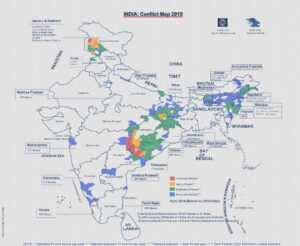
Finally, in India‘s Jammu & Kashmir this week, two Central Reserve Police Force (CRPF) officers were injured by an IED in Kashmir’s Pulwama district on Monday. [1]
On Friday, CPRF and officers from other security agencies arrested two suspected members of the Lashkar-e-Taiba terror group, in Northern Kashmir’s Baramulla district, recovering some light arms. Also on Friday, security forces killed Hizbul Mujahideen terrorist “Commander” Ashraf Molvi along with two other terrorists in an encounter in Kashmir’s Anantnag district. Molvi was at the top of the MHA (Ministry of Home Affairs) “Most Wanted” list. [2][3]
Apparently taking a page from both North Korean and Mexican Drug Cartel operations, India’s “Border Security Force (BSF)” discovered a 150 meter-long tunnel, shored up with sandbags, in an area under the Chak Faquira outpost in Samba on Wednesday evening, according to BSF officials. The tunnel is still being cleared at press time. [4]
On the opposite side of the country, in the state of Mizoram, units of the Assam Rifles seized massive caches of explosives in two separate incidents. The finds are believed to be related to the ongoing violence in Myanmar, just over the border from Mizoram, following the 2021 military coup d’état in that country. [5][6] In neighboring Manipur, the state capitol of Imphal saw two IED attacks in a 24-hour period, on May 5th and 6th. [7] Meanwhile, troops of the 14th Battalion of the Rajput Regiment discovered a small cache of weapons in the Changlang area of the far-northeastern state of Arunachal Pradesh. [8]
Northeastern India has been plagued by low-level insurgency groups for decades.
[Source 1] – [Source 2] – [Source 3] – [Source 4] – [Source 5] – [Source 6] – [Source 7] – [Source 8]

A white upper class lad named Ian Svetkey chose to use his platform as the editor of Harvard’s famed Crimson Newspaper to pen an op ed calling on Universities banning white people from being able to teach black history.
White people should not teach about black history, Harvard newspaper editor opines
From www.thecollegefix.com
2022-05-02 17:36:35
College Fix Staff
Excerpt:
A Harvard University newspaper editor recently argued that the university should prohibit white professors from teaching about black culture and history.
Ian Svetkey recounted a recent experience that unsettled him.
“When I was looking through courses this semester, I noticed that the professor of a class about narratives of individuals who were enslaved was a white man,” he wrote in an op-ed published Monday morning.
“That didn’t sit right with me. Why would a class about stories integral to Black culture be taught by someone with no lived experience in that culture?” the editor for The Harvard Crimson wrote.