April 18, 2026

Military

Well…That Escalated Quickly


Obviously, anyone reading this is aware – or should be – that Israel and Iran are now trading missile volleys. This is a situation that rightfully scares anyone with the capacity to think, as it widens the scope of Israel’s response to the war that Hamas started with their massacre of October 7, 2023.

Beginning on April 1, 2024, Israel launched an airstrike on the Iranian embassy in Damascus, Syria. This attack demolished an annex (a stand-alone building within the embassy compound), wherein a major meeting was taking place. This meeting included at least eight high-rank officers of the Iranian Revolutionary Guard Corps (IRGC) (including two general officers), members of Lebanese Hezbollah, and the Front for the Liberation of the Golan (FLG) (a puppet force organized and trained by Hezbollah in 2017), although further casualties have not been identified as of April 19. While the “usual suspects” instantly made hysterical condemnations against Israel over this attack (as well as Iran’s repost on the 13th), it should be pointed out that officers of Hezbollah – a group openly acknowledged as being under the control of the Iranian state – was assembled inside the Iranian embassy, and were clearly a primary target of the Israeli raid.


Iranian missiles passing over w:Al-Aqsa after IRGC hit Israel with multiple airstrikes. Mehr News photo. CCA/4.0


The legal issue with this first exchange is a complete non-starter. While embassies are considered to be inviolate to military action, there is a significant caveat: when those embassies are used as military planning and coordinating locations, they are no longer “civilian structures” under the Laws of War, but become legitimate military targets, in exactly the same manner that religious churches and temples are considered inviolate – until they are deliberately used by one combatant for military purposes. The inviolability of an embassy remains intact, technically, if that nation’s intelligence agencies run spying operations out of it, but not if the embassy is aiding in the planning and conduct of military operations against another power.

Both Hezbollah and the FLG have been engaging in active terror attacks on Israeli citizens and in military strikes against Israeli troops for years. Their personnel and commanders meeting with Iranian military officers, on Iranian soil (all national embassies are considered to be the sovereign territory of the nation they represent), means that Iran has openly admitted that its military forces are coordinating with force actively engaging in combat against Israel. This made the Iranian embassy to Syria a legitimate military target, whether Israel chooses to explain its actions or not. The public record speaks for itself.

Following the Israeli raid, Iran vowed to retaliate. It did so some twelve days later, firing a hail of drones and ballistic missiles into Israeli airspace, in coordination with the Houthi terror group in Yemen, and an Iraqi state-sponsored group, the Popular Mobilization Forces – both groups being sponsored by Iran, as well as the Shiite government of Iraq.

The vast majority – between 87 and 99%, depending on the source – of the missiles were successfully intercepted by Israel, with assistance from United States, British, French and Jordanian forces. Damage within Israel was reportedly minimal, with no reported deaths and few injuries.

Then, in the early morning hours of April 19 (local time), Israel responded, attacking targets near the Iranian cities of Isfahan and Natanz – both cities being noted for their association to Iran’s nuclear weapons program – as well as SEAD strikes against Syrian and reportedly Iraqi bases, to knock out early warning radar sites.


An F-4G Phantom II wild weasel 1991. These aicraft conducted SEAD missions during the conflict. USAF photo. Public Domain.


The Israeli attacks were very limited and restrictive in nature. The speculation, as of April 19, is that Israel was sending a clear message to Iran, that they (Israel) were clearly capable of striking targets deep inside Iran at will. Much more interesting, however, is the current Iranian response.

Despite the posturing of Hossein Amirabdollahian, the Iranian Foreign Minister, in vowing an “immediate and severe” response to any Israeli attack on Iran, Iran seems to be backing down. Unless Iran attempts to launch another raid in the near future, this may represent a de-escalation on their part.

If true, this raises a very disturbing question:


Is the Iranian government losing control of its IRGC “Praetorian Guard”?


At this stage, de-escalation by Iran is a tacit admission of defeat, as it demonstrates that the Iranian chest beating over their military prowess does not intimidate Israel. This is certainly not something the religious leadership of Iran can afford, as the appearance of weakness places their regime – highly unpopular at home – on even shakier ground than it already is.

Iranian military losses over the last decade have been limited to the IRGC. It was IRCG troops from the Quds Force who entered Iraq to shore up the beleaguered Iraqi government and military in the early days of the Sunni Islamic State forces’ drive on Baghdad in 2014. Its senior commander, Qasem Soleimani, was targeted by the United States government in a drone strike in 2020, while he was inside Iraq, coordinating the organization of Shiite militias. Additionally, the force has been described as “an industrial empire with political clout”, in addition to the command casualties it suffered in the Israeli attack on the Damascus embassy…In many ways, it very much resembles the Waffen SS of Nazi Germany.

In a very real way, a perceived defeat against Israel will seriously undermine the IRCG, far more than the Iranian government and its regular armed forces. The problem, here, is that dismantling a Praetorian Guard is never easy, and is always violent. If this stewing situation turns out to be real, versus speculation, there is a very serious chance that it could result in a catastrophic collapse within Iran, one mimicking the swift collapse of the Shah’s regime in 1978. If either side continues shooting at the other, the regional expansion of the conflict will be guaranteed.

And this is something to be feared.


The Freedomist — Keeping Watch, So You Don’t Have To
Iran Attack Might Not be the Dud You Think It Is

If you read most media outlets, be they MSM or “independent,” you will mostly hear the attacks on Israel by Iran were a big dud, and that might not be the full story. Iran has done two successful things; they breached the highest level of air security Israel and the U.S. could offer and they cost Israel over $1 billion.

Israel’s main air defense nerve center, the Nevatim Air Base, was hit by 5 ballistic missiles, including two hits directly to the runway, and an airbase cloaked in secrecy (and connected to the U.S. directly), the Negev Air Base, was also struck. While none of the strikes did serious harm, they sent a message that the highest level of air defense can be breached.

From The New Arab

“One Arrow missile used to intercept an Iranian ballistic missile costs $3.5 million, while the cost of one David Sling missile is $1 million, in addition to the sorties of aircraft that participated in intercepting the Iranian drones,” he said.

“I am only talking about interception to what the Iranians launched and not injuries that were marginal this time.”

Yehoshua Kalisky, a senior researcher at the Institute for National Security Studies think tank in Tel Aviv, told The Wall Street Journal that the costs “were enormous” and comparable to what Israel had spent during the 1973 Arab-Israeli war.

It is not known how much Iran spent on its attacks, though ballistic missiles in the country can cost up to $99,937 (₤80,000), The Guardian said.

From Harratz

Five ballistic missiles hit the southern Nevatim Air Base, the official said, damaging a C-130 transport plane, an unused runway and empty warehouses.

From Wikipedia

 It is one of the largest in Israel and has three runways of different lengths. Stealth fighter jets, transport aircraft, tanker aircraft and machines for electronic reconnaissance/surveillance, as well as the so-called Israeli Air Force One, are stationed there.

From Harratz

Four additional ballistic missiles struck the Negev Air Base, but no significant damage was reported, he added.

From The Intercept

The U.S. Army is quietly moving ahead with construction at Site 512, a classified base perched atop Mt. Har Qeren in the Negev, to include what government records describe as a “life support facility”: military speak for barracks-like structures for personnel.

Though President Joe Biden and the White House insist that there are no plans to send U.S. troops to Israel amid its war on Hamas, a secret U.S. military presence in Israel already exists. And the government contracts and budget documents show it is evidently growing.

The $35.8 million U.S. troop facility, not publicly announced or previously reported, was obliquely referenced in an August 2 contract announcement by the Pentagon. Though the Defense Department has taken pains to obscure the site’s true nature — describing it in other records merely as a “classified worldwide” project — budget documents reviewed by The Intercept reveal that it is part of Site 512. (The Pentagon did not immediately respond to a request for comment.)

“Sometimes something is treated as an official secret not in the hope that an adversary would never find out about it but rather [because] the U.S. government, for diplomatic or political reasons, does not want to officially acknowledge it,” Paul Pillar, a former chief analyst at the CIA’s counterterrorism center who said he had no specific knowledge of the base, told The Intercept. “In this case, perhaps the base will be used to support operations elsewhere in the Middle East in which any acknowledgment that they were staged from Israel, or involved any cooperation with Israel, would be inconvenient and likely to elicit more negative reactions than the operations otherwise would elicit.”

Why Do People Spy?


Spies. Unless one has been living under a rock for the last 50+ years, we’ve all seen a James Bond movie or two. Or, maybe you watched the classic Three Days of the Condor, or the Kevin Costner movie No Way Out from 1987, or any of hundreds of other spy movies from history. Or, alternatively, you’ve read any of hundred’s of books by authors like John le Carré, Frederick Forsyth, W.E.B. Griffin or Tom Clancy. Either way, you know what a “spy” is…Or do you?

Spying is as old as human civilization. One of the foundational duties of any government, as we understand the term, is to obtain information on potential threats to the community…because there are always threats. That’s just the way of the Universe.

Over time, of course, simple scouting evolved into what we think of as “espionage”. People volunteer to be spies for many reasons. They may be passionate patriots to their nation; they may be base and mercenary in nature, selling information to the highest bidder. Conversely, they could be traitors, operating against their own nation on behalf of a foreign power, for any of a number of personal reasons. The saddest figures are those entrapped into spying on their homeland, and not having the moral strength to go to their own government, turning in the enemy spies, and taking their licks for getting themselves into trouble.

Dedicated and loyal intelligence operatives – such as the fiction James Bond – whatever the nation or era, are recruited at relatively young ages, usually in their early-to-mid 20’s; frequently, they are military officers bored with their lives in the military. These recruits are almost always enticed by the ideas of excitement and adventure, but certainly not money – government spies are always just ‘government civil servants’, and are paid accordingly.

The reality that these officers face is that actually going “into the field”, or worse, “undercover” is invariably not only extraordinarily dangerous, but frequently unrewarding, as the dangers they put themselves (and sometimes, their families) into often result in no results, or even highly negative results…And that is before they have to face betraying local contacts to their fate, as happened in locating Osama bin Laden.

Traitors who spy against their own nations of their own accord (as opposed to those entrapped into espionage against their will) do so for many reasons, as well.

Sometimes, the willing traitor is outraged by their government’s actions of varying kinds. This was the case of Christopher John Boyce, who was outraged to discover – as an accident of his Top Secret clearance working with spy satellites for TRW – that the CIA was directly involved in undermining an Australian government that they did not like.


Seal of the C.I.A. – Central Intelligence Agency of the United States Government. Public Domain.


Likewise, Polish intelligence officer Michael Goleniewski – who also spied for the Soviet KGB on Polish intelligence – began spying for the West in 1959 after having, as he put it, a “Damascus-like” conversion event, where he realized how fundamentally wrong and evil the Communist system. Goleniewski revealed copious amounts of intelligence to the West on spies within the United States and British intelligence agencies. He was one of the most valuable spies for the West during one of the tensest periods of the Cold War. Unfortunately, claims persist that the CIA – for its own reasons – played enough “mind games” with Goleniewski that it drove him into mental instability, to the point where he is now primarily known for claiming to be the deceased Tsarevich Alexei, resulting in him being relegated to history as a crank.


Emblem of the KGB. Image credit: jgaray. Public Domain.


However a spy is recruited, if that officer is not a “field agent”, they are usually relegated to the ranks of “analyst”, or a specialist researcher, focusing on a particular nation, region, group, or even a particular individual. Frequently, this involves using OSINT tools (some of which can be quite advanced) to glean information. The work is usually interesting for a certain type of personality, but is not what most people would regard as “spying”…even though it most certainly is espionage.

Those personality types who enjoy that kind of activity generally stay with an agency for decades. The levels of knowledge and information that they can accumulate during their years of service make them veryhigh value targets” (HVT) for hostile agencies to recruit. “Turning” a long-time analyst – whether for purely mercenary reasons, for political ideology, or just the raw excitement of stepping outside their boring “bullpen” world – is frequently the crowning achievement of a field agent’s career…If the traitor is eventually caught, that may be unfortunate for the traitor, but that will not usually weight too heavily on the conscious of the case officer.

The “case officer” is the closest thing in an intelligence agency to a movie spy. They are skilled at illegally entering a foreign country and conducting all manner of intelligence activities, including “running” a local asset who has volunteered to spy against their home nation. Sometimes, the will operate as “paramilitary officers”, conducting high-risk protection and/or extraction (such as evacuating an embassy when military special operations units are too far away to assist), training foreign armed groups (whether for a foreign government, or a group trying overthrow a foreign government), and possibly rescuing an HVT who has been captured.


An Operational Detachment Alpha being lifted off the ground by a CH-47 Chinook helicopter during a training event Eglin Base Air Force Base, Fl., Feb. 05, 2013. U.S. Army photo by Spc. Steven Young. Public Domain.


There are also “legal spies”, who are placed within their nation’s embassy in a foreign nation, usually with an innocuous-sounding title, such as the “Second Assistant for Agricultural Relations”, or some such. These officers are usually the ones to receive communications from “walk-ins”, or locals wanting to offer to spy against their governments. They rarely, if ever, actually try to “run” a walk-in as an “asset”, merely evaluating whether the walk-in is worth the risk of assigning them to a case officer.

And, although no one wants to talk about it openly, allies frequently spy on each other, as happened with Israeli intelligence “running” CIA and US Navy intelligence analyst Jonathan Pollard in 1984-1985. The revelation of the Israeli operation caused an immediate frost in relations between the US and Israel, something that happens frequently when intelligence operations are exposed, or “blown”.

Spying is far from a “glamorous” life. It is, unequivocally, a dirty, nasty proposition at any level outside that of the analyst’s cubbyhole in an office bullpen…and many times, even that it is not a “sterile environment”, because an analyst’s work can set in motion operations that are very “down and dirty”.

Watch the path in front of you carefully.


The Freedomist — Keeping Watch, So You Don’t Have To
Mortars – The Infantry’s Artillery


Mortars have been used by armies almost since gunpowder was invented. While cannons were direct-fire weapons – meaning that their barrels were more of less level with the ground when fired – mortars, almost without exception, only fire on a near-vertical angle. “Howitzers” are a compromise, firing heavier shells than mortars, but can more easily employ direct-fire.

Due to the technological limitations of shell and fuse design in past centuries, mortars were quickly eclipsed in most armies, being relegated to siege warfare and being used on specially designed warships. During the American Civil War, massive mortars were employed in both sieges, and were mounted on railroad cars. But still, the rudimentary fuse technology severely restricted the weapon’s use.


13 inch mortar “Dictator” and railroad cars in front of Petersburg, Virginia. 1865. Photo by Matthew Brady. Public Domain.


By the early 1900’s, however, technology had caught up. When World War 1 settled into its “trench warfare” phase on the Western Front, all sides began looking for anything that could break the deadlock. Among the solutions were massive barrages of cannon and howitzer fires, poison gas, sub-machine guns (SMG’s), heavier machine guns, the earliest tanks, and airplanes, it would be easy to view the mortar as an “also-ran”.

That would prove, very definitely, to not be the case.

In 1915, as the slaughter in the trenches ground on, Sir Wilfred Stokes, KBE, designed a mortar for the infantry that would not only bear his name, but would become the baseline for most infantry mortars for the next century.

The “Stokes Mortar” was a simple steel tube, of roughly three inches in diameter (it was actually 3.2 inches, or 81mm, in diameter). A simple, muzzle-loading design, the Stokes could be rapidly loaded and fired, dropping a steady stream of explosive rounds, up to twenty-five per minute, out to roughly 800 yards. The “bombs”, as the rounds were termed then, used a simple impact fuse…something that could problematic if the ground it landed on was soft or muddy. Aside from that, the Stokes Mortar was an excellent weapon for its time, and the design was quickly copied and deployed by armies around the world, with many armies immediately trying to improve the design.


Wilfred Stokes with example of his WWI mortar and bombs, c.1916-1918. Public Domain.


The main improvement that stuck all around the world was to make the ammunition more aerodynamic in shape, vaguely similar to the “Spitzer” bullet, first developed in 1898 to get the optimal performance from the new smokeless powder that was replacing the old type of gunpowder for rifles. This was coupled to “booster charges” – doughnut-like rings filled with powder that provide additional pressure and velocity to the mortar bomb when it is fired – that increased the range significantly; in the modern day, a garden variety 81mm tube can throw rounds out to nearly three miles (4.6km+).


Army Specialist of the 1st Squadron (Airborne), 40th Cavalry Regiment,Task Force Spartan, Afghanistan, loads a new computerized round with two “booster bags” into his 120 mm mortar system, 2012. U.S. Army photo by Spc. Ken Scar, 7th Mobile Public Affairs Detachment. Public Domain.


Tactically, this gave the infantry a powerful tool. Usually deployed at the company level, mortars provide immediate, fast-shooting fire support, able to hurl large amounts of explosives at enemies from behind cover, at short notice, without the need to call to a higher level.

Mortars in the 60- to 81mm range are reasonably light in weight, and can be broken into “man-portable” loads (which are still extremely heavy) for units without vehicles. Larger weapons – both 120mm mortars, but also units like the automatic Russian 82mm 2B9 “Vasilek” mortar – do need to be towed, but they are still light enough to be mounted in the back of relatively lightweight vehicles.


2B9 Vasilek mortar in Technical museum Togliatti. 2010. Photo by: ShinePhantom. CCA/3.0


In the “irregular warfare” sphere, analogues to the Stokes Mortar can be built in home workshops with relative ease (NB: This is NOT an encouragement to break the laws in your area; you are on your own, there), but the crippling aspect for do-it-yourself forces lays with the ammunition: although relatively simple in design for the modern day, mortar ammunition requires large amounts of explosives to make any useful quantity. This is such a daunting prospect, that guerrilla armies usually don’t bother with making their own weapons and ammunition, relying on stealing (or, “liberating”, depending on your viewpoint) heavier weapons and ammunition, or buying them on the black market…This is, however, slowly beginning to change.

A major issue with modern “dismounted” mortars is that the recoil of firing the weapon tends to pound it into the ground, continually altering the angle of the tube, which requires continual adjustment to keep the weapon on target. Mounting mortars in vehicles – or on boats – helps to correct this, but the mortar still requires more attention to its sighting controls than conventional cannons and howitzers. In recent decades, serious efforts have been made to develop precision-guided rounds for mortars; and some of them actually work. They remain only a limited option, however, because of their expense – a very serious concern that NATO is discovering has not gone away through “creative financing”.


Mk 2 Mod 1 81mm Mortar/M2 .50 caliber machine gun combination, on a light mounting for boats and ships, c.1960’s. US Navy photo. Public Domain.


Another serious issue for dismounted mortars on the modern battlefield is “battlefield radars”. These types of radars have been deployed since the late-1950’s to detect and track artillery rounds as soon as they are fired, allowing “counter-battery” fire (i.e., using your own artillery to directly attack the enemy’s artillery) to become vastly more effective. These units have been steadily shrinking in size, while becoming increasingly capable as technology improves. While unlikely to be encountered in the hands of guerrilla forces and small-sized, poorly equipped armies, that window is slowly closing.

For all of the foregoing, however, mortars remain the “go-to” heavy weapon for infantry companies and battalions around; indeed, in Africa, mortars are essentially the “heavy artillery” for most of the continent’s armies.

Modern mortars are now well over a century old. Better materials, fuses and targeting system have come and gone, but the basic, hand-loaded steel tube throwing a large explosive round that the infantry can easily carry with them has not disappeared – and will not – most likely for another century.

Old” does not mean “obsolete”.


The ‘Combat Shotgun’ – The Ancient Weapon Still Punching Above Its Weight


Shotguns are ancient technology, as firearms go. It is no stretch to say that the first handheld firearms that we would recognize as such were, in fact, “shotguns” as they usually fired multiple projectiles at ranges within one hundred yards…assuming, of course, that the weapon did not explode in your face. Saint Barbara was devoutly venerated for a reason.

Over the centuries, as metallurgy and chemistry made firearms increasingly reliable (and safer), the shotgun remained the main personal firearm, through the use of ‘buck and ball’ rounds. These combined a large musket ball with a few smaller pellets, essentially a middle ground between the ‘bird load’ used in hunting, the modern “double-aught” general purpose round, and the modern hunting slug.

As rifled weapons developed and matured throughout the 1700’s and into the 1800’s, shotgun-type loads began to fade out in military use. With the development of the ‘Minié ball’ in 1846, shotguns virtually disappeared from world armies as anything more than ‘foraging guns’.

This did not make the shotgun obsolete, however – far from it. Civilian hunting shotguns kept pace with military innovation, albeit for different purposes, and law enforcement still used shotguns for everything from countering rioters to concealed firepower for discrete protection of political figures.

With the United States’ entry into World War 1, however, the shotgun returned to the battlefield, with a vengeance.

In the confused, dirty and brutal world of trench warfare, the common handguns and bolt-action military rifles of the day simply did not function very well, resulting in all manner of impressively ingenious – and extremely vicious – improvised weapons. The German solution to this problem was the invention of the submachine gun, in the form of the MP-18. The Americans, however, brought in shotguns.


Winchester Model 1897 “Trench Gun” with bayonet, 1921. Public Domain.


Largely consisting of Winchester Model 1897’s, American units were very familiar with the use of shotguns in recent combat, having used them during the Philippine-American War in 1899, and in the 1916 expedition into northern Mexico, to chase the bandit Pancho Villa. These rapid-firing, pump action shotguns quickly made their presence felt, to such an extent that the Imperial German General Staff – who had initiated modern gas warfare – issued a formal protest over the use of shotguns. When the United States reminded them of the shotgun’s history, and pointed out that the shotgun caused no more unusual damage than their own chemical weapons, the Germans threatened to execute any US soldier captured with a shotgun, or shotgun ammunition. In response, the United States threatened to execute any German soldier captured wielding flamethrowers or serrated bayonets. The Germans not only are never known to have executed any US shotgun troops, but apparently issued some captured 1897’s to their own ‘stormtroopers’ alongside the MP-18.

The Model 1987 Trench Gun, as it came to be called, continued in US military service until at least the 1950’s. As the Vietnam War heated up, however, US troops began to arrive with more modern weapons, such as the equally legendary Remington 870. With better ammunition technology – the old waxed paper or fully metal cased shells, having been replaced with the brass-plastic case ammunition – the modern combat shotgun was born.


A member of the Marine detachment from the nuclear-powered aircraft carrier USS THEODORE ROOSEVELT (CVN-71) takes aim with an M-870 12-gauge shotgun during boarding team training in 1991.


With the ability to deliver devastating close-range firepower, the combat shotgun is an intimidating weapon in the extreme. Most combat shotguns run with eight rounds in their tube magazine, with another round “up the spout” in the chamber. If loaded with double-00 buckshot, that means a combat shotgun can fire about seventy to eighty.32 projectiles at high speed. Few, if any, other weapons can equal this level of fire. Additionally, unlike both pistol-caliber submachine guns and military select-fire rifles, most shotgun loads do not “over penetrate”, or pass through all manner of wall and roof materials, endangering civilians on the other side of those barriers.


Mossberg M590 breacher shotgun, 2021. Netherlands Ministry of Defence. Public Domain.


In addition, shotgun shells have evolved over time to fire all kinds of strange loads, from flares to rubber bullets, “bean bag”, tear gas, and door breaching rounds. This flexibility, coupled to ease of use and a generally less alarming appearance to the public, have guaranteed the combat shotgun’s continued use by police, but has also made it a favorite for the military when units have to operate at close quarters.

Despite repeated flirtations with “assault shotguns”, there has never been much real interest in the idea, as no design submitted does any one task in an overly superior way to the combat shotguns currently in service, and any advances in ammunition design can usually be accommodated with minimal changes to the weapon itself.


The M26 Modular Accessory Shotgun System. 2018. DVIDS photo. Public Domain.


The shotgun has been used in combat for centuries – and it isn’t going anywhere, anytime soon. Good design works.


The Freedomist — Keeping Watch, So You Don’t Have To


U.S. Defense Tech is Failing Us

The National Security Innovation Base (NSIB) Report Card for America’s Defensive Tech was released this week, giving the sector alarmingly poor marks. The report suggests there are “major warning signs” the defensive tech industry has reached a critical fail point as innovation appears to have ground to a halt, with no signs the innovation advantage can be regained anytime soon.

Excerpt from www.washingtontimes.com


“Major warning signs” in the national security sector could hold back America’s ability to innovate at a crucial moment in the intensifying global competition with adversaries such as Russia and China, according to a report made public Tuesday.

The National Security Innovation Base (NSIB) Report Card, released by the Ronald Reagan Institute’s Center for Peace Through Strength, offers a deep dive into the overall health of American defense innovation. The Reagan foundation’s National Security Innovation Base Program said the report card examines “national security agencies and organizations, various research centers and laboratories, universities and academia, traditional defense ‘primes,’ commercial sector disruptors, venture capital and the innovative systems of American allies and partners” around the world, providing a comprehensive snapshot of the national security sector.


Militarizing Police Forces – Success or Liability?


The controversy over the militarization of law enforcement has been a continuing question in the United States since the inception of the SWAT (Special Weapons And Tactics) concept of the late-1960’s. While some parties cover their own political biases on the subject by ranting about the US Federal Government providing “military equipment” to local law enforcement departments, primarily through Washington’s “LESO” program, such pandering to “fear-porn” is simply the willful refusal to acknowledge the reality that any “militaristic” expression of law enforcement is precisely what those hysterical parties demanded for years…and then were faced with results that they refused to believe were possible.

While rather clichéd, the popular idea of the “good police” was formed in the 1950’s by television shows such as Dragnet and the later Adam-12. As the years rolled by, however, it became increasingly apparent that the “good cop” – even if a real thing – was not capable of dealing with the new realities of criminal violence at the end of the 1960’s.

Increasingly, local police and county-level sheriff’s departments were faced with criminal gangs operating drug labs in remote rural areas, that offered criminals the ability to utilize military-style tactics to defeat police efforts at arrest. Similarly, worsening political violence in urban areas displayed a significantly different character than the violence of previous decades. In this context, armed groups – primarily Communist groups inspired by the likes of Vladimir Lenin, Mao Tse Deng, and Ernesto “Che” Guevara – attempted to initiate urban revolutionary warfare against the United States establishment and its citizens.

The passage of time, as well as the shifting motivations of the popular media, has downplayed the levels violence involved, to the point where the resurfacing of old training videos sponsored by state-level police departments are seen as almost fiction, when in fact, the reality was that violent attacks and kidnappings were frequent occurrences. What would now be openly called organized terrorist campaigns were waged by groups as diverse as the Weathermen, the Black Liberation Army, the Ku Klux Klan (KKK), and the Symbionese Liberation Army.

For these reasons, long-time observers were in no way surprised at the recent uptick in “ambush attacks” against police officers around the nation; indeed, the wonder was that the surge in such attacks had not happened earlier.

In response to the increasingly complex violence of the 1960’s, first the Philadelphia Police Department – quickly followed by the Los Angeles Police Department (LAPD) – established large teams of officer designated and trained to respond to various situation that were outside the realm of normal police duties. To a great degree, the SWAT concept was limited to dealing with bank robberies and hostage situations. This situation changed decisively after LAPD SWAT fought its landmark gun battle with the Symbionese Liberation Army on May 17, 1974. Police departments around the nation took note of a law enforcement unit being suddenly thrust into an openly military type of operation, and began to act accordingly.


LAPD SWAT officers, 2015. Photo Credit: Marc Cooper. Public Domain.


Beginning with larger departments, SWAT-type units were formed within departments, and began training and equipping those teams accordingly, frequently seeking training advice from prior-military service veterans of the recently concluded Vietnam War, as those soldiers usually possessed skills not previously taught to police officers. The Federal Government took notice, with the FBI laying out the basis for its Hostage Rescue Team (HRT) in the late-1970’s, leading to its actual founding in 1983.

Civil police departments, however, quickly realized that they needed more extensive assistance to maximize a unit like a SWAT team. With the US military establishment being both legally restricted from directly aiding civilian law enforcement by the Posse Comitatus Act, and not wanting bad press in the aftermath of Vietnam, police departments struggled to properly equip their teams. However, as there was a concurrent decrease in strictly political violence as the 1970’s drew to a close, local departments used their SWAT units for both “high-risk warrant service” and hostage rescue situations. Both type of operations, of course, straddle the line between strictly police enforcement and military operations.


FBI HRT during the 2011 the Aztec Fury exercise. USMC Photo. Public Domain.


Beginning in 1990, with the National Defense Authorization Act for Fiscal Years 1990-1991, the Federal Government opened up the direct sale of military surplus equipment – including weapons and certain armored vehicles – to civilian law enforcement agencies, under what was then called the “1208 Program”, after where is appears in the enabling legislation. In 1996, various wording was changed and the law was expanded, going into effect in 1997, becoming the current “1033 Program”.

The vast bulk of the weapons and equipment available to civilian law enforcement agencies is gear that is either excess to the military’s needs, or is older equipment that the military has completely replaced in its Active, Reserve and National Guard units. Because of the heavily discounted amounts (down to “free for the taking”) offered to civilian law enforcement, this has been a great boon to expanding the capabilities of local police departments and their various special teams. Since 1997, though, while high-risk warrants and hostage rescues by police have certainly happened, but SWAT units in most departments are usually used to raid drug labs and dealers, which actions are specifically encouraged in the 1997 legislation.

Tactically speaking, these operations are far from military-level actions. The reasons are simple: such raids will have, at most, one to four hostiles that the police are planning on arresting, and even if the police teams meet resistance, it is certain to be short, disorganized and ineffectual. Most importantly, the criminals the SWAT teams are trying to arrest rarely have any desire to “fight it out to the bitter end”; actions like that certainly happen, but it is very rare. Criminals, by and large, are more likely to surrender than to fight to the death.

Two incidents, however, revealed the weakness of the widespread reliance on SWAT teams.

On February 28, 1997, serial bank robbers Larry Phillips Jr. and Emil Mătăsăreanu attempted to rob a Bank of America branch in the Los Angeles suburb of North Hollywood, sparking one of the largest gun battles in US police history. While the details – and video footage – of the shootout are widely available, the takeaway is that responding police officers were categorically incapable of dealing with a single pair of largely untrained criminals, operating under significant amounts of illegals drugs, who had no intention of surrendering. The pair of gunmen were finally taken down because their own incompetence, Phillips dying by his own hand, and an already-wounded Mătăsăreanu being mortally wounded by a hail of point-blank fire from three SWAT officers after a bungled attempt to flee.

Worse, however, were “after-action” interviews with the SWAT officers. While all of the responding police officers – and certainly the SWAT officers – displayed outstanding levels of bravery that should be justifiably recognized and hailed, their attempts at conveying accurate technical information was terrifyingly abysmal.

This is not a case of pedantic criticism. One of the chief tenants of military ability is being both “technically and tactically proficient”, in this case, being able to correctly identify both the types and capabilities of equipment, but also in making realistic assessments of hostile force’s capabilities. This was very definitely not in evidence in the aftermath of the shootout, even years later.

The other case was exposed serious issues in police response to determined, non-criminal violence was the 2008 terrorist attacks on the city of Mumbai, India. A 10-man team of terrorists from the Pakistan-based Lakshar-e-Taiba conducted a highly complex infiltration and attack operation against the city – a metropolis of over 12 million – lasting four days, with a frightening level of competence.

Local police were essentially helpless, as the attackers were not there to commit simple crimes like robbery or kidnapping. The terrorists were there to kill as many Indian civilians as they could; only one terrorist would ultimately survive to lay out the details of the operation for Indian police and military operators.

A 2013 Naval Postgraduate Study examined the question of potential United States civilian police response to a hypothetical Mumbai-style attack. The results are far from encouraging, especially given the events of the subsequent decade.

While very large police departments – such as the LAPD, among others – have written detailed plans for dealing with multiple “active shooter” incidents, and while acknowledging that improvised bombing attacks can generate larger number of casualties than infantry/commando style shooting attacks, both the study and those department’s own manuals also acknowledge that such dedicated types of attacks would generate widespread fear and terror (hence, the designation of “terrorist attack”) throughout not simply the urban area affected, but also throughout the wider region, as well as the nation as a whole.

Lurking under these stolid studies is a fundamental issue: Police officers – hysterical screaming to the contrary – are not mentally or psychologically prepared for a confrontation with a group such as Lakshar-e-Taiba. Taking down drug dealers, child traffickers and the occasional unstable individual are one thing; dueling with an organized, focused and dedicated team of shooters who are not operating for any of the conventional criminal reasons is an animal of an entirely different stripe.

As incidents from the North Hollywood shootout, to the Columbine  and Uvalde school shootings demonstrate, many police departments around the country – regardless of the level of material support they may have received from the 1033 Program – are not psychologically prepared to deal with a single shooter who is willing to fight to the end, much less a pair of shooters, even when the shooters are completely untrained; the response of Nashville, Tennessee police officer to the recent school shooting there is the exception that demonstrates the rule.

In light of the foregoing, the continued hysterical demonization of American citizens to not simply defend themselves firearms in the absence of police, and equally strident calls to limit not only the ability of American citizens to own firearms, but to restrict their ability to obtain competent and useful training with weapons they already own, is highly worrying, given the demonstrated willingness of left-leaning city administrations to not only actively restrict their police departments from dealing with organized, large-scale violence, but also giving criminals literal “get out of jail free cards” for “petty crimes”.

This demonstrates, more than anything else, that the “average American citizen” is very much on their own when it comes to crime in their nearby areas.

If you are reading this inside the United States of 2024 – take note.


The Freedomist — Keeping Watch, So You Don’t Have To
Technically & Tactically Proficient – Can Military Leadership Be Self-Taught …?


We’ve previously discussed the “democratization of military training”, way back in 2022, looking at the idea of individuals, with no previous military training or experience, teaching at least one of those skills to themselves. Since that article, the ability to acquire those skills – what Great Britain used to call “small tactics” – has only expanded throughout the internet; indeed, all that is necessary is knowing what information to ask for.

Of course, certain things are required to teach oneself these kinds of skills, primarily access to at least basic small arms, such as rifles, handguns and/or shotguns. Of course, for the longest time, access to such weapons could be problematic; in many places in the world – and increasingly, within the United States, itself – that requirement can still present issues. Recently, however, that impediment has been reduced through the use of highly realistic “toys”, primarily “Airsoft” weapons, which mimic actual military-type weapons in current use. While Airsoft toys have significant issues in trying to impart realistic levels of firearms training, they can be effectively utilized to cover many of the basics, drastically reducing the need for “live fire” training and experience. Likewise, while keeping in mind that using Airsoft for military-like training has serious handicaps, it can help teach the basics of small-unit maneuver, at least up to the squad to platoon levels.

This ability to train realistically – even if not precisely up to the level of “actual” military levels – is already making its impacts felt in places such as Burma, where insurgents fighting a brutal military junta’s forces have been able to couple effective training with 3-D printed firearms to “bootstrap” themselves into effective guerilla infantry formations.

So terrified has the “power elite” within the United States Government become, they are resorting to desperate actions to ban even a hint of such training options for civilians – in effect, creating an underclass dividing civilians from prior-service military personnel…The fact that such actions are specifically counter to Congress’ own foundational requirements does not seem to even be a consideration to a group desperate to retain their own power and authority.


The Minute Man, sculpture by Artist Daniel Chester French (1850–1931), 1875, Concord, Massachusetts. National Park Service. Public Domain.


That said, there is another aspect to the training issue: that of “leadership”.

Military leadership – contrary to the views of many in the military, political and corporate sectors – is very different from “leadership” in either the corporate or political sectors. Leadership in a law enforcement agency does bear some resemblance to military leadership, but there are fundamental differences even there.

At its core, military leadership is much more difficult to define, let alone execute in the field. While there is a legal expectation of obedience inherent in military leadership, as there is in the political and law enforcement spheres, this almost never true in the corporate sector. Likewise, while law enforcement officers are expected to voluntarily face danger, there is seldom – if ever – a legal requirement to risk their own lives, as the verdict in the trial of the armed officer in the Parkland high school mass shooting demonstrated…This is very much not a verdict that would be laid in a military court martial for a similar offence.

In a very real sense, military leadership is centered on the fundamental principal that the commissioned or non-commissioned officer holds both the legal responsibility and moral authority to order their subordinates into situations that have a high chance – and potentially a guarantee – of resulting in said subordinates death or severe wounding. Such a responsibility is something that few politicians will ever face, in the course of their political careers; in the United States, the only political leaders who hold such authority are the President of the United States (in relation to the Federal Armed Forces), and the various governors of the Several States (in relation to their State National Guard commands).

The prescient question for this article, however, does not necessarily revolve around “legitimate authority”; in fact, the nature of his article more or less assumes that the notion of “legitimacy” does not come from a “vertical hierarchy”, but from a “lateral agreement”.

In the real “old days”, military leadership came from the strongest, meanest and most capable warrior, who used their fighting prowess to gain a band of followers who followed them because of their demonstrated skill and wisdom. In time, this evolved into various forms of social hierarchy, primarily in the form of “kingship” and an associated aristocracy, based on military ability and personal loyalty. Aside from the occasional aberration, such as the Roman Centurion system, this remained the case in Western Europe until the 17th Century.


The First Muster, 1637. Artist: Don Troiani. Public Domain.


Beginning around that time, the idea of the old “feudal levy” began to evolve into that of citizen militias. These types of formations were frequently self-organizing, in the literal sense of the term, where a group of local people – usually at the village or town level – would assemble on their own, pronounce the formation of some level of militia unit, the members of which would then volunteer to “place themselves under military discipline” (a very ‘loaded’ term, and one which the modern military struggles with to this day). And then, they would frequently do something so unheard of today, it is nearly impossible to find references to it: the self-mustered militia soldiers would elect officers from among their ranks as leaders.

In the British colonies of North America, the various colonial governors preferred to appoint officers to military ranks, such as George Washington’s direct appointment to the rank of Major by the Lieutenant Governor of Virginia, but the reality was that colonial governors could not afford to be too picky with a group of militia self-organized in time of need.

While the election of officers from within the ranks could certainly be problematic and prone to corruption, incompetence, and discipline problems, it actually tended to work out more often than not. George Washington’s frequent criticism of the various Colonial militias was aimed primarily at their officers being more concerned about keeping their positions by not enforcing too strict a regimen of discipline on their men, and likewise not training their men too strenuously, since those men could easily vote them out of their positions at any time. This was not true, however, in all of the hodge-podge of militia units Washington had to work with, but it did have a negative impact. While this negative impact led to the creation of a “regular” army, that army remained tiny for the entirety of the War of Independence, relying on local militias to fill its gaps for the entire course of the war.

As time went on, of course, the idea of local militias began to fade out of the public mind, especially as states struggled to retain sole control over their state military forces. Now, the same parties within the US government trying to outlaw military training for civilians outside of the armed forces, with the aid of their allies in the “popular press” have demonized the term “militia” to the point where most American equate the word to “terrorist”…

…But that is a whole other discussion.

To return to the point: Can a civilian – with no formal training or military experience – “self-teach” themselves to become an effective military leader? A leader capable of not simply leading a military formation, but of creating a basic training regimen for whatever troops they can “attract to their banner” (to borrow a phrase)?

The answer, as can be surmised, is…it’s complicated.

Reading various works on military leadership, both from the “old days” and newer works, is always a good start; a basic reading list will be presented at the end of this article. However, there is always a break point, where theory and reading must be put into practice.

And that’s the difficult part: a military officer – whether appointed from a higher authority or self-taught – is very much a chief in need of ‘spear carriers’: without troops to lead and teach, the self-taught “officer” will never know whether they have effectively learned the lessons their readings have taught them.

The majority of readers of this article will almost certainly never have to actually face this issue in “real life”…and you shouldn’t want to, by any means. But – the situations and threats of the world of the early-21st Century may require those skills.

It’s your decision whether or not to pursue the idea of teaching yourself how to lead troops. While I certainly cannot make that decision for you, you should be very concerned about government flunkies who don’t want you to do so.


Military Leadership Resources:


FM 22-100 (1961) Military Leadership [archive.org]

Small Unit Leadership: A Commonsense Approach; Dandridge M. Malone [Amazon]

FM 16-100 – Character Guidance Manual (1961) [archive.org]

Platoon Leader; James McDonough [Amazon]

Company Commander; Charles MacDonald [Amazon]

The Passion of Command; McCoy [Amazon]

Company Command – The Bottom Line; Meyer [Amazon]


The Freedomist — Keeping Watch, So You Don’t Have To


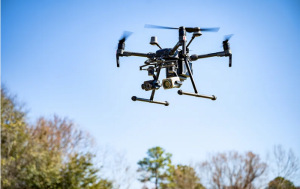
Team Creates Autonomous Killer Drone in Hours

Two engineers, Luis Wenus and Robert Lukoszko, decided to see if they could build a drone that could be used to kill humans autonomously. They were alarmed at how fast they were able to create such a drone, programming it to essentially chase humans. A drone armed or loaded with explosives could target gatherings for terrorist attacks, the engineers worry.

Wenus, the lead in the project, is a self-described “open source absolutist” who also uses the pronouns “e/acc,” which is a signal he is all for unfettered AI development as rapidly as possible, come what may. Yet his work is sure to be used to justify constraints on AI, and even more, on drone development and use by non-government agents, aka you and me.

Drone technology is the new frontier in the battle for the right to self-defense as reflected in our republic’s 2nd Amendment.

Excerpt from livescience.com:

… Wenus said his experiment showed that society urgently needs to build anti-drone systems for civilian spaces where large crowds could gather. There are several countermeasures that society can build, according to Robin Radar, including cameras, acoustic sensors and radar to detect drones. Disrupting them, however, could require technologies such as radio frequency jammers, GPS spoofers, net guns, as well as high-energy lasers.

While such weapons haven’t been deployed in civilian environments, they have been previously conceptualized and deployed in the context of warfare. Ukraine, for example, has developed explosive drones in response to Russia’s invasion, according to the Wall Street Journal (WSJ).

The U.S. military is also working on ways to build and control swarms of small drones that can attack targets. It follows the U.S. Navy’s efforts after it first demonstrated that it could control a swarm of 30 drones with explosives in 2017, according to MIT Technology Review.

The Submachine Gun – Relic Or Revival?


When, in the middle of 19th Century, metallic cased cartridges began to revolutionize the utility of firearms, inventors around the world focused on systems that could improve the utility of firearms in general. The bulk of this development, however, was rather surprisingly applied to the civilian sector, and not the military side.

Military forces are highly conservative by nature. If a thing or a tactic worked in the last war, chances are good that it will work in the next one. Certainly, buying new weapons to replace the old and worn out ones is just a good policy, overall, but “new anything” used to be held as highly questionable: “new stuff” and new tactics are suspect until they have been proven under fire. There is also the concern of confusion and congestion in the supply system should war break out while you are in the middle of transitioning to a new system; this was one of the key arguments of US Army Brigadier General James Ripley – long the whipping boy of those who though that the Henry Rifle (the predecessor to the Winchester lever action rifles) should have been adopted – had about metal-cased cartridge weapons in general: the army procurement system was simply not set up to handle a massive change-over in the middle of a war.


1860 Civil War Henry Rifle No. 4771, 2009. Photo credit: Hmaag. CCA/3.0


Money played its part, too, because “new” equals “expensive”. The Vickers Machine Gun – the British version of the Maxim Gun – cost roughly $10,000 in today’s money. In 1914, that was an eye-wateringly large amount of money for a weapon that only fired rifle-caliber ammunition. The prior experience of European militaries using automatic weapons in colonial wars – where the opposition carried flintlock muskets, at best – was not seen as relevant to a “major power” war.

These concerns are not fits of childish whining. Getting this kind of thing wrong results in your own troops ending up dead when they didn’t have to be, and frequently catastrophic failures on the battlefield, as the US Navy discovered in World War 2, when it found that its new torpedoes didn’t work…at all.

When World War 1 began in August of 1914, most of the nations involved committed the arrogant cardinal sin of assuming that the war would be over – in their favor, of course – by December. Needless to say, it wasn’t. World War 1 saw European armies bash their heads against the wall, literally, using every tactic and weapon they could come up with to try and break the deadlock of trench warfare, which was itself straight out of the book, when mobile operations could no longer make progress, and you didn’t want to surrender your gains. And this is no different today, as Russian and Ukrainian troops quickly discovered in 2022.


A German trench occupied by British Soldiers near the Albert-Bapaume road at Ovillers-la-Boisselle, July 1916 during the Battle of the Somme. The men are from A Company, 11th Battalion, The Cheshire Regiment. John Warwick Brooke. Public Domain.


What to do?

Conventional infantry tactics of the time for assaulting a trench system were what we would now term “human wave attacks”, largely unsupported by weapons we now consider essential tools of warfare. Rifles were universally, manually operated bolt-action weapons…and that was it. Machine Guns like the Maxim and the Vickers were not easily moved under fire, and mortars were scarce. The best forces could do for support were massive – sometimes days-long – artillery barrages, that were frequently ineffective. While there were aircraft, their impact in supporting infantry attacks was more or less non-existent. What assault troops needed was a lightweight automatic weapon that could be carried and operated by a single soldier on the move, a weapon small enough to be maneuvered in tight quarters, and that could be fired more rapidly than any rifle, but which was not a handgun.

The result was the submachine gun.

The submachine gun fires a pistol caliber bullet from a detachable box magazine. While it can fire shots in the semi-automatic mode, they could also fire in the fully automatic mode; this is the definition of selective fire.

Imperial Germany and Italy were the only powers to actually develop and deploy submachine guns (quickly abbreviated to “subguns” or “SMG’s”) during the First World War. While rather awkward (the Italian Villar-Perosa), or rifle-like (the German MP-18), the new weapons quickly showed their promise, quite literally “in the trenches”.

The heyday of the SMG, however, was the Second World War. In that war, industry caught up to technology, and changed the game. Low-cost machining equipment allowed the rapid production of simple designs. Where designs at the start of the war, like the Thompson and the Lanchester were essentially elegant and finely made weapons, they were at least as heavy as a conventional rifle, and were expensive, time consuming and extremely expensive to make.


Dutch soldier deployed to Indonesia with Lanchester SMG, 1947. CC0/1.0.


The SMG’s of the “interwar period” (the time between the first and second world wars) quickly gave way to weapons optimized for rapid production. The British STEN Gun, the American “Grease Gun”, and the Soviet PPS were extremely low-cost, to the point of being downright crude in the case of the PPS. In a very real sense, the bulk of World War 2 SMG’s were the polar opposites of the World War 1 and Interwar designs…too much so.

Post war, SMG development sought to find a middle ground, even as the selective-fire “assault rifle” began to make its presence felt. The Israeli “Uzi” and the “Carl Gustav m/45” from Sweden still used inexpensive manufacturing methods, but the weapons were produced to a much higher standard of quality than wartime necessity and developing design had allowed.


Israeli soldier on the road to Ismailiya, 1973. Photo credit: Naor Amr. CCA/2.5


As the 1960’s dawned, however, two rival designs appeared that would become the defining designs of the submachine gun class: the MP-5 and the MAC-10.

The MAC-10, designed by Gordon Ingram in 1964, was extremely compact, and was manufactured in a variety of calibers. Not much larger than a handgun, the MAC-10 series were quickly “bootlegged” by criminals, because the design was easy and cheap to build…The MAC design, however, had a number of flaws. The worst of these was its extremely high rate of fire, which could range from 900 to well over 1,100 rounds per minute, making the weapons extremely hard to control in any situation. This also affected their reliability, resulting in frequent jams. The MAC design still limps along today, with various small companies striving to fix the design to make viable as more than a curiosity.


Mac-10 submachine gun used to kill Colombian minister and lawyer Rodrigo Lara. Photo credit: Yukof. CCA/4.0


The other design is the near-legendary MP-5. Made by the German firm Heckler & Koch, the MP-5 became the touchstone to measure other SMG’s against.


U.S. Navy SEALs coming in from the water. US Navy photo, c.2003.


Appearing only in 9x19mm, the MP-5 had a solid and reliable action, excellent sights, and came with a wide variety of barrel lengths and buttstock options, enabling it to be tailored to any situation users could think of. The weapon first really entered the public eye during the 1980 Operation Nimrod, where British SAS commandos retook the Iranian embassy in London from hostage-takers in a daring daylight assault. The images of black-clad SAS troopers carrying MP-5’s quickly saw Hollywood desperately acquiring any version of the weapon they could, resulting in the weapon being shown in literally hundreds of movies, television shows and video games. The MP-5, however, is no shirker – it very much lives up to its media reputation.

Military forces around the world loved the MP-5, praising its reliability and accuracy. But, for those military’s that had purchased other weapons from Heckler & Koch such as the G3 rifle, among others, the MP-5 quickly became the go-to for military police and special forces.


North Penn Tactical Response Team of Montgomery County, Pennsylvania, practicing Cellular Team Tactics, 2008. Photo credit: Tim McAteer. CCA/3.0


As the 1970’s drew to a close, however, the assault rifle rose to dominance. Many militaries decided – mostly for financial reasons – that if they could eliminate an entire class of weapons that required a separate supply chain, weapons that could be replaced by the assault weapons their front line troops were carrying anyway, limiting those few remaining weapons to highly specialized units only, that would be a net win for their budgets…and for a time, events seemed to bear this out. It turns out that now, however – some 40+ years later – there are problems with this idea.

While there is a good deal of overlap between assault rifles and SMG’s, they are very much still apples vs. pumpkins. Even shortened assault rifles still weigh much more than the closest SMG. Additionally, the recoil and muzzle blast from an assault rifle’s cartridge is far larger than that of a handgun. Coupled to this, is that rifle cartridges of all categories move far faster, travel far farther and hit far harder than a 9mm or .45 ACP round. This is a serious problem in close-range urban or hostage-rescue operations, because over-penetration is a serious risk. Among the results of the many problems of “too much” power, is the euphemistic term “collateral damage” – and mangled civilians (especially children) mangled by your troops are definitely not something your government wants on the nightly news.

And all of the above comes before we start talking about the 3-D printed SMG’s currently helping to defeat the military junta of Burma.

Submachine guns have a long history, and they still have significant roles to play. War and other necessary hostile actions are not going away anytime soon, heartfelt desires to the contrary. There need to be reforms in the procurement process because increasingly, civilian politicians – and all too frequently, general officers – are definitely not the people who should be making decisions.

After all – your life might depend on their decisions.


The Freedomist — Keeping Watch, So You Don’t Have To
Main

Back FREEDOM for only $4.95/month and help the Freedomist to fight the ongoing war on liberty and defeat the establishment's SHILL press!!

Are you enjoying our content? Help support our mission to reach every American with a message of freedom through virtue, liberty, and independence! Support our team of dedicated freedom builders for as little as $4.95/month! Back the Freedomist now! Click here