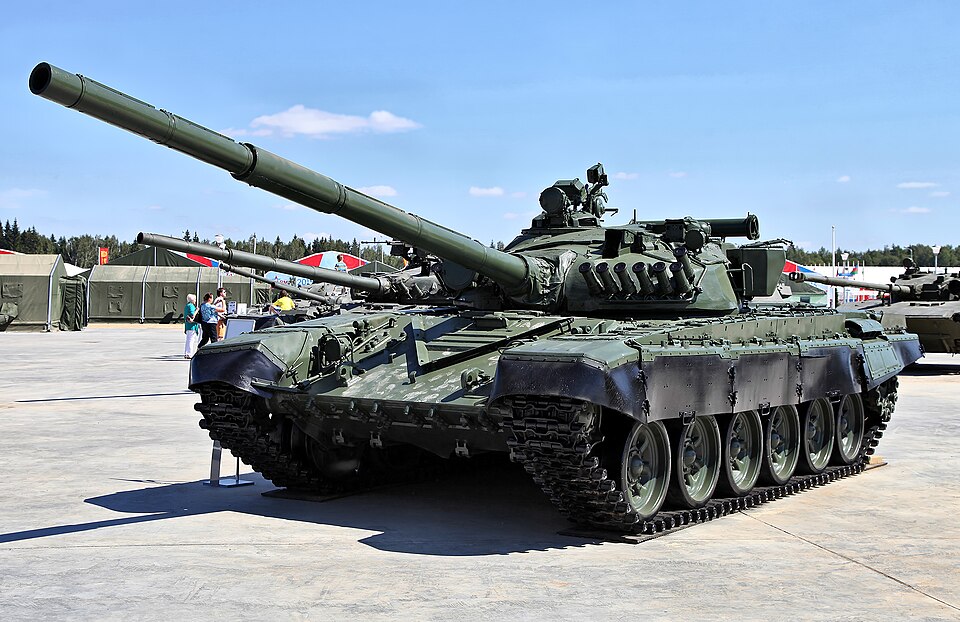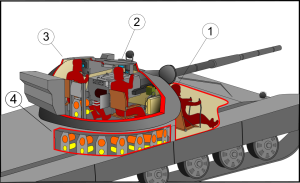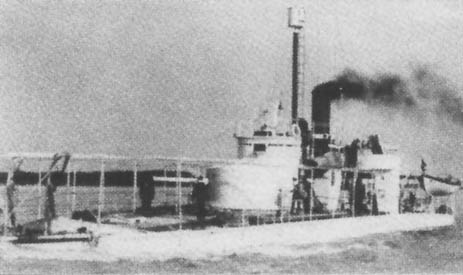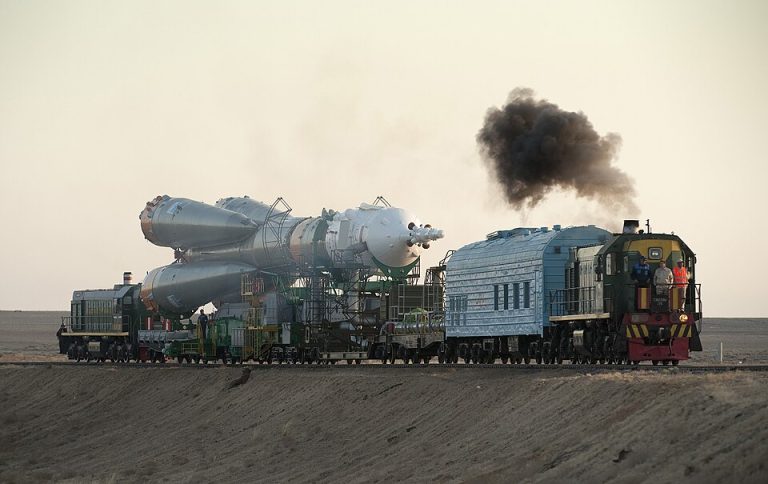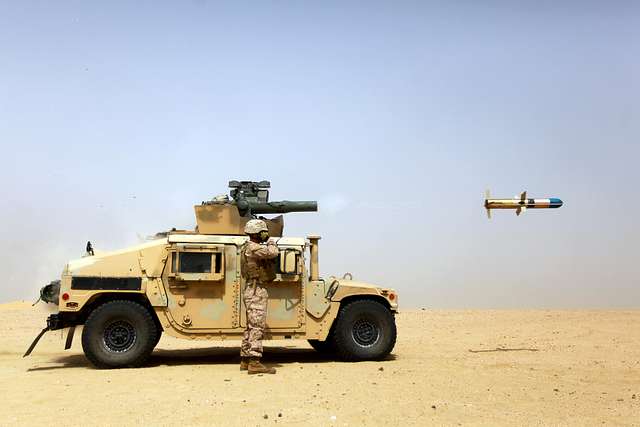
Everyone thinks battleships are cool, right? Certain movies not withstanding…
When President Trump floated the idea of bringing battleships back into service, the response from the defense establishment was immediate and predictable: eye-rolling dismissal, lectures about “modern warfare,” and knowing smirks about nostalgia trumping strategy. The think tanks and defense journals lined up to explain why this was obviously impossible, impractical, and frankly embarrassing.
There’s just one problem: The more you examine the actual arguments, the less absurd it looks.
Starting with what Trump actually said, stripped of the mockery:
Modern aluminum-hulled ships are vulnerable
Guns deliver cost-effective firepower compared to missiles
Battleships demonstrated effectiveness in the Gulf War
China’s naval expansion requires a response that doesn’t bankrupt us
The “experts” immediately attacked the metallurgy comment. Aluminum doesn’t just “melt,” they said. Trump doesn’t understand materials science. Except…the U.S. Navy already agrees with him. That’s why the Arleigh Burke-class destroyers went back to steel construction in the 1980’s. The Falklands War demonstrated aluminum’s vulnerability to fire and battle damage. The 1975 USS Belknap fire drove the lesson home. The Navy’s own design decisions validate exactly what Trump said—they just said it in engineering reports instead of campaign speeches.
USS Belknap (CG 26) after her collision with USS John F. Kennedy on 22 November 1975. US Navy photo. Public Domain.
Now consider the actual strategic problem Western – and American – navies face: magazine depth. The Red Sea operations against Houthi drones and missiles – consuming an estimated 30 years of firing in 15 months – exposed a critical vulnerability. Modern warships carry perhaps 90-100 missiles in their Vertical Launch Systems. Once those are expended, you’re done. You’ve got a $2 billion ship that has to withdraw from the fight and spend weeks getting rearmed for anything beyond self-defense. Each Standard missile costs between $2 and 4 million. Each Tomahawk missile runs $1 and 2 million. Between October 2023 and January 2025, Navy ships fired more defensive missiles than they used in the three decades following Desert Storm. You can burn through a quarter-billion dollars in magazine capacity in a single extended engagement.
A Tactical Tomahawk Cruise Missile launches from the forward missile deck aboard the guided-missile destroyer USS Farragut (DDG 99) during a 2009 training exercise. US Navy photo by Mass Communication Specialist 1st Class L. Stiles. Public Domain.
Compare that to a 16-inch gun. Modern rocket-assisted projectiles could reach 100+ miles. Each round costs perhaps $25,000-50,000 in current dollars — less if produced at scale. An Iowa-class battleship could fire continuously for days, delivering devastating effects on shore targets, surface vessels, and even providing anti-air support with proximity-fused rounds. The math isn’t even close: sustained and accurate fires at a fraction of the cost.
But what about vulnerability to modern anti-ship missiles? This is where the analysis gets interesting. An Iowa’s belt armor is 12 inches of hardened steel, backed by layers of structural protection. Modern anti-ship missiles — whether subsonic Harpoons or supersonic weapons — typically carry 500-1,000 pound warheads designed to penetrate thin aluminum hulls and detonate inside the ship. Against 12 inches of armor backed by compartmentalized protection? The penetration physics are completely different. Modern warheads might crater the armor, but achieving a “mission kill” (rendering a vehicle or craft unable to continue fighting, without destroying it) becomes vastly more difficult.
Survivability
Three cases are instructive in the vulnerability argument:
When HMS Sheffieldwas sunk during the Falklands War in 1982, the warhead of the French EXOCET missile that struck it failed to detonate, or at least did not detonate properly. Instead, the Sheffield was irreparably damaged by fires started by the missile’s still-running engine
In 1987, the USS Stark was attacked and struck by a pair of Iraqi-fired EXOCET missles. Prompt damage control prevented the ship sinking. After extensive repairs, the Stark returned to service, before being decommissioned in 1999, and scrapped in 2006.
Later, in early 1988, the USS Samuel B. Roberts struck an Iranian naval mine while escorting a civilian oil tanker. The severely damaged ship required around a full year off repairs, before being returned to service.
In 2000, the USS Cole was mined in the harbor of Aden, Yemen (although framed as a “bombing”, the actual attack counts as a ‘mining’ in naval terminology) by Al Qaeda terrorists using a massive IED. Following extensive repairs, the Cole remains in naval service.
In contrast, there is the USS Nevada (BB-36), the only battleship on the list. Severely damaged by relentless air attack at Pearl Harbor, the Nevada was repaired and returned to service, serving throughout World War 2. At that war’s end, however, the ship was worn out, and thoroughly outdated, as it had originally been laid down in 1914…So, it was decided to use the old battleship as a nuclear target during Operation Crossroads, the first atomic tests at Bikini Atoll. The Nevada survived not one, but two, close range detonations, to such an extent that she had to be scuttled in 1948 by naval gunfire from the USS Iowa. That, however, was still insufficient to sink her, so she was finished off by an aerial torpedo.
Battleships, it would seem, are remarkably resilient.
Battleship USS Nevada (BB-36) painted in orange as target ship for the Operation Crossroads Able Nuclear weapons test. 1946 photo by US Navy. Public Domain.
Drones
The drone threat is real, but consider the defensive advantage: modern close-in weapon systems, electronic warfare, and updated radar married to a platform that can absorb damage and keep fighting. A kamikaze drone that could cripple an aluminum-hulled destroyer might barely scratch an Iowa’s main deck.
And, as operations in the Red Sea have shown, against actual warships – properly manned with trained crews – drones simply don’t present the threat that many believe to be real.
Manning – The Real Problem
The manning argument deserves serious consideration. Yes, the original crew was 1,500-1,800 sailors. But that was 1940’s technology with manual systems throughout. Selective modernization — updated damage control, automated fire control, modern propulsion plant controls — could potentially reduce crew requirements by 30-40 percent while maintaining the core advantages of proven mechanical systems over fragile digital networks.
Currently, while all services saw an increase in recruiting in the aftermath of Trump’s 2024 election victory, it remains to be seen if this increase will continue. The fact that the only real restriction on a “big-gun” battleship revival is whether the Navy can recruit enough personnel, is telling.
Conclusion
The real question isn’t whether battleships make technical sense. The real question is why the defense establishment is so hostile to the idea. And here’s where it gets interesting: battleships represent everything the current procurement system hates. Simple, proven technology. Conventional construction. Multiple potential suppliers. Long service life. Low-margin, high-volume ammunition. No proprietary software requiring endless updates. No justification for $100 million unit costs or trillion-dollar development programs.
Trump’s idea threatens a very lucrative business model. That’s why it sounds “crazy” to people with consulting contracts and board positions. To people actually concerned with sustainable naval power?
It starts looking remarkably sane.
The Freedomist — Keeping Watch, So You Don’t Have To
Since 2017, a war has been raging. Chances are, you have never heard of it. This war, in a remote part of the world, is poorly reported because the goverment is humiliated by its failures, and refuses to allow too much access to report on the fighting.
This matters to you, and to your wealth – because if the Islamic State wins, you will know it…and then some. But in the proximate, there is a serious blind spot that hampers even professionals from understanding the situation fully.
When journalists and analysts discuss the insurgency devastating Mozambique’s Cabo Delgado province, they often go out of their way to clarify that the group locally called “al-Shabaab” has no connection to Somalia’s better-known terror organization of the same name. But this insistence on separation obscures a more complex — and much more alarming and troubling — reality about modern jihadist networks in Africa.
The truth is that while Mozambique’s Islamic State affiliate didn’t emerge from Somalia’s al-Shabaab, specifically, it operates within a sophisticated transnational network coordinated from an unlikely headquarters: the mountains of Puntland in northeastern Somalia.
Map of the Cabo Delgado insurgency; situation as of in March of 2024. Map by WikiUser BlookyNapsta. CCA/4.0 Int’l.
The Name Game
Understanding the confusion requires backing up to 2017, when armed militants first attacked the small ocean port town of Mocímboa da Praia. Locals and journalists needed something to call this nameless group, and many settled on “al-Shabaab” — Arabic for “the youth.” It was a descriptive term reflecting the insurgents’ demographics, not a claim of organizational affiliation. Some called them “Ahlu Sunnah Wa-Jama” after their ideological roots, but “al-Shabaab” stuck, creating endless confusion with Somalia’s al-Qaeda-affiliated terror group.
Here’s where analysts are technically correct: Somalia’s al-Shabaab pledges allegiance to al-Qaeda. Mozambique’s group — now formally called Islamic State Mozambique (ISM) — pledges allegiance to ISIS. These are rival international terror networks that actively fight each other. So no, ISM is not an offshoot or extension of Somali al-Shabaab. They’re on opposite sides of the jihadist world.
But that’s not the end of the story.
The Puntland Connection
What many casual observers miss is that ISIS restructured its African operations in early 2020, creating a coordination hub called the “Al-Karrar office” based in Puntland, Somalia. This office, embedded within ISIS-Somalia, was tasked with coordinating support across eastern and central Africa — including Mozambique.
According to the United Nations, ISIS-Somalia in Puntland began coordinating support to Mozambique as early as late 2019. That support included tactical training (documented by 2020), financial transfers routed through agents in Kenya, Tanzania, and Uganda, and strategic guidance that transformed ISM from a ragtag local insurgency into a formidable military force capable of capturing towns and threatening major infrastructure.
The impact became clear in 2020 and 2021 when ISM’s operational capabilities dramatically increased. The group launched increasingly sophisticated attacks, culminating in the March 2021 assault on Palma that killed dozens and forced French energy giant Total Energy to suspend its $60 billion natural gas project. The coordinated three-pronged attack, use of combined arms tactics, and disciplined withdrawal all bore the hallmarks of external training and coordination.
Buildings destroyed during the battle of Palma. April, 2021 image from Voice of America (VOA). Public Domain.
Foreign Fighters and Transnational Networks
The transcript of recent analysis on Mozambique mentions captured fighters with “foreign accents” and non-local origins — and this tracks with what researchers have documented. While ISM is predominantly staffed by recruits from northern Mozambique and Tanzania, it also draws fighters from the Democratic Republic of Congo (reflecting connections with ISIS’s Central Africa Province) and other parts of the Great Lakes region.
ISIS-Somalia itself has become remarkably international, with fighters from Ethiopia, Sudan, Tanzania, and even Arab Gulf states joining the Puntland-based operation. Some of these fighters have reportedly moved between ISIS’s various African franchises, bringing experience and expertise with them.
Quirimbas Islands. November, 2021 image from Earth Observatory/NASA. Public Domain.
The financial dimension is equally important. ISIS-Somalia has become one of ISIS’s most profitable branches, generating millions annually through extortion, smuggling networks, and taxation. Some of this money flows through the Al-Karrar office to support operations in Mozambique and elsewhere, creating a self-sustaining transnational terror economy.
Why the Distinction Matters (and Doesn’t)
Analysts aren’t wrong to insist that ISM and Somali al-Shabaab are distinct organizations. The distinction matters for understanding motivations, tactics, and potential diplomatic or military responses. ISM emerged from genuinely local grievances — poverty, government corruption, marginalization of Muslim minorities, and broken promises about natural gas wealth. Addressing those root causes requires different approaches than combating an externally imposed insurgency.
But the insistence on organizational separation can obscure the functional reality: ISM operates within a transnational ISIS network that provides coordination, training, funding, and ideological guidance from Puntland. The “local insurgency” framing risks underestimating the sophistication and resilience of this network.
What this insistence on pedantic nitpicking masks, is a terrifying reality: the remnants of the Islamic State — largely smashed in 2017-2019 — have reorganized themselves into distinctly Western-style “Combatant Commands“, semi-autonomous, regional commands that are all solidly aligned to the IS leadership, but plan and execute operations in their zones as they see fit.
This reorganization has made the organization far more resilient, more flexible, and far harder to attrit by direct military action.
The Bigger Picture
The Mozambique case illustrates how modern jihadist organizations operate in Africa. Rather than monolithic groups expanding from single headquarters, we see franchises that maintain local character while plugging into transnational support networks. ISIS’s pivot to Africa has created a web of affiliated groups that share resources, expertise, and ideological inspiration while adapting to local conditions.
For Mozambique’s suffering population — more than 700,000 displaced and 6,100 killed since 2017 — the organizational charts matter less than the ongoing violence. But for policymakers and analysts trying to disrupt these networks, understanding the Puntland-Mozambique connection is crucial. Cutting the financial and logistical links between ISIS’s regional hubs and its various franchises may prove more effective than treating each insurgency as an isolated local problem.
The insurgents in Cabo Delgado may not be the same “al-Shabaab” that terrorizes southern Somalia, but they’re very much part of the same global jihadist ecosystem—one that has successfully established deep roots in Africa’s most vulnerable regions.
Why This Matters
Mozambique, despite its remote location on the world map, sits on very important real estate…not because of the natural gas finds of Total Energies, but because of its physical location.
As we touched on briefly in 2022, the grounding of the container ship Ever Given in 2021 severely up-ended world shipping, with effects that extended far beyond the six days it took to clear the Suez Canal. Likewise, the explosion in the port of Beirut, Lebanon in 2020. As our 2022 article alluded to, while those incidents were accidents, should a group coordinate similar incidents, such an offensive would devastate world commerce.
More to the point, a deliberate closure of the Suez Canal — unlike the missile and piracy operations of the Houthis in Yemen — would force a rerouting of all ocean-going merchant traffic around South Africa’s Cape of Good Hope…which has to travel right past the war zone in Cabo Delgado.
Indian Ocean area. Historic map (1993), Library of Congress, via the Central Intelligence Agency. Public Domain.
And, again as we theorized about in 2022, multiple deliberate strikes like this present a clear threat to the economic vitality of the world, and directly to you.
The question is, are the real professionals paying attention to the nuance?
The Freedomist — Keeping Watch, So You Don’t Have To
The more things change, the more they stay the same. As we wrote back in January of 2025, the various terror, drug and insurgent groups in Afghanistan – not content with fighting each other- are poking what they see as a weakened tiger, in the form of a highly dysfunctional Pakistan.
With Pakistan clearly on the losing end of it brief – and terrifying – war with India in May, the various jihadist groups north of the Hindu Kush smelled weakness, and a steady intensification of attacks have been quietly growing, an intensification largely ignored in the wider world press, in favor of Israel v. Hamas, Ukraine v. Russia, and the “Gen-Z – Discord” revolts erupting in states from Morocco to Nepal.
Landscape of Afghanistan, with the Hindu Kush range in the background, and a T-62 MBT in the foreground. 2007 Public Domain photo by WikimediaUser davric.
The 2025 Afghanistan-Pakistan conflict that erupted in earnest in mid-October represents more than routine border skirmishes—it signals a fundamental breakdown in one of the region’s most consequential relationships. After decades of Pakistan supporting the Taliban as a strategic asset, Islamabad now finds itself conducting airstrikes on Kabul and trading artillery fire with forces it helped bring to power. The bitter irony is impossible to miss: Pakistan’s former proxy has become its primary security threat.
October Escalation
The immediate catalyst arrived on October 8, when militants killed 11 Pakistani military personnel, including a lieutenant colonel and a major, in Khyber Pakhtunkhwa’s Orakzai district. Pakistan’s response crossed a critical threshold — airstrikes not merely in border regions but directly on Kabul, Afghanistan’s capital, targeting Tehreek-e-Taliban Pakistan (TTP) leadership allegedly sheltering under Afghan Taliban protection.
The fighting that followed was the deadliest since the Taliban returned to power in August 2021. Pakistan claims it killed over 200 Afghan Taliban and allied fighters while losing 23 soldiers. Afghanistan counters that it killed 58 Pakistani soldiers while suffering only nine deaths. Both sides claim to have captured or destroyed dozens of enemy border posts. Independent verification remains impossible, but satellite imagery and verified drone footage confirm significant damage to Afghan military compounds.
The violence forced a 48-hour ceasefire brokered by Saudi Arabia and Qatar, but border crossings remain closed and tensions simmer. More ominously, Pakistan has adopted what analysts call a “new normal” doctrine: any attack originating from Afghan territory will trigger immediate cross-border retaliation, regardless of diplomatic cost.
The TTP: Pakistan’s Self-Inflicted Wound
At the conflict’s core lies the Tehreek-e-Taliban Pakistan, formed in 2007 during America’s “War on Terror.” The TTP seeks to overthrow Pakistan’s government and impose strict Islamic law, demanding the release of imprisoned members and reversal of tribal area integration into Khyber Pakhtunkhwa province. What makes the TTP particularly dangerous is its ideological alignment with and sanctuary provided by the Afghan Taliban.
The numbers tell a grim story. The TTP conducted at least 600 attacks against Pakistani security forces in the past year alone, with 2025 activity already exceeding all of 2024. August 2025 marked the deadliest month of militant violence in over a decade, with 194 people killed and more than 200 injured in 143 attacks across Pakistan. Pakistani security force casualties in 2025 are on track to be the highest ever recorded.
The TTP has evolved beyond “simple insurgency“, threatening to expand attacks against Pakistan’s military-run commercial enterprises — fertilizer companies, construction firms, housing authorities, and banks. This represents a significant escalation, potentially bringing urban areas into a conflict previously concentrated in remote borderlands.
Briefly, a “simple insurgency”, as defined by Google’s AI search tool can be described as:
A simple insurgency is an armed rebellion by a small, lightly armed group against a more powerful, established government. Because they lack the strength for a conventional military conflict, insurgents use guerrilla tactics and rely heavily on the support of the local population to challenge the ruling authority. [1, 2, 3, 4] Key characteristics of a simple insurgency • Asymmetric warfare: A simple insurgency is defined by the severe mismatch in power between the rebels and the government they oppose. Insurgents, often called guerrillas, compensate by using hit-and-run attacks and avoiding direct, pitched battles. • Irregular tactics: Instead of traditional army maneuvers, insurgents employ a variety of tactics to weaken the government and increase their own control and legitimacy. These can include:
• Protracted struggle: Insurgencies are not short, decisive conflicts. They are typically protracted political-military campaigns designed to outlast and exhaust the government through persistent, focused violence. • Focus on the population: The ultimate target of an insurgency is not just the government’s military forces, but the loyalty and support of the civilian population. Gaining popular support is the key to success. Insurgents accomplish this by:
• Providing services • Discrediting the government • Gaining the trust of people in rural or remote areas
• Driven by ideology: While some rebellions are a temporary revolt, insurgencies are often fueled by a powerful ideology that explains people’s grievances and provides a vision for a new political order. This can include motivations based on religion, ethnicity, or politics. • Control over territory: Unlike purely terrorist organizations, a central objective of an insurgency is to control resources and eventually establish an alternative government in a particular area. [1, 4, 5, 6, 7, 8]
Simple insurgency vs. other conflicts • Revolution: A simple insurgency lacks the widespread, organized structure of a full-scale revolution, even though it may share the same goal of overthrowing the government. • Coup d’état: This is different from a coup, which involves a swift, elite-driven seizure of government power. An insurgency, by contrast, relies on a protracted struggle for popular support and does not have the resources for a quick power grab. • Terrorist organization: While insurgents may use terrorism as a tactic, their ultimate goal is different from purely terrorist groups. Insurgents aim to build an alternative government and control territory, while terrorist groups typically do not. [6, 7, 9, 10, 11]
The current crisis exposes Pakistan’s catastrophic series of miscalculations of the past. For decades, Islamabad’s military establishment pursued “strategic depth” in Afghanistan as a hedge against India, covertly supporting the Taliban even while publicly backing America’s War on Terror. The assumption was straightforward: a friendly Taliban government in Kabul would provide strategic advantage while ending Pakistan’s internal insurgency problems once American forces departed, by exerting control over the “Pakistani Taliban”.
Of course, the opposite promptly occurred. Since the Taliban’s 2021 return to power after the Biden Administration’s disastrous withdrawal from the country, the TTP has grown dramatically more capable and aggressive. Pakistan now faces an irreconcilable contradiction: the same Afghan Taliban it supported for decades now provides sanctuary to Pakistan’s primary internal security threat. Having invested enormous political and military capital ensuring Taliban victory, Pakistan cannot effectively pressure Kabul to eliminate TTP sanctuaries without undermining its broader regional objectives.
When Pakistan demands the Taliban eliminate TTP safe havens, Kabul either urges negotiations with the militants or claims inability to control them—sometimes both simultaneously. Pakistan’s leadership increasingly believes the Taliban deliberately weaponizes the TTP, either to expand Taliban-style governance into Pakistan or enable an allied Pashtun entity to control northwestern Pakistan.
The India Factor
Complicating matters further, India has pursued normalization with the Taliban precisely as Pakistan-Taliban relations deteriorate, almost certainly for that very reason – the brutal calculus of ‘realpolitik‘ usually wins, afterall. Afghanistan’s Foreign Minister Amir Khan Muttaqi visited New Delhi in October, with India announcing plans to reopen its Kabul embassy and calling the meeting “an important step in advancing our ties.” For Pakistan, which fought its brief war with India in May, this Taliban-India rapprochement represents strategic encirclement…which India well-understands.
Pakistan’s military noted the “serious provocation” of the fighting’s timing during Muttaqi’s India visit. The rhetorical shift is stark: Pakistan no longer refers to the Taliban as an “interim government” but as a “regime,” questioning their legitimacy to govern and calling for a more inclusive Afghan government. This represents a near-suspension of diplomatic ties between former allies.
Strategic Dead Ends
Pakistan’s options appear uniformly unattractive. Military operations against the TTP face fundamental constraints: the militants operate from Afghan territory beyond Pakistani reach, enjoy Afghan Taliban protection, and can simply retreat across the disputed Durand Line border when pressured. Localized clearing operations may temporarily displace militants but cannot hold territory without massive troop deployments that remain deeply unpopular among border populations.

Durand Line Border Between Afghanistan and Pakistan. CIA Image, 2007. Public Domain.
Negotiations offer no better prospects. Previous ceasefires collapsed when the TTP refused to compromise on core demands fundamentally incompatible with Pakistan’s constitutional order. The TTP’s demand for sharia law implementation and tribal area autonomy restoration cannot be reconciled with Pakistan’s governance structure. Moreover, the TTP’s track record of breaking agreements makes any deal inherently unstable.
Cross-border airstrikes — Pakistan’s current approach — risk escalating into broader conflict while failing to address root causes. The strikes humiliate the Afghan Taliban publicly, potentially driving them closer to the TTP and other anti-Pakistan groups. Pakistan is adopting tactics it vehemently criticized when India employed them against Pakistan itself earlier this year—a dangerous precedent that normalizes cross-border military action in a nuclear-armed region.
Regional Implications
The conflict’s reverberations extend beyond bilateral relations. China, with massive “Belt and Road” investments in Pakistan, watches nervously as infrastructure becomes militant targets. Regional powers including Russia, Iran, and Saudi Arabia have urged restraint, recognizing that instability along the Afghanistan-Pakistan border threatens broader security. The Kremlin’s Moscow Format Consultations specifically pressed the Taliban to eliminate the TTP threat – pressures Kabul shows no inclination to heed.
Perhaps most troubling, the conflict validates Pakistan’s historical paranoia about strategic encirclement while simultaneously demonstrating how that paranoia drove the very policies that created current threats. By backing the Taliban as a hedge against India, Pakistan helped create a government that now shelters Pakistan’s most dangerous internal enemy while courting Pakistan’s primary external rival.
And this, in a nuclear-armed nation with a very shaky government.
No Good Options
As the temporary ceasefire holds precariously, at least for the moment – the fundamental problem remains unresolved: Pakistan faces an emboldened insurgency operating from sanctuary areas it cannot easily eliminate without destroying relationships it spent decades building. The Afghan Taliban, meanwhile, must balance protecting ideological allies against managing fallout from Pakistani military actions — a calculation complicated by its own limited control over remote regions and internal pressure from hardline factions…in public, at least.
History suggests leaders within the Taliban understand that Afghan governments ending up on Pakistan’s wrong side rarely survive. Yet the Taliban’s public posture suggests they believe they can continue supporting the TTP without triggering Pakistani countermeasures sufficiently severe to destabilize their regime. Whether this calculation proves correct may determine the region’s stability for years to come.
What seems certain is that Pakistan’s investment in the Taliban as a strategic asset has become a strategic liability of the first order — a cautionary tale about the dangers of relying on militant proxies as instruments of state policy. The militants Pakistan once cultivated have become the militants Pakistan can no longer control, operating from territory Pakistan helped them secure. The tragic irony would be complete if it weren’t so dangerous.
…But.
The most important thing to remember in this swirling morass of barely concealed knives, is that the two main players – India and Pakistan – are both nuclear-armed powers…and no one, including them, is quite sure how steady are the hands on those launch keys.
Prepare yourself accordingly.
The Freedomist — Keeping Watch, So You Don’t Have To
Military vehicles develop slowly, and not in very predictable ways. Most of the time, the requirements for a military vehicle are largely divorced from what manufacturers actually come up with. However, sometimes, the stars align, and magic actually happens.
Case in point: the M113.
M113 crew firing their .50-caliber machine gun during South Vietnamese training exercise. US Army photo by PFC J.C. Rivera. Public Domain.
As World War 2 developed, the United States developed the M3 Half-Track, an odd – but highly effective – hybrid, with a wheeled front axel much like a truck, in front, with a “tracked” rear drive system that used what amounted to a very large rubber tire, stretched over a huge span.
While very strange, the M3 proved highly effective at everything from delivering infantry right behind the tanks, to light artillery, anti-aircraft and logistics, doubtless why some 38,000 ended up being produced. But, the half-track wasn’t perfect, and by the beginning of the 1950’s, the Army needed a replacement.
The M113 Armored Personnel Carrier stands as one of the most widely produced and utilized armored vehicles in military history, with its operational footprint spanning over six decades and more than 80 countries worldwide. The M113 is the unlikely gold standard for “battle taxis” arounf the world.
Since its introduction by Food Machinery Corporation (later United Defense) in 1960, the M113 has become synonymous with versatility, reliability, and adaptability in military operations across diverse theaters and conflict zones. While it can technically carry 11 troops, plus its 2-man crew, most current operators use an 8- or 9-man squad.
Originally developed to meet the U.S. Army’s requirement for a lightweight, amphibious armored personnel carrier, one light enough to be air dropped, the M113 quickly demonstrated its value well beyond its initial design parameters. Two prototypes were initially produced, the aluminium-hulled T113 and the steel-hulled T114. The aluminum hull construction provided substantial weight savings compared to steel alternatives while maintaining adequate protection against small arms fire and artillery fragments. In contrast, the steel hulled design, owing to the severe weight restrictions set by the design targets, offered no greater protection than the aluminum hull. This lightweight design enabled the vehicle to achieve speeds of up to 42 mph on roads and maintain mobility across various terrains, from jungle environments to desert conditions.
US Army infantrymen armed with M16A1 rifles unload from an M113 armored personnel carrier during a training exercise, 1985. US Army photo. Public Domain.
The Vietnam War marked the M113’s combat debut and established its reputation for durability under harsh conditions. American forces employed thousands of M113s in Southeast Asia, where the vehicle’s amphibious capabilities proved invaluable in the Mekong Delta‘s waterlogged terrain. The “Green Dragon,” as it became known, served not only as a troop transport but also as a command post, ambulance, and fire support platform. Its aluminum armor, while initially questioned, demonstrated remarkable resistance to mines and improvised explosive devices, contributing to crew survivability rates that exceeded expectations.
International adoption of the M113 family has been unprecedented in armored vehicle history. Countries ranging from NATO allies to Middle Eastern nations, Asian powers, and African states have incorporated various M113 variants into their military arsenals. Australia, for instance, has operated M113s since the 1960’s and continues upgrading these platforms for modern operations. Similarly, nations like Norway, Denmark, and the Netherlands have maintained M113 fleets for decades, a testament to the platform’s capabilities in severe environments showing its enduring utility and cost-effectiveness.
The M113’s modular design has facilitated extensive variant development, with over 40 different “official” configurations currently documented. These include the M106 mortar carrier, M577 command post vehicle, M901 Improved TOW Vehicle, and M163 Vulcan Air Defense System; one variant, the M752, was built to launch the MGM-52 Lance tactical missile, which could launch nuclear warheads. This adaptability has allowed military forces to maximize their investment by utilizing a common chassis for multiple mission requirements, simplifying logistics, maintenance, and training procedures.
Soldiers of the 1st Battalion, 3rd Armored Cavalry Regiment drive an M-163 20mm Vulcan self-propelled anti-aircraft gun system to a refueling area during Operation Desert Shield, c.1990-1991. US Army photo by SPC. Samuel Henry. Public Domain.
Production numbers underscore the M113’s global impact, with over 80,000 units manufactured across multiple production lines in the United States and licensed manufacturing facilities internationally. Countries including Italy, Turkey, and South Korea have produced their own variants, often incorporating indigenous modifications to meet specific operational requirements. This distributed production model has enhanced the platform’s accessibility and sustainability for allied nations.
Contemporary operations continue to validate the M113’s relevance in modern warfare. During conflicts in Iraq and Afghanistan, various nations deployed upgraded M113 variants equipped with enhanced armor packages, digital communication systems, and improved weapon stations. The platform’s relatively low signature and proven mechanical reliability have made it suitable for peacekeeping missions, border patrol duties, and domestic security operations.
The M113’s influence extends beyond traditional military applications. Law enforcement agencies, particularly SWAT teams and tactical units, have adopted surplus M113s for high-risk operations. Emergency services have converted these vehicles for disaster response, leveraging their mobility and protection in hazardous environments. This civilian adaptation demonstrates the platform’s fundamental design soundness and operational flexibility.
Modernization programs worldwide continue extending the M113’s service life well into the 21st century. Upgrade packages typically include improved armor protection, digital battlefield management systems, enhanced powertrains, and modernized weapon systems. Countries like Australia have invested hundreds of millions of dollars in comprehensive M113 upgrade programs, indicating long-term confidence in the platform’s viability.
Canadian Air-Defense, Anti-Tank System (ADATS), built on an M113 chassis, on display during the Royal Nova Scotia International Tattoo, 2008. Photo by Jonathon A.H., 2008. CCA/3.0
The M113’s legacy encompasses not only its direct military impact but also its influence on subsequent armored vehicle development. Design principles established with the M113 – including aluminum construction, amphibious capability, and modular architecture – have informed modern infantry fighting vehicle development programs worldwide.
Today, despite being supplemented or replaced by newer platforms in some applications, the M113 remains actively deployed across numerous conflict zones and operational theaters. Its combination of proven reliability, operational versatility, and cost-effectiveness ensures continued relevance in military inventories globally.
The M113’s near-seven decades of service represents an exceptional achievement in military vehicle design, establishing standards for durability and adaptability that continue influencing contemporary armored vehicle development. This enduring success reflects not merely engineering excellence but also a fundamental understanding of operational requirements that transcend technological generations.
Try as it has, the US Army has not been able to completely retire the M113, although it has, yet again, announced its imminent demise. Why is this the case? After all, the M113 was designed in the 1950’s, right? well, so was the AR-15, from which we got both the M16 and the M4, neither of which have been fully replaced, either.
The answer, then, is:
If it ain’t broke, don’t fix it.
The Freedomist — Keeping Watch, So You Don’t Have To
In the military sphere, there is a great deal of ribbing and catcalling, both between different services of a nation’s armed forces, but also between the forces of different countries. For the most part, this ribbing is good-natured fun, especially when it is based on actual reality.
However, there has been a highly toxic level of mocking applied to the armed forces of France, a situation that has been getting worse over the last forty years.
The jokes abound – the beret being designed to facilitate surrender by not getting in the way of raising one’s hands; the notion of French tanks having more reverse gears than forward one; the idea that French genes could not be improved after World War 1 because American troops widely used prophylactics; and the idea that French rifles are excellent as surplus…because they were “only dropped once“…something applied to the Army of South Vietnam, as well.
It’s one thing, to make these jokes in actual jest. It is another thing entirely, when they become statements. Then, it’s no longer funny, but suicidally insulting.
In fact, the French military has maintained a track record of success on the battlefield for centuries. The source of these juvenile statements of inability only date from the Franco-Prussian War, and its catastrophic cost to the country. The military’s troubles in World War 1 came from holding the Imperial German Army at bay for three years, at a cost of 1.4 million casualties.
While the disaster of the openingof World War 2 led to France’s conquest by Nazi Germany, France’s military plan was not a bad plan, just a plan poorly executed…and the British did not do very well, then, either. The collapse of France’s colonial empire after World War 2 did come from overly ambitious military plans formed by not understanding that colonial warfare had changed…something the United States also failed to grasp, in the exact same place as Dien Bien Phu, a decade prior.
The fact is that, for all of it’s messy problems in the last century, the French military remains one of the most capable armed forces on the planet – if their leaders allow their generals to do their jobs.
The French Army’s reputation for military professionalism, despite its dramatic fluctuations over the past two centuries, has created a complex narrative that defies simple description. From the revolutionary fervor of the Napoleonic era to the post-WW2 colonial campaigns and modern peacekeeping operations, France’s military has continually demonstrated both exceptional competence and notable – but recoverable – failures that continue to shape perceptions today.
The Napoleonic Foundation
The modern French Army’s professional identity was forged in the crucible of the Revolutionary and Napoleonic Wars (1792-1815). Napoleon’s Grande Armée established standards of tactical innovation, logistical organization, and battlefield leadership that influenced military thinking across Europe, down to today. The army’s meritocratic promotion system, revolutionary at the time, created a professional officer corps based on ability rather than aristocratic birth. This period saw the development of combined arms tactics, the corps system, and sophisticated staff work that demonstrated clear military professionalism.
Vive l’Empereur! Charge of the 4th Hussars at the battle of Friedland, 14 June 1807. 1891 painting by Édouard Detaille. Art Gallery of New South Wales. Public Domain.
However, even during this golden age, the French military exhibited characteristics that would later prove problematic. The cult of offensive action (offensive à outrance) and the emphasis on élan over methodical planning became deeply embedded in French military culture, later contributing to both spectacular victories and catastrophic defeats.
19th Century Trials and Adaptations
The Franco-Prussian War of 1870-71 exposed serious deficiencies in post-Napoleonic French military professionalism. Poor intelligence, inadequate logistics, and outdated tactical thinking led to decisive defeat and the collapse of the Second Empire. The subsequent creation of the Third Republic saw significant military reforms, including the establishment of improved staff colleges and the modernization of equipment and tactics.
The colonial period (1830s-1960s) presents a particularly complex chapter in French military professionalism. The conquest of Algeria, the expansion into West and Equatorial Africa, and campaigns in Indochina demonstrated considerable tactical adaptability and logistical capability over vast distances. French colonial forces also developed expertise in irregular warfare, cultural adaptation, and civil-military cooperation that proved valuable in diverse environments, although these advantages rarely translated into warfare on the European continent, which was common to all the major European powers.
Yet this same period saw the development of what critics term “colonial habits” – reliance on superior firepower against less-equipped opponents, acceptance of harsh methods, and a certain detachment from metropolitan oversight that would later create problems in conventional conflicts.
World War I: Staying Power
The Great War stretched French military professionalism to its limits. Initial disasters, including the failure of Plan XVII and massive casualties from adherence to offensive doctrine, gave way to remarkable adaptation under pressure. The French Army demonstrated institutional learning capacity, rapidly developing new tactics for trench warfare, integrating new technologies, and maintaining cohesion through four years of unprecedented carnage.
French infantry pushing through enemy barbed wire, 1915. Agence de presse Meurisse. Public Domain.
The performance of French commanders like Ferdinand Foch and Philippe Pétain, along with the army’s ability to absorb and integrate lessons from the battlefield, demonstrated core professional competencies. However, the trauma of the war also reinforced defensive thinking that would prove problematic in the next conflict.
1940: Collapse and Recovery
The defeat of 1940 represents perhaps the most significant challenge to claims of French military professionalism. Despite having numerically superior and often technically advanced equipment, the French Army was comprehensively outmaneuvered by German forces employing innovative combined arms tactics. Analysis reveals multiple professional failures: inadequate intelligence, poor communications, inflexible command structures, and outdated operational concepts.
Yet the same period saw examples of French military professionalism in different contexts. The Free French forces under Charles de Gaulle, though small, maintained military traditions and eventually contributed significantly to the liberation of France. The French Resistance, while not strictly military, demonstrated tactical innovation and operational security that impressed Allied observers.
Colonial Wars and Professional Dilemmas
The post-war colonial defeats in Indochina (1946-1954) and Algeria (1954-1962) present perhaps the most controversial chapters in assessing French military professionalism. In Indochina, French forces demonstrated remarkable tactical competence in difficult conditions, developing techniques counterinsurgency and showing considerable adaptability. However, strategic failures and political constraints ultimately led to defeat at Dien Bien Phu.
The Algerian War proved even more problematic. While French forces achieved significant tactical successes against the FLN, the conflict saw disturbing breakdowns in professional conduct, including widespread use of torture and involvement in attempted coups against the civilian government. The Battle of Algiers (1956-1957) exemplified this tension between tactical effectiveness and questionable methods.
Since 1962, the French Army has undergone a significant revamping of its professional nature. The end of conscription in 1996 created an all-volunteer force with higher educational standards and improved training. French forces have demonstrated competence in various international operations, from peacekeeping in the Balkans to counterterrorism operations in the Sahel region of Africa.
Operations like Serval (2013) and Barkhane (2014-2022) in Mali showcased French capabilities in rapid deployment, intelligence gathering, and coordination with international partners. These operations demonstrated institutional learning from previous colonial experiences while maintaining focus on legitimate military objectives.
And it is here, that a more detailed look at Operation Serval is instructive on just how adaptable French forces can be.
Strategic Challenges of Operation Serval (2013)
Operation Serval presented the French military with a complex array of strategic challenges that tested every aspect of modern expeditionary warfare capabilities. The intervention in the war in Mali, launched on January 11, 2013, required France to project power across 4,000 kilometers into the heart of the Sahel region under severe time constraints and with limited initial international support.
Geographical and Logistical Complexity
Mali’s vast territory — larger than France and Germany combined — posed immediate strategic challenges. The northern regions under jihadist control encompassed over 800,000 square kilometers of desert and semi-arid terrain with minimal infrastructure. French forces faced the fundamental problem of securing lines of communication across this enormous space while maintaining operational tempo against a mobile enemy well-adapted to the local environment.
The logistical challenge proved particularly acute given Mali’s landlocked position and limited transportation infrastructure. France had to establish supply chains through multiple African partners, primarily using bases in Ivory Coast, Chad, and Niger. The single major airfield at Bamako created a critical vulnerability, while the absence of reliable road networks forced heavy reliance on air transport for sustained operations. This logistical complexity demanded unprecedented coordination between French forces, African partners, and international allies.
Map of the conflict in Northern Mali, c.2013, by WikiUser Orionist. CCA/3.0.
Time Sensitivity and Strategic Surprise
Perhaps the most critical challenge was the compressed timeline. Intelligence indicated that jihadist forces were preparing to advance south toward Bamako, Mali’s capital, potentially within days of the French decision to intervene. This left no time for the deliberate planning and force buildup typical of major military operations. French planners had to balance the immediate need to halt jihadist momentum with the longer-term requirement to establish sustainable operations across northern Mali.
The rapid deployment requirement meant accepting significant strategic risks. Initial French forces numbered fewer than 1,000 troops — inadequate for controlling territory, but sufficient to provide a rapid response capability. This created a dangerous window where French forces operated with minimal reserves while still building combat power in theater.
Coalition Building Under Pressure
France faced the delicate challenge of building international legitimacy while maintaining operational flexibility. The African Union had authorized the African-led International Support Mission to Mali (AFISMA), but this force remained months from deployment. France needed to demonstrate that Serval was not another unilateral European intervention in Africa, while simultaneously retaining command authority essential for rapid operations.
The diplomatic challenge extended to securing overflight rights, basing agreements, and logistics support from multiple African and European partners. Each agreement required careful negotiation to balance French operational needs with partner nation sensitivities about sovereignty and post-colonial relationships.
French officer making contact with the population in southern Mali. 2016 photo by WikiUser TM1972. CCA/4.0 Int’l.
Enemy Adaptation and Asymmetric Threats
The jihadist coalition in northern Mali presented a sophisticated opponent that combined conventional capabilities with insurgent tactics. Groups like AQIM (Al-Qaeda in the Islamic Maghreb) had years to prepare defensive positions and supply caches across the region. They possessed advanced weaponry captured from Libyan stockpiles, including anti-aircraft systems that threatened French air operations.
More challenging was the enemy’s ability to blend into local populations and exploit grievances against the Malian government. French forces had to distinguish between ideological jihadists and local groups with legitimate political grievances, while avoiding civilian casualties that could undermine popular support for the intervention.
Strategic Success Despite Constraints
Despite these formidable challenges, Operation Serval achieved its strategic objectives within weeks. French forces halted jihadist advances, secured major population centers, and degraded enemy capabilities sufficiently to allow AFISMA deployment. The operation demonstrated sophisticated understanding of modern warfare’s political dimensions—achieving military objectives while building conditions for successful transition to international peacekeeping forces.
The strategic challenges of Serval illustrate the complexity of contemporary expeditionary operations and highlight the French military’s capacity for rapid, effective intervention in challenging operational environments. This success provides compelling evidence of institutional competence that deserves recognition in serious strategic analysis.
Contemporary Assessment
Today’s French Army exhibits many characteristics of a professional military force: clear command structures, standardized training, integration with NATO allies, and adherence to international laws of war. However, debates continue about the persistence of certain cultural traits from earlier periods, particularly regarding operations in former colonial territories.
The French military’s professional reputation ultimately rests on its demonstrated capacity for adaptation, institutional learning, and technical competence across diverse operational environments. While historical controversies remain, the modern force has largely addressed the systemic issues that plagued earlier generations, creating a military organization that generally meets contemporary standards of professionalism.
Conclusion
The French military faces challenges, to be sure. But other, larger forces – usually with highly inflated perceptions of their own ability – face whose same challenges, as all armed forces try to navigate the swirling tempest of the emerging “One-N-Twenty“.
Don’t write off an army because of some bumps over the course of several centuries: You make mistakes, too.
The Freedomist — Keeping Watch, So You Don’t Have To
Illicit drugs are everywhere. Since at least the Imperial Chinese attempts at curbing the British opium trade, governments have – for one reason or another – tried to end, or at least restrict as far as possible, the flow of drugs they find objectionable. From cannabis to cocaine, and opium/heroin to fentanyl, massive, militarized law enforcement structures have been built up, to try and end the trade.
For the most part, these efforts have failed.
The problem are the iron laws of supply and demand, and the Streisand Effect: If you overreact to the problem, people get curious as to why…and when trust in government is problematic, that urge becomes obsessive. And in an environment of induced artificial scarcity, imposed by efforts to ban “Bad Thing X” – be that drugs or alcohol – both demand for that substance, as well as its price tends to skyrocket…and the harder law enforcement cracks down, the more creative the suppliers get in bringing their product to market.
Case in point: The “narco submarine“. We discussed the “big-state” military aspects of leveraging narco-sub technology last year, but now we take a deeper dive into the flip-side of the “big-state” use of this ecosystem.
The evolution of narco-submarine technology from crude, semi-submersible craft to sophisticated vessels capable of trans-Atlantic voyages represents more than just an escalation in drug trafficking capabilities—it signals a potential paradigm shift in how insurgent and terrorist organizations could maintain covert supply networks across vast distances.
Trans-Atlantic range narco submarine in Aldán, Cangas, Galicia, Spain, 2019, following its capture by Spanish authorities. Photo by Estevoaei. CCA/4.0 Int’l.
Traditional counter-insurgency doctrine has long emphasized the critical importance of disrupting enemy supply lines. However, the emergence of advanced narco-submarines, some capable of carrying multi-ton payloads across oceanic distances while remaining largely undetected, introduces a new variable into this equation. These vessels, originally developed by South American drug cartels to transport cocaine, have demonstrated remarkable sophistication in recent seizures, featuring diesel-electric propulsion, advanced navigation systems, and even air-independent propulsion capabilities.
The implications now extend far beyond narcotics. Intelligence assessments suggest these platforms could theoretically transport weapons, explosives, communications equipment, or even personnel across traditional maritime security perimeters. Unlike conventional smuggling methods that rely on commercial shipping or aircraft — both heavily monitored — narco-submarines operate in the vast expanses of international waters where detection remains extraordinarily difficult.
This point cannot be overstated: While the “old school” methods have long been known, and control measures developed to address them, the rise of covert submarine logistics at the small(ish) scale is a titanic problem, because almost any coastal beach, inlet or swamp is now a potential delivery point. While traditional inseriton methods like rough airstrips or road checkpoints can be easily identified, the sheer scale and unimproved nature of naval landing avenues severely hamstrings surveillance efforts – airstrips, roads and even drop zones are almost comically easy to identify, especially when they are not on official maps as crossing or entry points. Beaches, however, are everywhere.
Recent interdictions have revealed vessels with ranges exceeding 6,000 nautical miles, sufficient to connect South American manufacturing bases with conflict zones in Africa, the Middle East, or even Europe. The technical expertise required to construct these platforms has proliferated through criminal networks, with evidence suggesting construction techniques and blueprints have spread beyond their Colombian and Ecuadorian origins.
A primary case study of even non-submersible combat logistics support to an insurgent force comes from Mozambique, in 2020-2023:
The Islamist insurgency in Cabo Delgado demonstrated sophisticated maritime capabilities between 2020-2023 that transformed what began as a land-based rebellion into a complex amphibious threat. Ansar al-Sunna militants systematically leveraged traditional dhow boats and small craft to create covert supply networks that proved nearly impossible for Mozambican security forces to interdict.
The insurgents’ capture of the port of Mocímboa da Praia in August 2020 marked a strategic watershed, providing direct access to established heroin trafficking routes from the Makran Coast. Intelligence assessments suggest the group began “taxing” drug shipments landed from dhows, creating a maritime revenue stream that complemented traditional funding sources. This convergence of insurgent logistics and narcotics trafficking created a self-reinforcing cycle — drug money funded operations while operational control over landing sites enabled further revenue collection.
The tactical sophistication was remarkable. Insurgents used coordinated land-sea assaults, arriving simultaneously from multiple vectors to overwhelm defensive positions. They demonstrated proficiency with maritime navigation, successfully conducting what were functionally full-on amphibious operations across the island chains of the Quirimbas archipelago. Perhaps most concerning, they showed adaptive capabilities — after reportedly sinking a Mozambican patrol boat with an RPG-7, they captured additional vessels to expand their maritime fleet.
The geographic advantages were substantial. Cabo Delgado’s extensive coastline, numerous islands, and traditional reliance on dhow-based trade provided perfect cover for covert supply operations. The insurgents exploited the fact that legitimate maritime commerce — fishing, inter-island transport, and traditional trade — created background noise that masked military supply movements. With limited Mozambican naval capabilities and virtually no maritime patrol presence, the ocean became an uncontested highway for insurgent logistics.
For insurgent groups, the strategic value is clearly compelling. As the World War 2 OSS demonstrated, traditional arms trafficking routes face increasing scrutiny from international security partnerships and advanced surveillance systems. Port security measures, while effective against conventional smuggling, are largely irrelevant to vessels that can surface miles offshore and transfer cargo to smaller craft or coastal staging areas.
The financial model also aligns with insurgent economics. Drug trafficking organizations have demonstrated willingness to treat narco-submarines as expendable assets — vessels are often scuttled after single-use missions. This operational approach could extend to insurgent logistics, where the strategic value of delivered materiel outweighs platform preservation.
Counter-narcotics operations have struggled with these platforms despite significant resource investments. The U.S. Coast Guard estimates that even with enhanced detection capabilities, the vast majority of narco-submarine transits remain undetected. This detection challenge would be magnified in insurgent applications, where hostile groups’ operational security might be even tighter and cargo manifests wouldn’t trigger the same intelligence indicators as bulk narcotics shipments.
The convergence of criminal and insurgent networks is not theoretical — established precedents exist in regions where these organizations share operational space and mutual interests. The DEA has linked 19 of 43 officially designated foreign terrorist organizations to some aspect of the global drug trade, demonstrating that such collaborations are already occurring. The Revolutionary Armed Forces of Colombia (FARC) provided a decades-long example of how insurgent groups can leverage drug trafficking networks to fund operations and maintain supply lines, activities that continue with the FARC’s splinter factions.
Perhaps most concerning is the adaptive nature of this technology. Each interdiction reveals new innovations: improved stealth characteristics, enhanced range capabilities, and increasingly sophisticated construction techniques. The rapid evolution suggests that by the time security services develop effective countermeasures, the threat may have already evolved beyond current detection and interdiction capabilities.
This potential weaponization of narco-submarine technology by hostile non-state actors represents a convergence of criminal innovation and insurgent logistics that could fundamentally challenge existing maritime security frameworks and force a reassessment of how covert supply networks might operate in an era of advanced surveillance.
The Freedomist — Keeping Watch, So You Don’t Have To
With the US Presidential election over, and Donald Trump about to be sworn in for the second time, many of the wars in the Middle East, as well as the war in Ukraine, seem to have paused for a moment, waiting to see what Trump will do. With the collapse of the Assad regime in Syria, and the resulting complete re-shape of the power dynamics in the region, the world seems to be waiting to see if peace will break out.
With a possible ceasefire in Gaza, this may seem likely. However, there is another theater to the Middle East, and that conflict may very well be the next explosion from the region…and, while it may sound like hyperbole, this burgeoning conflict could potentially result in a real nuclear nightmare.
That place is a familiar spot on the map: Afghanistan.
With the disastrous collapse of the United States presence in the country in the summer of 2021, the Taliban returned to power in the country, and quickly tried to assume the mantle of a legitimate government. Of course, being the Taliban, that was not in the cards, as the Taliban continue with their deranged policies in governance, and are increasingly being undermined by “ISIS-K“, who quickly entrenched in the post-US Afghanistan after their initial teething troubles in the region, and now use their territories as a base to launch international attacks on nations it considers itself to be at war with.
Aside from the Taliban’s shift in income – destroying opium poppy fields, while moving heaven and earth to step up the production of methamphetamines and fentanyl (which both require less processing than opium-into-heroin, and is cheaper to make per kilo) – they are starting to try and play the “Galtieri Card” to increase their support by dredging up Afghanistan’s long-standing ax to grind: the Durand Line.
Old Wounds
The Durand Line, which established the current Afghanistan-Pakistan border in 1893, through an agreement between British India and Afghan Amir Abdur Rahman Khan, has remained a source of tension and conflict in the region for over a century. This arbitrary border, drawn by British diplomat Sir Mortimer Durand – in an era when the opiate Laudanum use was rampant among European elites – cut through traditional Pashtun tribal territories, effectively dividing the Pashtun people between what would become Afghanistan and Pakistan. This status makes the Durand Line the local equivalent to the hated Sykes-Picot Agreement that created the 20th Century borders farther west, carving up the corpse of the Ottoman Empire.
Durand Line Border Between Afghanistan and Pakistan. CIA Image, 2007. Public Domain.
From its inception, the legitimacy of the Durand Line has been contested. Successive Afghan governments have historically argued that the agreement was signed under duress and was meant to be temporary, lasting only 100 years. The Pashtun tribes, who had historically moved freely across these territories, never accepted the border’s legitimacy, viewing it as an artificial division of their ancestral lands.
Following the partition of India in 1947, Afghanistan became the only country to vote against Pakistan’s admission to the United Nations, citing the Durand Line dispute. Afghanistan’s position has consistently been that the agreement was with British India, not its successor state, Pakistan, and thus was voided after partition. This led to several border clashes in the 1950s and 1960s.
The rise of the Taliban, which is predominantly Pashtun in composition, added new complexity to the dispute. During their first period of rule (1996-2001), the Taliban, while focused on internal control, never officially recognized the Durand Line. Their perspective was influenced by both Pashtun nationalism and their vision of an Islamic emirate that transcended colonial-era borders.
The porous nature of the border has had significant strategic implications. During the Soviet-Afghan War (1979-1989), the border’s ambiguity allowed mujahideen fighters to move between Afghanistan and safe havens in Pakistan. This pattern repeated during the U.S.-led intervention (2001-2021), with Taliban fighters utilizing the same cross-border mobility.
After returning to power in 2021, the Taliban maintained their historical opposition to the Durand Line. Tensions escalated when Pakistan attempted to fence parts of the border, leading to several armed confrontations between Taliban and Pakistani forces. The Taliban’s position reflects both Pashtun nationalist sentiments and practical considerations – the border’s porosity benefits their strategic interests and traditional trading routes.
The dispute has broader implications for regional stability. The unresolved border issue complicates counter-terrorism efforts, enables cross-border militant movements, and affects economic development in the border regions. For the Pashtun communities living along both sides of the line, the border remains largely theoretical, with daily life involving regular cross-border movement for trade, family connections, and seasonal migration.
Recent years have seen periodic skirmishes along the border, with both Taliban forces and Pakistani military engaging in limited conflicts over fencing attempts and border control measures. These tensions are growing, and if left unchecked, threaten the safety of the globe itself.
Unstable Nukes
Pakistan, however, is an animal of a completely different stripe. While a Sunni-Islamic state like Taliban-controlled Afghanistan, Pakistan remains unique, as the only Muslim nation in the world with a nuclear arsenal, including the capability to launch that arsenal. What has been worrying every nation in the world with any ounce of sense, is that Pakistan has spent most of the last fifteen years on the razor’s edge of civil war.
The Taliban’s territorial claims in dispute of the Durand Line would carve out a significant chunk of Pakistan, and it is open to question how loyal much of the Pakistani Army might remain to Islamabad, given their reportedly Assad-Syria levels of morale (at the 4 minute mark).
Clearly then, this is a worry, as a collapse of the government of Pakistan throws open the question of the nation’s nuclear arsenal…but then, another player is at this particular table:
India
Thinking About The Unthinkable
When British India was partitioned, what is now modern India came into being, along with Pakistan. As a majority-Hindu state, religiously speaking, with an estimated 80% of the population being of the Hindu faith. And – as Hindus and Muslims have a long history of violent clashes, so too have India and Pakistan in the modern day.
While that may seem to be a simple historical note, the situation is complicated by the fact that India, too, is a nuclear power, equally capable of launching nuclear weapons, and – given its post-partition conflicts with its Muslim neighbor to the north – is not about to stand by and watch Pakistan’s nuclear force fall into the hands of a group like the Taliban – or ISIS-K – which views nuclear weapons as essentially VERY large hand grenades…
If that sounds like me saying that India has a plan to secure that foreign arsenal, that’s because that is exactly what I am saying: after Pakistani intelligence’s almost-certain collusion in the 2008 terror attack on the Indian city of Mumbai, India would be absolute fools to have not created and staged a plan to secure Pakistani nuclear weapons…and that, post-2008 India certainly is not.
Conclusion
In this context, it should not be too difficult to see the potential disaster looming. While Trump may, indeed, have plans in place to solve the Gaza and Ukraine wars on Day 1, Afghanistan and Pakistani unrest is another matter, entirely. In addition to our reporting on the potential of a war between Morocco and Algeria of the Western Sahara (a subscriber exclusive), Afghanistan trying desperately to “war” their way out of failed-state status could well lead to a nuclear disaster of the first order…and the repercussions of that, no one can legitimately predict with any accuracy.
Look to your personal safety and security.
The Freedomist — Keeping Watch, So You Don’t Have To
As we close out the year of 2024, it has certainly been a monumental year. Movements have waxed and waned, politicians have been both humiliated and nearly assassinated, business leaders have actually been removed from the field, nations have fallen, wars continue, and security flaws have been exposed. This article will close out the year; the next article will be in the first week of January.
Pretty standard stuff, really…except that many of these events this year have been truly significant.
The United States
Starting with the proverbial elephant in the room, Donald J. Trump – the 45th President of the United States – was reelected to the Presidency by a very comfortable margin over his primary challenger, the thoroughly un-electable Vice President Kamala Harris. Trump’s re-election was secured following his survival of an assassination attempt on July 13th, in Butler, Pennsylvania, where the former President missed death on live television by literally millimeters; innocent bystanders were not so lucky. The image of a blood-spattered Trump being hustled away from the target zone by Secret Service agents while shouting “Fight, fight, fight!” has joined the Zapruder film in the minds of a new generation of Americans of what political violence actually looks like.
But it was not the attempt itself that secured Trump’s victory: it was the response from the Biden White House to the assassination attempt – especially in its agencies frankly unbelievable responses to the events, including washing down the crime scene within hours of the attempt, and cremating the shooters remains before any proper autopsy or toxicology screen could be done on the remains. The other issue was the gleeful responses from a wide swath of the political Left in the United States, alternately cheering the attempt and whining over the assassin missing his mark (although he didn’t).
A wounded President Trump at the Republican National Convention’s final night. Photo credit by Tim Kennedy. CCA/2.0
Reasonable and rational Americans were shocked and disgusted by the extreme Left’s responses, and began moving away from the Biden camp in earnest…which quickly led to shocking replacement of Biden on the Democrat Party ticket by Kamala Harris within days of the failed attempt. Harris was confirmed as the Democrat candidate without a voting process allowing other candidates to present themselves to party members as options…the end result was an election that flipped the leadership of the US again, by a comfortable margin.
The reason for concentrating on the US election so much, is that it represents a sea-change in US politics, not simply concerning domestic policies, but in international policies. This is both a blessing and a curse for the incoming administration, as the world is tired of the United State’s 50% chance of a 180° swing in its policies every four years.
On top of all of this, is the widespread outpouring of frankly disgusting sexual angst from the Left over the alleged assassin of United Healthcare CEO Brian Thompson. Once again, we were “treated” to deranged lunatics fawning over a potential killer, and the mainstream media promotes this view, in a desperate attempt to ignore the real reasons why sympathy for a murdered healthcare CEO is nearly impossible to find.
And finally, no end-of-2024 recap for the United States would be complete without talking about the waves of drones that have been plaguing the East Coast since November, which we covered last week. Short answers:
Aliens don’t use FAA-approved navigation light patterns, and
If a nuclear weapon, nuclear waste, or chemical anything had been lost in New Jersey, drones would be in the sky 24/7, and every flavor of law enforcement and the military would be out in the streets, armed to the teeth, and being highly hostile to anyone who looked at them sideways, until they found the missing cargo. Instead, we have seen the US Government, Inc. display a level of incompetence at such a staggering level, it boggles the imagination, as – 23 years after 9/11 – “mystery drones” are operating with impunity inside US airspace, at low altitude, and no one in the government has any idea who is responsible for making a decision on what to do about it, and no one is willing to take responsibility for acting in good faith.
Gnaw on that, for a while.
Europe
Europe continues to descend into failed-state status, as continual squabbling and inefficiencies in the structure of the European Union are crushing the economy of Europe as a whole, while “Great” Britain is desperately trying to outdo its continental neighbors in becoming a drug-addled, comic-opera version of Charlie Chaplains “The Great Dictator“, and France’s Emmanuel Macron is desperate to prove that he is not a literal “Momma’s Boy” by alternately trying to either start World War 3 by sending French and NATO forces into direct combat against Russia, while trying to revive its flagging influence on a continent that is past-done with France trying to be the colonial overlord with a nice face.
Of course, this includes the war in Ukraine, where Russia’s Vladimir Putin is hanging on long enough for Trump to step in and kill support to the absolute donkeys leading the lions of the Ukrainian forces. The Ukraine has only held as long as it has, because the general character of the “spear-carriers” in the literal trenches is as good as it is – it all fails, though, when you get above the level of the battlefield that is in range of Russian artillery.
The Middle East
The big news in the Middle East as the year closes is obviously the collapse of the Assad regime in Syria. After ruling the country since 1971, Bashar Assad was forced to flee into exile in Russia after “Hay’at Tahrir al-Sham” (HTS) a revived Al Nusra Front/Al Qaeda/Islamc State zombie rolled out of its Turkish bases and overran the country in under two weeks.
The reasons for the swift collapse are not hard to understand, if you understand the region. Assad’s remaining forces were exhausted draftees no longer interested in dying for his regime; his Iranian allies – including their Hezbollah proxies – were causing him more trouble than they were worth; Putin is too wrapped up in Ukraine to offer more than token support; and his country has been effectively partitioned since 2011.
Assad saw what was coming in November, and sent his family to Russia “on a vacation”. He, himself, stayed behind long enough to try and fight is out – you never know, in warfare – but when it was obvious that it was over, he escaped, demonstrating that he was at least smarter than Muammar Gaddafi.
As a result, the region is now in chaos, and is on the verge of becoming a “Libya, 2.0” on the borders of Turkey, Lebanon, Israel, Jordan and Iraq. Effectively, this has guaranteed at least another decade – or more – of warfare in the region. Turkey Recep Tayyip Erdogan may have though this was a good idea, but he is about to discover the truth of opening Pandora’s Box.
Africa
Africa remains a basket case, with wars, rumors of wars, and coups d’état all over the continent; there is another major war brewing, but that article is coming in January 2025. Although Russian influence was clearly on the rise in 2023 and 2024, the war in Ukraine has severely curtailed Russian operations on the continent, at least for the moment.
Yemen – which should technically be a part of the Middle East section, but is included here, because of its impacts on eastern Africa, saw the Houthis dealt a heavy blow to their confidence when neither Russia nor Iran were able to prevent Assad’s Syrian collapse, causing their co-religionist Hezbollah allies to atomize, in order to get out of the vice of Israel and a revived Islamic State…Whether or not this will cause them to back off their war against the world’s commercial shipping in the Red Sea remains to be seen.
Asia
Asia remains relatively quiet, compared to the rest of the world, with the only current major conflict of note being the “Tatmadaw” of Burma continuing to hang on by their fingernails, as the union of rebel movements sputters without effective outside support, while the military junta keeps trying to break bread with Communist China.
Of note, however, is that North Korea began trading human troops to Russia for ballistic missile technology, which is threatens a direct impact on the balance of power on the Korean Peninsula.
Meanwhile, VISA – the credit card giant – has decided to embrace DEI fully, by violating the Logan Act in trying to force Japan to conform to the company’s morals. While the Japanese government has not yet reacted, the utterly tone-deaf head of VISA is very likely about to find out why that is a terrible idea.
Conclusion
The only relatively quiet spot in the world remains South America, where – despite a host of issues – large-scale violence remains almost unknown, compared to the rest of the planet.
It has been a tiring year, but – cautiously – things might be looking up.
Let’s hope no wingnut screws it up.
The Freedomist — Keeping Watch, So You Don’t Have To
In the shadowy world of conflict financing, a new player has emerged: cryptocurrency. As digital currencies like Bitcoin – once derided by many as useless money pits – increasingly gain mainstream acceptance, they are also becoming a tool for those operating outside the law, including insurgent groups, terrorist organizations, and sanctioned states. This technological shift is reshaping the economics of modern warfare and challenging traditional methods of tracking and interdicting illicit funds. Money makes serious violent conflicts and wars possible, and cryptocurrencies are increasingly the preferred go-to for all non-state actors in conflicts…and major nations are not far behind.
The Rise of Crypto in Conflict Zones
Cryptocurrency’s key features – decentralization, anonymity, and borderless transactions – make it an attractive option for groups operating in conflict zones. Unlike traditional banking systems, which can be easily monitored and controlled by governments, cryptocurrencies offer a degree of financial autonomy that’s unprecedented in the digital age. It also holds the potential to radically expand the democratization of warfare, a subject we touched on last week.
In recent years, there have been several high-profile cases of cryptocurrency being used in conflict zones. In 2019, Hamas – the militant group controlling Gaza, responsible for the October 7, 2023 assault into Israel – turned to Bitcoin to solicit donations, bypassing international restrictions on its financing. Similarly, in the ongoing conflict in Ukraine, both sides have leveraged cryptocurrencies: volunteers supporting Ukrainian forces have raised over $200 million in crypto donations, while some Russian-backed separatist groups have also turned to digital currencies to evade sanctions.
Terrorism Financing Goes Digital
The shift from traditional financing methods to cryptocurrency is particularly evident in terrorism financing. Al-Qaeda, ISIS, and other terrorist groups have increasingly turned to Bitcoin and other cryptocurrencies to fund their operations. These groups often use social media platforms to solicit donations, providing Bitcoin addresses where supporters can send funds anonymously.
The ease of creating online fundraising campaigns with cryptocurrency has led to a new phenomenon: the crowdfunding of terror. In 2019, a website linked to Al-Qaeda-affiliated groups in Syria raised Bitcoin donations for weapons and training. The campaign, which ran on the dark web, promised donors anonymity and the ability to support jihad from anywhere in the world.
This has extended into Asia, as well, as extensive NFT networks have been employed to both raise and transfer cryptocurrencies into fungible cash. Part of this fallout comes in the form of Afghanistan coming to the fore as a clearinghouse for crypto transfers to terror groups, as the lax controls of the ruling Taliban – who returned to power after the bungled and disastrous withdrawal of United States forces from the country in 2021 by the Biden-Harris administration – effectively closing off surveillance and enforcement efforts within the pariah state.
Challenges for Law Enforcement
This new landscape of crypto-enabled conflict financing poses significant challenges for law enforcement and intelligence agencies. Tracking and intercepting cryptocurrency transactions is a complex task, requiring specialized skills and technologies that many agencies are still developing. A major part of this is the reality of the “dark web“, and its associated “darknet markets“. Outside of cryptocurrency transfers, these markets allow all manner of criminal activity, including human trafficking and child pornography, as well as illicit drug trades, all of which terror groups have no issue leveraging such tools.
The catch for law enforcement and intelligence agencies in tracking terrorists and other criminals through the “dark web” lays in the fact that although the core operating principle of the ‘dark web’ – so-called “onion routing” – was developed and patented by the US Navy in 1998, the very nature of the system developed to secure US military and government communications networks means that forcing access remotely is virtually impossible. In fact, the arrest by the FBI of the founder and main operator of the notorious “Silk Road” darknet market in 2013 (which led to his life sentence in 2015) did not involve traditional methods of hacking, but involved an agent infiltrating the “Silk Road” site as an administrator, and using “social engineering” techniques to narrow down Ulbricht’s location, and using his personal security mistakes to finally locate him…”Hacking” really had nothing to do with the takedown of the “Silk Road“, because it cannot be taken down by conventional methods of “hack-attack“.
The pseudonymous nature of most blockchain transactions using the “non-fungible token” protocol that makes cryptocurrencies viable, provides a veneer of anonymity, though it’s not impenetrable. Agencies like the FBI have had some success in tracing Bitcoin transactions related to ransomware attacks and other cybercrimes. However, newer “privacy coins” like Monero offer even greater anonymity, making them increasingly popular among those seeking to avoid detection.
Legal and jurisdictional issues further complicate matters. As cryptocurrency transactions usually cross international borders, questions are raised concerning which agencies have authority to investigate and prosecute any “criminal activity” based on a computer physically located in their countries, not least because a specific instance of criminal activity in one country is not necessarily such in another country, as was demonstrated in 2012, when Hungarian scam artists attempted to run an insurance fraud scheme in the wake of the Costa Concordia disaster. The lack of consistent regulations across countries creates loopholes that bad actors can exploit.
The Humanitarian Dilemma
Interestingly, the same features that make cryptocurrencies attractive for illicit financing also make them valuable for delivering humanitarian aid to conflict zones. In areas where traditional banking systems have broken down, or where governments restrict the flow of funds, cryptocurrencies can provide a lifeline for aid organizations.
For example, during Venezuela’s economic crisis, some aid groups turned to cryptocurrency to deliver assistance, bypassing the country’s dysfunctional financial system and strict currency controls. Similarly, in Afghanistan, some NGOs have explored using cryptocurrencies to continue operations after the Taliban takeover restricted traditional financial channels.
However, this humanitarian use of cryptocurrencies presents its own risks. The same channels used to deliver aid could potentially be exploited by militant groups to divert funds. This creates a complex balancing act for aid organizations and regulators alike, not least as crypto-financing is increasingly being seen as a negative, since it is a “hidden” method of finance.
Looking to the Future
As cryptocurrencies continue to evolve, so too will their impact on conflict financing. The development of central bank digital currencies (CBDCs) and the increasing sophistication of decentralized finance (DeFi) platforms will likely create new opportunities and challenges in this space.
Regulators and international bodies are scrambling to keep up. The Financial Action Task Force (FATF), a global money laundering and terrorist financing watchdog, has issued guidelines for regulating virtual assets. However, the effectiveness of these measures remains to be seen, especially given the rapid pace of technological change in the crypto world.
The impact of cryptocurrencies on global power dynamics is also worth considering. As digital currencies potentially weaken the effectiveness of economic sanctions, traditional forms of financial warfare may become less potent. This could lead to a shift in how nations project power and influence on the global stage.
Conclusion
The rise of cryptocurrency in conflict financing represents a significant shift in the landscape of modern warfare. While it offers new opportunities for bad actors to fund their activities, it also presents potential benefits in terms of delivering aid and fostering financial inclusion in unstable regions.
As we move forward, the challenge will be to develop adaptive policies and technologies that can mitigate the risks of crypto-enabled conflict financing while preserving the innovative potential of blockchain technology. This will require unprecedented cooperation between governments, financial institutions, and the tech sector.
The genie of cryptocurrency is out of the bottle, and its impact on conflict financing is here to stay. The responses to this challenge will shape the future of global security in the digital age.
The Freedomist — Keeping Watch, So You Don’t Have To
Disclaimer: Although The Freedomist is dedicated to the notion of a free and open press, there are realities that we must negotiate in our coverage. This article is one of those cases. Herein, we will be discussing very controversial subjects – more so than in our regular articles – and we must acknowledge here, that we are deliberately leaving out some information for, frankly, legal concerns. While we are steadfastly in favor of our Readers being fully prepared for any instance or circumstance, we cannot help in that if we face crushing legal action. That is the reality of the world of 2024. “YOU are your own ‘first responder’.”
In the dense jungles of Myanmar, formerly known as Burma, a revolution is unfolding. But this isn’t just a political uprising – it’s a testament to a global shift in the nature of warfare itself. The conflict in Myanmar exemplifies a broader trend: the democratization of military-grade capabilities. This phenomenon is reshaping conflicts worldwide, from the streets of Syria to the arid landscapes of North Africa.
The 3D-Printed Revolution
Factions of the Myanmar resistance movements have embraced technology in ways that would have been unimaginable just a decade ago. Anti-government rebels are using 3D printers to manufacture both components for weapons and drones, as well as complete firearms. This isn’t unique to Myanmar; across the globe, additive manufacturing is putting military-grade capabilities into the hands of non-state actors.
While the first 3D printed firearm, the “Liberator” developed by Defense Distributed of Austin, TX, in 2013 – was a crude, single-shot weapon created more as a protest against government overreach than as a practical weapons, that has now changed drastically. Internet based, open-source, online collaboration in real time allowed people around the world to rapidly develop and prototype ideas and leverage existing technologies…resulting in usable weapons that can be produced in a person’s garage, which requires minimal skill to complete.
The release of the FGC-9 in 2018-2019 radically reshaped the field, allowing the creation of a combat-capable weapon. The FGC-9, designed by Jacob Duygu, a Kurdish German gun designer (known on the internet as “JStark1809“, who died under questionable circumstances following a raid on his home by German police in 2021), is technically a “pistol caliber carbine” (or, “PCC”) that is one hundred percent 3D printed, down to the barrel and the bolt. The FGC-9 is now “combat proven” in Myanmar, with the weapons mostly being built in “guerrilla factories” across the border in Thailand, and smuggled into the fighting areas.
A photo of FGC-9 firearm unassembled components, 2020. Photo credit: JStark1809/Deterrence Dispensed. CCA/4.0
The fundamental difference between the FGC-9 and other “garage guns“, such as the WW2 STEN Gun or the weapons designs of Philip Luty in the 1990’s is that a person trying to build these weapons still needs at least minimal machine tooling and metal stock. In contrast, the FGC-9 needs plastic and powder-metal media, and a 3D printer capable of both running the required programs and curing the injected or sintered material, making it drastically harder to identify and control the flow of raw materials to guerrilla factories.
Likewise, if one looks around the internet hard enough, plans for heavier support weapons – everything from mortars and rocket-propelled grenades (RPGs), up to surface-to-air missiles – can be found. We will not list those particular sources here, for two reasons: first, because of legal liability, and second, because that information should be available to those needing it – such as the rebels battling a brutal dictatorship in Myanmar – because the balance of the potential good outweighs the potential for evil: “bad actors” will find a way to commit violent acts no matter what impotent, even if well-intentioned, laws prohibiting the ownership of inanimate objects are passed.
And it is not just the weapons themselves that are being printed. The manufacture of ammunition via a 3D printing application of laser sintering technology is now capable of producing not simply projectiles (i.e., bullets), but producing propellant. While still in the early stages of development, this eliminates two of the four components required to manufacture conventional ammunition, leaving only the case and ignition primer needing manufacture.
And then, we come to drones. While drone warfare is definitely not the overwhelming and decisive factor that it has been made out to be over the last decade, it does offer some significant benefits to non-governmental forces. Drones selling for less than US$100 on Amazon are capable of conducting missions ranging from aerial reconnaissance to combat target servicing, whether by dropping explosives onto a target, or by crashing into a target such as a battle tank, like a latter-day Japanese kamikaze plane. Likewise, drone parts kits are available to build much larger drones, capable of carrying much heavier payloads.
Greenville, NC Police department’s DJI Matrice drone. 2022. Photo by Greenville Police Department. CC0/1.0 Public Domain.
The implications heralded by the combat deployment and use of the FGC-9, on top of the repurposing of civilian drone copters for combat, are profound. State monopolies on military hardware are eroding, and with them, long-held assumptions about the balance of power in conflicts.
From Homebrewed Tanks & Artillery To Navies & Air Forces
The democratization of military capabilities isn’t limited to high-tech solutions. Since the 1980’s, pickup trucks converted into mobile fighting platforms—often dubbed “technicals”—have become ubiquitous in small-scale conflicts. These improvised fighting vehicles represent a low-tech but highly effective form of military innovation.
In Syria, this concept has been taken to new extremes. Civilian defense groups of all factions have constructed homemade armored vehicles, resembling mini-tanks, using salvaged materials and ingenious engineering. These vehicles, while not a match for modern main battle tanks (even when armed with ATGM’s), have proven surprisingly effective in urban combat scenarios. Of course, the use of these “technicals“, even if only otherwise standard pickup trucks fitted with machine guns in their beds, provides a low-tech group with a fast-moving force that can swiftly achieve spectacular results, given the right conditions.
But combat vehicles are not limited to armed pickup trucks. Returning to Syria, various forces in the mid-2010’s began building so-called “Hell Cannons“. These improvised artillery pieces fired homemade projectiles made from large propane canisters, capable of packing an impressive payload of explosives. While slow to load and not particularly accurate, these weapons are capable of inflicting significant damage on any area where their shells land. And, if fired as a battery, they can somewhat mitigate their slow reloading speed, as these weapons are almost always mounted on trailers, allowing them to be swiftly displaced and re-positioned.
“Hell Cannon” in Syria, 2014. CC0/1.0 Public Domain.
Similarly, there has been a maturing of “improvised navies“. Beginning, in the modern era, with the “Tamil Tigers” extensive use of smallcraft, as well as leveraging civilian freighters as mobile sea bases, many navies – notably that of Iran – have embraced the widespread use of small, high-speed boats to both attack larger civilian vessels, but also to execute the normal range of of uses for such vessels, such as inshore patrol and policing (in small, poor nations), guerrilla supply along inshore and riverine areas, and the insertion of small teams of combat troops – much like large-state special forces – into remote areas to avoid interception. This has occasionally escalated to actual, theater-level amphibious campaigns.
In the America’s, “narco submarines” have been a continual headache for police and naval forces in several countries. While these vessels (most are not really ‘submarines‘…but some are) are not known to be used for covert insertions, they certainly can be. For the moment, however, the United States seems to still be blessed with the rule from before the 9/11 Attacks, that most of the terrorist and guerrilla groups in the world refrained from attacking targets inside the United States, as most of their funding came from ex-patriot donations from their communities of immigrants and refugees living here.
Crew of the Coast Guard cutter Stratton interdicting semi-submersible vessel on July 18 2015. USCG photo bu PO2 LaNola Stone. Public Domain.
But there is also a little talked about element: “DIY Air Forces“. Increasingly, in addition to drones, well-funded insurgent groups are leveraging lightweight civilian aircraft, including autogyros. While the legions of internet flag officers around the world laughed at the Communist Chinese idea of deploying autogyros for lightweight air assault…but, after the Hamas offensive that began on October 7th of 2023, only the truly stupid still laugh, as Hamas deployed airborne raiders (against, being fair, a group of unarmed teens and 20-somethings at a rave) via paragliders, which are essentially a parachute driven by a large fan worn by the user.
Technology is advancing, and the once-fanciful shticks used as stunts in movies from the 1960’s to the 1990’s, are no longer fantasy, but hard, capable combat systems that are affordable – and acquirable – by virtually anyone.
Training, Command, and Combat Control in the Digital Age
Perhaps one of the most striking examples of democratized military capabilities comes from recent conflicts, where non-state actors have rapidly established sophisticated command and control systems using off-the-shelf technology.
In the terrorist assault on the Indian city of Mumbai in 2008, the Lashkar-e-Taiba attacker’s command group repurposed a commercial office as an improvised command center, and did so at short notice. Equipped with consumer-grade computers, open-source mapping software, and encrypted messaging apps, they coordinated dispersed, complex operations, including verifying assassination targets in real time, using Google to match pictures of victims to their names and titles via facial recognition technologies, with an efficiency that rivaled traditional military and police command structures.
More and more, new desktop software and smartphone-based apps are offering armed non-governmental actors the ability to use many of the same tools as far better funded national armed forces. These tools run the gamut, from translation apps to 3D mapping and planning tools that, hwiler perhaps not exactly ‘military spec’, are certainly ‘good enough’; in some cases, regular national forces use many of these same programs and apps, because the civilian developers simply build better tools.
But there is a deeper question: How are “rag-tag guerrillas” acquiring the training necessary to conduct these operations?
In the ‘old days’, this was mostly done via trial and error or via some group of experienced advisors, either from the national military, or from a ‘friendly’ foreign power; occasionally, desperate but well-funded groups would hire foreign mercenaries to train and lead their “popular liberation forces” in the field…But today, those blocked or otherwise unable to attend formal military training courses have an alternate: finding military training manuals online.
There are literally dozens of archival repositories scattered throughout the internet, loaded with declassified or never-classified military manuals from dozens of nations. These are frequently the current editions of manuals on a given subject. It is important to note that this is no substitute for a measured, supervised course of instruction. Leaders – especially military leaders – are not created overnight. However…in an environment where military leadership is suddenly needed, those individuals who see themselves as filling that role, can now tweeze out at least a reasonable series of academic learning.
But what about actual “field training“?
In previous decades of the late-20th Century, civilians attempting to provide themselves with military training usually resorted, to be frank, to the old children’s game pf “Army”, shouting “BANG!” at each other with rifles; in this, they were not too different from pre-World War 2 training, at least in the United States. The US military, obviously, radically reformed its training regimen after that war, to make its troops far better prepared for the next go-round.
Today, however, the increasing popularity of “combat games” such as AirSoft (or the older paintball) offer a facsimile of military training – neither as good, nor as consistent as a regular force – that is still sufficient to offer much more than a “first step”.
The Global Implications of Military-Sphere Democratization
The democratization of military capabilities is redrawing the maps of global power and conflict. Small nations and non-state actors now have access to capabilities once reserved solely to major powers and their proxies. This shift is forcing a reevaluation of traditional military doctrines and international relations:
Asymmetric Warfare Evolved: The line between state and non-state military capabilities is blurring, making conflicts more unpredictable and potentially more protracted.
Proliferation Challenges: Traditional arms control measures are struggling to adapt to a world where military capabilities can be ‘printed’ or improvised.
Ethics and Legality: The ease of accessing military capabilities raises complex ethical and legal questions about the conduct of war and the definition of combatants.
Innovation Acceleration: The decentralized nature of these developments is driving rapid innovation, often outpacing traditional military R&D cycles.
Global Security Landscape: As capabilities proliferate, the potential for conflict may increase, but so too might the barriers to large-scale war.
A Look Ahead
In this new landscape, the international community faces tough questions. How does the world manage the proliferation of military capabilities in an age of digital sharing and additive manufacture? Can international laws and norms adapt quickly enough to address these changes?
The democratization of military capabilities is not just changing how wars are fought; it’s changing who can fight them effectively and why they’re fought in the first place. As technology continues to evolve, so too will the face of warfare. The challenge for the global community is to navigate this new reality, seeking ways to harness its potential for defense and deterrence while mitigating its risks. The reality, however, is that the result of both the widespread dissemination of information, matched to blockchain technology, virtual private networks (VPNs), and additive manufacture, make controlling the flow of information virtually impossible.
In the jungles of Myanmar, the deserts of Syria, and countless other corners of the globe, the future of conflict is being written not just by states and their armies, but by individuals armed with ingenuity, determination, and increasingly, the tools to challenge traditional power structures. The world must take notice and adapt, for the genie of democratized military capability cannot be put back in the bottle.
At the same time, these tools are just that – tools. Tools are inanimate objects, and because of this, they have no independent intent. Tools are used for both good and evil actions, and those with the intent determine the direction and tone of the use of those tools – no matter where those tools are directed.
The Freedomist — Keeping Watch, So You Don’t Have To
Back FREEDOM for only $4.95/month and help the Freedomist to fight the ongoing war on liberty and defeat the establishment's SHILL press!!
Are you enjoying our content? Help support our mission to reach every American with a message of freedom through virtue, liberty, and independence! Support our team of dedicated freedom builders for as little as $4.95/month! Back the Freedomist now! Click here