
May 10, 2026

World

Auto Draft

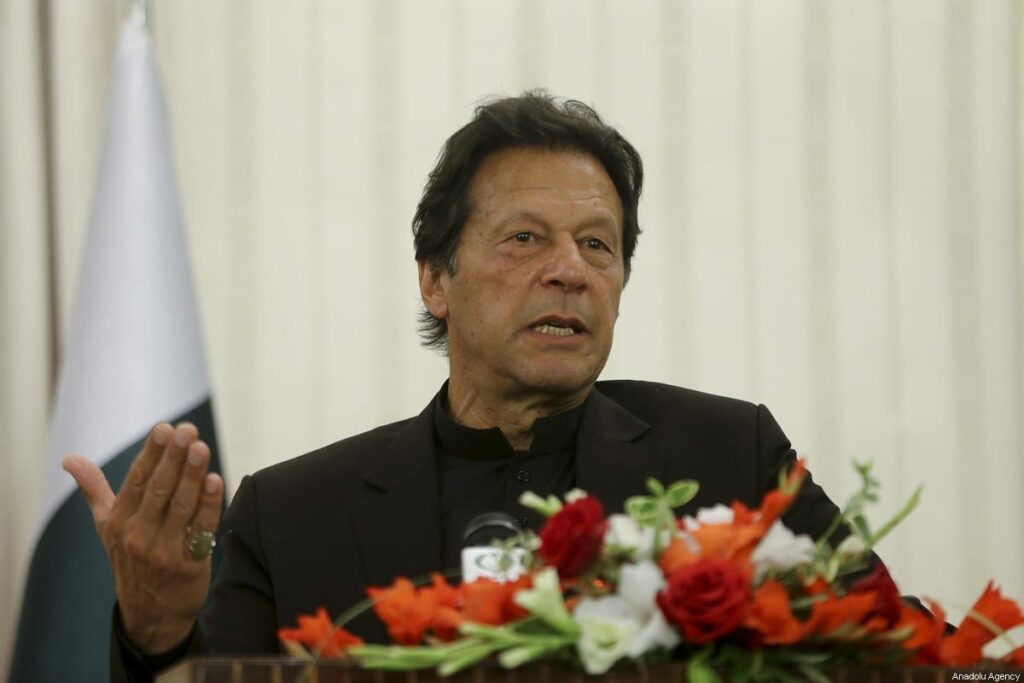
The Prime Minister of Pakistan is vowing he will return to power after the parliament voted to remove him and move with new elections to select a PM to replace him.

Pakistan’s PM vows to fight on after Parliament ousts him

From abcnews.go.com
2022-04-10 19:18:12

Excerpt:


ISLAMABAD — The ouster of Prime Minister Imran Khan in a parliamentary no-confidence vote early Sunday set Pakistan on an uncertain political path, with his supporters taking to the streets in protest and the political opposition preparing to install his replacement.

In the southern Arabian Sea port city of Karachi more than 20,000 shouted slogans promising Khan’s return to power. In the capital of Islamabad, the lights from thousands of supporters lit up the night sky as Khan made his way through the crowd atop a brightly colored truck.

Khan was brought down after a day of drama and often vitriolic remarks. His supporters accused Washington of orchestrating his ouster and his party walked out of Parliament shortly before the vote. In the end, 174 lawmakers in the 342-seat Parliament…


Read Full Article

Welcome to the World Situation Report For April 10, 2022

The goal of this column is to present news from around the world that is not often – if ever – covered by more mainstream entities, using local sources wherever possible, but occasionally using news aggregators not used, again, by the mainstream media. Also, please note that we do use links to Wikipedia; while Wikipedia is well-known as a largely-useless site for any kind of serious research, it does serve as a launch-pad for further inquiry, in addition to being generally free of malicious ads. As with anything from Wikipedia, always verify their sources before making any conclusions based on their pages.

This column will cover the preceding week of news.


North America

This week, the wave of bomb threats against schools continues, with schools across the country alternatively being evacuated or ordered to ‘shelter in place‘ across the country. Most of the bomb threats against schools this week were delivered by phone, but only one was definitively an automated voice call threat. Interestingly, the targets included a school in the city of Grande Prairie, Alberta in Canada, and a Muslim private school in Worcester, Massachusetts. In the Canadian case, school officials specified to the Royal Canadian Mounted Police (RCMP) that the caller was from the United States.

In Texas, meanwhile, a suspected pipe bomb was disabled at the Ector County courthouse in the county seat of Odessa. As this involved an actual device at a government facility, it falls under the purview of the FBI and the BATFE.

In Mexico, gang violence related to the country’s ongoing drug war continues to erupt in popular tourist destinations, with a beach-side assassination in the west coast city of Acapulco that resulted in a police chase and shootout among sunbathers, and an abrupt uptick of killings in the Yucatan Peninsular state of Quintana Roo.


[Source 1] – [Source 2] – [Source 3] – [Source 4] – [Source 5] – [Source 6]

[Source 7] – [Source 8] – [Source 9] – [Source 10] – [Source 11] – [Source 12]


South America

Three soldiers of the Colombian Army were killed by a roadside IED on the 8th, in the rugged and mountainous Antioquia Department, according to the Army’s 7th Division. Army officials believe the IED was planted by members of the so-called “Structure 18” group, yet another of the kaleidoscope of dissident and breakaway factions that splintered away from the disbandment of the FARC, which had disbanded in 2016 following peace talks with the Colombian government.

In neighboring Venezuela, army troops in rural Apure State reportedly disarmed an IED reportedly laid by the mysterious (and possibly fake)  TANCOL group. The Venezuelan government claims that the mystery group was created by the Colombian government to undermine Venezuela and facilitate drug trafficking, while Colombian sources counter that the group is yet another FARC offshoot. Whichever the case, Venezuelan farmers in Apure and next door in Colombia’s Arauca Department are caught in the middle…as usual.

In the Peruvian capital of Lima, protests against the curfew ordered by left-wing President Pedro Castillo turned violent on the 4th. Castillo had ordered the curfew in an attempt to break a strike and demonstrations by Peruvian truck drivers against skyrocketing fuel costs. The strike, which began on March 28th, has begun to seriously impact the Peruvian economy. Various factions within the Peruvian government – including some of Castillo’s allies, slammed the curfew as unconstitutional and “unenforceable.” Protesters reportedly stormed the Supreme Court building, even attempting to set it ablaze, but instead satisfied themselves by looting computers and furniture and burning records. The Freedomist will keep an eye on this situation.


[Source 1] – [Source 2] – [Source 3] – [Source 4]


Africa

The Polisario Front has suspended contacts with the government of Spain, after Spanish Prime Minister Pedro Sanchez recognized Moroccan control over the former Spanish colony of Western Sahara. This move marks a sharp reversal of long-standing Spanish policy towards the region, which backed a United Nations call for the self-determination of the Sahrawi people, which Morocco has ignored in its efforts to exploit the mineral-rich region. This move comes after Morocco loosened its border controls on Spain’s only remaining African continental possessions of Ceuta, opening the way for the unauthorized crossing of thousands of young Moroccans and migrants from other African countries into Spanish territory, after Spain allowed a Sahrawi leader into the country for treatment for Covid-19. This is a matter of serious concern, as it could breathe new life into the Polisario Front, which could lead to a further destabilization of the region, and a possible expansion of operations by groups such as Al Qaeda in the Maghreb and potentially even the Islamic State in Libya, or their associates, the Islamic State in the Greater Sahara.

To the south, the Malian Army went on the offensive in the central part of the country, reportedly killing some 22 suspected terrorists. However, the United Nations and some human rights organizations have claimed that the offensive may have seen excessive uses of force, and that civilians may have been killed instead.

In neighboring Burkina Faso, an army outpost in Namissiguima was overrun in a “complex attack“, which left twelve troops dead and another 21 wounded. Although the group conducting the attack was not specifically identified, it was likely the Islamic State in the Greater Sahara, who remain the greatest threat in the region.

In a potentially-related event, unidentified gunmen abducted an 83-year old American nun, Sister Suellen Tennyson of the Catholic congregation Marianites of Holy Cross, from the congregation’s house in the parish of Yalgo, part of the diocese of Kaya.

In Nigeria, some 17 troops were reported dead, and another 40 were wounded, after “gunmen” believed to be part of the Ansaru group (a splinter faction of Boko Haram) overran an outpost in the state of Kaduna in a swift and violent attack, mounted on motorcycles, came in armed with AK-47s and RPGs. The attack reportedly destroyed as many as three armored personnel carriers (APC), although precise details remain sketchy.


[Source 1] – [Source 2] – [Source 3] – [Source 4] – [Source 5]


Middle East


Violence continues in Israel, as Palestinian protests and terror attacks by various groups continue throughout the region. Two of the attacks were claimed by the Islamic State. The recent wave of violence has killed and injured dozens, in the ongoing, and seemingly never-ending violence.


[Source 1] – [Source 2] – [Source 3] – [Source 4]


Scattered, low-level fighting continued throughout eastern Syria this week, with Syrian government soldiers being killed in the southern Daraa  region, as Israel reportedly targeted several Assad government military sites in the central part of the country with missile strikes. Elsewhere, Turkish units launched drone and artillery strikes against suspected targets across the northern part of the country. This, as several US troops were injured in an “indirect fire” attack on their base in the oil-rich Deir al-Zor region, reportedly by Iranian-backed militias.


[Source 1] – [Source 2] – [Source 3] – [Source 4] – [Source 5] – [Source 6] – [Source 7] – [Source 8] – [Source 9]


More US forces came under attack in Iraq’s Al-Diwaniyah, capital of Iraq’s Al-Qādisiyyah Governorate, and in Dhi Qar, when their logistics convoys were attacked by roadside bombs. These attacks have been happening frequently, often several times a week, as local groups demand that the Iraqi government enforce a resolution it passed in January of 2020, to expel all foreign forces from the country. Given Iraq’s track record on the subject of expelling foreign forces like the Islamic State in the last eight years, the question of “how” is begged.

Elsewhere in Iraq, scattered military and police actions resulted in arrests of suspects, and several Iraqi security forces killed and wounded.


[Source 1] – [Source 2] – [Source 3] – [Source 4] – [Source 5]


In Pakistan, the US State Department issued a travel advisory on April 4th, urging US citizens to reconsider travel to the country, due to rising levels of terrorism and sectarian violence. This comes after the March 4th attack on a Peshawar mosque that killed 62 and wounded 196.

Elsewhere in the country, two soldiers and two terrorists were killed in the Sinji area of southwest Balochistan’s Awaran District. This is almost certainly an outgrowth of the long-simmering insurgency in the region.

Meanwhile, a total of five more terror suspects were killed in northwest Khyber Pakhtunkhwa province, reportedly from the Tehrik-e-Taliban Pakistan group.


[Source 1] – [Source 2] – [Source 3]


South Asia


India was surprisingly – and thankfully – quiet in general, this week. The only items of real interest were a series of bomb threats against several schools in Bengaluru/Bangalore, made via email, on the 8th. Interestingly, police officials stated that they believed that the emails came from the United States. As we noted above, in our North American section, a school in Canada also received a bomb threat believed to have originated in the US.

Also, two Indian Army soldiers were reported wounded by a bomb blast in the Khunti District, in central Jharkhand State, on the 6th. The device was reportedly of “low power”, and only caused light injuries.

Finally, the US State Department issued another travel advisory, this time for the nation of Sri Lanka, citing elevated COVID-19 risks, fuel and medicine shortages and terrorism.

To quote the advisory in part:

“…There have recently been protests over the economic situation and queues at gas stations, grocery stores and some pharmacies. Protests have occurred throughout the country and have mostly been peaceful. In some instances, police have used water cannons and tear gas to disperse protesters.

“There have also been daily planned power outages across the island, as well as some unplanned power outages, as fuel for backup generators is increasingly scarce. Public transportation in some instances has been limited or curtailed. Travellers should monitor local media for updates on the ongoing situation…”

Forewarned is forearmed.


[Source 1] – [Source 2] – [Source 3]

TECHNICAL DESTRUCTION


If I were to ask the average reader, “What is the most popular combat vehicle of the last c.100years?”, most people would say something like the World War 2 US M4 Sherman tank…or, perhaps, the Soviet T-34 series, from the same conflict (both of which remain in limited service). Some might even say the Cold War-era Soviet T-55 – which also still soldiers on, around the world — but, like virtually everyone else, they would be wrong.

In fact, the most prolific and widely-deployed combat vehicle in modern history is — the humble “Technical.”


An improvised fighting vehicle armed with a ZU-23 autocannon.


The Technical – a term whose etymology is generally believed to have originated in the nation of Somalia during that country’s civil war, which began in 1991 (and which included the disaster that is now known as “Blackhawk Down“), when various NGO’s – unable to legally hire armed private security (i.e., “mercenaries“), instead used “discretionary funds for ‘technical services’” to hire “local security” who were, in fact tribal militiamen, who formed the core of the warring tribal/clan armies of the various warlords vying for control of the failed state.


A “technical” in Mogadishu at the time of the UNOSOM mission (1992 or 1993)


There is no single model of Technical. In general, a ‘Technical’, as such, is a civilian vehicle – usually a light pickup truck or some sort of 4-wheel drive vehicle, repurposed as an armed combat vehicle, although such vehicles used solely for troop and logistics transport are still considered Technicals. There are a special class of technicals, the “Gun Truck“, that are actual military vehicles, such as WW2 ‘Willys’ Jeeps or M35-series, M939, M809 and later 2.5ton trucks that have been used since WW2, but especially during the Vietnam War. Until very recently, the closest the US military came to deploying a Technical, was the occasional arming of various CUCV-type vehicles, beginning in the 1970’s (but read on to the end). While certainly improvised for combat, such vehicles were not – at those times – generally available to the public; debate on the term continues.

This was not, however, the first use of vehicles that could be classified as “Technicals.” Initially, almost military vehicles were “technically” (no pun intended) ‘Technicals’, simply because there were few “military vehicles”, as such, anywhere in the world. The first truly extensive use of such vehicles came during World War 2, with the British Army’sLong Range Desert Group (LRDG)“, one of the predecessors of the famed “Special Air Service (SAS)“. Using whatever light civilian trucks they could scrounge up in Egypt at the time, the LRDG conducted deep raids and reconnaissance against Axis forces and installations during the Desert Campaign of 1940-1943. While this model was copied by a few other units during the war, most armies quickly scrapped the idea after the war was over. The reasons are many, but the primary one is that armies are conservative – even reactionary – by nature, and dislike “ad hoc” solutions to problems, unless there is an emergency situation.


“T10” a T Patrol Long Range Desert Group 30 cwt Chevrolet, during WW2. Public Domain.


The public’s first real exposure to Technical-type vehicles, however, was the Great Toyota War of 1986-1987, part of the Chadian–Libyan conflict. The nation of Chad – perpetually poor and fractious – needed a way to counter the heavy, Soviet-supplied combat vehicles of the Libyan army of dictator Muammar Gaddafi. Using the only vehicles readily available (mostly Toyota Hilux’s and Land Cruisers) in a manner similar to light cavalry, as well as the WW2 LRDG, the Chadians almost literally “ran rings” around the Libyans, inflicting an estimated 8,500 casualties (dead, wounded and missing), and capturing or destroying an estimated 800 tanks, APCs and other vehicles, as well as around 30 aircraft, wildly out of all proportion to their perceived abilities as an army, French intervention notwithstanding.

(Of note, the Libyan general who lost the Chadian War, Khalifa Haftar), now leads the Libyan National Army (LNA), one of the primary factions in the country’s intermittent civil war.)


General Khalefa Haftar, 2011. CCA/2.0


While the scale of this defeat brought on pithy jokes and comments about the Libyan Army’s prowess, more sober-minded observers started paying attention to the concept, although little actual work was done during this period.

As the Somali Civil War increased in intensity, the widespread use of technicals was increasingly studied. As the 1990’s evolved into the early-2000’s, and with wars erupting around the world in the wake of the 9-11 attacks in the United States, regular militaries increasingly found themselves facing – and occasionally using – such vehicles, a few salient point became apparent.


Chadian soldiers on a Toyota Land Cruiser pickup truck in 2008. Photo credit: Czech Ministry of Defense. Public Domain.


Technicals, by their very nature as lightweight civilian vehicles, are simultaneously cheap,

commonly available, easy to work on, have a ready supply of spare parts, and generally get far better gas mileage than comparable military vehicles. They can also mount a variety of very powerful weapons, from the BGM-71 TOW Missile and other types of ATGMs, to heavy-caliber recoilless rifles, multiple-launch rocket systems such as the seemingly-immortal Type 63, as well as heavier and longer-ranged rockets, and a variety of other improvised rocket launchers and anti-aircraft cannons. (For a much more in-depth study, please see the excellent Tank Encyclopedia article on Techincals, YouTube video linked below.)


IRGC Ground Force loading a Type 63 MRL, 2017. Photo credit, Tasnim News, CCA/4.0


For many national armies faced with tight military budgets – and guerrilla and terror groups – around the world, Technicals are increasingly the first choice when swift formations are needed for attack and/or defense. However, the above comes with a very significant caveat: Technicals, as a class of combat vehicle, typically have little or no armor — which is why casualties among Technical crews meeting determined opposition tend to be very high, compared to more heavily-protected units…a consideration that seems to be an acceptable option for the US Army, given its recent adoption of the Infantry Squad Vehicle (ISV) — all at a staggering cost of nearly $330,000 — per vehicle.


Infantry Squad Vehicle; 24 January 2020. Public Domain.


Maybe the Army should call Toyota — their Special Forces did.


Technicals Part 1 (Tank Encyclopedia)

DIY Tanks of Iraq (Source: Vocativ)


The Freedomist — Keeping Watch, So You Don’t Have To
Auto Draft

Emmanuel Macron faces still resistance to his bid to retain his Prime Minister position in France thanks largely to his own inability to come across as authentic and non-creepy when addressing the public.  As the election ears, polls are showing Macron’s once 32-point-lead over the far right candidate Marine Le Pen has been reduced to 5 to 6 points.

Macron Lack of Likeability Could Mean Le Pen Wins France’s Presidential Election

From foreignpolicy.com
2022-04-07 19:22:24

Excerpt:


Five years ago, when I was in France on the eve of the presidential election, I found a country in the grip of the momentous. Emmanuel Macron, the 39-year-old Napoleon in a navy suit, had come from out of nowhere with his message of national renewal through liberal reform. His chief adversary, Marine Le Pen of the extreme-right National Front, seemed to pose a direct threat to France’s principles of secularism and tolerance. Right-wing populism, storming across the West, had already registered shocking victories in the form of Brexit and the election of Donald Trump as U.S. president. Millions of French citizens who did not believe in Macron’s market-based politics, including my own social democratic friends, nevertheless voted for him in order to save French democracy. Macron’s thumping victory over Le Pen, by 32 percentage points, felt like an almost heroic reaffirmation of French republicanism.

I was in Paris again last month, and with the first-round vote approaching April 10 the mood was distinctly anti-climactic. Russia’s invasion of Ukraine, and Macron’s showy if hollow efforts to mediate the crisis, had pushed the generally unpopular president’s approval ratings up to the low 40s, and his new challenger on the far-right, the flamboyantly xenophobic and Russophile Éric Zemmour, had flatlined. No serious challenger had emerged to Macron’s left. The president appeared to be coasting to victory without even bothering to campaign. Macron’s reelection would confirm hopes that the worst was over—at least in Western Europe. The election of Social Democrat Olaf Scholz as German chancellor, as well as the continued popularity of the technocrat economist Mario Draghi in Italy, seems to argue that the tide of illiberal populism that began with the 2015 refugee crisis has crested.

That’s if Macron wins. Just in the last week, the mood has shifted yet again. Macron’s lead over a suddenly resurgent Le Pen has shrunk to 5 or 6 percentage…


Read Full Article

Netanyahu Might Be Back After Bennett Coalition Whip Resigns

A key person in the Naftali Bennett coalition that led to the ouster of longtime PM Benjamin Netanyahu has pulled out, resigning from government in an effort to trigger a new right-wing government formation that would restore the ousted PM and oust the current one.  The coalition whip, Idit Silma, resigned from the government, giving as her reason efforts by PM Bennett’s coalition to end the Jewish identity of the state of Israel.

Netanyahu Eyes Comeback As Bennett-Led Government Loses Majority

From legalinsurrection.com
2022-04-07 17:00:35
Vijeta Uniyal
Excerpt:


Israel’s opposition leader and former Prime Minister Benjamin Netanyahu is eying a return to power as Naftali Bennett-led coalition loses its majority in the parliament. The political turmoil began on Wednesday after lawmaker and ruling coalition’s whip, Idit Silma, resigned from the government and announced her support for a new right-wing alliance in the Knesset.

Silman accused Prime Minister Naftali Bennett’s coalition, which includes the Arab-Islamist Ra’am Party, of harming the Jewish identity of the country. “I will not abet the harming of the Jewish identity of the State of Israel and the people of Israel. I will continue to try to persuade my friends to return home and form a right-wing government,” Silman said. “I know I am not the only one who feels this way. Another government can be formed in this Knesset,” she added.

As proposed by Silman, a right-wing government can only be formed with the support of former Prime Minister Netanyahu, whose Likud…


Read Full Article

The Democratization of Military Training…


Or, Once More With Effort, “Professionals Are Predictable, But The World Is Full Of Amateurs”


It seems that “everyone” has an ax to grind, these days. After over 4000 years of recorded history, it seems that we humans just keep getting more adept at this whole “war thing“.

And – just to be clear – no, this article is not a “how to” do anything. You’re on your own, there.

There are as many reasons to “go to war“, as there are human groups in existence; anytime two or more people decide that they agree on an issue enough that they are willing to do violence – if not agree to lay down their very lives – in that goal’s furtherance, “war” at some level becomes a distinct possibility. And by this, we’re talking about “war” in the sense most people are thinking – replete with dead people, lots of violence, destroyed cities, etc., as opposed to a more figurative example…like, say, “the war on poverty“.

However, most people simply don’t “get” war. From an external view, they do not grasp the intricate web of minutiae that goes into “war”; it’s not simply swinging a sword, or pulling the trigger of a firearm, or pushing a button to launch a missile. It is not only knowing when to do so, but also is knowing how and when to do these things, as well as understanding the systems that enable these actions.

While the individual “spear carrier” does not need to understand the intricacies of the industrial base that created his sword or rifle, his leaders most definitely do. The real challenge for any prospective leader or groups of leaders, though, has always been how to teach some kid – who may even agree with their goals, as far as they can understand them – how to swing that sword, or shoot that rifle.

Military training and military science have evolved over time. Even in the days when muscle power was the definitive factor in combat – swinging a sword is a very physically demanding job, when done for any length of time – it was an understood fact that the person who worked from a regularized system of actions (“drills“, or even “kata’s“, in modern parlance) in combat had a much better chance of winning the fight than someone who simply ran up and tried to smash their opponent in the face with a bat.

However, that kind of training has always been hard to come by – either there simply were not enough people with the knowledge to teach it, or the teaching took too long — it was said of the dreaded English and Welsh Longbowmen, that “if you wanted to train the archer, start by training the archer’s grandfather.” This is why projectile weapons were continuously evolving, much faster than swords and polearms.

The reason for this, militarily speaking, is quite simple: maneuver is a very powerful tool, and if you can hurt your opponent at long range and still stay on the move, that is definitely what you want to do…However, this brought on other problems: horses are faster than humans, but they require a large and intricate infrastructure to obtain and support, complete with specialized fields of labor, such as the farrier; specialized saddle-makers; special armor and weapons to maximize fighting from horseback, and on and on…

This translates across virtually every conceivable field – the never ending quest to “tweak” the equipment you have, and to find The Next Big Thing.

These all contribute to the training problem – “training, techniques (or ‘tactics’) and practices (or, ‘procedures’)” (TTP) – since the TTP’s for any given concept or field are in a constant state of flux.

What this translated to, as recently as the 1980’s, was getting some people together, teaching them how to march, then handing them each a rifle and a few rounds of ammunition to practice, then sending them out to do battle for the “glory” of whatever…with usually predictable results. And make no mistake – this phenomenon was in no way limited to guerrilla bands of former farmers and shopkeepers who had never held a weapon in their hands with lethal intent. There were plenty of armies around the world who did exactly this — and in some places, still do, as of this writing.


But today, things have largely changed. With the advent of the internet, the World Wide Web and digital file sharing, it is now possible to create the core of a training program – at almost every level – simply by searching out the appropriate files and videos. Nothing, obviously, can replace actually running around an assault course with a real weapon, but it is entirely possible to locate acceptable-quality videos and training manuals online to show a person exactly how to run the course – it is up to the searcher to then put into practice what the videos and manuals teach them (see the second video, below).

People love to share; that’s a feature of human interaction. Whether it’s cooking recipes, flower arrangements, tips on fixing your car or what have you, chances are, someone out there has not only written something about it, but may have a video to teach you how to do it for yourself. What’s more, their advice is likely free…whether they intended it that way, or not.

Military training is no different. Finding information in the form of .PDF manuals – everything from the basics of plumbing, to field food service, to how to build a fortified bunker, to just exactly how to go about “taking that hill” – whether created in a government printing office, or written by a private person (whether they are a professional soldier or a gifted amateur), is ridiculously easy, in most parts of the world.

Military training video courses – some of them quite extensive, as in the first video, below – are equally accessible for most people with the acumen to navigate LiveLeak, YouTube or Vimeo. For the raw, untrained amateur, the sheer wealth, depth and breadth of information available is staggering, so much so, that it can overwhelm them. For the experienced trainer, however, there is a vast Archive of tools to study, that anyone who knows what they’re looking for can access for their training program, for free, between their morning Lifer Juice and lunch.

For the aspiring totalitarian, this is a terrible, terrible thing, because it undermines the State’s monopoly on the application of force as a tool of control — if every Tom, Dick and Harriet in your country knows how a military force operates (even if only in the crudest, most basic manner), your loyalist military will be facing a staggering number of enemies, far more than they have ammunition to deal with, and possibly so many that they will begin to desert, rather than try to plant your boot for you…Much more so, when the enemy is literally at the gates, and you find yourself begging and press-ganging your citizens into your army, handing them weapons for free that you previously prevented them from owning — that’s the real takeaway from Ukraine, but I digress…..

Of course, if you are a Libertarian with the proper outlook on the world in general – and human civilization in particular – this is probably the closest to heaven that you are going to get to, since The People now have the means to stand up to those professional armies that you are so worried about. (We’ll leave talk about casualties another time…)

So — the next time a politician starts talking about limiting the availability of, or the access to, information – of whatever stripe – remember that information is the real root of all power, and if a politician doesn’t want you to have it, you should probably be seriously worried about why they don’t want you to have it.


Hunter Biden Got Dad to Write Recoomendation Letter for CCP Partner’s Son

It seems Joe Biden is even more involved in the Hunter Biden China Ukraine and lord knows what other countries he took money from because he’s Joe’s son scandal.

As the Hunter Biden emails are being dripped to the public, this latest release reveals Joe Biden helped his son maintain his solid relations with Chairman Xi by providing a letter of recommendation for one of the CCP’s children to grant him entry into an American university.

BIden wrote the letter in 2017, writing it for the son of a Communist Party leader and Hunter Biden business partner executive.

Biden wrote college recommendation letter for son of Hunter’s Chinese business partner, emails reveal

From www.foxnews.com
2022-04-06 06:11:06

Excerpt:


President Biden, in 2017, wrote a college recommendation letter for the son of a Chinese executive who did business with Hunter Biden, according to emails reviewed by Fox News Digital.

The president has repeatedly denied discussing Hunter’s business ventures with his son.

Fox News Digital obtained emails between Hunter Biden and his business associates involved in his firm Rosemont Seneca’s joint venture with Chinese investment firms Bohai Capital and BHR.

HUNTER BIDEN REQUESTED KEYS FOR NEW ‘OFFICE MATES’ JOE BIDEN, CHINESE ‘EMISSARY’ TO CEFC CHAIRMAN, EMAILS SHOW

Hunter held a 10% stake in BHR as recently as last year, the White House previously acknowledged. Hunter’s attorney told the New York Times in November that he had since divested.

Read Full Article

Welcome to the World Situation Report For April 3rd, 2022

The goal of this column is to present news from around the world that is not often – if ever – covered by more mainstream entities, using local sources wherever possible, but occasionally using news aggregators not used, again, by the mainstream media. Also, please note that we do use links to Wikipedia; while Wikipedia is well-known as a largely-useless site for any kind of serious research, it does serve as a launch-pad for further inquiry, in addition to being generally free of malicious ads. As with anything from Wikipedia, always verify their sources before making any conclusions based on their pages.

This column will cover the preceding week of news.


North America


Starting off in the United States, a wave of bomb threats against both shopping centers and various schools kept emergency responders busy across the country this week. While some calls were made by persons calling various locations, there is an uptick in threats of this type being made via social media platforms such as TikTok, from ‘dummy’ accounts; this is interesting, as it may signal an evolution of the waves of mass robo-call bomb threats against K-12 schools that plagued the United States and several European nations several years ago. The Freedomist will continue to monitor the situation, to see if this suspicion develops into a trend.

[Source 1] – [Source 2] – [Source 3] – [Source 4] – [Source 5] – [Source 6] – [Source 7]


Turning to Mexico, an “operator” of the Sinaloa Cartel, one Manuel Andrés, alias “El Griego”, was assassinated in a restaurant in San Luis Río Colorado, Sonora, just over the border from Arizona, yet another casualty in that country’s long-running drug- and gang-related violence.

[Source]


South America

Turning to South America, the advocacy group Human Rights Watch (HRW), issued a report on the 28th of March accusing the army of Venezuela, long-suffering under the rule of dictator Nicolás Maduro, of actively aiding Colombia’s National Liberation Army (ELN) against the forces of a rival guerilla group, the so-called “Joint Eastern Command” – a little-known breakaway faction of the mostly-demobilized Revolutionary Armed Forces of Colombia (FARC). According to HRW’s report, the rival guerilla groups began skirmishing in January of 2022, fighting over control of territory and illegal activities in Colombia’s Arauca state and Venezuela’s Apure state, with reports of mass kidnappings, assassinations of local leaders and waves of internally-displaced refugees numbering in the thousands attempting to flee the violence.

In Columbia proper, meanwhile, national leaders blamed the bombing of a police station which killed two children and injured 39 others in the Colombian capital city of Bogota last week on other, unspecified dissidents of the FARC.

This comes as a report of some 11 FARC dissidents belonging to the splinter faction “Segunda Marquetalia” were killed in skirmishing with Colombian forces near the nation’s southern jungle town of Puerto Leguizamo. Many of the various splinter groups to have rejected the 2016 ceasefire and official disbanding of the FARC have gone to work as muscle for various cocaine cartels, guarding the coca fields and the resultant shipments.


[Source 1] – [Source 2] – [Source 3]


Africa

In Africa, the Nigerian state of Abuja saw a sudden spate of violence, as unidentified gunmen abducted traditional ruler His Royal Highness (HRH) Alhaji Hassan Shamidozhi. This comes as bandits attacked a train from Abuja, bound for Kaduna. Army units promptly responded to the attack on the train, reportedly carrying nearly one-thousand passengers, but reports indicated that some number of people were kidnapped by the attackers, and carried off. Elsewhere along the same rail line, police bomb squad units defused an IED planted on the rails near the town of Rigasa.

In the Central African nation of the Democratic Republic of the Congo (DRC), rebels of the “M23” group reportedly shot down a United Nations (UN) helicopter (reportedly an Aérospatiale SA 330 Puma), killing eight peacekeepers and UN observers, six military personnel from Pakistan, and a pair of observers from the Russian Federation and from Serbia in the country’s North Kivu province. The group, attached to the UN’s MONUSCO mission in the country, were assessing the situation in the province, following a wave of attacks in the region by the M23 group that has sent thousands fleeing for safety. The M23 group has denied the attack, claiming that the helicopter was shot down by DRC armed forces.

On the continent’s Indian Ocean coast, Mozambique’s government made a statement that its army, the Mozambique Defense Armed Forces (FADM), had conducted a “successful operation” in the Macomia District of the nation’s Cabo Delgado province, reportedly destroying a “hideout”. This comes shortly after another operation, on Matemo Island, part of the Quirimbas Islands group, that reportedly killed some twenty Islamist terrorists from ISCAP. However, the conflict – simmering since 2017, with occasional bouts of significant combat – is difficult to report on, as Mozambique’s government actively restricts reporting on the conflict.


[Source 1] – [Source 2] – [Source 3] – [Source 4] – [Source 5] – [Source 6] – [Source 7] – [Source 8]


The Middle East


The region remained largely quiet this week, “quiet” in comparison to the normal regional news cycle. In a surprise announcement on March 30th, the Saudi-led coalition fighting the Houthi government in Yemen said that it was suspending military operations in the Arabian Peninsular nation, as a goodwill gesture to allow peace talks to take place between the various Yemeni factions, in an attempt to end the long-running civil war in the country. This comes, as the Saudi government “blacklisted” some ten individuals and 15 entities for facilitating the financing of the Houthi movement.

In Pakistan, six Pakistani soldiers were killed, along with three terrorists, in an assault on an army post in northwestern Khyber Pakhtunkhwa province on the 30th. Meanwhile, other insurgents blew up a rail line near the Kotri area of Sindh province; no groups had claimed responsibility for the attack as of press time. Elsewhere in Sindh, a special antiterrorism court sentenced Zahidullah Suleman and Bismillah Haji Lala to death for plotting an attack on the Sindh Assembly building in an attempt to rally support for a war against the state. The court also laid down life sentences on three other defendants – Muhammad Qasim, Inamullah Bilal and Gul Muhammad – on a range of charges including possession of explosives, police encounter and attempted murder.


[Source 1] – [Source 2] – [Source 3] – [Source 4] – [Source 5]


Southern Asia

Finally, turning to India, police in Rajasthan arrested several suspects believed to be connected to Islamist terror groups, seizing approximately 12kg/26lbs of completed explosive devices and bomb-making components. Elsewhere, India remained mostly quiet, although a scattering of IED’s, most suspected to have been placed by Maoist Communist insurgents, injured several people throughout the “Red Corridor“.


[Source 1] – [Source 2] – [Source 3] – [Source 4] – [Source 5]


Welcome to the World Situation Report For March 23rd, 2022

The goal of this column is to present news from around the world that is not often – if ever – covered by more mainstream entities, using local sources wherever possible, but occasionally using news aggregators not used, again, by the mainstream media. Also, please note that we do use links to Wikipedia; while Wikipedia is well-known as a largely-useless site for any kind of serious research, it does serve as a launch-pad for further inquiry, in addition to being generally free of malicious ads. As with anything from Wikipedia, always verify their sources before making any conclusions based on their pages.

This column will cover the preceding week of news.


North America

Beginning in North America, a wide array of bomb threats continue to spread across the country, mostly targeting schools, but also businesses and shopping centers. While various individuals with certain mental or emotional issues are typically responsible for these events, the possibility exists that these are efforts to monitor emergency response procedures by law enforcement and other emergency services.

As well, a bomb, threat was made against a synagogue in Highland Park, Illinois, some 25 miles north of Chicago on the 18th, while the next day, worshipers at a mosque in Montreal Canada were attacked by an assailant identified as as 24-year-old Mohammad Moiz Omar, who walked into the Dar Al-Tawheed Islamic Centre in Mississauga, Ontario, about 15 miles from Toronto, and began spraying “bear mace” at the congregation. Worshipers subdued the assailant, who was arrested by Canadian police, was also armed with a hand ax. Authorities are claiming that the attack was a case of “Islamophobia“.

[Source 1] – [Source 2] – [Source 3] – [Source 4] – [Source 5] – [Source 6] – [Source 7] – [Source 8] – [Source 9]


Africa

Turning to Africa, the Algerian Army arrested seven suspected “militants” in its ongoing, low-level guerilla war against the remnants of Al Qaeda [https://en.wikipedia.org/wiki/Al-Qaeda]-aligned groups in the North African nation, following the end of its civil war in 2002.

[Source]


Meanwhile, thirteen soldiers were killed in the eastern region of Burkina Faso, in an ambush by unidentified gunmen, while eight more soldiers were wounded. This comes a week after over a dozen police officers were killed in a similar ambush in the landlocked nation’s central-north region, as we reported last week.

[Source]


In Nigeria, gunmen abducted over sixty people during the week. Most of these abductees are usually released after ransoms are paid, but many are either sold into human trafficking rings or forced to join armed groups, such as Boko Haram.

Speaking of Boko Haram, demining and cleanup operations continue in the Shiroro Local Government region, in the country’s central region, where the terrorist group laid numerous IED’s to deny residents access to their homes as a part of the group’s ongoing guerilla war throughout the region.

In the nation’s far northeastern Borno State, an airstrike by Nigerian Air Force Super Tucano light strike aircraft has reportedly killed Sani Shuwaram, the “Commander In Chief” of the “Islamic State – West Africa Province” (ISWAP). Details remain sketchy, although intelligence reports indicate that he may have been replaced by one Mallam Bako Gorgore, although few details of this individual are available at this writing.

[Source 1] – [Source 2] – [Source 3] – [Source 4] – [Source 5]


In the Central African nation of the Democratic Republic of the Congo (DRC), horrific levels of violence continues in the Ituri region of the country’s northeast, as fourteen people were hacked to death in a “displaced persons camp” in the province. According to local officials the attack was carried out by an armed faction of the “CODECO” group, a formerly peaceful agricultural cooperative organization, which returned to violence in 2017 after a ceasefire following the Ituri Conflict of 1999-2003.

[Source 1]
[Source 2]

In Sudan, continuing protests against the military junta of General Abdel Fattah Burhan, which has been ruling the country since its October, 2021 coup d’état have killed a thirteen year-old boy in the city of Omdurman, bringing the reported death toll to 88.


[Source]


In the continually strife-torn nation of Somalia, the Somali National Army reportedly killed seven terrorists belonging to the Al Shabaab terror group, while two other militants surrendered in the central region of the county.

At the same time, three persons were reportedly injured by a car bomb in the Hodan district of the capital city of Mogadishu. Accoding to police sources, the attack was aimed at Turkish engineers working in the country. Turkey has been quietly expanding into the African state since 2010, opening a basic military training facility in their own encampment to train a new army for the country, as well as a formal school for officer training.

[Source 1] – [Source 2] – [Source 3]


The Arabian Peninsula

In the Arabian Peninsula, the seemingly never-ending, multi-sided war between various Yemeni factions, and a Saudi-led Coalition grinds onward, with Houthi forces continuing a relentless campaign against Saudi oil facilities, further destabilizing world oil prices.

[Source 1] – [Source 2] – [Source 3] – [Source 4] – [Source 5]


The Middle East

Elsewhere in the Middle East, four Israeli civilians were killed in the town of Be’er Sheva/Beersheba and one remains in critial condition, following a ram-and-stab attack by an attacker identified as 34-year-old Muhammad Aleb Ahmad Abu Alkyan, a Bedoiun Israeli who was previously convicted and served three years in prison for supporting and promoting ISIS. This comes at the same time as continued protests on the West Bank, and threats by Iran’s IRGC commander to launch a missile attack on the Jewish state.

In Syria, a US base near the Deir Ez-Zor oil field was reportedly struck by several missiles, and reportedly by drones. No casualties were reported, but independent confirmation is not available at press time.

Elsewhere in Deir ez-Zor, a tribal elder was assassinated by IS, while in the north of the country, Russian Air Force jets struck reported IS targets on the 20th.

In the northern town of Ayn Issa, two children were wouded by Turkish artillery, while Turkish artillery struck targets near Tell Tamer, and four Syrian Army soldiers were reportedly killed in an IS attack near Resafa.

[Source 1] – [Source 2] – [Source 3] – [Source 4] – [Source 5] – [Source 6] – [Source 7] – [Source 8]


South Asia

In the South Asian nation of Pakistan, the driver of a water tanker truck was killed when his truck struck a landmine. The deceased, identified as Mohammad Bahadur Khan Pathan, was delivering water to a the Notal-Gandhwah road construction project in the southern part of the country, when his vehicle struck the landmine. No word was available on which group may have planted the device at press time.

In the northwestern city of Sari Naurang, a police officer was assasinated in a driveby shooting by members of an unidentified terrorist group, while a shootout in the Bajur District killed two soldiers, three civilians and four insurgents from an undentified group. Additionally, five people associated with “Al-Qaeda in Indian Subcontinent (AQIS)” and the “Tehreek-i-Taliban Pakistan (TTP)” were arrested by Pakistani police in Punjab Province.

[Source 1] – [Source 2] – [Source 3] – [Source 4]


In India, Jammu & Kashmir saw three terror attacks in 24 hours, while a member of the “Lashkar-e-Taiba (LeT)” terror group – responsible for the terror attack on Mumbai, India in 2008 – was arrested in the region’s Baramulla district. In the Shopian district, meanwhile, a grenade attack on a Central Reserve Police Force (CRPF) station injured one police officer.

In the central state of Odisha, a man was arrested for “providing logistical support” to Maoist insurgents, in the town of Kalahandi. In the neighboring state of Chhattisgarh, Maoist’s attacked a CRPF camp in the Sukma district, injuring three police officers.

Finally, in India’s far northeastern state of Arunachal Pradesh, police and units of the Assam Rifles killed two insurgents from the “National Socialist Council of Nagaland-Isak Muivah (NSCN-IM)” in a raid on a safe house in the Tirap district, recovering military weapons (including a US M4A1 rifle), ammunition and other military-type equipment. The presence of a late-model M4A1 in far eastern India may indicate a case of fallout from the collapse of the US and Coalition efforts in Afghanistan, in August of 2021, potentially confirming the fears of analysts that the equipment left behind may be making its way into the wider terrorist community.

[Source 1] – [Source 2] – [Source 3] – [Source 4] – [Source 5] – [Source 6] – [Source 7]

Russia Threatens Poland in Lengthy Letter Days Before Joe Biden’s Visit

From www.newsweek.com
2022-03-21 14:01:09

Excerpt:


Dmitry Medvedev, deputy chairman of the Russian security council, on Monday threatened Poland in a lengthy letter, just days before U.S. President Joe Biden is due to visit the country.

“The interests of the citizens of Poland have been sacrificed due to Russophobia of ‘mediocre politicians’ and their ‘puppeteers from across the ocean’ with clear signs of senile insanity,” the former Russian president and prime minister wrote in a post on his Telegram channel.

Medvedev was referring to a decision made by Polish Prime Minister Mateusz Morawiecki last week to minimize dependence on Russia and sever economic ties with Moscow in response to the Ukraine invasion that began on February 24.

“We will deal with the de-Russification of the Polish and European economy,” Morawiecki told a news conference on March 18. “We call for the suspension of activities on the Russian market.”

Morawiecki told reporters the move will help stop food prices rising. The United Nations food agency said this month…


Read Full Article

Main

Back FREEDOM for only $4.95/month and help the Freedomist to fight the ongoing war on liberty and defeat the establishment's SHILL press!!

Are you enjoying our content? Help support our mission to reach every American with a message of freedom through virtue, liberty, and independence! Support our team of dedicated freedom builders for as little as $4.95/month! Back the Freedomist now! Click here