Russia is a nation of mystics. Before Putin there was Rasputin.
Putin presents as nihilism reincarnated. Per the Routledge Encyclopedia of Philosophy, “Russian Nihilism is perhaps best regarded as the intellectual pool … out of which later radical movements emerged; it held the potential for both Jacobinism and anarchism.”
Defeating the Jacobinism which fomented the Reign of Terror, and its guillotines, and the Black Handed anarchism that fomented a century of guerre à outrance demands fighting not only by hero-warriors but by spiritual justice warriors.
Nihilism delenda est.
A world spiritual justice war has begun. Only by challenging Putin’s legitimacy can we defeat his propaganda-fueled popularity, ending his massacre of innocents.
The UK Guardian reveals the rising challenge to “Putin’s patriarch” of the Russian Orthodox Church.
“[Patriarch] Kirill, who had close links with the KGB in Soviet times, has described Mr Putin’s leadership as a religious miracle. As bombs have rained down on Ukrainian cities, he has asserted that it is “God’s truth” that the people of Russia, Ukraine and Belarus should be reunited as one spiritual people. During a sermon delivered in Moscow last month, he portrayed the invasion of Ukraine as part of a ‘metaphysical’ struggle against a decadent west …. As a result, amid a global Christian backlash, the ROC is fast becoming a pariah church within a pariah state.”
The heroism of the Ukrainian freedom fighters is a breath of fresh air in our fetid political world. So is the heroism of the priests and church officials denouncing Moscow.
That said, more is needed. War is about victory.
The Ukrainian resistance wins battle after battle. Yet the Kremlin’s forces keep administering ever more brutal blows.
Putin is brutally conducting mass murder, razing cities and laying mines that will maim for generations. As the New York Times reports, “The Russian general who has been put in charge of the invasion of Ukraine earned distinction in Moscow for his handling of his country’s intervention in the Syrian civil war, where he helped to oversee a brutal, scorched-earth campaign ….”
We must be at least as ferocious in stripping from Putin all pretence of legitimacy. Consider the magnitude of Putin’s evil.
The blackest, most damning, most plausible analysis is presented by David Goldman, writing as “Spengler” in Asia Times, headlined Cardinal Richelieu explains Vladimir Putin:
“Dilettantes like the Americans think of eliminating a regime. Real connoisseurs of power arrange to eliminate entire provinces.”
Goldman then recounts Russia’s brutal demolition of Chechnya. And goes on to today:
“There is only one way to govern Russia, and it does not involve lace doilies. … Ukraine was hollow before the war began. … Twelve million Ukrainians, fully half the able-bodied population of working age, left before the war started. Another five million have fled. As Russian artillery pounds Ukraine’s cities, more will flee. How many will return? Large parts of Ukraine will fall into ruin.”
Rule or ruin. Putin, having failed to impose his rule, now intends to ruin.
He does so under a false pretense of a moral crusade against the decadent Western infidels. We need valor and will need more than valor to win this war. We must win the hearts and minds of the Russian people.
Putin must be shown up as not a mere brutal thug but as illegitimate. A fraud.
Turning the people of Russia against Putin is the only way to end the invasion.
The Guardian continues:
“Initially reluctant to make the full force of his opposition to Mr Putin public, Pope Francis has begun to harden his language, telling the patriarch that the concept of a holy or just war cannot be reconciled with Christian teaching. The World Council of Churches, which represents 580 million Christians of various denominations around the world, has unsuccessfully urged Kirill to use his influence with Mr Putin to intercede for peace. An emerging lobby within it is now calling for the ROC to be expelled.”
It is time for all people of faith, from pulpits to pews, to confront Putin’s Hell-bent course and stand as spiritual justice warriors condemning Putin’s damnable course, blessing Ukraine’s resistance leaders.
As William Butler Yeats, in 1919, the year of my mother’s birth, prophesied in The Second Coming:
The darkness drops again; but now I know
That twenty centuries of stony sleep
Were vexed to nightmare by a rocking cradle,
And what rough beast, its hour come round at last,
Slouches towards Bethlehem to be born?
Slouches now Vladimir Putin, neo-nihilist anti-Christian. Now is the time for us to stand with him who vexed the Father of Lies to a thousand years of stony sleep.
Nothing less. Ukraine is this world spiritual war’s first, but not final, theater. We must be sufficiently ferocious to win the spiritual war.
Pitting the U.S. military against Russian forces could trigger, and enmesh the United States and our European allies in, World War III. President Biden is right not to engage in direct combat with Russia, a nuclear power.
Possibly apocalyptic.
The valorous Ukrainian resistance forces are proving a ferocious match for the demoralized Russian troops. Ukraine, given the tools, can finish the job.
Yet there is more to be done.
Ukraine’s liberty and sovereignty is rightfully an American cause. There is a safer way to take a powerful stand for Ukraine, one alluded to in my previous column.
Let Americans, and people of faith worldwide, serve as Spiritual Justice Warriors. Let’s blunt Putin’s claws by denying him his spurious claim to legitimacy.
Attacking a sovereign’s legitimacy is powerful. Thomas Paine’s Common Sense triggered the American Revolutionary War by attacking the legitimacy of the British monarchy.
Welcome to the war of ideas.
As Jeanne Whalen reports in The Washington Post writing on the divisiveness of the patriarch of the Russian Orthodox Church’s collusion with Putin:
“’Any war has to have guns and ideas,’ said Cyril Hovorun, professor of ecclesiology, international relations and ecumenism at University College Stockholm. ‘In this war the Kremlin has provided the guns, and I believe the church is providing the ideas.’ In the process, Kirill has caused deep schisms in the global Orthodox Church, with priests in Ukraine, elsewhere in Europe and the United States condemning his support.”
“Any war has to have guns and ideas.”
How would this work? Pew reports that only 7% of the population of the Russian Federation were, at last count, regular churchgoers. However, the number identifying as Russian Orthodox more than doubled from 1991 to 2008 to over 70%, with the number of those reporting no religious affiliation plunged from 61% to 18%.
The Achilles heel in Putin’s popularity, and purchase on power, is a claim to moral legitimacy both false and falsifiable. That claim is ultimately rooted in the blessing of the Russian Orthodox Church whose patriarch has crossed over to the Dark Side.
Discredit his claims to legitimacy and Putin’s political house of cards collapses. Tom Paine’s stripping the British monarch of any claim to legitimacy legitimized, and thus brought about, the American Revolution.
And Independence.
It is hard to overestimate Paine’s slender pamphlet’s impact. Per History.com:
“As John Adams to his wife in April 1776: ‘Common Sense, like a ray of revelation, has come in seasonably to clear our doubts, and to fix our choice.’ As Thomas Jefferson biographer Joseph J. Ellis has written, Common Sense ‘swept through the colonies like a firestorm, destroying any final vestige of loyalty to the British crown.’”
Paine’s main critique was not England’s brutal misrule, nor the tyranny of taxation without representation, nor the virtue of independence. Paine indicted the legitimacy of monarchy in all ways, including spiritual:
“Government by kings was first introduced into the world by the Heathens, from whom the children of Israel copied the custom. It was the most prosperous invention the Devil ever set on foot for the promotion of idolatry. The Heathens paid divine honours to their deceased kings, and the Christian World hath improved on the plan by doing the same to their living ones.”
Yes, Paine went on to argue for the practicality and the benefits of America becoming its own, self-governing, continental entity. Yes, he argued for the excellent prospects for American victory.
That said, his kill shot was the illegitimacy of monarchy. Let America return to first principles.
The West is in enthusiastic solidarity with Ukraine, providing humanitarian aid and combat materiel. Necessary, but not sufficient.
It is imperative that we fight the fire of Putin’s fraudulent moral pretensions with the fire of spiritual and moral legitimacy, becoming Spiritual Justice Warriors.
Whatever Joe Biden’s several imperfections, we elected a president who attends church regularly. President Biden, thus, has exceptional standing to play Spiritual Justice Warrior against the nihilistic Vladimir Putin’s moral and spiritual swindle.
And liberate Ukraine.
To liberate Ukraine, and save our own souls, let orthodox faith leaders, in America and around the world, lead a spiritual crusade to anathematize a heresy-mongering patriarch and his phony political whelp.
For you shall know the truth and the truth will make you free. The introduction to Tom Paine’s Common Sense concludes its introduction:
“The cause of America is, in a great measure, the cause of all mankind. … The laying a country desolate with fire and sword, declaring war against the natural rights of all mankind, and extirpating the defenders thereof from the face of the earth, is the concern of every man to whom nature hath given the power of feeling… .”
VLADIMIR Putin faces cancer surgery and will hand power to his shadowy spy chief, a Kremlin insider has claimed.
Putin’s health has been a source of speculation amid reports he is battling abdominal cancer and Parkinson’s Disease.
But now it has been reported the Russian leader, 69, could go under the knife with power switched to hardliner Nikolai Patrushev, 70, who is a key architect of the war strategy and the man who convinced Putin that Kyiv was awash with neo-Nazis.
Meanwhile, there are fears that Putin will soon declare a full-scale world war in “payback” after Ukraine continues to stall the advance of Russian troops.
Kremlin-controlled media has been careful not to refer to the invasion as a war – instead reffering to the conflict as a “special operation”.
According to The Telegraph, a source close to military officials said: “The military is outraged that the blitz on Kyiv has failed. People in the army are seeking payback for failures of the past and they want to go…
Chinese officials in Xinjiang are warning Uyghurs not to divulge “state secrets” during a visit by United Nations human rights chief Michelle Bachelet this month, officials in the western region said.
A Chinese government video instructing Uyghurs on 10 things not to do has been shared widely on Douyin, a Chinese version of the TikTok short video app, in Xinjiang, the sources said.
The Chinese Communist Party (CCP) Committee of Yarkand (in Chinese, Shache) county in Kashgar (Kashi) prefecture recently uploaded the video to social media. It features 10 female CCP officials from the county reciting the “10 commandments” and warning Uyghur residents not to disclose so-called state secrets.
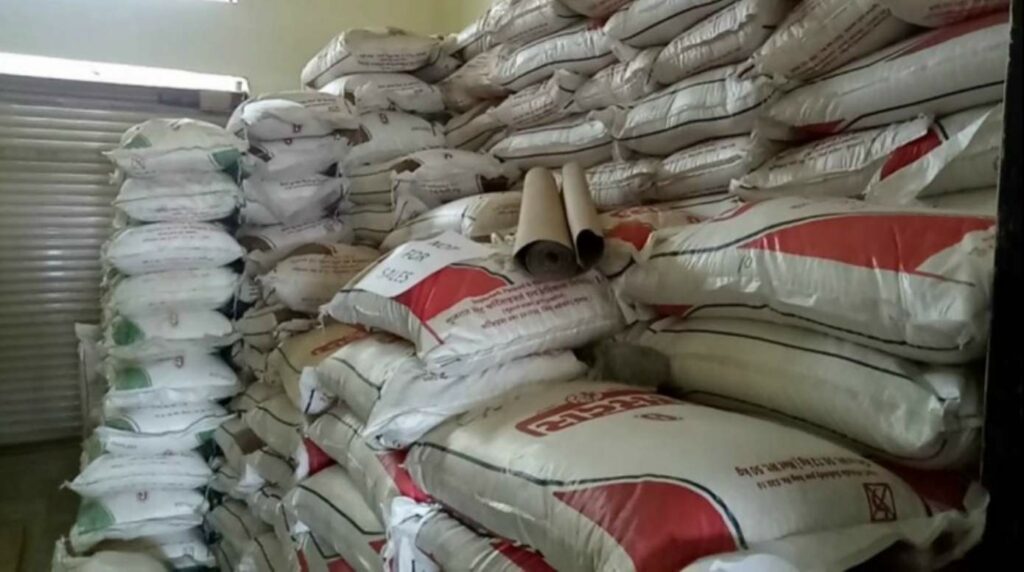
Even more food shortages may be on the way as a result of the recent heatwaves in India destroying wheat yields. India was supposed to increase its exports to offset the shortfalls caused by Russia’s unprovoked invasion of Ukraine which had already reduced global wheat supplies.
March temperatures in India have reached levels never before seen in India according to records tracking temperatures since 1901, destroying the crop. Estimates range between 10% and 50% yield decrease for the season by local farmers.
Expectations of wheat exports from India were high, with 11-12 million metric tonnes expected to be delivered throughout 2022 and 2023. With such high expectations and unexpected disruption, a global food shortage seems to be coming.
Fertilizer shortages are spreading throughout the world, starting in Ukraine as a result of the Russian invasion, leading to a price spike of 70 percent in less than one year.
For the first time ever, farmers the world over — all at the same time — are testing the limits of how little chemical fertilizer they can apply without devastating their yields come harvest time. Early predictions are bleak.
In Brazil, the world’s biggest soybean producer, a 20% cut in potash use could bring a 14% drop in yields, according to industry consultancy MB Agro. In Costa Rica, a coffee cooperative representing 1,200 small producers sees output falling as much as 15% next year if the farmers miss even one-third of normal application. In West Africa, falling fertilizer use will shrink this year’s rice and corn harvest by a third, according to the International Fertilizer Development Center, a food security non-profit group.
…..“Fertilizer prices are up an average of 70% from last year,” said Timothy Njagi, a researcher at the Tegemeo Institute of Agricultural Policy and Development in Kenya, referring to prices in the country. “The fertilizer is available locally, but it’s out of reach for the majority of farmers. Worse, many farmers know that they cannot recover these costs.”
Prices have been climbing for more than a year for a host of reasons: runaway pricing for natural gas, the main feedstock for much of the world’s nitrogen fertilizer; sanctions on a major Belarusian potash producer; back-to-back late-summer storms on the U.S. Gulf Coast that temporarily shut-in production in the region; plus Covid-19 restrictions that have disrupted every global supply chain, including chemicals.
That tightening in the physical fertilizer market has galvanized China, the largest phosphate producer, to restrict outgoing shipments in order to build up a stockpile at home, further exacerbating the global shortage. Add Russia’s invasion of Ukraine, which effectively cut off nearly a fifth of the world’s nutrient exports, and the fertilizer industry and its pricing mechanisms are arguably more broken than ever before.
The once-American ally, the Solomon Islands, is now going in another direction, which is leading them to accept Chinese Police becoming their street patrols, but under Solomon Islands supervision.
China’s police presence under a new security pact will boost the capabilities of the Solomon Islands but they will not use techniques seen in Hong Kong, the Pacific island country’s top diplomat to Australia said in a radio interview on Monday.
Already on guard about the pact because of concerns it gives China’s military a strategic foothold in the Pacific, Western allies are also worried that Chinese police sent there may use the same “ruthless” techniques previously used to quell anti-government protests in Hong Kong. read more
The Solomon Islands is “beefing up their capability” after local police were unable to contain anti-government riots in the Chinatown section of the capital Honiara in November, Solomon Islands High Commissioner to Australia Robert…
The goal of this column is to present news from around the world that is not often – if ever – covered by more mainstream entities, using local sources wherever possible, but occasionally using news aggregators not used, again, by the mainstream media. Also, please note that we do use links to Wikipedia; while Wikipedia is well-known as a largely-useless site for any kind of serious research, it does serve as a launch-pad for further inquiry, in addition to being generally free of malicious ads. As with anything from Wikipedia, always verify their sources before making any conclusions based on their pages.
This column will cover the preceding week of news.
To make it easier for readers to follow story source links: anytime you see a bracketed number marked in green – [1] – those are the source links relating to that story.
North America
While the wave of bomb threats made against schools across the country continued this week, including to multiple schools in the state of Maine [1][2], there seems to be a shift underway, as fat more calls were phoned in, apparently by live people, with some arrests being made. [3]-[11] It is important to understand that stupid, bored people sometimes call in bomb threats for what they think is a “laugh”; that has been happening for a very long time. But in the case of the last several years, the number of these hoax-threats has been steadily increasing…and this week, we have seen at least two cases on the East Coast of actual, physical notes [12][13] being left on bathroom mirrors in student lavatories. This may be nothing — or it could indicate the possibility of some sort of “Slender Man“-style “creepypasta” being weaponized by some internet-based Fagin character, luring children into something that could result in a deliberate “Slender Man Stabbing“-style campaign.
Keep in mind, not all of these are hoaxes. On Wednesday the 27th, police in Porter County, Indiana arrested and charged a middle-school student [14] who was discovered to be carrying two IED’s in their backpack.
Turning to Europe, we have another wave of emailed bomb threats swamping over two dozens schools in the nations of Serbia and Montenegro. This has been an increasing issue within Europe over the last couple of years, similar to the waves of similar threats within the United States, as well as several other nations since at least 2015.
In Mali, five Malian Army soldiers were killed when their truck triggered an IED, during their pursuit of a hijacked tanker truck. Also, the Al Qaeda-linked terror group JNIM claimed to have captured an unspecified number of Russian “security contractors” from the “Wagner Group“, a PMC linked to the Russian government. Mali has been effectively left to its own devices in its decade-long war against Islamic terror groups, following its break with European and African nations after it announced delays in transitioning back to civilian rule, following a series of coups d’état that began in 2020. [1][2]
In Nigeria, steady attacks, including assassinations and arson attacks, continue throughout the country, as fighting against the Boko Haram group spilled over the border into neighboring Cameroon. [3]-[7]
Despite the seemingly numerous incidents listed as sources, this is actually a downward trend over the last several week. This may be related to the fighting in Ukraine, as Russian air units may be in the process of shuffling between the Middle East and the Ukrainian fronts.
In Afghanistan [https://en.wikipedia.org/wiki/Afghanistan], tensions continue to boil, as multiple bombing attacks against Muslim minorities and laborers continue, threatening to tear apart the fragile coalition of the Taliban [https://en.wikipedia.org/wiki/Taliban]. [1][2][3]
In Pakistan, meanwhile, the Baloch Liberation Army (BLA) have doubled down in the aftermath of its suicide attack on Karachi University, which killed three visiting teachers from the People’s Republic of China (PRC) and their Pakistani driver. The Balochi group warned that attacks against Chinese workers in the country. The Balochi are not alone, as multiple terror groups in Pakistan have staged attacks against Chinese citizens in recent years, in numbers that are increasing. The PRC has been increasing its “footprint” in Pakistan, as part of its neocolonialist “Belt and Road Initiative“, [4][5]
Elsewhere in Pakistan, multiple attacks killed and wounded several police officers, soldiers, and terrorists. [6][7][8]
In India’s conflict-ridden northern state of Jammu & Kashmir, scattered incidents continued this week, with IED attacks on vehicles and an attempted attack on a hospital, and a pepper attack on security forces personnel, in an apparent attempt to grab the soldier’s weapon. [9]-[14]
In the eastern state of Manipur, an IED attack damaged several road construction vehicles in the Thoubal District. Police investigations continue, but at press time, it remains unclear if this was an act by an insurgent group, or some sort of labor dispute. [15]
In the central part of the nation, the Red Corridor was largely quiet this week, with four Naxals being arrested in two separate incidents, and one incicent of Naxals burning a charter bus, although no injuries were reported to police. [16]-[18]
Finally, 4 NPA guerrilla’s were killed in two separate incidents in the Pacificarchipelagic nation’s long war against the Communist rebels. Elsewhere, three suspected NPA guerrilla’s were arrested and arms were seized in two incidents in the country.
Megacities, Musketry, Physics and Why the Intermediate Cartridge Needs to Disappear
“Megacity” is not a term in the general lexicon of most people. It is typically defined as any metropolitan area with a population of 10million or more. It is often that eyes simply glaze over when reading dry figures, though, so some perspective is useful, for the purposes of scale.
Tokyocurrently has a population in excess of 37,000,000 – or, approximately the same population as the state of California
Delhiis currently in excess of 29,000,000, roughly equal to the entire population of the state of Texas
Shanghaicomes in third, with over 26,000,000 people
Those three cities easily fall within the category of the “First World” – comparatively wealthy and reasonably peaceful. However, there are other megacities that do not fall into this category:
This second group of megacities are in extremely unstable environments. Indeed, the issue of civil crime control in Rio is an ongoing nightmare, frequently compared to low-intensity military conflict. As a result, the US Military’s Special Operations community is justifiably concerned that it will find itself operating in such an environment in very near future.
It also knows that it is not ready to do so:
Megacities Urban Future, the Emerging Complexity, Pentagon Video
Unlike certain shrill commentaries, one of the fundamental facts of military operations in the Twenty-First Century is that winning the population is far more important than winning arbitrary physical space. As of this writing, fully half the world’s populations can be considered to live in urban environments. That figure is expected to increase to c.65% by 2050 – less than thirty years away – with an estimated 90% of that growth being concentrated in Africa and Asia…and fully half of those populations will be of “fighting age” (not in the conventional, legal terminology, but in terms of reality), between 14 and 30.
Operations in large urban areas are complicated by the very infrastructure that make those cities possible: the US military had serious issues operating against insurgents in Baghdad (with a comparatively small population of c.8million) because the city was so large, it was nearly impossible to control vehicular movements to protect civilians, much less impede guerrilla’s. Likewise, even fighting in a moderately large city, such as Grozny, reveals the dangers of engaging in high-intensity operations, even when civilians are treated as an afterthought.
This is not simply a “4th Gen” problem. There are many reasons short of active, intentional conflict that could cause a military force to deploy into a megacity. From naturaldisasters, to criminal activity, to pan-national, extra-national and post-national activity, military forces around the world cannot avoid megacities, nor the concerns that accompany them.
Simply put, armies are going to have to fight in megacities. This is an absolute: whether the battle begins tomorrow, or five years from now, it will happen. Some group or groups will force a real infantry battle inside a megacity.
And the militaries of the 2020’s and beyond are neither equipped nor trained to deal with it – the US military is right to be concerned. However, in trying to identify concerns, in order to address them, the US military has a serious blind spot that they do not want to address, a proverbial “Emperor with no clothes“…That problem, seemingly easy to fix, is a fundamental question of small arms.
Captured rifles in Iraq, 2004
Since the end of the 1960’s, the US military has been fixated on the intermediate caliber class of rifle. For completely different – and frankly, rather shabby – reasons than the Soviet Union‘s adoption of an intermediatecaliber, the US military has used the 5.56x45mm round for both its primary infantry combat weapon, as well as its Squad Automatic Weapon (SAW) since the early-to-mid 1960’s. Pundits who should know better, take the fact that the 5.56×45 cartridge has been deployed in combat by the US for around fifty years as a sign that it must be superior.
Based in part on data from the URBAN WARRIOR exercise series – conducted prior to 9-11 – the US Marine Corps’ Warfighting Laboratoryconstructed an outdoor laboratory to test the effects of various cartridges against commonly-encountered structural environments. The results are telling:
Urban environments are…well, “urban”: they are constructed of a variety of materials of changing density, offering considerable opportunities for concealment (i.e., materials that a person can hide behind, to avoid observation), but a wide array of material densities make for rapidly changing levels of “cover” (a barrier that offers some level of protection against various kinds of projectiles). Many of these materials are proof against lighter projectiles.
US Paratrooper in Fallujah, Iraq, c.2004, armed with an M4 CarbineM249 Squad Automatic Weapon (SAW)
The modern M16/M4 rifle and M249 SAW projectiles are 62 grains in weight. Even the most aggressive load commonly issued, the SS109, tops out at 3,100 feet per second (fps) in velocity. This delievers about 1,300 foot-lbs of energy onto a target.
M240 Machine Gun
In contrast, the 7.62x51mm M80 round used by the standard medium machine gun, the M240, weighs in at 147 grains, and comes out of the barrel at about 2,700fps, while delivering almost twice the energy in foot-lbs (c.2,400). Obviously, not every soldier can run around with a comparatively heavy machine gun…however, the 7.62x51mm round was – and is – used by rifles.
M21/M14 Sniper Rifle
Although now used almost exclusively by dedicated snipers, the round was used not only by the M14, with the M16-series replaced, but was the standard rifle cartridge of NATO forces for nearly thirty years. While these rifles were and are demonstrably heavier and longer than their smaller rivals, the need to batter through effective cover is a consideration that becomes increasingly important in an urban environment.
This is not a case of technical nitpicking — using lighter projectiles in an urban environment means that more rounds need to be fired to overcome barricades. And, when the only firearms that can effectively batter through such materials are fired by weapons that used to be considered a form of light artillery, it should be obvious that this is not conducive to a positive image before the ever-present, all-seeing eyes of news cameras and the ubiquitous camera-phone.
While it would be understandable if this were a simple case of “Oops! We got it wrong!“, this is not the case, as instructors at West Point, the primary officer academy of the US Army, were teaching this in the early 1980’s:
Nor is this a question of engagement ranges. The original work that created the intermediate cartridge, begun in the spring of 1918 with a report from Hauptmann (Captain) Piderit, part of the “Gewehrprüfungskommission (Small Arms Proofing Committee)” of the German General Staff in Berlin, was based on the flawed logic that since infantry combat ranges were usually well under 800m, a smaller, lighter projectile would save on materials and costs, as well as allowing for significant improvements to rifles.
While this might have been true on its face, it ignored the consideration of cover. The result has been rifles that perform well enough on rifle ranges and in open environments (although some would disagree), but are far less effective in built-up areas…which is precisely where they are about to find themselves, to say nothing of longerranges.
The US Army “solution” to the problem was announced on April 19, 2022 – the Army’s (and thus, the US military’s) new weapon would be….the SIG SauerXM5 Rifle, a derivative of the company’s “MCX SPEAR“, and its associated light machine gun, the XM250. (Certainly a feather for SIG’s plume, considering the US military already having bought their handguns.)
Technical Review Sig Sauer Next Generation Squad Weapon NGSW-R XM5 rifle NGSW-AR XM250 machine gun
Rifle cartridges – L to R: .50 BMG, 300 Win Mag, .308 Winchester, 7.62x39mm, 5.56 NATO, .22 LR
While the XM250 is, indeed, lighter than what it replacing – the M249 SAW – the XM5 is heavier than the M4 carbine it replaces. The discrepancy in rifle weights is odd, until it is realized that the 6.8x51mm “SIG FURY” round has a chamber pressure – in normal loads – of c.80,000psi, a staggering figure fully 25% higher than that of the venerable 7.62x51mm M80 cartridge, and a minimum 35% higher than the original 5.56x45mm M198 used by the M-16; it is even more than 30% higher than that generated by a .50BMGSaboted Light Armor Penetrator round. This is not “fun with numbers“: when you start dealing with this level of pressures, the measures to contain them are critical…and heavy, in the extreme. One seriously wonders if the US Army is planning on fighting flying saucers.
While “newer” is often seen as “better”, this is far more than necessary. While poorly-made barrels will certainly burst, increasing the pressure by c.30%, minimum, is dangerous enough to be irresponsible. Weaponsusing the older 7.62x51mm M80, while no lightweights, were more than sufficient for a broad range of combat tasks. Lighter weapons, firing lighter cartridges, simply had less range, poorer performance, and less utility…and, speaking from experience, the rifles weren’t all that light.
Physics do not lie, and the lighter rifles were not that much lighter.
Back FREEDOM for only $4.95/month and help the Freedomist to fight the ongoing war on liberty and defeat the establishment's SHILL press!!
Are you enjoying our content? Help support our mission to reach every American with a message of freedom through virtue, liberty, and independence! Support our team of dedicated freedom builders for as little as $4.95/month! Back the Freedomist now! Click here