May 10, 2026

World

Putin Follows DNC in Criminalizing Opposition by Threatening Citizenship of Those Against the Ukraine Invasion

PUTIN WANTS OPPOSITION TO UKRAINE WAR STRIPPED OF CITIZENSHIP – In a move reminiscent of the desires of the DNC in America, Vladimir Putin is pushing a bill that will cancel your Russian citizenship if you oppose the party’s policies, specifically its policy regarding the invasion of Ukraine.  Without a bill of rights, the bane of DNC existence, the DNC-wannabe is sure to get the bill passed and codified into law, thus outdoing the possible source of Putin’s inspiration, the DNC’s method for dealing with dissent in America (by declaring the opposition seditionists while supporting the death of the republic themselves).

NEWSWATCH BLURB:

Putin Submits Bill to Denaturalize Anti-War Russians www.themoscowtimes.com
Excerpt:


President Vladimir Putin has put forward legislation that would allow authorities to revoke the passports of naturalized Russian citizens who oppose the invasion of Ukraine, state media reported Sunday.

Putin proposed amendments to Russia’s law on citizenship that would make “discrediting” and spreading “fake news” about the Russian military grounds for denaturalization, according to the RIA Novosti news agency.

Russia passed laws against “discrediting” and spreading “fake news” about the army shortly after it sent troops into Ukraine in late February, a move Kremlin critics say has been used to silence most anti-war voices.

Read Full Article

Haitian PM Fires Dissenting Government Officials While Expanding Own Power

DESPITE US INTERVENTION, HAITI’S GOVERNMENT CONTINUES TO COLLAPSE – The current prime Minister of Haiti, Ariel Henry, has dismissed Justice Minister Dorcé days after he had the Minister fire Government Commissioner Jacques Lafontant.  Interior Minister Liszt Quitel was also fired by the embattled PM, who promptly appointed himself to be both Prime Minister and Interior Minister of Haiti.

NEWSWATCH BLURB:

Haiti prime minister ousts top officials amid US sanctions abcnews.go.com
Excerpt:

Prime Minister Ariel Henry has dismissed Haiti’s justice minister, interior minister and its government commissioner in a fresh round of political upheaval.

Former Justice Minister Berto Dorcé first fired Government Commissioner Jacques Lafontant on Henry’s orders before being ousted himself days later along with Interior Minister Liszt Quitel, according to documents that The Associated Press obtained on Monday.

Read Full Article

Outside The Box: DIY Navies?


In previous articles, we have touched on the ideas for building “DIY” ground- and air-combat forces. Today, we will take a look at the naval aspect of this idea.

Water-based travel is not new. In fact, for the majority of human history, travel further than 100 miles in any direction was usually faster, cheaper and safer than overland travel, even if wide detours were necessary. Without getting into the physics of fluid dynamics, movement is a lot easier when nature is helping you along, especially when friction resistance is determined more by shape than by weight. It was not until the advent of railroads in the early 19th Century that land travel became faster and comparatively safer than travel by water.


River Landscape with Man in Rowing Boat and Tree-Lined Shore. Johannes Hermanus Koekkoek (1778–1851). 1800-1850. Public Domain.


However, when looking at the military dimensions of water travel, while there were early examples of purpose-built warships, such as the Greek and Roman “triremes”, the vast majority of ships were perfectly suitable for both military and commercial use. Mostly, this consisted for transporting troops, animals, equipment and other supplies. Because of the ships’ designs of these eras, most vessels were also capable of going fairly far upriver; this was the main tactic of Viking raiders, from the 8th-11th Centuries, whose “Karvis”, “Snekkjas” and “Drakkars” drew as little as 30in/762mm in draft.


Gokstad Ship, late 9th Century, Viking Ship Museum, Oslo. CCA/2.0 Generic.


As previously noted, however, after about 1860, a dramatic divergence began to open between purely military and purely civilian merchant vessels. Without restating those points here, by the end of World War 2, it seemed that the divide was complete and unbridgeable: “Warships” fought in wars, and civilian vessels supported the warships, while remaining mostly unarmed.

But, there lurked an exception: the PT Boat.


Patrol Torpedo Boat (PT) 658 transits past U.S. Navy ships at the Portland Rose Festival. US Navy photo. Public Domain.


Developed just as WW2 was starting, the “Patrol Torpedo Boat” quickly became famous as the heavily armed war vessel of WW2, on a weapon-to-tonnage basis. Not much larger than most commercial yachts, the PT’s were fully capable of sinking full-size warships – as long as their torpedoes worked. If there weren’t enough enemy warships around to sink, the PT’s could easily remove their torpedoes, and bolt on heavier cannons to destroy lightly armored barges and lighters, as well as extra machine guns, turning them into floating anti-aircraft batteries.

While the US Navy seemed to have forgotten the lessons of PT Boat warfare after the end of the war, that turned out to not be the case. While light-armed craft more or less vanished from the Navy’s inventory after WW2, that was due to the savage budget cuts and vicious organizational fights of the post-war years, more than because the Navy didn’t want the boats. Indeed, the Navy had to burn significant political clout just to help prevent the Marine Corps from being disbanded by an Army and Air Force that were battling for scarce funding.

As soon as the Vietnam War began to heat up, it was discovered that North Vietnam was supplying the Viet Cong and its own troops in the South by smuggling arms and supplies down the coast in civilian sampans. The solution to this were the “Swift Boats” – small, high-speed, aluminum-hulled boats, heavily armed with machine guns. With very shallow drafts, these fast craft were able to chase down almost any watercraft, and usually outgunned whatever they could catch. As well, they could land small parties of US and Vietnamese Marines or SEALs deep in enemy territory, doing great damage to areas the enemy had thought to be relatively safe.


Fast Patrol Craft (PCF, Swift boat) during riverine operation in Vietnam. US Navy photo. Public Domian.


After the war in Vietnam ended, the US Navy once again had to struggle for funding, and small combat craft went onto the back burner. But not completely. As funding improved in the 1980’s small combat craft came back to prominence, leading to the expansion of the Special Warfare Combatant-craft Crewmen (SWCC) career field in the Navy, and the development of the SOC-R. NATO partners took note, at least to some extent.

And all seemed rosy.

But – what about smaller groups? What about “guerrillas at sea”?

Like naval warfare and transport in general, small craft-based warfare is not new. In the modern era, say from 1800 to today, military raids against pirates operating from swampland bases with open canoes and boats was far more common than fighting large ships, à la Hollywood pirate films. Indeed, in World War 1, the “Battle for Lake Tanganyika” was fought and decided by a handful of small boats that barely qualified as life rafts; the largest vessel, the SMS Graf von Goetzen, was barely 235ft long; that’s short for a warship.


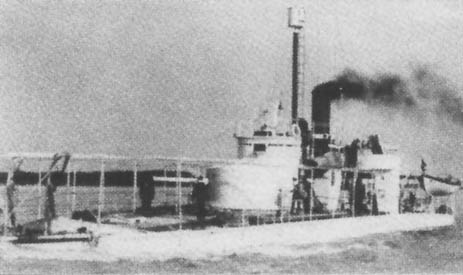
German steamship Goetzen before its warship conversion in 1915. Public Domain.


Likewise, Filipino guerrillas fighting the Japanese in their archipelago after Japan’s conquest of the island group in early-1942 made good use of small-boat smuggling tactics to make amphibious raids throughout the islands for three years, until the war ended. The Philippine government continued this successful strategy in the Huk Rebellion that followed the war, and both government and anti-government forces continue to use boats for the same purposes to this day.

But the real advent of modern guerrilla small craft warfare begins (as do many things in this realm) with the LTTE – the Liberation Tigers of Tamil Eelam.

Starting from essentially scratch in 1976, the LTTE quickly showed – much as the Islamic State would do, decades later – that all that was required for an insurgency to grow exponentially, was intelligent, cunning and quick-witted leadership…Even if they end up using straight-out terror tactics.

In its 25-year history, the LTTE’s “Sea Tigers”, with no more than 3,000 personnel at any given time, not only fought the Sri Lankan Navy to a standstill, sinking nearly 30 vessels, while also conducting amphibious raids, it conducted widespread “strategic support operations”, until the Sri Lankan military got serious, got its collective act together, and ground the LTTE down by mid-2009.


Slovenian fast patrol boat HPL-21 Ankaran (Super Dvora MK II class), 2009, of a type used by the Sri Lankan Navy. CCA-3.0


But – what about other groups?

While the LTTE managed to create a ferociously effective “commando navy,” the “Navy of the Islamic Revolutionary Guard Corps”, has taken the direction of using masses of small “Boghammer”-type speedboats. Based on a design from the Swedish company Boghammar Marin AB developed in the 1980’s, the modern “Boghammer” has taken on the moniker to describe any improvised naval fighting vessel.


A speed boat (used in a terror attack attempt on 5 May 1990) in the Clandestine Immigration and Naval Museum, Haifa, Israel. CCA/3.0


As used by the IRGC-N, the Boghammer is armed with a variety of weapons, including RPG-7 type rocket launchers, as many as three 12.7mm heavy machine guns, recoilless rifles and 107mm multiple rocket launchers based on the Type 63 MRL. And these craft do pose a threat to major-nation warships, when used in swarms. After nearly ten years of study, it remains a problem that major-state navies – including those of the United States and Great Britain – don’t talk about in public.

That’s all well and good…but, what about “modern guerrillas”? The above examples, including the LTTE, were all either formally organized navies, or were at least funded on a regular basis. What about a small guerrilla force? What can they do on the water?

Quite a bit, actually.

While large, ocean going vessels are going to be mostly out of a small group’s reach, at least initially, acquiring civilian pleasure craft (through theft or “under the table” deals) that can be modified to carry weapons is not at all difficult. While craft as large as Boghammers are uncommon, they are not so unusual that they would be noticed.

There is, however, another class of vessel normally associated with major states that most people would not associated with guerrilla warfare: long-range submersibles – i.e., submarines…Specifically, drug-running “narco-subs”.


Narco-submarine captured by the Peruvian Navy in December 2019. Ministerio de Defensa del Perú. CCA/2.0.


While “combat submersibles” in the modern era begin with David Bushnell’s Turtle in 1775-1776, submarines have only played a pivotal role in naval warfare since WW1, and the first “Battle of the Atlantic”. Submarines have always been complicated and dangerous craft – there is always a solid chance that something will go catastrophically wrong while submerged. Survival rates when things like that happen at sea are never good.

Submarines are also expensive, in the extreme. As a result, few people imagine a threadbare guerrilla army being able to operate something as technically complex and ridiculously expensive as a submarine. Sure, there are “vanity” submarines out there, used to excursions by cash-rich vacationers, but surely no one is actually building submarines intended for combat.

Established navies, however, beg to differ – which is why they are spending significant amounts of money designing advanced harbor-protection systems…specifically to counter small combat submarines.

But, for our purposes, narco-subs are not that. Narco-subs are generally thought of as “semi-submersible”, in that they cannot “deep dive,” like a conventional submarine. Instead, they are designed to run at or just below the surface. And these craft are not small – narco-subs with cargo capacities of up to 17,000lbs have been captured. That’s a significant capacity for a “guerrilla shipyard”.

And, as hard as the militaries of North and South America try, they cannot catch them all; at best, one in ten are estimated to be intercepted. Worse, the drug subs are being much more sophisticated, diving deeper, becoming less detectable, carrying more, and extending their range, with some now being able to cross the Atlantic, to bring drugs into the waters of Spain and Portugal.

This is a serious concern, and not from the narcotics angle. While infiltrating “operators” into a nation (even the United States) is relatively easy, importing weapons and explosives is not. And 10-17,000lbs of weapons, ammunition and explosives at a time provides significant capacity for an attacker.

Indeed, since 2000, abandoned narco-subs – true deep-diving models – have been discovered in South America that have cargo capacities in the range of 20,000lbs or more, and with ranges of c.3,700km, more than enough to reach New Orleans from most of the South American Caribbean coast.


A fully-operational submarine built for the primary purpose of transporting multi-ton quantities of cocaine located near a tributary close to the Ecuador/Colombia border that was seized by the Ecuador Anti-Narcotics Police Forces and Ecuador Military authorities with the assistance of the DEA in 2010. Public Domain.


Making matters much worse, these craft are very difficult to detect at sea, because their hulls are made mostly of fiberglass and Kevlar; are painted sea-blue; and vent their engine exhaust along the bottom of their hulls before releasing it to the atmosphere, cooling it to the point of being indistinguishable from the surrounding water. Coupled to them running just below – or well under – the surface, this makes them virtually invisible to radar and sonar. In fact, the vast majority of the narco-subs captured were spotted by aircraft, running on the surface.

So – why is this important? It’s “just” drugs, right?

Well, “cargo” covers a very broad scope. Narco-subs don’t have to carry drugs, after all. Coupled to this, is the fact the fact that the South American and Mexican cartels operate these subs in alliance with guerrilla groups such as the FARC, among others. It requires no great leap of imagination to picture a scenario of a group like Revolutionary Iran or the I.S. infiltrating two- to four-hundred trigger-pullers into the US, hidden among the masses of illegal immigrants being allowed into the country by a criminally – if not deliberately – incompetent political establishment so arrogant, that they believe that the Rules of War do not apply to them.

Why is the author so vehement about this?

In 1974, R&D Associates – a think tank in Santa Monica, California – working under contract for the Department of Defense, produced a document titled A Soviet Paramilitary Attack on U.S. Nuclear Forces – A Concept (PDF link). The paper sketched out a threat concept to US strategic nuclear forces, wherein Soviet Spetznatz special forces could potentially infiltrate sabotage teams into the US to attack ICBM, bomber and nuclear submarine bases, simply by walking in over the borders from Mexico and/or Canada. It goes into detail of then-current estimated numbers of illegal aliens crossing the US border, who were not intercepted by the Border Patrol, and pointed out that enough four- to six-man teams could be infiltrated and housed by ‘illegal’ KGB agents just long enough to sabotage US nuclear forces in preparation for a Soviet first strike.

Very James Bond, yes?

This paper remained classified until 1995.


ISIS fighters execute Taliban fighter In the city of Jalalabad, December 2021. CCA/4.0


A threat – a clear and present one – exists against the United States, and its citizens. While some would argue that this author is “letting the cat out of the bag” by speculating on this in public, none of the information in this article is classified; there is no “whistle-blower” information here. If this author can find it, anyone can. You, the Reader, simply aren’t being told any of this. I will let you speculate as to why that is the case. The author, here alone, is unable to take corrective measures against this threat – it is the job of the Reader to do so.

All I can do, is warn you.


The Freedomist — Keeping Watch, So You Don’t Have To


Pakistan in Trouble After More Chinese Nationals Killed

CHAIRMAN XI WARNS PAKISTAN TO STOP TERROR ATTACKS – Chairman Xi met with Pakistani Prime Minister Shehbaz Sharif to discuss his “concerns” over the recent spate of terror attacks on Chinese nationals. The meeting reveals growing tensions between the two current allies.  They share 370 miles of border with one another. 

NEWSWATCH BLURB:

China Urges Pakistan to Ensure Security of Chinese Working on Bilateral Projects -VOA News
Excerpt:

Chinese President Xi Jinping hosted wide-ranging bilateral talks on Wednesday with Pakistani Prime Minister Shehbaz Sharif and “expressed his great concern” about the security of Chinese nationals in the long-time South Asian allied country….

“President Xi expressed his great concern about the safety of Chinese nationals in Pakistan and conveyed his hope that Pakistan will provide a reliable and safe environment for Chinese institutions and personnel working on cooperation projects there,” a Chinese Foreign…

Read Full Article

Netanyahu is Back

NETANYAHU COALITION WINS ISRAEL ELECTIONS- The former Prime Minister of Israel Benjamin Netanyahu is now expected to regain his position after the 5th election in four years.  He was projected to be coming up just short of a coalition majority leading up to the election but ended up gaining 65 of 120 seats.

NEWSWATCH BLURB:

Israel election results indicate Benjamin Netanyahu comeback powered by Itamar Ben-Gvir and the far-right – CBS News
Excerpt:

With Netanyahu and his allies projected to win more than the 61-seat majority needed to form a government, the country’s protracted political crisis may be headed toward a conclusion, but the country remains as divided as ever.

Tuesday’s election was Israel’s fifth in less than four years, with all of them focused largely on Netanyahu’s fitness to govern. On trial for a slew of corruption charges, Netanyahu, who has always denied wrongdoing, is seen by supporters as the victim of a witch hunt and vilified by opponents as a crook and threat to democracy.

Read Full Article

The Immortal Type 63


No matter how you consume your news, whether from the “mainstream” or from more “alternative” sources, recent months have been all abuzz about the “mighty HIMARS“; and the HIMARS is, indeed, a very capable system…for those who either have friends, or who can afford it. But — what about us? What about the “poor’s“? Every weapon has a development cycle, and HIMARS is no exception. In this article, we will take a (very) brief look at the history of rocket artillery, and a singular weapon that is everything the HIMARS is not: cheap, simple, flexible, and readily available for anyone or any group with even a modest mount of cash.


Rocket artillery is far from ‘new.’ In fact, rockets were arguably the first practical use for gunpowder when it was invented in China, in the 9th Century AD. As gunpowder migrated westward, however, the idea of rocketry largely disappeared, until the late 18th-early 19th century, when rocketry began to reappear, most famously in the form of the Congreve Rocket. These early attempts were wildly unreliable, including having a nasty habit of exploding on their own, or returning to their owners in the most unpleasant of manners. Thus, it should not be surprising that rockets mostly disappeared from European-style warfare after about 1850 or so.


Fireships firing rockets and details of storage and launch. Colonel Congreve, 1814. Public Domain.


As a result, it would take until World War 2 to resurrect rocket artillery in a meaningful way, with the German introduction of the “Nebelwerfer” (or, ‘smoke mortar’) multiple rocket launcher (MRL) system. The system fired a variety of rockets, normally 5 – 7 at a time, depending on their exact size and weight. While initially intended to deliver chemical weapons, the distaste – and fear – from all sides outside of Asia about using such weapons caused the Germans to quickly develop high-explosive rounds for the various calibers. These were used to devastating effect by the Germans, initially…not so much for their raw destructive power, but for their terrifying psychological effects on troops who had never imagined the sound the rockets produced.


Nebelwerfer crew in action, Soviet Union, 1944. German Federal Archives.

All of the major Allies quickly copied the concept, and by the end of the war, were deploying far larger and more capable designs. However, the love affair with short-range multiple rocket systems wouldn’t last. By the mid-1950’s, most “First World” nations had largely begun to abandon the battlefield MRL; the notable exception was the Soviet Army and it’s subject armies, who maintained the devastating BM-21 ‘Grad’ into the present day. The reason for this abandonment of MRL’s was that, despite the MRL’s decided advantages (they were cheap and lightweight, compared conventional artillery, and were capable of firing truly impressive amounts of rounds in a time far shorter than regular artillery when grouped into batteries), they had significant disadvantages: their range tended to be shorter; they took far longer to reload; they were nearly impossible to use in “direct fire”, a feature of conventional artillery; and their rockets’ velocity was far too low to actually penetrate dug-in shelters or tank armor.


Nebelwerfer crew moving into action, France, 1944. German Federal Archives.

The reason the Soviet Bloc hung on the BM-21, was that while it had all of the disadvantages cited above, it had a very powerful warhead, a long range, was simple and easy to maintain, and was far cheaper and easier to build than conventional artillery. The Soviets accepted the downsides of the MRL idea, and found a way to incorporate it into their artillery fighting doctrine.


BM-21 Grad on display at the Karen Demirchyan Complex, Armenia. CCA/4.0

And then – The Chinese Communist Party (CCP) came looking for weapons.

The Chinese Communists, following their disastrous – if effective – intervention in the Korean War (1950-1953), had a terribly disorganized arsenal. As China had spent the previous fifty years alternating between civil wars and hellish foreign invasions (WW2 actually begins in 1937, in China, instead of Poland in 1939), the PLA was stuck with a hodge-podge of weapons from at least six or more sources, they were badly in need of a complete rearmament strategy, literally from the top, down.

The immediate problems for the CCP was that their manufacturing base had to be completely rebuilt – which, being fair, was a problem for most of the active participants of the war, although Mao Tse Tung’s “Great Leap Forward” almost destroyed the country wholesale – but, more cripplingly, they had very little money to buy foreign equipment. Unable to pay even the Soviet Union for enough field artillery, the PLA went looking for an alternative.

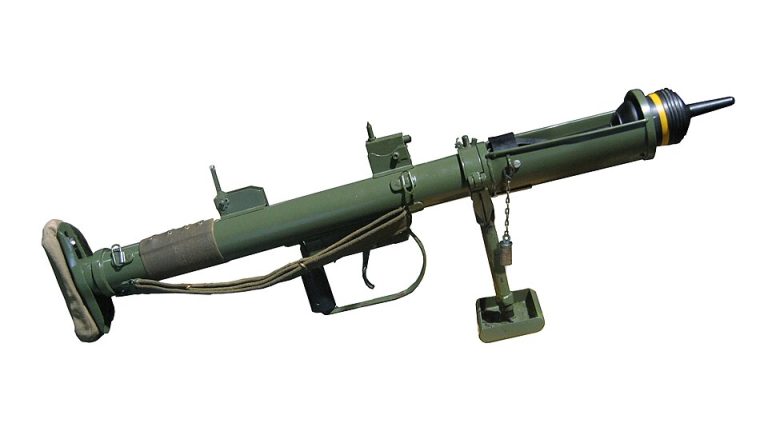
And, in 1963, they created one of the most important, but least-known, pieces of artillery in modern history: the 107mm Type-63 MRL.


Type-63 107mm MRL. 2016. CCA/4.0

A 12-shot launcher mounted on a 2-wheeled trailer, the system weighed in at about 1,300lbs/602kg, and only needed a crew of five. It was capable of firing a wide variety of ammunition (albeit limited to HE-types, as well as incendiary and smoke rounds) to (initially) c.5mi/8km; ranges were quickly improved. Some models could be broken into 2-tube loads for transport through rough terrain, by either people or mules. Eventually, a variety of single-tube launchers were developed for the rocket ammunition. The PLA realized that they had a good thing, and eventually equipped each infantry division with 18 units.

It was also quickly realized that the unit’s light weight made it easy to mount on small vehicles, giving the launcher the ability to quickly fire its rockets, and quickly relocate to avoid counter-battery fires.


IRGC Ground Force Commandos loading a Type-63 type MRL. 2017. CCA/4.0

As word got around, and the units began to be used by Communist guerrillas and regular armies, the system became a source of hard currency through exports and licensing; at least seven countries would eventually obtain legal production licenses for both the launchers and their ammunition.

Naturally, the advantages of the Type-63 became apparent to every rebel, guerrilla and terrorist group in the world, and those entities quickly began competing with small armies to buy, steal or beg units on both the legal and black markets.

The Type-63 has proved itself to be a significant game-changer in “low intensity conflicts” because it allows small forces operating on a shoe-string budget to seriously threaten adversaries who cannot afford the advanced systems, like battlefield radars or C-RAM  (which are fantastic to have, if you can afford or get them, somehow), to counter the fast-moving artillery. As a result, lightweight, highly mobile “technical” units can add a significant punch to their operations.

While susceptible to well (and expensively) equipped Western armies, the Type-63 remains a significant threat to anyone without powerful “friends” willing to commit to their aid.

The Type-63 has been reshaping battles for nearly 65 years, at this writing. There seems to be no end in sight for this venerable weapon…not least, because it is now being deployed on high-speed inshore craft…Newer may often be better, but old weapons will still harm you.


Biden Lets CCP War Machine into Our American Schools

BIDEN ADMIN ALLOWS CCP CELLS IN US SCHOOLS THROUGH “CONFUCIUS INSTITUTES”Less than one week after being appointed the mass mailer President of the DNC “Republic” the Biden administration reversed Trump’s order to end the CCP’s terror cells, Confucius Institutes, being allowed to openly operate in our American schools.  Now, a study by the Brits makes it clear these “groups” are CCP invasion points inserted into enemy states like Britain and the US.

NEWSWATCH BLURB:

Confucius Institutes in universities ‘part of Party’s propaganda system’, think tank finds www.telegraph.co.uk
Excerpt:


Only four of the 30 Confucius Institutes set up within British universities by the Chinese Government are solely providing “cultural and language” education, according to a report.

The majority of the institutes are conducting other activities, which in some cases include political lobbying and in other instances, the facilitation of technology partnerships, research has found….

The report identified that the institutes had engaged in activities that included hosting pro-China receptions in Parliament; expanding China’s reach into UK advanced manufacture; hosting diplomatic functions; publishing political pamphlets; flying politicians to China….

Read Full Article

As The World Burns…


As any sane person in the world nervously watches the continuous back-and-forth between Russia and the West over Ukraine, wondering if they are going to see mushroom clouds start sprouting over their cities, Emperor Joe and his deranged courtiers are doing their absolute best attempt at impersonating Emperor Nero (or, perhaps, Elagabalus). With the potential of World War 3 looming (not that the dissolute Imperial Swamp Court believes that it could really happen, so why not play with nuclear toys?), the Imperial Court (I could call them the “Legion of Doom,” but they’re not cool enough) have decided that they need to continue the geopolitical game – the one they should have been paying more attention to, that is – by plotting to be invited to invade, of ALL places…Haiti.

…What?

Oh, yes. Haiti.

Haiti has long been ranked as one of the poorest nations in the world. With a low-end economy based on minuscule agricultural and mining sectors, the country’s only real manufacturing sector involves pennies-on-the dollar clothing manufacture; in fact, the country’s only real claim to economic fame, is that it supplies around half of the world’s supply of “vetier oil” (an essential oil used in high-end perfumes). Otherwise, the country is, almost literally, a “banana republic.” As a result, Haiti can’t even capitalize on a tourism industry, although it is well-suited to one, since most vacationers dislike chilling on the beach while the country literally disintegrates around them.


Royal Decameron Indigo Beach Resort & Spa, Cote des Arcadins, Haiti, 2015.

The main reason for this disintegration, is the political instability that followed the demise of the Duvalier dynasty in 1986. After “Baby Doc” was forced to flee the country, Haiti tried to recover from the depredations of that regime, but it suffered from continual economic decline, political instability, repeated coups d’état, and a wave of major earthquakes.

Which brings us to Jovenel Moïse.


Haitian President Jovenel Moïse, 2019. US Dept. of State photo.

Elected to the Presidency of Haiti in early 2017, Moïse had started out as a local businessman. His ideas earned him the attention of a center-right political policy, that would catapult him into the Presidency of the island nation. Despite accusations of a corrupted election, Moïse did make notable progress in developing both infrastructure projects, as well as launching new initiatives to expand Haiti’s agricultural sector, by improving rice production.

However, continued controversy over when Moïse’s actual term of office was supposed to end continued to simmer. Then, seemingly out of nowhere, a group of what can only be described as “hitmen” stormed Moïse’s residence in the early morning hours of 7 July 2021. Like many rulers in the world, Moïse’s residence had little real security; in fact, only six police officers were present that night – two were active informants to the attackers and the other four did their best to do nothing at all.

What followed could be favorably described as a “Keystone Kops” caper, had no one actually died. The survivors of the 26 actual attackers would later claim that they had been hired – via WhatsApp, of all things – to be security for Moïse…who were then informed that the mission was actually to kidnap the president, although several of them apparently knew well in advance that the real plan was to assassinate him. Video and audio evidence showed the attackers shouting via a bullhorn that the operation was a US Drug Enforcement Administration (DEA) operation, which at least help to momentarily confuse Haitian authorities.


Port Au Prince, Haiti, 2012

There followed a wild chase through the capital of Port-au-Prince, as police and civilians tried to hunt down the suspects who were now fleeing in panic, as it seems that no one had thought through what might happen afterwards. Eleven of the suspects broke into the Embassy of Taiwan, apparently seeking sanctuary, but were promptly arrested after Taiwan waived the embassy’s extraterritoriality  status to allow the attacker’s arrest.

Bookmark that last – we’ll come back to it.

The subsequent investigation revealed a tangled web of conspirators, spanning Haitians, Americans, Colombians, among others, who seemingly accreted out of thin air, on a jumble of ideas about what kind of operation they were running: Were they seizing power in a coup? Were they launching a revolution? Were they arresting the president? Were they simply hitmen? The answer to all of these questions, at one point or another, was “Yes”. In this regard, the planning and execution of this operation make 2020’s “Operation Gideon” look like D-Day.


Venezuelan authorities detaining Operación Gedeón militants, 2020. Venezuelan Government photo.

As a result, Haiti began to spiral out of control. That descent continues a year later, as certain parties are now calling for international – and specifically American – intervention…Which is odd, given Haiti’s history of intervention with the United States…Doubly so, when the United States is currently “eyeball to eyeball” with Russia, in an international confrontation that is more serious than anything since the early 1980’s.

So — why Haiti? Why the push for intervention? Haiti’s politics aside, who would be behind such an attack? There are only three real possibilities:

  1. Christian Emmanuel Sanon, an over-60 year old Haitian-American doctor from South Florida, who was identified as a possible front-man for the operation.
  2. The US government of Joe Biden.
  3. The government of Communist China.

The first case, of the 60-something doctor, is more than a little bizarre. An operation like this requires a lot of money, and the rewards need to balance out the risks. While it has never been illegal (mostly) for Americans to travel to a foreign country to fight in a war, it has always been illegal to plan and conduct such operations from within US borders. As in, serious and very real jail time to those involved. In this regard, it is not really credible to assume that this came solely out of a Florida office complex.

The second case is more interesting, but verges into “4-D Chess“. It is barely – just barely – possible that Joe Biden’s administration may have set up a deliberately bungled operation to send Haiti over the edge. Why? Because that would please the Communist Party of China, who were very upset about the strengthening ties between its claimed ‘province’ of Taiwan and Haiti, while giving the US an excuse to play the White Knight, riding to Haiti’s rescue, yet again.

On Communist China’s part, they could have easily concocted the same plot, for mostly the same reasons, and ran such an operation with the help of Venezuelan dictator Nicolás Maduro’s intelligence services, who were actually embedded into the aforementioned “Operation Gideon” from basically the start. For Communist China, implying tacit Taiwanese support to the operation (recall some of the plotters fleeing to the Taiwan embassy compound) could give Taiwan a black eye, locally inside Haiti. On Maduro’s part, getting the United States to launch another intervention into a Caribbean nation would be a spectacular win, that he can make hay from for the next decade or so, while burnishing his image with Russia’s Vladimir Putin, of general purposes.

My own assessment? The sordid affair is most likely a combination of #2 and #3, because of the confused nature of planning, and the byzantine levels of actors involved. The US has to maintain the image of being in control of its own back yard, and with fires burning all around it, Imperial Joe’s Court of Jesters needs to distract its populace from evermore ridiculous gaffe’s and disasters…

…Until, of course, scary noises and bright lights commence.

Which, naturally, does nothing for the long-suffering people of Haiti.


When Politics Fails


Despite the title, this article is not about politics, per se. Nor is it any kind of product endorsement. This is an advisory, drawn on current events. As well, these are strictly my own opinions, based on my own training and experience, and are not necessarily the position of FreedomistMIA.

I have frequently stated that fifteen or twenty years ago, I would never have imagined that this aspect of CBRN (Chemical/Biological/Radiological/Nuclear) would be what I would find myself advising people about. The first three, certainly: chemical spills happen all the time, as do pandemics (COVID is only the latest, and the one that hit me, personally), and as someone who both watched the real Chernobyl on the news when it happened, and received briefings on it later, accidents at nuclear power plants and storage areas are nothing to sneeze at.

But full-scale nuclear war, between Russia and the United States? In the early 21st Century? I’d have told you that Hollywood was no longer accepting derivative scripts like that.

Now, however, that very term is being tossed around blithely by many “leaders” in the world, and very seriously by one in particular. This has generated the usual, shockingly uninformed response from the shrill and the trolls, to scare people for the “lulz.”

So — I am going to talk to you about nuclear war, in order to inform you, rather than scare you.

The picture below is a “before and after” image of the city of Nagasaki, Japan, following it’s destruction by an atomic bomb on August 9, 1945. This was the “other” atomic bomb that week. I have been to the memorial site in Hiroshima (familial connection…on the Japanese side); should you, the Reader, ever get to Japan, you need to put it on your must-see list.

Just try to avoid going in the first week of August.


Nagasaki, Japan, before and after the atomic bombing of August 9, 1945.

This is the image most people have about nuclear war. That it is mostly wrong, is not something the wider news media is going to waste time talking to you about. The general consensus about nuclear war, as presented in such movies as The Day After, On The Beach, and Threads and reinforced by scientists of a certain political persuasion, is that after the bombs drop, those who live through that, will soon join the rest.

The reality is going to be closer to a downmarket, Road Warrior rip-off. No zombies; sorry.

While the notion of being turned into a shadow on a street by a nuclear blast is very real, the simple truth is that you have to be almost directly underneath the blast. For most Americans, that is simply not going to happen. To find out why, take a stroll through the Nuke Map website, and find the closest major city to you. This is one of the most educational sites of its kind on the internet, and a great companion to Alternate Wars’ World War 3 section.

Most people who live near a major urban area don’t actually live “in” said city, but in the surrounding suburbs. For example, I tell people that I live in “Dallas, Texas” – the reality is that I live well outside the city, itself; in fact, I don’t even live in the same county. That is a conscious choice on my part, because – in my heart of hearts – I never trusted the political leadership of the USA to not do something monumentally stupid, so I try to live outside target zones.

Nuclear weapons are expensive and complicated, so anyone deciding to fire one at an enemy long ago realized that they needed to think very carefully about targeting. Targeting enemy commands and military facilities are almost always not the first option, because – under the doctrine of Mutual Assured Destruction (MAD) – it was assumed that as soon as you launched your missiles, the other side would launch theirs. As a result, there was no point in targeting empty air bases and missile silo’s. Likewise, targeting command elements (i.e., the President, et al) was not a good idea, because if you succeeded, there was no one left to negotiate with. So, the target planners settled on “economic and communications nodes.”

In short – cities.

If you look at a map of almost any major city, there are almost always a confluence of major highways in or near the city centers, conveniently close to major office towers housing the headquarters of companies that control “war production industries“…meaning, essentially anything that can be useful in warfare…which is virtually everything.

But, what if you don’t live in one of these “target-rich environments“? If you live “out in the ‘burbs,” like me, at most, you will get a certain amount of damage to your home (unless you are staring directly at the blast when it goes off; that will make your life…problematic). If you live in an actual rural area, you might not notice that a nuclear event has happened, until your local emergency services suddenly turn out in force.

For those thinking that the recent “advisory” posters and videos from various governments around the country, warning you to head indoors and wait for instructions in the event of a nuclear attack, means that the government will actually tell you how they are going to save you in the aftermath…they won’t. Those poster’s job is to keep you off the roads, to lessen traffic jams caused by fleeing people.

In short, the government wants you done. Well done, that is.

So…The foregoing naturally begs the question: If you’re outside a target area, a nuclear exchange does happen, and you’re alive afterwards — what do you do?

First, you need to plan ahead. If you think that I mean that you should become a “prepper” – you would be correct. But – should you stay in place, or go somewhere else? You know your area and your neighbors better than I do. If you live in an apartment complex, I strongly recommend that you have a plan to go somewhere else.

I am in a position where I have options in several directions. Again, I did this deliberately. That said, if you think that you are in a good position to stay where you are, that’s what you need to do. Hitting the road after a nuclear attack is, obviously, a pretty dangerous undertaking, no matter how well-prepared you think you are.

In addition to the requisite stocks of food – which is cheap to start, if you start now, by simply buying a few extra cans of beans and vegetables, and bags of beans and rice with every grocery run – you need to think seriously about water. Getting a couple of 55-ish gallon drums, along with several hand-pumped water purifiers for hiking, is a good step.

Next, I have to insert a disclaimer: the following is NOT medical advice. Do NOT “experiment” with the following. Short of a nuclear attack, do NOT take these products without consulting your doctor. Neither myself, nor FreedomistMIA are responsible if you violate this warning.

You have been warned.

The only specifically anti-radiation drug available to the general public in a pre-attack environment is Potassium Iodide. This is used as a protective for the thyroid glads from certain forms of radiation. The link above is to the Mayo Clinic’s advisory page on the drug – read that THOROUGHLY before taking. Potassium Iodide can be bought either as a product called “IOSAT“, which is sold in packets of fourteen 130mg pills. These are perfectly fine to use, but I do not recommend them, because in my opinion they are too expensive, and not as useful as the alternative. The better option are sold as tablets, by the bottle, usually coming as c.140 tablets of 130mg each (the standard dosage for an adult) to each bottle. The reason for this is simple: the IOSAT box is only good for protection after a single detonation — what do you do on Day 12, post-Attack, when their is another explosion? It’s a distinct possibility. Buy the bottle.

As well – calcium supplements. These are the only reasonable measure to counter the effects of Strontium-90 exposure. While there is no cure for Strontium exposure, calcium supplements can help you maintain bone health, since Strontium competes with calcium in the body. Again, talk to your doctor.

Last – multivitamins. Should an attack happen, your stress levels and changes in diet will throw your body out of whack for some time, until you can settle into a new normal. Multivitamins can help regulate the nutrients your body needs in the short term. Again, talk to your doctor.

Next, you need to consider, right now, what your gardening potential is. Start looking up your gardening zone, to see what kinds of food crops you can put in. As well, learn sprouting, because it really will keep you alive. Likewise, check out THIS video, as well.

That last thing we’ll talk about here, is personal defense and protection.

While I am fairly certain that many of those reading this article probably possess firearms of some sort, you need to think carefully about how to organize you personal and family protection strategies. Even if you live in a hyper gun-controlled state, you still have viable firearms options, such as pump shotguns, lever- and bolt-action rifles, and revolvers. Don’t do anything to run afoul of your local governments, but arm yourself, if you haven’t already.

Lastly, don’t neglect first aid. There are several products readily available, at very low cost that will significantly increase your chances of survival. Your options in this regard are vastly better than what was available 20-odd years ago. Also, there are plenty of training videos out there, on YouTube; “Dr. Bones & Nurse Amy” is one of the best.

Finally — I am not writing this to scare you. Even though I do not know you, I want you to live, should a nuclear attack happen…because the chances are very good that you will survive the attack, itself, and likely in relatively good physical condition. I find the idea of a person who survives a nearby nuclear explosion dying because they were not prepared beforehand, out of depression and ennui induced by sources that they should be able to trust, to be offensive in the extreme. You don’t have to know every single thing that I know, but what you need to know is that, if the worst comes, you and your family can survive, if you just exert the effort now.

I hope this helps. Good luck, check your six and keep your powder dry.


Un-Civil Defense: How the US Government Failed Its Citizens


In light of current events in Russia, we’re going to take a look at something long forgotten in the United States: Civil Defense, and how the US government has been failing it’s citizenry since 1979.

Prior to World War 2, there wasn’t really a notion, nor a need, for a “civil defense” structure within the United States as we understand the term. While there had been efforts to mobilize the nation’s non-military workforce, including women, during World War 1, there simply wasn’t that great of a threat of external attack, and the false start was quickly dismantled after that war ended.


Photograph taken from a Japanese plane during the torpedo attack on ships moored on both sides of Ford Island shortly after the beginning of the Pearl Harbor attack. View looks about east, with the supply depot, submarine base and fuel tank farm in the right center distance.

Once large-scale war returned to Europe in 1939, however, it became clear that the United States would be facing severe challenges. As a result, the Office of Emergency Management (OEM) was established on May 25, 1940, to coordinate a national strategy for mobilizing the population to defend the country in the event of a direct attack. These preparations, as tentative as they were, came into sharp focus following the attack on Pearl Harbor, and the staggering Japanese offensive throughout the Western Pacific Ocean. Very shortly, German U-Boats swarmed towards American waters, and promptly sank over 100 merchant vessels along the US Atlantic and – some in sight of land – in the first three months on 1942, alone. Pearl Harbor-style raids by Japanese aircraft carriers along the Pacific Coast were seen as a real possibility. As well, there was a real fear of Japanese and German commandos sending landing parties ashore from submarines to sabotage everything from industrial plants to railroads and bridges; machine gun-equipped security posts were set up to guard Hoover Dam.


Allied tanker torpedoed in Atlantic Ocean by German submarine. US Navy photo.

Even though the feared attacks never went further than U-Boat raids on shipping and one of the strangest series of raids ever seen (aside from the actual invasion of Alaska), an extensive network of air raid shelters and local security was established, and remained functional until the end of the war, when it was disbanded.

The war had not been over for a year, though, before the War Department (the Defense Department’s predecessor) published the “Provost Marshal General Study 3B-1, “Defense Against Enemy Action Directed at Civilians,” which concluded that atomic warfare did not eliminate, but actually increased the importance of a civil defense program.

That document led to the establishment of a huge network of programs, studies, shelters and supplies, that placed some level of planning for the civilian population of the United States to survive a projected nuclear attack. The resulting Civil Defense program continued it’s attempt to prepare American civilians for surviving a nuclear attack until the early 1970’s, when it’s oversight began to be dismantled, and its functions dispersed out to other agencies. Everything from food, water storage, tools and medications (even a 200-bed emergency hospital) were available from the Civil Defense system, direct to homeowners and small communities, at either no or little cost…But that wouldn’t last. There were, of course, problems and failures, but at least the government was trying.


Survival Supplies for the Well-Stocked Fallout Shelter, c.1964. US Gov’t photo.

Then end finally came on April 1, 1979, with the formal establishment of the Federal Emergency Management Agency (FEMA).

FEMA is a “reactive” agency – aside from providing some free information on their website, there is no longer any systematized response to any sort of disaster, be that a hurricane, earthquake or nuclear war. “Proactive measures” are not in the wheelhouse of any US government agency, when it comes to protecting the civilian population. While there are certainly “survivalists” and “preppers” out there, those people are frequently ridiculed and shoved into the category of “kooks” and “weirdos” for trying to coherently prepare for any sort of catastrophe – after all, if something should ever happen, the government will help you far better than you can on your own, right?

You might want to ask the survivors of Hurricane Sandy about that.


Hurricane Katrina survivors at the Houston Astrodome Red Cross Shelter. US Gov’t photo.

Today, with the proverbial “wars and rumors of wars,” as well as economic and energy chaos around the world, civilians (and even some military’s troops) are increasingly worried, because the governments of the world offer little in the way of assurance, let alone practical solutions, and quite literally seem to be attempting to make things worse. There have been too many years between serious, practical planning, done by actual specialists, to prepare people for “Disaster X”.

The bottom line is this: You are on your own. The government is not going to be there to help you..in fact, the government may very well decide that whatever you have, what you have spent your own money to stockpile for your family, is not actually yours, and that they will take it from you, by force, if they deem it necessary. If you doubt this, read it in their own words, HERE – the language is intentionally broad, and it can be changed on a whim.

Again: You are on your own. If you don’t have a plan, you’d better get started. Rice and beans are cheap…for the moment.


For more information, visit the website of the Civil Defense Museum HERE


Main

Back FREEDOM for only $4.95/month and help the Freedomist to fight the ongoing war on liberty and defeat the establishment's SHILL press!!

Are you enjoying our content? Help support our mission to reach every American with a message of freedom through virtue, liberty, and independence! Support our team of dedicated freedom builders for as little as $4.95/month! Back the Freedomist now! Click here