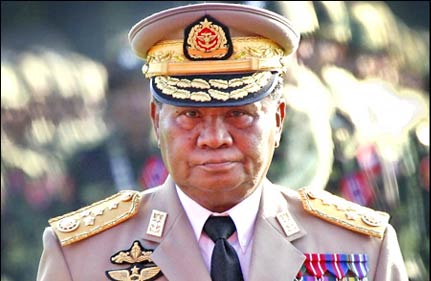
This is a headlines report on the continued crisis in Myanmar, following the February 21 coup by the military that has launched the nation into civil war. The junta is attempting to transition to a legitimate permanent status as the reality of govoernment in Myanmar, a reality that kills any semblance of a democratic-republican form of government. Myanmar would be a military government going forward, with the military not promising to even consider elections for at least two more years.
The question is, has the Junta won the hearts and minds of enough people to help them coercive the few who are not won over? By the headlines you will see in this report, I think it might be fair to say signs point to no on that front. Myanmar is of particular interest to me because of its testing of a theory that the technological is on the side of the small scale. Where ideational conviction meats physiological reality, will a people who reject fundamentally the authority imposed on them be able to resist the advantage of death force that near-monpolistic powers can exert against their ‘citizens?’
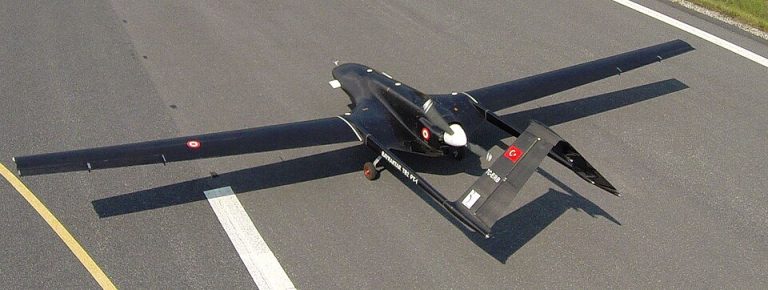
Myanmar is a key bellweather for the reality of power of tech. Does it still favor centralized large-scale systems, or can large-scale systems no longer prevent small-scale systems from, in a sense, offer a better product, be it less restricted governance that offers reasonable security and pluralistic equality or a neighborhood factory that prints you an open-sourced video console that plays open source video games for a quarter of the cost of the large-scale systems but with the same, if not more, quality.
That’s quite a leap from Myanmar to Video Gaming, and I don’t mean to undermine the tragedy befallen in Myanmar and the real cost of life and quality of living so many in that nation are suffering today. But the connections are relevant, as I see them, and speak to the signficance of this moment in human history unfolding in Myanmar. You have a highly developed people, where even the lower middle class has access to high quality, low-cost tech, and many people in that country who know already how to create self-sustainability, from defense to farming are emerging and leading even as we speak.
They have the theoretical physiological means to overcome the Junta. They have the social constructs that make it easy for them to sustain the moral undergirding such defiant social acts require. They are used to not being under so much control. They have the means to convert material to self-sustaining use being a highly technologically-developed country. Thus, they are the perfect storm for a people who dissent from being controlled by a centralized authority that commands large-scale advantages over what might resist them.
Myanmar’s army chief said on Monday that he is considering changing the country’s electoral system from the existing majoritarian model and toward a form of Proportional Representation (PR).
Snr-Gen Min Aung Hlaing, who ousted the country’s elected civilian administration in a coup on February 1, made the remarks during a meeting in Naypyitaw with members of his military council, according to state-run media.
In accordance with the country’s military-drafted 2008 Constitution, Myanmar currently uses First Past the Post (FPTP), a system in which the candidate who receives the most votes is the winner of the parliamentary seat in question.
Min Aung Hlaing said that the PR system would be “all-inclusive” and allow for constituents’ voices to be better represented.
“It is necessary to consider the Proportional Representation—PR—system with all participants. It is necessary to amend the way representatives are elected and the election system….
But she was kind-hearted, he says, and became upset when the first protester to die, a young woman called Mya Thwe Thwe Khaing, was fatally shot in the capital Nyapyitaw a week after the coup. Her death was widely mourned and triggered further anger against authorities.
With the February 1 coup, the Tatmadaw, Myanmar’s military, sought to turn back the clock on the country’s nascent democratization. They opened Pandora’s box instead. Between the nationwide protest movement paralyzing the economy and the entrenched insurgencies, challenges mount against the military.
Analyses so far have considered the likelihood of Tatmadaw defeat in the context of a unitedfront of ethnic armed organizations (EAOs). However, an underexamined element of the Myanmar crisis is how individual EAOs can exploit the chaos to inflict asymmetrical damage on the Tatmadaw. Nowhere is this more apparent than the military successes that the Kachin Independence Army (KIA) has achieved under the coup, and the KIA’s potential to…
Myanmar’s security forces have killed more than 1,000 civilians since the military ousted Aung San Suu Kyi from power six months ago, according to an advocacy group.
The country has been in turmoil since 1 February, when the armed forces seized power in a lightning coup, triggering dissent as protesters demanded a return to democracy.
Security forces responded with bloody crackdowns, using live rounds against civilians. But anti-junta mobs – some of whom have formed self-defence groups – are still taking to the streets daily in flash marches.
Assistance Association for Political Prisoners – an activist group that verifies the deaths and mass arrests under the regime – said the number of people killed by security forces reached 1,006 on Wednesday.
“As long as the military is in power they will continue to kill youths, professionals like doctors and teachers, men, women and children,” said Ko Bo Gyi, AAPP’s joint secretary.
On August 3, Myanmar’s UN representative received an alarming tip-off from one of his New York-based countrymen, who has been acting as a volunteer bodyguard: there was a plot against his life.
“I received information that someone was being paid to injure or kill me,” Kyaw Moe Tun, who denounced his country’s junta after it carried out a coup in February, told the Financial Times in a video interview.
The 52-year-old diplomat alerted the US mission to the UN and the FBI. Within three days, US authorities had arrested Phyo Hein Htut and Ye Hein Zaw, two Myanmar citizens and charged them with conspiracy to attack a foreign official.
The FBI claim the men were working with two unnamed co-conspirators, one in Thailand and one in the US, to hire and pay hitmen to attack Kyaw Moe Tun to force him to resign. The assassins were to “finish him off” if he resisted.
According to Phyo Hein Htut’s indictment, the Thailand-based co-conspirator, an arms dealer,…
Aug 21 (Reuters) – Myanmar’s military government has arrested two more local journalists, army-owned television reported on Saturday, the latest among dozens of detentions in a sweeping crackdown on the media since a Feb. 1 coup.
Sithu Aung Myint, a columnist for news site Frontier Myanmar and commentator with Voice of America radio, and Htet Htet Khine, a freelance producer for BBC Media Action, were arrested on Aug. 15, Myawaddy TV reported.
Sithu Aung Myint was charged with sedition and spreading false information that Myawaddy said was critical of the junta and had urged people to join strikes and back outlawed opposition groups.
Htet Htet Khine was accused of harbouring Sithu Aung Myint, a criminal suspect, and working for and supporting a shadow National Unity Government.
BBC Media Action said in a statement it was concerned about…
Noise from the nearby pagoda roused Aung and his family before dawn on April 9. Peering out his window, he saw dozens of soldiers shouting and cursing as they streamed onto trucks, rifles slung across their chests. It was barely 4 a.m.
The engines of dozens of vehicles revved to a start and took off, with soldiers following on foot. Suddenly, Aung’s power cut out, plunging his neighborhood in the city of Bago into darkness. Aung tried to check Facebook and WhatsApp, hoping others would know what was going on, but mobile Internet was down, too.
He hurried his wife and two young sons into a small bedroom where they huddled together, determined not to be seen or heard. The sound of gunshots pierced the silence. The family emerged briefly some 14 hours later, peeking out their windows when they heard the rowdy chatter and din of the engines return.
The soldiers were back. With them were dozens of limp, bloodied bodies, piled up on the flatbed trucks.
Van Thawng Thawng’s phone buzzed as a series of notifications lit up the screen.
“Has anyone spoken to Ezekiel?” someone was asking in the Chin Student Union Facebook group, an organisation representing students from Myanmar’s northwestern Chin state. But no one had heard from the 20-year-old union leader.
A week later, on April 14, a friend called Van Thawng Thawng to tell him that Ezekiel’s body had been found.
They believed he had been beaten to death by security forces. Van Thawng Thawng was devastated.
“I just feel really stressed and angry, especially towards the military. Because Ezekiel is not the only one,” said Van Thawng Thawng, a former Chin student who serves as the general secretary of the same union. “One of my classmates was detained and another was killed trying to save his sister at a protest, and my mom, uncle and grandmother have all died in the last few months.”
While Van Thawng Thawng’s mom passed away from a long battle with cancer, he…
The regional organisation, ASEAN, comprising Brunei, Cambodia, Indonesia, Laos, Malaysia, the Philippines, Thailand, Vietnam, Singapore, and Myanmar, promotes economic, political, and security cooperation among members.TheASEAN charterincludes democracy, good governance, and human rights, which theoretically opposes the values of the military regime.However, ASEAN also prizes their characteristic policy of non-interference into domestic politics.
The bloc is not monolithic, and so is often divided on issues, especially regarding internal issues of member states.Therefore, while well situated in the eyes of foreign nations, their structure and competencies limit their capacity to intervene directly.They may only take action if decisions are unanimous; even a view held by a majority grouping is not actionable.However, a solution is imperative as prolonged violence may spillover and thus, ASEAN’s reputation for maintaining regional peace and security.
Back FREEDOM for only $4.95/month and help the Freedomist to fight the ongoing war on liberty and defeat the establishment's SHILL press!!
Are you enjoying our content? Help support our mission to reach every American with a message of freedom through virtue, liberty, and independence! Support our team of dedicated freedom builders for as little as $4.95/month! Back the Freedomist now! Click here