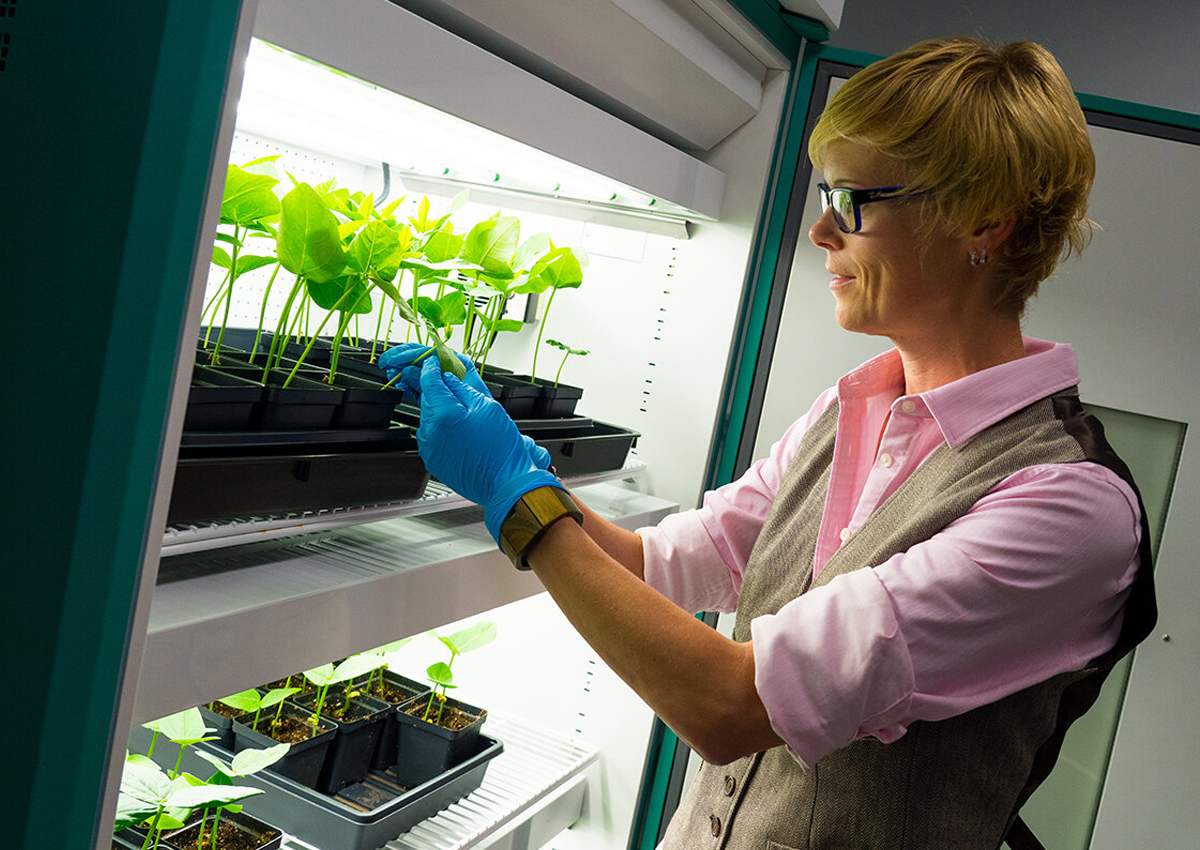
There is a new type of farming called Molecular Farming that attempts to create edible medicine in grown plants. The plants are genetically altered to create medical byproducts that do not, theoretically, alter the taste, texture, or appearance of the plant.

The process began in 1986 as an idea that was later turned into a real process, but one with very limited, and costly applications. Now, the technoque might soon pave the way for consumable medicines and vaccines to be grown in plants as needed. Plants might soon be grown to create a wide range of medicnes and vaccines that are not innate to them, but can be created by altering dna and using synthetic biology to graft characterists from multiple sources onto one host.
We have spoken before aboutt the near-future possibility of hospitals having farm towers that are dedicated to growing plants that can be used to create medicines. Molecular Farming might be the technique that might make that dream a reality soon at a local hospital near you.
The one impediment to the rapid development of this technique will be Intellectual Property Laws that will restrict the ability of individuals to make their own biomanufacturing centers, as is usually the case when we are talking about a number of emerging technologies. Open source molecular farming must be developed by Freedom-minded people if we are to hope to see the potential self and associative sustainability that these techniques can create.
Molecular Farming Means the Next Vaccine Could Be Edible and Grown in a Plant
Excerpt:
….molecular farming, a vision to have plants synthesize medications and vaccines. Using genetic engineering and synthetic biology, scientists can introduce brand new biochemical pathways into plant cells—or even whole plants—essentially turning them into single-use bioreactors.

The whole idea has a retro-futuristic science fiction vibe. First conceived of in 1986, molecular farming got its boost three decades later, when the FDA approved the first—and only—plant-derived therapeutic protein for humans to treat Gaucher disease, a genetic disorder that prevents people from breaking down fats.
But to Drs. Hugues Fausther-Bovendo and Gary Kobinger at Université Laval, Quebec and Galveston National Laboratory, Texas, respectively, we’re just getting started. In a new perspective article published last week in Science, the duo argues that plants have long been an overlooked resource for biomanufacturing.