There is a price to be paid for time, and sometimes that price is paid in what we sacrifice for expediency when it comes to food. The ramifications of our preferential actions may not be readily appreciated until you consider what is happening to the people that grow and raise the building blocks of all these reductions of food prepping time that our processed foods offer us in current year (which happens to be 2021 as of the writing of this article).

As we get further and further away from the farmer and our mouth, the farmer’s value receeived for the work done has been steadily going down, with various farming markets seeing decreases in value between 16 and 38 percent. Across the world, wherever people settle into suburbs, wherever suburbs emerge, soon processed food follows, and the farmer’s value is reduced, and the steps between the grown and raised food and reaching your mouth multiply so that the food you eat today after heating it up in the microwave will have parts from perhaps multiple parts of the world shipping their raw food materials to be processed in one placed, packaged in another, and shippped in many others, until it reaches your door.
I’m of course being a bit tongue in cheek when I use suburbs as the proverbial canary in the coalmine of farming, it’s far more of a comple story than that, but there is some measure of truth to what I say.
The truth is, the time we give to convenience is rarely without cost. Is the loss of the local farmer, of being your own local farmer, a cost worth paying for the convenience of existing more and more on microwabable food way past our college days?
The reliance on large-scale, highly centralized structures to deliver us our daily bread has been exposed in this age of Covid, with numerous shortages having been reported, and still being reported, in various places at various times throughout the world. Our ability to grow through hydroponics, aquaponics, converting lawns to gardens, urban gardening, has never been more fecund with possibility to meet the unique circumstances of most humans in most places, from the inner city to the frozen tundras of Wisconsin, there is a way to create local, even household, sustainability in our neccessary food resources that will cost us less economically, but will ask of us our time, time we can make events, not work, that whole families and communities can participate in.
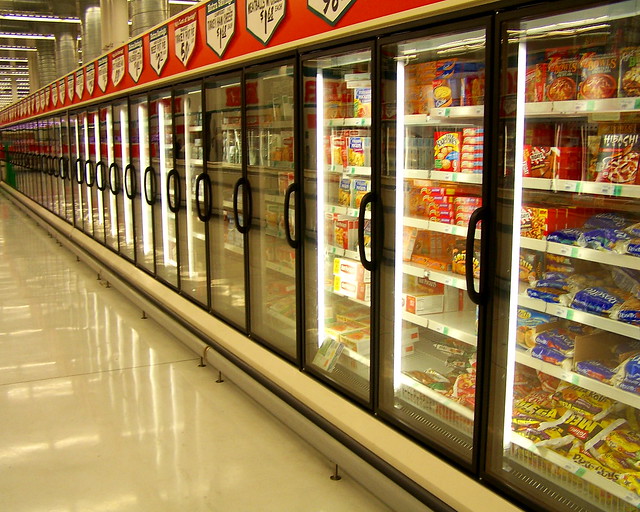
It’s only a matter of time that the frozen franks company requires you to scan your id to assure you’re not on any naughty lists that would prevent them from sellling to you, so grow your food now, and help others to do the same, and buy from local farms like so many of us are already doing, My family as well is shifting our purchases and preparing our land to grow having gone through two experimental seasons with, well, not great results, but great leasons learned. We are buying more meats and greens from local markets and farms, cooking more foods from scratch, attempting to eliminate the steps between the grown and raised and our mouths.
This isn’t a purist approach, we also still eat plenty of processed foods, though, hopefully, as we learn to grow more efficiently we can prepare our own ‘processed foods’ for convenient consumption, which is possible thanks to canning and freeze drying.
Save a farmer, eat a salad from a farmer’s market.
Farmers get smaller share of what we pay for food
From www.futurity.org
2021-09-27 14:11:51
Ida Eriksen-U. Copenhagen
Excerpt:

Farmers are getting less of what we pay for food, research from 61 countries around the world finds.
The new study in Nature Food examines how much of what consumers pay for food goes to farmers around the world, compared to the rest of the food value chain (FVC), which includes processing, packaging, transportation, and supermarket or restaurant sales beyond the farm gate.
The researchers estimate that up to 85% of the value of a food is created after a product leaves the farm.
“We can see that the farmer’s share of the food value chain in high- and middle-income countries on average has shrunk between 16 and 38% in the years between 2005 and 2015 as countries become wealthier,” explains Eva-Marie Meemken, an assistant professor at the University of Copenhagen’s department of food and resource economics and a coauthor of the study…..
Today, farmers receive on average 27% of the total consumer price for a food product, which means that the largest part of the share goes to processes after the farmer has let go of the product.