The concentration of power and authority coupled with decision-making processes not suited to specific needs and functions is leading many organizations and governments toward forms of centralized control that border on authoritarianism.
We introduce the concept of nine governments. Basically, we envision governance focused on specific areas of human action and interaction to promote human flourishing and to protect both human dignity and human rights. The present 20th century model of “one big system” (OBS) at the top of everything and everyone, is archaic and outmoded.
We have unique names for our “governments”, which give some substance to the concept, but you aren’t limited to our terms or to how we delineate corporate functions for bodies of people. The important thing is to get the concept.
The nine governments in our concept of a national regency of any people group include three primary governments; the Regium, Magisterium, and Ethnium.
The Regium is the unifying government that balances the other two, but is also accountable to both.
The Magisterium is more in accord with the Romans 13 concept of the magistrate and is limited to that role. It has three affiliated governments, however, like the balance between the Regium and the other two primary governments, it is balanced by its three governments: The Governate which is a civil government, the Civitas which is civic government, and the Agorate, which is an economic government.
The Ethnium is the government mostly associated with the Biblical concept of nationhood as a sociocultural and spiritual construct caring for the whole-person needs of individuals and maintaining a voluntary-based sociocultural standard. Its affiliate governments, which also balance itself, include the Ecclesium which is all Believers within a community or people group, the Societas which oversees social services, and the Comunis which provides the social safety net and mutual assurance through cooperation.
So we end up with a national regency, or any scale regency, consisting of some version of the Regium, Magisterium, Ethnium, Governate, Societas, Civitas, Agorate, Ecclesium, and Comunis.
Again, your breakdown may differ, as may your names. But the concept of nine governments means they balance each other, their decision-making processes fit their function, they engage all stakeholders and everyone their impact, and they work both for the good of each individual and the common good.
We also call this plurality of leadership, the idea of multiple mutually-accountable leaders who serve their constituencies as opposed to lording it over them, and with respect for human rights, human dignity, and human flourishing.
This will be presented in our new platform, Upadaria, and community governance, services and benefits, and governance will be guided by and reflect the nine governments concept. In general, if you have a community of people seeking to meet the whole person needs of individuals and the whole community, some version of governance functions related to these nine governments, by whatever name you call them, will be beneficial.
To this concept of nine governments we add the five leadership skills which must exist within each government. These include building (apostolic), guiding (pastoral), forthtelling (prophetic), proclaiming (evangelistic), and imparting (teaching).
When guided by Unity in diversity, Popular sovereignty, Democratic equality, and Rule of law, as understood from a Biblical perspective and as practiced in balance with each other, such a governance approach will optimize all functions, allow for larger scale cooperation, and not tend to concentrate power in too few hands.
The so-called “emergent church”, which has devolved to “progressive christianity”, has tended to embrace missional living. But it’s not what you think.
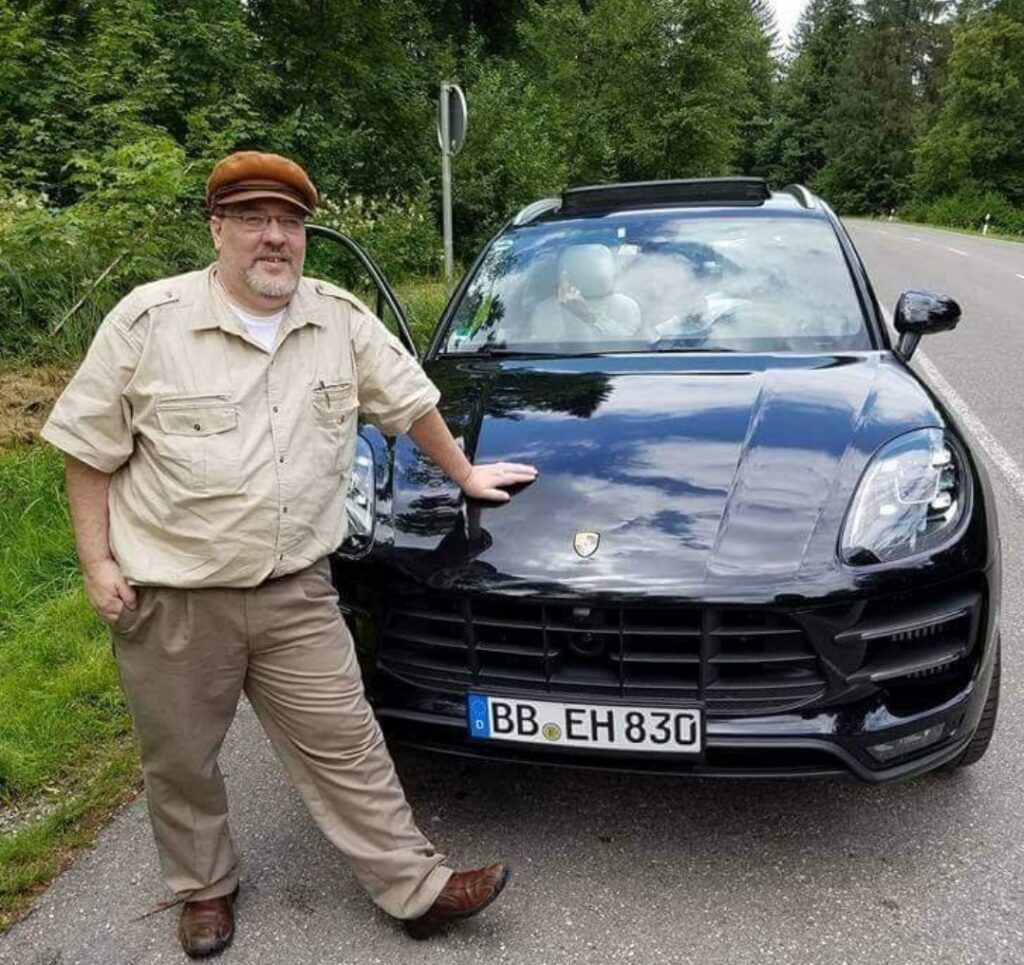
Pictured above- Freedomist Publisher and Upadaria First Founder Bill Collier, asks, “Are you living a missional life in serving the King (Yeshua) and His Kingdom or are you serving another gospel that isn’t rooted in historical Christian orthodoxy as found in the Bible?”
While real missional living that does justice to Biblical truth does include concrete things to serve others, especially people in need or crisis, it is not the absence of a simple and direct, and unapologetic, proclamation along the lines of, “repent, for the Kingdom of God is at hand.” The emergent church tends to emphasize corporate redemption, like whole families, communities, and nations, albeit mostly through good works and, increasingly, some form of centralized state handouts of benefits.
Missional living from a Biblical standpoint is absolutely “holistic” in the sense of addressing the whole person in all their needs, living out the Gospel with your whole person and in all aspects of life, and, in ADDITION to seeking the conversion of individuals, seeking the conversion and redemption of whole bodies of people, including whole national peoples.
The key aspect of missional living is a balanced application of truth (as found in Scripture, science, logic, and historic orthodoxy) with experience (spiritual encounters, personal maturation, instinct, and being led by the spirit), to serve others, proclaim the Gospel, and see both individuals and bodies of people converted and redeemed by Yeshua
The stark de-emphasis by the emergent church’s “missional living” of truth and historic orthodoxy, replaced by radical deconstructionist ideas rooted in Marx, and the shift from redemption as in salvation from sin to collective “redemption” measured in purely material terms is alarming and it isn’t missional. One cannot be said to pursue missional living and yet not be on mission with Yeshua the Christ and the Gospel of the Kingdom as it applies first and foremost to the conversion and redemption of individual human beings.
What we used to see done through physical missions, like the Alamo, is needed for us today to provide through our lives and in our homes and neighborhoods, even though the building of new missions facilities is also something that may be necessary.
In missional living we seek to proclaim the Gospel, comport ourselves ethically and morally so as to be a good example, demonstrate the effectiveness and power of the Gospel by walking in the Spirit to practice our faith, being an influence insofar as we are able through our positions and duties in society, and distributing the benefits of God’s blessings to His People for helping those in need and crisis as advocates and in providing aid and shelter.
We thereof have proclamation, exampleship, demonstration, influence, and distribution as the five core elements of missional living, with the provision that in all this we stay true to the Gospel, in accordance with God’s Word and historical Christian orthodoxy, and we keep Yeshua as the head and center of all we do.
Missional living is too much of a buzzword that is becoming watered down to something weak and pale, and, frankly, political and pro-authoritarian. It isn’t missional and it isn’t living, not as God intends living. But true missional living is to see yourself always as a missionary from the Lord to bless fellow Christians, your inner circle of friends and family, the lost, and your community, with attention to mental, emotional, physical, and spiritual health in alignment with God’s standards of righteousness and justice rooted in grace, truth, and love.
History is a process that takes centuries to cycle through the phases of life for a civilization that is allowed to run its natural course. The last days of one civilization are often accompanied by the new dawn of other national peoples and whole civilizations, which emerge from within or from outside that old civilization even as it is in its final stages.
Basically we propose and foresee that a new dawn is here for a new spiritual nation as the vanguard of a new civilization
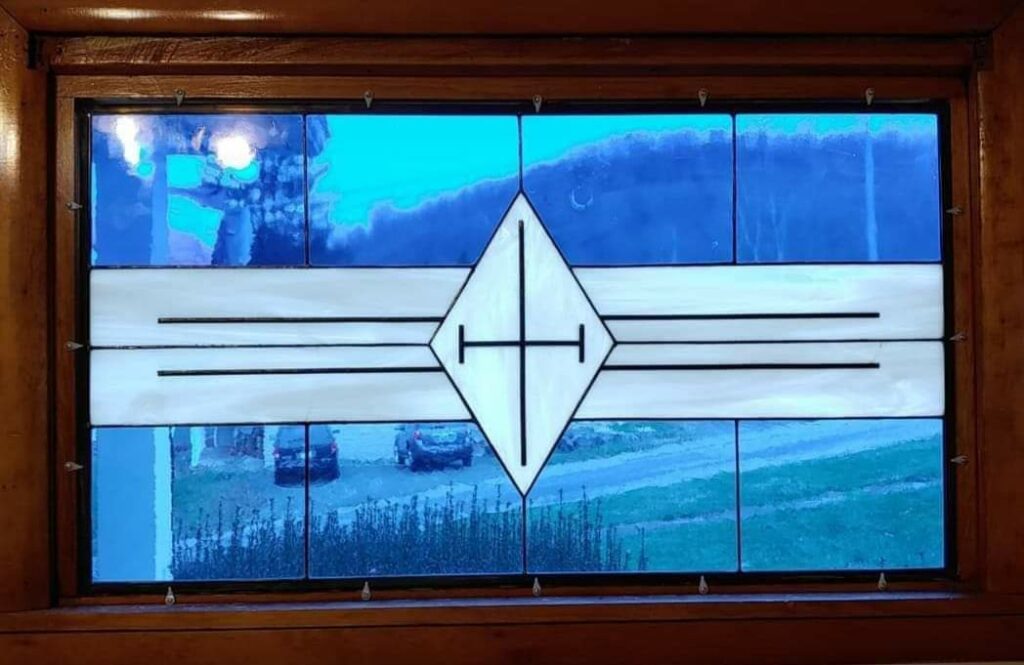
Pictured above, the banner for a new “spiritual nation” that is the vanguard people of this new civilization, a nation that transcends race, ancestry, and even geography and that welcomes people of every kindred and race on the basis of Christian love.
Our concern is Western Civilization. While some count Western Civilization as going all the way back to Greece, and others to right after the Roman Empire ended in the West, we tend to count it as beginning in the 700’s as the older Germanic tribal civilization, which had invaded the Western Roman Empire, was finally falling before the paradigms that would become Western Civilization.
This is the cycle of history. Just as today we foresee a new dawn, so too was it in the Roman Empire by the 300’s. In the West, after a period of darkness and chaos, the new civilization took root as Western Civilization.
In reality, Western Civilization, while it’s progenitors, among whom Charlemagne, fancied themselves direct heirs of Rome, was a hybridization of the Germanic and Classical Civilizations that produced something fundamentally different than them.
We have a civilization that is over 1200 years old, it is long in the tooth as it were. And that civilization, like every other, has an expiration date and is going into its final phases with a senility and crankiness that is not at all surprising. All the symptoms of civilizational decline are there: moral depravity, disavowal of family, low birth rates, authoritarianism, corruption, and all the rest.
Western Civilization is simply old and decrepit but refuses to go away quietly and gracefully. It’s attempts to bring in new energy take a form of refusing anything from the past and resorting to social experiments and untested novel theories that can only be instituted by force.
This seems bad. But it’s not all bad, if you focus on the other thing that happens when an old civilization is dying: the seeds of a new civilization usually begun to take root. And this is an exciting time! The new civilization almost always RESTORES the very ancient truths and virtues that the old civilization is trying to bury.
For those who imagine they are going to restore Western Civilization, the truth is, even if they persist in this attempted restoration, they are really sowing the seeds of a new civilization.
When we disconnect our loyalties from the facile and symbolic and reconnect them to the substance of ancient truth and sacred blueprints, we determine that we are living in the age of a new dawn, not the era of decline and ruin. However, this is only true if we transfer our energy from trying to revive a dying civilization to building a new civilization based on a revival of ancient and and sacred truth.
When Classical Civilization fell in the whole Roman Empire there was the West and the East. The East transitioned peacefully, relative to the West, to a new civilization, called the Byzantine, which lasted around 1000 years before being artificially snuffed out by the Islamic hordes. But the Western Empire saw no such transition. It simply collapsed and entered a sort of inter-regnum dominated by a fractious and also dying Germanic civilization for some 300 plus years.
In America and Europe, cradles of Western Civilization, the path forward looks like two choices: collapse into chaos and a new dark ages or transition to the new civilization peacefully.
The new civilization in our estimation is greater than the sum of its parts but its parts are the Hebrew, Classical, Germanic, and Western Civilizations, albeit instead of being located solely in “the West”, it will be located, here and there, all over the world. Using the core ideals of the preceding four civilizations, which are Unity in diversity (Western), Popular sovereignty (Germanic), Democratic equality (Classical), and Rule of law (Hebrew), we call this the UPaDaRian (Upadarian) Civilization.
In essence the new civilization is destined to revive the core ideals of the previous four and to do so in a balanced and harmonious manner that is rooted in the ancient and sacred and yet entirely and uniquely modern in its approach and application.
We live in two separate possibilities, the era of decline leading to a new dark age or the era of a new dawn leading to a revival of ancient and sacred truths and a human flourishing such as has never been seen before.
Woke. It’s really not a good word in today’s vernacular as it really means anything but woke. Like the SA under Hitler with their “Germany Awake” slogan, “woke” is the clarion call of totalitarianism. Woke means you buy into the delusional myths and bogeyman fears as well as the totalitarian solutions to these fake or histrionic problems.
We are witnessing the creation of a woke wasteland, especially in the schools, colleges and universities, so-called “press”, and in sports and entertainment. The woke ideology of bogeymen, gender-bending, faux “justice”, and, now, “outcome equity”, is driving an agenda of intolerance. You may not care about or even want to hear about the woke cancel culture, but it is coming for you. Saying things like “silence is violence”, the woke cancel culture warriors demand that you loudly support them and participate in all their actions or get canceled.
The culture and institutions of this country are being turned against the people who live here who never imagined they would see a day when, for instance, merely being white makes you racist and merely loving our Bill of Rights gets you on the government’s suspect list.
There is a solution, but it’s not to be found on becoming a lone prepper waiting for the zombie invasion or even in winning the next election. The solution is to build freedom unilaterally but not alone. The solution is found in something no less than a new form and adoption of “nationhood” wherein the “nation” isn’t a race or a country but a spiritual identity that reflects shared beliefs, values, and convictions.
This may seem a bit counter-intuitive because for many nationality is basically a combination of citizenship, as in being an American, ethnicity based on ancestry, or “race”, like being a person of color or a white person.
And, you might ask, “what does me choosing a nationality that isn’t my ethnicity, race, or citizenship have to do with building freedom?”
Nationality, when understood in the proper light of ancient blueprints, offers three tangible ways to build freedom: it offers easy organic cohesiveness with lots of people you don’t personally know but who you can trust, it offers a mindset for building freedom that defends your mind from the pollution of constant propaganda, and it offers the supernatural provision that only comes to and through “nations whose God is the Lord.”
When you adopt a new form of nationhood based on a spiritual nation, a nation whose God is the Lord and who ideals and principles reflect your own Christian convictions, you take the first steps toward unilaterally building freedom in your life in a way not even the woke brigades can penetrate.
Nationhood, as a shared identity and way of life that connects you with many other people, is the best way to overcome the constant pressure to conform and it is the only practical way larger groups of people can easily cooperate and connect for mutual benefit without relying on top-down systems of control.
Put another way, if you love America, as in the founding principles of freedom with liberty and justice for all but all within a more socially conservative and Judeo-Christian worldview, then chances are what we offer in terms of nationhood is actually exactly what you need.
There’s a lot to this. There is an entire framework and blueprint for an entire new civilizational paradigm with detailed prescriptions and ideas, worked out through decades of research and experience, inspired by some rather interesting and, some might say, supernatural encounters from whence a massive vision emerged.
The Bible says, “blessed is the nation whose God is the Lord”, and therein lies the heart of the matter. A nation is not a race, it’s not limited to your biological ancestors, and it’s definitely not based on citizenship or your political state. A nation is something spiritual, it reflects an identity one adopts as both an extension of themselves and as something they willingly share with others.
When you know your spiritual nationality has certain ideals, principles, and practices that reflect core beliefs, values, and convictions, you have the means of keeping garbage out of your head. You also have a way to connect with others and build meaningful ways to experience real freedom together.
In the woke wasteland you are either an oppressor or oppressed but the solution is always the same: let the woke brigades, their leaders, and their paymasters run your life with an iron grip. By literally choosing a new form of nationhood, with no past, you step out of your designated role of servitude as either a penitent oppressor or powerless victim of oppression.
We can begin a process that ends as whole new major sociocultural and socioeconomic structures and institutions emerge, from the web to your neighborhood, all outside the influence or control of the woke brigades. We can determine our future and not let these totalitarian loons choose it for us!
An Intentional, Free, and Pluralistic Clustered Housing Development and Missionary and Refugee Support Hub
A Upo Hub Community is envisioned as a collaborative development between a Upadarian Branch Society (part of the international NGO), a local Upadarian Chapter Community or Group, and participating entities such as mutual benefit corporations, businesses, and ministries.
Palmanova, Udine, Italy. An exemplary fortification project of its time was laid down in 1593, it provides a visual model for what a Upo Hub Community might look like, albeit the center would likely contain a Castle.
We will introduce the concept in general terms and then describe the specific nomenclature we use that is specific to our Upadarian brand identity, which allows people to easily ascertain whether a project or clustered living arrangement is related to Upadarian standards and norms or not.
Please note, the repetition of terms, where we explain them multiple times, is an importation methodology that isn’t common in the West. Our purpose is to help the audience internalize the meanings and application of these terms which we know are conceptually novel to them.
The description of these familial and fraternal groupings, from households to the household group and household community, apply specifically to a Upo Community or Upo Hub Community, which is a residential community. But they also apply generally to distributed forms of these groupings or to single residential spaces.
In other words, a Upadarian household group can exist without any cluster housing and may gather at common facility, akin to a lodge. A larger Upadarian household community may have a larger facility akin to a small community center. There may however be an extended homestead with some members of a larger household community living in site but with most using the extended homestead as their common meeting place. The scope of this essay is the Upo Hub Community as a residential community.
Unlike many intentional communities, a Upo Hub Community is intended to welcome a diversity of residents and users of its commercial or ministry spaces. The aim is to emulate a free and pluralistic society while also meeting the specific needs of ethnic Upadarians and Christians in general for a clustered housing arrangement consistent with the extended multi-family household model.
Pictured above, Alupka, Crimea. Vorontsov Palace is at the bottom of the picture. Imagine the citadel and castle at the bottom as a core and the whole distributed town above as the rest of a Upo Hub Community.
Clustered housing is a housing development in which the core ownership is based on some form of organic cohesiveness among its members. Clustered living is where people of a similar sociocultural and religious or ethnic, or all of the above, backgrounds connect and collaborate for mutual support and profit. Neither clustered housing nor clustered living are exclusionary to the outside world, the concept of a free and pluralistic society also being essential to these concepts.
We use the concept of organic cohesiveness for clustered living and clustered housing. This is a natural, organic, knitting together of hearts and lives around a shared identity rooted in common beliefs, and convictions and directed toward common goals or a shared purpose.
Organic cohesiveness is basically a shared identity based on ideas, not race or ancestry or anything else, that allows a group of people to have very close unity of action without the need for strong, hierarchical systems of control.
Through organic cohesiveness we can develop large-scale support systems and governance that won’t become top-down, controlling, or too hierarchical. Without organic cohesiveness, however, a clustered living and/or housing arrangement is virtually impossible.
Another important aspect of a Hub Community is that it is a hub for supporting a larger community group, or chapter entity, like an area chapter, or regional chapter, or for some other purpose, like hosting a larger housing area with many refugees. A Upo Community is exactly like a Upo Hub Community, but it isn’t a support Hub, its sole purpose is to provide clustered housing and clustered living to ethnic Upadarians and to Christians and to provide lower cost, sustainable, and quality housing to the public.
Most all Upo Hub Communities will offer and perform a missionary role to the service area of their chapter entity and support and aid anyone who wishes to practice missional living on order to be an effective witness and influence for Yeshua.
These Hub Communities will also house refugees and provide emergency or traditional housing in the event of a disaster or in the case where a Peer or a subscriber faces a serious crisis. Providing refuge to refugees, for ourselves, to our subscribers, and to the local population is essential to our core national mandates.
Things like emergency preparedness, mutual safety and security, crisis management, and legal advocacy for human rights, are elements of fulfilling the refuge mandate. A Upo Hub Community would have services and facilities to support these things.
Finally, while Upo Communities will spring up autonomously as people use the Upadarian concepts as well as our blueprints and frameworks to organize themselves, a Upo Hub Community is an “official” development of a chapter group, chapter community, chapter organization, Branch Society, or the International NGO. Generally, Upo Hub Communities will contain some facilities for the larger chapter entity they serve and which are accessible to all Peers of Upadaria, to all subscribers to our web 3.0 platform, and to the public.
With the exeption of special hubs for administration or for housing larger numbers of refugees who require a more secure environment (e.g. political and/religious asylees), Upo Hubs and Upo Communities are not exclusionary and will all model a free and pluralistic society of equals.
A free and pluralistic society of equals is based on a broad concept of freedom rooted in virtue (especially civic virtues like tolerance and respect), liberty (based on a universal understanding of the original spirit and intent of the Bill of Rights, including human dignity, human rights, and human flourishing), and independency (self-sustainability, mutual self-reliance, and material independence). This encompasses everyone of every race, religion, culture, creed, ethnicity, or what have you on the broadest grounds of mutual respect and tolerance.
As with everything else we present, these ideas and concepts can, and we hope will, be used by many different groups of people with their own form of organic cohesiveness but also within a broader movement to build private communities that are pluralistic in nature.
As we build Upo Communities or Upo Hub Communities, we will at the same time be emulating and providing for clustered housing/living through organic cohesiveness, creating places of refuge for Christians and others in crisis, and emulating in the real world a truly free and pluralistic society of equals.
The heart of a Upo Hub Community is the heart of what we refer to as our “spiritual nation”, the multi-family extended household, or household community, of around 120 “peers.” Peers in our lingo are people who have freely adopted the Upadarian nationality as their ethnic identity and the Upadarian lifestyle and governance discipline as their way of life.
(We say this often- anyone who chooses, between themselves and God, to adopt and utilize our 17 Biblical Protocols of Spiritual Nationhood to fulfill God’s best and God’s Scroll of Destiny for their lives is a Peer of Upadaria, they do not have to buy anything or join anything!)
The extended multi-family household model is basically around 120 adults formed as one larger extended household community consisting of around 5 smaller groups that consist of clusters of 3-5 households.
As we define it, households, the core of the extended multi-family household community, are nuclear families with attached single adults, live-in staff, dependent adult, or hosted refugees which include asylees and people in crisis.
The multi-family extended household, or household community, consists both of these households (nuclear family with dependents and attached single adults), groups of these households, and unattached single adults who are not part of a household. This concept of attached single adults will be explained as it is one of the key innovations of our model.
Let’s start with the household in our model. According to this model a household is centered around a nuclear family but also any dependent adults, like grandparents or people being cared for as refugees (asylees and people in crisis), any live-in staff, and any attached single adults. This concept of attached single adults is important and will require some explanation.
Attached single adults are single men and women who may be adult children or any adult who are considered to be within the care of the household, even of they don’t live in the household residence. Our architecture, however, is designed to provide single apartments for Peers as attached single adults that are actually part of an extended residence, called the homestead.
In the culture of Upadaria, as a spiritual Christian nation, as in many others, single adults are IDEALLY connected to a nuclear family for support and care and eventually they get married to form their own household with their spouse. Whether a couple has children or not, they can both form a household and even host or care for attached single adults.
A “householder” in our model is a Peer who is part of a single household. If they are married, they form the core of a nuclear family and if they are single they are attached to a nuclear family. Not all Peers would be householders, and while this is encouraged and supported, it is never mandatory. To be as clear as possible: a householder physically lives within the homestead of a household and is an active member who participated in the household.
Everyone within the household in our view is the family and is treated as family, with the “freeholders”, the primary married couple, being cheif stewards and guides who care for the whole. Everyone within the whole household community, however, is the extended family and we believe extended families of around 120 adults should cluster together and jointly own a stake in the property of the extended family while also owning their own property and wealth.
This is a major departure from the atomized and anemic Western “family”, which could be one person! Our “family” is, by religious conviction, around 120 adults clustered together as best they can. We believe such families need space exclusively owned by themselves in some form and which should exclusively benefit that family in the same way a house for a Western “family” serves that family unit.
Note also, we are always for our way of life, not against others. Our concept of family is not the only concept, we don’t demand or wish to force anyone to adopt our concept and we don’t disrespect families that don’t meet our definition of family.
A married couple, male and female, is the ideal center of family in our community, but we respect that others have different ideas and beliefs and we also recognize that to them their ideal is also valid. Even in our housing policies, those who adhere to other family models, whether out of conviction or because they feel they were born with certain traits, are always welcome and accepted within our communities.
This is not a controlling relationship. Single adults are fully sovereign people of equal status as Peers to any married person. The purpose of this arrangement is twofold- it gives the attached single adult more support and it also increases the overall support to the nuclear family.
Nobody will force even a Peer of our spiritual nation or our Society to become attached to a nuclear family, but the basic model for a residential Upadarian multi-family extended household is to practice this. In other words, a single adult cannot occupy a space designated for a Peer or own shares in the Peer-only mutual benefit corporation associated with the household group unless they practice this. Basically, the unattached single adult who is a Peer cannot physically live witin an extended homestead owned by a household group.
They can, however, live within an Estate in space set aside for unattached single adult Peers or for subscribers. Moreover, within the household community that owns the estate, they have equal standing.
Basically, the practice of attaching yourself as a single adult to a nuclear family and of nuclear families supporting single adults is beneficial and encouraged, but we cannot require it and still respect the sovereignty of each person.
A household group that practices clustered living would occupy an extended homestead. Again, it is only at this level that any single adults cannot live unless they are attached to a nuclear family.
Around 5 of these groups form a household community of around 120 adults, into a single cohesive clustered housing arrangement (an estate) for maximum mutual support and profit. In this estate there would be nuclear families, attached single adults, and unattached single adults.
These estates with 3-5 extended homesteads would also include commercial and residential space for the public, perhaps as many as 30 other residences and 10 commercial spaces.
To make this clearer: the household is everyone attached to a single nuclear family, while the homestead describes where they live together if they live together. The household group of 3-5 nuclear families and attached single adults refers to the body of people while the the extended homestead refers to the physical space they live within. Likewise for the household community of around 120 adults meaning the body of people and the estate meaning the space they live within.
The body of people is the real community, it can move about and even exist even if it has no single space to shared in a clustered housing arrangement. Additionally, and most importantly, for us, the whole of a family is the whole household community of around 120 adults, and nothing less, while a man and a women married for life is the very essence of the whole because they represent and embody the marriage of Christ to the church.
That being said, people who are residents of an extended homestead or a homestead community are also members of that corporate entity, even though they are not members of a household, household group, or household community. So in that sense, even the things we call the physical spaces, like the extended homestead, are bodies of people that include everyone who lives on the land and/or who is attached as a subscriber or client in some way.
We can focus now on the physical space, like the homestead, the extended homestead and the estate.
The homestead is a physical space that serves a single household, consisting of the nuclear family, dependent adults, grandparents who live on site or any other retired people or widows/widowers, live-in staff, and attached single adults. A homestead may also include a shop and it may, at the pleasure of its Freeholders (the primary married couple), include some space it leases to the public.
The extended homestead, which serves a household group, can be a cluster of homesteads distributed within a few buildings or a single building.
Our concept of an extended homestead villa is generally a single building with multiple condos or apartments clustered around common spaces and which includes spaces that might serve the general public, platform subscribers, or non-residential peers of that small extended household group. The homesteads may form wings or sections within the villa, ideally around a courtyard or commons.
Villas with wings and sections for each household, are preferred where land is precious and in urban areas, but would always be self-sustaining for food and energy, regardless of where they are. 100% basic food and energy independence is our goal, especially at the level of the whole household community.
Regardless of the style, the extended homestead of the household group is generally meant to be relatively food and energy independent through sustainable food production and energy production on site. It will also contain any shops or offices operated by its members, including residential and non-residential members. It may or may not include residential or commercial space for non-Peers, while the estate always will, at some stage of its development.
The homestead community of around 120 adults is made up of people who have a strong organic cohesiveness, they are a single extended family unit in our culture. As noted, the goal here is 100% food and energy independence.
This body of people own shares in a mutual benefit corporation that owns the housing and commercial spaces, while a separate chapter entity affiliated with a Branch Society owns any common facilities which serve its fraternal or benevolence functions. It should be noted, the individual household groups may have their own separate mutual benefit corporations that are connected to the larger estate’s mutual benefit corporation.
So a single estate for a household community of around 120 adults may contain 50 residences for members of that extended multi-family household (household community) and another 30 residences for people who aren’t part of the household community.
An estate may include extended homesteads based on a group of houses/homesteads or these villas and/or a single larger building, called an estate castle, even if it doesn’t look like a castle. It may contain a central villa with most common facilities and smaller villas and clusters of individual houses in some combination. It may be a single “castle” but also have a farmstead or one or more extended homesteads, one of which is a cluster of houses and one of which may be a single villa.
Whatever the physical structure, households will consist of the main residence and attached apartment or suites for dependent adults, live-in staff, and attached single adults. But there will also be space for retired people, widows and widowers, and unattached single adults within the larger estate.
Note also, retired older married couples, widows, and widowers would mostly have a residence within a household group’s extended homestead while unattached single adults would be housed within the estate itself but not within an extended homestead.
An estate would also include housing for subscribers, housing for the public, a market with space for members and the public, perhaps a micro-facturing facility, an open market like a flea market, a small health and fitness center, refugee housing, and space for emergency and transitional housing. An estate may also include a farmstead of a few families who specialize in some aspect of food production. These other housing options would likely be interspersed between extended homesteads, even in a single building.
This is also important because we do not want to see non-Peer residents or unattached single adult Peers living in detached isolation from the household groups or for the household groups to become insular. We won’t allow non-Peer residents to feel second class or to feel excluded from the community.
All in all, one may see around 200 total adults living permanently in an estate. This would include 120 peers, perhaps 10 or so resident subscribers, 20 or so residents who are neither Peers nor subscribers, maybe 20 or 30 non-permanent adult residents who may be people in crisis, refugees, or guests (like an air bnb) and students who are attended an on-site immersive learning experience.
It cannot be emphasized enough that our concept of clustered living is not isolationist and nor do we advocate for any form of discrimination in housing. It is really only the smallest cluster, the household group with its extended homestead, that may be exclusively “Upadarian”, though even these may lease space to subscribers and the public to offset costs. Picture a Roman Villa with the “family” living in the main area and a front area that includes shops and little apartments and you get the feel for a Upadarian Villa.
The core idea of a multi-family extended household, the household community, is the household group, formed around households. In this group, the participants treat each other as an extended family and have a familial structure that engenders mutual support. Each household group of 3-5 nuclear families and attached single adults views the well-being and success of all its members as equal to their own and each household group views the well-being of the other household groups within its household community as equal to its own.
We call the homestead for a single household a Freehold when it is based on the Upo model, or sometimes a “Upo Freehold” to make it clear we are specifically referring to a Freehold organized on the Upo model.
The household groups are called “Kinship Groups” when they are based on the Upadarian nationality. They would likely mostly be people who are either relatives by blood/marriage or extremely close friends for whom a familial bond is natural and not forced.
The Upo version of the household community is called a Shirehold, the body of around 120 adults, when it is based on the Upadarian nationality, or a household community in generic terms.
Conceptually, we have a household as the nuclear family with any attached single adults, hosted refugees, grandparents, and live-in servants, we have a cluster of households called a household group, and a cluster of household groups called a household community.
In our branding, a Upadarian household is still just a Upadarian household, they live on a homestead called a Upo Freehold. A Upadarian household group is called a Kinship Group and their extended homestead is generally called either a Villa or a Freehold Cluster.
A Upadarian household community is called a Shirehold. They live within a single building called a Shirehold Castle, with Freehold Keeps and Wings for Households and Kinship Groups, respectively. Again, these terms apply even if the building isn’t a castle in appearance. If they have a more distributed model, they are called Shirehold Estates.
The major legal structure for the homestead, extended homestead, and the estates is the mutual benefit corporation. Owned by the peers, it also owns spaces leased to non-peers.
The relationship between the mutual benefit corporation and the people leasing residential and/or commercial real estate is that of a provider to clients. The provider is the MBC which uses profits for both the mutual benefit of shareholders and for any benevolence they are committed to.
As an important aside, we should note here that the larger Upo Hub Community will likely host other mutual benefit corporations whose form of organic cohesiveness may be religious, philosophical, or ethnic.
The land is owned by an area chapter community of a Branch Society or by the Branch Society itself. These land trusts will all be connected to an international land trust operated by the international NGO as part of a plan to gain some form of sociocultural and socioeconomic standing like unto an indigenous tribal homeland or reservation.
An autonomous (as in not formally operated by a chapter entity of a Upadarian Branch Society) Upo Community may have its own land trust owned by a different entity operated by its Peers.
So then each of these estates are like little pluralistic communities, with the core being a body of people who have a form of organic cohesiveness based on being peers of our spiritual nation. But other similar estates may be operated by other groups with an organic cohesiveness based on something else.
These then are Upo Estates if they are based on a mutual benefit corporation that is owned by Peers of Upadaria, or Household Estates if they are operated by different groups based on their own version of organic cohesiveness, or Free Estates if they are operated within the broader framework of the Freedomist Declaration.
A Upo Hub Community will consist of multiple Upo Estates, Free Estates, Household Estates, a Core of some kind operated and owned by the chapter entity, and even housing developments owned by the chapter entity that serves subscribers and the public. Other areas will be set aside for special developments, like Farmsteads of a few families who specialize in food production, or natural preserves. A ratio of at least 30% of all land remaining undeveloped and protected is envisioned.
Also important to note is that these Estates are all dispersed in a hodgepodge pattern, instead of having whole sections of the Hub Community being this or that. The space for general housing offered to the public is also interspersed into the whole.
Another important note is that while conceptually and theoretically we believe people have a right to even form whole private communities based on common ancestry or race, we think it’s a terrible idea and is morally suspect. Therefore, any would-be household estate or free estate that wishes to be based on race or bloodlines wouldn’t fit into our community. For instance, a household community based on its version of Mexican culture could exist but must have cultural standards as its criterion, not bloodlines or ancestry.
Any household community wishing to apply for space within a Upo Community must agree to the basic standards of freedom with liberty and justice for all, although individuals leasing residential or commercial space only need be legally qualified under US and state law. We respect the fair housing act and also extend it to all people of all identities, orientations, and genders as they understand it.
What makes a Upo Hub Community isn’t a single entity. The land, the Core, and special facilities as well as housing and commercial development are owned by corporate entities that are in turn owned by the chapter entity and/or the Branch Society or even the NGO.
Pictured above, the inner view of a what could be Upo Estate serving a Shirehold (Upadarian household community). Here, all the houses in the foreground may be part of a Kinship Group with one of the houses being a Common House for group activities.
The Estates include the land owned by the land trust, the mutual benefit corporation which owns the buildings, and perhaps a smaller chapter entity which might own facilities for refugees, emergency and transitional housing, common facilities for Society members and subscribers, or ministry facilities.
All these entities would form an association which would provide a governance structure for the overall community. This governance structure, while not ceding any ownership to non-Peers, would accord all chapter members, subscribers within the service area, and all residents of every kind a way to give feedback and to be heard.
Of note, the Upo Community Model, in general, could be used by non-Upo developments as private but pluralistic communities. It has a broader application.
While Upo Communities may have a Central Hub of their own, with common facilities, the Hub Community will have a Core that is designed to serve the support function and this Core will tend to be a Castle and a Citadel with residences for key staff, official residences for leaders of the chapter entity, space for asylees who have become Peers, and space for students as well as spaces reserved as emergence housing for Peers who do not live on site.
The Castle is the main administrative center, the Citadel surrounds the Castle and also has facilities for Peers only, subscribers only, Christians only, and residents only. While some form of market may be placed in the outer perimeter and while special events or even public tours may allow the public in on a limited basis, for the most part this area isn’t open to the public on on a normal or more than limited basis.
Again, these are designations even if the structures aren’t modelled on some version of a Castle and a Citadel. However, ideally, and importantly, the Hub should be somewhat of a tourist attraction and have a connection to history, like a Roman fortess or a medieval Castle. The Citadel may appear to be a walled village around the Castle.
One expectation is that the Core of a Hub Community will be built first, so initially the “community” may seem rather unitary. It is important that the community quickly get beyond this initial stage.
The overall Community Development Plan should seek stakeholders and participants as early as possible so that each developer be it a business, ministry, mutual benefit corporation, or whatever, is assigned an area to begin building and develop autonomously and at the same time the Core is being built.
The Core itself may begin with the main Keep of the Castle, then each section or separate Tower/Keep for the whole, then the Citadel.
As for the whole Community, the the planning group will assign another entity, a Microshire, consisting of 3-5 Shireholds and all the other household communities and other developments within its area, a Ward to oversee. A Community may consist of 1 to 20 Wards, depending on its size. A group of 10-20 Wards within a single contiguous Upo Community would form a Precint within a City, for much larger developments.
In specific instances the actual terms used may vary, so keep in mind we are using these terms in generality. The point is that a Upo Hub Community would have a master development plan but would be developed in a decentralized way through the autonomous entities which are either constituents of the whole or clients.
Thus we have covered briefly, the concepts and basic structures and organization of a Upo Hub Community. In general, with the expectation it doesn’t have a full-fledged Core, the same ideas apply to any Upo Community down to independent Estates for a residential Upadarian Shirehold, Upo Freehold Cluster for a residential Upadarian Kinship Group, or a Upo Freehold for a single Upadarian Household.
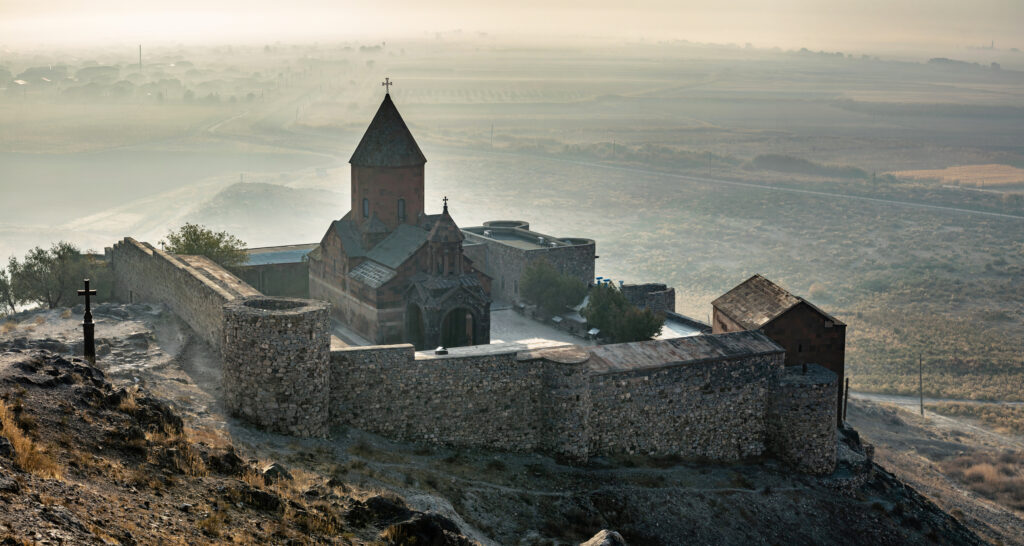
Pictured above, an Armenian Monastery, this is a good stand-in for a larger Upo Freehold, or a small Freehold Cluster or small Shirehold Castle.
These residential single Upo Freeholds, Upo Freehold Clusters, and Upo Estates, would not necessarily be hubs, but they would serve the greater community of non-residential Peers, subscribers, fellow Christians, and the the public.
All Upadarian Chapter entities and, all Peers, individual households, as well as subscribers, fellow Christians, and the public at large would be served by the Hub Community. This hub community would be the very emnodiment of a free and pluralistic society of equals and would be a safe haven and refuge for Peers of our spiritual nation and fellow Christians.
The tribalism of left and right, liberal and conservative, Democrat and Republican, people of color and white people, and the such is not the kind of tribal homogeneity we associate with healthy organic cohesiveness. In short, this kind of shallow, reactionary tribalism which has no deep basis or insights, is unhealthy for society.
We live in a diverse land. In other words, the deeper differentiation of various bodies of people is real. The problem is not that differentiation occurs in such a large land with so many people, it would take authoritarianism to corral everyone to set aside their natural differentiation. The problem is that the tribal groups are becoming shallow and gain so much of their identity from what they oppose rather than what they are for.
As outlandish and unusual as it may seem, through our coming platform, we are literally gathering people from around the world to an online community in order to create a new tribal/nationality identity. In short, we are creating a new “tribe”, one whose identity is about what they are for, in terms of beliefs, values, and convictions, as opposed to what they are against.
This is an identity one chooses that is not based on your race or ancestry or where you live or your citizenship status. It’s not something you have to join or pay for and nobody is around to tell you how to use this new tribal/national identity (we call it “spiritual nationhood”) to improve your life. And it is a positive identity that imparts, through 17 Biblical “protocols” that define its ethos, the kinds of things that will improve your quality of life.
In an age when tribal identity is all about opposition to others and to other ideas, we need a tribe that is about what it is for and that is known for tolerance and pluralism toward the world at large.
Using a Judeo-Christian understanding of and a balanced and harmonious practical application of four core ideals, we create a philosophy, a new form of spiritual nationhood, and the underpinnings of a new civilization. These ideals are Unity in diversity, Popular sovereignty, Democratic equality, and Rule of law.
The great organizing ideas of each tend to be a free and pluralistic society (Unity in diversity), diverse forms of positive spiritual nationhood (Popular sovereignty), a perfectly competitive and just market of free exchange (Democratic equality), and a commonwealth of freedom with liberty and justice for all (Rule of law).
From these Judeo-Christian ideals, ideals we consider the essence of a new civilization that will emerge organically around the world, we derived the name of our tribe/nationality and of our platform: Upadaria.
This Upadarian tribe, a gathered body of Christians from around the globe, will be known for its tolerance and pluralism, it will be known for what it is for, not what it is against. It’s not any of these existing tribes, built around hostility toward or dominance of others.
Through the coming website and platform you will learn about “Upadaria” via a fictional future history and an immersive and entertaining, as well as participatory, learning experience. You will learn ways to improve your quality of life and to serve others in the name of Jesus Christ, our Lord.
The Upadarian “nationhood” is a form of tribal identity that may provide an organic cohesiveness with others that isn’t controlling in any way, but it will also tend to promote tolerance and pluralism within the broader society.
Jingoistic, hostile, intolerant, and morally authoritarian tribal identities are tearing society apart. But this new, intentional tribe, gathered via the web, will have its own internal organic cohesiveness but will promote tolerance and pluralism within society at large.
Inspired by the US Bill of Rights, but based on the concept of inherent God-given individual spiritual sovereignty, we propose and will pursue a Freedomist Declaration as a Universal Bill of Human Rights for all human beings on the planet.
Note: this is a work in progress, so please return for updates and submit suggestions or questions to [email protected]
This “Universal Bill of Human Rights” is otherwise known as “The Freedomist Declaration.”
Preamble and Declaration of Originating Authority
We declare and affirm and we hold it to be a priori fact that every human being is created equal before God in His Image, that they are spiritually sovereign individuals who are endowed with certain inherent rights, corresponding to certain responsibilities for their own welfare and support and for the common good, such as life in peace and safety from all harms and torts, liberty as defined by these rights, and ownership of property and a freehold by which one may pursue happiness, wealth, and purpose.
Among the rights we proclaim come from God, we do not acknowledge the moral authority of any human agencies or power that curtails these rights in any substantive way except for brief and major emergencies as consented to by the population in question.
In our application of these rights and our demands for respect and justice we don’t appeal to the state or to history, we appeal to God and rely upon Him to uphold and protect our rights which He has given so that we might worship, serve, and be a witness for Christ in peace. But these rights are universal and eternal and are owned by every person so that the degree to which any entity or power, be it official or private, violates thes rights, is the degree to which it is morally legitimate or illegitimate.
Our willingness to compromise even these rights for peace or to avoid conflict or harm is expedient and it is not freely given through consent. Our specific approach, which is peaceful persuasion, and our willingness to submit to laws and regulations which violate these rights is GRACE on our part, it is not acknowledgement of any moral legitimacy as applied to the laws or regulations or the authorities which force this compliance.
Unlike the US Bill of Rights, which sought to be succinct, our Freedomist Declaration seeks to be thorough so as to minimize the opportunity for watering down or misinterpreting or otherwise denying its original spirit and intent.
A norm in law is to not include explanation or commentary of any kind. The Freedomist Declaration contains all that as a means of hedging would-be opponents of these rights from watering them down or reinterpreting them in a dishonest manner. These rights are not a “living document”, they are set in stone and are inviolable. While we recognize that the law may not yet conform to these rights, it is our intention to seek the support of our fellow citizens to make these rights a litmus test for supporting any Party, candidate, or media operation especially.
Briefly, we list these rights not as a comprehensive list but as a foundation from which we may discern other rights, so long as none of these new rights can be used to limit any other right. Rights are the basis of justice and law: to uphold these rights and to promote and provide for the infrastructure of society to enable people to freely practice these rights, while punishing evildoers and protecting those who do good, is the moral duty of any magistrate, state, or government.
Rights are applicable as the basis of all law and govern how all persons, private entities, and the state behave toward their fellow human beings. A private entity can no more act in ways that materially violate the rights of other human beings than can a criminal or the state. Through free association, any entity can choose who can participate in their community or association, provided this is made clear and does not change in future without the consent of their members, subscribers, users, or customers.
No law that violates these rights or allows their violation is legally enforceable on moral grounds. Those who enforce such laws can never be said to be following orders but make themselves criminals who are subject to criminal prosecution. Those who propose such laws are committing criminal conspiracy and those who pass such laws are guilty of organized crime.
Free association, which is also a right, is not valid if one or more parties to the association are in any way coerced or placed in a position where their only choices are acceptance and compliance or very real monetary or other harm to their rights, person, or property. Private entities in invoking free association cannot do so in a manner that leaves those who once became participants with a choice that is coercive or manipulative in nature. Moreover, when or if private entities change the terms of use or standards for participation, they must first gain the consent of their customers or users where the rights of their customers or users are to be lessened.
For instance, one cannot have a platform or social network which includes as its membership base more than 20% of the population and that begins with an open and broad standard that then changes the standard substantially and in a manner that limits the free exercise of rights within the community more tightly than was before the standard without gaining consent from those participants.
This consent must be gained through a third party, independent referendum of users who ratify the changes by a 60% plus majority.
All this is meant to say: our rights apply to all persons and entities of every kind and only through our freewill association, which we can later modify, can these rights be limited. To violate these rights is a crime whether the perpetrators are governments, individuals, or private entities. The old saying that the US Bill of Rights only limits government does not apply: respect for the rights of others is for us the basis of law for everyone and every kind of entity.
The purpose of society is to perpetuate the human race, to protect our rights, and to produce offspring who are most of the time raised by their own biological parents, their mother and father, and to ensure that the basic fractal of human society, the nuclear family attached to an extended family, is the favored sociocultural arrangement.
This statement does not mean the government must ensure certain types of families and freewill associations or domestic arrangements are the only legally allowed structures. It does acknowledge that government cannot proactively undermine these structures and that in any land where the Electors give their consent laws and policies favoring the nuclear and extended family and children tending to be raised by their own mother and father, whether biological or adopt, may be enacted.
Generally speaking, we acknowledge that a society that does not tend to produce offspring raised by their own biological or adopted mother and father will tend to surrender and lose its rights and become unstable.
Rights are not the goal, they are the means to the goal, which is a happy, healthy, peaceful, safe, and prosperous society of free people who may worship and serve God if they choose but who would neither be compelled to do so nor practically presented from freely and openly doing so. Any laws which tend to prohibit the exercise and practices of the historic “Christian”, or any other peaceful, faith must necessarily be considered illegitimate.
The four core ideals which are the ideational foundation of these rights include Unity in diversity, Popular sovereignty, Democratic equality, and Rule of law. We hold these ideals in balance with one another and base our understanding of them on Romans 12 and other Biblical principles. These ideals are the basis of our civic virtue and provide an ideational framework for good governance.
Among our rights, we list and will explain:
1. Free speech
Whatever is not a tort, the individual has a right to say, and to hinder this speech through any act of coercion or threat or to discriminate for any reason on this basis is a tort.
With the exception of private clubs and religious groups and for jobs in which the employee or contractoe is the speaker or representative of that entity, no entity may make the private speech of an individual the basis of employment or discrimination of any kind.
While it is true the image of an entity can be tarnished through the speech of its agents or employees, the universal standard of non-discrimination is such that all entities have the same hazard. The need to protect free speech is the greatest need in this case and the public will be aware that employers cannot discriminate on the basis of private speech.
2. Free association
Individuals may form such free associations as they see fit, according to their own rules, and without dictation by any third party, provided such free associations that do not have as their end a criminal enterprise or the violation or revocation of any of these rights.
They may dwell together on the basis of identifiable fraternal bonds provided the property is owned through shares and the need is held by their common entity and they may only sell shares to members of that entity.
They may form fraternal or domestic nations or tribes with their own sociocultural and socioeconomic institutions and standards, within the limits of common law and without violation of the rights of anyone, including their members, provided their membership exceeds .3% of the population in total or at least 20,000 persons.
A free association of any kind must allow for freewill covenant association and consent and may not use any means of selling memberships that would be a tort under commercial law. They may not constrain members from renouncing or discontinuing their membership and must compensate members who leave or who are removed with cause for any shares they own or property they have loaned except when the individual has practiced a tort against a fellow member under common law or criminal law.
In any free association, be it an online community or platform or club, business, or society, the terms and conditions and standards which govern membership or employment may not be changed after 36 months without the consent of the stakeholders.
Any entity deeming itself to be a mere platform or provider or communications and information services must apply these rights as its standards and may not violate these rights. Any editorial content it wishes to provide and promote to its membership, it may, to the exclusion of all others. But as the to communications and content of the membership it must be as inclusive as these rights or it must become a free association through the consent of a majority of its members.
3. Freedom of conscience
4. Freedom of religion
5. Freewill covenant association or free association
6. Self-determination
7. Freeholder rights
8. Trial by a jury of one’s peers, including jury nullification of unjust laws
9. Self-reliance
10. Self-preservation
All human beings own the inherent and magisterial authority and right to provide for the security and safety of the persons, rights, and property of themselves and those they are associated with through individual and corporate means, against all hazards, foreign or domestic, official or unofficial, by all reasonable, proportional, and legitimate means.
11. The right of Electors participate in community policing and local emergency and security through the right to keep and bear arms
12. Rights and responsibilities of citizens as clients of the magisterial authority
13. Rights and responsibilities of Electors as stakeholders of the homeland
14. Right to privacy and ownership of your own data and information
15. Right to legal counsel in all proceedings initiated by the government
16. Community sovereignty
17. Domestic nationhood and national homelands
18. Consumer’s rights to freedom from fraud and abuse
19. Worker’s rights to freedom from exploitation, fraud, and abuse
20. Equal treatment and opportunity
21. Equal access to public resources
22. Free market and economic rights
23. Right To Life
Human life begins at conception. With the exeption of choosing the life of the mother over the life of the unborn, and with the consent of the mother or her legal representative, no unborn life shall be terminated. In this case, the consenting party shall be guilty of manslaughter and the persons providing the service shall be guilty of murder. Clemency may be provided to the mother but not to the persons providing an abortion service or product.
No person who has committed murder with the proof of 2 or more witnesses or incontrovertible forensic proof shall be allowed to live lest the blood they shed be counted against the land, lest the whole land be guilty of the blood of the innocent.
Murder is the taking of innocent human life through unlawful acts or in the execution of unlawful acts, whether intentional or not.
23. Inviolability of these rights
Those who use their powers, influence, or public trust to seek to end or lessen these rights must be considered to be violators of the law. One does not have a right to agitate against the right of others. While free speech allows anyone to say they don’t like or agree with these rights, the active mobilization of resources to change the laws and make them work against these rights is not itself a right but constitutes a moral outrage against the People. As impractical as it is to make such actions “criminal” for our part we shun and disassociate with those who commit such an outrage.
CONCLUSION
Nobody is required to live by this Declaration, but we demand the right ourselves to live thereby. To prevent anyone from living out these rights in peace, or to coerce them to live them out, is a tort against humanity and God Himself.
The Puritans get a bad rap partly through myth and partly through genuine mistakes, but we believe the spirit and intent and the arc of their history show forth a path to progress toward a truly Christian society ruled by the great governing principles of the Kingdom.
The Puritans sought as pure and true a manifestation of a Christian lifestyle as possible, supported by a close network of religious, social, cultural, and economic as well as civic, civil, and magisterial structures. The individual within a nuclear family was to be supported by an extended family, the local town or township, and the whole “plantation” (colony) of neighboring towns and villages.
The Puritans, a product of their time to be sure, did not differentiate between those who chose to “make covenant” with them and those who merely lived among them but who might not share their views and convictions. This aspect of the Puritans actually led to their decline and disappearance: by making their entire program a product itself of the state, when the state turned away from its Puritan roots, the Puritan program ended.
But the desire to build a Christian society with its own material support structure is still a viable dream even in this day and age. The means of obtaining that have broadened and no longer require, or justify, the use of a state and its coercive agency to implement. Legal structures such as a faternal benefit society, a land trust, mutual benefit corporations, mutual assurance funds, cooperatives, credit unions, and clubs are all based solely on freewill participatory and involve no coercion and no intolerance toward others.
The vision of the Upadarian Society of America (a planned Christian fraternal benefit and missionary society) is in part inspired by and is the in the direct spiritual lineage and continuation of the Puritan dream, which was to create a materially self-sustaining Christian society. Unlike the Puritans, the plan and design of the Upadarian Society of America is to do all of this through freewill participation and within a larger decentralized framework of governance, including a plurality of leadership, egalitarian structures, and autonomous local chapter communities.
Abandoned are the legalistic traits, but not abandoned is the desire for purity in faith and virtues that nurture life and happiness.
The Upadarian Society of America will more or less, in its design, themes, and structure, resemble in spirit something akin to an indigenous tribe, with Upadarians being patriotic Americans who adopt a shared, intentional nationality based on a way of living and common purpose embraced freely by its Peers. In some ways, Upadarians represent a continuation and modern evolution of the Puritan Tribe, as it were. (Though we cannot forget our strong roots in William Penn’s vision.)
(Note- the Upadarian nationality is intentional and global, Christians of any race or ancestry and of any denomination can adopt this nationality without joining any Upadarian Society.)
This idea represents a scaled-up version of a distributed intentional community of people, connected in freewill participatory association for mutual benefit and to achieve shared goals, namely to promote and practice Christian kinship for obtaining real financial and material independence, to practice missional living and support a holistic world missions effort, and to both provide refuge for ourselves and to fellow Christians and others in crisis.
In practical terms, participation in this Society will provide a more extensive nationwide support structure for Christians pursuing material independency within a decentralized and egalitarian structure that supports, as opposed to lording it over, the individual. But more than that, it continues the Puritan dream, learning from their successes and failures, for a truly Christian society that not only glorifies God but is a witness and influence to the nations.
As a Christian fraternal benefit society, with a focus on kinship, missions, and refuge, the Upadarian Society of America will enable and equip Christians of every race and denomination to be part of a Christian society, to practice independency, and to be an effective witness and influence for Jesus to other people.
In no way would this Society seek anything more than to be free to pursue its shared vision and way of life in peace through freewill participation by its Peers in a decentralized structure of mutual benefit and support.
This is a vision for a nationwide structure that will engender maximum local, autonomous developments and distributed communities that serve Peers of the Society, fellow Christians, and fellow Americans. Patriotic as Americans, sincere as Christians, the Upadarian “nation” of people will foremost seek to serve and glorify Jesus Christ and then our country, America.
During both world wars the government advertised and taught the concept of Victory Gardens. These were home gardens that would augment or replace food staples, like potatoes, vegetables, fruits, and beans, with things grown in the garden. But an improvement on this is is a Victory Garden Club, which takes the individual garden plot to a whole new level of good independence.
Food independence doesn’t mean 100% of your food is grown by you or in some mutually beneficial arrangement with other people. It means you have the capacity to meet all your basic nutrition needs through such arrangements if you need to. Instead of merely stockpiling food supplies as preppers do, through the expansion of the Victory Garden to a Victory Garden Club you can always be assured of a self-sustaining food supply.
Basically, the way this works is you have a local network of people. Some are good at gardening. Some have land. Some have money. When anyone contributes some units of value, called Shares, based on either land, time, expertise, money, equipment, or supplies, or some combination thereof, they get a proportional share of the final product.
If you are good at gardening but don’t have land or have land but don’t do gardening, if you have time but not money, or money but not time, you can still participate in a VGC, Victory Garden Club. A VGC with, say, 120 members, and access to around 5 total acres of land, may be able to grow enough food, conceivably, to feed 500 families at any given time.
First, the participants get shares of food bssed on their investment, then the excess may be sold, portions may be canned or preserved and stored, and portions may be used to charity. The proceeds from sales may be partially reinvested in the Club’s assets and provided as dividends to members.
A VGC could actually become profitable for members or, at the least, so financially self-sustaining that eventually members essentially get free food.
The goal is Food Independence. The things grown or raised or what have you are calculated, preferably in coordination with a nutritionist, to ensure the basic nutritional needs of all members could be met through things produced by the VGC. Unlike other “garden” clubs, the VGC might also include chickens for eggs and food, cows or goats for milk, a fish farm, rabbit farms, and other ways to produce meat for members.
A VGC connected to a hunting and fishing club might also supplement the dietary needs of members.
You may not use the term “Victory Garden”, perhaps you prefer “Home Farming Club” or “Food Independence Club.” We like the term “Victory Garden”, even though our version is more expansive and includes raising animals, as an homage to Americana. The Victory Gardens of World War Two, for instance, played a major role in sustaining our population in the battle to end the Nazi scourge.
Here is an example. The Upadarian Society of America is planned as a fraternal benefit society with a focus on Christian kinship, missional living, and providing refuge for ourselves and other fellow Christians in crisis. At the very local chapter level, a Microshire of around 500 members, we plan a Victory Garden Network of 3-5 Clubs that also includes a few sponsored Farmsteads for larger-scale food production.
The aim of the VGN is to produce all the basic food staples plus natural medicinal products within assets owned by the VGN. Additionally, a cafeteria which exclusively serves food produced by the VGN would provide low cost meals to members, including prepared meals for Common Houses (our version of a lodge) where members gather for common meals, free food to people in need, and food ar regular prices to the public as a means of reaching financial self-sustainability.
This illustrates how the VGC can become adaptable and expandable. But it can begin with just a few people and grow as it goes.
The crux of this is taking concrete action at the local level to achieve Food Independence because when you don’t need to rely on the corporate mass market or the government for food and when your supply of food cannot be effected by extra-local disruptions, you are that much more materially independent. Independency is a state of not being materially dependent upon extra-local systems or any system that seeks influence and control that isn’t in your best interest.
The Victory Garden Club is a solid, workable step towards Food Independence and is in keeping with an agenda of Independency.
Willem IV- It will be necessary in our increasingly unstable and insecure future, made so by our culture’s deliberate moral and spiritual corruption, to reconsider our basic living arrangements and to consider new forms that are actually based on old forms. Namely, we must consider the necessity of building physical safe havens which can, in an emergency, provide shelter and sustenance to many people.
Call to mind the violent riots staged by such malefactors as Antifa and other radicals using “Black Lives Matter”* as their theme. Now, imagine these roving angry mobs, flung at the world through the worse lies and propaganda and/or through actual outrages, becoming so much more the norm that your community’s likelihood of encountering them becomes high.
(*Black Lives Matter as a concept should be disconnected from some violent authoritarian radical groups using that as their brand.)
The era of insecurity that follows the era of hubris and decadence must necessarily accompany the latter stages of a dying culture within a dying civilization. And the culture of this country as well as the entire Western Civilization are dying. We have collectively sowed to the wind and we will all collectively reap the whirlwind UNLESS we manage to physically remove ourselves from the path of this looming catastrophic storm.
The past is future. When we consider the way the people in earlier days tackled their era of insecurity, we find the monasteries of the 5th and 6th centuries and of the 10th and 11th centuries providing a model which can inspire us right now.
This doesn’t mean we need to build all male religious orders based on vows of poverty and then cloister together behind walls for safety from the barbaric environment beyond. The more important idea of the monastery is that it is a relatively compact, secure, materially self-sustaining facility that could and did provide shelter for far more people than the number who lived there permanently. The monastery preserved the elements of culture which it bore and propagated and which became the seeds of what would eventually become a new civilization.
Like it or not, the future will make the bizarre events of 2020-2021, which are still ongoing, seem like a slow drumming introducing a violent and overwhelming drama that is far louder and more constant in its cacophony than anything most of our living memories can recall.
The physical spaces we will need to shelter and thrive if or when the next plaque of angry rioters, the next pandemic, or the next economic downturn will in many ways be best compared to these monasteries as safe-havens managed by a small permanent community who can host many more people than themselves.
The deliberate creation of safe-haven hubs owned by some form of organically cohesive body of people, not necessarily a religious order but of the same quality, may be essential to the future survival of advanced culture.*
(*Advanced culture is predicated on the goal that all children be raised in a loving home by their own biological or adopted parents who are a married mother and father and all of whom are clustered within a larger nurturing extended family and community of trust.)
We will call a monastery-like hub an “embassy”, for our purpose it represents a sort of outpost and diplomatic mission representing the new civilization in the midst of a dying old civilization and its chaotic environment. These embassies are basically self-contained, materially self-sustaining, and more or less autonomous safe havens operated by some order connected to a larger global network.
An embassy would likely consist of a core community of people who share the same basic beliefs, values, and convictions and the same mission, both to preserve the elements of advanced culture in a barbaric environment and to provide shelter and aid to internal refugees or other refugees in a time of acute crisis. For instance, an embassy of 120 families and attached single adults might be big enough to shelter as many as 1200 families and attached single adults in a major crisis but may at any given time have twice as many refugees on site as residents.
As with many instances where we write about modern adaptations of ancient institutions and structures, the core element remains this thing we refer to as “organic cohesiveness.” The people who run and dwell in such embassies will need a strong religious and cultural homogeneity: they will need to identify with, in conviction and feeling, the same religious and cultural values and common standards as well as the same mission.
The larger communities which emerge around them, whether as in a physical town or just individuals who may subscribe to their emergency/crisis management and assurance services, may indeed embody pluralism. In fact, this is ideal. A closed community that is too homogeneous is bound to become insular and become a ‘Dead Sea” community.
Even our concept of an advanced culture is not a basis of extending aid pluralistic mutual respect. While it is indeed our conviction that this is the proper basis of culture, we are also convinced it must be strictly voluntary. We choose this culture, we do not impose it. We preserve it through our own freewill participation alone, our only demand from society being to let us worship and serve our God in peace.
But as to these embassies, unlike other forms of clustered housing we propose, their residents/managers must have a high degree of organic cohesiveness in order to fulfill their role and maintain unity without recourse to top-down control and rigid hierarchies. People working together in these embassies will become unified in action through a selection process aimed at identifying people who have the same core beliefs and values rather than through a hierarchical system of top-down control and coercion.
But the physical facilities must be capable of enclosing a larger population of refugees within a private area that can be secured in the event a mob or something like that makes an unruly appearance.
The proliferation of these embassies, by whatever name you want to call them, will ensure the greatest number of people safety in times of local catastrophic crisis. As noted, the circle of care is not limited to those who embrace the same religious and cultural beliefs and values. The circle of care is extended on the basis of a free and pluralistic sociocultural community of equals as our vision for the larger diverse society in which we live.
In legal terms, the only ways to create these embassies are through the mutual benefit corporation or a cooperative religious order. Eventually, one can hope, law catches up with that which is necessary and technically possible in our era. A legal structure to allow such embassies, again, by whatever name you prefer, is lacking, but legal structures used in combination are not.
If a group of Jewish, Christian, or other religious and/or sociocultural groups with inherent organic cohesiveness were to form a combine and build such an embassy they could serve themselves and their neighbors. We do not endorse race-based combines as the basis of these embassies because adopted beliefs and freewill participation transcend merely who your ancestors were or your skin color
Race-based combines of people may exacerbate tensions and lead to hostility. Also, organic cohesiveness is about the heart embracing similar things out of free will, it should be open to anyone on the basis of shared beliefs, values, and convictions, and only that.
Our basic proposition is that the modern adaptation of the monastery, what we call an embassy, will become a necessity in the coming decades. While the builders and managers, as well as permanent residents, of such embassies must have a strong organic cohesiveness, their circle of care is extended on the basis of a free and pluralistic society of equals.
Back FREEDOM for only $4.95/month and help the Freedomist to fight the ongoing war on liberty and defeat the establishment's SHILL press!!
Are you enjoying our content? Help support our mission to reach every American with a message of freedom through virtue, liberty, and independence! Support our team of dedicated freedom builders for as little as $4.95/month! Back the Freedomist now! Click here