September 14, 2026

Politics

The Arsenal of Democracy’s Empty Shelves


By and large, your humble author has largely avoided talking about the war between Russia and Ukraine that entered its “hot” phase in late-February of 2022, even though it actually began in 2014 – but don’t expect the mainstream media to talk about that too much.

Breaking the “Fourth Wall” a bit, I hate politics, in general. I have strong and rigid opinions, and I am not going to beat dead horses here. So, don’t expect political moralizing. I write about the technical aspects of defense and security – which are completely agnostic, until some idiot decides that their juice is better than that of the other guy across the river.

Moving on.

There has been a toxic fantasy in the West – especially in the United States – that has arisen in the aftermath of the collapse of the Soviet Union. Caused by a putrid mix of slavish devotion among politicians desperately wanting to look good to voters, greedy and craven defense contractors, and military officers looking to pad their retirement portfolios, all of whom adopted the idiotic ideas of Alvin Toffler – a subject we recently touched on – have combined to weaken the military capacity of the West to levels of incapacity not seen in nearly a century.

After the Cold War ended, there was a frenetic rush to make the “butter not guns” dream a reality. The problem? Like all utopian concepts – especially when backed up with “sciency”-looking graphs and densely written tomes filled chock-full of techy-sounding wording – that paradigm drove Western defense infrastructure over a cliff.

What all of those lofty hopes-n-dreams deliberately ignored, was that with the demise of the Soviet Union, the only enemies left – so it seemed – were minor states, like Serbia and Iraq, and later, against various terrorist groups like al-Qaeda as part of the grandiosely-named “Global War On Terror” (GWOT).

The idea of a massive conventional war in Europe was completely dismissed as a thing of the past. In this, to be both as blunt and honest as possible, was a level of “genteel racism” that has run as an undercurrent (and occasionally not so “under”) through the psyches of the Western establishment, as massive conventional wars happened throughout those parts of the world the mainstream media chooses to ignore since the Cold War’s end.

As a result, modern (i.e., 21st Century) Western militaries are barely-hollow shadows of their former selves.

This particular Emperor’s lack of clothing became starkly apparently in 2022, as the war goaded into being by the “globalists”, led by Joe Biden’s autopen, revealed that there were no functional reserves of war material in the West, including within the United States…while Russia – with only minimal support from its allies – was able to easily maintain operations throughout the war, hysterical screaming from the Western/globalists.

Destroyed military vehicles on a street in Bucha, Ukraine, near Kiev, during Russia’s invasion of Ukraine, March 1, 2022. Picture by REUTERS/Serhii Nuzhnenko. CCA/2.0 Generic.

In a word – the “Arsenal of Democracy” is empty. And deliberately so, in the interests of greed.


Coming Clean

NATO Secretary General Mark Rutte delivered a sobering assessment to London audiences in the summer of 2025: “Russia produces in three months what the whole of NATO produces in a year” when it comes to ammunition. The statistic encapsulates one of the most profound strategic failures of the post-Cold War era – the systematic dismantling of the Western defense industrial base just as the world was returning to the high-intensity conflicts it was designed to support.

Three years after Russia’s invasion, Ukraine remains critically short of the basic ammunition needed to defend itself, despite receiving unprecedented Western military aid. The shortage isn’t due to lack of political will or financial resources, but something far more fundamental: the West simply cannot produce enough ammunition to meet the demands of modern warfare. What was once called the “Arsenal of Democracy” now struggles to keep a single medium-sized conflict adequately supplied.


The Arithmetic of Industrial Failure

The numbers tell a stark story. Before the war, [the United States produced approximately 14,400 artillery shells per month – roughly 180,000 annually. Europe’s combined capacity for 155mm shells ranged between 240,000 and 300,000 pieces per year. Meanwhile, Ukrainian forces were using 2,000 to 9,000 shells daily in active combat – potentially consuming the entire annual Western production in a few weeks.

Russia, by contrast, ramped up to producing an estimated 4.5 million shells annually by 2024, supplemented by millions more from North Korean stockpiles. This allowed Russian forces to fire 10,000 to 80,000 shells daily at their peak – a volume that Western production couldn’t match even if every shell manufactured went directly to Ukraine.

The disparity became operationally decisive. The fall of Avdiivka in early 2024 occurred not because Ukrainian defenders lacked courage or competence, but because they lacked ammunition. Soldiers withdrew from a town successfully defended since 2014 simply because they couldn’t shoot back.


How We Got Here

The post-Cold War “peace dividend” seemed reasonable at the time. With the Soviet threat vanished and conflicts shifting to counterinsurgency operations requiring precision strikes rather than mass artillery barrages, Western militaries optimized for quality over quantity. Production lines closed, skilled workers retired, and long-standing supply chains atrophied. The assumption was simple: modern warfare would be short, decisive, and technology-intensive. Artillery-intensive wars of attrition belonged to history.

A recent academic analysis suggests deeper psychological factors at work. Western militaries over-invested in visible weapon systems – aircraft carriers, stealth fighters, advanced tanks – that could be showcased to signal military strength while neglecting unglamorous stockpiles of shells and propellant. Like luxury goods in consumer markets, these prestige platforms satisfied political and institutional desires for status while the mundane logistics of sustained warfare received inadequate investment.

The result: warehouses that looked full but weren’t. NATO’s own ammunition stockpile targets, set in 2014 to sustain a 30-day high-intensity conflict, were never met. When Ukraine needed support, European nations were drawing from “half full or lower warehouses,” as Admiral Rob Bauer, chair of NATO’s Military Committee, acknowledged in 2023.


The Response: Too Little, Too Slow

Western nations recognized the crisis early but struggled to respond effectively. The U.S. has invested billions to increase 155mm production from 14,400 monthly shells to 40,000, with targets of 100,000 by late 2025. Europe set goals of 2 million rounds annually by 2025. These are impressive percentage increases but remain inadequate to both supply Ukraine and replenish depleted Western stocks.

The problem isn’t just production capacity – it’s the entire industrial ecosystem. Explosive production, particularly TNT, relies on a single Polish factory. Specialized steel alloys, propellants, and precision components all face similar bottlenecks. It takes two to four years to establish new production lines for high-intensity military equipment, meaning decisions made today affect battlefield realities years hence.

European efforts face additional complications. The EU produces around 170 different weapon systems, with 16 different types of 155mm shells alone. Ukrainian soldiers call this diversity a “zoo,” forced to constantly recalibrate equipment as they receive incompatible ammunition batches. National defense industries resist standardization to protect domestic jobs and capabilities, creating inefficiency precisely when efficiency matters most.

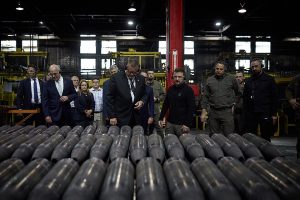
President of Ukraine Volodymyr Zelenskyy visiting the Scranton Army Ammunition Plant in Pennsylvania, where components for artillery and mortar shells are produced. Public Domain.


Strategic Implications

The ammunition shortage reveals uncomfortable truths about Western military power. The United States and its allies possess overwhelming technological superiority in sensors, precision weapons, and command systems. They can see the battlefield better, strike more accurately, and coordinate more effectively than any adversary. But modern wars – particularly wars of territorial conquest – still require mass. You cannot hold ground with satellites nor break fortified lines with precision alone, when the enemy can absorb losses and continue fighting.

Russia’s production advantage doesn’t reflect superior technology or efficiency – Russian shells are cruder and less accurate than Western equivalents. It reflects strategic focus and industrial mobilization. Russia maintained cold-war-era production capacity, kept supply chains intact, and prioritized ammunition stockpiling even when it seemed unnecessary. When war came, this unglamorous preparation proved decisive.

The West now races to rebuild what it spent thirty years dismantling. New contracts are signed, facilities are being constructed, and production targets are set. But wars don’t wait for industrial mobilization. Ukraine needs ammunition today, not in 2026 or 2027. Every month of shortfall translates to lost territory, casualties that might have been prevented, and strategic opportunities foreclosed.

The hollowed-out “Arsenal of Democracy” stands as testament to what happens when military planning assumes future wars will resemble preferred scenarios rather than probable realities. Preparing for the wars we want to fight while ignoring the wars we might have to fight is a luxury no serious power can afford – a lesson being relearned at terrible cost on Ukrainian soil.

Russia bet long, and is succeeding. The West bet short, and is failing….It’s as simple as that. The only good thing is that we are not in direct combat with Russia.

Yet.

I can’t tell you how we’re going to fix this, because there are entrenched actors in the West – in government, industry and military departments – absolutely unwilling to bend the knee to take the actions needed to fix the problems outlined above.

Not least, when the United States Army can only seem to feed its troops lima beans and toast on Thanksgiving.

Take note.


The Freedomist — Keeping Watch, So You Don’t Have To


freedomist banner


Continuing Disintegration – No Honor Among Thieves


The more things change, the more they stay the same. As we wrote back in January of 2025, the various terror, drug and insurgent groups in Afghanistan – not content with fighting each other- are poking what they see as a weakened tiger, in the form of a highly dysfunctional Pakistan.

With Pakistan clearly on the losing end of it brief – and terrifying – war with India in May, the various jihadist groups north of the Hindu Kush smelled weakness, and a steady intensification of attacks have been quietly growing, an intensification largely ignored in the wider world press, in favor of Israel v. Hamas, Ukraine v. Russia, and the “Gen-Z – Discord” revolts erupting in states from Morocco to Nepal.


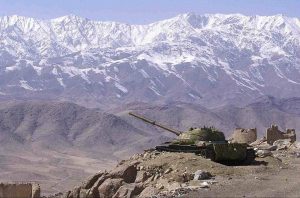
Landscape of Afghanistan, with the Hindu Kush range in the background, and a T-62 MBT in the foreground. 2007 Public Domain photo by WikimediaUser davric.


The 2025 Afghanistan-Pakistan conflict that erupted in earnest in mid-October represents more than routine border skirmishes—it signals a fundamental breakdown in one of the region’s most consequential relationships. After decades of Pakistan supporting the Taliban as a strategic asset, Islamabad now finds itself conducting airstrikes on Kabul and trading artillery fire with forces it helped bring to power. The bitter irony is impossible to miss: Pakistan’s former proxy has become its primary security threat.


October Escalation

The immediate catalyst arrived on October 8, when militants killed 11 Pakistani military personnel, including a lieutenant colonel and a major, in Khyber Pakhtunkhwa’s Orakzai district. Pakistan’s response crossed a critical threshold — airstrikes not merely in border regions but directly on Kabul, Afghanistan’s capital, targeting Tehreek-e-Taliban Pakistan (TTP) leadership allegedly sheltering under Afghan Taliban protection.

The fighting that followed was the deadliest since the Taliban returned to power in August 2021. Pakistan claims it killed over 200 Afghan Taliban and allied fighters while losing 23 soldiers. Afghanistan counters that it killed 58 Pakistani soldiers while suffering only nine deaths. Both sides claim to have captured or destroyed dozens of enemy border posts. Independent verification remains impossible, but satellite imagery and verified drone footage confirm significant damage to Afghan military compounds.

The violence forced a 48-hour ceasefire brokered by Saudi Arabia and Qatar, but border crossings remain closed and tensions simmer. More ominously, Pakistan has adopted what analysts call a “new normal” doctrine: any attack originating from Afghan territory will trigger immediate cross-border retaliation, regardless of diplomatic cost.


The TTP: Pakistan’s Self-Inflicted Wound

At the conflict’s core lies the Tehreek-e-Taliban Pakistan, formed in 2007 during America’s “War on Terror.” The TTP seeks to overthrow Pakistan’s government and impose strict Islamic law, demanding the release of imprisoned members and reversal of tribal area integration into Khyber Pakhtunkhwa province. What makes the TTP particularly dangerous is its ideological alignment with and sanctuary provided by the Afghan Taliban.

The numbers tell a grim story. The TTP conducted at least 600 attacks against Pakistani security forces in the past year alone, with 2025 activity already exceeding all of 2024. August 2025 marked the deadliest month of militant violence in over a decade, with 194 people killed and more than 200 injured in 143 attacks across Pakistan. Pakistani security force casualties in 2025 are on track to be the highest ever recorded.

The TTP has evolved beyond “simple insurgency“, threatening to expand attacks against Pakistan’s military-run commercial enterprises — fertilizer companies, construction firms, housing authorities, and banks. This represents a significant escalation, potentially bringing urban areas into a conflict previously concentrated in remote borderlands.

Briefly, a “simple insurgency”, as defined by Google’s AI search tool can be described as:


A simple insurgency is an armed rebellion by a small, lightly armed group against a more powerful, established government. Because they lack the strength for a conventional military conflict, insurgents use guerrilla tactics and rely heavily on the support of the local population to challenge the ruling authority. [1, 2, 3, 4]
Key characteristics of a simple insurgency • Asymmetric warfare: A simple insurgency is defined by the severe mismatch in power between the rebels and the government they oppose. Insurgents, often called guerrillas, compensate by using hit-and-run attacks and avoiding direct, pitched battles.
• Irregular tactics: Instead of traditional army maneuvers, insurgents employ a variety of tactics to weaken the government and increase their own control and legitimacy. These can include:

• Guerrilla warfare
• Terrorism
• Sabotage
• Propaganda and recruitment

• Protracted struggle: Insurgencies are not short, decisive conflicts. They are typically protracted political-military campaigns designed to outlast and exhaust the government through persistent, focused violence.
• Focus on the population: The ultimate target of an insurgency is not just the government’s military forces, but the loyalty and support of the civilian population. Gaining popular support is the key to success. Insurgents accomplish this by:

• Providing services
• Discrediting the government
• Gaining the trust of people in rural or remote areas

• Driven by ideology: While some rebellions are a temporary revolt, insurgencies are often fueled by a powerful ideology that explains people’s grievances and provides a vision for a new political order. This can include motivations based on religion, ethnicity, or politics.
• Control over territory: Unlike purely terrorist organizations, a central objective of an insurgency is to control resources and eventually establish an alternative government in a particular area. [1, 4, 5, 6, 7, 8]

Simple insurgency vs. other conflicts • Revolution: A simple insurgency lacks the widespread, organized structure of a full-scale revolution, even though it may share the same goal of overthrowing the government.
• Coup d’état: This is different from a coup, which involves a swift, elite-driven seizure of government power. An insurgency, by contrast, relies on a protracted struggle for popular support and does not have the resources for a quick power grab.
• Terrorist organization: While insurgents may use terrorism as a tactic, their ultimate goal is different from purely terrorist groups. Insurgents aim to build an alternative government and control territory, while terrorist groups typically do not. [6, 7, 9, 10, 11]

Notes:

[1] https://en.wikipedia.org/wiki/Insurgency
[2] https://www.vocabulary.com/dictionary/insurgency
[3] https://www.vocabulary.com/dictionary/insurgence
[4] https://www.armyupress.army.mil/Journals/Military-Review/English-Edition-Archives/mr-history-page/MR-Categories-Guerrilla-Warfare/Daskal-1986/
[5] https://www.trngcmd.marines.mil/Portals/207/Docs/TBS/B4S5499XQ%20CounterInsurgency%20Measures.pdf?ver=2016-02-10-114636-310
[6] https://www.cia.gov/readingroom/docs/CIA-RDP87T01127R000300220005-6.pdf
[7] https://www.merriam-webster.com/dictionary/insurgency
[8] https://publications.armywarcollege.edu/News/Display/Article/3890242/the-challenges-of-next-gen-insurgency/
[9] https://2009-2017.state.gov/documents/organization/119629.pdf
[10] https://www.ebsco.com/research-starters/military-history-and-science/revolt-rebellion-and-insurgency
[11] https://www.britannica.com/topic/insurgency


Pakistan’s Strategic Blunder

The current crisis exposes Pakistan’s catastrophic series of miscalculations of the past. For decades, Islamabad’s military establishment pursued “strategic depth” in Afghanistan as a hedge against India, covertly supporting the Taliban even while publicly backing America’s War on Terror. The assumption was straightforward: a friendly Taliban government in Kabul would provide strategic advantage while ending Pakistan’s internal insurgency problems once American forces departed, by exerting control over the “Pakistani Taliban”.

Of course, the opposite promptly occurred. Since the Taliban’s 2021 return to power after the Biden Administration’s disastrous withdrawal from the country, the TTP has grown dramatically more capable and aggressive. Pakistan now faces an irreconcilable contradiction: the same Afghan Taliban it supported for decades now provides sanctuary to Pakistan’s primary internal security threat. Having invested enormous political and military capital ensuring Taliban victory, Pakistan cannot effectively pressure Kabul to eliminate TTP sanctuaries without undermining its broader regional objectives.

When Pakistan demands the Taliban eliminate TTP safe havens, Kabul either urges negotiations with the militants or claims inability to control them—sometimes both simultaneously. Pakistan’s leadership increasingly believes the Taliban deliberately weaponizes the TTP, either to expand Taliban-style governance into Pakistan or enable an allied Pashtun entity to control northwestern Pakistan.


The India Factor

Complicating matters further, India has pursued normalization with the Taliban precisely as Pakistan-Taliban relations deteriorate, almost certainly for that very reason – the brutal calculus of ‘realpolitik‘ usually wins, afterall. Afghanistan’s Foreign Minister Amir Khan Muttaqi visited New Delhi in October, with India announcing plans to reopen its Kabul embassy and calling the meeting “an important step in advancing our ties.” For Pakistan, which fought its brief war with India in May, this Taliban-India rapprochement represents strategic encirclement…which India well-understands.

Pakistan’s military noted the “serious provocation” of the fighting’s timing during Muttaqi’s India visit. The rhetorical shift is stark: Pakistan no longer refers to the Taliban as an “interim government” but as a “regime,” questioning their legitimacy to govern and calling for a more inclusive Afghan government. This represents a near-suspension of diplomatic ties between former allies.


Strategic Dead Ends

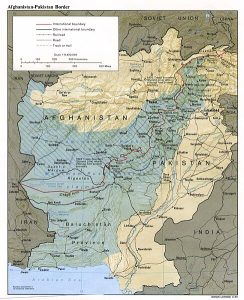
Pakistan’s options appear uniformly unattractive. Military operations against the TTP face fundamental constraints: the militants operate from Afghan territory beyond Pakistani reach, enjoy Afghan Taliban protection, and can simply retreat across the disputed Durand Line border when pressured. Localized clearing operations may temporarily displace militants but cannot hold territory without massive troop deployments that remain deeply unpopular among border populations.

Durand Line Border Between Afghanistan and Pakistan. CIA Image, 2007. Public Domain.

Negotiations offer no better prospects. Previous ceasefires collapsed when the TTP refused to compromise on core demands fundamentally incompatible with Pakistan’s constitutional order. The TTP’s demand for sharia law implementation and tribal area autonomy restoration cannot be reconciled with Pakistan’s governance structure. Moreover, the TTP’s track record of breaking agreements makes any deal inherently unstable.

Cross-border airstrikes — Pakistan’s current approach — risk escalating into broader conflict while failing to address root causes. The strikes humiliate the Afghan Taliban publicly, potentially driving them closer to the TTP and other anti-Pakistan groups. Pakistan is adopting tactics it vehemently criticized when India employed them against Pakistan itself earlier this year—a dangerous precedent that normalizes cross-border military action in a nuclear-armed region.


Regional Implications

The conflict’s reverberations extend beyond bilateral relations. China, with massive “Belt and Road” investments in Pakistan, watches nervously as infrastructure becomes militant targets. Regional powers including Russia, Iran, and Saudi Arabia have urged restraint, recognizing that instability along the Afghanistan-Pakistan border threatens broader security. The Kremlin’s Moscow Format Consultations specifically pressed the Taliban to eliminate the TTP threat – pressures Kabul shows no inclination to heed.

Perhaps most troubling, the conflict validates Pakistan’s historical paranoia about strategic encirclement while simultaneously demonstrating how that paranoia drove the very policies that created current threats. By backing the Taliban as a hedge against India, Pakistan helped create a government that now shelters Pakistan’s most dangerous internal enemy while courting Pakistan’s primary external rival.

And this, in a nuclear-armed nation with a very shaky government.


No Good Options

As the temporary ceasefire holds precariously, at least for the moment – the fundamental problem remains unresolved: Pakistan faces an emboldened insurgency operating from sanctuary areas it cannot easily eliminate without destroying relationships it spent decades building. The Afghan Taliban, meanwhile, must balance protecting ideological allies against managing fallout from Pakistani military actions — a calculation complicated by its own limited control over remote regions and internal pressure from hardline factions…in public, at least.

History suggests leaders within the Taliban understand that Afghan governments ending up on Pakistan’s wrong side rarely survive. Yet the Taliban’s public posture suggests they believe they can continue supporting the TTP without triggering Pakistani countermeasures sufficiently severe to destabilize their regime. Whether this calculation proves correct may determine the region’s stability for years to come.

What seems certain is that Pakistan’s investment in the Taliban as a strategic asset has become a strategic liability of the first order — a cautionary tale about the dangers of relying on militant proxies as instruments of state policy. The militants Pakistan once cultivated have become the militants Pakistan can no longer control, operating from territory Pakistan helped them secure. The tragic irony would be complete if it weren’t so dangerous.

But.

The most important thing to remember in this swirling morass of barely concealed knives, is that the two main players – India and Pakistan – are both nuclear-armed powers…and no one, including them, is quite sure how steady are the hands on those launch keys.

Prepare yourself accordingly.


The Freedomist — Keeping Watch, So You Don’t Have To


Media Collusion with DNC Made Russian Collusion Hoax Possible

From the New York Times to NBC news, corporate media is being exposed as being the key catalyst of DNC agit prop aimed to dismantle the American republic from within. One such operation, the Russian Collusion Hoax, was only possible thanks to direct collusion between DNC operatives like James Comey and Adam Schiff and reporters and high-ranking executives in corporate news media.

While documents have already been released that show this collusion, new disclosures reveal now-unsealed testimonies by an FBI informant. That informant paints a picture of an FBI working hard to undermine Trump from the start of his first term. He also alleges Adam Schiff, a man he called his former “friend,” directed the FBI to leak anti-Trump information to the press, who were already prepared to unquestionably receive the leaked documents and give them credibility.

The FBI report summarizes the meeting the informant had with Schiff, stating “In this meeting, SCHIFF stated that the group would leak classified information which was derogatory to President of the United States Donald J. Trump. SCHIFF stated the information would be used to indict President TRUMP.”  

ADL Loses FBI Standing After Losing Glossary of Hate

After the Anti-Defamation League announced it would no longer be featuring its glossary of hate, the FBI announced it would no longer be partnering with the ADL. FBI Director Kash Patel declared, “This FBI won’t partner with political fronts masquerading as watchdogs.” Up until this point, the ADL has been the FBI’s resource for determining what “hate” and “extremist” groups are. On that list includes Charlie Kirk while Antifa is missing.

Comey Finally Faces the Law

Former FBI Director James Comey has officially been indicted by a grand jury. The charges are relatively minor, but both contain potential prison terms. The first is making false statements within jurisdiction of the legislative branch and the second is obstruction of congressional proceedings. Comey is scheduled to turn himself in Friday, September 26, 2025.

The charges are not the haymaker charges many were hoping, such as treason. As such, these charges could be viewed as yet another warning to the Democrats to stand down their assault on American Rule of Law lest they face criminal prosecution of haymaker charges likes treason.

Newsome, California Declare War on ICE with Anti-Mask Law

The insurrectionist state of California passed legislation intended to blunt efforts by the Trump administration to remove illegal aliens from their lands. One bill, signed into law by Gavin Newsome (D-CA), would make it illegal for Federal ICE Agents to wear masks during their operations. The move is intended to help terrorists find the agents at their homes and hurt them and their families.

The Trump administration responded defiantly through Assistant DHS Secretary Tricia McLauglin, who told the press, “Governor Gavin Newsom is fanning the flames of division, hatred, and dehumanization of our law enforcement. At a time that ICE law enforcement faces a 1,000% increase in assaults and their family members are being doxxed and targeted, the sitting Governor of California signs unconstitutional legislation that strips law enforcement of protections in a disgusting, diabolical fundraising and PR stunt. To be crystal clear: we will not abide by Newsom’s unconstitutional ban.”

Trump Admin to Ignore California’s ‘Unconstitutional’ Anti-ICE Law– slaynews.com
Source Link
Excerpt:

President Donald Trump’s administration is refusing to comply with California’s new law banning federal immigration agents from wearing face coverings during enforcement operations.

The move is setting up another direct clash between Washington and Sacramento over immigration.

California Gov. Gavin Newsom signed the so-called “No Secret Police Act” on Saturday.

The bill prohibits local and federal officers from wearing ski masks, gaiters, or other face coverings while conducting operations in the state.

The law goes into effect in January 2026.

It includes exceptions for SWAT teams and medical masks, but is aimed directly at Immigration and Customs Enforcement (ICE) and Border Patrol.

The Department of Homeland Security (DHS) quickly pushed back.

Assistant DHS Secretary Tricia McLaughlin told the Daily Caller:

“Governor Gavin Newsom is fanning the flames of division, hatred, and dehumanization of our law enforcement.

“At a time that ICE law enforcement faces a 1,000% increase in assaults and their family members are being doxxed and targeted, the sitting Governor of California signs unconstitutional legislation that strips law enforcement of protections in a disgusting, diabolical fundraising and PR stunt.

“To be crystal clear: we will not abide by Newsom’s unconstitutional ban.”

Tom Homan Accused of Being Caught on Tape Accepting Bribe, Trump Admin Accused of Covering it Up

The DNC has accused Tom Homan of accepting a bribe of $50,000 in cash to guarantee the payees get government contracts. They say the encounter was caught on video, but the Trump administration stopped the investigation. Now, the Trump administration has fired back.

Press Secretary Karoline Leavitt told reporters, “Mr. Homan never took the $50,000 you’re referring to so you should get your facts straight, number one. Number two, this was another example of the weaponization by the Biden Department of Justice against one of President Trump’s strongest and most vocal supporters in the midst of a presidential campaign. You had FBI agents going undercover to try and entrap one of the president’s top allies and supporters, someone they knew very well would be taking a government position months later. Mr. Homan did absolutely nothing wrong… The White House and the president stand by Tom Homan 100 percent because he did absolutely nothing wrong and he is a brave public servant who has done a phenomenal job on helping the president shut down the border.”

White House Spox Says Biden’s Weaponized FBI Tried to Entrap Tom Homan With Bribe; ‘He Never Took the $50,000’ › American Greatness– amgreatness.com
Source Link
Excerpt:

The White House press secretary on Monday shot down media reports accusing President Donald Trump’s border czar of accepting a $50,000 bribe from undercover FBI agents last year, telling reporters “the president stands by Tom Homan 100 percent.”

MSNBC reported on Saturday that Homan was caught on tape accepting a bag filled with the cash from federal agents as part of an undercover operation in Texas during the heat of the 2024 election.

According to the report, written by RussiaGate hoaxers Carol Leonnig and Ken Dilanian, Homan took the bribe in exchange for helping the agents win government contracts in a second Trump administration.


Biden Was Losing Cognition, Former Chief of Staff Testifies

The former Chief of Staff of former President Joe Biden, Jeff Zients, went before a congressional panel September 18, 2025 and testified that Biden became increasingly difficult to work with. More meetings were required to make final decisions and Biden increasingly found it difficult to remember names and dates and events.

Zients also testified Biden’s son, Hunter, was in on the meetings to decide who Biden should pardon. He also noted that Biden’s work availability was increasingly less and less. He did claim the Biden debate fiasco against President Trump was caused by a cold, though he could not recall ever seeing Biden react this badly, even with a cold, before.

Biden Chief of Staff Zients Suggested Need for Cognitive Exam– www.dailysignal.com
Source Link
Excerpt:

Former President Joe Biden’s White House chief of staff told a congressional panel Thursday that he asked the White House physician about a full medical and cognitive exam after Biden’s disastrous June 2024 debate with Donald Trump.

Jeff Zients is the last scheduled witness to take questions from the House Oversight and Government Reform Committee for its investigation into Biden’s fitness while he was in office. Zients said that Dr. Kevin O’Connor told him he would take the suggestion under advisement, according to a person familiar with Zients’ closed-door interview with the committee.

Zients was White House chief of staff from February 2023 to the end of Biden’s term in January 2025. He ignored reporters who peppered him with questions as he walked into the interview with the committee. He told the committee that after Biden’s poor debate performance against Trump, he thought it made sense for the president to drop out of the reelection race.

The House committee has been investigating Biden’s cognitive state and whether staff improperly used the White House autopen for major presidential actions, such as offering clemency to felons, without authorization from the president.

Zients also said the former president’s son, Hunter Biden, was involved in the pardon discussions and attended meetings on the matter, according to the person familiar with the interview. The then-president pardoned Hunter Biden, who had been convicted of tax and gun crimes.

Toffler Delenda Est


There is a cancer at the heart of the United States Armed Forces, and therefore, Western military thought, a cancer that first appeared in 1970, and slowly wormed its way into the minds within the Pentagon. Those minds, desperately seeking to rationalize the failures of relying on “logic” and statistical analysis to frontline, “real world” combat developed by Robert McNamara and his “Whiz Kids”, swiftly absorbed the writings of an academic “futurist” couple, who had never been faced with the reality of any form of military service.

The toxic influence of Alvin and Heidi Toffler on US military thinking over the past 35 years represents one of the most consequential intellectual failures in modern defense policy. Through their seductive but fundamentally flawed “waves of warfare” theory, the Tofflers provided Pentagon planners with an oversimplified framework that has repeatedly led American forces astray, contributing to strategic disasters from Somalia to Afghanistan.

This has manifested into what Colonel Michael Pietrucha, USAF (Ret.) called the “Death of Military Strategy”, an apt appelation that has – unintentionally – contributed to the skyrocketing suicide rate among both serving members of the military, as well as in the veteran community.

The Tofflers’ central premise, outlined in their 1993 book “War and Anti-War,” posited that warfare evolves through distinct “waves”, corresponding to economic development:

  • First Wave: agricultural warfare
  • Second Wave: industrial warfare
  • Third Wave: information-age warfare

However, critics noted from the beginning that “the Tofflers have suffered some critical reviews of their work, especially concerning their selective historical perspective.”

The Seductive Appeal of Technological Determinism

The Tofflers’ influence coincided with America’s post-Cold War search for military transformation and “the American way of war’s fascination with technology and the search for that technological ‘silver bullet’ that will deliver victory quickly and with a minimum of loss of life.” Their theory, echoing McNamara’s insistence on the superiority of logically and emotionlessly applied statistical analysis and comparison, offered Pentagon leaders exactly what they wanted to hear: that American technological superiority would render traditional military concerns obsolete.

Their ideas became particularly influential among political figures like Newt Gingrich, who called “The Third Wave” one of the “great seminal works of our time,” and among military leaders seeking to justify massive investments in information warfare capabilities. By the early 1980’s, “the Tofflers’ work had begun to influence the thinking of some influential members of the U.S. military. And by the early 1990’s, the transforming U.S. military had begun to influence the thinking of the Tofflers.”

No doubt, this has been a massive boon to the defense industry, who were suddenly handed every excuse necessary to produce all the “latest and greatest” toys, at staggering prices…like the M1301 ISV.

The Fundamental Flaws

Military analysts began identifying serious problems with Tofferian thinking. Academic critiques argued that “the Tofflers’ concepts of First, Second, and Third Wave warfare are overgeneralized and distort historical understandings of Western warfare,” urging “military leaders to reassess these theories and explore the necessity for more nuanced frameworks that better reflect the complexities of modern warfare.”

Critics noted that while the Tofflers’ “approach is fundamentally sound, it fails to address transitional forms of warfare and omits conceptual changes in warfighting introduced by Gustavus Adolphus, Napoleon Bonaparte, and others.” The theory’s rigid categorization ignored the persistent importance of geography, culture, politics, and human factors in warfare.

And those last four factors are just the tip of the iceberg. Any “theory of war” that ignores – or worse, dismisses – those factors is guaranteed to fail, every time…as recent history has amply demonstrated.

Strategic Consequences

The Toffler-influenced Revolution in Military Affairs (RMA) led to several catastrophic strategic miscalculations. The Pentagon’s obsession with “Third Wave” information warfare and precision strikes created a dangerous overconfidence in technology’s ability to solve complex political problems. This thinking directly contributed to:

  • The belief that shock and awe tactics in Iraq would create rapid political transformation
  • Underestimation of insurgent adaptability in Iraq and Afghanistan
  • Over-reliance on surveillance technology while neglecting human intelligence
  • The mistaken assumption that information dominance could substitute for adequate troop levels

Military historians noted how “RMA proponents over-emphasize the importance of technology in driving revolutionary change,” arguing that “leadership along with institutional, organizational, and intellectual initiative are equally, if not more, important than technological innovation.”

The Persistence of “First Wave” Realities

The ultimate irony of Toffler influence is how consistently “primitive” opponents have outmaneuvered America’s high-tech military. From Somali militias to Taliban fighters to Iraqi insurgents, adversaries using decidedly “First Wave” tactics – guerrilla warfare, improvised explosives, local knowledge – repeatedly frustrated America’s “Third Wave” military machine.

As one analyst observed, “It is the great equalizer, you don’t have to be big and rich to apply the kind of judo you need in information warfare. That’s why poor countries are going to go for this faster than technologically advanced countries.” The Toffler’s failed to anticipate how their own theories would be turned against American forces.

The bottom line is that in the 60 years from 1965 to 2025, the vast majority of land-based conflicts have been won by guerrilla or insurgent forces, using rudimentary uniforms, organization, weapons, vehicles, tactics, and propaganda strategies that are not far removed from World War 2. These forces – whatever their political or religious leanings – know what they want to accomplish, know their target audiences, and know how to use their available resources to maximum effect.

This is not a function of “disruptive” technologies like mini-drones or the Internet. Those are just democratized tools, all of which have countermeasures that can be quickly developed and deployed, as is now happening across the conflict zones map. Whet the Toffler’s ignored, is that technology disperses, eventually. The damning part of this, is that it was recognized as early as 1940 by professional officers of the United States Marine Corps – something the Toffler’s could have easily found, had they been doing actual “research”:

“…If marines have become accustomed to easy victories over irregulars in the past, they must now prepare themselves for the increased effort which will be necessary to insure victory in the future. The future opponent may be as well armed as they are; he will be able to concentrate a numerical superiority against, isolated detachments at the time and place he chooses; as in the past he will have a thorough knowledge of the trails, the country, and the inhabitants; and he will have the inherent ability to withstand all the natural obstacles, such as climate and disease, to a greater extent than a white man. All these natural advantages, combining primitive cunning and modern armament. will weigh heavily in the balance against the advantage of the marine forces in organization, equipment, intelligence and discipline, if a careless audacity is permitted to warp good judgment…” – FMFRP 12-15 Small Wars Manual (1940)


Screenshot of FMFRP 12-15 Small Wars Manual (1940). USMC. Public Domain.


Lasting Damage

Three and a half decades later, American military culture remains infected by Toffler-style techno-optimism. Despite repeated failures, Pentagon planning still prioritizes platform acquisition over strategic thinking, information dominance over cultural understanding, and technological solutions over political wisdom. The Tofflers provided intellectual cover for avoiding warfare’s fundamental realities, creating a generation of military leaders who confused gadgetry with strategy.

The time has come to recognize the Toffler influence for what it was: a seductive but dangerous distraction that cost American lives, squandered resources, and undermined strategic effectiveness when it mattered most.


The Freedomist — Keeping Watch, So You Don’t Have To


Kimmel Suspended, The Fallout has only begun

Jimmy Kimmel was suspended indefinitely after claiming before a studio audience that the murderer of Charlie Kirk was a MAGA person. The claim is a violation of FCC rules that prohibit licensed broadcasters like ABC from publishing known lies (for it was known by then the killer was NOT MAGA) about news event that could incite violence.

Kimmel said, “We hit some new lows over the weekend with the MAGA gang desperately trying to characterize this kid who murdered Charlie Kirk as anything other than one of them, and doing everything they can to score political points from it.”

President Trump responded to the suspension, saying, “Congratulations to ABC for finally having the courage to do what had to be done. “Kimmel has ZERO talent, and worse ratings than even Colbert, if that’s possible. That leaves Jimmy and Seth, two total losers, on Fake News NBC. Their ratings are also horrible. Do it NBC!!!”

Jimmy Kimmel pulled off the air. This is the monologue that sparked it.– mashable.com
Source Link
Excerpt:

ABC has pulled Jimmy Kimmel Live! from broadcast indefinitely. The decision comes amidst Republican criticism toward Kimmel for recent comments about right-wing commentator Charlie Kirk’s killer.

Announced on Wednesday evening, Jimmy Kimmel Live!‘s suspension came not long before filming for its next episode had been scheduled to commence. The long-running talk show’s future is now unclear, with the looming possibility that its 22-year run may come to an abrupt end.

Jimmy Kimmel Live! will be pre-empted indefinitely,” an ABC spokesperson told CNN.

The decision followed an announcement from Nexstar Media Group that its ABC-affiliated stations will not air Jimmy Kimmel Live! “for the foreseeable future,” citing objections to Kimmel’s comments on Kirk’s death.

Main

Back FREEDOM for only $4.95/month and help the Freedomist to fight the ongoing war on liberty and defeat the establishment's SHILL press!!

Are you enjoying our content? Help support our mission to reach every American with a message of freedom through virtue, liberty, and independence! Support our team of dedicated freedom builders for as little as $4.95/month! Back the Freedomist now! Click here