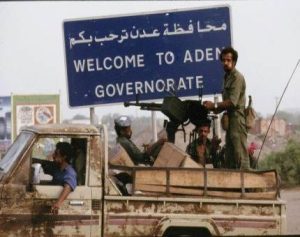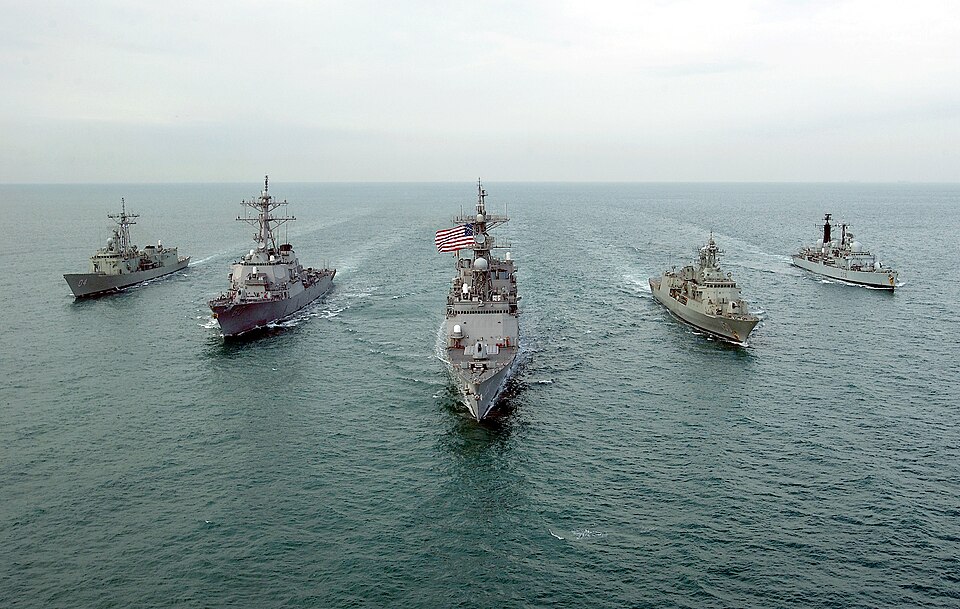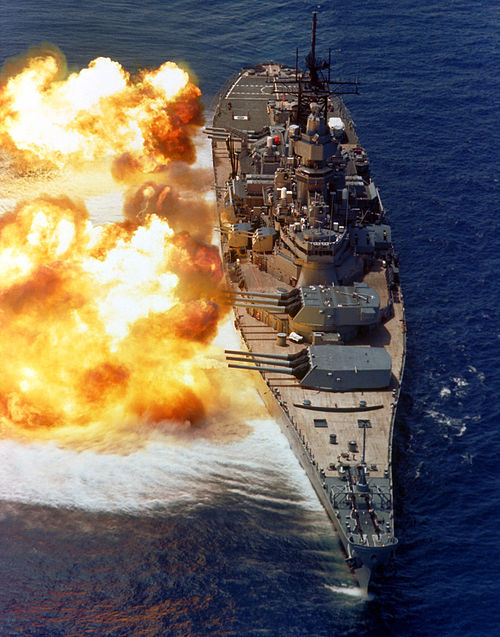
President Trump’s recent comments about potential military action against Venezuela have sent ripples through diplomatic channels and defense planning offices alike, including Congress hysterically trying to invoke the “War Powers Act“. The question isn’t whether the United States could conduct military operations against the Maduro regime — the answer to that is obviously yes. The real questions are whether we should, what it would actually cost, and whether anyone in Washington has seriously thought through what happens on Day Two.
Venezuela presents a deceptively complex military problem wrapped in what looks like a simple regime-change operation. On paper, the Venezuelan military is a sad joke. The Bolivarian National Armed Force fields Soviet-era equipment in various states of disrepair, struggles with spare parts due to sanctions, and has been hollowed out by corruption and political purges. Their Russian Su-30 fighters are mostly grounded. Their navy is a coastal defense force at best. The country’s air defense systems are…”dated”…is a charitable term. In a conventional fight, U.S. forces would achieve air superiority within hours and could strike any target in the country with impunity.
But that’s where the easy part ends.
Venezuela isn’t Iraq in 2003. It’s a country of 28 million people with a long history of guerrilla warfare, sitting on top of the world’s largest proven oil reserves — an estimated 303 billion barrels, more than Saudi Arabia. The terrain ranges from Caribbean coastline to Amazonian jungle to urban sprawl. Caracas alone has a metropolitan population of 5 million packed into a valley surrounded by mountains and barrios — sprawling hillside slums that would make Sadr City look manageable especially compared to the favelas of Rio de Janeiro.
The military operation itself would be straightforward enough: establish air superiority, conduct precision strikes on regime leadership and military infrastructure, land forces to secure key facilities. The U.S. Southern Command has surely war-gamed this scenario dozens of times. We could decapitate the Maduro regime in a matter of days, possibly hours if we caught them by surprise.
But then what?
Venezuela’s economy has been in free-fall for a decade. Hyperinflation reached 130,000 percent in 2018. Basic services are collapsing. Over 7 million Venezuelans have already fled the country — the largest refugee crisis in Latin American history. The infrastructure is crumbling, the healthcare system barely functions, and the electrical grid fails regularly. This isn’t a country where you can remove the dictator, install a friendly government, and expect things to stabilize.
More problematically, Maduro isn’t universally despised. He’s incompetent and brutal, but he’s also built a patronage network through Colombian guerrilla groups, narco-trafficking operations, and the military officer corps. The colectivos — pro-government paramilitary groups — number in the tens of thousands and are heavily armed. Unlike Iraq’s Republican Guard, which evaporated when confronted with U.S. armor, these groups would likely melt into the population and wage an extended insurgency. They know the terrain, they have local support in certain areas, and they’ve got nothing to lose.
The logistics alone should give Pentagon planners nightmares. Venezuela shares borders with Colombia, Brazil, and Guyana. Securing those borders to prevent weapons flow and insurgent safe havens would require tens of thousands of troops and cooperation from neighbors who have no interest in hosting a U.S. occupation next door. Brazil, in particular, would likely oppose military intervention strongly — they’ve got their own political complexities and don’t want American forces operating on their northern border.
Then there’s the oil question. Venezuela’s petroleum infrastructure is a disaster after years of mismanagement and underinvestment. The heavy crude requires specialized refining. Simply occupying the oil fields doesn’t mean production magically resumes. You’d need to secure the various facilities, bring in real expertise, negotiate contracts, establish security for workers — all while dealing with potential sabotage and insurgent attacks. Iraq’s oil infrastructure, which was in far better shape, took years to fully restore after 2003.
The regional implications are equally messy. Every Latin American country remembers the history of U.S. military interventions — Guatemala (1954), Dominican Republic (1965), Grenada (1983), and Panama (1989). Even governments that despise Maduro would face domestic political pressure to condemn American military action. The Organization of American States would fracture. China and Russia, both of which have significant investments in Venezuela, would use the intervention as proof of American imperialism and work to undermine any post-conflict stabilization.
And here’s the fundamental question nobody seems to want to answer: what’s the actual U.S. national security interest that justifies the cost? Yes, Maduro is a thug. Yes, Venezuelan refugees are destabilizing neighboring countries. Yes, the humanitarian crisis is real. But none of that constitutes a direct threat to American security that requires military intervention. The oil? We don’t need it — the U.S. is now a net energy exporter.
Trump’s “Crazy Gaijin” act on the world stage has genuine strategic value—keeping adversaries uncertain about American responses can deter aggression. But there’s a difference between strategic unpredictability and backing yourself into a corner where you either have to act or lose credibility. If the rhetoric about Venezuela escalates much further, Trump may find himself facing exactly that choice.
And if Trump is anything, “unpredictable” fits the descriptive bill.
The question then becomes: is this administration prepared for what an actual shooting war with Venezuela would require? Not the easy part — the invasion. The hard part — the occupation, stabilization, and reconstruction that would consume American resources and attention for a decade or more.
Based on our track record in Iraq and Afghanistan, foolish optimism about anyone’s ability to honestly answer that question before the first shots are fired is not something that we should trust in.
The Freedomist — Keeping Watch, So You Don’t Have To
The United States relies on overseas trade. That is a fundamental underpinning of the national economy, because as wide an array of resources that North America possesses, there is not enough to satisfy our needs here. In order to ensure that type of trade, the United States has relied on a strong military naval establishment for nearly 150 years.
Navies, however, are expensive. Eye-wateringly expensive. But, spending money is better than spending lives…at least, that is the calculus of rational people, and the elected public servants in Washington, DC are rarely categorized as “rational”.
President Trump recently made headlines discussing a return to building battleships, sparking debate about naval strategy and ship types. But that conversation missed a more fundamental problem: it doesn’t matter what kinds of ships we want to build if we’ve lost the ability to build them at all. And the cold and brutal truth is that America’s shipbuilding industry — once the “arsenal of democracy“, that launched thousands of ships in World War II — has collapsed to the point where China’s shipbuilding capacity is 232 times greater than ours.
Let that sink in. Not twice as large. Not ten times. Two hundred and thirty-two times. According to leaked Office of Naval Intelligence briefing slides, Chinese shipyards have a manufacturing capacity of roughly 23.25 million tons, while U.S. shipyards manage less than 100,000 tons. One Chinese state-owned company — China State Shipbuilding Corporation — built more commercial vessels by tonnage in 2024 than the entire U.S. shipbuilding industry has produced since the end of World War II.
Josef Stalin’s supposed quip about “quantity has a quality all its own”, whether he actually said that or not, does in fact apply here.
Meanwhile, Communist China’s People’s Liberation Army Navy currently operates approximately 370 warships — the largest navy in the world. The Pentagon projects China’s fleet will grow to 395 ships by 2025 and 435 ships by 2030. That’s an increase of 65 ships in just five years, while America’s fleet shrinks. (How good those Chinese ships really are, of course, is still a matter of debate.)
The Navy has a goal of reaching 381 manned ships plus 134 unmanned vessels by the early 2040s. But the Congressional Budget Office estimates achieving this will cost roughly $40 billion per year — about 46% more than historical averages, and double what Congress has actually appropriated over the past five years. The total price tag: $1 trillion. At least.
Why We Can’t Build Ships
The problem isn’t just money. America’s shipbuilding industrial base has been gutted. We currently have only four active public shipyards compared to China’s 35 major sites. The United States accounts for just 0.11% of global commercial shipbuilding. In terms of gross tonnage, China, South Korea, and Japan build over 90% of the world’s ships. America builds 0.2%.
It really does seem that there is a quiet war going on against US shipbuilding.
APL Post-Panamax container ships PRESIDENT TRUMAN and PRESIDENT KENNEDY near San Francisco, CA. NOAA Image ID: line0534. Public Domain.
The Government Accountability Office recently testified that despite nearly doubling the shipbuilding budget over the past two decades, the Navy has failed to increase its fleet size as planned. Ships are consistently delivered late, over budget, and with reduced capabilities. The Navy’s new Constellation-class frigates, for example, started construction before completing ship design — violating basic shipbuilding practices — and are now expected to be at least three years late.
The Government Accountability Office (GAO) has made 90 recommendations since 2015 to improve Navy shipbuilding. The Navy has fully or partially addressed only 30. Sixty recommendations remain unaddressed.
The workforce crisis compounds the problem. Shipyards rely on decades-old physical infrastructure. Skilled workers are retiring faster than they can be replaced. Finding enough qualified workers remains the biggest barrier to expanding production, even if Congress appropriated more money tomorrow.
What This Means for War at Sea
Communist China’s shipbuilding advantage isn’t just about peacetime fleet size. In a sustained conflict—the kind of war we’d face in defending Taiwan — China could repair damaged vessels and construct replacements far faster than the United States, at least in theory. The Navy faces a significant maintenance backlog and would struggle to quickly repair battle-damaged ships, let alone build new ones.
Former Navy Secretary Carlos Del Toro told Congress in 2023 that a single Mainland Chinese shipyard had more construction capacity than the entire U.S. industry. This isn’t a matter of China having marginally better capabilities — they’ve achieved total dominance in an industry that’s fundamental to naval power.
The Navy is exploring alternatives: unmanned vessels, utilizing allied shipyards in Japan and South Korea, and smaller surface combatants. These might help, as a band-aide. But they are merely workarounds for a fundamental problem — America destroyed its shipbuilding industry through decades of deindustrialization and offshoring, and China methodically built theirs up.
So much for “guns into butter” and “plowshares into swords“.
The hard reality is that naval supremacy requires industrial capacity, and we’ve ceded that capacity to our primary strategic competitor. All the strategy papers and fleet architecture studies in the world don’t matter if we can’t actually build the ships those plans require. China understands this. We’re still figuring it out…And by the time we do, China’s 435-ship navy may already control the Western Pacific.
Everyone thinks battleships are cool, right? Certain movies not withstanding…
When President Trump floated the idea of bringing battleships back into service, the response from the defense establishment was immediate and predictable: eye-rolling dismissal, lectures about “modern warfare,” and knowing smirks about nostalgia trumping strategy. The think tanks and defense journals lined up to explain why this was obviously impossible, impractical, and frankly embarrassing.
There’s just one problem: The more you examine the actual arguments, the less absurd it looks.
Starting with what Trump actually said, stripped of the mockery:
Modern aluminum-hulled ships are vulnerable
Guns deliver cost-effective firepower compared to missiles
Battleships demonstrated effectiveness in the Gulf War
China’s naval expansion requires a response that doesn’t bankrupt us
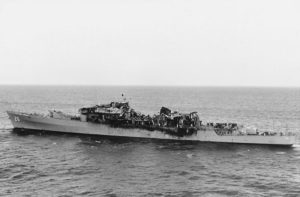
The “experts” immediately attacked the metallurgy comment. Aluminum doesn’t just “melt,” they said. Trump doesn’t understand materials science. Except…the U.S. Navy already agrees with him. That’s why the Arleigh Burke-class destroyers went back to steel construction in the 1980’s. The Falklands War demonstrated aluminum’s vulnerability to fire and battle damage. The 1975 USS Belknap fire drove the lesson home. The Navy’s own design decisions validate exactly what Trump said—they just said it in engineering reports instead of campaign speeches.
USS Belknap (CG 26) after her collision with USS John F. Kennedy on 22 November 1975. US Navy photo. Public Domain.
Now consider the actual strategic problem Western – and American – navies face: magazine depth. The Red Sea operations against Houthi drones and missiles – consuming an estimated 30 years of firing in 15 months – exposed a critical vulnerability. Modern warships carry perhaps 90-100 missiles in their Vertical Launch Systems. Once those are expended, you’re done. You’ve got a $2 billion ship that has to withdraw from the fight and spend weeks getting rearmed for anything beyond self-defense. Each Standard missile costs between $2 and 4 million. Each Tomahawk missile runs $1 and 2 million. Between October 2023 and January 2025, Navy ships fired more defensive missiles than they used in the three decades following Desert Storm. You can burn through a quarter-billion dollars in magazine capacity in a single extended engagement.
A Tactical Tomahawk Cruise Missile launches from the forward missile deck aboard the guided-missile destroyer USS Farragut (DDG 99) during a 2009 training exercise. US Navy photo by Mass Communication Specialist 1st Class L. Stiles. Public Domain.
Compare that to a 16-inch gun. Modern rocket-assisted projectiles could reach 100+ miles. Each round costs perhaps $25,000-50,000 in current dollars — less if produced at scale. An Iowa-class battleship could fire continuously for days, delivering devastating effects on shore targets, surface vessels, and even providing anti-air support with proximity-fused rounds. The math isn’t even close: sustained and accurate fires at a fraction of the cost.
But what about vulnerability to modern anti-ship missiles? This is where the analysis gets interesting. An Iowa’s belt armor is 12 inches of hardened steel, backed by layers of structural protection. Modern anti-ship missiles — whether subsonic Harpoons or supersonic weapons — typically carry 500-1,000 pound warheads designed to penetrate thin aluminum hulls and detonate inside the ship. Against 12 inches of armor backed by compartmentalized protection? The penetration physics are completely different. Modern warheads might crater the armor, but achieving a “mission kill” (rendering a vehicle or craft unable to continue fighting, without destroying it) becomes vastly more difficult.
Survivability
Three cases are instructive in the vulnerability argument:
When HMS Sheffieldwas sunk during the Falklands War in 1982, the warhead of the French EXOCET missile that struck it failed to detonate, or at least did not detonate properly. Instead, the Sheffield was irreparably damaged by fires started by the missile’s still-running engine
In 1987, the USS Stark was attacked and struck by a pair of Iraqi-fired EXOCET missles. Prompt damage control prevented the ship sinking. After extensive repairs, the Stark returned to service, before being decommissioned in 1999, and scrapped in 2006.
Later, in early 1988, the USS Samuel B. Roberts struck an Iranian naval mine while escorting a civilian oil tanker. The severely damaged ship required around a full year off repairs, before being returned to service.
In 2000, the USS Cole was mined in the harbor of Aden, Yemen (although framed as a “bombing”, the actual attack counts as a ‘mining’ in naval terminology) by Al Qaeda terrorists using a massive IED. Following extensive repairs, the Cole remains in naval service.
In contrast, there is the USS Nevada (BB-36), the only battleship on the list. Severely damaged by relentless air attack at Pearl Harbor, the Nevada was repaired and returned to service, serving throughout World War 2. At that war’s end, however, the ship was worn out, and thoroughly outdated, as it had originally been laid down in 1914…So, it was decided to use the old battleship as a nuclear target during Operation Crossroads, the first atomic tests at Bikini Atoll. The Nevada survived not one, but two, close range detonations, to such an extent that she had to be scuttled in 1948 by naval gunfire from the USS Iowa. That, however, was still insufficient to sink her, so she was finished off by an aerial torpedo.
Battleships, it would seem, are remarkably resilient.
Battleship USS Nevada (BB-36) painted in orange as target ship for the Operation Crossroads Able Nuclear weapons test. 1946 photo by US Navy. Public Domain.
Drones
The drone threat is real, but consider the defensive advantage: modern close-in weapon systems, electronic warfare, and updated radar married to a platform that can absorb damage and keep fighting. A kamikaze drone that could cripple an aluminum-hulled destroyer might barely scratch an Iowa’s main deck.
And, as operations in the Red Sea have shown, against actual warships – properly manned with trained crews – drones simply don’t present the threat that many believe to be real.
Manning – The Real Problem
The manning argument deserves serious consideration. Yes, the original crew was 1,500-1,800 sailors. But that was 1940’s technology with manual systems throughout. Selective modernization — updated damage control, automated fire control, modern propulsion plant controls — could potentially reduce crew requirements by 30-40 percent while maintaining the core advantages of proven mechanical systems over fragile digital networks.
Currently, while all services saw an increase in recruiting in the aftermath of Trump’s 2024 election victory, it remains to be seen if this increase will continue. The fact that the only real restriction on a “big-gun” battleship revival is whether the Navy can recruit enough personnel, is telling.
Conclusion
The real question isn’t whether battleships make technical sense. The real question is why the defense establishment is so hostile to the idea. And here’s where it gets interesting: battleships represent everything the current procurement system hates. Simple, proven technology. Conventional construction. Multiple potential suppliers. Long service life. Low-margin, high-volume ammunition. No proprietary software requiring endless updates. No justification for $100 million unit costs or trillion-dollar development programs.
Trump’s idea threatens a very lucrative business model. That’s why it sounds “crazy” to people with consulting contracts and board positions. To people actually concerned with sustainable naval power?
It starts looking remarkably sane.
The Freedomist — Keeping Watch, So You Don’t Have To
By and large, your humble author has largely avoided talking about the war between Russia and Ukraine that entered its “hot” phase in late-February of 2022, even though it actually began in 2014 – but don’t expect the mainstream media to talk about that too much.
Breaking the “Fourth Wall” a bit, I hate politics, in general. I have strong and rigid opinions, and I am not going to beat dead horses here. So, don’t expect political moralizing. I write about the technical aspects of defense and security – which are completely agnostic, until some idiot decides that their juice is better than that of the other guy across the river.
Moving on.
There has been a toxic fantasy in the West – especially in the United States – that has arisen in the aftermath of the collapse of the Soviet Union. Caused by a putrid mix of slavish devotion among politicians desperately wanting to look good to voters, greedy and craven defense contractors, and military officers looking to pad their retirement portfolios, all of whom adopted the idiotic ideas of Alvin Toffler – a subject we recently touched on – have combined to weaken the military capacity of the West to levels of incapacity not seen in nearly a century.
After the Cold War ended, there was a frenetic rush to make the “butter not guns” dream a reality. The problem? Like all utopian concepts – especially when backed up with “sciency”-looking graphs and densely written tomes filled chock-full of techy-sounding wording – that paradigm drove Western defense infrastructure over a cliff.
What all of those lofty hopes-n-dreams deliberately ignored, was that with the demise of the Soviet Union, the only enemies left – so it seemed – were minor states, like Serbia and Iraq, and later, against various terrorist groups like al-Qaeda as part of the grandiosely-named “Global War On Terror” (GWOT).
The idea of a massive conventional war in Europe was completely dismissed as a thing of the past. In this, to be both as blunt and honest as possible, was a level of “genteel racism” that has run as an undercurrent (and occasionally not so “under”) through the psyches of the Western establishment, as massive conventional wars happened throughout those parts of the world the mainstream media chooses to ignore since the Cold War’s end.
As a result, modern (i.e., 21st Century) Western militaries are barely-hollow shadows of their former selves.
This particular Emperor’s lack of clothing became starkly apparently in 2022, as the war goaded into being by the “globalists”, led by Joe Biden’s autopen, revealed that there were no functional reserves of war material in the West, including within the United States…while Russia – with only minimal support from its allies – was able to easily maintain operations throughout the war, hysterical screaming from the Western/globalists.
Destroyed military vehicles on a street in Bucha, Ukraine, near Kiev, during Russia’s invasion of Ukraine, March 1, 2022. Picture by REUTERS/Serhii Nuzhnenko. CCA/2.0 Generic.
In a word – the “Arsenal of Democracy” is empty. And deliberately so, in the interests of greed.
Coming Clean
NATO Secretary General Mark Rutte delivered a sobering assessment to London audiences in the summer of 2025: “Russia produces in three months what the whole of NATO produces in a year” when it comes to ammunition. The statistic encapsulates one of the most profound strategic failures of the post-Cold War era – the systematic dismantling of the Western defense industrial base just as the world was returning to the high-intensity conflicts it was designed to support.
Three years after Russia’s invasion, Ukraine remains critically short of the basic ammunition needed to defend itself, despite receiving unprecedented Western military aid. The shortage isn’t due to lack of political will or financial resources, but something far more fundamental: the West simply cannot produce enough ammunition to meet the demands of modern warfare. What was once called the “Arsenal of Democracy” now struggles to keep a single medium-sized conflict adequately supplied.
The Arithmetic of Industrial Failure
The numbers tell a stark story. Before the war, [the United States produced approximately 14,400 artillery shells per month – roughly 180,000 annually. Europe’s combined capacity for 155mm shells ranged between 240,000 and 300,000 pieces per year. Meanwhile, Ukrainian forces were using 2,000 to 9,000 shells daily in active combat – potentially consuming the entire annual Western production in a few weeks.
Russia, by contrast, ramped up to producing an estimated 4.5 million shells annually by 2024, supplemented by millions more from North Korean stockpiles. This allowed Russian forces to fire 10,000 to 80,000 shells daily at their peak – a volume that Western production couldn’t match even if every shell manufactured went directly to Ukraine.
The disparity became operationally decisive. The fall of Avdiivka in early 2024 occurred not because Ukrainian defenders lacked courage or competence, but because they lacked ammunition. Soldiers withdrew from a town successfully defended since 2014 simply because they couldn’t shoot back.
How We Got Here
The post-Cold War “peace dividend” seemed reasonable at the time. With the Soviet threat vanished and conflicts shifting to counterinsurgency operations requiring precision strikes rather than mass artillery barrages, Western militaries optimized for quality over quantity. Production lines closed, skilled workers retired, and long-standing supply chains atrophied. The assumption was simple: modern warfare would be short, decisive, and technology-intensive. Artillery-intensive wars of attrition belonged to history.
A recent academic analysis suggests deeper psychological factors at work. Western militaries over-invested in visible weapon systems – aircraft carriers, stealth fighters, advanced tanks – that could be showcased to signal military strength while neglecting unglamorous stockpiles of shells and propellant. Like luxury goods in consumer markets, these prestige platforms satisfied political and institutional desires for status while the mundane logistics of sustained warfare received inadequate investment.
The result: warehouses that looked full but weren’t. NATO’s own ammunition stockpile targets, set in 2014 to sustain a 30-day high-intensity conflict, were never met. When Ukraine needed support, European nations were drawing from “half full or lower warehouses,” as Admiral Rob Bauer, chair of NATO’s Military Committee, acknowledged in 2023.
The Response: Too Little, Too Slow
Western nations recognized the crisis early but struggled to respond effectively. The U.S. has invested billions to increase 155mm production from 14,400 monthly shells to 40,000, with targets of 100,000 by late 2025. Europe set goals of 2 million rounds annually by 2025. These are impressive percentage increases but remain inadequate to both supply Ukraine and replenish depleted Western stocks.
The problem isn’t just production capacity – it’s the entire industrial ecosystem. Explosive production, particularly TNT, relies on a single Polish factory. Specialized steel alloys, propellants, and precision components all face similar bottlenecks. It takes two to four years to establish new production lines for high-intensity military equipment, meaning decisions made today affect battlefield realities years hence.
European efforts face additional complications. The EU produces around 170 different weapon systems, with 16 different types of 155mm shells alone. Ukrainian soldiers call this diversity a “zoo,” forced to constantly recalibrate equipment as they receive incompatible ammunition batches. National defense industries resist standardization to protect domestic jobs and capabilities, creating inefficiency precisely when efficiency matters most.
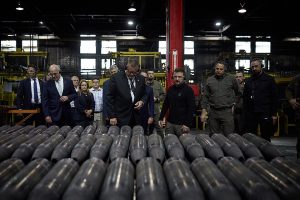
President of Ukraine Volodymyr Zelenskyy visiting the Scranton Army Ammunition Plant in Pennsylvania, where components for artillery and mortar shells are produced. Public Domain.
Strategic Implications
The ammunition shortage reveals uncomfortable truths about Western military power. The United States and its allies possess overwhelming technological superiority in sensors, precision weapons, and command systems. They can see the battlefield better, strike more accurately, and coordinate more effectively than any adversary. But modern wars – particularly wars of territorial conquest – still require mass. You cannot hold ground with satellites nor break fortified lines with precision alone, when the enemy can absorb losses and continue fighting.
Russia’s production advantage doesn’t reflect superior technology or efficiency – Russian shells are cruder and less accurate than Western equivalents. It reflects strategic focus and industrial mobilization. Russia maintained cold-war-era production capacity, kept supply chains intact, and prioritized ammunition stockpiling even when it seemed unnecessary. When war came, this unglamorous preparation proved decisive.
The West now races to rebuild what it spent thirty years dismantling. New contracts are signed, facilities are being constructed, and production targets are set. But wars don’t wait for industrial mobilization. Ukraine needs ammunition today, not in 2026 or 2027. Every month of shortfall translates to lost territory, casualties that might have been prevented, and strategic opportunities foreclosed.
The hollowed-out “Arsenal of Democracy” stands as testament to what happens when military planning assumes future wars will resemble preferred scenarios rather than probable realities. Preparing for the wars we want to fight while ignoring the wars we might have to fight is a luxury no serious power can afford – a lesson being relearned at terrible cost on Ukrainian soil.
Russia bet long, and is succeeding. The West bet short, and is failing….It’s as simple as that. The only good thing is that we are not in direct combat with Russia.
Yet.
I can’t tell you how we’re going to fix this, because there are entrenched actors in the West – in government, industry and military departments – absolutely unwilling to bend the knee to take the actions needed to fix the problems outlined above.
The more things change, the more they stay the same. As we wrote back in January of 2025, the various terror, drug and insurgent groups in Afghanistan – not content with fighting each other- are poking what they see as a weakened tiger, in the form of a highly dysfunctional Pakistan.
With Pakistan clearly on the losing end of it brief – and terrifying – war with India in May, the various jihadist groups north of the Hindu Kush smelled weakness, and a steady intensification of attacks have been quietly growing, an intensification largely ignored in the wider world press, in favor of Israel v. Hamas, Ukraine v. Russia, and the “Gen-Z – Discord” revolts erupting in states from Morocco to Nepal.
Landscape of Afghanistan, with the Hindu Kush range in the background, and a T-62 MBT in the foreground. 2007 Public Domain photo by WikimediaUser davric.
The 2025 Afghanistan-Pakistan conflict that erupted in earnest in mid-October represents more than routine border skirmishes—it signals a fundamental breakdown in one of the region’s most consequential relationships. After decades of Pakistan supporting the Taliban as a strategic asset, Islamabad now finds itself conducting airstrikes on Kabul and trading artillery fire with forces it helped bring to power. The bitter irony is impossible to miss: Pakistan’s former proxy has become its primary security threat.
October Escalation
The immediate catalyst arrived on October 8, when militants killed 11 Pakistani military personnel, including a lieutenant colonel and a major, in Khyber Pakhtunkhwa’s Orakzai district. Pakistan’s response crossed a critical threshold — airstrikes not merely in border regions but directly on Kabul, Afghanistan’s capital, targeting Tehreek-e-Taliban Pakistan (TTP) leadership allegedly sheltering under Afghan Taliban protection.
The fighting that followed was the deadliest since the Taliban returned to power in August 2021. Pakistan claims it killed over 200 Afghan Taliban and allied fighters while losing 23 soldiers. Afghanistan counters that it killed 58 Pakistani soldiers while suffering only nine deaths. Both sides claim to have captured or destroyed dozens of enemy border posts. Independent verification remains impossible, but satellite imagery and verified drone footage confirm significant damage to Afghan military compounds.
The violence forced a 48-hour ceasefire brokered by Saudi Arabia and Qatar, but border crossings remain closed and tensions simmer. More ominously, Pakistan has adopted what analysts call a “new normal” doctrine: any attack originating from Afghan territory will trigger immediate cross-border retaliation, regardless of diplomatic cost.
The TTP: Pakistan’s Self-Inflicted Wound
At the conflict’s core lies the Tehreek-e-Taliban Pakistan, formed in 2007 during America’s “War on Terror.” The TTP seeks to overthrow Pakistan’s government and impose strict Islamic law, demanding the release of imprisoned members and reversal of tribal area integration into Khyber Pakhtunkhwa province. What makes the TTP particularly dangerous is its ideological alignment with and sanctuary provided by the Afghan Taliban.
The numbers tell a grim story. The TTP conducted at least 600 attacks against Pakistani security forces in the past year alone, with 2025 activity already exceeding all of 2024. August 2025 marked the deadliest month of militant violence in over a decade, with 194 people killed and more than 200 injured in 143 attacks across Pakistan. Pakistani security force casualties in 2025 are on track to be the highest ever recorded.
The TTP has evolved beyond “simple insurgency“, threatening to expand attacks against Pakistan’s military-run commercial enterprises — fertilizer companies, construction firms, housing authorities, and banks. This represents a significant escalation, potentially bringing urban areas into a conflict previously concentrated in remote borderlands.
Briefly, a “simple insurgency”, as defined by Google’s AI search tool can be described as:
A simple insurgency is an armed rebellion by a small, lightly armed group against a more powerful, established government. Because they lack the strength for a conventional military conflict, insurgents use guerrilla tactics and rely heavily on the support of the local population to challenge the ruling authority. [1, 2, 3, 4] Key characteristics of a simple insurgency • Asymmetric warfare: A simple insurgency is defined by the severe mismatch in power between the rebels and the government they oppose. Insurgents, often called guerrillas, compensate by using hit-and-run attacks and avoiding direct, pitched battles. • Irregular tactics: Instead of traditional army maneuvers, insurgents employ a variety of tactics to weaken the government and increase their own control and legitimacy. These can include:
• Protracted struggle: Insurgencies are not short, decisive conflicts. They are typically protracted political-military campaigns designed to outlast and exhaust the government through persistent, focused violence. • Focus on the population: The ultimate target of an insurgency is not just the government’s military forces, but the loyalty and support of the civilian population. Gaining popular support is the key to success. Insurgents accomplish this by:
• Providing services • Discrediting the government • Gaining the trust of people in rural or remote areas
• Driven by ideology: While some rebellions are a temporary revolt, insurgencies are often fueled by a powerful ideology that explains people’s grievances and provides a vision for a new political order. This can include motivations based on religion, ethnicity, or politics. • Control over territory: Unlike purely terrorist organizations, a central objective of an insurgency is to control resources and eventually establish an alternative government in a particular area. [1, 4, 5, 6, 7, 8]
Simple insurgency vs. other conflicts • Revolution: A simple insurgency lacks the widespread, organized structure of a full-scale revolution, even though it may share the same goal of overthrowing the government. • Coup d’état: This is different from a coup, which involves a swift, elite-driven seizure of government power. An insurgency, by contrast, relies on a protracted struggle for popular support and does not have the resources for a quick power grab. • Terrorist organization: While insurgents may use terrorism as a tactic, their ultimate goal is different from purely terrorist groups. Insurgents aim to build an alternative government and control territory, while terrorist groups typically do not. [6, 7, 9, 10, 11]
The current crisis exposes Pakistan’s catastrophic series of miscalculations of the past. For decades, Islamabad’s military establishment pursued “strategic depth” in Afghanistan as a hedge against India, covertly supporting the Taliban even while publicly backing America’s War on Terror. The assumption was straightforward: a friendly Taliban government in Kabul would provide strategic advantage while ending Pakistan’s internal insurgency problems once American forces departed, by exerting control over the “Pakistani Taliban”.
Of course, the opposite promptly occurred. Since the Taliban’s 2021 return to power after the Biden Administration’s disastrous withdrawal from the country, the TTP has grown dramatically more capable and aggressive. Pakistan now faces an irreconcilable contradiction: the same Afghan Taliban it supported for decades now provides sanctuary to Pakistan’s primary internal security threat. Having invested enormous political and military capital ensuring Taliban victory, Pakistan cannot effectively pressure Kabul to eliminate TTP sanctuaries without undermining its broader regional objectives.
When Pakistan demands the Taliban eliminate TTP safe havens, Kabul either urges negotiations with the militants or claims inability to control them—sometimes both simultaneously. Pakistan’s leadership increasingly believes the Taliban deliberately weaponizes the TTP, either to expand Taliban-style governance into Pakistan or enable an allied Pashtun entity to control northwestern Pakistan.
The India Factor
Complicating matters further, India has pursued normalization with the Taliban precisely as Pakistan-Taliban relations deteriorate, almost certainly for that very reason – the brutal calculus of ‘realpolitik‘ usually wins, afterall. Afghanistan’s Foreign Minister Amir Khan Muttaqi visited New Delhi in October, with India announcing plans to reopen its Kabul embassy and calling the meeting “an important step in advancing our ties.” For Pakistan, which fought its brief war with India in May, this Taliban-India rapprochement represents strategic encirclement…which India well-understands.
Pakistan’s military noted the “serious provocation” of the fighting’s timing during Muttaqi’s India visit. The rhetorical shift is stark: Pakistan no longer refers to the Taliban as an “interim government” but as a “regime,” questioning their legitimacy to govern and calling for a more inclusive Afghan government. This represents a near-suspension of diplomatic ties between former allies.
Strategic Dead Ends
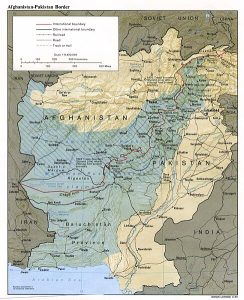
Pakistan’s options appear uniformly unattractive. Military operations against the TTP face fundamental constraints: the militants operate from Afghan territory beyond Pakistani reach, enjoy Afghan Taliban protection, and can simply retreat across the disputed Durand Line border when pressured. Localized clearing operations may temporarily displace militants but cannot hold territory without massive troop deployments that remain deeply unpopular among border populations.
Durand Line Border Between Afghanistan and Pakistan. CIA Image, 2007. Public Domain.
Negotiations offer no better prospects. Previous ceasefires collapsed when the TTP refused to compromise on core demands fundamentally incompatible with Pakistan’s constitutional order. The TTP’s demand for sharia law implementation and tribal area autonomy restoration cannot be reconciled with Pakistan’s governance structure. Moreover, the TTP’s track record of breaking agreements makes any deal inherently unstable.
Cross-border airstrikes — Pakistan’s current approach — risk escalating into broader conflict while failing to address root causes. The strikes humiliate the Afghan Taliban publicly, potentially driving them closer to the TTP and other anti-Pakistan groups. Pakistan is adopting tactics it vehemently criticized when India employed them against Pakistan itself earlier this year—a dangerous precedent that normalizes cross-border military action in a nuclear-armed region.
Regional Implications
The conflict’s reverberations extend beyond bilateral relations. China, with massive “Belt and Road” investments in Pakistan, watches nervously as infrastructure becomes militant targets. Regional powers including Russia, Iran, and Saudi Arabia have urged restraint, recognizing that instability along the Afghanistan-Pakistan border threatens broader security. The Kremlin’s Moscow Format Consultations specifically pressed the Taliban to eliminate the TTP threat – pressures Kabul shows no inclination to heed.
Perhaps most troubling, the conflict validates Pakistan’s historical paranoia about strategic encirclement while simultaneously demonstrating how that paranoia drove the very policies that created current threats. By backing the Taliban as a hedge against India, Pakistan helped create a government that now shelters Pakistan’s most dangerous internal enemy while courting Pakistan’s primary external rival.
And this, in a nuclear-armed nation with a very shaky government.
No Good Options
As the temporary ceasefire holds precariously, at least for the moment – the fundamental problem remains unresolved: Pakistan faces an emboldened insurgency operating from sanctuary areas it cannot easily eliminate without destroying relationships it spent decades building. The Afghan Taliban, meanwhile, must balance protecting ideological allies against managing fallout from Pakistani military actions — a calculation complicated by its own limited control over remote regions and internal pressure from hardline factions…in public, at least.
History suggests leaders within the Taliban understand that Afghan governments ending up on Pakistan’s wrong side rarely survive. Yet the Taliban’s public posture suggests they believe they can continue supporting the TTP without triggering Pakistani countermeasures sufficiently severe to destabilize their regime. Whether this calculation proves correct may determine the region’s stability for years to come.
What seems certain is that Pakistan’s investment in the Taliban as a strategic asset has become a strategic liability of the first order — a cautionary tale about the dangers of relying on militant proxies as instruments of state policy. The militants Pakistan once cultivated have become the militants Pakistan can no longer control, operating from territory Pakistan helped them secure. The tragic irony would be complete if it weren’t so dangerous.
…But.
The most important thing to remember in this swirling morass of barely concealed knives, is that the two main players – India and Pakistan – are both nuclear-armed powers…and no one, including them, is quite sure how steady are the hands on those launch keys.
Prepare yourself accordingly.
The Freedomist — Keeping Watch, So You Don’t Have To
From the New York Times to NBC news, corporate media is being exposed as being the key catalyst of DNC agit prop aimed to dismantle the American republic from within. One such operation, the Russian Collusion Hoax, was only possible thanks to direct collusion between DNC operatives like James Comey and Adam Schiff and reporters and high-ranking executives in corporate news media.
While documents have already been released that show this collusion, new disclosures reveal now-unsealed testimonies by an FBI informant. That informant paints a picture of an FBI working hard to undermine Trump from the start of his first term. He also alleges Adam Schiff, a man he called his former “friend,” directed the FBI to leak anti-Trump information to the press, who were already prepared to unquestionably receive the leaked documents and give them credibility.
The FBI report summarizes the meeting the informant had with Schiff, stating “In this meeting, SCHIFF stated that the group would leak classified information which was derogatory to President of the United States Donald J. Trump. SCHIFF stated the information would be used to indict President TRUMP.”
After the Anti-Defamation League announced it would no longer be featuring its glossary of hate, the FBI announced it would no longer be partnering with the ADL. FBI Director Kash Patel declared, “This FBI won’t partner with political fronts masquerading as watchdogs.” Up until this point, the ADL has been the FBI’s resource for determining what “hate” and “extremist” groups are. On that list includes Charlie Kirk while Antifa is missing.
Former FBI Director James Comey has officially been indicted by a grand jury. The charges are relatively minor, but both contain potential prison terms. The first is making false statements within jurisdiction of the legislative branch and the second is obstruction of congressional proceedings. Comey is scheduled to turn himself in Friday, September 26, 2025.
The charges are not the haymaker charges many were hoping, such as treason. As such, these charges could be viewed as yet another warning to the Democrats to stand down their assault on American Rule of Law lest they face criminal prosecution of haymaker charges likes treason.
The insurrectionist state of California passed legislation intended to blunt efforts by the Trump administration to remove illegal aliens from their lands. One bill, signed into law by Gavin Newsome (D-CA), would make it illegal for Federal ICE Agents to wear masks during their operations. The move is intended to help terrorists find the agents at their homes and hurt them and their families.
The Trump administration responded defiantly through Assistant DHS Secretary Tricia McLauglin, who told the press, “Governor Gavin Newsom is fanning the flames of division, hatred, and dehumanization of our law enforcement. At a time that ICE law enforcement faces a 1,000% increase in assaults and their family members are being doxxed and targeted, the sitting Governor of California signs unconstitutional legislation that strips law enforcement of protections in a disgusting, diabolical fundraising and PR stunt. To be crystal clear: we will not abide by Newsom’s unconstitutional ban.”
Trump Admin to Ignore California’s ‘Unconstitutional’ Anti-ICE Law– slaynews.com Source Link Excerpt:
President Donald Trump’s administration is refusing to comply with California’s new law banning federal immigration agents from wearing face coverings during enforcement operations.
The move is setting up another direct clash between Washington and Sacramento over immigration.
California Gov. Gavin Newsom signed the so-called “No Secret Police Act” on Saturday.
The bill prohibits local and federal officers from wearing ski masks, gaiters, or other face coverings while conducting operations in the state.
The law goes into effect in January 2026.
It includes exceptions for SWAT teams and medical masks, but is aimed directly at Immigration and Customs Enforcement (ICE) and Border Patrol.
The Department of Homeland Security (DHS) quickly pushed back.
Assistant DHS Secretary Tricia McLaughlin told the Daily Caller:
“Governor Gavin Newsom is fanning the flames of division, hatred, and dehumanization of our law enforcement.
“At a time that ICE law enforcement faces a 1,000% increase in assaults and their family members are being doxxed and targeted, the sitting Governor of California signs unconstitutional legislation that strips law enforcement of protections in a disgusting, diabolical fundraising and PR stunt.
“To be crystal clear: we will not abide by Newsom’s unconstitutional ban.”
The DNC has accused Tom Homan of accepting a bribe of $50,000 in cash to guarantee the payees get government contracts. They say the encounter was caught on video, but the Trump administration stopped the investigation. Now, the Trump administration has fired back.
Press Secretary Karoline Leavitt told reporters, “Mr. Homan never took the $50,000 you’re referring to so you should get your facts straight, number one. Number two, this was another example of the weaponization by the Biden Department of Justice against one of President Trump’s strongest and most vocal supporters in the midst of a presidential campaign. You had FBI agents going undercover to try and entrap one of the president’s top allies and supporters, someone they knew very well would be taking a government position months later. Mr. Homan did absolutely nothing wrong… The White House and the president stand by Tom Homan 100 percent because he did absolutely nothing wrong and he is a brave public servant who has done a phenomenal job on helping the president shut down the border.”
White House Spox Says Biden’s Weaponized FBI Tried to Entrap Tom Homan With Bribe; ‘He Never Took the $50,000’ › American Greatness– amgreatness.com Source Link Excerpt:
The White House press secretary on Monday shot down media reports accusing President Donald Trump’s border czar of accepting a $50,000 bribe from undercover FBI agents last year, telling reporters “the president stands by Tom Homan 100 percent.”
MSNBC reported on Saturday that Homan was caught on tape accepting a bag filled with the cash from federal agents as part of an undercover operation in Texas during the heat of the 2024 election.
According to the report, written by RussiaGate hoaxers Carol Leonnig and Ken Dilanian, Homan took the bribe in exchange for helping the agents win government contracts in a second Trump administration.
Back FREEDOM for only $4.95/month and help the Freedomist to fight the ongoing war on liberty and defeat the establishment's SHILL press!!
Are you enjoying our content? Help support our mission to reach every American with a message of freedom through virtue, liberty, and independence! Support our team of dedicated freedom builders for as little as $4.95/month! Back the Freedomist now! Click here