May 9, 2026

World

The South China Sea Gambit


What’s old is new, apparently. Everyone wants more land…even if the have to build it themselves.

While American attention remains fixated on Chinese aggression in the South China Sea, as well as on Venezuela, a different story is unfolding beneath the surface in the Far East. Vietnam has been building artificial islands at a pace that should make Beijing envious, and the most remarkable aspect isn’t the construction — it’s China’s silence.

Since October of 2021, Vietnamese dredgers have created over 930 hectares of new land across the Spratly Islands, transforming 21 previously marginal outposts into fortified positions complete with ports, helipads, munitions depots, and the infrastructure for military runways. That’s roughly 70 percent of what Communist China built during its infamous “Great Wall of Sand” island-building campaign from 2013 to 2017. At the current pace, Vietnam will match China’s total reclaimed area within two years.

Map of the South China Sea, 1988. CIA image. Public Domain.

The scale is impressive, but the strategic implications are much more so. Take Bark Canada Reef — once barely above water, it now hosts 2.8 kilometers of reclaimed land with foundations laid for a 2,400-meter runway capable of handling military transport aircraft and bombers. Pearson Reef has expanded to nearly 1.3 square kilometers. Tennent Reef, Ladd Reef, South Reef — the pattern repeats across the archipelago: dredge through lagoons, pile sediment into sandbars, build infrastructure.

The construction follows a clear, “cookie-cutter” military logic: Each reef features identical clusters of buildings arranged around central courtyards, munitions depots surrounded by blast walls, and ports capable of servicing Vietnam’s Gepard-class frigates. These aren’t research stations or fishing outposts. They are naval forward operating bases, designed to extend Hanoi’s ability to sustain naval deployments far from the mainland. Ships can now resupply, refuel, and rotate crews without returning to the coast, dramatically extending patrol durations in contested waters.

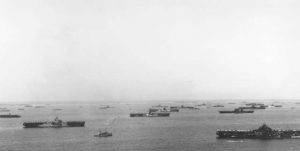
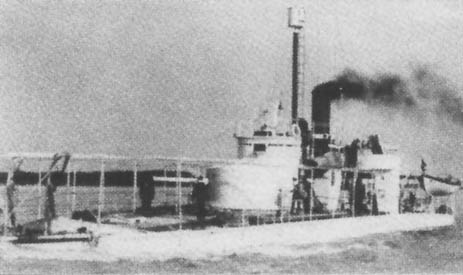
Espiritu Santo base boat repair dock in World War 2, 1943. US Navy photo. Public Domain.

What makes this particularly interesting is China’s muted response. Beijing, which has spent years aggressively confronting the Philippines over far smaller provocations, has issued only perfunctory diplomatic statements about Vietnam’s construction. No coast guard harassment. No water cannon attacks. No military posturing. The contrast is stark: the Philippines controls just nine land formations in the Spratlys and faces constant Chinese pressure, while Vietnam fortifies 29 positions and Beijing mostly looks the other way.

Three factors explain this disparity. First: bandwidth — China is fixated on the Philippines, which has strengthened its defense ties with the United States, opened additional bases to American forces, and conducted recent joint exercises with Washington’s Pacific allies. Beijing opening a second front against Vietnam risks unifying ASEAN against Beijing, something Chinese strategists would rather avoid.

Second: historical precedent — Vietnam has been expanding in the Spratlys since the 1970s, even seizing a few formations from China itself during a bloody 1988 skirmish that killed 64 Vietnamese sailors. From Beijing’s perspective, Vietnam’s current expansion, while larger in scale, isn’t fundamentally new behavior. The Philippines’ recent pushback, by contrast, represents a more pressing challenge to Chinese dominance.

Third: strategic ambiguity — Vietnam maintains partner status in BRICS, attended Beijing’s Victory Day ceremony, and recently finalized an $8 billion arms deal with Russia. When the Trump administration imposed reciprocal tariffs on Vietnam, President Xi visited Hanoi and signed dozens of economic agreements. China remains Vietnam’s largest trading partner with $25 billion in bilateral trade and over $31 billion in cumulative foreign direct investment. Beijing calculates that Hanoi can be managed through economic incentives rather than confrontation.

But, there is obviously a lot of recent history behind this.

The 1988 incident was hardly the first time Vietnam and China had come to blows, however. In February 1979, China launched a punitive invasion of northern Vietnam with 200,000 troops, ostensibly to “teach Vietnam a lesson” for its invasion of Cambodia and alignment with the Soviet Union. The month-long war proved costly for both sides — China claimed 6,900 killed while Vietnam reported 10,000 casualties, though actual figures were likely higher on both sides. Chinese forces captured several provincial capitals before withdrawing, but the operation exposed serious deficiencies in the People’s Liberation Army, which hadn’t fought a major conflict since the Korean War. Importantly, it is vital to remember that in the 1979 conflict, Vietnam fought on two fronts, with c.150,000 troops in Cambodia, while holding off a c.200,000 man Comminust Chinese army — no mean feat, on its own.

More importantly, it established a pattern: Vietnam demonstrated it wouldn’t be intimidated by Chinese military pressure, while Beijing learned that forcibly changing Vietnamese behavior carried steep costs. This historical context helps explain today’s dynamic — China remembers that Vietnam, unlike the Philippines, has proven willing and able to inflict significant casualties in defense of what it considers its territory.

The difference in Beijing’s reaction is telling. While the Philippines has proven that it can certainly fight invaders defensively, it has never actually fought a large-scale war on its own. The largest battle Filipino forces have fought on their own was the five month long siege of Marawi in 2017 – an urban warfare, COIN operation against Islamic State-affiliated guerillas.

Vietnam’s island-building is only part of a broader military transformation. In April 2025, Hanoi finalized a $700 million deal with India to acquire BrahMos supersonic cruise missiles — both ground-based launchers and air-launched versions for its Su-30 fighter jets. The BrahMos represents a significant capability upgrade: it flies at Mach 2.8, carries a 300-kilogram warhead, and can strike targets up to 290 kilometers away, with precision guidance that makes it extremely difficult to intercept. The missile’s sea-skimming trajectory — flying just 3-4 meters above the water’s surface—and terminal maneuvering make it particularly lethal against naval targets. Former BrahMos Aerospace CEO A. Sivathanu Pillai noted that the missile’s high speed combined with its heavy weight makes it about 15 times more lethal than conventional anti-ship missiles: “Any other anti-ship missile will only leave a hole in the hull of the attacked ship, but the Brahmos missile will completely obliterate the target.” Combined with Vietnam’s reported acquisition of 40 Su-35 fighter jets from Russia, including advanced electronic warfare systems, these weapons transform Vietnam’s fortified islands into what military planners call “unsinkable aircraft carriers.”

Extended Range Version of BrahMos missile successfully launched from a Su-30 MKI. 2022 photo from the Government of India. GODL.

The strategy is clear: create facts on the water faster than China can react, hoping to shape a reality too costly for Beijing to reverse. Whether Beijing’s restraint holds, or whether Vietnam’s bet on “hard power” over diplomacy eventually triggers the confrontation both sides claim to want to avoid, remains to be seen.

So — Why should you care? You should care, because approximately $5.3 Trillion dollars worth of global trade — about 24% — flows through this area. If you are one of the few people who can legitimately say that you have nothing in your home that cam from overseas…this still impacts you, because the systems you rely on come off of trans-ocianic ships. And, a major disruption of trade in this area will up-end the carefully curated global system of trade that all nations — including the United States — now depend on. And if you don’t believe that, just refresh yourself about the global impact of the grounding of the container ship EVER GIVEN in 2021…and that was one ship.

For now, the South China Sea is being remade one dredger-load at a time…and not by the country everyone’s watching.


The Freedomist — Keeping Watch, So You Don’t Have To


freedomist banner


The Mozambique Insurgency – Unpacking the Terror Network Behind “Al-Shabaab”


Since 2017, a war has been raging. Chances are, you have never heard of it. This war, in a remote part of the world, is poorly reported because the goverment is humiliated by its failures, and refuses to allow too much access to report on the fighting.

This matters to you, and to your wealth – because if the Islamic State wins, you will know it…and then some. But in the proximate, there is a serious blind spot that hampers even professionals from understanding the situation fully.

When journalists and analysts discuss the insurgency devastating Mozambique’s Cabo Delgado province, they often go out of their way to clarify that the group locally called “al-Shabaab” has no connection to Somalia’s better-known terror organization of the same name. But this insistence on separation obscures a more complex — and much more alarming and troubling — reality about modern jihadist networks in Africa.

The truth is that while Mozambique’s Islamic State affiliate didn’t emerge from Somalia’s al-Shabaab, specifically, it operates within a sophisticated transnational network coordinated from an unlikely headquarters: the mountains of Puntland in northeastern Somalia.

Map of the Cabo Delgado insurgency; situation as of in March of 2024. Map by WikiUser BlookyNapsta. CCA/4.0 Int’l.

The Name Game

Understanding the confusion requires backing up to 2017, when armed militants first attacked the small ocean port town of Mocímboa da Praia. Locals and journalists needed something to call this nameless group, and many settled on “al-Shabaab” — Arabic for “the youth.” It was a descriptive term reflecting the insurgents’ demographics, not a claim of organizational affiliation. Some called them “Ahlu Sunnah Wa-Jama” after their ideological roots, but “al-Shabaab” stuck, creating endless confusion with Somalia’s al-Qaeda-affiliated terror group.

Here’s where analysts are technically correct: Somalia’s al-Shabaab pledges allegiance to al-Qaeda. Mozambique’s group — now formally called Islamic State Mozambique (ISM) — pledges allegiance to ISIS. These are rival international terror networks that actively fight each other. So no, ISM is not an offshoot or extension of Somali al-Shabaab. They’re on opposite sides of the jihadist world.

But that’s not the end of the story.


The Puntland Connection

What many casual observers miss is that ISIS restructured its African operations in early 2020, creating a coordination hub called the “Al-Karrar office” based in Puntland, Somalia. This office, embedded within ISIS-Somalia, was tasked with coordinating support across eastern and central Africa — including Mozambique.

According to the United Nations, ISIS-Somalia in Puntland began coordinating support to Mozambique as early as late 2019. That support included tactical training (documented by 2020), financial transfers routed through agents in Kenya, Tanzania, and Uganda, and strategic guidance that transformed ISM from a ragtag local insurgency into a formidable military force capable of capturing towns and threatening major infrastructure.

The impact became clear in 2020 and 2021 when ISM’s operational capabilities dramatically increased. The group launched increasingly sophisticated attacks, culminating in the March 2021 assault on Palma that killed dozens and forced French energy giant Total Energy to suspend its $60 billion natural gas project. The coordinated three-pronged attack, use of combined arms tactics, and disciplined withdrawal all bore the hallmarks of external training and coordination.

Buildings destroyed during the battle of Palma. April, 2021 image from Voice of America (VOA). Public Domain.


Foreign Fighters and Transnational Networks

The transcript of recent analysis on Mozambique mentions captured fighters with “foreign accents” and non-local origins — and this tracks with what researchers have documented. While ISM is predominantly staffed by recruits from northern Mozambique and Tanzania, it also draws fighters from the Democratic Republic of Congo (reflecting connections with ISIS’s Central Africa Province) and other parts of the Great Lakes region.

ISIS-Somalia itself has become remarkably international, with fighters from Ethiopia, Sudan, Tanzania, and even Arab Gulf states joining the Puntland-based operation. Some of these fighters have reportedly moved between ISIS’s various African franchises, bringing experience and expertise with them.

This is highlighted by ISM’s amphibious operations in the Quirimbas archipelago, beginning in 2020.

Quirimbas Islands. November, 2021 image from Earth Observatory/NASA. Public Domain.

The financial dimension is equally important. ISIS-Somalia has become one of ISIS’s most profitable branches, generating millions annually through extortion, smuggling networks, and taxation. Some of this money flows through the Al-Karrar office to support operations in Mozambique and elsewhere, creating a self-sustaining transnational terror economy.


Why the Distinction Matters (and Doesn’t)

Analysts aren’t wrong to insist that ISM and Somali al-Shabaab are distinct organizations. The distinction matters for understanding motivations, tactics, and potential diplomatic or military responses. ISM emerged from genuinely local grievances — poverty, government corruption, marginalization of Muslim minorities, and broken promises about natural gas wealth. Addressing those root causes requires different approaches than combating an externally imposed insurgency.

But the insistence on organizational separation can obscure the functional reality: ISM operates within a transnational ISIS network that provides coordination, training, funding, and ideological guidance from Puntland. The “local insurgency” framing risks underestimating the sophistication and resilience of this network.

What this insistence on pedantic nitpicking masks, is a terrifying reality: the remnants of the Islamic State — largely smashed in 2017-2019 — have reorganized themselves into distinctly Western-style “Combatant Commands“, semi-autonomous, regional commands that are all solidly aligned to the IS leadership, but plan and execute operations in their zones as they see fit.

This reorganization has made the organization far more resilient, more flexible, and far harder to attrit by direct military action.


The Bigger Picture

The Mozambique case illustrates how modern jihadist organizations operate in Africa. Rather than monolithic groups expanding from single headquarters, we see franchises that maintain local character while plugging into transnational support networks. ISIS’s pivot to Africa has created a web of affiliated groups that share resources, expertise, and ideological inspiration while adapting to local conditions.

For Mozambique’s suffering population — more than 700,000 displaced and 6,100 killed since 2017 — the organizational charts matter less than the ongoing violence. But for policymakers and analysts trying to disrupt these networks, understanding the Puntland-Mozambique connection is crucial. Cutting the financial and logistical links between ISIS’s regional hubs and its various franchises may prove more effective than treating each insurgency as an isolated local problem.

The insurgents in Cabo Delgado may not be the same “al-Shabaab” that terrorizes southern Somalia, but they’re very much part of the same global jihadist ecosystem—one that has successfully established deep roots in Africa’s most vulnerable regions.


Why This Matters

Mozambique, despite its remote location on the world map, sits on very important real estate…not because of the natural gas finds of Total Energies, but because of its physical location.

As we touched on briefly in 2022, the grounding of the container ship Ever Given in 2021 severely up-ended world shipping, with effects that extended far beyond the six days it took to clear the Suez Canal. Likewise, the explosion in the port of Beirut, Lebanon in 2020. As our 2022 article alluded to, while those incidents were accidents, should a group coordinate similar incidents, such an offensive would devastate world commerce.

More to the point, a deliberate closure of the Suez Canal — unlike the missile and piracy operations of the Houthis in Yemen — would force a rerouting of all ocean-going merchant traffic around South Africa’s Cape of Good Hope…which has to travel right past the war zone in Cabo Delgado.

Indian Ocean area. Historic map (1993), Library of Congress, via the Central Intelligence Agency. Public Domain.

And, again as we theorized about in 2022, multiple deliberate strikes like this present a clear threat to the economic vitality of the world, and directly to you.

The question is, are the real professionals paying attention to the nuance?


The Freedomist — Keeping Watch, So You Don’t Have To


freedomist banner


The Arsenal of Democracy’s Empty Shelves


By and large, your humble author has largely avoided talking about the war between Russia and Ukraine that entered its “hot” phase in late-February of 2022, even though it actually began in 2014 – but don’t expect the mainstream media to talk about that too much.

Breaking the “Fourth Wall” a bit, I hate politics, in general. I have strong and rigid opinions, and I am not going to beat dead horses here. So, don’t expect political moralizing. I write about the technical aspects of defense and security – which are completely agnostic, until some idiot decides that their juice is better than that of the other guy across the river.

Moving on.

There has been a toxic fantasy in the West – especially in the United States – that has arisen in the aftermath of the collapse of the Soviet Union. Caused by a putrid mix of slavish devotion among politicians desperately wanting to look good to voters, greedy and craven defense contractors, and military officers looking to pad their retirement portfolios, all of whom adopted the idiotic ideas of Alvin Toffler – a subject we recently touched on – have combined to weaken the military capacity of the West to levels of incapacity not seen in nearly a century.

After the Cold War ended, there was a frenetic rush to make the “butter not guns” dream a reality. The problem? Like all utopian concepts – especially when backed up with “sciency”-looking graphs and densely written tomes filled chock-full of techy-sounding wording – that paradigm drove Western defense infrastructure over a cliff.

What all of those lofty hopes-n-dreams deliberately ignored, was that with the demise of the Soviet Union, the only enemies left – so it seemed – were minor states, like Serbia and Iraq, and later, against various terrorist groups like al-Qaeda as part of the grandiosely-named “Global War On Terror” (GWOT).

The idea of a massive conventional war in Europe was completely dismissed as a thing of the past. In this, to be both as blunt and honest as possible, was a level of “genteel racism” that has run as an undercurrent (and occasionally not so “under”) through the psyches of the Western establishment, as massive conventional wars happened throughout those parts of the world the mainstream media chooses to ignore since the Cold War’s end.

As a result, modern (i.e., 21st Century) Western militaries are barely-hollow shadows of their former selves.

This particular Emperor’s lack of clothing became starkly apparently in 2022, as the war goaded into being by the “globalists”, led by Joe Biden’s autopen, revealed that there were no functional reserves of war material in the West, including within the United States…while Russia – with only minimal support from its allies – was able to easily maintain operations throughout the war, hysterical screaming from the Western/globalists.

Destroyed military vehicles on a street in Bucha, Ukraine, near Kiev, during Russia’s invasion of Ukraine, March 1, 2022. Picture by REUTERS/Serhii Nuzhnenko. CCA/2.0 Generic.

In a word – the “Arsenal of Democracy” is empty. And deliberately so, in the interests of greed.


Coming Clean

NATO Secretary General Mark Rutte delivered a sobering assessment to London audiences in the summer of 2025: “Russia produces in three months what the whole of NATO produces in a year” when it comes to ammunition. The statistic encapsulates one of the most profound strategic failures of the post-Cold War era – the systematic dismantling of the Western defense industrial base just as the world was returning to the high-intensity conflicts it was designed to support.

Three years after Russia’s invasion, Ukraine remains critically short of the basic ammunition needed to defend itself, despite receiving unprecedented Western military aid. The shortage isn’t due to lack of political will or financial resources, but something far more fundamental: the West simply cannot produce enough ammunition to meet the demands of modern warfare. What was once called the “Arsenal of Democracy” now struggles to keep a single medium-sized conflict adequately supplied.


The Arithmetic of Industrial Failure

The numbers tell a stark story. Before the war, [the United States produced approximately 14,400 artillery shells per month – roughly 180,000 annually. Europe’s combined capacity for 155mm shells ranged between 240,000 and 300,000 pieces per year. Meanwhile, Ukrainian forces were using 2,000 to 9,000 shells daily in active combat – potentially consuming the entire annual Western production in a few weeks.

Russia, by contrast, ramped up to producing an estimated 4.5 million shells annually by 2024, supplemented by millions more from North Korean stockpiles. This allowed Russian forces to fire 10,000 to 80,000 shells daily at their peak – a volume that Western production couldn’t match even if every shell manufactured went directly to Ukraine.

The disparity became operationally decisive. The fall of Avdiivka in early 2024 occurred not because Ukrainian defenders lacked courage or competence, but because they lacked ammunition. Soldiers withdrew from a town successfully defended since 2014 simply because they couldn’t shoot back.


How We Got Here

The post-Cold War “peace dividend” seemed reasonable at the time. With the Soviet threat vanished and conflicts shifting to counterinsurgency operations requiring precision strikes rather than mass artillery barrages, Western militaries optimized for quality over quantity. Production lines closed, skilled workers retired, and long-standing supply chains atrophied. The assumption was simple: modern warfare would be short, decisive, and technology-intensive. Artillery-intensive wars of attrition belonged to history.

A recent academic analysis suggests deeper psychological factors at work. Western militaries over-invested in visible weapon systems – aircraft carriers, stealth fighters, advanced tanks – that could be showcased to signal military strength while neglecting unglamorous stockpiles of shells and propellant. Like luxury goods in consumer markets, these prestige platforms satisfied political and institutional desires for status while the mundane logistics of sustained warfare received inadequate investment.

The result: warehouses that looked full but weren’t. NATO’s own ammunition stockpile targets, set in 2014 to sustain a 30-day high-intensity conflict, were never met. When Ukraine needed support, European nations were drawing from “half full or lower warehouses,” as Admiral Rob Bauer, chair of NATO’s Military Committee, acknowledged in 2023.


The Response: Too Little, Too Slow

Western nations recognized the crisis early but struggled to respond effectively. The U.S. has invested billions to increase 155mm production from 14,400 monthly shells to 40,000, with targets of 100,000 by late 2025. Europe set goals of 2 million rounds annually by 2025. These are impressive percentage increases but remain inadequate to both supply Ukraine and replenish depleted Western stocks.

The problem isn’t just production capacity – it’s the entire industrial ecosystem. Explosive production, particularly TNT, relies on a single Polish factory. Specialized steel alloys, propellants, and precision components all face similar bottlenecks. It takes two to four years to establish new production lines for high-intensity military equipment, meaning decisions made today affect battlefield realities years hence.

European efforts face additional complications. The EU produces around 170 different weapon systems, with 16 different types of 155mm shells alone. Ukrainian soldiers call this diversity a “zoo,” forced to constantly recalibrate equipment as they receive incompatible ammunition batches. National defense industries resist standardization to protect domestic jobs and capabilities, creating inefficiency precisely when efficiency matters most.

President of Ukraine Volodymyr Zelenskyy visiting the Scranton Army Ammunition Plant in Pennsylvania, where components for artillery and mortar shells are produced. Public Domain.


Strategic Implications

The ammunition shortage reveals uncomfortable truths about Western military power. The United States and its allies possess overwhelming technological superiority in sensors, precision weapons, and command systems. They can see the battlefield better, strike more accurately, and coordinate more effectively than any adversary. But modern wars – particularly wars of territorial conquest – still require mass. You cannot hold ground with satellites nor break fortified lines with precision alone, when the enemy can absorb losses and continue fighting.

Russia’s production advantage doesn’t reflect superior technology or efficiency – Russian shells are cruder and less accurate than Western equivalents. It reflects strategic focus and industrial mobilization. Russia maintained cold-war-era production capacity, kept supply chains intact, and prioritized ammunition stockpiling even when it seemed unnecessary. When war came, this unglamorous preparation proved decisive.

The West now races to rebuild what it spent thirty years dismantling. New contracts are signed, facilities are being constructed, and production targets are set. But wars don’t wait for industrial mobilization. Ukraine needs ammunition today, not in 2026 or 2027. Every month of shortfall translates to lost territory, casualties that might have been prevented, and strategic opportunities foreclosed.

The hollowed-out “Arsenal of Democracy” stands as testament to what happens when military planning assumes future wars will resemble preferred scenarios rather than probable realities. Preparing for the wars we want to fight while ignoring the wars we might have to fight is a luxury no serious power can afford – a lesson being relearned at terrible cost on Ukrainian soil.

Russia bet long, and is succeeding. The West bet short, and is failing….It’s as simple as that. The only good thing is that we are not in direct combat with Russia.

Yet.

I can’t tell you how we’re going to fix this, because there are entrenched actors in the West – in government, industry and military departments – absolutely unwilling to bend the knee to take the actions needed to fix the problems outlined above.

Not least, when the United States Army can only seem to feed its troops lima beans and toast on Thanksgiving.

Take note.


The Freedomist — Keeping Watch, So You Don’t Have To


freedomist banner


Continuing Disintegration – No Honor Among Thieves


The more things change, the more they stay the same. As we wrote back in January of 2025, the various terror, drug and insurgent groups in Afghanistan – not content with fighting each other- are poking what they see as a weakened tiger, in the form of a highly dysfunctional Pakistan.

With Pakistan clearly on the losing end of it brief – and terrifying – war with India in May, the various jihadist groups north of the Hindu Kush smelled weakness, and a steady intensification of attacks have been quietly growing, an intensification largely ignored in the wider world press, in favor of Israel v. Hamas, Ukraine v. Russia, and the “Gen-Z – Discord” revolts erupting in states from Morocco to Nepal.


Landscape of Afghanistan, with the Hindu Kush range in the background, and a T-62 MBT in the foreground. 2007 Public Domain photo by WikimediaUser davric.


The 2025 Afghanistan-Pakistan conflict that erupted in earnest in mid-October represents more than routine border skirmishes—it signals a fundamental breakdown in one of the region’s most consequential relationships. After decades of Pakistan supporting the Taliban as a strategic asset, Islamabad now finds itself conducting airstrikes on Kabul and trading artillery fire with forces it helped bring to power. The bitter irony is impossible to miss: Pakistan’s former proxy has become its primary security threat.


October Escalation

The immediate catalyst arrived on October 8, when militants killed 11 Pakistani military personnel, including a lieutenant colonel and a major, in Khyber Pakhtunkhwa’s Orakzai district. Pakistan’s response crossed a critical threshold — airstrikes not merely in border regions but directly on Kabul, Afghanistan’s capital, targeting Tehreek-e-Taliban Pakistan (TTP) leadership allegedly sheltering under Afghan Taliban protection.

The fighting that followed was the deadliest since the Taliban returned to power in August 2021. Pakistan claims it killed over 200 Afghan Taliban and allied fighters while losing 23 soldiers. Afghanistan counters that it killed 58 Pakistani soldiers while suffering only nine deaths. Both sides claim to have captured or destroyed dozens of enemy border posts. Independent verification remains impossible, but satellite imagery and verified drone footage confirm significant damage to Afghan military compounds.

The violence forced a 48-hour ceasefire brokered by Saudi Arabia and Qatar, but border crossings remain closed and tensions simmer. More ominously, Pakistan has adopted what analysts call a “new normal” doctrine: any attack originating from Afghan territory will trigger immediate cross-border retaliation, regardless of diplomatic cost.


The TTP: Pakistan’s Self-Inflicted Wound

At the conflict’s core lies the Tehreek-e-Taliban Pakistan, formed in 2007 during America’s “War on Terror.” The TTP seeks to overthrow Pakistan’s government and impose strict Islamic law, demanding the release of imprisoned members and reversal of tribal area integration into Khyber Pakhtunkhwa province. What makes the TTP particularly dangerous is its ideological alignment with and sanctuary provided by the Afghan Taliban.

The numbers tell a grim story. The TTP conducted at least 600 attacks against Pakistani security forces in the past year alone, with 2025 activity already exceeding all of 2024. August 2025 marked the deadliest month of militant violence in over a decade, with 194 people killed and more than 200 injured in 143 attacks across Pakistan. Pakistani security force casualties in 2025 are on track to be the highest ever recorded.

The TTP has evolved beyond “simple insurgency“, threatening to expand attacks against Pakistan’s military-run commercial enterprises — fertilizer companies, construction firms, housing authorities, and banks. This represents a significant escalation, potentially bringing urban areas into a conflict previously concentrated in remote borderlands.
Briefly, a “simple insurgency”, as defined by Google’s AI search tool can be described as:


A simple insurgency is an armed rebellion by a small, lightly armed group against a more powerful, established government. Because they lack the strength for a conventional military conflict, insurgents use guerrilla tactics and rely heavily on the support of the local population to challenge the ruling authority. [1, 2, 3, 4]
Key characteristics of a simple insurgency • Asymmetric warfare: A simple insurgency is defined by the severe mismatch in power between the rebels and the government they oppose. Insurgents, often called guerrillas, compensate by using hit-and-run attacks and avoiding direct, pitched battles.

• Irregular tactics: Instead of traditional army maneuvers, insurgents employ a variety of tactics to weaken the government and increase their own control and legitimacy. These can include:

• Guerrilla warfare
• Terrorism
• Sabotage
• Propaganda and recruitment

• Protracted struggle: Insurgencies are not short, decisive conflicts. They are typically protracted political-military campaigns designed to outlast and exhaust the government through persistent, focused violence.
• Focus on the population: The ultimate target of an insurgency is not just the government’s military forces, but the loyalty and support of the civilian population. Gaining popular support is the key to success. Insurgents accomplish this by:

• Providing services
• Discrediting the government
• Gaining the trust of people in rural or remote areas

• Driven by ideology: While some rebellions are a temporary revolt, insurgencies are often fueled by a powerful ideology that explains people’s grievances and provides a vision for a new political order. This can include motivations based on religion, ethnicity, or politics.
• Control over territory: Unlike purely terrorist organizations, a central objective of an insurgency is to control resources and eventually establish an alternative government in a particular area. [1, 4, 5, 6, 7, 8]

Simple insurgency vs. other conflicts • Revolution: A simple insurgency lacks the widespread, organized structure of a full-scale revolution, even though it may share the same goal of overthrowing the government.
• Coup d’état: This is different from a coup, which involves a swift, elite-driven seizure of government power. An insurgency, by contrast, relies on a protracted struggle for popular support and does not have the resources for a quick power grab.
• Terrorist organization: While insurgents may use terrorism as a tactic, their ultimate goal is different from purely terrorist groups. Insurgents aim to build an alternative government and control territory, while terrorist groups typically do not. [6, 7, 9, 10, 11]

Notes:

[1] https://en.wikipedia.org/wiki/Insurgency
[2] https://www.vocabulary.com/dictionary/insurgency
[3] https://www.vocabulary.com/dictionary/insurgence
[4] https://www.armyupress.army.mil/Journals/Military-Review/English-Edition-Archives/mr-history-page/MR-Categories-Guerrilla-Warfare/Daskal-1986/
[5] https://www.trngcmd.marines.mil/Portals/207/Docs/TBS/B4S5499XQ%20CounterInsurgency%20Measures.pdf?ver=2016-02-10-114636-310
[6] https://www.cia.gov/readingroom/docs/CIA-RDP87T01127R000300220005-6.pdf
[7] https://www.merriam-webster.com/dictionary/insurgency
[8] https://publications.armywarcollege.edu/News/Display/Article/3890242/the-challenges-of-next-gen-insurgency/
[9] https://2009-2017.state.gov/documents/organization/119629.pdf
[10] https://www.ebsco.com/research-starters/military-history-and-science/revolt-rebellion-and-insurgency
[11] https://www.britannica.com/topic/insurgency


Pakistan’s Strategic Blunder

The current crisis exposes Pakistan’s catastrophic series of miscalculations of the past. For decades, Islamabad’s military establishment pursued “strategic depth” in Afghanistan as a hedge against India, covertly supporting the Taliban even while publicly backing America’s War on Terror. The assumption was straightforward: a friendly Taliban government in Kabul would provide strategic advantage while ending Pakistan’s internal insurgency problems once American forces departed, by exerting control over the “Pakistani Taliban”.

Of course, the opposite promptly occurred. Since the Taliban’s 2021 return to power after the Biden Administration’s disastrous withdrawal from the country, the TTP has grown dramatically more capable and aggressive. Pakistan now faces an irreconcilable contradiction: the same Afghan Taliban it supported for decades now provides sanctuary to Pakistan’s primary internal security threat. Having invested enormous political and military capital ensuring Taliban victory, Pakistan cannot effectively pressure Kabul to eliminate TTP sanctuaries without undermining its broader regional objectives.

When Pakistan demands the Taliban eliminate TTP safe havens, Kabul either urges negotiations with the militants or claims inability to control them—sometimes both simultaneously. Pakistan’s leadership increasingly believes the Taliban deliberately weaponizes the TTP, either to expand Taliban-style governance into Pakistan or enable an allied Pashtun entity to control northwestern Pakistan.


The India Factor

Complicating matters further, India has pursued normalization with the Taliban precisely as Pakistan-Taliban relations deteriorate, almost certainly for that very reason – the brutal calculus of ‘realpolitik‘ usually wins, afterall. Afghanistan’s Foreign Minister Amir Khan Muttaqi visited New Delhi in October, with India announcing plans to reopen its Kabul embassy and calling the meeting “an important step in advancing our ties.” For Pakistan, which fought its brief war with India in May, this Taliban-India rapprochement represents strategic encirclement…which India well-understands.

Pakistan’s military noted the “serious provocation” of the fighting’s timing during Muttaqi’s India visit. The rhetorical shift is stark: Pakistan no longer refers to the Taliban as an “interim government” but as a “regime,” questioning their legitimacy to govern and calling for a more inclusive Afghan government. This represents a near-suspension of diplomatic ties between former allies.


Strategic Dead Ends

Pakistan’s options appear uniformly unattractive. Military operations against the TTP face fundamental constraints: the militants operate from Afghan territory beyond Pakistani reach, enjoy Afghan Taliban protection, and can simply retreat across the disputed Durand Line border when pressured. Localized clearing operations may temporarily displace militants but cannot hold territory without massive troop deployments that remain deeply unpopular among border populations.

Durand Line Border Between Afghanistan and Pakistan. CIA Image, 2007. Public Domain.

Negotiations offer no better prospects. Previous ceasefires collapsed when the TTP refused to compromise on core demands fundamentally incompatible with Pakistan’s constitutional order. The TTP’s demand for sharia law implementation and tribal area autonomy restoration cannot be reconciled with Pakistan’s governance structure. Moreover, the TTP’s track record of breaking agreements makes any deal inherently unstable.

Cross-border airstrikes — Pakistan’s current approach — risk escalating into broader conflict while failing to address root causes. The strikes humiliate the Afghan Taliban publicly, potentially driving them closer to the TTP and other anti-Pakistan groups. Pakistan is adopting tactics it vehemently criticized when India employed them against Pakistan itself earlier this year—a dangerous precedent that normalizes cross-border military action in a nuclear-armed region.


Regional Implications

The conflict’s reverberations extend beyond bilateral relations. China, with massive “Belt and Road” investments in Pakistan, watches nervously as infrastructure becomes militant targets. Regional powers including Russia, Iran, and Saudi Arabia have urged restraint, recognizing that instability along the Afghanistan-Pakistan border threatens broader security. The Kremlin’s Moscow Format Consultations specifically pressed the Taliban to eliminate the TTP threat – pressures Kabul shows no inclination to heed.

Perhaps most troubling, the conflict validates Pakistan’s historical paranoia about strategic encirclement while simultaneously demonstrating how that paranoia drove the very policies that created current threats. By backing the Taliban as a hedge against India, Pakistan helped create a government that now shelters Pakistan’s most dangerous internal enemy while courting Pakistan’s primary external rival.

And this, in a nuclear-armed nation with a very shaky government.


No Good Options

As the temporary ceasefire holds precariously, at least for the moment – the fundamental problem remains unresolved: Pakistan faces an emboldened insurgency operating from sanctuary areas it cannot easily eliminate without destroying relationships it spent decades building. The Afghan Taliban, meanwhile, must balance protecting ideological allies against managing fallout from Pakistani military actions — a calculation complicated by its own limited control over remote regions and internal pressure from hardline factions…in public, at least.

History suggests leaders within the Taliban understand that Afghan governments ending up on Pakistan’s wrong side rarely survive. Yet the Taliban’s public posture suggests they believe they can continue supporting the TTP without triggering Pakistani countermeasures sufficiently severe to destabilize their regime. Whether this calculation proves correct may determine the region’s stability for years to come.

What seems certain is that Pakistan’s investment in the Taliban as a strategic asset has become a strategic liability of the first order — a cautionary tale about the dangers of relying on militant proxies as instruments of state policy. The militants Pakistan once cultivated have become the militants Pakistan can no longer control, operating from territory Pakistan helped them secure. The tragic irony would be complete if it weren’t so dangerous.

But.

The most important thing to remember in this swirling morass of barely concealed knives, is that the two main players – India and Pakistan – are both nuclear-armed powers…and no one, including them, is quite sure how steady are the hands on those launch keys.

Prepare yourself accordingly.


The Freedomist — Keeping Watch, So You Don’t Have To


Ghosts of Victory Rising


Old things rarely go away forever. In military terms, many things are frequently relegated to museums. But sometimes – things lay dormant, “sleeping” if you like, waiting for someone to need them again.

Like, for example, old air bases.

Eighty years after B-29 Superfortresses thundered down its runways carrying atomic bombs toward Japan, the airfield complex at Tinian, in the Northern Marianas Islands, is awakening from its jungle slumber. What was once the world’s busiest airport in 1945 — with 40,000 personnel and four 8,500-foot runways — has become ground zero for America’s most ambitious Pacific military infrastructure project since World War II.

The U.S. Air Force has committed nearly half a billion dollars to restore this historic airfield in the Northern Marianas, with satellite imagery showing dramatic progress as over 20 million square feet of degraded pavement emerges from decades of tropical overgrowth. Fluor Corporation received a $409 million contract in April 2024 to complete the restoration within five years, transforming what Pacific Air Forces commander General Kenneth Wilsbach called an “extensive facility” back into operational readiness.

But this isn’t nostalgia driving American bulldozers through Tinian’s jungle. This is strategic necessity in an era of renewed great power competition. The reclamation project is part of the U.S. military’s Agile Combat Employment (ACE) strategy, which shifts operations from centralized physical infrastructures to a network of smaller, dispersed locations that can complicate adversary planning. Translation: China’s expanding missile arsenal can now reach America’s major Pacific bases like Andersen Air Force Base on Guam and Kadena in Okinawa, making distributed basing a survival imperative rather than strategic preference.

The timing is no coincidence, either. The Pacific Deterrence Initiative, established in fiscal year 2021 and modeled after the European Deterrence Initiative created following Russia’s 2014 Crimea invasion, represents the largest regional deterrence investment since the Cold War, with congressional authorizations totaling over $40 billion from fiscal years 2021-2024. Tinian sits at the heart of this investment, positioned strategically in what military planners call the “Second Island Chain” — a defensive arc spanning from Japan through the Marianas to Australia designed to project American power deep into the Western Pacific.

The Pacific Ocean is massive. Most people don’t think of this on a daily basis, as if it comes up at all, it is in the form of air travel, measured in hours. A modern United States Navy supply ship, moving at 20 knots (about 23 mph) will require a minimum of 13 days to move from San Francisco, California to Manila in the Philippines. For modern armed conflict, this is a crushingly long distance. As a result, maintaining bases across the wide expanse of the Pacific is not an optional decision. It is for this reason, that the Second and Third Island Chains have been defined, and why real money is being spent to fortify both strategic lines.

Pacific Island Chains Map, 2024. US Navy. Public Domain.


Recent analysis by the Hudson Institute suggests just 10 missiles with cluster munitions could neutralize all exposed aircraft and fuel facilities at major U.S. airbases, underscoring why dispersion has become doctrine. Tinian’s restoration provides what one Pentagon official described as critical “divert capability” if primary bases become “unusable” — a euphemism for what happens when Chinese missiles start flying with any accuracy.

The island’s compact 39 square miles and sparse population of 3,000 residents belie its outsize strategic importance. Located less than 1,500 miles from both Tokyo and Beijing, Tinian still offers the same geographic advantages that made it invaluable in 1945. The difference now, is that instead of targeting Imperial Japan, American planners are positioning combat power to deter — or if necessary, directly combat — Chinese aggression across multiple potential flash points from the Philippines to the South China Sea.

Work that began in January 2024 has already achieved significant milestones, with a groundbreaking ceremony in August marking “one of the most extensive rehabilitation projects in Air Force history”. RED HORSE engineering squadrons — specialists in rapid runway construction — have been clearing jungle and restoring infrastructure that lay dormant since 1946, when the last American units departed what was then the world’s most formidable air base.

The symbolism is inescapable: where atomic weapons once departed to end one world war, conventional deterrence now prepares to prevent the next one. History may not repeat on Tinian, but it certainly echoes in the roar of returning American aircraft engines.

Tinian Island, 1982, Northern Mariana Islands (MNP). USAF Photo. Public Domain

But…why? Why are both the United States and Communist China struggling so hard over the regions off the Asian eastern coast? In a word – money. Ocean commerce currently accounts for between $2.5 and 3 trillion of revenue, yearly, providing around 150 million full time jobs. Look around your house – chances are nearly certain that at least one expensive item within your sight came from overseas, unless you are living in a wooden hut – and even then, at least one of the tools used to build that hut probably came to you via ship, whether you realize it or not.

The world is getting progressively more dangerous as 2025 winds onwards. It is neither hyperbole nor paranoia to chant “Si Vis Pacem, Para Bellum” when one goes to bed at night, because things have a tendency to creep up on you in the dark. It is for this reason that smart military’s only throw things that work away very slowly.

Including real estate…something that the BRAC should have paid more attention to.


The Freedomist — Keeping Watch, So You Don’t Have To


Only Dropped Once…


In the military sphere, there is a great deal of ribbing and catcalling, both between different services of a nation’s armed forces, but also between the forces of different countries. For the most part, this ribbing is good-natured fun, especially when it is based on actual reality.

However, there has been a highly toxic level of mocking applied to the armed forces of France, a situation that has been getting worse over the last forty years.

The jokes abound – the beret being designed to facilitate surrender by not getting in the way of raising one’s hands; the notion of French tanks having more reverse gears than forward one; the idea that French genes could not be improved after World War 1 because American troops widely used prophylactics; and the idea that French rifles are excellent as surplus…because they were “only dropped once“…something applied to the Army of South Vietnam, as well.

It’s one thing, to make these jokes in actual jest. It is another thing entirely, when they become statements. Then, it’s no longer funny, but suicidally insulting.

In fact, the French military has maintained a track record of success on the battlefield for centuries. The source of these juvenile statements of inability only date from the Franco-Prussian War, and its catastrophic cost to the country. The military’s troubles in World War 1 came from holding the Imperial German Army at bay for three years, at a cost of 1.4 million casualties.

While the disaster of the opening of World War 2 led to France’s conquest by Nazi Germany, France’s military plan was not a bad plan, just a plan poorly executed…and the British did not do very well, then, either. The collapse of France’s colonial empire after World War 2 did come from overly ambitious military plans formed by not understanding that colonial warfare had changed…something the United States also failed to grasp, in the exact same place as Dien Bien Phu, a decade prior.

The fact is that, for all of it’s messy problems in the last century, the French military remains one of the most capable armed forces on the planet – if their leaders allow their generals to do their jobs.

The French Army’s reputation for military professionalism, despite its dramatic fluctuations over the past two centuries, has created a complex narrative that defies simple description. From the revolutionary fervor of the Napoleonic era to the post-WW2 colonial campaigns and modern peacekeeping operations, France’s military has continually demonstrated both exceptional competence and notable – but recoverable – failures that continue to shape perceptions today.

The Napoleonic Foundation

The modern French Army’s professional identity was forged in the crucible of the Revolutionary and Napoleonic Wars (1792-1815). Napoleon’s Grande Armée established standards of tactical innovation, logistical organization, and battlefield leadership that influenced military thinking across Europe, down to today. The army’s meritocratic promotion system, revolutionary at the time, created a professional officer corps based on ability rather than aristocratic birth. This period saw the development of combined arms tactics, the corps system, and sophisticated staff work that demonstrated clear military professionalism.

Vive l’Empereur! Charge of the 4th Hussars at the battle of Friedland, 14 June 1807. 1891 painting by Édouard Detaille. Art Gallery of New South Wales. Public Domain.


However, even during this golden age, the French military exhibited characteristics that would later prove problematic. The cult of offensive action (offensive à outrance) and the emphasis on élan over methodical planning became deeply embedded in French military culture, later contributing to both spectacular victories and catastrophic defeats.

19th Century Trials and Adaptations

The Franco-Prussian War of 1870-71 exposed serious deficiencies in post-Napoleonic French military professionalism. Poor intelligence, inadequate logistics, and outdated tactical thinking led to decisive defeat and the collapse of the Second Empire. The subsequent creation of the Third Republic saw significant military reforms, including the establishment of improved staff colleges and the modernization of equipment and tactics.

The colonial period (1830s-1960s) presents a particularly complex chapter in French military professionalism. The conquest of Algeria, the expansion into West and Equatorial Africa, and campaigns in Indochina demonstrated considerable tactical adaptability and logistical capability over vast distances. French colonial forces also developed expertise in irregular warfare, cultural adaptation, and civil-military cooperation that proved valuable in diverse environments, although these advantages rarely translated into warfare on the European continent, which was common to all the major European powers.

Yet this same period saw the development of what critics term “colonial habits” – reliance on superior firepower against less-equipped opponents, acceptance of harsh methods, and a certain detachment from metropolitan oversight that would later create problems in conventional conflicts.

World War I: Staying Power

The Great War stretched French military professionalism to its limits. Initial disasters, including the failure of Plan XVII and massive casualties from adherence to offensive doctrine, gave way to remarkable adaptation under pressure. The French Army demonstrated institutional learning capacity, rapidly developing new tactics for trench warfare, integrating new technologies, and maintaining cohesion through four years of unprecedented carnage.

French infantry pushing through enemy barbed wire, 1915. Agence de presse Meurisse. Public Domain.


The performance of French commanders like Ferdinand Foch and Philippe Pétain, along with the army’s ability to absorb and integrate lessons from the battlefield, demonstrated core professional competencies. However, the trauma of the war also reinforced defensive thinking that would prove problematic in the next conflict.

1940: Collapse and Recovery

The defeat of 1940 represents perhaps the most significant challenge to claims of French military professionalism. Despite having numerically superior and often technically advanced equipment, the French Army was comprehensively outmaneuvered by German forces employing innovative combined arms tactics. Analysis reveals multiple professional failures: inadequate intelligence, poor communications, inflexible command structures, and outdated operational concepts.

Yet the same period saw examples of French military professionalism in different contexts. The Free French forces under Charles de Gaulle, though small, maintained military traditions and eventually contributed significantly to the liberation of France. The French Resistance, while not strictly military, demonstrated tactical innovation and operational security that impressed Allied observers.

Colonial Wars and Professional Dilemmas

The post-war colonial defeats in Indochina (1946-1954) and Algeria (1954-1962) present perhaps the most controversial chapters in assessing French military professionalism. In Indochina, French forces demonstrated remarkable tactical competence in difficult conditions, developing techniques counterinsurgency and showing considerable adaptability. However, strategic failures and political constraints ultimately led to defeat at Dien Bien Phu.

The Algerian War proved even more problematic. While French forces achieved significant tactical successes against the FLN, the conflict saw disturbing breakdowns in professional conduct, including widespread use of torture and involvement in attempted coups against the civilian government. The Battle of Algiers (1956-1957) exemplified this tension between tactical effectiveness and questionable methods.

Since 1962, the French Army has undergone a significant revamping of its professional nature. The end of conscription in 1996 created an all-volunteer force with higher educational standards and improved training. French forces have demonstrated competence in various international operations, from peacekeeping in the Balkans to counterterrorism operations in the Sahel region of Africa.

Operations like Serval (2013) and Barkhane (2014-2022) in Mali showcased French capabilities in rapid deployment, intelligence gathering, and coordination with international partners. These operations demonstrated institutional learning from previous colonial experiences while maintaining focus on legitimate military objectives.

And it is here, that a more detailed look at Operation Serval is instructive on just how adaptable French forces can be.

Strategic Challenges of Operation Serval (2013)

Operation Serval presented the French military with a complex array of strategic challenges that tested every aspect of modern expeditionary warfare capabilities. The intervention in the war in Mali, launched on January 11, 2013, required France to project power across 4,000 kilometers into the heart of the Sahel region under severe time constraints and with limited initial international support.

Geographical and Logistical Complexity

Mali’s vast territory — larger than France and Germany combined — posed immediate strategic challenges. The northern regions under jihadist control encompassed over 800,000 square kilometers of desert and semi-arid terrain with minimal infrastructure. French forces faced the fundamental problem of securing lines of communication across this enormous space while maintaining operational tempo against a mobile enemy well-adapted to the local environment.

The logistical challenge proved particularly acute given Mali’s landlocked position and limited transportation infrastructure. France had to establish supply chains through multiple African partners, primarily using bases in Ivory Coast, Chad, and Niger. The single major airfield at Bamako created a critical vulnerability, while the absence of reliable road networks forced heavy reliance on air transport for sustained operations. This logistical complexity demanded unprecedented coordination between French forces, African partners, and international allies.

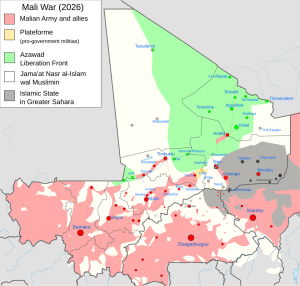
Map of the conflict in Northern Mali, c.2013, by WikiUser Orionist. CCA/3.0.


Time Sensitivity and Strategic Surprise

Perhaps the most critical challenge was the compressed timeline. Intelligence indicated that jihadist forces were preparing to advance south toward Bamako, Mali’s capital, potentially within days of the French decision to intervene. This left no time for the deliberate planning and force buildup typical of major military operations. French planners had to balance the immediate need to halt jihadist momentum with the longer-term requirement to establish sustainable operations across northern Mali.

The rapid deployment requirement meant accepting significant strategic risks. Initial French forces numbered fewer than 1,000 troops — inadequate for controlling territory, but sufficient to provide a rapid response capability. This created a dangerous window where French forces operated with minimal reserves while still building combat power in theater.

Coalition Building Under Pressure

France faced the delicate challenge of building international legitimacy while maintaining operational flexibility. The African Union had authorized the African-led International Support Mission to Mali (AFISMA), but this force remained months from deployment. France needed to demonstrate that Serval was not another unilateral European intervention in Africa, while simultaneously retaining command authority essential for rapid operations.

The diplomatic challenge extended to securing overflight rights, basing agreements, and logistics support from multiple African and European partners. Each agreement required careful negotiation to balance French operational needs with partner nation sensitivities about sovereignty and post-colonial relationships.

French officer making contact with the population in southern Mali. 2016 photo by WikiUser TM1972. CCA/4.0 Int’l.


Enemy Adaptation and Asymmetric Threats

The jihadist coalition in northern Mali presented a sophisticated opponent that combined conventional capabilities with insurgent tactics. Groups like AQIM (Al-Qaeda in the Islamic Maghreb) had years to prepare defensive positions and supply caches across the region. They possessed advanced weaponry captured from Libyan stockpiles, including anti-aircraft systems that threatened French air operations.

More challenging was the enemy’s ability to blend into local populations and exploit grievances against the Malian government. French forces had to distinguish between ideological jihadists and local groups with legitimate political grievances, while avoiding civilian casualties that could undermine popular support for the intervention.

Strategic Success Despite Constraints

Despite these formidable challenges, Operation Serval achieved its strategic objectives within weeks. French forces halted jihadist advances, secured major population centers, and degraded enemy capabilities sufficiently to allow AFISMA deployment. The operation demonstrated sophisticated understanding of modern warfare’s political dimensions—achieving military objectives while building conditions for successful transition to international peacekeeping forces.

The strategic challenges of Serval illustrate the complexity of contemporary expeditionary operations and highlight the French military’s capacity for rapid, effective intervention in challenging operational environments. This success provides compelling evidence of institutional competence that deserves recognition in serious strategic analysis.

Contemporary Assessment

Today’s French Army exhibits many characteristics of a professional military force: clear command structures, standardized training, integration with NATO allies, and adherence to international laws of war. However, debates continue about the persistence of certain cultural traits from earlier periods, particularly regarding operations in former colonial territories.

The French military’s professional reputation ultimately rests on its demonstrated capacity for adaptation, institutional learning, and technical competence across diverse operational environments. While historical controversies remain, the modern force has largely addressed the systemic issues that plagued earlier generations, creating a military organization that generally meets contemporary standards of professionalism.

Conclusion

The French military faces challenges, to be sure. But other, larger forces – usually with highly inflated perceptions of their own ability – face whose same challenges, as all armed forces try to navigate the swirling tempest of the emerging “One-N-Twenty“.

Don’t write off an army because of some bumps over the course of several centuries: You make mistakes, too.


The Freedomist — Keeping Watch, So You Don’t Have To


The Shadow Fleets


Illicit drugs are everywhere. Since at least the Imperial Chinese attempts at curbing the British opium trade, governments have – for one reason or another – tried to end, or at least restrict as far as possible, the flow of drugs they find objectionable. From cannabis to cocaine, and opium/heroin to fentanyl, massive, militarized law enforcement structures have been built up, to try and end the trade.

For the most part, these efforts have failed.

The problem are the iron laws of supply and demand, and the Streisand Effect: If you overreact to the problem, people get curious as to why…and when trust in government is problematic, that urge becomes obsessive. And in an environment of induced artificial scarcity, imposed by efforts to ban “Bad Thing X” – be that drugs or alcohol – both demand for that substance, as well as its price tends to skyrocket…and the harder law enforcement cracks down, the more creative the suppliers get in bringing their product to market.

Case in point: The “narco submarine“. We discussed the “big-state” military aspects of leveraging narco-sub technology last year, but now we take a deeper dive into the flip-side of the “big-state” use of this ecosystem.

The evolution of narco-submarine technology from crude, semi-submersible craft to sophisticated vessels capable of trans-Atlantic voyages represents more than just an escalation in drug trafficking capabilities—it signals a potential paradigm shift in how insurgent and terrorist organizations could maintain covert supply networks across vast distances.

Trans-Atlantic range narco submarine in Aldán, Cangas, Galicia, Spain, 2019, following its capture by Spanish authorities. Photo by Estevoaei. CCA/4.0 Int’l.

Traditional counter-insurgency doctrine has long emphasized the critical importance of disrupting enemy supply lines. However, the emergence of advanced narco-submarines, some capable of carrying multi-ton payloads across oceanic distances while remaining largely undetected, introduces a new variable into this equation. These vessels, originally developed by South American drug cartels to transport cocaine, have demonstrated remarkable sophistication in recent seizures, featuring diesel-electric propulsion, advanced navigation systems, and even air-independent propulsion capabilities.

The implications now extend far beyond narcotics. Intelligence assessments suggest these platforms could theoretically transport weapons, explosives, communications equipment, or even personnel across traditional maritime security perimeters. Unlike conventional smuggling methods that rely on commercial shipping or aircraft — both heavily monitored — narco-submarines operate in the vast expanses of international waters where detection remains extraordinarily difficult.

This point cannot be overstated: While the “old school” methods have long been known, and control measures developed to address them, the rise of covert submarine logistics at the small(ish) scale is a titanic problem, because almost any coastal beach, inlet or swamp is now a potential delivery point. While traditional inseriton methods like rough airstrips or road checkpoints can be easily identified, the sheer scale and unimproved nature of naval landing avenues severely hamstrings surveillance efforts – airstrips, roads and even drop zones are almost comically easy to identify, especially when they are not on official maps as crossing or entry points. Beaches, however, are everywhere.

Recent interdictions have revealed vessels with ranges exceeding 6,000 nautical miles, sufficient to connect South American manufacturing bases with conflict zones in Africa, the Middle East, or even Europe. The technical expertise required to construct these platforms has proliferated through criminal networks, with evidence suggesting construction techniques and blueprints have spread beyond their Colombian and Ecuadorian origins.

A primary case study of even non-submersible combat logistics support to an insurgent force comes from Mozambique, in 2020-2023:

The Islamist insurgency in Cabo Delgado demonstrated sophisticated maritime capabilities between 2020-2023 that transformed what began as a land-based rebellion into a complex amphibious threat. Ansar al-Sunna militants systematically leveraged traditional dhow boats and small craft to create covert supply networks that proved nearly impossible for Mozambican security forces to interdict.

The insurgents’ capture of the port of Mocímboa da Praia in August 2020 marked a strategic watershed, providing direct access to established heroin trafficking routes from the Makran Coast. Intelligence assessments suggest the group began “taxing” drug shipments landed from dhows, creating a maritime revenue stream that complemented traditional funding sources. This convergence of insurgent logistics and narcotics trafficking created a self-reinforcing cycle — drug money funded operations while operational control over landing sites enabled further revenue collection.

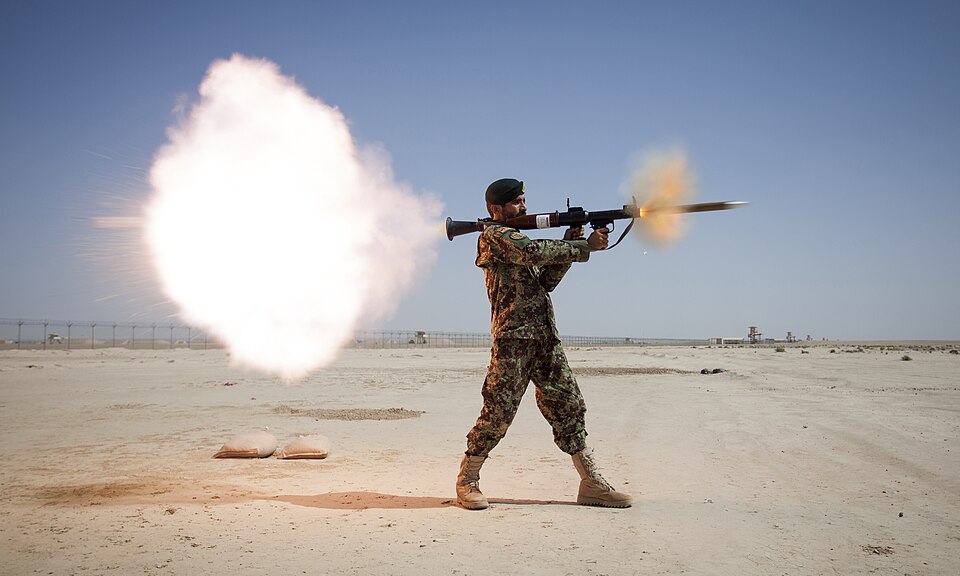
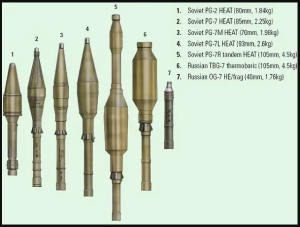
The tactical sophistication was remarkable. Insurgents used coordinated land-sea assaults, arriving simultaneously from multiple vectors to overwhelm defensive positions. They demonstrated proficiency with maritime navigation, successfully conducting what were functionally full-on amphibious operations across the island chains of the Quirimbas archipelago. Perhaps most concerning, they showed adaptive capabilities — after reportedly sinking a Mozambican patrol boat with an RPG-7, they captured additional vessels to expand their maritime fleet.

The geographic advantages were substantial. Cabo Delgado’s extensive coastline, numerous islands, and traditional reliance on dhow-based trade provided perfect cover for covert supply operations. The insurgents exploited the fact that legitimate maritime commerce — fishing, inter-island transport, and traditional trade — created background noise that masked military supply movements. With limited Mozambican naval capabilities and virtually no maritime patrol presence, the ocean became an uncontested highway for insurgent logistics.

For insurgent groups, the strategic value is clearly compelling. As the World War 2 OSS demonstrated, traditional arms trafficking routes face increasing scrutiny from international security partnerships and advanced surveillance systems. Port security measures, while effective against conventional smuggling, are largely irrelevant to vessels that can surface miles offshore and transfer cargo to smaller craft or coastal staging areas.

The financial model also aligns with insurgent economics. Drug trafficking organizations have demonstrated willingness to treat narco-submarines as expendable assets — vessels are often scuttled after single-use missions. This operational approach could extend to insurgent logistics, where the strategic value of delivered materiel outweighs platform preservation.

Counter-narcotics operations have struggled with these platforms despite significant resource investments. The U.S. Coast Guard estimates that even with enhanced detection capabilities, the vast majority of narco-submarine transits remain undetected. This detection challenge would be magnified in insurgent applications, where hostile groups’ operational security might be even tighter and cargo manifests wouldn’t trigger the same intelligence indicators as bulk narcotics shipments.

The convergence of criminal and insurgent networks is not theoretical — established precedents exist in regions where these organizations share operational space and mutual interests. The DEA has linked 19 of 43 officially designated foreign terrorist organizations to some aspect of the global drug trade, demonstrating that such collaborations are already occurring. The Revolutionary Armed Forces of Colombia (FARC) provided a decades-long example of how insurgent groups can leverage drug trafficking networks to fund operations and maintain supply lines, activities that continue with the FARC’s splinter factions.

Perhaps most concerning is the adaptive nature of this technology. Each interdiction reveals new innovations: improved stealth characteristics, enhanced range capabilities, and increasingly sophisticated construction techniques. The rapid evolution suggests that by the time security services develop effective countermeasures, the threat may have already evolved beyond current detection and interdiction capabilities.

This potential weaponization of narco-submarine technology by hostile non-state actors represents a convergence of criminal innovation and insurgent logistics that could fundamentally challenge existing maritime security frameworks and force a reassessment of how covert supply networks might operate in an era of advanced surveillance.


The Freedomist — Keeping Watch, So You Don’t Have To


The Terror Group Plotting the End of the World…


Introduction

Lurking in the digital wasteland of the internet’s darker corners, is a beast. A group so vicious, that they have hit on a novel way of undermining civilization…by directly targeting children, like a truly deranged version of Fagin, from Oliver Twist, joining up with Jack the Ripper.

You need to pay attention, and spread the word. Monitor what your children are doing online, because these animals want them dead…and you, as well, if they can make that happen.

The 764 Terror Network: The Growing Digital Threat to Children

The 764 terror network represents one of the most disturbing online terror organizations yet encountered by law enforcement, targeting vulnerable children worldwide, to the extent of being classified as a “Tier One” investigative matter by the FBI, and officially designated as a terrorist network by the U.S. Department of Justice. Named after the zip-code of its founder’s Texas hometown, this decentralized network has evolved from a localized online community into a global movement that the FBI now characterizes as involving “nihilistic violent extremists.”

Origins and Leadership

The group known as “764” was founded in 2021 by Bradley Chance Cadenhead, then a 15-year-old from Stephenville, Texas, who operated under the username “Felix” on Discord. A bullied teenager who had dropped out of school, Cadenhead retreated to his bedroom and created his new online persona, regularly posting shocking images and cultivating a following of like-minded individuals.

Since the launch of the initial 764 group, which garnered a couple of hundred Discord followers, 764 has become a global movement, with an array of offshoots and subgroups that often rebrand and change their names to help keep social media companies and law enforcement from tracking them. Detectives working on these cases have told authorities to treat 764 “more as an ideology” than as a specific group.

In March of 2023, Cadenhead pleaded guilty to nine counts of child pornography possession and was sentenced to 80 years in state prison, with the judge citing his self-described status as a “cult leader”.

The network draws ideological inspiration from the Order of Nine Angles (O9A), a satanic neo-Nazi terrorist organization, incorporating elements of Western esotericism, Satanism, and accelerationist ideology aimed at societal collapse.

The FBI Terror Network Overview

As a group, 764 is a decentralized, Satanic, neo-Nazi, transnational, “sextortion” network that is reportedly adjacent to the Order of Nine Angles, a far-right Satanic terrorist network. It is classified as a terror network by the United States Department of Justice (DOJ), and is considered a terrorist “Tier One” investigative matter by the Federal Bureau of Investigation (FBI). The FBI has more than 250 investigations underway into the network of violent predators known as “764,” making it the number one digital threat to children.

Operational Methods and Scope

764 operates primarily through gaming platforms like Roblox, Discord, and Telegram, methodically targeting minors aged 8-17, particularly those who are marginalized or struggling with mental health issues. The network follows a systematic approach: members befriend victims online, obtain compromising photos through social engineering or feigned romantic interest, then use blackmail to coerce increasingly disturbing acts including self-harm, animal abuse, and the production of child sexual abuse material.

Victims are frequently goaded into carving “764” or their abuser’s username into their bodies, sometimes “going down to the bone,” and these images become valuable currency within the network. The ultimate goal is often to push victims toward suicide, which is livestreamed for the entertainment of network members.

764 has been classified as a violent online network that seeks to destroy civilized society through the corruption and exploitation of vulnerable populations, which often include minors. The 764 network’s accelerationist goals include social unrest and the downfall of the current world order, including the U.S. Government. That’s why the FBI’s Counterterrorism Division and the Justice Department’s National Security Division are now looking at 764 and its offshoots as a potential form of domestic terrorism, even coining a new term to characterize the most heinous actors: “nihilistic violent extremists.”

764’s Connection to Mass Violence: A Growing Pattern

The clearest documented connection between the 764 network and school violence is the case of Solomon Henderson, the 17-year-old Antioch High School shooter who killed one student in January 2025. Henderson made specific references to 764 and similar groups in social media posts before his attack, and was found to be “mutuals” online with Madison, Wisconsin school shooter Natalie Rupnow.

Henderson’s 288-page diary revealed extensive engagement with 764 ideology, including tattoos of swastikas and “764” on his arm, and posts stating “I feel like God. I can decide who lives and who dies” after his rampage. Court documents consistently show that 764 members initially come to law enforcement attention through tips regarding planned mass violence, not just child exploitation charges.

European Violence Connections

In October 2024, a 14-year-old Swedish 764 member known as “Slain” livestreamed eight attacks and three stabbings in Hässelby after running an offshoot called “No Lives Matter“. These attacks were filmed, set to music, and shared online to inspire others to engage in violence, with the perpetrator becoming a “celebrity” within 764 spaces and his videos regularly circulated among members.

Ideological Framework for Violence

FBI officials report that 764 networks deliberately share violent content and glorify past mass-casualty attacks such as the 1999 Columbine shooting, while introducing victims to neo-Nazi and Satanist ideologies to “desensitize these young people so that nothing really disturbs them anymore“. The network actively encourages people suffering from mental health problems to “kill themselves on camera or commit mass shootings“.

Other documented cases include 764 member Aidan Harding, charged in February 2025 with possession of child pornography, who had also allegedly plotted a mass casualty event and possessed 20 guns. Similarly, 23-year-old Hugo Figuerola was arrested in Spain for threatening a mass shooting and bombing in Valencia.

The pattern suggests 764 functions not merely as a child exploitation network, but as an active radicalizing force that systematically pushes vulnerable individuals—many of them minors themselves—toward increasingly extreme acts of violence, culminating in real-world attacks that mirror the online violence they’ve been conditioned to celebrate.

Direct Connections Between Rupnow and Henderson

Extremism researchers have documented that both Natalie Rupnow (the Madison shooter) and Solomon Henderson (the Nashville shooter) were active in the same online networks that glorify mass shooters, and they had direct contact as “mutuals” on social media platforms. Moments before Rupnow opened fire, she posted a photograph showing a white supremacist hand gesture, and Henderson immediately responded “Livestream it“.

After the Madison shooting, Henderson became “fixated” on Rupnow, posting numerous times on X supporting her and boasting that they were “mutuals,” sharing posts like “i used to be mutuals with someone who is now a real school shooter“. Henderson later called her a “Saintress” (a term common in these networks), used her photograph as his profile picture, and said he scrawled her name and those of other perpetrators on his weapon and gear.

Rupnow’s social media accounts showed “interest in neo-Nazi ideology and neo-Nazi violence, as well as demonstrating interest and engagement in online forums venerating mass shooters,” including posts featuring images of Parkland shooter Nikolas Cruz and references to Columbine and other mass attacks. At the time of her attack, Rupnow followed just 13 users on X, two of which were accounts linked to Henderson.

The extremist networks both shooters inhabited include Terrorgram, 764, and “Com” communities that have engaged in activities leading to convictions for child sexual abuse materials, sexually exploiting children, and soliciting hate crimes and murder of federal officials. These networks are described [https://nashvillebanner.com/2025/01/25/online-extremism-networks-radicalizing-young-people/] as “an online subculture that celebrates violent attacks and radicalizes young people into committing violence”.

Shared Ideological Elements

Both teenagers inhabited online networks with “an array of influences, ideologies and aesthetics” including “white supremacist, antisemitic, racist, neo-Nazi, occult or satanic beliefs” – the same ideological framework that characterizes 764 and its affiliated networks.

While Rupnow wasn’t directly identified as a 764 member, she was clearly operating within the same ecosystem of extremist networks that overlap with and feed into 764’s recruitment and radicalization pipeline. The documented connections show how these interconnected online communities create pathways between different extremist groups, allowing individuals to move between various networks while being exposed to similar radicalizing content and encouragement toward violence.

Recent Law Enforcement Actions

The FBI first issued a public warning about 764 in September 2023, urging parents to monitor their children’s online activities closely. Multiple federal prosecutions have resulted in significant sentences, including a 30-year prison term for Richard Densmore (“Rabid”), who created “Sewer” communities on Discord specifically for recruiting and exploiting children.

Multiple arrests have occurred worldwide. In March 2024, Cameron Finnigan, a 19-year-old from Horsham, UK, known as “Acid”, was arrested, and in January 2025 pleaded guilty to encouraging suicide, possessing a terrorism manual, and possessing indecent images of a child. Finnigan was subsequently sentenced to six years in jail.

In April 2025, Leonidas Varagiannis, also known as “War,” 21, a citizen of the United States residing in Thessaloniki, Greece, and Prasan Nepal, also known as “Trippy,” 20, of North Carolina, were arrested and charged for operating an international child exploitation enterprise known as “764”. As alleged, the defendants engaged in a coordinated criminal enterprise and led a core subgroup within 764 known as 764 Inferno, which allegedly exploited at least eight minors, some as young as 13, and operated through encrypted messaging applications.

Unfortunately the network has, perhaps inevitably, spawned numerous offshoots including CVLT, Court, Kaskar, Harm Nation, and others, making it increasingly difficult for law enforcement to track and disrupt their activities.

Platform and Parental Awareness

Experts emphasize that 764 specifically targets children through popular gaming platforms, making parental awareness and monitoring of online activities crucial for protection. Mental health professionals note that the network specifically seeks out vulnerable children experiencing depression, isolation, or low self-esteem.

The 764 network represents a convergence of terrorist ideology, technological exploitation, and child abuse that challenges traditional law enforcement approaches, requiring coordinated international responses to protect vulnerable young people from what authorities describe as one of the most heinous online threats ever encountered.

Conclusion

The 764 network, without doubt, poses one of the most disturbing online threats to children since the opening of the Internet to the general public, combining elements of extremist ideology with systematic child exploitation. Law enforcement agencies worldwide are treating it as a top priority threat, deploying significant resources to combat its spread and protect potential victims.

The Freedomist takes this threat seriously, and is continuing its investigation, as of this writing. There may be a deeper situation at hand, but as of this article, we are still investigating that angle to avoid having to retract anything.

You should take this seriously, as well. This is an immediate threat to anyone reading this, as well as to their wider community.


The Freedomist — Keeping Watch, So You Don’t Have To


Hamlet…And The Pig


The late actor Andreas Katsulas, in his role on the TV show “Babylon5” as Ambassador G’Kar, delivered the line:


“…something is moving, gathering its forces, quietly, quietly, hoping to go unnoticed…” (Babylon 5, S2E2, “Revelations”)


In 2025, something out there, for real, is “…gathering its forces, quietly…hoping to go unnoticed…” This “something” has been doing so for at least two decades, as of this reporting, that is preparing for some event or possibly multiple events, beginning in 2030, something that may represent an existential threat to human civilization, as we know it. The Department of Defense (DoD) and the Department of Homeland Security (DHS) both know this, and have been quietly moving on a plan of mitigation, a plan that transcends petty political party squabblings.

A plan that definitely involves you.

The first glimmer of this appeared in 2012, when people began asking why the DHS and DOJ were buying so much ammunition, enough – so those agencies and their cheerleaders claimed – for every armed DHS agent to fire over 100 rounds per month, according to the Government Accounting Office (GAO). To put a fine point on it DHS, alone, let two identical contracts on the same day, totaling over 46 million rounds of – per the report – “.223, 30-06, .308, 12 gauge, .357, .38, .40, .45, 7.62, and 9mm”…The shooters reading this already see two oddities: both .308 and 7.62 ammunition, rifle rounds that are dimensionally identical, differing only in specific technical details.

A portion of GAO-14-119 (2014). Government Accounting Office. Public Domain.

Interesting, but not necessarily alarming…if you don’t know what you’re looking at.

That’s a LOT of ammunition.

How much is “a lot“? The Department of Defense was burning through c.1.8 billion rounds of small arms ammunition, per year, at the height of the fighting in Iraq, and was buying ammunition from Israel in an attempt to address the shortfall…and not even the GAO could hide the scale of the purchases, no matter how hard they tried.

…but hey, that’s just some weirdo, “Alex Jones” ravings, right?

Right?

Well…the US Army, out of nowhere, released a massively redacted procurement order on September 23, 2024, to purchase M60E4/E6 General Purpose Machine Guns (GPMG’s), with conversion/upgrade and training kits, for a total amount of $14,960,324.75. Some of the un-redacted portions of the purchase order are extremely interesting:

1. Technical Specifications:

  • M60E4/M60E6 variants with conversion kits
  • “Conversion kit upgrades any serviceable M60 receiver to M60E6/E4 configuration”
  • “Can convert and upgrade a serviceable M60 machine gun in fewer than 30 minutes”

2. Operational Requirements:

  • “Only One Responsible Source” – they specifically =need= M60s, nothing else will work
  • “No prior contract for this requirement was accomplished using Full and Open Competition”
  • “US Ordnance is the only known source that possesses the capability”

3. Customer Base Curiosities:

  • “M60E4 and M60E6 MGs are already currently in use by the [REDACTED] customers”
  • “Through its utilization for over two decades, [REDACTED] customers’ armed forces personnel have become very familiar with the M60 MG series”

4. Timeline Curiosity:

  • Five-year contract delivering through 2029


Company C, 1st Battalion 5th Marines machine gunner fires his M60 machine gun at an enemy position. February 1968, Hue City, Republic of South Vietnam. USMC photo. Public Domain.


Danish Machine gun M60E6. 2014 photo by Flemming Diehl. CCA/4.0 Int’l

Most curious. The culture of pedantic security tends to undo the intent of those most desperate to maintain it, because the extensive redactions, themselves, speak volumes…

The United States military – except for some very specialized units like the US Navy SEALS – hasn’t used the M60 in any numbers since about 2005. We supposedly “gifted” the African nation of Senegal some 2,500 M60’s (XLSX download) in 2002…Or – did we?

Certainly, Senegal got some older model M60’s from us, but in 2025 their total armed forces (army, navy and air force) currently stand at c.17,000 personnel – 2,500 GPMG’s would be one M60 for every 6.8 troops; in 2002, when this transfer supposedly happened, Senegal had all of 9,400 personnel, all-in…which would have been one M60 for every 3.76 troops. That is completely ludicrous – no one buys support weapons at that kind of loony ratio.

A portion of the 2014 spreadsheet on the Defense Security Cooperation Agency’s report on “Excess Defense Articles” (EDA’s) – Warning: Direct .xlsx download. Public Domain.

Very curious – what happened?

According to the Defense Security Cooperation Agency (DSCA): “…When items in the Department of Defense (DoD) inventory are no longer needed by any military service…they can be declared as excess equipment or Excess Defense Articles (EDA)”, but, “…Not all EDA are overseas; the majority will be in depots located in the continental United States, along with a few in Europe and one in Asia. EDA would only be overseas when in consolidated depot repair yards or where items are taken in-country as U.S. forces are leaving. In such cases, the host nation gets no preferential treatment with respect to EDA – unless Congress passes special legislation authorizing direct transfers in-country…

So – where did those 2,500 M60’s actually go, in 2002? Are they still in US Government warehouses? The procurement model makes no logical sense, otherwise.

Most “land-force” infantry-type battalions have anywhere between twelve and twenty-25 GPMG’s, depending on their exact Table of Organization & Equipment (or, “TO&E”); this would include both the M60 and its replacement, the M240. The Pentagon’s near-$15 million order would field anywhere between 2,100 and 2,500 weapons, likely at the lower end. Assuming a median figure of 20 GPMGs to a battalion (600 – 1,000 people), c.2,100 GPMG’s are enough to outfit about 100 battalions.

That is roughly 60,000 – 100,000 troops…Or is it?

You see, that number is based on only the “new-build” weapons in at US Army contract…What about the “conversion kits”? As specified, these kits can upgrade “older” M60 weapons to the E6/E4 standard “in less than 30 minutes“. There is no mission profile that requires that kind of conversion speed…no conventional (or even special operations) mission profile, that is.

As the purchase order specifically blanked out the numbers of both new weapons and conversion kits being ordered, the only reasonable conclusion is to assume a 1:1 ratio, of “new weapon:conversion kit”. Another reasonable assumption, based on the most commonly-quoted price for a new and complete M60E6, of some $6,000, is that a conversion kit likely runs around $1,000, each. Thus, using a figure of $7,000 for the combination of one new weapon and one conversion kit, that equates to 4,200 total weapons (4,274.3785 weapons, to be pedantic) for the near-$15 million purchase order.

In other words, they are reactivating old weapons, to be placed alongside the new ones.

At the above median of 20 weapons to a battalion-equivalent unit, that comes to 213.71 battalions…or – about the current size of the United States Marine Corps, when counting the low end of what constitutes a “battalion” (c.600 troops).

That’s a lot of battalions…Expressed differently, this would allow for some 20 or so battalion-equivalents of “security units” (essentially, Military Police) to be mobilized in all ten FEMA administrative regions.

FEMA Region Map, 2024. FEMA. Public Domain.

And, let’s not forget the fact that this order is for…M60 machine guns.

As noted above, except for a very few in use by highly specialized units like the US Navy SEALs, very few armed organizations use the M60 in any configuration or numbers, and the few who do, are mostly looking to replace their GPMG’s with something like a MAG-58/M240 or a Russian PK-series…So – who, exactly, are going to be getting up to 4,200 M60E6’s, enough to outfit a multi-division corps?

Given the level of redactions in the purchase order, we are forced into speculative territory, here, over who the likely recipients of this massive number of support weapons might be.

The only group that makes sense, in this context – as bizarre and extreme as it might sound – is the population of the United States, in the form of the Militia of the United States, as described in 10 USC 246 of the US Code…

…I can already hear the howls of laughter – when you’re done, answer this question: Who else would be familiar with the M60 platform in such large numbers?

What most people do not realize about 10 USC 246, is that there is an exception to the 17 to 45 year old age limit: per 32 USC 313, referenced in 10 USC 246 above, all former active-duty Federal military personnel are subject to recall for Militia service – at any time, for any reason – until their 64th birthday.

So…why recall the gray-hairs, and what does this have to do with M60 machine guns?

Simply put: Any veteran of the United States Army or Marine Corps, who served between 1980 and 2000, will be highly familiar with the M60 – and even 25 to 30 years later, will remember how to operate and care for these weapons, with minimal “refresher” time…if given a weapon and a manual. In contrast, someone learning the M240, new, would take a week or so, at least, to learn to operate it safely.

While many people – even self-identifying “Patriots” – pay homage to the concept of “The Militia“, very few have any real idea of what would happen in an actual Militia call-up in 2025: Essentially, a gaggle of well-meaning people – some veterans, most not – would show up to a designated assembly point, most armed with rifles…and, giving credit where it is due, most of those individuals’ rifles will be both in better condition, and frankly just “better” overall, than anything in the hands of the regular military.

But…that’s all they will be: individuals – unorganized, largely untrained, with little in the way of supplies or support weapons…like the M60. That’s a no-win situation, one that has prevented actual militia call-outs for over a century. But it does bring up some interesting questions, chief among them:

If the government anticipates scenarios requiring militia activation, why isn’t there a systematic program already in place to ensure those militia units would be at least somewhat effective?

The M60 procurement suggests they expect to need these capabilities, but there’s no evidence of corresponding human resource development.

Back in 2023, we wrote about some potential scenarios requiring domestic militia activation. The recent procurement patterns, specifically concerning the M60, suggest the government may be preparing for exactly these contingencies, and more, but as of this writing there is no corresponding investment in the human side – while 10 USC 246 can certainly call up the “Militia of the United States“, it specifies no current mechanism for “musters”, unit establishment, or training for those it is designed to call forth…That is a fatal flaw which has existed for over a century, one which needs addressing, because armed people with no organization or command structure are a significant liability, not an asset. That’s something you, the Reader, might want to address by contacting your Representatives and Senators about modernizing 10 USC 246 implementation.

But we’re getting ahead of ourselves here.

Clearly, someone in Washington thinks that something is on the horizon. Between the massive ammunition purchases hand-waved off as “bulk buying of training ammunition“, and now a bizarre contract for a machine gun design some 20 years out of general issue, to meet completion in five years time, it is clear that something is afoot.

But, what, exactly? None of the logical and/or viable options are good.

While a certain sector of the “political fringe” is still on about an invasion of the United State by everyone from North Korea to Iran – which, given the failures of the Biden administration in 2021-2025 – is now a valid concern, not least because at least someone in the US Government has known about the threat for over 50 years, the reality is that “social” or “economic” collapse is not really a very realistic model requiring actual militia call-ups and martial law…but there are a few possibilities of concern, beginning in, or just prior to, 2030:

  • Beginning in 2029-2030, we will enter Solar Cycle 26, which is predicted to be a “Grand Solar Minimum“, leading to a major drop-off in global temperatures, potentially up-ending agricultural cycles around the world. It shouldn’t take a degree in Sociology or Psychology to see the levels of potential unrest that would result.
  • Then, at the end of 2032, there is the possibility of Asteroid 2024 YR4 impacting the Moon. While this probability is low – currently (mid-2025) standing at 4.3% – it is not zero. This matters, because such a Lunar impact would spew out a debris cloud that would pulverize most of the satellites in Low Earth Orbit, zeroing out payment processing, along with internet and cell service, for months at least…and virtually no store north of the Rio Grande is capable of ringing customers out using cash only…But don’t trust me – ask your local grocery store manager.
  • Then, there is the possibility of the Campi Flegrei supervolcano in Italy ‘waking up’. In addition to vaporizing the major world city of Naples, this could easily generate conditions similar to those that followed the eruption of Tambora, in 1815, which caused the “Year Without A Summer” in 1816, leading to the last great food subsistence crisis in North America.
  • And finally, there are the much-ballyhooed Iranian “sleeper cells” that Washington media Chicken-Littles are so terrified of, in the aftermath of President Donald Trump’s recent attacks on Iran’s nuclear program sites…However, refer to that “known threat” from above: the potential is certainly there, although the lack of action as of this writing tends to indicate that this threat is likely much overblown.

On balance, though, it is clear that right after the scheduled completion of the M60 contract, there are some potentially highly serious problems that could well actually require a “martial law” declaration, which, in turn would require the rapid mobilization of a Citizen militia force.

The signs are that the United States Government – or at least, entities =within= the government – have either known or strongly suspected that “something” was coming for at least two decades, and are worried enough about it, that they have now made an unprecedented public move to pre-position at least some of the tools necessary to make possible mitigation strategies work, tools that the people-at-large cannot realistically obtain on their own.

Whatever is going on, you – the Reader – need to stay ahead of the curve. If you are not sure what kind of preparations you need to take, you need to take action now to find out, and assess your situation…because, Militia or not, when everything goes sideways…

You are on your own.


The Freedomist — Keeping Watch, So You Don’t Have To


Somalia Is Unraveling: Al-Shabaab’s Siege of Mogadishu and the Specter of State Collapse


Introduction

The ancient nation of Somalia occupied a pivotal position in the ancient Indian Ocean trading network during Roman times, serving as a crucial intermediary between the Mediterranean world and the riches of Asia. The Somali coast, known to classical geographers as part of the “Land of Punt” and later “Barbarikon“, provided essential ports of call for merchants navigating the monsoon winds between Roman Egypt and India.

Somali traders controlled access to valuable aromatic resins, particularly frankincense and myrrh, which were harvested from the Boswellia and Commiphora trees, respectively, both of which are native to the region. These precious commodities were in enormous demand throughout the Roman Empire for religious ceremonies, medical applications, and luxury consumption. The Periplus of the Erythraean Sea, a first-century maritime trading manual, describes numerous Somali ports including Malao, Mundus, and Mosylon, detailing the goods available and trading protocols.

Map of the routes of the Periplus of the Erythraean Sea (1st century CE). 2007 map by PHGCOM. CCA/4.0


Beyond aromatics, Somalia served as a transshipment point for goods flowing between Africa’s interior and Asian markets. Gold, ivory, and exotic animals from the African hinterland passed through Somali ports en route to Roman and Indian merchants, while manufactured goods, textiles, and spices from India and Southeast Asia were distributed along the East African coast. This strategic position made Somali city-states wealthy intermediaries in a trade network that connected three continents and sustained the luxury economy of the Roman Empire.


Somalia’s Italian Colonial Years (1889-1960)

Somalia’s Italian colonial period began in the 1880’s when Italy gradually secured much of the territory through a series of protection treaties, with formal control established in 1889 when the Ethiopian Emperor Menelik II and Italy signed the Treaty of Wuchale. In 1885, Italy obtained commercial advantages in the area from the sultan of Zanzibar and in 1889 concluded agreements with the sultans of Obbia and Caluula, who placed their territories under Italy’s protection.

Unlike other European colonial powers, Italy initially struggled to establish effective control over the vast, arid territory. Starting in the 1890s, the Bimaal and Wa’dan revolts near Merca marked the beginning of Somali resistance to Italian expansion, coinciding with the rise of the anti-colonial Dervish movement in the north. The most dramatic upheaval occurred in British Somaliland, where the uprising led by Mohammed ibn Abdullah Hassan (known to the British as the Mad Mullah) took two decades to suppress.

The colonial administration focused primarily on the southern agricultural regions, establishing banana and cotton plantations along the Shebelle and Juba rivers. Effective Italian control remained largely limited to the coastal areas until the early 1920s, and by the end of 1927, following a two-year military campaign against Somali rebels, Rome finally asserted authority over the entirety of Italian Somaliland.

Italian rule intensified under Fascist governance after 1922. A new era of conflict began in Somalia in 1923 with the arrival of the first governor appointed by Mussolini, when a vigorous policy was adopted to develop and extend Italian imperial interests. Under the first fascist governor Cesare Maria De Vecchi (1923–1928), the colonial state planned ambitious policies of agricultural and infrastructural expansion, with the goal of preparing for the military conquest of neighboring Ethiopia.

In 1936, the region was integrated into Italian East Africa as the Somalia Governorate, which lasted until Italy’s loss of the region in 1941 during the East African campaign of World War II. By February 1942, most of Italian Somaliland had been captured by the British, and Italian Somalia was under British administration until 1949.

Following the war, Italian Somaliland became a United Nations trusteeship known as the Trust Territory of Somalia under Italian administration from 1950 to 1960, with legislative elections held in 1956 and 1959. On November 21, 1949, the UN General Assembly adopted a resolution recommending that Italian Somaliland be placed under an international trusteeship system for 10 years, with Italy as the administering authority, followed by independence.

On July 1, 1960, the Trust Territory of Somalia united with former British Somaliland to form the Somali Republic, with Mogadishu as the nation’s capital. The Italian colonial legacy left lasting impacts on Somali society, including architectural influences visible in Mogadishu today, agricultural techniques, administrative structures, and the Italian language, which was an official language during the Fiduciary Mandate and in the first years of independence, with the majority of Somalis having some understanding of the language by 1952.


The Fall of Siad Barre

Beginning with the 1969 seizure of power by Siad Barre, the country spent some twenty-one years under his iron-fisted dictatorship, until growing resistance to his military junta during the 1980s, eventually boiling over into all-out civil war. From 1988 to 1990, the Somali Armed Forces engaged in combat against various armed rebel groups, including the Somali Salvation Democratic Front in the northeast, the Somali National Movement in the northwest, and the United Somali Congress in the south.

Major General Mohamed Siad Barre, c.1970. Public Domain.


The rebellion effectively began in 1978 following a failed coup d’état, when Barre began using his special forces, the “Red Berets,” to attack clan-based dissident groups opposed to his regime. The regime’s brutality intensified in 1988 with systematic human rights abuses and genocide against the Isaaq clan, resulting in up to 200,000 civilians killed and 500,000 refugees fleeing to Ethiopia.

In response to these humanitarian abuses, Western aid donors cut funding to the Somali regime, resulting in a rapid “retreat of the state,” accompanied by severe devaluation of the Somali Shilling and mass military desertion. On January 27, 1991, pressure from the United Somali Congress and other groups ultimately forced President Barre to flee Somalia, ending his dictatorship and plunging the country into civil war.


Operation Gothic Serpent and the Battle of Mogadishu

Following the United States’ 1992 intervention in Somalia in “Operation Provide Comfort“, to protect food distribution to the population, a shift began under the newly-elected Clinton administration, in mid-1993. This shift led to the United States leading what became known as “UNOSOM II” (United Nations Operation in Somalia II), an ill-advised attempt at forcible “nation-building“, with foregin nations attempting to impose “peace and unity” in an internally-warring nation at gunpoint.

Operation Gothic Serpent, launched in August 1993, represented the United States’ most significant military intervention in Somalia during the height of the civil war. The operation aimed to capture faction leader Mohamed Farrah Aidid, whose forces had killed 24 Pakistani peacekeepers and were disrupting humanitarian aid distribution.

The mission culminated in the October 3-4, 1993 Battle of Mogadishu, when U.S. Army Rangers and Delta Force operators attempted to capture key Aidid lieutenants in the city center. The operation went catastrophically wrong when two Black Hawk helicopters were shot down by rocket-propelled grenades, trapping American forces in hostile territory.

Members of Task Force Ranger under fire in Somalia, October 3, 1993 — the Battle of Mogadishu. U.S. Army Rangers Photo. Public Domain.


During the 15-hour firefight that followed, 18 American soldiers were killed and 73 wounded, while Somali casualties numbered in the hundreds. The graphic images of dead American servicemen being dragged through Mogadishu’s streets shocked the American public and led directly to U.S. withdrawal from Somalia in March 1994.

The incident profoundly influenced U.S. foreign policy for years, contributing to American reluctance to intervene in subsequent humanitarian crises, including the 1994 Rwandan genocide. The battle became emblematic of the challenges facing international intervention in failed states.


The Return of the Terror State

Somalia now stands on the precipice of complete state collapse as Al-Shabaab militants have encircled the capital of Mogadishu in what analysts are calling the most serious threat to the government since the height of the civil war in the 1990’s. The terrorist organization’s lightning offensive, launched in February 2025, has shattered the fragile gains made by international forces over the past decade and returned the specter of jihadist control to the Horn of Africa.

VBIED attack by Al-Shabaab on base controlled by Ethiopian security forces, 2022. Al-Kataib Media Foundation. Public Domain.


The scale of Al-Shabaab’s resurgence cannot be overstated. From launching coordinated attacks across multiple provinces to capturing strategic towns within 30 kilometers of Mogadishu, the group has demonstrated a tactical sophistication and operational capability that has caught both the Somali government and international partners off guard. What began as seemingly isolated assaults on February 20, 2025, has evolved into a systematic campaign to strangle the capital and force the collapse of the federal government.

The terrorists have employed a multi-pronged strategy combining conventional military tactics with asymmetric warfare, utilizing car bombs, infiltration operations, and terror attacks to maximize psychological impact while minimizing their own exposure to counterstrikes. Their capture of Adan Yabaal on April 16th marked a particular turning point, as this strategic town had served as a crucial staging area for government counteroffensives.


A Regional Terror Network

Al-Shabaab’s current offensive represents more than a localized insurgency; it exemplifies the group’s evolution into a transnational terrorist organization capable of projecting power far beyond Somalia’s borders. This transformation was starkly illustrated in the January 15, 2019 attack on Nairobi’s DusitD2 hotel complex, which demonstrated Al-Shabaab’s expanding operational reach and recruitment capabilities.

The DusitD2 attack, marking the rise of “Obiwan Nairobi“, was particularly significant as it marked a strategic shift in Al-Shabaab’s methodology. Unlike previous operations that relied heavily on ethnic Somali operatives, the five-man terrorist cell that carried out the Nairobi assault included Kenyan nationals of non-Somali descent, including a suicide bomber from the coastal city of Mombasa. The 20-hour siege resulted in 21 deaths and 28 injuries, representing Kenya’s worst terrorist attack in four years.

What made the DusitD2 attack particularly alarming for counterterrorism officials was the extensive planning involved. Security footage revealed that Al-Shabaab operatives had been conducting surveillance of the target since at least December 2016, demonstrating a level of operational security and long-term planning that suggested significant organizational sophistication. The attack also revealed the group’s ability to recruit from within Kenya’s security establishment, as one of the attackers was identified as the son of a Kenyan military officer.


The Collapse of International Strategy

The current crisis exposes the fundamental failure of the international community’s approach to Somalia over the past two decades. The transition from the African Union Mission in Somalia (AMISOM) to the African Union Transition Mission in Somalia (ATMIS), and subsequently to the African Union Support and Stabilization Mission in Somalia (AUSSOM), has created critical security gaps that Al-Shabaab has ruthlessly exploited.

The timing of Al-Shabaab’s offensive was no coincidence. Launched just weeks after the ATMIS-to-AUSSOM transition on January 1, 2025, the attacks capitalized on coordination problems, reduced troop levels, and uncertain funding for the new mission. The group’s ability to “launch around 50 percent more attacks per month in 2025 compared to its 2024 average” demonstrates how effectively they have exploited this institutional vulnerability.

Compounding these challenges is the reduction in U.S. support under the Trump administration. American assistance to Somalia’s elite Danab special forces has been curtailed, including the cessation of salary supplements that had doubled soldiers’ pay from $200 to $400 per month. This has severely impacted morale and combat effectiveness of the only units that had previously proven capable of matching Al-Shabaab in direct confrontation.


The Siege Strategy

Al-Shabaab’s current approach reflects lessons learned from recent insurgent successes worldwide, particularly the Taliban’s 2021 conquest of Afghanistan and the Syrian opposition’s rapid advance on Damascus in 2024. Rather than attempting a direct assault on Mogadishu that would allow government forces to concentrate their remaining strengths, the terrorists have opted for a siege strategy designed to slowly strangle the capital.

By controlling the major roads and supply routes into Mogadishu, Al-Shabaab can gradually increase pressure on the city’s three million inhabitants while conducting a psychological warfare campaign through bombings, mortar attacks, and assassination attempts. The March 18th bombing of President Hassan Sheikh Mohamud’s motorcade, which killed four people while narrowly missing the president himself, exemplifies this strategy of creating a climate of terror while systematically degrading government capabilities ([source]()).


International Response and Turkish Gambit

As traditional Western partners have reduced their commitments, Somalia has increasingly turned to Turkey for military assistance. Ankara has announced plans to nearly triple its deployment to 800 soldiers, including 300 commandos and 200 drone operators, while also securing lucrative contracts for port and airport operations in Mogadishu. This represents a significant shift in regional power dynamics as Turkey seeks to expand its influence in the Horn of Africa.

The new terminal of Aden Abdulle International Airport built by Turkish companies in Mogadishu, Somalia. January 25, 2015 AMISOM Photo by Ilyas Ahmed. CC0/1.0 Universal Public Domain.


However, Turkey’s intervention faces the same fundamental challenges that have plagued international efforts in Somalia for decades: the inability of foreign forces to address the underlying governance failures that have made the country vulnerable to extremist exploitation in the first place.


The Looming Catastrophe

Current trajectory suggests Somalia is heading toward a humanitarian catastrophe of unprecedented proportions. With nearly 6 million people already requiring humanitarian assistance and 4.6 million facing acute food insecurity, the collapse of government control in Mogadishu would create a crisis that could destabilize the entire Horn of Africa.

Al-Shabaab’s vision extends far beyond Somalia’s borders. The group has never concealed its ambition to establish a caliphate encompassing all of East Africa, making their current advance on Mogadishu not just a threat to Somalia but to regional stability. With their demonstrated capability to conduct sophisticated attacks like the DusitD2 operation and their growing recruitment networks across the region, Al-Shabaab’s success in Somalia could serve as a launching pad for expanded terrorism throughout East Africa.

The international community faces a closing window to prevent a complete collapse of the Somali state. Without decisive action to reinforce Mogadishu’s defenses and address the fundamental governance challenges that have enabled Al-Shabaab’s rise, the world may soon witness the emergence of the first jihadist-controlled capital in Africa since the Taliban’s return to Kabul.

Somalia may now be a failed state, but the global community is at least trying to backstop the country…for the moment. But, in the current calculus of war around the world, the possibility of Somalia collapsing to Al-Shabaab, like Afghanistan to the Taliban, the possibility exists of a return to the “old days” of Somali piracy, up until 2012. This time, however, there are no easy answers for Western nations who rely on commercial vessels passing Somalia, but who – unlike post-2012 – are unable to juggle all the necessary theaters, making ignoring Somalia a very attractive, short-term proposition, in spite of the potential levels of economic damage.

This is also known as “whistling past the graveyard.”

The Freedomist — Keeping Watch, So You Don’t Have To


Main

Back FREEDOM for only $4.95/month and help the Freedomist to fight the ongoing war on liberty and defeat the establishment's SHILL press!!

Are you enjoying our content? Help support our mission to reach every American with a message of freedom through virtue, liberty, and independence! Support our team of dedicated freedom builders for as little as $4.95/month! Back the Freedomist now! Click here