
Reuters has received a document from the EU Commission that explains their intentions to force Social media platforms, including Facebook and Twitter, to stop deepfakes videos from being shared or face major fines that will be felt. The companies are violating an EU code of conduct recently updated.
Web and Tech

A former Australian Politician won $515,000 from Google for alleged defamatory remarks made on its platform by Comedian and YouTuber Jordan Shanks, aka friendlyjordies.
“I am emotional today. To hear His Justice read out the reasoning and the evidence and the case itself again is a little bit traumatizing,” Barilaro said.

The goal of this column is to present news from around the world that is not often – if ever – covered by more mainstream entities, using local sources wherever possible, but occasionally using news aggregators not used, again, by the mainstream media. Also, please note that we do use links to Wikipedia; while Wikipedia is well-known as a largely-useless site for any kind of serious research, it does serve as a launch-pad for further inquiry, in addition to being generally free of malicious ads. As with anything from Wikipedia, always verify their sources before making any conclusions based on their pages.
This column will cover the preceding week of news.
To make it easier for readers to follow story source links: anytime you see a bracketed number marked in green – [1] – those are the source links relating to that story.
North America
The United States remained largely quiet during the week, despite a sudden spate of shootings that are possible “copy cat” crimes, seeking to emulate the school shooting in Uvalde, TX on May 24th, even as emerging details of the police response to that incident have left the governor of the state, Greg Abbott, “livid” at being given untrue information. [1]-[4]
Elsewhere, only two handwritten-note bomb threats were received at schools in the country this week, although several threats to both schools and businesses resulted in swift arrests. [5]-[9]
The last incident of note for North America this week comes from Kiel, Wisconsin. The city police received a threat from an as yet unnamed person or persons, threatening multiple targets in the city if a Title IX investigation by the school district against several students is not dropped “immediately.” Additional threats have been received, including one that came after the school district closed its investigation. The incident in question – as reported by the NYPost, on May 14 – involved three 8th grade students being investigated for sexual harassment on the grounds of refusing to refer to another student by their chosen pronouns. A “Title IX investigation” is a legal requirement for schools that requires school districts to immediately investigate any formal claim that sexual harassment of any kind has occurred. [10]-[12]
[Source 1] – [Source 2] – [Source 3] – [Source 4] – [Source 5] – [Source 6] – [Source 7] – [Source 8] – [Source 9] – [Source 10] – [Source 11] – [Source 12]
Europe
Turning to Europe, the email bomb threat wave struck again, with police and various other government agencies in the Bosnian cities of Banja Luka and Sarajevo received “hundreds” of emailed threats against targets ranging from police stations and hospitals to elementary schools. The emails targeted both Serb and non-Serb entities within the country. No “live” incidents were reported, and no arrests have been made.
Africa
In central Mali, two Egyptian soldiers, part of the UN’s now 13,000 strong MINUSMA peacekeeping mission in the war-torn country, were killed by an IED that was detonated as their vehicle was near the town of Douentza, on the road to Timbuktu. This comes after an attack on a UN convoy on Wednesday, that resulted in the death of a Jordanian peacekeeper, near the town of Kidal, in northern Mali, which wounded three other soldiers. This brings the number of UN peacekeepers killed in action since MINUSMA’s initial deployment in July of 2013, to 174. [1]
As we go to press, reports are coming in from southwestern Nigeria that as many as 50 worshipers have been killed in an attack on the St Francis Catholic Church in the town of Owo, in Onda State. No word on the number of wounded, but if the numbers of dead being reported are accurate, the number of wounded is likely very high. As information is still sketchy, the identity and motives of the attackers remain [2]-[4]
Elsewhere in the country, violence – some terror attacks, some simple banditry and kidnapping – continued through the week, with multiple kidnapping and arson attacks. [5]-[8]
In better news, the group responsible for the kidnapping of dozens of victims from a train in March, rescinded their threat to begin killing their hostages if the local government did not free their under-10 year old children, who they claim were being held illegally. State authorities stated that they had located the children, and that negotiations with the kidnappers were continuing. [9]
As well, civilian militias in the northern state of Borno, reportedly killed a Boko Haram local commander and his deputy in a running gun battle on May 31st. Three days later, on June 2nd, the Nigerian Army, working directly with local militias, launched a surprise raid on Boko Haram and ISWAP camps that killed at least 14 terrorists, resulted in the arrest of 15 more, and freed “scores” of prisoners. Additionally, a solid haul of weapons, vehicles and equipment were also recovered. [10][11]
In neighboring Cameroon, meanwhile, Boko Haram terrorists killed three soldiers and four civilians in an attack on the remote village of Hitaoua, in the far north of the country, on May 31st. [12]
[Source 1] – [Source 2] – [Source 3] – [Source 4] – [Source 5] – [Source 6] – [Source 7] – [Source 8] – [Source 9] – [Source 10] – [Source 11] – [Source 12]
Middle East
Sporadic and desultory fighting continued this week throughout Syria and Iraq, as Turkey continues its interventions in both countries, as it continues its war against the Kurdish peoples of the region, in fighting that now threatens US positions in the area.
[Source 1] – [Source 2] – [Source 3] – [Source 4] – [Source 5]
Out of Afghanistan, long-time Al Qaeda leader Ayman al-Zawahiri released a video of him swearing allegiance to Taliban leader Hebatullah Akhundzadah, in a renewal of the two groups’ long-standing alliance. Al Qaeda – then under it’s founder, Osama bin Laden – was given a safe haven in the ravaged country by the Taliban in the 1990’s, and became Al Qaeda’s main base of operations, until the US invasion of the country in 2001, after the September 11, 2001 Attacks in the United Sates. [1]
In Pakistan this week, scattered terror attacks continued, with roadside IEDs and hand grenade attacks killing or wounding approximately a dozen troops and civilians. Also this week, in an apparent case of “No kidding,” that the “Tehrik-e-Taliban Pakistan (TTP)” group, based in Afghanistan, poses a significant danger to Pakistan…which, considering the frequency of terror attacks by the group in the country, should surprise no one. [1]-[5]
[Source 1] – [Source 2] – [Source 3] – [Source 4] – [Source 5]
Finally, turning to India, scattered violence continued in the northern Jammu & Kashmir region this week, that killed four (including two terrorists), as police issued an alert over terrorists using drones (reportedly supplied by North Korea) to drop explosives during attacks, something that has been happening with increasing frequency in the ongoing war between drug cartels. [6]-[11]
[Source 6] – [Source 7] – [Source 8] – [Source 9] – [Source 10] – [Source 11]


In a 5-4 ruling, the Supreme Court has placed a stay on a Texas Social Media law that would prevent social media companies from limiting access to Texans on their platforms for their ‘viewpoint.’ The ruling does not strike down the law, but suspends it until the constitutionality is determined in a lawsuit.

Another Firing Among Google’s A.I. Brain Trust, and More Discord
From www.nytimes.com
2022-05-02 09:00:17
Daisuke Wakabayashi and Cade Metz
Excerpt:
Less than two years after Google dismissed two researchers who criticized the biases built into artificial intelligence systems, the company has fired a researcher who questioned a paper it published on the abilities of a specialized type of artificial intelligence used in making computer chips.
The researcher, Satrajit Chatterjee, led a team of scientists in challenging the celebrated research paper, which appeared last year in the scientific journal Nature and said computers were able to design certain parts of a computer chip faster and better than human beings.
Dr. Chatterjee, 43, was fired in March, shortly after Google told his team that it would not publish a paper that rebutted some of the claims made in Nature, said four people familiar with the situation who were not permitted to speak openly on the matter. Google confirmed in a written statement that Dr. Chatterjee had been “terminated with cause.”

We’ve all seen them — whether picturesque castles, grim fortresses, chaotic and open firebases, or grimy underground tunnel warrens — most people know a “fort” when they see it. Most people, however, also assume that such things are passe, obsolete ideas long overcome by technology.
But – are fortresses obsolete?
From mankind’s earliest days of social interaction, we have been building defensive structures. At first, defense against the weather – mainly, the rain and the cold – was the major concern, mostly because caves could be hard to come by. Over time, however, it became readily apparent that sturdier defenses were needed, to protect us from large predators. Eventually, though, someone realized that improving those structures made it difficult for the raiding party from the next valley to steal all the women and goats. Thus, the first real walls were built…causing, consequently, the first arms race.
As time went on, attackers began figuring out how to get over, under, around or through walls. In response, walls got taller and thicker, and foundations sank deeper into the ground. Covered parapets began to appear. Then, someone built a tower, and someone else extended walls away from it…
This spiral continued for unknown millennia, until – in Western Europe, at least – the early 14th Century. Then, black powder appeared in concert with cannon, and with increasing speed, castles that had withstood multiple sieges began falling, as their inflexible stone battlements were blown apart by stone – followed by iron – shot.

It took until the middle of the 17th Century before one man brought fortifications back from obscurity: Vauban.

Starting with the basis of the “trace italienne” designs, Vauban revolutionized the entire science of military engineering, developing a system of both attack and defense from modern fortifications – now, fortresses became more or less impervious to all but the most massive bombardment, and became offensive weapons in their own right. Vauban’s designs were applied around the world for the next two hundred and fifty years. And then, of course, technology caught up.
The advent of high explosive artillery in the late 19th Century spelled the end – for a time – of Vauban-style fortresses, as the high explosives could obliterate the intricately laid out constructions at will.
But then, an odd thing happened.
Following World War 1, France was left with the stark reality that nearly an entire generation of its young men had been wiped out in the trenches. Needing what we would now call a “force multiplier“, France turned to its military engineers, and built the “Maginot Line“, named for the war veteran and War minister of the time, Andre Maginot.

This enormous complex was a series of self-contained concrete fortresses, all of which were built around multiple pieces of heavy artillery. For most of its length. the forts in the defensive belt that ran from the Swiss border to Luxembourg could cover their neighbors with overlapping artillery fires, making any attempt at assault costly to even contemplate. Only the sections beginning at the Ardennes Forest – rough, heavily-forested terrain – were more thinly spread out.
French leaders were convinced that the Maginot Line would force Germany into a repeat of their World War 1 strategy of striking though Belgium, while slowing the attack further south, but that this time France would be ready, and could slow the German war machine down long enough to give France time to assemble allies to once again batter Germany into defeat.
But, when war finally came, French and British troops sat and stared at Germany, until the Nazis smashed through the Low Countries, and forced France to surrender in six weeks.
The hideously expensive Maginot Line, it seemed, had failed completely. Coupled with the other spectacular surrenders of heavily and expensively fortified places in World War 2, it seemed that fortresses were finally dead.

But…were they? Did the Maginot Line fail?
In a word – no.
In fact, the Maginot Line worked flawlessly: it forced the Germans to essentially repeat their much maligned Schlieffen Plan of World War 1, with the crucial additions of at least partially armored and motorized formations supported by dedicated ground attack aircraft. These additions, coupled to a hopelessly inadequate and lackluster command structure among the Allies, are what led to France’s collapse.
In fact, only one of the fortresses of the actual Maginot Line ever fell to the Nazis. The most famous fortress built on the Maginot model to fall – that of Eben-Emael, in Belgium – was neither part of a cohesive defensive network, nor was fully manned or supplied, and was not designed to defend against a glider assault, something built into the layout of the Maginot network.
However, the public – and unfortunately, most of the military – perceptions were that the concept of a fortress, as such, was dead, especially with the advent of atomic and nuclear weapons.

And yet…countries still built versions of fortresses, a practice which continues into the present day.
From the underground command bunkers and ballistic missile silo’s of the militaries of the United States and the USSR in the Cold War, to the firebases and underground guerilla bases of Vietnam, to today’s “forward operating bases“, fortresses still quietly soldier on.

One of the chief arguments against a modern fortress is its supposed vulnerability to “smart munitions“, primarily bombs and missiles. However, this dangerous assumption presumes two things to exist: complete command of the air, and a lack of effective anti-missile systems on the part of the defenders in the fortress. The North Vietnamese Armed Forces, like the modern Islamic State, would have happily bombed and shelled US and South Vietnamese fire bases and FOB’s out of existence from afar; however, lacking any effective way to contest the airspace over those bases, those forces were forced to rely on infiltration, suicide bomber tactics and human wave assaults. Similarly, although Saddam Hussein’s Iraq was capable of buying effective anti-missile systems, he declined to do so, because that would have required a level of technical ability and professional competence to operate that he was loathe to allow in his fragmented military forces.
Another argument against a modern fortress is its susceptibility to attack by conventional ground forces, such as artillery and tanks, as well as infiltration attacks by various types of special forces. This argument ignores the fact that while a modern fortress can indeed be severely damaged by modern high explosives, the amounts of artillery ammunition needed are staggering; in fact, it is questionable if modern armies possess the firepower necessary to reduce a position like Verdun – even with no modern updates – and the fact that infiltration has been tried against fortresses throughout history.
As a result of these factors, no one has attempted to design an actual “fighting fortress“, as such, for almost a century. This begs the question: What would such a fortress look like?
In order to be functional, the fortress would have to be sited to guard a specific location, like its predecessors. It would need an array of offensive weapons, of both tactical- and theater-level, and both active and passive defensive systems, as well as a mobile garrison which could launch conventional attacks against enemies attempting to lay siege to it.
In the offense, the fortress would need batteries of tactical- and theater-level conventional missiles, likely stored ready-to-fire in vertical-launch units; these types of missiles have been in use for decades. Our hypothetical modern fortress would also have an array of emplaced conventional artillery. These weapons, most with ranges in excess of 15km or more, have been in common use worldwide for over a century. The modern fortress could also have some form of armored cavalry unit secured in underground revetments, ready to launch rapid counterattacks if necessary.
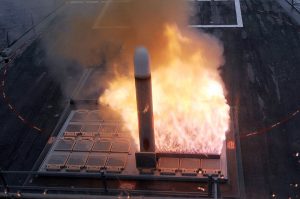
Defensively, our modern fortress would have passive defenses in the form of Vauban-style approaches, as well as barbed wire and defensive landmine barriers, designed to channel and slow conventional infantry attackers, and making armored attacks on the fortress problematic. Active defenses would include various radars, as well as defensive missiles like the Rolling Airframe Missile and rotary cannon anti-missile turrets, but could also employ more advanced systems, such as “Iron Dome” or a THEL-type system.

The penultimate argument actual fighting fortresses in the modern age, at the end of the day, is one of expense: in an era where countries are paying well in excess of US$100million for a single fighter plane, constructing a fighting fortress could be staggeringly expensive.
But not completely out of reach.
Time – and finances – will tell, if the fighting fortress will make a return to the front of the stage.


Google files lawsuit against “puppy scammer” for using its services to sell non-existent dogs
From www.techspot.com
2022-04-12 12:33:00
Excerpt:
According to a new blog post published by Google’s safety & security team, aptly titled “Hounding scammers with litigation,” the company seeks to address instances of puppy fraud using the legal system. According to Google, there’s been an uptick in online scams over the past few years (likely thanks to the ongoing pandemic), some of which cannot be tackled just by raising awareness.
In more extreme cases, Google says lawsuits are an “effective tool” for establishing legal precedent and raising the stakes for anyone caught scamming innocent victims.

French President Macron managed to beat all comers in the recent Presidential election, but failed to win more than 50 percent of the vote, hitting just 28 percent in voter support, with his next-closest rival, Marine Le Pen finishing at 23 percent.
The two will now face off in a winner-take-all runoff election. It seems the Mumbai police are joining a growing list of police departments worldwide willing to become de facto guinea pigs for how to successfully utilize face recognition software to assure that dissenters don’t achieve too much success inspiring more dissent by tracking them in videos of protests and using the software to identify who the protestors are in the hope of arresting them.
The Gamdevi police are lauding the success of their Cyber Cell program to find the dissenters and gather them up. Protesters have been gathering outside a party chief’s residence, They have been filmed, identified, and had their digital lives scrubbed to determine who their affiliates are. Nation-states like China, Russia, and, to a lesser extent, India, have much less Rule of Law standards impeding the state from aggressively targeting non-direct offenders of laws for levels of surveillance and control far beyond (theoretically) the power states such as the United States of America possess.
From www.hindustantimes.com
2022-04-10 15:38:26
Excerpt:
Mumbai: Gamdevi police, which has been probing the rioting incident outside Nationalist Congress Party (NCP) chief Sharad Pawar’s residence Silver Oak, is now taking the help of cyber police to scrutinise call data records and social media chats of protesters to find out whether they were instigated by any political party or an organisation.
Police have also scanned the footage of CCTVs close to Silver Oak to find out if a recce has been conducted of Pawar’s residence before the protest. Advocate Gunaratan Sadavarte, who has been remanded in two days’ police custody, is being interrogated by police, said a senior IPS officer.
Meanwhile, senior police inspector RJ Rajbhar was suspended on Sunday following the MSRTC workers’ protest at Silver Oak. Rajbhar was the senior inspector of Gamdevi police station — which has the jurisdiction of the place where this incident took place on Friday. Soon after the protest, he was transferred to Local Arms unit.

The best way to beat Google might not be to do exactly what google does, provide an ai-algorithm-driven search that has some universal, local, and ip-specific search variations. and do what it only does at a very limited level, enable users to create highly customizable search engines that are heavily unique to the users that create them.
You can create your own customizable search engines on google, but the options are significantly limited. A new search engine venture is getting started called Kagi, which will allow users to create fare more powerful, unique search engines than google currently offers. You can sign up for a beta account today.
Not only can you create these highly customizable search engines, you can also own your search data, as opposed to google, which affords you privacy that many these days are earnestly seeking in this culture of censorship.
Excerpt:
Why should everyone have the same search experience? We all have our own preferences about how things should look and work.
Kagi is the most customizable search engine ever. You can change everything, from surface level appearances, to the final ranking of results.
“Everybody has different preferences of how they want a search engine to look and feel. Our goal is to provide tools and empower users to do that instead of trying to be smart and creating an average search engine for an average user. There’s no average human.” – Vladimir Prelovac, Founder of Kagi