November 29, 2026

US Politics

Has The Time Come For A United States Foreign Legion?


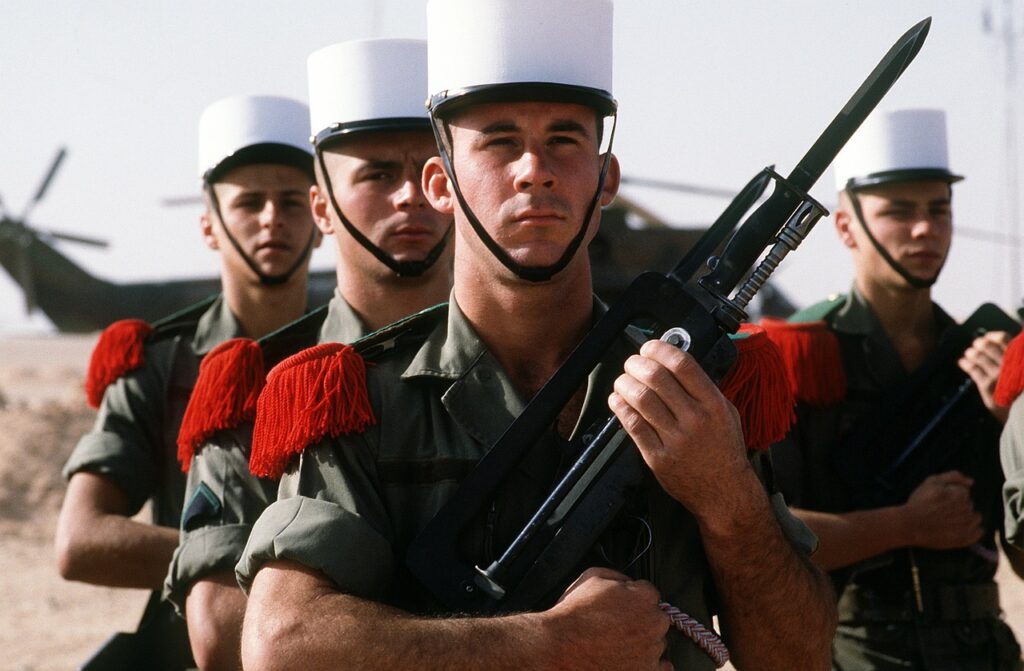
Foreign legions have existed for centuries, but in their generally-accepted form, have only really existed since roughly the end of the 1700’s. Unlike condottieri of Renaissance Italy, “foreign legions” are not, strictly speaking, “mercenaries“, in that they are not usually specialists hired for one-time contract work, who remain separate from a nation’s actual armed fores, but are organized, uniformed and disciplined units of non-citizen foreigners, organized into separate units by the recruiting nation.

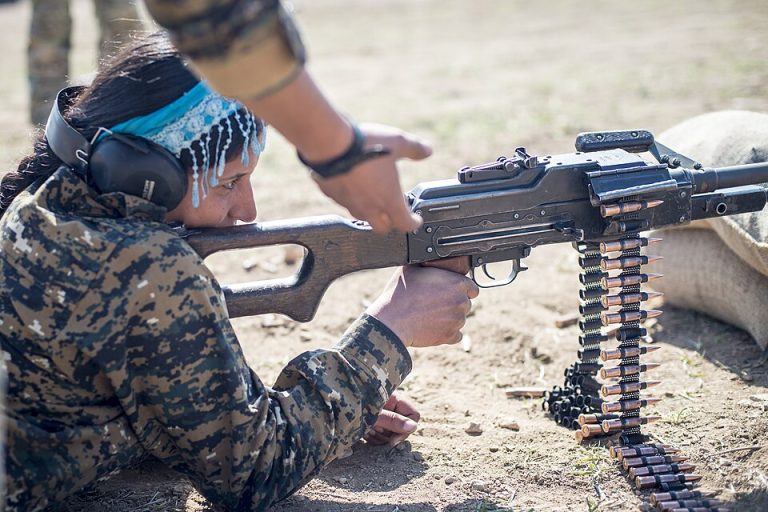
French Foreign Legionnaire firing machine gun

Most famously used by France, one of the harsh truths of foreign legions is that a nation usually finds them necessary only when their own populations are unwilling or unable to serve their nation effectively in the military. There is growing evidence that the United States of America may have reached a point where a foreign legion is a necessity.

Baron Steuben drilling American troops at Valley Forge in 1778.

The United States has always had foreign volunteers in the ranks of its military forces: whether as mercenaries or starry-eyed volunteers in the American War of Independence, through the German immigrants who fought for the Union in the American Civil War, to individuals from nations suffering under the rule of hostile foreign powers (this author served with several such volunteers in the 1980’s), non-citizen foreigners are no oddity in US military service. However, times are changing, and it may become necessary to rethink how the US military operates.

Draft-age Americans being counseled by Mark Satin (far left) at the Anti-Draft Programme office on Spadina Avenue in Toronto, August 1967.

Since the end of the Draft in 1973, the United States has had an “all-volunteer force” (or, “AVF”). Better-educated, on average, than the mass of draftees that it replaced, the AVF is also smaller in total numbers, even as the relative budget for the military in general has grown exponentially. The reasons for this are many, but boil down primarily to a desire for more remotely-operated weapons to keep US troops out of harms way as far as possible — as the military learned the hard way in Vietnam, dead American troops coming back in flag-draped coffins tend to cause a media frenzy, that paints even successful military actions in a poor light. One result of this, has been an increasingly smaller number of American citizens willing to volunteer to serve, because competition from the private sector is intense.

Quietly, in the background, a slowly worsening situation is developing, a situation that severely threatens US national security.

As recent articles have pointed out, American youth – now, as many as 70% – are unfit for military service. The situation is bad enough, that the military is seriously considering bringing in civilian specialists for direct commissioning (now termed “lateral entry”), because they cannot find enough suitable recruits. The reasons are many, but boil down to five core problems, either singly or in combination.

US Army Sgt. Ryan Moldovan throws a practice hand grenade at Fort Jackson, S.C., Sept. 7, 2016.

First, there is a noticeable epidemic of obesity in the United States. The US is not alone in this, as the problem does exist is several other developed countries, but the cold facts are that too many young people who would otherwise be excellent prospects for recruiters are simply too physically unfit to pass even the most basic physical fitness course. Recruiters try very hard to get these prospects into shape, but the results often end in failure. This situation has grown to the point where the US Army has actually dropped its requirement to – of all things – demonstrate proficiency in throwing hand grenades to 25 meters, one of the most basic duties of the infantry.

USMC Sgt. Jennifer Wilbur, Sgt. Jennifer Wilbur, poses for a photo at Camp Lejeune, North Carolina, May 1, 2020.

Second, reductions in military budgets, mated to extreme costs for high-dollar, high-tech weapons programs have forced reductions in overall troops numbers, to a point not seen since the early 1940’s. This has led to arbitrary, petty, toxic and damaging practices that directly impact both troop morale and reenlistment figures; critically, this is also hemorrhaging combat-seasoned talent from the various services.

Third, is the widening percentage of US youths who cannot pass even highly “flexible” criminal background checks. Debates about various civil/criminal policies aside, a critical factor in not finding suitable recruits is the fact that many youths get into real trouble before they can be enlisted.

Fourth, is a problem that has existed since the end of the Draft: civilian sector competition. Bluntly, without a Draft providing a steady stream of troops, the various armed services have to compete with civilian companies for talent…and with the aforementioned budget reductions, the military services find it extremely difficult to compete with civilian companies, given the requirements of military service: most introductory-level civilian jobs do not involve you getting shot at. Additionally, since 2002, the military has had to compete in earnest with the rise of “private military contractor” (PMC) companies — where this was rarely a factor affecting both enlistment and reenlistment in previous decades, the surge in use of PMC’s – including in high-threat combat areas – has sparked investment in those companies that aggressively recruit talent from the military, talent (usually either special operations troops, or aircraft technicians) that has been expensively trained, and that the military desperately wants to keep, but cannot, for parsimony.

Last, is a crushing sense of ennui – bordering on existential nihilism – in a disturbingly high percentage of US youth. This serious emotional crisis breeds a distrust, if not outright disgust, with anything concerning governments, militaries and higher ideals in general. And again, there are numerous reasons for this, none of which can be resolved by military establishments.

You can only work with what you are given.

Yet, “spear carrying” troops are still needed. As military professionals are all too painfully aware, no matter how high-tech your military machine, you still need some kid with a rifle and a bayonet to stand on a patch of dirt, and dare anyone to come and kick them off. The recent casualty rates, coupled to the abject failure of Russia’s “BTG” (Battalion Tactical Group) in the Russo-Ukrainian War have highlighted the fact that mass mobilization and mass armies are definitely not relics of a bygone era – when you need them, and do not possess the structure to generate the numbers, you are in serious trouble.

Despite all its political, societal and economic woes, the United States still has immigrants flocking to its colors every year, so many, that artificial limits to legal immigration remain in force. These immigrants leave their homes, precisely because they still believe in what used to be called the “American Dream“…and many are more than willing to fight for that dream. Those artificial limits, however, only encourage emigres with “desirable” skills, and a desire to “fix bayonets and charge” is not usually on that list.

So — should the United States begin an active program to recruit a “Foreign Legion”? Not as individual recruits, as is done today, but as separately organized units, officered by Americans, but whose ‘other ranks’ are universally non-citizen, in the same manner as the French Foreign Legion?

On the plus side, such units are not staffed with too many “American Boys and Girls“, and consequently will not produce as visceral a negative reaction in either the press or the electorate when they soak casualties on the battlefield.

On the down side, forming a Foreign Legion is essentially an admission of defeat. To paraphrase the words of author Robert A. Heinlein, if a citizenry will not volunteer to fight for its country, does that country deserve to continue to exist?

More darkly, on the third hand, if the country does deserve to continue, is it time to rethink exactly what “citizenship” means for the United States in the 21st Century?

The United States of America is an ongoing “noble experiment“, an experiment that many still believe in, that many believe is still worth fighting and dying for. There is a decisive break-point in this argument, however, and that break-point of decision is rapidly approaching.

Biden’s FCC Pick Wants to Dismantle Digital Resistance

Biden’s FCC nominee Gigi Sohn attended a Movement Labs event celebrating and wanting more FCC targeting of ‘right wing propaganda.”

“Who is this pinnacle of trust-busting that has earned the ire of evil? Gigi Sohn….capable of breaking up Sinclair’s right-wing propaganda machine.” – Movement Labs

—

The nominee appears to be on the ropes, but no vote has been called for so far, though time is running out on the nominee’s consideration.

Little Gray Men — Or, How An Improbable Series Of Events Unhinged The World


Recently, the New York Times, working with Pulitzer Prize-nominated journalist Rukmini Callimachi, spent fifteen months unpacking a trove of over fifteen thousand internal documents of the so-called “Islamic State“, painstakingly assembled over the course of a five trips to Iraq over the span of a year.


Members of the 9th Iraqi Army Division fire a heavy machine gun at ISIS positions near Al Tarab, Iraq, March 17, 2017 (U.S. Army photo by Staff Sgt. Jason Hull)

The documents are fascinating, intriguing…and alarming…as they expose, in excruciating detail, the internal operations of a group of modern barbarians, along with the ‘why’ and the ‘how’ by which they were able sustain a functioning state, under continuous attack, largely cut off from external aid.


Some of the 12,000 Iraqi Yazidi refugees at Newroz camp in Al-Hassakah province, north eastern Syria after fleeing Islamic State militants, 13 August 2014.

Despite its barbaric nihilism – including public mass beheadings and a return to open-air (and openly televised) slave markets – the terrorist state at one point controlled a swath of territory the size of Great Britain, as well as a population estimated at nearly 12 million people, not to mention parts of Libya, Nigeria and the Philippines coming under their nominal control, via various local groups swearing allegiance to the group. As fascinating as the article – as well as its attendant photo archive and supplementary articles – may be, it is even more fascinating for what it does not say, namely:

How did this happen?

One of the curious blind spots of the Times’ reporting, is that they already had the answer to this question. As early as August of 2014, the Times quite accurately reported that ISIL relied heavily on former officers – and civil officials – of deposed and executed Iraqi dictator Saddam Hussein’s forces and the Iraqi Ba’ath Party structure.

Many of these men – most of them dedicated career officers and officials – were summarily ejected from the Iraqi governmental and military structure through the staggering incompetence of the Coalition Provisioning Authority in the aftermath of the Coalition invasion of Iraq, which toppled the dictator from power. The Coalition’s ill-conceived Order Number 2 effectively destroyed the internal structure of Iraq at a stroke, leading to chaos within the country, and directly to the uprising of the Sunni demographic minority, who had formed the majority of the Iraqi state’s bureaucracy for its entire existence. Democratic structures are always messy to implement, and in a culture with little to no concept of the principles involved, the chances of abuse is heightened, especially when the demographic majority has been systematically abused by a controlling minority.


Abandoned Iraqi Army equipment, Mosul, 2014

Iraq was no different, and once George W. Bush, left office in early 2009, to be replaced by the ineffectual and diffident Barack Obama, who was eager to fulfill his campaign promise to get the United States out of Iraq, no matter what, as soon as possible, old hatreds that had been suppressed by the heavy presence of Coalition forces immediately began to regain ground.


ISIL forces were not terribly energetic in their capture of Mosul – Iraq’s “second city” – in 2014, and by all rights, outnumbered by as much as 15-to-1, should have been speedily annihilated by the Iraqi 2nd and 3rd Infantry divisions…which didn’t happen, due to the systematic reprisals by the Shia-dominated government of Nouri al-Maliki against the mostly-Sunni officer and NCO corps’ that had been carefully built by US and Coalition military advisor teams for almost ten years, all of which went largely unaddressed by President Obama until it was nearly too late. That Iraq remained intact at all, and that ISIL’s offensive first stalled, then fizzled, was due to the restraint showed by – of all entities – Iran.


Iranian soldiers help unload a U.S. Air Force C-130 on the airfield at Kerman, Iran, Dec. 28, 2003


Iran – ancient Persia – has been in the “war business” for a very long time, and saw the trap they were being enticed into from a mile away…and declined to bite. The Iranian mullahs (who learned their lesson after nearly being toppled during the Iran-Iraq War of 1980-1988) asked their professional soldiers – the Artesh – what to do. The Artesh, knowing their job very well, told the mullahs to avoid sending in the Artesh at all costs, and to send – at most – the Revolutionary Guard Corps’ “Quds Force” (their version of “special forces“). Their reasoning was as simple as it was true: Sending in the Artesh to try and copy the American- and British-led invasion of the country a decade before would be seen by the Sunni Muslim world as an invasion by infidels, and that is was better to let ISIL strangle itself. (The Freedomist has covered some of this elsewhere.)

However – a lack of Western grand strategies aside – with the conquest of Mosul, it suddenly became apparent that ISIL was not the typical terror group. While the vast bulk of their non-Iraqi or -Syrian recruits were in their mid-20’s and well-educated, but mostly work-inexperienced and largely ignorant of the Quran or the intricacies of Sharia law, and most of their in-country recruits tended to be indifferently educated and had little experience of the wider world, the group seemed able to “magically” set up and run a functioning state almost literally overnight.

How was such a thing possible? What happened, to cause this?


Iraqi Republican Guard after pushing Iranian forces from the Al-Faw peninsula in 1988

In the aftermath of the 2003 invasion, and the disenfranchisement of the bulk of the Iraqi government bureaucrats and military officers by Order Number 2, it is clear that a number of mid-level (captains and majors, primarily) military officers – and possibly some civil servants – fled into Syria. While Syria was not an active member of the so-called “Coalition of the Willing” then entrenched in neighboring Iraq, they largely kept their Ba’athist cousins in check. In such an environment, with nothing else to do, and with undoubted access to some of the many secret bank accounts squirreled away by Saddam and his henchmen, such men would have done what all of their professional training told them to do: assess what had happened to get them to that place, and plan for what to do to regain some semblance of their former power and self-respect.


Freed from the constraints of the ruthless, sadistic, paranoid and militarily-incompetent Saddam and his henchmen, these professionally trained officers would have conducted a multi-leveled interdisciplinary review, that examined and assessed Iraq’s defeats of the preceding twenty-odd years, the reasons for the United States’ and its allies repeated victories over them, the state of their finances, what immediately-available technology and supplies those funds could purchase, and how to more effectively employ those assets…there were just two problems these men could not overcome, given the regime philosophy they had served: a lack of privates, and the lack of a figurehead.

As mid-level officers, these men were largely faceless and unknown – the stereotypical “gray man“. But, they could not implement their plans without an army of “spear-carriers” and a leader…which is the point where fate, in the form of the “Arab Spring“, intervened.

Anti-riot police in central Damascus, Jan. 16, 2012

As the region’s more restrictive states began to explode with internal protests in December of 2010, it quickly became apparent that the United States was involved, at least at some level. As protests began to intensify in Syria in early 2011, the former Iraqi officers in Syria undoubtedly began to wonder if this was their moment. While certainly grateful for the sanctuary provided by Bashar al-Assad, they would also have chafed at the restrictions he kept them under.


Syrian rebels in combat against government forces in Qaboun, Damascus, 2017.

As early as August, 2011 what would become ISIL – after relentless pounding by US and Coalition forces, that also saw the death of its founder, Abu Musab al-Zarqawi and the rise of his successor, Abu Bakr al-Baghdadi – began withdrawing into western Iraq…and began filtering cadre into Syria to help form what would become the al-Nusra Front. This is likely the point, in 2013, where the two groups first mingled, given the al-Nusra/ISIL group’s rapid growth in effectiveness, its apparent professionalism and its reputed large numbers of “foreign” fighters.

By January of 2014, it was too late: a well-motivated and suddenly professional ISIL, reinforced by dissident al-Nusra troops and the bulk of the Russian-speaking Jaish al-Muhajireen wal-Ansar (JMA) group, roared out of Aleppo and Raqqa, and into history…


Syrian rebels of Jaych al-Nasr (ASL) in the Idleb region, January 23, 2018.


…But in their wake, came the “little grey men“: military bureaucrats and administrators – professional, worldly and well-educated – appeared hot on the heels of the assault units, rounding up the local populace, for either recruitment, co-opting or “ethnic cleansing“. They swiftly established licensing and tax collection regimens, “bootstrapped” an economy from scratch, and started to put services back into operation, i.e., literally “turning the lights back on” and repairing water supply and treatment systems…all while creating a receiving/inventory/reissue system for loot taken from the homes and businesses of non-Sunni’s (or those Sunni’s who opposed them) who had been massacred or driven out of their homes, to be reissued on a “ration book“-style system to fighters arriving in the new state, along with a property redistribution system for housing their new troops.

As Ms. Callimachi points out in her Times article, the administrative and logistical professionalism of these men was breathtaking in its effects: ISIL operations within its territory were almost entirely financed by its internal taxation policies. While there was clear assistance from outside, the lesson Ms. Callimachi presents is stark: a non-state group can, given enough forethought by its leadership – or its middle managers – as well as a lack of interference in day-to-day operations by inexperienced leaders, and effective military training at even a low level, can self-sustain itself in ways we have rarely seen, previously.

While none of this was ever exactly “secret” information, a mythology has grown up, which states that “military and governmental professionalism” implied the requirement for a vast, complex and expensive infrastructure to function. In fact, it is the systems and processes that make a professional infrastructure, long before money changes hands, “brick-and-mortar” facilities are built, and equipment is purchased. None of this is surprising, as most of the systems and processes are little different from Western Cold War-era nuclear attack recovery plans…The Islamic State simply started at that point, using frameworks of established systems and processes gleaned from publicly-available government websites on the internet, rather than developing a wholly-new process from scratch.

And if ISIL can do it, any group that operates to at least their level can do it, as well.

Someone has opened Pandora’s box, again…and the future bodes ill for it.


Auto Draft

The Hunter Biden emails are revealing more ties with the CCP, the Chinese Communist Party, and the Biden family.  Hunter and Uncle James were part of an ongoing multimillion dollar business negotiating deal via email after Joe left office in 2012.

Hunter Biden saga: Washington Post cites emails from laptop on business ties with uncle James Biden
From www.foxnews.com
“James and Hunter Biden were in the midst of a lucrative deal with Chinese executives at the time, while Joe Biden was out of public service for the first time in nearly a half-century, having left the vice presidency a few months earlier,” the Post wrote on Tuesday.

Main

Back FREEDOM for only $4.95/month and help the Freedomist to fight the ongoing war on liberty and defeat the establishment's SHILL press!!

Are you enjoying our content? Help support our mission to reach every American with a message of freedom through virtue, liberty, and independence! Support our team of dedicated freedom builders for as little as $4.95/month! Back the Freedomist now! Click here