February 2, 2026

US News

2025 – A Year In Review


So. We have come to the end of 2025. To say the least, it’s been a wild ride.


In the United States

The year started off with a bang, with a pair of terror attacks: a truck-ramming assault in New Orleans, Louisiana, and the still-mysterious explosion of a Tesla Cyber Truck in the parking foyer of the Trump International Hotel in Las Vegas, NV, both on January 1st.

Then, beginning on January 7, a series of massive fires began in the Los Angeles Basin, that would eventually destroy the town of Pacific Palisades. In this case, while the main fires began on January 7, an initial fire was intentionally started on January 1; the perpetrator was swiftly arrested, and his fire was thought to have been contained, before it reignited. The scale of the destruction – around 58,000 acres in total – and controversies about poor fire fighting infrastructure continue to simmer as the year closes.

Then, on the heels of the Tutsi M23 rebel group seizing the city of Goma, in the Democratic Republic of the Congo on January 27, the aircraft world saw four major crashes in as many days (January 28 – 31), making for a total of twenty-six fatal accidents, as of December 18th, including a still bizarre collision of a US Army UH-60 Blackhawk helicopter with a Bombadier CRJ700 (operating as American Airlines Flight 5342, under the American Eagle brand) over the Potomac River, near the Kennedy Center. Questions remain, circling the exact chain of events.

Then – to cap off January – Asteroid 2024 YR4 became the first object to trigger planetary defense procedures on January 30, when it was initially determined to have a 1.3% chance of hitting the Earth in 2032. While it was later determined that the asteroid will not, in fact, hit the Earth, there remains a greater than zero percent chance (about 4%) of hittig the Moon in 2032. If this happens on the face of the Moon facing Earth, the debris blown towards us would very likely cause severe damage to the constellations of satellites in Low-Earth Orbit, that our communications and payment processing systems depend on. Any large-scale disruption to this network would effectively shut down commerce for months, at least.

Meanwhile, Trump’s tariff war, and his relentless drive to secure ceasefire or outright peace agreements in several conflicts seem to be working, although with the caution that the agreements seem focused on securing the flow of rare-earth materials, more than securing actual “peace”.

And – an end to the war in Ukraine still eludes Trump’s continued efforts to get the two countries to at least start talking.


External events

Internationally, wars continue to simmer. While the Assad Family’s near-50 year reign over Syria ended at the end of 2024, fighting has continued, with Israeli intervention in southern Syria, and one of the largest bombing campaigns in recent memory; eventually, three US personnel were killed in December at a meeting in the Syrian city of Palmyra.

The collapse of the Assad regime triggered a sudden and startling collapse of Iranian influence in the region, as Iranian proxy forces like Hezbollah saw their support infrastructure critically damaged as a part of the phase of their war against Israel in support of Hamas, that began on October of 2023.

That particularly brutal conflict – beginning with the Hamas raids of October 7, 2023 – also sparked the Red Sea Crisis with the Houthi religious faction in Yemen launching relentless attacks on any commercial vessel with even the faintest connection to Israel – effectively, all commercial shipping in the world. In addition, the Houthis began firing Iranian-supplied ballistic missiles at anyone and anything within range.
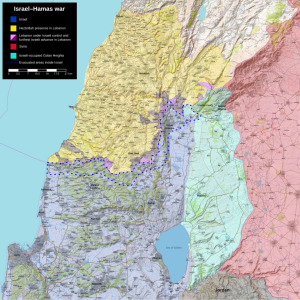
Map of the of the 2023 Israel-Hamas War, 2023-present. 2023 image by Wikipedia Users Veggies and Ecrusized. CC0/4.0 International


These attacks resulted in a somewhat lackluster allied naval campaign to try and escort commercial vessels through the Red Sea, and ultimately to the Trump Administration launching a series of massive airstrikes throughout the region – sometimes support by, or in support of, Israeli strikes against the radical Islamic regime in Iran.

As the year closes, the region seems to be taking a breather. That won’t last.

Elsewhere, the civil war in Sudan continues to rage, with continued massacres conducted by both sides. And in Nigeria, religious massacres by Muslims against Christians suddenly elevated to the point where the Trump Administration openly called for a designation of “genocide”, and even hinted at possible military intervention.

In southern Africa, the persistent Islamic State-aligned insurgency in Mozambique continues on, threatening to turn the country into another Somalia.

In Asia, the civil war in Burma/Myanmar grinds on, with the ruling junta banking on continued massive support from Communist China…which may be a bad bet, as the Chinese economy continues to falter.

And finally, the Trump Administration continues with its”saber-rattling” at Venezuela, in an effort to force long-time dictator Nicolas Maduro from power. Whether this turns into an actual shooting war or a stunt, remains to be seen.


The Wrap

Overall, 2025 has seen some remarkable swings in the world situation…but there remains little indication of a true end to many of the persistent conflicts that remain ongoing. Economies are still adjusting to the reality of heavy US tariffs being imposed for the first time in decades, and wars continue apace.

Here’s to hoping things improve in 2026.


The Freedomist — Keeping Watch, So You Don’t Have To


freedomist banner


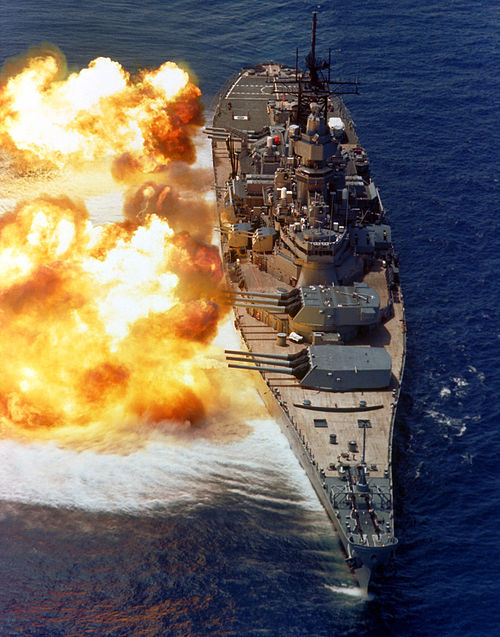
The Battleship Question


Everyone thinks battleships are cool, right? Certain movies not withstanding…

When President Trump floated the idea of bringing battleships back into service, the response from the defense establishment was immediate and predictable: eye-rolling dismissal, lectures about “modern warfare,” and knowing smirks about nostalgia trumping strategy. The think tanks and defense journals lined up to explain why this was obviously impossible, impractical, and frankly embarrassing.

There’s just one problem: The more you examine the actual arguments, the less absurd it looks.

Starting with what Trump actually said, stripped of the mockery:

  • Modern aluminum-hulled ships are vulnerable
  • Guns deliver cost-effective firepower compared to missiles
  • Battleships demonstrated effectiveness in the Gulf War
  • China’s naval expansion requires a response that doesn’t bankrupt us


The “experts” immediately attacked the metallurgy comment. Aluminum doesn’t just “melt,” they said. Trump doesn’t understand materials science. Except…the U.S. Navy already agrees with him. That’s why the Arleigh Burke-class destroyers went back to steel construction in the 1980’s. The Falklands War demonstrated aluminum’s vulnerability to fire and battle damage. The 1975 USS Belknap fire drove the lesson home. The Navy’s own design decisions validate exactly what Trump said—they just said it in engineering reports instead of campaign speeches.


USS Belknap (CG 26) after her collision with USS John F. Kennedy on 22 November 1975. US Navy photo. Public Domain.

Now consider the actual strategic problem Western – and American – navies face: magazine depth. The Red Sea operations against Houthi drones and missiles – consuming an estimated 30 years of firing in 15 months – exposed a critical vulnerability. Modern warships carry perhaps 90-100 missiles in their Vertical Launch Systems. Once those are expended, you’re done. You’ve got a $2 billion ship that has to withdraw from the fight and spend weeks getting rearmed for anything beyond self-defense. Each Standard missile costs between $2 and 4 million. Each Tomahawk missile runs $1 and 2 million. Between October 2023 and January 2025, Navy ships fired more defensive missiles than they used in the three decades following Desert Storm. You can burn through a quarter-billion dollars in magazine capacity in a single extended engagement.

A Tactical Tomahawk Cruise Missile launches from the forward missile deck aboard the guided-missile destroyer USS Farragut (DDG 99) during a 2009 training exercise. US Navy photo by Mass Communication Specialist 1st Class L. Stiles. Public Domain.

Compare that to a 16-inch gun. Modern rocket-assisted projectiles could reach 100+ miles. Each round costs perhaps $25,000-50,000 in current dollars — less if produced at scale. An Iowa-class battleship could fire continuously for days, delivering devastating effects on shore targets, surface vessels, and even providing anti-air support with proximity-fused rounds. The math isn’t even close: sustained and accurate fires at a fraction of the cost.

But what about vulnerability to modern anti-ship missiles? This is where the analysis gets interesting. An Iowa’s belt armor is 12 inches of hardened steel, backed by layers of structural protection. Modern anti-ship missiles — whether subsonic Harpoons or supersonic weapons — typically carry 500-1,000 pound warheads designed to penetrate thin aluminum hulls and detonate inside the ship. Against 12 inches of armor backed by compartmentalized protection? The penetration physics are completely different. Modern warheads might crater the armor, but achieving a “mission kill” (rendering a vehicle or craft unable to continue fighting, without destroying it) becomes vastly more difficult.


Survivability

Three cases are instructive in the vulnerability argument:

  • When HMS Sheffield was sunk during the Falklands War in 1982, the warhead of the French EXOCET missile that struck it failed to detonate, or at least did not detonate properly. Instead, the Sheffield was irreparably damaged by fires started by the missile’s still-running engine
  • In 1987, the USS Stark was attacked and struck by a pair of Iraqi-fired EXOCET missles. Prompt damage control prevented the ship sinking. After extensive repairs, the Stark returned to service, before being decommissioned in 1999, and scrapped in 2006.
  • Later, in early 1988, the USS Samuel B. Roberts struck an Iranian naval mine while escorting a civilian oil tanker. The severely damaged ship required around a full year off repairs, before being returned to service.
  • In 2000, the USS Cole was mined in the harbor of Aden, Yemen (although framed as a “bombing”, the actual attack counts as a ‘mining’ in naval terminology) by Al Qaeda terrorists using a massive IED. Following extensive repairs, the Cole remains in naval service.
  •  In contrast, there is the USS Nevada (BB-36), the only battleship on the list. Severely damaged by relentless air attack at Pearl Harbor, the Nevada was repaired and returned to service, serving throughout World War 2. At that war’s end, however, the ship was worn out, and thoroughly outdated, as it had originally been laid down in 1914…So, it was decided to use the old battleship as a nuclear target during Operation Crossroads, the first atomic tests at Bikini Atoll. The Nevada survived not one, but two, close range detonations, to such an extent that she had to be scuttled in 1948 by naval gunfire from the USS Iowa. That, however, was still insufficient to sink her, so she was finished off by an aerial torpedo.

Battleships, it would seem, are remarkably resilient.


Battleship USS Nevada (BB-36) painted in orange as target ship for the Operation Crossroads Able Nuclear weapons test. 1946 photo by US Navy. Public Domain.


Drones

The drone threat is real, but consider the defensive advantage: modern close-in weapon systems, electronic warfare, and updated radar married to a platform that can absorb damage and keep fighting. A kamikaze drone that could cripple an aluminum-hulled destroyer might barely scratch an Iowa’s main deck.

And, as operations in the Red Sea have shown, against actual warships – properly manned with trained crews – drones simply don’t present the threat that many believe to be real.


Manning – The Real Problem

The manning argument deserves serious consideration. Yes, the original crew was 1,500-1,800 sailors. But that was 1940’s technology with manual systems throughout. Selective modernization — updated damage control, automated fire control, modern propulsion plant controls — could potentially reduce crew requirements by 30-40 percent while maintaining the core advantages of proven mechanical systems over fragile digital networks.

Currently, while all services saw an increase in recruiting in the aftermath of Trump’s 2024 election victory, it remains to be seen if this increase will continue. The fact that the only real restriction on a “big-gun” battleship revival is whether the Navy can recruit enough personnel, is telling.


Conclusion

The real question isn’t whether battleships make technical sense. The real question is why the defense establishment is so hostile to the idea. And here’s where it gets interesting: battleships represent everything the current procurement system hates. Simple, proven technology. Conventional construction. Multiple potential suppliers. Long service life. Low-margin, high-volume ammunition. No proprietary software requiring endless updates. No justification for $100 million unit costs or trillion-dollar development programs.

Trump’s idea threatens a very lucrative business model. That’s why it sounds “crazy” to people with consulting contracts and board positions. To people actually concerned with sustainable naval power?

It starts looking remarkably sane.


The Freedomist — Keeping Watch, So You Don’t Have To


freedomist banner


White Woman Murdered on Charlotte Train Becomes Symbol of American Divide

23-year old Iryna Zarutska, a Ukrainian refugee, was murdered on a Charlotte, North Carolina subway while passengers watched and failed to come to her aid. Decarlos Brown, 34, can be seen in the now-viral video striking Zarutska in the neck with a knife. She bled out while no one around her helped her.

Brown has a history of violent crime and mental illness, but an alleged DEI judge, Teresa Stokes, let him walk 42 times, with the last time being in January of this year. The judge is now under investigation. The actions by the judge echo a leftist theme where criminals are viewed as righteous crusaders punishing the evil Americans.

Charlotte’s Democrat Mayor Defends Killer Who Stabbed Young Woman to Death on Train– slaynews.com
Source Link
Excerpt:

Charlotte’s Democrat Mayor Vi Lyles is facing mounting backlash after her response to the brutal killing of 23-year-old Ukrainian refugee Iryna Zarutska on a Blue Line light rail train.

Instead of squarely condemning the attacker, Lyles initially defended the killer by pivoting to speculating about his “mental health struggles.”

“This is a tragic situation that sheds light on problems with society’s safety nets related to mental health care and the systems that should be in place,” Lyles said in a statement sent to WCNC Charlotte.

“While I do not know the specifics of the man’s medical record, what I have come to understand is that he has long struggled with mental health and appears to have suffered a crisis.

“This was the unfortunate and tragic outcome.”

The suspect, 34-year-old Decarlos Brown, has a lengthy criminal record spanning more than a decade, including robbery with a dangerous weapon, larceny, and breaking and entering.


The Ghost of Faustin Wirkus


It is a general article of faith in most armed forces around the world, that the enlisted soldier – meaning, that 18 to 22 year old kid brought into the military, because war is a young person’s game – need close supervision by a college-educated officer, so that the young soldier can be kept out of trouble. But, while young adults, far from home for the first time, getting into trouble is a given despite supervision, that is not the real reason.

The real reason the establishment and their commissioned officers, is that unless the enlisted troops are closely monitored, they will invariably “go off script”. Case in point: Faustin Wirkus

…Or, if you prefer, King Faustin II of La Gonâve, Haiti.

Born in about 1896, Faustin Wirkus was born into a Polish family in Rypin, Poland, then part of the Russian Empire. In around 1905, the family moved to the coal country in Dupont, Pennsylvania. After a few years working in the coal fields as a child, in 1915 Wirkus enlisted in the United States Marine Corps, and was soon deployed to the island of Haiti, rising to the rank of Gunnery Sergeant by 1920.

The United States had intervened in Haiti in 1915, following a wild series of uprisings that had resulted in the lynching death of the then-President Vilbrun Guillaume Sam, to – as always – “protect American interests”. The United States quickly established what amounted to a military dictatorship, administered by the US Marine Corps. Part of this administration involved recruiting a Gendarmerie that could be carefully trained as a kind of “lightweight military police”, to keep the island under control and to hunt down bandits and rebels.

U.S. Marines and guide in search of bandits. Haiti, circa 1919. Department of the Navy photo, 1919. Public Domain.


Haiti, unlike today, had a very credible military reputation. After throwing off the yoke of French colonial oppression in 1804, Port-au-Prince decided to flex its muscle as the Spanish Empire began to collapse, invading and conquering the neighboring Spanish colony of Santo Domingo (the modern Dominican Republic) in 1822. Haiti’s 20-odd year rule over Santo Domingo was so brutal, that February 27 is celebrated as the day Dominicans finally overthrew Haitian rule, and gained their independence.

Following this, Haiti began its downward spiral, resulting in the collapse in 1915, that led the United States to intervene.

Following his basic training, Faustin Wikus was deployed to the island in 1915 as part of the “Advanced Base Force“, and was assigned to the “Haitian Constabulary” (the formal name for the Gendarmerie) in 1918. The Gendarmerie’s first US commander was the legendary Smedley Butler, then a Major in the Marine Corps, making it no surprise that the Gendarmerie’s all-Black Shooting Team went on to take Olympic Bronze in the Men’s Free Rifle Team event at the 1924 Paris Olympics.

Wirkus, meanwhile, apparently fell in love with Haiti, and worked hard to try and help stabilize the country. Because of how the Gendarmerie was organized, many enlisted Marines were given commissions as officers in the Constabulary, leading small units of native Gendarmes.

It was in this capacity that Wirkus eventually arrived at La Gonâve Island, in 1926. While there is some conjecture – nearly one hundred years on, hampered be scanty records – Wirkus came into contact with a woman named Ti Memenne. Recognized locally as a “tribal queen”, which was a position not recognized by the nation’s republican government, she was apparently arrested for “trivial voodoo offences“, where it seems that she came into contact with Wirkus for the first time, with him aiding in her release from custody.

When Wirkus (apparently volunteering on his own in late-June or early-July of 1926) was sent to La Gonâve to assume command of the Constabulary unit there, he had apparently made such an impression on Queen Ti Memenne, that she convined her subjects that he was the reincarnation of Faustin Soloque, the first (and last) Emperor of the Second Empire of Haiti…and then convinced them to agree that Wirkus should be crowned as King Faustin II, Co-Monarch of La Gonâve in a Voodoo ceremony.

Queen Ti Memenne (L) and GySgt Faustin Wirkus (R), on La Gonâve Island, c.1927. Unknown USMC Photographer. Public Domain.


Well, then.

Wirkus went on to “rule” the island until 1929, when he was removed from the island and transffered back to the United States, proper. Apparently, Wirkus’ efficiency at ruling the island had cut too deeply into the corruption kickbacks Haitian politicians were extracting from the island. The United States government was only too happy to comply with this request, because the idea of a US enlisted man ruling as a “king” of a foreign island while still on active duty, was very unpopular…”alarming”, even.

Wirkus subsequently left the Marine Corps in 1931, and did a stint on the speaking circuit, giving talks about his time as the “White King of La Gonâve“. Then, with war looming again in 1939, Wirkus reenlisted in the Marine Corps, serving first as a recruiter, then as a gunnery instructor, eventually rising to the dual ranks of Warrant Officer [https://en.wikipedia.org/wiki/Warrant_officer] and Marine Gunner [https://en.wikipedia.org/wiki/Marine_gunner] for aviation gunnery.

Faustin Wirkus fell ill in January of 1945, and passed away on October 8th of that year. He was survived by his wife, Yula, and his son – Faustin, Jr. – who went on to serve in the Marine Corps as a helicopter pilot.

So. What does the story of Faustin Wirkus teach us?

Primarily, that enlisted troops – and especially Marines – are hyper unpredictable. Give them a clear goal, and they will do whatever is necessary to make it work.

Whatever. Is. Necessary.

And for the Establishment, that is not a good thing – after all, if some unlettered, uncouth enlisted critter can accomplish national goals with minimal supervision, why do their own high-society positions and privilege need to exist? I mean, how can their friends skim off the top of contracts, when some 25 year-old kid with a high school diploma, an attitude, a hangover and a coffee pot can do a better job, faster and more efficiently?

While the foregoing statement is rather “tongue in cheek”, it really isn’t, because it is very real – after all, how the hell can the Ivy League alumni expect to shave off hundreds of millions of dollars of money deducted from the troop’s pay to fund mess hall menus, leaving them eating lima beans and toast for “Thanksgiving Dinner”…assuming that the mess hall is even open? Because the $460 per month deducted from the troop’s pay to fund the mess halls on-post comes to $115 per week – I don’t know about you, but I can eat pretty well on $115 a week, including steak and shrimp…assuming that I can use a hot plate in the barracks – which on most bases, you can’t do.

Because you can eat at the mess hall. You know – dining on lima beans and toast.

And that’s LONG before we talk about telling troops to fix and repair their own barracks – It’s almost like there is little, if any, need for contracting with civilian companies to do anything beyond making weapons, ammunition and gear…and maybe uniforms. Maybe.

U.S. Marines with Headquarters and Service Battalion, 1st Marine Logistics Group, show Brig. Gen. Andrew M. Niebel, the commanding general of 1st MLG, how they patch holes in the barracks during Operation Clean Sweep at Camp Pendleton, California, Oct. 16, 2024. LCpl Deja Rogers, U.S. Marine Corps photo. Public Domain.


And this extends to security, because as the recent mass shooting at Fort Stewart, GA shows, troops trained to handle some of the most lethal weapons on the planet cannot be trusted to go about armed to protect themselves from either jilted lovers or, you know, terrorists.

And believe me when I say that this has been the norm on US military bases for decades.

Feel safe?


The Freedomist — Keeping Watch, So You Don’t Have To


The 30-Minute Apocalypse: How Coordinated Grid Attacks Could Cripple America


Electricity if the foundation of modern society. Many people wistfully ponder the idea of living permanently in the wilderness, the old “back to Nature” idea. The fact is, most people – at least in the West – are going to survive in the wild for longer than a week. Electricity is what allows you to read this, and not simply because the immediate of an internet connection: electricity is fundamental to the industrial processes that made the device you are reading this on.

America’s electrical grid represents both the backbone of modern civilization and its most vulnerable single point of failure. Recent incidents at power substations across the country have revealed a terrifying reality: a relatively small number of coordinated attacks could plunge vast regions into darkness for weeks or months, with cascading effects that would make Hurricane Katrina look like a minor inconvenience.

The December 2022 attack on two Duke Energy substations in Moore County, North Carolina, illustrated the basic vulnerability. Two individuals with rifles caused a blackout affecting 45,000 people for several days. But this was amateur hour compared to what organized groups could accomplish with proper planning and coordination.

The math is sobering. The Department of Homeland Security has identified roughly 55,000 electrical substations nationwide, but destroying just nine of the most critical ones could theoretically black out the entire continental United States. Unlike the heavily fortified nuclear plants or major power stations, most substations are protected by little more than chain-link fencing and security cameras. Many critical transformer installations sit exposed in rural areas with minimal surveillance and lengthy emergency response times.

Marelli coupling transformer in Italy. 2020 photo by Herbert Hönigsperger. CCA/4.0 Int’l


What makes this threat particularly insidious is that it doesn’t require sophisticated weapons or technical expertise. The critical transformer equipment that steps down high-voltage transmission lines is custom-manufactured, expensive, and takes 12-18 months to replace under normal circumstances. A coordinated rifle attack, or even the intelligent use of a reciprocating saw, on multiple substations simultaneously could create a replacement bottleneck that extends outages for months across multiple states.

The cascading effects of a decently-coordinated series of attacks would be catastrophic. Within hours, water treatment plants would lose power, leading to pumping capacity failures. Hospitals could switch to backup diesel generators, but their fuel supplies typically last 72 to 96 hours. Cell towers would go dark as their backup batteries drain, as even those with some minimal solar backups would be drained faster than solar can recharge them. Gas stations could not pump fuel; grocery stores and ATM’s stop working – in the case of the grocery stores, that would be because few, if any,m are set up to switch to paper receipts. Supply chains would being to collapse, as refrigerated transport becomes impossible, electronic payment systems began failing, and regional grocery supply centers would not be able to fulfill orders, if they were even able to receive them.

Behind this vulnerability is the very thing that makes modern society as comfortable as we have become accustomed to: Just In Time Delivery. This is the system that dispatches all manner of inventory to retailers, homes and factories at will, usually arriving within 24 to 96 hours after ordering. This means that very few warehouse areas have more than three or four days of stock in their “back rooms”, at best. This is one of the reasons for the videos of stores being emptied in mere hours when a disaster strikes – it’s not simply damage to the structure, but the location’s inability to order replacement stock.

Most Americans have never experienced true grid-down conditions lasting more than a few days. The best estimates indicate that potentially 90% of Americans would be dead within one year of a sustained nationwide blackout due to starvation, disease, and violence. Even regional blackouts lasting weeks would likely trigger mass refugee movements, as happened in the aftermath of Hurricane Katrina, that local authorities couldn’t manage.

The threat isn’t theoretical. In recent years, domestic extremist groups have conducted surveillance of electrical infrastructure. FBI investigations have uncovered plots targeting substations by nihilistic accelerationists larping as neo-Nazis who believe destroying the grid would trigger societal collapse and racial conflict. The knowledge required for effective attacks are spreading through online forums and training materials.

International actors represent an even greater threat. Chinese and Russian operatives have been caught conducting reconnaissance of American electrical infrastructure. State actors could coordinate cyber attacks on grid control systems with simultaneous physical attacks on key substations, maximizing damage while minimizing the chances of rapid recovery.

And what happens if such a series of attacks do happen? None of the possibilities are good. Aside from the initial casualties of the sick and injured as hospital generators run dry of fuel, and those dying in the panic after the lights go out, the near-term (60 – 90 days) will see vast deaths via starvation, as most people have perhaps only two or three weeks worth of food at home, and human performance degrades fast, the longer we go without food. Rural areas are better positioned, since those areas are food producers by default, but they do not have the capacity to absorb refugees, nor to suddenly step up food production, because of the physics and biology of agriculture: even without the fact that most farmland is sectioned off for corporate, single-crop “monoculture” products, it takes time, at least sixty to ninety days, to grow most plants into nutritious crops that will sustain a human. And although hog hunting in the South does produce meat, it is barely impacting the hog population – and the vast majority of Americans have no comprehension of how dangerous feral hogs really are.

Accelerationist dream-world. Pixabay.

The fix is neither quick, simple nor cheap. Hardening critical substations would cost billions and take years to implement. Installing backup transformer capacity requires massive infrastructure investments that utility companies stridently resist making without punitive federal mandates. Meanwhile, the grid continues operating with vulnerabilities that a competent adversary could exploit with devastating effectiveness.

The uncomfortable truth is that America’s electrical grid was designed for reliability and efficiency, not security. In an era of increasing domestic extremism and great power competition, that design philosophy represents a strategic vulnerability that adversaries understand better than most Americans. The question isn’t whether someone will eventually attempt a coordinated grid attack — it’s whether we’ll address these vulnerabilities before they do.

The only good thing in this, is that if we go down, we will take the reast of the “developed world” with us.

Yay. I guess.

The lights we take for granted could go out faster than most people imagine, and stay out longer than our society could survive. As with many things we report here, you are on your own – after reading this, you cannot claim that you weren’t warned to prepare, because the government will not be able to help you.


The Freedomist — Keeping Watch, So You Don’t Have To


World Situation Report for 2024 – The Year In Review


As we close out the year of 2024, it has certainly been a monumental year. Movements have waxed and waned, politicians have been both humiliated and nearly assassinated, business leaders have actually been removed from the field, nations have fallen, wars continue, and security flaws have been exposed. This article will close out the year; the next article will be in the first week of January.

Pretty standard stuff, really…except that many of these events this year have been truly significant.

The United States

Starting with the proverbial elephant in the room, Donald J. Trump – the 45th President of the United States – was reelected to the Presidency by a very comfortable margin over his primary challenger, the thoroughly un-electable Vice President Kamala Harris. Trump’s re-election was secured following his survival of an assassination attempt on July 13th, in Butler, Pennsylvania, where the former President missed death on live television by literally millimeters; innocent bystanders were not so lucky. The image of a blood-spattered Trump being hustled away from the target zone by Secret Service agents while shouting “Fight, fight, fight!” has joined the Zapruder film in the minds of a new generation of Americans of what political violence actually looks like.

But it was not the attempt itself that secured Trump’s victory: it was the response from the Biden White House to the assassination attempt – especially in its agencies frankly unbelievable responses to the events, including washing down the crime scene within hours of the attempt, and cremating the shooters remains before any proper autopsy or toxicology screen could be done on the remains. The other issue was the gleeful responses from a wide swath of the political Left in the United States, alternately cheering the attempt and whining over the assassin missing his mark (although he didn’t).

A wounded President Trump at the Republican National Convention’s final night. Photo credit by Tim Kennedy. CCA/2.0


Reasonable and rational Americans were shocked and disgusted by the extreme Left’s responses, and began moving away from the Biden camp in earnest…which quickly led to shocking replacement of Biden on the Democrat Party ticket by Kamala Harris within days of the failed attempt. Harris was confirmed as the Democrat candidate without a voting process allowing other candidates to present themselves to party members as options…the end result was an election that flipped the leadership of the US again, by a comfortable margin.

The reason for concentrating on the US election so much, is that it represents a sea-change in US politics, not simply concerning domestic policies, but in international policies. This is both a blessing and a curse for the incoming administration, as the world is tired of the United State’s 50% chance of a 180° swing in its policies every four years.

On top of all of this, is the widespread outpouring of frankly disgusting sexual angst from the Left over the alleged assassin of United Healthcare CEO Brian Thompson. Once again, we were “treated” to deranged lunatics fawning over a potential killer, and the mainstream media promotes this view, in a desperate attempt to ignore the real reasons why sympathy for a murdered healthcare CEO is nearly impossible to find.

And finally, no end-of-2024 recap for the United States would be complete without talking about the waves of drones that have been plaguing the East Coast since November, which we covered last week. Short answers:

  1. Aliens don’t use FAA-approved navigation light patterns, and
  2. If a nuclear weapon, nuclear waste, or chemical anything had been lost in New Jersey, drones would be in the sky 24/7, and every flavor of law enforcement and the military would be out in the streets, armed to the teeth, and being highly hostile to anyone who looked at them sideways, until they found the missing cargo. Instead, we have seen the US Government, Inc. display a level of incompetence at such a staggering level, it boggles the imagination, as – 23 years after 9/11 – “mystery drones” are operating with impunity inside US airspace, at low altitude, and no one in the government has any idea who is responsible for making a decision on what to do about it, and no one is willing to take responsibility for acting in good faith.


Gnaw on that, for a while.


Europe

Europe continues to descend into failed-state status, as continual squabbling and inefficiencies in the structure of the European Union are crushing the economy of Europe as a whole, while “Great” Britain is desperately trying to outdo its continental neighbors in becoming a drug-addled, comic-opera version of Charlie Chaplains “The Great Dictator“, and France’s Emmanuel Macron is desperate to prove that he is not a literal “Momma’s Boy” by alternately trying to either start World War 3 by sending French and NATO forces into direct combat against Russia, while trying to revive its flagging influence on a continent that is past-done with France trying to be the colonial overlord with a nice face.

Of course, this includes the war in Ukraine, where Russia’s Vladimir Putin is hanging on long enough for Trump to step in and kill support to the absolute donkeys leading the lions of the Ukrainian forces. The Ukraine has only held as long as it has, because the general character of the “spear-carriers” in the literal trenches is as good as it is – it all fails, though, when you get above the level of the battlefield that is in range of Russian artillery.

The Middle East

The big news in the Middle East as the year closes is obviously the collapse of the Assad regime in Syria. After ruling the country since 1971, Bashar Assad was forced to flee into exile in Russia after “Hay’at Tahrir al-Sham” (HTS) a revived Al Nusra Front/Al Qaeda/Islamc State zombie rolled out of its Turkish bases and overran the country in under two weeks.

The reasons for the swift collapse are not hard to understand, if you understand the region. Assad’s remaining forces were exhausted draftees no longer interested in dying for his regime; his Iranian allies – including their Hezbollah proxies – were causing him more trouble than they were worth; Putin is too wrapped up in Ukraine to offer more than token support; and his country has been effectively partitioned since 2011.

Assad saw what was coming in November, and sent his family to Russia “on a vacation”. He, himself, stayed behind long enough to try and fight is out – you never know, in warfare – but when it was obvious that it was over, he escaped, demonstrating that he was at least smarter than Muammar Gaddafi.

As a result, the region is now in chaos, and is on the verge of becoming a “Libya, 2.0” on the borders of Turkey, Lebanon, Israel, Jordan and Iraq. Effectively, this has guaranteed at least another decade – or more – of warfare in the region. Turkey Recep Tayyip Erdogan may have though this was a good idea, but he is about to discover the truth of opening Pandora’s Box.


Africa

Africa remains a basket case, with wars, rumors of wars, and coups d’état all over the continent; there is another major war brewing, but that article is coming in January 2025. Although Russian influence was clearly on the rise in 2023 and 2024, the war in Ukraine has severely curtailed Russian operations on the continent, at least for the moment.

Yemen – which should technically be a part of the Middle East section, but is included here, because of its impacts on eastern Africa, saw the Houthis dealt a heavy blow to their confidence when neither Russia nor Iran were able to prevent Assad’s Syrian collapse, causing their co-religionist Hezbollah allies to atomize, in order to get out of the vice of Israel and a revived Islamic State…Whether or not this will cause them to back off their war against the world’s commercial shipping in the Red Sea remains to be seen.

Asia

Asia remains relatively quiet, compared to the rest of the world, with the only current major conflict of note being the “Tatmadaw” of Burma continuing to hang on by their fingernails, as the union of rebel movements sputters without effective outside support, while the military junta keeps trying to break bread with Communist China.

Of note, however, is that North Korea began trading human troops to Russia for ballistic missile technology, which is threatens a direct impact on the balance of power on the Korean Peninsula.

Meanwhile, VISA – the credit card giant – has decided to embrace DEI fully, by violating the Logan Act in trying to force Japan to conform to the company’s morals. While the Japanese government has not yet reacted, the utterly tone-deaf head of VISA is very likely about to find out why that is a terrible idea.

Conclusion

The only relatively quiet spot in the world remains South America, where – despite a host of issues – large-scale violence remains almost unknown, compared to the rest of the planet.

It has been a tiring year, but – cautiously – things might be looking up.

Let’s hope no wingnut screws it up.


The Freedomist — Keeping Watch, So You Don’t Have To


Fear & Droning on the Jersey Shore


Since November 18th of 2024, residents in most parts of the state of New Jersey and parts of Greater New York City have been terrorized by an increasing number of mass sightings of what have been variously described as either UFO’s or drones which are reportedly, “the size of SUV’s“. The issue is so bad, some people are actually calling for Elon Musk to do something about it (what, exactly, Musk would be expected to do on his own, no one is quite clear).

Naturally, people in the vicinity are increasingly terrified, as not only do they not know what is happening, it appears to all intents and purposes that the United States government, and specifically its law enforcement and regulatory agencies, as well as the armed forces, apparently not only have no idea what these are, either, nor who is even responsible for addressing the flights.

Despite repeated assurances that the drones – or whatever they are – “pose no apparent threat” to national security or American citizens (despite reportedly flying over a number of military installations in New Jersey), the general public, including major-network news presenters who live in the area, are flatly not buying the official story, and are loudly demanding action.

These calls have become much more serious in the wake of statements made on December 11 by New Jersey Congressional Representative Jeff Van Drew (R-NJ, 2nd District) to FOX News commentator Harris Faulkner that the drones were operating from an “Iranian mothership” operating off the coast, and that the drones needed to be shot down.

There are multiple weird things going on, here – what is actually happening?

The main issue is not so much that “mystery” drones are operating in US airspace, as that has been going on since at least late-2023 (and no, we’re not talking about the balloons), but that no one in the government seems to know what is going on, nor who is responsible for even initiating action…and this, some twenty-three years after 9/11.

All kinds of theories have been put forward, from extraterrestrial aliens doing extraterrestrial alien things, to the Russians, the Iranians or the Chinese. The US government is publicly unconcerned, assuring people that there is no danger from the drones, even though they claim that they have no idea where the drones are coming from, nor who is operating them.

One feature that seems to be a major point of focus, concerns the size of the drones, as they are frequently described as being “the size of an SUV”. This naturally alarms people, given the media’s obsession with miniature drones being used in combat from the Middle East to the Ukraine. However, the mainstream media once again has failed its consumers in never presenting a coherent narrative. In this case, it is the fact that “SUV-sized” drone aircraft have been around for a long time, almost since the advent of ‘heavier than air flight’ began some 120 years ago. In this specific case, we are talking about the “QH-50 DASH“, in the image below.


A QH-50C DASH drone with two torpedoes on the Gearing-class destroyer USS Joseph P. Kennedy (DD-850). UN Navy Photo. Public Domain.


The DASH was a remotely piloted (RPV) anti-submarine helicopter designed in the late-1950’s, and deployed to the Navy beginning in 1963. It had a combat radius of about 70 nautical miles (c.80 miles on land), and could carry a payload of around 900 pounds. That translates into a lot of explosive ordnance, if someone wanted to load them with such.

Now, we are not implying that someone is flying QH-50’s over New Jersey; however, the DASH is a sixty-five year old design, and there have been more than a few technological improvements since then.

Likewise, there is little to be gained by a foreign power in conducting surveillance flights of this type over US territory – the risk versus return ratio is just not workable, especially given the notoriously poor security at many installations in the US. Such operations are an open invitation to legitimate military action, which would turn the United States into the victim, something none of the country’s adversaries want.

So – What, then, is happening over New Jersey, and which is now apparently spreading from New York, south all the way to Maryland?

Really, there are only three options:


    1. The drones are some sort of extraterrestrial craft – i.e., “little green men” – flying around, scaring the bejeesus out of people, and the government is clamming up, to try and keep the public from full-scale, panicked hysteria…which isn’t working.
    1. These are drones from some hostile/adversary nation, flying from some kind of “mothership” operating offshore. If this is the case, the US government as a whole have revealed themselves to be utterly and completely incompetent, and totally incapable of protecting the nation, in spite of twenty-three or so years of obscene amounts of money being spent on “defense”, after the largest and deadliest terror attack in US history.
    1. That these drones are being flown by an agency of the US government.


…And increasingly, it may be that last option which may be true.

Within the US defense and intelligence budgetary offices, there is a phenomenon known as the “Special Access Program” (SAP). These “black budget” operations are never reported to Congress in any open session, and only rarely under certain circumstances (the “Unacknowledged Special Access Program“, or “U-SAP“) to those members of Congress with a direct “need to know”.

The rationale behind this option is that the failings being exposed by the US government response to these incursions did not happen overnight. Filings of this magnitude only develop over long stretches of time. There is a chance – admittedly, a long chance – that certain parties inside the US defense and/or intelligence communities have become disgusted at these fundamental security failures by the “above-ground” government, in spite of their constant – if secret – demands for reform, and have decided to force the issue, as the Biden-Harris administration is on the way out…

…At least, that is the “best case” situation, because the first two options are infinitely worse than #3.


The Freedomist — Keeping Watch, So You Don’t Have To


The Hatred of Corporate Healthcare


On December 4th, the CEO (Chief Executive Officer) of United Healthcare, Brian Thompson, was killed outside the New York Hilton Midtown in Manhattan. With stunning video evidence readily available, a manhunt for the killer began that continues as this article goes to press. Calling the killing a “premeditated attack” (meaning, “assassination“), many “experts” quickly weighed in on aspects of the killing…but, in the wider world, something very interesting began to happen:

While there was certainly sympathy directed towards Thompson’s survivors (who were at their home in Minnesota at the time), there was virtually no sympathy directed towards Thompson himself. And, given that the shooter apparently inscribed the words “Delay”, “Deny” and “Defend” – believed to be a reference to a recent book about how to fight back against insurance companies denying insurance claims, it would seem that a broad cross-section of public opinion has now openly turned against corporate leadership, at least in the United States.

There are two parts to this story, at present: the technical aspects, and the wider controversy over corporate leaders. We will start with the technical side.

Much has been made of the shooter’s supposed skills, especially his use of a suppressor on his weapon (insert pithy quip about how well gun control seems to be working in New York, State and City); you can view the video of the incident here if you choose to do so, to make your own decision.

The first aspect one would normally examine is the shooter’s motive. As that person is not yet in custody – and the police’s supposed knowledge of the shooter’s identity may well not be who they think it is – judging their motives and mindset is problematic, at best. That said, it is clear that the shooter acted very calmly as he executed his attack. While that could be attributed to drugs used to calm his system, his subsequent actions would tend to argue that he was a calm, collected and focused actor.

However calm he may have been, however, his technical shooting skills were terrible.

The shooter did manage to approach from behind Thompson, having apparently been lying in wait for his target to walk out of the hotel; this would seem to indicate that there may have been someone inside the hotel observing Thompson walking towards the entrance, who could have been talking to the shooter, advising him of Thompson’s movements.

When the shooting starts, a number of things come immediately to into focus. While the shooter’s aim seemed to be reasonably good, definitely striking Thompson in the back, the shooter clearly did not know very much about suppressed weapons, as his weapon clearly jams on every shot, as it is not matched at all to the weapon he is using. Despite some pundits commenting in an attempt to show their “deep” knowledge of firearms, the pistol was neither a Welrod, nor a VP-9. Unlike in the movies, jams with handguns fitted with suppressors are extremely common unless the pistol, suppressor and ammunition are all carefully balanced.

Welrod Pistol, Parham Airfield Museum, Suffolk. Museum of the British Resistance Organisation. Photo Credit: Gaius Cornelius. CCA/4.0


Next are the apparent “messages” left on the shell casings ejected onto the sidewalk. There are two ways to look at this: either the shooter was personally disgruntled at Thompson – for whatever reason – and wanted to “send a message” or, conversely, was trying to offer a distraction to police; neither is the hallmark of a “professional hitman“, as it offers too much evidence on the casings through handling.

Finally, is the shooter’s escape plan. After mortally wounding Thompson, the shooter fled across the street in front of the hotel, where he retrieved an e-bike, and was last seen entering Central Park, and while the e-bike was quickly located, there was no sign of the shooter, again as this article goes to press.

This, despite breathless claims, is no sign of “professionalism” – it’s just common sense, as there are few cameras in Central Park, allowing the shooter to dump the e-bike and very likely much of his incriminating gear before disappearing. And, being blunt, attacks like this rarely result in arrest.

Overall, whatever the shooter’s motives were, he is no “professional hitman“, even allowing for the possibility of working with a co-conspirator. At best, he is a “movie pro” – someone who has watched a lot of movies and YouTube videos, and maybe even read a couple of books, and probably visited a shooting range once or twice.

At best.

But the deeper part of this story is in the public reaction to this killing.

Normally, when some prominent figure meets a sudden end, even if that figure is strongly disliked – even hated – there is usually some sympathy from the wider public, even if they wished that person to have survived in order to face prison. But not here.

The general reaction to Thompson’s assassination – based on comments on various platforms and news sites – while usually not exactly “gleeful” in nature, certainly offer him no sympathy, and precious little for his family, which is rather extraordinary, in itself. This related directly to the company he headed, and his actions as its head.

Thompson was in New York City to speak at a shareholder meeting which was expected to get very ugly, as it appears that Thompson and other United Healthcare executives had concealed an insider trading investigation being conducted by the US Federal Department of Justice (DOJ). The allegations centered around Thompson and other executives dumping company stocks at a profit before word of the investigation got out, causing UHC’s stock to lose a good deal of its value.

But things like this happen a lot; one need only recall the ENRON scandal of 2001. Running a stock scam at a major corporation isn’t usually going to generate enough hatred to actually kill people, especially when the stock hasn’t yet tanked completely. This hatred of insurance companies in general, and particularly of United Healthcare, has been building for a long time.

The words inscribed on the spent shell casings appear to refer to a book published in 2010, “Delay, Deny, Defend: Why Insurance Companies Don’t Pay Claims and What You Can Do About It“, by Jay M. Feinman, detailing the tactics insurance companies use to avoid paying claims against the insurance policies that they issue.

In fact, United Healthcare is well-known in the medical insurance industry as having one of the highest denial rates of all insurers; this author speaks from personal experience, as I used to work for a company that helped hospitals dispute medical insurance claim denials. UHC was the company I dealt with the most.

Given the insurance actions surrounding the COVID pandemic alone, being denied – or having a loved one being denied – on a desperately needed healthcare claim would be more than enough to send someone over an edge sufficient to want to make a very loud and targeted statement…like assassinating a healthcare insurance CEO in public.

Businesses exist to make money. We all get that – well, at least the rational people get it. And making money often involves cutting costs, including expenditures. We get that, too. But, there is limit to how deep those cost cuttings need to go – and healthcare is only the most visible industry where overly aggressive “economy measures” are generally seen.

Corporate board members throughout the business community in general, should take note of this situation. The 21st Century is turning out to be a very tumultuous time, and their customers are becoming increasingly fed up with the normal corporate antics.

This article is no “clarion call” for people to act out against business leader – quite the opposite, in fact. It is intended to point out that the best way to keep these things from happening is not bodyguards and ineffectual laws to limit access to guns, but to try and not give desperate people the idea that actions like this are their only way to gain relief…or at least revenge.


The Freedomist — Keeping Watch, So You Don’t Have To


One Step Closer – Congress Moves To Automate Draft Registration


ICYMI — On May 22, Representative Chrissy Houlahan (D-PA), sponsored a bill to automate the registration of all males within the United States aged 18 to 26 into the Selective Service System, also known as the Draft. This comes amid the ongoing disaster of military recruiting numbers.

Now, the House has passed this measure as part of the latest National Defense Authorization Act (NDAA). Once again, Democrats all about putting your children “behind the trigger”…not theirs. Democrats love war – they just suck at waging it.

The only glimmer of brightness in this morass, is the inclusion of measures curbing various “woke” ideologies, including pro-choice, pro-LGBTQ+, and various lunatic psuedo-environmental “Sciencisms”, guaranteeing some level of delay to the process.


The Freedomist — Keeping Watch, So You Don’t Have To
Port of Baltimore Partially Reopens


NEWS SNIP


As of 4pm EST, 4/28/2024, the Port of Baltimore has been partially reopened to commercial traffic. This comes as recovery and clearing efforts continue, following the fatal crash of the container ship MV Dali, on March 26 of this year. At present, only smaller commercial transport ships can exit via the port’s main channel, under escort from tug boats. This also indicates that the US Navy and Department of Transportation’s four Ready Reserve Fleet vessels that have been trapped in port since the accident can now also exit the channel, if needed, as their 35-foot drafts are less than the channel’s minimum clearance.


MARAD Ready Reserve Fleet ship locations, 2021. USDoT. Public Domain.


SS Cape Mendocino (T-AKR-5064), underway. Undated photo. US Dept. of Transportation. Public Domain.


The MV Dali remains in the position it came to rest in, following its 1:30am EST crash, as the delicate efforts to untangle the vessel from the remnants of the south bridge tower. These efforts are delicate due to the fact that if the recovery is handled improperly, many of the remaining containers – which are the size of a semi-truck trailer – could tumble and collapse over the side, further blocking the traffic channel, and potentially rolling the ship over on its side.

Additionally, the FBI has boarded the ship, opening a criminal investigation, alongside the NTSB’s accident investigation. Conspiracy theories aside, this is being done because the accident claimed the lives of six known workers who were on the bridge at the time of the accident, and were killed when the bridge collapse took them into the water. This is entirely normal in an investigation of this type – the methods that the FBI are reportedly using in this investigation are certainly open to question, and the possibility of a conflict of interest with the NTSB’s own investigation certainly exist.

The FREEDOMIST will stay on top of this story, as it continues to unfold.


The Freedomist — Keeping Watch, So You Don’t Have To
Main

Back FREEDOM for only $4.95/month and help the Freedomist to fight the ongoing war on liberty and defeat the establishment's SHILL press!!

Are you enjoying our content? Help support our mission to reach every American with a message of freedom through virtue, liberty, and independence! Support our team of dedicated freedom builders for as little as $4.95/month! Back the Freedomist now! Click here