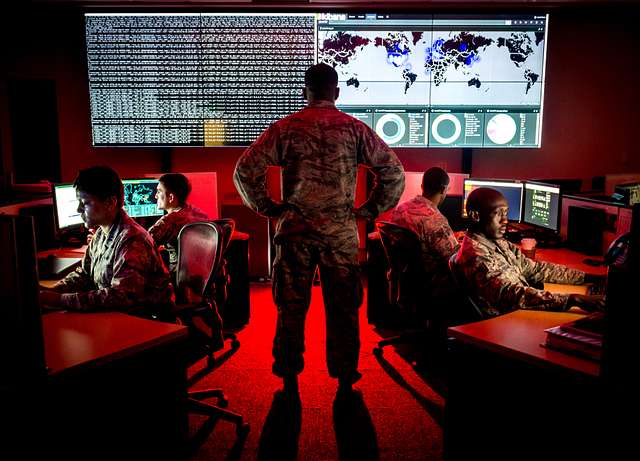
A new report shows that global container shipping rates have jumped some 29%, as of the end of April, 2024. While the Pentagon is confident that military actions against the Iran-back Houthi terrorists in Yemen are succeeding in tamping down attacks on shipping, the mess of port congestion around the world is also seriously impacting the shipping world, which will inevitably cause significant price increases on all imported goods.
The President of Iran, Ebrahim Raisi, as well as Iran’s Foreign Minister, Hossein Amirabdollahian, was killed in a very “sketchy” sounding helicopter crash in the far northwest of the country, in mountainous terrain near Iran’s border with Azerbaijan, in bad weather on May 19th.
The death of Raisi, a dedicated revolutionary hard-line cleric – responsible for the 1988 massacre of Iranian political prisoners, resulting in his nickname of “The Butcher of Tehran” – potentially opens the way for the Islamic Revolutionary Guard Corps (IRGC) to gain dominant power within the country, as they wield significant influence in choosing Raisi’s successor. The reason for this opening is that under the Iranian Constitution, a committee whose appointments are largely approved by the IRGC is responsible for confirming the eligibility of candidates for the Presidency, but is also responsible for selecting the country’s next “Supreme Leader” – the position originally taken by the Ayatollah Ruhollah Musavi Khomeini in the late 1970’s – which is now a critical juncture, as the current Supreme Leader, Seyyed Ali Hosseini Khamenei, is known to be in ill health, and could either die or retire at any time.
Needless to say, the IRGC is also the driving force behind arming the Houthis in Yemen with advanced weapons, which that group has been using to both attack Israel, as well as sink, damage or pirate commercial shipping in the Red Sea, resulting in widespread disruption of the world’s vital shipping traffic, actions that directly impact you, the Reader.
Opening Round 2 – The DRC
Next up – Africa…but not the part of Africa you’re thinking.
Also arrested in the coup’s aftermath were Malanga’s son, Marcel, and his friend, Benjamin Reuben Zalman-Polun, described as a “business associate”.
While this would-be comic opera revolution – which it would have been, had no one been killed or seriously injured – bears a striking resemblance to the attempted coup/kidnap “operation” Venezuela in 2020. More importantly, this marks an escalation in the ongoing instability in the DRC. The reason that this is important?
The computers and electronic devices you rely on in your daily life depend on a variety of “rare earth minerals”, many of which are only (barely) “commercially recoverable” in the DRC’s eastern regions. These metals, along with diamonds (both for industrial use, as well as in jewelry) are the source of both the continent’s wealth, but also one of the major drivers of war throughout Sub-Saharan Africa, which is also one of the driving factors of the region’s many recent coups d’état.
As a result, Western “developed” nations are as bound to the internal economics and politics of the region as the locals are, and neither has any reasonable option to counter the problems that have plagued Africa for over one hundred and fifty years.
Opening Round Three – West Taiwan Goes Full Patagonia
Rounding off the week – as of Friday the 24th – Communist China (a.k.a., “West Taiwan”) has upped its ante in saber rattling against the actual legitimate government of the ancient country, by staging a massive series of “punishment drills” around the island. In doing so, the Communist regime in Beijing has revealed both its “intentional arrogance” in dealing with the United States, but has also revealed its desperation.
Chinese Communist Party strongman Xi Jingpin – a person who makes Vladimir Putin look positively saintly in comparison – is increasingly becoming desperate. His regime is deeply unpopular in general, but especially because of the communists state’s flagging economy, seemingly unsolvable demographic crisis, and the fact that the world is quietly laughing at their comic-opera military. This is a dangerous combination.
In 1982, Leopoldo Galtieri, then the leader of the military junta ruling Argentina, was in a very similar position as Xi is now, and for many of the same reasons. With his nation’s economy falling apart – because military officers are not usually economic geniuses – Galtieri was desperate for an event that could distract his increasingly angry populace, and hopefully swing popular opinion in his junta’s favor…and what better way to do that, than to start a war that should be popular at home?
Right?
The result was the Falkland’s War, a war well worthy of study for every person reading this article, in which the armed forces of Great Britain showed that the British Lion still had some real fight left in it, smashed and humiliated the Argentinean military on a scale equivalent to what the US-led coalition would do to the Iraqi armed forces of Saddam Hussein some eight years later.
Now? It appears increasingly possible that Xi may be channeling Galtieri’s ghost, as the “battle calculus” in his head may be leading him to a decision that attacking – or at least trying to force a showdown with the “recalcitrant” province – Taiwan might be a good way to “kill multiple birds” with one stone.
As Freedomist/MIA has pointed out before, this would be tantamount to slaying the world’s economic goose, taking the Communist state with it.
What Is Happening?
There are many reasons behind why these scenarios are playing out the way they are at this moment in time, but the core reason is the same in all cases: the crippling weakness, on open display, of the United States under the regime around Joe Biden.
Now, I know that we tend to harp on this subject a lot, but it is absolutely true: nations and peoples around the world do not have to like us, but it is vital to the survival of the United States as a nation for those states to respect, if not fear us…and for more than thirty years, with the single four-year interregnum of Donald Trump’s administration, the world’s view of the United States as a powerful, even dominant, leading force in the world has steadily eroded. The reasons for this erosion are many, of course, but can be summed up as an increasingly incompetent and unreliable – if not incoherent – series of poor policy decisions has left the international reputation, image and impression of the United States in the gutter, far moreso than at any point between 1946 and 1990.
Xi feels free to threaten Taiwan at will, because of the induced weakness of the United States armed forces, who are so critically undermanned, it is becoming difficult to effectively crew sufficient warships (the ones that work, anyway), where the US Army had to admit defeat and reduce its official strength by some 24,000 troops, because it was consistently failing to meet its recruiting targets. Likewise, in both the Middle East and Africa, state actors increasingly recognize the United States as a non-consequential factor.
That is something you should very much be worried about, come November.
The Freedomist — Keeping Watch, So You Don’t Have To
The rot inside Washington, D.C. has turned truly gangrenous.
Leaving aside the immediately abysmal series of disastrous decisions that have invalidated the Biden “administrations” actions that began with the June 2021 cancellation of the Keystone XL oil pipeline, costing the United States some 59,000 jobs and over $9 billion over a largely-finished system that would have sent an estimated 830,000 barrels of oil every day from the Canadian shale oil fields, to their handling of the COVID-19 crisis in releasing untested drugs on a desperate and unsuspecting public, to their limp-wristed “warnings” to Vladimir Putin’s Russia over invading Ukraine, displaying such a level of inability and incompetence, that not only has it confirmed the critical weaknesses in Western military structures that many suspected, it has also given Russia – and thus, Communist China – critical experience in learning how to deal with “cutting edge” western military technology, to the extent that Russia is now able to tweak the nose of the West, by staging a static display of captured western equipment in Moscow.
Doubling down on “Vice President” Kamala Harris’ “stunning and brave” – and utterly tone-deaf – finger wagging at as many African states as she could over a continent-wide rejection of pro-LGBTQ+ policies, the Biden “Teletubby” group in the District of Columbia struck Uganda from the African Growth and Opportunity Act (AGOA), which allows African countries to export selected products to the USA duty-free.
In doing so, the Biden group attempted to use open and naked “strong-arm” tactics to impose what amounts to colonial rule over African states that “behave all naughty-like”, believing that those states are too stupid, backward and crippled to do anything about it, and would thus be forced to “kowtow” to their demands.
Here’s the problem.
If you want to impose colonialist rule on a place, you have to be willing and able to impose it by military force. The reason for this simple dictum is that there are plenty of other countries in the world who have lots of money to invest in the countries you are trying to impose your will on…and the Biden group has failed so miserably at such a basic function of ‘realpolitik’, that even their nominal supporters are now referring to the elder abuse victim at 1600 Pennsylvania Ave. as “Genocide Joe”.
On July 26, 2023, Nigerien General of the Presidential Guard Abdourahamane Tchiani deposed the government of his chief executive, President Mohamed Bazoum, in a coup d’état. The reasons behind the coup are lost in the nitpicking common to most coups. The point here, however, is the foreign response.
France, the former colonial power that ruled what would become Niger from 1900 to 1958, was immediately humiliated, as it openly threatened a direct military invasion of the country – the junta installed by the coup’s response?
As a result, French influence on the continent is in full retreat.
Apparently seeking to emulate the French, the United States also charged at the Nigerien junta like a blind picador on a three-legged horse with heart trouble. Sending in what apparently passes for their “best and brightest”, in the person of Molly Phee, the State Department’s top official for African affairs, Foggy Bottom’s Finest “laid down the law according to Biden”, managing to threaten and insult the junta’s appointed Prime Minister, Ali Mahaman Lamine Zeine, a formally-trained economist, by dictating from on high that Niger was to refrain from engaging with Iran and Russia in ways objectionable to Washington if Niger wanted to continue its security relationship with the United States. Zeine also said Phee had further threatened sanctions if Niger pursued a deal to sell uranium to Iran.
And other states in Africa’s “Coup Belt” are watching closely.
African countries that have had coups between 2020 and 2023. By WikiMedia User Discombobulates. CCA/4.0
The few sane people left in “Sodom on the Potomac” are desperately trying to patch the holes in the sinking diplomatic boat that the Biden group keeps shooting holes in with Grandpa Joe’s double-barreled shotgun, but it is unclear if they can hold the line until the 2024 election, and much-hoped for return of Donald Trump to the White House.
Meanwhile, as should be expected, Russia is the proverbial “Johnny on the Spot”, moving in to replace the United States and France with its own “Africa Corps” (really, the jokes, while bitter, write themselves), to the extent of occupying parts of the drone base known as “Niger Air Base 201” near the Nigerien city of Agadez, a base which was first occupied by the US in 2016, and which began operating in 2019. Once US troops are fully out of the base, the Russians will have unfettered access to one of the most strategically vital military installations on the African continent…courtesy, of course, of a c.$100 million “investment” by US taxpayers (that would be you, the Reader)…
Ultimately, what does all this mean, in the “grand scheme of things”?
Essentially, the Democrat Party knows that it is about to go down in an epic, flaming defeat in November of 2024, a defeat that they cannot undo with any amount of “trumped up” (pun intended) court cases, nor ballot-stuffing.
The only logical conclusion to be reached in observing the insanity of the Biden group’s operations since 2021, is that they intend to burn down as many bridges as the possibly can before their defeat, which would force a second Trump Presidency to spend all of its time trying to get the country back to at least the same level it was at in 2017.
Think about that carefully in six months.
The Freedomist — Keeping Watch, So You Don’t Have To
Mercenaries have existed for most of human history, likely dating from before the first established settlements, and we have certainly covered them here, in the past. While many find the practice unsavory – and it certainly can be – the fact is that it is rarely an overly dangerous occupation; if mercenaries get slammed, it is almost always because they badly failed to understand the situation they were walking into.
However, since the bizarre incident in August of 2023, where Yevgeny Prigozhin, the leader of the Russian Private Military Company (PMC) then known as the “Wagner Group”, apparently tried to stage a coup d’état against the government of Russian strongman Vladimir Putin, the popular news media has seemingly gone “radio silent” on any talk of PMC’s that are not Russian in origin.
Beginning in the early 1990’s, with the rise of the South African company Executive Outcomes, the traditional model of mercenary endeavors, characterized by word of mouth recruiting in “ex-soldier bars” and paid for with briefcases of cash in shady deals in meeting rooms entered via the building’s back door, began to give way to a much more regularized and businesslike system, complete with formal and legally-drawn contracts, much like the old “condottieri” practices of Renaissance Italy.
Moument to the Condottiero Bartolomeo Colleoni, Venice, Italy, c.1870’s. Photo by Carlo Naya (1816–1882). Public Domain.
Executive Outcomes conducted full-scale military operations, deploying combat troops, armored vehicles, aircraft and ships against various hostile groups throughout Africa. Unfortunately for the company, they were too efficient and effective, regularly making a mockery of United Nation’s “peacekeeping” operations. Political and economic pressure against South Africa brought an end to that phase of the company – much to the cost of the people of Sierra Leone.
But Executive Outcomes was not alone, by any means. Many “pseudo” mercenary companies rose during the 1990’s, amid the fallout from the collapse of the Soviet Union and the Warsaw Pact. Military Professional Resources, Inc. (MPRI) supplied teams of instructors to various non-Serbian states that arose from the breakup of Yugoslavia, and helped train the Croatian Army for the decisive “Operation Storm” in August if 1995, later moving on to providing higher-level staff and command training to the armies of many small nations around the world.
At this point, it should be pointed out that MPRI was founded in 1987, and was headed almost exclusively by retired United States senior officers, including Carl Vuono, a former Chief of Staff of the US Army. In effect, MPRI was a “deniable cutout” for the US government…
…In much the same way as Blackwater – now Constellis, following its corporate merger with the Triple Canopy PMC in 2014 – was essentially a deniable extension of the US government.
While most of the 90’s-era PMC’s restricted themselves to training and providing support functions to militaries around the world, such as DynCorp, which focused mainly on aviation and vehicle maintenance, and Vinnell, which focused on creating logistics and supply systems (things many world armies have only a very sketchy knowledge of), many companies – most operating out of Great Britain – offer a much wider array of services. Companies like KBR provide everything from base construction to food services support.
However, all of these companies engage in both training and providing actual “shooter teams” to their clients. In fact, Vinnell supervised at least part of the training of the Saudi Arabian National Guard during the 1970’s, and was initially given the contract to rebuild the Iraqi Army in the aftermath of the 2003 invasion of that country…although the US government was apparently highly displeased with their efforts.
But to return to the present day, there are far more PMC’s operating openly throughout the world than the “popular press” seems to be aware of, such as the tiny Dyck Advisory Group from South Africa, that fought in support of the nation of Mozambique’s military forces in the Battle of Palma in 2021.
While the Wagner Group has apparently rebranded itself (in the face of competition) into the “Africa Corps” (really, the jokes write themselves, at this point), the rebranding – inspired, undoubtedly, by Wagner veterans’ very recent experiences in savage, all-out urban warfare in Ukraine – has resulted in a mature organization, offering (the support from the Russian government, obviously) a wide range of services to the nations of Africa’s “coup belt” , perhaps permanently breaking the back of France’s ancien regime in Africa once and for all. The reason for this is very simple: African’s in the former French colonies of the continent are so sick of French interference in their nations’ affairs, which has been happening since the 1950’s. The Russians may not be the “nice guys”, but they get the job done, and don’t moralize about ‘civilizing’ their “Little Brown Brothers”.
African countries that have had coups between 2020 and 2023. By WikiMedia User Discombobulates. CCA/4.0
But recently, a new play has “entered the chat”: The People’s Republic of China.
Communist China, as part of its world-spanning “Belt & Road Initiative”, has been quietly creating a wide group of companies focused in both the private military, as well as the private security (PSC) spheres. This allows Beijing all the normal advantages of deniability internationally, but also offers a little-referenced advantage domestically.
Generally speaking, national populations tend to be very touchy about the use of their military forces – staffed, usually, by their own literal sons and daughters – in both domestic security, as well as in “foreign adventures”. At the same time, few if any, of the same populations care over-much if “mercenaries” (even mercenaries from their own nation) end up as casualties in some foreign land, because – unlike the regular armed forces – mercenaries are placing themselves in harm’s way for mere money, not the immediate defense of the nation.
Beijing saw these advantages as it remodeled its economy in the 1990s, then carefully watched both the Western and Russian experiences. As a result, it has been quietly moving PMC’s and PSC’s into countries throughout the world, giving it a pseudo-military presence in all of these nations. It remains unclear how many of those states realize the implications of Chinese PMC’s and PSC’s.
As we move into the middle part of 2024, PMC’s from around the world are very much alive, and doing very well, albeit more or less out of the view of the popular press.
To say that Douglas MacArthur was a controversial general officer would be making a massive understatement. While still lauded by many, and despite being awarded the United States Medal of Honor – the highest medal for valor in combat that can be awarded in the United States – there remains a large (and increasing) number of people who are not simply uncertain of MacArthur’s ultimate competence, but who actively reject it.
While this might appear to be a simple debate that is best restricted to staid academics in dusty rooms, it most certainly is not…because, like it or not, Douglas MacArthur is the prototype for the modern general officer. Let me explain.
Before MacArthur, there were basically four kinds of officers. According to German GeneralKurt von Hammerstein-Equord, the first type were the dashing, energetic and brilliant commander, the sort you could easily see leading a valiant charge across Pelennor Fields…or at least to relieve Vienna. The second type was the lazy, but brilliant officer, who could out-think and out-plan virtually anyone they were likely to face in battle. Then, there was the stupid and lazy officer; you couldn’t give them any job requiring dynamic and energetic thought, but they were useful in positions that weren’t critical, but that required an officer to be in command. But then…there was the fourth type: the officer who was stupid, but energetic.
That would be where Douglas MacArthur enters the picture.
An “Army Brat” (MacArthur’s father, Arthur MacArthur, Jr. had been a hero of the American Civil War, on the Union side, and had been the Military Governor of the Philippines from 1900-1901), had carefully stage-managed his career in the Army (stage managed by the ‘helicopter parenting’ of his mother). While performing decently as a battalion commander in the First World War, MacArthur spent the remainder of the “interwar period” alternating between acting as the Army’s spokesman, learning how the (comparatively) new technologies of radio and film could present the Army in a positive light (as well as burnishing his own personal image) to a public that had been exhausted by the “War To End All Wars”.
At the end of 1937, MacArthur “technically” retired from the United States Army, having already been named as Field Marshal of the Philippine Army. Although the Philippines was still technically a colonial territory of the United States, it had been decided to begin creating a Filipino armed forces establishment as a result of the 1934 Tydings-McDuffie Act, declaring that the Philippines would become fully independent on July 4, 1946. Also factoring into MacArthur’s appointment, were the rising tensions with Japan in the Pacific as the Interwar Period progressed.
MacArthur was recalled to active duty by the US Army on 26 July 1941, as a major general (and was promoted to lieutenant general the next day) and appointed as commanding general of United States Army Forces in the Far East (USAFFE). The results were…“not optimal” is probably the most polite term that can be used.
MacArthur was awarded the Medal of Honor in the aftermath of the disaster in the Philippines not because of his performance, but in spite of it: by early 1942, the United States was, to put it bluntly, getting its ass handed to it by a nation that US leaders and media organs frequently dismissed as “little yellow monkeys”. In that environment, the United States needed as many heroes as it could scrape together. Admiral Kimmel and General Short – the Navy and Army commanders, respectively during the Pearl Harbor attack – were already under investigation by their armed services, as well as by Congress, and the military did not need to disgrace someone who had been the face of the Army barely ten years before. Thus, MacArthur remained in charge.
Aided by the virtually bipolar staff he had assembled, one that vacillated between simpering toadying and rock-solid (if rather uninspired) brilliance, MacArthur was able to conduct a reasonably competent, if very uninspiring, campaign to march across the Pacific to liberate the Philippines from the stunning savagery of the Japanese occupation of the archipelago. Further feeding his narcissistic tendencies, after the surrender of Japan, MacArthur was appointed Supreme Commander for the Allied Powers (SCAP) and given command of all Allied Forces in Japan…In effect, he was made an Imperial Viceroy in all but name. More than that, Japan – previously a major world state – was essentially reduced to the status of being his personal plaything, to do with as he willed.
As part of his role as SCAP, one of MacArthur’s major functions was to be placed in charge of overseeing the defense of the newly liberated South Korean republic. Of course, the forces of Kim Il Sung’s North Korea – armed, equipped and trained by the Soviet Union – stormed across the border defined by the 38th Parallel on 25 June 1950. In a disturbingly similar repeat to what had happened in the Philippines some nine years before, South Korean forces – badly equipped and laughably under-trained – were swiftly overrun and destroyed, and the survivors – along with the equally poorly trained and equipped US advisors and troops sent to their immediate aid – rapidly pushed back into a tiny, Dunkirk-like perimeter centered on the port city of Pusan.
Then, with reinforcements beginning to arrive from the United States, as well as many member-states of the United Nations, MacArthur made the single gutsiest move of his entire career, by launching a breakout from the Pusan Perimeter, in direct concert with an amphibious assault at the port of Inchon, near the South Korean capital of Seoul well to the north, near the 38th Parallel. This caused the near-immediate collapse of the North Korean army, sending Kim’s forces into headlong retreat, all the way to the Yalu River.
Newly-Communist China (the Chinese Civil War had ended decisively in 1949) – not a combatant at this point – pointedly warned the US and UN leaders in early October of 1950 not to advance to the Yalu, as it would not tolerate such a massive armed force on its border. Advised (incompetently) by MacArthur, President Harry S. Truman decided that the Chinese were bluffing, and ordered his general’s offensive to continue.
The US-led UN forces were shattered and driven back below the 38th Parallel line. Entire regiments, brigades and divisions were shattered, if not completely annihilated; the 1st Marine Division (USMC) was specifically targeted for destruction (a decision that went rather badly…for the Chinese), but was able to successfully escape by sea evacuation. United Nations – and United States – forces were so badly beaten in this offensive, no serious attempt was ever made to recross the 38th Parallel in strength for the remainder of the war’s active phase. In fact, the Korean War has never ended; a ceasefire agreement was reached in 1953, and the conflict has been frozen in place ever since.
MacArthur’s response to the Chinese counter-attack was, to be frank, psychotically hysterical: MacArthur demanded an immediate wave of attacks using atomic bombs against targets throughout China…At this point, Truman had had enough, and recalled MacArthur to the United States, and into forcible retirement.
So – What was the point of the foregoing narrative?
The attitudes both of MacArthur, but also of the establishment that allowed him nearly free rein for almost five decades, despite extremely, if not catastrophically, substandard performance are still alive and well within the United States Armed Forces. As pointed out by authors Thomas Ricks in his book “The Generals”, and James Dunnigan and Albert Nofi in their book “Shooting Blanks: War Making that Doesn’t Work”, military leaders – particularly in the United States – are no longer “leaders”, as such, but more “managers”.
While this is certainly not a criticism in the world of civilian business, it is catastrophic in the military world. MacArthur was a reasonably good manager; however, his deep-seated narcissism made him an absolute disaster as a military leader.
There are very few – if any – currently serving general (or, “flag”) officers in the United States Armed Forces who can be confidently identified as “leaders”, much less “combat leaders”. With the world in the state that it is in, and the threats the United States is facing – both internally and externally – the time for “military managers” is long past. But, there is essentially no way, short of some miracle, for this problem to be fixed, short of all-out war.
And we’ve been down the “sudden, all-out war” path before – one would think that we would have learned our lesson, after the last “on the job training” exercise that we call “World War 2”, a war that cost the United States over a million casualties.
But, apparently not.
“Thank You For Your Service” is a nice sentiment, but it is a poor substitute for endemically poor military leadership, in a country that supposedly prides itself in its civilian control over the military…especially when the children of the Reader are the first ones lined up to pay the price.
As of 4pm EST, 4/28/2024, the Port of Baltimore has been partially reopened to commercial traffic. This comes as recovery and clearing efforts continue, following the fatal crash of the container ship MV Dali, on March 26 of this year. At present, only smaller commercial transport ships can exit via the port’s main channel, under escort from tug boats. This also indicates that the US Navy and Department of Transportation’s four Ready Reserve Fleet vessels that have been trapped in port since the accident can now also exit the channel, if needed, as their 35-foot drafts are less than the channel’s minimum clearance.
MARAD Ready Reserve Fleet ship locations, 2021. USDoT. Public Domain.
SS Cape Mendocino (T-AKR-5064), underway. Undated photo. US Dept. of Transportation. Public Domain.
The MV Dali remains in the position it came to rest in, following its 1:30am EST crash, as the delicate efforts to untangle the vessel from the remnants of the south bridge tower. These efforts are delicate due to the fact that if the recovery is handled improperly, many of the remaining containers – which are the size of a semi-truck trailer – could tumble and collapse over the side, further blocking the traffic channel, and potentially rolling the ship over on its side.
Additionally, the FBI has boarded the ship, opening a criminal investigation, alongside the NTSB’s accident investigation. Conspiracy theories aside, this is being done because the accident claimed the lives of six known workers who were on the bridge at the time of the accident, and were killed when the bridge collapse took them into the water. This is entirely normal in an investigation of this type – the methods that the FBI are reportedly using in this investigation are certainly open to question, and the possibility of a conflict of interest with the NTSB’s own investigation certainly exist.
The FREEDOMISTwill stay on top of this story, as it continues to unfold.
The Freedomist — Keeping Watch, So You Don’t Have To
By definition, anyone who enters the United States illegally has committed a crime. What this means, regardless of what side of the immigration debate the reader may fall on, is that any person entering the country illegally cannot – or should not – be able to legally possess or acquire a firearm for any reason or purpose, because of their status as a criminal.
But not according to Judge Sharon Coleman, of the U.S. District Court for the Northern District of Illinois. Ruling on March 8th, Judge Coleman reversed an earlier determination she had made in the case of U.S. v. Carbajal-Flores. Judge Coleman had earlier, in 2022, rejected Mr. Carbajal-Flores’ claim that 18 U.S.C. 922(g)(5)(A) unfairly criminalized his act of possessing a firearm as an illegal alien.
To say that this is an extraordinary ruling should be a given. In fact, when this author first heard of this case, I was mortally certain that it was a terrible ruling, as it opened the door to all manner of criminal abuses. At first brush, that would seem to be incontrovertibly true.
However, there is a much further-reaching set of implications implicit in this ruling.
In order to be legally protected in possessing a firearm, a person must have the ability to legally acquire a firearm, in the first place. The problem? An illegal alien, by definition, cannot produce the most basic legal documents needed to legally acquire a firearm in almost any state in the Union:
A valid and legal form of identification, such as a “green card”, a diver’s license listing an address in the state of purchase, or another type of identification issued by the state of residence and purchase
A legally filled-out Form 4473 (note question 21(l))
It is irrelevant if an illegal alien acquires a firearm through an unregistered private transaction; the above laws are applied to every person in the United States.
Until now.
What the judge’s ruling means, despite her repeated attempts in her revised ruling to apply her decision only to Mr. Carbajal-Flores is that all of the above documents are no longer required for any legal sale from a Federal Firearms License (FFL). While this may sound extreme, it most certainly is not – in order to exercise a right of any kind, a person must be able to have unfettered access the tools necessary to exercise the right in question, even if they have to pay a private entity to obtain those tools.
If the judge’s ruling applies to illegal aliens, it also applies to all legal citizens. There is no “wiggle room” on this, as all are deemed to be equal in the eyes of the law.
Various bad actors within both the United States and its “Several States” governments have, since 1934, engaged in the promulgation and enforcement of illegal restrictions on firearms sales, possession and transmission, usually to limit the access to weapons for racial or political groups that those entities do not like.
The difference is vital to understand: No person in the United States has a “right” to operate any kind of motor vehicle on public roads, anywhere in the United States, unless they possess a valid driver’s license. However, no one needs a license to exercise their rights under the 1st Amendment – this is why you are allowed to operate a website, or print and hand out flyers on a street corner (despite continual attempts at all levels to attempt to do so).
This especially applies to firearm ownership. The 2nd Amendment is explicit:
In the 2008 decision in District of Columbia v. Heller, the SCOTUS expanded the definition of the 2nd Amendment to include the right to own, keep, and possess weapons for self-defense, in addition to the originally understood purpose, which was to ensure the ability of the People to be adequately equipped to help defend the nation if called upon to do so in the form of an armed militia. While this use was clarified in subsequent rulings, various governmental parties within the nation have relentlessly sought to limit, if not outright criminalize, the ownership of firearms in general.
To the point of this particular case, while Judge Coleman’s ruling may seem outrageous, my opinion on it has changed since reading through her ruling. I am now foursquare in favor of the judge’s ruling, as it has – at a single stroke – the unlawful control mechanisms that have illegally destroyed lives and unjustly incarcerate American citizens for nearly one hundred years.
All that is wanting, is a lawsuit against an FFL holder for refusing to sell to someone who refuses to present identification at point of sale – based on Judge Coleman’s ruling, a seller cannot refuse a sale for lack of identification.
I don’t make the rules – I just read them.
The Freedomist — Keeping Watch, So You Don’t Have To
Since the dawn of warfare, the most prized battlefield trophy that soldiers present to their commander is the enemy’s battle flag.
In the early Sixties, the objective of the Vietnam conflict, as established by Eisenhower and Kennedy, was to contain China’s Communist expansion in South East Asia. At the outset, our American leaders assessed the campaign with auspicious optimism. The Americans had the North Vietnamese out-gunned, and we enjoyed unassailed air superiority. How could we lose?
Indeed, up until 1975, when the South Vietnamese government lost in the Fall of Saigon, the American forces had decisively won every major kinetic battle in the war. Those victories would eventually grow hollow. Ho Chi Minh plotted to drag the American Forces into an endless hornets nest of guerrilla warfare.
A journalist once asked General Vo Nguyen Giap, Commander of the North Vietnamese Army, how long he would have continued to fight against the American forces had they not withdrawn in 1975. “Twenty years,” he replied. “One hundred years. Even more, if necessary. We would have fought indefinitely until we prevailed.”
In the Spring of 1968 the North Vietnamese Army suffered a bitter loss in their attempt to seize the Marine airfield at Khe Sanh. With B-52 bombers and F-4 fighter-bombers, the Americans dropped more bombs on the North Vietnamese defending that siege than all the bombs the US forces dropped in World War II. American commanders estimated that the NVA suffered as many as 15,000 KIAs at Khe Sanh.
Despite the horrific losses heaped on Giap’s army, Khe Sanh became a turning in the Vietnam War. The nightly news bombarded the American people with horrific images of the Tet Offensive and the siege of Khe Sanh. After the siege, Walter Cronkite broke his career-long tradition never to divulge his personal viewpoints on a news story. Cronkite declared on his nightly broadcast that the Vietnam War was a lost cause. President Johnson’s favorability rating plummeted so low that he closed his reelection campaign. Fed up, the American people were ready to bring the troops home.
And from the ashes of Khe Sanh, the North Vietnamese had discovered a surprising windfall – a political victory won on the American home front.
Finally, on April 30, 1975, at the Fall of Saigon, the North Vietnamese handed the mighty United States a humiliating defeat on the world stage.
Today Vietnam enjoys a thriving economy and a growing middle class. They have western shopping malls that sell the bourgeois brand names of Gucci, Louis Vuitton, Lacoste, and Rolex. As of this writing, each year the country hosts 12 – 15 million tourists adding $27 billion to their annual GDP. Their thriving aviation industry has a superb safety record. Vietnam is on pace to be the world’s 10th largest economy by 2050.
Their economy can be labeled as anything but “Communist.” A more accurate description would be “Free Market Authoritarianism.” But wasn’t the defeat of Communism America’s prime war objective in 1965? Of course. And so in 1986, the Vietnamese politburo passed economic reforms that have led to the prosperity they enjoy today.
To this end, the United States actually won the Vietnam War against the Communists.
We should never have fired a single bullet. The 57,939 service members need not have given their lives. Nor did the countless service members need to have sacrificed the healthy bodies of their youth, nor the soundness of their souls. The cauldron of death we waged upon our own boys and against the Vietnamese people lay in abject waste.
Without firing a shot, we ultimately defeated the Vietnamese Communists. And we did so by General Giap’s own measure: not over a matter of years, but over the course of decades; over generations.
And who were the grand prizewinners of the war? The Vietnamese people. The war reunited the North and South Vietnamese people under a unified flag, and they now enjoy a cornucopia of wealth bestowed by the Free Market.
Today Vietnam is Communist in name only. The Vietnamese people offer the party only a grudging appearance of respect, hollow of any sense of personal loyalty or pride. They regarded me as a fool when I purchased these flags. “Party members are the only ones who buy those flags,” they snickered.
In the same way the North Vietnamese failed to recognize their political power on the American home front, so too did the American leaders, at the dawn of the Vietnam conflict, fail to recognize the might of the Free Market.
The last shot of the Vietnam War was fired on December 18, 1986, when the Vietnamese Communist Politburo surrendered to the Free Market.
This hammer and sickle flag is their tattered, defeated battle flag; our prized trophy of their surrender.
Obviously, anyone reading this is aware – or should be – that Israel and Iran are now trading missile volleys. This is a situation that rightfully scares anyone with the capacity to think, as it widens the scope of Israel’s response to the war that Hamas started with their massacre of October 7, 2023.
Beginning on April 1, 2024, Israel launched an airstrike on the Iranian embassy in Damascus, Syria. This attack demolished an annex (a stand-alone building within the embassy compound), wherein a major meeting was taking place. This meeting included at least eight high-rank officers of the Iranian Revolutionary Guard Corps (IRGC) (including two general officers), members of Lebanese Hezbollah, and the Front for the Liberation of the Golan (FLG) (a puppet force organized and trained by Hezbollah in 2017), although further casualties have not been identified as of April 19. While the “usual suspects” instantly made hysterical condemnations against Israel over this attack (as well as Iran’s repost on the 13th), it should be pointed out that officers of Hezbollah – a group openly acknowledged as being under the control of the Iranian state – was assembled inside the Iranian embassy, and were clearly a primary target of the Israeli raid.
Iranian missiles passing over w:Al-Aqsa after IRGC hit Israel with multiple airstrikes. Mehr News photo. CCA/4.0
The legal issue with this first exchange is a complete non-starter. While embassies are considered to be inviolate to military action, there is a significant caveat: when those embassies are used as military planning and coordinating locations, they are no longer “civilian structures” under the Laws of War, but become legitimate military targets, in exactly the same manner that religious churches and temples are considered inviolate – until they are deliberately used by one combatant for military purposes. The inviolability of an embassy remains intact, technically, if that nation’s intelligence agencies run spying operations out of it, but not if the embassy is aiding in the planning and conduct of military operations against another power.
Both Hezbollah and the FLG have been engaging in active terror attacks on Israeli citizens and in military strikes against Israeli troops for years. Their personnel and commanders meeting with Iranian military officers, on Iranian soil (all national embassies are considered to be the sovereign territory of the nation they represent), means that Iran has openly admitted that its military forces are coordinating with force actively engaging in combat against Israel. This made the Iranian embassy to Syria a legitimate military target, whether Israel chooses to explain its actions or not. The public record speaks for itself.
Following the Israeli raid, Iran vowed to retaliate. It did so some twelve days later, firing a hail of drones and ballistic missiles into Israeli airspace, in coordination with the Houthi terror group in Yemen, and an Iraqi state-sponsored group, the Popular Mobilization Forces – both groups being sponsored by Iran, as well as the Shiite government of Iraq.
Then, in the early morning hours of April 19 (local time), Israel responded, attacking targets near the Iranian cities of Isfahan and Natanz – both cities being noted for their association to Iran’s nuclear weapons program – as well as SEAD strikes against Syrian and reportedly Iraqi bases, to knock out early warning radar sites.
An F-4G Phantom II wild weasel 1991. These aicraft conducted SEAD missions during the conflict. USAF photo. Public Domain.
The Israeli attacks were very limited and restrictive in nature. The speculation, as of April 19, is that Israel was sending a clear message to Iran, that they (Israel) were clearly capable of striking targets deep inside Iran at will. Much more interesting, however, is the current Iranian response.
Despite the posturing of Hossein Amirabdollahian, the Iranian Foreign Minister, in vowing an “immediate and severe” response to any Israeli attack on Iran, Iran seems to be backing down. Unless Iran attempts to launch another raid in the near future, this may represent a de-escalation on their part.
If true, this raises a very disturbing question:
Is the Iranian government losing control of its IRGC “Praetorian Guard”?
At this stage, de-escalation by Iran is a tacit admission of defeat, as it demonstrates that the Iranian chest beating over their military prowess does not intimidate Israel. This is certainly not something the religious leadership of Iran can afford, as the appearance of weakness places their regime – highly unpopular at home – on even shakier ground than it already is.
Iranian military losses over the last decade have been limited to the IRGC. It was IRCG troops from the Quds Force who entered Iraq to shore up the beleaguered Iraqi government and military in the early days of the Sunni Islamic State forces’ drive on Baghdad in 2014. Its senior commander, Qasem Soleimani, was targeted by the United States government in a drone strike in 2020, while he was inside Iraq, coordinating the organization of Shiite militias. Additionally, the force has been described as “an industrial empire with political clout”, in addition to the command casualties it suffered in the Israeli attack on the Damascus embassy…In many ways, it very much resembles the Waffen SS of Nazi Germany.
In a very real way, a perceived defeat against Israel will seriously undermine the IRCG, far more than the Iranian government and its regular armed forces. The problem, here, is that dismantling a Praetorian Guard is never easy, and is always violent. If this stewing situation turns out to be real, versus speculation, there is a very serious chance that it could result in a catastrophic collapse within Iran, one mimicking the swift collapse of the Shah’s regime in 1978. If either side continues shooting at the other, the regional expansion of the conflict will be guaranteed.
And this is something to be feared.
The Freedomist — Keeping Watch, So You Don’t Have To
Spying is as old as human civilization. One of the foundational duties of any government, as we understand the term, is to obtain information on potential threats to the community…because there are always threats. That’s just the way of the Universe.
Over time, of course, simple scouting evolved into what we think of as “espionage”. People volunteer to be spies for many reasons. They may be passionate patriots to their nation; they may be base and mercenary in nature, selling information to the highest bidder. Conversely, they could be traitors, operating against their own nation on behalf of a foreign power, for any of a number of personal reasons. The saddest figures are those entrapped into spying on their homeland, and not having the moral strength to go to their own government, turning in the enemy spies, and taking their licks for getting themselves into trouble.
Dedicated and loyal intelligence operatives – such as the fiction James Bond – whatever the nation or era, are recruited at relatively young ages, usually in their early-to-mid 20’s; frequently, they are military officers bored with their lives in the military. These recruits are almost always enticed by the ideas of excitement and adventure, but certainly not money – government spies are always just ‘government civil servants’, and are paid accordingly.
The reality that these officers face is that actually going “into the field”, or worse, “undercover” is invariably not only extraordinarily dangerous, but frequently unrewarding, as the dangers they put themselves (and sometimes, their families) into often result in no results, or even highly negative results…And that is before they have to face betraying local contacts to their fate, as happened in locating Osama bin Laden.
Traitors who spy against their own nations of their own accord (as opposed to those entrapped into espionage against their will) do so for many reasons, as well.
Sometimes, the willing traitor is outraged by their government’s actions of varying kinds. This was the case of Christopher John Boyce, who was outraged to discover – as an accident of his Top Secret clearance working with spy satellites for TRW – that the CIA was directly involved in undermining an Australian government that they did not like.
Seal of the C.I.A. – Central Intelligence Agency of the United States Government. Public Domain.
Likewise, Polish intelligence officer Michael Goleniewski – who also spied for the Soviet KGB on Polish intelligence – began spying for the West in 1959 after having, as he put it, a “Damascus-like” conversion event, where he realized how fundamentally wrong and evil the Communist system. Goleniewski revealed copious amounts of intelligence to the West on spies within the United States and British intelligence agencies. He was one of the most valuable spies for the West during one of the tensest periods of the Cold War. Unfortunately, claims persist that the CIA – for its own reasons – played enough “mind games” with Goleniewski that it drove him into mental instability, to the point where he is now primarily known for claiming to be the deceased Tsarevich Alexei, resulting in him being relegated to history as a crank.
Emblem of the KGB. Image credit: jgaray. Public Domain.
However a spy is recruited, if that officer is not a “field agent”, they are usually relegated to the ranks of “analyst”, or a specialist researcher, focusing on a particular nation, region, group, or even a particular individual. Frequently, this involves using OSINT tools (some of which can be quite advanced) to glean information. The work is usually interesting for a certain type of personality, but is not what most people would regard as “spying”…even though it most certainly is espionage.
Those personality types who enjoy that kind of activity generally stay with an agency for decades. The levels of knowledge and information that they can accumulate during their years of service make them very “high value targets” (HVT) for hostile agencies to recruit. “Turning” a long-time analyst – whether for purely mercenary reasons, for political ideology, or just the raw excitement of stepping outside their boring “bullpen” world – is frequently the crowning achievement of a field agent’s career…If the traitor is eventually caught, that may be unfortunate for the traitor, but that will not usually weight too heavily on the conscious of the case officer.
The “case officer” is the closest thing in an intelligence agency to a movie spy. They are skilled at illegally entering a foreign country and conducting all manner of intelligence activities, including “running” a local asset who has volunteered to spy against their home nation. Sometimes, the will operate as “paramilitary officers”, conducting high-risk protection and/or extraction (such as evacuating an embassy when military special operations units are too far away to assist), training foreign armed groups (whether for a foreign government, or a group trying overthrow a foreign government), and possibly rescuing an HVT who has been captured.
An Operational Detachment Alpha being lifted off the ground by a CH-47 Chinook helicopter during a training event Eglin Base Air Force Base, Fl., Feb. 05, 2013. U.S. Army photo by Spc. Steven Young. Public Domain.
There are also “legal spies”, who are placed within their nation’s embassy in a foreign nation, usually with an innocuous-sounding title, such as the “Second Assistant for Agricultural Relations”, or some such. These officers are usually the ones to receive communications from “walk-ins”, or locals wanting to offer to spy against their governments. They rarely, if ever, actually try to “run” a walk-in as an “asset”, merely evaluating whether the walk-in is worth the risk of assigning them to a case officer.
And, although no one wants to talk about it openly, allies frequently spy on each other, as happened with Israeli intelligence “running” CIA and US Navy intelligence analyst Jonathan Pollard in 1984-1985. The revelation of the Israeli operation caused an immediate frost in relations between the US and Israel, something that happens frequently when intelligence operations are exposed, or “blown”.
Spying is far from a “glamorous” life. It is, unequivocally, a dirty, nasty proposition at any level outside that of the analyst’s cubbyhole in an office bullpen…and many times, even that it is not a “sterile environment”, because an analyst’s work can set in motion operations that are very “down and dirty”.
Watch the path in front of you carefully.
The Freedomist — Keeping Watch, So You Don’t Have To
Back FREEDOM for only $4.95/month and help the Freedomist to fight the ongoing war on liberty and defeat the establishment's SHILL press!!
Are you enjoying our content? Help support our mission to reach every American with a message of freedom through virtue, liberty, and independence! Support our team of dedicated freedom builders for as little as $4.95/month! Back the Freedomist now! Click here