These days, a (rational) person within the United States who hears the term “assault rifle” will likely think automatically of one of two weapons: the AR-15 or the AK-47 or one of those weapons derivatives. Both are, in fact, not “technically” assault rifles, as the models the vast majority of Americans can access are not capable of selective fire, but humans are visual creatures, so that’s an issue we can leave aside for the time being.
There are, obviously, a vast array of “other” assault rifles that have been made since World War 2, but the vast majority of those were either based in some fashion on the AR- or AK- platforms, or never really achieved widespread adoption. Today, we’ll look at one that did…and still does.
This article is the first of two parts.
British Army patrol crossing a stream during the Mau Mau rebellion, armed with Belgian-made 7.62mm FN FAL’s (1st and 2nd soldiers from right)
The first “assault rifle” (or “battle rifle”, if you prefer that term) to come along after World War 2 was the “FAL” (Fusil Automatique Léger), known simply as the “FAL“, made by Fabrique Nationale Herstal, Belgium, and was designed primarily by Dieudonné Saive, one-time assistant to legendary arms designer John Browning. Introduced in 1951 and completed in 1953, the FAL rapidly became one of the baseline standards of Western and Western-aligned military forces, so much so, that it became known as the “Right Hand of the Free World“, eventually being adopted at some level by some 90 nations (recall that the number of recognized nations as of press time is 216).
Members of the Eastern Caribbean Defense Force in Operation URGENT FURY, 1983, armed with Belgian-made 7.62mm FN FAL rifles
Using a short-stroke gas piston system, the FAL offered a soldier twenty rounds of “full power” 7.62x51mm ammunition in a reasonably lightweight (for the time) package. Despite some reliability issues in desert and arctic climates, the FAL was a serious contender against what became the M-14 rifle in the US military’s service rifle trials of the mid-1950’s; that rather shoddy affair is the subject for a later rant. (The other contender in that trial, the AR-10, was the father of the AR-15/M-16.)
Despite the United States not adopting it, the FAL went on to be adopted by so many countries, it ended up on both (or all) sides in conflicts all over the world, most notably in the Falklands War of 1982.
British troops armed with L1A1 (L), and piles of captured Argentine FALs (R), Falklands, 1982
A fighter of the Siddiq Battalions fire a scoped FN FAL at Syrian government forces
Although now approaching its 70th year, the FAL remains in action around the world, fighting on
A Bolivian soldier armed with a Belgian-designed 7.62 FN FAL
battlefields as diverse as Syria and Bolivia. This is one of those tools that humanity has made that, for good or ill, will not go quietly into the night…nor should it.
Rifles are tools – nothing more. They are no different from hammers or saws…or computers and pencils. They are just tools. It is what is done with those tools that defines “good” or “evil”, “right” or “wrong”. Learn about these tools, even if you never have need or cause to use them. They are important. They matter.
Depiction of sixteenth century cannon placements, with gabion baskets in front of them, from “Le diverse et artificiose machine del capitano Agostino Ramelli”
First deployed in 1991 by the British firm HESCO Bastion, Ltd, the HESCO Barrier is a modern-day gabion originally developed for flood and coastal erosion control in the late 1980’s. However, as soon as the British military’s Royal Engineers saw it, they instantly recognized its military potential.
In the hoary old days of “pre-Gulf War 1“, the fastest way to create a fortified camp in the wilderness was sandbags. These are extremely labor-intensive, and not terribly efficient (although they certainly do* offer real protection* at a cheap price). It was also a waste of manpower, as troops who should have been briefing, resting or patrolling were out shovel-filling sandbags by hand, instead. There is really very little that can be done to automate the process of filling sandbags, given their size and flimsiness. But, in the absence of a better alternative, sandbags were the only alternative.
HESCO barriers changed that landscape overnight.
The prefabricated gabion system is easily deployable either by hand, or by being laid from a truck-dragged container. The company’s containerized “RAID” system can deploy a gabion wall, approximately 1,000 feet long, in under one minute. At that point, front-end loaders begin dumping bucket-loads of dirt into the gabions, and a barrier wall that would have taken days, if not weeks, to build with sandbags and shovels, is built in a few hours, using fill scooped out from what become perimeter trenches.
A crew of workers using skid loaders to fill Hesco bastions around the University of Iowa’s Advanced Technology Laboratories, in preparation for flood defense along the Iowa River
The company’s product line has expanded, based on their products wide-ranging success in war and natural disaster zones around the world. The company is now expanding rapidly into the oil and gas market, with the deployable gabions acting as blast containment walls to limit blast damage from accidents, as well as spills.
The goal of this column is to present news from around the world that is not often – if ever – covered by more mainstream entities, using local sources wherever possible, but occasionally using news aggregators not used, again, by the mainstream media. Also, please note that we do use links to Wikipedia; while Wikipedia is well-known as a largely-useless site for any kind of serious research, it does serve as a launch-pad for further inquiry, in addition to being generally free of malicious ads. As with anything from Wikipedia, always verify their sources before making any conclusions based on their pages.
This column will cover the preceding week of news.
To make it easier for readers to follow story source links: anytime you see a bracketed number marked in green – [1] – those are the source links relating to that story.
North America
While the wave of bomb threats made against schools across the country continued this week, including to multiple schools in the state of Maine [1][2], there seems to be a shift underway, as fat more calls were phoned in, apparently by live people, with some arrests being made. [3]-[11] It is important to understand that stupid, bored people sometimes call in bomb threats for what they think is a “laugh”; that has been happening for a very long time. But in the case of the last several years, the number of these hoax-threats has been steadily increasing…and this week, we have seen at least two cases on the East Coast of actual, physical notes [12][13] being left on bathroom mirrors in student lavatories. This may be nothing — or it could indicate the possibility of some sort of “Slender Man“-style “creepypasta” being weaponized by some internet-based Fagin character, luring children into something that could result in a deliberate “Slender Man Stabbing“-style campaign.
Keep in mind, not all of these are hoaxes. On Wednesday the 27th, police in Porter County, Indiana arrested and charged a middle-school student [14] who was discovered to be carrying two IED’s in their backpack.
Turning to Europe, we have another wave of emailed bomb threats swamping over two dozens schools in the nations of Serbia and Montenegro. This has been an increasing issue within Europe over the last couple of years, similar to the waves of similar threats within the United States, as well as several other nations since at least 2015.
In Mali, five Malian Army soldiers were killed when their truck triggered an IED, during their pursuit of a hijacked tanker truck. Also, the Al Qaeda-linked terror group JNIM claimed to have captured an unspecified number of Russian “security contractors” from the “Wagner Group“, a PMC linked to the Russian government. Mali has been effectively left to its own devices in its decade-long war against Islamic terror groups, following its break with European and African nations after it announced delays in transitioning back to civilian rule, following a series of coups d’état that began in 2020. [1][2]
In Nigeria, steady attacks, including assassinations and arson attacks, continue throughout the country, as fighting against the Boko Haram group spilled over the border into neighboring Cameroon. [3]-[7]
Despite the seemingly numerous incidents listed as sources, this is actually a downward trend over the last several week. This may be related to the fighting in Ukraine, as Russian air units may be in the process of shuffling between the Middle East and the Ukrainian fronts.
In Afghanistan [https://en.wikipedia.org/wiki/Afghanistan], tensions continue to boil, as multiple bombing attacks against Muslim minorities and laborers continue, threatening to tear apart the fragile coalition of the Taliban [https://en.wikipedia.org/wiki/Taliban]. [1][2][3]
In Pakistan, meanwhile, the Baloch Liberation Army (BLA) have doubled down in the aftermath of its suicide attack on Karachi University, which killed three visiting teachers from the People’s Republic of China (PRC) and their Pakistani driver. The Balochi group warned that attacks against Chinese workers in the country. The Balochi are not alone, as multiple terror groups in Pakistan have staged attacks against Chinese citizens in recent years, in numbers that are increasing. The PRC has been increasing its “footprint” in Pakistan, as part of its neocolonialist “Belt and Road Initiative“, [4][5]
Elsewhere in Pakistan, multiple attacks killed and wounded several police officers, soldiers, and terrorists. [6][7][8]
In India’s conflict-ridden northern state of Jammu & Kashmir, scattered incidents continued this week, with IED attacks on vehicles and an attempted attack on a hospital, and a pepper attack on security forces personnel, in an apparent attempt to grab the soldier’s weapon. [9]-[14]
In the eastern state of Manipur, an IED attack damaged several road construction vehicles in the Thoubal District. Police investigations continue, but at press time, it remains unclear if this was an act by an insurgent group, or some sort of labor dispute. [15]
In the central part of the nation, the Red Corridor was largely quiet this week, with four Naxals being arrested in two separate incidents, and one incicent of Naxals burning a charter bus, although no injuries were reported to police. [16]-[18]
Finally, 4 NPA guerrilla’s were killed in two separate incidents in the Pacificarchipelagic nation’s long war against the Communist rebels. Elsewhere, three suspected NPA guerrilla’s were arrested and arms were seized in two incidents in the country.
“Military Stuff” is a wide, deep, and vast canyon of a subject. Most people – even within established militaries – try to impart as deep a knowledge of military items and terms to their troops – not only about their own items but also about as many foreign weapons as they can realistically report on – as quickly as possible. This is, however, frequently a spotty and haphazard process, and seldom takes a firm hold in memory for any but the most commonly-used items and terms.
This is a much greater problem when civilians, or even military veterans, try to catch up on short notice because of “Situation X” has happened “suddenly”, and people watching the TV or news websites have no idea of the terminology being casually thrown around by professional presenters — who are also largely clueless about the terms they just dropped…
The results are misleading and frustrating, to say nothing of alarming and potentially very damaging, as people who may not trust their government or news agencies very much, don’t know how to make sound judgements based upon what they are seeing.
As a result, we need to correct some mistakes of terminology. This should not be understood as pointless doting, as confused terminology results in all of the evils above. This will almost certainly not be a complete list, and we will likely make this into a multi-part series.
With that out of the way — let’s get started.
RPG, LAWS or AT-4?
RPG-7 ammunitionAn Afghan National Army (ANA) soldier fires a RPG-7 rocket-propelled grenade launcher
“RPG” is a generic term for a man-portable, rocket-propelled grenade launcher.
This can cover a wide variety of weapons, but it is also the specific designation of a Soviet-designed weapon of extraordinary utility and longevity: the legendary RPG-7 series. To avoid confusion, the term “RPG-7” should be used only when referring to that specific weapon.
U.S. Marine training with AT-4 anti-tank weaponU.S. Marines train with M-72 LAWS
In contrast, the US-designed M72 “LAWS” and the Swedish-designed “AT-4” weapons,
and their many foreign copies or equivalents, are also RPG-like devices, and perform similar functions.
“Rifle” vs. “Gun”
A rifle is not a gun, and a gun is not a rifle.
Piles of Japanese weapons and equipment surrendered to the 25th Indian Division at Kuala Lumpur, Malaysia
A ‘rifle’ is a small arm designed to be carried and fired by one
View looking down the barrel of a Type 99 Arisaka rifle with the bolt removed
person.
“Rifling” is a descriptive term denoting the spiral grooves cut into a barrel to impart centrifugal spin to a projectile, increasing accuracy.
A ‘gun’ is a very large, “crew-served” weapon, sometimes also called a ‘cannon’, which fires a very large (1 inch+ diameter) projectile, usually explosive-filled. Guns are either towed like a trailer behind a vehicle, or are mounted on vehicles in their own right.
Soldiers of the Royal Artillery are pictured firing 105mm Light Guns during an exercise
Magazine, Clip and Charger
These are NOT the same things!
In infantry parlance, a “magazine” is a detachable box containing a number of cartridges [q.v.] under spring tension, used as a component to the rifle’s feed system. Outside of the infantry spectrum, it can refer to both a storage facility for land and naval artillery ammunition, and as an archaic term for a general supply depot.
A “clip” is a small piece of sheet metal that holds a fixed number of cartridges in the fixed, internal magazine of a weapon.
A “charger” is a small piece of sheet metal holding a fixed number of cartridges for loading into an internal magazine by being manually pushed off of the charger.
EXAMPLES:
US Marine, reloading an M16 rifle (with attached M203 grenade launcher), Djibouti, AfricaA man aiming a Romanian built AK type rifle at an outdoor shooting range in NevadaEn Bloc Clip for M1 Garand (8 rounds) and Strip Clip for SKS Rifle (10 rounds)A U.S. soldier holding a captured M1 Garand rifle in Western Muqdadiyah, Iraq
Modern Rifles for military use. From top Snider-Enfield, SKS, M16A2, Type 56, Steyr AUG
Bullet vs. Cartridge vs. Round
Cartridge cross section
A “round” is a complete projectile/propellant/case combination containing both projectile and propellant in a metal case.
A “bullet” (or “shell” if filled with explosives) is the projectile fired by any weapon that leaves the barrel at the muzzle.
A “cartridge” is a container used to hold bullets and propellants firmly in a more or less watertight environment.
Tank vs. APC vs. “Armored Car”
This is one of the single most misunderstood terminology conflicts out there, and is one of the most important conflicts to resolve.
Leopard 2 Main Battle Tank
A “tank” is a large, heavily armored combat vehicle, capable of carrying and firing an artillery-grade weapon, usually from a rotating turret. Although there are several classes of tank (light, medium, heavy and assault), and some tanks are designed without turrets, the cue is the massive cannon they carry.
M113 Armored Personnel Carrier of the Argentine Army
In contrast, while an APC (Armored Personnel Carrier) may resemble a tank in many respects, it is most certainly not a tank. One of the earliest APC’s, the M113, have been made in such numbers (well in excess of 80,000, and remained in production from 1960 to 2014, although parts are still made in many countries), it is the “gold standard” for the class.
APC’s, or “Armored Personnel Carriers,” are used to transport infantry troops to support and protect tanks. APC’s are usually very lightly armored, compared to tanks, and usually do not possess weapons that can engage tanks successfully, although some do carry one or two anti-tank guided missile launchers. Note that APC’s and armored cars do sometimes have turrets, and relatively heavy guns; this does not make them tanks, due to their extremely thin armor (compared to that of tanks).
BMP Infantry Fighting Vehicle, Iraq
Closely related to the APC (and developed from it), is the “Infantry Fighting Vehicle”, or IFV. This vehicle class is largely responsible for all the confusion regarding the differences between tanks and everything else. IFV’s tend to carry small infantry units, but are also armed with significantly heavier weaponry than APC’s. The Soviet-designed BMP-1 was the first IFV ever designed, and still soldiers on, all over the world.
Armored SUV used by the French GIGN counter-terrorist unit
Cadillac Gage Commando, Osan Air Base (1980)
An “armored car” is just that: essentially a large truck or “Sport Utility Vehicle” (SUV)
that has been plated in armor of some kind to make it proof (more or less) against rifle/machine-gun fire and artillery shrapnel. These vehicles are correctly employed only for security and convoy escorts, where their opponents will mainly be light infantry, who are very susceptible to the armored cars’ onboard machineguns.
“Rifle” vs. “Machinegun”
There is great confusion engendered by a heavily-politicized media establishment, either by incompetence or design, over small arms types. As described above, a ‘rifle’ is a small arm, intended to be carried and fired by one person.
Jordan Border Guard Force Soldiers manning an M2HB machine gun
In contrast, a machine-gun is a sustained-fire (meaning that it is intended to fire in automatic mode [q.v.] for extended periods), crew-served (meaning that it requires more than one person to operate) weapon intended to support infantry units.
Although some rifles may fire like machine guns, they are simply rifles with an automatic-fire function.
“Automatic” vs. “Semi-automatic” vs. “Selective Fire” vs. “Runaway Fire”
“Automatic” means that once the trigger is pulled, a weapon will continue to fire until either the trigger is released, or the weapon runs out of ammunition.
“Semi-automatic” means that when the trigger is pulled and the weapon fires, the weapon cycles the next round into the chamber with no input from the shooter, who must pull the trigger again to fire.
“Selective fire” means that a rifle can be easily transitioned back and forth between Automatic and Semi-Automatic by the operator.
A “runaway” is what happens when something goes wrong inside a semi-automatic firearm, and it begins firing in a fully-automatic state until it runs out of ammunition. This is the result of either operator error (for example, if the weapon is reassembled improperly), or parts breakage. All shooters dread a runaway condition, because it is unexpected, and very hard to control.
Cover vs. Concealment
“Cover” (as in “taking cover“) refers to any material or structure that can act as a shield or stop against direct small arms fires and light, hand grenade-sized fragments. Some structures, commonly called “bunkers“, are built to withstand fire from artillery shells and missiles.
“Concealment” refers to any material or structure that will conceal, or hide, the unit from observation by the enemy. Concealment typically offers little to no cover or protection.
Finally, there are a truly vast number of free resources online for anyone wanting to learn about the “nuts and bolts” of military systems. While a site like Wikipedia is fine – as long as one knows how to use it – it has a significant number of errors; the Freedomist doesn’t use Wikipedia because it is necessarily accurate, but because it is a fast and clean interface. Nothing at Wikipedia should be taken wholly at face value – it is a starting point, nothing more.
Other “clearing house” sites – such as MilitaryFactory, or Gary’s Olive Drab Page – are also fine, more or less, but in addition to having some accuracy issues, a user has to have a rather specific idea of what they are looking for. Below, are some free resource sites with good generalized pages…
Federation of American Scientists (FAS): The FAS does have a currently functioning and updated website, but they no longer update the pages listed below. These older pages are deliberately kept online – albeit with no further updating – because they do provide solid information to the general public about military affairs. The following links are specifically for “Land Systems” (military equipment used on land), and is very comprehensive. These links cover all sorts of vehicles and weapons, and is one of the best sites to scroll through if you are looking for something you don’t recognize; once you find it, you can use the FAS data to search Google for more information…
A “clearing house” site, Olive Drab has one of the most extensive libraries of entries on military equipment, albeit primarily US equipment. It is listed here, because it is so in-depth of a resource, its entries are frequently used by Wikipedia…
Finally, we come to the ODIN “World Equipment Guide”. This is the official – and unclassified – site that the US Army uses as a training resource. In addition to multiple wargaming environments, ODIN maintains a series of databases that cover non-US military equipment, including data on improvised combat vehicles, such as Technicals…
To paraphrase Christopher Hitchens, You may not be interested in war – but War is definitely interested in YOU.
To quote someone far more educated and experienced than Hitchens: “Sun Tzu said: War is a matter of vital importance to the State; the province of life or death; the road to survival or ruin. It is mandatory that it be thoroughly studied.” (The first line in Sun Tzu’s ‘Art of War’, c.500BC)
These things are paid for – both in cash, as well as in blood – by you, the Reader. You need to learn this stuff, whether or not you are carrying a rifle or making decisions about sending someone else’s children out to go and do these things.
Megacities, Musketry, Physics and Why the Intermediate Cartridge Needs to Disappear
“Megacity” is not a term in the general lexicon of most people. It is typically defined as any metropolitan area with a population of 10million or more. It is often that eyes simply glaze over when reading dry figures, though, so some perspective is useful, for the purposes of scale.
Tokyocurrently has a population in excess of 37,000,000 – or, approximately the same population as the state of California
Delhiis currently in excess of 29,000,000, roughly equal to the entire population of the state of Texas
Shanghaicomes in third, with over 26,000,000 people
Those three cities easily fall within the category of the “First World” – comparatively wealthy and reasonably peaceful. However, there are other megacities that do not fall into this category:
This second group of megacities are in extremely unstable environments. Indeed, the issue of civil crime control in Rio is an ongoing nightmare, frequently compared to low-intensity military conflict. As a result, the US Military’s Special Operations community is justifiably concerned that it will find itself operating in such an environment in very near future.
It also knows that it is not ready to do so:
Megacities Urban Future, the Emerging Complexity, Pentagon Video
Unlike certain shrill commentaries, one of the fundamental facts of military operations in the Twenty-First Century is that winning the population is far more important than winning arbitrary physical space. As of this writing, fully half the world’s populations can be considered to live in urban environments. That figure is expected to increase to c.65% by 2050 – less than thirty years away – with an estimated 90% of that growth being concentrated in Africa and Asia…and fully half of those populations will be of “fighting age” (not in the conventional, legal terminology, but in terms of reality), between 14 and 30.
Operations in large urban areas are complicated by the very infrastructure that make those cities possible: the US military had serious issues operating against insurgents in Baghdad (with a comparatively small population of c.8million) because the city was so large, it was nearly impossible to control vehicular movements to protect civilians, much less impede guerrilla’s. Likewise, even fighting in a moderately large city, such as Grozny, reveals the dangers of engaging in high-intensity operations, even when civilians are treated as an afterthought.
This is not simply a “4th Gen” problem. There are many reasons short of active, intentional conflict that could cause a military force to deploy into a megacity. From naturaldisasters, to criminal activity, to pan-national, extra-national and post-national activity, military forces around the world cannot avoid megacities, nor the concerns that accompany them.
Simply put, armies are going to have to fight in megacities. This is an absolute: whether the battle begins tomorrow, or five years from now, it will happen. Some group or groups will force a real infantry battle inside a megacity.
And the militaries of the 2020’s and beyond are neither equipped nor trained to deal with it – the US military is right to be concerned. However, in trying to identify concerns, in order to address them, the US military has a serious blind spot that they do not want to address, a proverbial “Emperor with no clothes“…That problem, seemingly easy to fix, is a fundamental question of small arms.
Captured rifles in Iraq, 2004
Since the end of the 1960’s, the US military has been fixated on the intermediate caliber class of rifle. For completely different – and frankly, rather shabby – reasons than the Soviet Union‘s adoption of an intermediatecaliber, the US military has used the 5.56x45mm round for both its primary infantry combat weapon, as well as its Squad Automatic Weapon (SAW) since the early-to-mid 1960’s. Pundits who should know better, take the fact that the 5.56×45 cartridge has been deployed in combat by the US for around fifty years as a sign that it must be superior.
Based in part on data from the URBAN WARRIOR exercise series – conducted prior to 9-11 – the US Marine Corps’ Warfighting Laboratoryconstructed an outdoor laboratory to test the effects of various cartridges against commonly-encountered structural environments. The results are telling:
Urban environments are…well, “urban”: they are constructed of a variety of materials of changing density, offering considerable opportunities for concealment (i.e., materials that a person can hide behind, to avoid observation), but a wide array of material densities make for rapidly changing levels of “cover” (a barrier that offers some level of protection against various kinds of projectiles). Many of these materials are proof against lighter projectiles.
US Paratrooper in Fallujah, Iraq, c.2004, armed with an M4 CarbineM249 Squad Automatic Weapon (SAW)
The modern M16/M4 rifle and M249 SAW projectiles are 62 grains in weight. Even the most aggressive load commonly issued, the SS109, tops out at 3,100 feet per second (fps) in velocity. This delievers about 1,300 foot-lbs of energy onto a target.
M240 Machine Gun
In contrast, the 7.62x51mm M80 round used by the standard medium machine gun, the M240, weighs in at 147 grains, and comes out of the barrel at about 2,700fps, while delivering almost twice the energy in foot-lbs (c.2,400). Obviously, not every soldier can run around with a comparatively heavy machine gun…however, the 7.62x51mm round was – and is – used by rifles.
M21/M14 Sniper Rifle
Although now used almost exclusively by dedicated snipers, the round was used not only by the M14, with the M16-series replaced, but was the standard rifle cartridge of NATO forces for nearly thirty years. While these rifles were and are demonstrably heavier and longer than their smaller rivals, the need to batter through effective cover is a consideration that becomes increasingly important in an urban environment.
This is not a case of technical nitpicking — using lighter projectiles in an urban environment means that more rounds need to be fired to overcome barricades. And, when the only firearms that can effectively batter through such materials are fired by weapons that used to be considered a form of light artillery, it should be obvious that this is not conducive to a positive image before the ever-present, all-seeing eyes of news cameras and the ubiquitous camera-phone.
While it would be understandable if this were a simple case of “Oops! We got it wrong!“, this is not the case, as instructors at West Point, the primary officer academy of the US Army, were teaching this in the early 1980’s:
Nor is this a question of engagement ranges. The original work that created the intermediate cartridge, begun in the spring of 1918 with a report from Hauptmann (Captain) Piderit, part of the “Gewehrprüfungskommission (Small Arms Proofing Committee)” of the German General Staff in Berlin, was based on the flawed logic that since infantry combat ranges were usually well under 800m, a smaller, lighter projectile would save on materials and costs, as well as allowing for significant improvements to rifles.
While this might have been true on its face, it ignored the consideration of cover. The result has been rifles that perform well enough on rifle ranges and in open environments (although some would disagree), but are far less effective in built-up areas…which is precisely where they are about to find themselves, to say nothing of longerranges.
The US Army “solution” to the problem was announced on April 19, 2022 – the Army’s (and thus, the US military’s) new weapon would be….the SIG SauerXM5 Rifle, a derivative of the company’s “MCX SPEAR“, and its associated light machine gun, the XM250. (Certainly a feather for SIG’s plume, considering the US military already having bought their handguns.)
Technical Review Sig Sauer Next Generation Squad Weapon NGSW-R XM5 rifle NGSW-AR XM250 machine gun
Rifle cartridges – L to R: .50 BMG, 300 Win Mag, .308 Winchester, 7.62x39mm, 5.56 NATO, .22 LR
While the XM250 is, indeed, lighter than what it replacing – the M249 SAW – the XM5 is heavier than the M4 carbine it replaces. The discrepancy in rifle weights is odd, until it is realized that the 6.8x51mm “SIG FURY” round has a chamber pressure – in normal loads – of c.80,000psi, a staggering figure fully 25% higher than that of the venerable 7.62x51mm M80 cartridge, and a minimum 35% higher than the original 5.56x45mm M198 used by the M-16; it is even more than 30% higher than that generated by a .50BMGSaboted Light Armor Penetrator round. This is not “fun with numbers“: when you start dealing with this level of pressures, the measures to contain them are critical…and heavy, in the extreme. One seriously wonders if the US Army is planning on fighting flying saucers.
While “newer” is often seen as “better”, this is far more than necessary. While poorly-made barrels will certainly burst, increasing the pressure by c.30%, minimum, is dangerous enough to be irresponsible. Weaponsusing the older 7.62x51mm M80, while no lightweights, were more than sufficient for a broad range of combat tasks. Lighter weapons, firing lighter cartridges, simply had less range, poorer performance, and less utility…and, speaking from experience, the rifles weren’t all that light.
Physics do not lie, and the lighter rifles were not that much lighter.
The goal of this column is to present news from around the world that is not often – if ever – covered by more mainstream entities, using local sources wherever possible, but occasionally using news aggregators not used, again, by the mainstream media. Also, please note that we do use links to Wikipedia; while Wikipedia is well-known as a largely-useless site for any kind of serious research, it does serve as a launch-pad for further inquiry, in addition to being generally free of malicious ads. As with anything from Wikipedia, always verify their sources before making any conclusions based on their pages.
This column will cover the preceding week of news.
Additionally, we are implementing a new way to make it easier for readers to follow story source links: anytime you see a bracketed number marked in green – [1] – those are the source links relating to that story.
North America
Robocall bomb threats caused police in the LouisianaParishes of Bossier, Caddo and DeSoto to close four separate schools this week. Police noted that the calls were automated voice threats, coming from a VOIPIP address from “outside the United States“, and indicated that they may be related to last week’s robocall threats in North Carolina. [1][2] Similarly, school districts in Minnesota were also evacuated, and local police there related that the threats were “a recording and repetitious“, the schools were evacuated “out of an abundance of caution.” [3][4] In Elyria, Ohio‘s Lorain County Community College (LCCC), meanwhile, the college dealt with yet another bomb threat, after being hit by three bomb threats in the week between March 24 and March 29.[5] Additional threats were made against schools in Florida and Maryland.[6][7][8]
The purpose of these recurring waves of robo-threats – now in at least their 7th year – remain unclear, but they remain an issue throughout the country, as well as various parts of the world.
Turning to the nation’s capital, Washington, DC, US Secret Service officers responding to an emergency call of a “burglary in progress” shot and killed 19-year old Gordon Casey, of Germantown, MD after Casey broke into the Residence of the Ambassador of Peru, career diplomat Oswaldo de Rivero on April 20th. After Casey refused to comply with orders to drop his weapon, described as “a metal stake“, the responding agents attempted to subdue Casey with “less-than-lethal” Taser weapons; when those devices failed, the agents engaged Casey with their conventional sidearms, killing him. Although some members of the ambassador’s family and staff were present at the time of the attack, no injuries were reported. The responding agents were checked for injuries at local hospitals, and released.
The reason behind the attack remains unclear, but the possibility does exist that it may be connected to the ongoing protests in Peru.
Turning to Europe, shopping centers in Croatia, Hungary, and Serbia all received bomb threats via email this week, forcing the commercial centers to close. [1][2][3]
This comes as the military junta that has been ruling Mali since taking power in a coup d’état in 2020 announced that it was closing its borders and recalling several of its ambassadors to ECOWAS after those states imposed sanctions on the country following the junta’s announcement that it was “postponing” transitional elections for four years; France – the former European colonial power, withdrew its military forces from the country in February, following the expulsion of the French Ambassador. Mali has been seen as moving closer to Russia as a result.
To the southeast, Nigeria continues to burn, as continual attacks, arson, raids, kidnappings and assassinations continue, as ISWAP and Boko Haram forces continue their relentless terror campaign across the face of the beleaguered nation.
One bright spark, however, was the rescue of six women who had been kidnapped by ISWAP in an operation conducted by the Multinational Joint Task Force near Lake Chad, killing five terrorist from both groups, while losing one soldier killed and several wounded.
In Somalia, at least six people are dead and seven more wounded, following a bomb attack on a popular seaside restaurant in the capital of Mogadishu frequented by security and government personnel. The Al Qaeda-aligned Al Shabaab terror group claimed responsibility for the attack, part of its ongoingwar in an attempt to seize control of the Horn of Africa region. [1]
In related news, Ethiopian authorities announced the arrest of some 34 accused members of Al Shabaab, saying that the suspects were plotting a terror offensive in the country to coincide with both the Islamic Ramadan and Orthodox Christian Easter observances. The Ethiopian NISSintelligence service also said that it had seized weapons and “bank account documents” during the raids. [2]
In Israel, multiple rocket attacks were launched from Palestinian Gaza this week, but either caused no damage, or were intercepted by the Iron Dome missile defense system.
Aside from scattered minor skirmishes in Syria and Iraq, the Levant was otherwise quiet, this week.
Turning to India’sJammu & Kashmir, scattered attacks by and shootouts with various militant groups left four reported militants dead, with no reported casualties among security forces, although several arrests were made this week in the long-running conflict. [1][2][3][4][5][6]
In Central India’s Chhattisgarh State – part of the Red Corridor, center of the long-running Maoist insurgency – Maoist guerilla’s reportedly murdered a 30-year-old man, fired at a security camp in Bijapur (wounding four troops) and torched four road construction vehicles at a village in the Bijapur-Dantewada, while five more alleged-Maoists were arrested with explosives and detonators stolen from a construction site, in separate incidents this week. [7][8][9]
Finally, Government forces reported killing a total of six New People’s Army (NPA)Communist guerilla’s, including a purported “medical officer”, in three separate incidents on the islands of Luzon and Mindanao. Security forces reported recovering assorted military arms and munitions, including hand grenades.
The NPA has been fighting the Philippine government in an insurgency that began in 1969. Although the NPA’s numbers have reportedly fallen to less than 4,000 fighters, the die-hard core hangs on, continuing to hope against hope that shooting at people will eventually make them agree with you.
Guns are sexy. It’s a known fact that linking firearms (as well as many other odd things) to sex increases sales. That’s what keeps good-looking models, both male and female, working.
However, as anyone who has dealt with any kind of military force understands, there is a very great deal of other, non-firearm equipment out there, and most of it can only be sexualized in the grossest of manners. As a result, the ‘zhush‘ tends to get lost in the shuffle when people think about “things military”.
Roof-high shelves of military equipment at the Australian War Memorial’s Treloar Technology Centre, 2012
What do I mean by ‘zhush‘? Simply, the “other stuff”: uniforms and boots, personal load-bearing gear, helmets, gas masks, tools, computers, desks, engineering vehicles…in short, virtually everything you could find in all of an office complex, a clothing outlet, and a construction company, you will find in the organizational table of a light infantry or military police battalion.
The problem for supply officers around the world, especially those serving in armies below the top tier, is how to get at that gear and equipment on a razor-thin budget. Psychologically speaking, it is humiliating for a formally-organized armed force – which relies on the concepts of duty, honor and pride to function reliably and effectively – to accept hand-me-downs from wealthier states, except in the most dire of circumstances; the Free French and other remnants of European forces overrun by Nazi Germany that escaped to Britain after the evacuation at Dunkirk, France, in 1940 come to mind. At the same time, there may well be no real domestic industrial base for an army to draw upon in a small country. Doubly damaging for a small state’s force, is the idea of buying second-, third- or even fourth-hand surplus, and having to mark over the originating nation’s identifying marks from the gear.
A Bolivian soldier armed with a Belgian-designed 7.62 FN FAL rifle, wearing an OG-107 uniform from the United States
For decades, this was the conundrum – small, poorly funded armies had to either swallow their pride and accept handouts, or look like a street gang until either domestic production came online, or money was let from their (often horrifyingly corrupt) governments to contract out production to foreign companies to produce basic equipment to their specifications.
Globalization and the rise of the Internet, however, have radically revolutionized the small-state military supply problem…and leading that charge is the Chinese clearinghouse known as the AlibabaGroup (although Vietnamese competition is coming on strong).
While shopping sites such as Amazon cater to the individual buyer, sites like Alibaba have a far more extensive wholesale section, where buyers can take advantage of the mass production capacities of several dozen Chinese companies, giving them access to at least “good enough” military equipment, as well as expendable supplies and tools that would have been prohibitively expensive for a small army to purchase before about 1999.
The only items not available via Alibaba and other suppliers are actual firearms and larger military weapons, ammunition, explosives and drugs; however, those items are not overly difficultto get with an End User Certificate, even for non-state actors. While a disadvantage for the military buyer, the ability to equip everything else more than makes up for the lack of military-grade weapons on the site.
Unidentified rebel fighters during the Second Liberian Civil War, c.2004
This is an advantage that cannot be overstated. While a rifle, three magazines, a cheap water bottle and a box of breakfast cereal might seem like a workable equipping plan for supplying and army, especially if that force is bereft of money, it is most definitely not. The ability to equip a relatively capable military force for comparative peanuts leaves no excuses for anyone with pretensions of logistical competence – if you have access to the internet and a credit card, there is no excuse for sticking with the abysmal state of the past.
This is a bizarre tale. It is the story of two men, four events, and how the world – after three-quarters of a century – has come to the brink of total war, again…a war that threatens the fabric of civilization, itself.
Qutb was born in rural Egypt, in 1906. By any rational measure, Qutb should have been an inspiring and moving success story. Deeply religious, Qutb held a burning passion for education, yet throughout his life, firmly held that religious studies should be taught only in conjunction with modern, secular studies. In a time where few of his neighbors could afford to send their children to school, Qutb slowly and painfully built up a large – for his village – library of twenty-five books, and forced his way through his own shyness to try and teach other village children (boys and girls, alike) what he had learned.
Egyptian village of Keneh, c.1918. CCA/2.5
This passionate thirst for knowledge and education eventually bore fruit, and Qutb became a teacher, working for the Ministry of Public Instruction, in 1933. Six years later, he took a minor post with the Ministry of Education, itself. Qutb soon became an author in his own right, publishing several novels, and helped several other authors launch their own careers, including that of noted novelist Naguib Mahfouz. Qutb’s first major theoretical work of religious social criticism, Al-‘adala al-Ijtima’iyya fi-l-Islam (“Social Justice in Islam”), was published in 1949.
In 1948, the Ministry of Education sent Qutb to the United States, to study the American educational system. The event changed Qutb’s life.
“Culture shock” is not a good description of Qutb’s reaction to the late-1940’s United States — “horror” would probably be more accurate.
Sodom and Gomorrah afire by Jacob de Wet II, 1680. Public Domain.
While Egypt was Westernizing slowly, Qutb was – to use the Americanism – “a real square”: women had their place (well-treated, but very much under the care of their husbands and fathers) but he also found Americans unhealthily devoted to the most inane things: devotion to materialism paled in Qutb’s mind, to the American obsessions with lawn maintenance and jazz music; the open racism prevalent at the time likely didn’t help. It would not be a stretch to say that Qutb viewed the United States as something in the same category as the Biblical Sodom and Gomorrah, or Babylon. The experience bred in him a horror and hatred of Western culture, and began his slide towards what became Radical Islam.
Upon his return from the United States, Qutb would publish his experiences in “The America That I Have Seen.” He resigned his post at the Education Ministry, and joined the Muslim Brotherhood, swiftly rising through its ranks, and quickly became one of its leading intellectual lights.
Qutb and the Muslim Brotherhood initially welcomed Gamal Abdel Nasser‘s coup d’état against the Egyptian monarchy in 1952, but quickly broke with him when it became obvious that Nasser had no intention of establishing an Islamic state in Egypt. There followed a predictable pattern of plots, prison, torture and radicalization, followed by execution by hanging, in 1966, that made Qutb into a martyr.
However, Qutb’s later, apocalyptic writings – from a brief period of freedom before his final arrest – have lived on, and have come to form the coals of the fire of modern radical Islamic thought.
Anatoly Golitsyn was an officer, specifically a Major, in the KGB, the Soviet Union’s dreaded intelligence service of the Soviet Union. In 1961, Golitsyn defected with his wife and daughter from Helsinki, Finland, and was spirited to the United States, where he was interviewed at length by the CIA. His defection caused an immediate shock wave within the KGB, generating a series of cables to Soviet embassies around the world, with instructions on how to mitigate the possible damage from his defection.
Golitsyn has always had a controversial reputation in the intelligence community. On the one hand, the Britishgeneral, SirJohn Hackett, at one time the commander of the British Army of the Rhine, described Golitsyn as the most valuable defector to have ever reached the West; on the other hand, the official historian of Britain’s MI5 intelligence service described his assessments as questionable, even while acknowledging that his raw intelligence was solid.
The primary reason for this dichotomy was a remarkable claim that Golitsyn made during his debriefings, where he claimed the existence of a long range plan, begun by “elements” within the KGB, to undermine the Western states, specifically the United States, a a plan which would result in an ultimate victory for worldwide Soviet Communism. This plan would revolve around a “seeming” Soviet and Communist collapse on a worldwide scale, that would lull the West into apathy, while allowing the Communist leading states of Russia and the People’s Republic of China to rebuild themselves, bringing about a Communist victory when the West collapsed under the strain. Golitsyn revealed this idea publicly in his 1984 book, New Lies For Old, and later, in 1995’s The Perestroika Deception.
Vladimir Putin (President of Russia), 2018. Public Domain, CCA/4.0
As remarkable as this story was, sounding as it does like the plot of a Robert Ludlum novel, historian Mark Riebling claimed in his book Wedge – The Secret War between the FBI and CIA (Knopf, 1994) that of 194 predictions in New Lies For Old, some 139 had been proven true by 1993, nine were clearly wrong, and the remaining 46 were ‘not soon falsifiable’.
One part of this complicated plot was the infiltration and undermining of Western institutions, such as the Catholic Church, and centers of higher learning. As was proven repeatedly throughout the Soviet Era, idealistic – but impressionable – young people could be turned into rabid Communists by having “agents of influence” prey on their inherent good natures, by convincing them that Marxist-Leninist thinking was the best – and only – way to improve the lives of the downtrodden. This process was outlined in 1954, in the exposé “School of Darkness: The Record of a Life and of a Conflict Between Two Faiths“, by Dr. Bella V. Dodd, at one time a leader of the Communist Party of America (CPUSA). The specific mechanism used in this undermining process is a concept called “strategical diversion“, as outlined to the public by another KGB defector, Yuri Bezmenov, a process which seeks to alter the perception of reality through what we would now term “information overload“.
KGB defector Yuri Bezmenov’s warning to America (1984) (Full interview HERE)
One clear result of this infiltration is the marked reluctance of Western academia to discuss the murderous nature of the Soviet state, not simply under the reign of Josef Stalin, but continuing all the way through the supposed collapse of the Soviet state itself, even while highlighting foibles of western countries that pale in comparison to the wholesale slaughter inflicted by the Communist world.
Another obvious aspect of this plan was the undermining of US influence and image within the Third World. This brings us to the four events of this analysis.
The “Baker” explosion, part of Operation Crossroads, a nuclear weapon test by the United States military at Bikini Atoll, Micronesia, 1946. DoD Photo. Public Domain.
Unlike what many people may be thinking at this point, the list of events does not begin with Vietnam. In the 1950’s and 60’s, the United States as seen as near-invincible. Although the Korean War had ended in a stalemate, and the US and USSR were engaged in tit-for-tat one-upsmanship around the world, no one – least of all the Soviet Union – seriously considered that war at any realistic level with the USA was even remotely winnable. That said, as the 1960’s wore on, it became apparent to anyone paying attention that the United States was stumbling. This was to be expected: no country is ever going to have it all go their way, all the time, and the United States was not immune, despite a c.150-year track record of winning, both internally and externally. No, the triggers in this story begin in a very different place:
From this start, there would be a swift series of seemingly unconnected blows over the following twenty-four months, that would combine to thoroughly undermine the West, and raise the specter of world war, once again, albeit of a very different type…before the old ways appeared to have returned.
Iran – ancient Persia – had spent the 20th Century unevenly trying to Westernize itself. But, the road was rocky. The ruling Qajar Dynasty was overthrown in 1925 by army office Reza Pahlavi, who soon made himself Shah at bayonet-point, and founded the House of Pahlavi. However, endemic corruption, increasing paranoia and very poor choices in foreign policy in the run-up to World War 2 led to the invasion of Iran by British and Soviet forces in 1941. Reza I was deposed, and his young son, Reza II, was installed as a puppet. As the United States’ “Lend-Lease” policy began to shift into high gear, Iran became a vital avenue of supply to a beleaguered Soviet Union.
Official portrait of Mohammad Reza Pahlavi, 1973. Public Domain.
Following World War 2, Reza II worked to repair his house’s reputation, and began a program of modernization. However, the Soviet penetration of Iran had immeasurably strengthened the Tudeh Party, the Iranian Communist Party. This group helped to foment the unrest of 1952-53, which ultimately resulted in the United States overthrowing a democratically-elected government, in favor of an autocratic monarchy.
In the aftermath of Operation Ajax, Reza II worked hard to modernize and and Westernize Iran. Ultimately, the Shah turned into Iran into a bastion of Western military power directly abutting the Soviet Union’s border.
In doing so, he came into conflict with hardline Shi’ite clerics, ultimately led by the Ayatollah Ruhollah Khomeini. However, it is increasingly apparent that the Tudeh Party began infiltrating the Shi’ite religious establishment in Iran, in a manner similar to that used in the United States.
Ayatollah Khomeini returns to Iran after 14 years exile on February 1, 1979. Photo by Sajed.ir
Exiled to Turkey in 1965 (where he stayed in the home of a Colonel in Turkish military intelligence), Khomeini moved to the Shia holy city of Najaf, Iraq, where he would remain until October of 1978, when he was expelled on the direct orders of Iraqi dictator Saddam Hussein. Khomeini had by then assumed the leadership of anti-Shah sentiment in Iran, following the death “under mysterious circumstances” of the previous acknowledged leader, the revolutionary sociologist and historian Dr. Ali Shariati in a Southampton hospital in 1977.
Iran had become increasingly unstable in the preceding five years, so much so that the Shah – ill with terminal cancer – was completely unable to deal with the unrest. As well, the United States appeared utterly incapable of aiding one of its most important allies in the Middle East. With Khomeini’s expulsion from Iraq, the situation escalated, until the Shah and his family “went on vacation” at the end of January, 1979. Khomeini returned in triumph on the first of February, and officially declared the end of the monarchy and the creation of an “Islamic republic” on the eleventh. The increasingly downward spiral within Iran led directly to an open break with the United States, with the seizure of the US embassy on November 4th.
The appearance of helplessness in its inability to save what appeared to be one of its strongest allies severely – possibly irreparably – damaged the image of the United States as a strong bulwark of democracy in the world. Abandoning South Vietnam to its fate after a bruising, 15-year long war could be written off as a stumble. Likewise, the fall of the Somoza regime in Nicaragua could be viewed as inevitable. But, like the shattering of the public perception of the character of the Vietnam War following the release of the so-called “Pentagon Papers“, the fall of the Shah and the radicalization of Iran came as a brutal shock to many in the West, but especially to many in America. Indeed, the fall of the Shah was the prime reason behind the complete defeat of of President Jimmy Carter’sreelection bid.
But then, a curious thing happened.
Nearly forgotten by the Western public, some two weeks after the seizure of the US embassy in Tehran, a group of men stormed the Grand Mosque in Mecca, Saudi Arabia, on November 20, 1979.
Saudi soldiers wearing gas masks, and armed with G3 battle rifles, fight their way into the Qaboo Underground beneath the Grand Mosque of Mecca, 1979. Public Domain, per “Saudi Arabian Law Royal Decree No: M/41”
The bloody, two-week long siege of the Grand Mosque – Islam’s holiest shrine – seriously undermined the ruling House of Saud, in ways not fully understood at the time. However, within the Islamic world, the stamping out of a “false Mahdi“, and the frantic attempts to blame the Khomeini regime for the attack backfired, as Khomeini (and the KGB) swiftly capitalized on the attack by blaming it on the United States. The resulting uproar caused demonstrations and riots throughout the Muslim world, and led to the destruction by mobs of the US embassies in Libya and Pakistan.
Although the militants were rooted out, and the leader and 67 of his surviving men were beheaded for the seizure, the real aftermath was that the Saudi monarchy was forced to yield more and more authority to the country’s conservative Ulama.
But, there is one final act to this blood-soaked play: The Iran-Iraq War.
An aerial view of the Iranian frigate IS Sahand (74) burning on 18 April 1988, after being attacked by aircraft of U.S. Navy Aircraft Carrier USS Enterprise (CVN-65), during Operation Praying Mantis. Photo by US Navy. Public Domain.
…To review, we have a sequence of four events, spanning some twenty-four months – three of the events happening in the space of a mere eight weeks – that are clearly related to, and feed off of each other, yet which have no real reason to exist separately:
The implosion of the Pahlavi regime, while perhaps inevitable, was noticeably accelerated by the expulsion of Khomeini from Iraq by Saddam Hussein, a known and acknowledged ally of the Soviet state. That implosion and collapse led, swiftly and directly, to the imposition of a brutal regime almost irretrievably hostile to the United States, a regime certainly heavily infiltrated by the Iranian Communist Party.
While no hard evidence exists pointing to Soviet or Iranian Revolutionary involvement with the seizure of the Grand Mosque, both Iranian and KGB sources were surprisingly swift to put out believable stories blaming the United States for a very unique and specific event…which, in the KGB’s case, is even stranger, given what would happen eight weeks after the Grand Mosque was retaken by Saudi forces.
The Soviet invasion of Afghanistan was an act of blinding insanity: it critically damaged the Soviet Union’s image throughout the Muslim world, and virtually guaranteed a steady stream of volunteers to battle “godless Communist dogs” — America might be the “Great Satan“, as Khomeini continually railed, but they were at least nominally Christian, and thus, “People of the Book“. Likewise, there could be no rational view of the invasion by the Western powers as anything but a direct threat to Pakistan, another US ally in upheaval, already facing the regional titan of India – then, a some-time ally of the Soviets – and now facing the might of the Soviet Union hard against their northern border. There was no scenario in which the US could not respond as they ultimately did, arming and training the Afghan Mujaheddin…and waiting in the wings, were the students of Sayyid Qutb. Qutb’s final, apocalyptic tracts, written after the duress of imprisonment and torture, had nowhere to go, and were withering on their poisoned vine…until saved by the revolutionary fervor of an “honest holy war,” against an avowed enemy of all religion.
Some nine months later, Saddam Hussein invaded Iran. While much has been made of Soviet attempts at courting both sides, in reality the long, bloody war worked doubly in the Soviets’ favor: Revolutionary Iran was bled white, losing nearly an entire generation of its young men in the fighting, while its attempts to spread its revolution were severely curtailed with the wrecking of its economy and the utter destruction of its navy. Meanwhile, Saddam’s Iraq was badly weakened, and in his weakened state, he could be counted on to act foolishly, out of desperation, when his neighbors refused to give him leeway with Iraq’s debts incurred fighting revolutionary Iran.
USAF aircraft of the 4th Fighter Wing (F-16, F-15C and F-15E) fly over Kuwaiti oil fires, set by the retreating Iraqi army during Operation Desert Storm in 1991. USAF Photo. Public Domain.
And all the while, the serpent birthed by the United States’ undermining of the Soviets in Afghanistan – Al Qaeda – grew and developed like the cancer that it is, ultimately rising on September 11th, 2001, to strike directly at the heart of the United States, sparking what has become a multi-decade war, rooted in the extremist ideals of “offensive jihad” of Sayyid Qutb…
…Now, there is no reason to connect any of these disparate events – in the absence of Golitsyn’s conspiracy plan. If Golitsyn was wrong, then the events of the twenty-four month period of October 1978 to September 1980 are simply happenstance, nothing more than the Fickle Finger of Fate at work.
But — if Golitsyn is correct, the implications are dire.
This is not simply a matter of ironmongery; buying more “stuff” is not the problem. The United States military lacks the manpower – and has lacked it for almost two decades – and the training to face either former KGB officer Vladimir Putin’s Russia or Xi Jinping’sChina. This is because of a conscious decision to not fully mobilize the nation to fight in the War on Terror. As well, the nature of the conflict in the Middle East that the US fought for nearly twenty years has led to an atrophying of capability to fight “main force” opponents, which Russia – and increasingly China – most certainly are…and, given fundamental – and objectively disastrous – policy changes just before 9/11, that is unlikely to change in the near-term.
The outlook for political leadership within the United States is bleak. With a bitterly divided electorate, trust in government leadership is at an all-time low. The political structure of the United States seems pathologically devoted to attacking everyone and everything at home, instead of watching the borders, and what lays beyond.
While that was a strategy that may have worked twenty-five years ago, it will not work now.
President Donald J. Trump was clearly a lightning rod of controversy for the course of his Presidency. It is clear that open mainstream media bias contributed to a negative public perception of him. In the aftermath of a questionable election, it is unclear whether the majority of the American people can be motivated to care enough to recall that national unity sometimes requires disciplined collective action, much less that disagreements do not need to be fundamental.
What is abundantly clear, however, is that the current incarnation of the Democrat Party is fundamentally incapable of dealing with the kaleidoscope of problems the nation faces, because their entire political existence is predicated on wooing an increasingly shrinking minority, while desperately trying to maintain control of the narrative via mediums that are rapidly becoming irrelevant.
While it may sound alarmist, there is no fallback position, now – if the United States is unable to “get its act together”, there is nowhere to fall back to. If there is no effective response to the rise of Russian and Chinese aggression, the world will go to a very dark place — and will stay there for a very, very long time.
The Freedomist — Keeping Watch, So You Don’t Have To
In the wake of more violence by perpetrators who happen to use firearms this week, we are once again witness to strident calls to restrict the access to firearms by certain segments of the population, despite there being ever-less appetite for such actions, because most Americans now realize the fallacies and dangers of such calls for restrictions – because they worked so well before – not least, because we witnessed the spectacle, not two months ago, of the Ukrainian government frantically offering to almost literally throw military weapons of all types to a civilian population – few if any, of whom had any prior military experience or training – in preparation to receive a military invasion by a neighboring power that was literally “at the gates”, as it were…no word on how that is working out.
Battles are fought all the time, on every continent, between all kinds of opponents. While it is true that the victors write the history, sometimes, the victors shoot themselves in the foot.
Today is no different.
The Minute Man, a statue by Daniel Chester French erected in 1875 in Concord, Massachusetts; Source: US National Parks Service; Public Domain
On April 19, 1775, a battle was fought outside the city of Boston, Massachusetts. In the aftermath of that battle, a heroic – even Homeric – myth was created, a kind of ‘American Iliad‘, which sought to define a nation and how it fought its wars.
The effects of this myth have killed innumerable American soldiers since it took hold, and has caused a potentially fatal misunderstanding of military force within the United States, a misunderstanding that drives everything from firearms design to national military fiscal policy, to casualty rates and has called into question not only the very idea of taxation itself, but of military training, as a concept. It is a myth that needs to be staked to the ground, and its head struck off.
The myth goes something like this:
“The arrogant, degenerate, and authoritarian British foolishly tried to clamp a tax on their American Colonies without giving them a say in the matter. When the Americans protested, the British tried to throw their weight around — at which point, the rugged, sturdy American farmers “grabbed thar shootin’ ayhrons”, and rose in righteous fury to destroy the vaunted professional army of the British Empire in detail…”
…Which would make for a really great story.
The only problem is that it is almost entirely bogus.
The taxation issue aside – and the British, to be honest, weren’t being unreasonable in any way, about it – here is what actually happened:
On the British side, as tensions rose in Boston, the Crown began to send in more troops. These troops had the cache of “the Regulars” behind their name…the problem being, the vast majority of them were raw, in the extreme. Most had never heard a shot fired in anger, and most of the units involved had been on quiet garrison duty for decades.
In contrast, as much as 40% of the Colonial militia in the region around Boston were not simply veterans, but combat veterans, of the French and Indian War (part of the Seven Years War, for our European readers). As well, most of the senior American militia officers, while not having served as long as their British counterparts, had served all of their time during “active combat operations“, as we would say now.
When it became clear, in 1774, that military action was likely, the Patriot hard-core staged a political takeover of the Massachusetts Militia structure – largely a joke at that point – and began training in earnest and assembling supplies — while lots of historians like to discuss the activities of the Committees of Correspondence, or the Committees of Safety, not many tend to delve too deeply into the actions of the ad hoc Committees of Supply…’logistics‘ are boring drudgery after all.
Right?
General Thomas Gage; oil on canvas; Author:John Singleton Copley (1738-1815), 1788; Source: Yale Center for British Art, Paul Mellon Collection; CC0/1.0
General Thomas Gage – a very sharp (by the standards of the time) and well respected leader by all sides – tried to carry out his government’s orders, and 1774 became a kind of ‘spy war’, as British and Colonial intelligence teams sparred. (The Founding Father’s were hell on wheels when it came to intelligence operations, but that’s another article, entirely.) There were several small armed confrontations prior to the battle, and every one of them revolved around weapons and/or ammunition stockpiled by the Committees of Supply.
These raids, in fact, convinced the Massachusetts Patriot leadership to concentrate a large portion of their supplies at Concord – over 20 miles from Boston – to (hopefully) place them beyond the easy reach of the British garrison. Very quickly, however, Gage’s intelligence teams located the cache. Gage – who, knowing America and Americans very well, having both an American wife and nearly 20 years of service in America – had tried to take a diplomatic track to defuse the crisis. For his efforts trying to play peacemaker, he learned that he was about to be replaced (“aided and advised” was the term used) by three senior generals, so he fatefully decided to launch a swift raid to try and polish up his image, before he had to testify before Parliament.
Gage selected for the raid the British Army of the time’s equivalent to “special operations forces” – his garrison’s grenadier and light infantry companies; as an afterthought, he detailed his Third Brigade of ‘regular’ troops to act as a reserve force.
By the standards of the time, Gage’s plan was difficult, but it should have worked with little trouble. As it happened, however, Colonial intelligence was on the ball, found out about the details of the raid, and got the alarm out when the raid force began moving to their boats.
By the time the raid force marched into Lexington, the town militia company had assembled, then partially dispersed, to wait for events to develop. The details of Lexington are very well known: a tired, wet, jumpy British force; a confused command structure; and a random shot at the wrong moment, all combined into “the Shot Heard Round the World”…
Cropped version of “The battle of Lexington, April 19th. 1775. Plate I.” In: “The Doolittle engravings of the battles of Lexington and Concord in 1775.”; Date: 1775 Source: New York Public Library Collection Guide: Picturing America, 1497-1899; Author: Amos Doolittle (engraver), Ralph Earl; Public Domain
…Meanwhile, the Colonials had not been idle.
After their political coup to gain control over the militia, the Colonials – in addition to assembling a large amount of supplies – had been training relentlessly, while their senior leadership sorted themselves into a command structure with a speed only seen with veteran officers who have no time for posturing.
The numbers (Galvin) are staggering — nearly twenty-two thousand militiamen were available for combat on April 18th. Perhaps 40% of these troops could be termed “Minutemen“, available to respond to an alarm “at a minute’s notice“, at least in theory. In practice, the Minutemen were usually in the forefront of Colonial action.
LtCol Francis Smith, leader of the British forces at the Battles of Lexington and Concord; 1764; Artist: Francis Cotes (1726–1770); oil on canvas; Collection: National Army Museum (national-army-museum.ac.uk); Public DomainPortrait of Paul Revere, 1768; Artist: John Singleton Copley (1738-1815); oil on canvas; Public Domain
As the well-behaved British troops’ destruction of what supplies they could find spurred the militia units assembled on Punkatasset Hill to march into history at the North Bridge, thinking that the British were burning Concord town, other regiments – summoned by the alarm riders Dawes, Prescott and Revere – were marching down the twisting road network towards the Boston Road. Because of the poor nature of the roads, the Militia units to the northeast of the fighting actually had further to travel than other units to the west, near Worchester.
Fighting began in earnest as the seven hundred or so British troops were swiftly outnumbered by the continually-massing militia forces, as they tried to make an orderly retreat from Concord down the tiny, twisting, sunken road between the two villages. By the time the task force reached Lexington, they were effectively finished as a fighting force; had Hugh, Lord Percy’s 3rd Brigade (summoned by LtCol Smith, the raid force commander, earlier in the morning) not been anchored on Lexington Green, awaiting the raid force, they would have been destroyed in detail.
As a result, after the British column rested and reorganized momentarily in Lexington under the artillery of the 3rd Brigade, they set out for Boston. Along the way, the leading elements of multiple Militia regiments struck the British column with as much force as they could; Brigadier General Hugh, 5th Earl Percy, wisely kept his column moving as quickly as he was able. As the Militia companies fired on the British, and the column continued its retreat, the remainder of the arriving regiments piled into the pursuing Militia column that snaked back along what is now called “Battle Road”.
In the end, of course, the battered, exhausted British column successfully retreated into Boston, while the pursuing Militia regiments fed in around the city to establish siege lines, beginning the American War of Independence…
…Which brings us to — “What’s the point of this article?”
The foregoing should demonstrate the obvious: that the Colonial Militia could never have fought the battle it did on the 19th of April without spending significant time training relentlessly and assembling a real supply base well beforehand — a supply base, incidentally, that shaped the entire course of the battle.
This leads us to several lessons about the “spontaneous uprising of disgruntled farmers”:
Training works. Disorganized rabble goes to war in droves – and dies in droves. Although they might win – will they have a viable population afterwards?
Supplies are vital. Without them, the enemy likely won’t go after you immediately…of course, you can’t go after them, either. For the modern “Patriot” militia in the US, this means that you need to stop being selfish and greedy, and start buying supplies for a unit, with the full knowledge that you are going to give all of that stuff away early, on.
Have a plan. Even if it’s a bad plan, that’s better than no plan at all.
Learn about “things military”. The myth of the “Armed, Righteous Farmer” (or “Worker”, take note) translates both to people feeling that they do not need to know much about “military stuff”, but also – dangerously – that it can’t be overly complicated. This, in turn, usually prevents people from asking things like, “Why are we spending US$148million for an airplane that doesn’t have an engine?” See: A, B & C
“Professionals’ are predictable, but the world is full of amateurs.”
Truer words have never been spoken.
There is a dangerous – and frankly, bizarre – notion that has been creeping into the Western psyche for the last twenty or so years. This particular pearl of twisted, acrobatic logic goes something like this:
Standing armies are dangerous to Liberty, are ridiculously expensive, encourage “foreign adventures”, and really aren’t all that capable, when it comes to winning wars. After all, that was the view of America’s Founding Fathers, and they were generally right, more than they were wrong, so this must be the case. Therefore, we just need to forget about standing forces, and rely on Citizen militias, like in the early days of the American and French republics – after all, the Swiss and the Israeli armies are all or mostly militias, and they do just fine…
…Now, this argument is rightly laughed at openly by anyone with anything more than the most cursory knowledge of military history or science — but the problem in both the United States, and increasingly in the other Western powers, is that few people study either subject. Indeed, it can be argued that the study of these subjects by anyone outside the professional military establishment is actively discouraged, with many institutions of higher learning being openly hostile to the very idea of devoting resources to such classes.
As a result, what had been the occasional comedic relief and internet meme fodder provided by certain political figures breathlessly ranting about the evils of bayonet lugs, “magazine bullet clips“, and “shoulder things that go up” has now taken on a far more serious dimension, as people who should know better are increasingly making dangerous attempts to use badly flawed historical references or simple dismissals and assumptions to prove their case.
While it is clear that armies can be dangerous liabilities to their home countries, as of the earlyearly-2000’s, few states in the world can be accurately described as being “military dictatorships”. Nor has this been the case for many years. However, given the history of the past hundred years, a tyranny enforced at bayonet-point is a valid fear.
The willful disregard of history, technology, economics, logic and psychology in certain quarters, especially in hyper-unstable times such as these is a direct result, in most Western countries, of two or more decades of confused missions, “mission creep“, and shocking levels of mismanagement in defense expenditures and policies; the United States is unique only in the scale of its own issues.
This attitude is typified – to cite just one example – among adherents of former US Congressman Ron Paul (R-TX), who infamously suggested (supposedly as a joke) pursuing every enemy from Osama bin Laden to Somali pirates using mercenaries operating under Congressionally-issued “Letters of Marque” — in apparent ignorance of how such documents worked in the past, what the ramifications (legally, as well as internationally) could be, nor even the simple fact that there is painfully little incentive for anyone to pursue or attack such targets.
But that sidesteps the real issue, that being where these prospective privateers got their training and equipment in the first place…but that is a digression from the point.
To grasp this problem in full bloom, this author had it explained to him by a person, via Facebook (with, apparently, a completely straight face) that standing armies – and presumably, their training – were pointless, because all that training and equipment failed to prevent the slaughter at Omaha Beach, on D-Day, and that likewise, all the training and equipment in the world failed the US Army Rangers in Mogadishu, as well as the lack of victory in both Afghanistan and Iraq, and now in Syria, to say nothing of Vietnam…
…It is truly difficult to attempt to argue at such a level of “un-knowledge” (hooray for adding to the English language?).
To demonstrate this problem, let us engage in a thought experiment.
I propose a situation where two thousand people are assembled in a parking lot. We will divide them into two equal groups. These two thousand people are uniformly aged 18 – 25; are 90% male/10% female; are all in what could be generally regarded as “good physical condition“; and finally, all of whom are capable of reading to at least the eighth grade level.
These two units together, equal the manpower of two slightly large light infantry battalions. We will train each battalion for one year, at the end of which, they will fight. Battalion A will be trained the way citizen militia aficionados think they should be trained. Battalion B will receive a more conventional training regimen. Both battalions will have access to the exact same weapons and equipment.
Both battalions will be provided with teams of experienced instructors; but here is the first difference: Battalion A’s instructors will be a grab bag of prior service veterans from various armed forces, while Battalion B’s instructors will be a dedicated and experienced team of professional soldiers, working from a minutely planned schedule. (We’ll leave aside how Battalion A’s instructors actually got their training, for the moment.)
Neither group of instructors will accompany their battalions into the coming fight in a year’s time.
How will this play out? We’ll begin with Battalion A.
Firstly, Battalion A’s troops will have to purchase their equipment from their own pockets. This will significantly degrade their individual supply situation, because they are from a cross-section of the economic spectrum. Modern military equipment is expensive — it takes roughly US$3,000, as of 2016, to equip one person as a light infantry soldier with the most basic level of gear.
This also impacts their weapons: modern crew-served weapons (machine guns and mortars) are significantly expensive; the US military currently pays c.$25,000 for every 81mm mortar it buys – and there are anywhere from four to eight in an infantry battalion. Machine guns – from M249 SAWs to M2HB .50’s – are no cheaper. And those prices are only for the weapons themselves – ammunition not included. Battalion A might be able to pass a collection hat, but they won’t get more than a few military-grade automatic weapons. On top of this, Battalion A must purchase their own ammunition, for both training and combat.
Then, we get to training.
Battalion A’s recruits are completely untrained. Their instructors all have experience, but both they and their recruits — being unpaid — all have day jobs. This means that they will train when they can, usually between two and four days each month. That applies to both instructors and students. As a result, only fifty to sixty percent of the unit will be training at any given time, because that is all that will likely be able to show up.
As well, Battalion A will need to rely on charity to find places to train, where they can actually learn how to maneuver around in the field. Also, Battalion A must rely on their private vehicles for both training and combat – $25,000 for a mortar is a lot of money, but that’s only half of what a decent pickup truck capable of functioning as a “technical” costs, new.
Actual, “military-grade” vehicles are almost certainly out of Battalion A’s reach.
Because of the loose structure of the unit, the troops will choose their own officers and NCOs – sometimes, they will pick competent people, most times…not.
Meanwhile…..
Soldiers in a Niger army unit stand in formation while a dignitary visits their outpost during Operation Desert Shield. The men are armed with M-14 rifles; Date: 14 May 1992; Author: TECH. SGT. H. H. DEFFNER; Public Domain
Over at Battalion B, things are radically different.
Battalion B’s instructors started by herding them all aboard buses. They then trucked them to a large, remote base in the countryside. There, they began a punishing, 12-week long training cycle, learning as much of the basics of soldiering – which is far more than simply pulling a trigger – as they can. Battalion B will probably wash out 10-15% of their recruits during this period, mainly because a certain percentage of the population simply doesn’t mesh well with that kind of environment.
At the end of this 12 week cycle, the instructors give the troops a week off, to blow off steam. When they return, they begin a three week long advanced infantry course, where they fine tune the very basic infantry training they were given earlier.
This is also where the instructors begin identifying those with real leadership potential — with only a year to get ready, there is no time for a service academy, nor even full-length officer or NCO training schools. The leaders the instructors choose will be cracking eighteen hour days, while their troops will be running sixteen.
British Army Lt. Col. Alistair Aitken, commanding officer, Combined Forces Lashkar Gah; Date: 16 July 2011; Source: http://www.defenseimagery.mil/imageRetrieve.action?guid=d27d4312dd0f5f1534d9ac33ad07a4b5ff92c737&t=2; Author: Cpl. Adam Leyendecker; Public domain photograph from defenseimagery.mil.
After this, the recruits will enter a grueling, four month long training cycle, to learn the ins and outs of specific job fields. Finally, there will be four months of field maneuvers, trying lock down the specifics of complex operations, before going up against Battalion A…
So — how will our hypothetical battle play out?
A lot, obviously, depends on the mission of each unit: realistic orders and goals from the unit’s respective higher authorities will have an enormous impact on their actions.
But in most plausible scenarios, even if Battalion B performs badly, Battalion A is going to get used like a floor mop: if they’re lucky, perhaps sixty percent of their force will even show up. Those troops will have little coordination, as not everyone will have radios. Night fighting will be problematic, at best, since few of Battalion A’s people could afford night vision equipment. Battalion A’s casualty recovery and evacuation processes will haphazard to non-existent, exacerbated by many of its people not being able to afford even minimal body armor or basic medical gear.
In contrast, Battalion B – showing up with everyone who had not washed out of training – will likely be advancing rapidly, coordinating the movements of its subordinate units via radio. While many of its troops will be hit, their injuries will be greatly ameliorated by having everyone in body armor, and prompt medical processes. Some of Battalion A’s squad elements might have some level of success (and, being fair, possibly spectacular success), but nowhere near enough to affect the outcome: Battalion A gets creamed, ninety-nine times out of a hundred…
Battalion B was equipped, trained, housed and paid by a government that took in enough money to make this happen. Just how much money are we talking about?
Conservatively speaking, somewhere in the neighborhood of $50-100 million dollars for the battalion…and that’s running on an extremely tight budget.
As of 2007, it cost the United States Marine Corps approximately $52,000 to “basically train” a single recruit over an eighty-six day training cycle. Add in an additional nine months of training, plus meals and graduated pay for troops and instructors, as well as replacing expended training materials, and you can easily multiply that by six — in excess of $300,000, per person…
…On top of the $50-100 million for the minimal amounts of arms, vehicles, equipment and expendable items a battalion would need to enter combat with.
Troops buying their own gear, and providing their own training, simply doesn’t work for any but the most basic of military functions, and hasn’t, since at least the year 1900.
Now, a charge of bias could be leveled, here, in that the author – a product of, and firm believer in, standing professional forces, supplemented by properly trained and equipped citizen militias – deliberately weighted the results of this hypothetical battle in favor of the big-government supported force. That is a valid concern, which I will now address.
When the “small government/citizen militia” advocates seriously suggest measures like what produced Battalion A, they invariably cherry-pick data, and cite examples well out of context to prove their points. Favorite examples include the US Army Rangers’ disaster in Mogadishu, and the examples of the Swiss and Israeli use of largely Citizen militia forces.
What they avoid mentioning are things like the lopsided numbers (90-odd Rangers vs c.3,000 Somali militia, with the Rangers inflicting at least 500 casualties, or more), as well as the fact that the Swiss and Israeli economies both stop dead if any large-scale call-up occurs. As well, the fact that both nations employ compulsory service for most of their citizens, in addition to maintaining comparatively large standing bodies of troops, is rarely mentioned.
Even in the United States, the various State National Guards do not operate this way: their recruits attend Regular Army basic training and schools, just like Regular Army recruits — although there may be long delays between schools.
In point of fact, no one outside of Third or Fourth World tribal militias even attempt to train forces using the weekend method…
…Because, again, it just doesn’t work against any serious opponent.
The point must be driven home, that this dangerous set of beliefs is not merely a beer and pretzel thought experiment, nor a set of hypotheticals discussed over gallons of coffee in a cafe.
Gary Hart was wrong to promote it in 1998, Ron Paul was wrong to imply it, and their adherents are wrong to promote it, today.
The Universe is not static; things change. You adapt the the changes or you get run over.
Back FREEDOM for only $4.95/month and help the Freedomist to fight the ongoing war on liberty and defeat the establishment's SHILL press!!
Are you enjoying our content? Help support our mission to reach every American with a message of freedom through virtue, liberty, and independence! Support our team of dedicated freedom builders for as little as $4.95/month! Back the Freedomist now! Click here


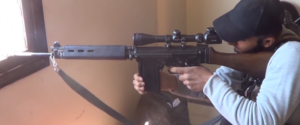

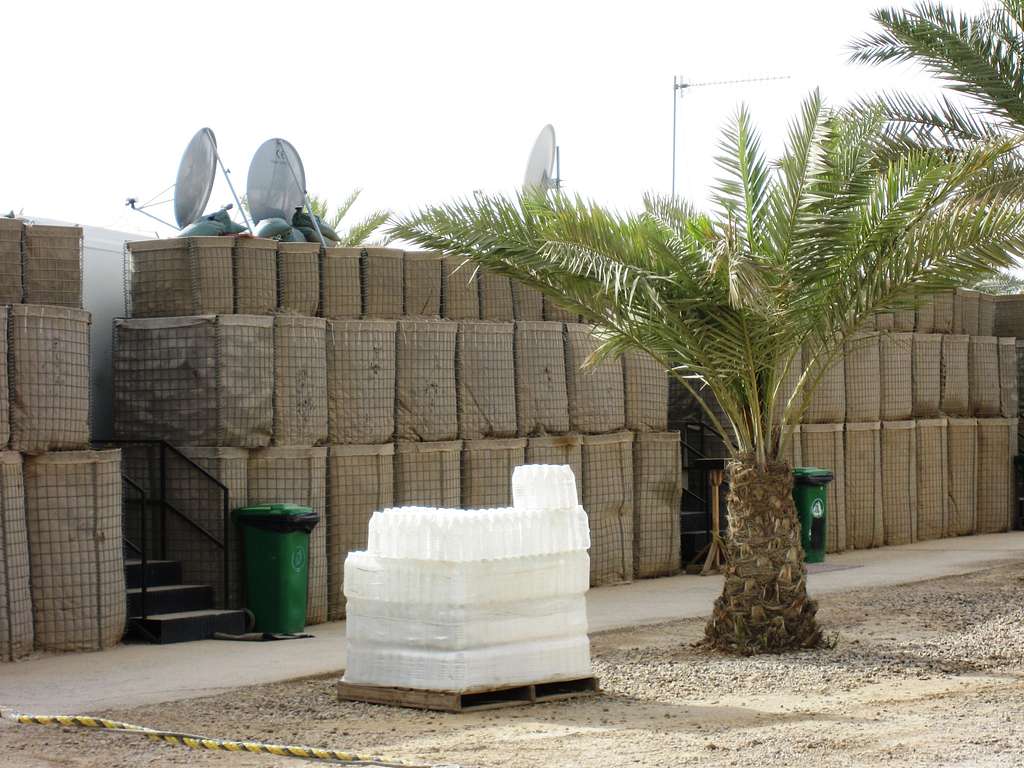







 Guns are sexy. It’s a known fact that linking firearms (as well as many other odd things) to sex increases sales. That’s what keeps good-looking models, both male and female, working.
 top tier, is how to get at that gear and equipment on a razor-thin budget. Psychologically speaking, it is humiliating for a formally-organized armed force – which relies on the concepts of duty, honor and pride to function reliably and effectively – to accept hand-me-downs from wealthier states, except in the most dire of circumstances; the
 While shopping sites such as