April 23, 2026

Capitalism


The Forgotten Army


In the wake of more violence by perpetrators who happen to use firearms this week, we are once again witness to strident calls to restrict the access to firearms by certain segments of the population, despite there being ever-less appetite for such actions, because most Americans now realize the fallacies and dangers of such calls for restrictions – because they worked so well before – not least, because we witnessed the spectacle, not two months ago, of the Ukrainian government frantically offering to almost literally throw military weapons of all types to a civilian population – few if any, of whom had any prior military experience or training – in preparation to receive a military invasion by a neighboring power that was literally “at the gates”, as it were…no word on how that is working out.


Probably not well.


Battles are fought all the time, on every continent, between all kinds of opponents. While it is true that the victors write the history, sometimes, the victors shoot themselves in the foot.


Today is no different.


The Minute Man, a statue by Daniel Chester French erected in 1875 in Concord, Massachusetts; Source: US National Parks Service; Public Domain

On April 19, 1775, a battle was fought outside the city of Boston, Massachusetts. In the aftermath of that battle, a heroic – even Homeric – myth was created, a kind of ‘American Iliad‘, which sought to define a nation and how it fought its wars.


The effects of this myth have killed innumerable American soldiers since it took hold, and has caused a potentially fatal misunderstanding of military force within the United States, a misunderstanding that drives everything from firearms design to national military fiscal policy, to casualty rates and has called into question not only the very idea of taxation itself, but of military training, as a concept. It is a myth that needs to be staked to the ground, and its head struck off.


The myth goes something like this:

“The arrogant, degenerate, and authoritarian British foolishly tried to clamp a tax on their American Colonies without giving them a say in the matter. When the Americans protested, the British tried to throw their weight around — at which point, the rugged, sturdy American farmers “grabbed thar shootin’ ayhrons”, and rose in righteous fury to destroy the vaunted professional army of the British Empire in detail…”


…Which would make for a really great story.


The only problem is that it is almost entirely bogus.


The taxation issue aside – and the British, to be honest, weren’t being unreasonable in any way, about it – here is what actually happened:


On the British side, as tensions rose in Boston, the Crown began to send in more troops. These troops had the cache of “the Regulars” behind their name…the problem being, the vast majority of them were raw, in the extreme. Most had never heard a shot fired in anger, and most of the units involved had been on quiet garrison duty for decades.


In contrast, as much as 40% of the Colonial militia in the region around Boston were not simply veterans, but combat veterans, of the French and Indian War (part of the Seven Years War, for our European readers). As well, most of the senior American militia officers, while not having served as long as their British counterparts, had served all of their time during “active combat operations“, as we would say now.


When it became clear, in 1774, that military action was likely, the Patriot hard-core staged a political takeover of the Massachusetts Militia structure – largely a joke at that point – and began training in earnest and assembling supplies — while lots of historians like to discuss the activities of the Committees of Correspondence, or the Committees of Safety, not many tend to delve too deeply into the actions of the ad hoc Committees of Supply…’logistics‘ are boring drudgery after all.


Right?


General Thomas Gage; oil on canvas; Author:John Singleton Copley (1738-1815), 1788; Source: Yale Center for British Art, Paul Mellon Collection; CC0/1.0

General Thomas Gage – a very sharp (by the standards of the time) and well respected leader by all sides – tried to carry out his government’s orders, and 1774 became a kind of ‘spy war’, as British and Colonial intelligence teams sparred. (The Founding Father’s were hell on wheels when it came to intelligence operations, but that’s another article, entirely.) There were several small armed confrontations prior to the battle, and every one of them revolved around weapons and/or ammunition stockpiled by the Committees of Supply.


These raids, in fact, convinced the Massachusetts Patriot leadership to concentrate a large portion of their supplies at Concord – over 20 miles from Boston – to (hopefully) place them beyond the easy reach of the British garrison. Very quickly, however, Gage’s intelligence teams located the cache. Gage – who, knowing America and Americans very well, having both an American wife and nearly 20 years of service in America – had tried to take a diplomatic track to defuse the crisis. For his efforts trying to play peacemaker, he learned that he was about to be replaced (“aided and advised” was the term used) by three senior generals, so he fatefully decided to launch a swift raid to try and polish up his image, before he had to testify before Parliament.


Gage selected for the raid the British Army of the time’s equivalent to “special operations forces” – his garrison’s grenadier and light infantry companies; as an afterthought, he detailed his Third Brigade of ‘regular’ troops to act as a reserve force.


By the standards of the time, Gage’s plan was difficult, but it should have worked with little trouble. As it happened, however, Colonial intelligence was on the ball, found out about the details of the raid, and got the alarm out when the raid force began moving to their boats.


By the time the raid force marched into Lexington, the town militia company had assembled, then partially dispersed, to wait for events to develop. The details of Lexington are very well known: a tired, wet, jumpy British force; a confused command structure; and a random shot at the wrong moment, all combined into “the Shot Heard Round the World”…


Cropped version of “The battle of Lexington, April 19th. 1775. Plate I.” In: “The Doolittle engravings of the battles of Lexington and Concord in 1775.”; Date: 1775
Source: New York Public Library Collection Guide: Picturing America, 1497-1899; Author: Amos Doolittle (engraver), Ralph Earl; Public Domain


…Meanwhile, the Colonials had not been idle.


After their political coup to gain control over the militia, the Colonials – in addition to assembling a large amount of supplies – had been training relentlessly, while their senior leadership sorted themselves into a command structure with a speed only seen with veteran officers who have no time for posturing.


The numbers (Galvin) are staggering — nearly twenty-two thousand militiamen were available for combat on April 18th. Perhaps 40% of these troops could be termed “Minutemen“, available to respond to an alarm “at a minute’s notice“, at least in theory. In practice, the Minutemen were usually in the forefront of Colonial action.

LtCol Francis Smith, leader of the British forces at the Battles of Lexington and Concord; 1764; Artist: Francis Cotes (1726–1770); oil on canvas; Collection: National Army Museum (national-army-museum.ac.uk); Public Domain
Portrait of Paul Revere, 1768; Artist: John Singleton Copley (1738-1815); oil on canvas; Public Domain

As the well-behaved British troops’ destruction of what supplies they could find spurred the militia units assembled on Punkatasset Hill to march into history at the North Bridge, thinking that the British were burning Concord town, other regiments – summoned by the alarm riders Dawes, Prescott and Revere – were marching down the twisting road network towards the Boston Road. Because of the poor nature of the roads, the Militia units to the northeast of the fighting actually had further to travel than other units to the west, near Worchester.


Fighting began in earnest as the seven hundred or so British troops were swiftly outnumbered by the continually-massing militia forces, as they tried to make an orderly retreat from Concord down the tiny, twisting, sunken road between the two villages. By the time the task force reached Lexington, they were effectively finished as a fighting force; had Hugh, Lord Percy’s 3rd Brigade (summoned by LtCol Smith, the raid force commander, earlier in the morning) not been anchored on Lexington Green, awaiting the raid force, they would have been destroyed in detail.


As a result, after the British column rested and reorganized momentarily in Lexington under the artillery of the 3rd Brigade, they set out for Boston. Along the way, the leading elements of multiple Militia regiments struck the British column with as much force as they could; Brigadier General Hugh, 5th Earl Percy, wisely kept his column moving as quickly as he was able. As the Militia companies fired on the British, and the column continued its retreat, the remainder of the arriving regiments piled into the pursuing Militia column that snaked back along what is now called “Battle Road”.


Map showing the route of the British army’s 18-mile retreat from Concord to Charlestown in the Battles of Lexington and Concord on April 19, 1775. It shows the major points of conflict, as well as showing the route taken by Hugh, Earl Percy’s reinforcements; Date:Unknown date; Source: PDF created in 2000 (http://data2.itc.nps.gov/parks/mima/ppMaps/MIMAmap2.pdf); Author: US National Park Service; Public Domain (Link: https://commons.wikimedia.org/wiki/File:Concord_Retreat.png for high-res)


In the end, of course, the battered, exhausted British column successfully retreated into Boston, while the pursuing Militia regiments fed in around the city to establish siege lines, beginning the American War of Independence…


…Which brings us to — “What’s the point of this article?


The foregoing should demonstrate the obvious: that the Colonial Militia could never have fought the battle it did on the 19th of April without spending significant time training relentlessly and assembling a real supply base well beforehand — a supply base, incidentally, that shaped the entire course of the battle.


This leads us to several lessons about the “spontaneous uprising of disgruntled farmers”:

  • Training works. Disorganized rabble goes to war in droves – and dies in droves. Although they might win – will they have a viable population afterwards?
  • Supplies are vital. Without them, the enemy likely won’t go after you immediately…of course, you can’t go after them, either. For the modern “Patriot” militia in the US, this means that you need to stop being selfish and greedy, and start buying supplies for a unit, with the full knowledge that you are going to give all of that stuff away early, on.
  • Have a plan. Even if it’s a bad plan, that’s better than no plan at all.
  • Learn about “things military”. The myth of the “Armed, Righteous Farmer” (or “Worker”, take note) translates both to people feeling that they do not need to know much about “military stuff”, but also – dangerously – that it can’t be overly complicated. This, in turn, usually prevents people from asking things like, “Why are we spending US$148million for an airplane that doesn’t have an engine?” See: A, B & C
  • Don’t believe your own press. Ever.


Which brings us to…..


MURPHY’S LAW — Professionals vs Amateurs


Murphy’s Second Law of Combat is:


“Professionals’ are predictable, but the world is full of amateurs.”


Truer words have never been spoken.


There is a dangerous – and frankly, bizarre – notion that has been creeping into the Western psyche for the last twenty or so years. This particular pearl of twisted, acrobatic logic goes something like this:


Standing armies are dangerous to Liberty, are ridiculously expensive, encourage “foreign adventures”, and really aren’t all that capable, when it comes to winning wars. After all, that was the view of America’s Founding Fathers, and they were generally right, more than they were wrong, so this must be the case. Therefore, we just need to forget about standing forces, and rely on Citizen militias, like in the early days of the American and French republics – after all, the Swiss and the Israeli armies are all or mostly militias, and they do just fine…


…Now, this argument is rightly laughed at openly by anyone with anything more than the most cursory knowledge of military history or science — but the problem in both the United States, and increasingly in the other Western powers, is that few people study either subject. Indeed, it can be argued that the study of these subjects by anyone outside the professional military establishment is actively discouraged, with many institutions of higher learning being openly hostile to the very idea of devoting resources to such classes.


As a result, what had been the occasional comedic relief and internet meme fodder provided by certain political figures breathlessly ranting about the evils of bayonet lugs, “magazine bullet clips“, and “shoulder things that go up” has now taken on a far more serious dimension, as people who should know better are increasingly making dangerous attempts to use badly flawed historical references or simple dismissals and assumptions to prove their case.


While it is clear that armies can be dangerous liabilities to their home countries, as of the earlyearly-2000’s, few states in the world can be accurately described as being “military dictatorships”. Nor has this been the case for many years. However, given the history of the past hundred years, a tyranny enforced at bayonet-point is a valid fear.


But it remains – or should remain – a remote fear.


The willful disregard of history, technology, economics, logic and psychology in certain quarters, especially in hyper-unstable times such as these is a direct result, in most Western countries, of two or more decades of confused missions, “mission creep“, and shocking levels of mismanagement in defense expenditures and policies; the United States is unique only in the scale of its own issues.


This attitude is typified – to cite just one example – among adherents of former US Congressman Ron Paul (R-TX), who infamously suggested (supposedly as a joke) pursuing every enemy from Osama bin Laden to Somali pirates using mercenaries operating under Congressionally-issued “Letters of Marque” — in apparent ignorance of how such documents worked in the past, what the ramifications (legally, as well as internationally) could be, nor even the simple fact that there is painfully little incentive for anyone to pursue or attack such targets.


But that sidesteps the real issue, that being where these prospective privateers got their training and equipment in the first place…but that is a digression from the point.


To grasp this problem in full bloom, this author had it explained to him by a person, via Facebook (with, apparently, a completely straight face) that standing armies – and presumably, their training – were pointless, because all that training and equipment failed to prevent the slaughter at Omaha Beach, on D-Day, and that likewise, all the training and equipment in the world failed the US Army Rangers in Mogadishu, as well as the lack of victory in both Afghanistan and Iraq, and now in Syria, to say nothing of Vietnam


…It is truly difficult to attempt to argue at such a level of “un-knowledge” (hooray for adding to the English language?).


To demonstrate this problem, let us engage in a thought experiment.


I propose a situation where two thousand people are assembled in a parking lot. We will divide them into two equal groups. These two thousand people are uniformly aged 18 – 25; are 90% male/10% female; are all in what could be generally regarded as “good physical condition“; and finally, all of whom are capable of reading to at least the eighth grade level.


These two units together, equal the manpower of two slightly large light infantry battalions. We will train each battalion for one year, at the end of which, they will fight. Battalion A will be trained the way citizen militia aficionados think they should be trained. Battalion B will receive a more conventional training regimen. Both battalions will have access to the exact same weapons and equipment.


Both battalions will be provided with teams of experienced instructors; but here is the first difference: Battalion A’s instructors will be a grab bag of prior service veterans from various armed forces, while Battalion B’s instructors will be a dedicated and experienced team of professional soldiers, working from a minutely planned schedule. (We’ll leave aside how Battalion A’s instructors actually got their training, for the moment.)


Neither group of instructors will accompany their battalions into the coming fight in a year’s time.


How will this play out? We’ll begin with Battalion A.


Firstly, Battalion A’s troops will have to purchase their equipment from their own pockets. This will significantly degrade their individual supply situation, because they are from a cross-section of the economic spectrum. Modern military equipment is expensive — it takes roughly US$3,000, as of 2016, to equip one person as a light infantry soldier with the most basic level of gear.


This also impacts their weapons: modern crew-served weapons (machine guns and mortars) are significantly expensive; the US military currently pays c.$25,000 for every 81mm mortar it buys – and there are anywhere from four to eight in an infantry battalion. Machine guns – from M249 SAWs to M2HB .50’s – are no cheaper. And those prices are only for the weapons themselves – ammunition not included. Battalion A might be able to pass a collection hat, but they won’t get more than a few military-grade automatic weapons. On top of this, Battalion A must purchase their own ammunition, for both training and combat.


Then, we get to training.


Battalion A’s recruits are completely untrained. Their instructors all have experience, but both they and their recruits — being unpaid — all have day jobs. This means that they will train when they can, usually between two and four days each month. That applies to both instructors and students. As a result, only fifty to sixty percent of the unit will be training at any given time, because that is all that will likely be able to show up.


As well, Battalion A will need to rely on charity to find places to train, where they can actually learn how to maneuver around in the field. Also, Battalion A must rely on their private vehicles for both training and combat – $25,000 for a mortar is a lot of money, but that’s only half of what a decent pickup truck capable of functioning as a “technical” costs, new.


Actual, “military-grade” vehicles are almost certainly out of Battalion A’s reach.


Because of the loose structure of the unit, the troops will choose their own officers and NCOs – sometimes, they will pick competent people, most times…not.


Meanwhile…..


Soldiers in a Niger army unit stand in formation while a dignitary visits their outpost during Operation Desert Shield. The men are armed with M-14 rifles; Date: 14 May 1992; Author: TECH. SGT. H. H. DEFFNER; Public Domain


Over at Battalion B, things are radically different.


Battalion B’s instructors started by herding them all aboard buses. They then trucked them to a large, remote base in the countryside. There, they began a punishing, 12-week long training cycle, learning as much of the basics of soldiering – which is far more than simply pulling a trigger – as they can. Battalion B will probably wash out 10-15% of their recruits during this period, mainly because a certain percentage of the population simply doesn’t mesh well with that kind of environment.


At the end of this 12 week cycle, the instructors give the troops a week off, to blow off steam. When they return, they begin a three week long advanced infantry course, where they fine tune the very basic infantry training they were given earlier.


This is also where the instructors begin identifying those with real leadership potential — with only a year to get ready, there is no time for a service academy, nor even full-length officer or NCO training schools. The leaders the instructors choose will be cracking eighteen hour days, while their troops will be running sixteen.


British Army Lt. Col. Alistair Aitken, commanding officer, Combined Forces Lashkar Gah; Date: 16 July 2011; Source: http://www.defenseimagery.mil/imageRetrieve.action?guid=d27d4312dd0f5f1534d9ac33ad07a4b5ff92c737&t=2; Author: Cpl. Adam Leyendecker; Public domain photograph from defenseimagery.mil.


After this, the recruits will enter a grueling, four month long training cycle, to learn the ins and outs of specific job fields. Finally, there will be four months of field maneuvers, trying lock down the specifics of complex operations, before going up against Battalion A…


So — how will our hypothetical battle play out?


A lot, obviously, depends on the mission of each unit: realistic orders and goals from the unit’s respective higher authorities will have an enormous impact on their actions.


But in most plausible scenarios, even if Battalion B performs badly, Battalion A is going to get used like a floor mop: if they’re lucky, perhaps sixty percent of their force will even show up. Those troops will have little coordination, as not everyone will have radios. Night fighting will be problematic, at best, since few of Battalion A’s people could afford night vision equipment. Battalion A’s casualty recovery and evacuation processes will haphazard to non-existent, exacerbated by many of its people not being able to afford even minimal body armor or basic medical gear.


In contrast, Battalion B – showing up with everyone who had not washed out of training – will likely be advancing rapidly, coordinating the movements of its subordinate units via radio. While many of its troops will be hit, their injuries will be greatly ameliorated by having everyone in body armor, and prompt medical processes. Some of Battalion A’s squad elements might have some level of success (and, being fair, possibly spectacular success), but nowhere near enough to affect the outcome: Battalion A gets creamed, ninety-nine times out of a hundred…


But why? Why should this be so?


In a word: Taxes.


Battalion B was equipped, trained, housed and paid by a government that took in enough money to make this happen. Just how much money are we talking about?


Conservatively speaking, somewhere in the neighborhood of $50-100 million dollars for the battalion…and that’s running on an extremely tight budget.


As of 2007, it cost the United States Marine Corps approximately $52,000 to “basically train” a single recruit over an eighty-six day training cycle. Add in an additional nine months of training, plus meals and graduated pay for troops and instructors, as well as replacing expended training materials, and you can easily multiply that by six — in excess of $300,000, per person


…On top of the $50-100 million for the minimal amounts of arms, vehicles, equipment and expendable items a battalion would need to enter combat with.


Troops buying their own gear, and providing their own training, simply doesn’t work for any but the most basic of military functions, and hasn’t, since at least the year 1900.


Now, a charge of bias could be leveled, here, in that the author – a product of, and firm believer in, standing professional forces, supplemented by properly trained and equipped citizen militias – deliberately weighted the results of this hypothetical battle in favor of the big-government supported force. That is a valid concern, which I will now address.


When the “small government/citizen militia” advocates seriously suggest measures like what produced Battalion A, they invariably cherry-pick data, and cite examples well out of context to prove their points. Favorite examples include the US Army Rangers’ disaster in Mogadishu, and the examples of the Swiss and Israeli use of largely Citizen militia forces.


What they avoid mentioning are things like the lopsided numbers (90-odd Rangers vs c.3,000 Somali militia, with the Rangers inflicting at least 500 casualties, or more), as well as the fact that the Swiss and Israeli economies both stop dead if any large-scale call-up occurs. As well, the fact that both nations employ compulsory service for most of their citizens, in addition to maintaining comparatively large standing bodies of troops, is rarely mentioned.


Even in the United States, the various State National Guards do not operate this way: their recruits attend Regular Army basic training and schools, just like Regular Army recruits — although there may be long delays between schools.


In point of fact, no one outside of Third or Fourth World tribal militias even attempt to train forces using the weekend method…


…Because, again, it just doesn’t work against any serious opponent.


The point must be driven home, that this dangerous set of beliefs is not merely a beer and pretzel thought experiment, nor a set of hypotheticals discussed over gallons of coffee in a cafe.


Gary Hart was wrong to promote it in 1998, Ron Paul was wrong to imply it, and their adherents are wrong to promote it, today.


The Universe is not static; things change. You adapt the the changes or you get run over.


The Federal Reserve Pretends To Do An Ethics Review On Itself
If the stark architecture of the Federal Reserve building looks a bit like Albert Speer designed it in “neoclassical-fascist”, akin to the Soviets, the Nazis, and other dictatorship such as Italy under Mussolini and Spain under Franco, perhaps it was a subconscious admission as to the true intentions behind the creation of this financial and monetary behemoth.

1913 will forever be a dark year in American history: the 16th Amendment allowing the creation of the IRS and the Federal Reserve Act of the same year laid the groundwork for an emerging authoritarianism and gross levels of corruption our country may just find to be fatal to the republic.

According to CNBC, the Fed is “under an ethics review” after Senator Elizabeth Warren sent letters to 12 Fed Presidents “demanding stricter ethics in stock buying.” But the “ethics review” ordered by Fed chairman Jerome Powell is unlikely to deal with the fundamentals of our 1913 mistake, a mistake as awful as the bit in the Constitution that allowed for slavery, only through the IRS and the Fed, every American who isn’t in the corporate and political ruling class has become mostly subjected to these two freedom-busting organizations.

The CNBC article said, “Federal Reserve Chairman Jerome Powell directed staff to review the central bank’s ethics rules for appropriate financial activities after disclosures that several senior central bank officials made multiple multimillion-dollar stock trades in 2020, while others held significant investments.”

The very notion this is anything but theater meant to assuage deeper, legitimate concerns about the Fed basically “monetizing” all Americans’ labor for the benefit of the few is itself either naivety or the ultimate form of propaganda collaboration between a phony press operation and a corrupt ruling class. The obvious investments by these bank officials are paltry compared to the true depths and breadths of thievery being officially sanctioned and facilitated by the Federal Reserve Act of 1913.

The only solutions are to repeal the 16th Amendment, devolve almost all Federal power save for national defense, repeal the Federal Reserve Act, return to the Gold Standard forthwith, and create new Constitutional Amendments to establish term limits, a balanced budget requirement, the creation of a Council of Censors to try all officials who violate the Bill of Rights in their most generous interpretation, and to establish Domestic Nations and Homelands for them with ownership by their tribal governments and not the Federal Government.

None of these measures, save the last two perhaps, are likely to gain purchase among America’s elected officials who will decry them as impossible, fantastical, and even radical. The Fed will hold its “ethics review” that will make surface suggestions and then keep pillaging our economic productivity in favor of the extremely few at the expense of almost everyone, especially productive workers in the middle class.

One may see in the creation of such Leviathan-like institutions the obvious signs of a civilization in deep and alarming moral, spiritual, and ethical decadence that cannot be managed or changed by the present political system because the massively corrupt ruling class is using that system to protect itself.

The Federal Reserve is a creature of a ruling class that arrogantly sees every human being as a commodity and pawn in their own games, all meant only to serve the benefit of that ruling class. Its ethics inquiry is pure theater.

Money Can “Buy You Happiness”, But It’s Not What You Think!

Bill Collier- The old line reads, “money can’t buy you happiness”, but like “money is the root of all evil” (hint: it’s the LOVE of money that’s the root of all evil), this may be a bit off the mark. But it’s not what you think.

First, let’s stipulate that happiness isn’t dependent on money. You can be happy even if you are quite poor. Being rich and being happy isn’t automatic, but neither is being poor in any way connected to happiness. Happiness can transcend money.

Ecclesiastes 10:9 says, “A feast is made for laughter, and wine maketh merry: but money answereth all things.” And Ecclesiastes 7:12 reads, “For wisdom is a defence, and money is a defence: but the excellency of knowledge is, that wisdom giveth life to them that have it.”

This depiction of the value of money isn’t so dismissive, now is it?

The question is, “can money buy you happiness?”

Nothing by itself, other than the love of God, cam guy you happiness. Not even the love of God can buy someone happiness if they reject it or don’t walk in it. Many people who know of and believe in their intellect about God’s love don’t walk in it.

Money can buy you happiness, but it’s more complicated than that. It’s not the money that buys you happiness.

I’ve been poor and well off, and I can tell you, I didn’t like poverty. But I’ve been well off and happy more than I’ve been poor and been happy!

For me, the key secret about how money is a defense and how money amswers all things, as well as how money can, albeit indirectly, “buy happiness”, is how you spend the money.

While having money to pay for things you need and want, within reason, can be good, simply buying things hasn’t really led to happiness for me. For me, money buys me happiness when I invest it in people, whether they show me appreciation or loyalty in return isn’t so much the reason I am happy.

Sowing into people’s lives or even employing people who are good, solid people with or without money, is immensely satisfying. The giver truly gains! I have seen how giving someone an opportunity to make decent money when they deserve a break can transform their lives, and being a part of that truly causes happiness.

I have also been gifted money at the right time. This didn’t just bring me relief because I had less stress, it touched my soul that someone cared enough for me to help me in this way.

The idea that money can’t buy you happiness isn’t rooted in the Bible or in life’s reality. It cannot buy you happiness by itself, certainly not if wisdom isn’t applied to how you use it. Being rich or poor aren’t themselves the sole factor here. I have had happiness when I was poor and when I was well off.

I suspect this notion “money can’t buy you happiness” may rank up there with “money is the root of all evil” or something like “smart people don’t have common sense.” When people stop striving for better, they tend to justify why the “better” thing isn’t really valuable at all. This is abject surrender, apathy about your plight.

I’d be hesitant to say outright that money can buy you happiness, but I would say that how you use money can cause happiness.

I definitely seek more wealth and prosperity. I seek this because money is a defense in times of crisis, it is a way to answer all things so I don’t have to fall under the influence or control of others, and, it is a wat of investing in people in order to experience the happiness that comes from transforming lives and seeing others reach their potential.

If you want money to consume it for purely material things, well, getting a lot of things won’t make you happy. I have things, things I like, especially relics of history, including some classic cars. But while I enjoy these things, I have been known to give them away when someone really needed them or when I realized they may never get anything like that but I could get another.

Things I hold I only feel are temporary. They are nice and enjoyable, but not essential. And what I do spend on things doesn’t come close to what I spend on people. This has always been more important to me.

Relationships are the brass ring of this life, other than loving God and walking in His love. Having money so you can invest in people and having money so you can be independent and be prepared are all ways how you spend money can lead to happiness.

Do not eschew getting money, do not think being poor is essential to happiness or being rich leads to unhappiness. Being well off, I am not rich, has only made me happy when I used wisdom in how money is a defense and answers all things and in how I invested in people.

I would certainly like to to have hundreds of millions of dollars, but well over 99% would be invested in ambitions to provide things that liberate and enrich millions of other people. My desire is to increase my care for others because, aside from God and my closets family and friends, nothing brings me more happiness.

Don’t be so quick to say money can’t buy you happiness. This may be a cop-out for not striving to value yourself more justly or to work harder and smarter to grow your income potential. Chances are, you deserve more and if you used wisdom and hard work, you would have more.

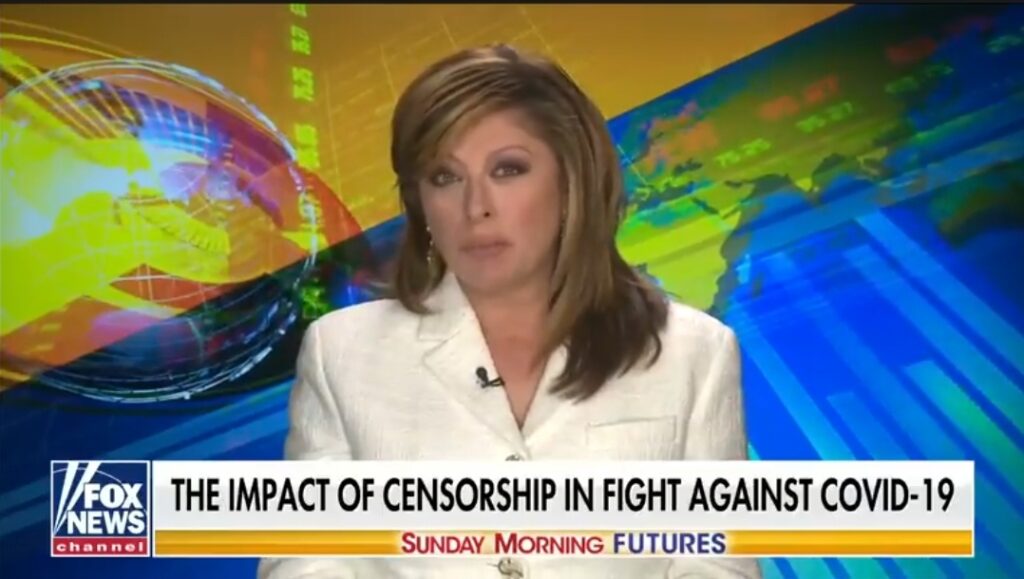
Big Tech Blocks Covid Treatment Information

Connect the dots and follow the money to see why the big tech oligarchy are so desperate to block Covid treatment.

See this segment on the problem. The gist is this, “Sen. Johnson and Dr. Pierre Kory on the impact of censorship in fight against COVID-19 https://t.co/gemBdonw9p @SundayFutures @FoxNews @SenRonJohnson @PierreKory”

The big tech oligarchy is fighting hard to block information and free discussions around possible Covid-19 treatments. Their reasons may be partisan or monetary or both. The powers and entities benefiting from blocking information include the Chinese communist party, the Democratic Party, the lockdown governors, and big pharma. These are all the entities known to have deep hooks into the people who are part of the big tech oligarchy.

The net effect is a potential loss of life. Without free and open discourse, possible effective treatments are a no-go. This means we don’t even block crackpot theories, because the process of scientific exploration demands a “no heresies excluded” approach. Unless actual fraud is being conducted, our major discourse platforms have a moral duty to enforce a scientific standard, not an “orthodoxy against heresy” standard.

The platforms continue to show their lack of ethics and the ease with which their monopoly stranglehold over discourse and commerce, perhaps earned through better serving the market, is being abused now to interfere with the market.

Is This The New Communism?

Bill Collier- Cancel culture ruins the platforms, wokism ruins the boardrooms, and critical race theory ruins the classroom. Is this the new communism, where the Party isn’t just using the state but every major institution to gain and keep monopoly power? Does the new communism co-opt rather than dismantle the corporation? Does the new communism enlist the old guards of crony capitalism to become the new politburo or central committee?

Ideologies evolve. To define communism using the classic old definition isn’t useful. The old idea of communism was for the state to control the economy, no private corporations, until full communism is achieved. The new communism has no manifesto per se, beyond the Democratic Party national platform.

A brief caveat. We believe not all, or most, rank and file Democratic voters are down with this new form of modern communism. Our use of the word “Democrats” here applies exclusively to the top Party brass and their corporate crony backers. As a second caveat, the Republicans aren’t exactly saints, some are even controlled opposition in cahoots with the Party, many are feckless cronies in their own right who soundbite all day about freedom and whatnot but who really only exist to enjoy the perks of office.

A few major themes of communism include “critical theory”, equal outcomes, deconstruction of history and heritage, destruction of the family in favor of the state, hatred for pure religion, and setting aside individual rights to acheive centralized control. Removing differentiation, atomizing individuals, and destroying all institutions the Party cannot control are the true hallmarks of communism.

Modern communism, led by the Democratic Party, is of the same vein. But here is the huge modern twist: the communism of today actually employs the corporation almost in the same manner as the old school communists employed the state. The old communists saw authoritarianism and socialism as the key to transitioning toward true communism and a withering away of the state. Modern communism seems to use new forms and methods of authoritarianism imposed as much by corporations as the state to eventually see the withering away of the corporation.

Communism always has many excuses and bogeyman claims to justify its limits on things like free speech, self-preservation, self-reliance, and religion. But while the excuses may run the gamit from the rights of workers to ending racism, the methods and end are always totalitarian.

The goals, which we know are empty, fantastical utopian promises that really only serve to con people into surrendering their individual rights, are the same: some form of equality of results for all regardless of the individual’s level and quality of participation and effort. The new Party Bosses and the new Politburo are just as likely to serve at the top of government and the Democratic Party as they are the cancel culture platforms and the woke corporations.

Make no mistake, the Democrats are modern-day communists and their communism, while still essentially totalitarian, looks a lot different than the communism of old. In fact, they would deny the label and probably accuse us of “red baiting” or of spreading “conspiracy theories.” But they are communists who have evolved their communism in the 21st century into something that is quite prepared to enlist and employ corporations that are privately owned to control or coerce people who refuse to countenance their totalitarianism.

Whether it is the state or a monopoly of a few corporations, if your means of self-expression, of economic exchange, and of self-reliance are blocked or controlled in such a way that you get canceled for engaging in dissent from the NEW form of “modern” communist orthodoxy, it’s still totalitarian in effect. If you cannot freely live and function without bowing the knee to someone else’s communist ideology, then you are not free and it doesn’t matter who your tormentors are.

If I say “Joe Biden is a communist”, you may conjure images of the Soviet Union and laugh at me. Clearly, Joe Biden is not calling for the end of corporations or “the market.” But the fact he owes his office to those whose rabid intolerance for all dissent is well known, should suffice to label him a communist. Arguing he is “playing them” or “placating” them but isn’t really on their team seems too generous and is naivete itself! Joe wants total monopoly power for the Democratic Party. Period.

The Democrats have evolved communism, they have chosen to enlist corporations rather than dismantle them. They have chosen to enlist the corporate bigwigs and fatcats as the new politburo and central committee. Like the top officials of the old Soviet Union, the top Democrats and their corporate cronies all carve out their own satrapies, all in service of the Party, and all eat and live well at our expense while lecturing us on equality and justice.

When we say today’s Democrats are modern-day communists, we clearly don’t mean they are exactly like the Soviet Union’s form of industrial age communism. Things have evolved in terms of methods and means, from only the state to a corporate and state partnership of totalitarian control. But the goal, absolute power by the Party at the expense of the rights of any dissenters, has not changed in general.

What the Democrats want is total control of our lives through a monopoly of power, which they are just as willing to exercise through the powers of the state or private corporations, and all in the name of equality and justice, as generally defined even by communists of old. That may be a new, evolved, modernized form of communism, but it is still communism.

A Capitalist Response To Big Tech Market Dominance

Regal Blue Media will be launching a new niche, boutique platform, called “Upadaria”, catering to a mostly, but not exclusively, Christian audience seeking personal fulfillment of God’s potential for their lives through mutual self-reliance. This user-backed “virtual-to-local” community, we believe, is the future of the digital commons and is the proper capitalist response to fears and concerns about a few firms dominating the marketplace.

It is argued that “Big tech monopolies control the public square in terms of economic exchange and the sharing of information and public opinion.” Those who find themselves at odds with this alleged “big tech oligarchy”, it is claimed, are effectively shunned from the economy and public discourse, what they call “deplatformed.” We propose a capitalist response to what is really a case of earned market dominance by the creation of user-backed niche communities which mesh together to organically create a larger decentralized digtial ecosystem.

It is argued that if the entities that, allegedly, control economic exchange and public discourse are using their ability to control access to these things to hinder free speech in ways government, which used to control these things, cannot legally do, the net effect is not a free society. Increasingly we may be forgiven for the false impression that the accepted orthodoxy of a few people at the top of these platforms controls the discourse and shuns dissent on ideological grounds.

But it’s not necessarily what you think, it’s not so much ideological as it is good old-fashioned greed. The ideology of big tech is monopolism, which doesn’t mean they have achieved monopoly status. It is not necessarily a good response to cancel the corporations so much as to invent our way around them. Demonizing big tech and ascribing motives to them that may be fantastical and inaccurate won’t liberate the digital commons and may introduce government controls that are worse than the monopoly power big tech wields.

What some call “the big tech oligarchy” who, it is argued, seem to be determined to use their marketing position as arbiters of the digital commons (in their own best interests). This is a situation, it is feared, where economic life and public discourse are controlled in a manner that is favorable to this “oligarchy” maintaining their monopoly while disrespecting the basic dignity of the human beings they were meant to serve.

The goal isn’t ideological, it is to take and keep more market share and to shield themselves from possible competitors while keeping government at bay. This isn’t monopoly per se, people will argue whether there is a monopoly, but it is monopolism, that is, a desire to gain as close to monopoly advantages as they legally can.

There are those who debate a need for reforms meant to nuetralize this dominant market power over the digital commons. There is a desire to push back against this “oligarchy” and its perceived control over the economic life of most people and their seeming ability to literally decide the content of our public discourse.

While the narrative is that the big tech oligarchy are driven by ideology, the truth may be more complicated. There are conservatives who have used and continue to use big tech to promote themselves and there have been people on the left, especially the anti-war left, who have endured deplatforming.

Some are focused on the narrative assumption that this “big tech oligarchy” are anti-conservative zealots trying to help Democrats win. One suspects that if Republicans were more favorable to the monopolism of big tech, they would have better access to the platforms. Many, especially those who adhere to the ideological bias assumption, are focusing on using the power of the state to prohibit these platforms from moderation of their content according to the standards they deem best suited to their needs.

The danger to this approach is that such powers to dictate how private firms choose to moderate their content or who and what they desire to associate with can cut all ways, not just the way we might want it to cut.

It is problematic for many that a “big tech oligarchy” has the power to control so much economic activity and sharing of content, news, and opinion that those who do not have access to their systems are generally at a decided disadvantage in our society. The existence of such a massive marketplace dominance, many argue, is akin to a concentration of power in government, against which America’s founders crafted a Constitution that involves checks and balances and a federalist system that keeps power from concentrating at the center and the top.

Those who may argue that the monopoly powers being used by big tech are not ideologically motivated have a point. But the reality of power, others retort, is that if, say, the top 10 platforms decide to deplatform someone who has not violated the law for speech or opinions that even most people would disagree with, than that person’s right to free speech is effectively meaningless. Or so the narrative runs.

This, however, is not the goal of big tech or the greatest problem. Their goal is to have as much of the market share of advertising dollars and audience size as possible and to prevent the emergence of competition while creating a political situation in which those most favorable to them are in office. This concentration of marketplace dominance is antithetical to a free market, but having the government step in to punish “the big tech oligarchy” may itself be a worse cure than the disease.

Freedomists are not likely to be fans of big tech and its monopolistic ambition, even if monopoly itself is yet to be achieved. The issue here is centralized marketplace dominance, which goes against our instinct toward decentralization as much as possible. Our opposition is principled, not ideological. But our instinct for a capitalist response tends to go against a knee-jerk authoritarianism over the platforms, telling them how and when to moderate content, is

What is the response?

In general, the best response, we propose, is to undermine the monopoly through creating a new digital commons that is NOT simply a re-creation of alternative massive platforms but that is an interconnected mesh network of diverse autonomous and user-backed niche digital communities. Efforts to create the next mass platform will necessarily come against a system that is more sensitive to the needs of the advertisers than to the users and the irreducible complexity of creating an alternative structure that can attract a comparable audience size and advertisers.

The new approach may look more like a thousand cuts against the monopoly holders. It may be thousands of user-backed niche communities that find ways to connect to each other in a decentralized mesh.

Where government can be useful is if those who pursue monopolism go off their platforms to collude in order to prevent the market from operating freely. If banks close accounts to businesses simply because they are creating alternative digital commons structures, in collusion with big tech monopolists, this may be actionable from an anti-trust perspective.

Those banks who have ended relationships with personalities and groups whose rehtoric harms their brand through that association aren’t facing public blowback, again, because most people don’t LIKE the deplatformed personalities or groups. But if this became a general trend targeting personalities and groups who have not been overtly offensive, the legal and public relations problems would become insurmountable.

The “free speech platform” approach is problematic for a few reasons. First, it is irreducibly complex in terms of attracting a comparable audience that would be of interest to advertisers and, second, because it would cost billions to build and market. At this stage, it must still rely on an ecosystem that is more sensitive to the needs of the marketplace giants than to small would-be competitors. Finally, and overlooked, is the fact most people don’t want to be on a platform that gives space to actual Nazis or totalitarians or any of the other socially unacceptable extremes. Moreover, they don’t want vulgarity and smut, except in the adult websites they subscribe to.

The inability of these “free speech platforms” to compete even on a technical basis, they often crash, or to gain access to the digtial ecosystem to reach a mass audience is abysmal to date. By allowing some speech that is definitely beyond the pale of social acceptance, these platforms have given an easy justification to ecosystem giants, which dominate economic exchange providers (e.g. credit card companies and payment processors), domain name registrars, and hosting providers, to deplatform them. The pushback from the public against these behemoths is muted because very few people want to defend actual racists or neonazis.

The clawback of a distributed and decentralized control over the digtial ecosystem and the digital commons will take time and resources from diverse communities of people. If, however, users continue to refuse to want to pay for access and demand freebies, they are showing that the only way to thrive as a platform is through the exact approach being taken now: cater to corporate backers, treat users and their data as a commodity, and obtain market dominance.

No corporation, sensitive to the pressure of activist communities and thought leaders and to their brand, will back mass appeal alt platforms that allow things most of the public tends to feel negatively about. On the other hand, if such a community had a core of 30 million paid users who tended not to populate the platforms, advertisers would bend over backwards to reach them, regardless of branding issues.

The alternative niche communities, backed by paid subscriptions, will have the means to form their own niche ecosystems and then connect to other autonomous niche ecosystems. This doesn’t spell the end of the free user, ultimately even paid communities will tend to collect free users, even if only through a free email list.

Instead of simply deplatforming one erstwhile competitor, with easy justification based on content deemed hateful by most people, the marketplace giants would be forced to deplatform hundreds and thousands of niche communities whose ONLY “crime” is providing an alternative digtial venue. This would run afoul of antitrust laws in an obvious way, therefore it is unlikely.

Because of the backing of paid users, which could garner advertising support in the future, the ability of these niche communities to invent around the present digital ecosystem or to wage legal challenges on an anti-trust basis would grow and grow as time goes on.

The demand of some to a right to actually USE the existing platforms to attack and undermine the existing platforms is unlikely to gain public support and if it gains official support it can be used against even those invoking it.

These platforms, as “monopoly” as they aspire to be, grew through an ability to meet market demands, both free users as a commodity and the 1% of firms that spend 80% of the marketing dollars that fund these platforms. Like it or not, the functionality of these platforms when compared to their would-be competitors is far superior. In short, the “big tech oligarchy” earned its special status through excellence. Undermining its position of marketplace dominance, through free and fair competition, may require a marketplace response that isn’t merely a re-creation of mass market alternatives.

Regal Blue Media is funding, with the backing of partners, the first prototype for these niche ecosystems, one that both caters to more socially conservative Christians or people of a Judeo-Christian worldview, without allowing any kind of hate speech, bigotry, or intolerance directed at any other group of people. This will be a user-backed platform through paid subscriptions, with a free email list as the open end of its funnel, that will succeed or fail, in part, on the basis of the willingness of those who decry the “tech oligarchy” to choose to become a paying customer rather than the commodity sold to the actual customers.

The concept of a niche ecosystem is that participation is based on prior agreement to transparent common standards and to common ideals and purposes while funding is from users, as opposed to users being the commodity sold to advertisers. Our gamble, and it remains to be seen whether it is justifed, is that users will want pay for access to features and content to avoid being the commodity. The idea is that when access is free, the provider is more sensitive to those who want to “purchase” the user data and sell to them, as opposed to the users.

Quite simply, a “free to use” platform cannot actually be freedom-oriented or user-centric, it has to cater to the wants and needs of the major firms that provide over 80% of its funding.

The proliferation of these niche ecosystems, paid for by users, and their connections to one another over time, so that one might broadcast a message to many of them at the same time, will answer the complaint that we have an unhealthy monpolistic digital commons and ecosystem that is increasingly insensible to legitimate market demand.

Efforts to rein in “the big tech oligarchy” which tend toward duplication of massive alternative platforms and government regulation are essentially going in the opposite direction of what is necessary and possible. Creating multiple niche ecosystems, backed by paid subscriptions, that connect to one another is not irreducibly complex and it is simply not possible, under present law, to “deplatform” all these alternatives without facing legal consequences.

Our platform, called “Upadaria”, will not allow bigotry or hate speech, it envisioned as a user funded niche community that caters to social conservatives of a Judeo-Christian worldview in a positive and life-affirming manner, being more for something that against anything or anyone who may not fit such a profile.

What we are aiming for, partially through our own development of multiple niche communities, is the proliferation of diverse, user-backed communities connected to a free, pluralistic, and decentralized, alternative digital ecosystem and digital commons. No, in such a network, there won’t be space for the intolerant, hateful, and racist “communities” whom no other community of decent people wants to connect to.

Let the hateful and intolerant build their own things, the market won’t support them and no platform should be compelled to host them.

The “problem” isn’t ideological and it isn’t the “censorship” of actual intolerance. The main problem is a digital commons and digital ecosystem with a small group of major market leaders that cannot be sensitive to user needs and wants because their platforms aren’t user backed. But the solution is to build alternatives that are not irreducibly complex and that cater to niche communities while enabling interconnectedness among those user-backed communities through a decentralized ecosystem.

Our response is to build an alternative platform that is user backed, but definitely not welcoming of actual hatred or bigotry, and that caters to its users as a niche community based on predefined common standards and goals.

The Glories of ACTUAL Capitalism

By Willem IV- Actual capitalism, not its gross mischaracterization or misappropriation, is glorious and would lead to universal opulence if actually achieved.

We don’t rail against the gross imbalance of the distribution of wealth as an indictment against the rich, unless we can identify and prove actual unethical and/or illegal activities.

Our focus is on the inherent threat such imbalance poses to the stability of society and on lifting up the disadvantaged so that prosperity is the universal norm almost everyone obtains.

Our focus is also on the individual’s right to access the market in order to obtain wealth and success through serving and being served by others in a voluntary free exchange.

Finally, our focus is on identifying and constraining injustices and both structural and systemic biases or hindrances to wealth creation by and for the least among us.

We firmly believe actual capitalism is bounded by the ancient and sacred moral standards of the Kingdom of God and the righteous and just standards of Yeshua. But this has always been the case: capitalism, even before it was named, was always based on the ethical orthodoxy of historic Christianity and a Judeo-Christian worldview. The aim has always been to lift up the low places and to help the disadvantaged and left behind.

The misappropriation of capitalism by modern versions of feudal lords who render workers and customers serfs is baneful to economic justice. And economic justice is one of the pillars of capitalism as understood by such foundational thinkers as Adam Smith. The use of a false form of “capitalism” to perpetuate the fears and utopianism of state controlled economics is a dishonest, bad faith opposition. The “capitalism” they oppose, cronyist oligarchy, is also, ironically, opposed by the principles and standards of capitalism.

The aim of capitalism predates even the use of the word capitalism. Our aim is universal opulence, bounded by voluntary moral and ethical standards that affirm life and human dignity, starting with lifting up the most disadvantaged among us. Anything short of that we oppose.

Wealth isn’t finite. We don’t need to take from the upper 5% to make things equitable for the lower 40%, as an example. What we need is to raise the bottom 40% up, through capitalism bounded by Judeo-Christian ethics, which will change the overall distribution of wealth without merely reducing the wealth of the few in order to simply redistribute the same pie without increasing wealth overall.

If the rate of wealth attainement increases among the lower ranks in terms of wealth and income at an even higher rate than those at the top, then less extremes of wealth inequality will be obtained. If opulence is universal, it won’t matter how rich any group of people are, a wealthy society which has few poor and which has the means to ensure nobody is left behind is a stable society.

Our goal must not be to simply ask bureaucrats to use the police if need be to take from the most wealthy and pass that back to the disadvantaged, with strings attached, but only after the bureaucracy gets its cut and politicians use it to buy votes. This is terribly inefficient and leads to corruption and its net effect is a decrease in total wealth and the general distribution of poverty among more and more people.

Do not heed the siren call of state control of the economy, through massive taxes and regulations, regardless of their bogeyman fears or utopian promises. Do not equate capitalism with the baneful acts, like worker exploitation or consumer fraud, that it opposes!

Seek prosperity. Seek capitalism.

Capitalism is glorious and even in its limited form, encumbered by the two evils of cronyist oligarchy and state controlled economics, it has exceeded any economic methodology known to human civilization. True and complete capitalism would produce universal opulence without a morbid imbalance of wealth, especially without a government that cotnrols over 27% of all economic activity and whose policies tend to concentrate private wealth into the hands of an oligarchy.

The collusion of cronies and politicians and their support by bureaucrats and the un-free press isn’t capitalism. Call it whatever you wish, but capitalism, when fully actualized, would lack any of these negative characteristics.

Capitalism is free, equitable, fair, and just and generates wealth for all from the bottom, up, and not from the top, down. In true capitalism, wealth EMERGES from people far from the top and trickles upwardl to reward the most innovative and to provide funding for the public good.

Everyone cannot be a millionaire, but almost everyone in every demographic and community throughout the whole land can and will enjoy opulence and those who fall on hard times or cannot care for themselves will not be left behind.

In capitalism, when we achieve it fully, there is more than enough wealth to ensure that nobody needs to go hungry, lack housing, be unsafe, endure abusive policing, suffer medical crisis that they cannot afford to pay for, lack education, face structural or systemic discrimination, or be left behind due to falling on hard times or not being able to fend for themselves.

Neither cronyist oligarchy nor state controlled economics can even come close to delivering on such a promise. The glory of capitalism is that it alone can deliver its promises and all we have to do is nurture it and get out of its way!

Capitalism Is Economic Justice For All

Universal Opulence Is Our Aim

Bill Collier- As the President of The Capitalist League and coauthor of The Capitalist Manifesto, the definitive guide to the true meaning of capitalism, I am an advocate for human dignity and universal opulence which capitalism alone can provide for in the economic realm.

Capitalism advances human dignity and prosperity through the power of economic self-determination. Freedom of association and exchange, ownership and property rights, as well as profit earning and wealth preservation drive equitable prosperity for all. These are the only means to achieve universal opulence that leaves nobody behind!

Examples of exploitation and abuse, cronyism, and official manipulation and interference are not an indictment of capitalism. Those who practice such things do so AGAINST the principles and values of capitalism, whose truest aim is universal opulence.

The libel against this noble, equitable, and just economic ideology and the manipulation and violation of the free market as a moral necessity have confused many as to the true nature, principles, and goals of capitalism. Capitalism alone is the champion of prosperity and economic justice for every single person, especially the poor.

Capitalism is the heart of economic justice and the only path to economic prosperity that is felt universally and that repsects human dignity. All the fake forms of capitalism, basically cronyism, and the tendency to use this to libel capitalism and excuse the evils of a planned economy, are forms of economic injustice against the average person.

Economic justice is when all persons have an equitable pathway to prosperity through economic freedom and stewardship of their own means and abilities bent to serve their needs. Capitalism has abundance which allows for private and public means to ensure that nobody is left behind while few need benevolence or a social safety net to survive and yet all who need these things can access them.

In a capitalist economy, that which is essential is affordable and prosperity with abundance is shared by almost all while none of the poor are left behind.

This is how we know capitalism isn’t being used according to its principles and practices: essential goods and services are not affordable to all and prosperity is not shared by almost everyone, so that very few are what we would call poor.

When the engine of universal prosperity, which is capitalism and only capitalism, is interfered with through cronyism or centralized economic planning, then we can say economic injustice has occured. When people cannot begin an entrepreneurial effort without artificial limits, when profit is not gained and owned on the basis of one’s investment and contribution, and when the cost of goods and services is manipulated through market interference by government or any entity, then we have injustice.

Capitalism, when properly understood in its spirit and intent and according to its laws and standards, is the only true path for economic justice for all human beings. The stereotypes and misrepresentation of capitalism by both its ideological foes and those who claim its mantle while violating its ethics are delusions meant to keep you from seeing what is possible for your own economic liberation.

Follow The Capitalist Manifesto and be part of a global economic awakening to promote universal opulence!

Main

Back FREEDOM for only $4.95/month and help the Freedomist to fight the ongoing war on liberty and defeat the establishment's SHILL press!!

Are you enjoying our content? Help support our mission to reach every American with a message of freedom through virtue, liberty, and independence! Support our team of dedicated freedom builders for as little as $4.95/month! Back the Freedomist now! Click here