
April 18, 2026

Betsy Dorminey

How Can We Think About This 21st Century War?

by Betsy Dorminey

Mature Language Warning

Faced with the horror of the unfolding war in Ukraine a young linguist of my acquaintance decided to conduct a bit of “man in the street” polling, 21st-century style.  The original post featured a screen shot of a Russian language post: her notes and translation appear below.

I speak a little Russian, so I’ve been reading the Russian-language side of Reddit.  Selection bias since it’s Russians posting on Western media, but since it’s *in* Russian it should be mostly free of trolls.  Most of them are really not happy with Putin.  Again, my language skills are rough but my translation:

Title:  Jesus Christ, where we’re headed is completely insane

Text:  Fucking hell, it’s already been six days of this shit.  Six days of following this clusterfuck and I can’t believe this isn’t a simulation, that it’s not some experiment on hamsters.  I’ve already gone stark raving mad, I can’t sleep from the panic.  What’s next?  How can we live like this? Why are the war hawks yelling “this is what Ukrainians deserve, our fight is righteous!”  Why the fuck does anyone support this goddamn regime?  God fucking fuck dammit HELP

Translator’s note:  hard for me to translate the vast arsenal of curse words in the Russian language, the post was peppered with them.

The official line, of course, is different.  State-controlled media portrays it as a “special military operation,” “de-nazification,” or “protection of Russian-speaking peoples.  But as Sean Illing reports in Vox dissenting journalists have fled and we know Russians are protesting the Ukraine invasion.  The state has imposed draconian penalties on dissent.  (Fifteen years in the slammer for using the “w” word!)  This expletive-laden cri de coeur really brings it home.

Good news is hard to find.  As Kyle Smith observes in The New York Post, journalism suffers when “what neutral principles do we stand for?” is replaced by “which side are we on?” Either you live in an authoritarian country like Russia where government controls the media, or you live in an authoritarian country like the U.S. where the media controls the government.  Ironic, isn’t it, since technology empowers anyone with internet access and a keyboard to reach the world.  You have to hunt, and peck. Fortunately there are clever youngsters out there who know how to bypass parental/governmental controls through social media.

Forget war crimes, treaties, the UN, and international tribunals.  War is a crime against humanity.  Killing people and destroying their homes is bad, and wrong.  Pious accords and laws on the conduct of warfare don’t make it right, or better.  An exceptional article by Dexter Filkins in the September 8, 2021  New Yorker asks, “Did Making the Rules of War Better Make the World Worse?”  Our obsession with rules has attempted to persuade us that wars can be legally waged in accordance with them.  No fair targeting civilians, okay?

Filkiins focuses on Humane: How the United States Abandoned Peace and Reinvented War,  by Samuel Moyn, a professor of history and of jurisprudence at Yale.  Moyn evokes Clausewitz and Tolstoy, Sherman, Afghanistan, and the My Lai massacre, and identifies a turning point in 1977 when the Geneva Convention was updated to impose rules on combatants where hitherto only destructive force had prevailed.  Moyn bemoans such legal niceties for damping the public outcry that should induce politicians to end such conflicts:  “”Humane” war [i]s a consolation prize for the failure to constrain the resort to force in the first place.”  (extra quotation marks mine.)  Protest is how a population responds to war and strives to end it.  See above.

It’s far from clear that having military lawyers second-guess generals has produced less war, or a safer world.  In the end, force will out.  As Joseph Stalin reportedly asked, how many divisions has the Pope?  I’ve got to believe Putin is familiar with that line.

Filkins takes issue with some of Moyn’s conclusions, but agrees in the end that “efforts to curb the cruelty of military force may have backfired.”  Fleets of drones and “smart bombs” and oceans of intel haven’t kept us out of armed conflicts.  For all its military might the United States hasn’t really “won” a war since 1945.  And, having just concluded two “forever wars” – Iraq and Afghanistan – Filkins cautions that the U.S. may be on the brink of a new cold war.  Or a hot one.

Conventions about how to wage war within limits have reduced the incentives to stop fighting. I can only hope that the players moving these lethal chess pieces around the Kievan Rus will stop and think a minute.  Assuming, of course, that they can gain access to reliable news about it.

Because, to echo the Russian post, what the fuck? We can’t live like this.

# # #

Betsy Dorminey is an attorney in Georgia and an entrepreneur in Vermont. Her columns have appeared in the American SpectatorWestern JournalTownhall, Vermont Digger, and The Hill.


A Swift Solution to

A Modest Proposal for the Ivy League

by 

In a recent New Yorker essay, staff writer Nicholas Lemann trembles at the thought of the end of affirmative action at the hands of a Republican-dominated Supreme Court. He assumes that non-whites (except Asians, of course) could never make it into, much less through, top schools without a helping white hand. Look out, Kipling: is this the white man’s burden in the 21st century?

Lehmann’s subhead declares: “The policy has made diversity possible.” Says who? Believe it or not, there was diversity before the Johnson Administration. Harvard graduated its first black student, Richard T. Greener, in 1870. Edward Bouchet graduated Yale in 1874. Thomas Sowell went to Harvard on the GI bill. Harvard is in Boston, a bastion of woke progressivism today, but the incubator of the eugenics movement back when that was the rationale for “progressive” race-based discrimination. Lest we forget, “follow the science” was their battle cry, too.

The trouble with affirmative action started with Plessy v. Ferguson, an 1896 decision that launched the whole dishonest enterprise. The Court, then dominated by Democrats, condoned a Louisiana law requiring trains to segregate blacks and whites in separate carriages. It was a contrived case. Plessy looked white, and it was a set-up designed to test the law. It passed. That decision upholding the “separate but equal” fantasy green-lighted Jim Crow, and the rest, as they say, was history.

Plessy was a 7-1 decision. The lone dissenter, John Marshall Harlan, was a Republican and scion of a prominent Kentucky family of former slave-holders. Harlan had a half-black half-brother, Robert James Harlan, born into slavery but reared and educated in the family. He became a successful businessman and, eventually, a member of the Ohio House of Representatives. Without affirmative action.

Brown v. Board of Education overruled Plessy in 1954. But the original Brown decision did not endorse affirmative action: it outlawed segregation, i.e., differential treatment based on race. But race-based differential treatment is precisely what the champions of affirmative action today want to perpetuate.

Has affirmative action wrought lasting change in the corridors of power? Neither side seems satisfied. Lemann plainly believes the practice needs to continue because the work is not done. But is it a good idea? Thomas Sowell has demonstrated that race preference programs worldwide have not met expectations and often produced the opposite of what was intended. (Sowell believes “diversity” is an empty magic word.) John Hindraker observes that “every major institution in the United States has engaged in “affirmative action,” which means discriminating in favor of blacks and, to a lesser extent, Hispanics, for the last 50 years. If any “systemic racism” has become embedded in our society, it is in the realm of affirmative action.”

Should we continue to place bets on such a sorry horse?

How can we fix this? Dallas Justice Now, a band of woke Texans, asks wealthy white parents not to send their children to elite schools “to leave those spots open for students from Black, LatinX, and other marginalized backgrounds.” I’m not holding my breath. Wealthy parents regularly decline opportunities to send their kids to public school even as they oppose vouchers that would give poor parents that choice.

Here’s a better idea: If you really want to achieve diversity, run a lottery.

I mean it. Set aside some spaces for legacies, athletes, and the well-connected to keep the cash coming. (Not hard, you’ve been doing it forever.) But then take that mountain of well-qualified applicants, throw them into a big barrel, and find a blind person to pull out as many names as needed to fill the remaining slots. Let fate decide. Money’s no issue. Harvard has more money than God — $41.9 billion — and could fund every student through 2050 without running low. And don’t BS me about students who might not be “prepared.” That’s woke-speak for “from the wrong side of the tracks,” another condescending socioeconomic slur. Repurpose admissions officers as mentors to help new kids navigate those ivory towers and ivied halls. If your school is as good as everyone — especially you — think it is, you can set those students firmly on the path to success.

Adopt the lottery approach, and you’ll have a bulletproof defense against discrimination. There’s no more neutral principle than the luck of the draw.

But the greatest benefit of all is that instead of a raft of entitled, snotty-nosed brats who think they’re smarter than everybody else, you’ll have an entering class who feel lucky. What passes for merit is mostly luck, anyway: the good fortune of being born in a prosperous country, to caring parents, plus (as Malcolm Gladwell explains) good timing.

So, Nick, don’t spoil that craft beer with your salty tears. If the Supreme Court finally nails the coffin shut on affirmative action, it may be the best thing that could happen to those it pretends to help. Affirmative action hasn’t worked, and it isn’t not about merit. It’s luck, a golden ticket.” So let’s just go ahead and treat it that way.
Reprinted with permission –     The American Spectator
RIP HARRY REID

By Betsy Dorminey, for The Freedomist

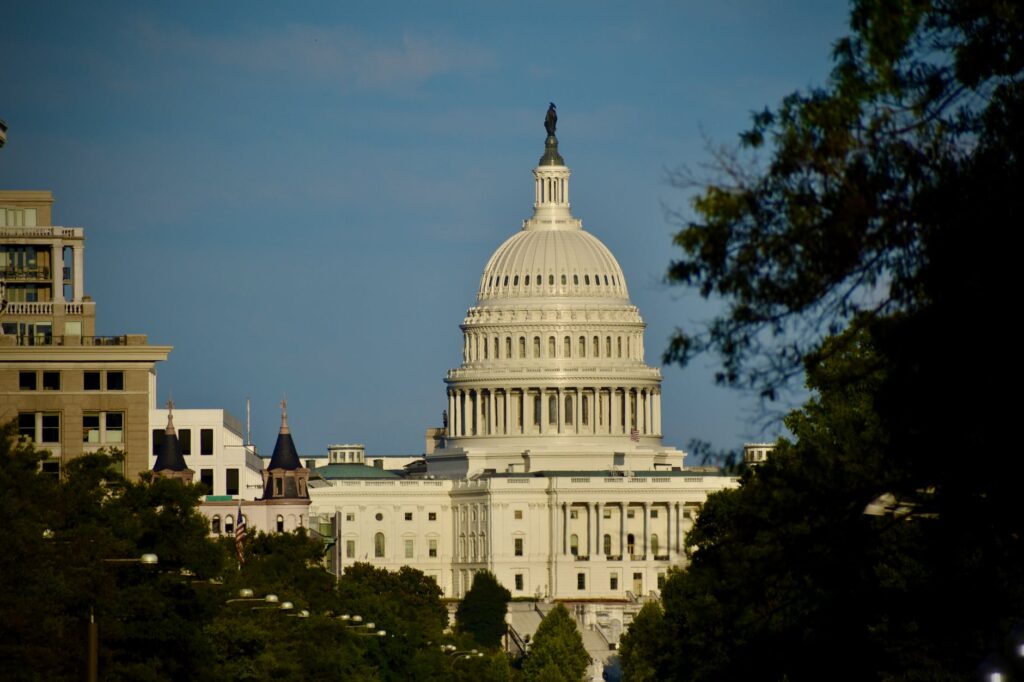
It seems appropriate that the late Senator Harry Reid  (D-NV) should lie in state in the U.S. Capitol rotunda.  He lied there many times before.

Senator Reid lied about his Senate colleague and co-religionist Mitt Romney on the Senate floor in 2012.  I use the word “lied” advisedly, in the sense that he intentionally stated as true something he categorically knew to be false.  And he did it to neutralize a credible Republican presidential nominee.  Reid said “he heard” that Romney hadn’t paid any taxes in 10 years: Romney later released a return showing he’d paid $1.9 million in taxes in 2011.  Pants on fire, Senator Reid: and it isn’t just me:  Politifact outed the falsehood, but the damage was done, and Senate rules insulated Reid from any consequences.

And Reid was a mighty obstructionist.  In 2001 he was instrumental in blocking President George W. Bush’s nomination of Miguel Estrada,, a Honduran immigrant with degrees from Columbia and Harvard, to the U.S. Court of Appeals for the D.C. Circuit.  (Tragically, Estrada’s wife was a casualty of that turmoil.)  After some seasoning on the Circuit Court Estrada would have been an outstanding first Latino Supreme Court appointee.  No dice, said the man from Vegas.  And in 2006 Reid helped scuttle a bipartisan, comprehensive immigration reform bill. President George W. Bush helped craft legislation to increase border security, increase the number of guest workers, and expand green cards, a general overhaul of what is universally regarded as a broken immigration system.  News flash:  it’s still broken, and the prospects for reform grow ever more remote.

Why did Reid labor (successfully) to bring down Estrada and immigration reform?  Same motivation in each case: the paramount desire to deny a Republican president “wins” that Reid wanted to reserve for a Democratic administration, the better to reap Blue electoral hay from Latino voters.

One hates to speak ill of the dead, and I’m not without some personal sympathy for the man: we’re both afflicted with bad eyesight.  And I’m sure he well served his constituents, particularly those in a position to underwrite political campaigns.  There’s a reason the crane is the State Bird of Nevada.  I’m sure he will be mourned by family and friends.  And I’m glad he funded research on space aliens, surely to the benefit of his fine constituents – who knows, maybe voters? — in Area 51.  But let’s not kid ourselves.  Harry Reid may have been a very skilled politician, but he was no statesman.  Still, may he rest in peace.

Main

Back FREEDOM for only $4.95/month and help the Freedomist to fight the ongoing war on liberty and defeat the establishment's SHILL press!!

Are you enjoying our content? Help support our mission to reach every American with a message of freedom through virtue, liberty, and independence! Support our team of dedicated freedom builders for as little as $4.95/month! Back the Freedomist now! Click here