
Supply and commodity trading is boring stuff…Right?
The “Law of Unintended Consequences” is a very real thing. Many people, however, refuse to see them when they appear…and sometimes, they refuse to acknowledge it amid the wreckage of their error. To his credit, John F. Kennedy did acknowledge this – albeit parsed for public consumption – when he said, in the aftermath of the disaster that was the Bay of Pigs, “Victory has a thousand fathers, but defeat is an orphan.”
When we covered the opening weeks of Operation Epic Fury in March, in our monthly subscription edition, we flagged a supply chain casualty that most of the financial press was too focused on crude oil to notice: sulphur.
We noted that a Hormuz closure extending beyond 30 days would begin to bite into agricultural input supply chains, drive spot sulphur prices sharply upward, and extend inflationary effects well beyond the energy sector into global food commodity markets. We were right – and the situation has since become considerably more complicated than even that analysis anticipated.
And this is, in fact, what actually happened.
The Invisible Commodity
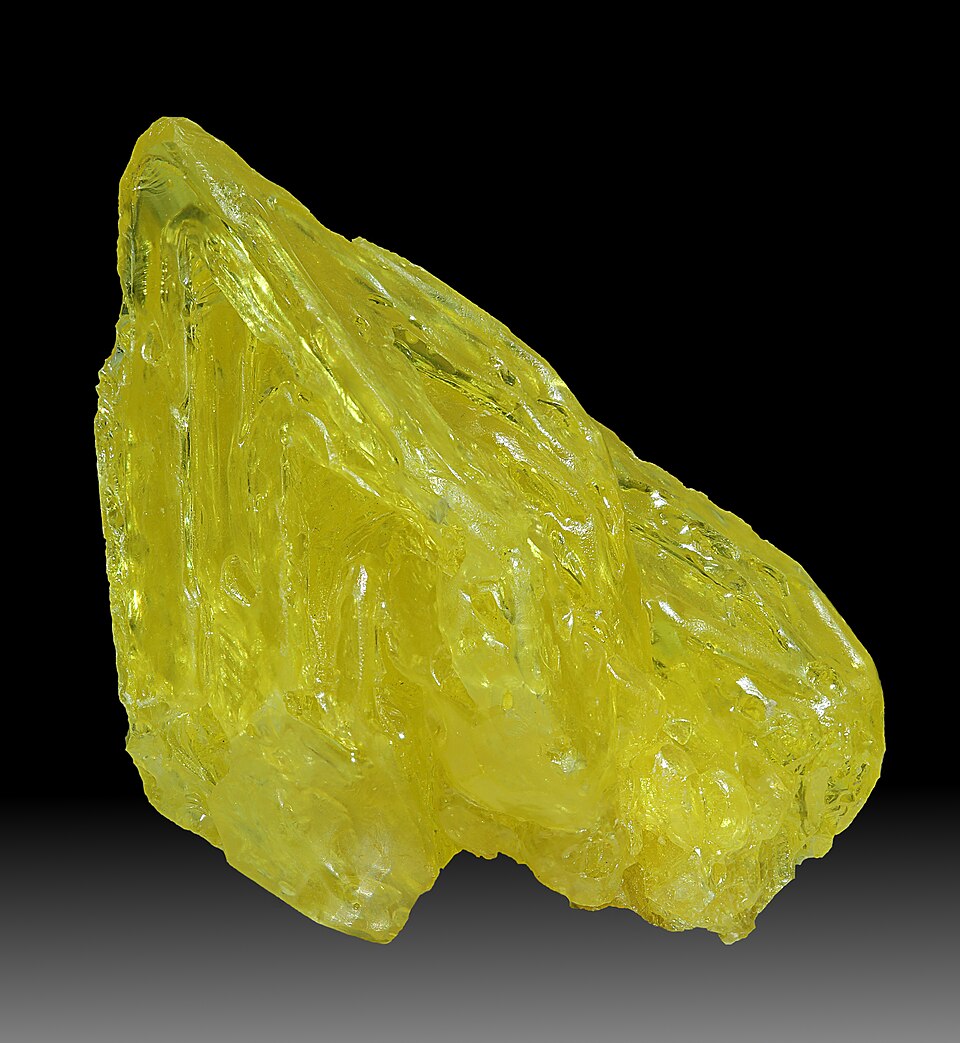
Sulphur is not a commodity that generates headlines under normal circumstances. It does not trade on the nightly news. Most people could not tell you what it is used for, beyond a vague association with volcanoes and the smell of struck matches. That invisibility is precisely what makes it dangerous as a supply chain vulnerability.
Sulphuric acid – the primary derivative of elemental sulphur – is the most widely produced industrial chemical in the world. It is not an exaggeration to call it the nervous system of industrial civilization. It is the essential reagent for processing phosphate rock into the fertilizers – MAP, DAP, SSP and TSP – that sustain the yield levels modern agriculture depends on. It is a critical processing agent for copper, nickel, and the battery metals that underpin the energy transition. It is used in steel production, petroleum refining, pharmaceutical manufacturing, and water treatment. When sulphur supply tightens, the consequences do not stay in one sector.
They cascade.
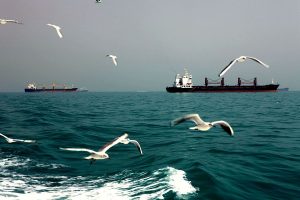
The Strait of Hormuz carries approximately 45-50% of global seaborne sulphur trade. Saudi Arabia and the UAE are the dominant exporters, with Qatar contributing significantly as a byproduct of its LNG operations. When the strait effectively closed in late February 2026, that flow stopped – approximately 4 million metric tons of sulphur per year, originating from Iranian, Qatari, and UAE export terminals, were cut off from world markets.
But How Bad Is The Disruption, Really?
Before going any further, it is worth establishing what “closed” actually means in practice – because the picture is more nuanced than the headlines suggest, and the nuance matters for understanding how long the sulphur crisis persists.
Maritime shipping analysts tracking tanker movements through Kpler data estimates that actual Hormuz transits peaked recently at roughly 7.5 million barrels of oil per day equivalent on a seven-day rolling basis – against a pre-war flow of approximately 20 million barrels per day. Rerouting through Saudi pipelines to Yanbu and UAE facilities at Fujairah adds perhaps 4 million barrels per day of incremental bypass capacity. The net picture, properly benchmarked against total pre-war Middle Eastern outflow of approximately 23 million barrels per day, puts the region running at just over 50% of pre-war export levels.
Complicating the picture further: tanker AIS tracking data is being actively gamed. Ships are running dark – disabling their automatic identification systems – making real-time flow estimates inherently uncertain. What satellite imagery of loading docks can confirm is that the disruption is real and sustained, regardless of what official statements claim. CENTCOM reported on August 14th that U.S. forces had redirected 62 commercial vessels and boarded two to ensure compliance with the blockade. The UAE’s ADNOC shipping line reported two vessels attacked within a single week.
The Houthi dimension adds a further layer. Saudi oil rerouted through Yanbu and heading toward Asia must transit the Bab el-Mandeb – where Houthi forces, operating in conjunction with Iranian interests, are now targeting Saudi-linked vessels specifically. Tanker transits through Bab el-Mandeb have fallen approximately 40%, with more vessels running dark. The bypass route that was supposed to partially compensate for Hormuz is itself under attack.
And on August 14th, President Trump told a crowd of law enforcement officers in New York: “After we finish defeating Iran, which is being very badly defeated – pretty soon I’ll be declaring the Hormuz Strait a territory of the United States“. He followed that on August 18th by posting a map on Truth Social labeling the strait “New US Territory”. Iran responded that the strait “will remain Iranian.” Whatever the legal merits – and they are essentially nonexistent under international maritime law – the political signal is clear: the disruption is not resolving quickly, and the diplomatic pathway to normalization just became considerably more complicated, assuming that Trump’s statements are not simply another example of his grandstanding, as he did in referring to making Gaza into a resort town.
The Triple Shock
What began as a Hormuz disruption rapidly evolved into something considerably more severe, because two major sulphur exporters seized the moment to protect their own domestic supply chains.
On April 10, China announced a full export ban on sulphuric acid through August 2026 – replacing a 700,000-ton annual quota with a complete cessation. China is the world’s largest sulphuric acid exporter, with Chile, Indonesia, and Saudi Arabia as its primary markets. Chile uses it for copper solvent extraction. Indonesia uses it for high-pressure acid leach nickel processing. Saudi Arabia and India use it for fertilizer production and industrial applications. The Chinese ban effectively removed a critical secondary supply option precisely when buyers most needed it.
Russia extended its own sulphur export ban through the end of 2026. Turkey imposed export restrictions for Q2 and Q3. The result was a triple supply shock – Hormuz, China, and Russia/Turkey simultaneously – that no single alternative supply source could absorb. China’s sulphuric acid exports are projected to fall from 4.6 million tons in 2025 to approximately 1.2 million tons in 2026 – a reduction of nearly 75%.
The price response was swift and severe. Spot prices for granular sulphur FOB Arabian Gulf jumped from $80-90 per ton to $160 per ton in the first week of April alone, according to Argus Media data. Fertilizer costs overall are projected to rise more than 30% in 2026, according to the World Bank’s April Commodity Markets Outlook.
The Fertilizer Cascade
The downstream consequences for agriculture are where the sulphur story intersects with food security in ways that deserve serious attention.
Urea prices – the bellwether of nitrogen fertilizers – roughly doubled in a matter of weeks following the strait closure, jumping from $400-490 per metric ton to over $850 per metric ton in April 2026, before softening somewhat as China lifted its separate urea export ban and northern hemisphere spring application demand eased]. Diammonium phosphate prices climbed from approximately $580 to around $770 per metric ton. Indian and Brazilian phosphate fertilizer producers, facing shortages of sulphuric acid, reduced operating rates by 15-20%.
Brazil’s exposure deserves particular attention. The country imports more than 80% of its fertilizers and relies heavily on Gulf sources now blocked by the strait closure. Brazil is the world’s third-largest agricultural exporter – its soy, corn, and sugar output affects food prices globally. A sustained reduction in Brazilian fertilizer access does not stay in Brazil.
Morocco’s OCP Group – the world’s largest phosphate producer and exporter, a company that underpins fertilizer supply for much of Africa and Asia – was already operating under sulphur supply constraints before February 28, following production outages at a major Qatar LNG facility in H2 2025. The Hormuz closure found OCP with sub-optimal sulphur inventory and no easy alternative supply source. The knock-on effects for African agricultural input availability are not yet fully visible in the data, but they are coming.
The United Nation’s Food and Agriculture Organization’s (FAO) chief economist was direct in his June 2026 assessment: the strait’s closure has reduced tanker traffic by more than 95%, disrupting millions of tons of fertilizer shipments monthly and creating an unprecedented shock to agricultural inputs. FAO estimates suggest cereal producers could face income losses of up to 5% in 2026, with lasting impacts through 2030. As one Ninety One analyst told CNBC: “Unfortunately, the poorer countries in the world are quite often more exposed to these crises“.
The American Position
The domestic picture for U.S. readers is more reassuring than the global picture, but the country is not entirely insulated. Approximately 54% of U.S. sulphur output is recovered at Gulf Coast refineries in Louisiana and Texas – a domestic supply source entirely independent of Hormuz transit. That physical insulation is real and significant.
However, approximately 17% of U.S. urea consumption and roughly 20% of U.S. phosphate consumption originate from Gulf exporters whose shipments must transit the strait. Trade policy decisions in recent years – countervailing duties on Moroccan fertilizers, export restrictions from China – had already concentrated U.S. phosphate sourcing toward Saudi suppliers now blocked by the Hormuz closure. American farmers planting spring crops faced higher input costs at precisely the moment the strait closed. The global market sets prices regardless of where the physical supply originates, and international tightness exerts upward pressure on domestic prices even for buyers who can source locally.
The Structural Gap Nobody Wants To Talk About
The 2026 disruption has confirmed something that commodity analysts have warned about for years and policymakers have consistently declined to address: sulphur has no internationally coordinated strategic reserve. No emergency release mechanism exists. When the International Energy Agency (IEA) convenes member states to coordinate a strategic petroleum release, there is an institutional architecture to do that. When the sulphur supply collapses, there is no equivalent.

Oil has the IEA. Natural gas has emergency sharing agreements within the EU. Sulphur – the feedstock for the fertilizer that feeds the world – has nothing.
The East Asia Forum‘s July 2026 analysis identified the compounding factors with precision: geographic bottlenecks, by-product dependence – most sulphur is a byproduct of oil and gas processing, not a primary product – and policy control combine to amplify disruption across global production networks in ways that are structurally difficult to hedge against. When the by-product source is disrupted at the same time the major exporting nations choose to restrict trade, there is no lever to pull.
Now add a U.S. president posting maps of the strait labeled “New US Territory” while ceasefire negotiations flounder, a June memorandum of understanding between Washington and Tehran expiring with no final deal in place, and Houthi forces actively interdicting the primary bypass route. The resolution timeline that commodity markets were pricing in three months ago is no longer visible.
And, hysterical cheerleading to the contrary, maneuvers around the strait have not “reopened” it.
So – How Did We Get Here?
Military service, generally speaking, tends to impart a healthy skepticism in veterans, especially those who have been in combat, because those veterans get to see the immediate impact of poor decision-making ability among politicians. This tends, by extention, to make veterans with those experiences who become politicians wary of both jumping into warfare, but equally wary of allowing problems to masticate, because that tends to evolve into a kind of “cultural gangrene“.
It is important to remember that this is not an absolute – both John F. Kennedy’s and Jimmy Carter’s military experience failed them, rather spectacularly, especially in Carter’s case.
With that in mind, it is equally important to understand that from 1945 to 2026, only four US Presidents have not had some form of military service in their resumes: Bill Clinton (1993-2001), Barack Obama (2009-2017), Joe Biden (2021-2025)…and Donald Trump (2017-2021, and 2025-Present). Studying these Presidents’ various administrations from a military standpoint reveal very uneven decision-making capacities.
The reasons for these situations are many, and we could spend the next few months arguing specifics but that fact is that, strategically speaking, the performance of the United States over the past c.35 years has been…”underwhelming” is a fair term.
In regards to the Strait of Hormuz – the center of the current sulphur crisis – the problem can be laid squarely at the feet of Jimmy Carter, who preferred that the then-Shah of Iran, Muhammad Reza, be deposed and replaced by – of all people – the Ayatollah Khomeini. As a result, for nearly five decades, a cancer of a terrorist state being funded by stupendous oil profits to fester and metastasize into a cancer that endangers human civilization across the board.
For Donald Trump, the problem is different. Trump inherited the disasters left him by over forty years of objectively terrible leadership, and the allowance of the rise of an increasingly open corporate oligachy that runs the country, an oligarchy that is perfectly fine with the nationa’s foundations being destroyed entirely, if it makes their quarterly numbers look good.
Militarily, however, this translates into a particularly virulent form of brain cancer: the Toffler Effect.
Donald Trump, despite the breathless and hysterical screeds of abysmally educated and/or self-deluded “NPC’s“, is not a stupid person. Quite the opposite. However, with no grounding in actual military thinking, it appears that Trump has been misadvised on how to handle the Iran situation, in a way that is very attractive on its surface.
First, it appears that there was little, if any, pre-planning about how to actually deal with removing the openly psychotic and bloodthirsty terrorist regime ruling from Tehran. This means that when the Iranian Rial collapsed in December of 2025, Trump and his advisers jumped at the chance to undermine the regime, even if they had to “wing it”, and come up with a plan on the fly.
Fine – that’s not an optimal way of doing things, but it can be made to work…Except that this is where Toffler meets Billy Mitchell.
Brigadier General William “Billy” Mitchell was one of the early cheerleaders for what is now termed “strategic bombing”, the notion that air power alone can win wars. This frankly bizarre view has persisted since the 1930’s, despite repeated examples of its complete and utter failure…But for Trump, the airpower solution – aided by naval missile fires – is highly seductive.
If the regime in Tehran could be toppled solely through the United States and Israel using only airpower, that was an ideal solution: there would be no videos of US ground troops storming mud-walled compounds in the Iranian interior, with goats running for their lives, and the bodies of children caught in the crossfire – the sorts of images that the mainstream media froths at the mouth over, trying to skew the context to match their internal political narrative. Likewise, although air crews – both pilots, ground crew and missile defense troops – might be killed and wounded in action, the numbers would be comparatively tiny, compared to infantry companies having to fight house-to-house, potentially taking World War 2-scale casualties in the process.
Low-brow/low-information types (which really is a fair characterization) occasionally pontificate that the Iranian people need to “rise up and overthrow” the IRGC and the mullahs on their own…completely ignoring the fact that they tried that – and on January 8th and 9th, the IRGC promptly massacred over 36,000 of them in 48 hours. Passion and harsh language are a poor match for a DShK.
The problem with this, as has been shown clearly, is that airpower alone has not, can not, and will never win wars on their own. Without “boots on the ground” – be those boots American, non-terrorist Iranian, or otherwise – victory is impossible. Bombs can be dropped and missiles can be fired, but victory is impossible.
Another aspect of this is the utterly rampant Dunning-Kruger Effect that is rotting (primarily) Western minds. Dunning-Kruger, simply put, is the effect of people with little to no experience or knowledge of a subject being convinced that they are, in fact, very competent in that sphere.
While it may seem like a cliche, in the case of Trump’s war on the terror regime in Tehran, this translates into Dunning-Kruger being formulated by video games, and breathless war documentaries: Call of Duty, World of Tanks/Warships, and more. While the effects produced by these games are certainly not uniform, they do impact public discourse…which, in turn, impacts politicians who are equally susceptible to Dunning-Kruger, and the public fawning when said politician agrees with the “TikTok PhD’s“.
As just one example, many people are convinced that the first Gulf War/Desert Storm “was won in 100 hours“. Nothing could be further from the truth. Desert Shield/Desert Storm took 7 months, from August 7, 1990, to February 28, 1991. “Combat operations” actually began on January 19, 1991…And yet, “keyboard commandos” almost literally froth at the mouth if anyone dares to disagree with the “100 Hour” gospel.
We don’t even need to discuss the Dunning-Kruger disconnect between the US march on Baghdad in 2003 and Russia’s march on Kiev in 2022.
And worse – the enemies of the United States are all watching US combat operations in the Persian Gulf/Arabian Sea very carefully, measuring what we are actually capable of doing in a short-term, short-planning window environment…and the look on our side is not good.
As a result, the Strait of Hormuz has been functionally closed since early-March of 2026. This does not overly impact the United States directly, but it is about to. It is already impacting the wider world…
…And there is no clear exit, for any side.
The Strait of Hormuz is not just an oil issue. It is not just a gas issue. It is, as the fertilizer industry has now learned at considerable cost, a food issue – and the mechanisms to manage that risk, at every level from strategic reserves to diplomatic architecture, do not yet exist.