June 19, 2026

Technology

Neural Networks Are Making You Who You Are, Here’s How to Fight it

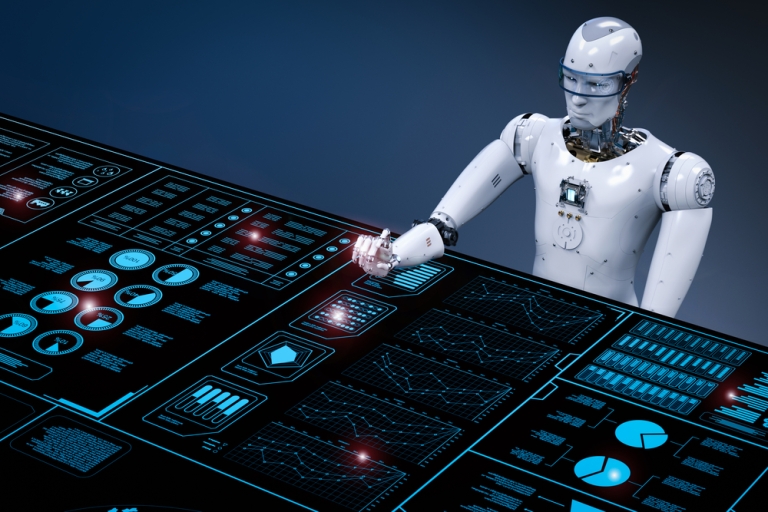
The world around you is driven more and more by the spooky decisicions made by artificial neural networks executing various machine learning methods, including neural networks, networks of semi-independent ai programs solving particular problems and submitting data to a higher structure where the final decisions are made.

Neural networks, deep learning machines attempting to collectively mimic a human mind, or, rather, in scale, human minds, in the billions, at this point, are making more and more decisions that are becoming the very words an emotional expressions of human beings on network news networks and superhero movies.

Neural networks are honing their craft in parsing out bad data as efficienctly as possible, the words, ideas, people, that are not othodox according to the code  embedded into the horde of machines playing at being human at being God.

This is the sci-fi reality we now find ourselves immirsed in, this is why I chose to feature a market report that  projects continued major growth  in the sale  of neural networks to more and more nations, departments of nations, parties of nations, corporations, departments of corporations, helping to perfect the consumption of the desired diet and assuring no impurities pollute the pure meal promised by these same machines through the mouths of humans.

Neural networks are not a problem in and of themselves.  The exclusivitty of these tools to those who are already in significant power advantage is more troubling.  The creation of methods and machines that are controlled by strict Intellectual Property laws serves  to the advantage of those already advantages, but this need not be the case.

Even as I write, there are tech nerds in garages and greenhouses and basments and bedrooms doing their own work to develop their own open source neural network machines, which offer people from the city to the most remote region access to the best minds in the world for council in how to meet a need.  Neural networks that are not given authority to filter, but merely council, networks not focused on stopping thought but any number of potential non-coercive uses of such  powerful, cognitive-enhancing tool enabling a person with an IQ of 100 to be able to deal favorably with a person of an IQ of 140, with the help of their ai buddy, in whatever manifestation this network of thought is to take in the near future to come.

That future, my friends, can be choked in the monopolies of the now who have the resources to develop these tools before grass roots independents can build their own (and that time is soon upon us) and free their knowledge in the open source world so that others can build their own local centers of intellectual super power.

This is the hope of the Freedomist, that open-source, small scale solutions to technological need and want can at least compete with what the corporate monopolies are offering and are soon to offer as well.  Keep tech free, don’t bound Prometheus on the rock to have his liver torn out again.

From WGU.edu

In the simplest terms, an artificial neural network (ANN) is an example of machine learning that takes information, and helps the computer generate an output based on their knowledge and examples. Machines utilize neural networks and algorithms to help them adapt and learn without having to be reprogrammed. Neural networks are mimics of the human brain, where each neuron or node is responsible for solving a small part of the problem. They pass on what they know and have learned to the other neurons in the network, until the interconnected nodes are able to solve the problem and give an output. Trial and error are a huge part of neural networks and are key in helping the nodes learn. Neural networks are different from computational statistical models because they can learn from new information—computational machine learning is also designed to make accurate predictions, while statistical models are designed to learn about the relationship between variables.

In simple terms, neural networks are fairly easy to understand because they function like the human brain. There is an information input, the information flows between interconnected neurons or nodes inside the network through deep hidden layers and uses algorithms to learn about them, and then the solution is put in an output neuron layer, giving the final prediction or determination.

Read More

Deep Learning Neural Networks set to Booming according to forecast 2026 | ALPHABET INC. ,IBM ,MICRON TECHNOLOGIES, INC.

From herefordshirelive.co.uk
2021-09-27 14:59:21

Excerpt:


The Deep Learning Neural Networks Market has witnessed continuous growth in the past few years and is projected to grow even further during the forecast period (2021-2026). The assessment provides a 360° view and insights, outlining the key outcomes of the industry. These insights help the business decision-makers to formulate better business plans and make informed decisions for improved profitability. In addition, the study helps venture or private players in understanding the companies more precisely to make better informed decisions.

Free Sample Report + All Related Graphs & Charts (Including COVID19 Analysis) @: https://www.advancemarketanalytics.com/sample-report/127070-global-deep-learning-neural-networks-market

The deep learning neural networks (DDNs) refers to the machine learning-based technology that is basically used for diagnosis- solving prediction, decision making, decision and problems based on a well-defined computational architecture and more….


Read Full Article


US Treasury to Prosecute Crypto Exchanges that Allow Ransomware Hackers to Get Paid

It seems the US Treasury Department is about to put its own government agencies between a rock and a hard place as they vow to attempt to shut off the methods by with ransomware hackers get paid.  These hackers break into computer networks, taking them hostage, until the agency targeted pays them, throughy cryptocurrency exchanges.  They mostly target governmment agencies because these groups have magic sources  to money and the agencies simply must pay because they need that data fundamentally to perform their duties.

Now, with Treasury cutting off the method of payment, will this end the ransomware attacks or will it create a black market for government agencies to continue to pay the ransomware hackers as they have little choice but to do so?  If so, will Treasury find itself prosecuting municipal managers for finding a way to pay the hackers through exchanges that might not be under US Treasury jurisdiction?  I am betting that the latter will happen and the people in government who find themselves targeted will most likely choose expediency over cost, as governments are most often wont to do.

Treasury Department will sanction crypto exchanges that help channel payments to hackers

From www.washingtonpost.com
2021-09-21 17:06:06
Gerrit De Vynck
Excerpt:

The U.S. government is stepping up its efforts to disrupt the infrastructure hackers use to make money from breaking into and holding hostage computer networks, announcing sanctions against one virtual currency exchange and warning U.S. companies it could be legally risky for them to pay off hackers that hit their systems.

The Treasury Department’s Office of Foreign Assets Control (OFAC) announced sanctions Tuesday against Suex, an exchange that lets people buy and sell virtual currencies with regular credit cards, according to its website. The government said as much as 40 percent of known transactions run by Suex were criminal. Other exchanges could be hit with sanctions, too.

“We are going to continue to look at the ecosystem and look for actors that are taking similar actions,” Anne Neuberger, the White House’s deputy national security adviser on cybersecurity, said during a call with reporters.

Read Full Article

Digital Communication Revolution Through New Optical Amplifier

The backbone of internet communication is built on the power of optical communication.  From Wikipedia:

Optical communication, also known as optical telecommunication, is communication at a distance using light to carry information. It can be performed visually or by using electronic devices.

Scientists at the Photonics Laboratory at Chalmers University, Sweden, have developed a new type of optical amplifier that could dramatically increase the capacity, while decreasing the energy demand and noise distortion, of the best that optical commication currently has to offer.

Additionallly, this breakthrough could reduce the size of these amplifiers to millimeters in size.

A new optical amplifier could revolutionize optical communication

From www.techexplorist.com
2021-09-21 12:38:50
Amit Malewar
Excerpt:

….Along with offering high performance, this new amplifier is compact enough to integrate into a chip just millimeters in size. Most importantly, it does not generate excess noise.

Ping Zhao, Postdoc at the Photonics Laboratory at Chalmers, said, “We have developed the world’s first optical amplifier that significantly enhances the range, sensitivity, and performance of optical communication, that does not generate any excess noise – and is also compact enough to be of practical use.”

“The light amplification in the project is based on a principle known as the Kerr effect, which so far is the only known approach that amplifies light without causing significant excess noise. The principle has been demonstrated before, but never in such a compact format– previous versions were too bulky to be useful.”

Read Full Article

Wastewater Microbes Could Be Source for Electric Power

If researchers are right, soon, we could turn sewage water into battery water thanks to a new technological development called microbial fuel cells.

Researchers infuse bacteria with silver to improve power efficiency in fuel cells

From phys.org
2021-09-16 18:00:02

Excerpt:

A UCLA-led team of engineers and chemists has taken a major step forward in the development of microbial fuel cells—a technology that utilizes natural bacteria to extract electrons from organic matter in wastewater to generate electrical currents. A study detailing the breakthrough was recently published in Science.

“Living energy-recovery systems utilizing bacteria found in wastewater offer a one-two punch for environmental sustainability efforts,” said co-corresponding author Yu Huang, a professor and chair of the Materials Science and Engineering Department at the UCLA Samueli School of Engineering. “The natural populations of bacteria can help decontaminate groundwater by breaking down harmful chemical compounds. Now, our research also shows a practical way to harness  from this process.”

Read Full Article

Your Underwear Could Power Your Phone

Flexible lithium battery-the core of the development of smart wearable devices

From www.digitaljournal.com
2021-09-10 17:51:27

Excerpt:


On 2nd Sep, Peng Huisheng’s team from the Department of Polymer Science of Fudan University solved related problems and continuously constructed a new type of fiber polymer lithium- ion battery, which has both good safety and comprehensive electrochemical performance.

You do not need to bring a charger and power bank when you go out. You can wirelessly charge your mobile phone through the clothes you wear. Nowadays, scenes that sound…


Read Full Article

Auto Draft

Lithium-ion batteries just made a big leap in a tiny product

From www.technologyreview.com
2021-09-08 16:00:00

Excerpt:


A materials company in Alameda, California, has spent the last decade working to boost the energy stored in lithium-ion batteries, an advance that could enable smaller gadgets and electric vehicles with far greater range.

Sila has developed silicon-based particles that can replace the graphite in anodes and hold more of the lithium ions that carry the current in a battery.

Now the company is delivering its product to the market for the first time, providing a portion of the anode powder in the battery of the forthcoming Whoop 4.0, a fitness wearable. It’s a small device but potentially a big step forward for the battery field, where promising lab results often fail to translate to commercial success.

“Think of the Whoop 4.0 as our Tesla Roadster,” says Gene Berdichevsky, Sila’s CEO, who as Tesla’s seventh employee helped solve some of the critical battery challenges for the company’s first electric vehicle. “It’s really the first device on the market that’s…


Read Full Article

Bitcoin Address Now Twitter Profile Feature

Twitter to Allow Profiles to Have Bitcoin Addresses

From www.newsweek.com
2021-09-02 22:27:38

Excerpt:


Developers at Twitter are working on a new feature that will allow users to accept tips in Bitcoin via the Tip Jar function the social media platform unveiled earlier this year.

Kayvon Beykpour, Twitter’s product lead, first indicated the feature was in progress on Wednesday when he commented on a screenshot tweeted out by app developer Alessandro Paluzzi. The screenshot appeared to show Twitter using The Lightning Network, a technology that helps secure payment transfers, to allow Twitter users to use Bitcoin when sending tips.

Paluzzi wrote in her original tweet that Twitter, “is working on the ability to receive tips in #Bitcoin.” Later Wednesday, Beykpour quote-tweeted Paluzzi’s screenshot, adding a lightning bolt emoji next to another that said, “soon.”

On Thursday, Paluzzi posted another tweet that featured three new screengrabs. In the first, Twitter’s Tip Jar feature appeared to offer two new options: the ability for users to send tips by copying a Bitcoin address or one with…


Read Full Article

Auto Draft

Coinbase, the largest crypto exchange in the US, faces a potential SEC investigation

From www.vox.com
2021-09-09 21:15:30
Sara Morrison
Excerpt:


Cryptocurrency has an SEC problem — and it just got bigger.

The Biden administration is taking a more hands-on approach to the highly volatile, little understood, and barely regulated cryptocurrency industry. Cryptocurrencies are decentralized digital currencies secured by blockchain technology. Bitcoin, ethereum, and other cryptocurrencies have become almost as accessible as government-issued currency in recent years, but the government offers few consumer protections for them.

The Securities and Exchange Commission (SEC) — led by Gary Gensler, who taught a class on cryptocurrency at MIT — is trying to make the case that it can and will regulate whatever cryptocurrency investment schemes it decides fall under its purview. The relative newness and rapid expansion of the cryptocurrency industry have put it in a regulatory gray area. The Internal Revenue Service (IRS) classifies crypto as property. The Commodity Futures Trading Commission (CFTC) considers crypto to be a…


Read Full Article

Auto Draft

Researchers developing smart dental implants that resist bacterial growth, generate their own electricity

From californianewstimes.com
2021-09-09 20:29:04

Excerpt:


“Smart” dental implants can improve current devices by promoting the health of the surrounding gingival tissue using biofilm-resistant nanoparticles and battery-powered lights. Credit: Gelsu Hwang

More than 3 million people in the United States have dental implants, which are used to replace teeth lost due to rot, periodontal disease, or injury. Implants represent a breakthrough beyond dentures and bridges, are designed to fit much more safely and last for over 20 years.

However, implants often fall short of their expectations and instead require replacement in 5-10 years due to local inflammation or periodontal disease, requiring the patient to repeat costly and invasive procedures.

“We wanted to tackle this problem, so we came up with something innovative and new. Implant“Geelsu Hwang, an assistant professor at the University of Pennsylvania School of Dentistry, said. He has an engineering background involved in the study of oral hygiene issues.

Fans say the new…


Read Full Article

The Hottest NFT, Cryptopunks, Passes a Quarter Billion in Sales in One Week

CryptoPunks creators sign with top Hollywood agents, as sales top $305M in a week

From cointelegraph.com
2021-09-01 01:19:43
Cointelegraph By Brian Quarmby
Excerpt:


Larva Labs, the team behind the outrageously popular NFT project CryptoPunks, has penned a deal with Hollywood agents United Talent Agency (UTA).

According to an Aug. 31 article from the Hollywood Reporter, UTA will represent Larva Labs for intellectual property (IP) deals in TV, film, video games, licensing and publishing. Two other NFT projects from Larva Labs, Meebits and Autoglyphs, will also be represented by UTA.

CryptoPunks was launched back in 2017 and is one of the first NFT projects created on Ethereum. The IP-related deal with UTA marks a significant milestone for Larva Labs, as it is one of the first examples of content created in the blockchain sector that has entered the mainstream entertainment industry.

Lesley Silverman, head of UTA Digital Assets told the Hollywood Reporter:

“I would say that it is one of the first opportunities for an IP that fully originated in the crypto-world to enter a broader entertainment space, and they earned it.”

“They really have…


Read Full Article

Main

Back FREEDOM for only $4.95/month and help the Freedomist to fight the ongoing war on liberty and defeat the establishment's SHILL press!!

Are you enjoying our content? Help support our mission to reach every American with a message of freedom through virtue, liberty, and independence! Support our team of dedicated freedom builders for as little as $4.95/month! Back the Freedomist now! Click here