The ultra-wealthy’s latest status symbol isn’t a super-yacht or private island — it’s a luxury survival bunker. From New Zealand’s exclusive retreats to underground complexes in Montana, billionaires are spending millions on fortified sanctuaries designed to weather civilization’s collapse. But these elaborate preparations reveal a fundamental misunderstanding of how disasters actually unfold and may create more problems than they solve.
While the idea of the “social construct” has been ballyhooed almost to death in the early 21st Century, it is a solid and verifiable doctrinal base. At the same time, the antithesis is also true…and in this context, the statement that “wealth is a social construct” is also a fundamental truth.
Although many people at the lower end of the economic spectrum may rage aginst the idea that they are taking part in a “social construct” from the moment they wake up in the morning, for the ultra-rich, the idea has been slowly growing that their wealth equates to them the level and aspects of medieval barons, that their wealth can insulate them from catastrophic events, events that result in a “Mad Max/Road Warrior” type of world. It is important to remember that the so-called “Robber Barons” of the late-19th Century in America and Europe may have been rapacious, but they were careful to cultivate actual loyalty among their guard forces.
For the modern mega-wealthy, such an attitude is what is known as “whistling past the graveyard“, a phenomenon best represented by the “luxury survival bunker“.
The modern luxury bunker industry promises the impossible: maintaining elite levels of comfort and safety while civilization burns above. Companies like Vivos and Rising S offer underground mansions complete with wine cellars, home theaters, and hydroponic gardens. The Survival Condo Project in Kansas converted a former missile silo into luxury apartments selling for millions, featuring a swimming pool, rock climbing wall, and armored vehicles. The implicit promise is that money can buy not just survival, but the preservation of pre-disaster lifestyle.
Underground World Home swimming pool built structure for the New York world’s Fair, 1964. Public Domain.
This approach fundamentally misunderstands disaster dynamics. Real catastrophes — whether economic collapse, climate disasters, or social upheaval — require adaptation, community cooperation, and practical skills, not isolation behind reinforced concrete. History shows that those who survive major disruptions are typically embedded in resilient communities with diverse skill sets, not isolated individuals hoarding resources.
Photo of the North Portal entrance to Cheyenne Mountain. Public Domain.
The bunker mentality creates several critical vulnerabilities for both survival and immediate security. First, these facilities become obvious targets once their existence becomes known. A luxury bunker essentially advertises its contents to anyone desperate enough to attempt breaching it. The very features that make them appealing — visible wealth, sophisticated systems, stockpiled resources — make them magnets for organized groups with nothing to lose.
Second, luxury bunkers require massive ongoing maintenance and technical expertise that their wealthy occupants rarely possess. Climate controls, water filtration, communications equipment, and power systems all demand specialized knowledge. When the contracted maintenance crews can’t or won’t reach the facility, these sophisticated systems become expensive liabilities. A billionaire who can’t repair a generator is far worse off than a farmer with a hand pump.
Third, the psychological toll of bunker life contradicts its luxury branding. Extended isolation, even in comfortable surroundings, creates mental health challenges that luxury amenities can’t address. Humans require social interaction, purpose, and connection to larger communities. A gold-plated prison cell is still a prison cell, and the mental deterioration that follows undermines the clear thinking necessary for actual survival.
The real self-defeating irony is economic. The resources spent on individual bunkers could create far more security if invested in community resilience, renewable infrastructure, or addressing the root causes of potential disasters. A billionaire who spent bunker money on local food security, renewable energy projects, or disaster preparedness for entire regions would be far safer than one hiding underground with a wine collection.
The bunker fantasy reflects the same thinking that created many of our current vulnerabilities, chiefly the belief that individual wealth can solve mass social inequality, and the fact that systemic risks require community-level responses, not individual escape plans. By definition, if society has collapsed enough to require bunker living, the economic systems that created that wealth no longer exist to maintain the bunker’s operations.
Genuine resilience comes from building robust, interconnected systems and communities capable of adapting to change. The wealthy would be better served by investing in the social fabric that sustains civilization — or which can at least “restart” it — rather than planning its abandonment. After all, if your survival plan assumes everyone else has failed, you’ve probably misunderstood both the problem and the solution.
True security isn’t found in isolation — it’s built through interdependence, community investment, and addressing challenges collectively rather than hiding from them individually.
But there is another psychological area to address: the delusion of “elite leadership.”
Leadership is only hard when you’re not humble…and getting into the category of being among the “ultra-rich” argues strongly against humility. “Humble” people do not vacation at Lake Como or along the Riviera on a yacht that costs more than a mid-sized city’s fire department engines. Consider the battle-hardened special-ops veterans the ultra-wealthy hire as “private security” (whether they actually know what “executive protection details” actually entail): As long as the world is intact, and the paychecks continue to flow, sure, they are happy to protect – even in lethal situations – the person and family of the person signing their checks.
But really – when everything goes to hell, who is that elite Operator going to put first: the tech-bro whose money is now so much vaporware, or their own family? Think about it.
All of the above being said, preparing for disasters – even “mega-disasters” – is not wrong. It is highly prudent and advisable. But don’t expect that burning your credit card limits on stuff will save you. Supplies are good. Training is vital. But should the worst ever happen, you are not a “lone wolf”, whether you have a family or not.
Act accordingly.
The Freedomist — Keeping Watch, So You Don’t Have To
Gas warfare – the deliberate use of chemicals as weapons in wartime – has long been recognized as one of the most terrifying tools of conflict, right next to nuclear weapons…Yet, both situations have been exceedingly rare – thankfully. What is not rare, is the dangers posed by the accidental (usually) cases where industrial chemicals and nuclear accidents have caused widespread devastation.
The peaceful applications of chemical and nuclear technologies have brought tremendous benefits to society, but their mishandling has occasionally led to disasters as devastating as military applications. From industrial accidents to amateur experimenters, these incidents highlight the fine line between technological advancement and catastrophe.
You, the Reader, likely do not think in these terms, unless you work in those industries. However, you are almost certainly living in a danger zone, and do not realize it.
By way of explanation, open your favorite mapping program, and locate your home. Go out five miles, and draw a circle: Is there an operating freight railroad, ‘hazardous cargo’ freeway, chemical plant or oil refinery within that circle? If so, you need to have a military-rated CBRN (Chemical, Biological, Radiological, Nuclear) “gas mask” for every person living in your home, especially children. This is because when accidents happen, local emergency responders begin evacuating people within a 0.25-mile radius of the accident – but that radius can quickly extend out to a 5 mile radius, depending on the chemicals involved, the wind direction and strength, and the specific details of the accident. What happens if you cannot evacuate? Or, worse, if you try to evacuate, and are stalled on the road, whether by breakdown or traffic jams? The chemical cloud is still coming.
You need a plan…But, why aren’t you being told this elsewhere? Simply put, news agencies do not want to be seen as “Chicken Little” – These accidents do happen, but they happen infrequently enough that both news agencies do not want to air advisories on preparing for them, and most municipal and county governments to not want to agitate their citizens about the dangers of the companies that provide a large percentage of local government revenues.
And yet – the danger is there. Every day.
The 2023 East Palestine, Ohio train derailment represents one of America’s most significant recent chemical disasters, highlighting the vulnerabilities in our hazardous materials transportation system. On February 3, 2023, a Norfolk Southern freight train carrying hazardous materials derailed, causing a massive fire and prompting authorities to conduct a controlled burn of vinyl chloride to prevent a potential explosion. This decision, while preventing an immediate catastrophic explosion, released phosgene and hydrogen chloride into the atmosphere – both highly toxic gases historically used as chemical weapons.
The incident forced the evacuation of approximately 2,000 residents and contaminated local waterways, with chemicals reaching the Ohio River watershed. Despite official claims of safety, residents reported persistent health issues including rashes, headaches, respiratory problems, and nausea months after returning home. The accident revealed critical gaps in railway safety protocols, emergency response planning, and environmental monitoring capabilities. The combination of toxic chemicals involved — including not just vinyl chloride but also butyl acrylate, ethylhexyl acrylate, and ethylene glycol monobutyl ether — created complex contamination scenarios that standard emergency protocols were ill-equipped to address, demonstrating how even in developed nations with extensive regulations, chemical disasters can affect communities with little warning.
Drone footage of the freight train derailment in East Palestine, Ohio, February 6, 2023. Photo by NTSB. Public Domain.
The modern era of chemical disasters began with the Great Smog of London in 1952. Though not an industrial accident in the traditional sense, this convergence of coal pollution and unusual weather killed an estimated 12,000 people and injured 100,000 more, demonstrating the lethal potential of chemical pollutants. This disaster eventually prompted the UK’s Clean Air Act of 1956, establishing a pattern that would repeat throughout history: catastrophe followed by regulatory reform.
London police officer during the Great Smog of 1952. Author unknown.
Industrial chemical accidents reached their nadir with the Bhopal disaster of December 3, 1984. A leak of methyl isocyanate gas from a Union Carbide pesticide plant in Bhopal, India immediately killed at least 3,787 people, with total related fatalities estimated between 15,000 and 20,000. The disaster, stemming from poor maintenance and safety procedures, continues to affect generations through birth defects and chronic illnesses. Bhopal fundamentally transformed chemical industry regulations worldwide and remains the worst industrial accident in history.
Less known but similarly devastating was Italy’s 1976 Seveso disaster, where a chemical plant released a dioxin cloud contaminating an area inhabited by 37,000 people. Though immediate fatalities were few, the long-term effects included elevated cancer rates and birth defects. The incident led to the European Union’s “Seveso Directive”, establishing classification systems for hazardous facilities that continue to govern chemical safety throughout Europe.
The field of radiological accidents presents different challenges but equally sobering lessons. The 1957 Kyshtym disaster at the Mayak nuclear facility in the Soviet Union contaminated an area inhabited by 270,000 people when a nuclear waste storage tank exploded. Long concealed by Soviet authorities, the accident released twice the radioactivity of the Chernobyl disaster and remains the third-worst nuclear accident in history.
While Chernobyl (1986) and Fukushima (2011) typically dominate discussions of nuclear accidents, smaller incidents reveal the persistent dangers of radiation mishandling. The 1987 Goiânia accident in Brazil occurred when scavengers dismantled an abandoned radiotherapy unit, finding a glowing blue substance (cesium-137) they distributed to friends and family. Four people died within weeks, and 249 were contaminated. The incident demonstrated how even orphaned medical equipment could create widespread contamination when handled by untrained individuals.
The destroyed Chernobyl reactor, one of four units operating at the site in Ukraine in 1986. No units operate today. (Chernobyl, Ukraine, 1986). Photo copyright IAEA Imagebank. CCA/2.0 Generic.
Perhaps the most remarkable case of amateur radiation exposure involves David Hahn, dubbed the “Radioactive Boy Scout“. In 1994, the 17-year-old attempted to build a breeder reactor in his mother’s shed in Michigan using materials extracted from smoke detectors (americium-241), camping lantern mantles (thorium), and clock dials (radium). His homemade neutron gun and crude reactor components significantly contaminated the property, eventually requiring intervention by the EPA and a hazardous materials cleanup. Though Hahn received only a modest radiation dose, his shed registered radiation levels 1,000 times above normal background.
Hahn’s case, while extreme, is not unique. In 2007, Richard Handl of Sweden attempted to split atoms in his apartment kitchen using materials purchased online. He only realized the potential illegality of his experiment when he contacted Sweden’s Radiation Safety Authority to ask if his activities were permitted. Unlike Hahn, Handl was arrested but later released when authorities determined his setup hadn’t reached truly dangerous levels.

The democratization of scientific knowledge and equipment access has made DIY nuclear experimentation increasingly accessible. Online forums devoted to amateur nuclear science host discussions on building Farnsworth fusors and other nuclear devices, though most participants emphasize safety and legality. The Nuclear Regulatory Commission and Department of Energy now actively monitor purchases of certain materials and equipment that could enable amateur experimentation.


These incidents, while varying in scale and circumstance, share common themes: the misunderstanding of invisible dangers, inadequate safety protocols, and the cascading consequences that extend far beyond immediate events. They demonstrate that the line between beneficial technology and catastrophe often depends not on the materials themselves, but on human systems of management, regulation, and education surrounding them.
So…Given the foregoing, what can you do to protect yourself?
Aside from the military-rated CBRN gas masks mentioned, the answer, unfortunately, is “not much“. However, gas masks are the best place to start, and do provide a huge degree of protection. While pricey, modern masks are far better than what was available 40 years ago. Gas masks should come with one or two filters, that are now universal-fit, fitting 40mm sockets in the mask that have been standardized since 2000. The key thing to look for in a mask, though, is whether it has a drinking attachment for a “NBC Canteen”; this is a vital concern when choosing a mask, as these masks get very hot, very fast, and with the stress of the situation, your water needs will vastly increase. “Package deals”, selling the mask, a filter or two, and one or two canteens with mask attachments, is what you want to look for.
For radiological accidents, in addition to the mask an canteen, the available option is potassium-iodide tablets. These protect the thyroid, which is the most vulnerable part of the body to nuclear contamination. Potassium-Iodide is commercially available, from all the common online retailers.
The last recommendation I will give you is to get a copy of Cresson H. Kearney’s standard work, “Nuclear War Survival Skills“. While a bit dated in places, this remains the best practical reference for civilians. The link here is to a PDF copy, but do try to find a print copy, if you can.
If the foregoing scared you – good. These threats are very real, no matter where in the world you live. The government (all governments), as East Palestine demonstrated, is not going to provide a lot of help in the short term, if at all.
You are on your own. Plan accordingly.
The Freedomist — Keeping Watch, So You Don’t Have To
As the ongoing war in Ukraine has demonstrated, low-cost drone warfare has arrived on the battlefield. While the modern use of armed drones began in 2000/early-2001, with the arming of an RQ-1 Predator drone with an AGM-114 ‘Hellfire’ missile, It was not until after the September 11 Attacks of that year that the armed Predators went into action.
Aside from large modern armies however, drone combat, as such, did not emerge until the rise of the Islamic State after 2014. In 2016, as the war began to turn against the IS, Iraqi forces started being struck by 40mm grenades dropped by modified civilian drones. Tiny, and very quiet, these drone were able to hover – or ‘loiter‘, to use the military term – over an area, and drop explosives on top of targets on command. This immediately raised alarms, as most armored vehiles, such as tanks, are very thinly armored on their top surfaces.
A Naval Forces of Ukraine Bayraktar TB2 from the Turkish company Baykar Defense; CCA/4.0 Int’l
While the use of civilian drones in combat had been noted previously, those instances only seemed to be in the realm of tactical surveillance and reconnaissance. After the IS ramped up its “micro-drone” campaign, though, “proliferation” began in earnest: expanding outside the Middle East, where Russian forces thwarted an attack on one of their bases in Syria in 2018, drug cartels in Mexico began deploying attack drones in earnest.
In Ukraine, drones for reconnaissance and attack have advanced to the point that the Ukrainians are deploying “bomber” drones carrying up to a 44lbs payload of explosives, while also scoring the first acknowledged air-to-air kill of an advanced fighter, in this case a Mig-29, by a kamikaze drone, via sympathetic detonation.
But the use of small drones has been overshadowed by the use of much larger platforms which, while still “drones”, are not really “tactical” weapons. Much has been made of large drones, such as those used by Azerbaijan in the 2020 Nagorno-Karabakh War, as well as uses by Houthi rebels attacking civilian cargo ships in the Red Sea. The problem with these types of attacks is that they more resemble the use of drones and missiles by major powers…What about the infantry-level use of this class of weapons?
Soldiers of Alpha Company, 1st Battalion, 4th Infantry), fire a M120 mortar during a combat operation in the Da’udzay Valley in the Zabol province of Afghanistan Oct. 23, 2007. US Army Photo. Public Domain.
The modern battlefield has seen remarkable technological advancement in the last 120 years, yet one of warfare’s oldest weapons — the mortar — continues to play a crucial role alongside cutting-edge unmanned aerial systems. Both provide indirect fire capabilities, but with significantly different characteristics, advantages, and limitations.
Mortars represent possibly the oldest form of artillery still in active military service, with designs dating back to the 14th century. These simple, high-angle weapons offer several enduring advantages. They’re relatively inexpensive, with basic systems costing under $20,000 and individual rounds priced at $50-$300 depending on sophistication. Modern infantry mortars like the U.S. 60mm M224 can be transported and operated by just two soldiers, providing immediate fire support without complex logistics chains.
The mortar’s high arc trajectory allows engagement of targets behind cover and in defilade positions—a capability that maintains its relevance in urban environments where direct fire weapons face significant limitations. Modern mortars can typically engage targets between 100-8,000 meters depending on caliber, with rounds impacting within 1-2 minutes of fire mission commencement.
In contrast, military drones represent a relatively recent development that has rapidly transformed battlefield dynamics. Systems like the Turkish TB2 Bayraktaror loitering munitions such as the Switchblade provide persistent surveillance capabilities combined with precision strike options. These platforms offer unmatched target observation capabilities, with operators able to positively identify targets before engagement and conduct battle damage assessment immediately after strikes.
Drones typically deliver smaller payloads than artillery systems but with significantly higher precision. Where a mortar might achieve a Circular Error Probable (CEP) of 30-100 meters depending on range and conditions, drones can often deliver munitions with accuracy measured in single-digit meters.
However, the comparative cost structure presents significant disparities. Even relatively inexpensive military drones cost hundreds of thousands to millions of dollars per platform, with sophisticated munitions adding tens of thousands per engagement. This cost difference becomes particularly relevant in sustained operations or against adversaries employing low-cost countermeasures.
The evolution of consumer drones into improvised weapons platforms has dramatically accelerated during the Ukraine conflict, with both sides developing increasingly sophisticated swarm tactics using modified commercial quadcopters and purpose-built FPV (First Person View) drones. These systems typically carry 40mm grenades, modified mortar rounds, or small thermobaric charges, creating an entirely new tactical capability at remarkably low cost.
Soldier with commercial Unmanned aerial vehicle, 2017. Photo by Scott Stewart. CCA/4.0 International.
The basic approach involves forward reconnaissance elements identifying enemy positions, followed by the deployment of drone teams equipped with 5 – 20 small, unmanned systems. These teams position themselves just beyond the range of enemy small arms (typically 1-2km from the target) and then launch multiple drones in rapid succession. Each operator controls a single drone, but their actions are coordinated through a tactical commander who prioritizes targets and sequences attacks.
What makes these swarms particularly effective is their combination of saturation and persistence. Unlike a traditional mortar barrage that might last 2-3 minutes, drone swarms can maintain pressure on a position for 30+ minutes as operators rotate through their inventory of systems. This creates both physical and psychological pressure that conventional indirect fire struggles to match.
The economics are particularly compelling. A basic FPV drone capable of delivering a grenade costs approximately $400 – $1,000, while the grenade itself might cost $50-200. Even accounting for losses, this means an engagement involving 10 drones and 20 munitions might cost less than $20,000 total – comparable to just a few mortar rounds from advanced Western systems.
From a tactical perspective, these drone swarms force defenders to make difficult choices. Activating electronic countermeasures reveals defensive positions and quickly depletes battery systems. Taking cover from aerial threats often exposes personnel to horizontal fire. Moving to alternate positions makes units visible to surveillance drones operating at higher altitudes.
The integration of these swarms with conventional forces represents a notable innovation. Infantry units can now advance with drone teams directly embedded in their formations, allowing for immediate fire support without the coordination delays associated with traditional artillery. When resistance is encountered, the formation pauses while the drone swarm engages, creating a dynamic reminiscent of ancient warfare where archers would soften positions before infantry assault – but with far greater precision and real-time assessment capability.
The Freedomist — Keeping Watch, So You Don’t Have To
With all the craziness of the last six weeks, it’s easy to become enraptured by all the “glitz-bang-pow“, and to lose track of the truly important things…like internet access, for example.
Much of the crucial digital lifelines of the modern global economy lie largely unseen and unprotected beneath the oceans. Submarine cables — bundled fiber-optic threads wrapped in layers of protective materials — carry an estimated 99% of international data traffic, representing an estimated $10 trillion in daily financial transactions. Clearly, these cables are vital components of any national infrastructure…and, just as clearly, they are very high-priority targets in any war scenario. Despite their critical importance, these cables remain surprisingly vulnerable to both accidental damage and deliberate sabotage, creating an asymmetric vulnerability that security experts increasingly view as a critical national security concern.
Recent incidents have highlighted this vulnerability. In late 2023, and again in late 2024, multiple cables in the Baltic Sea were damaged within weeks of each other, including the Svalbard cable connecting Norway’s remote Arctic research station to the mainland. While officials initially cited “technical problems,” subsequent investigations pointed to deliberate actions, with suspicion falling on Russian vessels that had been tracked in proximity to the damaged sections. Similar incidents have occurred in the Mediterranean and Red Sea, where the timing and pattern of damage suggested coordinated action rather than accidental encounters with ship anchors or fishing equipment…which, given the immediate impacts, should be surprising to no one, as the war in Ukraine continues to rage.
The security implications extend far beyond temporary internet disruptions. Major financial centers like London, New York, and Singapore depend on millisecond-level transmission speeds for trading operations, with even brief outages potentially causing billions in economic damage. Military communications, intelligence sharing between allies, and diplomatic channels all rely on these same physical pathways, creating a strategic vulnerability that potential adversaries have clearly recognized.
Unlike traditional military targets, undersea cables present adversaries with an ideal gray-zone target. Damage can be plausibly denied as accidental, attribution is extremely difficult, and repairs can take weeks depending on the location and conditions. This provides hostile actors with the ability to cause significant disruption while remaining below the threshold of activities that would trigger conventional military responses.
The technical challenge of defending these cables is substantial. The global submarine cable network spans over 750,000 miles, often in international waters beyond territorial jurisdiction. Cable routes are publicly documented for maritime safety, making their locations easily accessible to potential saboteurs. Monitoring such vast distances presents an almost impossible surveillance challenge, especially in deep ocean areas where depths exceed 3,000 meters.
The “CS Dependable”, cable layer ship with a modern stern sheave design. Picture taken at the Port of Astoria, Oregon, 2006. CCA/3.0. Photo by Nsandel.
Of course, this has been happening since undersea cables were first laid in the 19th Century, most notably when the United States cut Spanish telegraph cables in both Cuba and the Philippines theaters of the Spanish-American War. During World War I, one of Britain’s first and most significant strategic moves came just hours after declaring war in August 1914, when the cable ship “CS Alert” severed Germany’s five transatlantic cables near the English Channel. This operation, codenamed Operation Telekom, effectively cut Germany’s direct communication links with the Americas and much of the world. Britain simultaneously took control of most neutral cable stations, forcing German diplomatic and military communications onto easily intercepted wireless channels or through cables that passed through British-controlled territory.
The British established “Room 40“, a specialized naval intelligence unit that interceded and decoded German messages, providing critical intelligence. The most famous success came with the interception and decryption of the Zimmermann Telegram in 1917, which revealed Germany’s attempt to entice Mexico into attacking the United States — a diplomatic catastrophe that helped bring America into the war.
In World War II, Britain expanded these capabilities with Operation ‘Cutting’. The Royal Navy again targeted German undersea cables, but added sophisticated tapping operations. Combined with the codebreaking work at Bletchley Park, these undersea operations provided crucial intelligence on German naval movements, particularly U-boat operations, significantly contributing to Allied victory in the Battle of the Atlantic.
Modern cable attacks no longer require crude methods like physical cutting. Advanced submersibles can quickly and silently install tapping devices without severing cables, allowing for collection without detection. Both the Russian and Chinese navies are known to operate specialized submarines and surface ships equipped for undersea operations near critical cable infrastructure, including the Yantar, a Russian “research vessel” observed loitering near critical cable junctions in the Atlantic.
These strategic vulnerabilities are magnified by the concentration of key connection points. Cable landing stations — where submarine cables connect to terrestrial networks — represent critical sea-based chokepoints, with certain locations in Egypt, Malaysia, and Sicily serving as hubs for dozens of major cables. A modern, coordinated attack on multiple landing stations could severely disrupt global connectivity in ways that would overwhelm the limited redundancy built into the system.
Despite the growing awareness of these vulnerabilities, international legal protections remain inadequate. The 1884 Convention for the Protection of Submarine Telegraph Cables provides limited safeguards, while the UN Convention on the Law of the Sea only offers general provisions against deliberate damage. Enforcement mechanisms are virtually non-existent in international waters, creating a legal gray zone that mirrors the operational one.
As tensions rise between major powers, enhancing resilience against cable disruption has become an urgent security priority. Proposed measures include increased naval patrols near critical infrastructure, enhanced monitoring through seabed sensors, diversification of cable routes, and hardening of physical infrastructure. However, the scale of the challenge means complete protection remains impossible, leaving this critical infrastructure as a persistent vulnerability in an increasingly contested global environment.
One thing people frequently fail to understand – an outgrowth of the increasing sociological separation of the civilian and military spheres – is that naval warfare is far more than dramatic gun battles at sea, determined amphibious assaults, and exciting launches of fighter planes from the decks of aircraft carriers.”War“, as such, has been a term too frequently applied outside of its true domain, diluting public understanding of its implications: Sure, “war” is scary and destructive in general, but there are plenty of avenues of attack that are certainly not part of the ‘war on poverty’. This is why the Imperial Japanese Navy shelled a beach in Santa Barbara, California in 1942…which came as a hell of a surprise to local residents, and which had some very unforeseen consequences that succeeded in damaging the United States – not enough to win the war, but enough to instill distrust, the more people thought about it.
People concerned for not only their physical, but financial, security, need to start relearning how militaries think, because while the civilian may not care much about warfare, warfare cares very much about you.
The Freedomist — Keeping Watch, So You Don’t Have To
As we roll into February of 2025, it has certainly been a heck of a ride, so far. No matter whether you love President Donald J. Trump or hate him, he has certainly been kicking over a lot of apple carts. While many people are definitely up in arms over his wielding of Elon Musk’s hammer to trim the government’s budget, the silver lining is that there is going to be a lot more money available for things that actually benefit society as a whole, as happened before, and the “Big Kahuna” is a real ‘return to space’. (But not for Mars…like, seriously.)
Instead, this week we are not going to focus on US politics, nor on the international military scene. Instead, we’re going to revisit warfare in space. Our previous article from August of 2024 focused mainly on the tactical side of warfare in space – focusing on G. Harry Stine’s “Confrontation in Space” – here, we are going to expand on those ideas, looking into how true combat operations in space are inherently derived from concepts in naval warfare in the Age of Sail…So yes, all of those who are heavily invested in historical naval strategy…and pirates…congratulations – you may have a new career ahead of you as a space-war advisor…and maybe even a real combat spacecraft captain.
In this, as you should have noted from the title of this article, we’re going to talk about a man most people have never heard of: Sir Julian Corbett. Corbett, although not a naval officer, authored some of the most influential texts on naval strategy in the 20th Century, rivaling the breadth of his contemporary, the United States Navy Admiral Alfred Thayer Mahan, which both theories actually compliment each other, rather than compete. Corbett’s best-known work on naval warfare, “Some Principles of Maritime Strategy“, were so influential that the United States Navy War College approved a paper, titled “Corbett In Orbit” in 2004.
However, when those works were written, there was a lot more about space mechanics that were unknown, and the most significant of those was the discovery of the ITN…which is going to require a brief digression into the “Egg Head Realm” of real science.
The Interplanetary Transport Network(ITN), formally identified in the early 2000s, represents a breakthrough in our understanding of efficient space travel. This network consists of gravitationally determined pathways through the solar system, created by the complex interactions of gravitational fields between celestial bodies. These pathways, sometimes called low-energy transport routes, allow spacecraft to move through space with minimal propulsion requirements, though at the cost of longer transit times.
The ITN’s theoretical foundation lies in the mathematics of dynamic systems and the solutions to the “three-body problem” in orbital mechanics. While the gravitational interactions between two bodies (like Earth and a satellite) are relatively straightforward to calculate, adding a third body creates complex dynamics that can be leveraged for efficient space travel. These dynamics create a network of pathways that connect various gravitationally significant points throughout the solar system.
Key to understanding the ITN are Lagrange points – positions in space where gravitational forces and orbital motions interact to create areas of relative stability. These points serve as natural “nodes” in the network, particularly useful for positioning space stations or other infrastructure. The L4 and L5 Lagrange points are especially significant as they are naturally stable, requiring minimal energy expenditure to maintain position. L1, L2, and L3 points, while less stable, still require significantly less energy for station-keeping than arbitrary points in space.
The Lagrange points, it is vital to understand, are both close-in to Earth, as described by Stine, but also exist in the Sun-Earth system, with the Earth taking the place of the Moon in relation to the Sun. Likewise, the Lagrange point system, both planetary-lunar and Sun-planet scales, is duplicated with every planet in the Solar System. Per Stine, the terms for these areas are “cis-Lunar space” (the area inside the Earth-Moon system), and “trans-Lunar space” (the area beyond the Moon).
In a functional sense, this means that the ITN resembles a network of freeways on a map, but practically speaking, the ITN is more akin to the wind and ocean currents, with the Lagrange points acting like islands and atolls.
The practical implications of the ITN are substantial. Spacecraft using these pathways can dramatically reduce their fuel requirements compared to traditional transfer orbits. This efficiency comes at the cost of longer transit times, as vessels must essentially “coast” along these gravitational corridors. However, for many space operations, particularly those involving cargo or infrastructure, the trade-off between time and fuel efficiency often favors using the ITN over trying to “bull through” under constant thrust.
The network becomes particularly relevant as humanity expands its presence in space. The ITN’s pathways naturally connect regions of space that are gravitationally significant, including many resource-rich areas. Near-Earth asteroids, the lunar environment, and even the outer solar system become more accessible through these low-energy corridors. This accessibility has profound implications for space resource utilization and the establishment of permanent space infrastructure.
Space stations or bases positioned at ITN junctions, particularly near Lagrange points, would require minimal station-keeping fuel while maintaining access to multiple transport pathways. This positioning creates natural locations for refueling depots, trading stations, and other infrastructure necessary for expanding space operations. The efficiency of the ITN makes such installations more economically viable by reducing their ongoing operational costs.
The strategic implications of the ITN mirror historical patterns of maritime commerce and naval operations. Just as terrestrial shipping lanes developed along routes determined by ocean currents and prevailing winds, space commerce would naturally tend to follow these efficient pathways. This creates predictable routes that become strategically significant, similar to how maritime choke points have historically shaped naval strategy and commerce protection.
Current technology allows for practical utilization of the ITN, particularly with advances in autonomous navigation and precision orbital mechanics. Modern spacecraft can maintain position along these pathways with minimal correction burns, making them increasingly attractive for both commercial and government space operations. As launch costs continue to decrease and space activity increases, understanding and utilizing the ITN becomes increasingly crucial for efficient space operations.
The identification and mapping of the ITN represents a fundamental shift in how we approach space travel and infrastructure development. Rather than fighting against the complex gravitational environment of space, the ITN allows us to work with natural gravitational dynamics. This approach, while requiring longer transit times, offers substantial benefits in terms of fuel efficiency and operational sustainability.
So…What does all this have to do with Julian Corbett, Mahan, and naval strategy under sails?
In brief, wars – video games aside – are never fought “just because”. They are always fought for some tangible goal to the initiator of the conflict. Whether that goal is territory, resources, or “national image”, the initiator has a reason for engaging in warfare. How does this strategic model apply in space?
Humans, as a species, are long past going to space as a stunt. If governments – or companies – want to get the money necessary to go to space, they need to offer tangible benefits for doing so. And, just as on Earth, those “tangible benefits” are going to be resources like water and mineral wealth, or control of the movement of those resources.
While people may want – and justifiable so – to use space peacefully, for good or ill, that is not the normal scope of human behavior: we will almost certainly see warfare in space, and war has rules. The ITN is the dominant feature of the “high ground” of trans-Lunar space: control of, and movement along, the ITN is the “make or break” aspect of commerce in space, and thus, will be the focus of “War in the Black”.
The ITN offers both cheap avenues of movement, but also points of control. Short of science-fiction “technobabble” solutions to space propulsion and artificial gravity, coasting along the ITN routes is how we are going to expand off of Earth. And militarily, the ability to accelerate, then coast, enhances a warship’s stealth, as it is not under constant thrust, allowing it to fade into the background. As long as extreme speed is unnecessary, this is the perfect balance, allowing ships to speed along to a base at an ITN Lagrange point, to refuel and reprovision; to “park” a Battle of the Atlantic-style “wolfpack” at those points, or to make sudden shifts into planetary Lagrange systems.
The sky, as they say, is the limit in what the ITN allows for.
Looking forward, the ITN will play a crucial role in the development of cis-Lunar space and beyond. As humanity establishes a permanent presence beyond Earth, these natural pathways will shape the pattern of space development, influence the positioning of infrastructure, and determine the most efficient routes for commerce and exploration. Understanding and utilizing the ITN will be essential for any serious long-term space operations, whether commercial, scientific, or strategic in nature.
And someone is eventually going to fight over it.
The Freedomist — Keeping Watch, So You Don’t Have To
In the realm of military technology, few developments are as controversial or potentially game changing as autonomous weapons systems. These are weapons that can seek out, select and engage targets without human intervention, using artificial intelligence to make literal life-and-death decisions on the battlefield. As nations race to develop these systems, we find ourselves at a crossroads, weighing the strategic advantages against profound ethical concerns.
Defining Autonomous Weapons Systems
Autonomous weapons systems (AWS) range from AI-powered drones to robotic sentries and even potential future systems that could operate entirely independently of human control. The key feature is their ability to use sensors and algorithms to identify, target, and engage enemies without direct human authorization. This marks a significant shift from remote-controlled or semi-autonomous systems that still rely on human decision-making for lethal actions.
Significantly, the key difference between a drone or missile and an AWS is not hardware, but software – any sufficiently capable, computer-controlled platform can be loaded with an AWS algorithm, and no one would be the wiser, unless the unit was captured.
Strategic Advantages
The potential military benefits of AWS are significant:
Reduced Risk to Human Personnel: By replacing human soldiers in dangerous situations, AWS could significantly reduce military casualties.
Enhanced Speed and Precision: AI can process information and react much faster than humans, potentially increasing the speed and accuracy of military operations.
24/7 Operation: Unlike human soldiers, autonomous systems don’t need rest, allowing for continuous operation.
Cost-Effectiveness: Over time, AWS could potentially reduce the personnel costs associated with maintaining large standing armies.
Overcoming Human Limitations: AWS wouldn’t be subject to human failings like fear, fatigue, or emotional decision-making in combat situations.
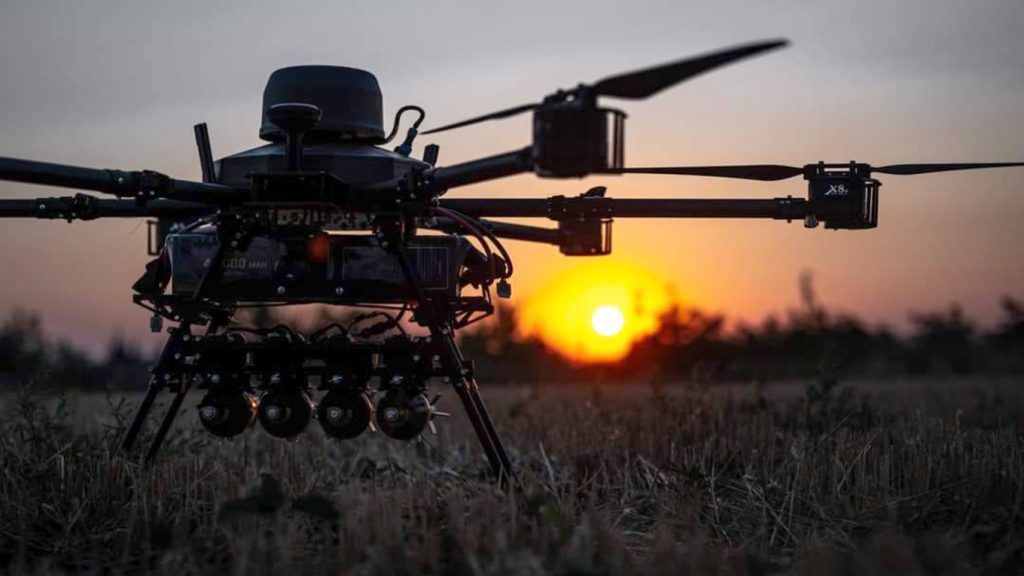
Ukrainian bomb-armed “octocopter”. Photo Credit: General Staff of the Armed Forces of Ukraine, via armyinform.com.ua. CCA/4.0 Int’l
Ethical Dilemmas
However, the development of AWS raises serious ethical concerns:
Lack of Human Judgment: Can an AI truly understand the context and nuances of a combat situation? There are fears that AWS might not be able to distinguish between combatants and civilians in complex scenarios. While this has always been a concern in relation to artillery and air strikes, both of those combat avenues have a presumably responsible human operator[s] at the top of the decision-making tree.
Accountability Issues: If an autonomous weapon makes a mistake, who is held responsible? The programmer, the manufacturer, or the military commander who deployed it?
Lowered Threshold for Conflict: With reduced risk to personnel, nations might be more willing to enter into armed conflicts, potentially increasing global instability.
Potential for Escalation: The speed of AI decision-making could lead to rapid escalation of conflicts before humans have a chance to intervene.
Hacking and Misuse: There are serious concerns about the potential for AWS to be hacked or fall into the wrong hands, with catastrophic consequences. Note that this potential is not limited to national entities, but can easily extend to non-governmental groups and individualsm as AWS algorithms are, at their core, simply computer programs, which can be endlessly duplicated and sent around the world via the internet, human couriers or just conventional “snail mail” services. The distinct danger out uncontrollable proliferation is not something to be blithely dismissed.
The Global Debate
The international community is grappling with how to approach AWS. Some nations and organizations are calling for a preemptive ban on “killer robots”, arguing that the risks outweigh any potential benefits. Others advocate for regulation and careful development, believing that AWS are inevitable and it’s better to shape their development than to futilely try to prevent it.
The United Nations has been a focal point for these discussions, with several meetings of the Convention on Certain Conventional Weapons (CCW) dedicated to debating potential regulations or bans on AWS. However, reaching a consensus has proven challenging, with major military powers often resistant to strict limitations.
Current State of Development
While fully autonomous weapons systems are not yet deployed in combat, many nations are actively developing precursor technologies. For example:
The US Navy’s Sea Hunter, an autonomous ship designed for anti-submarine warfare
Israel’s Harpy drone, which can autonomously detect and attack radar systems
Russia’s claimed development of AI-controlled missiles
‘Sea Hunter’ autonomous anti-submarine drone sails in formation during Rim of the Pacific (RIMPAC) 2022, July 28. U.S. Navy photo by Mass Communication Specialist 3rd Class Aleksandr Freutel. Public Domain.
While not fully autonomous, these systems represent significant steps toward AWS and demonstrate the ongoing interest in this technology among world powers.
Central to these concerns is the Kargu-2. Now combat-proven in the wreckage of Libya, in the hands of both Turkish “peacekeepers” and their local allies, the Kargu – despite official denials by Turkey, has shown that AWS systems are capable of performing lethal strikes with full autonomy is certainly possible.
STM Kargu-2, a portable rotary wing kamizake drone produced in Turkey. Photo credit: Armyinform.com.ua. CCA/4.0 Int’l
The Human Element
One of the core debates surrounding AWS is the role of human judgment in warfare. Proponents argue that removing human emotions like fear and anger from combat decisions could lead to more ethical outcomes. Critics counter that human empathy and moral reasoning are essential in making complex battlefield decisions.
The concept of “meaningful human control” has emerged as a potential middle ground, suggesting that while systems may have some autonomous functions, humans should retain ultimate control over lethal decisions. This is not an academic debate, because of the fundamental reality of all computer systems: Computers do not “care“, and neither does Artificial Intelligence. An AI combat system’s job is to attack what it can identify as an “enemy“, and if the last c.150 years of warfare have taught us anything, it is that every single person, regardless of gender or age, is a potential threat to be dealt with.
War is bad enough, as it is. We don’t need to allow it to be worse.
Future Implications
The widespread adoption of AWS could fundamentally change the nature of warfare. Some potential implications include:
Shifts in military strategy and tactics to account for the capabilities and limitations of AWS
Changes in the global balance of power, as nations with advanced AI capabilities gain military advantages
Potential arms races in AI and autonomous systems
New forms of conflict, including potential battles between opposing autonomous systems
The need to develop military training, techniques and procedures (TTP’s) to address the certainty that AWS algorithms will proliferate into the hands of terror groups.
Conclusion
Autonomous weapons systems represent both a remarkable technological achievement and a profound ethical challenge. As we stand on the brink of a new era in warfare, the decisions we make about the development and use of AWS will have far-reaching consequences for global security, international law, and the very nature of armed conflict.
The path forward will require careful consideration, robust international dialogue, and a commitment to balancing technological progress with ethical responsibility. As AWS continue to evolve, it’s crucial that policymakers, military leaders, ethicists, and the public engage in public and informed discussions about how to navigate this complex landscape.
Ultimately, the question we face is not just about the capabilities of machines, but about our own humanity – what role do we want human judgment to play in matters of life and death, and how can we ensure that the pursuit of military advantage doesn’t come at the cost of our ethical principles?
The Freedomist — Keeping Watch, So You Don’t Have To
In the ever-evolving landscape of modern warfare, a seemingly new player has emerged, that has been punching well above its weight class: the small, unmanned aerial vehicle (UAV), or “drone”. These compact, agile, and increasingly affordable devices are revolutionizing battlefield tactics, offering capabilities that were once the domain of larger, more expensive military assets.
The Rise of the Miniature Air Force
Gone are the days when drones were solely the purview of well-funded militaries. While unmanned, remotely-piloted military drones are certainly nothing new, having been used in combat as far back as World War 2, and while used on a large scale as recently as the six-week long Nagorno-Karabakh War in 2020, it is important to realize that many of the recent uses of drones were not “revolutionary” in any way. In fact, Azerbaijan’s use of drones was essentially a copy of the US and Coalition air force’s campaign against Saddam Hussein’s capital in Baghdad, in 1991.
A Naval Forces of Ukraine Bayraktar TB2 from the Turkish company Baykar Defense; CCA/4.0 Int’l
Today, however, it is the comparatively cheap, off-the-shelf commercial drones, often modified specifically for military use, which have become almost ubiquitous on battlefields around the world. From the conflict in Ukraine to the wars in the Middle East, small drones began making their presence felt as early as 2015.
These miniature flying machines come in various shapes and sizes, from hand-launched fixed-wing craft to multi-rotor copters that can take off and land vertically. What they lack in size, they make up for in versatility and sheer numbers. This is driven by their low cost (as low as $40, as of late 2024), and ease of use, as their control interfaces are based on either popular video game controllers, or on smartphone app interfaces, again often mimicking video game apps.
Drone hand controller unit, 2022. Photo Credit: South Carolina Air National Guard. Public Domain.
Revolutionizing Reconnaissance
While “kamikaze” and bomb-dropping drones are certainly newsworthy, perhaps the most significant impact of small drones repurposed for military use has been in the realm of reconnaissance. Traditionally, gathering intelligence on enemy positions often required putting soldiers in harm’s way or relying on expensive satellite imagery. Now, a soldier as far down as the squad level (8-13 troops) can launch a drone from a safe position and get real-time video feedback of enemy locations, fortifications, and movements.
This capability has significantly democratized battlefield intelligence. Now, even small units can now have their own “eye in the sky,” providing unprecedented situational awareness. The psychological impact is also significant – the constant buzz of drones overhead can be deeply unnerving for opposing forces, never knowing when they’re being watched…or targeted.
South Carolina Air National Guard Conducts Drone Fly Over of Runway Construction, 2022. Photo Credit: South Carolina Air National Guard. Public Domain.
From Eyes to Claws: The Weaponization of Small Drones
While reconnaissance remains a primary function, small drones are increasingly being weaponized. In some conflicts, commercial drones have been modified to drop small explosive payloads, usually modified hand grenades or rocket-propelled grenade (RPG) rounds, and do so with surprising accuracy. This last has, in fact, been used frequently on Ukrainian battlefields to counter the threat posed by main battle tanks. This has allowed for precise (if small scale) strikes on localized high-value targets without risking pilot’s lives or using expensive guided missiles.
A significant factor in this, is the timeliness of engagement, as a local unit with armed drones can act to engage a target far faster than it could using the old methods of calling back to an artillery or missile base, in order to adjust and coordinate fires; while that can – and is – still done with more conventional artillery, the weaponized drone – under the command of a leader literally shoulder to shoulder with the operator – can engage a group of targets much faster than before.
The low cost and expendable nature of these drones also enable swarming tactics. A swarm of small, explosive-laden drones, whether operating as kamikaze’s or under positive control, can overwhelm older, conventional defenses designed to counter larger, conventional threats. This asymmetric capability allows smaller forces to challenge larger, better-equipped opponents.
Leveling the Playing Field
Perhaps the most profound impact of small drones is how they’re leveling the playing field in asymmetric conflicts. Non-state actors and smaller military forces can now possess capabilities that were once the exclusive domain of major powers. A few thousand dollars worth of drones can now threaten millions of dollars worth of military hardware, and can frighten and demoralize professional troops who lack the knowledge, skills, training or equipment to effectively deal with this type of threat.
This democratization of air power is forcing a rethink of traditional military doctrine. Heavy armor, once the king of the battlefield, is increasingly vulnerable to drone-spotted artillery or direct drone attacks; current ad hoc armor strategies to counter drone strikes have only “sort of” worked. Air superiority, traditionally achieved through fighter jets and large drones, now also requires countering swarms of much smaller, harder-to-detect UAV’s. If anything, this threat is much harder for conventional armies to deal with.
The Counter-Drone Challenge
As small drones reshape offensive tactics, they’re also spawning a new field of counter-drone technology. Militaries around the world are racing to develop effective countermeasures, from electronic warfare systems that can jam drone controls to directed energy weapons that can shoot them out of the sky. Some novel approaches include training eagles to intercept drones, using large nets to capture them, or deploying “hunter-killer” drones to pursue and neutralize hostile UAV’s. Obviously, these advanced systems – while they may work for the moment – are breathtakingly expensive for the threats they are envisioned to be deployed against.
The challenge is significant – how do you economically counter a threat that might cost only a few hundred dollars per unit?
The Counter-Rocket, Artillery, Missile (C-RAM) gun fires flares during a weapons test at Joint Base Balad, Iraq, Jan. 31, 2010. USAF Photo by Senior Airman B. Bateman. Public Domain.
While conventional systems such as the combat-proven C-RAM and the venerable ZSU-23-2 can be fitted with proximity-fuzed warheads and self-destruct systems to help prevent “friendly fire” incidents, the dollar gap – something that always looms large in the conduct of war – is still far too wide for these systems to be truly cost-effective in combat. Likewise, conventional rifles are nearly useless against drones, as their projectiles – while perfectly suitable against a human-sized target – are nearly impossible to use against a fast-moving target roughly the size of a human hand.
A salvo from the ZU-23-2 anti-aircraft gun, 2021. Photo by: Ministry of Defense of Russia via mil.ru. CCA/4.0
Is there a better option?
Shotguns vs. Drones: A Low-Tech Solution to a High-Tech Threat
While militaries and defense contractors pour millions into developing advanced counter-drone technologies, one surprisingly effective tool has emerged from a much older era of warfare: the conventional shotgun.
The oldest model of personal firearm in history, shotguns have been continuously used in combat since the invention of gunpowder. As early as the 1980’s, if not before, conventional 12-gauge pump-action shotguns were mounted under the barrels of rifles such as the M-16, usually as supplementary weapons for police SWAT units to use in blasting open locked doors during raids; in fact, a Mossberg 500 was mounted under an M-16 look-alike in the 1987 movie “Predator“. Although terribly front-heavy, this sort of “combination weapon” does have its uses, when in trained hands.
The KAC MasterKey mounted under the barrel of an M4 assault rifle. 2009 photo by DrBaker of M4Carbine.net. Public Domain.
Militaries around the world have used shotguns for both combat and recreation. The shooting sports of “trap” and “skeet” are particularly relevant here, as both are based on hitting very small, fast moving targets with little lead-time.
Boatswain’s Mate Seaman Alonzo Bender, left, fires a 12-gauge shotgun during a skeet shoot on the flight deck of the amphibious dock landing ship USS Pearl Harbor (LSD 52), in 2010. U.S. Navy photo by Mass Communication Specialist 2nd Class Michael Russell. Public Domain.
Shotguns offer several advantages in countering small drones:
Widespread Availability: Most military and law enforcement units already have shotguns, making them an immediately accessible solution.
Ease of Use: Soldiers are often already trained in shotgun use, and even if they are not, only minimal additional training is required.
Wide Dispersal Pattern: The ever-widening spread of shotgun pellets after they leave the muzzle increases the likelihood of hitting a small, fast-moving target.
Cost-Effective: Compared to expensive electronic warfare systems or laser weapons, shotgun shells are incredibly cheap.
Low Collateral Damage: Unlike missiles or explosives, shotgun pellets have a limited range, reducing risks to surrounding areas.
Real-World Applications
Several militaries have already employed shotguns against drones. U.S. forces in Syria and Iraq have used them to down small ISIS drones, while developments continue to seek out solutions to develop anti-drone ammunition for conventional weapons. Meanwhile, in Ukraine, Russian companies are developing specialized anti-drone shotguns for the battlefield. And all the while, the inability of most military forces to convince their civilian-staffed governments – most of whom have no military experience at all – that going back to older designs continues to leave expensively trained and equipped troops vulnerable on the battlefield.
Despite their advantages, shotguns are not a perfect solution:
Limited Range: Effective range is typically less than 100 meters, requiring the threat to be relatively close.
Manual Targeting: Unlike automated systems, shotguns require a human operator to spot and shoot the drone.
Multiple Shots: Often, multiple shots are needed to down a drone, especially if it’s a larger or more robust model.
Environmental Factors: Wind, obstacles, and poor visibility can significantly affect accuracy.
Escalation Risks: In some scenarios, using firearms against drones could be seen as an escalation, particularly in sensitive diplomatic situations.
Still, shotguns do at least offer a fast solution to the close-range defense problem, when the alternatives are foot-long autocannon rounds or worse, anti-aircraft missiles to deal with what is essentially a lethal child’s toy.
Conclusion: Small Size, Big Shift
While the proliferation of small drones on the battlefield represents a significant shift in military tactics and strategy, they are like most developments: there is a lot of flash and thunder early on, but military forces that are actually competent will quickly adapt, and find countermeasures. All the same, these diminutive devices are rewriting the rules of military engagement, challenging long-held assumptions about military power, and forcing a reevaluation of everything from equipment procurement to tactical doctrine.
As technology continues to advance, making drones smaller, smarter, and more capable, their impact on warfare is only likely to grow. The military forces that can best adapt to this new reality – leveraging the strengths of small drones while effectively countering their threats – will hold a significant advantage on the battlefields of the future.
In the grand chess game of global conflict, the smallest pieces on the board are proving that size isn’t everything. The age of the small drone has arrived, and with it, a new era of warfare where the tiny can have a truly outsized impact.
The Freedomist — Keeping Watch, So You Don’t Have To
In the murky world of drug trafficking, narco submarines have long been a thorn in the side of law enforcement. These stealthy vessels, often homemade and barely submerged, have smuggled tons of illicit cargo past watchful eyes. Now, in an ironic twist, the U.S. Navy and Marine Corps are taking cues from these ingenious, if nefarious, designs to develop a new generation of military craft: low-profile submersibles for resupply and covert operations. The implications do not bode well.
Learning from the Underworld
Narco submarines, or “narco subs,” are semi-submersible vessels designed to evade detection while transporting large quantities of drugs. They are typically long, slender craft that cruise just below the water’s surface, with only a small conning tower visible above the waves. This design makes them incredibly difficult to spot visually or on radar. The other aspect is that narco subs do not “sound” like military vessels, or true submarines; this is due to them primarily using non-military marine diesel engines common to many civilian pleasure craft.
Two Narco subs (LPVs) interdicted by USCG personnel aboard USS Preble (5 June 2020) and USS Pinckney (15 May 2020). Sources: HI Sutton, US Navy, US Coast Guard, Small Wars Journal.
The military has taken note of these vessels’ effectiveness in evading detection. While the goals are vastly different, the need for stealth and the ability to operate in shallow coastal waters are shared requirements that make the design of narco sub an intriguing proposition for military applications.
The Military’s New Toy
The U.S. Navy and Marine Corps are now developing their own versions of these low-profile vessels. Unlike their illegal counterparts, these military craft are being designed with cutting-edge technology, robust construction, and specific military objectives in mind…Meaning, if the US Army’s Infantry Squad Vehicle (ISV) is any indication, will not work the way they think it will.
The primary focus is on using these submersibles for discrete resupply missions. In scenarios where traditional supply lines might be compromised or under threat, these stealthy craft could slip in undetected to deliver crucial supplies to troops in remote, isolated locations. This is patches a critical hole in the US Marine Corps’ “Force Design 2030“, by allowing covert resupply to widely dispersed monitoring and anti-ship and -air missile units on atolls, islands and continental regions with long coastlines or navigable river systems.
Obviously, there are implications of this for use in intelligence operations, to supply covert operatives in coastal areas. For the same reasons that drug cartels use semi-submersibles to smuggle illicit drugs into the United States by the ton-weight, these low-profile vessels are able to ferry in weapons and munitions without the need to dangerously expose aircraft crews to drop the supplies by parachute. Moreover, these craft can be remotely piloted, making for a truly “deniable” operation.
But resupply is just the beginning. The potential applications for these vessels in low-intensity conflicts are vast and varied.
Game-Changers in Low-Intensity Conflicts
Low-intensity conflicts, characterized by guerrilla warfare, counterinsurgency, and special operations, could all see a significant shift in tactics with the introduction of these submersibles. The low profile of these vessels makes them particularly suited for operations in contested waters, where larger, more visible craft might provoke unwanted attention or escalation. A brief look at these enhancements include:
Covert Insertion: Special operations teams could be deployed silently and swiftly into hostile territory, with minimal risk of detection.
Intelligence Gathering: Equipped with advanced sensors, these vessels could patrol coastlines, gathering crucial intelligence without alerting the enemy.
Humanitarian Aid: In disaster zones where ports are damaged or inaccessible, these craft could deliver vital supplies to coastal communities.
Counter-Narcotics Operations: Ironically, these military vessels, inspired by narco subs, could be used to combat drug trafficking, using the smugglers’ own tactics against them, via covertly inserting teams to raid drug-producing factories.
Mine Warfare: Low-profile submersibles could be ideal for deploying or detecting underwater mines in shallow waters.
Marines with 3rd Reconnaissance Battalion, 3rd Marine Division, III Marine Expeditionary Force, prepare diver propulsion devices for training, Okinawa, Japan, 2011. Source: DVIDS. Public Domain.
Obviously, any group that can build and deploy such craft – including terror groups, can use them to conduct these sorts of operations. The Lashkar-e-Taiba (LeT) team that attacked Mumbai in 2008 had to capture a fishing trawler, force its captain to sail to a point off Mumbai (a coastal port city), then infiltrated the team at night using Zodiac-style rubber boats. Several of the steps the LeT required could have been eliminated with semi-submersible craft.
Technical Challenges and Innovations
Developing these submersibles isn’t without its challenges. The military versions need to be far more sophisticated than their narco counterparts. Engineers are grappling with issues like:
Propulsion systems that are both powerful and quiet
Advanced navigation systems for precise underwater maneuvering
Life support systems for extended underwater operations
Modular designs to support various mission profiles
Materials that can withstand the pressures of submersion while maintaining a low profile
These challenges are driving innovations in naval engineering, with potential spin-off benefits for civilian maritime technology.
The Future of Naval Warfare?
As these low-profile submersibles move from concept to reality, they have the potential to reshape naval strategy, particularly in littoral and coastal operations. They represent a shift towards more agile, adaptable naval forces capable of operating in the gray zones of modern conflict. But the true game-changer may lie in their potential as stealthy missile platforms.
The Game-Changing Potential of Missile-Armed Submersibles
Recent developments have shown that these vessels could be more than just transport and reconnaissance platforms. The U.S. Navy has been exploring the possibility of arming these low-profile submersibles with anti-ship missiles, specifically the Naval Strike Missile (NSM).
Naval Strike Missile (NSM). Hemus Exhibition , 2010, International Fair in Plovdiv, Bulgaria. Photo by Peterdx. Public Domain.
The NSM is a sea-skimming, high-subsonic speed missile with a range of over 100 nautical miles. It’s designed to evade enemy defenses and can strike both land and sea targets. Now, this potent weapon system could be mounted on a vessel that is nearly invisible to radar, confusing to sonar (if using non-military engines) and difficult to detect visually.
This combination creates a formidable and unpredictable threat. A group pf small, stealthy vessels lurking just offshore, capable of launching precision strikes against much larger ships or land targets, could fundamentally alter the balance of power in coastal areas.
Tactical Advantages
The tactical advantages of this setup are numerous:
Surprise Factor: These submersibles could approach high-value targets undetected, launching missiles from unexpected locations.
Cost-Effective Sea Denial: A relatively inexpensive platform could threaten or neutralize much larger, more expensive naval assets…not least, because of the potential for the platform’s use as a remotely piloted vessel.
Distributed Lethality: By spreading offensive capabilities across numerous small platforms, naval forces become more resilient and harder to neutralize.
Rapid Response: These vessels could quickly deploy to hot-spots, providing a swift and stealthy strike capability where needed.
Strategic Implications
The strategic implications of missile-armed low-profile submersibles are profound:
Asymmetric Warfare: Smaller nations or non-state actors could potentially leverage this technology to challenge larger naval powers, which – despite their strength on paper – cannot have ships deployed everywhere, continuously.
Area Denial: The mere threat of these vessels could deter enemy forces from operating in certain areas, effectively expanding a nation’s defensive perimeter.
Escalation Management: Their small size and low profile could make them less provocative than deploying larger warships, allowing for a measured response in tense situations.
Changed Calculus: Naval planners would need to reconsider strategies for littoral operations, knowing that potent threats could be hiding in plain sight.
Challenges and Considerations
However, arming these vessels with missiles isn’t without challenges:
Stability: Ensuring accurate missile launches from a small, semi-submerged platform presents engineering challenges.
Limited Payload: The size of these vessels restricts the number of missiles they can carry.
Ethical Concerns: The covert nature of these platforms could raise questions about transparency in military operations.
Proliferation Risks: As with any advanced military technology, there’s a risk of these capabilities spreading to potential adversaries.
A New Era of Naval Warfare?
The combination of low-profile submersibles and advanced anti-ship missiles like the NSM could herald a new era in naval warfare. It blends the stealth of submarines with the striking power of surface combatants in a compact, versatile package.
As these technologies mature and potentially enter service, they may well rewrite the rules of engagement in coastal waters. The ability to strike from hidden positions with precision and power could make these small vessels a cornerstone of future naval strategy.
However, like any military technology, their true impact will only be understood once they’re deployed in real-world scenarios. Will they prove to be the game-changers some predict, or will unforeseen limitations curb their effectiveness?
One thing is certain: as these stealthy, missile-armed craft prepare to slip beneath the waves and into military service, they may well be ushering in a new era of naval operations—one where the lines between submersible and surface vessel, between defensive and offensive capabilities, become increasingly blurred. The future of naval warfare may very well belong to those who master the art of hiding in plain sight while packing a powerful punch.
As these low-profile submersibles move from concept to reality, they have the potential to reshape naval strategy, particularly in littoral and coastal operations. They represent a shift towards more agile, adaptable naval forces capable of operating in the gray zones of modern conflict…However, like any military technology, their true impact will only be understood once they’re deployed in real-world scenarios. Will they prove to be the game-changers some predict, or will unforeseen limitations curb their effectiveness?
One thing is certain: the development of these vessels showcases the military’s ability to innovate and adapt, even drawing inspiration from unexpected sources. From the shadowy world of drug smuggling to the cutting edge of naval warfare, the journey of the low-profile submersible is a testament to the old adage that necessity — whether in crime or in war — is indeed the mother of invention.
At the same time, serious thought needs to given to ask the uncomfortable question: Are state military design bureau’s around the world so bereft of ideas, that they have to adapt the ad hoc tactics and tools of criminals and terrorists to “big war” theory? After all, the US Army’s ISV program exists for the sole reason to emulate the widespread use of “technicals” in combat around the world – and does so poorly. Will the US Navy and Marine Corps’ semi-submersible program make the same mistakes?
As these stealthy craft prepare to slip beneath the waves and into military service, they may well be ushering in a new era of naval operations—one where the ability to remain unseen is just as important as the power to strike.
Not too long ago, access to satellite imagery was firmly relegated to the realm of spy movies and top-secret government agencies. Times have certainly changed. Today, anyone with an internet connection can access detailed satellite images of almost anywhere on Earth. This democratization of satellite intelligence is reshaping how we understand global events, conduct business, and even wage war.
From Military Secrets to Public Domain
Before roughly 2000, good- to high-quality satellite imagery was the exclusive domain of superpowers. The United States and the Soviet Union spent billions during the Cold War to launch spy satellites, gaining a bird’s-eye view of each other’s military activities. This open access to the ultimate “high ground” forced every national government that wanted to try and keep their secrets out of public view to become highly creative in hiding facilities. As advanced sensors developed, so too did methods of concealment. Fast-forward to the 21st Century, and companies like Planet Labs and Maxar Technologies are providing high-resolution satellite imagery to paying customers – be they governments, corporations, or even individuals. Not only that, but many of these high-quality are now finding their way into free-access platforms, such as Google and Bing Maps, but even such unlikely sites as NatureFocused – offer very high-quality maps featuring regular, street-type maps, but also very recent satellite imagery and highly detailed terrain maps.
This shift has profound implications. Suddenly, small countries, NGOs, citizen journalists – even terrorists – now have access to intelligence that was once the privilege of only the most powerful nations. It’s like giving everyone a seat at the geopolitical poker table and letting them peek at each other’s cards.
Changing the Game in Global Politics
So, how exactly is this changing the political landscape? For starters, it’s making it a lot harder for governments to hide their activities. Take the recent conflicts in Ukraine and the Middle East. Civilian satellites routinely capture troop movements, missile launches, and the aftermath of strikes, often before official sources confirm them. This frequently happens in real-time, with independent verification changing (and often confusing) how we understand and respond to global crises.
But it’s not just about conflict zones. Environmental groups are using satellite imagery to track deforestation, oil spills, and illegal fishing. Human rights organizations can now monitor refugee movements and verify claims of atrocities. While it may seem like having a “global watchdog” that never sleeps, there are issues of misinterpretation – both accidental and deliberate – that can and do muddy the waters, giving false impressions through outdated images, failures of interpretation, or any number of other issues, technical or human.
The Double-Edged Sword of Warfare
In the realm of warfare, easy and (mostly) free access to recent, high-grade satellite intelligence is a “game-changer”. Military strategists now have to assume that their movements are being watched not just by enemy governments, but also potentially by anyone with an internet connection. This transparency can act as a deterrent to aggression, but it also means that the element of surprise in military operations is becoming a thing of the past.
In the hoary old days of 1983, the Reagan administration launched “Operation Urgent Fury“, to invade the Caribbean island nation of Grenada, which had collapsed into chaos as different factions of the ruling party wrestled for control. This placed the safety of some 400-odd American medical students in question, and the Reagan administration – which had come to power at least partly as a result of the previous administration’s failure in dealing with the Iranian Hostage crisis – was not about to risk a repeat performance on its doorstep.
While there was never any doubt that the United States military would win a conflict in Grenada, it was discovered – much to the consternation of all planners – that there were no detailed maps of Grenada inside the US cartographic system. US Army planners were forced to purchase tourist maps of Grenada just outside the gates of their bases, hand-draw grid reference lines and the estimated locations of targets on those rudimentary maps, then photocopy those maps and hand those out to troop leaders.
The issue was that there were very few “recon birds” – the colloquial term for reconnaissance satellites – in orbit at the time, and those satellites were not easy to “re-task”. Grenada was so “off-the-radar” in the United States, some intelligence officers wondered why they were being ordered to plan an invasion of the city of “Granada” in Spain.
Humor aside, this was clearly a serious problem…and one that would not be replicated today, in any army in the world worthy of the name. Today, anyone with an internet connection can utilize free tools (often coming as “stock” programs with many computers) that the battle planners of “Urgent Fury” – or, for that matter, “Desert Storm” – could have dreamed of.
Unfortunately, that also includes terrorists.
The 2008 attack on Mumbai, India, by the terror group “Lashkar-e-Taiba“, were planned and directed in real-time using stock personal computers, an internet connection and tools like Google, to verify targets, observe news reports on the fighting in real-time, and to generate maps that were used for plotting the progress of their operations on target.
Likewise, there are now commercially available tools, like “ATAK“, that approach military and national intelligence agency tool-sets in quality. These free, or at least low-cost, programs are well within the reach of private individuals, to say nothing of terror groups and small governments and their military forces.
These realities have proven the wisdom of the United States Marine Corps’ “Small Wars Manual“, published in 1940, which warned that what the West now calls “Third World” forces were improving their abilities and acquiring more modern weapons and equipment, and that the result would be that “First World” forces would have to be willing and able to adapt and evolve faster than those forces could.
The Road Ahead
As we look to the future, it’s clear that easy access to satellite intelligence will continue to play an increasingly important role in shaping our world. We’re likely to see even more detailed imagery, combined with AI and machine learning to provide real-time analysis of global events.
This technology has the potential to increase transparency, hold powerful actors accountable, and provide crucial information in times of crisis. But it also risks further eroding both personal and start privacy, and potentially destabilizing delicate geopolitical situations in unforeseen ways.
One thing is certain: the “view from above” is here to stay, and it’s changing how we see our world, literally. As this technology continues to evolve, it will be up to all of us – governments, businesses, and citizens alike – to figure out how to use it responsibly and effectively.
In a world where everyone can be a satellite superpower, the challenge will be learning how to use this newfound vision wisely.
The Freedomist — Keeping Watch, So You Don’t Have To
In the vast chess game of global politics, naval power has long been a deciding factor for centuries. In the modern day, the aircraft carrier has reigned supreme since World War 2 as the ultimate symbol of maritime dominance; we discussed this back in August of this year. But…what if the rules of the game are changing? What if smaller nations, or even non-state actors, could suddenly challenge the naval superpowers – the United States, Britain, France, India and China – with their own fleets of makeshift aircraft carriers?
While this might sound like the plot of a bad conspiracy movie, it isn’t. The future of naval warfare might be closer to a DIY project than you’d think.
Historically, the concept of aircraft carriers revolutionized naval warfare. In World War II, after the twin strikes on the Italian fleet at Taranto, and the attack on Pearl Harbor (which used Taranto as its base model). The strike on Pearl Harbor left the US Navy without the force it had planned to use to fight Japan, leaving only its aircraft carriers to hold the line until the nation could fully mobilize. These floating airfields – now holding up to 70 attack aircraft – has allowed nations to project significant combat power far beyond their shores, changing the very nature of maritime strategy. Fast forward some eighty years, to the early 21st Century, and carrier battle groups are still the backbone of naval power for the United States, and those states trying to join in.
Aerial view of the Mar Piccolo anchorage of Taranto, Italy, showing Italian cruisers preparing to get under way, 12 November 1940 following the attack. Photo from the collection of C. Oliver, via the Australian War Memorial. Public Domain.
But – there’s a catch: traditional aircraft carriers are expensive. Really expensive. Multiple billions of dollars expensive. This high cost, along with serious and complex technical issues, has kept carrier capabilities out of reach for most nations.
Until now.
The emergency conditions of World War 2 sparked a need to both transport aircraft to a distant theater of war without having to actually fight until they got there, and/or escort convoys of slow-moving, mostly defenseless, civilian merchant ships. The answer to this problem was the concept of the “escort” carrier – a comparatively small ship, capable of transporting fewer than 30 aircraft. These types of vessels filled the gap, allowing the US and British Royal Navies to both escort convoys, protecting the ships from enemy submarines, and delivering combat aircraft ti the battle area…and sometimes, actively engaging the enemy, even though not equipped to do so, as happened in the three-day Battle of Leyte Gulf, in 1944.
Following World War 2, the United States maintained carriers as its primary fleet element. And the carriers became the linchpin of a new method of power projection. No one has seriously contended with US naval dominance in the 80-odd years since World War 2 ended. To be sure, the tensions of the Cold War saw the Soviet Union present a serious threat to US naval power with its huge and very capable submarine force, but no country ever attempted to match the US Navy’s carrier fleet.
But, as time advanced onward, so did technology. In 1969, Britain aircraft designer Hawker Siddeley came up with something new: the Harrier. Unlike conventional jets, the Harrier was designed to take off and land vertically, a system known as V/STOL. As a subsonic aircraft, the Harrier could not seriously contend with the high speed, supersonic interceptors of its time, but it carried a useful weapons payload, and did not require the complicated launch and recover system, known as “CATOBAR“, that conventional fighters needed to launch from a rolling and pitching deck.
F/A-18C Hornets assigned to the “Stingers” of Strike Fighter Squadron (VFA) 113 launch from the Nimitz-class aircraft carrier USS Ronald Reagan (CVN 76), November of 2008. U.S. Navy photo by MC2 Joseph M. Buliavac. Public Domain.
However, the Harrier was an outgrowth of an abandoned Hawker Siddeley project: the P.1154. Designed for a NATO requirement for a supersonic V/STOL fighter-bomber, the P.1154 fell victim – publicly, at least – to “mission creep” and bureaucratic infighting…Maybe. We’ll come back to that.
During the Cold War, with NATO’s desperate need to guard the GIUK Gap against it being closed by the Soviet Union during the critical opening phases of World War 3, in a manner similar to Nazi Germany’s U-Boat strategy of World War 2, one of the ideas to maximize the use of old, mothballed carrier hulls came in the form of the “helicopter carrier“. As the name suggests, this type of vessel was intended to only carry helicopters. In response to NATO needs, the idea was to pack the ship full of helicopters carrying air launched anti-submarine weapons and detection systems, which would allow the ship to protect convoys carrying war material to defend Europe against a Warsaw Pact invasion, from attack the very real threat of Soviet submarine forces. Clearly, a supersonic V/STOL would have been a great asset to ships like this in carrying out their mission.
But, the helicopter carrier concept was ultimately seen as wasteful, and it was eventually ended. The US Navy was happy with its upcoming LHA and LHD classes of amphibious warfare ships, which could operate Harrier’s for protection, and that was deemed sufficient.
But then, History intervened. During the Falklands War of 1982, the British suddenly found that the Royal Navy – after near-lethal budget cuts had left them with only two helicopter-type carriers – was forced to convert civilian cargo ships impressed for the war into makeshift aircraft carriers by the simple expedient of welding a solid landing platform on top of a base of shipping containers, and lashing Harriers and CH-47 helicopters to the deck. Ultimately the ship, the SS Atlantic Conveyor, would embark some five CH-47’s and six Westland Wessex helicopters, and then embarked fourteen Harriers as well, during the reorganization of the fleet at Ascension Island. Her sister ship, the SS Atlantic Causeway, would be fitted out to carry twenty-eight helicopters. (The Atlantic Conveyor was sunk by Argentinean Exocet anti-ship missiles on May 25th, 1982, taking most of her helicopter cargo down with her…the Harriers, however, had been flown off beforehand, significantly aiding the British war effort.)
It wasn’t pretty, but it worked.
SS Atlantic Conveyor approaching the Falklands, c.19 May 1982. A Westland Wessek Helicopter is seen near the bow. Photo credit: D.M. Gerard. CCA/2.5
Clearly, the notion of V/STOL fighters taking off from converted cargo was well grounded in realism. In fact, it was reinforced a year later in 1983, in the “Alraigo Incident“, when Royal Navy Sub-Lieutenant Ian Watson – unable to locate his carrier after a flight systems failure, made an emergency landing on the Spanish container ship “Alraigo” in mid-Atlantic before crashing from running out of fuel.
Enter the world of the 21st Century.
The “People’s Republic of China”, desperate to strengthen its flagging position in the world, is attempting to claim essentially all of the South China Sea, international arbitration be damned. However, the cold fact remains, that China has nothing to counter the firepower of even one US Navy carrier battlegroup…or, does it?
Aside from accelerating development of anti-ship ballistic missiles, the so-called “carrier killers”, the PRC has been trying to float their own aircraft carriers, without much success. The main problem comes down to CATOBAR systems and training. The launch and recovery system for fixed-wing aircraft is highly specialized, and requires extensive training and years of crew experience to work effectively. The US Navy has had over 70 years to perfect its own CATOBAR operations, and it shows in the low accident rates and relatively smooth operational pace on all US carriers.
With the deployment of the F-35B & C models – the “naval” variant – is being heralded as the solution to turn amphibious assault ships into “mini-carriers”; whether that is true or not remains to be seen. However, the US, along with Australia and Norway, are developing air-launched anti-ship missiles for the F-35B.
A British Lockheed Martin F-35B Lightning II (registration ZM148) of No. 617 Squadron RAF lands aboard the Royal Navy aircraft carrier HMS Queen Elizabeth (R08) in the Atlantic Ocean on 17 October 2019. U.S. Navy photo by MC3 Class Nathan T. Beard. Public Domain.
These weapons are designed to take out large, expensive supercarriers, especially if fired in swarms, to overcome a carrier’s anti-missile defenses. Ultimately, though, if enough missiles are fired at once, at least a few are bound to get through. The loss of a “supercarrier” like the USS Theodore Roosevelt or the new USS Gerald R. Ford would be a catastrophic blow to US confidence and foreign policy…But what about a smaller carrier? That’s a much harder target to hit, and a much less catastrophic loss if one is sunk.
More to the point, what if a country operating V/STOL fighter-bombers capable of launching anti-ship missiles suddenly converts a number of seized container ships and/or oil tankers into improvised aircraft carriers? Let’s take a hypothetical (and admittedly unlikely) scenario involving Australia or Indonesia.
Australia, with its vast coastline and strategic position, could theoretically convert some of its large merchant ships into makeshift carriers. Equipped with STOVL aircraft armed with anti-ship missiles, these DIY carriers could dramatically alter the balance of power in the South Pacific and Indian Ocean.
Or consider Indonesia, an archipelagic nation with a growing economy and increasing regional influence. If Indonesia were to suddenly develop a fleet of converted carriers, it could potentially control key maritime choke points and challenge established naval powers in the region.
Map of Southwest Pacific region. Image courtesy of Open Street Maps. ODbL.
Neither of these scenarios are likely to happen tomorrow, if ever. Both Australia and Indonesia are stable countries with good relations with major powers, including the United States. But in our rapidly changing world, what might happen in a decade or two? Recall that Iran went from a close U.S. ally to a sworn enemy practically overnight.
The point is, the potential for rapid, fundamental shifts in naval power is now here, and it’s something that traditional naval powers need to consider. In fact, this author has a suspicion that this very circumstance was the real reason for killing the Hawker Siddeley P.1154: the admirals of the late-1960’s and early-1970’s were all well-versed in carrier operations against other carrier forces in active combat as many, if not most, had been in combat against enemy carriers in World War 2 as junior officers, and would have wanted to limit the spread of functional carrier forces to small – and highly unstable – nations. Now, however, those veterans are gone, and navies have spent so long without a major naval war, the “institutional memory” of combat in this realm has been lost.
The only bright light in this darkness is the fact that there are very few V/STOL fighters out there, and none that can match the theoretical performance of the F-35B. The closest aircraft is the ancient YAK-38 of the Soviet era, an airplane that was plagued with problems from the start. In the modern day, the PRC has been trying to get its own V/STOL aircraft, the “J-18”, off the drawing boards for years. So far, they have failed to get it to work.
Yak-38 fighter landing aboard the aircraft-carrying cruiser Novorossiysk, part of the Red Banner Pacific Fleet, September, 1984. Phot credit: Vladimir Rodionov. CCA/3.0
But what if that changes? What if the Communist designers make a breakthrough, and create a missile-carrying V/STOL fighter-bomber that can at least operate at sea? Without a need for CATOBAR systems, such an event could seriously alter the nature of naval operations, especially if coupled to more exotic – but proven – projects.
So – what does this mean for the future of naval warfare? For one, it could lead to a more distributed form of naval air power. Instead of a few large carrier battle groups, we might see more numerous, smaller carrier groups. This could make naval forces more flexible and resilient, but also potentially more unpredictable.
It could also change the calculus of naval combat. Anti-ship missiles launched from converted tankers lurking among civilian shipping could pose a serious threat to traditional naval forces. The line between civilian and military vessels could become blurred, complicating rules of engagement. Moreover, this trend could democratize naval air power. Countries that could never afford traditional carriers might suddenly find themselves able to project power far beyond their shores. This could lead to increased regional conflicts, but it could also create new deterrents against aggression by larger powers.
SS Atlantic Conveyor loaded with Harrier V/STOL fighters and a Chinook helicopter in the lower-right corner. Shipping containers act as a wind break for flight and maintenance crews. Photo Credit: U.S. Naval Institute Photo Archive. Public Domain.
For major naval powers like the United States, this trend presents both challenges and opportunities. On one hand, it could erode the dominance of traditional carrier battle groups. On the other, it could open up new avenues for cooperation with allies and partners who adopt these capabilities.
While the reign of the supercarrier is far from over, the future of naval warfare might be more diverse and unpredictable than we now imagine. The potential for DIY carriers and distributed naval air power could reshape maritime strategy in the coming decades.
One thing is clear: the nations and leaders who can adapt to these changes will be the ones who shape the future of naval power. The game is changing, and it’s time for everyone to rethink their strategies.
The Freedomist — Keeping Watch, So You Don’t Have To
Back FREEDOM for only $4.95/month and help the Freedomist to fight the ongoing war on liberty and defeat the establishment's SHILL press!!
Are you enjoying our content? Help support our mission to reach every American with a message of freedom through virtue, liberty, and independence! Support our team of dedicated freedom builders for as little as $4.95/month! Back the Freedomist now! Click here