Even more food shortages may be on the way as a result of the recent heatwaves in India destroying wheat yields. India was supposed to increase its exports to offset the shortfalls caused by Russia’s unprovoked invasion of Ukraine which had already reduced global wheat supplies.
March temperatures in India have reached levels never before seen in India according to records tracking temperatures since 1901, destroying the crop. Estimates range between 10% and 50% yield decrease for the season by local farmers.
Expectations of wheat exports from India were high, with 11-12 million metric tonnes expected to be delivered throughout 2022 and 2023. With such high expectations and unexpected disruption, a global food shortage seems to be coming.
Fertilizer shortages are spreading throughout the world, starting in Ukraine as a result of the Russian invasion, leading to a price spike of 70 percent in less than one year.
For the first time ever, farmers the world over — all at the same time — are testing the limits of how little chemical fertilizer they can apply without devastating their yields come harvest time. Early predictions are bleak.
In Brazil, the world’s biggest soybean producer, a 20% cut in potash use could bring a 14% drop in yields, according to industry consultancy MB Agro. In Costa Rica, a coffee cooperative representing 1,200 small producers sees output falling as much as 15% next year if the farmers miss even one-third of normal application. In West Africa, falling fertilizer use will shrink this year’s rice and corn harvest by a third, according to the International Fertilizer Development Center, a food security non-profit group.
…..“Fertilizer prices are up an average of 70% from last year,” said Timothy Njagi, a researcher at the Tegemeo Institute of Agricultural Policy and Development in Kenya, referring to prices in the country. “The fertilizer is available locally, but it’s out of reach for the majority of farmers. Worse, many farmers know that they cannot recover these costs.”
Prices have been climbing for more than a year for a host of reasons: runaway pricing for natural gas, the main feedstock for much of the world’s nitrogen fertilizer; sanctions on a major Belarusian potash producer; back-to-back late-summer storms on the U.S. Gulf Coast that temporarily shut-in production in the region; plus Covid-19 restrictions that have disrupted every global supply chain, including chemicals.
That tightening in the physical fertilizer market has galvanized China, the largest phosphate producer, to restrict outgoing shipments in order to build up a stockpile at home, further exacerbating the global shortage. Add Russia’s invasion of Ukraine, which effectively cut off nearly a fifth of the world’s nutrient exports, and the fertilizer industry and its pricing mechanisms are arguably more broken than ever before.
The once-American ally, the Solomon Islands, is now going in another direction, which is leading them to accept Chinese Police becoming their street patrols, but under Solomon Islands supervision.
China’s police presence under a new security pact will boost the capabilities of the Solomon Islands but they will not use techniques seen in Hong Kong, the Pacific island country’s top diplomat to Australia said in a radio interview on Monday.
Already on guard about the pact because of concerns it gives China’s military a strategic foothold in the Pacific, Western allies are also worried that Chinese police sent there may use the same “ruthless” techniques previously used to quell anti-government protests in Hong Kong. read more
The Solomon Islands is “beefing up their capability” after local police were unable to contain anti-government riots in the Chinatown section of the capital Honiara in November, Solomon Islands High Commissioner to Australia Robert…
…..after lobbying unsuccessfully against a bill last year that will create an elected school board for Chicago two years from now, the mayor hasn’t taken advantage of her opportunity to have a say in who will serve on the Board of Education.
When Lightfoot fought the elected school board, she argued it was imperative for her to appoint the entire board since the mayor is largely seen as responsible for the success – or failure – of the schools system.
Lightfoot has less than a year remaining in her term ahead of the spring 2023 mayoral election, followed by the first school board elections in late 2024 and the new board taking control in early 2025. If Lightfoot wins reelection she would be able to appoint 11 members of the new 21-seat board to serve the first two years of her term. When the board becomes fully elected two years later, the mayor won’t have any say in its makeup.
Don’t count your chickens before they hatch — and don’t count your congressional districts before all the redistricting lawsuits are finished.
On Wednesday, the New York Court of Appeals ruled that the congressional map New York Democrats enacted back in February was a partisan gerrymander that violated the state constitution and tossed it to the curb. The decision was a huge blow to Democrats, who until recently looked like they had gained enough seats nationally in redistricting to almost eliminate the Republican bias in the House of Representatives. But with the invalidation of New York’s map, as well as Florida’s recent passage of a congressional map that heavily favors the GOP, the takeaways from the 2021-22 redistricting cycle are no longer so straightforward.
That’s because much of Democrats’ national redistricting advantage rested on their gerrymander in New York. The now-invalidated map included 20 seats with a FiveThirtyEight partisan lean2 of D+5 or bluer and only four seats with a partisan lean of R+5 or redder. It also included two swing seats, but even those had slight Democratic leans (D+3 and D+4)……
Back in March, Democrats didn’t have as large of an advantage by this metric, but they were still doing better than Republicans: I estimated at the time that redistricting would net Democrats around two seats in the midterms, while it would lead to a net loss of around three or four seats for Republicans (this was without considering the Republican-leaning national political environment). Now, however, Republicans clearly have the advantage on this score. I estimate that redistricting currently positions Republicans for a net gain of around four or five House seats and Democrats for a net loss of about four, based on the maps as they stand now…….
In its decision, the New York Court of Appeals endorsed the idea that a neutral special master — essentially, an expert in drawing political maps — should draw New York’s next congressional map. That would presumably lead to a relatively fair map, but the details and exact partisan breakdown are, of course, still a mystery; Democrats could still gain seats from New York’s map when all is said and done (just not as many as from their gerrymander).
Less than two years after Google dismissed two researchers who criticized the biases built into artificial intelligence systems, the company has fired a researcher who questioned a paper it published on the abilities of a specialized type of artificial intelligence used in making computer chips.
The researcher, Satrajit Chatterjee, led a team of scientists in challenging the celebrated research paper, which appeared last year in the scientific journal Nature and said computers were able to design certain parts of a computer chip faster and better than human beings.
Dr. Chatterjee, 43, was fired in March, shortly after Google told his team that it would not publish a paper that rebutted some of the claims made in Nature, said four people familiar with the situation who were not permitted to speak openly on the matter. Google confirmed in a written statement that Dr. Chatterjee had been “terminated with cause.”
The goal of this column is to present news from around the world that is not often – if ever – covered by more mainstream entities, using local sources wherever possible, but occasionally using news aggregators not used, again, by the mainstream media. Also, please note that we do use links to Wikipedia; while Wikipedia is well-known as a largely-useless site for any kind of serious research, it does serve as a launch-pad for further inquiry, in addition to being generally free of malicious ads. As with anything from Wikipedia, always verify their sources before making any conclusions based on their pages.
This column will cover the preceding week of news.
To make it easier for readers to follow story source links: anytime you see a bracketed number marked in green – [1] – those are the source links relating to that story.
North America
While the wave of bomb threats made against schools across the country continued this week, including to multiple schools in the state of Maine [1][2], there seems to be a shift underway, as fat more calls were phoned in, apparently by live people, with some arrests being made. [3]-[11] It is important to understand that stupid, bored people sometimes call in bomb threats for what they think is a “laugh”; that has been happening for a very long time. But in the case of the last several years, the number of these hoax-threats has been steadily increasing…and this week, we have seen at least two cases on the East Coast of actual, physical notes [12][13] being left on bathroom mirrors in student lavatories. This may be nothing — or it could indicate the possibility of some sort of “Slender Man“-style “creepypasta” being weaponized by some internet-based Fagin character, luring children into something that could result in a deliberate “Slender Man Stabbing“-style campaign.
Keep in mind, not all of these are hoaxes. On Wednesday the 27th, police in Porter County, Indiana arrested and charged a middle-school student [14] who was discovered to be carrying two IED’s in their backpack.
Turning to Europe, we have another wave of emailed bomb threats swamping over two dozens schools in the nations of Serbia and Montenegro. This has been an increasing issue within Europe over the last couple of years, similar to the waves of similar threats within the United States, as well as several other nations since at least 2015.
In Mali, five Malian Army soldiers were killed when their truck triggered an IED, during their pursuit of a hijacked tanker truck. Also, the Al Qaeda-linked terror group JNIM claimed to have captured an unspecified number of Russian “security contractors” from the “Wagner Group“, a PMC linked to the Russian government. Mali has been effectively left to its own devices in its decade-long war against Islamic terror groups, following its break with European and African nations after it announced delays in transitioning back to civilian rule, following a series of coups d’état that began in 2020. [1][2]
In Nigeria, steady attacks, including assassinations and arson attacks, continue throughout the country, as fighting against the Boko Haram group spilled over the border into neighboring Cameroon. [3]-[7]
Despite the seemingly numerous incidents listed as sources, this is actually a downward trend over the last several week. This may be related to the fighting in Ukraine, as Russian air units may be in the process of shuffling between the Middle East and the Ukrainian fronts.
In Afghanistan [https://en.wikipedia.org/wiki/Afghanistan], tensions continue to boil, as multiple bombing attacks against Muslim minorities and laborers continue, threatening to tear apart the fragile coalition of the Taliban [https://en.wikipedia.org/wiki/Taliban]. [1][2][3]
In Pakistan, meanwhile, the Baloch Liberation Army (BLA) have doubled down in the aftermath of its suicide attack on Karachi University, which killed three visiting teachers from the People’s Republic of China (PRC) and their Pakistani driver. The Balochi group warned that attacks against Chinese workers in the country. The Balochi are not alone, as multiple terror groups in Pakistan have staged attacks against Chinese citizens in recent years, in numbers that are increasing. The PRC has been increasing its “footprint” in Pakistan, as part of its neocolonialist “Belt and Road Initiative“, [4][5]
Elsewhere in Pakistan, multiple attacks killed and wounded several police officers, soldiers, and terrorists. [6][7][8]
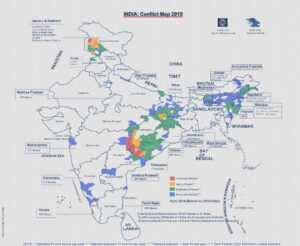
In India’s conflict-ridden northern state of Jammu & Kashmir, scattered incidents continued this week, with IED attacks on vehicles and an attempted attack on a hospital, and a pepper attack on security forces personnel, in an apparent attempt to grab the soldier’s weapon. [9]-[14]
In the eastern state of Manipur, an IED attack damaged several road construction vehicles in the Thoubal District. Police investigations continue, but at press time, it remains unclear if this was an act by an insurgent group, or some sort of labor dispute. [15]
In the central part of the nation, the Red Corridor was largely quiet this week, with four Naxals being arrested in two separate incidents, and one incicent of Naxals burning a charter bus, although no injuries were reported to police. [16]-[18]
Finally, 4 NPA guerrilla’s were killed in two separate incidents in the Pacificarchipelagic nation’s long war against the Communist rebels. Elsewhere, three suspected NPA guerrilla’s were arrested and arms were seized in two incidents in the country.
Megacities, Musketry, Physics and Why the Intermediate Cartridge Needs to Disappear
“Megacity” is not a term in the general lexicon of most people. It is typically defined as any metropolitan area with a population of 10million or more. It is often that eyes simply glaze over when reading dry figures, though, so some perspective is useful, for the purposes of scale.
Tokyocurrently has a population in excess of 37,000,000 – or, approximately the same population as the state of California
Delhiis currently in excess of 29,000,000, roughly equal to the entire population of the state of Texas
Shanghaicomes in third, with over 26,000,000 people
Those three cities easily fall within the category of the “First World” – comparatively wealthy and reasonably peaceful. However, there are other megacities that do not fall into this category:
This second group of megacities are in extremely unstable environments. Indeed, the issue of civil crime control in Rio is an ongoing nightmare, frequently compared to low-intensity military conflict. As a result, the US Military’s Special Operations community is justifiably concerned that it will find itself operating in such an environment in very near future.
It also knows that it is not ready to do so:
Megacities Urban Future, the Emerging Complexity, Pentagon Video
Unlike certain shrill commentaries, one of the fundamental facts of military operations in the Twenty-First Century is that winning the population is far more important than winning arbitrary physical space. As of this writing, fully half the world’s populations can be considered to live in urban environments. That figure is expected to increase to c.65% by 2050 – less than thirty years away – with an estimated 90% of that growth being concentrated in Africa and Asia…and fully half of those populations will be of “fighting age” (not in the conventional, legal terminology, but in terms of reality), between 14 and 30.
Operations in large urban areas are complicated by the very infrastructure that make those cities possible: the US military had serious issues operating against insurgents in Baghdad (with a comparatively small population of c.8million) because the city was so large, it was nearly impossible to control vehicular movements to protect civilians, much less impede guerrilla’s. Likewise, even fighting in a moderately large city, such as Grozny, reveals the dangers of engaging in high-intensity operations, even when civilians are treated as an afterthought.
This is not simply a “4th Gen” problem. There are many reasons short of active, intentional conflict that could cause a military force to deploy into a megacity. From naturaldisasters, to criminal activity, to pan-national, extra-national and post-national activity, military forces around the world cannot avoid megacities, nor the concerns that accompany them.
Simply put, armies are going to have to fight in megacities. This is an absolute: whether the battle begins tomorrow, or five years from now, it will happen. Some group or groups will force a real infantry battle inside a megacity.
And the militaries of the 2020’s and beyond are neither equipped nor trained to deal with it – the US military is right to be concerned. However, in trying to identify concerns, in order to address them, the US military has a serious blind spot that they do not want to address, a proverbial “Emperor with no clothes“…That problem, seemingly easy to fix, is a fundamental question of small arms.
Captured rifles in Iraq, 2004
Since the end of the 1960’s, the US military has been fixated on the intermediate caliber class of rifle. For completely different – and frankly, rather shabby – reasons than the Soviet Union‘s adoption of an intermediatecaliber, the US military has used the 5.56x45mm round for both its primary infantry combat weapon, as well as its Squad Automatic Weapon (SAW) since the early-to-mid 1960’s. Pundits who should know better, take the fact that the 5.56×45 cartridge has been deployed in combat by the US for around fifty years as a sign that it must be superior.
Based in part on data from the URBAN WARRIOR exercise series – conducted prior to 9-11 – the US Marine Corps’ Warfighting Laboratoryconstructed an outdoor laboratory to test the effects of various cartridges against commonly-encountered structural environments. The results are telling:
Urban environments are…well, “urban”: they are constructed of a variety of materials of changing density, offering considerable opportunities for concealment (i.e., materials that a person can hide behind, to avoid observation), but a wide array of material densities make for rapidly changing levels of “cover” (a barrier that offers some level of protection against various kinds of projectiles). Many of these materials are proof against lighter projectiles.
US Paratrooper in Fallujah, Iraq, c.2004, armed with an M4 CarbineM249 Squad Automatic Weapon (SAW)
The modern M16/M4 rifle and M249 SAW projectiles are 62 grains in weight. Even the most aggressive load commonly issued, the SS109, tops out at 3,100 feet per second (fps) in velocity. This delievers about 1,300 foot-lbs of energy onto a target.
M240 Machine Gun
In contrast, the 7.62x51mm M80 round used by the standard medium machine gun, the M240, weighs in at 147 grains, and comes out of the barrel at about 2,700fps, while delivering almost twice the energy in foot-lbs (c.2,400). Obviously, not every soldier can run around with a comparatively heavy machine gun…however, the 7.62x51mm round was – and is – used by rifles.
M21/M14 Sniper Rifle
Although now used almost exclusively by dedicated snipers, the round was used not only by the M14, with the M16-series replaced, but was the standard rifle cartridge of NATO forces for nearly thirty years. While these rifles were and are demonstrably heavier and longer than their smaller rivals, the need to batter through effective cover is a consideration that becomes increasingly important in an urban environment.
This is not a case of technical nitpicking — using lighter projectiles in an urban environment means that more rounds need to be fired to overcome barricades. And, when the only firearms that can effectively batter through such materials are fired by weapons that used to be considered a form of light artillery, it should be obvious that this is not conducive to a positive image before the ever-present, all-seeing eyes of news cameras and the ubiquitous camera-phone.
While it would be understandable if this were a simple case of “Oops! We got it wrong!“, this is not the case, as instructors at West Point, the primary officer academy of the US Army, were teaching this in the early 1980’s:
Nor is this a question of engagement ranges. The original work that created the intermediate cartridge, begun in the spring of 1918 with a report from Hauptmann (Captain) Piderit, part of the “Gewehrprüfungskommission (Small Arms Proofing Committee)” of the German General Staff in Berlin, was based on the flawed logic that since infantry combat ranges were usually well under 800m, a smaller, lighter projectile would save on materials and costs, as well as allowing for significant improvements to rifles.
While this might have been true on its face, it ignored the consideration of cover. The result has been rifles that perform well enough on rifle ranges and in open environments (although some would disagree), but are far less effective in built-up areas…which is precisely where they are about to find themselves, to say nothing of longerranges.
The US Army “solution” to the problem was announced on April 19, 2022 – the Army’s (and thus, the US military’s) new weapon would be….the SIG SauerXM5 Rifle, a derivative of the company’s “MCX SPEAR“, and its associated light machine gun, the XM250. (Certainly a feather for SIG’s plume, considering the US military already having bought their handguns.)
Technical Review Sig Sauer Next Generation Squad Weapon NGSW-R XM5 rifle NGSW-AR XM250 machine gun
Rifle cartridges – L to R: .50 BMG, 300 Win Mag, .308 Winchester, 7.62x39mm, 5.56 NATO, .22 LR
While the XM250 is, indeed, lighter than what it replacing – the M249 SAW – the XM5 is heavier than the M4 carbine it replaces. The discrepancy in rifle weights is odd, until it is realized that the 6.8x51mm “SIG FURY” round has a chamber pressure – in normal loads – of c.80,000psi, a staggering figure fully 25% higher than that of the venerable 7.62x51mm M80 cartridge, and a minimum 35% higher than the original 5.56x45mm M198 used by the M-16; it is even more than 30% higher than that generated by a .50BMGSaboted Light Armor Penetrator round. This is not “fun with numbers“: when you start dealing with this level of pressures, the measures to contain them are critical…and heavy, in the extreme. One seriously wonders if the US Army is planning on fighting flying saucers.
While “newer” is often seen as “better”, this is far more than necessary. While poorly-made barrels will certainly burst, increasing the pressure by c.30%, minimum, is dangerous enough to be irresponsible. Weaponsusing the older 7.62x51mm M80, while no lightweights, were more than sufficient for a broad range of combat tasks. Lighter weapons, firing lighter cartridges, simply had less range, poorer performance, and less utility…and, speaking from experience, the rifles weren’t all that light.
Physics do not lie, and the lighter rifles were not that much lighter.
“Freedom of speech doesn’t mean freedom from consequences” is the most retarded thing leftists can say that tell you who their real enemy is, government restrained by individual sovereignty.
Freedom of speech means EXACTLY no consequences, outside of individuals not choosing to associate with you. Destroying lives for belief is antithetical to American living, and leftism dies when their thrug powers die.
Leftism is the idea that cannot come into being without murdering more than 80 percent of society. Their retarded take on freedom of speech reveals ALL you need to know about these man babies, who can’t imagine living in a world in which they have to mind their own dang business and live with people who don’t like them or agree with them.
America is the land of the mind your own business people, where neighbors can trade with one another without being compelled to like one another. Leftists want that to end, for there is no central control possible in such a world as this.
Back FREEDOM for only $4.95/month and help the Freedomist to fight the ongoing war on liberty and defeat the establishment's SHILL press!!
Are you enjoying our content? Help support our mission to reach every American with a message of freedom through virtue, liberty, and independence! Support our team of dedicated freedom builders for as little as $4.95/month! Back the Freedomist now! Click here