April 2, 2026

Default

Ma Deuce – The Legend Lives On


Armed forces have always used a wide array of weapons. From the first days of fighting over water holes and hinting grounds, human fighters have simultaneously carried and used clubs and sticks, as well as rocks, slings and bows and arrows. As the eons wore past, those tools changed with technology, organization and experience, but the case remained that humans going out to fight always carried a variety of killing implements with them.

Late in the 19th Century, a new class of weapons appeared – the machine gun. As we covered back in 2022, these weapons were originally classified as “light artillery”, as they were large and heavy enough to require horse-drawn carriages to haul them around, and had to be “laid” like a light cannon. With the advent of the Maxim Gun, however, that quickly began to change.

Russian WWI tachanka captured by Germans troops, on display in Berlin, c.1918. Public Domain.


Machine guns became the dominant weapon of the infantry in World War 1. But, as that conflict developed, weapons with longer ranges and heavier projectiles were needed. In America, the task fell to the legendary gun designer John Moses Browning…and the result was, indeed, legendary.

This week, we are going to talk about the Browning M2HB machine gun, in the first of a two-part series, which will be followed up with a look at the M2’s competitor, the Soviet/Russian DShK.

Few weapons have maintained operational relevance for as long as the Browning M2 Heavy Barrel machine gun. Designed in the final months of World War I and still in front-line service today, the “Ma Deuce” represents a remarkable century-long saga of American military engineering, being the second-oldest continuously-deployed weapon in US military service, after the M1911A1 .45ACP handgun, which is also a Browning design.

The M2’s origins trace back to General John J. Pershing’s request for a heavy machine gun with greater range and penetration than existing infantry weapons. The legendary firearms designer John Moses Browning answered this call, initially adapting his successful M1917 .30 caliber machine gun to fire a much larger cartridge. Working alongside Winchester Repeating Arms, Browning developed the powerful .50 BMG (Browning Machine Gun) cartridge with a 12.7mm projectile that could penetrate the armor of early tanks and aircraft.

Although the original weapon came too late for World War I, the early 1920s saw continuous refinement as the Army sought to maximize such a versatile weapon system. The breakthrough came with the M2 Heavy Barrel (M2HB) variant adopted in 1933. This air-cooled, belt-fed, recoil-operated machine gun featured a quick-change barrel system and could be mounted on vehicles, aircraft, ships, or ground tripods. Its 850-1000 round-per-minute cyclic rate and effective range exceeding 2,000 meters made it extraordinarily versatile.

M16 MGMC half-track, armed with 4 M2 Machine Guns. Location unknown, c.1945. Coast Artillery Journal, 1945, US Army Signal Corps. Public Domain.


World War II saw the M2 achieve legendary status across all theaters. American bombers like the B-17 Flying Fortress carried multiple M2s for defense, while infantry units used them against light armor, aircraft, and personnel. The naval variant became critical in defending against Japanese aircraft, with battleships and destroyers bristling with M2 mounts. Some of the war’s most famous aces, including Francis Gabreski, scored their first aerial victories using M2s mounted on P-47 Thunderbolts, as well as being used as the main battery of early ground attack planes, like the B-25H.

B-25H “Barbie III” with nose canopy open, showing the four .50 cal Browning feeds, and 75mm M5 gun. Stuart airshow 2011. Photo by Ssaco. CCA/3.0

Unlike many weapons that faded into obsolescence after World War II, however, the M2 thrived during the Cold War era. During the Korean War, M2s mounted on vehicles proved essential against human wave attacks. In Vietnam, the weapon was mounted on everything from river patrol boats to helicopter gunships. Army gun trucks in Vietnam typically carried multiple M2s, providing convoy security against ambushes.

The M2’s durability and simplicity contributed to its longevity. With proper maintenance, an M2 can fire hundreds of thousands of rounds before requiring major component replacement. The basic operation — pulling back the charging handles, adjusting headspace and timing, and engaging the bolt latch — remains largely unchanged since the 1930s, allowing generational knowledge transfer among military personnel.

Modern conflicts have only reinforced the M2’s value. During Operation Desert Storm, M2s mounted on Humvees and Bradley Fighting Vehicles proved devastatingly effective against Iraqi positions. The weapon’s long range proved particularly valuable in Afghanistan’s mountainous terrain, where Taliban fighters often found themselves under accurate fire from distances beyond the reach of their own weapons.

Today’s M2A1 variant, introduced in 2010, represents the most significant upgrade in the weapon’s history, featuring a fixed headspace and timing system that eliminates the dangerous and time-consuming manual adjustments previously required. This modification has substantially reduced training requirements while improving safety and reliability.

The M2’s use on light vehicles in modern “low-intensity conflicts” offers both regular and irregular forces with a real force-multiplication weapon: even if the M2 may no longer perform well against modern helicopters and attack aircraft, there are few unarmored vehicles that can withstand its powerful rounds, and few structures offer even minimal protection. This is doubly true at sea, where even modern warships have to be wary of light, high-speed boats mounting weapons like the M2.

US Navy Fire Controlman aboard the guided missile cruiser USS Normandy (CG 60), fires twin-mounted M2 .50 caliber machine guns during a Pre-Action Calibration Fire (PACFIRE) exercise in the Gulf of Aden. 14 May 2005. US Navy photo. Public Domain.U.S. Navy photo by Photographer’s Mate First Class Robert R. McRill

After more than a century since its development, the M2 remains standard equipment across all branches of the U.S. military and in at least 90 countries worldwide. Military historians frequently cite it as the most successful heavy machine gun ever designed, a testament to John Browning’s engineering genius and the fundamental soundness of its design.

Just because a weapon may be older than your grandparents, which does not necessarily mean that it is no longer useful…especially when no one has come up with a better system.



The Freedomist — Keeping Watch, So You Don’t Have To


Mortars, Drones…Or Both? Ancient Artillery Meets Modern Technology


As the ongoing war in Ukraine has demonstrated, low-cost drone warfare has arrived on the battlefield. While the modern use of armed drones began in 2000/early-2001, with the arming of an RQ-1 Predator drone with an AGM-114 ‘Hellfire’ missile, It was not until after the September 11 Attacks of that year that the armed Predators went into action.

Aside from large modern armies however, drone combat, as such, did not emerge until the rise of the Islamic State after 2014. In 2016, as the war began to turn against the IS, Iraqi forces started being struck by 40mm grenades dropped by modified civilian drones. Tiny, and very quiet, these drone were able to hover – or ‘loiter‘, to use the military term – over an area, and drop explosives on top of targets on command. This immediately raised alarms, as most armored vehiles, such as tanks, are very thinly armored on their top surfaces.

A Naval Forces of Ukraine Bayraktar TB2 from the Turkish company Baykar Defense; CCA/4.0 Int’l


While the use of civilian drones in combat had been noted previously, those instances only seemed to be in the realm of tactical surveillance and reconnaissance. After the IS ramped up its “micro-drone” campaign, though, “proliferation” began in earnest: expanding outside the Middle East, where Russian forces thwarted an attack on one of their bases in Syria in 2018, drug cartels in Mexico began deploying attack drones in earnest.

In Ukraine, drones for reconnaissance and attack have advanced to the point that the Ukrainians are deploying “bomber” drones carrying up to a 44lbs payload of explosives, while also scoring the first acknowledged air-to-air kill of an advanced fighter, in this case a Mig-29, by a kamikaze drone, via sympathetic detonation.

But the use of small drones has been overshadowed by the use of much larger platforms which, while still “drones”, are not really “tactical” weapons. Much has been made of large drones, such as those used by Azerbaijan in the 2020 Nagorno-Karabakh War, as well as uses by Houthi rebels attacking civilian cargo ships in the Red Sea. The problem with these types of attacks is that they more resemble the use of drones and missiles by major powers…What about the infantry-level use of this class of weapons?

Enter the mortar.

Soldiers of Alpha Company, 1st Battalion, 4th Infantry), fire a M120 mortar during a combat operation in the Da’udzay Valley in the Zabol province of Afghanistan Oct. 23, 2007. US Army Photo. Public Domain. 


The modern battlefield has seen remarkable technological advancement in the last 120 years, yet one of warfare’s oldest weapons — the mortar — continues to play a crucial role alongside cutting-edge unmanned aerial systems. Both provide indirect fire capabilities, but with significantly different characteristics, advantages, and limitations.

Mortars represent possibly the oldest form of artillery still in active military service, with designs dating back to the 14th century. These simple, high-angle weapons offer several enduring advantages. They’re relatively inexpensive, with basic systems costing under $20,000 and individual rounds priced at $50-$300 depending on sophistication. Modern infantry mortars like the U.S. 60mm M224 can be transported and operated by just two soldiers, providing immediate fire support without complex logistics chains.

The mortar’s high arc trajectory allows engagement of targets behind cover and in defilade positions—a capability that maintains its relevance in urban environments where direct fire weapons face significant limitations. Modern mortars can typically engage targets between 100-8,000 meters depending on caliber, with rounds impacting within 1-2 minutes of fire mission commencement.

In contrast, military drones represent a relatively recent development that has rapidly transformed battlefield dynamics. Systems like the Turkish TB2 Bayraktar or loitering munitions such as the Switchblade provide persistent surveillance capabilities combined with precision strike options. These platforms offer unmatched target observation capabilities, with operators able to positively identify targets before engagement and conduct battle damage assessment immediately after strikes.

Drones typically deliver smaller payloads than artillery systems but with significantly higher precision. Where a mortar might achieve a Circular Error Probable (CEP) of 30-100 meters depending on range and conditions, drones can often deliver munitions with accuracy measured in single-digit meters.

However, the comparative cost structure presents significant disparities. Even relatively inexpensive military drones cost hundreds of thousands to millions of dollars per platform, with sophisticated munitions adding tens of thousands per engagement. This cost difference becomes particularly relevant in sustained operations or against adversaries employing low-cost countermeasures.

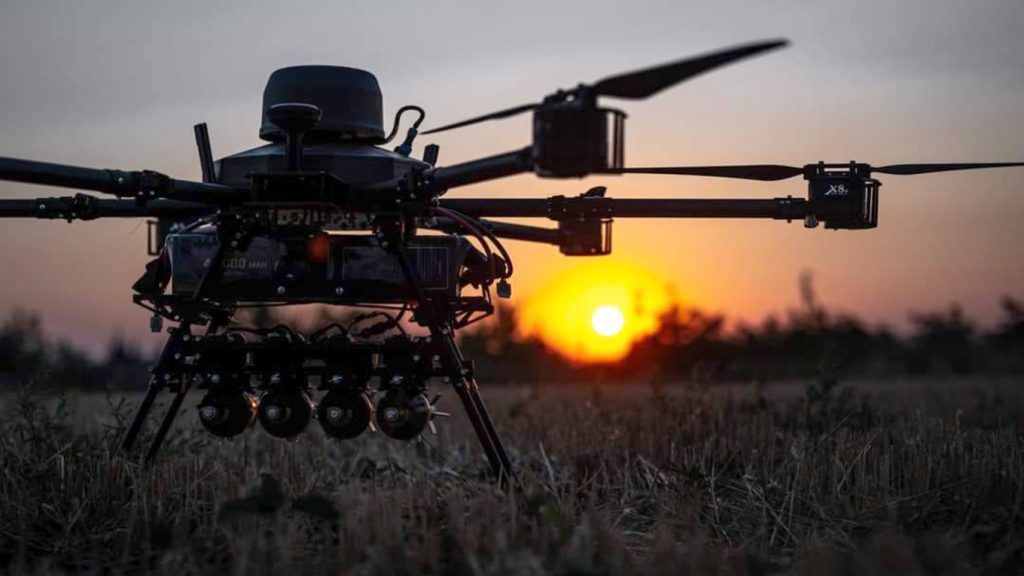
The evolution of consumer drones into improvised weapons platforms has dramatically accelerated during the Ukraine conflict, with both sides developing increasingly sophisticated swarm tactics using modified commercial quadcopters and purpose-built FPV (First Person View) drones. These systems typically carry 40mm grenades, modified mortar rounds, or small thermobaric charges, creating an entirely new tactical capability at remarkably low cost.

Soldier with commercial Unmanned aerial vehicle, 2017. Photo by Scott Stewart. CCA/4.0 International.


The basic approach involves forward reconnaissance elements identifying enemy positions, followed by the deployment of drone teams equipped with 5 – 20 small, unmanned systems. These teams position themselves just beyond the range of enemy small arms (typically 1-2km from the target) and then launch multiple drones in rapid succession. Each operator controls a single drone, but their actions are coordinated through a tactical commander who prioritizes targets and sequences attacks.

What makes these swarms particularly effective is their combination of saturation and persistence. Unlike a traditional mortar barrage that might last 2-3 minutes, drone swarms can maintain pressure on a position for 30+ minutes as operators rotate through their inventory of systems. This creates both physical and psychological pressure that conventional indirect fire struggles to match.

The economics are particularly compelling. A basic FPV drone capable of delivering a grenade costs approximately $400 – $1,000, while the grenade itself might cost $50-200. Even accounting for losses, this means an engagement involving 10 drones and 20 munitions might cost less than $20,000 total – comparable to just a few mortar rounds from advanced Western systems.

From a tactical perspective, these drone swarms force defenders to make difficult choices. Activating electronic countermeasures reveals defensive positions and quickly depletes battery systems. Taking cover from aerial threats often exposes personnel to horizontal fire. Moving to alternate positions makes units visible to surveillance drones operating at higher altitudes.

The integration of these swarms with conventional forces represents a notable innovation. Infantry units can now advance with drone teams directly embedded in their formations, allowing for immediate fire support without the coordination delays associated with traditional artillery. When resistance is encountered, the formation pauses while the drone swarm engages, creating a dynamic reminiscent of ancient warfare where archers would soften positions before infantry assault – but with far greater precision and real-time assessment capability.


The Freedomist — Keeping Watch, So You Don’t Have To


The Return of the Naval Blockade – Thanks to Modern Piracy


For centuries, nations going to war usually tried to blockade, or “close off”, an enemy nation’s ocean ports, in order to damage their commerce, but usually to support a land attack to capture said ports. Sometimes, though, as with American Civil War, blockades would sometimes extend to every ocean port in an enemy nation. With the end of World War Two, however, the massive wars of the previous one hundred and fifty years, the idea of the naval blockade began to wane, with only those nations with vast naval establishments being able to enforce such strategies, usually in concert with all kinds of “soft” measures, such as economic and financial sanctions.

However, the ancient concept of naval blockade — one of the most basic strategies of maritime warfare — is experiencing a significant revival and transformation in the 21st century. While the fundamental purpose remains unchanged — denying an adversary access to maritime commerce and resources — both the methods of implementation and countermeasures have evolved dramatically, creating new strategic and legal challenges in an increasingly connected global economy.

Traditional blockades relied on the physical presence of warships creating a cordon around enemy ports. Today’s “modern blockade” operates across multiple domains simultaneously. The ongoing situation in the Red Sea demonstrates this evolution, with Houthi forces effectively creating a blockade-like effect despite possessing no significant naval forces. Using a combination of medium-weight helicopters, shore-based anti-ship missiles, unmanned explosive boats, and aerial drones, non-state actors can now threaten maritime traffic with capabilities previously limited to nation-states.

Modern Houthi attacks and Somali piracy operations share surprising tactical and strategic parallels with their Caribbean predecessors from the “Golden Age of Piracy” (1650-1730), despite the centuries and thousands of miles between them.

Like the Caribbean pirates who established bases in lawless territories such as Nassau and Tortuga, both Somali pirates and Houthi forces operate from ungoverned or weakly governed coastal regions. The Somalis launched out from the collapsed state’s coastline, while the Houthi rebels utilize Yemen’s western shores as launching points for maritime attacks.

The economic logic remains strikingly similar. Caribbean pirates targeted the Spanish treasure fleet system, focusing on predictable shipping lanes where valuable cargo was concentrated. Similarly, Somali pirates focused on the narrow Gulf of Aden transit, while Houthis target the Bab el-Mandeb Strait directly — both critical chokepoints where shipping is concentrated and vulnerable.

Photo of the Bab-el-Mandeb (the strait between the Red Sea and the Gulf of Aden), taken from outer space during ISS Expedition 62, February, 2020. NASA photo. Public Domain.

Where they differ significantly is in motivation. Caribbean pirates primarily sought economic gain, as did Somali pirates through their sophisticated ransom systems. Houthi attacks, while sometimes involving seizure of vessels, function primarily as political and strategic actions within a broader regional conflict framework, making them more akin to privateers — state-sanctioned maritime raiders — than purely profit-driven pirates, due to their open and acknowledged status as a proxy force of Iran.

This diffusion of anti-access capabilities has democratized blockade tactics. Advanced anti-ship cruise missiles with ranges exceeding 200 nautical miles allow even smaller nations to threaten shipping across vast areas without maintaining a substantial fleet. The Chinese DF-21D “carrier killer” missile and similar systems enable “blockade at a distance” strategies that would have been impossible in previous eras. Similarly, while older anti-ship missiles like the Chinese HY-2 “Silkworm” is no longer effective against modern warships, they are highly effective against civilian cargo vessels with no electronic counter-measures (ECM) defenses. More importantly, for non-state actors, these older weapons are cheap, and relatively available on the international arms black market.

“Haiying” No. 2 shore-to-ship missile, photographed at the Military Museum of the Chinese People’s Revolution. September, 2017. Photo by Tyg728. CCA/4.0 Int’l.

Cyber operations represent perhaps the most revolutionary development in blockade evolution. Naval strategists now consider port management systems, shipping logistics networks, and maritime communication channels as critical vulnerability points. A coordinated cyber attack could potentially halt port operations more effectively than physical presence, causing ships to be redirected or delayed without firing a shot. In 2017, the NotPetya malware attack against global shipping giant Maersk and Ukraine demonstrated how digital disruption could cause billions in shipping losses without a single warship deployment.

The legal framework governing blockades has struggled to keep pace with these technological developments. The traditional requirements under international law—including formal declaration, effectiveness, and impartiality toward neutral shipping—become ambiguous when applied to over-the-horizon missile threats or cyber disruptions. This creates dangerous gray zones where actions may have blockade-like effects without triggering the legal thresholds that would permit countermeasures.

These developments have prompted significant changes in how major naval powers prepare for both implementing and countering blockades. The U.S. Navy has invested heavily in both offensive and defensive capabilities, developing distributed maritime operations concepts that could sustain blockade operations despite adversary counter-targeting. Similarly, China’s naval expansion focuses on both area-denial systems to prevent blockade of its own ports and blue-water capabilities that could potentially blockade Taiwan or other regional adversaries.

Commercial shipping has also adapted. Insurance markets now incorporate blockade-like threats into their risk models, with specialized “war risk” policies for vessels transiting threatened regions. Major shipping companies have developed sophisticated contingency routing options and increased their resilience through distributed logistics networks.

For smaller maritime nations, this evolution presents particular challenges. Without robust naval capabilities or alternative supply routes, these countries remain vulnerable to both traditional and next-generation blockade tactics. Regional security organizations have increasingly focused on developing collective maritime security arrangements specifically addressing these asymmetric maritime threats.

Naval mines remain among the most cost-effective maritime weapons, offering asymmetric capabilities with significant strategic impact. Modern mines have evolved far beyond the contact mines of previous wars into sophisticated “smart” systems with advanced sensors, targeting algorithms, and activation mechanisms.

Today’s mines feature acoustic, magnetic, pressure, and seismic sensors that can identify specific vessel signatures, allowing them to selectively target certain ship classes while ignoring others. Advanced mines can lie dormant for months or years, activate on a predetermined schedule, or respond to remote commands. Some incorporate anti-handling features specifically designed to counter minesweeping operations.

Air-dropped mines represent a particularly flexible deployment method, a method in use since World War 2. Aircraft like the B-52, P-8 Poseidon, and various fighter platforms can rapidly seed large areas without risking surface vessels. The US Quickstrike series of air-delivered mines can be deployed from standoff ranges, allowing mining operations even in contested waters. The addition of JDAM kits to create the Quickstrike-ER has extended deployment ranges to over 40 nautical miles.

A B-29 of the 9th BG/313th BW drops two parachute-retarded Mark 26 aerial mines during Operation Starvation, 1944. Photo by United States Army Air Forces. Public Domain.

Countering these threats, modern mine countermeasure operations increasingly rely on unmanned systems rather than traditional minesweepers with human crews. Unmanned surface vessels (USVs) and underwater vehicles (UUVs) equipped with synthetic aperture sonar and other detection technologies can locate and map minefields with minimal risk. Once detected, neutralization occurs via ROV-delivered charges or specialized mine-hunting drones.

Despite technological advances in countermeasures, the fundamental asymmetry remains: mines are inexpensive to deploy but expensive and time-consuming to clear, making them particularly effective for sea denial strategies by smaller naval powers or non-state actors.

Perhaps most concerning is how these evolutionary developments have made naval blockades more attractive as “gray zone” operations—actions that remain deliberately below the threshold of conventional warfare while achieving strategic effects. A nation or non-state actor could significantly disrupt an adversary’s economy through blockade-like actions while maintaining plausible deniability or legal ambiguity.

As maritime commerce remains the backbone of global trade, with approximately 90% of international goods traveling by sea, the evolution of blockade tactics represents a significant security challenge for the international order. Nations must now prepare for blockade scenarios ranging from traditional warship deployments to sophisticated multi-domain operations combining kinetic, electronic, and cyber elements — a substantial evolution from the wooden ships that once enforced the traditional “close blockade” of previous centuries.


ADDITIONAL RESOURCES

  1. Wayne P Hughes Jr. USN (Ret.) (2018), Fleet Tactics and Naval Operations, Third Edition
  2. Julian Thompson (1994), Lifeblood of War: Logistics in Armed Conflict
  3. Thomas Ricks (2012), The Generals
  4. James F. Dunnigan (2003), How To Make War, 4th Edition
  5. James F. Dunnigan (1991), Shooting Blanks


The Freedomist — Keeping Watch, So You Don’t Have To


The New Logistics


One of the features of the military world, in general, is that no one likes to talk about “logistics”. That is because the field of military logistics is always bout being “the party of NO” – Logistics is not about planning operations, but about telling the planners what their options are…or are not.

The old military adage that “amateurs talk tactics, professionals talk logistics” has never been more relevant than in today’s contested global environment. Military logistics — the complex art of moving, supplying, and maintaining forces — is experiencing its most significant transformation since the advent of the containerization revolution of the 1960’s, as a new generation of planners confront the reality that the mostly unchallenged supply lines of conflicts in recent decades are unlikely to exist in future wars.

This new focus is being termed “resilient” or “contested logistics”.

For over two decades, Western militaries have operated in environments where, despite the tactical dangers of IED’s and ambushes, strategic supply lines have remained largely secure. Ships moved freely across oceans, cargo aircraft landed on established airfields, and the primary logistical challenge was the “last mile” delivery in hostile territory. This operational comfort has begun to evaporate as both near-peer competitors and non-state actors demonstrate both the capability and intent to target the entire logistics chain from factory to frontline.

The Russian invasion of Ukraine has provided a sobering case study in logistical vulnerability. Russian forces, operating merely 100 miles from their own borders, experienced catastrophic supply failures in the war’s opening phases. Vehicles ran out of fuel, troops lacked food, and sophisticated equipment sat idle for want of spare parts. This failure stemmed not from distance but from an inability to adapt to disruption — a warning for Western forces that have operated at far greater distances during recent conflicts against forces not considered in the “near-peer” category.

Similarly, the Houthi campaign targeting commercial shipping in the Red Sea has created ripple effects throughout global military supply chains, ripples that extend far beyond the immediate tactical challenges. Since late 2023, these attacks have forced a fundamental recalculation of military logistics planning across NATO and allied nations.

The most immediate impact has been the diversion of naval assets to escort operations, straining already limited fleet resources. Western navies, particularly the U.S. and British, have deployed destroyers and cruisers to the region that were scheduled for maintenance or other operational commitments. This reallocation has created cascading delays in naval readiness across multiple theaters.

For military logistics planners, the Red Sea crisis has exposed vulnerabilities in assumptions about secure maritime transit. Defense departments have relied heavily on commercial shipping for the movement of non-critical military supplies and equipment, with approximately 90% of military cargo traveling on commercial vessels during peacetime. The Houthi attacks against civilian shipping have forced a reassessment of this dependency, with military commands now requiring contingency routing for critical components.

The economic impact has been equally significant. Shipping insurance rates have increased by over 2,700% for Red Sea transit, dramatically raising costs for military-contracted shipments. These price spikes have strained defense budgets already under pressure from inflation in other sectors, to say nothing of slashing Red Sea transits by commercial vessels be over 60%. For European forces supporting operations in the Middle East and Asia, the forced rerouting around Africa adds 10-14 days to transit times, delaying equipment deliveries and increasing wear on existing frontline systems.

Perhaps most concerning for Western defense planners is the demonstration effect: a relatively small non-state actor, using low-cost weapons, has effectively disrupted global shipping lanes, providing a strategic template that other adversaries are almost certainly studying closely.

Additionally, although considered a remote possibility by many, a naval confrontation between Algeria and Morocco would severely disrupt Mediterranean civilian and military logistics chains beyond the immediate combatants. The Strait of Gibraltar, which handles approximately 300 vessels daily connecting the Atlantic and Mediterranean, would face restricted transit or complete closure during active hostilities. Military planners in Europe and the United States would be forced to route naval assets through the Suez Canal — itself already constrained by Red Sea security concerns, as noted above. The disruption would particularly affect NATO’s “southern flank” operations and force a reallocation of naval forces currently deployed elsewhere. Both countries’ proximity to critical European supply routes would likely trigger immediate diplomatic and possibly military intervention from NATO powers, particularly Spain and France, further complicating an already stressed regional security environment.

Modern resilient military logistics systems are being redesigned around several core principles. First is the concept of dispersal, moving away from the massive, centralized supply hubs that served as efficiency centers in Iraq and Afghanistan. Future supply networks will feature smaller, more numerous nodes that present less attractive targets and can continue functioning if some are destroyed.

Additive manufacturing, commonly known as “3-D printing“, represents another pillar of this transformation. The U.S. Marine Corps has already deployed Mobile Fab Labs capable of producing critical parts in forward areas, reducing dependence on vulnerable supply chains. Advanced systems now allow for printing in metals and composites, expanding the range of battlefield-repairable equipment.

Autonomous delivery systems form a third component of resilient logistics. Unmanned aerial vehicles for medical evacuation and resupply have moved from experimental to operational in multiple forces. The U.S. Navy’s “Sea Hunter” autonomous vessel program points toward a future where unmanned platforms may be able to maintain supply lines through contested waters without risking crew lives, which is a critical concern, given ongoing recruiting issues.

Energy resilience has emerged as a critical focus area, with significant vulnerabilities exposed in Ukraine. Modern militaries are once again exploring portable nuclear power (because that’s a good idea), advanced solar systems, and localized synthetic fuel production to reduce dependence on traditional fuel convoys, which have proven particularly vulnerable to attack.

Perhaps most significantly, artificial intelligence is being integrated into logistics planning. Predictive algorithms can anticipate supply needs before units request them, while automated inventory management reduces human error in critical supply tracking. These systems incorporate redundancy and operate on isolated networks to maintain functionality even during communication disruptions.

The shift toward resilient logistics also involves uncomfortable trade-offs between efficiency and redundancy. The just-in-time inventory systems that have dominated commercial and military logistics for decades optimize costs but prove brittle under stress. Military planners are now deliberately building inefficiency into systems—accepting higher costs and larger inventories to ensure functionality under attack.

This transformation extends beyond equipment to human capital. Specialized logistics personnel must now train to continue operations under electronic warfare conditions, with degraded or absent communications, and the constant threat of precision strikes. This represents a significant cultural shift for logistics units accustomed to operating from secure rear areas.

As military planners prepare for potential future conflicts with near-peer adversaries, the race to build resilient logistics systems has become as crucial as any weapons development program. The side that can maintain supply flows while disrupting their opponent’s will likely prevail, regardless of tactical superiority or advanced weaponry.

Food for thought.


ADDITIONAL RESOURCES

  1. Wayne P Hughes Jr. USN (Ret.) (2018), Fleet Tactics and Naval Operations, Third Edition
  2. Julian Thompson (1994), Lifeblood of War: Logistics in Armed Conflict
  3. James F. Dunnigan (2003), How To Make War, 4th Edition
  4. James F. Dunnigan (1991), Shooting Blanks


The Freedomist — Keeping Watch, So You Don’t Have To


The Digital Lifeline Under Threat


With all the craziness of the last six weeks, it’s easy to become enraptured by all the “glitz-bang-pow“, and to lose track of the truly important things…like internet access, for example.

Much of the crucial digital lifelines of the modern global economy lie largely unseen and unprotected beneath the oceans. Submarine cables — bundled fiber-optic threads wrapped in layers of protective materials — carry an estimated 99% of international data traffic, representing an estimated $10 trillion in daily financial transactions. Clearly, these cables are vital components of any national infrastructure…and, just as clearly, they are very high-priority targets in any war scenario. Despite their critical importance, these cables remain surprisingly vulnerable to both accidental damage and deliberate sabotage, creating an asymmetric vulnerability that security experts increasingly view as a critical national security concern.


Recent incidents have highlighted this vulnerability. In late 2023, and again in late 2024, multiple cables in the Baltic Sea were damaged within weeks of each other, including the Svalbard cable connecting Norway’s remote Arctic research station to the mainland. While officials initially cited “technical problems,” subsequent investigations pointed to deliberate actions, with suspicion falling on Russian vessels that had been tracked in proximity to the damaged sections. Similar incidents have occurred in the Mediterranean and Red Sea, where the timing and pattern of damage suggested coordinated action rather than accidental encounters with ship anchors or fishing equipment…which, given the immediate impacts, should be surprising to no one, as the war in Ukraine continues to rage.

The security implications extend far beyond temporary internet disruptions. Major financial centers like London, New York, and Singapore depend on millisecond-level transmission speeds for trading operations, with even brief outages potentially causing billions in economic damage. Military communications, intelligence sharing between allies, and diplomatic channels all rely on these same physical pathways, creating a strategic vulnerability that potential adversaries have clearly recognized.

Unlike traditional military targets, undersea cables present adversaries with an ideal gray-zone target. Damage can be plausibly denied as accidental, attribution is extremely difficult, and repairs can take weeks depending on the location and conditions. This provides hostile actors with the ability to cause significant disruption while remaining below the threshold of activities that would trigger conventional military responses.

The technical challenge of defending these cables is substantial. The global submarine cable network spans over 750,000 miles, often in international waters beyond territorial jurisdiction. Cable routes are publicly documented for maritime safety, making their locations easily accessible to potential saboteurs. Monitoring such vast distances presents an almost impossible surveillance challenge, especially in deep ocean areas where depths exceed 3,000 meters.

The “CS Dependable”, cable layer ship with a modern stern sheave design. Picture taken at the Port of Astoria, Oregon, 2006. CCA/3.0. Photo by Nsandel.


Of course, this has been happening since undersea cables were first laid in the 19th Century, most notably when the United States cut Spanish telegraph cables in both Cuba and the Philippines theaters of the Spanish-American War. During World War I, one of Britain’s first and most significant strategic moves came just hours after declaring war in August 1914, when the cable ship “CS Alert” severed Germany’s five transatlantic cables near the English Channel. This operation, codenamed Operation Telekom, effectively cut Germany’s direct communication links with the Americas and much of the world. Britain simultaneously took control of most neutral cable stations, forcing German diplomatic and military communications onto easily intercepted wireless channels or through cables that passed through British-controlled territory.

The British established “Room 40“, a specialized naval intelligence unit that interceded and decoded German messages, providing critical intelligence. The most famous success came with the interception and decryption of the Zimmermann Telegram in 1917, which revealed Germany’s attempt to entice Mexico into attacking the United States — a diplomatic catastrophe that helped bring America into the war.

In World War II, Britain expanded these capabilities with Operation ‘Cutting’. The Royal Navy again targeted German undersea cables, but added sophisticated tapping operations. Combined with the codebreaking work at Bletchley Park, these undersea operations provided crucial intelligence on German naval movements, particularly U-boat operations, significantly contributing to Allied victory in the Battle of the Atlantic.

Modern cable attacks no longer require crude methods like physical cutting. Advanced submersibles can quickly and silently install tapping devices without severing cables, allowing for collection without detection. Both the Russian and Chinese navies are known to operate specialized submarines and surface ships equipped for undersea operations near critical cable infrastructure, including the Yantar, a Russian “research vessel” observed loitering near critical cable junctions in the Atlantic.

These strategic vulnerabilities are magnified by the concentration of key connection points. Cable landing stations — where submarine cables connect to terrestrial networks — represent critical sea-based chokepoints, with certain locations in Egypt, Malaysia, and Sicily serving as hubs for dozens of major cables. A modern, coordinated attack on multiple landing stations could severely disrupt global connectivity in ways that would overwhelm the limited redundancy built into the system.

Despite the growing awareness of these vulnerabilities, international legal protections remain inadequate. The 1884 Convention for the Protection of Submarine Telegraph Cables provides limited safeguards, while the UN Convention on the Law of the Sea only offers general provisions against deliberate damage. Enforcement mechanisms are virtually non-existent in international waters, creating a legal gray zone that mirrors the operational one.

As tensions rise between major powers, enhancing resilience against cable disruption has become an urgent security priority. Proposed measures include increased naval patrols near critical infrastructure, enhanced monitoring through seabed sensors, diversification of cable routes, and hardening of physical infrastructure. However, the scale of the challenge means complete protection remains impossible, leaving this critical infrastructure as a persistent vulnerability in an increasingly contested global environment.

One thing people frequently fail to understand – an outgrowth of the increasing sociological separation of the civilian and military spheres – is that naval warfare is far more than dramatic gun battles at sea, determined amphibious assaults, and exciting launches of fighter planes from the decks of aircraft carriers.”War“, as such, has been a term too frequently applied outside of its true domain, diluting public understanding of its implications: Sure, “war” is scary and destructive in general, but there are plenty of avenues of attack that are certainly not part of the ‘war on poverty’. This is why the Imperial Japanese Navy shelled a beach in Santa Barbara, California in 1942…which came as a hell of a surprise to local residents, and which had some very unforeseen consequences that succeeded in damaging the United States – not enough to win the war, but enough to instill distrust, the more people thought about it.

People concerned for not only their physical, but financial, security, need to start relearning how militaries think, because while the civilian may not care much about warfare, warfare cares very much about you.


The Freedomist — Keeping Watch, So You Don’t Have To


The Century Circle – Japan Returns to Carrier Operations


As February of 2025 winds down, with all the manufactured hysteria from the political and social extreme-Left in the United States, and an increasingly nervous European Union facing the reality that the Trump administration is serious about not playing ‘patty-cake’ with them anymore, and with the increasingly dire situation in Central Africa, an observer could be forgiven for thinking that Asia is a calm reflecting pool…but things are stirring, and as angry as most states are at Communist Chinese posturing in the South China Sea, a different dragon has been stirring, that is worrying – or should be worrying – every nation in the region.

At the end of World War 2, the victorious American occupiers imposed a new constitution on Japan that “renounced war”. While certainly understandable, given the events of World War 2 in the Pacific, the notion of “renouncing war as a sovereign right of the state” was a creature mostly of Douglas MacArthur’s unbelievable ego. The end result was that the United States was forced to anchor defending Japan as a core concept of its strategy for the next six decades.

Map of Japanese offensive in Southeast Asia in 1941. United States Military Academy Department of History. Public Domain.


Restricted by Article 9 of its constitution, Japan maintained nothing more than a well-armed coast guard and a tiny army. This tiny “self defense force” (the “JSDF”), created only in 1954, was barely large enough to maintain internal order and disaster relief, much less actually “defend” the island nation against large and aggressive states like the USSR and Communist China…that was the job of the United States, because it was the US that hamstrung the Japanese state from effectively defending itself.

For most of the Cold War, this situation remained the status quo. Fortunately, no serious test of Japan’s defenses – or the US plan for the same – occurred. But, as the “Global War On Terror” (the “GWOT”) began to wind down with the end of George W. Bush Presidency and the ascension of Barack Obama, Tokyo suddenly noticed that the United States had become very lukewarm about it’s own defenses, and that there seemed to be a real reluctance in Washington to care very much about the defense of Asia. To be sure, there was a lot of talk about “pivoting towards China“, but there was not a lot of action. As recruiting numbers began falling in the post-GWOT period, the US Navy had to lay up more and more ships, as there were too few sailors to crew all the ships the Navy knew that it needed.

Because of these post-GWOT developments, Japanese leaders watched with increasing alarm as the United States seemed to increasingly care very little, in any real sense, about its long-time ally in the Philippines having to face off against the massive Chinese Communist state – and if the US was seemingly willing to abandon the Philippines to more than lip-service, what did that imply for Japan?

The only answer for Japan was rearmament.

But…What about Article 9? A large segment of the Japanese population – well-versed in the abuses and horrors of the Imperial military’s Shogun-like rule during the war years – were adamantly, even hysterically, opposed to any kind of change to Article 9. But Tokyo, not having any other options, began to take steps to rearm.

The Japanese Army and Air Force are, for the most part, capable and effective forces, if far too small for their missions. The Army is relatively easy to expand, while the Air Force would take more time, but still can expand in a viable timeframe. But the real problem was the Japanese Navy.

Naval forces are tremendously expensive entities, no matter their fighting capabilities. Building a force to significantly augment – or replace – the US Navy, even at a low level, required an entirely new take on Japan’s naval strategy…because that would require aircraft carriers, something Japan has not operated at any level since 1945.

Beginning in 2010, however, Japan began to do just that.

Japan’s recent transformation of its Izumo-class “helicopter destroyers” into aircraft carriers capable of operating F-35B strike fighters marks a significant shift in both Japanese defense policy and regional power dynamics. This development, while technically maintaining Japan’s constitutionally-mandated defensive posture, represents the country’s first carrier capability since World War II.

And, given the potential of carrier warfare – which Japan was the first to actually demonstrate – this naturally concerns any state within the range of Japanese shipping.

The modified Izumo and Kaga, each displacing around 24,000 tons, make them considerably smaller than America’s supercarriers but align with a growing trend toward light carriers, both among Asian navies and in other navies worldwide. The vessels’ new capability to operate F-35Bs provides Japan with significant power projection abilities, particularly valuable given the country’s island geography and increasing regional tensions.

More importantly, this capability serves as a “training test bed” for modern Japanese naval officers to relearn those skills that disappeared after 1945.

This naval evolution reflects the reality of Japan’s post-2010 strategic environment. China’s rapidly expanding naval capabilities, including the start of construction on multiple aircraft carriers, as well as attempts at building artificial island bases, have altered the maritime balance of power in the Indo-Pacific region. North Korea’s continued missile development and nuclear program add another layer of complexity to these challenges.

The Indo-Pacific Region. Red circle/oval roughly depicts the Indian Ocean region. Blue circle/oval covers the Pacific region. Green oval covers ASEAN. Yellow overlay covers the Indo Pacific. 2020 image from Eric Gaba. CCA/4.0 International

The carriers also represent a significant psychological shift. Post-war Japan has deliberately avoided capabilities that could be seen as offensive weapons, especially aircraft carriers, but including both strategic bombers and long-range missiles. The decision to operate carriers, even if designated as “multi-purpose escort ships,” signals Japan’s growing comfort with maintaining military capabilities well beyond strictly defensive systems.

However, these vessels serve multiple roles beyond power projection. Their ability to support humanitarian assistance and disaster relief operations proved valuable during the 2011 Tohoku earthquake and tsunami. In an era of increasing natural disasters and climate-related challenges, this flexibility adds significant value to Japan’s maritime capabilities.

The international reaction has been notably mixed. While the United States strongly supports Japan’s military modernization, China has previously expressed concern about what it perceives as Japanese remilitarization. Other regional nations, particularly those with historical grievances against Japan, watch these developments carefully, though many quietly welcome a stronger Japanese presence as a counterbalance to growing Chinese influence.

From a technical perspective, the F-35B’s capabilities significantly enhance these ships’ effectiveness, although the numbers the carriers can operate are very small. The aircraft’s stealth characteristics and advanced sensors, combined with its ability to operate from austere locations, provide Japan with new options for defending its remote island chains and maintaining maritime awareness across vast oceanic areas.

The carriers also enable closer integration with allied forces, particularly the U.S. Marine Corps and British Royal Navy, which operate similar F-35B aircraft. This interoperability enhances Japan’s ability to participate in multinational operations and strengthens its strategic partnerships beyond the U.S. alliance.

Japan’s perspective on its role in World War II, however, remains a source of both internal debate and international tension. Unlike Germany’s direct confrontation with its Nazi past, Japan’s approach to its wartime history has been more nuanced and, at times, contradictory.

The mainstream Japanese narrative acknowledges the war’s devastating impact while often framing Japan as both aggressor and victim. The atomic bombings of Hiroshima and Nagasaki, along with the firebombing of major cities, feature prominently in Japanese collective memory. However, discussions of Japan’s own wartime actions, particularly in China, Korea, the Philippines, and Southeast Asia, tend to be more muted in public discourse.

This selective historical memory manifests in ongoing controversies, such as debates over history textbooks’ treatment of events like the Nanjing Massacre or the comfort women issue. Official apologies have been made by various Japanese governments, but these are sometimes undermined by statements from individual politicians or visits to the Yasukuni Shrine, where convicted war criminals are among those honored.

Younger generations of Japanese increasingly view the war through a different lens, focusing more on its lessons for peace and Japan’s postwar achievements. However, rising regional tensions, particularly with China, have led to renewed interest in military history and debates about Japan’s proper role in international security.

Although the Japanese government’s position generally emphasizes Japan’s post-war commitment to peace while avoiding detailed examination of wartime conduct, neighboring countries are very worried that the dragon of the Kanto Plain is reawakening, which is a thing all those states fear.

This current situation is almost a textbook care of “unintended consequences”, as a different path than a self-aggrandizing imposition of idiotic Utopianism would likely have made this step of Japanese rearmament more palatable to a nervous region.

Actions have consequences, and those consequences are usually very visible, if one cares enough to look ahead, and act responsibly.


ADDITIONAL RESOURCES

  1. Wayne P Hughes Jr. USN (Ret.) (2018), Fleet Tactics and Naval Operations, Third Edition
  2. Julian Thompson (1994), Lifeblood of War: Logistics in Armed Conflict
  3. Thomas Ricks (2012), The Generals
  4. James F. Dunnigan (2003), How To Make War, 4th Edition
  5. James F. Dunnigan (1991), Shooting Blanks


The Freedomist — Keeping Watch, So You Don’t Have To


Mega-Disasters – The Fears No One Wants To Mention


With all the continuous bombardment from all quarters about political-this, and war-that, sometimes, we need to step back, take a breath and consider something completely different. There are more things in theworld than politics, war or even high-tech-that-really-isn’t.

And this week, we’re going to revisit something that people don’t like thinking about, because they have been taught that they can do nothing about them, and neither can their governments…Like most things in this arena, though, that is not really true. So, this week, we’re going to talk about the “End of the World“.

While this was quite a popular topic about fifteen years ago, that is over a century in both dog and TV years…but the subjects still remain…Earth’s history includes numerous catastrophic events that dwarf anything in human experience. While rare, these “megadisasters” remain possible future scenarios that scientists actively study and monitor.

Megatsunamis represent a particularly dramatic threat, dwarfing regular tsunami waves. While typical tsunamis might reach heights of 30 feet, megatsunamis can tower over 100 feet tall. The most dramatic example in recent geological history occurred 66 million years ago when the Chicxulub asteroid impact generated waves possibly reaching heights of several thousand feet. More recently, in 1958, Alaska’s Lituya Bay experienced a megatsunami reaching 1,720 feet – the highest wave ever recorded – when a magnitude 7.8 earthquake triggered a massive landslide.

The 2004 Indian Ocean tsunami, while devastating with waves up to 100 feet high and causing over 230,000 deaths across multiple countries, pales in comparison to true megatsunamis. This event, triggered by a magnitude 9.1 earthquake, demonstrates the destructive power of “conventional” tsunamis, but megatsunamis operate on an entirely different scale.

The 1958 Lituya Bay megatsunami in Alaska remains the benchmark for these extreme events. When a magnitude 7.8 earthquake triggered a massive landslide, 90 million tons of rock plunged into the narrow bay. The resulting wave stripped vegetation off slopes up to 1,720 feet high – more than three times the height of the Washington Monument. Remarkably, despite its immense power, the wave’s effects were largely contained within the bay’s unique geography.

However, scientists are particularly concerned about the Cumbre Vieja volcano in La Palma, Canary Islands. Studies suggest that a massive flank collapse of this volcano could trigger a megatsunami affecting the entire Atlantic Basin, including the eastern seaboard of the United States and canada. Models indicate that such an event could generate initial waves over 3,000 feet high, which, while diminishing over distance, could still reach the American East Coast with heights of 15-25 meters (50-80 feet). Cities from Miami to Boston could face devastating impacts hours after the initial collapse. While some researchers debate the likelihood and potential scale of such an event, the geological evidence of previous collapses in the Canary Islands suggests this scenario deserves serious consideration in long-term disaster planning.

La Palma Island, home of the Cumbre Vieja volcano, running along the spine of the island. USGS image, via Landsat 8, 2016. Public Domain.

So-called “supervolcanoes” pose an even more comprehensive global threat. These massive volcanic systems, like Yellowstone in Wyoming or Toba in Indonesia, contain magma chambers many times larger than conventional volcanoes. The last super-eruption occurred approximately 26,500 years ago at Lake Taupo, New Zealand. A Yellowstone super-eruption would eject thousands of cubic kilometers of ash into the atmosphere, potentially triggering a “volcanic winter” lasting several years. The resulting climate disruption could devastate global agriculture and ecosystems. The 1991 eruption of Mount Pinatubo, in the Philippines, which destroyed Clark Air Base, lowered global temperatures by an estimated 0.5°C.

The June 12, 1991 eruption column from Mount Pinatubo taken from Clark Air Base. Photo by R.P. Holitt, USGS. Public Domain.

But Pinatubo was small compared to Tambora. The Mount Tambora eruption of 1815, in modern day Indonesia was so massive, it caused the “Year Without A Summer“, in 1816. Global temperatures dropped almost a full degree in Fahrenheit. Among the effects, were near-total crop failures across the globe, leading to the last time widespread famine was observed in North America.

Modern supervolcano monitoring has revealed these sleeping giants are far more dynamic than previously thought. Yellowstone’s massive magma chamber “breathes,” causing the ground to rise and fall by several inches over decades. These movements, while fascinating to scientists, often trigger public anxiety about an imminent eruption – fears that experts generally consider premature.

The last truly massive super-eruption transformed global climate during the Stone Age. Indonesia’s Toba volcano erupted approximately 74,000 years ago, ejecting an estimated 2,800 cubic kilometers of material – enough to cover the state of Texas in 15 feet of ash. Some researchers suggest this event created a global volcanic winter that may have reduced the early human population to just a few thousand individuals, though this hypothesis remains debated.

Today, there are about 20 known supervolcanoes worldwide. Besides Yellowstone, significant ones include California’s Long Valley Caldera, New Zealand’s Taupo Volcanic Zone, and Bolivia’s Cerro Galan. Each presents unique monitoring challenges. The Campi Flegrei supervolcano near Naples, Italy, poses particular concern due to its location near a major metropolitan area. Recent ground deformation there has led authorities to raise alert levels, though immediate danger remains low. Scientists emphasize that supervolcano systems typically provide warning signs months or years before major eruptions.

But perhaps the most dramatic potential megadisaster comes from space. Large asteroid impacts, like the Chicxulub event that contributed to the dinosaurs’ extinction, can fundamentally alter Earth’s climate and ecosystems. The Chicxulub impactor, estimated at 6-10 miles wide, released energy equivalent to 10 billion Hiroshima bombs. The impact created a crater 93 miles wide and triggered global wildfires, acid rain, and years of darkness from atmospheric debris.

The threat of cosmic impacts moved from scientific theory to witnessed reality during the 2013 Chelyabinsk event in Russia. The meteor, only about 20 meters across, exploded in an air burst with the force of roughly 400-500 kilotons of TNT, damaging thousands of buildings and injuring about 1,500 people. Most injuries came from broken glass as the shock wave blew out windows across the region. Remarkably, this relatively small object released energy equivalent to about 26-33 Hiroshima bombs.

Arizona’s Barringer Meteor Crater stands as America’s best-preserved impact site, offering crucial insights into cosmic collisions. Created approximately 50,000 years ago by a nickel-iron meteor only about 160 feet across, the crater’s nearly mile-wide diameter demonstrates the immense energy released in even moderate impacts. The meteor struck with the force of about 10 megatons of TNT, equivalent to a significant thermonuclear weapon.

The Burckle Impact Event, believed to have occurred around 3000 BCE in the Indian Ocean, may represent a crucial link between cosmic impacts and human history. Some researchers suggest this oceanic impact could have generated massive tsunamis affecting early civilizations, potentially inspiring various flood myths found in multiple cultures’ histories. While controversial, this theory highlights how impacts might have influenced human development.

The 1994 collision of Comet Shoemaker-Levy 9 with Jupiter provided scientists their first opportunity to observe a major impact in real-time. The fragmented comet’s pieces, some over a mile wide, slammed into Jupiter over several days, creating Earth-sized dark spots in the gas giant’s atmosphere. This event served as a cosmic wake-up call, demonstrating that large impacts aren’t merely historical events but ongoing phenomena in our solar system.

A NASA Hubble Space Telescope (HST) image of comet Shoemaker-Levy 9, taken on May 17, 1994. When the comet was observed here, its train of 21 icy fragments stretched across 1.1 million km (710 thousand miles) of space, or 3 times the distance between Earth and the Moon. The image was taken in red light. Image from NASA. Public Domain.

These various events highlight different aspects of the impact threat: Chelyabinsk showed how even relatively small objects can cause significant damage, Barringer demonstrates the long-lasting evidence of impact events, Burckle suggests potential historical implications, and Shoemaker-Levy 9 proved that large impacts continue to occur in our cosmic neighborhood. Modern detection systems now track over 95% of potentially hazardous asteroids larger than 1 kilometer, but smaller objects – still capable of causing regional devastation – remain more difficult to catalog comprehensively.

Modern science provides both warning systems and potential mitigation strategies for these threats. NASA’s Planetary Defense Coordination Office actively tracks potentially hazardous asteroids. The DART mission in 2022 successfully demonstrated humanity’s ability to alter an asteroid’s trajectory. Volcanic observatories worldwide monitor supervolcano systems using seismic networks, ground deformation measurements, and gas emissions analysis. Coastal regions increasingly incorporate megatsunami scenarios into their disaster planning.

However, these events remain statistically rare. The odds of a civilization-threatening impact in any given century are estimated at less than 0.01%. Supervolcano eruptions occur on timescales of hundreds of thousands of years. Still, understanding these phenomena helps contextualize humanity’s place in Earth’s broader history and highlights the importance of maintaining technological capabilities that might help prevent or mitigate such disasters.

That said, these threats are always a possibility. And chances are very good that when they do happen, you are likely going to survive…initially, at least. As the recent disasters of Hurricane Helene and the fires that have incinerated large swaths of the Los Angeles Basin have demonstrated, you are on your own. Government might eventually get to you, and your family, friends and neighbors might make it, as well, but they are likely to be in the same condition as you – you need a plan. It is neither paranoid nor silly to take precautions, whether with supplies, an evacuation plan or both.

As in most things in the human experience, you are on your own. Make a decision on your future for something other than your finances.


The Freedomist — Keeping Watch, So You Don’t Have To


The New “Corbett In Orbit”


As we roll into February of 2025, it has certainly been a heck of a ride, so far. No matter whether you love President Donald J. Trump or hate him, he has certainly been kicking over a lot of apple carts. While many people are definitely up in arms over his wielding of Elon Musk’s hammer to trim the government’s budget, the silver lining is that there is going to be a lot more money available for things that actually benefit society as a whole, as happened before, and the “Big Kahuna” is a real ‘return to space’. (But not for Mars…like, seriously.)

Instead, this week we are not going to focus on US politics, nor on the international military scene. Instead, we’re going to revisit warfare in space. Our previous article from August of 2024 focused mainly on the tactical side of warfare in space – focusing on G. Harry Stine’s “Confrontation in Space” – here, we are going to expand on those ideas, looking into how true combat operations in space are inherently derived from concepts in naval warfare in the Age of Sail…So yes, all of those who are heavily invested in historical naval strategy…and pirates…congratulations – you may have a new career ahead of you as a space-war advisor…and maybe even a real combat spacecraft captain.

In this, as you should have noted from the title of this article, we’re going to talk about a man most people have never heard of: Sir Julian Corbett. Corbett, although not a naval officer, authored some of the most influential texts on naval strategy in the 20th Century, rivaling the breadth of his contemporary, the United States Navy Admiral Alfred Thayer Mahan, which both theories actually compliment each other, rather than compete. Corbett’s best-known work on naval warfare, “Some Principles of Maritime Strategy“, were so influential that the United States Navy War College approved a paper, titled “Corbett In Orbit” in 2004.

However, when those works were written, there was a lot more about space mechanics that were unknown, and the most significant of those was the discovery of the ITN…which is going to require a brief digression into the “Egg Head Realm” of real science.

The Interplanetary Transport Network(ITN), formally identified in the early 2000s, represents a breakthrough in our understanding of efficient space travel. This network consists of gravitationally determined pathways through the solar system, created by the complex interactions of gravitational fields between celestial bodies. These pathways, sometimes called low-energy transport routes, allow spacecraft to move through space with minimal propulsion requirements, though at the cost of longer transit times.

The ITN’s theoretical foundation lies in the mathematics of dynamic systems and the solutions to the “three-body problem” in orbital mechanics. While the gravitational interactions between two bodies (like Earth and a satellite) are relatively straightforward to calculate, adding a third body creates complex dynamics that can be leveraged for efficient space travel. These dynamics create a network of pathways that connect various gravitationally significant points throughout the solar system.
Key to understanding the ITN are Lagrange points – positions in space where gravitational forces and orbital motions interact to create areas of relative stability. These points serve as natural “nodes” in the network, particularly useful for positioning space stations or other infrastructure. The L4 and L5 Lagrange points are especially significant as they are naturally stable, requiring minimal energy expenditure to maintain position. L1, L2, and L3 points, while less stable, still require significantly less energy for station-keeping than arbitrary points in space.

The Lagrange points, it is vital to understand, are both close-in to Earth, as described by Stine, but also exist in the Sun-Earth system, with the Earth taking the place of the Moon in relation to the Sun. Likewise, the Lagrange point system, both planetary-lunar and Sun-planet scales, is duplicated with every planet in the Solar System. Per Stine, the terms for these areas are “cis-Lunar space” (the area inside the Earth-Moon system), and “trans-Lunar space” (the area beyond the Moon).

In a functional sense, this means that the ITN resembles a network of freeways on a map, but practically speaking, the ITN is more akin to the wind and ocean currents, with the Lagrange points acting like islands and atolls.

The practical implications of the ITN are substantial. Spacecraft using these pathways can dramatically reduce their fuel requirements compared to traditional transfer orbits. This efficiency comes at the cost of longer transit times, as vessels must essentially “coast” along these gravitational corridors. However, for many space operations, particularly those involving cargo or infrastructure, the trade-off between time and fuel efficiency often favors using the ITN over trying to “bull through” under constant thrust.

The network becomes particularly relevant as humanity expands its presence in space. The ITN’s pathways naturally connect regions of space that are gravitationally significant, including many resource-rich areas. Near-Earth asteroids, the lunar environment, and even the outer solar system become more accessible through these low-energy corridors. This accessibility has profound implications for space resource utilization and the establishment of permanent space infrastructure.

Space stations or bases positioned at ITN junctions, particularly near Lagrange points, would require minimal station-keeping fuel while maintaining access to multiple transport pathways. This positioning creates natural locations for refueling depots, trading stations, and other infrastructure necessary for expanding space operations. The efficiency of the ITN makes such installations more economically viable by reducing their ongoing operational costs.

The strategic implications of the ITN mirror historical patterns of maritime commerce and naval operations. Just as terrestrial shipping lanes developed along routes determined by ocean currents and prevailing winds, space commerce would naturally tend to follow these efficient pathways. This creates predictable routes that become strategically significant, similar to how maritime choke points have historically shaped naval strategy and commerce protection.

Current technology allows for practical utilization of the ITN, particularly with advances in autonomous navigation and precision orbital mechanics. Modern spacecraft can maintain position along these pathways with minimal correction burns, making them increasingly attractive for both commercial and government space operations. As launch costs continue to decrease and space activity increases, understanding and utilizing the ITN becomes increasingly crucial for efficient space operations.

The identification and mapping of the ITN represents a fundamental shift in how we approach space travel and infrastructure development. Rather than fighting against the complex gravitational environment of space, the ITN allows us to work with natural gravitational dynamics. This approach, while requiring longer transit times, offers substantial benefits in terms of fuel efficiency and operational sustainability.

So…What does all this have to do with Julian Corbett, Mahan, and naval strategy under sails?

In brief, wars – video games aside – are never fought “just because”. They are always fought for some tangible goal to the initiator of the conflict. Whether that goal is territory, resources, or “national image”, the initiator has a reason for engaging in warfare. How does this strategic model apply in space?

Humans, as a species, are long past going to space as a stunt. If governments – or companies – want to get the money necessary to go to space, they need to offer tangible benefits for doing so. And, just as on Earth, those “tangible benefits” are going to be resources like water and mineral wealth, or control of the movement of those resources.

While people may want – and justifiable so – to use space peacefully, for good or ill, that is not the normal scope of human behavior: we will almost certainly see warfare in space, and war has rules. The ITN is the dominant feature of the “high ground” of trans-Lunar space: control of, and movement along, the ITN is the “make or break” aspect of commerce in space, and thus, will be the focus of “War in the Black”.

The ITN offers both cheap avenues of movement, but also points of control. Short of science-fiction “technobabble” solutions to space propulsion and artificial gravity, coasting along the ITN routes is how we are going to expand off of Earth. And militarily, the ability to accelerate, then coast, enhances a warship’s stealth, as it is not under constant thrust, allowing it to fade into the background. As long as extreme speed is unnecessary, this is the perfect balance, allowing ships to speed along to a base at an ITN Lagrange point, to refuel and reprovision; to “park” a Battle of the Atlantic-style “wolfpack” at those points, or to make sudden shifts into planetary Lagrange systems.

The sky, as they say, is the limit in what the ITN allows for.

Looking forward, the ITN will play a crucial role in the development of cis-Lunar space and beyond. As humanity establishes a permanent presence beyond Earth, these natural pathways will shape the pattern of space development, influence the positioning of infrastructure, and determine the most efficient routes for commerce and exploration. Understanding and utilizing the ITN will be essential for any serious long-term space operations, whether commercial, scientific, or strategic in nature.

And someone is eventually going to fight over it.


The Freedomist — Keeping Watch, So You Don’t Have To


The Congo Bloodbath – Why You Should Care


On Monday, January 27, the city of Goma, in the Democratic Republic of the Congo (the former Zaire), fell to an assault by the Rwanda-backed M23 rebel group, Causing a sudden escalation in the fighting of one of the worlds least-known conflicts, a conflict that has run, in various phases, since the 1960’s. This does not mark an end to the fighting, by any means, but it does hint at a new phase, a phase which – coupled to the Trump administration’s upset to the region by its 90-day suspension of foreign aid across the board – could prove to be a disaster for high tech manufacturing industries around the world.

At the center of the fighting, are the vast mineral deposits of “rare earth elements” in the region, on both sides of Lake Kivu, in the DRC and in Rwanda, which is also home to its own vast mineral deposits. These rare earth elements are fundamental to the workings of everything from nuclear power plants to the computer device you are reading this on.

Lake Kivu, Africa, as seen from space, 2003. NASA Image. Public Domain.

So – if there is plenty of mineral wealth to go around, what’s the problem?

There are two factors at work, here. First, is the long history of mostly-European (and a few American) mining conglomerates, seeking to maximize profits by operating largely with what amounts to slave labor. This has been going on since at least the 1880’s, but today, disgruntled rebel groups have access to the same weapons as the governments and corporations that oppose them, as was predicted in 1940.

Detail from Page 8 of The Small Wars Manual (1940), USMC. Public Domain.


Second, is the phoenix-like rebirth of the DRC’s neighbor, Rwanda.

When most people in the west hear the word “Rwanda”, their first thought is likely a dim memory of the horrors of the Rwandan Genocide of 1994, and the abject failure of the “world community” to intervene to stop the genocide.

But, out of that fire, Rwanda emerged with a new face.

Rwanda’s transformation since 2000 represents one of Africa’s most remarkable recovery stories. Following the devastating genocide of 1994, which claimed an estimated 800,000 lives and shattered the country’s social fabric, Rwanda embarked on an ambitious development strategy under President Paul Kagame’s leadership.

The country adopted “Vision 2020“, a comprehensive development program focusing on transforming Rwanda from an agricultural subsistence economy into a knowledge-based, middle-income nation. This strategy prioritized several key areas: good governance, human resource development, private sector development, infrastructure, and regional economic integration.

Rwanda’s economic approach emphasized technology and business-friendly reforms. The government invested heavily in digital infrastructure, establishing widespread internet connectivity and promoting tech education. This earned Rwanda the nickname “Africa’s Singapore,” reflecting its ambition to become a regional hub for technology and services. The country consistently ranked among Africa’s easiest places to do business, attracting significant foreign investment.

In education, Rwanda made dramatic progress, achieving near-universal primary school enrollment and significantly increasing secondary school attendance. The country also emphasized women’s empowerment, achieving one of the world’s highest rates of female parliamentary representation.

Parallel to its domestic development, Rwanda emerged as a significant contributor to international peacekeeping operations. This involvement served multiple purposes: demonstrating Rwanda’s recovery, providing professional development for its military, and generating revenue through UN peacekeeping reimbursements.

The Rwandan military, rebuilt after the genocide, has become one of Africa’s most professional forces. By the early 2020’s, Rwanda ranked among the top contributors to UN peacekeeping missions globally. Rwandan troops earned particular praise for their effectiveness in challenging environments like South Sudan and the Central African Republic.

This peacekeeping role reflected Rwanda’s broader regional ambitions. The country positioned itself as a stabilizing force in central Africa, though this role sometimes generated controversy, particularly regarding its involvement in neighboring Democratic Republic of Congo.

Rwanda’s development model, while successful in many metrics, has faced criticism regarding political freedoms and regional relations. Nevertheless, its economic achievements are substantial: sustained GDP growth, reduced poverty rates, improved healthcare access, and increased life expectancy. The country’s per capita income more than tripled between 2000 and 2020.

The country’s approach to reconciliation and justice through the Gacaca courts system, while controversial, has been studied as a unique model for post-conflict societies. Rwanda balanced the need for justice with practical considerations of processing hundreds of thousands of cases, while simultaneously working to rebuild national unity.

This combination of domestic development and international engagement has transformed Rwanda from a symbol of tragedy to a notable example of post-conflict recovery and development. Its experience offers important lessons about the relationship between security, governance, and economic development in post-conflict situations.

However, another aspect of the other side of the “Rwanda Coin” is its involvement with and support of the M23 rebel group.

The March 23 Movement (M23), formed in 2012, emerged from earlier rebel groups in eastern DRC, drawing its name from a March 23, 2009, peace agreement between the DRC government and the CNDP rebel group. The organization primarily consists of ethnic Tutsis from North Kivu province, sharing ethnic ties with Rwanda’s ruling elite.

Rwanda’s relationship with M23 has been consistently controversial. While Rwanda officially denies supporting the group, multiple UN reports and international investigations have documented evidence of Rwandan military support, including weapons transfers, tactical guidance, and direct military assistance. This support appears motivated by several factors: security concerns about anti-Tutsi forces in eastern DRC, economic interests in the mineral-rich region, and strategic ambitions for regional influence.

The first M23 rebellion (2012-2013) captured international attention when the group briefly occupied Goma. UN investigations during this period found substantial evidence of Rwandan support, including direct military intervention. This led to international pressure and aid suspension from several Western donors, eventually contributing to M23’s defeat and exile of its leaders to Uganda and Rwanda.

The M23 resurfaced in late 2021, launching new offensives in North Kivu. Fresh evidence emerged of Rwandan support, including allegations of direct military involvement. Rwanda has consistently argued that its actions are defensive, citing the presence of FDLR (Democratic Forces for the Liberation of Rwanda) – a group partly composed of perpetrators of the 1994 genocide – in eastern DRC.

The conflict reflects deeper regional tensions. Rwanda’s involvement with M23 has strained relations with neighboring countries and complicated its carefully cultivated international image as a model of post-conflict development. The DRC government has repeatedly accused Rwanda of using M23 as a proxy force to maintain influence over eastern DRC’s resource-rich territories.

The international response to Rwanda’s alleged support for M23 has been complex, partly due to Rwanda’s important role in regional stability (especially in Mozambique, to battle that country’s islamist insurgency) and its significant contributions to UN peacekeeping missions elsewhere in Africa. This has created a paradoxical situation where Rwanda is simultaneously a major contributor to African peacekeeping while being accused of destabilizing a neighboring state.

The situation highlights the complex interplay between regional security, ethnic politics, and economic interests in the Great Lakes region. Rwanda’s support for M23, while officially denied, appears to follow a pattern of intervention in eastern DRC that dates back to the aftermath of the 1994 genocide.

The Great Lakes of Africa. 2015 Image by MellonDor. CCA/4.0 International.


The implications of M23’s capture of Goma are severe, if Rwanda is actually deploying its own forces to back the rebels, given M23 stating their intent to march on the DRC capitol of Kinshasa to overthrow the government there.

While it may seem cold, given the scale of human suffering, the economic impact on the readers of this article and their neighbors could potentially be immense. The Trump administration’s 90-day suspension of foreign aid creates additional complications in an already volatile situation. Rwanda, which receives significant US assistance for both development and military programs, might find its peacekeeping capabilities affected just as regional tensions escalate. Similarly, the DRC’s government, already struggling to maintain control in its eastern regions, could see its military effectiveness further diminished by this temporary funding gap. This aid suspension, while brief, comes at a critical moment when both nations are positioning themselves for potential broader conflict, potentially accelerating the region’s descent into deeper instability.

Given the professional nature of Rwandan troops in general, there is a very real chance that this training may have been transferred to the M23 rebels after their unsuccessful rebellion a decade ago. The best example of this is the treatment of some 280 captured Romanian mercenaries, a profession with a long history in the region, which is jnot known to be very lenient in its treatment of non-African ‘operators’ when captured – the Romanians are in the process of being repatriated as this article goes to press, happy that they are not meeting a far worse fate than an unexpected plane flight home.

There is a solid chance that there may be serious disruptions to rare earth mineral extraction in the offing, disruptions that could potentially impact US and Western tech industries in a very short span of time. Events in Africa may not impact you, immediately or directly, but they will do so, eventually.

Forewarned is forearmed.


The Freedomist — Keeping Watch, So You Don’t Have To


Mercenaries, Spies & Private Eyes, Part 4 – The New Landsknechts Have Arrived


Mercenaries have been around a long time – clearly, because this is Part 4 of a series concerning them, directly. In recent decades, post-9/11, the rise of “Private Military Companies” (PMC’s) has seen a return to “corporate armies” on a level not seen since the Renaissance in Europe. And taking the lead in the modern marketplace, are the swarm of former soldiers from the South American nation of Colombia…who, somewhat surprisingly, have demonstrated a trait not seen on any scale since the widespread return of mercenaries in the 1960’s: a willingness to fight on both sides of a conflict, much like their forebears, the mostly-German Landsknechts of the wars of the 14th and 15th Centuries.

The Landsknechts emerged in late 15th century Germany as elite mercenary infantry, initially formed under Emperor Maximilian I of the Holy Roman Empire. Inspired by the success of Swiss pikemen, Maximilian sought to create a comparable force loyal to German interests rather than relying on Swiss mercenaries who, often served France.

These professional soldiers revolutionized military organization through their distinctive structure and combat approach. Unlike traditional medieval armies, Landsknechts were highly disciplined, well-trained units specializing in pike and sword tactics. They typically fought in deep, dense formations called gevierte Ordnung (squared order), which proved highly effective against both cavalry and infantry.

A unique characteristic that set Landsknechts apart from other mercenary groups was their willingness to fight against other Landsknecht units. While Swiss mercenaries refused to face other Swiss in battle, considering it dishonorable, Landsknechts had no such compunctions. This led to some of the bloodiest encounters of the period, as Landsknecht units on opposing sides would fight with particular ferocity, each seeking to prove their superior skill and maintain their reputation.

Landsknechts were notorious for their flamboyant appearance and lifestyle. Their distinctive dress, featuring slashed doublets, elaborate codpieces, and multicolored hose, became a defining feature of Renaissance military fashion. This extravagant style reflected both their high pay and their status as elite warriors.

Five German Soldiers. Erhard Schön (1491–1542), c.1535. Public Domain.


Their military effectiveness made them sought-after throughout Europe. Landsknechts served in most major conflicts of the period, including the Italian Wars and the Habsburg-Valois Wars, often fighting against their fellow Landsknechts when employed by opposing powers. Their reputation for loyalty to their employer (while under contract) and battlefield effectiveness made them highly valued, though their demands for high pay and tendency toward looting made them expensive to maintain.

Their decline began in the late 16th century as warfare evolved. The increasing importance of firearms and the development of more standardized national armies gradually reduced the role of mercenary pike formations. However, their legacy influenced military organization and culture well into the modern era, particularly in areas of discipline, unit cohesion, and the professional soldier concept.

In the modern day, starting in the early 1960’s, mercenaries continued to play the same roles they had always played, albeit on a lower tier, as either individuals or as pale clones of nationally mustered formations like the French Foreign Legion…until, that is, the 9/11 attacks.

Following those attacks, mercenary corporations – mostly those not operating with the pseudo-approval by a national government, like Sandline International, ArmorGroup and Vinnell – exploded into being. Following the “false start” model of Executive Outcomes in the 1990’s, companies like Blackwater, Triple Canopy, and Aegis Defence Services swung into action, grabbing as much market share as they possibly could.

Controversies immediately began. Many PMCs, notably Blackwater – who was certainly not alone – tended to have a very loose interpretation of “rules of engagement“, resulting in large numbers of civilian casualties. Likewise, PMC casualties were also heavy, with almost 3,700 having been killed by early 2023, compared to 4,419 US troops deaths; however, that figure is somewhat misleading, as confirmed US combat deaths were 3,482, as of 2025. This is complicated by the fact that many contractor deaths went unreported (in order to avoid life insurance payouts to survivors), so the figures on PMC deaths in action are essentially a “best guess” estimate.

And most of those deaths did not come from the United States. Economically disadvantaged ex-soldiers and -police in many “3rd World” nations eagerly jumped at the chance to make a considerable amount of money in places like Iraq and Afghanistan, even though they were not paid at any kind of rate close to their American or European counterparts. Among these were the Colombians.

Colombia has effectively been at war since 1964. Between a long-running guerrilla war against communist revolutionaries and the never-ending war against the cocaine cartels, including the rise of the “narco submarine“, the Colombian armed forces have become one of the finest counterinsurgency forces on the planet. This has come, however, at the price of military conscription.

However, while the Colombian military has a regular influx of fresh conscripts, and those conscripts do become very skilled, there is little need for those skills on the civilian job market in the country. This, coupled to Colombia’s not-unusual condition lack of veteran services post-conscription, results in a large number of highly trained soldiers with nothing to do, and few salable job skills, making the country a prime recruiting location for mercenary recruiters, both reputable and otherwise.

As a result, Colombian veterans have emerged as significant players in the global mercenary market, their expertise forged in decades of counter-insurgency operations and drug war combat. These soldiers, many trained by U.S. special forces during Plan Colombia, combine advanced military skills with extensive real-world combat experience, making them highly sought after by various employers worldwide.


The 2021 assassination of Haitian President Jovenel Moïse first brought international attention to this phenomenon. Several former Colombian military personnel were implicated in the operation, highlighting both their availability for complex military operations and the networks facilitating their recruitment. The incident revealed how these veterans’ skills could be deployed for both state and non-state actors.

In Yemen’s civil war, Saudi Arabia actively recruited Colombian veterans to serve alongside their forces. The Saudis specifically sought out Colombian personnel for their experience in counter-insurgency operations and urban warfare. These mercenaries were particularly valued for their ability to train local forces while also participating in direct combat operations.

The Mexican drug cartels have also tapped into this pool of expertise, hiring Colombian veterans as military trainers and tactical advisors. These former soldiers bring sophisticated military knowledge to criminal organizations, teaching advanced combat techniques, tactical planning, and military discipline. Their experience in Colombia’s drug war makes them particularly valuable to cartels seeking to professionalize their armed wings. This dichotomy – soldiers trained to fight drug cartels turning around and training them – is the first example since Executive Outcomes of this sort of reversal.

The Russian invasion of Ukraine in 2022 created new opportunities for Colombian mercenaries, with veterans finding employment on both sides of the conflict. Russia actively recruited through various channels, offering significant pay and potential citizenship. Meanwhile, Ukraine also attracted Colombian veterans to join their foreign legion, appealing to their anti-communist backgrounds and offering combat roles…and frequently end up fighting each other.


This issue on both sides of the Ukraine war, which has now killed at least 300 Colombian mercenaries on both sides, is that the war in Ukraine is vastly different from anything they have experience in. Ukraine is a “big war”, where tanks, artillery, combat drones and air attacks are common on both sides. As experienced as Colombian ex-soldiers might be in counterinsurgency or “direct action missions“, they have neither the training nor the experience to fight in this sort of environment, leading to many desperately trying to leave the theater, no matter which side they are fighting for.

The phenomenon reflects several key factors: Colombia’s large pool of combat-experienced veterans, relatively low domestic salaries for retired military personnel, and the extensive international networks developed during Colombia’s own conflicts. Many of these veterans received advanced training from U.S. special forces during their service, making them particularly attractive to employers seeking professional military expertise.

Their presence in an increasing number of conflicts has raised concerns anew about accountability and the privatization of warfare. While some operate through legitimate private military contractors, others work through more informal networks, making their activities harder to track and regulate. The situation has prompted discussions about the need for better international oversight of mercenary activities and the responsibilities of states in monitoring their former military personnel’s post-service activities.

Mercenaries, like warfare, are not going away any time soon. But the real takeaway from this is that, be they Colombians or Landsknechts, needing to hire mercenaries shows a distinct failure of a nation’s will – France does not need its Foreign Legion to survive, although that body has certainly helped the nation over the decades. But, if your people will not fight for you, maybe you should rethink what you are doing as a nation.


The Freedomist — Keeping Watch, So You Don’t Have To


Main

Back FREEDOM for only $4.95/month and help the Freedomist to fight the ongoing war on liberty and defeat the establishment's SHILL press!!

Are you enjoying our content? Help support our mission to reach every American with a message of freedom through virtue, liberty, and independence! Support our team of dedicated freedom builders for as little as $4.95/month! Back the Freedomist now! Click here