Bill Collier- Angry mobs and talking heads inspired by clickbait rage content demand absolute fidelity to their party line on pain of banishment. That’s not a partisan problem and it is a reflection of a deeper battle within the culture against any and all forms of authoritarianism.
Authoritarianism is the enforcement of strict obedience to authorities, often with a loss of personal freedom, and often at the expense of the victims themselves. This expense is exacted through taxes, regulations, exploitation, and consumer fraud through the monopolization of the economy by a coterie of the top 100 corporations.
The ability of people in authority to show tolerance for and deference to the citizen in their opinion or interests is being eroded. Defy the “conservatoria”, the galaxy of leading conservative influencers and thought leaders, and you will get ramrodded into oblivion for your lack of purity. Likewise on the left, whether or not your opposition comes from the right, the left, or the middle.
This cultural devolution has now seeped into the masses, well, especially those keyboard warriors who occupy every space online. Often, any criticism of their side, or any of their heroes, will earn instant negative reactions that are usually angry outbursts that seem disconnected from what you have actually presented.
The average netizen who is ready to pounce rarely goes beyond a headline and a shallow, knee-jerk reaction. What is more, they often speak in the most intolerance language. We would provide examples, but most everyone knows of examples or has experienced these reactions.
The now abandoned saying about freedom used to read: I may not agree with what you say but I’ll defend to the death your right to say it. Now we might worry about divisive language, hate speech, extremism, misinformation, and fake news and think, “there oughtta be a law!”
Is the next exit some form of dictatorship in the shape of a “hive minded” two-party duopoly and corporate monopolies all dancing to the same drums whose tune is called by the same people?
This is a cultural problem, not a political problem. We do not impart logic, tolerance, civil discourse, love of freedom, or any of these virtues. Instead we fight a winner-takes-all battle without mercy until all signs of opposition are gone.
A society bounded by the four core ideals of our spiritual constitution as a new and free civilization is capable of handling divisive language, hate speech, extremism, misinformation, and fake news without resorting to dictating and controlling speech problems reducing individual freedom.
These core ideals need a balanced application and our understanding of them cannot be separated from the historic moral and ethical orthodoxy of a Judeo-Christian worldview. We have Unity in diversity, Popular sovereignty, Democratic equality, and Rule of law.
Within belaboring this, let’s stipulate that what we have in mind for each is this:
Unity in diversity means a free and pluralistic society of equals before God and our fellow humans, bounded by the shared values and a shared identity based on those values so that most decisions which effect most people are made through freewill participation and local civic participation.
Popular sovereignty is the spiritual sovereignty of each person actualized mostly through freewill participation and through an accountability of those who hold public office and any public trust to those they serve and profit from as well as the right and ability to exercise and preserve our own concept and convictions about culture and society with people we freely associate with.
Democratic equality represents the true and perfect democracy of free exchange through mutual profit (the free market bounded by justice and fairness is the only true democracy) and an equitable meritocracy that ensures equality of opportunity and treatment for all, for the benefit of each person and society at large.
Rule of law is the shared consensus as to the truth and standards of righteousness and justice which comport with the laws of the universe wherein the law is made by all, consented to by all, beneficial to all, and equally, fairly, and redemptively applied to all.
When we explore these ideals from their Judeo-Christian roots, when we apply them at the level of interpersonal relationships instead of mere politics, and when how we view and apply each harmonizes with all the the others, we form the basis of a cultural shift away from the top-down, centralized systems of influence and control. These systems lord it over us and also infect us with the same spirit of intolerance and imposition by manipulation, legerdemain, and even force.
We ourselves are learning from the people and corporate/government entities that are lording it over us to despise and seek to punish all those who do not agree with us. We are the problem!
But if we are the problem, perhaps we are the cure. If we examine these core ideals for a “commomwealth of freedom” built on the voluntary pursuit of civic and moral virtue, liberty in our persons and free associations, and both ideational and material independence, we can craft a cultural shift away from the petty tyrants and toward a free, prosperous, and pluralistic society of equals.
Bill Collier- On this fourth of July, it seems fitting to post an article from back in 2009 about the man we consider to be essential to American independence.
What did Sam know that we do not know?
Sam knew that when your opponent does wrong this is not the time to despair, it is the time to use their wrong by exposing it and rallying the People against them. Sam knew that it was always best to provoke your opponent into doing wrong by forcing them in the open than to despair of ever being able to effect their decisions.
When the Sugar Act was initially announced in Boston, placing a tax on many items including sugar, most of the colonists were not concerned, the taxes were not that great, the cost was buried in the price of the items, and the total price was still reasonable. Samuel Adams saw in this tax the seeds of something much more sinister. Adams saw in this the seeds of endless taxation and of endless violations of the original charter from 1690 which granted autonomy for the Massachusetts Colony, which in one form or another all 13 colonies had enjoyed, and he was appalled at the apathy of the People.
In April of 1764 the Sugar Act was passed and what could a man like Sam do? Sam had nothing to recommend himself as a political player: he was a failed businessman, he was a tax collector who was in arrears because he was loath to force people to pay their taxes, he knew nobody in the Court, in the House of Commons, or in the House of Lords over in London, he was merely a committee member for various committees assigned by the Town Meeting (all Freeholders attended, there was no city council or mayor) and of some political clubs called Caucuses.
He was, essentially, a nobody, and while he was fairly well known in Boston, he had little political power in his Colony, he had no connections to London, and the people in his own town were apathetic to the extreme: they just did not care very much.
Have you ever seen an act by government that alarms you or have you ever felt alarmed at a certain candidate’s election to office but had a hard time rallying people to your cause?
Sam knew how to rouse the people and, by the way, at the end of our story you will see that Sam was able to force the British to back down on the Sugar Act but beyond this, Sam was able to single handedly spark the fires of independence in America. As early as 1743, when he wrote a college thesis asking whether it was prudent to resist the authorities when it seemed that this was the only way to preserve the commonwealth (he had concluded that it WAS prudent).
Rather than weigh his odds and focus on what he lacked, he chose to focus on what he had. In the movie “Elizabeth: The Golden Age” Queen Elizabeth is shown saying that while she understands what is possible, the impossible is much more interesting and Will and Ariel Durant once wrote, and I am paraphrasing, that the occurrence of unlikely and impossible things was one of the “humors of history.” On that score, Sam was an interesting humor of history and he has shown us how to make the impossible possible by starting with what you have.
What did Sam have?
Adams knew that he could control his own elected members of the House, who as delegates received instructions from the Town Meeting that had elected them. He knew that he could control what instructions they received. He knew he had the means of getting his information out through newspapers he was friendly with. He knew he could speak directly to the People at the next Town Meeting.
His basic strategy was to put his opponents in the wrong and keep them there.
How did he do this?
He exposed the reasoning behind their acts an the logical possibilities that their acts envisioned (if they could tax sugar without your consent, could they not also your land, your personal income, etc.). He took measures to force his opponents out into the open, for instance sending petitions he knew would be ignored or would be refused, going to court, knowing he would lose but forcing the court to show whose side it was on. He knew that using peaceful acts of civil disobedience would force his opponents to behave badly.
Sam knew that you had to identify your opponent, identify the logic and possible intentions behind their acts, and identify the possible logical conclusions or results of their acts. He knew how to expose their wrongness and keep them in the wrong. Sam knew how to use whatever resources he had to reach an audience and rally them around his cause against the opposition.
In the case of the Sugar Act, Sam identified the weak spot in the enemy’s armor. He could not go and lobby London for repeal of the Sugar Act but he knew how to create an army of lobbyists for his cause by hitting them where it hurts. You see, the London Merchants were America’s source of manufactured goods because American colonies were not allowed to manufacture their own goods. Sam decided that he would instigate a Boycott of all impost from England: Americans would be asked, in Boston first, to make do without these goods, to make what they needed or repair what they had, and to especially refrain from buying luxury goods and non-necessities.
How did he rally his people?
What Sam needed was to unify the 13 colonies behind this boycott (the word did not exist and Sam was the FIRST person in human history to use such a strategy on a systematic basis for political ends) but even this would be difficult, it had NEVER been done before.
Sam started with what he had and he built on that, he did not wait until things were more favorable or focus on what he lacked.
At the Town Meeting, Sam used his oratory skills, which he had learned listening to great preachers like John Edwards and many others who passed through his church, and like a fire and brimstone preacher he laid out his argument. He argued that their freedom rested on the autonomy of their colony, he argued that self taxing and self governing were the vital ingredients of that freedom, and that if an outside power could lay direct taxes on the people, without them having any say, then what else other than sugar could be taxed? Sure, these taxes were not that heavy and hard to bear, and indeed if the Massachusetts Assembly had passed such taxes this would not be an issue.
The issue was not the cost of the tax but the ideas behind it: the idea that the original Charter was now to be ignored in this area, the idea that Parliament had unlimited power over the colony, and the idea that the wishes of the People were irrelevant. If the tax on Sugar was not resisted then, in short order, the whole colony would be reduced to a miserable state.
He also spoke to the English themselves. One of the ideas behind the taxes was that during the late 7 Year’s War the English had accrued a national debt of 140 Pounds Sterling and they wished to recoup part of this cost from the Colonies, arguing that the colonies must bear part of the cost of their own defense. Of course the colonies had born the cost in manpower and money, in the millions, and the fact was that the war itself was an English war against a European power and would not have been fought in America at all if America was not part of Britain.
Sam told the English merchants that the true value of the colonies was not taxes they might pay, which would never be that much of a benefit to the English treasury, but the amount of trade: the colonies purchased hundreds of millions of pounds sterling in English goods every year. Why would the English jeopardize this trade with such taxes?
Sam was the first person, presaging Adams Smith by 12 years, to posit the idea that higher taxes would actually decrease revenue and cause a decrease in trade, something that the economists and political leaders of the day were completely ignorant of.
Now Sam turned his quill to the people of his city, and to the colonies, in addressing them.
Could the people go to the Admiralty Courts, the highest courts in the land, and appeal to them? Sure, they could do this, but these Courts were themselves a violation of the rights of self government because they did not answer in any way to the People and were completely beholden to the Crown.
No, the People would have to take other measures.
The People would have participate in a non-importation agreement and forego all English goods until the Stamp Act was passed and until Parliament disavowed its claim to be have the authority to tax the colonies directly.
Sam invoked a principle that was embodies in the Magna Charta but that was ignored and not much mentioned in his day, that there could be no taxation without representation and that it was impossible for the colonies to be represented in Parliament by reason of the distance (how could they instruct their delegates, as was their custom in their own colonial assemblies, from such a distance?) The idea of virtual representation was also refuted: the English believed that their Parliament represented all Englishmen in a “virtual” way even though not all could participate in election.
Sam exposed these ideas as nonsense, he invoked the principle of no taxation without representation, he exposed the logic behind the Act, that Parliament could tax the colonies at will, and he exposed the possible intentions or results of the Act, that if a small tax on a few items could be levied then taxes on things the colonists deemed un-taxable, their lands, their homes, the tools of their trade, and their personal income, would soon follow.
Sam used his voice in rallying his own Town Meeting, he used what outlets to the people he had, the newspapers, and he was able to get the Town Meeting to approve instructions to their delegates to urge the passage of a resolution by the House that would call for all 13 colonies to adopt a common, united plan to resist these unjust taxes in a lawful and peaceful manner, namely his non-importation agreement.
There were many machinations and tricks by the other side, for instance governors adjourning legislators to prevent them from passing any resolutions in agreement with this call for a non-importation agreement. he instructions he had given to the delegates from Boston, which were passed, went out to the colonies and one man, Patrick Henry from Virginia, was thereby inspired to join the cause of the rights of the Colonists.
Words well spoken and well written inspire people when they are actually placed in front of them.
Sam knew that you had to use what you had, you had to build on that to control whatever you could control by your words, you had to put your opponent in the wrong and keep them by exposing the ideas behind their acts and the possible results of those acts, by overcoming your own weakness, and that you could overcome apathy by making an appeal based on real needs, fears, and concerns and by presenting the best possible approach to defeating the opponent, namely finding the weak link in their chain and going after it.
In the case of the Sugar Act, Sam had the ability to control his own delegates, he had the power to get his message into the public through newspapers and speaking, he could build on that by winning the day in the colonial legislator, he exposed the fact that these Acts violated the principle of no taxation without representation and the idea that Parliament now thought it could tax anything, he exposed the potential for the Parliament to tax everything, he identified the disunity of the colonies as their weakness and proposed a a unified plan of action, the non-importation agreement, and he identified the English merchants as the weak link and therefore a non-importation agreement as a unified act of peaceful protest as the best form of resistance.
He did not stop there. He started the boycott, again the word was not in use at the time (it was invented in 1880 in Ireland when tenants boycotted an “Estate Agent” named Charles Boycott), in Boston first, even as he was working to get the colonies to participate in the boycott, which they began to do all over New England. He was active in going to all the political clubs and merchant’s clubs and urging them to each endorse his plan and help to enforce it. These clubs would provide people who would go to all the stores in Boston and look for any goods that had been imported, these people would observe ships brining goods and spy on where they were going, and the newspapers they controlled would actually print the NAMES of those merchants who were violating the agreement urging readers to not patronize those merchants.
A boycott does not work if it cannot be supported. Sam knew that he had to show the rest of the colonies that this non-importation agreement could be maintained and enforced. True, a boycott by the people of Boston may have little effect on the British by itself, but a boycott that was enforceable there could be used as proof of concept.
The Sugar Act was followed by the Stamp Act, which required stamps to be used for printing and various kinds of business or to be stamped onto goods for the sake of getting more revenue from the taxes. Initially, it seemed that Sam was failing, while he was getting support all over the colonies, the process was being hindered by the governors who were suspending legislators in order to prevent them from moving on the call for a congress. Clearly, the enemy then, as now, was seeking to divide and conquer.
The congress did eventually convene as The Stamp Act Congress and both the Sugar Act and the Stamp Act were repealed, although Parliament still claimed the RIGHT to tax the colonies and still clung to their idea of virtual representation.
During the next 10 years, from 1765 to 1775, Sam was to go through many ups and downs, many successes and failures, and often he found himself as a lone voice. When in 1772 he was trying to launch his idea of the Committees of Correspondence, which is the root idea behind our own “Information Committees”, he was again met with apathy.
To say that Samuel Adams dragged the country kicking and screaming into the path of Independence is a most accurate statement.
Sam knew what many did not know, he knew what all these new British policies were intending, that eventually the colonies would be reduced to total serfdom, but rather than complaining about the apathy, he sought to overcome it.
In the case of the Committees of Correspondence, which he saw as a way of getting around the Royal governors who constantly suspended legislatures whenever they opposed the King’s policy, Sam decided to make his opponent demonstrate the NEED that the people did not currently see, for some means by which the People could directly communicate with one another to plan united actions for peaceful resistance.
Sam went back to his Town Meeting and asked them to vote to approve a petition to the Governor to call the legislature into session. In the past, under the Charter of 1690, the Governor would receive the petition from a Town for calling the legislature in session and would generally agree to the petition or respond by offering a different time or, at least, he might request more information.
The Governor would not, back when the Charter was followed, before the new policies of the past 20 years, deny that Town Meetings had a right to ask for such a session, indeed part of the inherent power of Town Meetings was their ability to make such a petition.
Sam knew that the present governor would not be so amenable, that the petition he had seemingly innocently had the Town Meeting pass, would be treated with contempt. It would, in short, fail.
Why did Sam push for this petition knowing that it would be denied, knowing that it would thereby fail?
Same knew that if you want to keep your opponent in the wrong, you had to force them to do wrong publicly. If your opponent had a certain belief, force them to act in a public ways that will make it clear to all what their beliefs are.
The Governor did respond by denying the petition and saying that Town Meetings had no authority at all to make such a request but only the Governor and the King.
Sam knew this was the only possible response and when he had it published far and wide he explained, ever so patiently, even gleefully, that the Governor had just demonstrated what Samuel Adams had long said was true but that too few had understood, that the British and their appointed officials in America were hell bent on eliminating all forms of representative government and reducing the colonists to mere “subjects” who would be powerless before the might of the British Empire.
It was time for the People to create new agencies for communication and united action, it was time to institute a means by which local people could list grievances, compare notes with other communities, and communicate between communities to devise united plans of resistance.
The Town Meeting, aroused by the Governor’s letter, passed the proposal and a 21 member Committee of Correspondence was created. This Committee sent letters to other towns in the Colony and asked them to set up their own Committees to communicate regularly with Boston and other towns. These committees soon spread all over the 13 colonies, sharing information, comparing notes, sharing strategies, maintaining a line of communication that was independent of the Royal authorities, and devising unified actions at the regional level, on the level of the Colony, amongst groups of Colonies, and throughout the whole united 13 colonies.
Sam knew that when the people do not see the need for independent organizations that can serve as an alternative to organizations controlled by the opposition you have to force the opposition to demonstrate how those existing organizations cannot be trusted or used.
Sam was the original blogger, he and a group of friends formed what we would call an information committee and started a newspaper, the Public Advertiser, which was the first, in 1748, to publicly talk about the need to resist the Royal authorities while calling on united actions by all 13 colonies.
Sam knew that time was on his side: his opponents would act in ways that would prove the validity of his suspicions, while most Americans were appeasers, wanting just to get along, they had limits to their tolerance and they would stand up and fight when it became clear that the other side was never going to be satisfied with anything other than abject surrender, and he knew that he could get the truth out, that he could start with just a few people, and eventually, even if it took time, the people were with him in spirit and would eventually follow his warnings and his advice.
Bill Collier- The old line reads, “money can’t buy you happiness”, but like “money is the root of all evil” (hint: it’s the LOVE of money that’s the root of all evil), this may be a bit off the mark. But it’s not what you think.
First, let’s stipulate that happiness isn’t dependent on money. You can be happy even if you are quite poor. Being rich and being happy isn’t automatic, but neither is being poor in any way connected to happiness. Happiness can transcend money.
Ecclesiastes 10:9 says, “A feast is made for laughter, and wine maketh merry: but money answereth all things.” And Ecclesiastes 7:12 reads, “For wisdom is a defence, and money is a defence: but the excellency of knowledge is, that wisdom giveth life to them that have it.”
This depiction of the value of money isn’t so dismissive, now is it?
The question is, “can money buy you happiness?”
Nothing by itself, other than the love of God, cam guy you happiness. Not even the love of God can buy someone happiness if they reject it or don’t walk in it. Many people who know of and believe in their intellect about God’s love don’t walk in it.
Money can buy you happiness, but it’s more complicated than that. It’s not the money that buys you happiness.
I’ve been poor and well off, and I can tell you, I didn’t like poverty. But I’ve been well off and happy more than I’ve been poor and been happy!
For me, the key secret about how money is a defense and how money amswers all things, as well as how money can, albeit indirectly, “buy happiness”, is how you spend the money.
While having money to pay for things you need and want, within reason, can be good, simply buying things hasn’t really led to happiness for me. For me, money buys me happiness when I invest it in people, whether they show me appreciation or loyalty in return isn’t so much the reason I am happy.
Sowing into people’s lives or even employing people who are good, solid people with or without money, is immensely satisfying. The giver truly gains! I have seen how giving someone an opportunity to make decent money when they deserve a break can transform their lives, and being a part of that truly causes happiness.
I have also been gifted money at the right time. This didn’t just bring me relief because I had less stress, it touched my soul that someone cared enough for me to help me in this way.
The idea that money can’t buy you happiness isn’t rooted in the Bible or in life’s reality. It cannot buy you happiness by itself, certainly not if wisdom isn’t applied to how you use it. Being rich or poor aren’t themselves the sole factor here. I have had happiness when I was poor and when I was well off.
I suspect this notion “money can’t buy you happiness” may rank up there with “money is the root of all evil” or something like “smart people don’t have common sense.” When people stop striving for better, they tend to justify why the “better” thing isn’t really valuable at all. This is abject surrender, apathy about your plight.
I’d be hesitant to say outright that money can buy you happiness, but I would say that how you use money can cause happiness.
I definitely seek more wealth and prosperity. I seek this because money is a defense in times of crisis, it is a way to answer all things so I don’t have to fall under the influence or control of others, and, it is a wat of investing in people in order to experience the happiness that comes from transforming lives and seeing others reach their potential.
If you want money to consume it for purely material things, well, getting a lot of things won’t make you happy. I have things, things I like, especially relics of history, including some classic cars. But while I enjoy these things, I have been known to give them away when someone really needed them or when I realized they may never get anything like that but I could get another.
Things I hold I only feel are temporary. They are nice and enjoyable, but not essential. And what I do spend on things doesn’t come close to what I spend on people. This has always been more important to me.
Relationships are the brass ring of this life, other than loving God and walking in His love. Having money so you can invest in people and having money so you can be independent and be prepared are all ways how you spend money can lead to happiness.
Do not eschew getting money, do not think being poor is essential to happiness or being rich leads to unhappiness. Being well off, I am not rich, has only made me happy when I used wisdom in how money is a defense and answers all things and in how I invested in people.
I would certainly like to to have hundreds of millions of dollars, but well over 99% would be invested in ambitions to provide things that liberate and enrich millions of other people. My desire is to increase my care for others because, aside from God and my closets family and friends, nothing brings me more happiness.
Don’t be so quick to say money can’t buy you happiness. This may be a cop-out for not striving to value yourself more justly or to work harder and smarter to grow your income potential. Chances are, you deserve more and if you used wisdom and hard work, you would have more.
An Intentional, Free, and Pluralistic Clustered Housing Development and Missionary and Refugee Support Hub
A Upo Hub Community is envisioned as a collaborative development between a Upadarian Branch Society (part of the international NGO), a local Upadarian Chapter Community or Group, and participating entities such as mutual benefit corporations, businesses, and ministries.
Palmanova, Udine, Italy. An exemplary fortification project of its time was laid down in 1593, it provides a visual model for what a Upo Hub Community might look like, albeit the center would likely contain a Castle.
We will introduce the concept in general terms and then describe the specific nomenclature we use that is specific to our Upadarian brand identity, which allows people to easily ascertain whether a project or clustered living arrangement is related to Upadarian standards and norms or not.
Please note, the repetition of terms, where we explain them multiple times, is an importation methodology that isn’t common in the West. Our purpose is to help the audience internalize the meanings and application of these terms which we know are conceptually novel to them.
The description of these familial and fraternal groupings, from households to the household group and household community, apply specifically to a Upo Community or Upo Hub Community, which is a residential community. But they also apply generally to distributed forms of these groupings or to single residential spaces.
In other words, a Upadarian household group can exist without any cluster housing and may gather at common facility, akin to a lodge. A larger Upadarian household community may have a larger facility akin to a small community center. There may however be an extended homestead with some members of a larger household community living in site but with most using the extended homestead as their common meeting place. The scope of this essay is the Upo Hub Community as a residential community.
Unlike many intentional communities, a Upo Hub Community is intended to welcome a diversity of residents and users of its commercial or ministry spaces. The aim is to emulate a free and pluralistic society while also meeting the specific needs of ethnic Upadarians and Christians in general for a clustered housing arrangement consistent with the extended multi-family household model.
Pictured above, Alupka, Crimea. Vorontsov Palace is at the bottom of the picture. Imagine the citadel and castle at the bottom as a core and the whole distributed town above as the rest of a Upo Hub Community.
Clustered housing is a housing development in which the core ownership is based on some form of organic cohesiveness among its members. Clustered living is where people of a similar sociocultural and religious or ethnic, or all of the above, backgrounds connect and collaborate for mutual support and profit. Neither clustered housing nor clustered living are exclusionary to the outside world, the concept of a free and pluralistic society also being essential to these concepts.
We use the concept of organic cohesiveness for clustered living and clustered housing. This is a natural, organic, knitting together of hearts and lives around a shared identity rooted in common beliefs, and convictions and directed toward common goals or a shared purpose.
Organic cohesiveness is basically a shared identity based on ideas, not race or ancestry or anything else, that allows a group of people to have very close unity of action without the need for strong, hierarchical systems of control.
Through organic cohesiveness we can develop large-scale support systems and governance that won’t become top-down, controlling, or too hierarchical. Without organic cohesiveness, however, a clustered living and/or housing arrangement is virtually impossible.
Another important aspect of a Hub Community is that it is a hub for supporting a larger community group, or chapter entity, like an area chapter, or regional chapter, or for some other purpose, like hosting a larger housing area with many refugees. A Upo Community is exactly like a Upo Hub Community, but it isn’t a support Hub, its sole purpose is to provide clustered housing and clustered living to ethnic Upadarians and to Christians and to provide lower cost, sustainable, and quality housing to the public.
Most all Upo Hub Communities will offer and perform a missionary role to the service area of their chapter entity and support and aid anyone who wishes to practice missional living on order to be an effective witness and influence for Yeshua.
These Hub Communities will also house refugees and provide emergency or traditional housing in the event of a disaster or in the case where a Peer or a subscriber faces a serious crisis. Providing refuge to refugees, for ourselves, to our subscribers, and to the local population is essential to our core national mandates.
Things like emergency preparedness, mutual safety and security, crisis management, and legal advocacy for human rights, are elements of fulfilling the refuge mandate. A Upo Hub Community would have services and facilities to support these things.
Finally, while Upo Communities will spring up autonomously as people use the Upadarian concepts as well as our blueprints and frameworks to organize themselves, a Upo Hub Community is an “official” development of a chapter group, chapter community, chapter organization, Branch Society, or the International NGO. Generally, Upo Hub Communities will contain some facilities for the larger chapter entity they serve and which are accessible to all Peers of Upadaria, to all subscribers to our web 3.0 platform, and to the public.
With the exeption of special hubs for administration or for housing larger numbers of refugees who require a more secure environment (e.g. political and/religious asylees), Upo Hubs and Upo Communities are not exclusionary and will all model a free and pluralistic society of equals.
A free and pluralistic society of equals is based on a broad concept of freedom rooted in virtue (especially civic virtues like tolerance and respect), liberty (based on a universal understanding of the original spirit and intent of the Bill of Rights, including human dignity, human rights, and human flourishing), and independency (self-sustainability, mutual self-reliance, and material independence). This encompasses everyone of every race, religion, culture, creed, ethnicity, or what have you on the broadest grounds of mutual respect and tolerance.
As with everything else we present, these ideas and concepts can, and we hope will, be used by many different groups of people with their own form of organic cohesiveness but also within a broader movement to build private communities that are pluralistic in nature.
As we build Upo Communities or Upo Hub Communities, we will at the same time be emulating and providing for clustered housing/living through organic cohesiveness, creating places of refuge for Christians and others in crisis, and emulating in the real world a truly free and pluralistic society of equals.
The heart of a Upo Hub Community is the heart of what we refer to as our “spiritual nation”, the multi-family extended household, or household community, of around 120 “peers.” Peers in our lingo are people who have freely adopted the Upadarian nationality as their ethnic identity and the Upadarian lifestyle and governance discipline as their way of life.
(We say this often- anyone who chooses, between themselves and God, to adopt and utilize our 17 Biblical Protocols of Spiritual Nationhood to fulfill God’s best and God’s Scroll of Destiny for their lives is a Peer of Upadaria, they do not have to buy anything or join anything!)
The extended multi-family household model is basically around 120 adults formed as one larger extended household community consisting of around 5 smaller groups that consist of clusters of 3-5 households.
As we define it, households, the core of the extended multi-family household community, are nuclear families with attached single adults, live-in staff, dependent adult, or hosted refugees which include asylees and people in crisis.
The multi-family extended household, or household community, consists both of these households (nuclear family with dependents and attached single adults), groups of these households, and unattached single adults who are not part of a household. This concept of attached single adults will be explained as it is one of the key innovations of our model.
Let’s start with the household in our model. According to this model a household is centered around a nuclear family but also any dependent adults, like grandparents or people being cared for as refugees (asylees and people in crisis), any live-in staff, and any attached single adults. This concept of attached single adults is important and will require some explanation.
Attached single adults are single men and women who may be adult children or any adult who are considered to be within the care of the household, even of they don’t live in the household residence. Our architecture, however, is designed to provide single apartments for Peers as attached single adults that are actually part of an extended residence, called the homestead.
In the culture of Upadaria, as a spiritual Christian nation, as in many others, single adults are IDEALLY connected to a nuclear family for support and care and eventually they get married to form their own household with their spouse. Whether a couple has children or not, they can both form a household and even host or care for attached single adults.
A “householder” in our model is a Peer who is part of a single household. If they are married, they form the core of a nuclear family and if they are single they are attached to a nuclear family. Not all Peers would be householders, and while this is encouraged and supported, it is never mandatory. To be as clear as possible: a householder physically lives within the homestead of a household and is an active member who participated in the household.
Everyone within the household in our view is the family and is treated as family, with the “freeholders”, the primary married couple, being cheif stewards and guides who care for the whole. Everyone within the whole household community, however, is the extended family and we believe extended families of around 120 adults should cluster together and jointly own a stake in the property of the extended family while also owning their own property and wealth.
This is a major departure from the atomized and anemic Western “family”, which could be one person! Our “family” is, by religious conviction, around 120 adults clustered together as best they can. We believe such families need space exclusively owned by themselves in some form and which should exclusively benefit that family in the same way a house for a Western “family” serves that family unit.
Note also, we are always for our way of life, not against others. Our concept of family is not the only concept, we don’t demand or wish to force anyone to adopt our concept and we don’t disrespect families that don’t meet our definition of family.
A married couple, male and female, is the ideal center of family in our community, but we respect that others have different ideas and beliefs and we also recognize that to them their ideal is also valid. Even in our housing policies, those who adhere to other family models, whether out of conviction or because they feel they were born with certain traits, are always welcome and accepted within our communities.
This is not a controlling relationship. Single adults are fully sovereign people of equal status as Peers to any married person. The purpose of this arrangement is twofold- it gives the attached single adult more support and it also increases the overall support to the nuclear family.
Nobody will force even a Peer of our spiritual nation or our Society to become attached to a nuclear family, but the basic model for a residential Upadarian multi-family extended household is to practice this. In other words, a single adult cannot occupy a space designated for a Peer or own shares in the Peer-only mutual benefit corporation associated with the household group unless they practice this. Basically, the unattached single adult who is a Peer cannot physically live witin an extended homestead owned by a household group.
They can, however, live within an Estate in space set aside for unattached single adult Peers or for subscribers. Moreover, within the household community that owns the estate, they have equal standing.
Basically, the practice of attaching yourself as a single adult to a nuclear family and of nuclear families supporting single adults is beneficial and encouraged, but we cannot require it and still respect the sovereignty of each person.
A household group that practices clustered living would occupy an extended homestead. Again, it is only at this level that any single adults cannot live unless they are attached to a nuclear family.
Around 5 of these groups form a household community of around 120 adults, into a single cohesive clustered housing arrangement (an estate) for maximum mutual support and profit. In this estate there would be nuclear families, attached single adults, and unattached single adults.
These estates with 3-5 extended homesteads would also include commercial and residential space for the public, perhaps as many as 30 other residences and 10 commercial spaces.
To make this clearer: the household is everyone attached to a single nuclear family, while the homestead describes where they live together if they live together. The household group of 3-5 nuclear families and attached single adults refers to the body of people while the the extended homestead refers to the physical space they live within. Likewise for the household community of around 120 adults meaning the body of people and the estate meaning the space they live within.
The body of people is the real community, it can move about and even exist even if it has no single space to shared in a clustered housing arrangement. Additionally, and most importantly, for us, the whole of a family is the whole household community of around 120 adults, and nothing less, while a man and a women married for life is the very essence of the whole because they represent and embody the marriage of Christ to the church.
That being said, people who are residents of an extended homestead or a homestead community are also members of that corporate entity, even though they are not members of a household, household group, or household community. So in that sense, even the things we call the physical spaces, like the extended homestead, are bodies of people that include everyone who lives on the land and/or who is attached as a subscriber or client in some way.
We can focus now on the physical space, like the homestead, the extended homestead and the estate.
The homestead is a physical space that serves a single household, consisting of the nuclear family, dependent adults, grandparents who live on site or any other retired people or widows/widowers, live-in staff, and attached single adults. A homestead may also include a shop and it may, at the pleasure of its Freeholders (the primary married couple), include some space it leases to the public.
The extended homestead, which serves a household group, can be a cluster of homesteads distributed within a few buildings or a single building.
Our concept of an extended homestead villa is generally a single building with multiple condos or apartments clustered around common spaces and which includes spaces that might serve the general public, platform subscribers, or non-residential peers of that small extended household group. The homesteads may form wings or sections within the villa, ideally around a courtyard or commons.
Villas with wings and sections for each household, are preferred where land is precious and in urban areas, but would always be self-sustaining for food and energy, regardless of where they are. 100% basic food and energy independence is our goal, especially at the level of the whole household community.
Regardless of the style, the extended homestead of the household group is generally meant to be relatively food and energy independent through sustainable food production and energy production on site. It will also contain any shops or offices operated by its members, including residential and non-residential members. It may or may not include residential or commercial space for non-Peers, while the estate always will, at some stage of its development.
The homestead community of around 120 adults is made up of people who have a strong organic cohesiveness, they are a single extended family unit in our culture. As noted, the goal here is 100% food and energy independence.
This body of people own shares in a mutual benefit corporation that owns the housing and commercial spaces, while a separate chapter entity affiliated with a Branch Society owns any common facilities which serve its fraternal or benevolence functions. It should be noted, the individual household groups may have their own separate mutual benefit corporations that are connected to the larger estate’s mutual benefit corporation.
So a single estate for a household community of around 120 adults may contain 50 residences for members of that extended multi-family household (household community) and another 30 residences for people who aren’t part of the household community.
An estate may include extended homesteads based on a group of houses/homesteads or these villas and/or a single larger building, called an estate castle, even if it doesn’t look like a castle. It may contain a central villa with most common facilities and smaller villas and clusters of individual houses in some combination. It may be a single “castle” but also have a farmstead or one or more extended homesteads, one of which is a cluster of houses and one of which may be a single villa.
Whatever the physical structure, households will consist of the main residence and attached apartment or suites for dependent adults, live-in staff, and attached single adults. But there will also be space for retired people, widows and widowers, and unattached single adults within the larger estate.
Note also, retired older married couples, widows, and widowers would mostly have a residence within a household group’s extended homestead while unattached single adults would be housed within the estate itself but not within an extended homestead.
An estate would also include housing for subscribers, housing for the public, a market with space for members and the public, perhaps a micro-facturing facility, an open market like a flea market, a small health and fitness center, refugee housing, and space for emergency and transitional housing. An estate may also include a farmstead of a few families who specialize in some aspect of food production. These other housing options would likely be interspersed between extended homesteads, even in a single building.
This is also important because we do not want to see non-Peer residents or unattached single adult Peers living in detached isolation from the household groups or for the household groups to become insular. We won’t allow non-Peer residents to feel second class or to feel excluded from the community.
All in all, one may see around 200 total adults living permanently in an estate. This would include 120 peers, perhaps 10 or so resident subscribers, 20 or so residents who are neither Peers nor subscribers, maybe 20 or 30 non-permanent adult residents who may be people in crisis, refugees, or guests (like an air bnb) and students who are attended an on-site immersive learning experience.
It cannot be emphasized enough that our concept of clustered living is not isolationist and nor do we advocate for any form of discrimination in housing. It is really only the smallest cluster, the household group with its extended homestead, that may be exclusively “Upadarian”, though even these may lease space to subscribers and the public to offset costs. Picture a Roman Villa with the “family” living in the main area and a front area that includes shops and little apartments and you get the feel for a Upadarian Villa.
The core idea of a multi-family extended household, the household community, is the household group, formed around households. In this group, the participants treat each other as an extended family and have a familial structure that engenders mutual support. Each household group of 3-5 nuclear families and attached single adults views the well-being and success of all its members as equal to their own and each household group views the well-being of the other household groups within its household community as equal to its own.
We call the homestead for a single household a Freehold when it is based on the Upo model, or sometimes a “Upo Freehold” to make it clear we are specifically referring to a Freehold organized on the Upo model.
The household groups are called “Kinship Groups” when they are based on the Upadarian nationality. They would likely mostly be people who are either relatives by blood/marriage or extremely close friends for whom a familial bond is natural and not forced.
The Upo version of the household community is called a Shirehold, the body of around 120 adults, when it is based on the Upadarian nationality, or a household community in generic terms.
Conceptually, we have a household as the nuclear family with any attached single adults, hosted refugees, grandparents, and live-in servants, we have a cluster of households called a household group, and a cluster of household groups called a household community.
In our branding, a Upadarian household is still just a Upadarian household, they live on a homestead called a Upo Freehold. A Upadarian household group is called a Kinship Group and their extended homestead is generally called either a Villa or a Freehold Cluster.
A Upadarian household community is called a Shirehold. They live within a single building called a Shirehold Castle, with Freehold Keeps and Wings for Households and Kinship Groups, respectively. Again, these terms apply even if the building isn’t a castle in appearance. If they have a more distributed model, they are called Shirehold Estates.
The major legal structure for the homestead, extended homestead, and the estates is the mutual benefit corporation. Owned by the peers, it also owns spaces leased to non-peers.
The relationship between the mutual benefit corporation and the people leasing residential and/or commercial real estate is that of a provider to clients. The provider is the MBC which uses profits for both the mutual benefit of shareholders and for any benevolence they are committed to.
As an important aside, we should note here that the larger Upo Hub Community will likely host other mutual benefit corporations whose form of organic cohesiveness may be religious, philosophical, or ethnic.
The land is owned by an area chapter community of a Branch Society or by the Branch Society itself. These land trusts will all be connected to an international land trust operated by the international NGO as part of a plan to gain some form of sociocultural and socioeconomic standing like unto an indigenous tribal homeland or reservation.
An autonomous (as in not formally operated by a chapter entity of a Upadarian Branch Society) Upo Community may have its own land trust owned by a different entity operated by its Peers.
So then each of these estates are like little pluralistic communities, with the core being a body of people who have a form of organic cohesiveness based on being peers of our spiritual nation. But other similar estates may be operated by other groups with an organic cohesiveness based on something else.
These then are Upo Estates if they are based on a mutual benefit corporation that is owned by Peers of Upadaria, or Household Estates if they are operated by different groups based on their own version of organic cohesiveness, or Free Estates if they are operated within the broader framework of the Freedomist Declaration.
A Upo Hub Community will consist of multiple Upo Estates, Free Estates, Household Estates, a Core of some kind operated and owned by the chapter entity, and even housing developments owned by the chapter entity that serves subscribers and the public. Other areas will be set aside for special developments, like Farmsteads of a few families who specialize in food production, or natural preserves. A ratio of at least 30% of all land remaining undeveloped and protected is envisioned.
Also important to note is that these Estates are all dispersed in a hodgepodge pattern, instead of having whole sections of the Hub Community being this or that. The space for general housing offered to the public is also interspersed into the whole.
Another important note is that while conceptually and theoretically we believe people have a right to even form whole private communities based on common ancestry or race, we think it’s a terrible idea and is morally suspect. Therefore, any would-be household estate or free estate that wishes to be based on race or bloodlines wouldn’t fit into our community. For instance, a household community based on its version of Mexican culture could exist but must have cultural standards as its criterion, not bloodlines or ancestry.
Any household community wishing to apply for space within a Upo Community must agree to the basic standards of freedom with liberty and justice for all, although individuals leasing residential or commercial space only need be legally qualified under US and state law. We respect the fair housing act and also extend it to all people of all identities, orientations, and genders as they understand it.
What makes a Upo Hub Community isn’t a single entity. The land, the Core, and special facilities as well as housing and commercial development are owned by corporate entities that are in turn owned by the chapter entity and/or the Branch Society or even the NGO.
Pictured above, the inner view of a what could be Upo Estate serving a Shirehold (Upadarian household community). Here, all the houses in the foreground may be part of a Kinship Group with one of the houses being a Common House for group activities.
The Estates include the land owned by the land trust, the mutual benefit corporation which owns the buildings, and perhaps a smaller chapter entity which might own facilities for refugees, emergency and transitional housing, common facilities for Society members and subscribers, or ministry facilities.
All these entities would form an association which would provide a governance structure for the overall community. This governance structure, while not ceding any ownership to non-Peers, would accord all chapter members, subscribers within the service area, and all residents of every kind a way to give feedback and to be heard.
Of note, the Upo Community Model, in general, could be used by non-Upo developments as private but pluralistic communities. It has a broader application.
While Upo Communities may have a Central Hub of their own, with common facilities, the Hub Community will have a Core that is designed to serve the support function and this Core will tend to be a Castle and a Citadel with residences for key staff, official residences for leaders of the chapter entity, space for asylees who have become Peers, and space for students as well as spaces reserved as emergence housing for Peers who do not live on site.
The Castle is the main administrative center, the Citadel surrounds the Castle and also has facilities for Peers only, subscribers only, Christians only, and residents only. While some form of market may be placed in the outer perimeter and while special events or even public tours may allow the public in on a limited basis, for the most part this area isn’t open to the public on on a normal or more than limited basis.
Again, these are designations even if the structures aren’t modelled on some version of a Castle and a Citadel. However, ideally, and importantly, the Hub should be somewhat of a tourist attraction and have a connection to history, like a Roman fortess or a medieval Castle. The Citadel may appear to be a walled village around the Castle.
One expectation is that the Core of a Hub Community will be built first, so initially the “community” may seem rather unitary. It is important that the community quickly get beyond this initial stage.
The overall Community Development Plan should seek stakeholders and participants as early as possible so that each developer be it a business, ministry, mutual benefit corporation, or whatever, is assigned an area to begin building and develop autonomously and at the same time the Core is being built.
The Core itself may begin with the main Keep of the Castle, then each section or separate Tower/Keep for the whole, then the Citadel.
As for the whole Community, the the planning group will assign another entity, a Microshire, consisting of 3-5 Shireholds and all the other household communities and other developments within its area, a Ward to oversee. A Community may consist of 1 to 20 Wards, depending on its size. A group of 10-20 Wards within a single contiguous Upo Community would form a Precint within a City, for much larger developments.
In specific instances the actual terms used may vary, so keep in mind we are using these terms in generality. The point is that a Upo Hub Community would have a master development plan but would be developed in a decentralized way through the autonomous entities which are either constituents of the whole or clients.
Thus we have covered briefly, the concepts and basic structures and organization of a Upo Hub Community. In general, with the expectation it doesn’t have a full-fledged Core, the same ideas apply to any Upo Community down to independent Estates for a residential Upadarian Shirehold, Upo Freehold Cluster for a residential Upadarian Kinship Group, or a Upo Freehold for a single Upadarian Household.
Pictured above, an Armenian Monastery, this is a good stand-in for a larger Upo Freehold, or a small Freehold Cluster or small Shirehold Castle.
These residential single Upo Freeholds, Upo Freehold Clusters, and Upo Estates, would not necessarily be hubs, but they would serve the greater community of non-residential Peers, subscribers, fellow Christians, and the the public.
All Upadarian Chapter entities and, all Peers, individual households, as well as subscribers, fellow Christians, and the public at large would be served by the Hub Community. This hub community would be the very emnodiment of a free and pluralistic society of equals and would be a safe haven and refuge for Peers of our spiritual nation and fellow Christians.
Lateral warfare will impact almost everyone within a destabilized society through multiple pressures designed to change the power paradigm and alter existing boundaries. It may not even involve military or violent means, but its goal is to overturn existing boundaries and to alter the existing power paradigm.
Basically, in a lateral warfare situation, a society is in a constant state of war within itself. Everything from family relationships to banking and from entertainment to social interactions is weaponized or is used to distinguish between the in-group and the out-group.
Violence or military actions may or may not be the end result. A society with plenty of noise, dirty tricks, renouncements of people, and polarization in every arena, where everything becomes a political brawl, is in the throes of lateral warfare. This is qualified by the standard that its insurgents mean to change the power paradigm and/or boundaries within society.
Whoever you are, wherever you are, the impacts of lateral warfare will put pressures on your life, one way or another.
“Lateral pressure” refers to any tendency (or propensity) of individuals and societies to expand their activities and exert influence and control beyond their established boundaries, whether for economic, political, military, scientific, religious, or other purposes, according to a Wikipedia entry.
Lateral warfare is a form of warfare that may be quite indirect, subversive, and covert but that is designed to excert real influence beyond the boundaries normally imposed on the insurgents, be they armed or not. Unlike asymmetric warfare, which is basically two very unevenly matched opponents where one use unconventional means to equalize the fight, lateral warfare may not even necessarily involve any apparent military or violent activity.
The concept of lateral warfare is difficult to grasp and may be difficult to implement by insurgents against an established order because its implementation as a strategy is so multi-faceted and multi-dimensional. Lateral warfare will likely begin to occur as insurgent groups, we are using insurgent for any group desiring to upset or change the established order and boundaries, become more sophisticated about the multiplicity of cyber, sociocultural, economic, and information channels available for them to engage in boundary-moving activities.
Lateral warfare may eventually involve actual violence, but it may also never use violence. The key thing is the out-group to the power-holders and favored groups is seeking deliberately, through some entity or entities guided by its cause, to change the power paradigm and change the boundaries.
Creating real loss to the opponent and rewarding adherants with benefits are the key aspects of lateral warfare. If exposing a key leader or damaging a brand will hurt the opponents and if generating popular financial backing for a business deemed beneficial to the insurgents will reward adherants, the net effect is the number and socioeconomic power level of the insurgents grows at the expense of the holders of dominant power.
The key thing about lateral warfare is that it is viewed as an existential battle by its practitioners and their goal is to either alter the boundaries of society or to completely overturn the existing power paradigm. This is not mere political opposition.
Cyber warfare, social and economic pressure, information and misinformation campaigns, political activism, and perhaps even some forms of violence, from rioting to targeted acts, may typify this type of warfare. It is especially more likely to occur when the power holders are out of touch with a society that has collectively lost its moral compass or organic cohesiveness.
There are no front lines and nor are purely military or violent actions the limits. Every aspect of human society that can be influenced through pressure to bend to the will of the insurgents becomes the battlefield and every single individual and their life becomes the field of action.
Lateral warfare is not “the future of warfare”, it is, however, within the realm of future forms and methods of warfare in keeping with the information age. Increasingly, within societies where there is a lack of a moral compass or organic cohesiveness and where the power paradigm is typified by rulers who are out of touch with the people, individuals become either warriors on one side or somehow targets for influence and control.
The tribalism of left and right, liberal and conservative, Democrat and Republican, people of color and white people, and the such is not the kind of tribal homogeneity we associate with healthy organic cohesiveness. In short, this kind of shallow, reactionary tribalism which has no deep basis or insights, is unhealthy for society.
We live in a diverse land. In other words, the deeper differentiation of various bodies of people is real. The problem is not that differentiation occurs in such a large land with so many people, it would take authoritarianism to corral everyone to set aside their natural differentiation. The problem is that the tribal groups are becoming shallow and gain so much of their identity from what they oppose rather than what they are for.
As outlandish and unusual as it may seem, through our coming platform, we are literally gathering people from around the world to an online community in order to create a new tribal/nationality identity. In short, we are creating a new “tribe”, one whose identity is about what they are for, in terms of beliefs, values, and convictions, as opposed to what they are against.
This is an identity one chooses that is not based on your race or ancestry or where you live or your citizenship status. It’s not something you have to join or pay for and nobody is around to tell you how to use this new tribal/national identity (we call it “spiritual nationhood”) to improve your life. And it is a positive identity that imparts, through 17 Biblical “protocols” that define its ethos, the kinds of things that will improve your quality of life.
In an age when tribal identity is all about opposition to others and to other ideas, we need a tribe that is about what it is for and that is known for tolerance and pluralism toward the world at large.
Using a Judeo-Christian understanding of and a balanced and harmonious practical application of four core ideals, we create a philosophy, a new form of spiritual nationhood, and the underpinnings of a new civilization. These ideals are Unity in diversity, Popular sovereignty, Democratic equality, and Rule of law.
The great organizing ideas of each tend to be a free and pluralistic society (Unity in diversity), diverse forms of positive spiritual nationhood (Popular sovereignty), a perfectly competitive and just market of free exchange (Democratic equality), and a commonwealth of freedom with liberty and justice for all (Rule of law).
From these Judeo-Christian ideals, ideals we consider the essence of a new civilization that will emerge organically around the world, we derived the name of our tribe/nationality and of our platform: Upadaria.
This Upadarian tribe, a gathered body of Christians from around the globe, will be known for its tolerance and pluralism, it will be known for what it is for, not what it is against. It’s not any of these existing tribes, built around hostility toward or dominance of others.
Through the coming website and platform you will learn about “Upadaria” via a fictional future history and an immersive and entertaining, as well as participatory, learning experience. You will learn ways to improve your quality of life and to serve others in the name of Jesus Christ, our Lord.
The Upadarian “nationhood” is a form of tribal identity that may provide an organic cohesiveness with others that isn’t controlling in any way, but it will also tend to promote tolerance and pluralism within the broader society.
Jingoistic, hostile, intolerant, and morally authoritarian tribal identities are tearing society apart. But this new, intentional tribe, gathered via the web, will have its own internal organic cohesiveness but will promote tolerance and pluralism within society at large.
It isn’t really unexpected news to hear that a recent study by the National Academy of Sciences of The United States of America exposed the simple fact that going hostile and negative gets more engagement.
The study reveals:
…. posts about the political out-group were shared or retweeted about twice as often as posts about the in-group. Each individual term referring to the political out-group increased the odds of a social media post being shared by 67%. Out-group language consistently emerged as the strongest predictor of shares and retweets: the average effect size of out-group language was about 4.8 times as strong as that of negative affect language and about 6.7 times as strong as that of moral-emotional language—both established predictors of social media engagement.
Click-bait that is negative about the out-group gets more clicks, therefore, to get more clicks, people use hostile out-group click-bait, and in doing so perpetuate the disintegration of society. We don’t just disagree, we condemn. We revile. Or so the theory runs.
But is this a chicken or the egg scenario? Does the penchant of the masses for more engagement about the out-group, a tendency for angry reactions to get more engagement, reflect sentiment or is the phenomenon of online flame wars actually the source of the division?
Considering the source of the study, one wonders if the conclusion being sought isn’t a new call to somehow further tighten the reins on speech while focusing only on the “angry out-group language” of the “right” while pretending it doesn’t come from the left.
However, to credit this study, conducted in November of 2020 and released in late January 2021, this phenomenon was documented across the board for left and right. Both groups tended to give more engagement, and therefor more clicks, to out-group hostility than to saying good things about their in-group.
Click-bait, which is content that is sensationalized to get clicks even though the truth is far from that sensational, tends toward out-group hostility. And, moreover, hostile out-group click-bait tends to get more engagement when the source is a leading political figure than if it is a news site.
But what if the “other side” really are being awful? What if the myth “it takes two to tangle” isn’t true, what of one group is in fact pushing all the wrong buttons and doing all the wrong things? If, for instance, our condemnation of woke neocomm totalitarianism, with outright demands to censor and cancel the right and sic the entire “anti-terrorism” apparatus on them, contributing to the division or is it actually just honest reporting?
We are certainly not guilty of only zinging the left for bad behavior, our true north is pro-freedom and anti-authoritarianism. When we see “the right” being authoritarian we are just as ready to decry that. For instance, the “war on terror”, the “Patriot Act”, and NSA spying, all favorites of the right in their inception, were always viewed by us as totalitarian responses.
But because our audience, and generally our content, tends to overlap more to the right than the left, albeit not entirely, content about authorian offenses by those considered on the right gets less engagement and fewer views.
The tendency of both sides to resort to ham-fisted reactionary and authoritarian policies in response to their political opponents is becoming worrying. Decrying this may get more clicks, but if the substance is truth, then the problem is with the trend toward authoritarianism.
On the other hand, many of the more outrageous content peddled by left and right to get clicks isn’t substantively true and only serves to falsely demonize the out-group.
The bottom line is that, while actual trends toward authoritarian reactions to things one’s political opponents do is growing, the use of hostile out-group click-bait is exasperating the problem and actually leading to more and more authoritarianism.
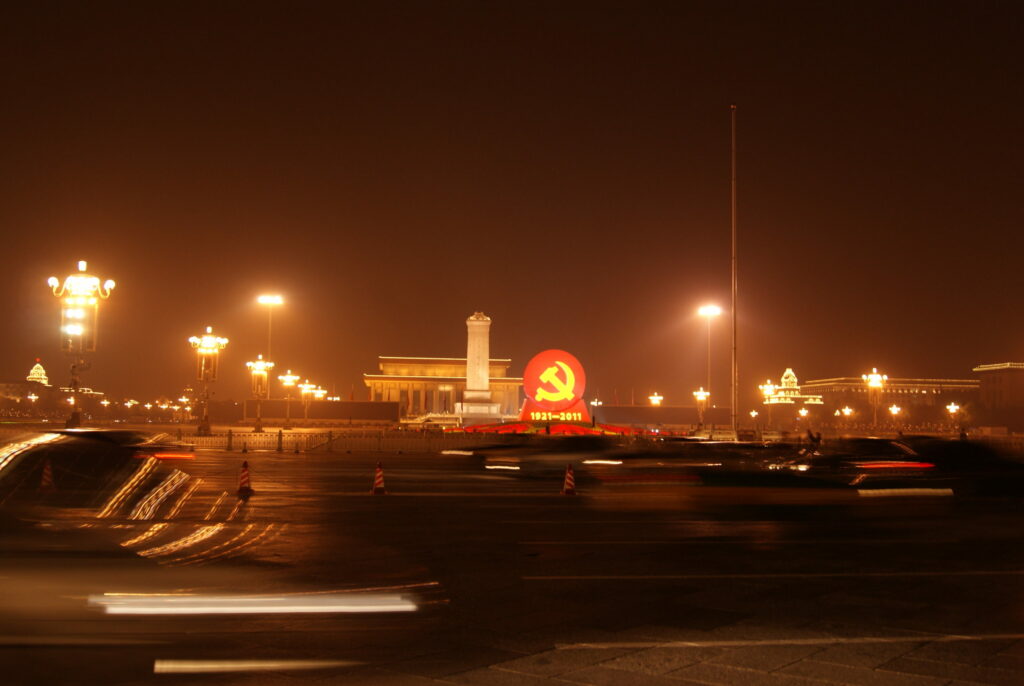
Chinese President Xi Jinping made a 100th anniversary speech on July 1 that set a new, more strident tone at home and abroad. Xi demanded loyalty, called for more militarism, threatened to return to a more Marxist economic system, threatened China’s neighbors, and called for the advancement of China’s totalitarian system around the world.
In essence, China is becoming as much an existential threat as the USSR, perhaps moreso because our country is so entangled with them economically and because our ruling class essentially want to be China, albeit with the corporate monopolies using the state and not the other way around.
Lest we forget, China’s Marxism is brutality at home and imperialism abroad, the aim being a global communist empire.
Missing from the festivities, as if celebrating totalitarian wokeness ala Mao Zedong is even possible, was the military parade. This may be a sign of growing disconent in the military ranks as, while being missing, the PLA was urged to show loyalty and devotion, which many mean this is a problem.
At home, Xi has been burnishing his image as a successor to Mao and has begun rolling back China’s liberalization of the economy and of any semblance of freedom. Arrests and a social credit system that suppresses dissent are all part of the Chinese system or absolute control. Many Americans of the woke communist variety can only envy Xi.
By this speech, Xi, in his effort to gain the support of the 95 million Party members who lord it over the rest of society, is signaling a fresh and open aggressiveness against internal and foreign foes on par with the worse days of the USSR.
Stocks in China and Hong Kong tumbled as news of the extreme language of the speech got out. Xi warned that anyone who tries to bully China “will face broken heads and bloodshed.”
It is often forgotten that China’s system is totalitarian Marxism. His own words confirm this view:
We must continue to adapt Marxism to the Chinese context. Marxism is the fundamental guiding ideology upon which our Party and country are founded; it is the very soul of our Party and the banner under which it strives. The Communist Party of China upholds the basic tenets of Marxism and the principle of seeking truth from facts. Based on China’s realities, we have developed keen insights into the trends of the day, seized the initiative in history, and made painstaking explorations.
We have thus been able to keep adapting Marxism to the Chinese context and the needs of our times, and to guide the Chinese people in advancing our great social revolution. At the fundamental level, the capability of our Party and the strengths of socialism with Chinese characteristics are attributable to the fact that Marxism works.
Of course there is nothing factual about Marxism and Marxism doesn’t work. China’s success is almost entirely to the credit of Western sycophants who traded short-term material gain for economic arrangements that benefited China at the expense of the American people. The “new model” for Marxism is not to just use the state but to proactively control and use the corporation.
China’s totalitarian vision with the triple threat of woke authoritarian platforms and their social credit system, the corporate and financial sector monopolism that serves the Party, and a ruthless state that labels dissent “domestic terrorism”, is envied by America’s ruling class.
But China is also announcing by this speech a drive for global empire, an international neocomm order controlled by Beijing, although puppets in “allied states” may be given autonomy. China seeks world domination, of that there cannot be any mistake.
China is returning to a more brutal totalitarianism and is moving outward toward a new communist imperialism aimed straight at the United States of America.
The McAlvany Intelligence Advisor, which our publisher has a joint venture agreement with, published the top 10 “crises” being used to increase total control over our lives by the ruling class.
The crises include things like immigration, the pandemic, and other “crises” that threaten a world on fire from destroying all life, or something that dire. From bogeymen to scapegoats, each crises is a way to turn the screws and increase pressure and confusion.
Some of these crises may be wholly real but exploited, partially real but somewhat manufactured, or completely manufactured. All seem overwhelming and cry out for some sort of massive, centralized response at the national to global scale.
The McAlvany Intelligence Advisor details each and explains their use. (You will need to subscribe to the free starter kit to see the details.) Other items in this issue are equally informative and will fortify you with a more predictive analysis of future and emerging trends.
From a Freedomist perspective, in general, when we start hearing the drums beat in harmony from all sources about a “crisis”, we tend to become very wary and suspicious of what is happening. Even if the crisis is real, the proposed solutions are always meant to transfer more wealth and power from those who create it through work to those who do nothing but lord it over society.
If it always seems the world is on fire, this doesn’t mean it is. It may also just mean the ruling class have found a new way to scare and bully people into surrendering more of their agency and spiritual sovereignty as people made in God’s image to human rulers.
Prescriptions for overcoming these crises and finding gaps for freedom are the focus of much of our content. The way these crises are manufactured or hyped through massive indoctrination is a real cause of concern as, manufactured or not, each crisis tends to hurt real and innocent people.
Preparedness for the things the McAlvany Intelligence Advisor predicts, and they have a good track record of accuracy for over 45 years, is about more than stockpiles of supplies. Having good connections and relationships to people who have each other’s back and pursuing a path of independency through mutual self-reliance and personal financial and material sustainability, outside systems of influence and control, is vital.
The top 10 crises whereby the ruling class seek to control us need not become crises that harm ourselves and our families.
Inspired by the US Bill of Rights, but based on the concept of inherent God-given individual spiritual sovereignty, we propose and will pursue a Freedomist Declaration as a Universal Bill of Human Rights for all human beings on the planet.
Note: this is a work in progress, so please return for updates and submit suggestions or questions to [email protected]
This “Universal Bill of Human Rights” is otherwise known as “The Freedomist Declaration.”
Preamble and Declaration of Originating Authority
We declare and affirm and we hold it to be a priori fact that every human being is created equal before God in His Image, that they are spiritually sovereign individuals who are endowed with certain inherent rights, corresponding to certain responsibilities for their own welfare and support and for the common good, such as life in peace and safety from all harms and torts, liberty as defined by these rights, and ownership of property and a freehold by which one may pursue happiness, wealth, and purpose.
Among the rights we proclaim come from God, we do not acknowledge the moral authority of any human agencies or power that curtails these rights in any substantive way except for brief and major emergencies as consented to by the population in question.
In our application of these rights and our demands for respect and justice we don’t appeal to the state or to history, we appeal to God and rely upon Him to uphold and protect our rights which He has given so that we might worship, serve, and be a witness for Christ in peace. But these rights are universal and eternal and are owned by every person so that the degree to which any entity or power, be it official or private, violates thes rights, is the degree to which it is morally legitimate or illegitimate.
Our willingness to compromise even these rights for peace or to avoid conflict or harm is expedient and it is not freely given through consent. Our specific approach, which is peaceful persuasion, and our willingness to submit to laws and regulations which violate these rights is GRACE on our part, it is not acknowledgement of any moral legitimacy as applied to the laws or regulations or the authorities which force this compliance.
Unlike the US Bill of Rights, which sought to be succinct, our Freedomist Declaration seeks to be thorough so as to minimize the opportunity for watering down or misinterpreting or otherwise denying its original spirit and intent.
A norm in law is to not include explanation or commentary of any kind. The Freedomist Declaration contains all that as a means of hedging would-be opponents of these rights from watering them down or reinterpreting them in a dishonest manner. These rights are not a “living document”, they are set in stone and are inviolable. While we recognize that the law may not yet conform to these rights, it is our intention to seek the support of our fellow citizens to make these rights a litmus test for supporting any Party, candidate, or media operation especially.
Briefly, we list these rights not as a comprehensive list but as a foundation from which we may discern other rights, so long as none of these new rights can be used to limit any other right. Rights are the basis of justice and law: to uphold these rights and to promote and provide for the infrastructure of society to enable people to freely practice these rights, while punishing evildoers and protecting those who do good, is the moral duty of any magistrate, state, or government.
Rights are applicable as the basis of all law and govern how all persons, private entities, and the state behave toward their fellow human beings. A private entity can no more act in ways that materially violate the rights of other human beings than can a criminal or the state. Through free association, any entity can choose who can participate in their community or association, provided this is made clear and does not change in future without the consent of their members, subscribers, users, or customers.
No law that violates these rights or allows their violation is legally enforceable on moral grounds. Those who enforce such laws can never be said to be following orders but make themselves criminals who are subject to criminal prosecution. Those who propose such laws are committing criminal conspiracy and those who pass such laws are guilty of organized crime.
Free association, which is also a right, is not valid if one or more parties to the association are in any way coerced or placed in a position where their only choices are acceptance and compliance or very real monetary or other harm to their rights, person, or property. Private entities in invoking free association cannot do so in a manner that leaves those who once became participants with a choice that is coercive or manipulative in nature. Moreover, when or if private entities change the terms of use or standards for participation, they must first gain the consent of their customers or users where the rights of their customers or users are to be lessened.
For instance, one cannot have a platform or social network which includes as its membership base more than 20% of the population and that begins with an open and broad standard that then changes the standard substantially and in a manner that limits the free exercise of rights within the community more tightly than was before the standard without gaining consent from those participants.
This consent must be gained through a third party, independent referendum of users who ratify the changes by a 60% plus majority.
All this is meant to say: our rights apply to all persons and entities of every kind and only through our freewill association, which we can later modify, can these rights be limited. To violate these rights is a crime whether the perpetrators are governments, individuals, or private entities. The old saying that the US Bill of Rights only limits government does not apply: respect for the rights of others is for us the basis of law for everyone and every kind of entity.
The purpose of society is to perpetuate the human race, to protect our rights, and to produce offspring who are most of the time raised by their own biological parents, their mother and father, and to ensure that the basic fractal of human society, the nuclear family attached to an extended family, is the favored sociocultural arrangement.
This statement does not mean the government must ensure certain types of families and freewill associations or domestic arrangements are the only legally allowed structures. It does acknowledge that government cannot proactively undermine these structures and that in any land where the Electors give their consent laws and policies favoring the nuclear and extended family and children tending to be raised by their own mother and father, whether biological or adopt, may be enacted.
Generally speaking, we acknowledge that a society that does not tend to produce offspring raised by their own biological or adopted mother and father will tend to surrender and lose its rights and become unstable.
Rights are not the goal, they are the means to the goal, which is a happy, healthy, peaceful, safe, and prosperous society of free people who may worship and serve God if they choose but who would neither be compelled to do so nor practically presented from freely and openly doing so. Any laws which tend to prohibit the exercise and practices of the historic “Christian”, or any other peaceful, faith must necessarily be considered illegitimate.
The four core ideals which are the ideational foundation of these rights include Unity in diversity, Popular sovereignty, Democratic equality, and Rule of law. We hold these ideals in balance with one another and base our understanding of them on Romans 12 and other Biblical principles. These ideals are the basis of our civic virtue and provide an ideational framework for good governance.
Among our rights, we list and will explain:
1. Free speech
Whatever is not a tort, the individual has a right to say, and to hinder this speech through any act of coercion or threat or to discriminate for any reason on this basis is a tort.
With the exception of private clubs and religious groups and for jobs in which the employee or contractoe is the speaker or representative of that entity, no entity may make the private speech of an individual the basis of employment or discrimination of any kind.
While it is true the image of an entity can be tarnished through the speech of its agents or employees, the universal standard of non-discrimination is such that all entities have the same hazard. The need to protect free speech is the greatest need in this case and the public will be aware that employers cannot discriminate on the basis of private speech.
2. Free association
Individuals may form such free associations as they see fit, according to their own rules, and without dictation by any third party, provided such free associations that do not have as their end a criminal enterprise or the violation or revocation of any of these rights.
They may dwell together on the basis of identifiable fraternal bonds provided the property is owned through shares and the need is held by their common entity and they may only sell shares to members of that entity.
They may form fraternal or domestic nations or tribes with their own sociocultural and socioeconomic institutions and standards, within the limits of common law and without violation of the rights of anyone, including their members, provided their membership exceeds .3% of the population in total or at least 20,000 persons.
A free association of any kind must allow for freewill covenant association and consent and may not use any means of selling memberships that would be a tort under commercial law. They may not constrain members from renouncing or discontinuing their membership and must compensate members who leave or who are removed with cause for any shares they own or property they have loaned except when the individual has practiced a tort against a fellow member under common law or criminal law.
In any free association, be it an online community or platform or club, business, or society, the terms and conditions and standards which govern membership or employment may not be changed after 36 months without the consent of the stakeholders.
Any entity deeming itself to be a mere platform or provider or communications and information services must apply these rights as its standards and may not violate these rights. Any editorial content it wishes to provide and promote to its membership, it may, to the exclusion of all others. But as the to communications and content of the membership it must be as inclusive as these rights or it must become a free association through the consent of a majority of its members.
3. Freedom of conscience
4. Freedom of religion
5. Freewill covenant association or free association
6. Self-determination
7. Freeholder rights
8. Trial by a jury of one’s peers, including jury nullification of unjust laws
9. Self-reliance
10. Self-preservation
All human beings own the inherent and magisterial authority and right to provide for the security and safety of the persons, rights, and property of themselves and those they are associated with through individual and corporate means, against all hazards, foreign or domestic, official or unofficial, by all reasonable, proportional, and legitimate means.
11. The right of Electors participate in community policing and local emergency and security through the right to keep and bear arms
12. Rights and responsibilities of citizens as clients of the magisterial authority
13. Rights and responsibilities of Electors as stakeholders of the homeland
14. Right to privacy and ownership of your own data and information
15. Right to legal counsel in all proceedings initiated by the government
16. Community sovereignty
17. Domestic nationhood and national homelands
18. Consumer’s rights to freedom from fraud and abuse
19. Worker’s rights to freedom from exploitation, fraud, and abuse
20. Equal treatment and opportunity
21. Equal access to public resources
22. Free market and economic rights
23. Right To Life
Human life begins at conception. With the exeption of choosing the life of the mother over the life of the unborn, and with the consent of the mother or her legal representative, no unborn life shall be terminated. In this case, the consenting party shall be guilty of manslaughter and the persons providing the service shall be guilty of murder. Clemency may be provided to the mother but not to the persons providing an abortion service or product.
No person who has committed murder with the proof of 2 or more witnesses or incontrovertible forensic proof shall be allowed to live lest the blood they shed be counted against the land, lest the whole land be guilty of the blood of the innocent.
Murder is the taking of innocent human life through unlawful acts or in the execution of unlawful acts, whether intentional or not.
23. Inviolability of these rights
Those who use their powers, influence, or public trust to seek to end or lessen these rights must be considered to be violators of the law. One does not have a right to agitate against the right of others. While free speech allows anyone to say they don’t like or agree with these rights, the active mobilization of resources to change the laws and make them work against these rights is not itself a right but constitutes a moral outrage against the People. As impractical as it is to make such actions “criminal” for our part we shun and disassociate with those who commit such an outrage.
CONCLUSION
Nobody is required to live by this Declaration, but we demand the right ourselves to live thereby. To prevent anyone from living out these rights in peace, or to coerce them to live them out, is a tort against humanity and God Himself.
Back FREEDOM for only $4.95/month and help the Freedomist to fight the ongoing war on liberty and defeat the establishment's SHILL press!!
Are you enjoying our content? Help support our mission to reach every American with a message of freedom through virtue, liberty, and independence! Support our team of dedicated freedom builders for as little as $4.95/month! Back the Freedomist now! Click here