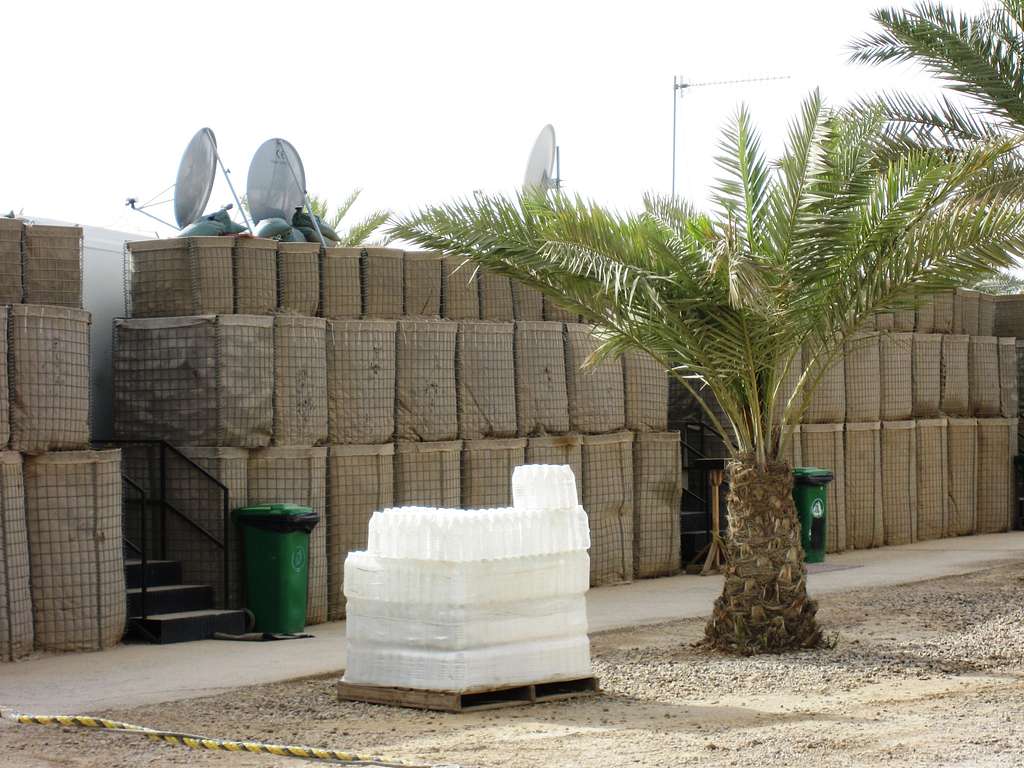


First deployed in 1991 by the British firm HESCO Bastion, Ltd, the HESCO Barrier is a modern-day gabion originally developed for flood and coastal erosion control in the late 1980’s. However, as soon as the British military’s Royal Engineers saw it, they instantly recognized its military potential.
In the hoary old days of “pre-Gulf War 1“, the fastest way to create a fortified camp in the wilderness was sandbags. These are extremely labor-intensive, and not terribly efficient (although they certainly do* offer real protection* at a cheap price). It was also a waste of manpower, as troops who should have been briefing, resting or patrolling were out shovel-filling sandbags by hand, instead. There is really very little that can be done to automate the process of filling sandbags, given their size and flimsiness. But, in the absence of a better alternative, sandbags were the only alternative.
HESCO barriers changed that landscape overnight.
The prefabricated gabion system is easily deployable either by hand, or by being laid from a truck-dragged container. The company’s containerized “RAID” system can deploy a gabion wall, approximately 1,000 feet long, in under one minute. At that point, front-end loaders begin dumping bucket-loads of dirt into the gabions, and a barrier wall that would have taken days, if not weeks, to build with sandbags and shovels, is built in a few hours, using fill scooped out from what become perimeter trenches.

And it is not simple walls or barriers. More complicated, custom-purpose structures* can also be built.

The company’s product line has expanded, based on their products wide-ranging success in war and natural disaster zones around the world. The company is now expanding rapidly into the oil and gas market, with the deployable gabions acting as blast containment walls to limit blast damage from accidents, as well as spills.
And, at under $40,000 per 1,000 units, they’re cheap.
HESCO has significantly impacted the face of modern operations. They are well worth a look.
* = Video links