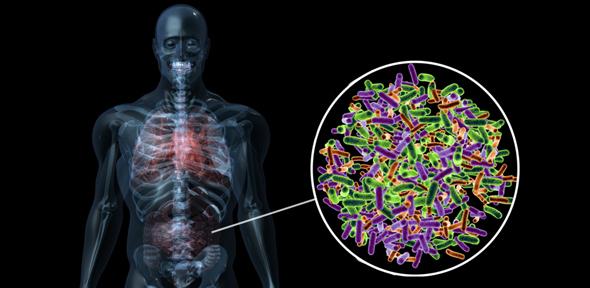
Dawkins’ “Extended Phenotype” recognized how organisms modify surrounding environments and ecological communities11,12. Through environmental modification, an organism’s phenotypic effects are extended beyond its own genome, suggesting evolution is influenced through interacting ecological communities. This theory, developed for free-living ecosystems, also applies to host-microbiome interactions12,13. The microbiome, with its consortium of genomes, extends the genetic repertoire of the host to form what some are now calling the “Extended Genotype” because the host integrates the extended effects of the microbiome into its phenotype3,14,15,16,17,18,19,20,21,22. This extended genetic repertoire may shape the distribution of host phenotypes within a population, and consequently, shape the evolutionary potential of the host.