
Military planning is weird. While most people view the field as planning to simply “blow stuff up and kill people“, that only makes up a vanishingly small sliver of the field. “Military planning“, as such, encompasses planning that considers what amounts to every other field that you can imagine…just with a particular focus. This is because military officers are – or were – not at all the cartoon characters they are frequently portrayed as in popular media.
As a result, composing a military plan – especially at the higher levels – usually takes into account things most civilian planners never have to think about at any scale. Case in point…
In that vein, here’s a Cold War planning problem that doesn’t get nearly enough attention: what do you do with your railroad network after the bombs fall?
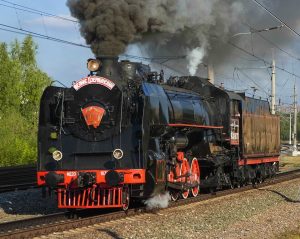
While this sounds like the setup for a bad science fiction novel, planners in the Soviet Union took it with deadly seriousness – and their answer was one of the more quietly ingenious contingency programs of the entire Cold War era. They called it the “Strategic Steam Reserve“, and by the 1970’s it amounted to thousands of carefully maintained steam locomotives, pre-positioned across the length and breadth of the USSR, ready to rise from their cold storage like iron zombies to keep the country moving when everything modern had stopped working.
The Problem
To understand why this was so vital, requiring a massive diversion of money and resources, you have to understand how utterly dependent the Soviet Union was – and, in the form of modern Russia, is – on its rail network. The Trans-Siberian Railway was not merely a transportation asset…it was the central nervous system of a continent-spanning state. Break that spine, and Moscow’s control over its eastern territories, all the way to the Pacific, collapses. This was true in the 1960’s and it remains largely true of modern Russia today.
Through the 1950’s and into the 1960’s, as part of the nation’s recovery from the destruction of the Second World War, Soviet railways completed a rapid transition from steam to diesel and electric railroad systems. It was the right call operationally – diesel locomotives are faster, more fuel-efficient, and required far less infrastructure support than steam. But the transition created a new vulnerability that Soviet planners were not prepared to ignore. A nuclear exchange, or even a large-scale conventional assault on infrastructure, posed two catastrophic risks to a modernized diesel and electric network.
First, a disrupted fuel supply chain could ground diesel locomotives almost immediately. Second – and much more troubling to Soviet military planners – the later discovery that the electromagnetic pulses generated by nuclear detonations could destroy the solid-state electronics increasingly embedded in modern motive power. An electrified network with no electricity, and diesel locomotives with fried control systems, is a very expensive collection of unusable metal.
A steam locomotive, by contrast, is magnificently indifferent to electromagnetic pulses. It has no sensitive electronics to fry. It runs on fire, water, and mechanical ingenuity – technologies that were already ancient when the first Bolshevik fired up a nationalized engine in 1917. Coal works. Wood works. Siberia, as one observer noted, is covered in wood. And while contaminated surface water would be undrinkable after a nuclear exchange, it is perfectly adequate for generating steam.
The Reserve Itself
The Strategic Steam Reserve consisted of withdrawn steam locomotives maintained in working order for potential use in a national emergency. The program was structured with genuine military rigor. Locomotives were dispersed to special depots across the country – deliberately sited in rural and mountainous areas away from likely nuclear target sets. Some engines were kept indoors in controlled environments to reduce rust and degradation. Many more were simply parked wherever space existed: in yards, on sidings, in tunnels, beside forgotten branch lines.
Critically, these were not museum pieces; they were maintained as “operational assets“. Mechanics periodically fired up the engines and ran them under load. Dedicated cadres of engineers were trained in steam operations long after those skills had vanished from the mainstream railway workforce – and those specialists were deliberately kept dispersed so that a single strike couldn’t eliminate the entire knowledge base at once. The reserve was structured along military readiness standards, with some locomotives capable of being operational within 12 to 24 hours, others requiring several days of preparation, and a long-term cold storage tier beyond that.
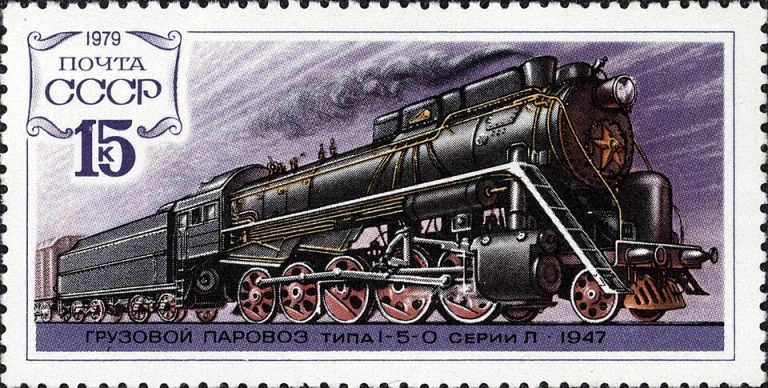
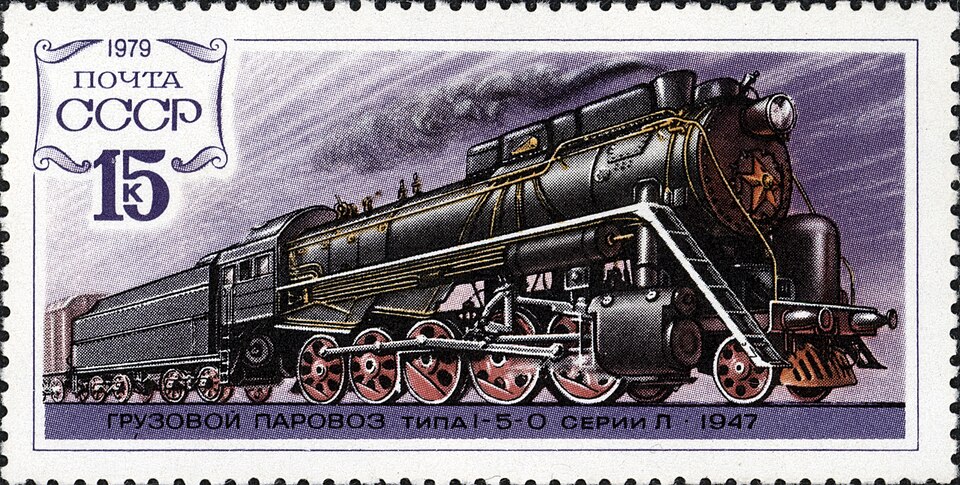
The locomotive types kept in reserve reflected Soviet engineering pragmatism: the workhorse SO series, valued for reliability and ease of field maintenance; the powerful FD series freight locomotives; the postwar L series; and the more sophisticated P36 passenger engines. The reserve also absorbed significant numbers of captured German Kriegslokomotive Class 52 engines – over 6,000 of which had been built during the war against Germany – many of which ended up rusting in Soviet reserve lines, waiting for a call that never came.

Secrecy & Aftermath
The existence of the program was classified throughout the Cold War. Western intelligence had only fragmentary knowledge of the depot locations, which were kept off civilian maps. Even within the USSR, knowledge was compartmentalized, and workers assigned to the reserves were sworn to secrecy under conditions comparable to military installations. It was not until the post-Soviet years that researchers and railway enthusiasts began uncovering the remains of reserve depots, often finding locomotives still intact – heavily rusted, vandalized, sitting in forgotten sheds or overgrown sidings. Those are the source of the striking photographs of abandoned Soviet steam engines with red stars that circulate online.
The collapse of the USSR in 1991 effectively ended the program. Economic chaos, loss of strategic direction, and the privatization of the railway system meant that most reserve locomotives were either scrapped or sold off. By the time researchers began documenting what remained near cities like Roslavl, only a handful of engines survived in any condition – and the Russian government was considering scrapping those, too.
The idea was not uniquely Soviet. Sweden and Finland maintained their own strategic steam reserves during the Cold War, structured against the possibility of a Soviet invasion rather than nuclear exchange. Britain is rumored to have done the same – but despite decades of enthusiast mythology and at least one BBC Radio investigation, no evidence of an official British reserve has ever surfaced.
The Verdict
It is easy, in retrospect, to smile at the image of stolid Soviet planners earnestly cataloging steam locomotives as strategic assets while American engineers were designing MIRV warheads and advanced satellites. But their logic was sound. The Soviets were solving a real problem – how do you maintain national cohesion and logistical function in a post-nuclear environment where modern infrastructure has failed? – and they solved it with the tools available. For a nation held together by rail, the answer was to keep the old iron breathing, just in case.
The zombie trains never rolled in earnest. They quietly rotted away in their sidings while the Cold War ended around them. But the thinking behind them deserves more credit than it typically gets.