Since 2017, a war has been raging. Chances are, you have never heard of it. This war, in a remote part of the world, is poorly reported because the goverment is humiliated by its failures, and refuses to allow too much access to report on the fighting.
This matters to you, and to your wealth – because if the Islamic State wins, you will know it…and then some. But in the proximate, there is a serious blind spot that hampers even professionals from understanding the situation fully.
When journalists and analysts discuss the insurgency devastating Mozambique’s Cabo Delgado province, they often go out of their way to clarify that the group locally called “al-Shabaab” has no connection to Somalia’s better-known terror organization of the same name. But this insistence on separation obscures a more complex — and much more alarming and troubling — reality about modern jihadist networks in Africa.
The truth is that while Mozambique’s Islamic State affiliate didn’t emerge from Somalia’s al-Shabaab, specifically, it operates within a sophisticated transnational network coordinated from an unlikely headquarters: the mountains of Puntland in northeastern Somalia.

The Name Game
Understanding the confusion requires backing up to 2017, when armed militants first attacked the small ocean port town of Mocímboa da Praia. Locals and journalists needed something to call this nameless group, and many settled on “al-Shabaab” — Arabic for “the youth.” It was a descriptive term reflecting the insurgents’ demographics, not a claim of organizational affiliation. Some called them “Ahlu Sunnah Wa-Jama” after their ideological roots, but “al-Shabaab” stuck, creating endless confusion with Somalia’s al-Qaeda-affiliated terror group.
Here’s where analysts are technically correct: Somalia’s al-Shabaab pledges allegiance to al-Qaeda. Mozambique’s group — now formally called Islamic State Mozambique (ISM) — pledges allegiance to ISIS. These are rival international terror networks that actively fight each other. So no, ISM is not an offshoot or extension of Somali al-Shabaab. They’re on opposite sides of the jihadist world.
But that’s not the end of the story.
The Puntland Connection
What many casual observers miss is that ISIS restructured its African operations in early 2020, creating a coordination hub called the “Al-Karrar office” based in Puntland, Somalia. This office, embedded within ISIS-Somalia, was tasked with coordinating support across eastern and central Africa — including Mozambique.
According to the United Nations, ISIS-Somalia in Puntland began coordinating support to Mozambique as early as late 2019. That support included tactical training (documented by 2020), financial transfers routed through agents in Kenya, Tanzania, and Uganda, and strategic guidance that transformed ISM from a ragtag local insurgency into a formidable military force capable of capturing towns and threatening major infrastructure.
The impact became clear in 2020 and 2021 when ISM’s operational capabilities dramatically increased. The group launched increasingly sophisticated attacks, culminating in the March 2021 assault on Palma that killed dozens and forced French energy giant Total Energy to suspend its $60 billion natural gas project. The coordinated three-pronged attack, use of combined arms tactics, and disciplined withdrawal all bore the hallmarks of external training and coordination.

Foreign Fighters and Transnational Networks
The transcript of recent analysis on Mozambique mentions captured fighters with “foreign accents” and non-local origins — and this tracks with what researchers have documented. While ISM is predominantly staffed by recruits from northern Mozambique and Tanzania, it also draws fighters from the Democratic Republic of Congo (reflecting connections with ISIS’s Central Africa Province) and other parts of the Great Lakes region.
ISIS-Somalia itself has become remarkably international, with fighters from Ethiopia, Sudan, Tanzania, and even Arab Gulf states joining the Puntland-based operation. Some of these fighters have reportedly moved between ISIS’s various African franchises, bringing experience and expertise with them.
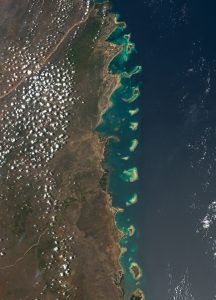
This is highlighted by ISM’s amphibious operations in the Quirimbas archipelago, beginning in 2020.
The financial dimension is equally important. ISIS-Somalia has become one of ISIS’s most profitable branches, generating millions annually through extortion, smuggling networks, and taxation. Some of this money flows through the Al-Karrar office to support operations in Mozambique and elsewhere, creating a self-sustaining transnational terror economy.
Why the Distinction Matters (and Doesn’t)
Analysts aren’t wrong to insist that ISM and Somali al-Shabaab are distinct organizations. The distinction matters for understanding motivations, tactics, and potential diplomatic or military responses. ISM emerged from genuinely local grievances — poverty, government corruption, marginalization of Muslim minorities, and broken promises about natural gas wealth. Addressing those root causes requires different approaches than combating an externally imposed insurgency.
But the insistence on organizational separation can obscure the functional reality: ISM operates within a transnational ISIS network that provides coordination, training, funding, and ideological guidance from Puntland. The “local insurgency” framing risks underestimating the sophistication and resilience of this network.
What this insistence on pedantic nitpicking masks, is a terrifying reality: the remnants of the Islamic State — largely smashed in 2017-2019 — have reorganized themselves into distinctly Western-style “Combatant Commands“, semi-autonomous, regional commands that are all solidly aligned to the IS leadership, but plan and execute operations in their zones as they see fit.

This reorganization has made the organization far more resilient, more flexible, and far harder to attrit by direct military action.
The Bigger Picture
The Mozambique case illustrates how modern jihadist organizations operate in Africa. Rather than monolithic groups expanding from single headquarters, we see franchises that maintain local character while plugging into transnational support networks. ISIS’s pivot to Africa has created a web of affiliated groups that share resources, expertise, and ideological inspiration while adapting to local conditions.
For Mozambique’s suffering population — more than 700,000 displaced and 6,100 killed since 2017 — the organizational charts matter less than the ongoing violence. But for policymakers and analysts trying to disrupt these networks, understanding the Puntland-Mozambique connection is crucial. Cutting the financial and logistical links between ISIS’s regional hubs and its various franchises may prove more effective than treating each insurgency as an isolated local problem.
The insurgents in Cabo Delgado may not be the same “al-Shabaab” that terrorizes southern Somalia, but they’re very much part of the same global jihadist ecosystem—one that has successfully established deep roots in Africa’s most vulnerable regions.
Why This Matters
Mozambique, despite its remote location on the world map, sits on very important real estate…not because of the natural gas finds of Total Energies, but because of its physical location.
As we touched on briefly in 2022, the grounding of the container ship Ever Given in 2021 severely up-ended world shipping, with effects that extended far beyond the six days it took to clear the Suez Canal. Likewise, the explosion in the port of Beirut, Lebanon in 2020. As our 2022 article alluded to, while those incidents were accidents, should a group coordinate similar incidents, such an offensive would devastate world commerce.
More to the point, a deliberate closure of the Suez Canal — unlike the missile and piracy operations of the Houthis in Yemen — would force a rerouting of all ocean-going merchant traffic around South Africa’s Cape of Good Hope…which has to travel right past the war zone in Cabo Delgado.

And, again as we theorized about in 2022, multiple deliberate strikes like this present a clear threat to the economic vitality of the world, and directly to you.
The question is, are the real professionals paying attention to the nuance?