Previously, we have looked at the M72 LAW and the RPG-7 – two weapons born from the same fundamental problem, that solved the issue by two very different design philosophies: One is disposable, one is reloadable. One is American, one is Soviet. Both are still on the world’s battlefields today. This week, we look at the weapon that split the difference between them, outlasted both as a frontline system in the world’s most capable militaries, and is currently destroying Russian tanks in Ukraine: the Carl Gustaf 84mm recoilless rifle.
U.S. troops call it “the Goose,” or just “the Gustaf.” The British call it “Charlie G.” The Swedes, who invented it, call it the Granatgevär m/48 – “Grenade Rifle, Model 1948.” Whatever you call it, the weapon has been in continuous production and frontline service since 1948, is now operated by more than 40 countries, and in 2022 a Ukrainian crew used one to destroy a T-90M – Russia’s most advanced operational main battle tank. Not bad for a design that was old when the Korean War started.
What A Recoilless Rifle Even Is
Before going further, it is worth taking a moment to explain what a “recoilless rifle” is – because the term confuses people who are used to thinking about weapons in terms of either conventional rifles, artillery or rocket launchers.
When a conventional firearm – or cannon – fires, the propellant gases accelerate the projectile forward, and by Newton’s third law, an equal and opposite force pushes back against the shooter. That is “recoil“. In a pistol or rifle, the weapon’s mass and the shooter’s body absorb it. In a large-caliber weapon, like an artillery piece, uncontrolled recoil would be catastrophically injurious to the shooter and structurally ruinous to even a stout tube.

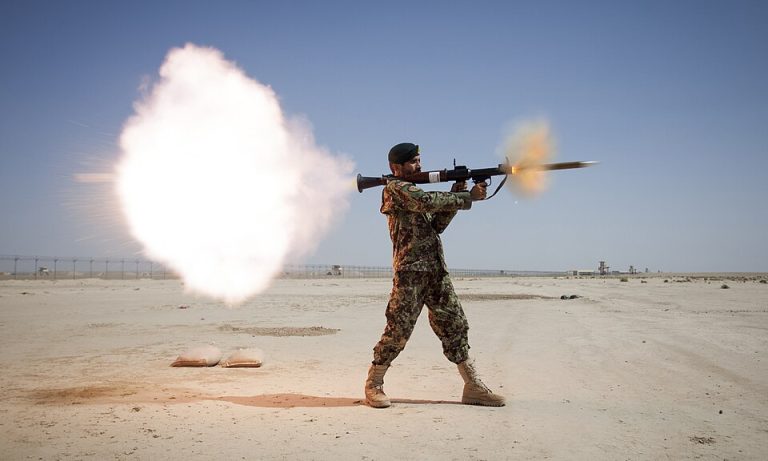
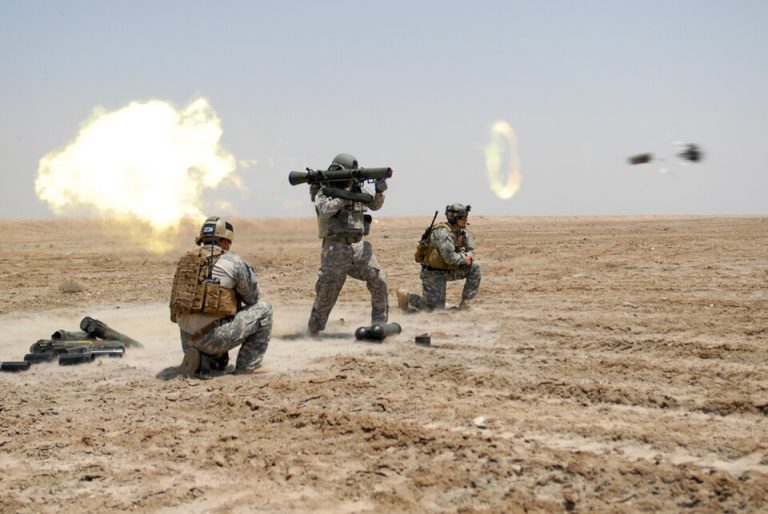
The recoilless design solves this by venting a precisely calculated portion of the propellant gases out of the rear of the weapon through a cone-shaped Venturi nozzle at the moment of firing. The rearward thrust of those escaping gases almost exactly cancels out the forward thrust driving the projectile. The net result on the shooter is dramatically reduced recoil – not zero, but manageable even from the shoulder. The tradeoff is that the rearward ejecting blast of gases is substantial, creating a “danger zone” behind the weapon and generating a dramatic visible signature. But for a weapon that can deliver an 84mm shaped-charge round accurately at 500 meters, that is a tradeoff most militaries have been willing to make for over seven decades.

The Gustaf fires its rounds at 290 meters per second – nearly three times the muzzle velocity of a World War II bazooka. The result is superior accuracy at range, and a rifled barrel that spins its projectiles for further stability. This is not a “point and pray” weapon – with proper training, it is a precision tool.
The Weapon & Its History
The Carl Gustaf’s origins trace to the Swedish Army’s experience in watching World War II unfold from the sidelines and drawing many correct conclusions. Sweden’s first attempt at a shoulder-fired recoilless weapon – the 20mm Pansarvärnsgevär m/42 – was already obsolete when it entered production in 1942, capable of penetrating only about 40mm of armor at a time when German and Soviet tanks were fielding considerably more. Designers Hugo Abramson and Harald Jentzen at the state-run Carl Gustafs Stads Gevärsfaktori scrapped the small-bore approach entirely, scaled their design up to 84mm in diameter, and paired the recoilless principle with a shaped-charge warhead. The resulting weapon entered Swedish service in 1948.
It first saw combat with Swedish UN peacekeepers during the Congo Crisis of the early 1960s, where it proved rugged and versatile under operational conditions. Export orders soon followed. The M2 variant, introduced in 1964, spread the weapon across NATO and allied militaries. U.S. Army Special Forces, the Rangers, and the British SAS adopted the M3 variant in the 1990’s for bunker-busting and anti-vehicle work. By 2014, the U.S. Army was ordering the Gustaf for conventional infantry units deploying to Afghanistan, specifically because enemy forces could reach American troops with RPG-7s at ranges where U.S. squads had no equivalent direct-fire response.

The current production model, the M4 “MAAWS” (Multi-Role Anti-Armor Anti-Personnel Weapon System), weighs under seven kilograms – about 15 pounds – and measures less than one meter in length. It accepts a digital fire control device that communicates ballistic data directly to programmable ammunition. It can fire laser-guided rounds developed jointly by Saab and Raytheon, accurate to 2,500 meters. It can also fire the same basic HEAT rounds it was firing in 1948. That backward compatibility with legacy ammunition means nations can modernize their launchers without replacing their ammunition stockpiles – a procurement detail that matters enormously for smaller militaries.

The Ammunition Story
The Gustaf’s real competitive advantage over both the M72 and the RPG-7 is its ammunition flexibility, and this is where the “multi-tool” description earns its keep. The current round family includes:
- Anti-armor HEAT rounds, including a tandem-warhead variant capable of defeating reactive armor
- A High-Explosive Dual-Purpose round effective against bunkers and light armor
- Anti-personnel rounds including a flechette “shotgun” load described by one veteran Ranger as “a giant shotgun where it shoots inch-long little needles at a huge spread”.
- Smoke and illumination rounds for screening and marking.
- A confined-spaces HEAT variant safe to fire from inside buildings.
- And finally, a laser-guided multipurpose munition effective at 2,500 meters.

No other man-portable shoulder-fired system offers this range of capability from a single re-loadable launcher. This is why, despite weighing more than the M72 and costing considerably more per launcher than an RPG-7, the Gustaf has not only survived but expanded its user base across seven decades of continuous warfare.
Poland ordered the Carl Gustaf M4 system in a deal worth over $1.2 billion in March 2024. Japan ordered 300 units in 2023. Australia, the Baltic states, and NATO as a whole have placed ongoing orders. The weapon’s procurement momentum is accelerating, not declining.
The Bottom Line
The M72, the RPG-7, and the Carl Gustaf represent three answers to the same question: how do you give infantry the ability to destroy armor, breach fortifications, and suppress defended positions without becoming dependent on vehicle-delivered fire support that may not be available? The American answer was disposable simplicity. The Soviet answer was cheap reloadability. The Swedish answer was precision versatility – and it cost more and weighed more, but it has proven more capable in more operational contexts than either alternative.

In a budget environment that increasingly rewards lowest unit cost procurement, the Gustaf’s continued and expanding success is a useful reminder that the cheapest weapon per unit is not always the most economical weapon per mission accomplished.
The Goose is still flying. And judging by the order books, it will be for some time to come.