June 12, 2026

military

Product Review: The X-18 ATC ‘Tank Boat’

When the United States Marine Corps’ (USMC) Commandant, General David H. Berger, announced his radical vision in 2019 of “reinventing” the Marine Corps to perform duties on a basis more in line with the guidance from then-Secretary of Defense Mark Esper, his program proved to be highly controversial, not least, in light of recent events in Ukraine and Russia. This vision radically restructures the Marine Corps, removing main battle tanks entirely, and significantly reducing both “bayonet strength” in infantry battalions, as well as heavily cutting back on conventional artillery and tactical air transport, all in an attempt to fight the People’s Republic of China (PRC).

It is bewildering – to say the least – as to how these ideas could work verses a major-war opponent may be an open question. Primarily, the controversy revolves around the significantly reduced capacity in fire support.

OVERVIEW

Fire support for landing operations has long consisted of frigate– to destroyer-class vessels deploying various types of stand-off land attack missiles, as well as cannons in the 5-inch/125mm range. Not since the Landing Ship, Medium (Rocket) (LSM(R)) of World War 2 has there been a truly dedicated close-inshore bombardment-capable vessel. Since the end of the Vietnam War (1964-1975), “inshore fire support” has consisted primarily of craft armed with .50/12.7mm heavy machine guns, automatic grenade launchers, mortars or flamethrowers.

However, times change, and technology changes apace.

Okinawa, April – June 1945: An American rocket ship fires a salvo of rockets during the bombardment of Okinawa. US Navy photo.

Case in point: As technology and high-tech industry has expanded throughout the world, more and more nations are developing energetic and dynamic design firms. Recently unveiled by Indonesian shipbuilder PT Ludin, the Atasena-class X-18 ATC (Armored Troop Carrier) – originally called, for obvious reasons, the “Tank Boat” – may look like something out of a “GI Joe” movie, but it is definitely an innovative development of preexisting concepts.

Name of Indonesia islands greater than 1000 km2 in area.

Comprised of over 18,000 separate islands, and being on the front lines of both insurgency, piracy and general world unrest, Indonesia has a definite need for an inshore fire support vessel with a heavy punch. In this, the X-18 “Tank Boat” certainly delivers.

Designed by PT Ludin, the X-18 ATC is to be built by the veteran small craft yards of North Sea Boats. The current production unit that has undergoing testing by the Indonesian Army is armed with the Cockerill C1030 MK44S 30mm cannon unmanned turret. A mock-up vessel, shown at international arms shows when the details of the X-18 were released mounted a mock-up of a planned Cockerill 105mm cannon with an automatic loading system in a small, 2-person turret, with a 360° traverse and a pair of .50cal/12.7x99mm heavy machine guns as secondary weapons, with other secondary weapons possible. In either configuration, the X-18 can also carry up to 60 troops, up to 5 tons of cargo, or a variety of small, rigid-hulled inflatables. This would allow the deployment of conventional boarding or landing parties, as well as special operations teams — who could potentially have 105mm artillery support within a 10km arc from the craft. Another planned version would mount some form of dedicated anti-ship, and possibly anti-submarine, missiles.

CONCLUSION

With a reported draft of only 0.8 meters and a reported 600nm range (the distance from Washington, D.C. to Miami, FL) at 9 knots (but able to cruise at 40 knots, with a 50 knot maximum speed), the twin-hulled catamaran design would certainly have long legs. The design is impressive enough – in theory – to have reportedly garnered an early order from the United Arab Emirates, with India, Greece and the Philippines expressing serious interest.

A U.S. riverboat (Zippo monitor) deploying napalm during the Vietnam War. US Navy photo.

While its armor (NATO Stanag 4569) may be rather unimpressive, proof only against small arms and shell fragments at a distance, in the inshore environment, the ability to swiftly bring large numbers of troops, backed up by significant firepower, to bear on an enemy’s rear areas is a major advancement in firepower.

This is something that the USMC, struggling with shrinking procurement budgets and a general drop-off in enlistments, should seriously consider adding to its arsenal, not least because of a projected purchase price of under US$20million each.

Not every bright idea comes out of the US defense establishment.

The Freedomist — Keeping Watch, So You Don’t Have To
Analysis: What is a ‘Military Base,’ Exactly?

We all hear about them on the news: Those places where Soldiers, Sailors, Airmen and Marines are housed and trained; where they form up to deploy to some remote space on a map that most of us had never heard of a week ago…

But — what is a ‘base’, exactly?

Here at The Freedomist, we covered one aspect of this question some time ago, but this article will take a broad overview of the question at large.

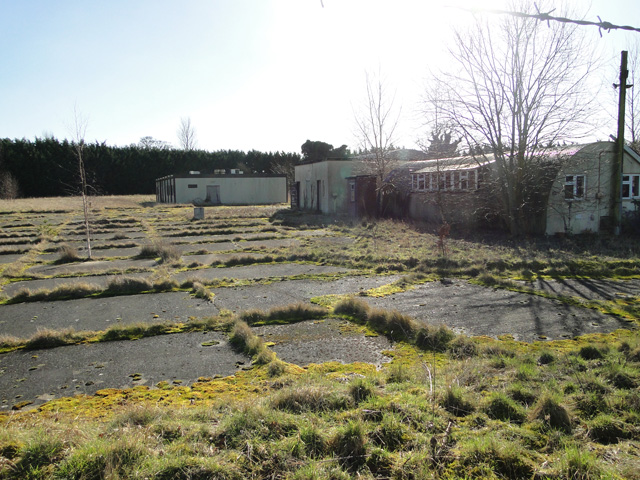
Aside from castles or fortresses, “bases” come in a vast array of forms. Certain histrionics aside, a “military base” can come in almost literally any form. There are massive bases, such as Fort Bliss, in Texas or the Naval Air Weapons Station, China Lake, which are larger than some states, but there are also tiny installations that are also bases, such as Marine Barracks, Washington D.C., which is a mere 6 acres (2.4 ha) in size, and has been in continuous use since 1801. As a result, a base can take almost any shape.

At the same time, size comparisons obscure the question. A different way to think about a “generic” base, however, would be to consider it as a collection of components. Generally speaking, a “base” – while it may have a specific purpose – is where troops can be housed and trained for combat; where they can do at least basic levels of maintenance on weapons and equipment; and where supplies sufficient for a unit to deploy (in theory) can be safely and securely stored.

The training component is the hard part here, because even with the many advances in “virtual” training that have taken place in the last thirty-odd years, troops still need to actually fire live ammunition thought their weapons; short of actual nuclear, biological and chemical weapons, nothing focuses training like the dangers of live-fire. When we are dealing with classes of personal weapons, firing ranges of fifty to five hundred yards or meters in length may well be sufficient. Once we move into longer-ranged weapons – heavy machine guns, mortars, rockets, tank cannons and actual artillery – the ranges quickly become very long range.

But…short of that? Let’s do a thought experiment.

We will start with a large open field. A road, perhaps a highway or freeway, runs along one side of the field. Imagine one to four multi-story motels, clustered together; nearby, is a small, two-story office building. To one side, there is a gas/convenience station, and a large chain-style restaurant. There are one or two warehouses, a full-service garage, a few large parking lots filled (hopefully) with large and heavy vehicles. There are a scattering of other buildings, including one that is very “blockish”-looking building surrounded with barbed wire; there might even be a fire station. There is likely a shooting range, one hundred to five hundred yards/meters in length. If the unit’s home nation is relatively wealthy – and wise – there may be a small housing development across the road from the actual base, with family homes for married troop’s whose families live with them. None of the buildings are very “upscale”; most would be described with uncharitable snobbery as “drab” or even “ramshackle” or “brutalist” if someone wanted to be nasty. That would be the effect of government contracting restrictions.

What was just described above are the very basic facilities for an infantry battalion of 700-1,000 troops. There would be a few more buildings if the unit is more specialized, but the above description represents a generic enough core. Drop, say, another dozen or so of these areas close together, add an actual hospital, a large supermarket nestled next to a department store (if they’re not combined), a branch bank, a few more gas stations and regional-scale airport that can handle C-130-type aircraft, a few very long-distance (say, two to five miles in range) and you have a base suitable for a brigade-to-division scale unit – anything from eight to sixteen thousand troops.

Reserve or militia units can get away with one or two buildings, with a large and fenced-off parking lot, as long as they keep personal weapons and a basic load or two of ammunition at home…However, these units are going to be extremely limited in what operations they can carry out.

In sum, most military bases are not too dissimilar from a small town – except, of course, for the weapons, uniforms and intent. Aside from the occasional museum, most military installations /are/ drab, dreary and uninviting, and not places most people would want to live in for very long. But that dividing line, that willingness to tolerate minimalist living environments because their belief in the greater good, is best described in a paraphrase of the words of neoconservative essayist and film critic Richard Grenier

“People sleep peacefully in their beds at night only because rough people stand ready to do violence on their behalf.”

Main

Back FREEDOM for only $4.95/month and help the Freedomist to fight the ongoing war on liberty and defeat the establishment's SHILL press!!

Are you enjoying our content? Help support our mission to reach every American with a message of freedom through virtue, liberty, and independence! Support our team of dedicated freedom builders for as little as $4.95/month! Back the Freedomist now! Click here