Gas warfare – the deliberate use of chemicals as weapons in wartime – has long been recognized as one of the most terrifying tools of conflict, right next to nuclear weapons…Yet, both situations have been exceedingly rare – thankfully. What is not rare, is the dangers posed by the accidental (usually) cases where industrial chemicals and nuclear accidents have caused widespread devastation.
The peaceful applications of chemical and nuclear technologies have brought tremendous benefits to society, but their mishandling has occasionally led to disasters as devastating as military applications. From industrial accidents to amateur experimenters, these incidents highlight the fine line between technological advancement and catastrophe.
You, the Reader, likely do not think in these terms, unless you work in those industries. However, you are almost certainly living in a danger zone, and do not realize it.
By way of explanation, open your favorite mapping program, and locate your home. Go out five miles, and draw a circle: Is there an operating freight railroad, ‘hazardous cargo’ freeway, chemical plant or oil refinery within that circle? If so, you need to have a military-rated CBRN (Chemical, Biological, Radiological, Nuclear) “gas mask” for every person living in your home, especially children. This is because when accidents happen, local emergency responders begin evacuating people within a 0.25-mile radius of the accident – but that radius can quickly extend out to a 5 mile radius, depending on the chemicals involved, the wind direction and strength, and the specific details of the accident. What happens if you cannot evacuate? Or, worse, if you try to evacuate, and are stalled on the road, whether by breakdown or traffic jams? The chemical cloud is still coming.
You need a plan…But, why aren’t you being told this elsewhere? Simply put, news agencies do not want to be seen as “Chicken Little” – These accidents do happen, but they happen infrequently enough that both news agencies do not want to air advisories on preparing for them, and most municipal and county governments to not want to agitate their citizens about the dangers of the companies that provide a large percentage of local government revenues.
And yet – the danger is there. Every day.
The 2023 East Palestine, Ohio train derailment represents one of America’s most significant recent chemical disasters, highlighting the vulnerabilities in our hazardous materials transportation system. On February 3, 2023, a Norfolk Southern freight train carrying hazardous materials derailed, causing a massive fire and prompting authorities to conduct a controlled burn of vinyl chloride to prevent a potential explosion. This decision, while preventing an immediate catastrophic explosion, released phosgene and hydrogen chloride into the atmosphere – both highly toxic gases historically used as chemical weapons.
The incident forced the evacuation of approximately 2,000 residents and contaminated local waterways, with chemicals reaching the Ohio River watershed. Despite official claims of safety, residents reported persistent health issues including rashes, headaches, respiratory problems, and nausea months after returning home. The accident revealed critical gaps in railway safety protocols, emergency response planning, and environmental monitoring capabilities. The combination of toxic chemicals involved — including not just vinyl chloride but also butyl acrylate, ethylhexyl acrylate, and ethylene glycol monobutyl ether — created complex contamination scenarios that standard emergency protocols were ill-equipped to address, demonstrating how even in developed nations with extensive regulations, chemical disasters can affect communities with little warning.

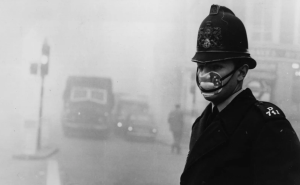
The modern era of chemical disasters began with the Great Smog of London in 1952. Though not an industrial accident in the traditional sense, this convergence of coal pollution and unusual weather killed an estimated 12,000 people and injured 100,000 more, demonstrating the lethal potential of chemical pollutants. This disaster eventually prompted the UK’s Clean Air Act of 1956, establishing a pattern that would repeat throughout history: catastrophe followed by regulatory reform.
Industrial chemical accidents reached their nadir with the Bhopal disaster of December 3, 1984. A leak of methyl isocyanate gas from a Union Carbide pesticide plant in Bhopal, India immediately killed at least 3,787 people, with total related fatalities estimated between 15,000 and 20,000. The disaster, stemming from poor maintenance and safety procedures, continues to affect generations through birth defects and chronic illnesses. Bhopal fundamentally transformed chemical industry regulations worldwide and remains the worst industrial accident in history.
Less known but similarly devastating was Italy’s 1976 Seveso disaster, where a chemical plant released a dioxin cloud contaminating an area inhabited by 37,000 people. Though immediate fatalities were few, the long-term effects included elevated cancer rates and birth defects. The incident led to the European Union’s “Seveso Directive”, establishing classification systems for hazardous facilities that continue to govern chemical safety throughout Europe.
The field of radiological accidents presents different challenges but equally sobering lessons. The 1957 Kyshtym disaster at the Mayak nuclear facility in the Soviet Union contaminated an area inhabited by 270,000 people when a nuclear waste storage tank exploded. Long concealed by Soviet authorities, the accident released twice the radioactivity of the Chernobyl disaster and remains the third-worst nuclear accident in history.
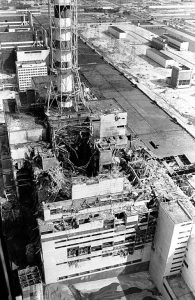
While Chernobyl (1986) and Fukushima (2011) typically dominate discussions of nuclear accidents, smaller incidents reveal the persistent dangers of radiation mishandling. The 1987 Goiânia accident in Brazil occurred when scavengers dismantled an abandoned radiotherapy unit, finding a glowing blue substance (cesium-137) they distributed to friends and family. Four people died within weeks, and 249 were contaminated. The incident demonstrated how even orphaned medical equipment could create widespread contamination when handled by untrained individuals.
Perhaps the most remarkable case of amateur radiation exposure involves David Hahn, dubbed the “Radioactive Boy Scout“. In 1994, the 17-year-old attempted to build a breeder reactor in his mother’s shed in Michigan using materials extracted from smoke detectors (americium-241), camping lantern mantles (thorium), and clock dials (radium). His homemade neutron gun and crude reactor components significantly contaminated the property, eventually requiring intervention by the EPA and a hazardous materials cleanup. Though Hahn received only a modest radiation dose, his shed registered radiation levels 1,000 times above normal background.

Hahn’s case, while extreme, is not unique. In 2007, Richard Handl of Sweden attempted to split atoms in his apartment kitchen using materials purchased online. He only realized the potential illegality of his experiment when he contacted Sweden’s Radiation Safety Authority to ask if his activities were permitted. Unlike Hahn, Handl was arrested but later released when authorities determined his setup hadn’t reached truly dangerous levels.
The democratization of scientific knowledge and equipment access has made DIY nuclear experimentation increasingly accessible. Online forums devoted to amateur nuclear science host discussions on building Farnsworth fusors and other nuclear devices, though most participants emphasize safety and legality. The Nuclear Regulatory Commission and Department of Energy now actively monitor purchases of certain materials and equipment that could enable amateur experimentation.
These incidents, while varying in scale and circumstance, share common themes: the misunderstanding of invisible dangers, inadequate safety protocols, and the cascading consequences that extend far beyond immediate events. They demonstrate that the line between beneficial technology and catastrophe often depends not on the materials themselves, but on human systems of management, regulation, and education surrounding them.
So…Given the foregoing, what can you do to protect yourself?
Aside from the military-rated CBRN gas masks mentioned, the answer, unfortunately, is “not much“. However, gas masks are the best place to start, and do provide a huge degree of protection. While pricey, modern masks are far better than what was available 40 years ago. Gas masks should come with one or two filters, that are now universal-fit, fitting 40mm sockets in the mask that have been standardized since 2000. The key thing to look for in a mask, though, is whether it has a drinking attachment for a “NBC Canteen”; this is a vital concern when choosing a mask, as these masks get very hot, very fast, and with the stress of the situation, your water needs will vastly increase. “Package deals”, selling the mask, a filter or two, and one or two canteens with mask attachments, is what you want to look for.
For radiological accidents, in addition to the mask an canteen, the available option is potassium-iodide tablets. These protect the thyroid, which is the most vulnerable part of the body to nuclear contamination. Potassium-Iodide is commercially available, from all the common online retailers.
The last recommendation I will give you is to get a copy of Cresson H. Kearney’s standard work, “Nuclear War Survival Skills“. While a bit dated in places, this remains the best practical reference for civilians. The link here is to a PDF copy, but do try to find a print copy, if you can.

If the foregoing scared you – good. These threats are very real, no matter where in the world you live. The government (all governments), as East Palestine demonstrated, is not going to provide a lot of help in the short term, if at all.
You are on your own. Plan accordingly.