February 16, 2026

World News

Somalia Is Unraveling: Al-Shabaab’s Siege of Mogadishu and the Specter of State Collapse


Introduction

The ancient nation of Somalia occupied a pivotal position in the ancient Indian Ocean trading network during Roman times, serving as a crucial intermediary between the Mediterranean world and the riches of Asia. The Somali coast, known to classical geographers as part of the “Land of Punt” and later “Barbarikon“, provided essential ports of call for merchants navigating the monsoon winds between Roman Egypt and India.

Somali traders controlled access to valuable aromatic resins, particularly frankincense and myrrh, which were harvested from the Boswellia and Commiphora trees, respectively, both of which are native to the region. These precious commodities were in enormous demand throughout the Roman Empire for religious ceremonies, medical applications, and luxury consumption. The Periplus of the Erythraean Sea, a first-century maritime trading manual, describes numerous Somali ports including Malao, Mundus, and Mosylon, detailing the goods available and trading protocols.

Map of the routes of the Periplus of the Erythraean Sea (1st century CE). 2007 map by PHGCOM. CCA/4.0


Beyond aromatics, Somalia served as a transshipment point for goods flowing between Africa’s interior and Asian markets. Gold, ivory, and exotic animals from the African hinterland passed through Somali ports en route to Roman and Indian merchants, while manufactured goods, textiles, and spices from India and Southeast Asia were distributed along the East African coast. This strategic position made Somali city-states wealthy intermediaries in a trade network that connected three continents and sustained the luxury economy of the Roman Empire.


Somalia’s Italian Colonial Years (1889-1960)

Somalia’s Italian colonial period began in the 1880’s when Italy gradually secured much of the territory through a series of protection treaties, with formal control established in 1889 when the Ethiopian Emperor Menelik II and Italy signed the Treaty of Wuchale. In 1885, Italy obtained commercial advantages in the area from the sultan of Zanzibar and in 1889 concluded agreements with the sultans of Obbia and Caluula, who placed their territories under Italy’s protection.

Unlike other European colonial powers, Italy initially struggled to establish effective control over the vast, arid territory. Starting in the 1890s, the Bimaal and Wa’dan revolts near Merca marked the beginning of Somali resistance to Italian expansion, coinciding with the rise of the anti-colonial Dervish movement in the north. The most dramatic upheaval occurred in British Somaliland, where the uprising led by Mohammed ibn Abdullah Hassan (known to the British as the Mad Mullah) took two decades to suppress.

The colonial administration focused primarily on the southern agricultural regions, establishing banana and cotton plantations along the Shebelle and Juba rivers. Effective Italian control remained largely limited to the coastal areas until the early 1920s, and by the end of 1927, following a two-year military campaign against Somali rebels, Rome finally asserted authority over the entirety of Italian Somaliland.

Italian rule intensified under Fascist governance after 1922. A new era of conflict began in Somalia in 1923 with the arrival of the first governor appointed by Mussolini, when a vigorous policy was adopted to develop and extend Italian imperial interests. Under the first fascist governor Cesare Maria De Vecchi (1923–1928), the colonial state planned ambitious policies of agricultural and infrastructural expansion, with the goal of preparing for the military conquest of neighboring Ethiopia.

In 1936, the region was integrated into Italian East Africa as the Somalia Governorate, which lasted until Italy’s loss of the region in 1941 during the East African campaign of World War II. By February 1942, most of Italian Somaliland had been captured by the British, and Italian Somalia was under British administration until 1949.

Following the war, Italian Somaliland became a United Nations trusteeship known as the Trust Territory of Somalia under Italian administration from 1950 to 1960, with legislative elections held in 1956 and 1959. On November 21, 1949, the UN General Assembly adopted a resolution recommending that Italian Somaliland be placed under an international trusteeship system for 10 years, with Italy as the administering authority, followed by independence.

On July 1, 1960, the Trust Territory of Somalia united with former British Somaliland to form the Somali Republic, with Mogadishu as the nation’s capital. The Italian colonial legacy left lasting impacts on Somali society, including architectural influences visible in Mogadishu today, agricultural techniques, administrative structures, and the Italian language, which was an official language during the Fiduciary Mandate and in the first years of independence, with the majority of Somalis having some understanding of the language by 1952.


The Fall of Siad Barre

Beginning with the 1969 seizure of power by Siad Barre, the country spent some twenty-one years under his iron-fisted dictatorship, until growing resistance to his military junta during the 1980s, eventually boiling over into all-out civil war. From 1988 to 1990, the Somali Armed Forces engaged in combat against various armed rebel groups, including the Somali Salvation Democratic Front in the northeast, the Somali National Movement in the northwest, and the United Somali Congress in the south.

Major General Mohamed Siad Barre, c.1970. Public Domain.


The rebellion effectively began in 1978 following a failed coup d’état, when Barre began using his special forces, the “Red Berets,” to attack clan-based dissident groups opposed to his regime. The regime’s brutality intensified in 1988 with systematic human rights abuses and genocide against the Isaaq clan, resulting in up to 200,000 civilians killed and 500,000 refugees fleeing to Ethiopia.

In response to these humanitarian abuses, Western aid donors cut funding to the Somali regime, resulting in a rapid “retreat of the state,” accompanied by severe devaluation of the Somali Shilling and mass military desertion. On January 27, 1991, pressure from the United Somali Congress and other groups ultimately forced President Barre to flee Somalia, ending his dictatorship and plunging the country into civil war.


Operation Gothic Serpent and the Battle of Mogadishu

Following the United States’ 1992 intervention in Somalia in “Operation Provide Comfort“, to protect food distribution to the population, a shift began under the newly-elected Clinton administration, in mid-1993. This shift led to the United States leading what became known as “UNOSOM II” (United Nations Operation in Somalia II), an ill-advised attempt at forcible “nation-building“, with foregin nations attempting to impose “peace and unity” in an internally-warring nation at gunpoint.

Operation Gothic Serpent, launched in August 1993, represented the United States’ most significant military intervention in Somalia during the height of the civil war. The operation aimed to capture faction leader Mohamed Farrah Aidid, whose forces had killed 24 Pakistani peacekeepers and were disrupting humanitarian aid distribution.

The mission culminated in the October 3-4, 1993 Battle of Mogadishu, when U.S. Army Rangers and Delta Force operators attempted to capture key Aidid lieutenants in the city center. The operation went catastrophically wrong when two Black Hawk helicopters were shot down by rocket-propelled grenades, trapping American forces in hostile territory.

Members of Task Force Ranger under fire in Somalia, October 3, 1993 — the Battle of Mogadishu. U.S. Army Rangers Photo. Public Domain.


During the 15-hour firefight that followed, 18 American soldiers were killed and 73 wounded, while Somali casualties numbered in the hundreds. The graphic images of dead American servicemen being dragged through Mogadishu’s streets shocked the American public and led directly to U.S. withdrawal from Somalia in March 1994.

The incident profoundly influenced U.S. foreign policy for years, contributing to American reluctance to intervene in subsequent humanitarian crises, including the 1994 Rwandan genocide. The battle became emblematic of the challenges facing international intervention in failed states.


The Return of the Terror State

Somalia now stands on the precipice of complete state collapse as Al-Shabaab militants have encircled the capital of Mogadishu in what analysts are calling the most serious threat to the government since the height of the civil war in the 1990’s. The terrorist organization’s lightning offensive, launched in February 2025, has shattered the fragile gains made by international forces over the past decade and returned the specter of jihadist control to the Horn of Africa.

VBIED attack by Al-Shabaab on base controlled by Ethiopian security forces, 2022. Al-Kataib Media Foundation. Public Domain.


The scale of Al-Shabaab’s resurgence cannot be overstated. From launching coordinated attacks across multiple provinces to capturing strategic towns within 30 kilometers of Mogadishu, the group has demonstrated a tactical sophistication and operational capability that has caught both the Somali government and international partners off guard. What began as seemingly isolated assaults on February 20, 2025, has evolved into a systematic campaign to strangle the capital and force the collapse of the federal government.

The terrorists have employed a multi-pronged strategy combining conventional military tactics with asymmetric warfare, utilizing car bombs, infiltration operations, and terror attacks to maximize psychological impact while minimizing their own exposure to counterstrikes. Their capture of Adan Yabaal on April 16th marked a particular turning point, as this strategic town had served as a crucial staging area for government counteroffensives.


A Regional Terror Network

Al-Shabaab’s current offensive represents more than a localized insurgency; it exemplifies the group’s evolution into a transnational terrorist organization capable of projecting power far beyond Somalia’s borders. This transformation was starkly illustrated in the January 15, 2019 attack on Nairobi’s DusitD2 hotel complex, which demonstrated Al-Shabaab’s expanding operational reach and recruitment capabilities.

The DusitD2 attack, marking the rise of “Obiwan Nairobi“, was particularly significant as it marked a strategic shift in Al-Shabaab’s methodology. Unlike previous operations that relied heavily on ethnic Somali operatives, the five-man terrorist cell that carried out the Nairobi assault included Kenyan nationals of non-Somali descent, including a suicide bomber from the coastal city of Mombasa. The 20-hour siege resulted in 21 deaths and 28 injuries, representing Kenya’s worst terrorist attack in four years.

What made the DusitD2 attack particularly alarming for counterterrorism officials was the extensive planning involved. Security footage revealed that Al-Shabaab operatives had been conducting surveillance of the target since at least December 2016, demonstrating a level of operational security and long-term planning that suggested significant organizational sophistication. The attack also revealed the group’s ability to recruit from within Kenya’s security establishment, as one of the attackers was identified as the son of a Kenyan military officer.


The Collapse of International Strategy

The current crisis exposes the fundamental failure of the international community’s approach to Somalia over the past two decades. The transition from the African Union Mission in Somalia (AMISOM) to the African Union Transition Mission in Somalia (ATMIS), and subsequently to the African Union Support and Stabilization Mission in Somalia (AUSSOM), has created critical security gaps that Al-Shabaab has ruthlessly exploited.

The timing of Al-Shabaab’s offensive was no coincidence. Launched just weeks after the ATMIS-to-AUSSOM transition on January 1, 2025, the attacks capitalized on coordination problems, reduced troop levels, and uncertain funding for the new mission. The group’s ability to “launch around 50 percent more attacks per month in 2025 compared to its 2024 average” demonstrates how effectively they have exploited this institutional vulnerability.

Compounding these challenges is the reduction in U.S. support under the Trump administration. American assistance to Somalia’s elite Danab special forces has been curtailed, including the cessation of salary supplements that had doubled soldiers’ pay from $200 to $400 per month. This has severely impacted morale and combat effectiveness of the only units that had previously proven capable of matching Al-Shabaab in direct confrontation.


The Siege Strategy

Al-Shabaab’s current approach reflects lessons learned from recent insurgent successes worldwide, particularly the Taliban’s 2021 conquest of Afghanistan and the Syrian opposition’s rapid advance on Damascus in 2024. Rather than attempting a direct assault on Mogadishu that would allow government forces to concentrate their remaining strengths, the terrorists have opted for a siege strategy designed to slowly strangle the capital.

By controlling the major roads and supply routes into Mogadishu, Al-Shabaab can gradually increase pressure on the city’s three million inhabitants while conducting a psychological warfare campaign through bombings, mortar attacks, and assassination attempts. The March 18th bombing of President Hassan Sheikh Mohamud’s motorcade, which killed four people while narrowly missing the president himself, exemplifies this strategy of creating a climate of terror while systematically degrading government capabilities ([source]()).


International Response and Turkish Gambit

As traditional Western partners have reduced their commitments, Somalia has increasingly turned to Turkey for military assistance. Ankara has announced plans to nearly triple its deployment to 800 soldiers, including 300 commandos and 200 drone operators, while also securing lucrative contracts for port and airport operations in Mogadishu. This represents a significant shift in regional power dynamics as Turkey seeks to expand its influence in the Horn of Africa.

The new terminal of Aden Abdulle International Airport built by Turkish companies in Mogadishu, Somalia. January 25, 2015 AMISOM Photo by Ilyas Ahmed. CC0/1.0 Universal Public Domain.


However, Turkey’s intervention faces the same fundamental challenges that have plagued international efforts in Somalia for decades: the inability of foreign forces to address the underlying governance failures that have made the country vulnerable to extremist exploitation in the first place.


The Looming Catastrophe

Current trajectory suggests Somalia is heading toward a humanitarian catastrophe of unprecedented proportions. With nearly 6 million people already requiring humanitarian assistance and 4.6 million facing acute food insecurity, the collapse of government control in Mogadishu would create a crisis that could destabilize the entire Horn of Africa.

Al-Shabaab’s vision extends far beyond Somalia’s borders. The group has never concealed its ambition to establish a caliphate encompassing all of East Africa, making their current advance on Mogadishu not just a threat to Somalia but to regional stability. With their demonstrated capability to conduct sophisticated attacks like the DusitD2 operation and their growing recruitment networks across the region, Al-Shabaab’s success in Somalia could serve as a launching pad for expanded terrorism throughout East Africa.

The international community faces a closing window to prevent a complete collapse of the Somali state. Without decisive action to reinforce Mogadishu’s defenses and address the fundamental governance challenges that have enabled Al-Shabaab’s rise, the world may soon witness the emergence of the first jihadist-controlled capital in Africa since the Taliban’s return to Kabul.

Somalia may now be a failed state, but the global community is at least trying to backstop the country…for the moment. But, in the current calculus of war around the world, the possibility of Somalia collapsing to Al-Shabaab, like Afghanistan to the Taliban, the possibility exists of a return to the “old days” of Somali piracy, up until 2012. This time, however, there are no easy answers for Western nations who rely on commercial vessels passing Somalia, but who – unlike post-2012 – are unable to juggle all the necessary theaters, making ignoring Somalia a very attractive, short-term proposition, in spite of the potential levels of economic damage.

This is also known as “whistling past the graveyard.”

The Freedomist — Keeping Watch, So You Don’t Have To


The Legal Fiction of the “Unorganized Militia” – Time for Reform


In the maze of American military law, an oddity has persisted for over a century – the concept of the “unorganized militia.” This peculiar term, which first appeared in federal law in 1916, represents a significant but largely unnoticed downgrade in how we think about civilian military capability in the United States.

The term currently appears in law as part of Title 10, Section 246 of the US Code, which divides the militia into two classes: the “organized militia” (consisting of the National Guard and Naval Militia) and the “unorganized militia” (everyone else who meets certain criteria). At first glance, this might seem like simple administrative categorization, but there’s a deeper problem here – one that touches on important questions about military preparedness and constitutional rights.

The issue? The term “unorganized militia” is, fundamentally, an oxymoron, or, a self-contradictory statement. A “militia,” by definition, is a military formation. How can a military formation be unorganized? It’s like saying “unorganized organization” – the terms are inherently contradictory. This isn’t just semantic nitpicking; it represents a fundamental shift in how American law views civilian military capability.

Before 1916, the terminology was different and more sensible. The Dick Act of 1903, which laid the groundwork for the modern National Guard, used the term “Enrolled Militia” for citizens who weren’t part of the National Guard. Some states, like Texas, currently use the term “Reserve Militia.” Both terms implied potential for activation and organization – they suggested a genuine reserve of military manpower that could be called upon if needed.

The shift to “unorganized militia” wasn’t just a change in words; it represented a degradation of the entire concept. An “enrolled” or “reserve” force suggests capability and readiness; an unorganized one suggests…well, nothing much at all. This change coincided with the post-World War II era’s emphasis on maintaining a peacetime draft, and it has been argued that the new terminology was deliberately chosen to legitimize selective service as a “selective activation of the unorganized militia,” while simultaneously seeking to limit the organization of an armed force under the auspices of the Federal Government, but which could be subverted by anti-government agitation.

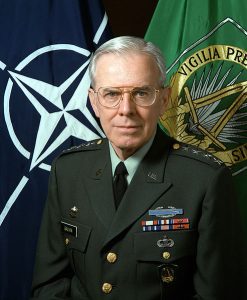
If this sounds like a “fringe” conspiracy theory, it most certainly is not. Writing in 1989, US Army four-star general John R. Galvin pointed out that the Massachusetts Militia – the force that fought and won the Battles of Lexington & Concord in 1775 – were only able to do so because the militiamen had almost uniformly “un-elected” their Loyalist officers in 1774, and had spent the next year training relentlessly and assembling supplies for the coming war.

General John Galvin, US Army, 1991. Official photograph. Phoot credit: Russell Roederer. Public Domain.


No government is ever comfortable giving potential opponents the time, materials and ability to organize against them, especially when those potential opponents are their own citizens.

There are other peculiarities in the current law. For instance, it appears in Title 10 of the US Code, which governs federal military forces, yet describes itself as the “Militia of the United States,” rather than the “Militia of the Several States.” This creates a puzzling jurisdictional issue – the federal government defines this body as a “militia,” but provides no mechanism for forming or organizing it; meanwhile, the states are solely able to organize their own militia formations (meaning, the state governments alone, not their citizens), confirmed in that authority by the 1886 Supreme Court decision in Illinois v. Presser (which decision, incidentally, also invalidates virtually all restrictive gun control measures), yet few states even make an attempt to do so, limiting themselves to maintaining their State National Guard commands and, in some states, to “State Guard” formations, some of which may even be provided with arms by the State…Yet, no state has any provision to muster a “militia” in the sense of one as described in the US Code – if you visit the government website of your county of residence, and can find a link telling you when and where to muster for your county militia, please let this author know.

The law also contains certain oddities in age restrictions that conflict with current military practice. It limits militia service to male citizens of ages 17-45, yet the National Guard accepts prior service members up to age 64 (per Section 313 of Title 32). This means that those with prior military service are automatically still “in service” in the “Militia of the United States“, if they are under the age of sixty-five, generally without them being informed of this status before enlisting in Federal Service, creating a very “interesting” series of potential legal issues, all by itself.

With recent Supreme Court decisions emphasizing historical analysis in Second Amendment cases (particularly New York State Rifle & Pistol Association v. Bruen), the time might be right to challenge this legal framework. A return to the concept of an “Enrolled Militia” or “Reserve Militia” could provide a foundation for a more practical system of civilian military capability, one that is not simply “military” in nature, but one that could enhance disaster response to major natural disasters.

One possible reform would involve creating a “US Militia Coordinating Office” staffed by retired field-grade officers from the Army and Marine Corps, providing local oversight in each county while maintaining federal coordination. This would bridge the gap between state and federal authority while creating a practical framework for organizing civilian military capability when needed.

The current system, with its contradictory terminology and practical limitations, seems increasingly out of step with both historical precedent and modern needs. As the Hamas attack on Israeli civilians that began on October 7, 2023 showed, the world remains a dangerous place, and when the local police and regular military cannot respond, or are overwhelmed, it is the average Citizen who has to step into the breach.

That is laid out in the Tenth Amendment, if you’d care to read that.

As we face evolving security challenges, it is past time to reconsider how we structure and organize civilian military capability in America. The answer might lie not in new innovations, technology, or tools, but in returning to the more practical and legally sound concepts of our past.

If the Federal and State governments have issues with this, maybe it is also time to replace the individuals in those governments with people who understand that American Citizens are not the enemy – unless the government makes them so.


The Freedomist — Keeping Watch, So You Don’t Have To


The Rise of Civilian Satellite Intelligence


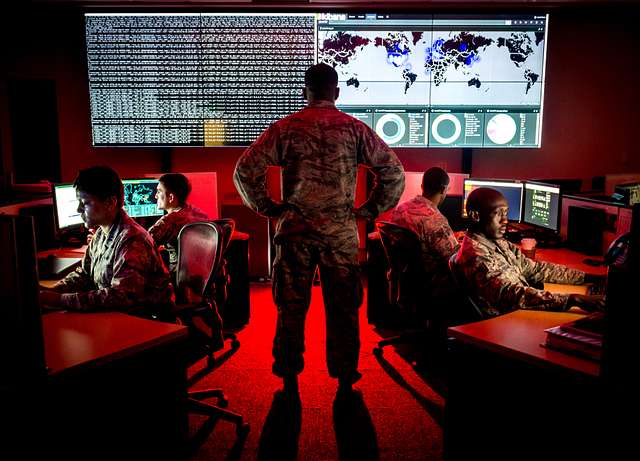
Not too long ago, access to satellite imagery was firmly relegated to the realm of spy movies and top-secret government agencies. Times have certainly changed. Today, anyone with an internet connection can access detailed satellite images of almost anywhere on Earth. This democratization of satellite intelligence is reshaping how we understand global events, conduct business, and even wage war.


From Military Secrets to Public Domain

Before roughly 2000, good- to high-quality satellite imagery was the exclusive domain of superpowers. The United States and the Soviet Union spent billions during the Cold War to launch spy satellites, gaining a bird’s-eye view of each other’s military activities. This open access to the ultimate “high ground” forced every national government that wanted to try and keep their secrets out of public view to become highly creative in hiding facilities. As advanced sensors developed, so too did methods of concealment. Fast-forward to the 21st Century, and companies like Planet Labs and Maxar Technologies are providing high-resolution satellite imagery to paying customers – be they governments, corporations, or even individuals. Not only that, but many of these high-quality are now finding their way into free-access platforms, such as Google and Bing Maps, but even such unlikely sites as NatureFocused – offer very high-quality maps featuring regular, street-type maps, but also very recent satellite imagery and highly detailed terrain maps.

This shift has profound implications. Suddenly, small countries, NGOs, citizen journalists – even terrorists – now have access to intelligence that was once the privilege of only the most powerful nations. It’s like giving everyone a seat at the geopolitical poker table and letting them peek at each other’s cards.


Changing the Game in Global Politics

So, how exactly is this changing the political landscape? For starters, it’s making it a lot harder for governments to hide their activities. Take the recent conflicts in Ukraine and the Middle East. Civilian satellites routinely capture troop movements, missile launches, and the aftermath of strikes, often before official sources confirm them. This frequently happens in real-time, with independent verification changing (and often confusing) how we understand and respond to global crises.

But it’s not just about conflict zones. Environmental groups are using satellite imagery to track deforestation, oil spills, and illegal fishing. Human rights organizations can now monitor refugee movements and verify claims of atrocities. While it may seem like having a “global watchdog” that never sleeps, there are issues of misinterpretation – both accidental and deliberate – that can and do muddy the waters, giving false impressions through outdated images, failures of interpretation, or any number of other issues, technical or human.


The Double-Edged Sword of Warfare

In the realm of warfare, easy and (mostly) free access to recent, high-grade satellite intelligence is a “game-changer”. Military strategists now have to assume that their movements are being watched not just by enemy governments, but also potentially by anyone with an internet connection. This transparency can act as a deterrent to aggression, but it also means that the element of surprise in military operations is becoming a thing of the past.

In the hoary old days of 1983, the Reagan administration launched “Operation Urgent Fury“, to invade the Caribbean island nation of Grenada, which had collapsed into chaos as different factions of the ruling party wrestled for control. This placed the safety of some 400-odd American medical students in question, and the Reagan administration – which had come to power at least partly as a result of the previous administration’s failure in dealing with the Iranian Hostage crisis – was not about to risk a repeat performance on its doorstep.

While there was never any doubt that the United States military would win a conflict in Grenada, it was discovered – much to the consternation of all planners – that there were no detailed maps of Grenada inside the US cartographic system. US Army planners were forced to purchase tourist maps of Grenada just outside the gates of their bases, hand-draw grid reference lines and the estimated locations of targets on those rudimentary maps, then photocopy those maps and hand those out to troop leaders.

The issue was that there were very few “recon birds” – the colloquial term for reconnaissance satellites – in orbit at the time, and those satellites were not easy to “re-task”. Grenada was so “off-the-radar” in the United States, some intelligence officers wondered why they were being ordered to plan an invasion of the city of “Granada” in Spain.

Humor aside, this was clearly a serious problem…and one that would not be replicated today, in any army in the world worthy of the name. Today, anyone with an internet connection can utilize free tools (often coming as “stock” programs with many computers) that the battle planners of “Urgent Fury” – or, for that matter, “Desert Storm” – could have dreamed of.

Unfortunately, that also includes terrorists.


The 2008 attack on Mumbai, India, by the terror group “Lashkar-e-Taiba“, were planned and directed in real-time using stock personal computers, an internet connection and tools like Google, to verify targets, observe news reports on the fighting in real-time, and to generate maps that were used for plotting the progress of their operations on target.

Likewise, there are now commercially available tools, like “ATAK“, that approach military and national intelligence agency tool-sets in quality. These free, or at least low-cost, programs are well within the reach of private individuals, to say nothing of terror groups and small governments and their military forces.

These realities have proven the wisdom of the United States Marine Corps’ “Small Wars Manual“, published in 1940, which warned that what the West now calls “Third World” forces were improving their abilities and acquiring more modern weapons and equipment, and that the result would be that “First World” forces would have to be willing and able to adapt and evolve faster than those forces could.


The Road Ahead

As we look to the future, it’s clear that easy access to satellite intelligence will continue to play an increasingly important role in shaping our world. We’re likely to see even more detailed imagery, combined with AI and machine learning to provide real-time analysis of global events.

This technology has the potential to increase transparency, hold powerful actors accountable, and provide crucial information in times of crisis. But it also risks further eroding both personal and start privacy, and potentially destabilizing delicate geopolitical situations in unforeseen ways.

One thing is certain: the “view from above” is here to stay, and it’s changing how we see our world, literally. As this technology continues to evolve, it will be up to all of us – governments, businesses, and citizens alike – to figure out how to use it responsibly and effectively.

In a world where everyone can be a satellite superpower, the challenge will be learning how to use this newfound vision wisely.


The Freedomist — Keeping Watch, So You Don’t Have To
The Carrier Battle Group: America’s “Big Stick” Of Power Projection


Introduction

Earlier this week, the United States accelerated the deployment of the USS Abraham Lincoln (CVN-72) and its carrier battle group to the Middle East – an operation which was already in progress to relieve the USS Theodore Roosevelt (CVN-71) and its own battle group of escorting warships, who have been on station in the region for months – in response to signs that the increasingly unstable regime in Iran may attempt to significantly widen its proxy war against the state of Israel which began on October 7 of last year.


The Good Ol’ Days

The origin of the aircraft carrier battle group takes its origins from the world-spanning naval warfare of World War II, primarily from its operations in the Pacific Ocean. The devastating Japanese attack on Pearl Harbor, on December 7th, 1941, demonstrated the power of carrier-based aviation and the vulnerability of battleships, marking a fundamental shift in naval strategy, as the Imperial Japanese Navy destroyed the United States Navy’s main battle force in the attack. The United States Navy – stripped of its battleship fleet by the sneak attack on its Hawaiian base, and whose Asiatic Fleet was functionally neutralized in the opening stages of the war by staggeringly unbelievable levels of incompetence and mismanagement – was forced to continue the fight with only three aircraft carriers, something it had never seriously considered as a possibility.


Photograph taken from a Japanese plane during the torpedo attack on ships moored on both sides of Ford Island shortly after the beginning of the Pearl Harbor attack. IJN photo, via the US Navy. Public Domain.


As the war raged on, the U.S. Navy quickly adapted, forming diverse, multi-ship task forces centered on its massive aircraft carriers. The battles of the Coral Sea and Midway in 1942 proved the effectiveness of this approach, with American carriers dealing a decisive blow to the Japanese fleet, while remaining largely protected by much smaller destroyers and destroyer-escorts, which both shot down attacking Japanese aircraft, and sometimes absorbed bombs and torpedoes meant for the carriers. As the war progressed, these carrier task forces became increasingly sophisticated, with hard-learned doctrine and techniques using destroyers primarily for anti-submarine warfare and cruisers studded with heavy automatic cannons for air defense, even at close range.


Bofors 40 mm anti-aircraft guns on a Mk 12 quadruple mount firing on board USS Hornet (CV-12), circa February 1945, probably during gunnery practice. Photo credit: Lt. Cmdr. Charles Kerlee, USN. Public Domain.


Into the Cold

In the post-war era, the advent of jet aircraft and guided missiles led to further refinements to both aircraft carriers themselves, but also in their organization and tactics. The introduction of the angled flight deck and steam catapults (these are now being replaced with electromagnetic catapults on the new Gerald R. Ford-class carriers) in the 1950s enhanced carrier operations, while the development of guided missile destroyers and cruisers improved the group’s air defense capabilities, at least in theory. Modern navies, however, would get a severe reality check in 1982, as the very modern British Royal Navy was badly hammered by the second-tier air force of Argentina in the savage (especially allowing for its relatively small size) Battle of San Carlos, causing a sobering reassessment by all navies of their own capabilities and tactics. (On a historical side note, the Falklands War also saw the destruction of the ARA General Belgrano, the former USS Phoenix (CL-46), a Brooklyn-class cruiser from World War 2, which had survived the Pearl Harbor attack, to be sunk by a British attack submarine some forty years later.)


A Standard Missile-3 is launched from the Japanese Aegis Destroyer JS Kongo (DDG 173), 2007. US Navy photo. Public Domain.


The Cold War saw the carrier battle group evolve into one of – if not the primary – key instruments of power projection. The nuclear-powered USS Enterprise (CVN-65), commissioned in 1961, heralded a new era of endurance for carrier operations. However, this would be tempered with the realization that while the range of the carrier itself was now measured in decades, instead of miles, it was still restricted by the ranges of its gas-turbine engined escort vessels, and the constant need for resupply of everything from food to bombs, spare parts and fuel for its aircraft wing. The development of the Aegis combat system in the 1980s (and its associated ballistic missile defense component) would significantly enhance the group’s air defense capabilities, while continuous development of anti-submarine and anti-mine technologies further protected the carrier and its escorts. These capabilities did not come without cost, however: hard lessons were learned from the attacks on the USS Stark, the USS Samuel B. Roberts, and the bombing of the USS Cole. These lessons continue to be learned, but the takeaway is that naval warfare – like all warfare – is not a video game, despite breathlessly giddy news stories to the contrary.

In the realm of anti-submarine warfare, the US Navy pioneered the modern use of armed combat drones in warfare, when it deployed the QH-50 DASH (Drone Anti-Submarine Helicopter), built by Gyrodyne, in 1959.


In the Persian Gulf, a port quarter view of the guided missile frigate USS STARK (FFG-31) listing to port after being hit by two Iraqi Exocet missiles, 18 May 1987. Public Domain.


The Dawn of the Millennium and the GWOT

The post-Cold War period has seen carrier battle groups involved in numerous conflicts, from the 1990-91 Gulf War to operations in Afghanistan and Iraq. The groups have also played crucial roles in humanitarian assistance and disaster relief missions. Today’s carrier battle groups, while retaining their core structure developed over some fifty years, continue to evolve to meet new challenges. The integration of stealth aircraft, more advanced unmanned systems, and advanced, internet-based networking and cyberwar capabilities ensures that the carrier battle group will remain a fundamental cornerstone of naval power projection for the rest of the 21st Century.

Laying at the heart of the United States Navy’s global power projection capabilities, the carrier battle group (CVBG), also known as a carrier strike group (CSG) is a formidable assembly of warships and aircraft, centered around a nuclear-powered aircraft carrier, representing one of the most potent concentrations of military might ever to sail the world’s oceans. Usually comprising an aircraft carrier, a single guided missile cruiser for air defense, at least two LAMPS-capable warships (focusing on anti-submarine and surface warfare), and one or two anti-submarine destroyers or frigates, such battle groups frequently deploy more combat power than that possessed by most individual nations in the world.

The cornerstone of any carrier battle group is the aircraft carrier itself. As of 2024, the US Navy operates eleven nuclear-powered carriers, primarily of the Nimitz class, with the newer Gerald R. Ford class gradually being introduced into service. These floating airfields, crewed by between 4,000 and 5,000 sailors, displace approximately 100,000 tons and can carry an air wing of 60-75 aircraft.

The air wing of a 21st Century US aircraft carrier typically consists of:

  1. F/A-18 E/F Super Hornets: Multirole fighters capable of air superiority and strike missions.
  2. EA-18G Growlers: Electronic warfare aircraft for jamming enemy radar and communications.
  3. E-2D Hawkeyes: Airborne early warning and control aircraft.
  4. MH-60R/S Seahawk helicopters: For anti-submarine warfare, search and rescue, and utility missions.
  5. F-35C Lightning II: The Navy’s newest stealth multirole fighter, gradually being integrated into carrier air wings.


E-2D Advanced Hawkeye aircraft conduct a test flight near St. Augustine, FL, 2009. US Navy photo. Public Domain.


Surrounding the carrier are several Aegis-equipped guided missile cruisers and destroyers. These ships form a protective screen around the carrier and provide a wide range of capabilities:

  1. Ticonderoga class cruisers: Usually one or two per battle group, these ships specialize in air defense but are also capable of land attack and anti-ship warfare.
  2. Arleigh Burke class destroyers: Typically three to four per group, these versatile warships can perform anti-air, anti-surface, and anti-submarine warfare missions.


Both classes of ships are equipped with the Aegis combat system, which integrates powerful radars with various close-in and long-range weapon systems, allowing for sophisticated air and missile defense capabilities.

Although not always visible, one or two nuclear-powered attack submarines often operate in conjunction with a carrier battle group. These could be Los Angeles-, Virginia-, or Seawolf-class nuclear-powered submarines. Their primary roles include:

  1. Gathering intelligence
  2. Providing an unseen protective screen against enemy submarines
  3. Potential land-attack capabilities with Tomahawk cruise missiles


A carrier battle group also includes several support ships crucial for sustained operations:

  1. Supply ships: Usually one or two fast combat support ships (T-AOE) or a combination of fleet oilers (T-AO) and dry cargo ships (T-AKE) to replenish fuel, ammunition, and supplies.
  2. Hospital ships: While not typically part of the regular battle group, these can be attached for humanitarian missions or in anticipation of major combat operations.


Royal Australian Navy ship HMAS Sirius (OR-266) and amphibious transport dock USS Juneau (LPD-10) conducts a replenishment at sea (RAS), 2007. US Navy photo. Public Domain.


An entire battle group, such as that outlined above, is under the command of a Rear Admiral (lower half), who typically serves as the Commander, Carrier Strike Group (CCSG). The CCSG and their staff coordinate the activities of all ships and aircraft in the group, ensuring they work together as a cohesive fighting unit.

A fully equipped US carrier battle group is ideally positioned to:

  1. Project power far from American shores, with the ability to strike targets hundreds of miles inland.
  2. Establish air superiority over a wide area.
  3. Conduct sustained air operations, launching over 100 sorties per day.
  4. Provide a visible deterrent to potential adversaries.
  5. Respond rapidly to crises anywhere in the world.
  6. Conduct humanitarian assistance and disaster relief operations.


The versatility of the carrier battle group allows it to transition quickly from peacetime presence to crisis response to full-scale war fighting. This is no more true than in its mission of supporting assault landings by combat units (MAGTF’s) of the United States Marine Corps, which remains a part of the Department of the Navy. The US Navy’s ten Amphibious Ready Groups are able to quickly insert up to 6,000 US Marines quickly, at multiple points along a hostile shoreline, ranging well inland, if necessary…as long as the naval squadron can get to the area quickly enough – hence, the acceleration of the USS Abraham Lincoln and her CVBG to the Levant.

As of 2024, the US Navy continues to adapt its carrier battle groups to meet evolving threats:

  1. Anti-ship ballistic missiles: The development of these weapons, particularly by China, has led to increased emphasis on integrated air and missile defense capabilities.
  2. Unmanned systems: The Navy continues to explore the integration of unmanned aerial, surface, and undersea vehicles to extend the reach and capabilities of the battle group.
  3. Cyber warfare: Increased focus on protecting the battle group’s networks and exploiting adversary vulnerabilities in the digital domain.
  4. Distributed lethality: Spreading offensive capabilities across more platforms in the battle group to complicate enemy targeting.


Conclusion

The Navy is continuously evolving the concept of the carrier battle group. Some areas of focus include:

  1. The integration of directed energy weapons for close-in defense.
  2. Development of long-range anti-ship missiles to counter peer competitors.
  3. Exploration of smaller, more numerous carriers to distribute capabilities.
  4. Enhanced networking capabilities to better integrate with joint and allied forces.


The US carrier battle group remains a cornerstone of American military power projection, and will continue to do so well into the 21st Century, and likely beyond. Its ability to bring a flexible, sustained, and potent military presence to any region of the world makes it a unique and invaluable strategic asset. As geopolitical tensions and technological advancements continue to shape the global security landscape, and as unrest continues to disrupt the trade vital to the modern world, the carrier battle group will continue to evolve, maintaining its role as a key instrument of US national security policy, as well as protecting the civilized world at large.


ADDITIONAL RESOURCES

  1. Estate of Wayne P Hughes Jr. USN (Ret.) & Robert P. Girrier (2018), Fleet Tactics and Naval Operations, 3rd Ed
  2. Patrick Degan (2003), Flattop Fighting in World War II
  3. Paul S. Dull (2007), A Battle History of the Imperial Japanese Navy, 1941-1945
  4. Thomas Ricks (2012), The Generals
  5. James F. Dunnigan (2003), How To Make War, 4th Edition
  6. James F. Dunnigan (1991), Shooting Blanks


The Freedomist — Keeping Watch, So You Don’t Have To
China Builds a Ring of Fire Around Taiwan

The Chinese military was able to completely encircle the island nation of Taiwan, cutting off American assets from potentially coming between China and Taiwan to defend the island. The PRC claims its an exercise to test the capacity of the military, but it comes shortly after a new President was inaugurated who was not the pro-China candidate the CCP backed.

UPDATE: The drills were conducted over the course of two days, with Taiwan accusing China of seeking to intimidate the island nation, though some experts theorize China was testing the response of both Taiwan and the U.S., in addition to seeking to intimidate the island nation. The fact that China was able to execute a complete encirclement of the island without catching U.S. assets within the ring adds credibility to the theory the action was a test and the Chinese seemed to pass it with flying colors.

Go to Article
Excerpt from townhall.com

Military vessels and planes surrounded Taiwan from all sides as the People’s Republic of China (PRC) launched “Exercise Joint Sword” on Thursday to conduct People’s Liberation Army (PLA) exercises in President Xi Jinping’s escalating harassment of the Republic of China (ROC).

The latest attempt at intimidating Taiwan is a “punishment,” according to the PRC, for the ROC’s inauguration of a new president earlier this week, something Beijing views as a “separatist act.”

The drills, some of which involve live fire, are being carried out in the Taiwan Strait, off the island’s north, south, and east coasts, and in the vicinity of smaller islands around Taiwan. The joint sea-and-air exercises include warships and military aircraft and are intended by President Xi and the Chinese Communist Party to escalate its threats against the ROC’s independence and wave off help from Taiwan’s friends and partners.

Go to Article
Excerpt from globalnews.ca

Taiwan scrambled jets and put missile, naval and land units on alert Thursday over Chinese military exercises being conducted around the self-governing island democracy.

Go to Article
Excerpt from www.ndtv.com

China considers the democratic island part of its territory. (File)

Shanghai:

China on Thursday announced two days of war games around self-ruled Taiwan, encircling the island with naval vessels and military aircraft.

Here’s what you need to know.

Why has China launched these drills?

Taiwan has been self-governed since 1949, when nationalists fled to the island following their defeat by the Chinese Communist Party (CCP) in a civil war on the mainland.

Beijing considers the democratic island part of its territory and has not ruled out using force to bring it under its control.

Gert Wilders Will Finally Form the Next Netherlands Government

After six months, Gert Wilders has finally come to an agreement to form a new right-leaning coalition government for the Netherlands. Wilders has mostly run in opposition to what he claims is the EU and globalist mass migration plan for Europe to denude it of its native populations.

Wilders removed his name for consideration for PM, which helped the coalition form. He said of the tentative agreement, “We have a negotiating agreement. But the factions will also discuss it later, so there may be adjustments and amendments… I can’t see this fail.” This is the most “right” leaning the Dutch government has been in decades.

Go to Article
Excerpt from www.thegatewaypundit.com

After six long months of negotiations, it seems that – at last – Dutch conservative leader Geert Wilders has sealed a deal to form the most right-wing government in the Netherlands in decades.

Reuters reported:

Wilders, who has influenced Dutch immigration policy from the opposition benches since 2006 and is known for his outspoken views on Islam, was expected to announce a four-party coalition later in the day.”

The coalition talks have dragged on for months, to the delight of the liberal media that fears Wilders and his party.

Wilders’ major election victory on Nov. 22 means that immigration, finances, and fake climate alarmism are among the key policy points.

A breakthrough was reportedly reached back in March as Wilders toned down his rhetoric, agreed to withdraw his name for the position of prime minister, and dropped opposition to support for Ukraine.

Slovakian PM Shot by Far-Left Globalist Supporter

A far-left activist has purportedly shot the Slovakian Prime Minister Robert Fico on Wednesday, May 15, 2024. The attempted assassination was caught on film. The suspect, 71-year-old Jurak Cintula, said he allegedly shot Fico over free speech rights, which he says Fico is infringing on. Slovak authorities have been quick to claim Cintula acted alone.

The President-Elect of Slovakia, Peter Pellegrini, said of the assassination that it was “an unprecedented threat to Slovak democracy. If we express other political opinions with pistols in squares, and not in polling stations, we are jeopardizing everything that we have built together over 31 years of Slovak sovereignty.”  As of right now, Fico is listed as being in stable, but serious condition.

Go to Article
Excerpt from abcnews.go.com

PRAGUE — Slovakian Prime Minister Robert Fico is in life-threatening condition after being wounded in a shooting after a political event Wednesday afternoon, according to his Facebook profile.

The populist, pro-Russian leader, 59, was hit in the stomach after four shots were fired outside the House of Culture in the town of Handlova, some 150 kilometers (93 miles) northeast of the capital where the leader was meeting with supporters, according to reports on TA3, a Slovakian TV station.

A suspect has been detained, it said.

Is the CCP Funding Pro-Hamas Attacks on American Universities?

The Network Contagion Research Institute (NCRI) is claiming it has evidence that reveals the Chinese Communist Party is funding, in part, the operations that are leading to riots and other disruptions in American universities. The Singham Network, which has direct ties to the CCP, has been funding protests and social unrest connected to any cause, including Hamas, that will get people to riot for them.

Go to Article
Excerpt from www.breitbart.com

A report reveals that key radical left-wing organizations central in the current anti-Israel and anti-America protest movement are significantly funded and influenced by a network tied to the Chinese Communist Party (CCP), which seeks to advance a “revolutionary, anti-government, anti-capitalist agenda,” threatening U.S. internal stability.

A major report from the Network Contagion Research Institute (NCRI), published Monday, details how the Shut It Down for Palestine (SID4P) movement, which has connections to the Chinese Communist Party (CCP) through the Singham Network, uses protests and media campaigns to push anti-America and anti-Israel narratives and significantly contribute to social unrest.


Ukraine War Going Badly for Zelensky, Who Fires Commander in Response

As Russia’s summer offensive appears to be picking up momentum, Ukraine’s President Volodymyr Zelensky has fired his military commander in a bid to shake up the leadership to hopefully turn the momentum back their favor. The commander, Valerii Zaluzhnyi, was fired on May 9 through a decree.

Go to Article

Excerpt from yahoo news

Zelensky dismisses Zaluzhnyi from military service

President Volodymyr Zelensky has dismissed Valerii Zaluzhnyi, the former commander-in-chief of Ukraine’s Armed Forces, according to a presidential decree published online on May 9.

The decree stated that Zaluzhnyi was dismissed “from military service on health grounds” and retained “the right to wear a military uniform.” The decree is dated May 8.

Zaluzhnyi will reportedly start his new role as Ukraine’s ambassador to the U.K. in the coming weeks, after being replaced by Oleksandr Syrskyi as commander-in-chief in February.

Biden Announces New Round of Tariff War with China, Who Threatens to Respond in Kind

President Joe Biden made it official on May 14, 2024 when the administration announced it would be implementing a new round of tariffs targeting Chinese goods, including electric vehicles. The tariffs affect $18 billion worth of Chinese goods.

China has responded through its foreign ministry spokesperson Wang Wenbin, who said China “opposes unilateral impositions of tariff,” and that his country “will take all necessary actions to protect its legitimate rights.”

Go to Article
Excerpt from www.news18.com

There will be a new 100% tariff on Chinese electric vehicles implemented this year. A four-fold increase from the current rate of 25%, as well as a doubling of the 25% levy imposed on solar cells.

Tariffs on lithium batteries for electric vehicles are also set to increase from 7.5% to 25% this year, with the levy hike broadening to cover all lithium batteries by 2026….

The White House said some $18 billion worth of Chinese goods will be affected.

… China has vowed to defend its interests in the face of huge new US tariffs, and warned that the trade barrier would affect the relations between the two powerful economics….

China’s foreign ministry spokesperson Wang Wenbin said the country “opposes the unilateral imposition of tariffs”, which violate the World Trade Organization rules, and will take all necessary actions to protect its legitimate rights.”

Main

Back FREEDOM for only $4.95/month and help the Freedomist to fight the ongoing war on liberty and defeat the establishment's SHILL press!!

Are you enjoying our content? Help support our mission to reach every American with a message of freedom through virtue, liberty, and independence! Support our team of dedicated freedom builders for as little as $4.95/month! Back the Freedomist now! Click here